






Abstract

Linked article:
1 BACKGROUND
1.1 The importance of youth employment
There are about 1.2 billion youth worldwide, aged 15 to 24, and nearly 75 million of them are looking for a job (ILO, 2014). Such a sizable youth cohort presents an opportunity for growth but can also become a source of instability if youth unemployment is not addressed by effective interventions.
Young men and women have been in the spotlight ever since the hefty impact on youth employment caused by the economic crisis became apparent. The youth unemployment rate saw its largest annual increase between 2008 and 2009: rising from 12 to 12.9 per cent, with youth in industrialized countries being particularly affected. During the same period (2008–2009), youth unemployment rates in developed economies and the European Union (EU) and in Central and South-Eastern Europe (non EU) and Commonwealth Independent States (CIS) increased by 4.1 and 3.2 percentage points, respectively. These are the largest annual increases in youth unemployment rates ever recorded in any region.
Stimulus packages, consultations, and private and public investments targeting youth came into vogue. Despite the response to the crisis, the global youth unemployment rate remains stubbornly high and today it is projected to stand at 13.2 per cent (ILO, 2014), as shown in Figure 1. Does this signify insufficient investment or reflect the fact that it takes time for youth employment programmes to have a positive impact?
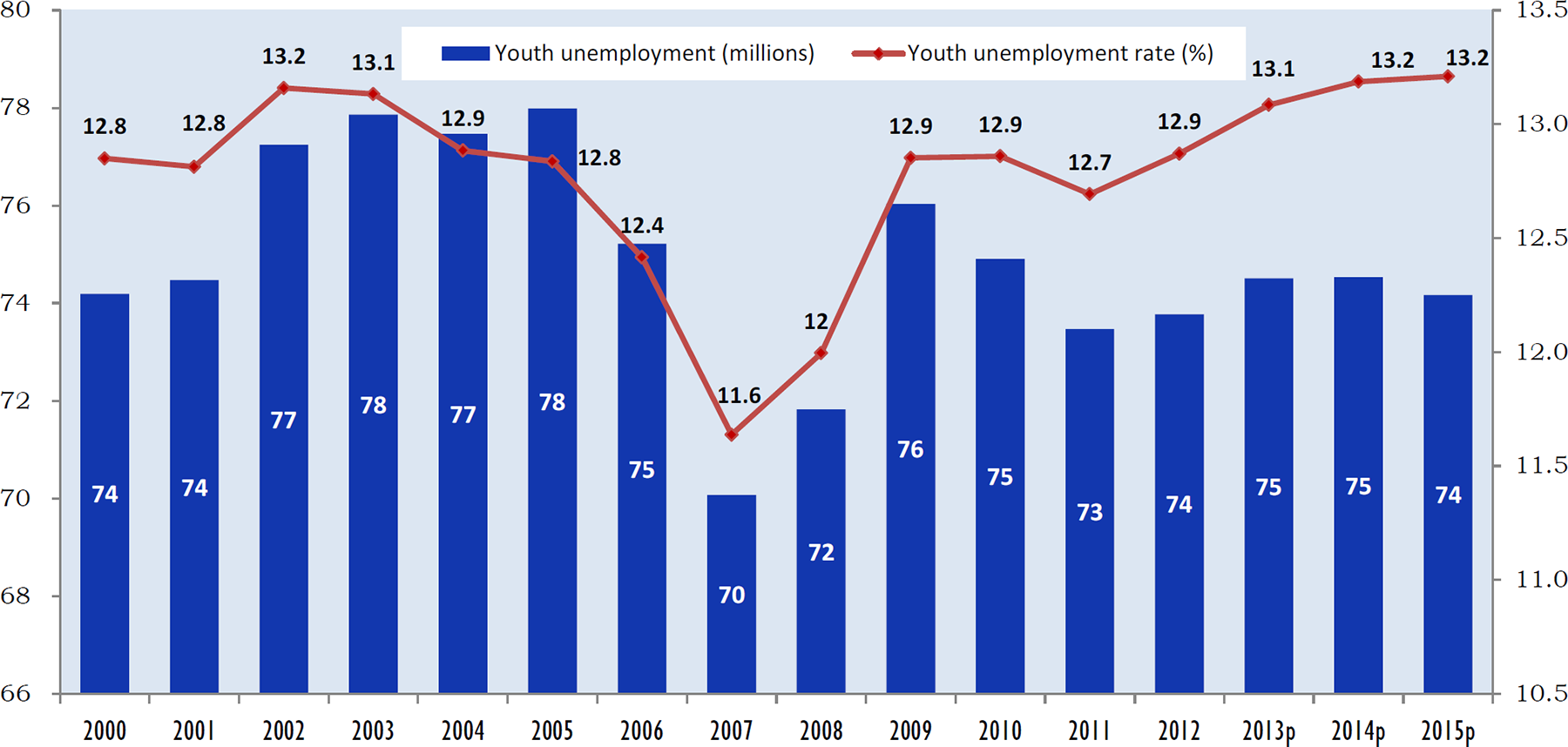
Global youth unemployment and unemployment rate, 2000–2015P
Global youth unemployment is estimated to stand at 74.5 million in 2014, an increase of 4.4 million since 2007. Higher unemployment and lower labour force participation among youth contributed to a decrease in the global youth employment-to-population ratio to 41.1 per cent in 2014, compared with 44 per cent in 2007. Part of this decrease is due to rising enrolment in education but the figures also reflect increasing levels of discouragement among youth (ILO, 2014).
The ratio of youth-to-adult unemployment rates illustrates the extent to which the economic crisis impacted regional and country-wide youth labour markets. Unemployment among youth is higher than among adults. Without exposure to a working environment, youth lack the job and soft skills that develop over time with experience. These inherent deficits “naturally” translate into youth unemployment rates that are twice – and sometimes three times – as high as the rates for adults. While the global ratio of youth-to-adult unemployment rates has hardly changed in recent years, its regional dynamics have resulted in some areas experiencing youth unemployment which is four times greater than the adult rate, exposing the vulnerability of young jobseekers to economic shocks, particularly in developing countries. According to the ILO, between 2009 and 2010, at the height of the economic crisis, the youth-to-adult ratio of unemployment rate in South-East Asia and the Pacific increased from 4.6 to 6. At the country level, ILO estimates for 2014 place the youth-to-adult ratios of unemployment rate in Egypt, Indonesia, and Sri Lanka at 5.8, 7.1, and 8, respectively (ILO, 2014).
The effects of the crisis on youth went beyond unemployment. The economic downturn also hit employed youth hard. The number of non-standard jobs, including temporary employment and part-time work, increased significantly, as many youth were drawn into lower quality work, temporarily postponing their career aspirations to secure an income, however meagre. In Europe, an increasing number of employed youth have unwillingly accepted non-standard jobs. Youth part-time employment as a share of total youth employment in Europe was 25 per cent in 2011. A further 40.5 per cent of employed youth in the region were engaged under temporary contracts (ILO, 2013).
In most regions, the youth unemployment rate is following an upward trend (ILO, 2014), which gives a long-term perspective to the challenge of addressing the issue. With a rather sluggish recovery and poor economic growth, job prospects for youth are not expected to improve substantially in the medium term. This economic landscape and the potential negative consequences of unemployment on human capital, health, happiness, crime, and socio-political stability (Bell and Blanchflower, 2009) call for further research and comparative analyses into the most effective measures to improve the labour market outcomes of youth. This requires (i) learning from past experiences (both successes and failures), and (ii) the provision of a quantifiable estimate of the magnitude of impacts arising from youth employment programmes.
1.2 The intervention: Active labour market programmes for youth
Labour market interventions to be examined by this systematic review fall into the category of Active Labour Market Programmes (ALMP), which are further defined as
all social expenditure (other than education) which is aimed at the improvement of the beneficiaries' prospect of finding gainful employment or to otherwise increase their earnings capacity. This category includes spending on public employment services and administration, labour market training, special programs for youth when in transition from school to work, labour market programs to provide or promote employment for unemployed and other persons (excluding young and disabled persons) and special programs for the disabled (OECD, 2013).
ALMPs require active participation in programmes that enhance labour market integration, a requirement which differentiates them from other labour market – and social protection – policies, such as unemployment insurance schemes and non-conditional transfers. In the case of ALMPs, the economic rationale relies on market clearing, i.e. labour demand and supply matching and market efficiency through, for instance, job-search assistance, labour market information, and pre-screening of programme applicants. ALMPs can also enhance labour supply through training, foster labour demand through labour-intensive public employment programmes, entrepreneurship, and self-employment measures, or alter the structure of demand by offering employment subsidies (Auer et al., 2008).
Although the focus of ALMPs tends to be on economic relevance, they can have important social and political dimensions (Betcherman, Dar & Olivas, 2004). ALMPs can foster the social inclusion of disadvantaged groups while signalling a willingness on the part of politicians to engage with the problems.
For the purposes of this review, ALMPs are clustered into the following typology of interventions: Training and skills development Entrepreneurship promotion Employment services Subsidized employment.
1.3 How the ALMPs are supposed to work
This section offers some theoretical underpinning to the ways in which the interventions included in this systematic review may improve labour market outcomes of youth. The underlying assumption of programmes is that participation in ALMPs will ultimately improve the employment and earnings outcomes of participants, as well as the performance of the businesses that programme participants start or already own.
Exposure to ALMPs is expected to create a spillover effect among non-programme participants, as well as general equilibrium effects throughout the economy. While some of these spillovers may positively affect overall employment outcomes, in certain cases ALMPs may have a negative impact on the performance of non-participants. For example, there is evidence that wage subsidy programmes may lead to substitution effects (with subsidized workers replacing non-subsidized workers) and windfall effects (when part of the subsidies go to workers who would have been hired in any case), therefore decreasing the overall employment impact of the programme. To address this issue, increased attention must be given to programme design features that can help to compensate for negative spillovers, such as the establishment of conditionalities for employers (Almeida, Orr & Robalino, 2014).
This section summarizes the theories of change behind ALMPs for youth, aiming to map out the relationship between: (i) the resources that are invested (“Inputs”); (ii) the intervention that takes place, including the different activities that may be part of the intervention (“Activities”); (iii) the individual-level competencies and constraints (such as knowledge, attitudes, and behaviours) which are directly affected by the intervention (“Outputs”); and, finally, (iv) the individual labour market outcomes that can be measured as part of an impact evaluation study (“Outcomes”). Key assumptions are also drawn to determine whether one event in the sequence actually yields the expected changes in labour market outcomes. Once the theories of change are clear, the systematic review will seek to examine whether the evidence supports the expected transition channels and causality.
Building on existing literature, operational manuals, and programme information, this section describes each intervention and its underlying theory of change. Even though labour market programmes often combine interventions from different categories, separating the results chains for each category seeks to provide further transparency in the assumptions and support the interpretation of results revealing potential causal mechanisms.
In the interest of a well-defined intervention description, we omit those activities and outputs that are not strictly linked to labour market effects. Similarly, we focus narrowly on individual-level labour market outcomes, leaving aside other potential side-effects, such as increased psycho-social well-being. For simplicity, higher level or “longer term” outcomes – such as poverty reduction, economic growth, or democratization – are not explicitly shown in the chain of effects, nor are potential general equilibrium effects that may reduce the macroeconomic effectiveness of an intervention. Nonetheless, most of the programmes under study will have broader macroeconomic effects which will play an important role when scaling up or replicating the programme. In fact, some of the interventions may explicitly target higher level (economy-wide) outcomes, such as social protection aspects (e.g. public employment programmes may be designed to smooth consumption during recessions or crises).
1.3.1 Training and skills development
Education and skills are considered a core factor in determining the chances of young people in the labour market (Biavaschi et al., 2012). Skill training programmes are therefore the most widely used labour market intervention for young people worldwide and are increasingly delivered as a complement to other labour market measures (Betcherman et al., 2007; Fares & Puerto, 2009). The objective of skill training programmes is to develop employment-relevant skills of jobseekers. Broadly speaking, employability skills refer to a set of job-specific technical skills, but also include non-technical, soft (or behavioural) skills, such as self-management, teamwork and communication. Increasingly, employers across the world are placing higher value on these non-technical skills than on technical competencies (Cunningham, Sanchez-Puerta & Wuermli, 2010; Youth Employment Network & IYF, 2009).
In this analysis, we classify training programmes according to the skill-set which they target (Table 1): First, training programmes that address a lack of trade- or job-specific technical skills demanded by employers. Such skills range from manual skills to computer literacy. Technical skill training programmes often include an on-the-job training component in order to increase practical work experience (i.e. by placing participants in internships, workplace training or apprenticeship schemes). Second, business skills training, often taught as part of programmes that aim to increase entrepreneurial activities among youth. Such entrepreneurial training programmes cover a large variety of factors that are believed to determine business success (ranging from financial skills to problem-solving skills). Third, literacy and numeracy programmes which are designed to teach basic skills or cognitive abilities to youth who had not acquired them by the time they left school (sometimes called “second-chance programmes”). Finally, programmes that improve non-technical skills, such as behavioural skills, life skills or soft skills of jobseekers.
Training and skills development interventions: Results chain
Technical training programmes are popular in development cooperation because many developing countries experience a skills mismatch between their labour force and emerging segments of their economies. However, pure training programmes have not proven very successful in many contexts (Betcherman et al., 2004). Therefore, most recent programmes tend to combine skills training with other types of interventions; for example, on-the-job training or employment services (Cunningham et al., 2010; Fares & Puerto, 2009). An example of a comprehensive skills training programme is provided in Box 1.
Box 1. Training and skills development: Juventud y Empleo in the Dominican Republic
The Youth and Employment Programme, Juventud y Empleo (JE), in the Dominican Republic represents an innovative model of a comprehensive active labour market programme (ALMP) to improve employability and human capital of young people between the ages of 16 and 29 who did not complete high school. The programme provided young people with vocational training (150 hours) and basic or life skills training (75 hours) combined with internships in private sector firms (240 hours). The programme was managed by the Ministry of Labour in cooperation with the National Institute of Technical and Vocational Training (Instituto Nacional de Formación Técnico Profesional) and with financial support from the Inter-American Development Bank. Training services were provided by private training institutions.
The programme came into operation in 2001 and was the first job-training programme in Latin America and the Caribbean to incorporate a randomized evaluation component in the project design. The first impact evaluation showed limited impacts on employment and wages, which led to changes in the programme that focused on working more closely with the private sector and providing a stronger life skills component. Further evaluation results showed that the programme had a positive impact on job formality for men and a positive effect on monthly earnings among those who were employed. In addition, the programme was effective in reducing teenage pregnancy and showed a positive impact in various measures of non-cognitive skills.
A number of conditions determine whether skills training programmes are successful in bringing additional youth into work – most notably, consistency between the skills offered by a training programme and those demanded by the market. To this end, some programmes introduce a market-based (or bottom-up) approach in programme design. The application of this approach enables training curricula and programme components to respond much more effectively to the needs of employers (in both private and public sectors) and communities in a demand-driven fashion.
Furthermore, the success of all these interventions relies on the assumption that the (correct) target group participates in the training and that the training is appropriate and conducted in a way which actually augments the skill sets that are relevant to the labour market. Finally, a crucial element may be the award of a legitimate certificate on successful completion of a programme to prove the acquisition of increased knowledge and skills to potential employers in the job market.
1.3.2 Entrepreneurship promotion
Entrepreneurship promotion programmes aim to lower the barriers and costs for young unemployed and underemployed planning to establish or maintain a business. Since the scope of formal wage employment is often limited in developing countries, increasing (formal) self-employment among the labour force is considered an important anti-poverty strategy (Gindling & Newhouse, 2012). Because self-employed and small-scale entrepreneurs often face numerous internal and external constraints, a multitude of measures exist to support the process.
Access to capital is often a primary constraint for young entrepreneurs. Schoof (2006) identifies a number of constraints to accessing start-up finance. These range from lack of personal savings and resources to lack of securities and credibility, insufficient business experience and skills, strict credit-scoring methodologies and regulations, among others. Accordingly, many entrepreneurship programmes address the lack of access to (affordable) finance faced by young entrepreneurs. We disaggregated such programmes into three types: First, those providing or facilitating access to credit (including microfinance programmes). Second, those providing start-up grants. Third, those fostering micro-franchising mechanisms.
ALMPs that facilitate access to finance often provide technical advice and imply setting partnerships and capacity building schemes with (and for) microfinance institutions (MFIs) and banks.
In addition to access to finance, there are programmes that offer business advisory services and mentoring for soon-to-be or already self-employed youth. Finally, some interventions try to reduce the barriers to business creation by assisting prospective entrepreneurs to enter markets or existing value chains. The above-described interventions and their underlying theory of change are shown in Table 2. We included training related ALMPs, which deliver the skills relevant for starting or maintaining a business (such as management skills, leadership skill and financial literacy), described in section 1.3.1 above.
Entrepreneurship interventions: Results chain
Many entrepreneurship programmes take a comprehensive approach; for example, combining access to credit with business skills training or post-programme consultation (i.e. mentoring and coaching). Most microfranchise programmes follow this pattern – delivering finance, business networks and mentoring services.
Primarily, entrepreneurship programmes increase employment through their direct effect on the soon-to-be self-employed participant. The assumption is that beneficiaries actually plan to set up a new business after receiving credit and/or training (i.e. that targeted and trained individuals have been appropriately selected for the programme) and that they would not have done so without the intervention.
Box 2. Entrepreneurship promotion: Start and Improve Your Business (SIYB)
The Start and Improve Your Business (SIYB) programme is a management-training programme with a focus on starting and improving small businesses as a strategy for creating more and better employment in developing economies and economies in transition. The SIYB programme is a system of interrelated training packages and supporting materials for small-scale entrepreneurs. The programme is designed by the International Labour Organization (ILO) and implemented with support from certified trainers in partner institutions in more than 100 countries. Initially developed in the 1980s, it has now been translated into more than 40 languages and had reached more than 4.5 million potential and existing entrepreneurs by 2010. The Start Your Business (SYB) package provides a five-day training course for potential entrepreneurs with concrete and feasible business ideas and proposes a follow-up programme including counselling sessions. SYB assists participants to develop a business plan with a marketing strategy, a staffing plan and a cost plan.
The 2011 SIYB Global Tracer Study found that in new businesses started after the training, on average, three jobs were generated. In Uganda, a randomized control trial (Fiala, 2014) providing mainly young business owners with loans, cash grants, and the Start Your Business (SB) training module or a combination of these components showed that, six and nine months after the interventions, men with access to loans with business skills training report 54 per cent greater profits.
In order to generate additional jobs, entrepreneurship programmes have to assume that the intervention leads to either (i) increased marginal productivity of the input labour or (ii) increased output and profits resulting in additional investments and labour demand. To achieve this end, the training must suit the context and knowledge of the participants. Beneficiaries then have to apply the training or credit to their business and thereby increase performance and competitiveness.2 Whether an entrepreneur will finally hire additional workers may also depend on the macroeconomic and labour market environment. Box 2 describes the programme Start and Improve Your Business (SIYB), a widely used and adapted entrepreneurship training package designed by the ILO and tailored for youth.
1.3.3 Employment services
Employment service programmes are generally based on the (matching and) intermediation approach to active labour market policy. Intervention types within employment services are shown in Table 3. Job-placement programmes acknowledge the existence of information asymmetries in the labour market. Hence, these programmes aim to improve the job-matching process by providing information and support to both sides of the labour market. On the one hand, they inform young jobseekers about suitable job opportunities (which is of particular relevance to youth who have only recently entered the labour market and are experiencing difficulties in marketing themselves or lack the knowledge and networks to find job openings); and, on the other hand, they provide information to potential employers about available and unemployed youth. The underlying idea is to facilitate the matching of employment opportunities with jobseekers while reducing the costs and risks to employers connected with recruiting young people.
Employment services interventions: Results chain
The second type of intervention, job-search assistance services, include job-search training, educational or career guidance, counselling and monitoring programmes. Such programmes primarily address disadvantaged or demotivated youth who are disconnected from the labour market. Their primary aim is to improve the intensity, motivation and effectiveness of job-searches by participants. Mentoring programmes are also provided to youth who are not currently unemployed but are in education or have just entered the labour market (post-placement support). Accordingly, in some circumstances, mentors encourage mentees to stay in education or in on-the–job training. In many countries, employment agencies adopt a case-management approach (identifying barriers to employment, designing individual action plans, referring jobseekers to interventions and monitoring job-search activity), which has been argued to be the most effective method of providing these services (Walther & Pohl, 2005).
While in some countries public employment agencies continue being the main providers of employment services, some others have moved into subcontracting, opening an important role for private employment agencies to address mismatches and information failures in the labour market. Box 3 illustrates a subcontracting model applied by a French public employment agency to facilitate counselling and job-placement for educated youth.
Box 3. Employment services: Counselling and job placement for young graduate jobseekers in France
In France, the government agency Pôle Emploi matches jobseekers with potential employers and provides benefits and job counselling to the unemployed. In 2007, the French Government decided to experiment with subcontracting employment services for young graduates who had been unemployed for at least six months to private providers. The jobseeker assistance programme aimed to help jobseekers find work and to support the former jobseeker in retaining that job or finding a new job. For the first six months of the programme, the private employment agency counselled the jobseeker and helped to find a job with a contract duration of at least six months. During the first six months of employment, the client continued to be followed and advised by the agency.
A randomized experiment measured the direct and indirect (displacement) impacts of job placement assistance on the labour market outcomes of young people. The evaluation found that the reinforced counselling programme had a positive impact on the employment status of young jobseekers eight months after assignment to the treatment group, compared to untreated jobseekers. However, these positive effects appeared to have come partly at the expense of eligible workers who did not benefit from the programme, particularly in labour markets where they compete mainly with other educated workers and in weak labour markets.
There is indication that involvement in employment services (and in ALMPs in general) creates a stigmatizing effect on participants (Boone & van Ours, 2004, and Kluve, Lehmann & Schmidt, 1999). Addressing this adverse effect is a prior condition for successful implementation. To this end, job-placement and job-search assistance programmes are often connected to financial incentives for jobseekers and/or employers. For example, such schemes may involve the imposition of sanctions on the unemployed for non-compliance with the intervention. Similarly, marketing of unemployed youth may be combined with the offer of short-term subsidies to employers.
1.3.4 Subsidized employment
Insufficient labour demand is one of the main constraints faced by young job market entrants – particularly in developing economies. Subsidized employment interventions comprise two main areas: wage subsidies and labour-intensive public employment programmes (Table 4), both of which are designed to increase the job and training opportunities available to young unemployed. The main aim of both types of intervention is to ensure that individuals who do not find a job on the regular labour market remain integrated and connected to economic and social life. To that end, such programmes offer short-term interventions but primarily work towards longer term labour market effects.
Subsidized employment interventions: Results chain
Wage subsidies come in numerous forms and can be provided through various mechanisms, ranging from direct transfers (vouchers) to reductions in social security contributions and tax credits.
First, employer-side subsidies reduce the financial costs or risks associated with not knowing the productivity of the person to be employed. As with employment services, this is a scheme which is particularly relevant to youth entering the labour market for the first time, and whose (perceived) marginal productivity may be below market wages. Employer-side subsidies may also serve to lower the costs to employers of providing on-the-job youth training. Such training subsidies offer the possibility of expanding the number of work-based training places for disadvantaged young people.
Second, employee-side subsidies promote labour supply through increasing the returns from employment and hence increasing incentives to seek and retain employment. While it is believed that employer-side subsidies may also encourage more active job-search (because youths believe they will be able to find work), providing employee-side earning supplements may permit better targeting of specific socio-demographic groups. Furthermore, whereas employer-side subsidies tackle a lack of labour demand, employee-side subsidies may be more appropriate in countries facing labour supply constraints, for example due to reservation wages.
It is important to acknowledge the limited use and evidence of wage subsidies in developing countries. Almeida et al. (2014) detail the results of experimental and quasi-experimental impact evaluations around the world. Most evidence comes from the US with rather mixed results concerning the effectiveness of wage subsidies as tools for fostering job creation. The UK programme, New Deal for Young People, demonstrated the subsidy's ability to lower unemployment among youth relative to other available interventions, including subsidized education and training. The programme is explained in Box 4. While evidence in developing countries is more limited, it is also mixed, showing negative impacts of wage subsidies in Jordan (Groh, Krishnan, McKenzie & Vishwanath, 2012) but positive and sustained impacts in South Africa (Levinsohn et al., 2014).
Box 4. Subsidized employment: New Deal for Young People (NDYP) in the United Kingdom
The New Deal for Young People (NDYP) was introduced in the United Kingdom in 1998 and aimed to help the young unemployed into work and to increase their employability by combining different interventions, especially job-search assistance and subsidized employment. Participation was mandatory for all people aged 18–24 who had claimed unemployment benefit (Jobseeker's Allowance) for a period of six months or more. Participants enter a “gateway” period of intensive job-search under the supervision of a personal adviser, intended to last no longer than four months. Those who were still receiving the Jobseeker's Allowance at the end of the gateway period were obliged to take one of four options: (i) entry into full-time education or training for those without basic qualifications; (ii) a job with a voluntary sector employer; (iii) a job on the environmental task force; (iv) employment in a wage subsidy programme. In addition, under the terms of the scheme, employers were obliged to offer education or training on at least one day a week.
Evaluations showed that the programme appeared to have generated an increase in the probability of young men (who had been unemployed for six months) finding a job within the next four months (Blundell, Costa Dias, Meghir & Van Reenen, 2004) and suggested that a period of subsidized employment was a more effective means of exiting unemployment and securing unsubsidized employment than the other options available under NDYP (Dorsett, 2006).
The second type of labour market intervention analysed in this category is labour-intensive public employment programmes. Public employment programmes are the umbrella for public works programmes and employment guarantee schemes. Despite the strong association of these programmes with infrastructure and construction works, there is a growing trend towards works in the social sector, environmental services and multi-sectoral, community driven programmes (Lieuw-Kie-Song, Philip, Tsukamoto & Van Imschoot, 2010).
In this type of intervention, basic social income recipients are recruited for public jobs and receive a small earning supplement to their unemployment assistance. Programmes usually target unskilled, disadvantaged or long-term unemployed workers with the aim of keeping them in contact with the labour market and mitigating the depreciation of human capital during periods of unemployment.
While public employment programmes have been often recommended as a measure in times of crises (e.g. seasonal shocks or economic recession)6 they are increasingly used as a regular component of wider employment policies (Lieuw-Kie-Song et al., 2010). In addition, they have become popular as a mechanism for addressing youth unemployment (Grosh, del Ninno, Tesliuc & Ouerghi, 2008), serving both as an introduction to the world of employment and as a tool to maintain social integration. This is particularly relevant for youth service programmes, in which youth can “play an active role in community and national development while learning new skills, increasing their employability, and contributing to their overall personal development” (Cunningham et al., 2008).
Most wage subsidies and public employment programmes are designed to support employment only in the short or medium term. A positive effect on final outcomes is only attainable if the work experience and training received during the period of subsidized work also improves the longer term employment prospects of participants. For this reason, (i) wage subsidies are often granted to firms that agree to provide additional training to subsidized employees (i.e. in connection with apprenticeship schemes)7 and (ii) public employment programmes are often paired with exit strategies, such as skills training or entrepreneurship.
1.4 Why the review is needed
Policymakers and practitioners are seeking answers to the youth employment challenge; looking for ideas and evidence on what works and why, in order to improve the labour market conditions of young people. Youth employment interventions, such as entrepreneurship promotion, training and skills development, employment services, mentoring and subsidized employment are considered common measures to improve youth labour market outcomes. Yet few overview and cross-country studies have reviewed and analysed their impact on such outcomes and what determines success among youth. Even though the number of studies contributing to rigorous evidence on the effectiveness of ALMPs has increased over the past decade, many fundamental questions remain unanswered, particularly with regard to context, programme type, design features and target groups.
The role of context: Evidence of youth employment programmes is more common among developed countries and particularly scarce in Asia, Africa and the Middle East and North Africa, Asia and sub-Saharan Africa. While contextual variables, such as income level and development, seem to play a role in shaping the probability of positive outcomes from youth ALMPs (Betcherman, Godfrey, Puerto, Rother & Stavreska, 2007) more information is needed to understand how similar intervention models may affect youth differently in developed as opposed to developing contexts. Moreover, further evidence is required on the interventions and design features that are better suited to rural than urban contexts, informal rather than formal settings, and in post-conflict and fragile-state environments.
The question of programme focus: Most evaluations exist in the area of training and skills development, while evidence on other types of youth employment interventions, such as subsidized employment, employment services and entrepreneurship, is relatively scarce. There is a significant knowledge gap on the effectiveness of combining different types of programme; for example, bundling up skills training, job-search assistance and mentoring.
The efficacy of various design features: Little is known about the relative effectiveness of programme alternatives. There are several areas where policy choices can make a significant difference: design of the interventions; targeting mechanisms; length of exposure to the interventions; pedagogy; governance, management and administration; delivery channel (public, private, partnerships); delivery setting (classroom, on-the-job); and contracting, auditing and payment systems to providers of services.
The range of beneficiaries: More evidence is needed to understand how different types of programmes affect individuals differently by age cohort, gender, level of education, ethnicity and socio-economic background.
Focusing on youth employment and understanding what works in terms of improving the labour market outcomes of youth is therefore of significant practical relevance. With the aim of impacting policymaking and programming with informed recommendations, this systematic review will take stock of the available evidence and examine changes in labour market outcomes prompted by labour market interventions for youth.
Assessing the impact of active labour market programmes has been a major focus of social welfare policies for decades, particularly in developed economies. It has also become a regular feature of recent public programmes in developing and economies in transition, given the increased budget constraints and need for policy decisions that are based on rigorous evidence of programme benefits and losses.
Such assessments have been regularly undertaken through social experiments that allow the estimation of programme impact by comparing observed changes in outcomes against what would have changed in the absence of a programme. In these experiments, random assignment is used to allocate the intervention among members of an eligible population. Differences in outcomes between the programme participants and their comparison group counterparts can be attributed solely to the programme since, according to the design parameters, there should be no correlation between participant characteristics and the outcome (3ie, 2013).8
Experimental evaluation evidence is growing in the field of youth employment. Most available evidence relies on quasi- or non-experimental methods. The Youth Employment Inventory (YEI))9, an online global repository of information on labour market programmes for youth, offers records of 116 impact evaluation studies of youth employment interventions worldwide. While rigour varies between studies, there is a recognized transition towards randomized experiments and stylized methods of evaluating impact.
This systematic review will examine experimental and quasi-experimental evaluations of ALMPs that target youth. The goal is to look at the available evidence in order to fill the knowledge gap on the impact and effectiveness of these interventions in a systematic, rigorous manner. Section 3 provides further information on the methodology proposed for the review's analysis.
Other reviews have looked at impact evaluations of youth employment programmes from different angles and at varied levels of depth. Table 5 presents the available evidence on both completed and ongoing reviews, identifying key differences to this review and summarizing its added value. To the best of our knowledge, this is the first systematic review of the impact of employment interventions on youth labour market outcomes that collates global evidence from youth ALMPs, examines the most relevant outcomes along the causal chain and identifies study effect sizes through a rigorous meta-analysis.
Existing and on-going reviews
While reviews by Gonzalez et al., Grimm and Paffhausen and Cho and Honorati do not focus on youth, there may be a number of youth entrepreneurship interventions and studies that will overlap with the systematic review presented in this protocol.
2 OBJECTIVES OF THE REVIEW
Addressing the youth employment challenge ranks high on the development agenda with a view to improving the ability of governments – as well as civil society, the private sector and multilaterals – to diagnose and address the problems facing youth in accessing wage- or self-employment, based on rigorous evidence. The current political and economic context makes even more imperative the need to provide evidence on what does, what does not work, why, and how to improve labour market outcomes of young men and women.
Policymakers are regularly looking for ideas on how to support youth in the labour market. Their requests come with an increased requirement for evidence. During the 2012 International Labour Conference, governments and social partners recognized the need for more rigorous evaluation of youth employment interventions in order to review their effectiveness and, in particular, asked the International Labour Office to strengthen the evidence base on youth entrepreneurship interventions (ILO, 2012). Similar requests for knowledge, technical and financial assistance are often made to the World Bank from client countries. Non-government organizations, donors and employment practitioners in general are also looking intensively at success factors to support youth.
In this context, this systematic review seeks to support policymakers and practitioners with evidence-based recommendations on what works to effectively support youth in the labour market. The review team plans to achieve this by summarizing and integrating empirical research on the impact of interventions aiming to improve labour market outcomes of youth. The systematic review aims to investigate the impact of labour market interventions on labour market outcomes of young people as well as examining whether the evidence supports the underlying assumptions about what ALMPs for youth are designed to achieve.
The following research questions will frame the analysis on what are effective measures, which will ultimately help decision-makers in the allocation of their resources and their investment level and portfolio on youth employment: What is the impact of youth employment interventions on labour market outcomes of youth? In particular, the review will look at skills training, entrepreneurship promotion, employment services, mentoring and subsidized employment interventions. Which of these interventions are the most effective?
The review will also look at a more contextual research question; namely, how applicable is the evidence to countries in Africa? This question was put forward by the review's main donor, Canadian CIDA, and will frame the review's advice on youth employment interventions that can effectively counteract joblessness in the African context. By synthesizing the evidence on the relative effectiveness of different labour market interventions for youth, this systematic review will contribute to closing the knowledge gap in this field with a real impact on the nearly 75 million young men and women that are now actively looking for a job.
3 REVIEW METHODOLOGY
3.1 Criteria for inclusion and exclusion of studies in the review
The review's criteria for relevance include the following conditions: the studies must be of the youth employment interventions listed in the research question or combinations of these interventions the studies must reflect completed experimental and quasi-experimental evaluations which measure impacts on eligible labour market outcomes (section 3.1.4).
The review team will incorporate findings from qualitative evaluations and assessments linked to the studies that comply with the criteria for inclusion. Relevance decisions, to be made by Principal Investigators (PIs), will be based on a reading of abstracts and, in cases when this is insufficient, on the reading of full reports. In order to ensure the reliability of relevance decisions, the review team will assess a sample of three studies. This exercise will help to ensure uniformity in decision making.
The selection of studies will be based on the inclusion and exclusion criteria outlined by the screening questionnaire presented in the Appendix. The review's eligibility criteria are detailed in the following subsections.
3.1.1 Population
The ALMPs considered in the study (i) target the unemployed or those with low levels of skills or limited work experience or who are generally disadvantaged in the labour market and (ii) aim to promote employment and/or earnings/wage growth among the target population, rather than simply providing income support (Heckman et al., 1999). In terms of age groups, the study focuses on programmes that are designed for – or target primarily – young men and women aged between 15 and 35.
3.1.2 Intervention
Eligible programmes considered for analysis, as defined in Table 6, include training and skills development, entrepreneurship promotion, employment services and subsidized employment.
Interventions of youth employment programmes
3.1.3 Comparison
Eligible comparison groups include those which receive no intervention, another youth employment intervention or are due to receive the intervention in a pipeline design. In general, studies will focus on the binary case, where two treatment states exist: exposure to treatment and non-exposure (control).
Since the extension of the binary model to multi-valued treatments is straightforward, corresponding methods have been developed. The case of a randomized control trial (RCT) with several “arms” (or treatment states) is particularly simple. Hence, we will include studies with multi-valued treatments. We will code relative effects (e.g. effects that are measured relative to an alternative treatment) for those studies that also include a non-exposure comparison group. We will code relative effects separately for studies which include a non-exposure (control) state since the interpretation of results that compare two actual treatments is different, in particular in relation to other studies' findings. The comparison group must either be constructed using an experimental design or using one of the quasi-experimental methods discussed in section 3.1.5.
3.1.4 Outcomes
The study identified the following primary outcomes of interest, which will be the focus of the analysis and provide the framework for potential policy and programme recommendations:
The systematic review will include studies that measure change in at least one of these outcomes among intervention participants and relative to non-intervention participants based on a counterfactual analysis. When available, the analysis will include effects on population sub-groups outlined by age cohorts, gender, education level, income level and location, among other dimensions (see coding tool for a full set of combinations in section 6.6). No restriction is placed on the duration of follow-up data.
The review also includes outcomes which are measured conditional on some other outcome. Commonly, the review covers studies estimating the effect of treatment on wages by either (i) setting all wages of unemployed individuals to zero or (ii) excluding all unemployed individuals from the treatment and control groups. The latter would be the treatment effect on wages conditional on being employed. The review treats such conditional treatment effects as a subgroup analysis. Generally, unconditional treatment effects are considered to be the more policy-relevant estimate and are the basis for the review's analysis.
The review will not include studies that focus only on intermediary outcomes without measuring impact on the primary outcomes listed above. The review will consider net employment or general equilibrium effects as outcomes of interest if a study also measures the above described primary outcomes and meets the study inclusion criteria.
3.1.5 Study designs
The key conceptual point is that both exposure to treatment (factual) and non-exposure (control or counterfactual) states are defined for the individual unit, along with realizations of the outcome variable for each state. The causal model, known as the Potential Outcome Model, is as follows:
Treatment indicator: D (=1 if participating; =0 if not participating). In general, D = {0,1,…,T}, most applications focus on the binary case, D = {0,1}, i.e. an exposure state and a non-exposure state. Outcome measure: Y.
Observable characteristics (socio-demographic characteristics) that may influence treatment assignment and the outcome are captured in the Vector
Individuals (units of observation): i = 1,…,N.
The potential outcome model in the binary case is therefore:
Y = Y
0 if D = 0,
Y = Y
1 if D = 1,
This illustrates the missing data problem that impact evaluation research faces (in the binary case):
The model has several important implications. First, the causal effect at the individual level Δ = Y 1 - Y 0 cannot be observed. Hence, we need an adequate parameter to summarize individual causal effects, and empirically impact evaluations will focus on the estimation of average causal effects.
Various types of averaging are possible in this regard, and the most commonly used evaluation parameters are the Average Treatment Effect (ATE) and, especially, the Average Treatment Effect on the Treated (ATET): ATE: E(Δ) = E(Y
1 - Y
0) = E(Y
1) - E(Y
0) ATET: E(Δ|D = 1) = E(Y
1 - Y
0 | D = 1) = E(Y
1 | D = 1) - E(Y
0|D = 1)
where E(.) denotes the expectations operator, and the second term in the last equation is the counterfactual (= the average outcome of the participants in the case of non-participation). This counterfactual E(Y 0 |D = 1) is, in econometric terms, not identified. A parameter is identified if it can be estimated with ever-increasing precision as the sample size increases. This, however, is the case for the first term E(Y 1 |D = 1), which is identified from observable data and could be estimated with perfect precision if N were infinitely large.
The evaluation problem is therefore: what assumption allows the unobservable counterfactual average to be replaced by an alternative, identified population average? Such an identifying assumption, if correct, allows for construction of a counterfactual situation and identifies the population parameter. Note that, due to the unobservable nature of the counterfactual, every impact evaluation requires one or more identifying assumptions. These must be justified and made plausible by the researcher, since they cannot be statistically tested (at least not fully), hence cannot be right or wrong a priori nor proven right or wrong a posteriori.
This - simple and well-known - delineation of the causal model underlying impact evaluations is explained here, because it facilitates the description of the various methods that the component studies of this systematic review use. These methods are competently and comprehensively reviewed in several articles and books, such that a detailed explanation is beyond the scope of this protocol and, in fact, not required to explain the review's procedure. Important resources in this regard include, for instance, articles focusing predominantly on the econometrics of impact evaluation (e.g. Heckman et al., 1999, Imbens & Wooldridge, 2009) and several (hand-) books providing guidance for practitioners (e.g. Gertler et al., 2011, Khandker et al., 2010). It is worth noting that many of the empirical methods for causal analysis now commonly used in evaluation research have been developed explicitly for the purpose of evaluating training and other employment programmes (Imbens & Wooldridge, 2009).
The key virtue of formulating the problem of causal inference using Rubin's causal model is that it makes apparent the central role of the relationship between treatment assignment and potential outcomes. Moreover, this allows the set of available methods to be correspondingly classified into three groups, following Imbens and Wooldridge (2009): 1. Causal inference based on RCTs Methods based on unconfoundedness (selection on observables) Selection on unobservables.
We will consider these three categories and the methods they comprise in turn.
Randomized experiments: The most straightforward case for analysis occurs when assignment to treatment is randomized (in a controlled way by an experimenter) and, thus, independent of covariates
Methods for causal inference under unconfoundedness: More common is the case in which researchers analyse data from non-experimental (also called “observational”) studies. Non-experimental data generally create challenges in estimating causal effects but, in one important special case, variously referred to as unconfoundedness, exogeneity, ignorability or selection on observables, questions regarding identification and estimation of the policy effects are fairly well understood (Imbens & Wooldridge, 2009). All these labels refer to some variant of the assumption that adjusting treatment and control groups for differences in observed covariates
Selection on unobservables: Without unconfoundedness, there is no general approach to estimating treatment effects (Imbens & Wooldridge, 2009). Various methods have been proposed for special cases (see Imbens and Wooldridge, 2009) and three of them are important for our systematic review. One method is the
These three categories comprise the impact evaluation methods that are relevant for this systematic review. We note, however, that caution will be needed when synthesizing effect sizes from these different studies, due to potential problems relating to comparability of different treatment effect estimators (see also section 3.4) and partial versus bivariate effect sizes (Keef & Roberts, 2004; Becker and Wu, 2007). As noted below, we will therefore collect data on, and assess sensitivity of findings to, the treatment effect estimator and use of adjusted analysis.
3.2 Search strategy for identification of relevant studies
3.2.1 Method to find and select relevant studies
The search for relevant literature is based on a variety of sources in order to ensure that published and unpublished studies (“grey literature”) relevant to the review question are included in the search process. The search process includes (i) a primary search - searching of general and specialized databases - and (ii) a complementary search - hand-searching of relevant websites, literature snowballing and contacting experts. Through this comprehensive search process, the review seeks to arrive at a comprehensive and unbiased set of studies. To this end, country restrictions will not be applied to the search and selection process. The search will include search terms in English, Spanish, French, German and Portuguese, but there will not be any language restrictions in the selection process.
In accordance with the review's focus on contemporary research, the selection process will focus on studies published since 1990. An appropriate filter to identify such studies will be applied to the search where possible. The screening and study classification process will be based on the inclusion and exclusion criteria (see section 3.1). The study search and selection process will follow the procedure defined in Figure 2.
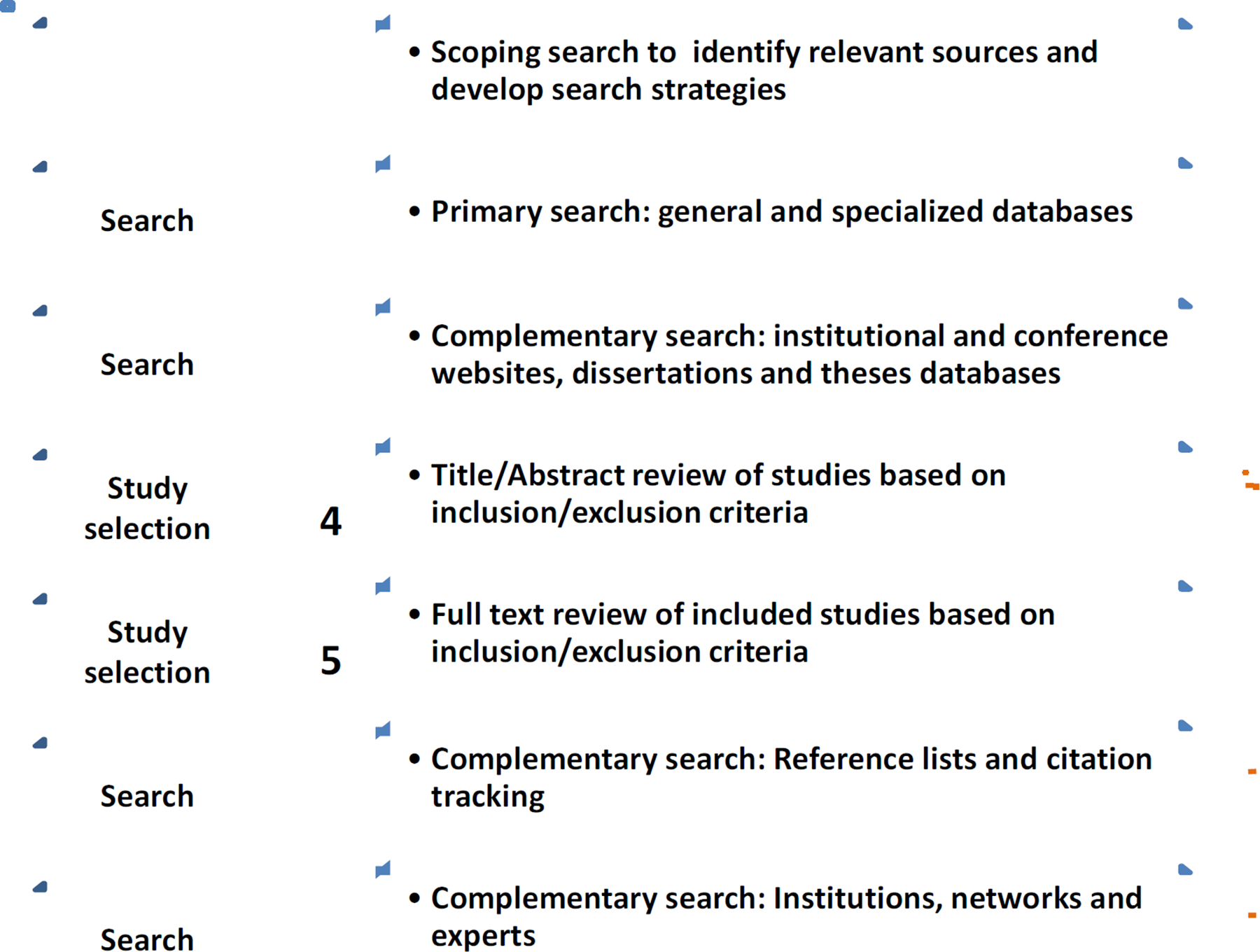
Search and selection process
3.2.1.1 Managing and documenting the search and selection process
The search and selection process will be conducted in parallel by at least three researchers. The review team uses EndNote to manage and document the process. The software allows decision tracking for each identified citation throughout the search. Bibliographic information of studies from electronic databases will be imported into EndNote as well as databases with compatible formats. The review team will explore using Zotero as an intermediary software when information cannot be easily exported into EndNote and, ultimately, will enter the details manually into EndNote if needed. Manual entry will also be executed on studies that cannot be excluded on title or abstract and are not already recorded. EndNote will support duplicates checks across different databases.
To enable transparency and reproducibility the review team will keep records of the search process. The search log includes the database, the database interface, the type of database, the customized search strategy, the language of search terms, the search string, the number of records obtained, the date of search and initials of the researcher. The overall search and screening process, including counts of studies included and excluded in the screening process, will be documented in a flow-diagram in the final report.
3.2.2 Data sources and search strategies
3.2.2.1 Scoping search
The search aims to arrive at a comprehensive and unbiased set of relevant studies. To this end, the review team systematically tested and screened 85 potentially relevant sources to identify pertinent sources and develop customized search strategies. The sources include general databases, specialized databases, institutional websites, conference websites, dissertations and theses databases and grey literature databases that are potentially relevant for the systematic review. A list of sources identified and used for the scoping search is presented in the Appendix.
For each source, the review team tested and documented several search strategies in the review's search log and identified one or more preferred search strategies that yielded a comprehensive and precise set of potentially relevant results for each source. Depending on the possibility of carrying out advanced searches, the review team applied the following search strategies to strike a balance between sensitivity and precision of results:
(Exposure terms OR thesaurus terms) (Exposure terms OR thesaurus terms) AND (Outcome terms OR thesaurus terms) (Exposure terms OR thesaurus terms) AND (Outcome terms OR thesaurus terms) AND (Subject terms OR thesaurus terms) (Exposure terms OR thesaurus terms) AND (Outcome terms OR thesaurus terms) AND (Subject terms OR thesaurus terms) AND publication date: 1990–current (Exposure terms OR thesaurus terms) AND (Outcome terms OR thesaurus terms) AND (Subject terms OR thesaurus terms) AND publication date: 2000–current (Exposure terms OR thesaurus terms) AND (Outcome terms OR thesaurus terms) AND (Subject terms OR thesaurus terms) AND (Methodology terms OR thesaurus terms).
Exposure terms: training job Outcome terms: employment labour Subject terms: youth young adolescent student.
The team tested 20 keyword combinations of these search terms, each consisting of one exposure or outcome term combined with one subject term. Each combination was used to conduct a search, separately, for each of these sources. In addition, the review team identified relevant themes and topics to complement the keyword search. For databases/websites which do not allow the combination of keywords, separate keyword searches were conducted for the nine terms.
To determine the relevance of sources, the review team screened the titles of the first 50 results of each preferred search strategy. Depending on the number of potentially relevant studies included among the 50 results, the source was classified as being of low, medium or high relevance. The relevance of sources was considered low if, within the first 50 results, there was not a quantitative study related to a youth employment intervention.
This iterative scoping search was instrumental in identifying and developing customized search strings that yielded relevant results. However, the preferred search strategies for 85 databases and websites yielded more than 85,000 results. Based on the review of preferred search strategies during the scoping search, databases and websites will not be included in the final search strategy if the review team does not have access to the source (e.g. SocIndex), the source is considered of low relevance (e.g. African Economic Outlook), or the source is covered by another source (e.g. ILO working papers are included in Labordoc). The following sections present the final search strategy.
3.2.2.2 Primary search
The primary search of databases includes a wide range of general databases and those databases specialize in literature relevant to development economics and labour market issues. If additional relevant databases are identified through our search process, we will consider searching these as well. Based on the review during scoping search, relevant electronic bibliographic databases to be searched include those listed below.
3.2.2.2.1 General databases
ABI/INFORM Global Cambridge Scientific Abstracts (CSA)13
ASSIA (Applied Social Sciences Index and Abstracts) (CSA) EconLit (CSA) ERIC (Education Resources Information Centre) (CSA) IBSS (International Bibliography of the Social Sciences) JSTOR http://www.jstor.org/
PAIS International (CSA) RePEc (Research Papers in Economics)/IDEAS Economics and Finance Research: http://ideas.repec.org/
Social Science Citation Index (SSCI) of Web of Science Sociological Abstracts (CSA) SSRN (Social Science Research Network) http://www.ssrn.com/
3.2.2.2.2 Specialized databases
3ie Database of systematic reviews http://www.3ieimpact.org/evidence/systematic-reviews/
3ie Registry for International Development Impact Evaluations (RIDIE) http://ridie.3ieimpact.org/
3ie Register of Impact Evaluation Published Studies (RIEPS) http://www.3ieimpact.org/evidence/impact-evaluations/
Abdul Latif Jameel Poverty Action Lab (J-PAL) Evaluation and Publication Database http://www.povertyactionlab.org/
British Library for Development Studies (BLDS) http://blds.ids.ac.uk/
ELDIS http://www.eldis.org/
Innovations for Poverty Action (IPA) Database http://www.poverty-action.org/project-evaluations/search
JOLIS library catalogue - International Finance Corporation, International Monetary Fund and World Bank http://jolis.worldbankimflib.org/e-nljolis.htm
Labordoc (ILO) http://labordoc.ilo.org/
Research for Development http://r4d.dfid.gov.uk/
World Bank Poverty Impact Evaluations Database http://www1.worldbank.org/prem/poverty/ie/evaluationdb.htm
Youth Employment Inventory (YEI) http://www.youth-employment-inventory.org/
3.2.2.3 Search terms
The search terms reflect the inclusion criteria defined in section 3.1 and try to strike a balance between sensitivity (e.g. finding all articles in a topic area) and specificity (e.g. finding only relevant articles). For electronic databases with advanced search functions, we classify search terms according to three categories which will be combined by the Boolean operator “AND” to identify potentially relevant studies in each database. To ensure inclusion of papers which do not specifically report their research design in the title or abstract, the search excludes methodology terms. However, impact filters14 may be useful for sources such as OpenDOAR, which display only a limited number of results. Within each set, the search terms will be combined by the Boolean operator “OR”. These categories are 1. (ST-1) “exposure” terms - representing the interventions included in the review (ST-2) “outcome” terms - including all outcomes for which we measure effect sizes (ST-3) “subject” terms - reflecting the review's focus on youth employment programmes.
The preferred search is based on a search of exposure, outcome and subject terms using Boolean operators in title and abstract from 2000 onwards. Highly relevant databases, such as EconLit, SSRN, IDEAS and Social Science Citation Index, will be searched for studies published since 1990 in order to include potentially relevant studies between 1990 and 2000. The search terms for electronic databases and an example for ERIC are presented in the Appendix. The search strategy will be modified according to the specifications of each database. Also, when possible, synonyms and wildcards will be applied as appropriate. To account for terminology differences across disciplines, database thesauri will be consulted to ensure that all appropriate synonyms have been included. The use of synonyms will also account for British or American English spelling. Where available, we will also rely on the database's index terms and/or free-text terms.
For databases or websites with basic search functions, the review team adjusted the search terms due to limited functionality of search functions. During the scoping search, 20 keyword combinations of search terms, each consisting of one exposure or outcome term combined with one subject term, had been tested. Due to the high number of duplicates between the search strings, the review team will only apply the most relevant search strings which yield a comprehensive and precise set of results. The search strings (employ* OR labour OR labor) AND (youth) appeared to yield the most relevant results. In addition, the review team identified relevant themes and topics to complement the keyword search. For databases/websites which do not allow the combination of keywords, separate keyword searches will be conducted for “employ*”, “labour”, “labor” or “youth”.
In general, the search process will be iterative and flexible to enable it to adapt over the search period. For example, we will include additional relevant subject headings identified in included studies throughout the search process. Similarly, we will browse the subject/thesaurus term indexes to work out which additional search terms might identify papers of interest. This will also be documented in the final report. The final review will report details of the modifications for each database, along with the results.
3.2.2.4 Complementary search
The primary search will be supplemented by a complementary search to include further studies for inclusion. The complementary search includes screening and hand-searching of relevant websites/gateways and conference websites, literature snowballing as well as contacting experts and relevant institutions.
3.2.2.4.1 Hand-searching of relevant websites/gateways
The search will be undertaken for relevant institutional websites and recent conferences as well as dissertation and theses databases. We believe that all relevant journals are covered by the primary search. We will therefore not hand-search websites of relevant individual journals unless they are not indexed. To identify studies that have not yet been indexed by the indexing tools, the review team will manually scan the table of contents in the most current issues of journals in which a large number of included studies have been found.
The hand-searching strategy will be customized for each website. Search terms will be used for websites that include a search facility. Otherwise, relevant sections (for example, “documents” or “publications”) will be searched.
African Development Bank Evaluation Reports http://www.afdb.org/en/documents/evaluation-reports/
Asian Development Bank (ADB) Evaluation Resources http://www.adb.org/site/evaluation/resources
Bureau for Research and Economic Analysis of Development (BREAD) http://ipl.econ.duke.edu/bread
Campbell Collaboration Library: systematic reviews http://www.campbellcollaboration.org
Center for Economic Studies (CESifo) http://www.cesifo-group.de/ifoHome.html
Centre for Economic Policy Research (CEPR) http://www.cepr.org
ESRC (Economic and Social Research Council) http://www.esrc.ac.uk/publications/
Global Development Network (GDN) http://www.gdnet.org/index.html
Institute for Development Policy and Management (IDPM) at the University of Manchester http://www.sed.manchester.ac.uk/idp m/ Institute for Fiscal Studies - Centre for the Evaluation of Development Policy http://www.ifs.org.uk/edepo/index.php
Institute for the Study of Labor (IZA) http://www.iza.org
Institute of Development Studies (IDS) http://www.ids.ac.uk/
Inter-American Development Bank Office of Evaluation and Oversight http://www.iadb.org/en/office-of-evaluation-and-oversight
Millennium Challenge Corporation (MCC) http://www.mcc.gov/pages/results/evaluations
National Bureau of Economic Research (NBER) http://www.nber.org
Overseas Development Institute (ODI) http://www.odi.org.uk/
Poverty and Economic Policy Research Network (PEP): Project List http://www.pep-net.org/publications/pep-projects/
UNDP International Policy Centre for Inclusive Growth (IPC-IG) http://www.ipc-undp.org/
United States Department of Labour, Employment and Training Administration, Research Publication Database http://wdr.doleta.gov/research/
University of California Center for Effective Global Action (CEGA): Research Projects http://cega.berkeley.edu/research/
USAID Development Experience Clearinghouse https://dec.usaid.gov/
World Bank Independent Evaluation Group (IEG) http://ieg.worldbankgroup.org
World Bank Labor Markets http://www.worldbank.org/labormarkets
If the review team identifies further relevant institutional websites or databases, for example through the 3ie Register of Impact Evaluation Published Studies (RIEPS) Protocol (Mishra and Cameron, 2013), the review team will include these websites in the complementary search. The overlaps in specialized databases and relevant institutional websites as indicated in the Center for Global Development (2013) list of impact evaluation databases will be addressed by starting the search with the most comprehensive specialized databases, such as the 3ie Impact Evaluation Database and searching other specialized databases particularly for studies that have not yet been included. We expect that most studies included in NBER, CEPR, IZA and CESIfo will be covered by IDEAS or SSRN. However, we will cross-check these websites for studies not covered by IDEAS or SSRN.
Conference websites will be searched for possibly relevant studies. The systematic review team believes that the majority of possibly relevant ongoing and unpublished studies will be presented in one of the following conferences that were held in 2012 and 2013. Therefore, the review team will not search for conference abstracts or proceedings through specialist database sources. However, the list of conferences can be extended if the review team identifies other conferences that are deemed relevant for the research question throughout the search process.
7th IZA/World Bank Conference: Employment and Development, November 2012, http://www.iza.org/conference_files/worldb2012/
8th IZA/World Bank Conference on Employment and Development, August 2013, http://www.iza.org/conference_files/worldb2013/viewProgram?conf_id=2392
IZA conferences and meetings in 2012 and 2013, http://www.iza.org/en/webcontent/events/izaconferences_html
2012 Global Youth Economic Opportunities Conference, September 2012, http://www.youtheconomicopportunities.org/
2013 Global Youth Economic Opportunities Conference, September 2013, http://www.youtheconomicopportunities.org/
Ideas4Work Conference: Youth Employability and Entrepreneurship in Africa, January 2013, http://iyflive.net/events/ideas-4-work
Arab Youth & Entrepreneurship: Holistic Approaches to Nurturing Local Ecosystems, February 2013, http://aye2013.org/
Youth Entrepreneurship Knowledge sharing Symposium for East Africa, September 2013, http://www.ilo.org/addisababa/events-and-meetings/WCMS_221001/lang-en/index.htm
Regional Youth Employment Consultation in Latin America, International Development Research Centre (IDRC) and Instituto de Pesquisa Econômica Aplicada (IPEA), December 2013 Regional Impact Evaluation Workshop: Quality education, skills and productivity among youth in Africa, World Bank, September/October 2013 Evidence Symposium: Increasing Youth Productivity in the Middle East and North Africa, ILO, March 2014,
http://www.ilo.org/empent/Eventsandmeetings/WCMS_234442/lang-en/index.htm
To include possibly relevant dissertations and theses that are not indexed in bibliographic databases, the review team will search national and international dissertation and theses databases. Search terms will be used for databases that include a search facility.
Networked Digital Library of Theses and Dissertations (NDLTD) - SCIRUS ETD Search http://www.scirus.com/srsapp/advanced/
ProQuest Dissertations and Theses Databases www.proquest.co.uk/en-UK/catalogs/databases/detail/pqdt.shtml
Electronic Theses Online Service (EThOS) http://ethos.bl.uk
3.2.2.4.2 Reference lists and citation tracking
As outlined in Figure 2, the review team will conduct citation tracking. For this purpose it will rely on Google Scholar and IDEAS. Screening all studies which cited included studies will help to identify further studies for inclusion. The reference lists of included studies and relevant existing reviews and meta-analyses will be searched for studies. In addition, the review team will search the bibliographic information of the 2013 World Development Report (World Bank, 2014), the IEG report (IEG, 2013) and the J-PAL Youth Initiative review Paper (J-PAL, 2013). The bibliographic information contained within the reference lists will be hand-searched for potentially relevant studies. To our knowledge there is only one rigorous review of youth employment interventions that seeks to answer a similar question. The 2007 World Bank review by Betcherman et al. (2007) was based on the evidence gathered by the YEI, an online global repository of studies and information on labour market programmes for youth. Other reviews and meta-analyses such as Card et al. (2010), Cho and Honorati (2013) and Kluve (2010) will be screened for studies if the review team considers them relevant. The 3ie Database of systematic reviews and the Campbell Collaboration Library will be searched for relevant systematic reviews that can be screened for studies.
3.2.2.4.3 Institutions, networks and experts
The review team will contact authors of previous reviews or included studies, experts and focal points in relevant institutions, asking if they know of any studies (ongoing, published or unpublished) that might be relevant in addition to the studies that have been included after review of full reports.
Inter-Agency Network on Youth Development (IANYD) and UN Youth Flash Newsletter System Wide Action Plan on Youth (SWAP): Sub-working group on employment and entrepreneurship (including CEPAL, FAO, IFAD, ILO, ITU, UN-HABITAT, UNCDF, UNESCO, UNDP, UNIDO, UNEP, UNRWA, UNV, UN Women, UNWTO, WIPO and YEN) Global Partnership for Youth Employment (GPYE) Youth Employment Network (YEN) focal points in relevant multilateral institutions and their respective regional offices (such as IADB, FOMIN, OECD and World Bank) Focal points of the YEN Lead Country Network, a group of governments from developing and emerging countries that have voluntarily committed themselves to prioritizing youth employment on their national policy agendas YEN focal points in relevant national development agencies/ministries and their respective regional offices (such as GIZ, CIDA, SIDA, Federal Ministry for Economic Cooperation and Development, Germany) Key research institutions such as J-PAL, IZA, NBER
Kamilla Gurmede, former Director, J-PAL Africa Munshi Sulaiman, Postdoctoral Research Associate at Economic Growth Center, Yale University and former Research Coordinator for BRAC International Programme, Uganda Nathan Fiala, Assistant Professor, University of Connecticut, USA Luka Jonathan Mangset, Department of Enterprise Development and Promotion, Federal Ministry of Youth Development, Nigeria Roberto Suarez Santos, Deputy Secretary-General, International Organisation of Employers (IOE) Laura Brewer, Skills and Employability Specialist, International Labour Organization (ILO) Haroon Bhorat, Director of the Development Policy Research Unit, Professor of Economics at the University of Cape Town, South Africa Christian DaSilva, Canadian International Development Agency (CIDA) Helen Osborne, Director, Strategy and Performance, Youth Business International (YBI) Gerhard Ressel, Federal Ministry for Economic Cooperation and Development, Germany
A list of experts and focal points is provided below: Gordon Betcherman, University of Ottawa David McKenzie, World Bank Mattias Lundberg, World Bank Furio Rosati, Understanding Children's Work (UCW) programme Robert Sauder, Canadian International Development Agency (CIDA) Emilie Milroy, Canadian International Development Agency (CIDA) Kristin Hausotter, Deutsche Gesellschaft für Internationale Zusammenarbeit (GIZ) David Rosas, Inter-American Development Bank Pablo Ibarrarán, Inter-American Development Bank Peter Wichmand, International Labour Organization (ILO) Mariel Sabra, Multilateral Investment Fund (FOMIN) Sandy Jambawai, African Development Bank Paul Gertler, University of California, Berkeley José Luis Polanco, Programs Coordination Unit, Ministry of Labour, Dominican Republic Carolina Robino, Programme Officer, International Development Research Centre (IDRC) Iris Boustros, Senior Programme Specialist, International Development Research Centre (IDRC)
3.2.2.5 Addressing potential biases
The review team will perform a comprehensive search to address potential biases, such as publication, time lag and language bias. The translation service offered by Google (http://translate.google.com/) will be used to translate information into English in cases where the title and/or abstract are not in English, Spanish, French, German or Portuguese. Keywords will be searched in internet search engines using Google Scholar to identify potentially relevant studies. During the scoping search, the keyword “employment” was used to test 85 sources on the availability of results in Spanish, French, German and Portuguese. For databases that yielded results, keyword searches in Spanish, French, German and Portuguese will be included in the search strategy. A list of keywords for search in English, Spanish, French, German and Portuguese is presented in the Appendix. While the review considers studies published after 1990, it is believed that most of the relevant studies that comply with the review's inclusion criteria were published after 2000.
The review team expects to identify ongoing and unpublished studies in the grey literature through the screening and hand-searching of relevant websites/gateways and conference websites, citation tracking and contacting experts and relevant institutions. In addition, a keyword search will be undertaken for the following grey literature databases: OpenGrey http://www.opengrey.eu/
Directory of Open Access Repositories (OpenDOAR) http://www.opendoar.org/
3.2.2.6 Study selection
The study selection will be piloted by four researchers who will screen the title, abstract and full report of a sample of reports independently and compare their results. Based on the review's inclusion and exclusion criteria, discrepancies will be resolved by further review of the respective titles and abstracts. This process will be repeated until a high level of consistency in application of the selection criteria is achieved.
The remainder of the screening will then be carried out by individual reviewers (i.e. single screening). However, in order to minimize bias, included and excluded results will be cross-checked by another researcher in EndNote. Discrepancies will be resolved by the two reviewers. For sources that can be imported to EndNote, the review team will screen title/abstract and full report of studies in EndNote after removing duplicates. In general, results will be cross-checked by another researcher. However, titles will be single-screened with quality checks on a random sample of studies.
For sources that do not allow us to export bibliographic information, we will screen title/abstract online and manually import potentially relevant results into EndNote if they are not already recorded. To this end, the review team will first screen studies that can be imported into EndNote and databases which are deemed particularly relevant. Another researcher will double-screen potentially relevant results from websites and all results of those websites which are deemed particularly relevant, such as the 3ie Impact Evaluation database, the World Bank Poverty Impact Evaluation database and the Youth Employment Inventory. The translation service offered by Google (http://translate.google.com/) will be used to translate information into English in cases where the title and/or abstract are not in English, Spanish, French, German or Portuguese. Within each step of the selection procedure (see Figure 2), researchers will work through exclusion criteria hierarchically, as defined in section 3.1 and the screening questionnaire provided in the Appendix.
If the exclusion criteria are met, the study will be dropped from further screening but a record of this decision will be kept in the reference management software EndNote. If the study is “potentially relevant” according to the inclusion criteria, the study proceeds to the next round of screening. In case the title and/or abstract of a study do not provide enough information, or when the research is in doubt, the respective selection criteria will be classified as “unsure” and the study will proceed to the next round of screening.
If more than one study of the same programme meets the inclusion criteria or an updated version of the study is available, one of the principal investigators will determine which of them will be included (see section 3.4). In the event that full-text versions do not allow for a final decision, disputes will be resolved by one of the principal investigators. The involvement of research institutions such as the World Bank and the International Labour Organization in this systematic review ensures that full-text access to all publications found relevant in the first two steps of the search process should be possible. In the event that the full text of studies which have been deemed relevant during the selection process is not available or does not provide sufficient information to include or exclude the study, we will contact the authors to ask for English-language versions or further information about the impact evaluation. Screening against the selection criteria will then proceed as normal.
3.3 Description of methods used in the component studies
The review will collect component studies that conduct impact evaluations of youth interventions. The objective of an impact evaluation is to estimate quantitatively the causal effect of the intervention on the outcome it intends to influence. Modern evaluation research has come to utilize a counterfactual concept of causality, which in several steps of methodological development over the past decades has taken on the shape in which it is used today (Holland, 1986). This causal model defines the causal effect of a treatment as the difference between the factual outcome (“Of the 100 training participants x per cent found a job”) and the counterfactual case (“What percentage of the same 100 training participants would have found a job without the programme?”). Clearly, the counterfactual is a hypothetical construct and can never be observed in data, since no individual or group can be both exposed and not exposed to the intervention simultaneously. Holland (1986) refers to this as the fundamental problem of causal inference. In order to evaluate the effect of the treatment, we therefore always need to compare distinct units receiving the different levels of the treatment. Such a comparison can involve different physical units or the same physical unit at different times (Imbens and Wooldridge, 2009).
As indicated in section 3.1.5, the most commonly used evaluation parameter is the ATE. However, it should be noted that some evaluation studies do not estimate ATE but intention-to-treat parameters (ITT). The ITT case does not look at actual exposure to the treatment but generates treatment and control groups according to the initial assignment (sometimes a practicability issue, sometimes a design decision). The logic of the counterfactual causal model, however, is not affected by whether ITT or ATE parameters are estimated. Given the increased weight of ITT for policy recommendations (Bloom, 2006), this review will incorporate studies with ATE, ATET and ITT parameters. In the absence of ITTs, the review team will explore ways of computing them.
3.4 Criteria for determination of independent findings
For the purpose of clarity, we set forth the following terminology for the remainder of the protocol:
A youth employment programme (e.g. “Jóvenes En Acción” in Colombia) may consist of several different interventions (e.g. training or job-search assistance). These interventions may be evaluated by more than one study (e.g. evaluation), which may each publish multiple reports (e.g. working papers, journal publications). We treat two reports as part of the same study if they are based on the same data and hence cannot be treated as independent, even if they are written by different authors. Each outcome category (e.g. employment outcome) may be measured by different outcome constructs (e.g. employment probability, unemployment probability). Each report may present different treatment effect estimates for the same outcome category– for example for different subgroups, different statistical methods, or outcome constructs. These treatment effect estimates are converted into effect sizes (e.g. standardized mean differences (SMDs)) for analysis.
Hence, an intervention population (all participants) may be different from the study population (all in dataset), which may itself be different from the sample population for a specific treatment effect estimate on a specific outcome.
Furthermore, we use the following terminology to refer to different treatment effect estimates often reported in primary studies of this review: relative effect sizes are treatment effects measured against an alternative treatment (in contrast to those measured against the non-exposure state); conditional effect sizes are effects measured conditional on some other outcome; and, partial effect sizes are computed from multivariate models, controlling for covariates which are believed to affect the outcome.
In a meta-analysis, the unit of analysis is the study. To maintain the independence assumption, it is important that one effect size per outcome-construct and study (and for each subgroup, if reported) is included in the analysis (Borenstein, Cooper, Hedgers & Valentine, 2009). This implies that different estimates within each study have to be combined into one effect size per subgroup. There are various ways in which individual effect size estimates may be correlated. For example, studies may analyse different subgroups of the treatment population, outcomes at different times but on the same units, multiple treatments or variations of the above.
Estimated treatment effects may be regarded as independent from each other when the underlying data are derived from different sample populations. This is the case if a study reports treatment effects for, say, different subgroups but not an overall estimate. We also regard this to be the case if we have multiple treatment effects from studies (which use different data samples) for the same programme. In such cases, we create a (within-study) summary effect size by estimating a random effects (RE) model prior to the pooled analysis across studies. The specification of the random effects model is discussed in section 3.6.4.2 of this protocol (based on Borenstein et al., 2009, equations 12.2-12.8).
In contrast, treatment effects cannot be regarded as independent of each other when multiple effects are estimated for the same sample of participants (that is, some participants contribute information to more than one effect estimate). This may arise if, for example, a study reports treatment effect estimates on: multiple outcome constructs for the same type of outcome (e.g. hourly wages and annual income as part of earning outcomes) multiple time-points for the same individual (e.g. repeated observations for several follow-up periods) multiple treatment groups and the same control group.
In such cases, we will create a synthetic effect size to obtain one (composite) effect size per study and outcome construct. To arrive at an unbiased effect size, we compute a sample-weighted average across dependent effect sizes per study using the formulas provided in chapter 24 of Borenstein et al. (2009). In order to account for differences in sample sizes, effect sizes will be averaged by using an inverse variance weighting of the individual effect size. Hence, effect sizes based on larger studies are given more weight in the combined effect size. To compute its variance (equation 24.5), we assume a correlation coefficient r equal to 1 (between effect sizes being combined).15
In the event that one study uses different methods to estimate treatment effects for the same outcome (and subgroup), the estimate with the lowest risk of bias will be used as the main record.16 This will also be the case, if several reports exist, using the same set of data but, for example, different estimation methods. If a study reports several types of treatment effect estimates (such as ATE, ATET, LATE or ITT, see section 3.3), we will code all of them and separate them in the final analysis. As the ITT estimate is usually regarded as the more policy-relevant parameter (Bloom, 2006), we will generally base our results on the later. If possible, we will compute ITT from ATE estimates based on information reported on compliance rates using the formula provided in Bloom (2006).
In some cases it may not be immediately apparent which estimate has the lowest risk of bias (RoB, see section 3.6)) (e.g. nearest neighborhood vs. kernel matching). If a report included in the review used several estimation methods within the same study which cannot be ranked by our RoB assessment, we will choose between different statistical methodologies following a procedure similar to that outlined in Tripney et al. (2013, section 2.5, p. 29ff), who draw from available practical guidance on this topic. In the event that the first and second coder cannot come to an agreement about the estimate with the lowest RoB, the decision will be taken by one of the PIs.
Finally, in cases where a single report presents effect sizes for more than one study (e.g. different programmes/datasets), the respective effect sizes will be coded as if they had come from separate reports.
If it is unclear whether multiple reports provide independent findings, we will contact the authors for clarification. The decision will be recorded as part of the study selection process.
Once effect sizes have been combined at the study level, each (composite) effect size can be considered independent and analysed using meta-analysis methods as discussed in the following section.
3.5 Details of study coding categories
For our analysis, eligible studies will be coded on variables related to study methods, the nature of the intervention and its implementation, the characteristics of the subject samples, the outcome variables and statistical findings, and contextual features. The following describes some of the study level variables that will be coded for each of these types of characteristics.
In order to assess the risk of bias of primary studies, we are adapting the framework proposed in Duvendack et al. (2011, 2013) and utilised recently in Vaessen et al. (2014). The approach combines an assessment of both research design and the method of statistical analysis. By placing RCTs at one end of the spectrum and cross-section designs at the other, the tools aims to reflect the potential capacity of these statistical methods to control for the potential biases of quasi-experimental designs.17
We will assess risk of bias according to the design-based approach.
We will use these variables in sensitivity and moderator analyses. Variables that could be used as potential effect size moderators. These include: age groups, gender, level of education, occupation categories and geographic location. In addition, a potential study level moderator that will be coded is the set of methodological characteristics used (see study methods above).
As mentioned in section 3.1.4, outcomes are grouped into three main categories: employment, earnings and business performance outcomes. The study outcomes for employment that will be extracted from the selected studies include employment probability, hours worked and unemployment duration, among others. The study outcomes for earnings are: income, consumption and salary/wage, among others. Those for business performance are: profits, sales, capital and investment, among others.
Specifically, the coding sheet is structured as follows. Variables related to the study and programme identification, date and type of publication are in the section labelled Identifiers. The next section presents the data used and study methods. The intervention characteristics are given in the section Intervention category. The following sections of study level information are related to the programme characteristics. As elaborated in section 1.3, we restrict our analysis to four types of programmes: skills training, entrepreneurship promotion, employment services and subsidized employment. The final section for study level information contains variables that provide a general description of the overall programme. It encompasses general information on the dates of the programme's start and end, the country in which the programme is being/has been implemented, its scale, the financing and implementing agencies and the involvement of private sector and civil society in the design and implementation of the programme.
Listed after the variables of study level information, we provide a section detailing “effect size level” variables, which contains information on the set of outcome variables mentioned above as well as summary statistics of the target group (such as age, gender, educational attainment and income status). In addition, it includes all reported effect size statistics that will be coded (number and mean of controls and treatments, regression coefficients, statistics for test of significance and the date of the effect size).
A comprehensive list of information (i.e. variables) that will be extracted (both study level and “effect size level” variables) from the studies is included in a summary of the coding tool in the Appendix.
The studies are being double-coded manually into a spreadsheet by a team of six coders. Two drafts of the coding tool were tested by coders based on 33 studies of impact evaluations of youth employment programmes. The coding tool has been updated as necessary based on additional feedback from the coding process as well as in response to comments and suggestions received from 3ie as well as during the Campbell Colloquium and 3ie's conference in Manila. Coding rules and definitions have been specified in a coding manual.
3.6 Statistical procedures and conventions
3.6.1 Standardizing effect sizes
Since the measurement of effects differs widely across studies, outcome measures need to be standardized for comparability. According to Cho and Honorati (2013, p. 15) “the effect size provides a measure of ‘how well did it work’ without confounding the effectiveness of a program with the sample size used in a study” and hence provides “a more reliable, comparable measure of program success”. The quantitative meta-analysis will be based on all studies for which the relevant information to compute comparable effect sizes can be gathered.
We will focus on calculating standardized mean differences (Hedges g)18 for both continuous outcome variables (e.g. income) and dichotomous outcome variables (e.g. employment probability). The standardized mean differences (SMD) represent the difference between the means in treated and control groups (the treatment effect) as measured relative to the variability of the respective outcome observed in that study. Although risk ratios or odds ratios are sometimes regarded as more appropriate for synthesizing dichotomous outcomes, testing the coding sheet on a prior set of studies showed that most studies do not report sufficient information. Hence, using odds ratios in the analysis would be likely to lead to a substantial loss of information (cf. Tripney et al., 2013).
From an initial survey of studies likely to be included in the review, it became obvious that most studies report either matching- or regression-based estimates of the treatment effect (even for RCT-based designs).19 Hence, we expect that SMDs in most cases will be computed using the formulas given in Borenstein et al. (2009) and Keef and Roberts (2004; cited in Waddington et al., 2012, p. 372f):
For studies using parallel group or matching-based strategies g and its standard error SEg
are computed as 
Where 


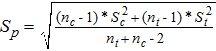
With St and Sc as the standard deviation in the treatment and control group (Hedges' approach). If neither Sp or St and Sc is available, we will try to derive an adequate estimate for the standard deviation based on assumptions (e.g. equivalence of the standard deviation in both groups). Similarly, we will attempt to impute missing information on sample. Such procedures will be documented in the final report.
For partial effect sizes estimated using multivariate analysis g and its standard error are estimated based on formulas described in Keef and Roberts (2004):
Where 

There are two approaches for the calculation of the pooled standard deviation from regression-based studies. In Hedges' approach, 


In the event that the necessary information for calculating SEg is not available,
we will approximate it by 
where t is the t-value associated with a t-test on the treatment effect of a regression.
For some studies, we will have to transform reported statistics (often t, F, p or z-values) prior to calculating effect sizes. We will transform this data following the procedures suggested in Lipsey and Wilson (2001).
For studies that report sufficient data on post-intervention treatment and control group outcomes (e.g. means, sample sizes and information from which to compute the pooled standard deviation) for the (matched) samples of participants and non-participants are available, effect sizes will be computed using the Lipsey/Wilson Effect Size Calculator.21 Since the Lipsey/Wilson Effect Size Calculator does not correct for potential biases in small-sample studies, we will convert these into Hedges' g using the adjustment factor suggested in Lipsey and Wilson (2001).
All effect sizes will be computed such that positive effect sizes represent positive outcomes (i.e. the intervention increases wages, reduces unemployment duration). All effect sizes will be coded along with original values of effect sizes and significance tests. The latter should enable us to replicate and verify the calculation of SMDs as well as to check for any systematic relationship between reported statistical measures and effect sizes.
3.6.2 Unit of analysis error
We will also correct the standard errors for a possible unit of analysis error. A unit of analysis error typically arises if the study conducts analysis and programme placement at different levels and the analysis does not adequately account for this clustering (e.g. use cluster robust standard errors, variance components analysis).22 In such cases, the analysis would yield narrower confidence intervals than the true confidence intervals, increasing the risk of Type-I error. This can be a problem in cluster randomized trials or in quasi-experimental studies in which treatment allocation is clustered.
If we suspect that studies may be biased by a unit of analysis error, we will adjust standard errors (SEg
) by the formulae suggested in Higgins and Green (2011, p. 16.12ff):
where m is the number of observations per cluster and ICC is the intra-cluster correlation coefficient, which is an estimate of the relative variability within and between clusters (Waddington et al., 2012, p. 370). This formula corrects for the fact that, due to dependence across observations, the effective sample size is smaller than the total sample size.
As the information necessary to apply the correction formula is often not available, we may have to resort to other methods to account for the unit of analysis problems (as described in Higgins and Green, 2011, p. 16.14). We will also conduct sensitivity analyses to investigate the robustness of the conclusions. The final report will identify any cluster-randomized trials in the review and state how the potential unit of analysis error has been dealt with.
3.6.3 Treatment of missing information
A first screening of potential studies for the meta-analysis has shown that many do not report sufficient data to compute effect sizes and their standard errors. Most often, we find that the post-intervention mean and/or standard deviation of the outcome variable is not reported. In such cases, we will either try to impute the data from available information or we anticipate having to apply certain assumptions to calculate effect sizes. In this event, we plan to allow assumptions similar to those applied in a previous Campbell-registered systematic review by Baird et al. (2013). The exact assumptions needed to compute effect sizes will be documented in the final report.
Where a study's documentation of effect sizes does not even allow these computations to be performed, we will contact the authors to request further information. If this approach is not successful, the study will be excluded from the meta-analysis on the basis of insufficient data. For these studies, we will present the available information and discuss their findings narratively. This process and the potential effect it may have on the review's outcome will be documented and discussed in the final report.
If we find that the necessary information to calculate the standardized mean difference (g) cannot be obtained for a large set of studies, we will try to compute response ratios (for continuous and binary outcomes) where possible. Response ratios are computed as the difference in the outcome between the treatment and control group relative to initial outcome in the control group (cf. Lipsey and Wilson, 2001). Where possible, we will approximate the standard error of the response ratio using the t statistics/p-value of the regression coefficient or of the results of the t test for equality of means between groups after matching. We will compare results with those where computation of SMDs was possible as part of the sensitivity analysis. If applied, the respective methods will be detailed in the final report.
Some reports may not detail all intervention-specific variables that we aim to include as moderator variables into our meta-analytic model. A subsequent step in the research process – subject to further discussion – is therefore to check in which cases it is possible to supplement the missing programme information. First, we will gather information from working paper versions of the respective studies, since these tend to be more detailed than published articles. Second, we will try to collect the information from other literature on the respective programme and during the same time period. This may comprise other impact evaluations, process evaluations or programme documentation.
All these steps will be documented throughout the research process and will later be used to check whether our results are sensitive to the inclusion of data from external sources.
3.6.4 Data synthesis
Once the coding process has been concluded, the extracted data will be imported into Stata to conduct the statistical analysis.
3.6.4.1 Descriptive analysis of studies and interventions
The analysis will begin with a descriptive examination of all project studies that are included in the sample based on the study selection process (see section 3.1). This section will aim to present a conclusive picture of the existing literature on youth employment interventions. The descriptive analysis will report the distribution of our sample by programme characteristics (e.g. intervention type, regional allocation, timing and population) as well as by study characteristics (e.g. publication date, methodology, outcome measure). It will be based mainly on descriptive summary tables.
3.6.4.2 Meta-analysis
The analysis will subsequently examine to what degree the collected data allow for a quantitative meta-analysis using a random effects statistical model. We assume that data will at least be sufficient to conduct a pooled meta-analysis within each of the three outcome categories (e.g. employment, earning and business).
As a first step of the meta-analysis, we will investigate the computed effect sizes and present summary tables and graphical overviews (such as forest plots) alongside with the 95 per cent confidence intervals. This will be done using the “metan” command in Stata. To account for differences in sample sizes for individual studies, we will synthesize effect sizes across studies using inverse-variance weighting of the individual effect sizes. This is recommended in settings which present significant contextual heterogeneity in terms of study population, intervention and implementation. If the number of observations allows, we will use the technique developed by Hedges, Tipton & Johnson (2010) to estimate robust standard errors in the meta-analysis model in order to account for statistical dependencies (in addition to the methods discussed in section 3.4).
The data synthesis will separate studies with different kinds of counterfactuals (i.e. “treatment vs. no treatment” studies are analysed separately from “treatment vs. alternative treatment” studies). If we find enough studies that assess the relative effectiveness of different programmes vis-à-vis each other (i.e. training alone vs. training and job-search assistance combined), we will consider estimating a network meta-analysis model as described in Grant and Calderbank-Batista (2013). If the number of such effect sizes is not sufficient, we will descriptively present major findings on the relative effectiveness of youth employment interventions, along with information on the respective methods.
3.6.4.3 Assessment of heterogeneity
This research project analyses a broad range of heterogeneous interventions, outcome measures and study designs. Due to the strong heterogeneity of methodological designs and interventions, the legitimacy of estimating a pooled model within outcome categories is difficult to foresee prior to our study selection process. We will investigate heterogeneity within outcome categories by (i) types of outcomes and (ii) by intervention category (if possible). To test for overly strong heterogeneity across studies we employ I2 statistics, Q-statistics, as well as the τ2 statistic. These statistics test whether the percentage of variability in effect estimates may be due to heterogeneity rather than by chance. A significant Q (P <.05) and an I2 value of at least 50 per cent will be considered as indicators of heterogeneity.
Following guidance from the Campbell Collaboration (2014, p.9), we will present findings for effect sizes separately by study design (randomized vs. quasi-experiments). Where we find no empirical evidence for differences in effects, we will pool estimates. In cases where we detect substantial heterogeneity within outcome categories, we will examine potential sources by stratifying the meta-analysis further along different dimensions. To avoid “comparing the incomparable” we expect to stratify data synthesis at least by intervention categories as defined in section 3.5. If sample sizes allow, we will stratify the analysis further by subgroups (e.g. by gender or age). Also, we aim to analyse the change in effect size by time elapsed after programme completion.23
In the event that we have enough data points by outcome category, we will attempt to analyse the factors explaining heterogeneity by moderator analysis using a meta-regression model. According to Borenstein et al. (2009) a minimum of ten studies of sufficient quality are required to test the effect of individual moderator variables. The analysis will be carried out using a random effects meta-regression model, as described in Higgins and Green (2011). For this, we expect to employ the “metareg” command in Stata.
As discussed in section 3.5, we anticipate coding a broad set of variables related to intervention and study design as well as contextual factors to be used as potential moderator variables. This will permit us to analyse which characteristics are associated with larger and smaller treatment effects. The final set of moderator variables will depend on the available data. The exact specification of the random effects meta-regression model will be documented and discussed in the final report.
If a moderator analysis is not possible, we will discuss and explore the factors which may be driving the heterogeneity of results narratively.
3.6.4.4 Sensitivity analysis and detection of biases
We will conduct a range of sensitivity checks to test the robustness of our results. Sensitivity analysis will be carried out by restricting the meta-analysis to a subset of all studies included in the original meta-analysis. Most importantly, the sensitivity analysis will test the impact of our review decisions on the report (such as the chosen methods for standardizing effect sizes, the relevance of missing data or the decisions regarding the independency of the findings). Further, we will test for the influence of methodological designs, econometric specifications and data sources. We will also test the potential of exclusion of low-quality studies from the synthesis and the exclusion of statistical outliers. We will also explore heterogeneity in studies which use bivariate and multivariate analysis (i.e. bivariate versus partial effect sizes).
Finally, we will assess and discuss the danger of publication bias in our sample of included studies. First, by testing the effect of publication status in our meta-regression model; that is, we will include the standard error of the effect size as a covariate in meta-regression (Egger's test, Egger, 1997) in order to test statistically for publication bias. Second, by plotting the effect size against standard errors (funnel plots). We will do this analysis using the “metafunnel” and “metacum” commands in Stata.
3.7 Treatment of qualitative research
The review will keep records of additional research papers, documents, and other information on a particular youth employment intervention including qualitative research. Supplementary information will support the review team in (i) capturing programme details and contextual variables that may not be recorded in the impact evaluation studies, and accordingly (ii) acquiring a better understanding of the underlying theory of change or the causality behind intervention types and their combined delivery.
4 ACKNOWLEDGEMENTS
We would like to thank Hugh Waddington, John Eyers, Martina Vojtkova, Janice Tripney, Michael Grimm, Anna Luisa Paffhausen, Kristin Hausotter, and participants at the Campbell Collaboration Group Colloquium in Belfast as well as at the ADB/3ie Making Evaluation Matter Conference for their support and comments on the review's methodology. We would like to thank Viviana Perego, Selahattin Selsah Pasali, Karishma Tiwari and Cheng Qian for their support and contribution to the search and coding process. Thanks as well to Sergio Graziosi and Jeff Brunton at the EPPI-Centre for their support in testing EPPI reviewer. We are grateful for feedback on the study methodology, which was provided during the workshop organized by the Evaluation unit (EVAL) of the International Labour Organization (ILO) in Geneva in 2013. The financial support of the Canadian International Development Agency (CIDA), the World Bank, the Youth Employment Network and the ILO is greatly appreciated.
Footnotes
6 APPENDIX
1
Additional entrepreneurship-related outcomes are listed in section 1.3.2 below.
2
It is important to note that the theory of change analysis does not details potential general equilibrium effects, such as substitution.
3
Targeting is critical to avoid misuse of subsidized employment programmes.
4
Programmes may create a stigmatizing effect on participants, particularly the most highly educated. In France, workfare participants carried a stigma that hindered their transition to better and more durable jobs (Bonnal, Fougere & Sérandon, 1997; and Brodaty, Crepon & Fougere, 2000). Adequate programme marketing and publicizing is important to address stigma effects.
5
Programs may create higher dependency among participants, hindering the transition into unsubsidized employment. Evidence from public works programmes in Poland indicates that the effect of the programmes on reemployment gradually diminishes after the fifteenth month of registering as unemployed (O'Leary, 1998). Addressing this concern, Galasso,  conducted a randomized experiment aiming to provide comprehensive services to workfare participants in Argentina in order to promote their transition out of welfare. The experiment, called Proempleo, offered wage subsidies and specialized training to programme participants and reported positive cost-effective impacts on their employment prospects.
6
The programmes' potential to yield stabilization benefits is higher when they are implemented at the right time. Some programmes - particularly in South Asia - are implemented seasonally to ensure that employment is available during agricultural slack seasons. Others, such as Argentina's Trabajar Program, are implemented during sharp economic crises as a means of increasing the incomes of poor families and those badly affected by recessions.
7
The ability to retain work following the expiration of the wage subsidy period also serves as a signal of the acquisition of certain work-related behavioural skills to potential future employers.
8
In a review of evaluation methods used in ALMPs, Heckman, La Londe and Smith (1999) identified a number of methodological lessons – from the recognition of a multiplicity of parameters and heterogeneous impacts intrinsic to ALMPs to the need for appropriate comparison groups and the importance of addressing selection bias. Experimental evaluations can effectively relate to these lessons by providing a framework that relies on credible comparison groups and minimizes selection bias.
10
The review will consider outcomes from empirical probability models whenever measured and available.
11
The reviewers acknowledge that there are a number of ongoing systematic reviews looking at business performance outcomes. Provided that such reviews do not have a focus on youth, this review will consider them as primary outcomes of interest.
12
13
ABI stands for Abstracted Business Information.
14
The selection of impact terms is based on the 3ie Register of Impact Evaluation Published Studies (RIEPS) Protocol (Mishra and Cameron, 2013).
15
Using this assumption about the covariance between correlated groups, we follow Baird, Ferreira, , arguing that it yields the most conservative composite effect size estimate. The assumption implies that the existence of multiple estimates for one outcome provides no improvement in precision, but only alters the effect size.
16
This will also be the case if one study publishes several reports with different estimation methods.
17
As the authors indicate, this framework should not be taken to endorse a universal ‘hierarchy of methods’ (White 2009); but rather to provide an objective and efficient framework to assess the potential risk of bias of randomized and quasi-randomized studies.
18
Hedges g equals Cohen's d but applies an adjustment for small sample sizes (Borenstein et al., 2009).
19
This is in line with experiences documented by previous systematic reviews in related fields, such as Baird et al. (2013) or .
20
For studies with large n, c(v) is considered equal to 1.
22
For example, when the intervention is delivered at a cluster level (e.g. village or household) but the analysis of impact is carried out at the individual level (Waddington et al., 2012).
23
As part of this, we will construct ranges of follow-up duration (e.g. short term 1–3 months, long term 9-12 months, etc.) and aim to synthesize effect sizes at these different follow-up periods.
24
Based on Table 1 of .
25
The search terms for electronic databases include the keywords (employment labor labour youth young adolescent student) which were identified through a frequency test of keywords in a group of 32 pre-selected papers during the scoping search. However, we found that the number of results increases in a disproportional way. For example, the advanced search string for ABI/INFORM Global yielded 2,906 results without the term “student*”, but 4,419 results with the term “student*”. Therefore, we decided to exclude the term “student*” from all advanced search strings using Boolean operators since it seems to capture too many irrelevant, purely education-related results.