






Abstract

Peter Block is a community organizer and author who is committed to community and connection. Read on for his unique perspective on challenging the status quo.
Peter Block has given his life to helping organizations, institutions, and communities build social capital. His efforts these days center in Cincinnati, OH, where Peter lives with his wife, Cathy Kramer. He is engaged in developing a civic engagement network called A Small Group, plus a series of other projects working to build the capacity of his urban community to value its gifts and see its own possibility. He is also working with his friend, Walter Brueggemann, and others in the Economics of Compassion Initiative of Greater Cincinnati, which supports alternative economic systems marked by justice, community, and relationship. He is the author of eight books, including Community: The Structure of Belonging and, released this year, An Other Kingdom: Departing the Consumer Culture.
PETER BLOCK OFFERS AN ALTERNATIVE TO THE CONSUMER CULTURE.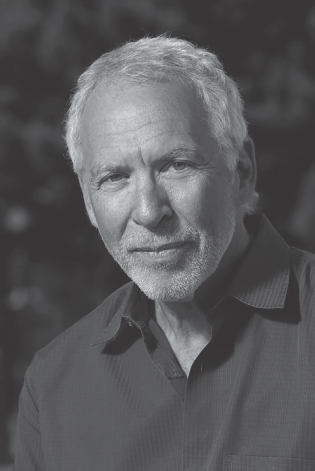
What occurred to me in graduate school was that I had found something to do that I love, and that I could make a living at, and that was the field of organizational development. So when I was about 20 or 21 years old, I found something to care about, other than getting by and making a living. I also found that I could learn more about myself. I had big questions like: Will I always be such a jerk? Will I always be alone? Will I always feel like an outsider? I wanted to answer these questions through the work that I did. So my own belief is that my profession is a form of healing, a therapy perhaps.
The touchstones of my career have been driven by my curiosity, and I've always been drawn to the edge of things, the margin of things. The conventional wisdom has always made me nervous, and too much comfort and safety always made me anxious.
I always found teachers. Every time I read a book or found something that changed my mind, I would write people and ask, “Can I come and learn from you?” I suppose I constructed my own education, which I think is what you and About Campus are trying to do—to help students and teachers love learning and not be distracted by “school” and all our anxious desires to control. The predictability schools so often want to construct, the core competencies and core curricula and all the “we know and you don't mentality” is so detrimental to learning.
Later, I think I just got lucky. I worked for a big company, and I quit and started my own business. I had a set of ideas and every seven years I've learned I need to find a new set of ideas to explore. I found teachers in surprising places. I learned about gestalt theory and learning theory, for example, from a tennis instructor. When I was 40, I ran into an existential philosopher who became my friend and told me that my unique anxiety and pathology (things I thought were wrong with me) were simply being human. He lifted a burden off of me since I thought I was destined to spend my life working on myself as a project to fix. Whatever you think your problem is, he said, it's just your humanity. This was a huge shift for me and my thinking.
Then I found other people. I found community people; after working 30 years with institutions, I kind of de–institutionalized myself. I found that the civic space—the space of the common good—put me in touch with people who cared about something, who were committed to something. The real challenge in our lives, I think, is not only to find something we care about but also to find people who care about something. I don't care what it is, but most people are kind of happy just making a living. I need something more and people who need something more.
In the first half of life, I wanted to do something. I have been spending these last years discovering interesting ideas, learning about them, and becoming a translator of these ideas for others. People ask me what I do in the world. In summary, I say take ideas from all different places, whether it's economics, journalism, architecture, art or philosophy, and translate them and make them accessible to people. And, when I was about 45 years old, I discovered I could write and that was a big surprise too.
My friend Peter Koestenbaum is an informal teacher who shifted my thinking. I always thought that I needed to work on my weaknesses, and that's how I'd get better in life. Peter turned that upside down and taught me that I am not a collection of deficiencies, not a collection of weaknesses, but a human being. This was so liberating and helped me realize that loneliness, anxiety, and feeling empty and meaningless sometimes are qualities of being human. This is not a problem to be solved. It was a big deal for me to let that go.
My tennis coach, Tim Gallwey, who I mentioned earlier, changed my mind about learning. I was in my twenties and working hard on my game—working so hard that I gave it up. It wasn't fun. All I wanted to do was to win. Tim shifted my thinking and helped me discover that awareness about what you are doing, not outcomes and performance, is what makes you a better player.
Tim also made the distinction between teaching and learning, so he would teach people to play tennis and never give them an instruction. That is, he would hand them a racket and say, “Hold this. Thank you.” He would never tell them how to hold the racket. So, he inverted the idea that expert knowledge is useful to a belief that your body, mind and soul know what it needs to know. Just be aware of your body, mind, and soul and trust it. I became a better tennis player, and it changed my mind about learning altogether.
As a consultant, this new thinking made me question the value of both expertise and certainty. What we see so frequently in the world is a longing for certainty. Presidential candidate Donald Trump has one message, and it's “I will keep you safe.” That is selling well, at least in the media. I'm not sure if in our souls it sells well.
My friend John McKnight says that there is no use in describing people according to their deficiencies, which means as soon as you call somebody “disabled,” “homeless,” “poor,” “youth at risk,” “single parent,” “single mom,” (all that language which generates compassion and charity), you are being unkind to the human beings you are discussing.
The alternative is to focus on people's gifts, and I went, “Wow!” I got interested. Now don't get me wrong, I struggle with horrible habits of judgment and labeling, but all of a sudden, an organizing principle of my life became, “What are these people good at?” In my community work, I'm not interested in what's wrong. I want to know: “What do you like to do? What are you good at? What are you willing to teach other people?”
As soon as you ask people that question, you de–colonize them. To ask people what their deficiencies are, and to create a whole system of higher education that talks about people's weaknesses, is a form of colonization. Most of our schools are designed to domesticate us, to socialize us, to make us docile. That is scary to me; those are seeds in the soil of a totalitarian instinct. That's what scares me about fundamentalism, that's why people are leaving churches—because they realize the certainty the church offered is not useful. So, all those are deep changes in my thinking.
It is really the commercialization of the soul. That's really what Walter would say. He's an Old Testament scholar and brought with him the language of the Old Testament, which conveys that what we're talking about has a history; it's not just a critique of modern society. The Exodus story, which is the foundation of most western religions, was a departure from a Pharaoh's economy, a predatory economy, similar to the one in which we are living now. Right now, we believe that whatever we have is not enough.
I just saw an ad from the “Vision Council,” which is probably an industry group selling glasses. It begins by saying, “Most women have an average of 27 pairs of shoes, and only one pair of glasses. Something's wrong here.” Well, they think the something wrong is that women don't have 27 pairs of glasses!
So, our book is trying to give voice to an alternative to the consumer culture. I think it's what has us experiencing a lot of suffering and a lot of violence. We try to be docile and gentle in the book, but if you look at ISIS, for example, or the violence in our own culture (which is one of the most violent of all cultures), it's produced by the consumer culture, by the notion that, “If I don't have it, I am going to get it! And if I don't have it, I'm mad at the people who do.”
If you go back in history and look at industrialization, it occurred from armies conquering countries to create markets. We didn't talk about that much in the book because John and Walter aren't that interested in that; but for my next book, I'm going to write about how violence comes out of these beliefs.
Now the world has decided that America is no longer the role model. They are angry at the American materialist mode. The fundamentalist Islamic world says, “We don't want that future.” So, that's the one part of them that I understand. They are saying they don't want to be westernized; they don't want to be colonized economically.
Now there's the core curriculum, there's a certain set of learnings that every student ought to have. Well, that's the centralization of teaching. That makes me nervous. The whole liberal arts area is just struggling versus the business schools, engineering schools, and the science and math agendas. Most of these efforts are private sector designs to off–load the cost of education into the public sector; the cost of teaching becomes corporate–driven. “We are here to find jobs for our future.”
What happened to art? It's gone from public education. What happened to music? If anyone gets a degree in English or any liberal arts, it is a real adventure, culturally speaking. The whole purpose of higher education, which started as religious institutions, was to prepare people to be citizens, to be learners, to be curious about life, to have memories, to have some sense of story and history and narrative because that's what drives us as humans.
It scares me to professionalize the souls of my children. What bothers me is not only the professionalization of our children's lives but to turn them into commodities.
A friend of mine teaches social justice, and he was tolerated because he had been at his university for 34 years. Then he was told to teach his social justice courses online. He said, “I don't think I can teach what I'm teaching online.” They then had no place for him. He felt online is the substitution of convenience for depth and intimacy.
Technology; I think is great, it's fine—I like telephones, I like cars, I like computers, but the notion they are substitutes for connection, for depth, that's what I'm struggling to comprehend. If you care about the soul, capacity, and the learning abilities of college students, one has to question the standardization of the student experience. Even service learning doesn't include much service these days; it's just cheap labor. Internships, most unpaid, become a kind of wage slavery. But we choose it as a device: “If you'll intern with us, maybe you'll get a job out of it.”
I have grandchildren whose lives are totally managed—I thought my daughter was overdoing it, but she's not—she's the norm. When I grew up, I went to school and then I decided what to do until dinner was on. Nobody was managing me. It's not because I lived in a safe neighborhood. These neighborhoods (now) are not unsafe; it's just a mindset. So, I don't even find it useful to say are you optimistic or not, or pessimistic, either one. It's just a longing to predict the future—useless.
Part of our book is to trying to bring back the idea of mystery. What makes life interesting is its unknowability. There are certain questions where there is no answer, no matter how much research you do. Brain research is trying to make the soul predictable, trying to explain my capacity for love or depression by where it occurs inside my brain. It's interesting, you know, but Mad Max is interesting. So, I would just stop the question of optimism and talk instead about faith.
I have enormous faith. I never question what's possible, and I never wonder “will I see it or not?” I don't care—I'm uninterested—in outcomes and results. Now, I feel bad about that. I look back over all these years and say, “so, what difference has it made?” And the answer is not satisfactory. It's just not, but I have great faith. I think what we are asking for is for people to have faith in our humanity and in possibility, mystery, miracles, silence, and relationships. I think that's what propels me, never lose faith. Never. And the nice thing about faith is you don't need evidence. You don't have to benchmark and don't have to ask the question, “Where is faith working?” I've always believed in one–shot conditioning; I think if you see something once, it doesn't have to be replicated to be true.
Now community in the classroom isn't the old fashioned “we're all learning at the same time.” It means if I am going to learn anything in this classroom, I'm going to learn it from the other students. I'm not going to learn it from the teacher. I'm going to get information and expertise from the teacher, and I'm glad the teacher has that. But I don't care if teachers are entertaining or not; I don't want to rate my teacher as the cause of my learning. I would stop teacher evaluations, too, because it just makes them nervous and cautious.
What I would do is take a class and say, “If we want community in the classroom it means we are going to learn and produce learning for each other. We are going to do things together. We are going to construct, in a sense, our way of learning in this class, whether it's math or otherwise.” There's a wise person who says, “The purpose for math classroom is to help people learn how to be together, in the presence of a math teacher” or whatever the content, I don't care how scientific. Community is about our real interdependence, our need for each other, our capacity to produce and construct something together. It's not about like–mindedness. Like–mindedness is a marketing term in that I want to gather like–minded people in one place so I don't spend so much time on advertising (so I can target my request to them).
So, community is about interdependence. I would call it authentic community. That's what I try to write about in the book—to be quiet, to have time for each other, to not ever think “I know who you are.” I want to make something with people in my community. Make learning. Make a neighborhood. Make a safe place.
So you have this under the radar. The news never reports about what works in the world, the news reports about what's dangerous in the world—the curriculum of the news and your criminology department, wherever you are, is about what is wrong with the world.
Community can be small things. There are coffee shops now where people meet every Wednesday morning from 9 to 11; that to me is an enormously powerful community. The business perspective demands scale, and it says if it doesn't happen in the large, it doesn't count. Well, I don't want to live by the business model. That's what our book is about. I want to live on an intimate level; I want the scale to be slow and small. I want depth over speed.
There's a friend of mine who wrote a song about the Community book, Randy Weeks (you can look him up on YouTube). He and I were involved in A Small Group; we created a kind of association in Cincinnati. We have about 800 people in it. It's called “A Small Group.” We get together once in a while, and the whole purpose was to say, “Let's come together and change the narrative.” That's what that book was really about.
Most schools, especially in high school and in grade school, the people who sweep the floor do as much teaching as anybody else in the place. Every first year teacher in high school spends the first semester crying after the children are gone. Who cares for that teacher? Well, the janitor does!
So that's what you are doing with About Campus. At those moments when it offers a narrative, a kind of shift, it says, “we are here to learn, and the students are in charge of that learning.” And Wiley is smart enough to know that. Those are your best moments. Your worst moments are when you are there to celebrate the beauty and elegance and expertise of higher education.
Having thoughts that go against the culture produces enormous loneliness. So do independence and being a pioneer. You and your group are pioneers in the world in which you are operating. If you weren't, you wouldn't be having this conversation. Most college–related folks have not called me. So there's a loneliness to being a pioneer, you always look around and say, “What's the matter with me?” That's why we need each other. That's why you have five people in the room (and to realize you are not crazy).
By the way, I have three things that I want to say to college students to understand: Consider what you're good at! Most people graduate college not knowing what they are good at. The second is that you are not alone, regardless of your story. And the third is that you're not crazy. There's nothing wrong with you! You spend your life learning that and re–experiencing it.
So, I have no wisdom. People say sometimes that this is a waste of time. They are probably right, but that doesn't mean you should stop doing it. You are inheriting the woundedness and anxiety of a culture in your classroom, and you don't have much time. So God bless you for doing what you're doing. Most faculty in higher education are so alienated from the institution, and it makes no sense to them, and they get alienated from each other too. They think they are there to compete.
I can remember being at Harvard once years ago, helping a professor teach a class. He was cranky that other professors weren't interested in his class. I thought, my God, you are in heaven. Look at the stained glass windows. You have roast beef for lunch. I had never seen a college or any school with roast beef for lunch, prime rib no less! So I realized what a hard culture higher education is. It's alienating and isolating. Once in a while, in your department, you find a pocket of collaboration, intimacy, connection. So I am just thankful that people will take that on, stay alive, stay connected, and stay with it.
I encourage all of us to be surprised and to start over again every seven years.