






Abstract
Abbreviations
before-after-control-impact
difference-in-difference
evidence and gap map
Food Agriculture Organization
farmer-managed natural regeneration
World Agroforestry Center
Intergovernmental Panel on Climate Change
instrumental variable
low- and middle-income countries
high-income country
nongovernmental organizations
ordinary least squares
payment for ecosystem services
population, interventions, comparison type, and outcomes
preferred reporting items for systematic reviews and meta-analyses
propensity score matching
randomized controlled trial
regression discontinuity design
sustainable development goal
systematic map
systematic review
Mapping the evidence of agroforestry's impacts on agricultural productivity, ecosystem services, and human well-being in low- and middle-income countries (L&MICs)
Agroforestry practices have been widely studied across L&MICs, but rigorous evidence on the effects of interventions designed to promote and support agroforestry on farmers’ land remains limited.
What is this evidence and gap map (EGM) about?
Agroforestry, defined as the integration of trees and woody shrubs in crop and livestock production systems, is widely promoted as an effective means to address conservation and development objectives across the world.
Governments, donors, and nongovernmental organizations (NGOs) have invested in a range of programs to spur agroforestry adoption, including farmer capacity development, tree germplasm provision, market development, and community advocacy. However, systematic understanding of the impacts of these programs and agroforestry practices more generally remains lacking.
To advance such understanding, this EGM collates existing evidence on the impacts of agroforestry on agricultural productivity, ecosystem services, and human well-being in L&MICs. The EGM includes studies that compared farmers and farms where agroforestry was practised to those without agroforestry, to assess at least one dimension of agricultural productivity, ecosystem services, and human well-being. What is the aim of this EGM? This Campbell EGM presents the existing evidence for the impacts of agroforestry practices and interventions on agricultural productivity, ecosystem services, and human well-being compared to conventional agricultural or forestry practices. Unlike a systematic review, an EGM identifies what evidence exists, rather than summarizing effect size estimates.
What studies are included?
This EGM includes studies that evaluate the effects of agroforestry practices and interventions on agricultural productivity, ecosystem services, and human well-being.
A total of 20,271 studies were identified. Only 396 of these met the inclusion criteria to be retained for the EGM. Of these studies, 344 examined the effects of agroforestry practices only, 40 examined the effects of agroforestry interventions, and 12 were systematic reviews (SRs). The studies spanned the period from 2000 to mid-2017, with India, Indonesia, China, and Ethiopia the most studied countries.
Most of the studies were observational. Only eight studies used rigorous quasi-experimental methods to evaluate the impacts of agroforestry interventions. None of the included studies used experimental designs (random assignment).
What are the main findings of this EGM?
The eight impact evaluations came from different country contexts, with only Kenya having more than one study. The most studied interventions were incentive provision to motivate farmers to plant and maintain trees on their land, and farmer capacity development.
Human well-being, particularly income and household expenditure, was the most studied outcome category for impact evaluations, followed by impacts on agricultural productivity, with minimal evidence for ecosystem services outcomes.
Practices relating to the integration of crops and trees (agrisilviculture) comprised more than three quarters of the 344 studies on practices. In contrast to the intervention studies, ecosystem services was the most well-studied practice outcome category, followed by agricultural productivity, with minimal evidence for human well-being outcomes.
Of the 12 included SRs focused on agroforestry practices, 11 were rated as high risk of bias, and only one was rated as medium risk of bias. Trees integrated with plantation crops was the most common agroforestry practice discussed in the reviews while ecosystem services was the most studied outcome.
No SR examined the effects of agroforestry on human well-being.
What do the findings of the EGM mean?
Our study reveals that rigorous evidence on the effects of agroforestry interventions on farmers’ land remains extremely limited. This finding is especially notable given the large volume of literature documenting the uptake of specific agroforestry practices and widespread promotion of agroforestry as a strategy to advance the 2030 UN Sustainable Development Goals (SDGs).
The most urgent need in this field is to address the gap in primary evidence on the impacts of agroforestry interventions and on the impacts of agroforestry on social and economic outcomes. SR of the available studies on intervention impacts would be useful to establish a baseline and provide insights to inform future research, policy, and programming relating to agroforestry.
How up-to-date is this review?
The review authors searched for studies from 2000 to mid-2017.
EXECUTIVE SUMMARY
Background
Agroforestry—the integration of trees with other agricultural practices on the same piece of land—is widespread across L&MICs. High-level policy documents in many L&MICs explicitly promote agroforestry and donors have invested billions of dollars in agroforestry interventions. Given its potential to boost food security while delivering other social and environmental objectives, agroforestry is seen as a key means to advance the 2030 UN SDGs.
Despite a large body of agroforestry experience in L&MICs, systematic understanding of the social-ecological impacts of agroforestry remains lacking. This report summarizes the findings of an EGM to address this knowledge need. The EGM identifies, maps, and describes available evidence on the effect of agroforestry on agricultural productivity, ecosystem services, and human well-being in L&MICs, in addition to the evidence assessing the relationship between agroforestry practices and such outcomes.
Search methods and selection criteria
We systematically identified and mapped evidence on the effects of agroforestry in L&MICs according to a framework that included four broad practice types and six intervention types together with the three outcome categories of agricultural productivity, ecosystem services, and human well-being. We used a population, intervention, comparator, and outcome (PICO) framework as a basis for inclusion of studies in the EGM. The study population was farms and farming households in L&MICs. “Interventions” in this context included both interventions promoting agroforestry and studies of agroforestry practices applied by farmers in the absence of an external intervention. An alternative intervention or “business as usual” were both eligible comparators. Studies had to measure at least one outcome in the broad categories of agricultural productivity, ecosystem services, or human well-being.
The decision to include studies of practices in the absence of interventions was motivated by the key role and prevalence of such studies relative to intervention research. The study design inclusion criteria reflect this choice. We included three types of studies: (a) quantitative impact evaluations, (b) SRs, and (c) observational studies. We excluded field trials that did not take place on farmer-managed land as our focus was on agroforestry effectiveness in “real world” settings. Results for studies assessing interventions and practices were analyzed and presented separately.
To identify potential studies for inclusion we followed the search strategy from a published research protocol (Miller, Ordonez, Baylis, Hughes, & Rana, 2017). In October 2017, we searched six databases and 19 organization websites to identify potentially relevant studies published in English from 2000 to June 30, 2017. Search results were uploaded to EPPI Reviewer v4. A team of 14 reviewers were involved in study screening and data extraction. We first screened articles at title and abstract level and then screened the remaining studies at the full text level. A subset of studies (∼10%) was double screened at title/abstract level by the lead reviewers. κ tests were used to ensure agreement among reviewers. At the full text level, results were spot-checked and all data extraction checked for accuracy by lead researchers.
For each included study, we extracted the following data: bibliometric information, study description, information about the agroforestry intervention/practice, the study design and type, information on the outcome and indicator variables, and descriptions of any mechanism describing pathways between intervention and outcome. Only the included SRs were subject to critical appraisal; however, we recorded information about the study design type (e.g., experimental, quasiexperimental, before-after-control-impact, correlational) as an indicator of potential bias. We conducted quantitative analyses using R to create visual representations of our findings in the form of heatmaps and graphs.
Data collection and analysis
Our search returned 20,271 studies, of which 3,080 were removed as duplicates, leaving 16,535 studies that were screened on title and abstract. After title and abstract screening, there remained 1,557 studies which were screened at full text. We identified 12 SRs and 384 primary studies that met our inclusion criteria. Of the primary studies, 40 studies examined the impacts of specific agroforestry interventions, of which only eight used quantitative impact evaluation methods. The other 32 intervention studies measured the outcomes of an agroforestry intervention against a comparator, but they did not use experimental or quasiexperimental methods to account for nonrandom assignment to treatment and control groups. The other 344 primary studies examined the outcomes of agroforestry practices (without a specific intervention associated with the practice) against a nonagroforestry comparator.
The eight impact evaluations came from different country contexts, with only Kenya yielding more than one study. Together, they examined four of the six intervention types in the EGM. The most studied interventions were incentive provision to motivate farmers to plant and maintain trees on their land (n = 4) and farmer capacity development (n = 4). Two studies included a component of enhancing access to tree germplasm, and one study included a community-level campaign and advocacy component. Several studies examined interventions with multiple components (e.g., incentive provision and farmer capacity development), so total intervention counts sum to more than the eight studies. We found no impact evaluations of two intervention types: market linkage facilitation and institutional and policy change. Human well-being, particularly income and household expenditure, was the most studied outcome category for impact evaluations, with five studies examining these aspects. Four studies assessed impacts on agricultural productivity, while only two focused on ecosystem services outcomes.
Of the 12 included SRs focused on agroforestry practices, 11 were rated as high risk of bias, and only one was rated as medium risk of bias. Trees integrated with plantation crops was the most common agroforestry practice discussed in the reviews while ecosystem services was the most studied outcome. No SR examined the effects of agroforestry on human well-being.
The 344 studies of agroforestry practices were relatively evenly spread across the major tropical and subtropical world regions, though some countries were relatively well studied (e.g., India, Indonesia, China, and Ethiopia, which collectively represent 45% of the total studies). There were hardly any studies from L&MICs in Europe and Central Asia and Middle East and North Africa regions. Practices relating to the integration of crops and trees—agrisilviculture—comprised more than three quarters (78%; n = 271) of the 344 studies on practices. In contrast to the intervention studies, ecosystem services was the most well-studied practice outcome category. The vast majority of included primary studies (96%) were correlation only studies that did not use an experimental, quasiexperimental, or other before-after-control-impact study design. All included studies did have a control group using a nonagroforestry practice (e.g., relating to agriculture or forestry) to compare impacts.
The research on agroforestry practices has grown steadily, from <10 relevant studies in 2000 to nearly 50 in 2016. However, the volume of evidence on agroforestry interventions remained spotty and flat during the study period. Given our inclusion criteria, we did not include field trials, but our search revealed approximately 1,700 potentially relevant studies reporting on results of field trials or “efficacy studies.” A central finding of this EGM is that the evidence base on the effects of interventions promoting agroforestry on farmers’ land remains very limited. This result contrasts to the availability of hundreds of observational and experimental studies on the effect of agroforestry practices. Part of the reason for this finding is the complexity of many agroforestry systems and the relatively long time horizons required for interventions to generate results. For example, it may take many years beyond the scope of an intervention for trees to mature so that they yield useful products such as fruit, fodder, or timber, challenging efforts to monitor and evaluate intervention impacts beyond adoption of promoted practices.
Results and authors’ conclusions
Our study reveals that rigorous evidence on the effects of agroforestry interventions on farmers’ land remains extremely limited. This finding is especially notable given the large volume of literature documenting the uptake of specific agroforestry practices and widespread promotion of agroforestry as a strategy to advance the 2030 UN SDGs. It is also somewhat surprising given the relative prevalence of impact evaluations in the related fields of agriculture and forestry.
The complexity of agroforestry poses challenges for impact evaluation. But, given the potential of agroforestry to contribute to a number of the SDGs simultaneously, there is an urgent need to address such challenges and conduct more high-quality studies of the effects of agroforestry interventions on agricultural productivity, ecosystem services, and human wellbeing.
The most urgent need in this field is to address the gap in primary evidence. However, SR of some of the available impact studies may be useful to establish a baseline. A review of the evidence on how incentive provision and farmer capacity development interventions affect all three outcome categories would be especially useful. Such synthesis would provide insights to inform future policy and programming relating to agroforestry interventions and also present an important baseline for future research.
BACKGROUND
The problem, condition, or issue
The integration of trees in agriculture is widespread across the L&MICs of Africa, Asia, and Latin America. Agroforestry practices, ranging from farmer-managed natural regeneration through to the intercropping of trees within annual crop fields and cultivation of forest gardens, are estimated to take place on nearly 50% of agricultural land in developing country regions (Zomer et al., 2014). Defined simply as “agriculture with trees” or more comprehensively as “the practice and science of the interface and interactions between agriculture and forestry, involving farmers, livestock, trees and forests at multiple scales” (World Agroforestry, 2017), agroforestry comprises an increasingly important strategy to increase farmer income and food production while advancing other social and environmental objectives.
The intervention
Proponents argue that agroforestry can provide basic subsistence, natural insurance, and a means to generate income and build assets for many rural households in L&MICs (Garrity et al., 2010; Miller, Muñoz-Mora, & Christiansen, 2017). Agroforestry can also generate environmental benefits, including carbon storage, biodiversity conservation, clean water, erosion control, and soil fertility, while enhancing resilience of agricultural lands in the face of climate-related stresses (FAO, 2013; Garrity et al., 2010; Jose, 2009; Kalaba, Chirwa, Syampungani, & Ajayi, 2010; Mbow, Smith, Skole, Duguma, & Bustamante, 2014). In addition, studies also suggest agroforestry has the potential to increase agricultural productivity (Garrity et al., 2010; Pretty & Bharucha, 2014; Sileshi, Akinnifesi, Ajayi, & Place, 2008; Waldron, Justicia, & Smith, 2015).
Given these potential benefits, agroforestry has been widely promoted in L&MICs. It is expected to play a key role in delivering the UN SDGs (United Nations, 2015; Waldron et al., 2017; World Agroforestry, 2017). Government extension agencies, NGOs, and a range of donor agencies have long provided support to agroforestry systems and practices. Since the 1992 UN Earth Summit in Rio, international aid donors have invested more than U.S. $10 billion in agroforestry projects (AidData, 2017; activity code: 31220.07) in L&MICs (Tierney et al., 2011). The largest donor, the World Bank, continues to emphasize agroforestry in its policy documents, including major commitments to ensure its agricultural investments are “climate smart” by 2020 (World Bank 2016). High-level policy documents in many L&MICs now explicitly call for the integration of trees into farming systems (e.g., national policies of Government of India, 2014; Republic of Kenya, 2014; and Government of Malawi, 2011) and there is growing interest in promoting agroforestry as part of sustainable intensification initiatives that reconcile agricultural production with the provision of other important ecosystem services (FAO 2013; Pretty, 2018).
A large body of literature on agroforestry in L&MICs has accumulated, but systematic understanding of the effects of agroforestry on social and ecological outcomes within and across diverse contexts is missing. This lack of knowledge, in turn, constrains the ability of policymakers, practitioners, and researchers to make effective decisions relating to agroforestry programming and investments. This EGM provides such an overview. Specifically, the EGM identifies, collects, maps, and describes available high-quality evidence on the effects of interventions promoting agroforestry on agricultural productivity, ecosystem services, and human well-being in the L&MICs of Africa, Asia, and Latin America. It shows areas of high, low, or nonexistent evidence, as well as varying levels of robustness relative to study design.
This EGM differs from other EGMs in that we also included and describe the literature on agroforestry practices that may have been put in place without being promoted by any specific intervention. The motivation for this decision was twofold. First, the uptake of agroforestry practices need not rely on external interventions and, second, “adoption studies” have been especially prominent in this field.
How the intervention might work
There is no standardized way in which agroforestry is promoted. Agroforestry policies and programs can be shaped by a variety of factors, including the social-ecological context in which they are implemented, the specific objectives, knowledge, and interests of the external organization and farmers involved, and the financial, technical, and material (including tree/shrub germplasm) resources available (Garrity et al., 2010). Nevertheless, we identify at least six different classes of interventions—elaborated in greater detail in Table 2—through which agroforestry is generally promoted and encouraged:
Farmer capacity development through training, extension, the provision of other advisory services and technical information, demonstration sites, participatory trials, and other modes of action learning.
Enhancing access to tree germplasm through the direct provision of tree seedlings/seeds and linking farmers to and/or strengthening the capacity of tree germplasm suppliers.
Community-level campaigning and advocacy encouraging large numbers of community members to plant trees on their farms and/or pursue specific agroforestry practices.
Incentive provision through direct payments to farmers for planting and caring for trees on their farms and the receipt of premiums for particular agricultural commodities, for example, for shade grown coffee.
Market linkage facilitation for a greater and/or more favorable integration of smallholders into tree-product value chains.
Policy and institutional change for a more enabling environment that promotes the uptake of agroforestry and/or enables its potential benefits to be better realized.
Although there is wide variation in the practices promoted, agroforestry interventions typically encourage farmers to take up several complementary practices to meet multiple social-ecological objectives (Waldron et al., 2017). For example, planting of tree species that will generate productive uses only over the long-term may be promoted at the same time as crops and shrubs that provide benefits in the near term. We present a classification scheme for a range of agroforestry practices in Table 1.
Classification of agroforestry systems and specific practices
Classification of agroforestry systems and specific practices
Figure 1 presents a simplified and generic theory of change which may underlie an agroforestry intervention (either explicitly or implicitly). The first required step is successful mobilization and engagement of farmers. The second step represents a given intervention, such as farmer capacity development or facilitating access to appropriate tree germplasm. At least the first and, in many cases, both are required for significant and appropriate adoption of the promoted agroforestry practices and/or tree germplasm. Following such adoption, several intermediary outcomes are then expected. For example, farmers may see improved soil health and other ecosystem services, such as water filtration, that then increase crop productivity or reduce production costs and, therefore, increase returns. Some participants in the intervention may find that increased use and availability of tree/shrub fodder leads to increases in milk and other livestock production and returns. Selling other agroforestry products such as timber, firewood, and fruit, is also expected to increase and diversify income and food sources (Mbow, Van Noordwijk, et al., 2014; Sharma et al., 2016; Waldron et al., 2017). These changes may have differential effects depending on gender. Together, these intermediate outcomes are expected to interact together to bolster household resilience to shocks, as well as overall household income food and nutritional security. These positive benefits—and the broader context in which this stylized theory of change is embedded—will then affect further household investment in agroforestry.
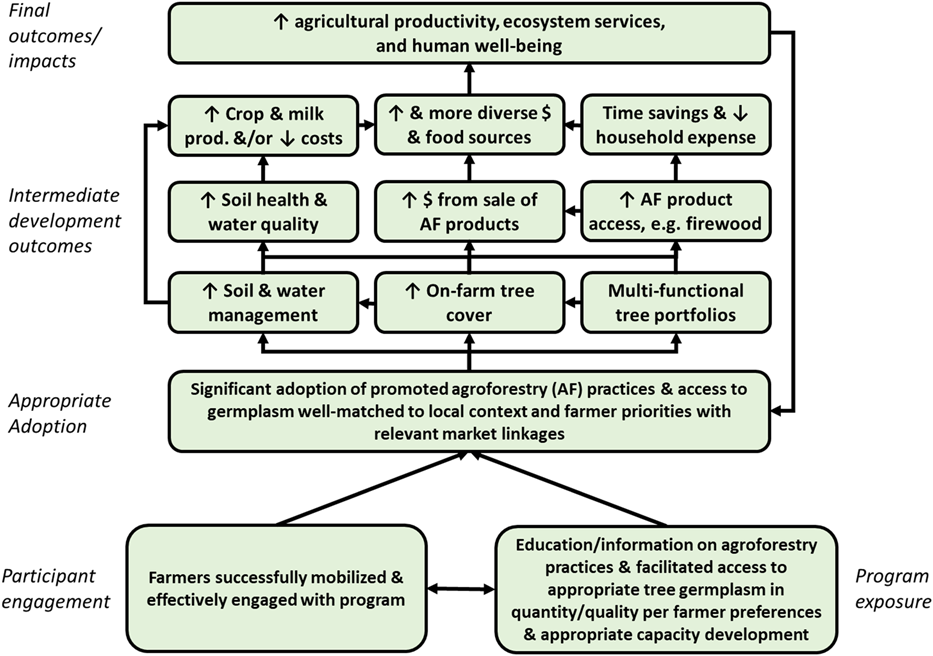
Illustrative theory of change for an AF intervention. AF, agroforestry
As described above, agroforestry systems and practices are widespread across L&MICs and have increasingly been seen as a solution for boosting food security, addressing environmental degradation, and contributing to a range of other development policy objectives (Garrity et al., 2010; Waldron et al., 2017). Nevertheless, financing and effective promotion of agroforestry and other nonmainstream agricultural approaches remains limited in many contexts (DeLonge, Miles, & Carlisle, 2016; Horlings & Marsden, 2011; IPES-Food 2016).
Instead, high-input, mechanized approaches to agriculture predominate. Over the past half century, these approaches have become conventional, leading to major increases in yields and helping to feed much of the world's population (Iaastd, 2009; Pretty & Bharucha, 2014; The Government Office for Science, 2011). However, these benefits have brought with them sometimes steep social and environmental costs, including biodiversity loss, climate change, land degradation, water pollution, and negative effects on human health (Brawn, 2017; Horrigan, Lawrence, & Walker, 2002; Iaastd 2009; Maxwell, Fuller, Brooks, & Watson, 2016; Pretty & Bharucha, 2014).
Farmers, consumers, and policymakers increasingly recognize these costs and seek viable alternatives that can simultaneously address food security concerns while delivering other social and environmental benefits. Agroforestry represents one such potential alternative, but there is an important need to systematically identify what kinds of interventions and practices have worked to deliver these benefits and understand potential trade-offs involved. Evidence on the effectiveness of agroforestry is, therefore, needed to inform broader debates and investment decisions relating to sustainable agricultural intensification.
Despite the long history of agroforestry systems and practices, agroforestry as a specific science and specific policy domain emerged only in the 1960s and 1970s. National governments, NGOs, research organizations, and aid agencies alike began to embrace the idea and to develop, test, and support a wide range of agroforestry practices (Nair, 1993). As the field has matured, a substantial literature on the adoption and impacts of agroforestry practices in L&MICs has developed. However, syntheses of evidence of what agroforestry practices have been effective, under what circumstances, and why remains lacking.
Recent systematic maps (SMs) and SRs have begun to shed light on the effects of agroforestry practices on specific outcomes, such as agricultural productivity and ecosystem service provision (Reed et al., 2017; Rosenstock et al., 2016; Thorn et al., 2015). Cheng et al. (2019) examine the impacts of forestry and agroforestry interventions on poverty. The recently published SR by Reed et al. (2017) synthesizes existing evidence on the indirect effects that forest- and tree-related ecosystem services have had on food production in the tropics. Two recent EGMs related to forests (Puri, Nath, Bhatia, & Glew, 2016; Snilstveit et al., 2016) include agroforestry, with some attention to existing evidence on effects on environmental and social outcomes in L&MICs. These reviews provided valuable information for this EGM, which is broader in scope geographically and in outcomes considered. As detailed below, this EGM includes all L&MICs, not just tropical ones, and direct and indirect effects of agroforestry interventions on a range of outcomes. We are aware of no EGM, SM, or SR that summarizes empirical studies on the causal effects of agroforestry interventions in L&MICs, particularly outside the context of tightly controlled, research station-based experimental trials.
There are two primary audiences for this EGM. First, we expect that researchers on agroforestry and broader sustainability issues will use the results to inform further investigations on these topics, including new empirical research, as well as SRs of specific linkages and further evidence synthesis. Results should be of wide interest to researchers in a range of institutions, from CGIAR centers to universities. The second main anticipated audience is decision-makers for whom agroforestry is already or potentially of interest. This includes relevant ministries and programs in governments and donor agencies, as well as NGO and other advocacy and implementing organization staff.
OBJECTIVES
The problem, condition, or issue
The overall aim of this EGM is to identify, map, and describe existing evidence on the effects of agroforestry interventions on agricultural productivity, ecosystem services and human well-being in L&MICs. The results will inform the scope of a planned SR on this topic.
In doing so, it addresses the following research questions: What are the extent and characteristics of empirical evidence on the effects of agroforestry interventions and practices on agricultural productivity, ecosystem services, and human well-being in L&MICs? What are the major gaps in the primary evidence base? What are the agroforestry intervention/practice and outcome areas with potential for evidence synthesis?
Our framework follows standard practice for EGMs (Snilstveit, Vojtkova, Bhavsar, & Gaarder, 2013), with rows in a matrix representing interventions and columns outcomes. Below we detail these two dimensions of the matrix as well as describe the PICO component that we examined.
Criteria for considering studies for this review
To identify the effect of an intervention or practice, a study needs to include both adopters (or program participants) and a comparator. A comparator is defined as a farm or household that does not adopt a given practice identified in Table 1, or is not exposed to a specific agroforestry intervention. Specifically, eligible comparisons included land or households where agroforestry was not practiced or promoted but another land use was in place (e.g., agriculture, primary forest, or secondary forest/forest plantation). For observational studies, a farm or household before agroforestry promotion or adoption of a given agroforestry practice began was also an eligible comparator.
Types of participants
The population of interest was farms and those that live and farm on them in L&MICs using a system that falls within the definition of agroforestry.
Types of interventions
The overall intervention category for our EGM is “agroforestry” defined as “a collective name for land-use systems and technologies where woody perennials (trees, shrubs, palms, bamboos, etc.) are deliberately used on the same land-management units as agricultural crops and/or animals, in some form of spatial arrangement or temporal sequence” (Nair, 1993). In the field of agroforestry, there are multiple strands of literature, including studies of the impacts of specific agroforestry practices and systems and studies of the impacts of specific interventions designed to spur the adoption of agroforestry to yield more distal social-ecological impacts. The “intervention” axis in this EGM therefore includes both categories.
To capture the wide diversity of practices that might fall under this definition and present them in a coherent way, we subdivided agroforestry into the practice types listed in Table 1. This set of practice types is based on the classification system proposed by Nair (1985, 1993) and updated by Sinclair (1999), Torquebiau (2000), and Atangana et al. (2014).
From a policy perspective, it is especially useful to know what kinds of interventions might most effectively promote agroforestry practices to yield desired social-ecological outcomes. The EGM, therefore, also includes studies that examine specific types of interventions designed to promote agroforestry. The intervention types are summarized in Table 2.
Classification of interventions to promote agroforestry
Classification of interventions to promote agroforestry
We present the main matrices of interventions and practices in two ways: (a) a simplified typology of interventions and practices using the broad agroforestry systems listed in Table 1 and (b) a more detailed version with the specific interventions and practices listed in Table 1.
The columns of the EGM matrix comprise three broad outcome categories: (a) agricultural productivity, (b) ecosystem services, and (c) human well-being. Studies that focused exclusively on the adoption of a particular agroforestry technique or species without reference to effects on outcomes were excluded.
Specific outcome categories under agricultural productivity comprise factor productivity, including yield, and profitability. Ecosystem services outcomes were first classified under three broad categories: (a) provisioning, (b) regulation and maintenance, and (c) cultural services. Outcomes were then further divided into a number of specific categories following the Common International Classification of Ecosystem Services (CICES) developed by the European Environmental Agency (Haines-Young & Potschin, 2012) and presented in Table 3. CICES builds from the seminal Millennium Ecosystem Assessment (2005), The Economics of Ecosystems and Biodiversity (Kumar, 2012), and other ecosystem services classification schemes.
Classification of ecosystem services outcomes in broad and specific categories
Classification of ecosystem services outcomes in broad and specific categories
Note: Specific categories divide each broad ecosystem services category into main types of output or process (Haines-Young & Potschin, 2012).
For human well-being outcomes, we adapted the classification published in McKinnon et al. (2016) to identify a set of key policy-relevant domains of human well-being (Table 4). Based on likely policy interest and goals typically articulated by proponents of agroforestry, we focused on five dimensions of human well-being: (a) income and household expenditure, (b) housing and material assets, (c) food security and nutrition, (d) health, and (e) cultural and subjective well-being. We also included the category of “other” which may group some studies focusing on additional dimensions of human well-being identified in McKinnon et al. (2016).
Domains and definitions of human well-being outcomes
Note: Human well-being domains and definitions adapted from McKinnon et al. (2016).
Abbreviation: FAO, Food Agriculture Organization.
As for intervention types, we present the three outcomes in the EGM main matrix in two ways: (a) a simplified typology of broad outcome categories and (b) a more detailed version with the specific outcome categories.
This EGM includes three kinds of studies: (a) quantitative impact evaluations, (b) SRs, and (c) observational studies on the effects of agroforestry interventions and practices. Consistent with established Campbell Collaboration guidance for EGMs, our discussion of agroforestry interventions only includes the first two types of studies.
Impact evaluations are studies that measure changes that occur due to an intervention. Such studies use experimental or quasiexperimental designs to estimate counterfactuals so that changes in a given outcome can be attributed to a specific intervention (Cook, Campbell, & Shadish, 2002). We include the following types of quantitative impact evaluation studies: Studies where participants are randomly assigned to treatment and comparison group (experimental study designs). Studies where assignment to treatment and comparison groups is based on other known allocation rules, including a threshold on a continuous variable (regression discontinuity designs) or exogenous geographical variation in the treatment allocation (natural experiments). Studies with nonrandom assignment to treatment and comparison group that include pre- and posttest measures of the outcome variables of interest to ensure equity between groups on the baseline measure, and that use appropriate methods to control for selection bias and confounding. Such methods include statistical matching (e.g., propensity score matching [PSM], or covariate matching), regression adjustment (e.g., difference-in-differences, fixed effects regression, single difference regression analysis, instrumental variables, endogenous switching regression, and “Heckman” selection models). Studies with nonrandom assignment to treatment and comparison group that include posttest measures of the outcome variables of interest only and use appropriate methods to control for selection bias and confounding, as above.
Ideally, studies would include baseline and postintervention data, but given the small number of studies meeting this criterion, we included studies with just postintervention outcome data, only if they use some method to control for selection bias and potential confounding factors.
We also included systematic reviews and evidence synthesis efforts (e.g., SMs, EGMs) that describe methods used for search, data collection, and synthesis as per the standardized checklist highlighted in Snilstveit et al. (2017) for appraising SRs. Literature reviews that did not describe methods used for search, data collection, and synthesis were not included.
Finally, we also included studies on the outcomes of agroforestry practices (observational or experimental) and of agroforestry interventions (observational). Observational studies of agroforestry interventions and practices could be quantitative and needed to include at least one comparison as described above (e.g., before/after; adopter group/nonadopter group). However, these studies do not account for nonrandom assignment between treatment (agroforestry practice) and control (nonagroforestry practice) groups. Observational studies include any type of correlational studies, that is, where a regression equation is estimated, with outcomes as the dependent variable and an agroforestry practice as an explanatory variable, or a comparison of means of outcomes between the practice of interest (agroforestry) and a control (conventional agriculture or forestry).
Data collection and analysis
Selection of studies
Studies on agroforestry practices, without a specific intervention, could be experimental (on-farm trial) or observational. These studies evaluate the difference in outcomes between practicing agroforestry or practicing an alternative land use (agriculture, forestry) and were included because agroforestry is widely practiced as a traditional land use system without the support of external interventions, and the relative impacts of these practices may of interest for future policy direction.
The types of studies we considered all included an assessment of the outcomes of agroforestry interventions and practices against a comparable control case (conventional agriculture or forestry). We note, however, that differences between included study designs have implications on the quality and risk of bias for each study. The types of study design listed in order of highest to lowest risk of bias are: correlational studies, quasiexperimental impact evaluations, and randomized experimental designs.
We excluded theoretical or modeling studies (unless they include a relevant empirical example with design that meets inclusion criteria), editorials and commentaries, and field trials that did not take place on farmer land (e.g., that were conducted at agricultural research stations or universities).
Field trials in agroforestry are designed to test the effects of experimental treatments or other variables on crop yield or other outcomes of interest in conditions similar to the actual growing conditions experienced by farmers who may adopt the treatment. While impact evaluations measure the changes due to an intervention, field trials measure the changes due to a practice. As for agronomy more generally, field trials can be divided into three types: (a) researcher managed and researcher implemented, (b) researcher managed and farmer implemented, and (c) farmer managed and farmer implemented. We included field trials only if they were implemented on a farmer's land, included an experimental research design, and described the effects of an intervention, technique, or practice on an outcome category relevant to the current study. Other kinds of field trials were excluded given the focus of our research on the effectiveness of agroforestry in “real world” on-farm settings. We also excluded such field trials due to the large volume of studies and because field trials typically address questions of efficacy rather than effectiveness.
The methodology we used in conducting this EGM is detailed in Miller, Ordonez, et al. (2017). We summarize it here and note some small changes from the protocol. We defined a search strategy and the databases to be searched (see Appendix A for further detail), as well as a strategy for searching gray literature, based on Haddaway et al. (2017). We tested our search strategy against a test list of studies known by the authors to be relevant to the current study. Studies from the year 2000 to June 30, 2017 were included in the search. We began the study period in 2000 given that year marked the start of the Millennium Development Goals, which presaged the current SDGs, and that agroforestry had gained significant momentum by then in the wake of the 1992 UN Earth Summit in Rio. The search was carried out in October 2017, but only studies published before July 1, 2017 were considered. The results from the searches were uploaded to EPPI-Reviewer v4. Resource constraints meant we only included studies published in English.
We imported the records from academic databases into our data management software (EPPI-Reviewer 4), and we used the built-in tool to aid in removing duplicates. The gray literature was imported into and managed in Microsoft Excel due to reference format incompatibility with EPPI-Reviewer 4. We screened the records at the title and abstract level, excluding studies which did not meet our criteria for study country, publication year, study type, and relevant agroforestry practice or intervention.
The review process consisted of 14 reviewers. All the reviewers were trained by the project leads (D. C. M. and K. B.) and research coordinators (P. J. O. and S. E. B.). The title and abstract stage of the review process included 11 reviewers. To ensure inter-rater reliability, each reviewer was given two samples of 30 studies for classification. Results from one of the lead researchers was used as the standard for classification and a κ statistic was used as a measure of agreement between reviewers (Cohen, 1960). This statistic was calculated for each reviewer against the standard classification. At least a 70% agreement was required for all reviewers. If the initial sample did not yield the required agreement, reviewers would discuss their responses with a project lead and retake the test until the required agreement level was reached. Once the review process started, if a reviewer was unsure about the inclusion of a given study, the reviewer had the option to mark it for a second opinion. The research leads and coordinators made inclusion decisions in such cases. In addition, these same reviewers performed a second title and abstract screening of all studies marked for inclusion, at which point some additional studies were excluded that were found not to meet the inclusion criteria.
The full team of reviewers then screened remaining studies at the full text level. At this stage, reviewers also had the option to mark studies for second opinion, with the lead researchers making final determinations as in the previous stage. Throughout the screening process, the research team met regularly to discuss any issues or inconsistencies and spot-checking was done by the lead researchers/research coordinators.
Data extraction and management
We used a standardized data extraction form (presented in Appendix B) to extract descriptive data from all studies meeting the eligibility criteria. A more detailed codebook describing the scope of each component of the data extraction form was also created and is available upon request. This standard was followed by all coders conducting data extraction. Finally, the lead researchers (authors P. J. O. and S. E. B.) checked the data extraction for all included studies to ensure consistency and completeness. Any studies identified as reviews were screened based on the standardized checklist highlighted in Snilstveit et al. (2017), and we conducted a study critical appraisal of the included SRs per the same checklist. We have attached the checklist used for screening and appraisal in Appendix A. We used a standardized checklist to assess our confidence in the findings of each SR (Snilstveit, Eyers, Bhavsar, Gallagher, & Stevenson, 2014). The confidence ratings do not appraise the studies included in a review, but rather the methodology and reporting of the review.
In our data extraction, we noted any reference to equity in the included studies. Equity focus is defined as the extent to which an intervention or analysis focuses on specific disadvantaged populations. We aimed to identify how and to what extent the included studied considered equity in their approach. We used the PROGRESS framework (O'Neill et al., 2014) to consider potentially disadvantaged groups in the included studies. Key dimensions of equity that we considered were gender, race/ethnicity, socioeconomic level, and literacy/educational level. We assessed the extent to which each study addresses equity, by describing any intervention focus on specific social groups, examining equity as an outcome, or reporting on differential impacts across subpopulations.
EGM structure
The main results of the EGM is presented as a visual representation of the existing evidence in matrix form Snilstveit et al. (2017), with rows representing the different categories of agroforestry practices (or interventions), and columns representing the outcomes under the three categories included. In addition, the characteristics of the included studies is analyzed and presented using descriptive statistics, with graphical representation of the most important aspects of the data.
Resource constraints meant we did not include any studies in a language other than English. Two other changes from our original protocol were to exclude field trials (given the extensive volume of studies and their unclear linkage to interventions) unless they occurred on farmers’ land and to include a comparator for practices other than agroforestry on a given piece of land (e.g., agriculture, primary forest, or secondary forest/forest plantation). This latter change was made early in the process when we realized we risked excluding studies that made such nonagroforestry comparisons. Screening prior to that period was redone to ensure consistency through the process.
Methodological limitations
This EGM differs from other Campbell Collaboration EGMs in that it not only examines evidence on the impacts of interventions that promote agroforestry but also includes studies on the impacts of specific agroforestry practices. This is a strength of our EGM, but also presents a potential limitation, given that many studies of practices are correlation studies, with no experimental studies and very few quasiexperimental studies. As such, the evidence they present does not fully control for unobserved variables that may be correlated with both the specific agroforestry practices and the measured outcomes.
We only included studies in English, which can limit the scope of our results by not including relevant studies in other languages. For example, our study has likely missed important evidence described in French, Mandarin Chinese, Portuguese, and Spanish, among other languages. Similarly, given that the practice of agroforestry has different names in different places, is possible that we missed a relevant term in our search strategy, even though the terms we used were developed in consultation with a search specialist and our advisory team, which included several experts in this field.
RESULTS
This section reports and discusses the 396 studies identified from our search and screening process for this EGM. We describe the search and screening process, discuss the characteristics and trends of the evidence base, and examine the body of literature for concentrations and gaps in the evidence.
The number of studies shown in each distribution chart refers to the total number of studies falling under each domain presented. Individual studies may be classified under multiple domains. For instance, if a study examines the impacts of multiple practices, that study would add to the count for each practice associated with that paper. The sum of studies for each figure may therefore be greater than the number of unique studies associated with that figure.
Description of studies
Results of the search
Figure 2 provides an overview of the results of the search and screening process to identify studies for inclusion. The search returned 20,271 records, with 16,535 studies remaining for screening at title and abstract after duplicate removal.
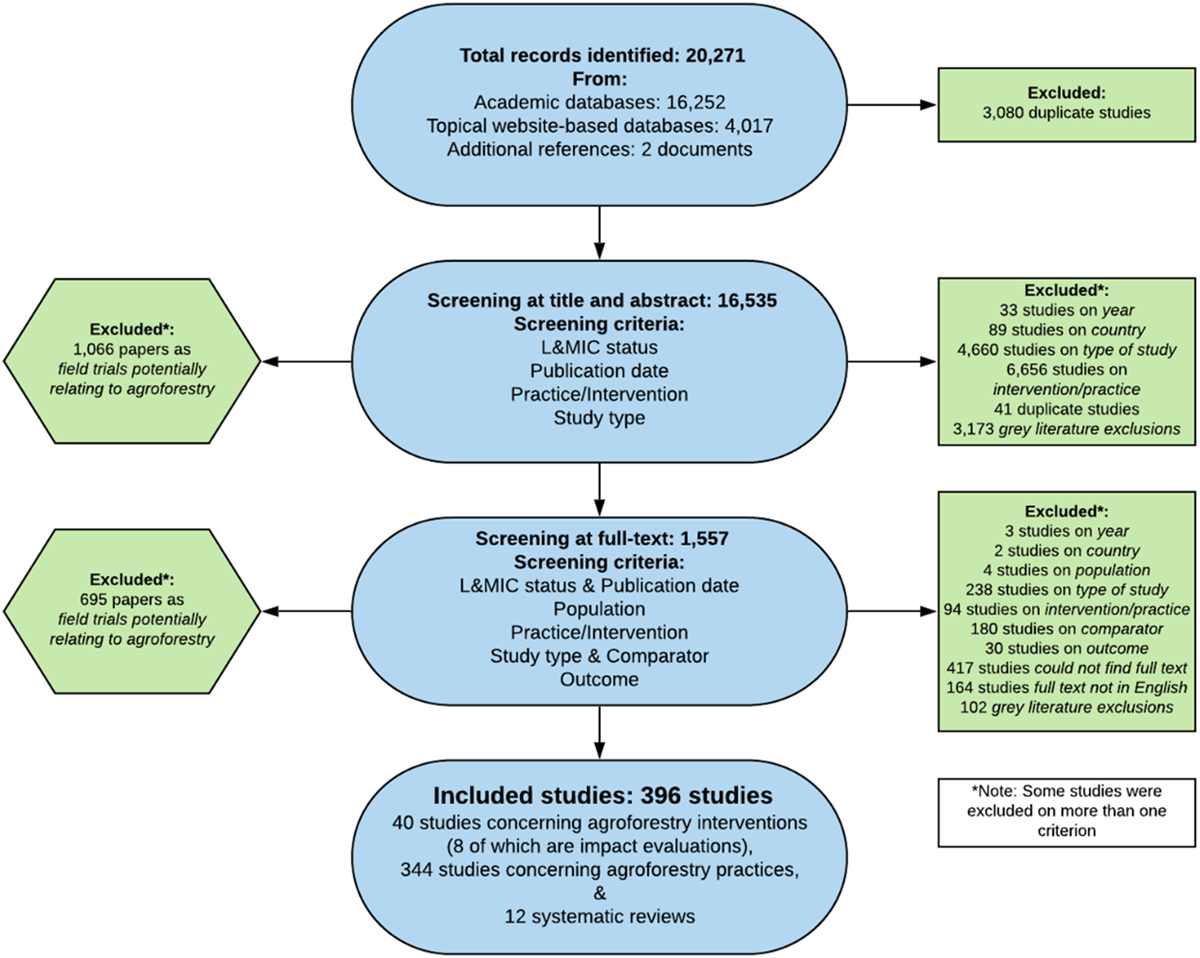
PRISMA flow diagram. PRISMA, preferred reporting items for systematic reviews and meta-analyses
As with other areas of social science (Waddington et al., 2012), many studies used titles or abstracts that did not clearly indicate the research topic explored, making it difficult to determine whether the paper met the inclusion criteria. As a result, 1,557 studies, a relatively large number of records, had to reviewed at full text. Of these, 396 met the inclusion criteria for the EGM. The main reasons for exclusion were lack of relevant intervention/practice (n = 6,750) and type of study (n = 4,898). The relatively low number of remaining studies (n = 963) were excluded for other reasons. Only 11 of the 4,017 studies identified from the grey literature sources were included in the final EGM.
Due to the large number of studies screened at full text, we do not provide a full list of excluded studies here, but this list is available upon request. In addition to our exclusions, we also identified approximately 1,700 studies that appeared to be field trials of different agroforestry practices/techniques. These studies were excluded and not reviewed further. However, it may be useful to review this literature in more detail in a future study to identify practices that appear efficacious.
Of the 396 included studies, 344 studies present empirical evidence on the impacts of agroforestry practices without a specific intervention, 40 report empirical evidence on the impacts of agroforestry interventions, and 12 studies are SRs. Of the 40 studies that examined the impacts of specific agroforestry interventions, only eight used quantitative impact evaluation methods. The other 32 intervention studies measured the impacts of an agroforestry intervention but did not use experimental or quasiexperimental methods. We did not identify any ongoing SRs or primary studies. A full list of included studies and the full data extraction record sheet are provided as Supporting Information.
This section of the EGM covers the subset of studies that assessed the impact of agroforestry interventions. As mentioned in earlier, we identified six different intervention types that promote and support the use of agroforestry. These are detailed in Table 2 and shown in Figure 3. In total, we found 40 intervention-focused studies, including eight impact evaluations using experimental or quasiexperimental approaches and 32 studies using nonrandomized approaches for evaluation. Each intervention study included mention of at least one agroforestry intervention and at least one relevant outcome. The resulting EGM is presented in Figure 3. We note that there are two main reasons linkages may have little or no evidence: (a) the linkage is of research and policy interest but has not been well studied, or (b) the linkage is not of significant research and policy interest, including cases where the practice or intervention does not link logically with a given outcome, and therefore has not been investigated.
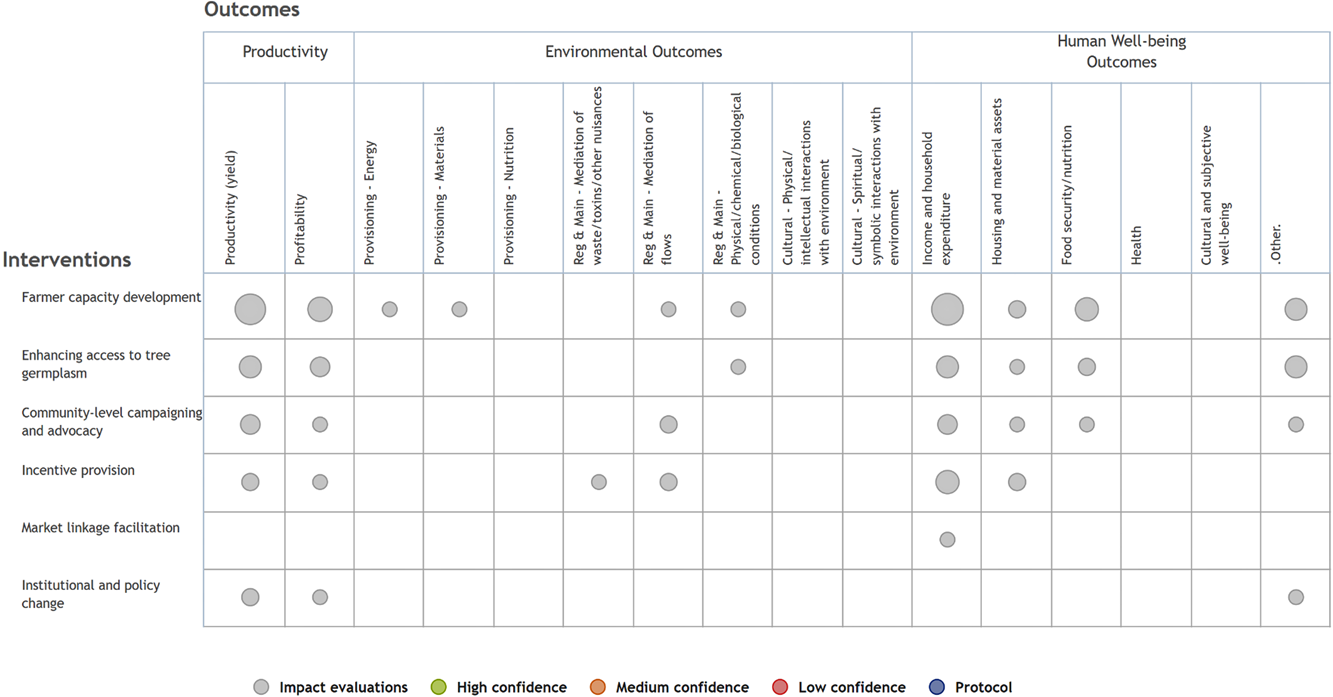
Agroforestry evidence and gap map (3ie format)
We identified eight studies evaluating the impact of agroforestry interventions. All of the studies adopted quasiexperimental methods, with no studies using an experimental design. Table 5 presents basic descriptive information on these eight studies.
Description of intervention studies using experimental or quasiexperimental methods
Description of intervention studies using experimental or quasiexperimental methods
In cases where the study examined interventions with multiple components more than one intervention type is listed.
The most studied interventions were farmer incentive provision (n = 4, 50%), which refers to any intervention that seeks to motivate farmers to plant trees and practice agroforestry through the provision of incentives (see definitions in Table 2) and farmer capacity development (n = 4, 50%), which refers to efforts focused on enhancing farmer knowledge and/or skills relevant to agroforestry practice. 1 Importantly, there were no impact evaluations of two intervention types: market linkage facilitation and institutional and policy change.
Nearly all the agroforestry practices promoted in the intervention studies were agrisilvicultural (in n = 6, 75%). Table 5 shows the specific practices that were promoted, with trees integrated in crop fields (38%) followed by improved or rotational fallow (25%) the two most frequently promoted. The intervention studies specified the practices promoted, so there were no “general” agroforestry practices mentioned. However, this group of studies did not examine less prevalent practices such as agroforestry with insects or fish. These intervention studies were conducted from 2005 to 2017, with the year 2017 with the highest number of studies (n = 2). In some years no impact evaluation studies on this topic were published. All included intervention studies were published in peer-reviewed journals (n = 7) except for one, which was an organization report.
Ecosystem services was the least frequent outcome category (n = 2, 25%), and the most frequent one was human well-being outcomes (n = 6, 75%). Agricultural productivity was evaluated for half of the studies (n = 4, 50%). For specific outcomes, income and household expenditure was the most common outcome (n = 5, 63%) followed by agricultural productivity (n = 4, 50%). When looking at the combination of interventions and outcomes, the most studied linkages were studies focused on incentive provision and farmer capacity development with human well-being and agricultural productivity outcomes.
The intervention studies included in this EGM are spread across tropical L&MICs (Figure 4), with Sub-Saharan Africa having the most countries with a study (n = 5, 63%). There were two studies (25%) conducted in Latin America and the Caribbean, and one study (13%) conducted in East Asia and Pacific. Kenya was the only country where more than one study was conducted (n = 2, 25%). The countries with impact evaluations included: Colombia, Indonesia, Kenya, Malawi, Mozambique, Nicaragua, and Zambia. All fall within the tropics. In Figure 4, countries in grey are L&MICs where no relevant studies on agroforestry interventions were found.
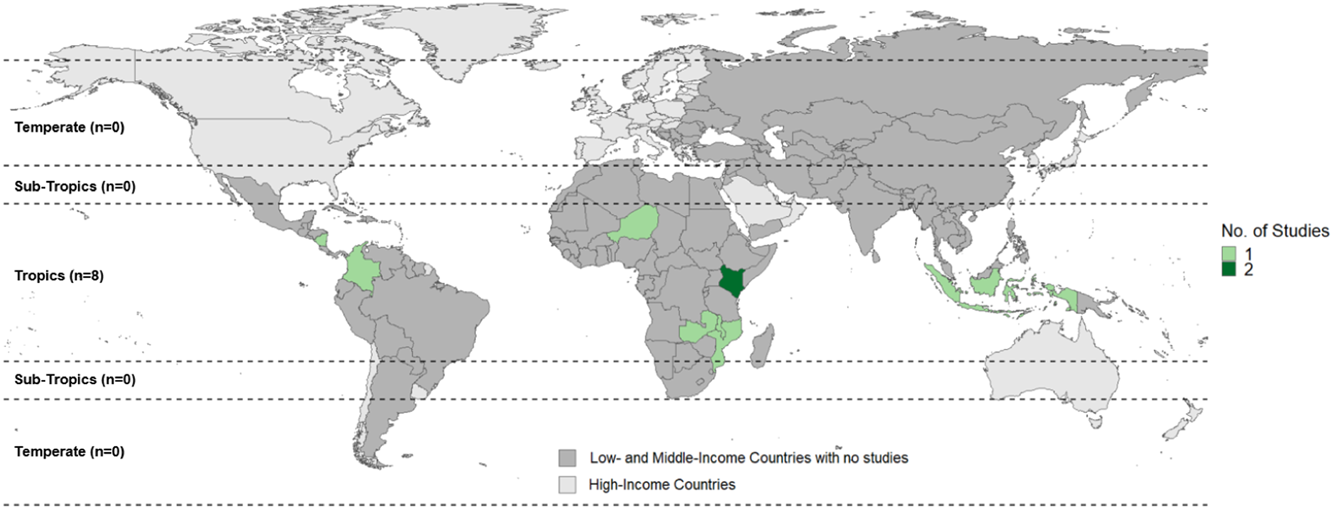
Distribution of intervention impact evaluation studies by country climatic zone
Five of the eight included impact evaluations (63%) presented results disaggregated by at least one measure of equity (Table 5). Three of the seven studies presented results disaggregated by two or more measures of equity, one of which presented results disaggregated by all four measures captured in this EGM. The most common groups disaggregated in the agroforestry intervention studies were socioeconomic level and educational level (n = 4 each) with three studies disaggregating results by gender and one by race/ethnicity.
The eight studies described above, we identified an additional 32 observational studies of agroforestry interventions. These 32 studies evaluated the impact of an agroforestry intervention against a control group (adopter/nonadopter or before-after), but the study design used nonrandom assignment (not an experimental design) and did not use a quasiexperimental approach to adjust for nonrandom assignment to estimate a treatment effect.
This section discusses all 40 studies on agroforestry intervention impacts we identified. Most of the studies were published as journal articles (n = 32, 80%), with three published as book chapters (8%), two published as organization reports (5%), and one each as a conference proceeding, discussion paper, and thesis. The countries with interventions studied include Kenya (n = 8, 20%); India (n = 5, 13%); Indonesia and Malawi (n = 4, 10% for each); Bangladesh, Brazil, and Indonesia (n = 3, 8% for each); Nepal (n = 2, 5%); and Bolivia, Colombia, Ethiopia, Ghana, Mexico, Mozambique, Nicaragua, and Zambia (n = 1, 2% for each). That Kenya had the most studies was expected since World Agroforestry Center (ICRAF) is headquartered there. The most common world-region for the intervention studies was Sub-Saharan Africa (n = 16, 40%), followed by South Asia (n = 10, 25%), and finally Latin America and the Caribbean (n = 7, 18%) and East Asia and Pacific (n = 7, 18%).
Distribution of studies across interventions
Farmer capacity development was the most common intervention type (n = 21, 53%) (Figure 5). The most studied practices for all interventions were agrisilvicultural practices (n = 34, 85%) (Figure 5), with the most common types of specific practices being improved or rotational fallow and trees integrated with plantation crops (n = 5, 13% for each) (Figure 6). Incentive provision interventions to promote trees integrated in crop fields (n = 5, 13%) was the other most common intervention-specific practice linkage.
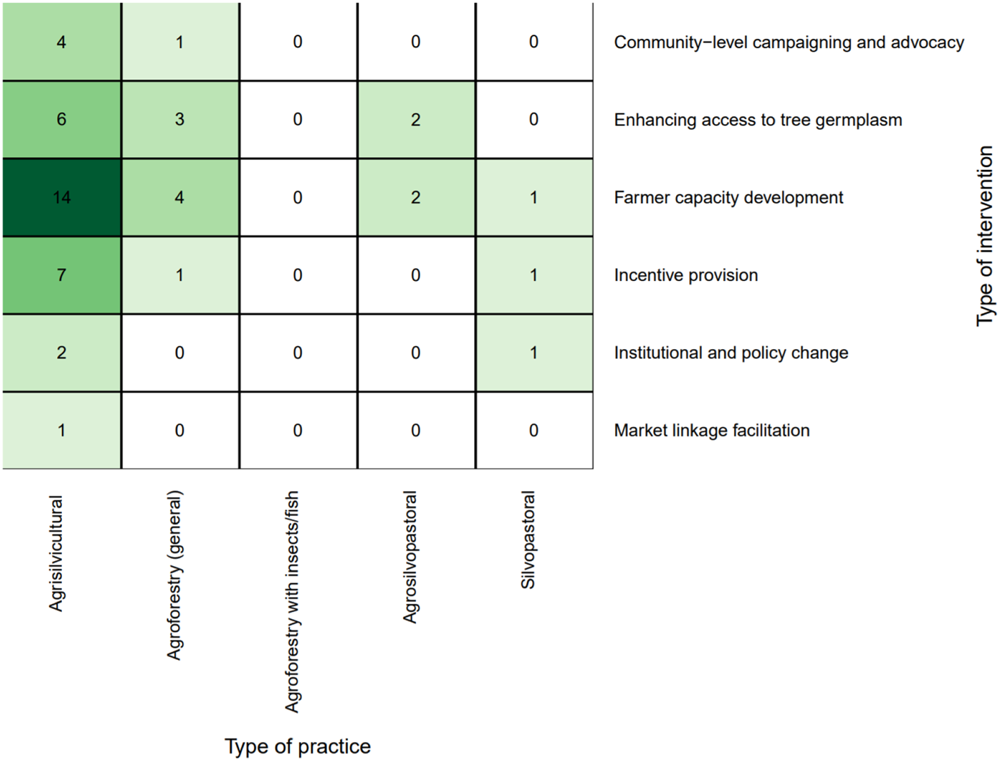
Distribution of interventions and practices
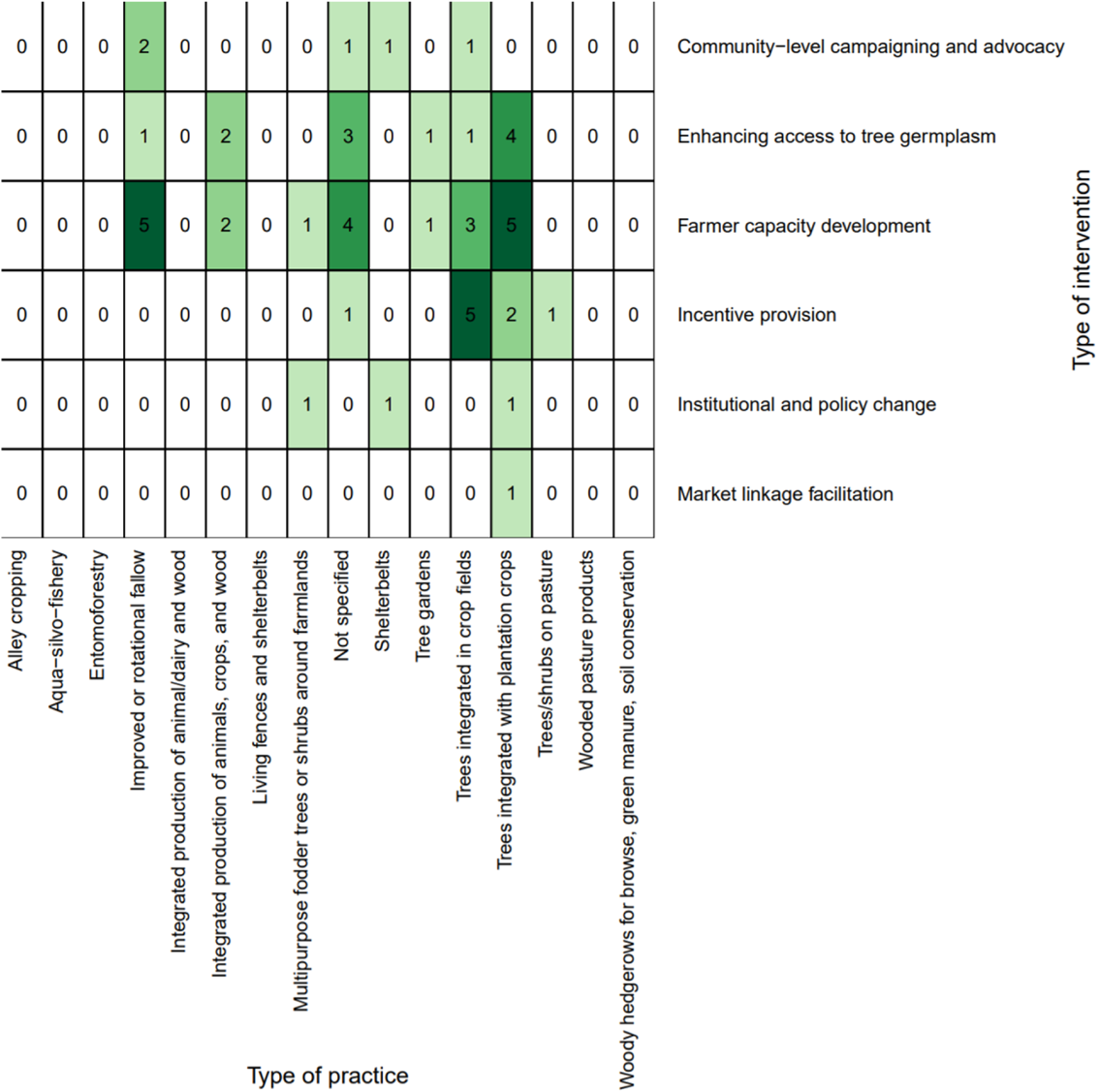
Distribution of interventions and specific practices
Distribution of studies across outcomes assessed
The most studied linkages for the intervention studies were farmer capacity development with human well-being (n = 13, 33%), followed by farmer capacity development with agricultural productivity (n = 11, 28%) (Figure 7). Regarding the specific outcomes studied, Figure 8 shows that the most-studied linkages were farmer capacity development with productivity (yield) and income and household expenditure.
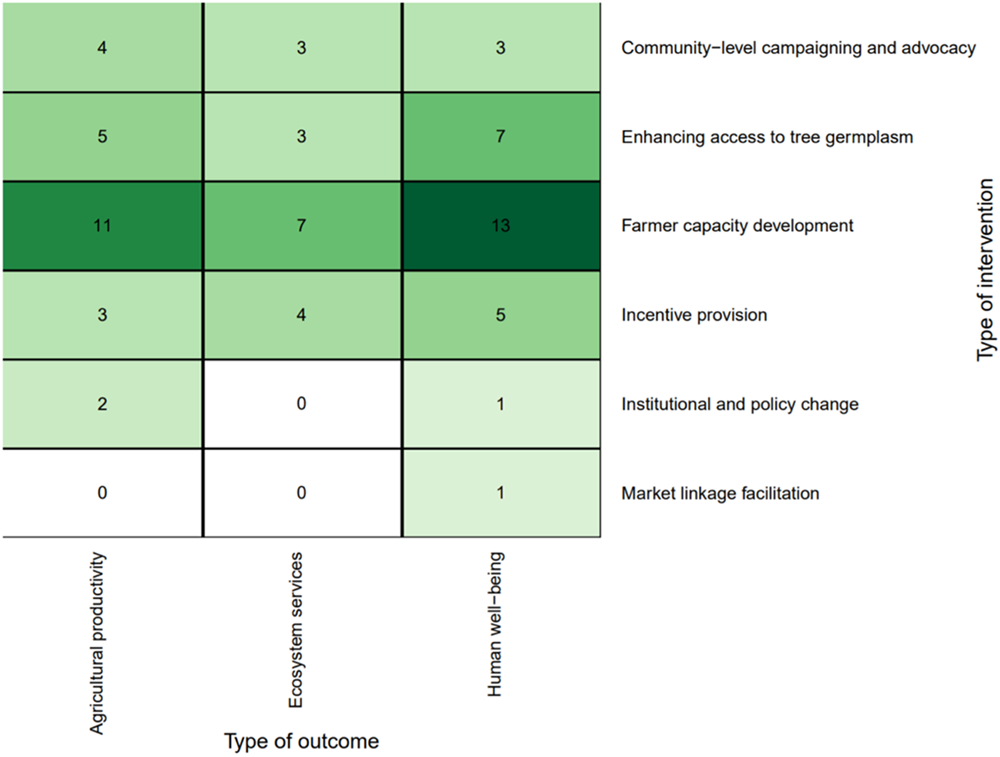
Distribution of interventions and outcomes
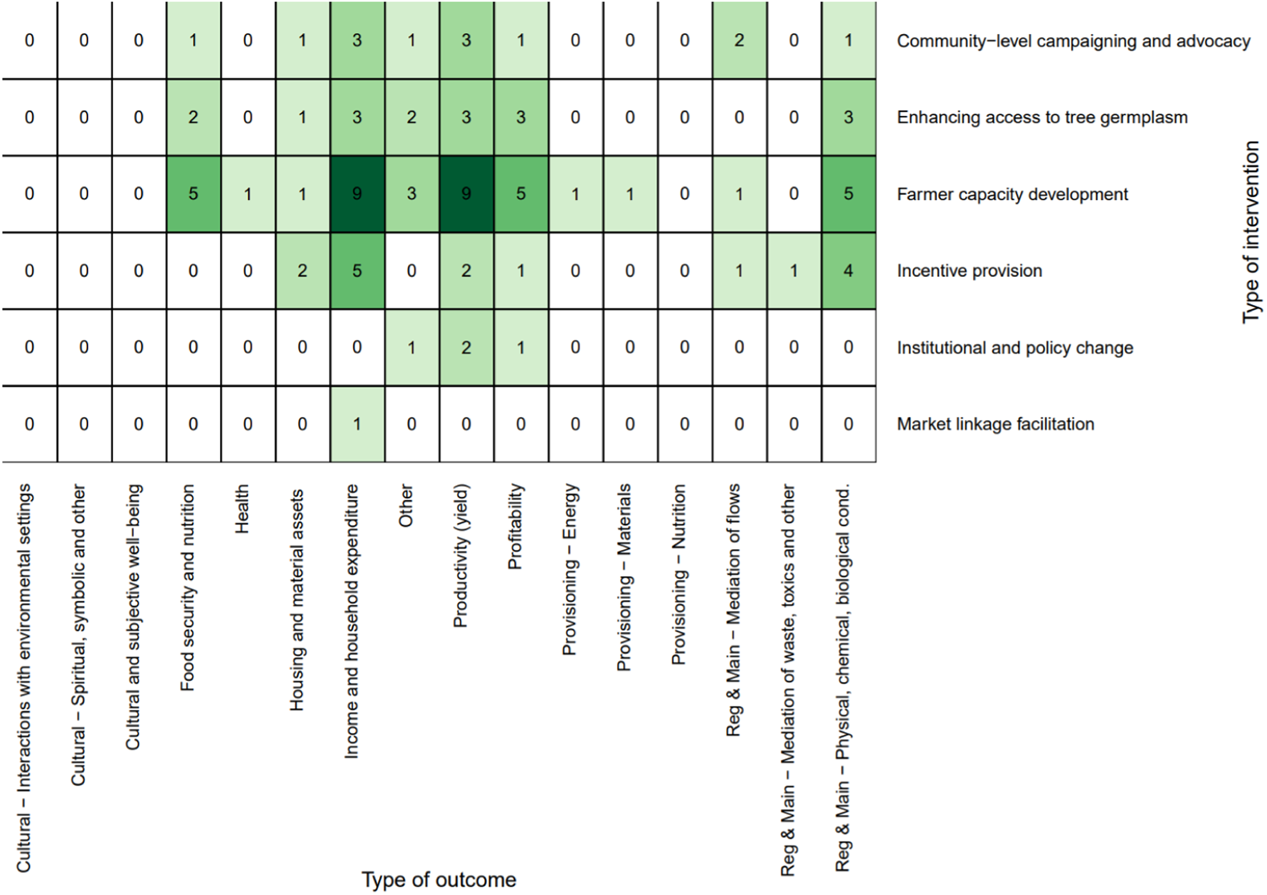
Distribution of specific outcomes and interventions
This section presents the characteristics of empirical studies assessing of the adoption of agroforestry practices without evaluating an intervention designed to promote such adoption. These studies compare agroforestry practices against conventional agricultural or forestry practices for at least one of the outcome categories considered in this EGM. We identified 344 such practice studies (out of the 384 total empirical studies).
Nearly all of the practice studies used a correlational study design, comparing a group of farmers adopting a practice with a group of farmers that did not (n = 342). These studies used multivariate regression analysis or other quantitative or qualitative methods comparing adoption against a control without any attempt to adjust for nonrandom assignment between treatment and control groups. The remaining two studies did attempt to control for potential confounders, with one using PSM (Haglund, Ndjeunga, Snook, & Pasternak, 2011) and the other using a randomized complete block design in an one on-farm trial (McDonald, Healey, & Stevens, 2002). The latter study examined treatment plots managed by different farmers in Jamaica to compare the relative impacts of four land uses: secondary forest, bare soil, agriculture, and agroforestry intercropping crops with trees in contour hedges.
Distribution of studies across practices
Figure 9 shows the distribution of studies by agroforestry practice described. The most common general practice type was agrisilvicultural (78%; 270 studies), followed by silvopastoral agroforestry (13%, 45 studies), and general agroforestry (unspecified type) (12%, 40 studies). Agrosilvopastoral practices were assessed in 15 studies (4%), with only one study focusing on agroforestry with fish/insects (<1%).
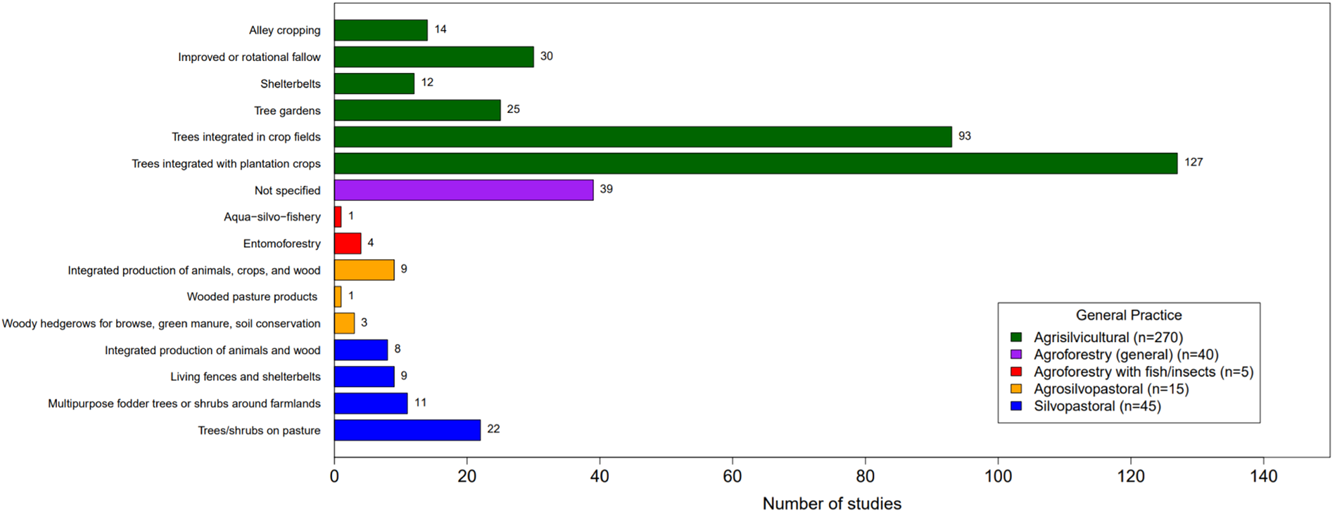
Distribution of studies by agroforestry practice
When looking at more specific practices (Figure 9), trees integrated with plantation crops was the most common (37%, 127 studies), followed by trees integrated with crop fields (27%, 93 studies). Both comprise part of the broader agrisilvicultural category. In the silvopastoral category, the most common practice was trees and shrubs in pastures (6%, 22 studies). The two least frequently studied practices in our review were aqua-silvo-fishery and wooded pasture products, with one study each.
Figure 10 shows the distribution of studies by agroforestry outcomes assessed. Ecosystem services was by far the most commonly assessed general outcome category (n = 282, 82%) followed by agricultural productivity (n = 68, 20%) and human well-being (n = 31, 9%). The most commonly studied specific outcome was the regulation and maintenance of physical, chemical, and biological conditions (n = 235, 68%; Figure 10). The second most common specific outcome was agricultural productivity yield (n = 46, 13%). The third most common specific outcome was household and income expenditure (n = 24, 7%).
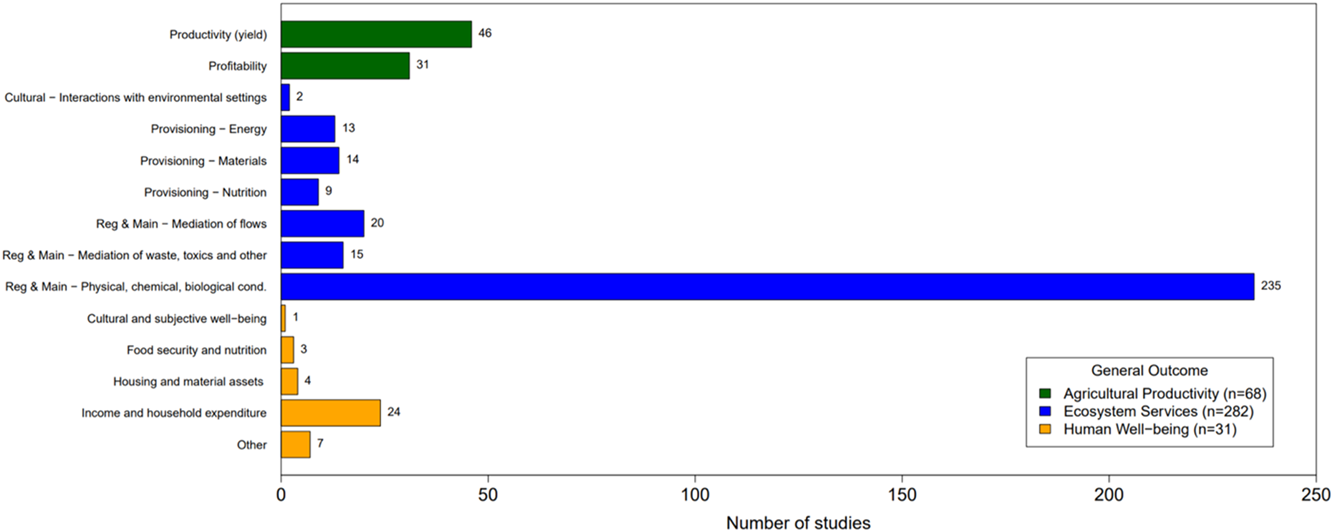
Distribution of studies by outcome
Looking at the combination of practices and outcomes (Figure 11) shows that the majority of studies that focus on agrisilvicultural practices examined ecosystem services outcomes (n = 220, 64%). The second most common outcome for agrisilvicultural practices was agricultural productivity (n = 54, 16%).
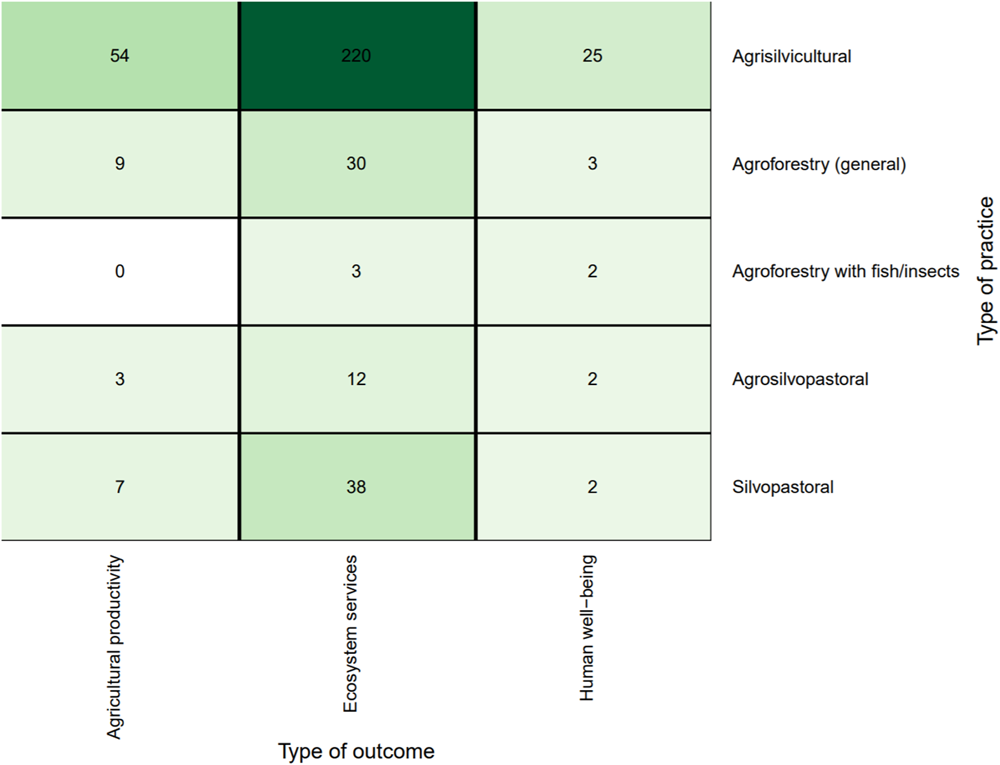
Distribution of studies by practices and outcomes
Figure 12 shows the diversity of more specific linkages between practices and outcomes. The most studied linkage was the correlation of trees integrated with plantation crops on the regulation and maintenance of physical, chemical, and biological conditions (n = 91, 24%). The second most common practice for studies that focused on this outcome were trees integrated in crop fields (n = 71, 19%). A further 31 studies did not provide more specific information on the agricultural practice associated with this ecosystem service-related outcome.
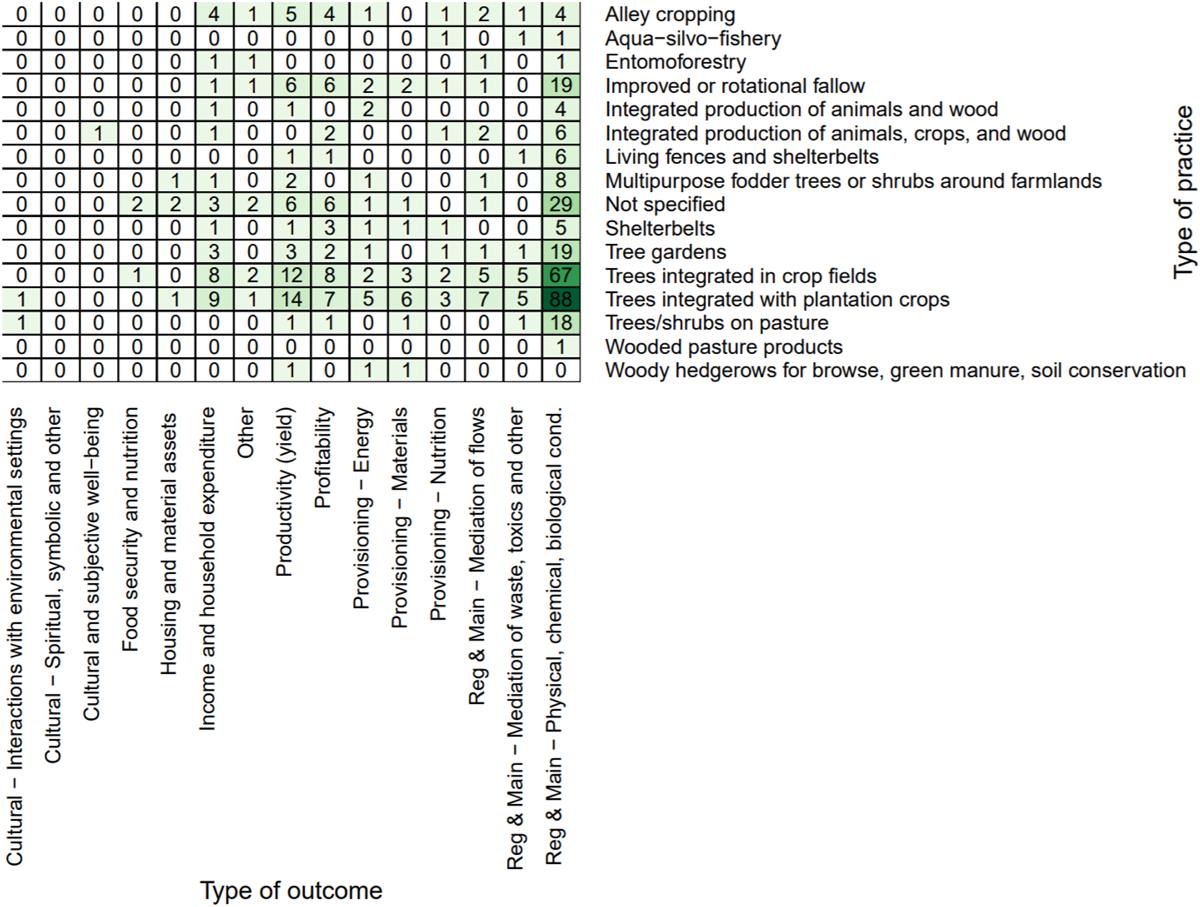
Distribution of studies by specific practices and outcomes
This heat map reveals a concentration of studies assessing the correlation of practices that integrated trees with plantation crops or integrated trees in crop fields on agricultural yield and on income and household expenditure. At the same time, it shows some major gaps, with many linkages poorly explored or not examined at all. In particular, there appears to be very little evidence on the nonincome-related dimensions of human well-being, such as health, nutrition, and cultural and subjective well-being. Among ecosystem services outcomes studied, our map reveals a focus on regulating and maintenance rather than provisioning.
This EGM includes 344 practice studies from across L&MICs in different world regions (Figures 13 and 14). Latin America and Caribbean was the most studied region with 122 practice studies (35%). The second most studied region in this EGM was Sub-Saharan Africa with 85 studies (25%), followed by East Asia and Pacific with 81 practice studies (24%) and South Asia with 59 practice studies (17%). Europe and Central Asia and Middle East and North Africa had four and one practice studies respectively (<1% for both).
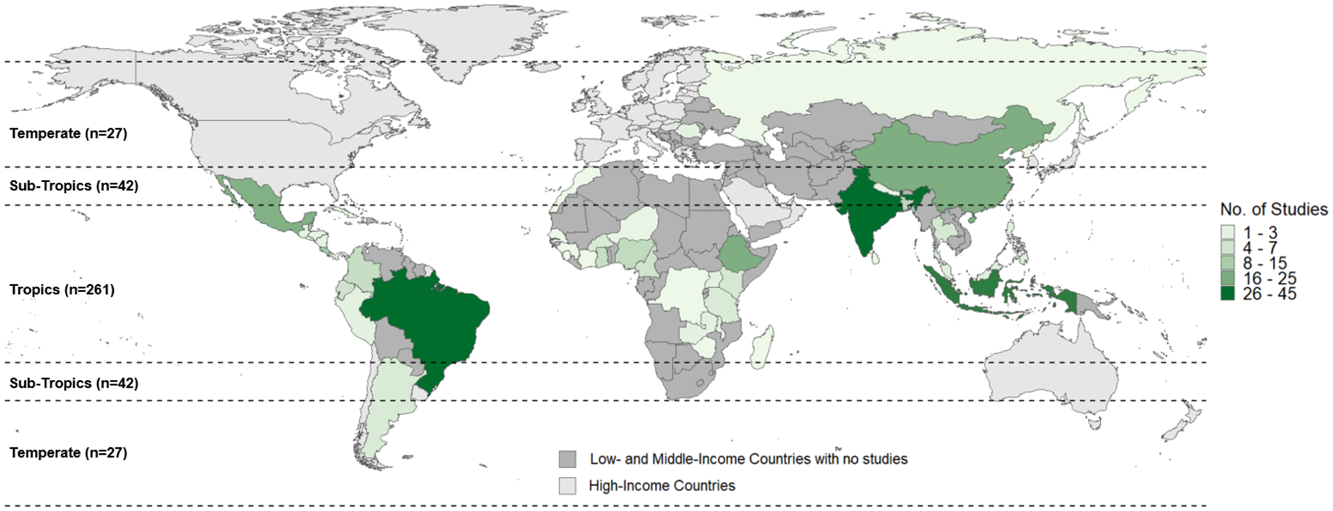
Distribution of practice studies by country and climatic zone
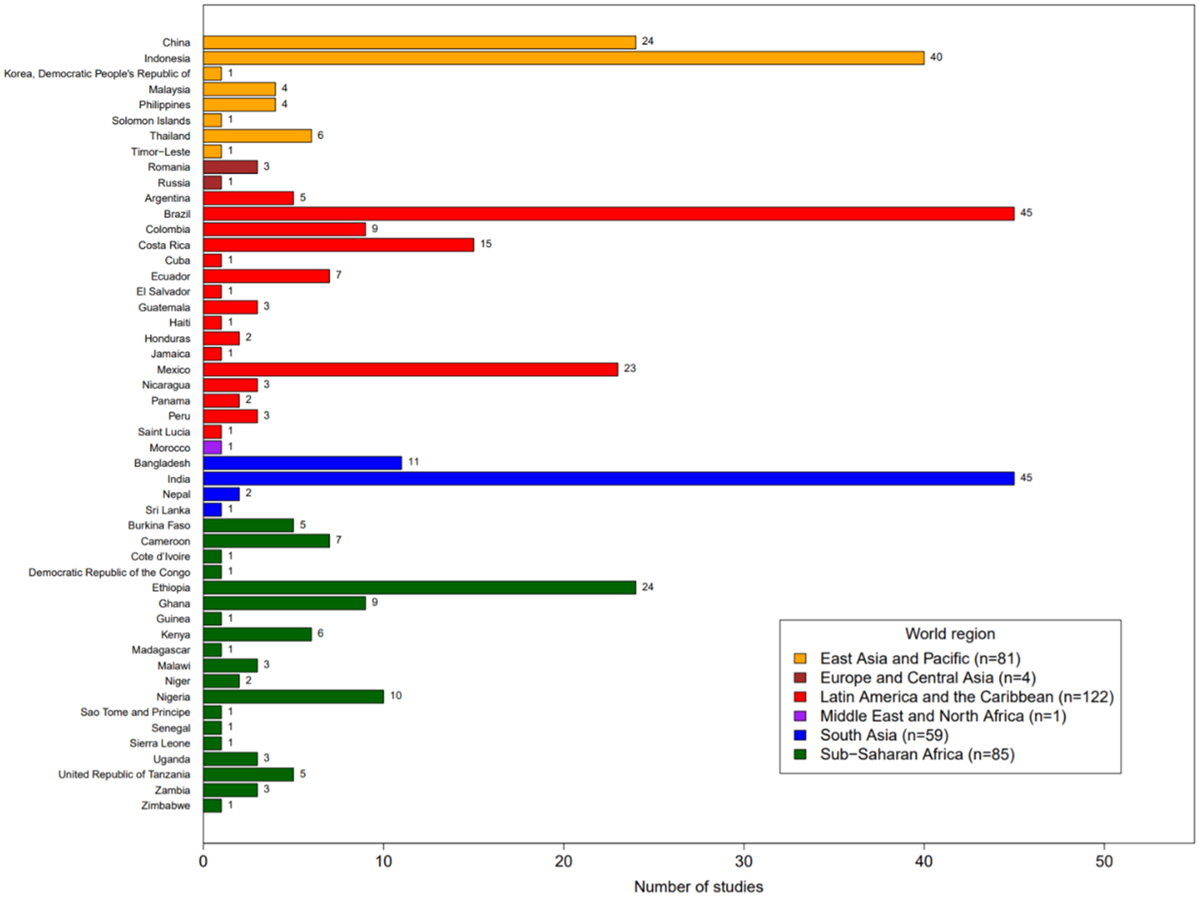
Distribution of practice studies by country
Within the regions, countries were unevenly represented. In South Asia, for instance, 94% of the practice studies in the region were in India (n = 45) and Bangladesh (n = 11), while Nepal (n = 2) had the remaining part of the practice studies. The region of East Asia and Pacific shows similar results. Indonesia (n = 40) and China (n = 24) comprised 77% of the practice studies from that region. In Latin America and Caribbean, 66% of the studies were in Brazil (n = 48), Mexico (n = 23), and Costa Rica (n = 15), and in Sub-Saharan Africa 67% of the practice studies were in Ethiopia (n = 24), Nigeria (n = 10), Ghana (n = 9), Cameroon (n = 7), and Kenya (n = 6).
Studies of agroforestry practices were from three major climatic zones (Figure 13). The tropics were the most represented zone with 261 practice studies (76%). Twelve percent of the practice studies were in subtropical regions (n = 42) and 8% were from temperate regions (n = 27). Four percent of the practice studies were from countries that included multiple major climatic zones (n = 15).
Practice studies included in this EGM were conducted from the year of 2000 to mid-2017. More practice studies were conducted in the last 8 years (68%), than in the first decade (32%). In 2000, only five practice studies were conducted (1%), but that number increased to 31 practice studies in 2011 (9%) and reached a peak in 2016 with practice 45 studies (13%). We note that this upward trend likely continued in 2017 as data for 2017 only extend to the first six months of the year (Figure 15).
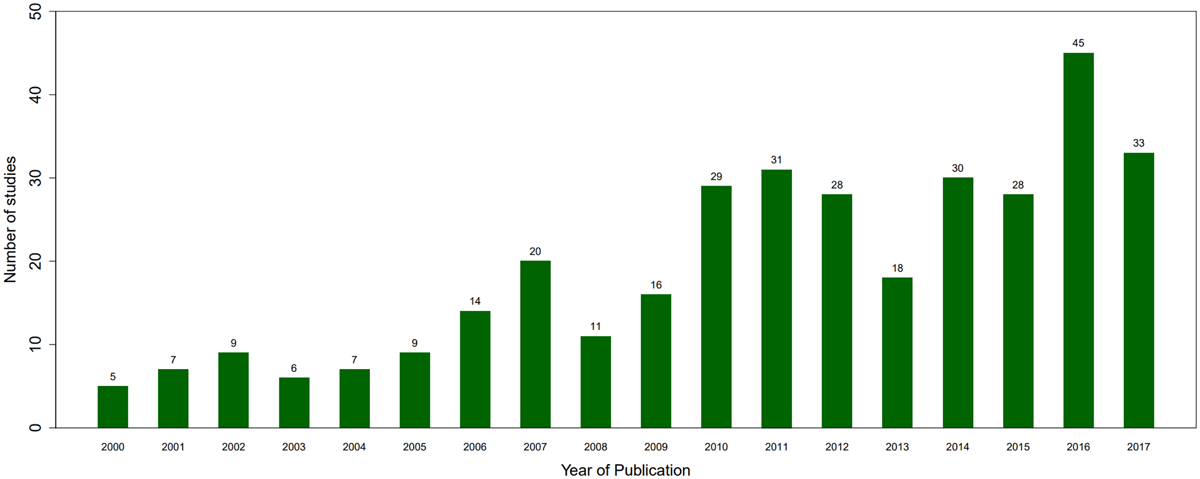
Empirical evidence for practices by publication date. The year 2017 only includes studies through June 30th
There were three publication types for practice studies included in this EGM. The clear majority of the practice studies included are journal articles, with 331 practice studies (96%). Out of the 14 remaining practice studies, 10 are book chapters (3%) and four are conference proceedings (1%).
Only 11 (3%) of the practice studies included results that were disaggregated by different subpopulations. Of these, socioeconomic level and gender were the most studied, with seven and six studies, respectively, followed by literacy/education level (n = 4). Only one study examined results by race/ethnicity.
Characteristics and trends of the evidence base from SRs
Twelve SRs that fit the inclusion criteria were identified. None of the identified reviews included evidence relating to interventions. Table 6 provides detailed information on each of the 12 SRs included.
Description of systematic reviews
Description of systematic reviews
Based on this appraisal, 11 of the SRs included in this EGM were reviews rated low confidence, and one was rated as medium confidence. The primary concern was the risk of bias arising through the methodology, reporting, and lack of risk of bias analysis of included studies within the reviews. All 12 reviews all used a defined, systematic search, but the searches were typically not comprehensive given, for example, a limited set of search terms used, limited databases consulted, and lack of consideration of grey literature. They also rarely incorporated risk of bias or heterogeneity analyses. Finally, the methods used for combining data were also not clearly explained in many of the reviews.
Most of the 12 included reviews discussed multiple practices, with only a few looking at multiple outcomes. Figure 16 summarizes all data found by number of instances in each practice category and outcome type. Table 6 shows the breakdown of the specific practice and outcome types. If one review stated a practice with two different outcome types or a single outcome with multiple practices it would be counted multiple times in Figure 16. Across the SRs there were a total of 33 different combinations of practice and outcome types. Improved or rotation fallow was the most common agroforestry practice occurring in 50% of studies (n = 6) examined, followed by trees integrated with plantation crops and trees integrated in crop fields (n = 5 each, 42% each). Regulation and Maintenance—Physical, Chemical, and Biological Conditions was the most common outcome type, representing 52% of studies (n = 6).
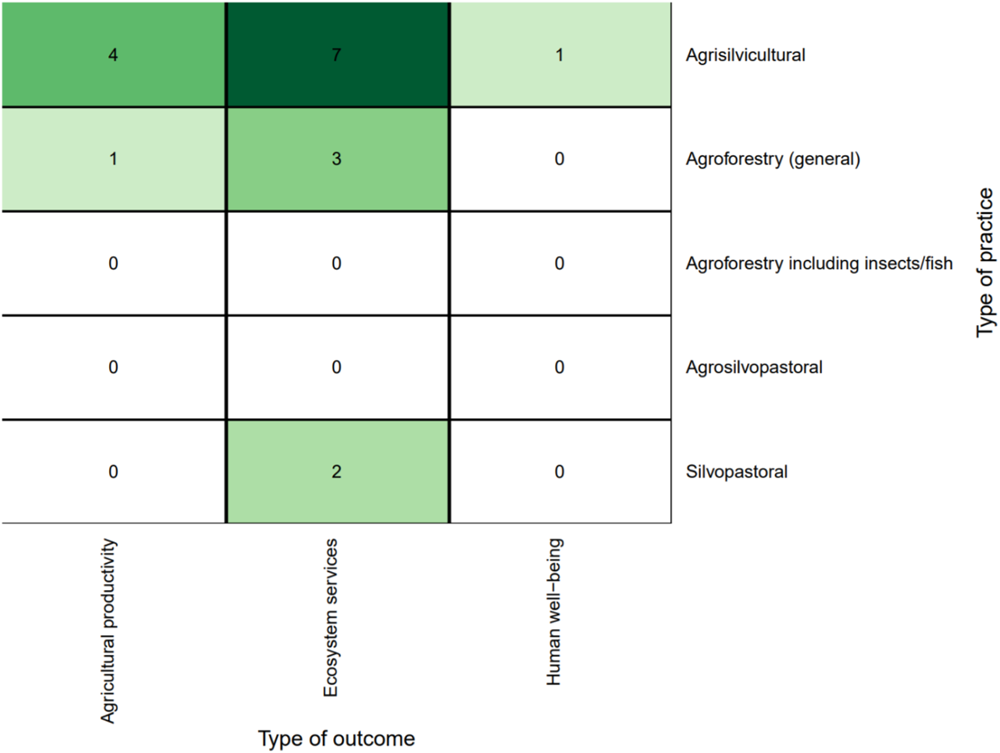
Distribution of systematic reviews by practices and outcomes
Most of the reviews were meta-analyses, as shown in Table 6. While meta-analysis occurred 75% of the time, there were also two SRs and one vote-counting. All of the included studies used a systematic search strategy. We note an additional 39 review-type studies were identified, but these 39 reviews did not use systematic search strategies.
The main EGMs highlighted above for interventions (Figure 3) and practices (Figure 12) highlight a number of important gaps.
What are the major evidence gaps?
An “absolute gap” in the evidence on the impacts of agroforestry interventions
The most notable evidence gap relating to the evidence mapped in this EGM is the lack of evidence on the effects of agroforestry interventions. We identified eight quasiexperimental studies and no experimental studies evaluating the effects of agroforestry interventions. Looking at the main EGM (Figure 3) and more detailed map (Figure 8) highlights a large number of empty or near empty cells. While a few intervention-outcome intersections include a handful of studies there is no area that can be described as saturated. Similarly, given the limited evidence base overall, there are major and widespread gaps in the geographic coverage of intervention studies. Existing studies focus on measuring human well-being outcomes, with fewer studies assessing effects on agricultural productivity and ecosystem services.
The limited evidence base was not entirely unexpected. Our decision to also map studies of practices in the absence of an intervention was partially due to our expectation that there would be few impact evaluations available. But the low number of studies in this category was still surprising. In particular, we were surprised to find that no studies on Costa Rica's nationwide payment for ecosystem services program, which includes an agroforestry component (Porras, Barton, Cascante, & Miranda, 2013), were identified. Additionally, the lack of intervention studies is especially notable given the large volume of literature on specific agroforestry practices and widespread promotion of and investment in agroforestry. It is also somewhat surprising given that intervention studies are now widespread in the sister fields of agriculture and forestry. For example, a recent EGM on agricultural innovation (Lopez-Avila, Husain, Bhatia, Nath, & Vinaygyam, 2017) included more than 300 completed impact evaluations while the EGM by Puri et al. (2016) on forest conservation interventions identified 110 impact evaluations. In line with our findings, however, the latter study found only two impact evaluations on agroforestry, both of which are in our EGM.
We believe there are several reasons for these gaps. First, the location of agroforestry at the intersection agriculture and forestry has often meant that the research communities of each field neglect agroforestry, focusing instead on concerns more core to the respective field. Second, agroforestry has often taken place through autonomous adoption based on traditional practices in many L&MICs rather than being promoted explicitly through government policies. Government interest is changing, but seeing agriculture and forestry separately has been the historic norm, as indicated by the structure of government itself, with agencies responsible for these two domains often separated. Finally, there is often a significant lag between the adoption of agroforestry practices or systems, and measurable outcomes. Therefore, a complete evaluation requires a long-term commitment that increases the cost of such studies.
The lack of evidence on agroforestry interventions underscores the need for more high-quality impact evaluation studies that use experimental or quasiexperimental designs. Agroforestry has been promoted and supported by many agencies worldwide, yet there exists little evidence on the effect of this support on desired outcomes such as agricultural productivity, ecosystem services, and human wellbeing. Impact evaluations of agroforestry policies, programs, and projects implemented on farmers land are urgently needed to help us understand what types of interventions work, under what circumstances, and with what effects for different objectives and social groups. Such studies should assess effects on the range of relevant outcomes along the causal chain, including agricultural productivity, ecosystem, and human well-being outcomes.
A relatively large literature on adoption of agroforestry practices
In contrast to the paucity of evidence on the effects of agroforestry interventions there is a relatively large literature of studies assessing the relationship between adoption of agroforestry practices and relevant outcomes, agricultural productivity in particular. The practice with the least amount of evidence is that of agroforestry including fish (aqua-silvo-fishery), where only one study met our inclusion criteria. We expect that this agroforestry practice is not especially prevalent on farmers’ land, which explains why it has not been much studied. The second least researched category of practices is agrosilvopastoral, which we expect may be more prevalent in the world and may be more deserving of further investigation.
The agroforestry practice studies were concentrated in India, Brazil, and Indonesia followed by China, Mexico, and Ethiopia. Together, these six countries were the focus for 55% of the studies on agroforestry practices. Regionally, Africa has a relatively large number of studies, but if we exclude the two countries with the most studies (Ethiopia and Nigeria), the continent would be well below the other regions. Half of the 14 countries in Africa where studies took place only had one study. More generally, there were hardly any studies in the L&MICs of Europe and Central Asia, and Middle East and North Africa.
Finally, we also note a lack of equity focus in the literature, both for intervention and practice studies. Given the focus on ecosystem service and productivity outcomes for the practice studies, this is an expected finding. The intervention studies, however, focus more on human well-being outcomes, and while we find that five of the eight impact evaluation studies include some measure of equity in their analysis in the form of subgroup analysis, there is a lack of more substantive equity analysis. Future impact evaluation studies should incorporate consideration of equity in their design and analyses of effects on human well-being outcomes.
Synthesis gaps: No high-quality SRs
All included SRs (n = 12) addressed practices rather than interventions. This result mirrors what we have found in conducting this EGM, with the majority of the included studies relating to practices. However, 11 of the SRs on practices were rated as low confidence. Therefore, any area of evidence concentration presented in our map offer areas with potential for SR. Despite the overall paucity of evidence on agroforestry intervention effectiveness, a potentially useful SR would be one that synthesizes the evidence on the most prevalent and promising practices (considering also including field trials), combined with a synthesis of relevant interventions mechanisms used in agriculture more broadly. Together, this evidence could identify what practices appear most efficacious and how to promote uptake of such practices among farmers.
We suggest the synthesis of the evidence on practices should focus on the broad range of relevant agricultural productivity and ecosystem services outcomes, perhaps leaving out human wellbeing outcomes. This is because much of the evidence will be based on correlational studies, and human wellbeing outcomes in particular may suffer from selection bias (wealthier and more educated farmers more likely to adopt new practices). It would also be important that any synthesis of this evidence consider key variables likely to drive heterogenous outcomes, including type of climate, agricultural system, and crop type. Additionally, the evidence from agroforestry field trials should be synthesized similarly in conjunction with or separately from on-farm research.
A SR of the currently available quasiexperimental impact evaluation studies would also be worthwhile. Carrying out such syntheses would provide baseline insights to inform future policy and programming relating to agroforestry interventions and also present an important baseline for future research. This kind of synthetic work is also needed to help address what seems to be a persistent dichotomy in agroforestry research between studies in ecology and agronomy, which tend to focus on the agricultural productivity and environmental outcomes of agroforestry practices, and studies in international development that emphasize human well-being outcomes of agroforestry interventions.
DISCUSSION
Summary of main results
Agroforestry has been widely practiced, promoted, and studied across the L&MICs of Africa, Asia, and Latin America. Given its prevalence and promise, agroforestry is promoted for its potential to provide a vital contribution to advancing several of the 2030 UN SDGs (Van Noordwijk et al., 2018; Waldron et al., 2017). Indeed, high-level policy documents in many L&MICs now explicitly call for the integration of trees into farming systems (FAO 2013) and international donors have invested billions of dollars in agroforestry interventions around the world (AidData 2017; Tierney et al., 2011).
In this study, we have presented the findings of an EGM that used systematic methods to identify, collect, and visually portray available evidence on the effects of agroforestry in L&MICs on three important outcomes: agricultural productivity, ecosystem services, and human well-being. Our EGM differs from other such maps in that it describes evidence not only on interventions to promote agroforestry but also on specific agroforestry practices, whether they have been promoted through specific programs or not. These different literatures largely correspond to the type of research typically conducted in ecology/agronomy and international development, respectively.
Limitations and potential biases in the review process
A central finding of this review is that the evidence base on the impacts of agroforestry interventions on farmers’ land remains very limited. While we identified 384 studies in total, only eight addressed the effects of interventions, with remaining literature consisting of observational studies of agroforestry practices as compared to nonagroforestry land use. Thus, the evidence backing claims about the potential of for agroforestry to improve agricultural productivity, ecosystem services, and human well-being is lacking.
Agreements and disagreements with other studies or reviews
Agroforestry has often been overlooked in research and policy on agriculture and rural development (Miller, Ordonez, et al. 2017). The focus of agriculture is usually on annual crops and trees are usually considered the domain of forestry. However, forestry largely concerns itself with trees in forests rather than outside them. Without more reliable evidence on intervention pathways and impacts, agroforestry risks further marginalization, thereby undermining progress on broader development and sustainability goals. Below we draw out implications of this and other findings for research, policy, and practice.
AUTHORS’ CONCLUSIONS
Implications for practice and policy
Given that the major finding is that there is a near absolute gap in evidence on the effects of the agroforestry interventions, it may seem there are not many implications for policy and practice. In a sense this is true—we lack systematic understanding of the relative effectiveness of different interventions to inform new policies and programs. However, the overall findings of this report do suggest some important paths forward.
From a donor perspective, the EGM highlights major areas where there is a need to support more primary research, particularly on specific kinds of agroforestry interventions, as well as where evidence synthesis might be conducted. These two areas are detailed in earlier sections. Relatedly, there is a major opportunity for donors and governments and other partners to work together to support and implement randomized controlled trials (RCTs) of different agroforestry interventions to enhance our understanding of what works and what does not seem to work in this area.
Implications for research
The results of our study show that there is a significant need for further research on the socioeconomic and ecological effects of agroforestry. This need relates to synthesis of the existing evidence base on the impacts of both agroforestry interventions and practices as well as new primary research on agroforestry interventions.
Our study reveals that rigorous evidence on the effects of agroforestry interventions remains extremely limited. Impact evaluations of agroforestry interventions remain challenging due to the long time scale between implementation and impacts. Trees take a long time to grow, and the resulting effects on environmental health and human livelihoods may take decades. The scope of many development projects usually only lasts a few years, so long-term monitoring and evaluation must be built in to project proposals and designs. Many studies we found only examined whether farmers adopted agroforestry as the results of an intervention, without measuring the subsequent impacts on social-ecological outcomes. One approach to addressing the need for long-term evaluation is establishing on-farm experimental trials, for which there may be better justification for long-term monitoring proposals. Finally, RCTs are rarely conducted in agroforestry research based on our findings, but RCTs can offer valuable insights into how agroforestry interventions impact farmer livelihoods and the environment.
The complexity that comes with integration of agricultural, forest, and pastoral, and other systems, as done in agroforestry, poses significant challenges to evaluating the effectiveness of specific agroforestry interventions. However, given the potential of agroforestry to contribute to a number of major SDGs simultaneously, there is an urgent need for such impact evaluation. Nevertheless, there are examples demonstrating such evaluation is possible. Expanding the number of impact evaluations of agroforestry interventions, especially using RCTs, therefore, represents a major opportunity for expanding and improving the existing evidence base.
A better understanding of the win-win scenarios and tradeoffs associated with agroforestry is urgently needed, particularly given the potential of agroforestry to help achieve the SDGs. More robust evidence on the different environment and development objectives agroforestry can advance, including climate change mitigation and adaptation, poverty reduction, and health and nutrition, is needed in its own right, but also to enable analysis of synergies and tradeoffs.
Agroforestry encompass a huge suite of different practices that are flexible in their design and composition. This spectrum of practices that agroforestry captures makes it difficult to define for comparison to alternative land uses. Coupling the ecological suitability of different agroforestry practices with the associated impacts on human well-being, instead of leaving the ecology and human well-being outcomes separate, could build understanding of the complex dynamics of agroforestry to help design better agroforestry interventions. We need to better understand the costs and benefits of agroforestry from an interdisciplinary perspective, incorporating economics, social science, and environmental science, to assess its viability as a conservation practice while also considering the needs of farmers.
INFORMATION ABOUT THIS REVIEW
ROLES AND RESPONSIBILITIES
Content: D. C. M. is an expert on forest and natural resource policy and has conducted research on the socioeconomic contributions of forests and trees in Africa, Asia-Pacific, and Latin America. K. B. is specialist in evaluating the effectiveness of agriculture, conservation and natural resource policy interventions on global food security, the environment, and social welfare. K. H. leads Monitoring, Evaluation and Impact Assessment the ICRAF and has extensive knowledge of agroforestry policy, practice, and research. P. J. O. has conducted research on the effect of forest and agroecological management practices in Central America, Colombia, Mexico and Sub-Saharan. S. E. B. has carried out parallel research on agroforestry impacts in high-income countries and brings more general knowledge on agroforestry practices in different contexts around the world.
EGM methods: D. C. M., K. B., P. J. O., and S. E. B. have substantial understanding of EGM methods. The team consulted with Birte Snilstveit, and leading expert in EGM methods, throughout the EGM process. Statistical analysis: D. C. M., K. B., P. J. O., and S. E. B. have expertise in econometrics and statistics. S. E. B. created the R code for the analysis and figures. Information retrieval: P. J. O. and S. E. B. led the information retrieval and data management. N. J. N. and S. F. helped with data collection. The team consulted an advisory group of experts in agroforestry and systematic searches to help create the search string. The team also consulted library scientists at the University of Illinois at Urbana-Champaign for guidance in searching multiple academic databases and grey literature sources. Report: D. C. M., P. J. O., S. E. B., S. F., N. J. N., K. H., and K. B. wrote the report.
Footnotes
SOURCES OF SUPPORT
We thank members of the advisory group to this EGM, Kahlil Baker, Samantha Cheng, Steve Franzel, Irina Klytchnikova, and Frank Place, and three anonymous reviewers for comments on earlier versions of this report. Special thanks to Birte Snilstveit for supporting, guiding and peer reviewing this work at each stage in its development. We are especially grateful to Festus Amadu, Delaney Demro, Protensia Hadunka, Rebecca Laurent, Nataly Medina, Joseph Murray, Katia Nakamura, Pushpendra Rana, Krti Tallam, Kealie Vogel, and Adam Yusen for research assistance on this project. Participants in a session on agroforestry at the 2017 Forests and Livelihoods: Assessment, Research, and Engagement (FLARE) conference in Stockholm provided helpful comments on this work. Funding from 3ie and the USDA National Institute of Food and Agriculture, Hatch project #1009327 is gratefully acknowledged.
PLANS FOR UPDATING THIS REPORT
The authors have no immediate plans to update this EGM. However, they are carrying out a systematic review of the eight included agroforestry intervention impact evaluations, with plans to update the search to cover the years 2000–2019. The authors will consider updating the EGM in the future should funding become available.
DECLARATIONS OF INTEREST
None of the authors has any conflict of interest, financial or otherwise to declare related to this project. Daniel C. Miller, Karl Hughes, and Kathy Baylis have published work on the socioeconomic contribution of trees on farms, but none of their work was included in this EGM.
We note that the total percentage here, and at different points throughout this report, can sum to more than 100% as a given study could include more than one intervention and outcome.
SEARCH STRATEGY AND DATABASES
DATA EXTRACTION FORMS
References
Supplementary Material
Please find the following supplemental material available below.
For Open Access articles published under a Creative Commons License, all supplemental material carries the same license as the article it is associated with.
For non-Open Access articles published, all supplemental material carries a non-exclusive license, and permission requests for re-use of supplemental material or any part of supplemental material shall be sent directly to the copyright owner as specified in the copyright notice associated with the article.
