






Abstract
The lack of gender‐equity in teacher training and sensitivity to gender equity among teachers prevents women from fully accessing non‐traditional jobs. Consequently, educators miss relevant tools when designing courses that take into account the needs and concerns of women. This article describes the influence of equity training on teachers' representations of women's and minority groups' needs. ATLAS‐ti and ALCESTE software were used to analyse pre‐ and post‐training interview content. Collated results show that after participating in equity training, educators' representations are modified. Moreover, gender‐discerning analysis shows a more significant modification in men's post‐training discourse.
Introduction
The existence of laws and policies regarding equity in employment and education is an indication that society recognizes the importance of righting the wrongs suffered in the past by groups subjected to discrimination. However, despite the fact that special programs have been put in place, girls and women still encounter considerable challenges in accessing non‐traditional fields where they continue to be under‐represented (Gaudet & Lapointe, 2000; Sadker, 2000; Lapointe, 1998; Gaudet, 1997). One of the main obstacles preventing women from fully accessing non‐traditional area of training is the lack of a gender equity component in teacher training and sensitivity to gender equity among teaching staff (Gaudet, 1998). According to Théberge (1999), Brown (1999) and Gaudet (1998), teacher training which includes programs dealing with issues of equity would favour the integration of women and other minority groups in those fields of employment. However, university faculties of education still hesitate in instituting courses and programs that specifically study this issue as part of teacher training (Sadker, 2000; Bryan, 2000; Théberge, 1999; Knupfer, 1999; Franceskidès, 1998).
What tools could be made available to teachers to increase their understanding of the equity in education issue? Would these educational tools allow people to improve their practice so as to facilitate the integration of all learners? What influence does equity in education in general, and more particularly gender‐equity in education, have on educators' representations?
In this article, the authors first present a review of literature on equity in training and relevance of an equitable educational model in training. The developmental method used in the development of an equitable educational guide and the methodology that allowed it to be validated are then described. Finally, results of the research are presented and followed by discussion.
Problem Statement
According to several authors (Care & Udod, 2000; Bailey, 1995; Garon, 1993; Herr Van Nostrand, 1993, Vezina & Courville, 1992 in Gaudet & Legault, 1998), educators must question their perceptions and beliefs on the subject of training for girls and women if they wish to significantly reduce the obstacles to full equity in employment of females. According to Secada (1989), the principle of equity demands to go beyond set rules and procedures to re‐examine pre‐established objectives relating to equity to see if they have been met.
A considerable number of researchers are interested in the question of equity in education (see among others Solar, 1998; Gaudet, 1997; Nichols, 1994; Muffoletto, 1994; Das Gupta, 1993; Secada, 1989). Equity in education means taking into account the needs and interests of those who have traditionally been kept on the fringes of the educational system, such as the handicapped, minority ethnic groups and women. With regard to teacher training programs, Kerr (1990), Muffoletto (1994) and Damarin (1994) all refer to the apparent lack of awareness and subsequent concern for the principles of democracy, fairness and equity towards these groups.
Among the researchers who have worked on the concept of equity in education, some have studied the importance of integrating the experiences, values and learning styles of women into teaching (Damarin, 1994; Foley, Keener & Brauch, 1993; Fennema & Myers, 1989; Belenky, Blythe, Goldburger & Tarule, 1986). In Canada, the results of a preliminary study (Gaudet, 1998) involving instructional systems designers confirmed that the concerns of women who work in non‐traditional sectors are seldom taken into account when these programs and systems are being put in place. In fact, more than half of the people interviewed admitted to attach little or no importance to the particular concerns and needs of such target groups. Yet, according to Franceskidès (1998), when the system ignores the needs of women and minority groups, the consequences can be costly both economically and socially. Given this fact, it becomes essential that professional trainers have access to the appropriate tools to help female learners enter non‐traditional domains.
Review of Literature
According to Gaudet and Legault (1998), Bailey (1995), and Leduc (1994), women still face a number of challenges in the workplace. Bailey (1995) states that sexual stereotypes and gender segregation in education, in training and in employment limit women's potential as individuals and as citizens. A considerable number of studies have been completed on the culturally‐conditioned learning styles particular to ethnic groups. Women have also been the focus of numerous studies on this subject (Caleb, 2000; Sadker, 2000; Ouellette, 1999; Gaudet, 1998; Pearson, 1992; Belenky et al. 1986). For instance, a body of research has shown differences in treatment according to gender as well as the specific concerns of women in training situations (Masland, 1994; Pearson, 1992; Herr Van Nostrand, 1993; Pollard, 1993; Van Note Chism, Cano & Pruitt, 1989; Fennema & Myers, 1989; Belenky et al. 1986). The results of a study by Davenport (as cited in Théberge, LeBlanc & Brabant, 1996) stress that women pay special attention to the learning climate and interpersonal relations and appreciate group discussion more than men do. Men, on the other hand, have a tendency to prefer presentations, assigned readings and visual materials. According to Belenky et al. (1986), women prefer to acquire knowledge that is inter‐related, integrated, and unified, something which the authors refer to as “connected knowing,” while they have more difficulty in settings where a “separated knowing” approach is used. A recent study by Caleb (2000) comes to similar conclusions.
Masland (1994) presents a revealing picture of the results obtained by various researchers on girls and women receiving differentiated treatment in the learning environment. For example, Alton‐Lee, Nathall, and Patrick (as cited in Masland, 1994) presented teachers with videotapes showing their teaching practices. The teachers realized that they paid more attention to comments made by boys, that they used exclusively masculine terms, that they used analogies related to activities such as football to reinforce the lessons and that they paid little attention to the way the learners were spatially situated in the classroom. Furthermore, although the study by Sternglanz and Lyberger‐Ficek (as cited in Thorne, 1989) indicates no significant difference in the teacher/learner interaction when the teacher was female, it did find a significantly higher level of interaction with boys when the teacher was male. Similar studies conducted by Sadker (2000) and Tracy and Lane (1999) also confirm these observations.
Regarding the contribution of women and the integration of their viewpoints in actual teaching content, researchers noticed that there was no awareness of this element (Caleb, 2000; Dallaire & Rail, 1995; Gilligan, Lyons & Hanner, as cited in Masland, 1994). Finally, in the last few years, extensive research conducted on sexual and sexist harassment in the workplace, in education and in training shows that real problems exist which slow the advancement of women (Gauvin, Marcoccio & Guérette‐Breau, 1999; Gaudet, 1998; Lapointe, 1998; Marshall & Trapp, as cited in Masland, 1994).
Relevance of an Equitable Teaching Model
In light of the above‐mentioned facts, it may be concluded that female learners face numerous barriers that male do not. Therefore, their entry into male‐dominated fields must be supported and facilitated (Gaudet & Legault, 1998; Chicha, 1995; Masland, 1994). While professional training increasingly concerns itself with jobs springing from the new global economy, such as those related to information and communication technology, we can see a significant gap forming between men and women in those sectors, which are quickly becoming male‐dominated. According to a study published by the AAWU (2000), American women are under‐represented in sectors related to technology and computer science where they only represent 20% of students. In Quebec, Canada, in 1998, women made up only 24% of people registered in computer science in universities, and less than 20% in physics programs at the collegiate level (CIRADE, 2000).
Given the trend towards the pauperization of women in the world and the need to allow them to attain economic parity with men, the entry of women into emergent professions and jobs must be supported by policies, tools and models that favour their integration (Gaudet, 1998; Chicha, 1995). The development of instructional design models that take into account the specific culture of women, their needs and experiences, constitutes an efficient way to encourage women's successful training. In fact, to reduce obstacles to full equality in women's employment in a significant manner, the various participants in training milieus must question their educational notions and practices (Théberge, 1999; Tracy & Lane, 1999; Piano, 1998; Sanders, 1997). Based on the review of literature on equity in education, the present study aimed at answering the following questions:
Does participation by educators in equitable training modify their representations pertaining to the needs of women and minority groups? Do educators' representations on the needs of women and minority groups vary according to gender? Does participation in equity training modify these representations differently according to gender?
Methodology
Development of the Educational Guide
The educational guide was developed from a grid of 30 equity factors that could counter obstacles met by girls and women studying traditionally male domains (Gaudet, 1997). This initial grid had been tested during an experimental‐type study, and the results had showed the impact the addition of equity elements to educational model design had on course design (Gaudet, 1998). This initial grid was slightly modified, and a final version of 18 factors retained. An equitable pedagogical guide was then developed and tested on trainers.
The educational guide is made up of three parts. The first consists of an introduction, a table of contents, objectives and a schedule of activities. The second contains the educational activities themselves, subdivided into 15 sections in which 25 activities are detailed. The third part contains a collection of texts specifically relating to gender equity, as well as a personal log.
Subjects and Sampling
Following a call for volunteers among Francophone businesses in the Moncton, New Brunswick region, ten trainers (six men and four women) agreed to participate in the study. Training was conducted over a two‐day period. The first day consisted of reflexive analysis activities on sexist and racist stereotypes present in society and in organization systems. The second day of training dealt principally with the auto‐evaluation of educational practices, followed by discussions with the researchers, as well as presentations on new trends in instructional design and cognitive psychology.
Data Collection Techniques and Instruments
Two principal techniques were used to collect data: the semi‐structured interview and observation. There were two interview sessions, one before the training session, the other approximately three weeks later. The interview guide contained twelve questions pertaining to the steps followed by the trainer when starting a new course. In the second series of interviews, a thirteenth question was added to verify participants' perceptions of the relevance of the training. Interviews were recorded and transcribed integrally. Observation data was collected throughout the training session, recording participants' verbal and non‐verbal behaviour.
Data Analysis
With the exception of answers to the thirteenth question, which were analyzed through emergent categorization using the ATLAS‐ti software, pre‐ and post‐training interview data were analysed using the ALCESTE method (Reinert, 1986). According to Reinert (1993, p. 12), within the framework of individual interviews, “when the subject is collective,” the lexical worlds “become a kind of ‘common ground’.” Analysis of individuals' worlds of representations thus gives access to a social and collective reality.
Once the interviews were divided into initial context units coded according to gender, the program established, through a descending hierarchical classification, classes of words by virtue of co‐occurrences of words in the units (Chi2) and in relation with gender. Analysis of the vocabulary used in each class allowed for the identification of themes corresponding to their specific worlds of representations.
Observation Results
Resistance to Equity Training Issues
From the first moments of the training session, when the specific theme of educational equity was broached, the research team noticed an expression of resistance from some of the trainers. This resistance persisted throughout the first day of training. Furthermore, the researchers quickly realized that some participants expected to be presented with innovative tools in the form of “recipes” rather than partake in a reflexive analysis process. The research team adapted to this situation by going back over the participants' previously‐acquired knowledge relating to educational design and elements of cognitive psychology in order to better link concepts of equity and gender to them. The sequence of activities for the second day was also revised to better meet the participants' needs.
Modification of Attitudes
On the second day, volunteer participation increased, particularly that of the women, and the group's interest in the issue of equity became more and more evident. Notes recorded in the observation grids indicated a change in participants' behaviour, attitudes and comments. This change manifested itself through questions, openness to change and recognition that inequity is present in the classroom.
Interview Result: What Was Remembered As Being Essential?
Participants' Representations Regarding Relevance Of Training
The following question was added to the post‐training interviews: “Two or three weeks after participating in the training session on equity, what do you remember as being essential on this subject? What has stayed with you?”
Four categories of answers emerged from the qualitative analysis. The first category describes the expression of a new awareness of equity issues in training: the different needs of men and women, sexism in classroom environment, the diversity inherent in the learning clientele, the existing reality and practices and the need for participants' perfecting their abilities regarding the issue. Here is one excerpt representative of this category:
“Participating in the sessions allowed me to see that this issue touches other people and that things are being done, but it's still vague in people's minds. We know we have to keep these things in mind, but we tend to forget.”
A second category describes the practical applications that the volunteers claim to have made after having participated in the training session. These applications concern the use of an equity grid in their own courses, that of presented concepts, sharing of content with colleagues, raising awareness among supervisors and modification of one's own behaviour and expectations regarding equity in their organization:
“I participated in something that constantly makes me think that it's true it's there, I have to think about it when I practice.”
A third category concerns the recall or confirmation of notions already learned regarding the specific needs of learner groups, equality and equity in training, and systemic discrimination in organizations:
“It was like a wake‐up call, an increased awareness. I had received it in the past, but it becomes latent. But now, it has resurfaced.”
The last category relates to an expression of resistance and feeling of frustration regarding the treated subject during training, followed by the realization of a high degree of satisfaction as to the relevance of the training and its content:
“I'll start by saying that at first, I was disappointed, but that at the end, I was satisfied. So I made some headway. I was disappointed at first because the type of training was very different from my own, specifically.”
This first phase in the content analysis affirms that following the training, the participants testify to the influence it has had on their representations regarding equity. This influence is expressed by the recognition of personal resistance regarding the issue of equity in training, a gained awareness and recall of the diversity of concerns and needs of learners, and willingness to change and improve educational methods.
Interview Results: Pre And Post‐Training Discourse
In this section, we present a comparative analysis of participants' discourse before and after the training, compared by gender. This allows us to answer the second research question attempting to ascertain if participants' representations vary depending on their gender before and after training.
Pre‐Training Interviews
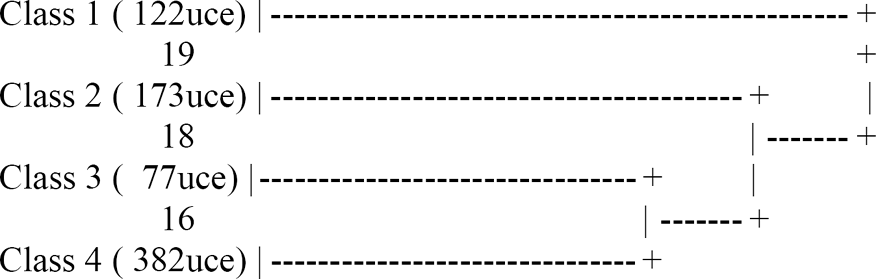
. Descending hierarchical classification, pre‐training interviews
Study of Figure 1 shows the procedure first distinguished class 1 from classes 2, 3 and 4. The two discourses from this first division are thus more distinct. Then, classes 2, 3 and 4 are distinguished from one another, but still related, while class 1 is opposed to the other three. Table 1 describes the content of each of these classes by listing the principal terms associated with them in order of decreasing Chi2.
Classes And Their Main Vocabulary According To Chi2, Pre‐Training Interviews
Note. The * refers to the gender variable and its Chi2.
Description of Classes
From an analysis of the vocabulary present in each class, themes were identified for each. Analysis of the vocabulary in class 1, which is more characteristic of men (Chi2 = 25.72), indicates that their discourse relates to structural and organizational concerns, either linked to the training process or to management in general. The following presents each theme from this class accompanied by its terms:
The vocabulary of class 2, more representative of women (Chi2 = 79.27), is focused on human considerations and relational elements and on personal performance and its evaluation:
Class 3 is also more representative of men (Chi2 = 5.08) with themes that refer to planning of one's time, place, material and action:
Finally, class 4, again related more to men (Chi2 = 87.82), focuses on educational activity and knowledge transmission:
In short, of these four identified classes, three possess discourse more characteristic of men while a fourth is more specific to women. Moreover, while male participants' representations relate to concerns linked to management, planning and the process of transmitting knowledge, female participants' refer to the evaluation of their own performance and relationships between people.
Post‐Training Interviews
Analysis of the discourse from the post‐training interviews also identifies four classes (see Figure 2).
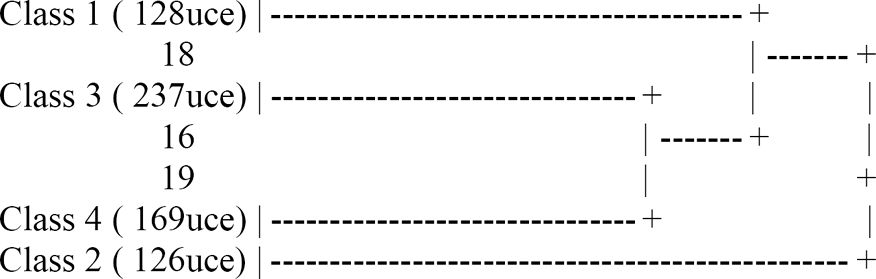
. Descending hierarchical classification, post‐training interviews
Class 2, more significantly characteristic of men (Chi2 = 84.99), is the most distinguishable. Class 1, distinguishable from classes 3 and 4, is more characteristic of women (Chi2 = 60.11) as is Class 3 (Chi2 = 44.76), while class 4 is linked to men (Chi2 = 68.73).
Description Of The Four Classes
In Table 2, the content of each class is presented by giving the principal terms associated with them in decreasing Chi2 order.
Classes And Their Main Vocabulary According To Chi2, Post‐Training Interviews
Note. The * refers to the gender variable and its Chi 2.
Table 2 shows that Class 2, more representative of men, contains a vocabulary in part similar to that of pre‐training Class 1, also shown to be representative of men. The themes are again related to a discourse centred on organizational responsibility dynamics. However, a change is noted since a new world of representations appears, one that talks of human beings and organizational gender issues:
Analysis of Class 1 vocabulary, which is more representative of women, reveals a world of representations still focused on the quality of the educational environment, one's own performance, communication tools and time. However, these seemed to be located more precisely in the specific context of learning as indicated by the terms related to time, performance and communication:
Class 3, also more representative of women, contains discourse linked to adaptation and performance during the teaching and learning processes:
Finally, Class 4, more related to men, focuses on action and its process:
Discussion and Conclusion
At the beginning of this article, we noted the issue of the continued absence of women in traditionally male employment sectors, as well as in jobs and professions connected to sectors of the new economy. According to many researchers, this absence is partly tied to the lack of teacher training in equity.
The approach proposed in the pedagogical guide developed as part of this research can be compared to the one presented by Théberge (1999), inspired by the Conway‐Gerhardt model comprising four steps: awareness, analysis, action and evaluation. Results indicate that training following this logic appears to produce a positive outcome. Indeed, in response to the first question asked in this study, results indicate that equity training initiates a modification of trainers' representations concerning the needs of learners belonging to equity groups. Furthermore, overall results indicate that even after short‐term training, representations of trainers appear to be modified and an increased awareness is observed. It appears that, as Sadker (2000), Théberge (1999), Knupfer (1998) and Franceskidès (1998) maintain, in order to favour women's integration in leading professional sectors, such training, once inserted into programs offered by schools and faculties, would improve the acquisition of skills and knowledge necessary to the design of equitable instructional programs.
As for the second research question, focusing on verifying if the gender variable is linked to representations related to equity in training, it is noted that trainers' discourse differs according to gender. Among other things, comparative analysis of pre‐ and post‐training discourse reveals that the training influenced men's and women's representations differently. Particularly, though many similar elements find their way into the discourse from both series of interviews, one can observe among women's post‐training discourse a more precise description of the educational context to which they attach human and relational values already identified in pre‐training discourse. However, it appears that men's discourse has been modified the most since it evolves from being mostly focused on management and the learning process to a vocabulary pertaining to human and gender concerns in organization.
This study was conducted with trainers working mostly in the business sector. Since that environment favors the acquisition of “leading” knowledge and skills, it is important to take into account the needs and concerns of various groups, including women, in learning situations. Experts in training recognize that when human resources are valued, a higher degree of employee satisfaction is attained. Taking into account the specific needs, concerns and experiences of female trainees can therefore be highly beneficial to organizations and the whole of society.