







Abstract
We investigate the effect of individual differences in justice sensitivity (JS) on giving behaviour in a solidarity game, its potential moderators and the underlying psychological mechanisms. In a solidarity game, subjects are asked to make decisions about transferring money to other players in a case in which they win a random draw and the other players lose. The results of four studies showed the following: (1) JS explains a unique portion of variance in the solidarity behaviour, above and beyond other basic personality dimensions (e.g. HEXACO model); (2) its effect does not depend on contextual factors, such as the degree of moral entitlement not to share and the possibility to attribute the recipients’ disadvantage to their own responsibility; and (3) individual differences in the emotions anticipated in response to different outcomes of a random draw and the cognitive interpretation of the allocation situation partially mediate the effect of JS on solidarity behaviour. We also provided the first evidence that JS predicts individual differences in the propensity to take away others’ earnings (antisocial behaviour). The results are discussed with respect to the research on personality as a predictor of prosocial and antisocial behaviour. Copyright © 2015 European Association of Personality Psychology
Within the past few decades, psychologists have started to use economic games (which involve incentivized decision–making with real–life financial consequences) to study personality differences in prosocial behaviour (Perugini & De Raad, 2001). This approach has given rise to burgeoning research highlighting the effects of dispositional differences in personality on prosocial and cooperative choices in diverse paradigms such as a dictator or public good game (Baumert, Schlösser, & Schmitt, 2013; Hilbig & Zettler, 2009; Hirsh & Peterson, 2009; Kurzban & Houser, 2001; Van Lange, 1999).
The present paper contributes to this research tradition by focusing on the paradigm that has not yet been studied in the context of personality differences: the solidarity game (Selten & Ockenfels, 1998).
In psychology, the study of solidarity has been rooted in the social identity and intergroup relations literature (Doosje, Spears, & Ellemers, 2002; Ellemers, Spears, & Doosje, 1997) that broadly defines it as behaviours that are driven by a sense of shared identity with the disadvantaged and are directed at improving their conditions (Drury, Cocking, & Reicher, 2009; Glasford & Calcagno, 2012; Subašić, Schmitt, & Reynolds, 2011). Solidarity denotes a process by which a privileged group or individuals realize that others are unjustly disadvantaged and engage in a collective action directed at improving others’ fate (Subašić, Reynolds, & Turner, 2008). Real–world examples include the boycotting of unethically produced goods by consumers in Western nations in solidarity with sweatshop workers in developing countries (Subašić et al., 2011) or the paying of a solidarity income tax by citizens of Germany to support the economically weaker Eastern parts of the country (Gollwitzer, Schmitt, Schalke, Maes, & Baer, 2005).
In this research, we examine individuals’ solidarity behaviour under controlled laboratory conditions—in the so–called experimental solidarity game (Selten & Ockenfels, 1998). The solidarity game represents a setting in which subjects can show solidarity by making monetary transfers to other members of their group who by chance come to a disadvantaged position compared with the subjects themselves.
Prior research has failed to identify personality determinants of giving in a solidarity game (e.g. Buchner, Coricelli, & Greiner, 2007). As solidarity is assumed to be driven by the realization of the injustice of others’ disadvantages (Subašić et al., 2008), we propose that justice sensitivity (JS)—a personality construct that captures individual differences in the strength of emotional, cognitive and motivational reactions to injustice (Schmitt, Gollwitzer, Maes, & Arbach, 2005)—can be used to explain giving in a solidarity game. We additionally examine whether the associations between JS and solidarity depend on the contextual features of the allocation situation and explore its underlying emotional and cognitive mechanisms.
Justice sensitivity and solidarity
Justice sensitivity describes dispositional differences in the frequency of experiencing injustice, the intensity of emotional reactions and rumination following the experience of injustice as well as the willingness to restore justice (Schmitt et al., 2005). JS has been divided into four subdimensions: JSVictim (sensitivity to becoming a victim of injustice), JSObserver (sensitivity to witnessing injustice), JSBeneficiary (sensitivity to passively benefiting from injustice) and JSPerpetrator (sensitivity to actively committing injustice) (Schmitt, Baumert, Gollwitzer, & Maes, 2010). Individuals with high scores in any of the perspectives can be characterized as having an underlying motive for justice. Observer, beneficiary and perpetrator perspectives reflect the others–focused justice concern, and therefore, these perspectives are sometimes combined into one index: JSOthers (Fetchenhauer & Huang, 2004; Lotz, Schlösser, Cain, & Fetchenhauer, 2013). 1 In contrast, victim–sensitive individuals show a less universal, more self–directed justice concern: they care about justice in general but particularly about being treated fairly themselves. This opposition between JSOthers and JSVictim is reflected in their differing correlations with other personality traits. For instance, JSOthers is positively related to prosocial dimensions of personality such as role–taking, empathy and social responsibility, whereas JSVictim is positively associated with antisocial personality traits such as Machiavellianism, suspiciousness and vengeance (Schmitt et al., ).
There is considerable evidence that JSOthers and JSVictim differentially predict cognitive, motivational and behavioural reactions to injustice. Victim–sensitive individuals have been shown to have a rather suspicious mindset, which, coupled with the fear of being exploited, results in a reluctance to cooperate and provide help (Gollwitzer, Rothmund, & Süssenbach, 2013). Specifically, victim–sensitive individuals tend to punish less in public good games (Schlösser, Lotz, & Fetchenhauer, 2010), to transfer less money to others in a trust game (if given cues about the unjust behaviour of others, Gollwitzer & Rothmund, 2011) and to be less likely to propose an equal split in a dictator game (Fetchenhauer & Huang, 2004; Lotz et al., 2013).
In contrast, individuals scoring high in JSOthers tend to have prosocial attitudes and behavioural tendencies. They have been shown to experience a stronger existential guilt towards disadvantaged groups such as individuals disfigured in a car accident (Gollwitzer et al., 2005). JSOthers is positively related to cooperative and altruistic behaviour in dictator, ultimatum and public good games (Fetchenhauer & Huang, 2004; Lotz et al., 2013; Schlösser et al., 2010). Multiple surveys and field studies have demonstrated that JSOthers predicts attitudes and behaviours in real–life contexts as well; it is negatively related to shoplifting and insurance fraud (Gollwitzer et al., 2005) and positively predicts political engagement (observer sensitivity, Rothmund, Baumert, & Zinkernagel, 2014) and an active engagement in a job search among the unemployed (perpetrator sensitivity, Stavrova, Schlösser, & Baumert, ).
Most importantly, in the present research, JSOthers was shown to predict solidarity–related attitudes and behaviours. For example, Gollwitzer et al. (2005) showed that Western Germans high in beneficiary sensitivity were more likely to adopt supportive attitudes towards the solidarity tax—a surcharge on income tax introduced in 1991 to lessen the disparity in living conditions between former East and West Germany—and were more willing to contribute to improve the economic situation in the former East Germany, compared with their less beneficiary–sensitive fellow citizens.
Considering these findings, we expected JS to explain individuals’ behaviour in a solidarity game as well. In the original solidarity game setting, participants are assigned to anonymous groups of three and can independently win a monetary prize in a dice–rolling game. Before they individually roll a dice and learn whether they win or lose, they have to decide how much of their potential winnings they are willing to share with losers in their group, if there are any. The amount of money that a participant decides to transfer to losers is considered a measure of solidarity.
Importantly, prior research has failed to identify personality determinants of giving in a solidarity game. For example, Buchner et al. (2007) studied empathetic concern and found it to be unrelated to solidarity decisions, suggesting that solidarity is more likely to be explained by fairness–related concerns. Indeed, Brosig–Koch, Helbach, Ockenfels, and Weimann (2011) showed that subjects who admitted justice to be important to them were more likely to transfer money to the losers in a solidarity game than those for whom justice was less personally important. In this research, we examine whether JS plays a role in determining solidarity behaviour. More specifically, we expect JSVictim to be negatively related and JSOthers to be positively related to the amount that individuals would decide to share with their disadvantaged counterparts.
Whereas the association between JS and prosocial behaviour has been addressed in prior research, studies of antisocial behaviour have been limited to attitude and self–report measures (Gollwitzer et al., 2005). Therefore, in the present research, we additionally asked whether individual differences in JS would be associated with the amount that the losers decide to take from the winners if the latter do not share with them voluntarily.
Justice sensitivity and contextual features of the situation
Despite the general agreement that personality attributes affect behaviours (Lucas & Donnellan, 2009), multiple authors suggest that an interaction between personality and situational variables can better explain behavioural outcomes (Funder, 2001; Schmitt & Sabbagh, 2004). In the context of cooperation and altruism, particular personality dispositions might predispose individuals to base their prosocial behaviour on the contextual features of the situation (de Kwaadsteniet, van Dijk, Wit, & de Cremer, 2006; Hilbig, Zettler, & Heydasch, 2012). For example, Lotz et al. (2013) showed that individuals with low scores in JSOthers were more likely to react to situational changes in the dictator game than their just–sensitive counterparts; if the recipients believed that the money transferred to them came from a lottery rather than from another player, participants with low JSOthers scores were less likely to make generous dictator decisions than in the standard dictator game, whereas individuals with high JSOthers scores were not affected by this manipulation.
In the present research, we use an interactionist approach as well and examine whether the effect of JS on solidarity depends on the contextual cues of the situation. The classic solidarity game setting makes it easy to attribute the full responsibility for one's disadvantage to chance. Yet, in real life, these situations are quite uncommon with a combination of chance, actor's actions and external circumstances being responsible for an actor's misfortune in most cases. Trhal and Radermacher (2009) have shown that individuals’ sharing in the solidarity game decreases if the target is made partially responsible for his or her neediness. Drawing on the interactionist approach (Lotz et al., 2013), it can be assumed that individuals low in JSOthers are more likely to adjust their giving to the degree to which the recipients can be made responsible for their neediness, whereas the solidarity of individuals with high JSOthers score can be expected to remain stable regardless of the situation. Similarly, victim–sensitive participants can be expected to show equally little solidarity across the situational variations, whereas their less victim–sensitive counterparts might be more responsive to the situational features and share more if others’ disadvantage is due to pure chance than to their own responsibility.
Emotional and cognitive mechanisms
As emotional and cognitive reactions to injustice are crucial to the concept of JS (Schmitt et al., 2009), we test emotional reactions and the cognitive interpretation of the allocation situation as potential mechanisms underlying the relationship between JS and solidarity.
Most of the studies exploring the role of emotions in the domain of injustice have focused on the effect of actually experienced emotions (Le Roy, Bastounis, & Minibas–Poussard, 2012; Murphy & Tyler, 2008; VanYperen, Hagedoorn, Zweers, & Postma, 2000). For example, in the context of altruistic punishment, Lotz, Baumert, Schlösser, Gresser, and Fetchenhauer (2011) have shown that individuals high in JSOthers were more likely to experience moral outrage in observing others being treated unfairly and, as a result, were more willing to engage in costly behaviour to restore justice. As in the solidarity game, where participants make the decision to share if they win and others lose (before they roll a dice), we targeted emotions that participants anticipate to experience if they win and others lose—anticipated emotions. The importance of anticipatory processes is acknowledged in the social cognitive theory of self–regulation (Bandura, 1991) and empirical research showing that anticipated emotions predict decisions in various domains (e.g. price demand in the context of the endowment effect, Zhang & Fishbach, 2005; or risky choices in gambles, Schlösser, Dunning, & Fetchenhauer, 2013). In the present research, we explored whether anticipated emotions may mediate the effect of JS on behaviour directed at justice restoration. Specifically, we expected that victim–sensitive individuals would be more likely to anticipate joy and satisfaction if they win and others lose and, as a result, less likely to share their earnings with the hypothetical losers, compared with less victim–sensitive individuals. In contrast, we hypothesized that individuals with high scores on JSOthers would be less likely to expect themselves to feel satisfied and pleased if they win and others lose and, as a result, would tend to share more with the losers.
However, JS is not only related to individual differences in emotional but also in cognitive reactions to injustice. On the basis of the theories of personality–congruent information processing (Rusting, 1998), it has been shown that justice–sensitive individuals are more likely to interpret ambiguous situations in terms of justice and even have a memory advantage for justice–related information (Baumert, Otto, Thomas, Bobocel, & Schmitt, 2012; Baumert & Schmitt, 2009). From this prior research, we examined whether cognitive processes, namely, the interpretation of the allocation situation and the moral obligations of the actors, constitute an alternative mediating route for the effects of JS on solidarity. Specifically, we expected JSVictim to be positively correlated and JSOthers to be negatively correlated with the tendency to consider winners in the solidarity game to be morally entitled to their reward and that these interpretation differences would mediate the effect of JS on sharing decisions.
Overview of the studies
We conducted four studies to address the following major research questions. Does JS predict prosocial (sharing) and antisocial (taking away) behaviour in a solidarity game? Does JS explain a unique portion of variance in the solidarity behaviour, above and beyond other basic personality dimensions, such as the HEXACO model? Does the effect of JS on solidarity depend on contextual factors? And what are the psychological mechanisms behind the effect of JS on solidarity?
In Study 1, we utilized the standard solidarity game as introduced by Selten and Ockenfels (1998) and provided the first evidence of the association of JS and solidarity. In Study 2, we additionally explored whether individual differences in JS are related to antisocial behaviour—the decision to take away others’ earnings. In both studies, we additionally tested the emotion–based mechanism linking JS to solidarity by examining whether participants’ anticipated emotions for different potential game outcomes mediate the effect of JS on solidarity behaviour. In Study 3, we compared the effects of JS on sharing in the solidarity and dictator games, examined the conceptual differences between both paradigms and investigated the cognitive mechanisms (namely, the perception of winners’ moral entitlement to their endowment) underlying the effect of JS on sharing. In Study 4, we further investigated the context (in)dependence of the effect of JS on sharing by varying the degree to which losing participants are made responsible for their outcome. We also examined whether JS explains a unique share of variance in solidarity, independent of other more basic dimensions of personality (i.e. HEXACO model and social responsibility).
Study 1
Method
Participants
The participants were 115 undergraduate students from a large German university (35% men, mean age 23.29 years, SD = 3.15). They were recruited on campus to participate in a study on personality and decision–making, completed the JS measures on–site and were assigned to one of the experimental sessions that occurred the following week. Therefore, JS was measured completely independently from the solidarity behaviour. As the data of three participants could not be used because of missing values in JS, the final sample constituted 112 individuals.
Materials and procedure
Justice sensitivity
Participants completed the questionnaire including the JSVictim (Cronbach's α = .81), JSBeneficiary (Cronbach's α = .88), JSObserver (Cronbach's α = .89) and JSPerpetrator (Cronbach's α = .90) subscales (Schmitt et al., 2010). Responses were given on a 6–point scale ranging from totally disagree (0) to totally agree (5). Consistent with prior research (Fetchenhauer & Huang, 2004; Lotz et al., 2011), the latter three subscales were combined into JSOthers (Cronbach's α = .94 or r ranging from .56 to .66).
Experimental session
Upon their arrival in the lab, participants were instructed that they would be assigned to anonymous groups of three participants and that each member of their group would roll a dice. If the dice showed a 1, 2, 3 or 4, they would receive €5 (winners); if it showed a 5 or 6, they would receive €0 (losers). Then, the participants were asked to rate their emotions in response to various outcomes of a dice throw: (1) if you win and both other participants lose; (2) if you and another participant win and the remaining one loses; (3) if you lose and both other participants win; and (4) if you and another participant lose and the remaining one wins. Participants then were asked to rate their emotions along the dimensions of valence, arousal and dominance using the Self–assessment Manikin (SAM; Fischer, Brauns, & Belschak, 2002; Lang, 1980). SAM represents a simple visual method for assessing emotion by asking participants to select a picture in each of three rows (to measure valence, arousal and dominance) that best describes their emotional state (Figure 1).
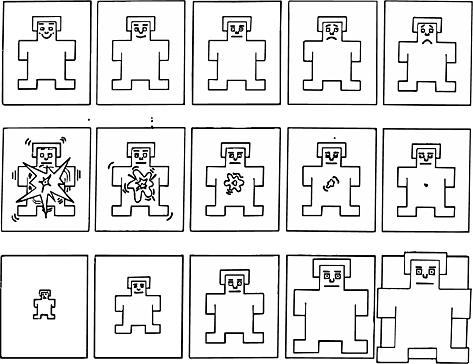
Self–assessment Manikins.
Afterwards, participants read that before they roll a dice, they would have to decide whether they would like to share some or all of their potential winnings with other members of their group if the others lose. Consequently, if they were to win, their earnings would amount to €5, less the sum they had decided to share with the possible losers (obviously, only if there were losers in their group). In turn, if they were to lose, their earnings would equal the amount that the other members of their group had decided to transfer to losers. The decisions in the game matched the actual payments 1:1. In sum, participants were asked to write down two numbers: how much of their potential winnings (which amount to €5) they would like to transfer to the losers in their group if they win and if the following occur: (1) one of the other two participants loses and (2) both of the other two participants lose (amount per person).
Treatment of emotion measures
Measures of anticipated emotions for the scenario of one versus two winners/losers in their group showed strong correlations (between r = .49, p < .001, and r = .65, p < .001). Therefore, we combined the measures of anticipated emotions for Scenario 1 with measures of anticipated emotions for Scenario 2 into one ‘I win—others lose’ measure of emotions. The measures of anticipated emotions for the loss scenario (‘I lose—others win’) were treated in the same way. Because the participants’ decision to share is applied only if he or she wins and others lose, in the analysis of solidarity, our focus was on the ‘I win—others lose’ emotions.
Results and Discussion
Overall, 86% of the participants decided to transfer some of their earnings to the potential losers in their group. On average, participants decided to share €1.29 (SD = 0.75) if there was one loser in their group and €0.88 (SD = 0.58) per person if there were two losers in their group. As the participants’ solidarity decisions in both situations were highly correlated (r = .80, p < .001), we z–standardized them and combined them into one measure that was used as a behavioural indicator of participants’ solidarity in the subsequent analyses.
As JSOthers and JSVictim share the variance related to the general sensitivity to injustice, in this and the following studies, we report their partial correlations with solidarity to determine the unique effect of each facet and present both partial and zero–order correlations in the respective tables. The results show that individuals scoring high on JSOthers were more likely to share their winnings with losers than their less justice–sensitive counterparts (rpartial = .19, p = .044). Contrary to our expectations, JSVictim was unrelated to the solidarity decision (rpartial = −.06, n.s., Table 1).
Means, standard deviations and correlations of the focus variables, Study 1
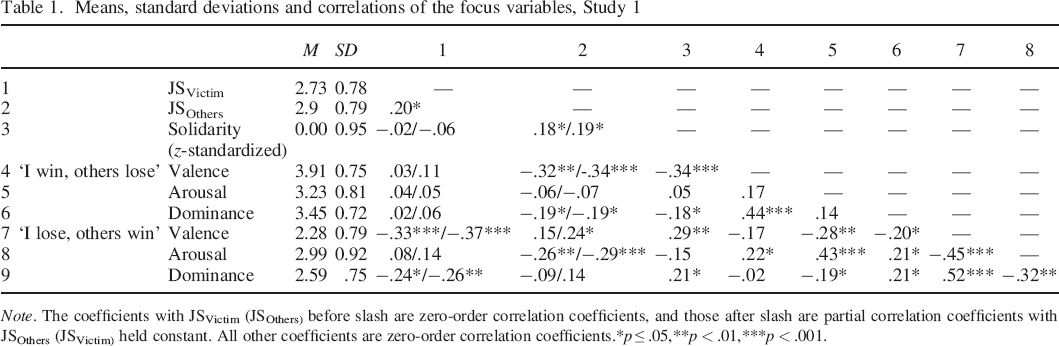
Note. The coefficients with JSVictim (JSOthers) before slash are zero–order correlation coefficients, and those after slash are partial correlation coefficients with JSOthers (JSVictim) held constant. All other coefficients are zero–order correlation coefficients.
p ≤ .05,
p < .01,
p < .001.
To examine whether the differences in anticipated emotional reactions to one's own winning relative to others’ losing account for the effect of JSOthers on actual solidarity behaviour, we conducted a mediation analysis with JSOthers as the independent variable, emotions as mediators, the solidarity decision as the dependent variable and JSVictim as a covariate (for the path diagram, refer to Figure 2). The mediation analysis without controlling for the variance shared with JSVictim showed identical results (Figure S1 in the supporting information). For this and all the following mediation analyses, we used the Preacher and Hayes (2008) bootstrapping method with 5000 resamples and a 95% bias–corrected confidence interval (CI).
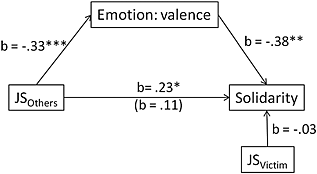
Mediation analysis, Study 1.
The results suggest that individuals with higher scores in JSOthers were less likely to believe that they would feel positive emotions (valence dimension) if they win and others lose (valence: b = −0.33, p < .001) compared with individuals with lower scores in JSOthers. As a result, individuals with high scores in JSOthers were more inclined to make a generous transfer to the losers; the effect of JSOthers on the solidarity decision was substantially reduced if emotional valence was introduced into the equation (from b = 0.23, p = .044 to b = 0.11, n.s.). A subsequent bootstrap test revealed an indirect effect of 0.13 (0.05) with a 95% CI of [0.04, 0.26]. Given that zero was not included in the confidence intervals and that accounting for valence rendered the direct effect of JS insignificant, we concluded that emotional valence significantly and fully mediated the effect of JSOthers on solidarity (Figure 2). The same analysis with anticipated dominance as a mediator suggested that dominance did not mediate the effect of JSOthers on solidarity (95% CI [−0.01, 0.12]). We refrained from conducting mediation analyses involving the arousal dimension (as it was not related to either JS or solidarity, Table 1) as well as testing mediation for the insignificant effect of JSVictim on solidarity.
Overall, in Study 1, we showed that individuals with high scores in JSOthers anticipated less positive feelings at winning if winning was combined with others’ misfortune (losing) and were therefore more willing to share their winnings with their less fortunate co–players. This study provides evidence of the association between JS and solidarity and the underlying emotional mechanism.
In Study 2, we explored whether JS predicts antisocial behaviour and extended the original solidarity game by allowing the losers to take away winners’ earnings. This taking–away decision represents a violation of the established distribution procedure by increasing one's own earnings at the winners’ cost and against their will. We asked whether individual differences in JS would be associated with this taking–away behaviour as well as with the tendency to request from others a higher versus lower amount compared with the amount one is willing to share with others. Additionally, Study 2 replicates the mediation results of Study 1 using a closed–format measure of anticipated emotions.
Study 2
Method
Participants
As in Study 1, participants were undergraduate students from a large German university and were recruited on campus. From 110 individuals who participated in the study, 14 (12.7%) failed to answer a comprehension question correctly (administered to check participants’ understanding of the rules of the game, see the supporting information for instructions) and were excluded from the analysis, reducing the sample to 96 individuals (46.9% men, mean age 24.76 years, SD = 3.52).
Materials and procedure
The JS questionnaire (Schmitt et al., 2010) was administered via computer at the very beginning of an unrelated larger experimental session. As in Study 1, JSOthers and JSVictim showed good reliability (Cronbach's α = .89 and .88, respectively). The participants then were assigned to the experimental sessions that occurred 1 week later.
Experimental sessions
The procedure was identical to that employed in Study 1 with the exception of the following features. We replaced the paper–and–pencil procedure with a computer–supported experiment that allowed on–the–spot group formation and participant interaction via a computer network (programmed and conducted with the software z–tree, Fischbacher, 2007), which therefore enhanced the veracity of the situation. Participants were additionally paid a show–up fee of €2.50. Participants were asked to indicate, for the presented game outcomes, the extent to which they would experience a series of emotions using a 5–point Likert scale ranging from not at all (1) to very much (5). Satisfaction, joy and excitement were combined into an index of anticipated positive emotions (Cronbach's α between .62 and .89, depending on the anticipated situation); guilt, anger and distress were combined into an index of anticipated negative emotions (Cronbach's α between .64 and .80, depending on the anticipated situation). The questionnaire also included the same SAM measures as in Study 1. The results using the SAM closely followed the results using the measures of positive and negative emotions and are therefore not discussed here in detail (but see Figure S3a–d in the supporting information).
Before the participants rolled a dice, they were asked to make their actual sharing and taking–away decisions. The solidarity decisions were formulated in exactly the same way as in Study 1. The taking–away decision was located on the same screen, below the sharing decisions. Participants were asked how much the experimenter should take away from the winners’ earnings and transfer to them if they should lose and if the following occur: (1) both other players win and transfer nothing to the loser; (2) both other players win but only one of them makes a transfer to the loser (here, only the winner who did not share voluntarily can be subject to taking away); and (3) one of the other players wins but transfers nothing to the losers.
If they were to win, their earnings would amount to €5 (plus the show–up fee of €2.50) minus the amount they had decided to share with the possible losers (only if there were losers in their group) or, if they had decided to transfer nothing, the amount that the losers in their group requested from the winners. In turn, if they were to lose, their earnings would equal the amount that other members of their group had decided to transfer to losers among their co–players or, if the other members had decided to transfer nothing, the amount that they themselves had requested from the winners. As in Study 1, the decisions matched the actual payments 1:1.
Treatment of emotion measures
As in Study 1, we combined the measures of emotions that participants anticipated in situations with one versus two winners/losers in their group into the respective scales reflecting ‘I win—others lose’ (positive: Cronbach's α = .90, negative: Cronbach's α = .81) and ‘I lose—others win’ (positive: Cronbach's α = .76, negative: Cronbach's α = .83) situations.
Results and Discussion
Consistent with Study 1, the majority (90%) of the participants decided to share some of their earnings with potential losers in their group. On average, participants transferred €1.17 (SD = 0.76) to the sole loser (compared with €1.26 (SD = 0.76) in Study 1, t(95) = −1.21, p = .23), and they transferred €0.78 (SD = 0.50) to each of the two losers in the group (compared with €0.86 (SD = .59) in Study 1, t(95) = −1.48, p = .14). Therefore, including the taking–away decision in the payoff structure did not affect the solidarity decision, compared with Study 1.
Overall, 90.6% of the participants decided to appropriate all or some part of the earnings of those winners who did not share voluntarily. If both other players win and transfer nothing, the participants, on average, requested €1.79 from each of these ‘greedy winners’ (SD = 1.43); if both other players won but only one of them shares with the loser, participants, on average, decided to take €2 (SD = 1.42) from him or her; finally, if one of the players wins but does not share with the losers, the participants, on average, requested €1.42 from him or her (SD = 0.82).
Justice sensitivity and solidarity decisions
The participants’ solidarity decisions in both situations (with one and two losers in the group) were z–standardized and combined into one measure of solidarity used in the subsequent analyses (r = .88, p < .001).
As in Study 1, individuals sensitive to injustice from the others–focused perspective were more likely to share their winnings with losers than their less justice–sensitive counterparts (with JSVictim partialled out: r = .29, p < .01). In contrast to Study 1, a significant correlation between the solidarity decision and JSVictim was detected as well (with JSOthers partialled out: r = −.27, p < .01), suggesting that victim–sensitive individuals were less likely to transfer money to others than their less victim–sensitive counterparts. The zero–order correlation coefficients do not substantially differ from the partial correlations (Table 2).
Means, standard deviations and correlations of the focus variables, Study 2
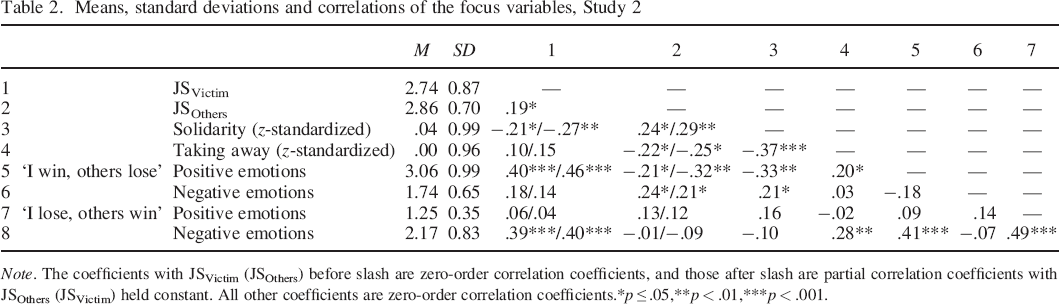
Note. The coefficients with JSVictim (JSOthers) before slash are zero–order correlation coefficients, and those after slash are partial correlation coefficients with JSOthers (JSVictim) held constant. All other coefficients are zero–order correlation coefficients.
p ≤ .05,
p < .01,
p < .001.
Next, we examined whether the differences in anticipated emotional reactions mediated the effect of JSOthers and JSVictim on solidarity decisions. Individuals with high scores on JSOthers were less likely to anticipate positive (b = −0.42, p < .01) and more likely to anticipate negative (b = 0.20, p = .037) emotions if they were to win and others lose, and consequently, they were more likely to share their winnings with their needy counterparts, compared with individuals with lower scores on JSOthers (b = 0.40, p < .01). The results of the mediation analyses are presented in Figure 3. The indirect effect for positive emotions reached 0.09 (0.06), 95% CI [0.003, 0.26] with JSVictim held constant. The indirect effect for negative emotions was 0.06 (0.04), 95% CI [0.003, 0.18] with JSVictim held constant. The mediation results did not substantially differ if the variance shared with JSVictim was not controlled for (Figure S2a and b in the supporting information). Therefore, the effect of JSOthers on solidarity was partially mediated by anticipated positive and negative emotions.
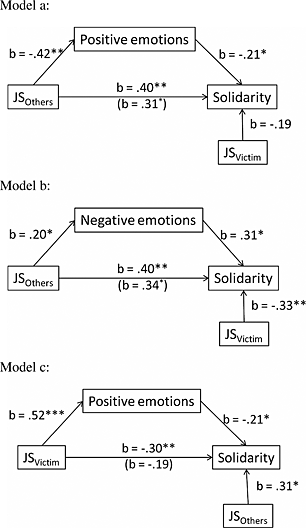
Mediation models, Study 2.
The corresponding mediation analyses with JSVictim as the independent variable showed that the JSVictim effect on solidarity was transmitted via anticipated positive emotions. Victim–sensitive individuals were more likely to expect positive emotions (b = 0.42, p < .001) for the scenario in which they were to win and others lose, and consequently, they were less likely to share their winnings with the losers in their group, compared with their less victim–sensitive counterparts (b = −0.30, p < .01), indirect effect: −0.11 (0.07), 95% CI [−0.29, −0.001], with JSOthers held constant. The indirect effect via negative emotions was not significant 0.03 (0.03), 95% CI [−0.01, 0.13] with JSOthers held constant. The mediation results did not differ without controlling for JSOthers (Figure S2c in supporting information). We conclude that the effect of JSVictim on solidarity was fully mediated (given that the direct effect was insignificant, Figure 3) by anticipated positive but not negative emotions.
Justice sensitivity and the decision to take away
As all three taking–away decisions were strongly related to each other, we z–standardized them and combined them into one indicator of the taking–away decision (Cronbach's α = .94).
As predicted, JSOthers was negatively related to the taking–away decision (with JSVictim partialled out: r = −.25, p = .015), indicating the individuals scoring high on JSOthers were less likely to take others’ earnings away than individuals with lower JSOthers scores. JSVictim was not significantly related to the taking–away decision (with JSOthers partialled out: r = .15, p = .14). Zero–order correlations do not differ from the partial correlations presented here (Table 2).
Next, we examined whether the differences in anticipated emotional reactions regarding one's own losing and others’ winning account for the effect of JSOthers on taking–away decisions. The results showed that neither positive nor negative emotions mediated the effect of JSOthers on taking–away decisions (positive emotions: indirect effect 0.00 (0.02), 95% CI [−0.04, 0.04]; negative emotions: −0.03 (0.04), 95% CI [−0.14, 0.03]). Similar to Study 1, we refrained from conducting mediation analyses for the insignificant effect of JSVictim on taking–away behaviour.
Comparing solidarity and taking–away decisions
Participants who tended to share more were more likely to take away less than their less sharing counterparts (r = −.37, p < .01).
A comparison of individuals’ sharing and taking–away decisions in a situation with two winners showed that each winner, on average, transferred €1.17 (SD = 0.76) to the one loser in their group, whereas a sole loser in a group with two winners, on average, requested €1.79 (SD = 1.43; t(95) = −3.21, p < .01, d = 0.33) from each of the winners given that both did not share and €2 (SD = 1.42; t(95) = −4.42, p < .001, d = 0.45) from a winner who did not share (given that the other winner shared voluntarily). In a role of a winner, individuals tended to transfer to the losers a lower amount of money than they claimed from the winners in a situation in which they themselves lost. Apparently, on average, individuals’ selfishness as a loser exceeds their solidarity as a winner.
To examine whether within–subject differences in their sharing and taking decisions can be explained by individual differences in JS, we computed difference scores between a taking decision and a solidarity decision given that there was one loser in a group. Overall, higher scores signify a person's stronger tendency to claim a higher amount of money than they decided to share. A partial correlation analysis between these difference scores and JS facets revealed that victim–sensitive individuals, on average, requested more from others than they themselves were willing to share (two winners, both did not share: rpartial = .26, p = .011; two winners, one did not share: rpartial = .26, p = .010). In contrast, the higher the individuals scored on JSOthers, the less they tended to give others a smaller amount as a winner than they themselves requested from others as a loser (two winners, both did not share: rpartial = −.36, p < .001; two winners, one did not share: rpartial = −.31, p < .01; zero–order correlations did not substantially differ from the partial correlations reported here; supporting information).
In Study 2, for the first time, we have demonstrated that the others–focused facet of JS negatively predicts individuals’ tendency to appropriate others’ earnings. Interestingly, this egoistic behaviour, on average, outweighed solidarity, which was more characteristic of victim–sensitive individuals, whereas others–sensitive participants’ taking wishes were more modest compared with their solidarity transfers to others. Additionally, whereas the effects of JSOthers and JSVictim on individuals’ solidarity behaviour were accounted for by the differences in anticipated emotions associated with one's own winning and others’ losing a random draw, this finding did not occur in taking–away behaviour. Because solidarity is the focus of the present research, we encourage future studies to undertake a more narrow examination of the associations between JS and the taking–away behaviour in the solidarity game context.
The solidarity game (the classic version used in Study 1) partly resembles another widely used game–theoretical paradigm: the dictator game. In the dictator game, individuals are assigned to groups of two; one (randomly chosen by the experimenter) person of each pair receives a monetary endowment from the experimenter and can voluntarily share it with the person he or she has been matched with. In Study 3, we examined whether these differences in the procedure and the inequalities inherent to both situations are perceived and interpreted in the same way in terms of moral entitlement to keep the endowment and the procedural fairness. Most importantly, we examined whether the effect of JS on sharing decisions differs across these games.
Study 3
Method
Participants
The participants were 100 undergraduate students from a large German university who completed a survey on personality and decision–making at the beginning of a social science lecture. After the listwise deletion of missing values, the final sample consisted of 82 participants. Fifty–seven participants were women, and mean age was 23.66 (SD = 2.56).
Materials and procedure
Participants were randomly assigned to either a dictator or solidarity game in a between–subject design. They were provided with a description of the respective resource allocation situations and were asked to what degree they believe Person A/the winner to be morally entitled to keep the money (nine items, Cronbach's α = .87) and to what extent the procedure of resource allocation was fair (six items, Cronbach's α = .70). The responses were given on a 7–point disagree–agree scale. Afterwards, the participants were asked to make a hypothetical allocation decision that they would have made if they were in the role of Person A (dictator game) or the winner (solidarity game). To hold the possibilities of endowment allocation constant across the game conditions, the solidarity game was based on an interaction of two (rather than three) persons so that participants in both conditions were asked what amount of money (of €5) they would send to Person B (versus the losing member of their group). The wording of the instructions is given in the supporting information. At the end, participants completed the JS scales (Cronbach's α ranged from .88 to .92) and answered basic socio–demographic questions.
Results and Discussion
An independent–sample t–test showed that participants would share more in the dictator game (M = 2.00, SD = 1.00) than in the solidarity game condition (M = 1.09, SD = 0.93; t(80) = −4.23, p < .001, d = 0.94). Winners in the solidarity game (M = 4.24, SD = 0.96) were seen as more morally entitled to keep the money compared with the dictators (M = 2.44, SD = 1.16; t(80) = 7.63, p < .001, d = 1.69). Similarly, the allocation procedure in the solidarity game (M = 4.09, SD = 1.16) was considered to be marginally fairer than in the dictator game (M = 3.60, SD = 1.14; t(80) = 1.86, p = .066, d = 0.42).
Next, we examined whether individual differences in JS are related to sharing decisions (Table 3). In the overall sample, JSOthers was positively associated with sharing, whether controlling for JSVictim (r = .38, p < .001) or not (r = .32, p < .01). The JSVictim zero–order correlation with sharing was negative, although not significant (r = −.10, p = .35). However, if the variance shared with JSOthers was partialled out, JSVictim negatively predicted the sharing decision (r = −.25, p = .02).
Means, standard deviations and correlations of the focus variables, Study 3
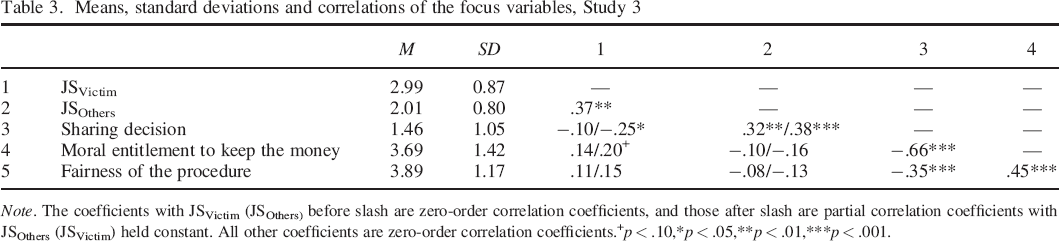
Note. The coefficients with JSVictim (JSOthers) before slash are zero–order correlation coefficients, and those after slash are partial correlation coefficients with JSOthers (JSVictim) held constant. All other coefficients are zero–order correlation coefficients.
p < .10,
p < .05,
p < .01,
p < .001.
To investigate whether the effects of JS differ by condition, we conducted a multiple regression analysis with an interaction term between the facets of JS (mean–centred) and the condition. The interaction terms were not significant (with JSOthers: β = −.01, p = .94; with JSVictim: β = .002, p = .98), indicating that JSOthers and JSVictim affected sharing decisions in both the solidarity and dictator games in the same way.
Are the effects of JS mediated by the perception of the moral entitlement to keep the reward and the fairness of the allocation situation? As in Studies 1 and 2, we used JSOthers/JSVictim as the independent variable, moral entitlement and the perception of the fairness of the procedure as multiple mediators, the decision to share as the dependent variable and the game condition and JSVictim/JSOthers as covariates. In case of moral entitlement, the results yielded significant indirect effects of both JSVictim (−0.14, SE = 0.06, 95% CI [−0.29, −0.03]) and JSOthers (0.15, SE = 0.07, 95% CI [0.04, 0.33]) on sharing decisions, indicating partial mediation of the effect of JSOthers, which was reduced from b = 0.57, p < .001 to b = 0.42, p < .001, and a complete mediation of the effect of JSVictim (from b = −0.31, p < .001 to b = −0.17, p = .12). Importantly, the mediation analyses of JSOthers, without including JSVictim as a covariate, revealed no significant indirect effect (0.10, SE = 0.07, 95% CI [−0.02, 0.25]). As the association between JSVictim and sharing was only present when holding JSOthers constant, we did not conduct mediation analyses without controlling for JSOthers (see Table S1a–c in the supporting information for details). The indirect effect via the perception of fairness of the situation did not reach significance (95% CI including zero).
Therefore, individuals with high JSOthers scores were less likely to believe that the winners were morally entitled to keep the money and, consequently, were more likely to share with the losers than individuals with lower JSOthers scores. Victim–sensitive individuals, in contrast, were more likely to give the winners the moral right to keep the money and were therefore less likely to share than less victim–sensitive individuals, but only if the variance JSVictim shares with JSOthers was partialled out.
Overall, this study suggests that although the structure of the solidarity game strongly resembles the dictator game, individuals tend to see sharing with the disadvantaged in the solidarity game as significantly less morally bounding than in the dictator game. Potentially, this difference might be driven by the ‘lottery–like’ setting of the solidarity game; also, the mere act of rolling the dice by one's own hands might increase the participants’ perception of their control over the game and consequently their entitlement to the reward compared with the dictator game (cf. ‘illusion of control’, Langer, 1975). Regardless of what mechanisms are driving the differences in the perception of the dictator and the solidarity game settings, JS predicted sharing behaviour across both games equally well, indicating the universality of its effect.
Whereas the dictator game was related to a stronger moral obligation to share compared with the solidarity game, in the next study, we introduced a manipulation aimed at decreasing the perceived obligation to share below the level found in the solidarity game. Accordingly, we manipulated the disadvantaged persons’ responsibility for their own fate. Additionally, in Study 4, we did not restrict our attention to the effects of JS but considered a wider range of altruistic personality traits: the HEXACO model of personality (Ashton & Lee, 2007) and social responsibility (Bierhoff, 2000). This method should clarify to what extent the effects of JS on sharing might be due to a possible overlap with other personality traits.
Study 4
Method
Participants
The participants—undergraduate students from a large German university—completed the questionnaire including personality scales (JS, HEXACO model and social responsibility) at the end of an unrelated social sciences lecture. One week later, participants were invited to participate in an online study on decision–making. Overall, 118 students participated, and after the listwise deletion, the final sample consisted of 110 participants (40 men, mean age 22.14, SD = 2.51).
Materials and procedure
Personality measures
Justice sensitivity (victim, observer, beneficiary and perpetrator) was assessed using the same scales as in Studies 1–3 (Cronbach's α from .88 to .92). We used the HEXACO–60 inventory to assess honesty–humility (Cronbach's α = .79), emotionality (Cronbach's α = .76), extraversion (Cronbach's α = .81), agreeableness (Cronbach's α = .77), conscientiousness (Cronbach's α = .83) and openness to experience (Cronbach's α = .70; Ashton & Lee, 2009) and a social responsibility scale (Bierhoff, 2000; Cronbach's α = .59). Response options for JS ranged from 0 (totally disagree) to 5 (totally agree), for HEXACO from 1 (totally disagree) to 5 (totally agree) and for social responsibility from 0 (totally disagree) to 6 (totally agree).
Experimental session
Participants were assigned to either the classic solidarity game or its modified version referred to as the ‘own–responsibility’ condition in the following. Both conditions were conducted in anonymous groups of three individuals. In the own–responsibility version, instead of rolling a dice, participants were told that their payoff would depend on their performance in a diligence task (for which their own effort rather than inborn abilities such as intelligence or talent matter). The detailed instructions are presented in the supporting information.
In both conditions, before the participants proceeded to the tasks/rolling the dice, they were asked to what extent they thought that every participant was fully responsible for his or her outcome (7–point scale, used as a manipulation check). Participants were also asked to rate the winner's moral entitlement to keep the money and the procedural fairness of the situation (moral entitlement: Cronbach's α = .89; fairness of the procedure: Cronbach's α = .70).
Finally, participants indicated what amount of their potential reward they would share with others if the following occur: (1) one member of their group receives nothing and (2) both members of their group receive nothing. As in Study 1 and 2, these measures were standardized and collapsed into one indicator of sharing (Cronbach's α = .92). After making their allocation decisions, participants were introduced to the task/proceeded to the computer–based dice rolling. Participants were paid after the study was completed (the decisions matched the actual payments 1:1).
Results and Discussion
Manipulation check
In the own–responsibility condition, participants were more likely to attribute obtaining the reward to a player's own responsibility (M = 5.29, SD = 1.69) than in a classic solidarity game (M = 3.17, SD = 2.09; t(107.56) = 5.90, p < .001, d = 1.09).
The effect of condition on interpretations, anticipated emotions and sharing decision
As expected, in the own–responsibility game, participants felt more morally entitled not to share their reward with potential losers in their group (M = 5.21, SD = 1.16) than participants in a solidarity game (M = 4.70, SD = 1.35; t(108) = 2.12, p = .037, d = 0.41). However, there were no significant differences in the actual sharing decision between the conditions (own–responsibility game: M = −0.31, SD = 1.86; solidarity game: M = 0.11, SD = 1.77; t(108) = −1.21, p = .23). The conditions were not perceived differently in terms of the fairness of the procedure either (p > .10).
Personality and sharing decisions
We report the correlations between sharing and JSOthers with controlling for JSVictim and vice versa (for zero–order correlations, see Table 4). As expected, JSOthers was positively related to sharing, whether controlling for JSVictim (r = .37, p < .001) or not (r = .31, p < .01). Similar to Study 3, the JSVictim zero–order correlation with sharing was negative, although not significant (r = −.11, p = .24). However, if the variance shared with JSOthers was controlled for, the JSVictim effect on sharing decision became significantly negative (r = −.23, p = .017).
Means, standard deviations and correlations between sharing decision and personality dimensions, Study 4
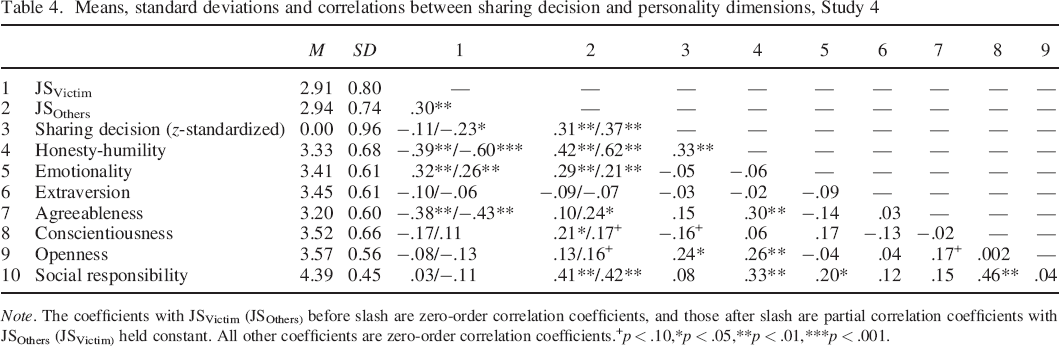
Note. The coefficients with JSVictim (JSOthers) before slash are zero–order correlation coefficients, and those after slash are partial correlation coefficients with JSOthers (JSVictim) held constant. All other coefficients are zero–order correlation coefficients.
p < .10,
p < .05,
p < .01,
p < .001.
The HEXACO model includes three factors that reflect the altruistic dispositions—honesty–humility, agreeableness and emotionality (Ashton, Lee, & de Vries, 2014). Of these, only honesty–humility positively predicted sharing decisions (r = .33, p < .001). Unexpectedly, openness was also positively related to sharing (r = .24, p = .013). No other personality traits were significantly related to sharing (all p's ≥ .10).
Next, we used hierarchical linear regression to examine whether JS facets explained the variance in sharing decisions when controlling for honesty–humility and openness; we additionally used a moderation analysis to test whether the effects of personality variables differ across the conditions.
In Step 1, we entered mean–centred JSOthers, JSVictim, openness, honesty–humility and the dummy indicating the game condition. These variables altogether explained 18% of variance in the sharing decision (F(5, 104) = 4.63, p = .001). The examination of the regression coefficients showed that, except for a marginally significant effect of openness (β = .16, p = .078), only JSOthers remained a significant predictor of sharing decisions (β = .28, p = .019). In the next model, we entered the interaction term between JSOthers and condition, which became insignificant (β = −.003, p = .98), suggesting that, similar to Study 3, the effect of JSOthers was the same across the conditions. We repeated the procedure for JSVictim, openness and honesty–humility (Models 3–5, respectively). The results revealed no significant interaction effects for either of the personality variables. Additional analyses, including only the ‘altruistic factors’ of the HEXACO model (honesty–humility, agreeableness and emotionality), social responsibility and JS, revealed no divergent results (Table S2 in the supporting information). Table 5
The effect of selected personality dimensions on sharing decisions, depending on the condition
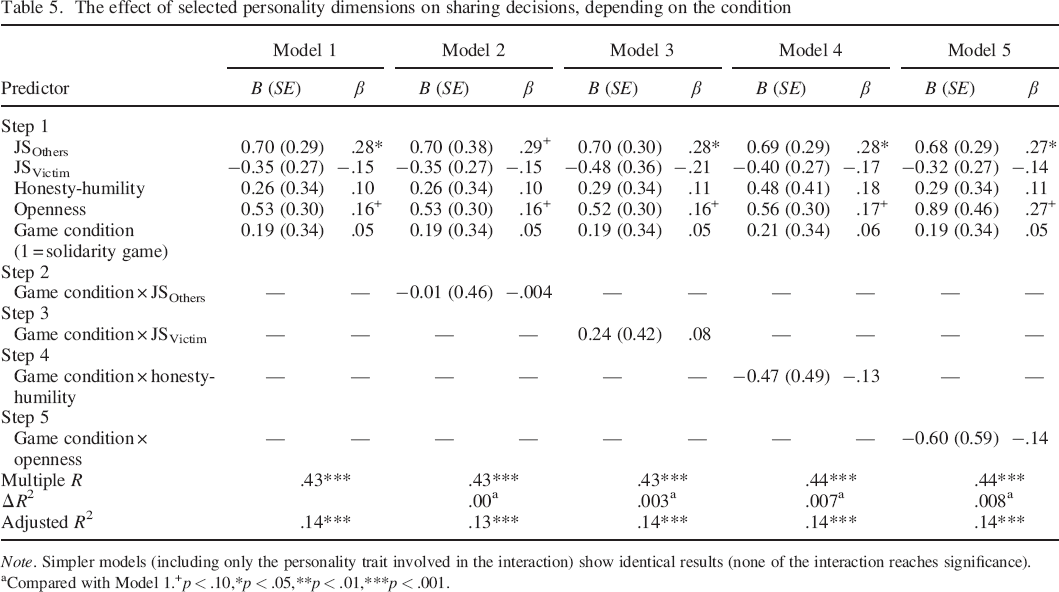
Note. Simpler models (including only the personality trait involved in the interaction) show identical results (none of the interaction reaches significance).
Compared with Model 1.
p < .10,
p < .05,
p < .01,
p < .001.
Overall, Study 4 revealed that although letting participants attribute losers’ disadvantage to their own responsibility was associated with a reduced perceived moral obligation to share with them, there were no significant differences in the actual giving rates between the conditions. As the manipulation check revealed strong differences between the conditions with respect to responsibility attribution (d = 1.09), it is rather unlikely that our manipulation was too weak. Importantly, the results of Study 4 indicate that JSOthers explains the unique share of variance in solidarity, independent of other more basic personality dimensions. Similar to Study 3, its effect was uniform across the conditions; specifically, it did not depend on the degree to which the recipient's disadvantage was attributable to chance versus lack of effort, which, again, highlights its context independence.
General Discussion
In this research, we asked whether individual differences in JS determine people's sharing behaviour in the solidarity game—an economic game paradigm that, according to our knowledge, has not yet been studied in the context of personality differences. In accordance with our predictions, individuals scoring high on JSOthers were more likely to behave with solidarity, that is, share their winnings with the losers in their group, compared with individuals with lower JSOthers scores (Studies 1–4). In contrast, the higher the individuals’ scores in victim sensitivity were, the less likely they were to share with the potential losers in their group (Studies 2–4). Across the four studies, effect sizes varied (the association between JSOthers and giving varied between r = .18, Study 1, and r = .38, Study 3; the association between JSVictim and giving behaviour varied between r = −.02, Study 1, and r = −.21, Study 2). To obtain a unified estimate of the effect sizes, we collapsed the data and used a mixed–mode ANOVA with JSOthers and JSVictim entered as covariates (z–standardized) and study (1, 2, 3 or 4) as a random factor. Similar to Study 3 that used a two–person version of the solidarity game, individuals’ decisions for sharing if there was one loser in their group was used as a dependent variable (z–standardized). The results of this mini meta–analysis revealed a positive effect of JSOthers (β = .28, p < .001) and a negative effect of JSVictim (β = −.18, p < .001). These effects remained significant, although somewhat smaller in size if JSVictim and JSOthers were entered separately (JSOthers: β = .23, p < .001; JSVictim: β = −.11, p < .05). Therefore, an exploration of the data in aggregate demonstrates that the effect of JSOthers is stronger if the variance it shares with JSVictim is partialled out and the effect of JSVictim is stronger if the common variance with JSOthers is removed. This finding is consistent with the theoretical idea behind JS (Schmitt et al., 2005); individuals with high scores on both JSOthers and JSVictim share the common sensitivity to injustice. Therefore, when estimating the effect of JSVictim on giving, partialling out the variance it shares with the ‘prosocial’ facet of JS (JSOthers) makes the egoistic aspect of JS (justice for the self) stand out and increases its negative association with giving. Similarly, when estimating the effect of JSOthers on giving, controlling for the variance it shares with the ‘egoistic’ perspective of JS makes the effect somewhat more pronounced.
Importantly, we have shown that individual differences in JSOthers explain a unique portion of variance in giving, beyond other personality dimensions, such as honesty–humility or agreeableness. In contrast, the negative effect of JSVictim vanished if honesty–humility and openness were entered into the regression equation, suggesting that its effect, at least in the solidarity game, might be due to an overlap with other prosocial traits (specifically, honesty–humility). Among other personality traits we studied, only honesty–humility and openness to experience dimensions of the HEXACO personality structure predicted solidarity; however, their effects were crowded out by JSOthers in a multiple regression analysis. Notably, agreeableness was unrelated to solidarity in our analyses. This result is however consistent with prior research showing that the agreeableness facet of the HEXACO model reflects a tendency towards ‘reactive cooperation’ and predicts nonretaliation in the ultimatum game rather than sharing in the dictator game (Hilbig, Zettler, Leist, & Heydasch, 2013).
Our findings showed that individual differences in JSOthers did not only predict the amount that they decided to share with the disadvantaged but also the amount they decided to take away from the winners (Study 2). Specifically, high–JSOthers individuals were less likely to engage in taking–away behaviour, whereas the correlation between victim sensitivity and taking–away decisions was positive but did not reach significance. The introduction of the taking–away option is also interesting as it changes the overall decision setting. An egoistic decision is not necessarily associated with higher gains (as the ‘losers’ might take away the earnings of those who do not share voluntarily), which can be expected to boost the overall sharing rates. Yet, in both studies, similarly high solidarity rates were found (86% and 90%, respectively 2 ). Potentially, individuals who would have given nothing in the classic solidarity game might have opted for giving the minimum amount in the modified version to avoid ‘punishment’, which was not sufficient to ‘boost’ solidarity. Finally, there is a possibility that in contrast to cooperation (Balliet, Mulder, & Van Lange, 2011), solidarity behaviour may be unaffected by the threat of ‘punishment’. Overall, whereas the current research provided the first evidence of taking–away behaviour in the solidarity game and its associations with JS, future work is needed to provide a better understanding of the nature of taking–away decisions and delineate the boundary conditions of its associations with JS and its mediating mechanisms.
Is the effect of justice sensitivity context independent?
An important contribution of our research is that we went beyond establishing a relationship between dispositional JS and solidarity by comparing its effect on giving across different experimental paradigms: dictator game and the ‘own–responsibility game’. Although the solidarity game was associated with a lower moral obligation to share compared with the dictator game, individual differences in JS were equally strongly related to giving in both games. Individuals with high JSOthers scores were more likely (and individuals with high JSVictim score less likely, at least if controlling for JSOthers) to share with the disadvantaged than their less justice–sensitive counterparts, regardless of the degree to which the sharing situation was conducive to feeling morally obliged to share.
Whereas the dictator game represented a setting associated with a stronger perceived obligation to share compared with the solidarity game, in Study 4, we designed a situation aimed at lowering the perceived moral obligation to share below the level typical of the solidarity game. In this experimental condition—‘own–responsibility’ game—the participants’ reward was determined by their effort in a diligence task and therefore their failure to earn money could be attributed to their own responsibility rather than pure chance. However, we found that JSOthers positively and JSVictim (if controlling for JSOthers) negatively predicted giving in both conditions, that is, regardless of the degree to which the recipients could have been made responsible for their disadvantage. Consistent with the results of Study 3, these findings are in favour of the context independence of the effects of JS on solidarity; in our studies, justice–sensitive individuals behave differently compared with their less justice–sensitive peers in the situation with low and high perceived moral obligations to share. Specifically, the effect of JS on solidarity was not sensitive to the degree of participants’ moral entitlement, their moral right to keep their endowment. At a more conceptual level, this finding tells us that the perceived moral obligations and norms are not that important in driving the association between JS and solidarity. We speculate that contextual changes directed at increasing the emotional reactions to the situation, such as manipulating the degree of injustice (e.g. via increasing inequality or violating the declared distributional principles), might be worth consideration (please note that in the present research, the difference between the solidarity and dictator games in the perception of procedural fairness was only marginally significant, and the difference between the solidarity and own–responsibility conditions with this respect in Study 4 was not significant at all). Overall, whereas the present research could rule out changes to the extent of moral entitlement to the endowment as a boundary condition, we encourage future studies to probe for other potential contextual moderators.
Emotional and cognitive mechanisms of the effects of justice sensitivity on solidarity
A central goal of the present research was to examine emotional and cognitive mechanisms underlying the associations between JS and solidarity. We found that high–JSOthers individuals were less likely to anticipate positive emotions and more likely to anticipate negative emotions in the case of an unequal game outcome and therefore tended to generously share more with the potential losers, compared with lower–JSOthers individuals. In contrast, victim–sensitive individuals were more likely to expect enhanced positive emotions if they were to win and others lose than less victim–sensitive individuals and, as a result, were less likely to share with the potential losers (Study 2). The expectation of having an emotional response to an event with unequal outcomes may be an important process through which personality differences translate into behavioural choices. At a more general level, this finding highlights the importance of anticipatory processes in explaining people's behaviour and therefore resonates with the literature on the social cognitive theory of self–regulation (Bandura, 1991), which should be given more attention in justice research.
Individual differences in the moral evaluation of the allocation situation accounted for the effect of JSOthers and JSVictim on sharing decision as well. Individuals with high JSOthers/JSVictim scores were less/more likely to consider the winners as morally entitled to keep their reward, which consequently accounted for their differences in the sharing decisions. Whereas the mediation model through anticipated emotions showed stable results regardless of whether the other facet of JS was controlled for or not, the mediation models via moral entitlement ‘worked’ only if the variance shared with the other JS facet was partialled out. That is, only the part of JSOthers that is independent of JSVictim was positively associated with the moral obligation to share, which resulted in more generous sharing. Similarly, only the part of JSVictim that is independent of JSOthers was associated with a lower perceived moral obligation to share, which resulted in a less generous sharing decision. Therefore, it is the moral evaluation of a situation that drives facet specificity beyond a general concern for justice. Potentially, this evaluation gives direction to the emotional antecedents of perceived injustice and thereby is motivated into actual behaviour. However, the mediation analyses were conducted using cross–sectional data, leaving room for alternative interpretations. For example, individuals’ decisions might have influenced their interpretation of the moral entitlement rather than the opposite.
In this research, we presented the initial evidence of both emotional and cognitive mechanisms underlying the effects of JS on solidarity, but we encourage future studies to test whether these mechanisms can be extended to further personality dimensions and social dilemma contexts. For example, the Dark Triad personality traits (Machiavellianism, narcissism and psychopathy) might be worth investigating as predictors of solidarity and taking–away behaviour in the context of the solidarity game (Jones & Figueredo, 2013; Lee et al., 2013). Finally, combining behavioural decisions in economic games in the lab with decisions made in real–life contexts (e.g. ecologically responsible behaviour—Hilbig, Zettler, Moshagen, & Heydasch, 2013) would further enhance the generalizability of the associations between personality and prosociality and give more insights about their potential boundary conditions.
Conclusion
This research has contributed to the literature on the associations between JS and prosocial behaviour, their boundary conditions and underlying mechanisms. We hope that our findings and the questions they raised will stimulate future research to further examine the mechanisms underlying the connection between individual differences in justice perceptions and intervention behaviour.
Supporting info item
Supporting info item, per1981-sup-0001-supplementary - Solidarity and Social Justice: Effect of Individual Differences in Justice Sensitivity on Solidarity Behaviour
Supporting info item, per1981-sup-0001-supplementary for Solidarity and Social Justice: Effect of Individual Differences in Justice Sensitivity on Solidarity Behaviour by Stavrova Olga and Schlösser Thomas in European Journal of Personality
Footnotes
Acknowledgements
We thank Anna Baumert for her helpful comments on this work.
Notes
References
Supplementary Material
Please find the following supplemental material available below.
For Open Access articles published under a Creative Commons License, all supplemental material carries the same license as the article it is associated with.
For non-Open Access articles published, all supplemental material carries a non-exclusive license, and permission requests for re-use of supplemental material or any part of supplemental material shall be sent directly to the copyright owner as specified in the copyright notice associated with the article.
