







Abstract
Despite the theoretical and empirical accounts of trait procrastination as reflecting avoidance of aversive tasks as a means of mood repair, research documenting its links to coping is scarce and inconsistent. There is also little if any research to date examining whether coping strategies might explain the procrastination–stress relationship. The current research aimed to address these issues by integrating current research on procrastination and coping with our own data into a first meta–analysis of the associations of procrastination with adaptive and maladaptive coping and then testing the potential role of coping for understanding the procrastination–stress relationship. In Study 1, a literature search yielded five published papers and three theses, which were supplemented by seven unpublished data sets comprising 15 samples (N = 4357). Meta–analyses revealed that procrastination was positively associated with maladaptive coping (average r = .31) and negatively associated with adaptive coping (average r = −.24). In Study 2, a meta–analysis of the indirect effects through coping across four samples revealed that the average indirect effects for maladaptive but not adaptive coping explained the link between procrastination and stress. These findings expand the nomological network of procrastination and highlight the role of maladaptive coping for understanding procrastinators‘ stress. Copyright © 2015 European Association of Personality Psychology
Introduction
As a form of self–regulation failure involving the unnecessary and voluntary delay of important tasks for the purpose of short–term mood repair (Sirois & Pychyl, 2013), procrastination is a problematic behavioural tendency that has been linked to poor physical and psychological well–being. Across student and community samples, research has consistently demonstrated that trait procrastination is associated with poor physical health and higher perceived stress (Sirois, 2007; Sirois, Melia–Gordon, & Pychyl, 2003; Tice & Baumeister, 1997). Although some of this research has begun to investigate the reasons that procrastinators experience more stress (Sirois, 2014; Sirois & Tosti, 2012), there is little published research on how procrastination is linked to coping. This is surprising given that, as an act, procrastination can be viewed as a form of avoidant coping for dealing with unpleasant or aversive tasks (Blunt & Pychyl, 2000) and that models of personality and health posit a central role for coping in explaining how personality is linked to stress and other health–related outcomes (Smith, 2006). The limited research on procrastination and coping has focused primarily on maladaptive coping strategies, and avoidant coping in particular (Burns, Dittmann, Nguyen, & Mitchelson, 2000; Lay, Edwards, Parker, & Endler, 1989), with less focus on how procrastination is associated with different forms of adaptive coping. Guided by current theory on personality and health (Smith, 2006), and the procrastination–health model in particular (Sirois, 2007; Sirois et al., 2003), we aimed to address these issues by integrating current research on procrastination and coping with our own data into a first meta–analysis of the associations of procrastination with adaptive and maladaptive coping. In addition, we sought to extend current theory on the correlates and consequences of procrastination by introducing and testing a new procrastination–stress model that highlights the potential role of coping for explaining how procrastination is associated with stress.
Procrastination, coping and stress
Models of the linkages of personality to health highlight the importance of coping styles for either exacerbating or mitigating the potentially harmful effects of stress on health and well–being. Specifically, personality is posited to be linked to characteristic ways of coping with stressful events that will either facilitate healthy adaptation to, or removal of, the stressor (adaptive coping) or result in avoidant and non–constructive responses that could contribute to further stress (maladaptive coping; Smith, 2006). Thus, the choice and habitual use of either adaptive or maladaptive coping styles associated with a particular personality trait can have direct and indirect effects on several important outcomes including health behaviours, physiological responses and illness.
In terms of trait procrastination, the link with poor health outcomes has been theoretically and empirically explained by the procrastination–health model (Sirois, 2007; Sirois et al., 2003). This model has highlighted the role of stress for explaining why trait procrastination confers risk for poor health by proposing that the physiological activation associated with stress can compromise immune functioning and deter the practice of health–promoting behaviours. Importantly, longitudinal evidence supports the notion that procrastination is the source of stress rather than the reverse with three longitudinal studies to date that demonstrate that baseline procrastination is associated with stress over time (Rice, Richardson, & Clark, 2012; Sirois, Voth, & Pychyl, 2009; Tice & Baumeister, 1997). The question of how characteristic coping responses may link procrastination to stress has, however, not been fully investigated.
Building on these theoretical perspectives, we suggest that coping responses play a key role in understanding the stress experienced by procrastinators that is worthy of further investigation. Figure 1 presents a modified version of the procrastination–health model that outlines how coping responses may mediate the link between procrastination and stress. Because there has been little research on procrastination and coping in general, and with respect to adaptive coping more specifically, a central question yet to be addressed is how adaptive and maladaptive coping responses may, if at all, be associated with procrastination and stress. We posit that the self–regulation difficulties that characterize procrastination will be reflected in the coping strategies that procrastinators use, with greater use of maladaptive coping strategies and less use of adaptive coping strategies expected.
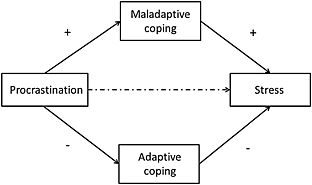
Proposed relationships among procrastination, coping strategies and stress.
Maladaptive versus adaptive coping and procrastination
Appraisal–based models of coping and stress provide a useful conceptual framework for understanding how an individual's cognitive and behavioural responses to stress play a central role in exacerbating or attenuating the stress response (Lazarus & Folkman, 1984). A transactional view of stress suggests that when the demands of a challenging, threatening or harmful event are perceived as exceeding the internal and external resources of the individual to deal with a challenge, stress will be experienced. Coping responses are aimed at reducing this gap between the demand and available resources, thereby reducing perceived stress and any associated negative emotions that arise as a result of the activation of the stress response. Although most coping strategies can be viewed as adaptive in the short term insomuch that they provide an immediate reduction of this perceived gap, coping responses that bring about more enduring changes are those that are generally viewed as being successful or adaptive (e.g. Skinner et al., 2003). For example, adaptive coping strategies can involve taking action and/or finding resources to deal with the problem, including planning and seeking out information or emotional support from others. In contrast, maladaptive coping strategies focus on immediate relief from the negative feelings of threat or harm activated by the stressor as a means of regaining control, without necessarily addressing the source of the stress (Lazarus & Folkman, 1984). Thus, coping strategies that focus on avoiding rather than solving the problem at hand in favour of short–term emotional regulation are viewed as maladaptive because the gap between the demand of the stressor and the resources to deal with it is not reduced and may even be widened, resulting in greater perceived stress. These strategies can be cognitive (denial) or behavioural (disengagement).
This view of stress and coping has clear implications for understanding how trait procrastination may be linked to coping. A recent theoretical review proposed that procrastination may be best characterized as the tendency to prioritize short–term mood regulation over long–term goals (Sirois & Pychyl, 2013). In essence, avoiding unpleasant or stressful tasks as a means of coping with the negative mood associated with these tasks is the modus operandi of procrastinators, suggesting that avoidant coping should figure prominently within the repertoire of coping strategies commonly used by trait procrastinators. Indeed, neuroticism, one of the Big Five Factor traits that is associated with procrastination (Flett, Stainton, Hewitt, Sherry, & Lay, 2012; Steel, 2007), is grounded in a disposition towards avoidance and accordingly is linked to a greater use of avoidant and disengagement coping (Carver & Connor–Smith, 2010). Research supporting this proposition is, however, scant and mixed. Verešová (2013) found that trait procrastination was positively associated with the avoidant coping subscale of the Proactive Coping Inventory (Greenglass & Schwarzer, 1998) in primary school teachers (r = .42). However, using the Mainz Coping Inventory (Krohne et al., 2000), a measure of vigilant versus avoidant coping, Burns et al. (2000) found a small but significant negative association (r = −.16) between procrastination and avoidant coping among college students. Given the differences in samples and the coping measures used, these conflicting findings bring into question whether or how procrastination is associated with avoidant coping.
There is also some evidence that trait procrastination may be linked to another maladaptive coping strategy, self–blame. Several studies have demonstrated that procrastination is associated with a tendency towards negative self–evaluations (Flett, Blankstein, & Martin, 1995; Flett et al., 2012), including self–depreciating thoughts after procrastinating (McCown, Blake, & Keiser, 2012), self–blame and brooding about past procrastination (Stainton, Lay, & Flett, 2000) and taking a self–critical and judgemental view of oneself (Sirois, 2014). Importantly, this research indicates that procrastinators‘ negative self–evaluative thoughts contribute to the stress they experience (Flett et al., 2012; Sirois, 2014). Taken together, this research provides support for the notion that procrastination is associated with self–blame coping.
Although there is little research on how procrastination is associated with adaptive coping strategies, there are theoretical reasons for expecting procrastination to be linked to less use of effective coping such as problem–focused and social support–seeking strategies. Consistent with incompleteness theories of cognition (Gold & Wegner, 1995), procrastinatory cognitions involve brooding about past procrastination and being ruminatively focused on the unattained goal (i.e. end–state thinking) rather than on problem–focused means of attaining the goal (Stainton et al., 2000). Not surprisingly, trait procrastination is associated with this type of ruminative thinking and subsequent distress (Flett et al., 2012; Stainton et al., 2000), suggesting that procrastination may also be linked to less use of problem–focused coping. This is in accord with theory and research that highlight how unregulated negative emotions can interfere with engaging in planful, problem–focused coping (Carver & Connor–Smith, 2010). That procrastination is also associated with low levels of conscientiousness (Van Eerde, 2003; Watson, 2001), a Big Five personality factor linked to the use of problem–focused coping (Carver & Connor–Smith, 2010), lends further support for this proposition. Empirical support comes from a study by Ferrari and Díaz–Morales (in press), which found that procrastination was negatively correlated with taking positive actions to cope with mental health issues. Similarly, three studies (Chu & Choi, 2005; Dumitrescu, Dogaru, Dogaru, & Manolescu, 2011; Verešová, 2013) found that procrastination was negatively associated with a related construct, proactive coping, which involves taking a future–oriented and problem–focused approach to coping (Greenglass & Schwarzer, 1998). Although researchers have suggested that procrastination may be associated with less social support seeking because of fear of being negatively evaluated by others (Flett et al., 1995), to date, this aspect of coping has received little research attention.
The current study
Despite the theoretical and empirical accounts of trait procrastination as reflecting avoidance of unpleasant or aversive tasks as a means of mood repair (Blunt & Pychyl, 2005; Sirois & Pychyl, 2013), research documenting its links to maladaptive and adaptive coping strategies is scarce and inconsistent. There is also little if any research to date examining whether coping strategies might explain the consistent finding that procrastination is associated with greater perceived stress. The aim of the current study was to address these gaps and extend current research and theory on procrastination and stress by first quantitatively summarizing the available literature on the association of trait procrastination with maladaptive and adaptive coping strategies (Study 1) and then testing the potential explanatory role of coping strategies for understanding the procrastination–stress relationship (Study 2).
Because our initial scan of the literature revealed very few studies on procrastination and coping, we supplemented the relevant published and unpublished research retrieved with our own data sets. Given the dearth of research on procrastination and coping, we followed Cumming's (2014) recommendations for improving psychological research and building cumulative research in an area that is understudied by taking a small–scale meta–analysis approach in Study 1 to better understand how procrastination was linked to coping. Accordingly, we meta–analysed available studies to estimate the magnitude of the effects between procrastination and coping and used moderator analyses to identify possible factors that might explain any heterogeneity within the effects. Because previous research has noted gender differences in the way that procrastination is associated with other variables (Pychyl, Coplan, & Reid, 2002), we examined gender as a possible moderator.
In Study 2, we tested the modified version of the procrastination–health model (Figure 1) by conducting a series of mediation analyses across four independent samples to provide insight into how coping might explain the procrastination–stress relationship. Each coping strategy (maladaptive and adaptive) was tested together using multiple–mediation analysis to gain a better understanding of the cumulative effects of procrastination on stress through adaptive and maladaptive coping.
Study 1: Meta–analysis
Method
Literature search and coding
Literature searching was conducted using an online database (PsycINFO and PsycARTICLES, 1985–2013) to identify possible empirical studies on procrastination and coping to include in the meta–analysis. The keyword ‘procrastination’ was combined with words related to coping (e.g. cop*, proact*, self–blam*). Informal channels were also searched. These included Google Scholar, papers presented at a procrastination conference and emails sent to procrastination researchers. Relevant papers identified from the initial search of formal and informal channels were forward and backward searched to complement the database searches and identify the relevant literature to include. Only papers that had the following characteristics were included in the meta–analysis: (1) reported empirical data; (2) included associations between procrastination and coping strategies that were adaptive or maladaptive; (3) reported usable effect size information; (4) were in English; and (5) did not duplicate other papers. Coping strategies classified as adaptive included active coping, planning, proactive coping, seeking instrumental support and seeking emotional support. Strategies classified as maladaptive included denial, behavioural disengagement, substance use disengagement, self–blame coping and avoidant coping. The search strategies yielded a total of six published papers and three theses (N = 1574) that met the inclusion criteria. These were supplemented by an additional seven unpublished data sets (N = 2784) described in the next section.
For each of the 16 eligible studies, essential information for the meta–analyses and planned moderator analysis was recorded. Coping styles were coded as adaptive or maladaptive, and the effect size for each was recorded. The zero–order correlation (r) was chosen as the effect size metric as it was the statistic most commonly reported across the studies. During the coding process, one published study was initially identified as including an appropriate variable, avoidant coping (Burns et al., 2000). Upon closer inspection, it was noted that the scale used for this correlation was obtained with the Mainz Coping Inventory (Krohne et al., 2000), a measure of cognitive avoidance. However, there is some evidence that cognitive avoidance can also be viewed as an adaptive coping strategy that is akin to using distraction to promote positive thoughts when faced with a challenge or stressor (Krohne et al., 2002). Accordingly, we opted to follow Card's (2012) recommendations regarding the assessment of construct validity and excluded the Burns et al. (2000) study from the meta–analysis. There was only one article for which there was a coding discrepancy (93% agreement), which was resolved after further review and discussion. The total sample size across the 15 studies retained for the meta–analyses was 4357.
For retained studies that reported dependent effect sizes, that is, effects for more than one coping strategy within the same coping category (i.e. adaptive or maladaptive), the effect sizes were collapsed into a single average effect size calculated as a weighted average. Because the raw data were available for the seven unpublished data sets, the individual coping subscales within each coping category were averaged into a single index of adaptive or maladaptive coping.
Descriptive information recorded for each study included the scale used to measure procrastination and coping, the sample population (community adults versus students), ethnicity expressed as per cent White, the percentage of female participants in the sample and the publication status of the data (Table 1). The latter two descriptors and the procrastination scale used were also analysed as moderators of the effects.
Demographic characteristics of the unpublished and published study samples included in the meta–analysis
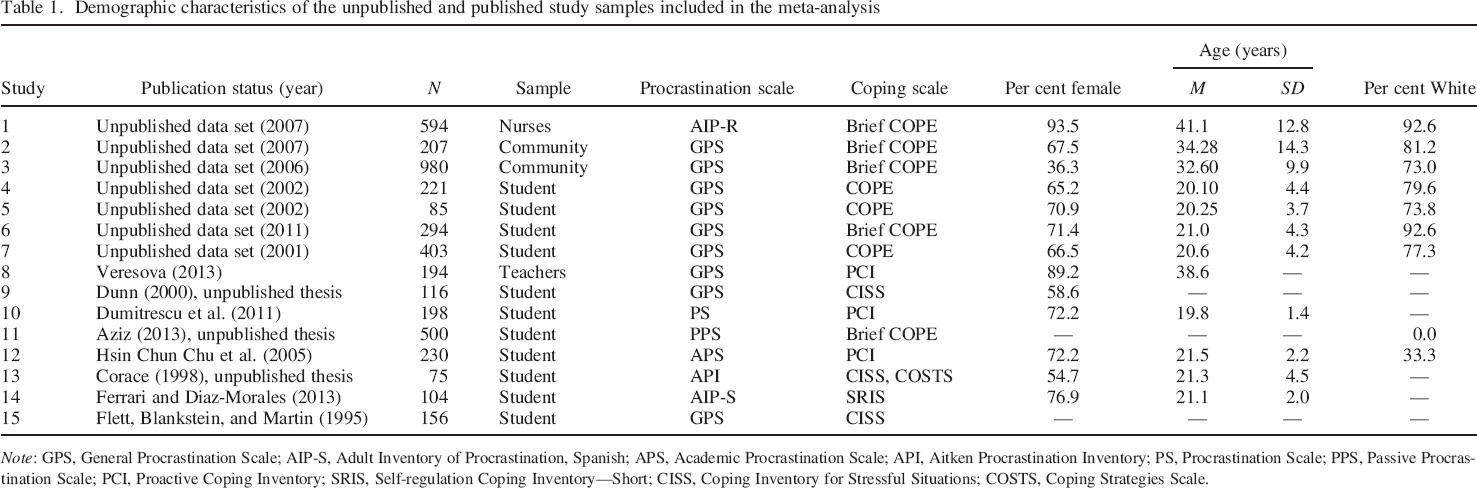
Note: GPS, General Procrastination Scale; AIP–S, Adult Inventory of Procrastination, Spanish; APS, Academic Procrastination Scale; API, Aitken Procrastination Inventory; PS, Procrastination Scale; PPS, Passive Procrastination Scale; PCI, Proactive Coping Inventory; SRIS, Self–regulation Coping Inventory—Short; CISS, Coping Inventory for Stressful Situations; COSTS, Coping Strategies Scale.
Unpublished data sets, participants and procedure
The additional seven data sets were collected as part of a larger programme of research investigating the links between self–regulation, stress and well–being. Of these, one was from a published paper that did not analyse the association of procrastination with coping (Sirois, 2004). For all samples, ethical clearance for the data collection was sought from the institutional review boards prior to data collection. Samples 1–3 consisted of adults recruited from the community, and Samples 4–7 were undergraduate students recruited from two different post–secondary Canadian institutions. Participants in Samples 2 and 3 were recruited online and via a booth at the local mall and received $15 for completing either a paper survey returned by mail or an online survey. Sample 2 was recruited from Canada, and Sample 3 was recruited from Canadian and American sources. Sample 1 consisted of registered and in–training nurses recruited from two sources: online ads and notices (n = 332) placed on Canadian and American websites and a random list of 1000 nurses provided by the Ontario College of Nurses in Canada (n = 262). Nurse participants completed either a mail–in or online survey and were given the opportunity to enter a draw for certificates to an online bookstore for their participation. Among the student samples, Samples 4, 5 and 7 were recruited from a student participation pool, received course credit for their participation and completed the survey in the lab. Sample 6 participants received a chance to enter a draw for a grocery gift certificate and had the choice to complete a paper or online survey. Table 1 summarizes the demographic characteristics for each of the samples.
Measures
A summary of the scale means and reliabilities across each of the seven samples is presented in Table 2.
Summary of the characteristics of the study variables for the seven independent samples
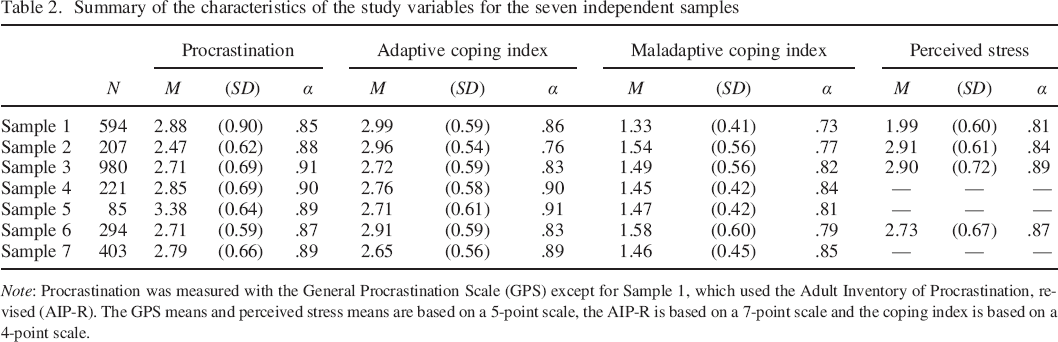
Note: Procrastination was measured with the General Procrastination Scale (GPS) except for Sample 1, which used the Adult Inventory of Procrastination, revised (AIP–R). The GPS means and perceived stress means are based on a 5–point scale, the AIP–R is based on a 7–point scale and the coping index is based on a 4–point scale.
Procrastination
Across the seven independent samples, two different measures of trait procrastination were used. Samples 2–7 completed Lay's General Procrastination Scale (GPS; Lay, 1986), a 20–item measure of procrastination in general across a range of tasks. Items such as ‘I generally delay before starting work I have to do’ are scored on a 5–point Likert–type scale ranging from 1 (false of me) to 5 (true of me) The GPS includes 10 reverse–scored items, and the sum of all items yields a single score with high values indicating a greater tendency to procrastinate. The GPS has demonstrated good internal consistency previously (α = .82; Lay, 1986). Sample 1 completed the Revised Adult Inventory of Procrastination (AIP–R; McCown & Johnson, 2001), a 15–item measure that assesses trait procrastination in adults. The seven positively and eight negatively keyed items such as ‘I am not very good at meeting deadlines’ are scored on a 7–point Likert–type scale ranging from 1 (strongly disagree) to 7 (strongly agree). After reverse scoring the negative items, all 15 items are summed, with higher scores reflecting a greater tendency towards procrastination. Also included are five distracter items as recommended by the scale creators. The AIP–R has demonstrated good internal consistency (α = .84, N = 984; McCown & Johnson, 2001).
Coping
For the unpublished data sets, one of two different versions of the COPE scale were completed. Samples, 4, 5 and 7 completed the full COPE scale (Carver, Scheier, & Weintraub, 1989), whereas Samples 1–3 and 6 completed the Brief COPE scale (Carver, 1997).
The COPE (Carver et al., 1989) is a widely used and well–validated 60–item scale that assesses a broad range of coping responses. Respondents rate how often they use each type of adaptive (e.g. I take direct action to get around the problem) and maladaptive (e.g. I drink alcohol or take drugs, in order to think about it less) coping strategy to deal with stressors on a 4–point Likert scale ranging from 1 (I usually don't do this at all) to 4 (I usually do this a lot). Scores for each of the 15 coping strategies are calculated by taking a mean of the endorsed items in each subscale. The Brief COPE (Carver, 1997) is a shortened version of the original COPE scale (Carver et al., 1989) and contains 28 items that assess 14 different coping strategies that are scored on the same 4–point Likert scale as the full COPE. For both the full COPE and the Brief COPE, the relevant subscale scores were then averaged to create an overall index score for adaptive and maladaptive coping. The adaptive coping index included the four subscales active, planning, instrumental and emotional support seeking, whereas the maladaptive coping index included the four subscales denial, self–blame, behavioural disengagement and substance use. However, because the self–blame subscale is only included in the Brief COPE, the maladaptive coping index for the full COPE did not include this subscale. Overall, the indices had good internal reliability (see Table 2 for descriptives).
Analyses
For each of the seven samples, a listwise deletion was used to remove any cases missing 20% or more on any of the main variables prior to analyses. To obtain a more fine–grained view of how procrastination was related to each of the subtypes of coping strategies within the two overall adaptive and maladaptive indices, correlational analysis at the subtype level was first conducted. Next, the average effect size between trait procrastination and each of the two coping indices was estimated using random–effects model meta–analyses with the metafor package in R version 2.15.2 (Viechtbauer, 2010). Given the relatively small number of studies included, a failsafe N using the Rosenthal (1979) approach was calculated for the meta–analyses conducted for adaptive and maladaptive coping. This statistic is useful for dealing with publication bias due to the ‘file drawer’ problem common to meta–analysis when there are few available studies to include (Rosenthal, 1979). The failsafe N provides an estimate of the number of studies with null results (p > .05) that would need to be included in the meta–analysis to render the current effect size estimate insignificant (Rosenthal, 1979). This meta–analytic procedure was also repeated for each of the eight coping subscales to have a more detailed view of the average magnitude of associations with procrastination. However, for the sake of consistency, this supplemental analysis was only conducted for the studies that used the COPE scale.
Moderator analyses for the overall coping indices were planned should there be evidence of significant heterogeneity in the effect sizes from the two coping index meta–analyses conducted. Between–studies variability in effect sizes was assessed with two methods: (1) the heterogeneity statistic, Q, which assessed the degree of variability among the pool of effects sizes (Card, 2012) and (2) the I2 statistic (Slosar, 2009), which estimated the proportion of variability present in the effect sizes that is not due to sampling error within studies. I2 values of 25% or less reflect low heterogeneity, values of 50% reflect moderate heterogeneity and values of 75% or more reflect a high degree of heterogeneity. A sub–group moderator approach was used to estimate the influence of procrastination scale (GPS versus other scales), sample type (community versus student) and publication status (published versus unpublished studies) on the effect sizes obtained. Moderation analyses of the influence of gender on the effects between procrastination and the coping types were conducted using a correlational approach.
Results
Procrastination and coping
The results of the correlation analyses with the coping subscales are presented in Table 3. Only the seven unpublished data sets were retained for this analysis as the unpublished thesis that used the COPE only reported correlations for the overall indices. For each of the four coping styles comprising the maladaptive coping index, procrastination was significantly correlated across all seven samples, with r's ranging from .11 to .46. For the adaptive coping subscales, the results were less consistent. The expected negative and significant correlations with active and planning coping were found for all but Sample 5, with overall r's ranging from −.15 to −.47. However, the correlations with instrumental and emotional social support coping were only significant in three of the seven samples. The separate meta–analyses of these eight subscales revealed significant average effects for each of the subscales (Table 3). The effect sizes for instrumental and emotional social support coping were the smallest in magnitude relative to the other subscale effect sizes.
Bivariate correlations between procrastination and the adaptive ad maladaptive coping subscales of the COPE for seven samples
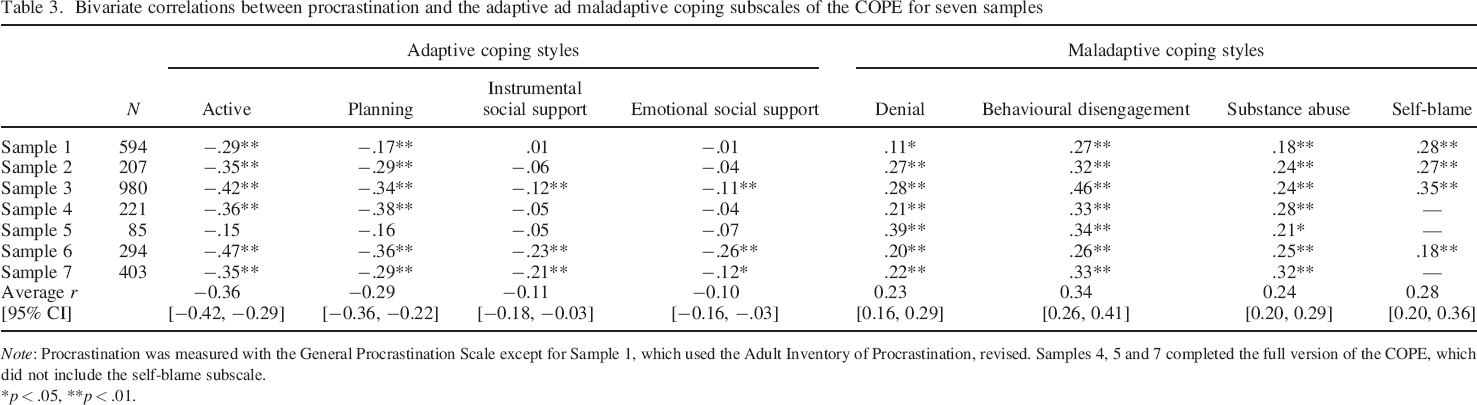
Note: Procrastination was measured with the General Procrastination Scale except for Sample 1, which used the Adult Inventory of Procrastination, revised. Samples 4, 5 and 7 completed the full version of the COPE, which did not include the self–blame subscale.
p < .05.
p < .01.
Table 4 presents the correlations, study coding and results of the meta–analyses for the overall adaptive and maladaptive coping indices. Consistent with theory and our hypothesis, procrastination was significantly negatively correlated with adaptive coping in 11 of the 15 studies that included one or more measures of adaptive coping. In four studies, the correlation between procrastination and adaptive coping was negative but not significant. The meta–analyses of these effects revealed that procrastination was, however, significantly and negatively associated with adaptive coping (average r = −.24, k = 15; p < .001). The failsafe N analysis revealed that an additional 1245 studies with null results would need to be included in the meta–analysis to decrease the p–value below .05. The tests of heterogeneity were significant, indicating a high degree of unexplained variability among the study effect sizes [Q(14) = 99.54, ns; I2 = 86.65%] and that moderator analyses were warranted.
Meta–analysed bivariate correlations between procrastination, adaptive and maladaptive coping across 14 samples (total N = 4201)
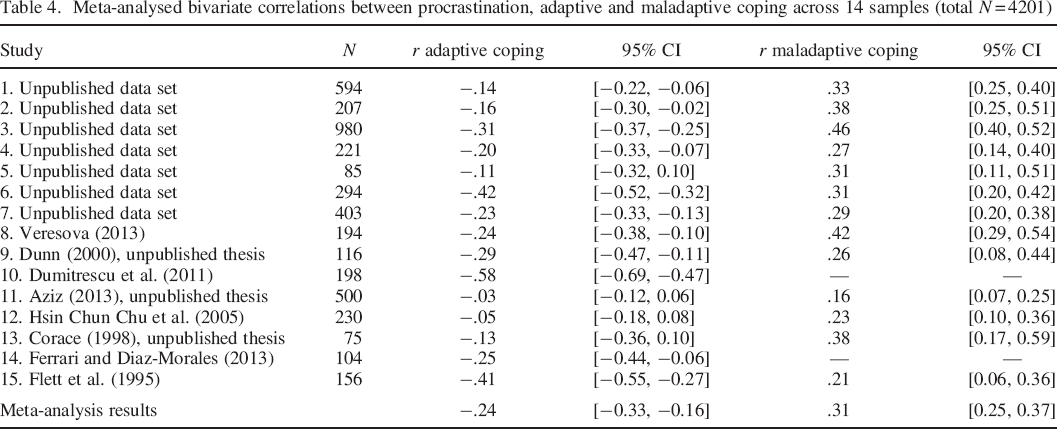
The findings for maladaptive coping were also in accord with theory and our hypothesis. In 13 of the 14 studies that included measures of maladaptive coping, procrastination was positively correlated with maladaptive coping (Table 4). The meta–analysis of the 13 studies revealed that procrastination was significantly associated with the use of maladaptive coping (average r = .31, k = 13; p < .001). The robustness of this finding was supported by the failsafe N analysis, which indicated that an additional 1805 studies with null results would be required to render the results of the meta–analysis insignificant. In terms of the heterogeneity of the effects, the tests revealed a high degree of unexplained variance among the 13 studies [Q(12) = 48.78, ns; I2 = 68.55%]. Moderator analyses were therefore conducted.
Moderators of procrastination and adaptive coping
The moderator analyses were each non–significant, indicating that the average effect size between trait procrastination and adaptive coping did not vary as a function of the five moderators tested. Specifically, the effect sizes for the published studies (k = 5, n = 726; r = −.32, 95% CI [−0.52, −0.11]) were not significantly different from those obtained from the unpublished studies [k = 10, n = 3475; r = −.21, 95% CI [−0.29, −0.13], Q(1) = 1.58, ns]. Similarly, for the sample characteristics, there were no significant differences in the effect sizes from studies conducted with students (k = 11, n = 2382; r = −.26, 95% CI [−0.37, −0.14]) versus those in studies conducted with community samples [k = 4, n = 1975; r = −.22, 95% CI [−0.31, −0.12], Q(1) = 0.19, ns]. The effects obtained using the GPS (k = 9, n = 2657; r = −.27, 95% CI [−0.35, −0.20]) were not significantly different from those obtained using other procrastination scales [k = 6, n = 1701; r = −.21, 95% CI [−0.40, −0.02] Q(1) = 0.61, ns]. The effects obtained using the COPE (k = 8, n = 3285; r = −.21, 95% CI = [−0.30, −0.11]) were not significantly different from those obtained using other coping scales [k = 7, n = 1073; r = −.29, 95% CI [−0.44, −0.14]; Q(1) = 1.08, ns]. Finally, the effect sizes obtained for studies that included a higher proportion of female participants were not significantly different from those obtained from studies with a lower proportion of female participants [Q(1) = 0.00, ns].
Moderators of procrastination and maladaptive coping
For maladaptive coping, only the moderator analysis for sample type was significant. Trait procrastination was more strongly linked to maladaptive coping in studies conducted with community samples (k = 4, n = 1975; r = .40, 95% CI [0.32, 0.48]) compared with those conducted with student samples [k = 9, n = 2080; r = .26, 95% CI [0.20, 0.31]; Q(1) = 11.79, p < .01]. The moderator analyses for publication status, procrastination scale, coping scale and sex were each non–significant. The effect sizes for the published studies (k = 3, n = 580; r = .29, 95% CI [0.14, 0.44]) did not significantly differ from those obtained from the unpublished studies [k = 10, n = 3475; r = .32, 95% CI [0.25, 0.39], Q(1) = 0.14, ns]. Studies that used the GPS (k = 9, n = 2657; r = .34, 95% CI = [0.27, 0.40]) had effect sizes that were not significantly different than those that used other measures of procrastination [k = 4, n = 1399; r = .26, 95% CI [0.16, 0.36]; Q(1) = 1.92, ns]. The effects obtained using the COPE (k = 8, n = 3285; r = .32, 95% CI [0.24, 0.39]) were not significantly different from those obtained using other coping scales [k = 5, n = 771; r = .30, 95% CI [0.20, 0.40]; Q(1) = 0.08, ns]. The effect sizes in studies that had a higher proportion of female participants were no different from those found in studies that included a lower proportion of female participants [Q(1) = 0.00, ns].
Study 2: Testing a Procrastination–Stress Model
Study 1 established significant associations between trait procrastination and both adaptive and maladaptive coping strategies. In Study 2, we therefore tested the role of adaptive and maladaptive coping in the procrastination–stress model (Figure 1) using samples from the meta–analysis that included a measure stress. Four samples, Samples 1–3 and 6, were selected for multiple–mediation analyses. As noted previously, Sample 1 completed the AIP–R (McCown & Johnson, 2001), and the remaining three samples completed the GPS (Lay, 1986). All four samples completed the Brief COPE scale (Carver, 1997).
Stress
The Perceived Stress Scale (PSS; Cohen & Williamson, 1988) was completed by all four samples. This 10–item version of the widely used empirically established index of general perceived stress measures the perceived stressfulness of events experienced within the past month. Items such as ‘In the last month, how often have you felt nervous and stressed’ are rated on a 5–point scale with response options ranging from never to very often. The PSS has demonstrated adequate internal consistency (Cohen & Williamson, 1988).
Analyses
Correlation analyses were first conducted to assess the interrelationships among the model variables. Tests of the mediation of the effects of procrastination on perceived stress through adaptive and maladaptive coping in each sample were conducted following the Preacher and Hayes (2008) procedure, which uses bootstrapping to estimate the significance of indirect effects. The Preacher and Hayes (2008) macro INDIRECT was used to run the analyses as it permits simultaneous testing of two mediators, thus allowing for a test of the indirect effects of maladaptive coping while accounting for the effects of adaptive coping. The multiple–mediator models were tested using 5000 bootstrapping resamples and bias–corrected 95% confidence intervals. Although the moderator tests of gender were non–significant in Study 1, it was still possible that the associations of coping and procrastination with stress may be affected by this variable. Accordingly, we added gender as a covariate in each of the models tested.
Results
Tests of the procrastination–stress model
The bivariate correlations among the model variables are presented in Table 5. Perceived stress was positively associated with trait procrastination and maladaptive coping and negatively associated with adaptive coping in each of the four samples.
Correlations of perceived stress with positive and negative coping for four independent samples

Note:
p < .05.
p < .01.
The tests of the indirect effects of procrastination on stress through adaptive coping controlling for maladaptive coping and sex were non–significant in three of the four samples (Table 6). This was mainly due to non–significant paths between adaptive coping and stress. Sample 6 was the only sample for which the indirect effects were significant. The meta–analysis of these indirect effects was, however, non–significant. For maladaptive coping, the indirect effects were significant in all four samples after considering the effects of adaptive coping and gender, with both the a and b paths being significant (Table 6). The meta–analysis of the indirect effects was also significant, indicating that, on average, maladaptive coping explained in part the association between procrastination and stress across the four samples. Finally, the meta–analysis of the combined indirect effects of adaptive and maladaptive coping was significant in all four samples.
Meta–analysed indirect effects from a multiple–mediation model of procrastination on perceived stress through adaptive and maladaptive coping after controlling for the effects of each across four samples (total N = 2075)
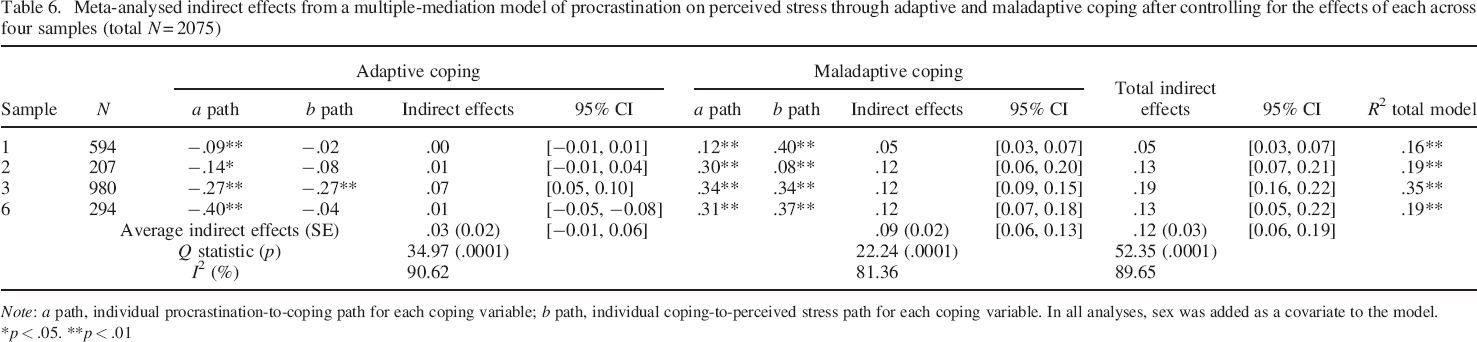
Note: a path, individual procrastination–to–coping path for each coping variable; b path, individual coping–to–perceived stress path for each coping variable. In all analyses, sex was added as a covariate to the model.
p < .05.
p < .0.
Discussion
Using a small–scale meta–analysis approach (Cumming, 2014), this research addressed the question of whether and how procrastination is linked to coping. Study 1 demonstrated that trait procrastination is associated with less use of adaptive coping and greater use of maladaptive coping across multiple, diverse samples and measures of procrastination and coping. Although the average effects for each type of coping were significant, procrastination had a moderate–sized positive association with maladaptive coping across the 13 samples tested, and a smaller negative association with adaptive coping across the 15 samples tested (Cohen, 1988). Importantly, Study 2 examined the possible reasons for these associations by testing a new procrastination–stress model across four samples and then meta–analysing these effects. The results revealed that the average indirect effects for maladaptive but not adaptive coping explained the link between procrastination and stress.
These findings expand the nomological network of procrastination and build on existing research on the correlates and potential consequences of procrastination in several important ways. The meta–analysis of the extant literature on procrastination and coping combined with other unpublished theses and data sets provides a more integrated view of how procrastination is associated with a broad range of coping styles. The inclusion of multiple maladaptive coping strategies in the meta–analysis, and individual meta–analysis of each, extends current conceptualizations of procrastination as being linked to avoidant and disengagement coping as a form of short–term mood regulation (Sirois & Pychyl, 2013) by demonstrating that this trait is also linked to self–blame and substance use to deal with stress. Although the latter coping strategy can also be viewed as avoidant coping, to date, there is little research examining how procrastination relates to drug and alcohol use. Our findings indicate that this may be an important and fruitful area of investigation. The link of the self–blame coping to procrastination is similar to previous research on procrastination and low self–compassion (Sirois, 2014) and other negative self–evaluative thoughts (McCown et al., 2012; Spada, Hiou, & Nikcevic, 2006; Stainton et al., 2000), which indicates a role for negative cognitions in increasing stress. It is also consistent with qualitative work that identified monitoring negative self–talk as a potential strategy for reducing procrastination (Schraw et al., 2007).
Examining how procrastination was associated with not only maladaptive but also adaptive coping is another noteworthy contribution of the current research. Consistent with theoretical perspectives that highlight how engaging in end–state thinking can short circuit taking a problem–focused approach to attaining goals for procrastinators (Stainton et al., 2000), the meta–analysis of available research, and of the individual COPE subscales, found that procrastination was linked to less use of problem–focused coping such as planning, pro–active thinking and active coping to deal with a stressor. As Flett et al. (1995) have previously noted, procrastinators may be unable or unwilling to engage in problem–focused coping strategies because of their lack of confidence in their ability to solve problems effectively, a tendency that may be linked to their low self–efficacy (Ferrari, Parker, & Ware, 1992; Martin et al., 1996; Sirois, 2004). The small but significant average effect sizes between both instrumental and emotional social support coping also provided some support for the notion that procrastinators may be less willing to seek out or utilize available social support to cope with their stress (Flett et al., 1995), perhaps because of their concern about being negatively evaluated by others (e.g. Ferrari, 1991). Research focused on the reason for less use of these and other adaptive coping strategies among procrastinators is needed to elucidate these issues and also provide insight into possible ways to promote more adaptive coping.
Taken in context with the finding that procrastination was linked to a greater use of maladaptive coping, these results have important implications for understanding the psychological distress associated with procrastination noted in previous research (Flett et al., 1995; Rice et al., 2012; Spada et al., 2006). There is evidence that the harmful effects of maladaptive coping on psychological well–being are attenuated when adaptive coping is high and accentuated when adaptive coping is low (Thompson et al., 2010). In light of this research, the combination of higher levels of maladaptive coping and lower levels of adaptive coping associated with procrastination in the current study indicates that procrastinators‘ preferred coping repertoire may confer risk for psychological well–being.
The proposal and testing of a procrastination–stress model with respect to coping strategies is a novel and important contribution that provides insights into why procrastination is linked to higher levels of perceived stress. The tests of the indirect effects on stress through coping revealed a clear role for maladaptive coping in explaining the high levels of stress linked to procrastination commonly reported in the literature (Flett et al., 1995; Sirois, 2014; Sirois et al., 2003; Stead, Shanahan, & Neufeld, 2010). Both the a (procrastination to coping) and b (coping to stress) paths were significant across the four samples tested, as was the overall test of these effects. This was not the case for adaptive coping as the a paths, but not the b paths, were significant across the samples after controlling for the influence of maladaptive coping. What these findings suggest is that less use of adaptive coping by procrastinators may not necessarily contribute to the stress they experience. However, as noted previously, it may exacerbate some of the other negative consequences from using maladaptive coping strategies to deal with stress.
Strengths and limitations
The current findings have several strengths and limitations that warrant mention. Despite the significant associations between procrastination and coping from the meta–analyses, the cross–sectional nature of the data meta–analysed precludes making any strong causal conclusions about the directionality of these associations. Because coping styles can be viewed as dispositional tendencies (Carver et al., 1989), it could be argued that coping precedes procrastination rather than the reverse. Although ostensibly this alternate view of the link between procrastination and coping seems plausible, there are several reasons to suggest that trait procrastination prompts the regular use of certain coping strategies. First, if procrastination is viewed and measured as a trait as it was in the current study, it is difficult to imagine how procrastination would develop from a broad and diverse set of coping strategies and easier to envision the reverse. Viewing procrastination as having temporal precedence in the proposed chain with coping is also in keeping with theoretical accounts of the relationships of personality to coping (Carver & Connor–Smith, 2010; Smith & Williams, 1992) and with theory on the nature of procrastination (Sirois & Pychyl, 2013). Finally, behaviour–genetics research indicates a moderate degree of heritability (46%) for procrastination (Gustavson et al., 2014), lending further support for the view that this trait precedes coping. Given the nature of some of the coping styles examined, it is nonetheless possible that dynamically reciprocal relationships could be involved. For example, disengagement coping can be self–reinforcing in that it provides temporary relief from the stress or negative mood that it is used to manage (Carver & Connor–Smith, 2010). Although this and other avoidant strategies for dealing with stressful situations may provide immediate respite for the procrastinator, in the end, the original stressor that was avoided remains and continues to be a source of stress that may perpetuate a cycle of poor coping choices and continuing stress. In this way, the unresolved stress from procrastinating over time may elicit avoidant coping responses from procrastinators that contributes to a vicious cycle of stress. Longitudinal and experimental work examining the interplay of stress and coping styles and their consequences for procrastinators is clearly needed to provide more insight into these issues.
The current findings should also be interpreted with caution for several reasons. First, about half of the studies included in the overall meta–analyses used some form of the COPE scale (Carver et al., 1989), raising the issue of the generalizability of the findings to other coping scales and subtypes of adaptive and maladaptive coping. Our moderation analyses of the coping scale used addressed this issue quantitatively. Because the test was non–significant for both adaptive and maladaptive coping, the effects noted with the COPE can be considered comparable with those obtained with other scales. Nonetheless, for the indirect–effects analyses, we only examined the potential mediating roles of adaptive and maladaptive coping on stress using samples that measured coping with the COPE. It is therefore unknown whether the findings would generalize to other measures that include different forms of coping. Future work on understanding the links between procrastination, coping and stress should therefore replicate these findings using other measures of coping.
With any meta–analysis, it is always possible that there were other relevant research that were not identified and included. The use of a large procrastination research mailing list generated for a recent conference on procrastination was one strategy to help ensure that research on procrastination and coping was identified. Nonetheless, if researchers chose to not answer the call for papers for the meta–analysis, the failsafe N calculated provided a good metric of the stability of the findings should there be other research with null findings that was not retrieved.
Another noteworthy strength of the current study was the small–scale meta–analysis approach taken to elucidate the nature of the associations of procrastination with coping. Given both the growing literature on procrastination and well–being and the relatively few studies that have examined how procrastination relates to coping, this approach is in keeping with Cumming's (2014) recommendations for building a strong research base in an understudied area. Meta–analysing these effects also helped establish the generalizability of the associations of procrastination with adaptive and maladaptive coping across samples, measures and both published and unpublished data. The moderation analysis of these effects provided suggestive evidence that the link of procrastination to maladaptive coping may be underestimated rather than overestimated in student samples, a methodological issue that has not been previously identified. Finally, the meta–analyses of the indirect effects of procrastination on stress through coping is a novel approach for providing some preliminary support for the role of maladaptive coping in the procrastination–stress relationship. Nonetheless, given the small number of studies included in this analysis and for the moderator analyses, these findings should be considered preliminary and therefore warrant further investigation.
Conclusion
In addressing the question posed by the title of this paper, the findings from this small–scale meta–analysis suggest that in terms of coping, trait procrastination may be both more maladaptive and less adaptive. However, across four samples that used the COPE scale, it was primarily the greater use of maladaptive coping strategies that explained why procrastinators report greater perceived stress. Interventions that focus on reducing the use of avoidant, self–blaming and substance use coping among procrastinators may therefore be one way to address the stress associated with procrastination as well as the associated costs to health and well–being (Sirois, 2007; Sirois et al., 2003; Sirois & Tosti, 2012; Stead et al., 2010).
Footnotes
Acknowledgements
The data collection for Samples 1–3 was supported by a research grant (no. 410–2005–0094) from the Social Sciences and Humanities Research Council (Canada) awarded to the first author. Data collection for Sample 6 and preparation of this paper were supported by funding from a Tier II Canada Research Chair awarded to the first author. Portions of this paper were presented at the 8th Biennial Procrastination Research Conference in Sherbrooke, Canada.