






Abstract
Clinical and basic personality psychologists interact less than they should, given their similar interests. In clinical personality psychology, available evidence supports a transition from the current categorical system to a hierarchical trait scheme for diagnosing the stable features of personality disorder. However, trait models do not capture the dynamic aspects of personality disorders as they have been described in the clinical literature, and thus miss a clinically critical feature of personality pathology. In contrast, basic personality psychologists have coalesced around a consensual structure of individual differences and become increasingly interested in the dynamic processes that underlie and contextualize traits. But trait psychology models are not sufficiently specific to characterize dynamic personality processes. In this paper, I filter clinical descriptions of personality disorders through the lens of interpersonal theory to specify a recursive within–situation interpersonal pattern of motives, affects, behaviours, and perceptions that could contribute to the stable between–situation patterns of maladaptive behaviour of historical interest to both basic and clinical personality psychologists. I suggest that this interpersonal model adds specificity to recent proposals regarding processes in the basic personality literature and has significant potential to advance research on personality dynamics. © 2018 European Association of Personality Psychology
Keywords
In the early days of personality and clinical psychology, most personality theorists were clinically trained and most clinicians conceptualized patients as whole people. These two fields separated over time to the degree that they are now represented by distinct journals, societies, and social networks. As a clinically trained personality psychologist who reads the journals and belongs to societies from both sub–disciplines, I am regularly struck by the similarity in concerns but differences in language and approaches across these groups. It seems obvious that basic and clinical personality researchers could benefit from talking to one another more often.
For instance, both basic personality and applied clinical researchers are interested in how personality can be more or less adaptive, in the general sense that personality variables predict positive and negative life outcomes. Yet, the models used to conceptualize and assess the maladaptive aspects of personality in basic personality science and applied clinical research have historically been quite different. A consensus has emerged among basic personality researchers around the viability of hierarchical trait models for conceptualizing individual differences, in which Big Five dimensions occupy a particularly useful level of analysis (Goldberg, 1990; Markon, Krueger, & Watson, 2005; McCrae & Costa Jr, 1997; Widiger & Simonsen, 2005). Clinical researchers, in contrast, have historically tended to use categorical personality disorder (PD) concepts with roots in psychodynamic theory (Kernberg, 1984; Paris, 2015; Shedler & Westen, 2007; Widiger, Lynam, Miller, & Oltmanns, 2012). These perspectives are beginning to align as it becomes increasingly clear that trait models from basic personality science are empirically superior to the PD categories in accounting for stable traits (Clark, 2007; Krueger & Markon, 2014; Morey et al., 2007; Widiger & Trull, 2007).
One implication of the demonstrated superiority of trait models for understanding the structure of stable between–person individual differences in personality phenotypes is that further work focused on validating cross–sectional PD assessments and/or debating which traits underlie different PDs will not move the field forward. It is time for the diagnostic manuals to move on to dimensional models. However, are there aspects to clinical conceptualizations of personality that are lost in a trait perspective? Might PD concepts point to important personality processes that cannot be fully captured by traits? Do trait models maximize the potential clinical utility of personality psychology? An assumption of this paper is that there is value in clinical descriptions of PD concepts for understanding basic personality processes that cannot be fully accounted for by traits, and that this value can only be realized through the use of conceptual models that spotlight within–person variation.
It may seem inconsistent to complement an argument for the superiority of traits for capturing PDs with the suggestion that PD concepts provide information about personality that cannot be accounted for by traits. The resolution to this apparent discrepancy lies in the fact that PDs have historically been described in the clinical literature as dynamic, extra–trait processes despite being measured as static, cross–sectional dispositions. The validity of PD constructs as formulated in the clinical literature remains largely untested because PDs have not been studied using approaches that capture the dynamic nature of clinical theories. By analogy, although it would be more useful for a musician to understand chords (personality factors) and notes (personality facets) than to learn a few songs (PD categories), this does not mean that she should not ultimately prefer a model of rhythm, melody, and key signatures (dynamics) through which she can better understand and even generate her own music.
The goal of this paper is to show how basic personality psychology could benefit from a model that integrates the cross–sectional structure of personality attributes with a dynamic model of how these attributes play out in specific situations. PD concepts are useful in this context because they exemplify the possibility that even maladaptive processes, which should generally distinguish via social interaction, can persist because of the power of recursive intraindividual patterns to give rise to stable patterns of interindividual differences. To that end, I present an interpersonal scheme (Leary, 1957; Pincus & Hopwood, 2012; Pincus, Hopwood, & Wright, in press; Sullivan, 1953) for conceptualizing dynamics relevant to personality pathology in order to add specificity and tractability to recent process models from basic personality psychology.
Personality Disorders as Traits
The most common way to conceptualize personality in clinical psychology, psychiatry, and related mental health disciplines for the last few decades has been via PDs, as articulated in the Diagnostic and Statistical Manual of Mental Disorders [DSM; American Psychiatric Association (APA), 2013]. The DSM PDs and their criteria are determined by expert panels who weigh considerations such as the available research base and the clinical utility of different diagnostic approaches. In the previous three editions of the DSM (APA, 1980, APA, 1994, APA, 2013), PDs have been defined as stable and inflexible patterns of thinking, feeling, and behaviour that are associated with significant distress and/or dysfunction. These versions of the DSM have listed 10 or 11 discrete polythetic PD syndromes, in which some combination of symptoms is necessary for a specific diagnosis. For example, a borderline PD diagnosis is given for a person who meets five of the following nine criteria: efforts to avoid feeling or being abandoned, unstable and intense relationships, unstable self–image, impulsive behaviour, suicidality or self–harm, emotional instability, feelings of emptiness, intense anger, and stress–related paranoia (APA, 2013).
The substantial empirical and clinical problems with PDs as instantiated in the DSM are well established (Clark, 2007; Krueger & Markon, 2014; Widiger & Trull, 2007). The diagnostic thresholds are arbitrarily chosen without any empirical basis, so prevalence rates from epidemiological research are specious. There is substantial between–diagnosis comorbidity (Clark, 2007; Sharp et al., 2015; Widiger & Samuel, 2005), such that people with a PD diagnosis commonly present with more than one disorder (Zimmerman & Coryell, 1989) or PD ‘not otherwise specified’ (Verhuel, Bartak, & Widiger, 2007). There is also substantial within–diagnosis heterogeneity (Clark, 2007; Widiger & Samuel, 2005; Wright et al., 2013), which derives from the polythetic nature of the scoring algorithms and means that two people with the same diagnosis could share few or even no symptoms. These practical issues with DSM PDs have perhaps contributed to a significant lack of progress in understanding the aetiology and mechanisms of PDs and in the development of effective treatments (Widiger & Trull, 2007). Each of these practical problems trace back to more fundamental issues: personality traits are not taxonic categories (Trull & Durrett, 2005) and DSM PDs do not align empirically with evidence–based models of personality structure and development (Krueger & Markon, 2014; Sharp et al., 2015; Wright, Hopwood, Skodol, & Morey, 2016).
In contrast, evidence–based trait models have dominated normal personality research for the last several decades (Roberts, Kuncel, Shiner, Caspi, & Goldberg, 2007; Widiger & Trull, 2007). Trait models focus on general dispositions or tendencies for certain patterns of thoughts, feelings, and behaviours. They are most commonly assessed via questionnaires that have been developed using contemporary construct validation approaches with a particular emphasis on covariance modelling (Goldberg, 1990; Markon et al., 2005). The most representative model of personality from this perspective is the ‘Big Five’, in which the five factors neuroticism, extraversion, openness, agreeableness, and conscientiousness describe the covariation among personality attributes at a relatively broad level of abstraction.
Basic personality researchers have established several key findings about the nature of traits using the Big Five model or close variants. Personality traits are relatively rank–order stable in adulthood (Roberts & Del, 2000) and their stability tends to increase over the transition to adulthood (Kandler et al., 2010). Traits have predictable patterns of mean–level stability and change across the life course (Roberts, Walton, & Viechtbauer, 2006) that is driven by nature and nurture (Bleidorn, Hopwood, & Lucas, 2018; Bleidorn, Kandler, Riemann, Angleitner, & Spinath, 2009; Specht, Egloff, & Schmukle, 2011). They are connected to a range of neurobiological correlates (Depue & Collins, 1999; DeYoung et al., 2010), and predict a host of important life outcomes (Ozer & Benet–Martinez, 2006; Roberts et al., 2007). Traits are also systematically related to clinical variables including PD diagnoses (Samuel & Widiger, 2008), other forms of psychopathology (Kotov, Gamez, Schmidt, & Watson, 2010), and treatment effects (Roberts, Hill, & Davis, 2017).
Adapting normal trait models for PD diagnosis
In recent decades, the ability of trait models to address the limitations of polythetic PD categories has become increasingly well established (Krueger & Markon, 2014; Widiger & Trull, 2007). Despite the empirical convergence between traits and PDs (Gore & Widiger, 2013; Markon et al., 2005; Thomas et al., 2013; Wright & Simms, 2014), there are two important differences between the way personality traits are typically assessed in basic personality science and maladaptive trait models.
First, normal range assessments of broad traits such as those of the Big Five do not include sufficient maladaptive content for clinical diagnosis (Morey et al., 2007, 2012). Normal trait models need to be either extended or complemented to fully account for maladaptive behaviour. Evidence that pathological personality features are empirically continuous with normal range traits (Samuel, Simms, Clark, Livesley, & Widiger, 2010; Suzuki, Samuel, Pahlen, & Krueger, 2015) suggests that PD symptoms can be understood in terms of variation in the tails of normative trait distributions. Thus, normal trait measures can be extended to include maladaptive content (e.g. Clark, 1993; Krueger, Derringer, Markon, Watson, & Skodol, 2012; Simms et al., 2011; Widiger et al., 2012). Alternatively, a person's problems or symptoms can be understood as independent of what they are like, in general (Hopwood, 2011), necessitating independent assessments of functional problems and personality traits (Bornstein, 1998; Hopwood et al., 2011; Livesley, 1998; Widiger & Trull, 2007; Wright, Hopwood, et al., 2016).
Second, the Big Five variables may not capture the optimal level of breadth in personality traits for a given clinical question. Normal and clinical personality researchers have identified a personality hierarchy (Kotov et al., 2017; Markon et al., 2005; Sharp et al., 2015; Wright et al., 2012) ranging from broad constructs at the top (DeYoung, 2006; Digman, 1997) to narrower constructs at the bottom (Mottus, Kandler, Bleidorn, Riemann, & McCrae, 2016). The Big Five traits sit at an intermediary level of this hierarchy. They provide a useful level of breadth for certain kinds of broad predictions (Ozer & Benet–Martinez, 2006; Roberts et al., 2007), but other levels might provide value for certain kinds of inferences (e.g. Paunonen, Haddock, Forsterling, & Kienonen, 2003), including discriminating PD symptoms from one another (Reynolds & Clark, 2001; Samuel & Widiger, 2008). For instance, neuroticism includes features such as anger, impulsivity, anxiety, and self–consciousness. Although both dependent and antisocial PD measures are related to the neurotic domain, antisocial PD measures tend to correlate more strongly with anger and impulsivity, whereas dependent PD measures tend to correlate more strongly with anxiety and self–consciousness (Samuel & Widiger, 2008).
In summary, trait models that capture the maladaptive extremes of stable personality features and which include both broad domains and more specific facets can be effectively used to capture the stable aspects of PD constructs. These trait models are also more likely than syndromal PD models to fit covariance models and are better connected to basic research on the structure of personality phenotypes.
Maladaptive trait models of personality disorder
The weaknesses of the PD approach and advantages of the trait approach have led to a movement to transition from categorical to dimensional PD diagnosis (Hopwood et al., 2018). Meta–analytic findings of systematic links between normal range traits and PDs (Samuel & Widiger, 2008; Saulsman & Page, 2004) and research showing that clinical experts are able to construe PDs using trait concepts (Lynam & Widiger, 2001; Miller, Lynam, Widiger, & Leukefeld, 2001) provide a strong foundation for this transition. Independent research programs by Clark (1993) and Livesley (1998) showed that PDs could be reconceptualized using hierarchical maladaptive trait models. Reviews of the field consistently show that experts and trainees recognize the need to shift to a dimensional model (Bernstein, Iscan, et al., 2007; Morey & Hopwood, in press; Morey, Skodol, & Oldham, 2014; Nelson, Huprich, Shankar, Sohnleitner, & Paggeot, 2017).
The ‘alternative model’ for PD diagnosis in DSM–5 (APA, 2013; Krueger, Hopwood, Wright, & Markon, 2014; Morey, Benson, Busch, & Skodol, 2015) was a milestone in this transition. This model is called ‘alternative’ because it was advocated by the DSM–5 Personality and Personality Disorders work group but voted down by the American Psychiatric Association Board of Trustees (Morey et al., 2015; Zachar, Krueger, & Kendler, 2016). It is probable that something like the alternative model will eventually replace PD categories in the DSM and ICD (Tyrer et al., 2011). The alternative model has two parts. Criterion A defines PD and indicates the overall severity of functioning. Criterion B articulates the particulars of personality–relevant dysfunction. Criterion B features are similar to traits from basic personality science (Gore & Widiger, 2013; Thomas et al., 2013; Wright & Simms, 2014).
The origin of criterion B traits can be traced to 1980, when PDs were operationalized as polythetic categories in the third edition of the DSM (APA, 1980). This model was essentially retained in the fourth edition (APA, 1994), even as problems with PDs as represented in the DSM became increasingly apparent (Clark, 2007; Frances, Pincus, Widiger, Davis, & First, 1990; Widiger, 1991). Charged with reformulating this problematic scheme into a more empirically tractable and clinically useful framework (Skodol et al., 2011), the DSM–5 Personality and Personality Disorder Work Group started with the symptom content of the DSM–IV PDs. Symptom redundancies were removed and the non–redundant features were arranged as trait indicators on a questionnaire. This questionnaire was administered to large community and clinical samples and subjected to standard psychometric techniques (Krueger et al., 2012). The result was a framework with 25 facets that could be organized into five higher order factors with a close resemblance to the Big Five (i.e. negative affectivity/neuroticism, detachment/low extraversion, antagonism/low agreeableness, disinhibition/low conscientiousness, and psychoticism/openness; Gore & Widiger, 2013; Krueger et al., 2012; Thomas et al., 2013). Subsequent research showed that these traits re–captured the reliable variance in the PDs (Few et al., 2013; Hopwood, Thomas, Markon, Wright, & Krueger, 2012) while solving many of the conceptual and empirical problems of the DSM–III/IV/5 framework (Krueger et al., 2014).
Concurrent with the DSM–5 were an NIMH–funded project to develop a hierarchical scheme for maladaptive traits that came to largely similar conclusions regarding the units and organization of pathological personality features (Simms et al., 2011) as well as a project aimed at developing instruments to assess each of the 10 DSM PD categories using scales based on the facet structure of the NEO–PI–R version of the Big Five (Widiger et al., 2012). This body of work makes it relatively clear from an empirical standpoint that the stable aspects of personality are better accounted for by hierarchical trait models than diagnostic categories (see Asendorpf, 2003; Asendorpf & van Aken, 1999, for a parallel literature on normal range traits and types). This leads to a major implication for the assessment of stable, maladaptive personality features, which I elaborate presently.
Evaluating the value of personality disorders vis–à–vis traits using cross–sectional personality disorder questionnaires is pointless
Despite the empirical superiority of dimensional models, papers that organize PD variance around categorical DSM concepts continue to appear in the literature, patients continue to be diagnosed with PD categories, and mental health treatments continue to be organized around PDs. Thus, an empirically inferior way of understanding stable aspects of personality that is better known in some quarters (PD categories) coexists awkwardly with an empirically superior way of conceptualizing stable aspects of personality that tends to be favoured by personality experts (trait dimensions). This juxtaposition has regrettably led clinical personality researchers to focus on debates about which traits make up different PDs. I offer examples presently with respect to four PD constructs.
A large body of research has shown that borderline personality is strongly related to neuroticism and/or a general factor of maladaptive personality (Samuel & Widiger, 2008; Sharp et al., 2015; Trull, Widiger, Lynam, & Costa, 2003; Wright, Hopwood, et al., 2016). Yet, there is also a strong feeling in clinical circles that borderline PD should be retained in the lexicon (Gunderson, Fruzetti, Unruh, & Choi–Kahn, in press; Lieb, Zanarini, Schmahl, Linehan, & Bohus, 2004; Zimmerman, 2015)—there are treatments, clinics, advocacy groups, third–party reimbursement schedules, scientific societies, and journals organized around the concept. Researchers and clinicians invested in borderline PD are loathe to let it go despite convincing evidence that it can be more effectively captured by trait concepts, at least when it is conceptualized as a stable disposition.
In contrast, passive–aggressive personality was once a central player in the DSM scheme (APA, 1980), but was relegated to an appendix in DSM–IV (APA, 1994), and abandoned altogether in DSM–5 (APA, 2013). Research on the construct declined precipitously during this time (Wetzler & Morey, 1999). Why? Passive–aggressive personality was initially defined as a specific behaviour pattern in which a person with less power responds to the demands of a person with more power by non–compliance, usually coupled with some form of soft dissimulation (Millon, 1993). It functioned about as well as any other PD category psychometrically (Hopwood et al., 2009; Wetzler & Morey, 1999). The DSM–IV PD work group argued that this behaviour was too narrow to qualify as a syndrome or personality type, and that it should be expanded to include a general pattern of negativism (Millon, 1981). Including a general pattern of negativism saturated the passive–aggressive construct with distress or, from a trait perspective, neuroticism (Hopwood & Wright, 2012). It came to be seen as redundant and prone to problematic co–occurrence, because all of the PDs are already saturated with neuroticism (Lahey, 2009; Samuel & Widiger, 2008). Passive–aggressive PD was eventually abandoned. Now, there is no way to describe people whose problems involve feeling powerless, and hence responding to the demands of authority figures by passive non–compliance in the DSM.
In summary, borderline PD was retained despite its strong overlap with neuroticism, whereas passive–aggressive PD was deleted after its overlap with neuroticism was strengthened and despite its reference to a fairly specific and unique pattern of behaviour. The difference in the fates of these two PD constructs was ultimately due more to political concerns than empirical evidence about the underlying structure of personality.
Narcissism has been a significant focus in both clinical and basic personality research (Ackerman et al., 2010; Back et al., 2013; Gebauer, Sedikides, Verplanken, & Maio, 2012; John & Robins, 1994). This multidisciplinary attention is one of the factors that has contributed to the wide variety of opinions about how to define and measure the construct (Ackerman, Hands, Donnellan, Hopwood, & Witt, 2017; Cain, Pincus, & Ansell, 2008; Krizan & Herlache, 2017; Miller & Campbell, 2008). The most common instrument in the basic research literature for several decades following the publication of DSM–III was the Narcissistic Personality Inventory (NPI; Raskin & Hall, 1981). The NPI's popularity decreased with mixed evidence regarding its multidimensionality and associations with maladaptive outcomes (Ackerman et al., 2010; Maxwell, Donnellan, Hopwood, & Ackerman, 2011). Meanwhile, clinical researchers have mostly assessed narcissistic PD using the DSM model, which is focused primarily on grandiose features (Hopwood, Wright, Ansell, & Pincus, 2013; Pincus & Lukowitsky, 2010). However, both the NPI and DSM models lack aspects of the construct that are central to clinical theories of narcissism (Cain et al., 2008; Krizan & Herlache, 2017). Specifically, clinical theories tend to emphasize that narcissistic individuals are not just grandiose; they are grandiose as a defence against an inner fragility or vulnerability (Cain et al., 2008; Gabbard, 1989; Kohut, 1971, 1977; Pincus & Wright, in press). Pincus et al. (2009) developed the Pathological Narcissism Inventory to capture more vulnerable expressions of narcissism in addition to more maladaptive aspects of narcissistic grandiosity. However, subsequent research suggested that the grandiosity scale had a different pattern of correlation than other narcissism instruments emphasizing grandiosity (Miller et al., 2014; Miller, Lynam, & Campbell, 2016) and that the vulnerability construct was empirically similar to neuroticism, which raised concerns about discriminating narcissistic and borderline PDs (Miller et al., 2010). This attention to the multidimensionality of narcissism was associated with a variety of interesting programs of research on the measurement (Back et al., 2013; Glover, Miller, Lynam, Crego, & Widiger, 2012; Roche, Pincus, Lukowitsky, Menard, & Conroy, 2013), correlates (Miller, Lynam, Hyatt, & Campbell, in press; Morf et al., in press), and dynamics of narcissism (Back et al., 2013; Geukes et al., 2017; Leckelt, Küfner, Nestler, & Back, 2015; Lukowitsky & Pincus, 2013; Roche, Pincus, Conroy, Hyde, & Ram, 2013). However, so far, no consensus has emerged regarding how the concept is meaningfully distinct from particular patterns of nomothetic traits (Ackerman et al., 2017). The issue that is implicit in this literature but rarely discussed is that identifying the core traits associated with narcissism is mostly not an empirical question. The best way to measure narcissism depends on what you think narcissism is in the first place (Wright, 2015).
Psychopathy, which is similar to DSM antisocial PD (Neumann, Hare, & Pardini, 2015), provides another example of the interaction between political and scientific concerns in PD taxonomy. Recently, researchers have debated whether potentially adaptive features like boldness, fearlessness, and dominance should be a part of psychopathy (Lilienfeld et al., 2012, 2016; Miller, Maples–Keller, & Lynam, 2016). The argument in favour of including such features is that seminal theorists such as Cleckley (1941) asserted the importance of this aspect of psychopathy. The idea is that psychopathic individuals are not only cold, manipulative, and unempathic, but also charming, fearless, and glib. These features enable them to get away with dastardly behaviour, and they are what made this personality type so noteworthy. The arguments against including such features is that they are not closely linked to other features of psychopathy and are not particularly maladaptive (Vize, Lynam, Lamkin, Miller, & Pardini, 2016).
What is confusing about the narcissism and psychopathy literatures is that one group appeared to suggest that psychopathy should not include adaptive content (Vize et al., 2016) but narcissism should (Miller, Lynam, & Campbell, 2016), whereas another group 1 studied potentially adaptive elements of psychopathy (Witt et al., 2010) but questioned the use of assessment tools with adaptive content for the assessment of narcissism (Maxwell et al., 2011). Why should one PD but not another include adaptive features? And who gets to decide which traits define different PDs?
Quarrelling about which traits should go with which PDs is like arguing about which colours should be featured in a fashion catalogue: there is no empirical way to tell who is right, and whatever is decided one season will probably change the next. As a whole, efforts to identify trait–based models of PD types have failed to move the field forward because the central concern has been on how to capture cross–sectional covariation among relatively stable phenotypes in order to figure out ‘which traits’ underlie PD constructs. Given that PD constructs conceptualized this way consist of relatively arbitrary but perhaps clinically remarkable collections of basic traits, the traits that should be used to define them is not an empirical question. It is a matter of taste, and people have different tastes. To the degree that PDs are ‘just’ traits, a better solution would be to simply abandon PDs and replace them with evidence–based trait models.
The lesson learned in this research is that defining concepts like borderline, narcissistic, passive–aggressive, and psychopathic PD in stable trait terms using cross–sectional questionnaires or interviews inevitably leads to the empirical reality that relatively stable personality attributes can be better understood in terms of hierarchically organized trait dimensions. Progress in this area could be measured by how soon researchers stop arguing about which traits underlie PD concepts. This pursuit has led to a large and mostly politicized literature that has not gotten the field beyond the well–established conclusion that personality trait structure is multidimensional.
Summary
In this section, I have argued that syndromal models of PDs cannot compete empirically with dimensional models in terms of conceptualizing stable individual differences in personality. This leads to two conclusions: (i) it is time for the diagnostic manuals to move on to hierarchical trait representations of the stable features of personality pathology (Hopwood et al., 2018; Kotov et al., 2017; Krueger, 2013, Krueger et al., 2014; Skodol et al., 2011, Tyrer, Reed, & Crawford, 2015) and (ii) researchers should stop arguing about which traits belong to different PDs.
It is worth noting that the long–term prospects for the role of traits in psychopathology assessment are even broader than PD diagnosis. Research suggests that traits are just as strongly related to other forms of psychopathology as they are to PDs (Kotov et al., 2010), and the structure of all psychopathology closely resembles the structure of normal and pathological traits (Kotov et al., 2017; Wright et al., 2013). These results suggest that traits represent the substrate of individual differences that underlie a wide variety of problems in living, including various ostensible mental disorders (Krueger, 2013; Leising & Zimmermann, 2011). They are not specific to PDs. Thus, the next short–term step for improving psychiatric diagnosis will be to replace PD categories with dimensions, but evidence also supports the longer term step of replacing the stable features of psychopathology in general with evidence–based dimensions. This transition will situate individual differences in personality at the centre of psychiatric diagnosis. But will it provide a comprehensive model of individual differences in personality and psychopathology? Are traits all one needs to know about someone to really understand her? Is there any value in PD concepts above and beyond traits? In the next section, I argue that PD concepts are more than just traits; they encompass within–person variation that has historically played a central role in clinical descriptions of patients with PDs.
Personality Disorder Dynamics
In this section, I argue that clinical descriptions of PDs have historically emphasized dynamics, even though clinical assessments of PDs have tended to focus on relatively stable attributes. ‘Dynamics’ is a relatively broad term that indicates variability in some system. Just as water level could be affected by climate, tide, and weather, different levels of personality dynamics can be classified according to the timescales along which they occur. Here, I distinguish between relatively long–term processes, more medium–length between–situation dynamics, and relatively fast within–situation dynamics. I ultimately focus on how variability in within–situation dynamics might contribute to a deeper understanding of between–situation consistencies and longitudinal stability of maladaptive personality features.
Longitudinal dynamics
Longitudinal dynamics refer to relatively slow–moving trends in mostly stable dispositions over extended periods of time. This has been by far the most common approach to studying personality change in the empirical literature, which suggests that personality tends to change the most during young adulthood (Kandler et al., 2010; Roberts & Del, 2000), and on average, personality traits change in the direction of maturation (Bleidorn et al., 2013; Roberts et al., 2006). These empirically observed patterns of personality variability across the life course help explain the finding that the risk for personality related problems tends to be the highest in young adulthood and dissipates over time (Caspi, Roberts, & Shiner, 2005; Morey & Hopwood, 2013).
Between–situation dynamics
A narrower level of dynamics involves variation from one situation to the next. Studying this level of variation using diaries, smartphones, or automated recording devices has become common in basic (Fleeson, 2001, 2017; Fournier, Moskowitz, & Zuroff, 2008; Geukes, Nestler, Hutteman, Dufner, et al., 2017; Geukes, van Zalk, & Back, 2018; Moskowitz, Moon–ho, & Turcotte–Tremblay, 2007) and clinical (Ebner–Priemer et al., 2007; Roche, Pincus, Rebar, Conroy, & Ram, 2014; Sadikaj, Moskowitz, & Zuroff, 2017; Sadikaj, Russell, Moskowitz, & Paris, 2010; Shiffman, Stone, & Hufford, 2008; Trull et al., 2008; Wright et al., 2016; Wright, Hopwood, & Simms, 2015; Wright, Scott, Stepp, Hallquist, & Pilkonis, 2015) research. In clinical psychology, psychotherapists often encourage patients to reflect on the fact that they are different from one situation to the next via comments such as ‘you're talking much less than usual today’ or ‘I have noticed that whenever we have a session in which you get upset, you have a long talk with your wife just afterward’ (Weiner & Bornstein, 2009, p. 205). Between–situation dynamics have also been associated with specific PD types. For instance, variability across situations is pathognomonic for borderline personality (Schmideberg, 1959), and research confirms that people with a borderline PD diagnosis are more variable than people without it at different time scales (Hopwood et al., 2009; Sadikaj et al., 2010; Trull et al., 2008). Variability in self–concept across situations is understood as a central feature of clinical models of narcissism (Cain et al., 2008; McWilliams, 1994; Pincus, Cain, & Wright, 2014; Ronningstam, 2005). The implication of Cleckley's (1941) model of psychopathy is that such individuals will be agreeable in one situation in the service of enabling rather disagreeable behaviour in some future situation.
A rich example of maladaptive between–situation dynamics is provided by the concept of passive–aggressive personality, which was first used in a military context (Millon, 1981) to describe soldiers who were given commands in one situation, would later fail to comply with those commands in a different situation, and would thus negatively impact group morale in a third situation (e.g. Shaw & Singer, 1957). Whitman, Trosman, and Koenig (1954, p. 346) described how, in cases outside of the military, initial desires for assertion are inhibited by ‘internal guilt or fear of external retaliation’ as ‘revealed by passive behavior’, which then give way to ‘guilt over dependent needs … leading to pseudoaggression, the behavioral counterpart being hostility’. While a sort of disaffected immaturity, roughly captured by the trait neuroticism, is clearly related to this kind of dynamic, the sequence could not be fully described by the term neuroticism alone because there are many other ways to be neurotic (e.g. a neurotic person might not agree to comply in the first place or might comply to avoid guilt or anxiety). Moreover, this sequence implies the prominence of different traits across three situations: the soldier is initially compliant (i.e. agreeable) in relation to one particular person, then becomes non–compliant (i.e. disagreeable) in relation to the same person, and then is irresponsible (i.e. low in conscientiousness) in the sense that he does not take responsibility for the negative impact his non–compliance has had on the group.
Within–situation dynamics
In this paper, I focus primarily on an even narrower level of dynamics: those that occur within situations (e.g. Benjamin, 1996; Sadler, Ethier, Gunn, Duong, & Woody, 2009; Safran, Muran, Samstag, & Stevens, 2001; Thomas, Hopwood, Woody, Ethier, & Sadler, 2014). Psychotherapists are taught to carefully attend to their patients’ subtle shifts in content or affect, and interpersonal within–situation dynamics are thought to be diagnostic of underlying personality structure. For example, ‘projective identification’ is a trans–diagnostic defence mechanism thought by psychodynamic diagnosticians to underlie maladaptive personality processes. As Vaillant (1992, p. 255) described,
In projective identification, the subject has an affect or impulse that he or she finds unacceptable and projects onto someone else, as if it was really that other person who originated the affect or impulse. However, the subject does not disavow what was projected–unlike in simple projection–but remains fully aware of the affects or impulses, and simply misattributes them as justifiable reactions to the other person!
In other words, during the course of a single interaction, an individual experiences a feeling that arises from themselves, but they attribute the cause of that feeling to someone else, and then that other person reacts to that attribution in a way that supports the original feeling.
Pincus and Hopwood (2012) described a projective identification pattern with a patient who would begin the session by treating the clinician as a beneficent authority, but then begin to perceive that the clinician did not like her. Becoming anxious, she would confront the clinician, who would react defensively. This would lead to a brief power struggle, which the clinician would inevitably ‘win’ by interpreting her defensive behaviour. The patient would be left feeling humiliated and defeated, because the clinician had seemed to show her that he did not like her. That made the clinician just like all of the important people in her life who had rejected her. Helping this patient required the clinician to alter this within–situation dynamic by bringing it to light and co–developing a new pattern.
Within–person dynamics and PDs
Within–situation patterns have historically played a central role in clinical descriptions of PDs. For instance, Zanarini and Frankenburg (1994) emphasized the ‘emotional hypochondriasis’ experienced by individuals with borderline personality features. According to Vaillant (1977), emotional hypochondriasis is ‘the transformation of reproach toward others, arising from bereavement, loneliness, or unacceptable aggressive impulses, into first self–reproach and then complaints of pain, somatic illness, and neurasthenia’. While interacting with an attachment figure, the person with a borderline diagnosis initially becomes angry at the other (i.e. acts disagreeably), then redirects that anger toward the self (i.e. feels a neurotic affect), and then transforms this anger into complaints directed toward the other that are vague and seemingly unrelated to the original cause of anger (i.e. some combination of neurotic, disagreeable, introverted, and disinhibited affect, behaviour, and cognition). Within a single interaction, the emotional hypochondriac is capable of demonstrating multiple configurations of trait–relevant behaviours, feelings, and thoughts.
Kohut (1972, p. 365) asserted that, among individuals with narcissistic personalities, ‘the vicissitudes of the cohesion and disintegration of the self are correlated with the vicissitudes of the relationship with the analyst’. In other words, the degree to which a person with narcissistic features is in a relatively more grandiose or vulnerable state is tied to her feelings of security and attachment with the analyst or therapist. In trait terms, the narcissistic person as described by Kohut is high in disagreeable extraversion (i.e. grandiosity) during one point of the interaction, but then becomes high in neuroticism (i.e. vulnerability) during another. Narcissism dynamics can change over the course a session; interpreting those ‘transference’ dynamics is considered a primary mechanism of change from a psychoanalytic perspective (Stern, Yeomans, Diamond, & Kernberg, 2013).
Fischer (1989, p. 243–245) described the treatment of ‘Mr. D.B.’, whom he had diagnosed with passive–aggressive PD. Mr. D.B. had insisted on an agreement that the therapist would only be paid if the treatment were successful. When the therapist did not consent, the patient became silent, creating a stalemate and mutual frustration. Mr. D.B. nevertheless continued coming to therapy. In subsequent sessions, the therapist noticed a similar pattern in which Mr. D.B. would make unrealistic demands on others, who would not comply, and then he would blame them when things did not work out. When Mr. D.B. later revisited the payment issue, the therapist confronted him, saying that this is the way he began the other relationships in his life that had not worked out, and he was not going to be complicit in recreating that in therapy. Mr. D.B. claimed that this was proof that the therapist was incapable, and the therapist pointed out that Mr. D. B was the one who continued to experience unsuccessful relationships. Fischer attributed a successful change of course to that comment: by altering Mr. D.B.'s consistent pattern of within–situation dynamics to one in which each person was responsible for his own behaviour, the therapist had created a new opportunity for a successful relationship that could generalize outside of therapy.
Chakhssi, Kersten, de Ruiter, and Bernstein (2014) described Andy, a young man who had been incarcerated for a sexually violent offense who had a high score on a measure of psychopathy. While recounting to his clinician how he could not trust other inmates, Andy became increasingly aroused and controlling. The therapist tried to interrupt him and Andy became angry and manipulative. The therapist then interrupted him more sternly and insisted that they discuss his difficulties around not being in control of the situation in that moment. This interruption provoked an earnest conversation about how that situation relates to Andy's problems outside of prison. Again, interfering with this patient's typical pattern of within–situation dynamics was interpreted as essential for understanding and treating his symptoms.
Summary
In contrast to trait models that have tended to summarize broad classes of thoughts, feelings, and behaviours into stable, global dimensions, clinical theories of PD have long emphasized dynamic concepts, and in particular within–situation processes. However, conceptualizing PDs as relatively complex temporal dynamics is not empirically or conceptually compatible with classifying PD features using cross–sectional questionnaires or interviews, as is common in clinical practice and research. This mismatch between theory and method is a critical problem from a construct validation perspective (Loevinger, 1957). It is easy to see why people who defend PD categories and people who promote trait dimensions tend to talk past one another in contemporary debates about diagnosis (see separate chapters opining the categorical and dimensional perspectives in Huprich, 2015). To the dimensional trait researcher, the inadequacy of PD measures to accurately describe the covariance of personality features is empirically obvious. To the clinician who conceptualizes PDs in terms of personality dynamics, the inadequacy of traits to capture the complex processes that occur in the consulting room and daily life is equally obvious. In this paper, I am suggesting that both of these perspectives are right (and wrong). Descriptions of PDs in the clinical literature point to personality–relevant dynamics that are not accounted for by trait questionnaires focused on temporally stable dispositions. In this sense, PDs conceptualized as categorical syndromes are relics of the past that we should disregard, whereas PDs conceptualized as dynamic processes may represent harbingers of the future that can orient basic and clinical personality science to new and exciting avenues for research (Krueger, 2013; Pincus, 2013). The question is, how can these dynamics be characterized? It turns out that this has recently become a hot topic in basic personality psychology.
Dynamics in Basic Personality Psychology
In contrast to clinical personality psychology, in which the interest in dynamic processes has been longstanding but recent debates have centred on how to assess relatively stable attributes, in basic personality psychology longstanding interest in stable attributes has given way to a more recent focus on dynamic processes (e.g. Benet–Martínez et al., 2015). Having weathered the person–situation debate (Donnellan, Lucas, & Fleeson, 2009; Fleeson, 2004), recognized that personality traits are at least somewhat malleable during adulthood (Roberts et al., 2006; Roberts & Del, 2000), and that changes probably have something to do with what happens to people (Bleidorn et al., 2018; Caspi et al., 2005), personality psychologists have been increasingly interested in the dynamic processes that might account for those changes (Back et al., 2011; Baumert et al., 2017; Bleidorn, 2009; Carpenter, Wycoff, & Trull, 2016; Carver & Scheier, 1998; Denissen & Penke, 2008; Denissen, van Aken, Penke, & Wood, 2013; Denissen, Wood, & Penke, 2012; DeYoung, 2015; Durbin & Hicks, 2014; Ebner–Priemer & Trull, 2009; Fleeson, 2001; Fleeson & Jayawickreme, 2015; Funder, 1991; Geukes et al., 2018; Hennecke, Bleidorn, Denissen, & Wood, 2014; Huprich & Nelson, 2015; McCrae & Costa Jr, 2008; Mehl, 2017; Rauthmann, 2015; Rauthmann et al., 2014; Rauthmann, Sherman, & Funder, 2015; Roberts, 2018; Shoda & Mischel, 2000; Wrzus & Roberts, 2017). However, thus far descriptions of such dynamic processes in the basic personality literature lack the specificity characteristic of clinical accounts. In this section, I review the progression of theoretical developments in personality psychology that lead to a focus on dynamics, 2 emphasizing how these developments enable new opportunities for integration with clinical perspectives on PDs.
Identifying the variables
The first step in the progression was establishing a relative consensus about how to organize personality variables in the form of a hierarchical Big Five model (DeYoung, 2006; Digman, 1990, 1997; John, Naumann, & Soto, 2008; Markon et al., 2005; McCrae et al., 2000; McCrae & Costa Jr, 2008). Prior to this consensus, trait psychologists were preoccupied with questions about how many traits there are (e.g. Eysenck, 1991), whereas personality theorists from other perspectives offered models that were opaque regarding which variables to measure (e.g. Mischel, Shoda, & Mendoza–Denton, 2002; Shoda & Mischel, 2000). While it is likely that the organization of traits can deviate from this nomothetic structure across people or in certain contexts and thus room remains for inductive research on this issue (e.g. Cramer et al., 2012; Schmittmann et al., 2013; Wood, Gardner, & Harms, 2015), general consensus about the nomothetic organization of traits is useful in moving the field on from questions about which traits exist to questions about how the traits develop and function (Baumert et al., 2017).
Establishing that environmental factors impact personality stability and change
The second development was determining that normative and individual changes in traits are driven, at least in part, by environmental factors (Roberts & Jackson, 2008; Roberts & Jackson, 2008; although, see McCrae & Costa Jr, 2008, and McCrae & Sutin, in press). One prominent model of the environmental influences on trait development is Social Investment Theory (Lodi–Smith & Roberts, 2007; Roberts, Wood, & Smith, 2005), which integrates the descriptive finding that the most significant personality changes seem to occur in young adulthood with the observation that this period is a time when one's ‘social clock’ (Helson, Kwan, John, & Jones, 2002) sets the stage for major transitions into what become, for most people, relatively stable family and work roles. Interestingly, this is also the age when PDs tend to be most prevalent (Morey & Hopwood, 2013). Subsequent cross–cultural (Bleidorn et al., 2013) and behaviour genetic (Bleidorn et al., 2009; Hopwood et al., 2011) findings support this view. Social Investment Theory and the research that supports it focuses developmental researchers on a particularly important epoch, and more generally gives personality psychologists good reasons to be interested in how persons and social situations interact dynamically in a manner that may give rise to personality stability and change.
Deconstructing traits
Contextualizing traits in specific environments has compelled theorists to distinguish between aspects of personality that tend to get lumped together in more abstract, cross–sectional, nomothetic conceptions (Borsboom & Cramer, 2013; Geukes et al., 2018). These elements have included dynamic goals (DeYoung, 2015), behavioural and perceptual social interaction processes (Back et al., 2011), distinctions between internal experience as opposed to observable behaviour (Back et al., 2011; Wessels, Zimmermann, & Leising, 2016), and situational perceptions (Rauthmann, 2015; Rauthmann et al., 2014; Rauthmann et al., 2015). The implication is that a satisfying model about how personality manifests in situations must make distinctions between the situation the person is in, how the person feels on the inside as opposed to how they are perceived on the outside, and what they are trying to do in contrast to an abstract description of their behaviour.
Specifying sequences in proximal social environments
Distinguishing between the elements of personality that are relevant for depicting proximal processes enables models of the temporally dynamic relations among these elements (Back et al., 2011; DeYoung, 2015; Fleeson, 2001; Fleeson & Jayawickreme, 2015; Pincus & Hopwood, 2012; Shoda & Mischel, 2000; Wessels et al., 2016; Wrzus & Roberts, 2017). Thus far, the majority of empirical work on temporal dynamics has assessed personality states between situations (e.g. Fleeson, Malanos, & Achille, 2002). However, a number of theories have elaborated sequences that occur within situations. For instance, Wessels et al. (2016) suggested that certain situations trigger behavioural responses that vary in their consequences and emphasized the critical difference between an individual's internal perception and the external reality of situations, responses, and consequences. DeYoung (2015) proposed a sequence in which cybernetic goals lead to certain actions that vary in consequences. Back et al. (2011) asserted that social interactions mediate the mutual influence of relationships and personality in a developmental and reciprocal process, such that over time, personality influences relationships and relationships influence personality. Each of these models proposed a sequence linking situations, goals, perceptions, responses, and consequences. In DeYoung (2015), the variables comprising these different features were organized around the Big Five dimensions, whereas in Wessels et al. (2016) and Back et al. (2011), they were unspecified.
Baumert et al. (2017) discussed the importance of connecting process models like these to research on developmental processes and trait structure. What is the mechanism by which specific situations could give rise to relatively enduring patterns of personality? Wrzus and Roberts (2017) recently proposed that personality develops as a function of shorter term situational changes in habits that are learned and repeated (Roberts, 2018; Roberts & Jackson, 2008). Findings that personality traits can change when people consistently engage in new patterns of behaviour (Hudson & Fraley, 2015; Wrzus, Luong, Wagner, & Riediger, nd) supports this view. Wrzus and Roberts (2017, p. 256) specify a sequence in social situations in which triggers (‘events or daily situations external to the person and occurring in multiple contexts’) lead to expectancies (‘the momentary motivational construct that guides which state occurs after the trigger’), which cause states and state expressions (the thoughts, feelings, and behaviours the individual does in a given situation), and reactions (reinforcing or punishing affects from the self or behaviours of others). The critical feature of their TESSERA model is that these situational changes can be understood as a recursive sequence because the reactions from self or others can be reinforcing or punishing, and thus make certain types of future situations and reactions more or less likely. Two other points are notable about the TESSERA model in the context of the current paper. First, as in several other process models from basic personality psychology (Back et al., 2011; Shoda & Mischel, 2000; Wessels et al., 2016), the specific variables within each of these domains were not specified. Second, the similarity between the recursive framework proposed by Wrzus and Roberts and ideas with a long history in clinical psychology, such as projective identification (Vaillant, 1992) or cyclical maladaptive cycles (Strupp & Binder, 1984), is striking.
Summary
In this section, I have described a progression in personality psychology from a preoccupation with the structure of relatively stable dispositions to a focus on dynamic processes hypothesized to support and modify those dispositions. This progression has led to the possibility of specific hypotheses about how goal–motivated intraindividual variability in behaviours that occur in a social context and are coloured by perceptual processes can give rise to recursive patterns of behaviour and ultimately trait–like consistency. The similarity of this notion to clinical formulations of personality from the more distant past (e.g. Benjamin, 1996; Kanfer & Saslow, 1969; Luborsky & Crits–Christoph, 1998; Strupp & Binder, 1984; Sullivan, 1953) are noteworthy. However, in the clinical literature, the focus has been primarily on maladaptive patterns. This focus is of interest from the perspective of a model like TESSERA, because in general, we would expect that adaptive behaviour should be reinforced, whereas maladaptive behaviour should be punished. In contrast, PDs depict, at least in some sense, relatively stable patterns of maladaptive behaviour. How are such patterns maintained? What about proximal interpersonal processes might reinforce maladaptive behaviour? These are questions around which the interests of both clinical and basic personality psychologists converge.
The goal of the remainder of this paper is to offer a synthetic conceptual model from interpersonal theory that could help answer these questions. The model is synthetic in three senses. First, it has roots in both basic and clinical psychology. Second, it contains variables that have close analogues to Big Five traits despite being reorganized to account for interpersonal dynamics in certain situations. Third, like process models from basic personality psychology, the interpersonal framework decomposes personality into component domains and specifies sequences of those parts as they play out in proximal situations. However, in contrast to those relatively abstract models, interpersonal theory offers greater specificity regarding the variables comprised by these domains and articulates detailed sequences that could characterize between–situation consistencies for different kinds of people. It can thus be used to make more specific and testable hypotheses than are currently available in the literature about how recursive interpersonal processes could give rise to relatively stable personality patterns.
An Interpersonal Model of Personality Dynamics
Guided by interpersonal theory (e.g. Benjamin, 1996; Horowitz, 2004; Kiesler, 1996; Sullivan, 1953; Wiggins, 1991), Pincus and colleagues (Pincus, 2005; Hopwood, Pincus, & Wright, in press; Pincus et al., 2014; Pincus & Ansell, 2013; Pincus & Hopwood, 2012; Pincus et al., in press; Pincus, Lukowitsky, & Wright, 2010) have been developing a model of interpersonal situations to account for the dynamic concepts described in clinical theories of PD. This model focuses on personality as it manifests in interpersonal situations specifically, in contrast to models that attempt a comprehensive description of all possible variations in personality features. The clinical rationale for using interpersonal theory to understand PDs is that most prominent symptoms of PD occur in relationships either between self and others or between different aspects of the self (Bender, Morey, & Skodol, 2011; Crawford, Koldobsky, Mulder, & Tyrer, 2011; Hopwood, Donnellan, et al., 2013; Hopwood, Wright, et al., 2013). These relationship disruptions notoriously complicate psychotherapy (Bender, 2005; Shea et al., 1990), which is itself interpersonal by definition. It follows that a personality model focused on interpersonal interactions would be a reasonable entry point for conceptualizing the dynamics associated with PD.
The interpersonal situation
Interpersonal theory conceptualizes personality in terms of recurrent patterns of interpersonal situations (Figure 1; Hopwood, Wright, et al., 2013; Hopwood, Zimmermann, Pincus, & Krueger, 2015; Pincus et al., in press; Sullivan, 1953). Before describing the specific features of interpersonal situations, I first make two general points about how this model is similar to and different from other contemporary schemes.
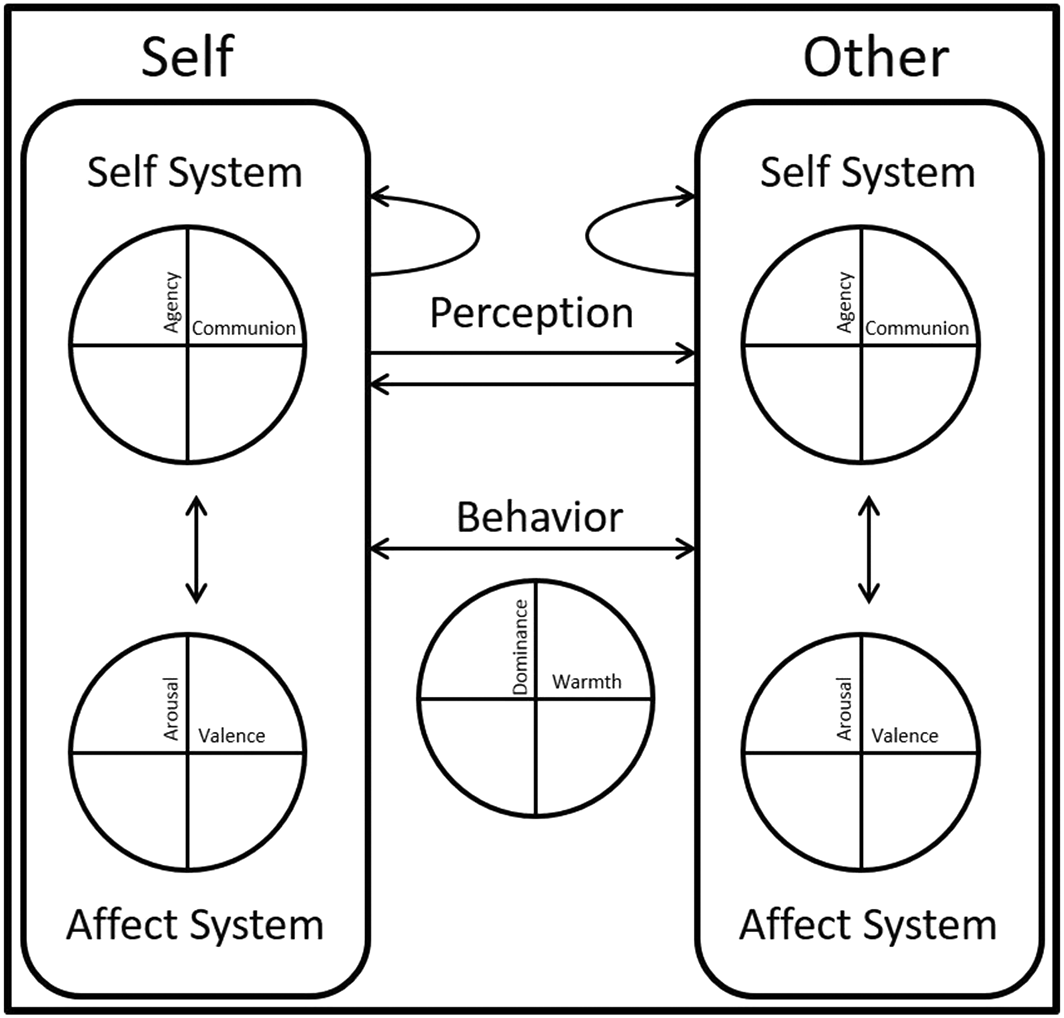
The interpersonal situation.
The first has to do with how personality is understood. Most personality psychologists assume either that personality is something that exists within individuals or that personality is something exists between individuals, and other theoretical details proceed from that initial assumption (Greenberg & Mitchell, 1983; Rychlak, 1968; Wiggins & Trapnell, 1996). Personality and academic clinical psychology has leaned heavily in recent times on the internal, individualist perspective. The DSM conceptualizes mental disorders as an inner pattern of thoughts, feeling, and behaviour that cause distress and/or dysfunction (APA, 1980). Personality psychologists similarly tend to understand traits as inner patterns of thought, feeling, and behaviour that are determined by some combination of genetic and environmental factors. However, one can think of individual difference variables from an interactionist perspective (Ansell & Pincus, 2004; Wiggins & Trapnell, 1996). Indeed, the origins of modern trait psychology lie in the lexical hypothesis, which assumes that the reason we have trait descriptive terms in the first place is to describe others (Goldberg, 1993). Some contemporary models (e.g. Back et al., 2011; Fleeson, 2001) combine individual (e.g. trait) and interactionist (e.g. social cognitive) points of view in a way that is relatively balanced. Even in behaviour genetics, a seemingly natural fit for the individualist perspective, gene–environment correlation, gene–environment interaction, and epigenetic processes that elevate the importance of social environments are increasingly emphasized (Bleidorn, Kandler, & Caspi, 2014; Johnson, 2007; Kandler, 2012). A basic assumption of interpersonal theory is that personality is understood as a recurring pattern of dynamic processes that occur between a self and an other (Sullivan, 1953). Critically, the other can be either a proximal individual with whom the self is interacting or an internal representation (e.g. a memory of someone else, a different aspect of the self) (Pincus, 2005; see also Back et al., 2011; Wessels et al., 2016).
The second point has to do with the structure of variables within the interpersonal situation. It is common for models of personality processes to attempt to organize personality variability along the Big Five dimensions (DeYoung, 2015; Fleeson & Jayawickreme, 2015; McCrae & Costa Jr, 2008). However, there has also been a longstanding interest in demarcating different aspects of personality to provide a more comprehensive portrait of people (in addition to those discussed in the preceding section, see also Adler, Wagner, & McAdams, 2007; Bornstein, 2011; Dawood & Pincus, 2016; Dunlop, 2015; Greenwald & Farnham, 2000; Hopwood et al., 2016; Leary, 1957; McAdams & Pals, 2006; Vazire, 2010). I am sceptical that any single model of the different levels of personality will serve all purposes (Rychlak, 1968; Waugh et al., 2017; Wiggins, 2003). Contemporary integrative interpersonal theory was developed to synthesize the structure and dynamics of personality, psychopathology, and psychotherapy (Pincus, 2005; Pincus, Lukowitsky, Wright, & Eichler, 2009) and it is therefore pitched at a useful level for conceptualizing dynamic aspects of personality and PD.
By focusing on the functional importance of certain dimensions for interpersonal relations (Leary, 1957), the interpersonal situation model seeks the middle ground between a completely deductive, theory–based organization of traits and one that is bound by a model developed solely through covariance analyses of cross–sectional attributes. The goal is not a comprehensive taxonomy of individual differences, but rather a focused narrowing to the variables that are most relevant for conceptualizing interpersonal dynamics. This feature augments contemporary models of personality dynamics (e.g. Back et al., 2011; DeYoung, 2015; Fleeson, 2001; Shoda & Mischel, 2000; Wessels et al., 2016; Wrzus & Roberts, 2017) by focusing on a specific selection of key variables and a circumscribed model for how they combine in certain sequences. In the interpersonal situation, these variables are organized around four systems of interpersonal behaviour (Pincus et al., 2010; Pincus & Hopwood, 2012).
Personality systems
Interpersonal theory proposes four personality systems that meaningfully interact in interpersonal situations: the self, affect, behaviour, and perception systems. The self system captures variation in what a person wants (i.e. motives, goals) in an interpersonal situation. This system is structured by agency and communion dimensions (Abele & Wojciszke, 2007; Bakan, 1966; Gebauer, Paulhus, & Neberich, 2013; Gebauer, Wagner, Sedikides, & Neberich, 2013; Locke, 2000; Trapnell & Paulhus, 2012; Wiggins, 1991). Its circularity signifies that any blend of these two motivational dimensions is possible. As in other motivational models (e.g. DeYoung, 2015), the interpersonal situation distinguishes self and behaviour systems because it assumes that a person's behaviour does not necessarily tell you which motivation is prominent (Horowitz, Wilson, Turan, Zolotsev, & Constantino, 2006; Winter, John, Stewart, Klohnen, & Duncan, 1998). For example, it is not clear if Jeff wants to date Adele because doing so will increase his social status (agentic motive) or because he wants to feel close to her (communal motive) (Horowitz, 2004). Self dysregulation refers to chronic motivational conflicts, rigidity, or instability in self–concept that is associated with distress and/or dysfunction (Baumann, Kaschel, & Kuhl, 2005; Horowitz et al., 2006; McLelland, Koestner, & Weinberger, 1989; Perry, 1994; Schroder–Abe, Rudolph, & Schutz, 2007; Zeigler–Hill, 2005; Zeigler–Hill, Chadha, & Osterman, 2008). The passive–aggressive person's internal ambivalence with regard to agency, as reflected in his desire for power coupled with the belief that he does not have power, is an example of self dysregulation.
The affect system captures variation in how a person feels. It is structured by arousal and valence, an evidence–based two–dimensional model of emotional experiences (Posner, Russell, & Peterson, 2005) that is closely linked to the Big Five traits extraversion (arousal) and neuroticism (valence) (Watson & Clark, 1992; Yik & Russell, 2001). Arousal depicts the amount of affective ‘juice’ within the personality system at a given moment and valence depicts the ‘flavour’ of that juice. For example, sadness is a relatively low arousal and negatively valenced emotion, whereas anger is a high arousal and negatively valenced emotion (Feldman, 1995). Affect dysregulation is signified by a chronic pattern of intense, rigid, or unstable affect states that is associated with distress and/or dysfunction (Armey, Crowther, & Miller, 2011; Ebner–Priemer et al., 2007; Geukes, Nestler, Hutteman, Küfner, & Back, 2017; Nock, Prinstein, & Sterba, 2009; Sadikaj et al., 2010; Trull et al., 2008; Wonderlich et al., 2007; Wright, Hallquist, et al., 2016; Wright, Hopwood, & Simms, 2015). Affective dysregulation encompasses emotions that are highly sensitive to threatened agentic motives in the case of narcissism or emotions that are highly sensitive to threatened communal motives in the case of borderline personality. The double headed arrow between the self and affect systems in Figure 1 signifies that people's feelings are impacted by goal achievement and conversely that emotional disturbances prompt motivation (Leary & Baumeister, 2000; Sullivan, 1953).
The interpersonal behaviour field between self and other depicts the actual behaviour that occurs between self and other during an interaction. It is structured by the two interpersonal circumplex dimensions of dominance and warmth (Kiesler, 1996; Leary, 1957). In the language of the Big Five, dominance is similar to extraversion shaded in the direction of warmth, whereas agreeableness is similar to warmth shaded in the direction of low dominance (DeYoung, Weisberg, Quilty, & Peterson, 2013; Fournier et al., 2008; McCrae Jr, 1989). Interpersonal behaviour dysregulation involves a chronic pattern of rigid, unstable, or non–complementary interpersonal interactions that is associated with distress and/or dysfunction (Erickson & Newman, 2007; Erickson, Newman, Peterson, & Scarsella, 2015; Erickson, Newman, & Pincus, 2009; Roche, Pincus, Conroy, et al., 2013; Smith & Ruiz, 2007; Wright, Hopwood, & Simms, 2015). Behaviour dysregulation might include extreme and rigid behaviours, as exemplified by the psychopathic person who chronically takes advantage of others even when it provides her with little personal benefit, or extreme instability such as the vacillation between warmth and coldness characteristic of borderline personality.
As in most dynamic models in basic personality psychology, the interpretation of interpersonal events plays a critical role in interpersonal theory (Benjamin, 1974; Pincus et al., in press; Sullivan, 1953). It is assumed that it is important to perceive the other (i.e. person perception, as indicated by the single–headed arrows between self and other and vice versa) and oneself (i.e. self–insight, as indicated by the curved arrows) relatively accurately (or perhaps in a way that is unrealistically positive) to achieve goals, feel good, and behave adaptively in interpersonal situations. In contrast, pathological interactions are characterized by misperception in the form of either misunderstanding between self and other or a lack of insight on the part of self, other, or both. Perceptual distortion involves differences in the perception of self and other or between self and some relatively more objective indicator of reality in interpersonal situations that is associated with distress and/or dysfunction (Carlson, Vazire, & Oltmanns, 2011; Mihura, Meyer, Dumitrascu, & Bombel, 2013; Roche, Pincus, Hyde, Conroy, & Ram, 2013; Srivastava, Guglielmo, & Beer, 2010; Vazire, 2010). The borderline individual who tends to perceive attachment situations through the lens of potential abandonment, and thus becomes angry at appropriate gestures of autonomy taking from the other, exemplifies distorted perception.
Critically, each of the dimensions in these systems can be empirically and conceptually linked to Big Five traits (Watson & Clark, 1992; DeYoung et al., 2013; Digman, 1997; Fournier et al., 2008; Hopwood et al., 2015; McCrae Jr, 1989; Saragovi, Aube, Koestner, & Zuroff, 2002; Wiggins & Trapnell, 1996; Yik & Russell, 2001). By drawing upon individual differences research on the cross–sectional structure of personality traits (DeYoung, 2015; Goldberg, 1990; Jonas & Markon, 2016; Markon et al., 2005; McCrae & Costa Jr, 1997), interpersonal theory differs from personality models that are agnostic (e.g. Shoda & Mischel, 2000) or inductive (Cramer et al., 2012; Schmittmann et al., 2013; Wood et al., 2015) about which individual difference dimensions constitute the terrain of personality. The synthesis of dynamic concepts with an evidence–based model of individual differences permits a level of integration with other major streams in personality psychology not possible by more inductive approaches. At the same time, no assumptions are made regarding the commensurability of traits and associated dysfunctions, as in some contemporary trait models of PD. Instead, this is treated as an empirical question (Baumert et al., 2017).
Summary
The interpersonal situation provides a general model for capturing any motive, affect, or behaviour that might occur between two real or imagined people in an interaction. Of course, some questions might require more specificity than is possible in this model (e.g. distinguishing closely related emotions), but this does not change the essential configuration. In essence, the interpersonal situation model assumes that four critical questions need to be answered in order to understand a certain interpersonal situation: what does each person want? (self system), how does each person feel? (affect system), what is each person doing? (behaviour system), and how does each person see herself and the other? (perception system). Maladaptive personality, at the most global level, is thought to involve some combination of self dysregulation, affect dysregulation, behaviour dysregulation, and perceptual distortion (Pincus & Hopwood, 2012).
It is assumed that each of these variables could, in principle, be assessed at different levels of time, insofar as affects, behaviours, and goals can be conceptualized as relatively stable dispositions, as summaries of behaviour during a situation, or in terms of momentary changes within situations. It is further assumed that the interpersonal situation dimensions do not map 1:1 onto specific measureable constructs. Instead, they are meta–dimensions that can flexibly organize conceptualizations and measurement tools with different foci. As such, the model in Figure 1 is not intended as a specific measurement model, but rather as a heuristic scheme that can be used as a basis for articulating specific interpersonal dynamics, as I do presently with respect to PDs.
Personality Disorders as Maladaptive Interpersonal Signatures
Interpersonal theorists do not generally conceptualize personality as a list of attributes, but rather as a predictable, coordinated, and sequential within–situation pattern of thoughts, feelings, motives, and behaviours across time (Sullivan, 1953). This comports well with the broader clinical literature in which PDs are described in terms of predictable patterns of maladaptive behaviour. Based on this formulation, interpersonal signatures can be generated to describe prototypical PDs (Benjamin, 1996) as well as idiographic patterns that might characterize a particular individual whose behaviour is not neatly described by an existing PD category (Hopwood, Donnellan, et al., 2013; Hopwood, Wright, et al., 2013; Pincus & Hopwood, 2012). Here, I will first describe a general recursive pattern for personality pathology, and then formulate how this pattern might prototypically manifest in borderline, narcissistic, passive–aggressive, and psychopathic PDs.
A general interpersonal sequence in personality pathology
From an interpersonal perspective, perceptual distortion is a core feature of personality pathology and a precipitating event for maladaptive interpersonal sequences. These perceptual distortions are thought to trace back to a mismatch between the representation of a situation in an individual's mind that reflects some learned experience and the actual contours of the situation (see Sullivan's, 1953, concept of ‘parataxic distortion’, Benjamin's, 1996 concept of ‘copy process’, or transference concepts in object relations theories [Greenberg & Mitchell, 1983; Kernberg, 1984]). That is, individuals learn to expect people to treat them a certain way, and they perceive that treatment even when it does not occur. For example, a person might expect to be humiliated or embarrassed by others and have this experience even when the other did not intend it.
Distortion gives rise to various forms of affect dysregulation. This internal experience does not fit the contours of the situation because it is based on an internal representation rather than external reality. Affect dysregulation promotes a motivation to protect the self in some way, which leads to behaviour that is extreme and dysregulated, and again does not match the actuality of the situational context. The mismatch between the situation and the person's behaviour typically creates an unpleasant affect in the other. This unpleasant affect would tend to arouse some self–protective motive, leading to a behaviour on the part of the other that reinforces the original distortion (e.g. via projective identification).
This sequence can be understood as a specific progression across the domains of the interpersonal situation model (Figure 1). A parataxic distortion (perception system) of other leads to a dysregulated affect (affect system), enhancing self–protective motives (self system) that precede behavioural processes (behaviour system) that do not match the situation and therefore cause the other to experience a negative affect (other affect system), triggering a self–protective motive (other self system) and corresponding behaviour (behaviour system). Because this kind of process confirms the original distortion, it becomes self–reinforcing and stable when it is repeated across multiple interactions despite being maladaptive.
Although I focus on maladaptive processes in this paper, the model generalizes to other personality processes insofar as adaptive sequences could also be specified within the interpersonal situation. Indeed, contrasting maladaptive with more adaptive sequences is often a critical function of a clinical formulation. For instance, a woman may accurately perceive that an attractive potential mate is interested in her (perception system), which leads to excitement (affect system), enhancing communal motives (self system), which precede behaviours designed to get closer to the other person (behaviour system). If her perception was accurate, the potential mate would also experience excitement (other affect system), triggering a communal motive in him (other self system) and corresponding warm behaviour (other behaviour system). Both people would have had a pleasant interaction in which their motives were mutually satisfied, perceptions were basically accurate, and the behavioural outcome was likely to be favourable.
It is also important to be clear that each of the systems in the interpersonal situation operates continuously and in parallel, so in reality, the process is less sequential than is suggested here. Nevertheless, there is considerable heuristic value in isolating this kind of sequence or interpersonal signature. In what follows, I illustrate prototypical signatures for each of the PDs I used as examples earlier.
Borderline personality
The central clinical feature of borderline personality (Benjamin, 1996; Fonagy, Luyten, & Allison, 2015; Kernberg, 1984; Masterson, 1976; Zanarini & Frankenburg, 1994) is ‘stable instability’ (Schmideberg, 1959) in affect, identity, and behaviour. This instability is thought to be undergirded by ‘splitting’, or the pervasive view of self and others as ‘all good or all bad’ within and across situations, accompanied by a failure to ‘integrate the positive and negative qualities of the self and others into cohesive images’ (Vaillant, 1992, p. 254; see also Kernberg, 1975). These two parallel senses of self are thought to reflect internal working models from different kinds of relationships from childhood that were not integrated with one another during development. One representation might be something like ‘my mother loves me because I have value’ and another might be something like ‘my mother hates me because I am worthless’. During the process of healthy maturation, these different representations would be metabolized into something like ‘my mother loves me, even though she gets angry with me sometimes; I have both positive and negative aspects but in general I am ok’. Splitting signifies the failure to synthesize good and bad internal representations of self and other. Instead, these two different patterns manifest at different times within and across interpersonal situations.
During ‘all bad’ moments, there is an abiding concern about being abandoned by close attachment figures, and this initial perception of being abandoned, whether real or imagined, ‘sets off the program’ of borderline dynamics (Benjamin, 1996). The experience of abandonment leads to intense attachment anxiety and a conflict between wanting to be cared for and wanting to protect the self. This anxiety gives way to agitation and anger that is expressed as extreme, aggressive behaviour either to self (e.g. cutting) or others (e.g. threats). The intensity of the behaviour does not match the interpersonal situation, which is confusing to the other person. The other person becomes cautious, motivated to protect himself from a close attachment to a person capable of such extreme and inappropriate aggression. His withdrawal confirms her belief that she will ultimately be abandoned and reinforces the dynamic (Kernberg, 1984; Vaillant, 1992). A person whose interpersonal situations were characterized by this dynamic would be accurately described, from a broader vantage point, as neurotic and unstable a la trait and DSM descriptions of borderline PD. But these descriptions would not capture the essence of the construct or explain why the behaviour persists.
An interpersonal signature of borderline personality is summarized in Figure 2. The borderline person experiences a close attachment figure abandoning her by being cold despite her own warm invitations for closeness (perceptual distortion). This experience gives rise to intense anxiety (affect dysregulation), leading to a desire to be both close (the original motive) and distant (a self–protective motive) to the other (self dysregulation). Her affective agitation and motivational conflict is resolved through aggressive behaviour (behaviour dysregulation), which is confusing and upsetting (other affect) to the other. He responds with cautious trepidation (other motivation) and withdrawal (other behaviour). Notice that in the last stage of this sequence, the distorted experience of self and other from the beginning of the sequence becomes the actual behaviour between the two parties. This borderline person has created the interpersonal situation she fears, which reinforces the expectation that this interpersonal situation will recur and solidifies her abandonment concerns.
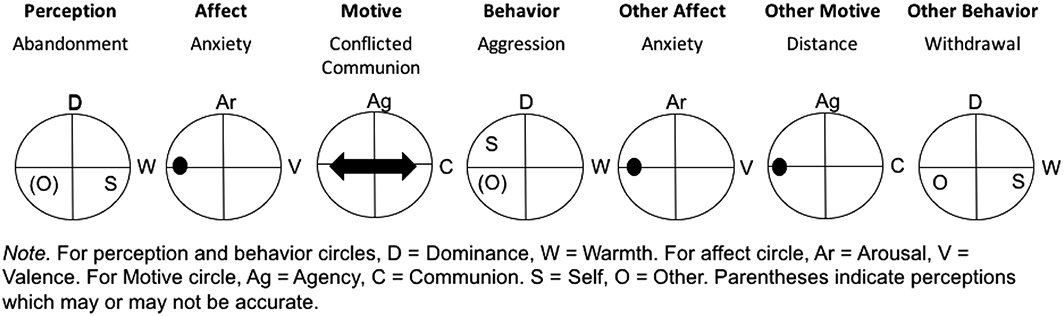
A prototypical interpersonal signature of borderline personality.
This kind of within–situation pattern would tend to give rise to instability across situations and an enduring pattern involving heightened negative affect, impulsivity, and disagreeableness. When the other satisfies the borderline person's need for affirmation, her anxiety would quell, she would feel loved, and the pattern would resolve in mutual closeness and regulated affect. Both parties would reside on the good side of the ‘split’. In contrast, perceived abandonment would set off the program depicted in Figure 2, which resolves in extreme dysregulation in all aspects of the interpersonal situation. From a distance, a person whose interpersonal situations can take such radically different courses would be well described as reliably unstable (Schmideberg, 1959).
Narcissistic personality
Clinical authors generally infer that the grandiose behaviour characteristic of narcissism serves the purpose of regulating self–esteem (Cain et al., 2008; Freud, 1914; Horney, 1939; Masterson, 1976; McWilliams, 1994; Reich, 1960; Ronningstam, 2005; Wright & Edershile, 2017; see also Rhodewalt & Morf, 1998 for a similar perspective from social psychology). McWilliams (1994, p. 168) states this plainly: ‘People whose personalities are organized around maintaining their self–esteem by getting affirmation from outside themselves are called narcissistic’. The preponderance of grandiose versus vulnerable expression may vary across individuals (Pincus, Cain, & Wright, 2014), but the core dynamic linking these two states is the central feature. This is not to say that there may be people who are jerks for other reasons; but from a clinical perspective, it is only narcissism if you are a jerk because you are trying to manage difficult and overwhelming feelings of vulnerability.
Clinical accounts of narcissistic dynamics (Benjamin, 1996; Cain et al., 2008; Kernberg, 2014; Kohut, 1971, 1972, 1977; Ronningstam, 2014) focus on the fragile belief that one is superior to others, which is necessary for self–esteem regulation. Others’ competence or success or one's own foibles or embarrassments threaten this sense of superiority. Perceptions of personal inferiority precipitate envy and self–dysregulation. Envious feelings promote obnoxious, grandiose behaviour. This can be annoying to others, who typically do not want to have shade cast over their parade when they succeed, nor do they want to be responsible for propping up a fragile ego (John & Robins, 1994; Judge, LePine, & Rich, 2006; Ronningstam, 2005). Others may respond by challenging the narcissistic person, which could contribute either to further obnoxious behavior or an interpersonal loss and feelings of deflation and worthlessness that can perhaps only be quelled via internal fantasy. In either case, the narcissistic dynamic is reinforced, because the narcissist either learns that overtly grandiose behaviour or turning inward to an unrealistic sense of self is effective for regulating self–esteem. The process recurs because the narcissistic person does not integrate a more realistic sense of self based on external feedback in interpersonal situations. Again, this person could be accurately described as antagonistic or grandiose in general, but such descriptions would be too abstract to capture the essence of narcissism from a clinical perspective.
This signature is displayed in Figure 3. The sequence begins when the narcissistic person perceives a status threat in the form of some other person vying for a more dominant and less admiring (cold–dominant) position (perceptual distortion). He becomes envious and anxious (affect dysregulation). This arouses a motive to assert himself that does not fit the situation well (self dysregulation), leading to displays of grandiosity coupled with the fantasy that the other will submit and admire (behaviour dysregulation). The other may become annoyed (other affect) and competitive (other motivation). Her cold–dominant behaviour (other behaviour) would recreate the narcissistic person's initial perception and reinforce his concerns about status threat. This recursive within–situation sequence would lead to chronic misperceptions between situations and an enduring tendency to be antagonistic, as the narcissistic individual has been described in the trait literature (Miller et al., 2014; Miller, Lynam, & Campbell, 2016).
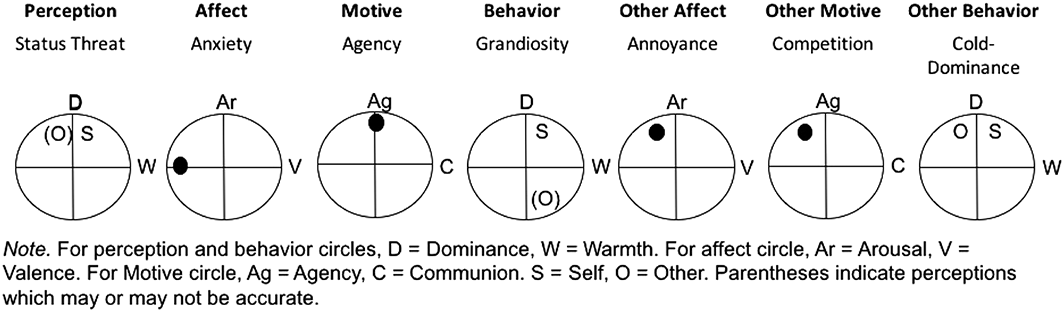
A prototypical interpersonal signature of narcissistic personality.
Passive–aggressive personality
The passive–aggressive person as described in the clinical literature is chronically concerned about being subjugated by others (Beck, Davis, & Freeman, 2015; Benjamin, 1996; Millon, 1981, 1993; Perry & Flannery, 1982; Stone, 1993). He interprets ambiguous cues, particularly in relation to people in positions of power or authority, as exploitative. This perception gives way to anger, but unlike in narcissism, the passive–aggressive person is hyper–focused on his inability to match the power of the other on a level playing field. A motivational conflict between feeling subservient and desiring power ensues, leading to an immature compromise in which he is submissive in the sense that he does not directly challenge authority, but dominant in the sense that he also does not comply with the authority figure's expectations. This behaviour serves to support the belief in exploitation that ‘you are a bad person; you don't like me; on the contrary, you treat me horribly; I am right in hating you’ (Reich, 1949, p. 242–243). This is generally irritating to the other person, who may become angry and double down on her initial demand via dominant behaviour. This irritation can even be experienced by researchers such as Small, Small, Alig, and Moore (1970, p. 979) who concluded a 15–year study of passive–aggressive patients with the observation that ‘all of the investigators were impressed with … the subjects’ ability to manipulate and misconstrue interpersonal situations’. This annoyed response by others reinforces the passive–aggressive person's belief that the other will forego empathy in order to control and humiliate him.
Benjamin (1996, p. 280–282) presented the case of a man diagnosed with passive–aggressive PD whose presenting problem has to do with obsessive neatness and cleanliness. He described himself as an ‘easy’ person who ‘never said no’ and ‘always tried to go along’. However, he also described profound difficulties managing resentful feelings towards his wife and mother, whose judgmental, nagging behaviour made him feel stupid and incompetent. They took personal pride in his appearance and pressured him to look his best, and Benjamin interpreted his compulsive grooming as representing ‘compliance with the wishes of his wife and mother that his appearance be perfect’. However, he eventually self–mutilated by scrubbing himself intensely, creatively undermining their demands and providing us with an evocative example of passive–aggressive personality, in which his conflicted motives led to behaviour that undermined others’ wishes. He could be simply described as neurotic and submissive, but this general description would certainly miss important elements of his presentation.
Figure 4 summarizes this signature in the interpersonal situation model. The passive–aggressive person is concerned about subjugation, which would be represented by being in a powerless (submissive) position relative to an exploitative (dominant) other. Having perceived this interpersonal arrangement (perceptual distortion), he becomes angry but feels unable to express this anger (affect dysregulation). The resulting conflict between desiring power but feeling powerless (self dysregulation) precipitates a compromise in the form of non–compliance (behaviour dysregulation). This will tend to anger others (other affect), giving rise to a desire to assert their status (other motivation), which can be accomplished through interpersonal dominance (other behaviour). This dominant behaviour puts the passive–aggressive person in a submissive position, reinforcing his concerns about being subjugated. Across situations, this person would show relatively stable passivity and negative affect that would justify the global trait description of passive–aggressive personality as involving moody disagreeableness (Hopwood, Morey, et al., 2009).
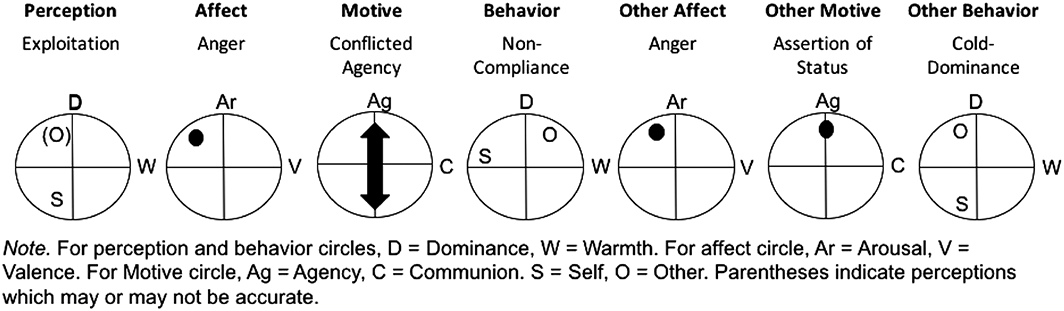
A prototypical interpersonal signature of passive–aggressive personality.
Psychopathy
Cleckley (1941, p. 339) emphasized that the person with psychopathy ‘will seem particularly agreeable’ and ‘well–adjusted’, but that these overt behaviours ‘mask’ underlying motives to deceive and manipulate. The ‘psychopath’ in this formulation is not simply antagonistic. She concatenates antagonistic motives with agreeable behaviours to achieve self–serving outcomes. Cleckley (1941, p. 198–199) also distinguished ‘successful psychopaths’ from ‘the psychopaths who continually go to jails or to psychiatric hospitals’ in terms of the former group's ability to ‘keep up a far better and more consistent outward appearance of being normal’. For Cleckley, variation between a person's internal goals and external behaviour was a core diagnostic marker of psychopathic personality.
The clinical literature emphasizes that people with psychopathic personalities assume that the world is dog–eat–dog, and every relationship is an opportunity for one person to manipulate the other (Beck et al., 2015; Benjamin, 1996; Blatt, 2008; Cleckley, 1941; Kernberg, 1992; Shapiro, 1965). Clinical accounts stress that psychopathic people
Act to counter the experience of pain at the hands of others: this is done by actively engaging in duplicitous or illegal behaviors in which they seek to exploit others for self–gain. (Millon, 1990, p. 122)
‘The need to exert power takes precedence over all other aims … and there is nothing unconscious about this process; it is literally shameless’ (McWilliams, 1994, p. 153). Relationships are a sort of game, and the psychopath's advantage derives from her ability to remain calm (Hare, 1970; Lykken, 1957), with power motives unmitigated by communion (Wilson, Stroud, & Durbin, 2017). As described by Horney (1945, p. 206–207), ‘sadistic dealings with others provide him with a feeling of strength and pride’. Relationship loss is not much of a loss but losing the power game would be a personal failure, and attention is disproportionally allocated to avoiding that outcome. Cheating generally makes winning more likely, and psychopathic people are unusually willing to break the rules of social convention in order to satisfy interpersonal agendas. This is unsettling and even scary to other people, who may be initially charmed but ultimately become shocked at the psychopathic person's willingness to lie, steal, or otherwise violate social norms without regard for others’ well–being. The other feels one step behind in a game. Competition is futile because the psychopathic counterpart has mastered the rules (Meloy, 1988), and all that is left is to fear the consequences of losing. The safest manoeuvre is to let the psychopathic person win the battle in order to avoid a war. Every battle won provides the psychopathic individual with evidence that her strategy works and her beliefs about relationships are accurate.
This signature is summarized in Figure 5, in which the psychopathic person is both vigilant to the possibility of being conned and always on the lookout for opportunities to manipulate others (perceptual distortion). He or she approaches such opportunities with a level of calm poise (affect dysregulation), self–interest (self dysregulation), and deceit (behaviour dysregulation) that are often unnecessary for the situation. This leads to dysfunction and distress, albeit often for others. Others characteristically react with fear (other affect), self–protective wariness (other motivation), and meek withdrawal (other behaviour). This reaction proves to the psychopathic person that he or she has ‘won’, which reinforces the belief in the instrumental utility of disregarding others. Across situations, this pattern would be well depicted by a relatively stable pattern of disinhibited mal–intent (Miller et al., 2001; Neumann et al., 2015).
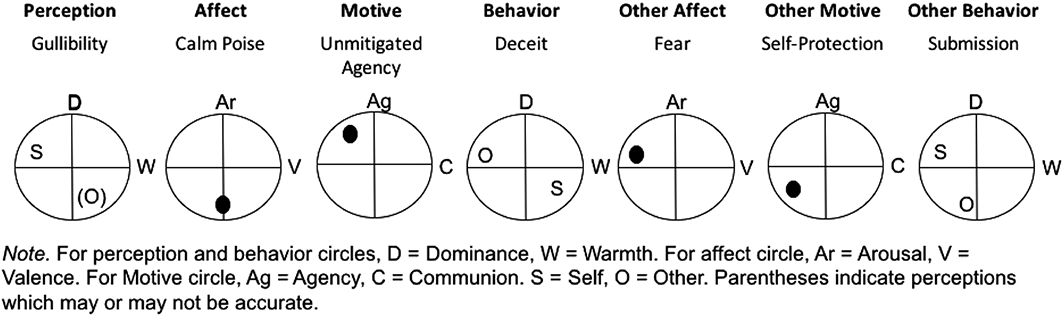
A prototypical interpersonal signature of psychopathic personality.
Implications
The preceding interpersonal reformulation of personality dynamics proceeds naturally from recently proposed models in basic personality psychology (e.g. Back et al., 2011; Baumert et al., 2017; DeYoung, 2015; Fleeson, 2001; Roberts, 2018; Wessels et al., 2016; Wrzus & Roberts, 2017). It shares a general focus on a briefer time scale than has traditionally been emphasized by personality psychologists and attends specifically to variability in within–situation processes that could contribute to stability between situations and, ultimately, relatively dispositional patterns (Baumert et al., 2017; Wrzus & Roberts, 2017). It formally incorporates the notion that behaviour in interpersonal situations is goal directed (DeYoung, 2015; Horowitz et al., 2006), balances trait and social perspectives on behaviour (Back et al., 2011; Fleeson, 2001), and distinguishes between actual and perceived behaviour (Back et al., 2011; DeYoung, 2015; Wessels et al., 2016; Wrzus & Roberts, 2017). Standing as it does upon these foundations as well as the evidence–based framework provided by interpersonal theory (Leary, 1957; Pincus, Lukowitsky, et al., 2009) and an evocative albeit scattered clinical literature, the perspective offered in this paper has the potential to significantly advance the empirical study of dynamic processes in three ways.
The first implication is that personality psychologists interested in maladaptive expressions of personality should incorporate dynamic ideas stemming from the clinical/interpersonal literature instead of leaning heavily on the results of cross–sectional self–report data or ad hoc process analyses without a clear theoretical foundation. Practicing clinicians justifiably tend to ignore the descriptive DSM model in favour of more explanatory models (e.g. Bateman & Fonagy, 2005; Beck et al., 2015; Benjamin, 1996; Kernberg, Yeomans, Clarkin, & Levy, 2008; Linehan, 1993) deemed useful for guiding formulation and treatment (Hayes, Nelson, & Jarrett, 1987; McLemore & Benjamin, 1979). To the degree that trait models remain abstract and free from context, it seems safe to anticipate clinicians ignoring them as well. At the same time, the explanatory models clinicians turn to are not well integrated with one another or with basic personality science. By augmenting evidence–based frameworks of personality and psychopathology structure with hypotheses about the nature of dynamic personality processes, the interpersonal model can both facilitate research on PDs and help link personality science with clinical practice (Hopwood, Wright, et al., 2013). The reformulation offered in this paper provides a potential pathway out of tiresome debates about which traits should be used to define different PDs, and toward more dynamic and clinically useful models of personality pathology.
Second, theoretical work in basic personality psychology focused on the dynamics underlying personality structure, development, and consequences could be substantially more specific and comprehensive if they were contextualized in clinical theories of personality process. Although successive proposals about personality process in the basic science literature have been narrowing the focus towards proximal processes, they have remained relatively abstract. Figures with general domains such as ‘perception’ and ‘response’ have been drawn, but the variables within those domains have not been articulated. Concrete and plausible examples of prototypical or important idiographic processes are rarely specified. In this paper, I have demonstrated how interpersonal theory can be used to make relatively specific and testable hypotheses about how four prototypical interpersonal patterns described in the clinical literature could reinforce stable patterns of maladaptive behaviour.
Third, conceptual and empirical work on the deconstruction and process analyses of specific classic personality trait domains might profit from basing analyses on more specific and clinically informed theoretical models such as those provided herein. The interpersonal situation can be used to inform the assessment and analysis of personality data to test hypotheses about dynamic personality processes. However, substantial progress in both measurement and analysis would be necessary for this promise to be fulfilled. Assessment methods would need to be developed that can both distinguish between the different variables in the interpersonal situation and which sample goals, feelings, and behaviours at the timescale implied by the formulations in this paper (Wright & Hopwood, 2016; Wright & Zimmermann, in press; Wrzus & Mehl, 2015). This is an enormous challenge. Even if the right aspects of personality were sampled at the right timescale, major difficulties would remain for analysing data in a way that could account for dynamic processes. In addition to models that deal with multivariate cross–sectional data (e.g. factor analysis, ANOVA, regression) and the modelling of relatively infrequent assessments (e.g. cross–lagged panel models, growth curve models, latent change models), temporally sensitive longitudinal research will also require the employment of statistical techniques that can deal with different levels of analysis (Kenny, 1994; Nestler, Grimm, & Schönbrodt, 2015; Raudenbush & Bryk, 2002), distinguish between–person and within–person processes (Hamaker, Kuiper, & Grasman, 2015), account for the dynamics of a variable whose level is changing over time (Brandt & Williams, 2007), model patterns among sets of variables (Borsboom & Cramer, 2013; Read, Droutman, Smith, & Miller, 2017; Read & Miller, 2002), integrate and distinguish states and traits (e.g. Hamaker, Nesselroade, & Molenaar, 2007), identify idiographic patterns that may not generalize to the sample as a whole (Belz, Wright, Sprague, & Molenaar, 2016; Borkenau & Ostendorf, 1998; Molenaar, 2004), distinguish correlates at different timescales (Ferrer & Helm, 2013), be sensitive to variability in associations across time (Dermody, Thomas, Hopwood, Durbin, & Wright, 2017), and test specific sequences (Guastelo & Gregson, 2011; Hollenstein, 2007; Knobloch–Fedders et al., 2014), among other issues. Moreover, the models depicted in Figures 2–5 are probabilistic and the dynamic sequences, while presented in a serial order for interpretive ease, are likely to be better characterized as parallel and co–occurring variation across multiple dimensions (see DeYoung, 2015). Overall, while the interpersonal situation provides a coherent scheme for organizing assessment and analysis methods, much work is left to be performed to enable empirical research on dynamic personality processes that could critically test how recursive interpersonal processes influence personality stability and change.
Summary
Clinicians and theorists who promote and defend PD categories tend to describe individual PD patients in terms of a sequence of behaviours in particular kinds of interpersonal situations, but typically turn to checklists of behaviours that can be better formulated using trait models for the assessment of PDs. In essence, clinically oriented personality psychologists who defend PD concepts have not been studying the constructs they are interested in because their measurement tools do not match the sophistication of their concepts. But it does not necessarily follow that PD concepts should be abandoned. To adequately test clinical theories of PD, the concepts need to be reconceptualized and assessed as dynamic process (Benjamin, 1996; Cain & Pincus, 2016; Pincus & Hopwood, 2012). Building on recent developments in basic personality science, in this paper, I reconceptualized PDs as recursive interpersonal signatures that reinforce maladaptive behaviour via patterned interactions involving motives, affects, behaviours, and perceptions. In this section, I specified a sequence for such patterns: distorted perceptions with roots in maladaptive internal working models arouse troubling affects and stimulate motives that lead to behaviours that do not fit interpersonal situations in some way. Others respond with affects, motives, and behaviours that reinforce the distorted perception that originated the process. Using the clinical literature as a guide, I applied this sequence to four PD prototypes, leading to testable hypotheses about four specific patterns of maladaptive behaviour. These examples provide a model that could be generalized to other maladaptive and adaptive within–situation patterns relevant for understanding personality structure, development, and consequences.
Conclusion
A lay person might expect a personality psychologist to be able to answer a question like ‘why is this person doing that right now, and how should I respond?’ Evidence–based answers to this kind of question are mostly absent because dynamics are extraordinarily difficult to study and because personality scientists have been primarily focused over the last century on establishing the structure, course, and correlates of broad and relatively stable traits. Traits are abstract concepts, averaged across situations. They are poorly suited to answer specific questions about particular moments. In contrast, the question of perhaps greatest concern at any given moment to the psychotherapist is ‘why is this person doing that right now, and how should I respond?’ However, the clinical literature on personality dynamics developed without the benefit of the sophisticated measurement and data analytic approaches available to contemporary personality researchers. It is heterogeneous and chaotic.
In this paper, I have suggested that one way forward would be to join the current interest in dynamic processes in basic personality psychology with clinical theories of PD, using a synthetic model of interpersonal dynamics as the glue. I have proposed that the interpersonal situation, a framework with roots in trait (Wiggins, 1979), social (Wiggins, 1980), and clinical psychology (Wiggins, 1982), provides an integrative and generative heuristic model within which to frame specific hypotheses about within–situation variation in personality. Using this framework as a guide, I conceptualized PDs as recursive interpersonal signatures that reinforce maladaptive behaviour via patterned interactions involving motives, affects, behaviours, and perceptions, and described borderline, narcissistic, passive–aggressive, and psychopathic PDs as four prototypical examples.
Although I have focused on connecting recurring patterns of social experience to longer term processes underlying personality development, this kind of model may provide useful insights for other contemporary issues in basic personality psychology as well. For instance, person perception researchers may find value in the interpersonal situation model's decomposition of the different aspects of personality that are being perceived in any given situation. Researchers interested in implicit processes might likewise use the interpersonal situation as a framework for distinguishing aspects of personality that people are more or less aware of in a given interaction. Behaviour genetic researchers may find some of the hypotheses about sequential interpersonal patterns useful for thinking about how individuals might evoke certain kinds of behaviours in their social environments. Cross–cultural researchers might be interested in how interpersonal patterns differ across certain groups.
At the broadest level, I hope to have made the point that basic and clinical personality researchers could benefit from talking to one another more often about personality processes (e.g. Roberts et al., 2017), and that interpersonal theory provides a potentially useful medium through which they could communicate (Pincus, Lukowitsky, et al., 2009).
Acknowledgements
I thank Mitja Back, Wiebke Bleidorn, Steve Huprich, Daniel Leising, Josh Miller, Aaron Pincus, and Aidan Wright for their comments on an earlier draft of this paper.