







Abstract
Research increasingly demonstrates the detrimental effects of psychologically controlling parenting on children's adjustment. An important and practically relevant question is whether some children are more vulnerable for the effects of psychologically controlling parenting. In the current diary study, we investigated whether daily psychologically controlling parenting relates to children's daily externalizing and internalizing problems and whether these associations depend on child personality. A total of 206 children (M age = 9.93 years; 46.6% female) along with their mothers and fathers (M age = 40.30 and 42.40 years) participated in this multi–informant diary study. All three family members filled out a diary each day for seven days. Multilevel analyses indicated that daily maternal and paternal psychological control were positively related to daily externalizing and internalizing problems, a pattern that was fairly consistent across informants. Out of the 35 interactions tested, only three turned out to be significant. Overall, the limited number of interactions suggests that psychologically controlling parenting is generally detrimental to children's daily functioning. Still, children differ somewhat in their susceptibility to the effect of psychologically controlling parenting. © 2018 European Association of Personality Psychology
Research has convincingly demonstrated associations between psychologically controlling parenting and children's and adolescents’ well–being and behavioural adjustment (Barber & Xia, 2013; Soenens & Vansteenkiste, 2010). An important and understudied question is whether these associations apply to all children, regardless of their personality characteristics. A few studies have begun to address the possible moderating role of children's personality in associations between parental psychological control and children's maladjustment, but little systematic evidence for such moderating effects has been garnered (e.g. Mabbe, Soenens, Vansteenkiste, & Van Leeuwen, 2016; Zarra–Nezhad, Aunola, Kiuru, Mullola, & Moazami–Goodarzi, 2015). The current study aims to add to the literature by examining for the first time the moderating role of child personality in associations between daily psychologically controlling parenting and children's daily adjustment. This is important because, congruent with the idea that parenting is highly variable and susceptible to change (Dix, 1991; Holden & Miller, 1999; Repetti, Reynolds, & Sears, 2015), recent studies (e.g. Aunola, Tolvanen, Viljaranta, & Nurmi, 2013) have demonstrated associations between day–to–day variation in psychologically controlling parenting and children's daily maladjustment. It is not known, however, whether children's personality attenuates or exacerbates the within–person covariation between daily psychologically controlling parenting and maladjustment. Such knowledge is important from a theoretical point of view because it yields insight into the generalization and breadth (versus limits) of effects of psychologically controlling parenting. From an applied perspective, it allows for the identification of children most at risk for the adverse consequences of psychologically controlling parenting and for a more tailored intervention approach to these at–risk children.
Psychologically controlling parenting
Barber (1996) defined psychological control as a set of parental practices that parents undertake to promote their own agenda, thereby largely ignoring the child's perspective. Guilt induction, love withdrawal, and shaming are key examples of tactics used by psychologically controlling parents to pressure the child to act, think, or feel in certain ways. Abundant research has shown that psychologically controlling parenting jeopardizes children's development (Barber & Harmon, 2002; Soenens & Vansteenkiste, 2010). Psychologically controlling parenting is associated with both internalizing problems such as depressive symptoms and anxiety (Barber & Xia, 2013; Loukas, 2009; Soenens & Vansteenkiste, 2010) and externalizing problems such as aggression and delinquency (Kuppens, Grietens, Onghena, & Michiels, 2009; Loukas, Paulos, & Robinson, 2005; Nelson, Hart, Yang, Olsen, & Jin, 2006). Such findings have been obtained not only in cross–sectional studies but also in longitudinal studies, suggesting that parental psychological control has negative implications in the long run, for example, psychological control related to diminished self–confidence over a three–year period (Conger, Conger, & Scaramella, 1997) and increased internalizing problems such as depressive symptoms (Soenens et al., 2008) and externalizing problems such as aggression (Blossom, Fite, Frazer, Cooley, & Evans, 2016; Nelson, Coyne, Swanson, Hart, & Olsen, 2014). Longitudinal research has also demonstrated that associations between psychologically controlling parenting and child maladjustment are bidirectional in nature, with children's internalizing or externalizing problems eliciting more psychologically controlling parenting (Janssens et al., 2017; Pinquart, 2017, 2017; Soenens et al., 2008).
Recently, diary studies also started to investigate associations between daily psychologically controlling parenting and daily adjustment (Aunola et al., 2013; Mushquash & Sherry, 2013; Van der Kaap–Deeder, Vansteenkiste, Soenens, & Mabbe, 2017). These studies demonstrated significant variability in psychologically controlling parenting from day to day, with about 50% of the variance in psychologically controlling parenting fluctuating across days. Further, daily variability in psychologically controlling parenting coincided with daily variation in child outcomes. For instance, Aunola et al. (2013) reported in a study involving mothers and fathers of 6– to 7– year–old children that daily psychological control was associated with children's daily negative emotions. Extending this work, Mushquash and Sherry (2013) showed that perceived daily maternal psychological control was related to undergraduate students’ daily binge eating symptoms. Most recently, mothers’ daily engagement in psychologically controlling parenting was found to relate to increases in elementary school children's daily maladjustment, even when controlling for the contribution of daily psychological control used by siblings and teachers (Van der Kaap–Deeder, Soenens, et al., n.d.; Van der Kaap–Deeder, Vansteenkiste, et al., 2017).
One theory that can help to understand the systematic associations between psychologically controlling parenting and children's maladjustment is self–determination theory (SDT; Ryan & Deci, 2000), a macro–theory on human motivation and socialization. Considered from SDT, psychologically controlling parenting is universally detrimental because it represents a threat to children's basic psychological needs for autonomy (i.e. experiencing ownership), competence (i.e. feeling effective), and relatedness (i.e. experiencing a sense of intimacy) (Soenens & Vansteenkiste, 2010). Confronted with psychologically controlling parents, children are likely to feel pressured to do things against their will (autonomy need frustration), to experience doubts about their ability to meet parental standards (competence need frustration), and to experience insecurity and alienation in the parent–child relationship (relatedness need frustration). Consistent with these claims, studies have shown that psychologically controlling parenting is related to low satisfaction (Ahmad, Vansteenkiste, & Soenens, 2013) and even frustration of these psychological needs and that psychological need frustration accounts for (i.e. mediates) associations between parental psychological control and children's problem behaviour (Costa, Soenens, Gugliandolo, Cuzzocrea, & Larcan, 2015; Mabbe et al., 2016).
The moderating role of children's personality
Although associations between parental psychological control and children's maladjustment are well established, little is known about whether these associations are (dis)similar for different children (Mabbe et al., 2016). This is unfortunate because there is a rich tradition of research addressing the question whether effects of parenting depend on children's temperamental or personality–based characteristics. This research dates back to the work of Thomas, Chess, and Birch (1968), who addressed the complex and interactive role of child temperament in conjunction with parenting in children's development and adjustment. Temperament refers to ‘the constitutionally based individual differences in emotional, motor and attentional reactivity and self–regulation’ (Rothbart & Bates, 1998, p. 109). Temperament is often considered as the biologically based foundation for later personality development (De Pauw & Mervielde, 2010), with personality referring to ‘individual differences in the tendency to behave, think, and feel in certain consistent ways’ (Caspi, 1998, p. 312). Because of the growing recognition that personality differences are rooted in early temperamental dispositions, there is a tendency to describe individual differences in children in terms of personality differences, since several temperamental dimensions are systematically related to the Big Five dimensions (De Fruyt, De Clercq, & De Bolle, 2017; De Pauw, 2017).
A common assumption in research on the parenting × personality interplay is that personality may play a moderating role in effects of parenting, thereby either exacerbating or attenuating associations between parenting and child outcomes. At first sight, this assumption may seem to be at odds with SDT's tenet that psychologically controlling is universally detrimental because it thwarts children's psychological needs. However, although the assumption within SDT is that perceived psychologically controlling parenting may yield a universal cost, the theory does allow room for individual differences in effects of parental psychological control. Specifically, SDT recognizes that there is variation (i) in the degree to which children are susceptible to the detrimental effects of psychologically controlling parenting and (ii) that the type of cost associated with psychologically controlling parenting may differ between children (Soenens, Vansteenkiste, & Van Petegem, 2015). As regards differences in susceptibility to effects of psychologically controlling parenting, children with personality traits conveying less resilience and psychosocial maturity may be affected more strongly by psychologically controlling parenting. This possibility is consistent with a diathesis–stress perspective on the interplay between adverse parenting and child characteristics, a perspective that received some support in the parenting literature (e.g. Kiff, Lengua, & Zalewski, 2011) but that has not been examined systematically with regard to psychologically controlling parenting (Mabbe et al., 2016). As for differences in the type of cost associated with psychologically controlling parenting, it can be argued that this type of parenting may manifest in internalizing problems among children scoring high on more overcontrolled personality traits (i.e. low emotional stability and extraversion), while relating primarily to externalizing problems in children scoring high on more undercontrolled personality traits (i.e. low agreeableness and conscientiousness) (Costa et al., 2015).
A few recent studies provided indirect evidence for the moderating role of temperament and of impaired emotion regulation in particular, which is considered a key feature of difficult temperament (Rothbart & Sheese, 2007). Cui, Morris, Criss, Houltberg, and Silk (2014) showed that the positive association between parental psychological control and adolescent depressive symptoms was stronger among adolescents with poor sadness regulation, while the positive association with aggressive behaviour was stronger among adolescents with poor anger regulation. Blossom et al. (2016) reported that psychologically controlling parenting relates positively to relational aggression and negatively to physical aggression among emotionally well–regulated children, while an opposite pattern occurred for emotionally dysregulated children. Studies that focused more directly on temperamental characteristics indicated that maternal psychological control was associated most strongly with internalizing problems among children scoring high on social withdrawal (Zarra–Nezhad et al., 2014), while being associated most strongly with negative affect among children with a difficult temperament (Zarra–Nezhad et al., 2015).
To the best of our knowledge, only one study to date focused on the moderating role of personality in the effects of psychologically controlling parenting (Mabbe et al., 2016), thereby providing little systematic evidence for a moderating role of adolescent personality, with the exception of an interaction with agreeableness. Specifically, psychological control was unrelated to externalizing problems among adolescents scoring high on agreeableness. Yet agreeableness failed to moderate the associations between parental psychological control and internalizing problems. Thus, although adolescents high on agreeableness did not exhibit externalizing problems in response to psychological control, they did display internalizing problems.
In sum, the available cross–sectional work suggests that psychologically controlling parenting typically comes at a cost for children's adjustment but that characteristics of the child can have an influence on both the severity of this cost as well as on its manifestation. Because available work to date mainly focused on between–person differences in exposure to psychologically controlling parenting, the focus was on the question whether children with certain personality traits are more susceptible to a more pronounced exposure to psychologically controlling parenting relative to other children. Yet child characteristics may also shape children's susceptibility to psychologically controlling parenting relative to a different point of reference, that is, relative to intra–individual (instead of inter–individual) differences in parental psychological control. That is, children with certain personality traits may be affected more strongly by increased parental engagement in psychological control relative to their own average or typical exposure to such parenting. Against the background of the observation that parents’ use of psychological control varies substantially on a day–to–day basis, the question then becomes: Do children with certain personality traits respond more strongly to an above–average display of psychologically controlling parenting on a given day compared with other days?
Inter–individual and intra–individual differences in exposure to psychologically controlling parenting represent two distinct and even orthogonal points of reference to evaluate personality–based susceptibility. Accordingly, the limited evidence for a role of child personality in shaping inter–individual differences in the susceptibility to psychologically controlling parenting does not preclude the possibility that there are more systematic moderating effects of child personality at the level of intra–individual (i.e. daily) variation. That is, because of differences in child personality, some children may be more vulnerable for and others more resilient against the costs associated with daily ups and downs in psychologically controlling parenting. There might perhaps even be more room for detecting interaction effects at this level of within–person variation than at the level of between–person differences. This is because a daily deviation from one's usual parenting experiences may represent a more salient and psychologically meaningful point of reference for children than a difference in parenting compared with other children (Aunola, Ruusunen, Viljaranta, & Nurmi, 2015; Aunola, Tolvanen, et al., 2015; Fisher & To, 2012). To illustrate, although a child scoring high on emotional stability may not be better protected against the negative effects of higher levels of psychological control experienced relative to other children, emotional stability may protect against the cost associated with a relative rise in psychological control on a given day compared with one's own average.
The present study
The central aim of the present study was to examine whether associations between day–to–day variation in psychologically controlling parenting and day–to–day variation in children's externalizing and internalizing problems depend on children's personality. The present study goes beyond past work in three ways. First, we aimed to examine associations between daily psychologically controlling parenting and daily child outcomes using a multi–informant approach, thereby relying on reports provided by both parents and children. The use of two different informants allowed for a more rigorous test (Podsakoff, MacKenzie, & Podsakoff, 2012) of our hypothesis that daily psychologically controlling parenting would be related to children's daily maladjustment.
Second, the central aim of this study was to investigate whether children's personality would moderate associations between daily psychologically controlling parenting and daily maladjustment. We specifically considered the possibility that the hypothesized covariation between daily psychological control and daily problem behaviour would be attenuated as children display more personality maturity (e.g. high emotional stability, agreeableness, and conscientiousness) and more pronounced when children display low personality maturity.
A third way in which we aimed to contribute to the literature is by conducting lagged analyses of associations between psychologically controlling parenting and children's maladjustment. Because research suggests that such associations are bidirectional across longer periods of time (e.g. six months or one year), it was deemed important to examine whether bidirectionality also manifests on a day–to–day basis. When parents display elevated engagement in psychologically controlling parenting on a given day, would children then report more maladjustment not only on the same day but also the next day, being indicative of an increase of maladjustment across days (and vice versa)? Given the central purpose of this study, we also aimed to examine the moderating role of child personality in these potential lagged effects.
Method
Participants and procedure
Two hundred and six elementary school children (M age = 9.93 years, SD = 0.94, range = 8–12; 46.6% female) along with their mothers (M age = 40.33 years, SD = 4.37, range = 27–52) and their fathers (M age = 42.36 years, SD = 5.30, range = 29–67) participated in this multi–informant diary study. Regarding educational level, 18.5% of the mothers and 28.5% of the fathers completed secondary school, while 81.6% of the mothers and 71.4% of the fathers followed higher education. Parents were either married (79.9%) or lived together (without being married) (20.1%). In most families, there were two (48.5%) or three (33.0%) children.
Given the research questions and hypotheses of this study, we were interested in examining daily variation in parenting and child behaviour in families from the general population. To recruit participants, students were asked to contact families as part of an undergraduate course in developmental psychology. They were asked to invite two families (who were not relatives of the student) with at least one child in elementary school between the age of 8 and 12 years. If there were more than two children between the ages of 8 and 12 years in one family, the oldest child was asked to participate in the study. During a one–hour information session with the first author, the students were trained how to approach potentially interested families (of which the mother, father, and child were all willing to participate) and how to collect the data. Further assistance during the data collection, if needed, was provided to the students via e–mail. During a home visit, students explained how to fill in the diary booklet. Participants (i.e. mothers, fathers, and children) were informed that there were no right or wrong answers and that their answers would be treated confidentially. Additionally, the diary booklet itself also contained detailed instructions. Participants were instructed to fill out the diary questionnaires each day in the evening for seven consecutive days, thereby noting the date and time of each assessment, and they were also instructed to check for missing answers each day. Additionally, participants were sent a daily reminder to fill out the questionnaires via text message or e–mail (only if approved by the parents) so as to avoid missing cases. Participation was anonymous and voluntary, and families did not obtain any reward. Furthermore, both mothers and fathers gave their written consent on behalf of their child and themselves. Children also gave their written consent for their participation. This procedure was in accordance with the guidelines and protocol of the university's Ethical Committee. The data of this manuscript are part of a larger project on the antecedents and outcomes associated with variability in daily parenting behaviour. Part of these data has been used in a different manuscript (Van der Kaap–Deeder, Soenens, et al., n.d.). Whereas the contribution by Van der Kaap–Deeder, Soenens, et al. (n.d.) focuses on antecedents of daily variations in parenting, the present manuscript focuses on the outcomes of daily variability in parenting only. In addition to this difference in the focus of both manuscripts, the variables included also differ. While the Van der Kaap–Deeder, Soenens, et al. (n.d.) paper includes measures of both autonomy–supportive and controlling parenting, the current paper focuses specifically on psychologically controlling parenting only. As such, the questions being addressed in this manuscript are very different from the ones addressed in the contribution by Van der Kaap–Deeder, Soenens, et al. (n.d.). The data and data analysis files are permanently and openly accessible at https://osf.io/v8aih/
Measures
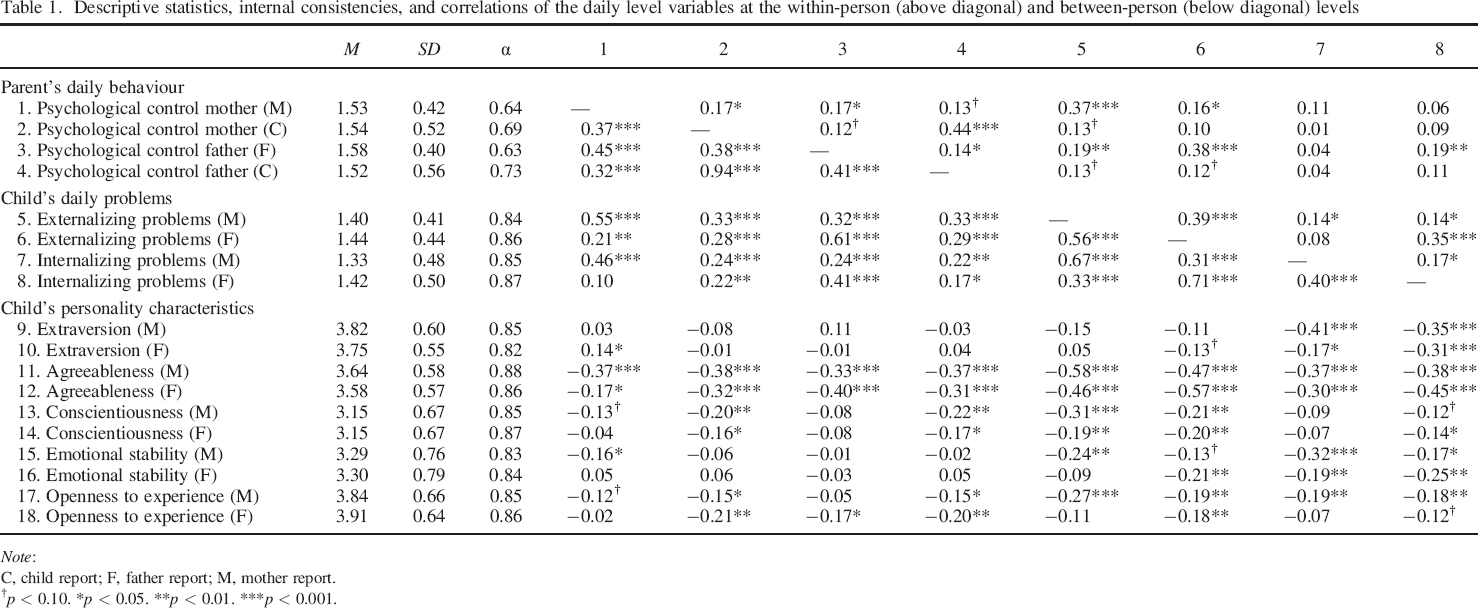
All instruments have been used successfully in past research with Dutch–speaking populations. Some instruments were adapted to fit within a diary format. Cronbach's alphas of the scales are reported in Table 1. Likert scales, ranging from 1 (completely not true) to 5 (completely true), were used for all scales.
Descriptive statistics, internal consistencies, and correlations of the daily level variables at the within–person (above diagonal) and between–person (below diagonal) levels
Note:
C, child report; F, father report; M, mother report.
p < 0.10.
p < 0.05.
p < 0.01.
p < 0.001.
Person–level measure
Child personality
Mothers and fathers completed the short version (54 items) of the hierarchical personality inventory for children (based on Mervielde & De Fruyt, 1999, and Mervielde, De Fruyt, & De Clercq, 2009, internal document). The questionnaire assesses children's Big Five personality traits, namely, conscientiousness (e.g. ‘My child works with sustained attention’), extraversion (e.g. ‘My child talks throughout the day’), agreeableness (e.g. ‘My child takes care of other children’), emotional stability (e.g. ‘My child is afraid to fail’, reverse scored), and openness to experience (e.g. ‘My child has a rich imagination’). Approximately from 10 years of age on, children can reliably report on their own personality (De Pauw, 2017). Because part of the sample was younger, parents were asked to report on their child's personality. Given the substantial agreement for all of the Big Five traits between maternal and paternal ratings (with all correlations exceeding 0.60), we aggregated across mother and father reports by first standardizing the scores on the personality traits and then computing the mean scores across both ratings. These aggregated scores were used in the main analyses. For descriptive purposes, the reliability, means, and standard deviations of the separate ratings are reported in Table 1.
Day–level measures
Psychological control
Children reported on parents’ daily use of psychological control for their mother and father separately. The same items were used as in a previous diary study in this age group (Van der Kaap–Deeder, Vansteenkiste, et al., 2017). Specifically, we used four items from the Psychological Control Scale–Youth Self–Report (Barber, 1996), which were slightly adapted to make them amendable for the diary format (e.g. ‘Today, my mother/father was less friendly with me if I did not see things her/his way’). Mothers and fathers also reported on their own psychological control, using the same items in a parent version (e.g. ‘Today, I was less friendly with my child if he/she did not see things my way’).
Externalizing and internalizing problems
Mothers and fathers filled out three items tapping into children's aggressive behaviour (e.g. ‘Today, my child was aggressive’), three items tapping into children's rule–breaking behaviour (e.g. ‘Today, my child lied’), and three items tapping into children's withdrawn behaviour (e.g. ‘Today, my child preferred to be alone, rather than with others’) (Child Behavioral Checklist; Achenbach, 1991). The items tapping into aggressive and rule–breaking behaviour were combined into a score representing externalizing problems. The items taping into withdrawn behaviour were used as a measure for internalizing distress.
Plan of analysis
This diary study consisted of repeated measurements on seven consecutive days (i.e. level 1), nested within 412 participants (i.e. mothers and fathers), nested within 206 families. As we were primarily interested in testing the relations between parental psychological control and children's outcomes by using different informants (i.e. mother, father, and the child), we considered parents as the only higher–order level (i.e. level 2). To take into account between–person and within–person differences, multilevel analyses were conducted with the statistical software package
To examine whether there was significant variability in the study variables, intercept–only models were first estimated. These unconditional (i.e. without predictor) models do not explain any variance, but decompose the variance into two components, namely, variation at the between–person level and at the within–person level, with the within–person level reflecting daily variation. Intraclass correlations (ICCs) shed light on the proportion of the total variance in the observed variables that is due to variation either at the between–person level or at the within–person level (i.e. the level of daily variation).
In a next step, daily psychologically controlling parenting (i.e. level 1) was entered as a predictor of daily levels of externalizing and internalizing problems, and the five factor dimensions (i.e. level 2) were entered as a predictor of between–person differences in these problems. Next, cross–level interactions between psychologically controlling parenting and Big Five traits were examined. Cross–level interactions were only added when there was significant variation around the slopes of the association between psychologically controlling parenting and a particular child outcome (Hox, 2010). The interaction terms were added one by one. In all the models tested, the following background variables were included (yet not shown in the tables for reasons of parsimony): number of children in the family, age and gender of the child, age and educational level of the parent, and marital status.
Finally, lagged analyses were conducted. In a first set of lagged analyses, problem behaviour on day t + 1 was regressed on both parenting and problem behaviour on day t. In a second set of lagged analyses, parenting on day t + 1 was regressed on both parenting and problem behaviour on day t.
Results
Descriptive statistics and preliminary analyses
Table 1 shows reliability estimates, means, standard deviations, and correlations of the day–level variables (upper part of the table). Correlations are presented at the within–person level (above diagonal) and at the between–person level (below diagonal). Table 1 also shows the reliability estimates, means, standard deviations of the personality variables, and their correlations with the day–level variables (lower part of the table). With respect to the personality traits, agreeableness, conscientiousness, and openness to experience are negatively associated with psychological control, with agreeableness displaying the most consistent and pronounced associations. All personality traits are negatively correlated with externalizing problems, with agreeableness and conscientiousness displaying the most pronounced and consistent correlations. All personality traits were also negatively correlated with internalizing problems, with emotional stability and agreeableness displaying the most pronounced and consistent associations.
To determine whether there were associations between the background variables (gender and age of the child, parental age, educational level of the parent, number of children in the family, and marital status) and the study variables, a multivariate analysis of covariance was conducted with child gender and educational level of the parents and marital status (the categorical background variables) as fixed factors, with the other (continuous) background variables as covariates, and with all study variables as dependent variables. There were no overall multivariate effects for the child's (Wilks's λ = 0.96, F(8, 126) = 0.65, p = 0.74), mother's (Wilks's λ = 0.93, F(8, 126) = 1.12, p = 0.35), and father's (Wilks's λ = 0.95, F(8, 126) = 0.91, p = 0.51) age. There were also no overall multivariate effects for number of children (Wilks's λ = 0.92, F(8, 126) = 1.34, p = 0.23), gender of the child (Wilks's λ = 0.94, F(8, 126) = 0.97, p = 0.46), education of the father (Wilks's λ = 0.77, F(32, 466) = 1.07, p = 0.37), and marital status (Wilks's λ = 0.86, F(24, 366) = 0.82, p = 0.71). There was only an overall multivariate effect for education of the mother (Wilks's λ = 0.57, F(32, 466) = 2.39, p = 0.00). Although most of the background variables did not have a multivariate effect on the study variables, we controlled for their contribution in the main analyses to test our hypotheses as conservatively as possible.
Primary analyses
Day–to–day variability in the outcome variables
The ICC reflects the percentage of variance located at level 2 (i.e. the between–person level). ICC values indicate that, respectively, 50% and 55% of the variance in externalizing problems reported by the mother and father reflect between–person differences. There is respectively 57% and 51% of the variance in internalizing distress reported by the mother and father at the between–person level. As a corollary implication, these between–person percentages suggest that most of the variance (i.e. more than 50%) is situated at the within–person level (i.e. the level of daily variability), although the variance at the within–person level also includes error variance.
Daily associations between psychologically controlling parenting and child outcomes
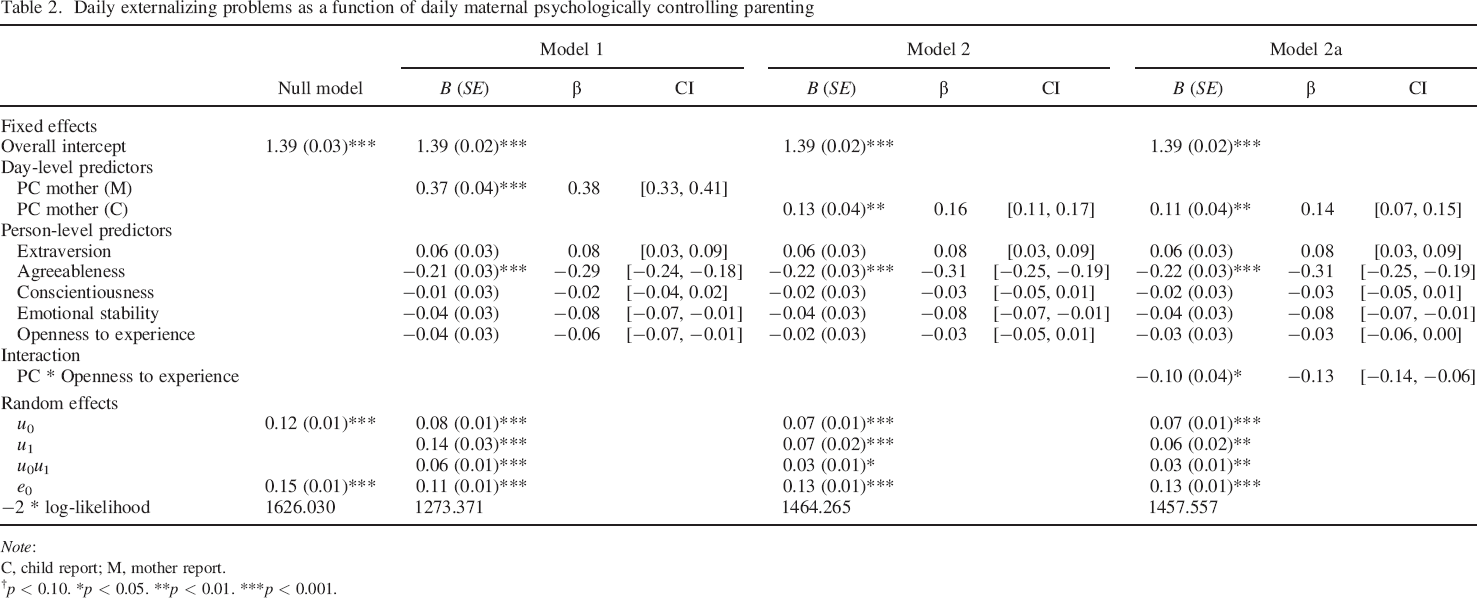
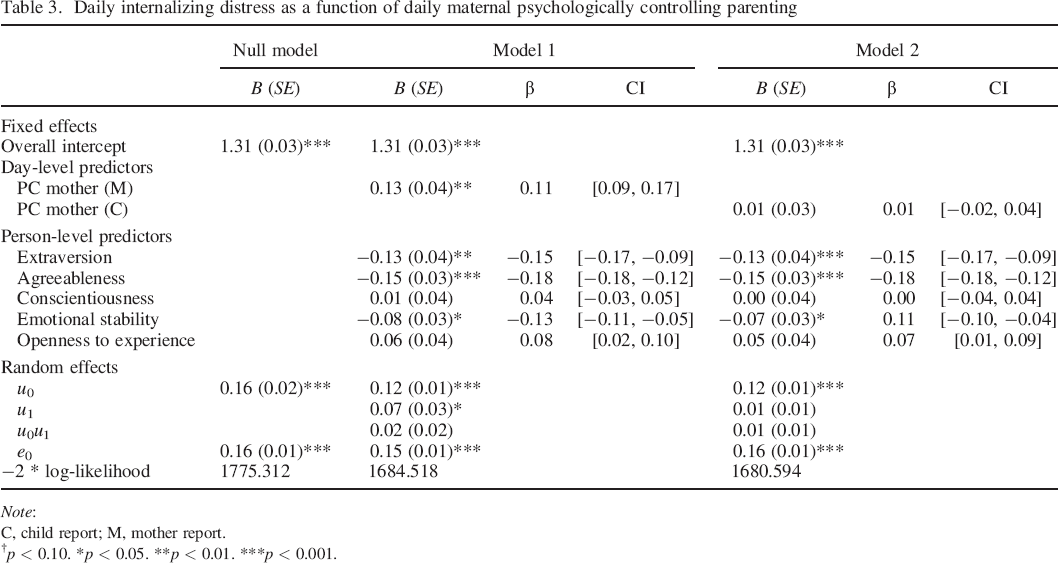
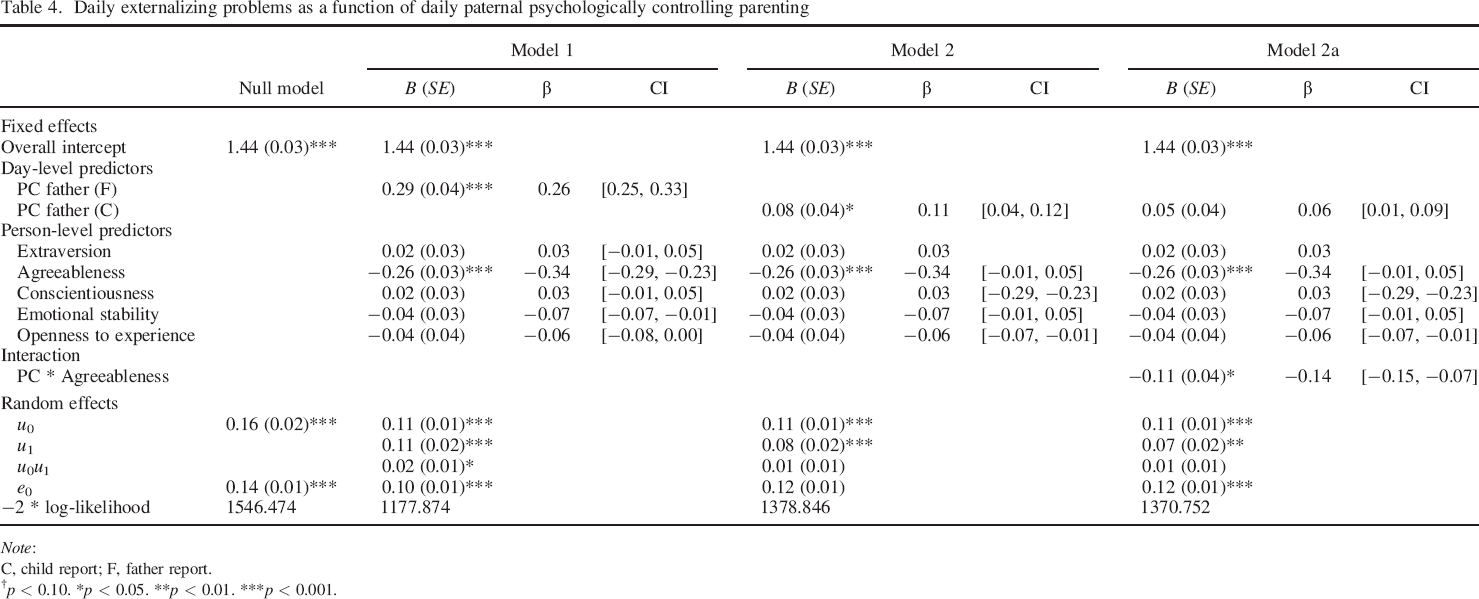
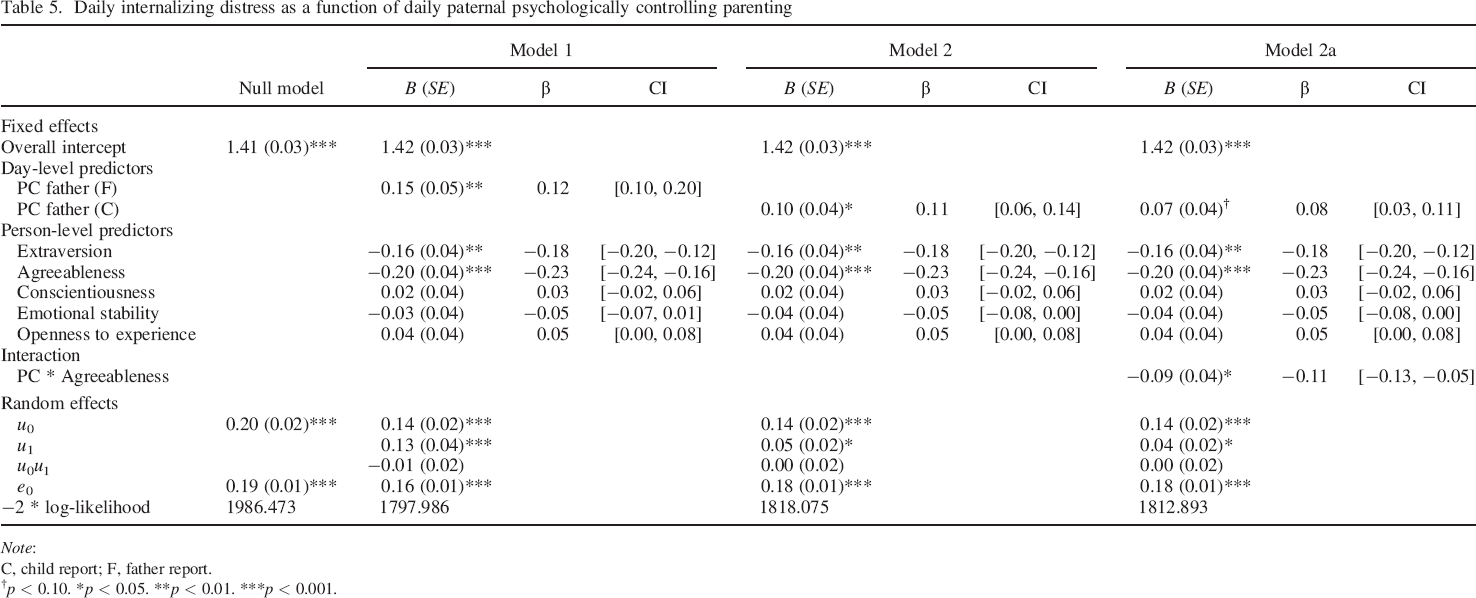
Tables 5 present the findings for daily externalizing problems and internalizing distress. Daily maternal and paternal psychological control was significantly positively related to both daily externalizing problems and internalizing distress when parents reported on the use of psychologically controlling parenting (model 1). When using children's reports of parenting, most associations were also significant. Child–reported maternal psychological control was related positively to mother–reported externalizing problems (but not to internalizing distress) (Tables 2 and 3, model 2). Child–reported paternal psychological control was related positively to father–reported externalizing problems and internalizing distress (Tables 4 and 5, model 2). Post hoc power analysis with Monte Carlo simulation as suggested by Mathieu, Aguinis, Culpepper, and Chen (2012) revealed there was enough power to detect main level 1 effects (with the power being higher than 0.80 for all analyses).
Daily externalizing problems as a function of daily maternal psychologically controlling parenting
Note:
C, child report; M, mother report.
p < 0.10.
p < 0.05.
p < 0.01.
p < 0.001.
Daily internalizing distress as a function of daily maternal psychologically controlling parenting
Note:
C, child report; M, mother report.
p < 0.10.
p < 0.05.
p < 0.01.
p < 0.001.
Daily externalizing problems as a function of daily paternal psychologically controlling parenting
Note:
C, child report; F, father report.
p < 0.10.
p < 0.05.
p < 0.01.
p < 0.001.
Daily internalizing distress as a function of daily paternal psychologically controlling parenting
Note:
C, child report; F, father report.
p < 0.10.
p < 0.05.
p < 0.01.
p < 0.001.
As for the between–person level predictors, the patterns of associations with the respective developmental outcomes can be found in Tables 5. Consistent with previous research on the five factor model, agreeableness was related systematically to lower externalizing problems. Somewhat surprisingly, conscientiousness was unrelated to externalizing problems. Further, agreeableness and extraversion were related negatively to internalizing distress. Emotional stability was also related negatively to internalizing distress, albeit only when internalizing distress was reported by the mother.
Personality as a moderator
To examine whether the within–day associations between psychologically controlling parenting and externalizing and internalizing problems depend on children's personality, cross–level interactions were inspected. This was done only in cases where there was significant variation around the slopes of the association between psychologically controlling parenting and a particular outcome (Hox, 2010). There was significant variation around the slopes in all tested models, except for the model with child–reported maternal psychologically controlling parenting predicting internalizing distress. Out of the 35 potential interactions, three turned out to be significant. To interpret significant interactions, we inspected associations between psychologically controlling parenting and the outcomes at low (one standard deviation below the mean) and high (one standard deviation above the mean) levels of the moderator through simple slope analyses (Aiken & West, 1991). As can be seen in Figure 1, child–reported maternal psychological control was related to externalizing problems when children were rated low on openness to experience (b = 0.16, t = 4.12, p = 0.00) but not when they were high on openness to experience (b = 0.05, t = 0.96, p = 0.34). Further, as can be seen in Figures 2 and 3, agreeableness moderated effects of child–reported paternal psychological control, with the relation between psychological control and both externalizing problems and internalizing distress being significant only in children rated low on agreeableness (b = 0.12, t = 8.70, p = 0.00; b = 0.14, t = 3.39, p = 0.00) but not in children rated high on agreeableness (b = −0.03, t = −0.80, p = 0.42; b = 0.00, t = 0.08, p = 0.94).
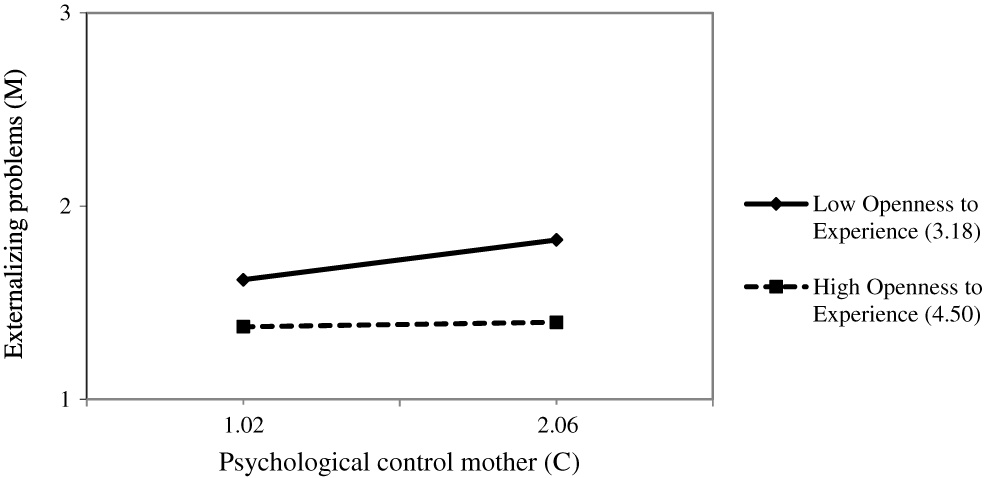
Significant interaction between psychological control of the mother, reported by the child, and openness to experience of the child in association with externalizing problems. All numeric values in the figures refer to −1SD and +1SD of the variable, respectively. [Colour figure can be viewed at wileyonlinelibrary.com]
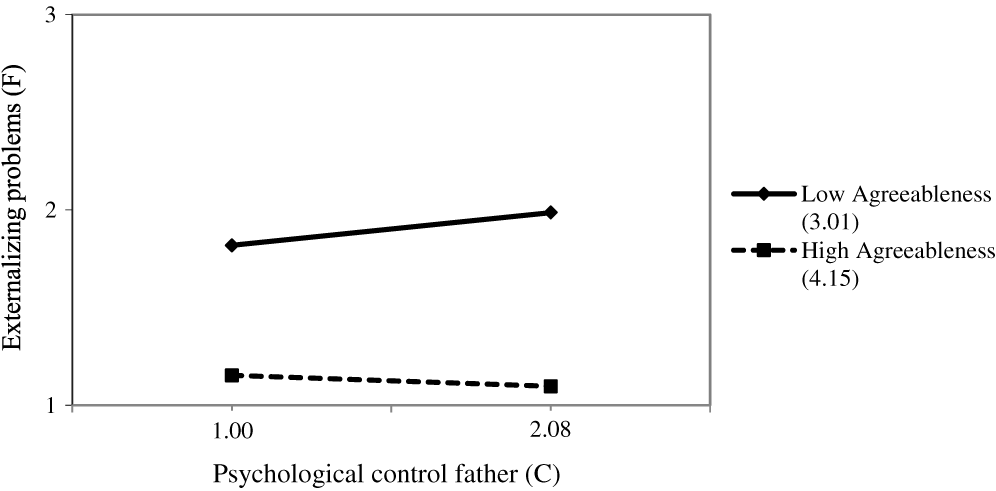
Significant interaction between psychological control of the father, reported by the child, and agreeableness of the child in association with externalizing problems. All numeric values in the figures refer to −1SD and +1SD of the variable, respectively. [Colour figure can be viewed at wileyonlinelibrary.com]
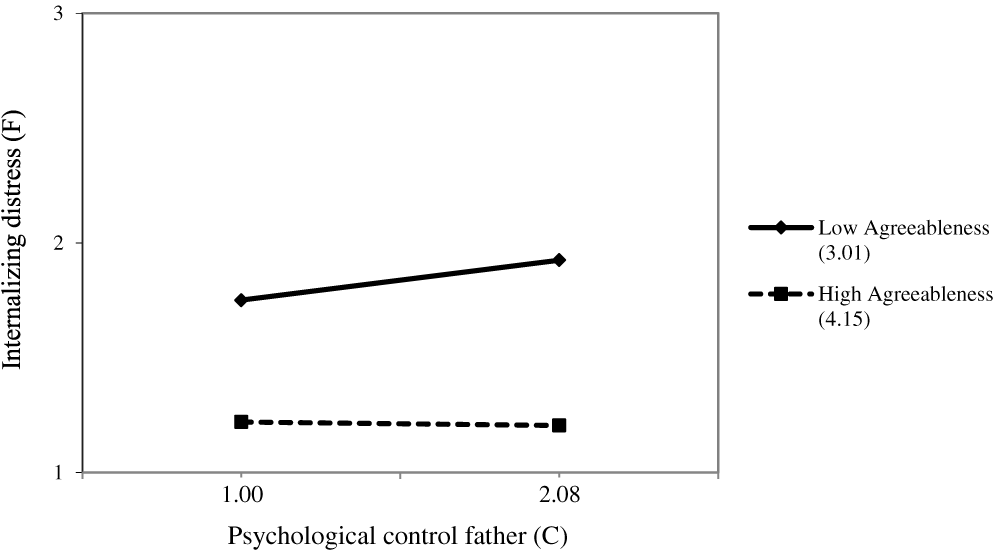
Significant interaction between psychological control of the father, reported by the child, and agreeableness of the child in association with internalizing distress. All numeric values in the figures refer to −1SD and +1SD of the variable, respectively. [Colour figure can be viewed at wileyonlinelibrary.com]
To calculate the statistical power of the cross–level interactions, we again conducted Monte Carlo analyses. After (i) imputing the necessary estimates (e.g. magnitude of cross–level interactions; standard deviations of the slopes, residual variances of intercepts, and slopes; and mean level 2 effects of personality features) that we derived from the models where a statistically significant cross–level interaction emerged, (ii) setting the alpha level at 0.05 (two–tailed), and (iii) simulating the estimates with 1000 replications for a seven–day measurement model with 200 participants, we found that the obtained power to detect cross–level effects was 1.00 for all models. Estimating a model with less than half of the actual participants (n = 80), we found that the obtained power to detect cross–level effects between maternal psychological control and openness to experience in the prediction of externalizing problems (model 2a in Table 2) was 0.76. Accordingly, the respective power for the model that involved the cross–level interaction between paternal psychological control and agreeableness in the prediction of externalizing problems (model 2a in Table 4) and internalizing problems (model 2a in Table 5) was, respectively, 0.91 and 0.90. Overall, these analyses indicate that the power to detect statistically significant interactions was sufficiently high. 1
Lagged analyses
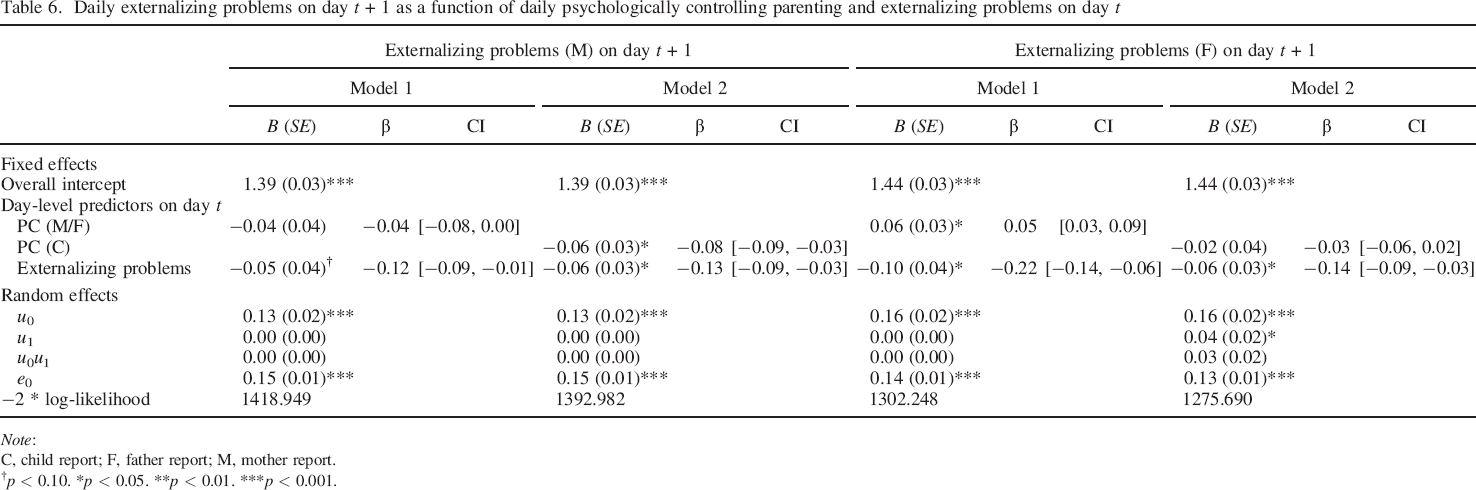
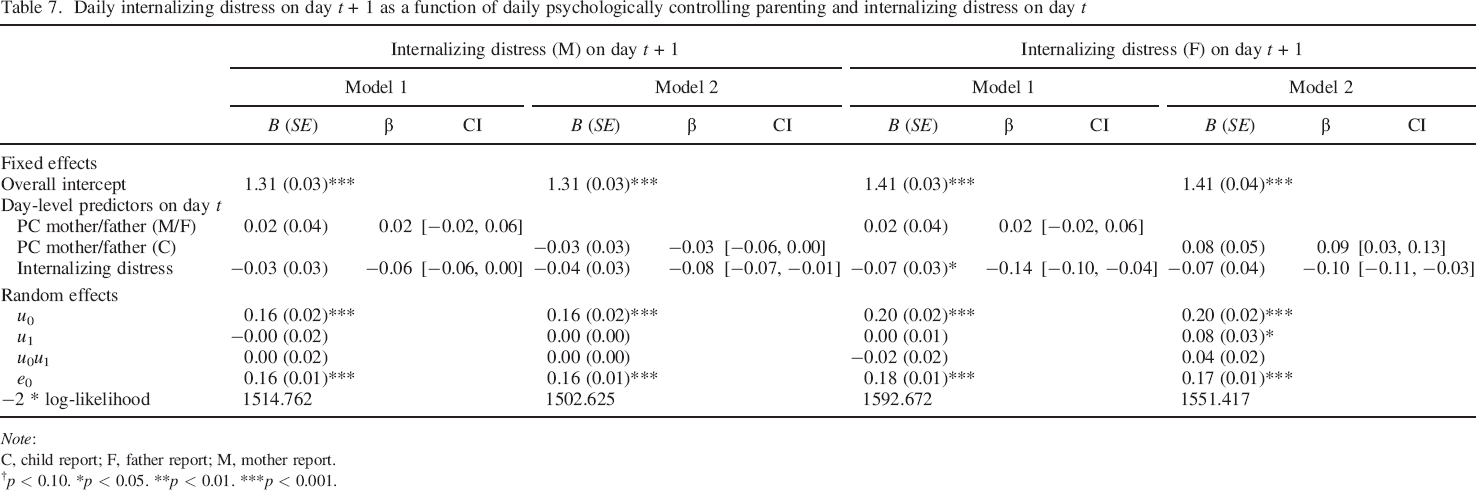
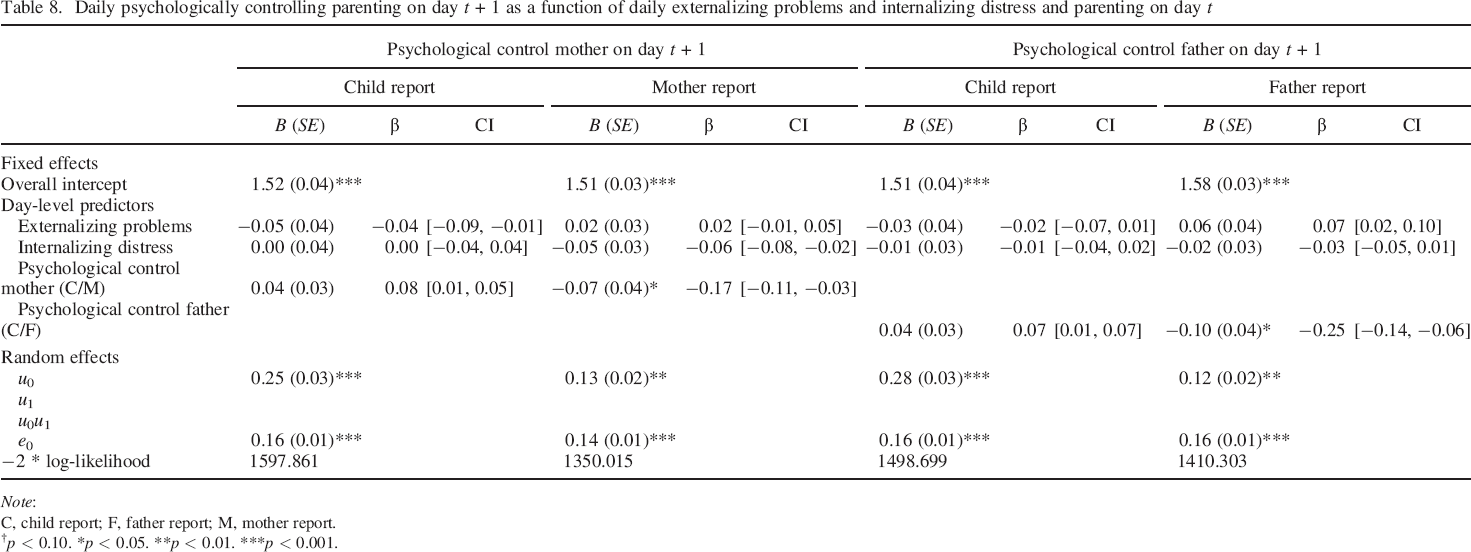
Lagged effects of psychologically controlling parenting on child maladjustment were limited and inconsistent. Psychologically controlling parenting on day t was associated with a change in problems on day t + 1 in only two of the eight tested models (Tables 6 and 7). Specifically, psychologically controlling parenting reported by the father on one day related to increased externalizing problems the next day (B = 0.06, SE = 0.03, β = 0.08, p = 0.04). An opposite pattern was found for child–reported maternal psychologically controlling parenting (B = −0.06, SE = 0.03, β = −0.08, p = 0.04). Psychologically controlling parenting on day t does not systematically predict increases in problem behaviour on day t + 1. Further, there were also no consistent effects of child problem behaviours on increases in psychologically controlling parenting towards the next day. Psychologically controlling parenting was not predicted by externalizing problems or internalizing distress the day before (Table 8).
Daily externalizing problems on day t + 1 as a function of daily psychologically controlling parenting and externalizing problems on day t
Note:
C, child report; F, father report; M, mother report.
p < 0.10.
p < 0.05.
p < 0.01.
p < 0.001.
Daily internalizing distress on day t + 1 as a function of daily psychologically controlling parenting and internalizing distress on day t
Note:
C, child report; F, father report; M, mother report.
p < 0.10.
p < 0.05.
p < 0.01.
p < 0.001.
Daily psychologically controlling parenting on day t + 1 as a function of daily externalizing problems and internalizing distress and parenting on day t
Note:
C, child report; F, father report; M, mother report.
p < 0.10.
p < 0.05.
p < 0.01.
p < 0.001.
We also tested the moderating role of personality in the models with problem behaviour as the dependent variable. In two of the eight tested models, there was significant variance around the slope, so in these models, the interactions could be tested. None of the interactions with personality were significant.
As can be seen in Tables 8, the autocorrelations of externalizing and internalizing problems and of psychological control (parent reports) were significantly negative. Such negative autocorrelations have been demonstrated also consistently in studies documenting longer–term intra–individual change in problem behaviour (Aunola & Nurmi, 2005) and parenting (Beyers & Goossens, 2008). These autocorrelations suggest that individuals who displayed elevated levels of a certain variable in a given period (i.e. a year or a day) are more likely to return to their baseline level of this variable in a subsequent period rather than to display a further deviation from their baseline level.
Ancillary analyses with cross–reporter effects
We further examined whether the results replicate when using the other parent's report of child behaviour. Specifically, we tested whether mother–reported parenting would be related to father–reported child outcomes and vice versa. As can be seen in Tables S1 and S2, the main effects of psychologically controlling parenting were generally still significant when the other parent reported on the outcomes. In one case (i.e. the association between child–reported maternal psychological control and internalizing distress), a non–significant effect became significant, whereas in two other cases (i.e. the association between father–reported psychological control and internalizing distress and the association between child–reported paternal psychological control and internalizing distress), significant effects became non–significant. In general, the results thus replicate when using the other parent's report of child behaviour. These findings with a multi–informant approach further testify to the robustness of the direct association between psychologically controlling parenting and child outcomes.
The moderating role of personality was also tested in the models with significant variance around the slope. As can be seen in Tables S1 and S2, only one interaction was significant, that is, an interaction between psychologically controlling parenting reported by the mother and extraversion in the prediction of internalizing distress reported by the father. While the association between psychologically controlling parenting and internalizing distress was significant at low levels of extraversion (b = 0.30, t = 19.11, p = 0.00), it was not significant at high levels of extraversion (b = −0.06, t = −0.48, p = 0.63).
Discussion
Research convincingly demonstrated associations between psychologically controlling parenting and children's and adolescents’ ill–being and behavioural maladjustment (Barber & Xia, 2013; Soenens & Vansteenkiste, 2010). Recent studies began to show that such effects also occur on a day–to–day basis, with daily psychologically controlling parenting being related to daily maladjustment in children (Aunola et al., 2013; Van der Kaap–Deeder, Vansteenkiste, et al., 2017). This study aimed to contribute to this emerging literature (i) by revisiting associations between daily parental psychological control and children's daily maladjustment using a multi–informant approach and, most importantly, (ii) by investigating the role of children's personality at the level of within–person variation in daily psychologically controlling parenting in the prediction of child outcomes, and (iii) by examining lagged associations between daily parental psychological control and child outcomes.
Effects of daily psychologically controlling parenting
Consistent with past work (e.g. Aunola et al., 2013; Mabbe, Soenens, Vansteenkiste, van der Kaap–Deeder, & Mouratidis, 2018), multilevel analyses showed that there was significant day–to–day variability in both maternal and paternal psychologically controlling parenting. About half of the variance in the scores for psychologically controlling parenting represents daily variation, indicating that this dimension of parenting is quite variable and susceptible to daily change. As such, these findings testify to dynamic models of parenting that assume substantial variability in parenting across situations and days (Repetti et al., 2015). More generally, these findings point to the importance of studying family and parenting processes not only at the level of between–person differences but also at the level of within–person change and variation (Keijsers et al., 2016).
While previous diary studies already demonstrated associations between daily psychologically controlling parenting and children's daily maladjustment, these studies relied on single informants, focusing either on parent reports only (Aunola et al., 2013) or on child reports only (Van der Kaap–Deeder, Vansteenkiste, et al., 2017). The present study included both parent and child reports of parenting and examined associations between both types of reports and parent–reported child problems (externalizing problems and internal distress). Multilevel analyses indicated that daily maternal and paternal psychological control were significantly positively related to daily externalizing problems and internalizing distress, a pattern that was fairly consistent across informants. Evidently, associations were less pronounced when using different informants for parenting and the child outcomes (i.e. child reports of parenting and parent reports of problem behaviour), with one of the four associations turning out to be non–significant (i.e. the association between child–reported maternal psychological control and mother–reported internalizing distress).
Overall, the findings further confirm the relevance of parents’ daily engagement in psychologically controlling parenting for children's daily adjustment. Children are perceived to display more externalizing problems and internalizing distress on days when parents engage in more psychologically controlling parenting compared with the child's average experienced psychological control. When comparing the robustness of the association for different outcomes, effects of psychological control appeared more systematic for externalizing problems than for internalizing distress. This finding may seem surprising at first sight because Barber (1996) initially hypothesized that psychologically controlling parenting would be primarily predictive of internalizing problems. However, recent meta–analyses demonstrated that associations of parental psychological control with externalizing problems (average r = 0.22; Pinquart, 2017) are equally pronounced compared with associations with internalizing problems (average r = 24; Pinquart, 2017). To explain the association with externalizing problems, Van Petegem, Soenens, Vansteenkiste, and Beyers (2015) hypothesized and showed that psychologically controlling parenting elicits reactance against parental authority among adolescents, with such reactance, in turn, increasing risk for externalizing problems. The current study, which is among the first to examine associations of parental psychological control with both types of problem behaviours simultaneously using a diary design, suggests that, at the level of daily associations, psychological control may even go hand in hand more strongly with externalizing behaviour than with internalizing distress. Possibly, adolescents’ first and immediate reaction to a daily increase in parental psychological control is to react against parental authority. Adolescents may display heightened internalizing problems only after a more prolonged period of exposure to psychologically controlling parenting. Additional diary–based research is needed, however, before strong conclusions can be made.
Importantly, these associations do not necessarily reflect a parenting effect, as it is equally possible that children who display problems in a given day may evoke a more psychologically controlling from their parents (Aunola, Viljaranta, & Tolvanen, 2017). Most likely, daily parenting and daily child maladjustment are related reciprocally and in a mutually reinforcing fashion (see also our discussion of this issue below), with child maladjustment giving rise to more psychologically controlling parenting and with such parenting further increasing children's proneness to problem behaviours and distress (Soenens et al., 2008; Wang, Pomerantz, & Chen, 2007). In the remainder of this section, we focus on the latter part of this presumed bidirectional process, addressing the question whether children's personality affects their susceptibility to daily psychologically controlling parenting.
Moderating role of child personality
Consistent with diathesis–stress models of the interplay between child characteristics and parenting (Kiff et al., 2011), we considered the possibility that the within–person association between psychologically controlling parenting and externalizing and internalizing problems could be stronger among children with personality traits conveying lower psychosocial maturity. For those children, a relative increase or decrease in psychologically controlling parenting on a given day may have more effect on their externalizing and internalizing problems that day.
To date, research on the moderating role of child characteristics has mainly focused on between–person differences in exposure to psychologically controlling parenting. Theoretically, the distinction between studies at the between–person and within–person level is important because they involve a different point of reference to evaluate children's personality–based susceptibility to parenting. Studies at the between–person level consider the question whether a child exposed to more (perceived) psychologically controlling parenting compared with other children will be more vulnerable to the effects of such parenting based on his or her personality. At the within–person level, the key point of reference shifts to the average degree of parental psychological control within a given relationship, which in the current study was either the mother–child or father–child relationship. Findings at this level reflect children's susceptibility (depending on personality traits) to problems on days when parents report engaging in more psychologically controlling strategies compared with the average degree of psychological control in the specific relationship (Binnewies & Wornlein, 2011). Thus, studies at the within–person level focus on a different, and perhaps more personally relevant and salient, point of reference to evaluate how children differ in their reactivity or sensitivity to aspects of their own environment (Fisher & To, 2012).
Interaction analyses showed that out of the 35 interactions tested, three turned out to be significant (i.e. 8%). Consistent with the prediction that psychologically controlling parenting primarily yields an emotional cost (Barber, 1996; Soenens & Vansteenkiste, 2010), previous research examining between–person differences has yielded consistent evidence for associations between psychologically controlling parenting and internalizing distress, an effect not strongly moderated by personality (Mabbe et al., 2016). In contrast, somewhat less consistent evidence has been obtained for the association between psychologically controlling parenting and externalizing problems (Barber, Olsen, & Shagle, 1994). To account for this pattern of findings, it has been argued that the association between parental psychological control and externalizing problems perhaps depends on children's personality. More specifically, the possibility was raised that psychologically controlling parenting relates to externalizing problems primarily in children scoring high on more undercontrolled personality traits (low agreeableness and low conscientiousness) (Costa et al., 2015; Mabbe et al., 2016). This prediction received some support in past work focusing on between–person differences in psychologically controlling parenting (Mabbe et al., 2016) as well in this study focusing on within–person differences in psychologically controlling parenting. Specifically, the association between daily maternal psychologically controlling parenting and externalizing problems was found to be significant only among children scoring low on openness to experience. Further, associations between daily paternal psychological control and externalizing problems were significant only among children low on agreeableness. These two personality dimensions (i.e. low openness to experience and agreeableness) indeed indicate an undercontrolled profile of personality, with such a profile being particularly involved in risk for externalizing problems (Asendorpf, Borkenau, Ostendorf, & Van Aken, 2001; Prinzie et al., 2004). Only children with these more undercontrolled traits appear to respond to daily psychologically controlling parenting with an inclination to engage in externalizing behaviours. Future research could address the question whether these children are more likely to display non–compliance and even defiance against parental authority when confronted with parental psychological control (Van Petegem et al., 2015).
There was only one interaction effect involving internalizing distress, with low agreeableness moderating the association between daily paternal psychologically controlling parenting and children's internalizing distress. Because this was the only significant interaction with internalizing distress (among 15 tested interactions), it should be interpreted with some caution. The findings suggest that associations between psychologically controlling parenting and internalizing problems are largely unaffected by the child's personality. As such, the emotional cost associated with daily psychologically controlling parenting seems to be quite robust and largely unaffected by children's personality.
Again, caution is warranted also in interpreting the direction of effects in these few interactions with the child's personality. An alternative interpretation of these moderating effects is that parents react more strongly to children's display of maladjustment with a psychologically controlling response when they perceive the child's personality as being more difficult. With such perceptions of a difficult personality, parents may more easily make hostile attributions when the child displays problem behaviour, with these hostile attributions in turn evoking a more intrusive and domineering parental response (Dix, 1991). Although this alternative possibility cannot be dismissed entirely on the basis of the current data, the finding that the few significant interactions showed up only with the child reports of parenting (and not with the parent reports) seems to argue somewhat against this alternative interpretation. If parents’ perception of the child's personality and their subsequent hostile attributions (both of which represent subjective parental processes) would be key mechanisms underlying the obtained interaction, then the interaction should be obtained in the first place with parents’ own (subjective) perception of their parenting behaviour (which was not the case). Still, future research needs to consider the possibility that the child's personality (or at least parents’ perceptions of it) could affect not only children's susceptibility to parenting but also parents’ responses to child behaviour.
Generally speaking, the number of significant interactions obtained was quite limited. When applying a Bonferroni correction for multiple testing, none of the interactions even reached significance. Also, in the additional analyses with more conservative ways of testing associations between parenting and child outcomes (i.e. the lagged analyses and the cross–reporter analyses), there were almost no significant interactions. Much like research examining the moderating role of child personality at the between–person level (Mabbe et al., 2016; Mabbe, Soenens, De Muynck, & Vansteenkiste, 2018; Mabbe, Soenens, Vansteenkiste, et al., 2018), this research suggests that personality plays a modest moderating role in effects of psychologically controlling parenting. The few interactions obtained are consistent with the diathesis–stress model (Kiff et al., 2011), stating that the combination of adverse parenting and vulnerable child characteristics is leading to the least favourable outcomes. However, because of the limited number of interactions, it seems fair to conclude that the effects of psychologically controlling parenting do not depend largely on children's Big Five personality traits. Evidently, these findings do not preclude the possibility that other dimensions of individual differences do moderate effects of parental psychological control. Future research could, for instance, address the role of more specific facets of the five factor dimensions (Becht, Prinzie, Deković, Van den Akker, & Shiner, 2016) or of temperamental and personality–based dimensions that are known to be more proximally involved in dynamics of psychologically controlling parenting, such as dysfunctional emotion regulation (Cui et al., 2014) or dependency and self–criticism (Soenens, Vansteenkiste, & Luyten, 2010).
Direction of effects in associations between parental psychological control and child outcomes
Because associations between psychologically controlling parenting and child maladjustment are known to be bidirectional in nature across longer periods of time (e.g. six months or a year; Janssens et al., 2017; Pinquart, 2017, 2017; Soenens et al., 2008), we also examined whether such reciprocal associations would emerge on a day–to–day basis. However, our cross–lagged analyses (where psychological control displayed on one day was modeled as a predictor of increases in child maladjustment from one day to the next and vice versa) failed to provide clear evidence for reciprocal effects. Moreover, the child's personality did not play a moderating role in any of these cross–lagged associations. Interestingly then, it appears that between–day associations are not necessarily consistent with within–day associations. In one of the few previous studies addressing between–day associations between parenting and child outcomes, Aunola et al. (2013) found that children's negative emotions during a given day predicted decreases (rather than increases) in psychological control the next day. This negative between–day association differs from the positive associations between children's negative emotions and parental psychological control typically obtained at the level of between–person differences (Barber, 1996; Pinquart, 2017) and at the level of within–day associations (Van der Kaap–Deeder, Soenens, et al., n.d.; Van der Kaap–Deeder, Vansteenkiste, et al., 2017). Future research on daily dynamics of parenting would do well to more systematically estimate and compare within–day and between–day associations.
Because very few studies to date have examined reciprocal associations on a daily basis, the overall lack of bidirectional effects at the daily level in our study needs to be replicated before firm conclusions can be drawn. One possible explanation for this lack of effects may be that, at the level of daily functioning, psychologically controlling parenting and child adjustment affect one another reciprocally within days rather than between days. That is, on a given day, psychologically controlling parenting may elicit more problem behaviours in children, with these problem behaviours further reinforcing parents’ engagement in psychological control. To actually identify these bidirectional processes within days, future research could rely on ecological momentary assessment methods, thereby having parents and children report on parenting and maladjustment multiple times within a given day. For instance, Lehman and Repetti (2007) asked children to report on their mood during school time and to report on parent–child interaction quality in the evening. They found that, when children experienced problems at school, interactions with parents were more aversive in the evening.
Thus, somewhat surprisingly, our data suggest that potential within–day reciprocal effects do not transfer to the next day. Parents’ elevated use of psychological control on a given day does not seem to have lingering effects on further increases in maladjustment the next day. If replicated, our results indicate that every day is a new day because effects of psychological control or child problem behaviours on a given day do not necessarily carry–over to the next day. While, on average, families may start ‘from scratch’ every new day, we speculate that in some families, carry–over effects between days do occur. Specifically, we argue that trait levels of parenting and child maladjustment may affect between–day carry–over effects. When parents are generally high on psychologically controlling parenting (i.e. have high trait levels of such parenting) and at the same time display increased engagement in psychological control on a given day, a child may display more maladjustment not only within the day but also the next day. Such an effect might occur because children who are exposed to high trait levels of psychological control may become more sensitized to new psychologically controlling episodes (Moller, Deci, & Elliot, 2010), thereby showing a stronger response that may manifest across days. Similarly, when children have high dispositional levels of problem behaviours and additionally displayed increased problem behaviour on a given day, parents may resort to psychologically controlling practices not only on the given day but also on the next day. The combination of high trait levels of maladjustment and a daily additional display of problem behaviours may elicit very strong negative feelings in parents (such as helplessness, anger, and worry) that pull for more controlling parenting across days (Pomerantz & Eaton, 2001). To test these speculations, we call for future research examining the interplay between trait and daily levels of parenting and child adjustment.
Limitations and directions for future research
The present study had a number of limitations. In the first place, the diary study had a paper and pencil format. Participants were asked to fill out the diary each day in the evening, noting date and time. This is no guarantee however that they filled it out at the appropriate time. In future studies, electronic diaries can be used to overcome this problem. Another limitation is the homogeneity of the sample. Parents were relatively highly educated compared with the national population (Statistics Belgium, 2014), which was probably due to the selection procedure used to recruit participants. Furthermore, only intact families took part in the studies. In future research, it will be important to investigate the daily variability in parenting in more heterogeneous samples. Given the young age of the children in this sample, child personality was reported by the parents and not by the children themselves. Given that children can, approximately from the age of 10 years on, reliably report on their own personality (De Pauw, 2017), future research could include an older age group of children to investigate whether a judgement of their own personality would play a moderating role.
In this diary study, personality has been measured at the between–person level. It would be interesting in future research to assess personality also at the between–days level (Debusscher, Hofmans, & De Fruyt, 2016; Judge, Simon, Hurst, & Kelley, 2014). In this respect, it would be interesting, for example, to investigate (i) whether day–to–day variability in personality would alter the contribution of day–to–day variability in psychologically controlling parenting in the prediction of problem behaviour (i.e. moderation) and (ii) whether day–to–day variation in psychologically controlling parenting predicts the type of personality traits that surface and get expressed on a given day (i.e. main effect).
In line with previous studies in the general population, the mean scores for both controlling parenting and problem behaviours were low (Korelitz & Garber, 2016), raising the question whether the current findings would generalize across samples with a higher incidence of both controlling parenting and problem behaviours. While a couple of studies have shown that associations between controlling parenting and problem behaviours are similar in samples of referred youth (Van Petegem et al., 2015), it has not been examined whether the moderating role of personality is similar in such samples. Related to this, the current sample was quite selective in terms of parental educational level and socio–economic status (SES). Research has shown that low SES is related to both more controlling parenting (Hoff, Laursen, & Tardiff, 2002) and more child problem behaviours (Loeber, Green, Keenan, & Lahey, 1995). While associations between controlling parenting and problem behaviours are generally similar across socio–economic strata (e.g. Radziszewska, Richardson, Dent, & Flay, 1996), it has not been examined whether the moderating role of personality in these associations depends on SES. As such, it is important to also examine the moderating role of personality in samples displaying more heterogeneity in terms of socio–economic background.
Conclusion
This study showed that daily fluctuations in maternal and paternal psychologically controlling parenting were related to daily fluctuations in externalizing problems and internalizing distress. In only 8% of the tested interactions, the association between psychologically controlling parenting and child outcomes was moderated by child personality, especially in the prediction of externalizing problems. Overall, these findings suggest that daily psychologically controlling parenting is generally related to poorer children's daily functioning but that children do differ somewhat in their susceptibility to its effect on externalizing behaviours in particular.
Footnote
1When performing the analyses with maternal and paternal ratings of the child's personality separately (rather than aggregated across raters), we obtained one more significant interaction. Specifically, there was an interaction between child–reported maternal psychological control and mother–reported conscientiousness in predicting externalizing problems, with the association being significant when children were rated low on conscientiousness (b = 0.16, t = 3.65, p = 0.00) but not when they were rated as high on conscientiousness (b = 0.07, t = 1.45, p = 0.15). This finding is again in line with the notion that psychologically controlling parenting is related most strongly to externalizing problems in children scoring high on undercontrolled personality traits. All analyses with the separate ratings of child personality are included in the Tables S3 and S4.
Supporting info item
Supporting info item, per2156-sup-0001-Data_S1 - The Role of Child Personality in Effects of Psychologically Controlling Parenting: An Examination at the Level of Daily Fluctuations
Supporting info item, per2156-sup-0001-Data_S1 for The Role of Child Personality in Effects of Psychologically Controlling Parenting: An Examination at the Level of Daily Fluctuations by Mabbe Elien, Vansteenkiste Maarten, Van der Kaap–Deeder Jolene, Dieleman Lisa, Mouratidis Athanasios, Soenens Bart and Wrzus Cornelia in European Journal of Personality
Table S1. Daily Externalizing Problems and Internalizing Distress as a Function of Daily Psychologically Controlling Parenting of the Mother
Table S2. Daily Externalizing Problems and Internalizing Distress as a Function of Daily Psychologically Controlling Parenting of the Father
Figure 1. Significant interaction between psychological control of the mother, reported by the child, and Extraversion in the association with internalizing distress.
Table S3. Daily Externalizing Problems and Internalizing Distress as a Function of Daily Maternal Psychologically Controlling Parenting
Table S4. Daily Externalizing Problems and Internalizing Distress as a Function of Daily Paternal Psychologically Controlling Parenting
Figure 1. Significant interactions with personality.
Figure 2. Significant interactions with personality.
Figure 3. Significant interactions with personality.
Figure 4. Significant interactions with personality.
Supporting info item
Supporting info item, per2156-sup-0002-PER_Open_Practices_Disclosure_Form_PER 2156 - The Role of Child Personality in Effects of Psychologically Controlling Parenting: An Examination at the Level of Daily Fluctuations
Supporting info item, per2156-sup-0002-PER_Open_Practices_Disclosure_Form_PER 2156 for The Role of Child Personality in Effects of Psychologically Controlling Parenting: An Examination at the Level of Daily Fluctuations by Mabbe Elien, Vansteenkiste Maarten, Van der Kaap–Deeder Jolene, Dieleman Lisa, Mouratidis Athanasios, Soenens Bart and Wrzus Cornelia in European Journal of Personality
Footnotes
Notes
References
Supplementary Material
Please find the following supplemental material available below.
For Open Access articles published under a Creative Commons License, all supplemental material carries the same license as the article it is associated with.
For non-Open Access articles published, all supplemental material carries a non-exclusive license, and permission requests for re-use of supplemental material or any part of supplemental material shall be sent directly to the copyright owner as specified in the copyright notice associated with the article.
