







Abstract
Background
Central to the armamentarium of a hand therapist is evaluation for successful orthotic use. Orthoses can have a profound effect on quality of life in persons with amyotrophic lateral sclerosis (ALS)/motor neuron disease (MND). The purposes of orthoses are to decrease the effects of muscle imbalance, provide assistance in performance of activities of daily living (ADLs), prevent joint contracture, and relieve pain. There are few published accounts on the usefulness of orthoses and ALS. The purpose of this paper is to expand the body of literature by describing three successful cases.
Methods
Three cases illustrate effects on weakened proximal muscles, wrist extensors, thenar musculature, and intrinsic muscles. The primary outcome measure is patient report, but functional rating scales, goniometry, quality of life scores, and pinch strength when obtainable are described.
Results
Due to the progressive nature of the disease, outcome measures can be inconclusive. Patient report of increased life satisfaction and ability to participate in daily life is the critical outcome in these case examples. In all cases, satisfaction increased. Some of the stated changes include the following: ability to manipulate objects, grip, eat, wipe face, hold phone, use iPad®, and adjust hat.
Conclusions
Upper extremity orthotic use can be a beneficial adjunct contributing to the quality of life for individuals with ALS/MND. We have observed positive responses in pain control, contracture management, functional positioning, and increased independence with the use of orthoses. Designing appropriate means of studying effects of orthosis intervention is deficient in the current scientific literature.
Introduction
Hand therapists contribute to the treatment of post-surgical and non-surgical hand diagnoses to a large degree through the fitting and fabrication of orthotic devices for the upper extremity. The purposes of the orthoses are often for protective positioning while healing and promoting optimal movement during a rehabilitative protocol. In other instances, an orthosis will assist in improving independence in basic self-care needs. This in turn impacts critically on one's sense of worth and personal integrity. This is the circumstance in many cases of amyotrophic lateral sclerosis (ALS) and other motor neuron diseases (MND). In an individual who is losing motor control in a steady progressive fashion, the ability to wipe their own face or adjust their hat may make the difference between interacting with others or social isolation. Carefully designed qualitative and quantitative studies are needed to study the effects of these improvements successfully. A comprehensive literature review reveals a void in this type of research. It is important to publish accounts of successful orthotic use with improving quality of life. Furthermore, it is necessary to continue to evaluate successful ways to study the phenomenon in order to best contribute to the scientific body of knowledge. This paper includes a synthesis of the available information on orthoses with ALS/MND and describes three successful cases. The purpose is to not only share the value of orthoses in this population, but also to stimulate interest in appropriate study design and outcome measures. Increased interest and study in this topic will improve upon techniques of intervention and timing of orthosis use for individuals with ALS/MND.
Review of Literature
Evidence is lacking in the best decision-making process in orthosis use for ALS/MND. These authors reviewed the literature available on Medline, EMBASE, Google Scholar, PubMed, Cochrane, and CINAHL. Keywords used are as follows: (1) ALS, amyotrophic lateral sclerosis, Lou Gehrig's disease, MND, and motor neuron disease; (2) OT, occupational therapy, hand therapy, PT, and physical therapy; and (3) splint, brace, orthosis, orthoses, orthotic, and orthotic device. Observational, qualitative and quantitative studies were considered. There were 46 articles initially identified; of these articles, the bibliographies were hand searched by two reviewers (MM and SS). Of the articles read, 18 were selected for review based on the inclusion criteria. The selected articles were reviewed by three independent reviewers (CI, MM, and SS) using a standardized form [6]. Inclusion criteria are as follows: observational, qualitative, and quantitative studies that mention the use of upper extremity orthoses, English only, and a diagnosis of ALS/MND. Exclusion criteria are as follows: book chapters, posters, individuals under the age of 18, and powered orthotics. After reading and reviewing the articles with the standard forms, the authors discussed and concluded the content in each of the 18 chosen articles to assimilate the information and extract conclusions (Table 1).
Discussed and concluded 18 chosen articles by the authors
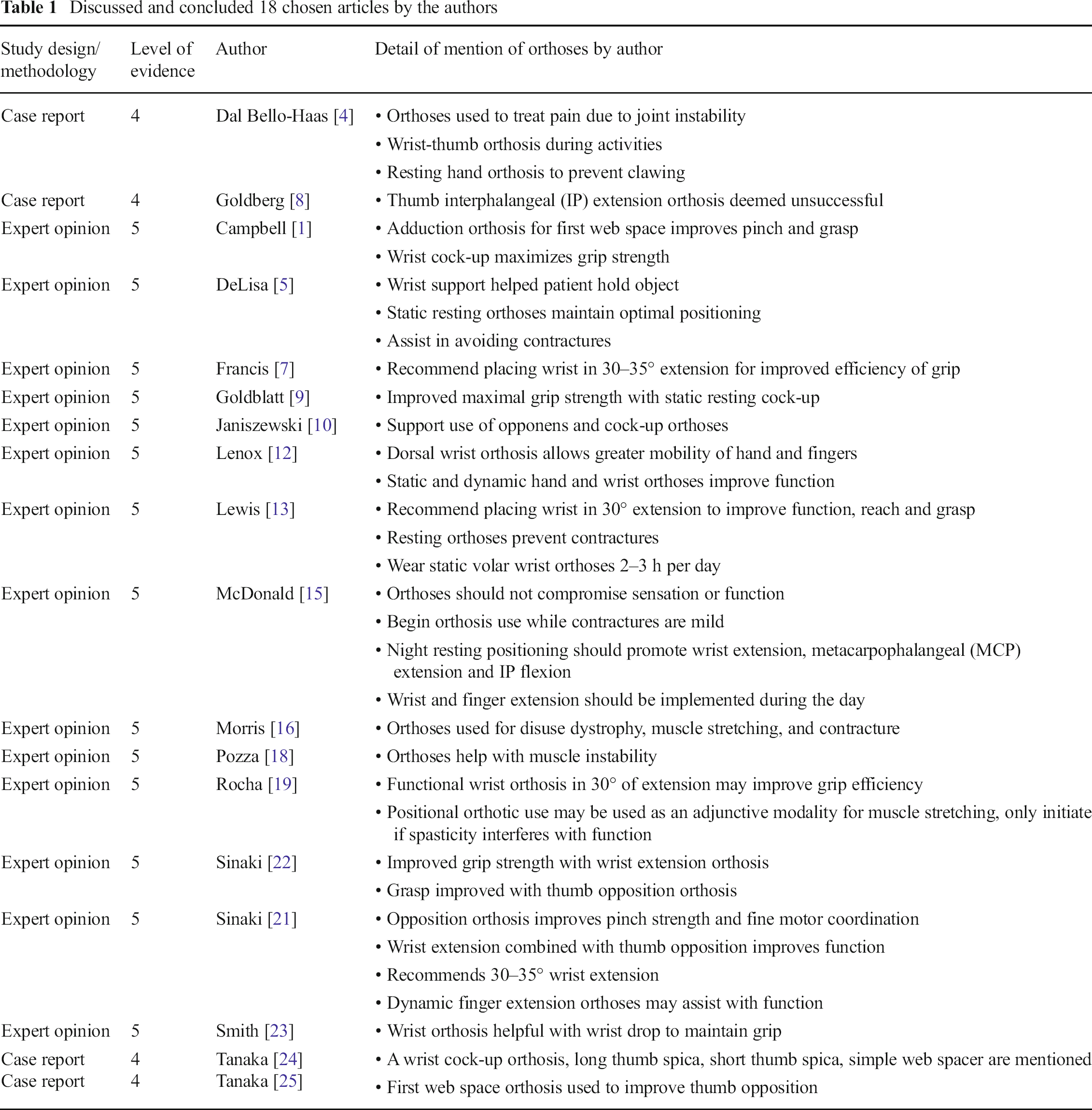
Based on Sackett's [17, 20] original 5-level pyramids, there were 4 level 4 studies (case reports) and 14 level 5 (expert opinions). No randomized controlled trials or controlled clinical trials were identified.
With progressive weakness, it is common for patients to have weakness of the wrist extensors leading to wrist drop which interferes with grip. A static resting wrist-hand support style orthosis may increase the patient's ability to hold objects and improve overall function [5, 9]. Other experts agree the use of palmar and/or dorsal cock-up orthoses for a flaccid wrist can be beneficial: “Generally, the dorsal splint allows greater mobility of the hand and fingers [12] p.543.” Avolar wrist support in 30–35° of extension [7, 13, 19, 21], also referred to as a cock-up splint or wrist-hand orthosis, improves grip strength and/or efficiency according to several of the reports [1, 7, 9, 13, 19, 21, 23].
“Clawing” or an intrinsic minus hand results from muscle imbalance due to weakened intrinsic muscles. One case described a resting hand orthosis to prevent the intrinsic minus positioning [4]. In addition to clawing, intrinsic weakness leads to lack of thumb opposition. There were seven articles reviewed which recommend a thumb positioning orthosis to assist with pinch [1, 4, 10, 21, 22, 24] with one describing a specific unique web spacer style orthosis [25]. This case discussed qualitative outcomes. No quantitative measure was described. The authors provide an algorithm for clinical decision making, specifically discussing the early timing of the thumb orthosis as well as use of a wrist cock-up splint, long thumb spica, short thumb spica, and simple web spacer [24].
Functional gains [4, 5, 12, 13, 21, 22, 25] and contracture prevention [5, 13, 15, 16, 19] were identified as the overriding themes in orthoses intervention throughout the literature reviewed. Lenox [12] declares that a dorsal rather than volar wrist orthosis allows greater mobility of the hand and fingers. He and Sinaki [22] also recommend consideration of dynamic finger extension assist orthoses. Only one report [13] provides a specific protocol of wearing the volar wrist orthosis for 2–3 h per day to prevent contractures. None of the articles contain information about outcome measures; all recommendations are based on expert opinion.
Other authors [4] discuss the use of orthoses to treat pain due to joint instability at stage V of ALS. The article mentions a patient was provided with a wrist-thumb orthosis for activities and a resting hand orthosis to prevent contractures in the hand; however, they did not report less pain, improved function, or lessening of the contracture after wearing the orthoses. Stage V of ALS is typically characterized by progressive weakness and deterioration of muscle, which can have detrimental effects on mobility and endurance [4]. McDonald [15] recommends that the patient use night resting orthoses in a different position than the day orthoses. At night, he is recommending wrist and metacarpophalangeal (MCP) extension with proximal interphalangeal (PIP) flexion. During the day, he recommends wrist and finger extension. This author also emphasizes that any orthosis provided should not interfere with sensibility or function. Goldberg completed a case report regarding a patient who wanted to independently operate the television remote control, but was unable because of decreased extension at the interphalangeal (IP) joint of his thumb. This prevented him from being able to wrap his hand around the remote control. An IP extension splint was fabricated for this individual; however, this was proven to not be a successful intervention [8]. Some of the reports identified mention the use of orthoses for the upper extremity in the treatment of the symptoms of ALS; however, they do not provide detailed descriptions of the orthotics or outcome measures [16, 18].
None of the appraised articles included use of outcome measures. There was a common thread found among the articles reviewed: All articles mentioned the importance of early interventions, a multidisciplinary approach, and including the patient in the plan of care. Patients with ALS/MND demonstrated improved function, less pain, and improved range of motion with the use of orthoses; however, the studies reviewed were limited in size, and further research is needed into appropriate study designs for the use of upper extremity orthoses in this population. It is also important to determine the best manner of assessing outcomes with this intervention. We propose that through a series of case reports, the improvement in quality of life may be demonstrated.
In order to better understand the magnitude of the role of orthoses in functional gain and quality of life, it is helpful to understand the premise of occupational therapy (OT). OT began in 1917 as a profession when a group of medical professionals realized the therapeutic value of occupation [26]. It is these occupations that make people's lives meaningful, and these very occupations can be easily affected when disease or illness occurs. An activity of daily living (ADL), an occupation, includes the ability to care for oneself including eating, bathing, dressing, hygiene, and other daily tasks. OT originally used occupations or “doing” as a means of healing, and now, the definition has evolved to the return to occupations of everyday living as the goal of the therapy. The definition of occupation is complex and variable. For the purposes of the case reports, we are using the definition proposed by Law, Baum, and Dunn [11] pp. 6–10: “Occupation is everything that we do in life, including actions, tasks, activities, thinking and being.” The World Health Organization's (WHO) International Classification of Functioning, Disability and Health (ICF) places activity in the center of their model of health [27]. They define activity as “the execution of a task or action by an individual” (p. 10). People with amyotrophic lateral sclerosis (PALS) experience a loss in occupation and the ability to participate in meaningful activity due in part to the involvement of upper extremity muscle atrophy. Many experience feelings of hopelessness due to the loss of independence. This article describes case examples of upper extremity orthosis use allowing simple yet meaningful participation in occupation. Each case study explains how the use of an orthosis allows the individual with ALS to engage in an activity to increase function and independence. Accounts of upper extremity orthoses use in ALS/MND are minimal considering the importance of the intervention and potential effect on PALs' quality of life.
Three patients are presented in varying stages of the disease that benefitted from the use of upper extremity orthoses: “Shelly” had limb onset hemiplegia; “Larry” presented with bulbar onset ALS; and “Kathryn” who has limb onset ALS.
Materials and Methods/Results
Case Number 1: Shelly
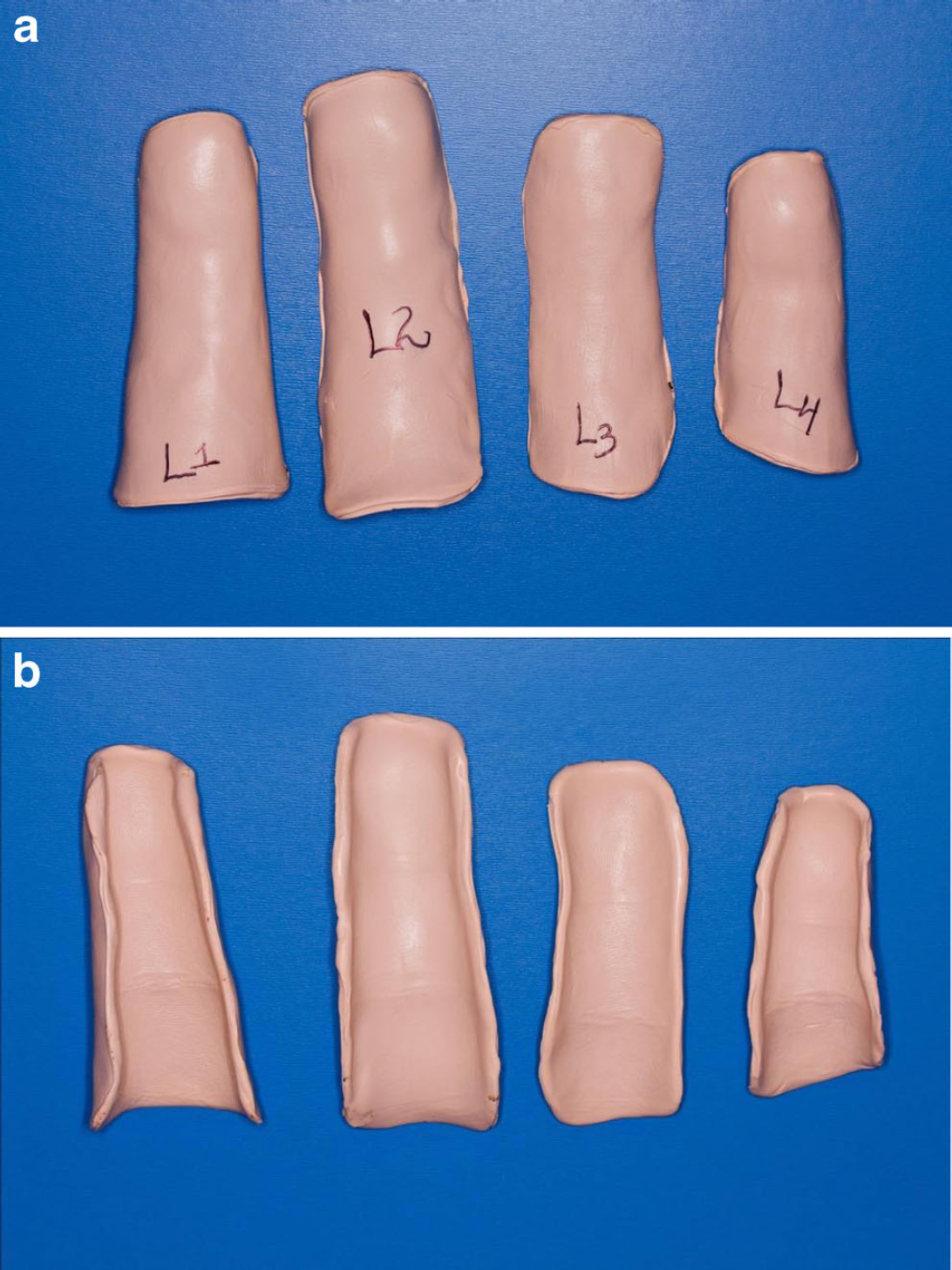
Shelly was a 70-year-old retired PhD psychologist who presented with slowly progressing ALS with spastic left hemiparesis. The onset of her symptoms was in June of 2006, and she was deceased in February of 2011. She developed adhesive capsulitis of both shoulders 2 years after diagnosis. She lacked motor control as well as the ability to perform fine motor grasp. Her initial orthotic needs occurred when she noted difficulty grasping her walker approximately 1 year post diagnosis. This was due to weak intrinsic muscles and inability to oppose the thumb as well as to extend the fingers enough to encircle the walker. Custom finger extension orthoses were fabricated allowing her to grasp the walker, a hair brush, eating utensils, and other items. She affirmed this greatly increased her independence in activities of daily living. These can be made dorsally, volarly, or circumferentially using a strip of 1/16th in. moldable thermoplastic extending the length of the finger or just proximal to the distal interphalangeal joint. Care should be taken to avoid pressure from the lateral aspects of the orthoses at the digital nerves which lie just volar to the finger creases. They may be taped on with paper tape, or Velcro™ may be used for closure (Fig. 1). On some of the fingers, she was able to use a figure-of-eight orthosis such as Oval 8® (3 Point Products, Stevensville, MD). Figure-of-eight style orthoses work best in a non-spastic hand, and one in which there is a soft-end feel at 0° of passive extension at the proximal interphalangeal (PIP) joint (Fig. 2). Caution should be taken when considering figure-of-eight orthoses in cases of PIP-fixed contractures and spasticity to avoid pressure-point soreness, irritation, or circulation compromise. At the time of her first orthotic fabrication in 2007, her palmar pinch score increased from 0.25 to 0.5 kg with the use of the orthosis at the PIP joint. As her weakness increased, she developed wrist drop due to weakening wrist extensor muscles. She was fit with a mobile arm support and prefabricated Quad Quip Brand (Quad Quip Solutions, Victoria, Australia) dorsal wrist brace. The combination of these two devices improved her range of motion of the arm and her function on the right side. She had sialorrhea with a primary goal of wanting to wipe her chin independently. A custom-fabricated thermoplastic device allowed her to grab the tissue from a box and wipe her chin (Fig. 3). The patient reported this was especially meaningful to her in social situations. A secondary benefit was she could scratch her face and head with the device. One disadvantage to the addition of the mobile arm support on her electric chair was the increased width prevented her from fitting through internal doorways. This resulted in her staying in one room for the majority of the time. Despite this, the orthoses allowed greater autonomy and sense of control. The outcomes reported on Shelly include increased pinch strength with orthoses in place and increased functional use with orthoses in place through subjective report scores. The amyotrophic lateral sclerosis functional rating scale (ALSFRS) [14] displayed a steady decline from 42 out of a possible 48 points in 2007 to 14/48 in 2010, indicating a decrease in function. The ALSFRS does not appear to be a sensitive enough tool to show increased independence with the use of orthoses.
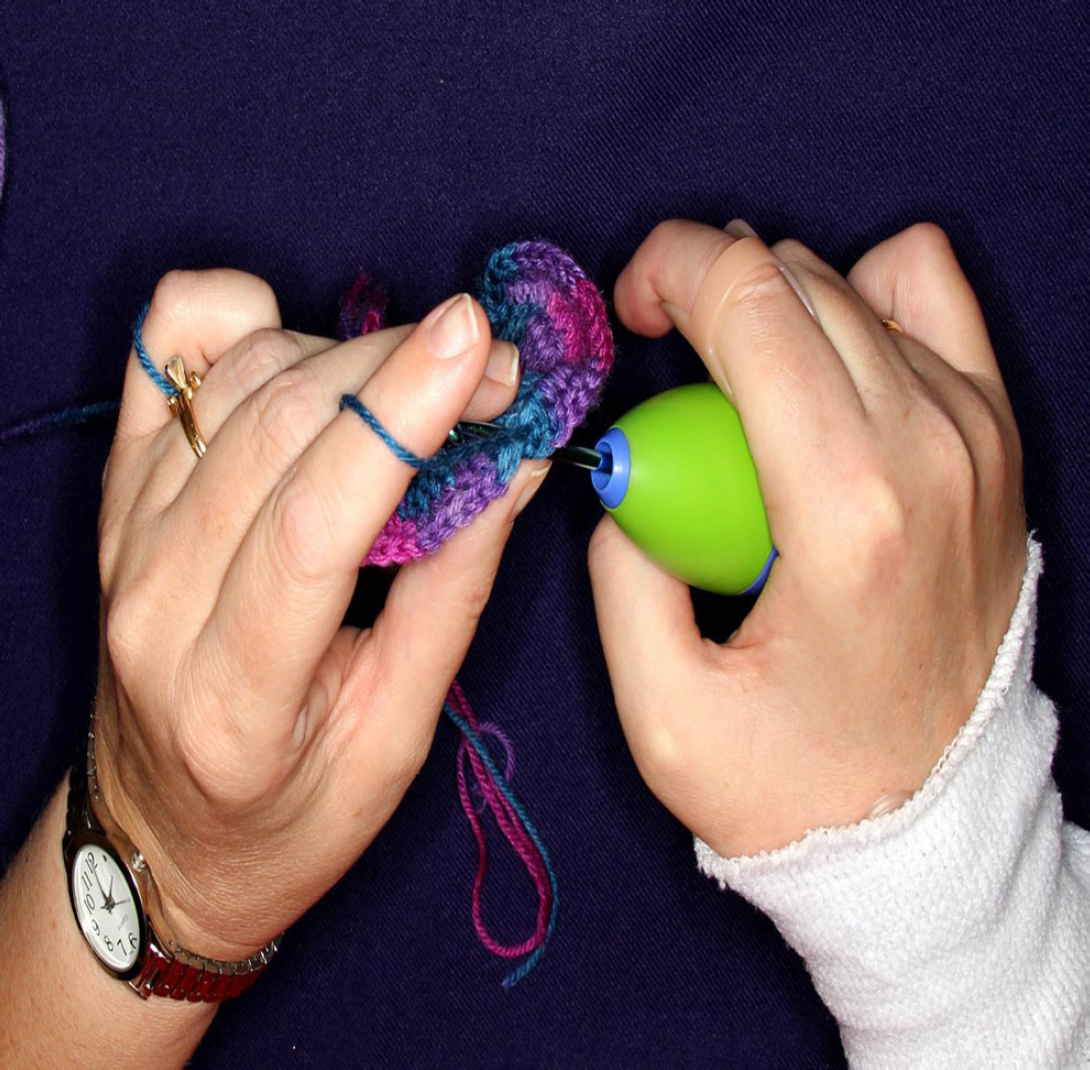
Oval 8® orthosis to support PIP and prevent “buckling” due to weak intrinsic musculature
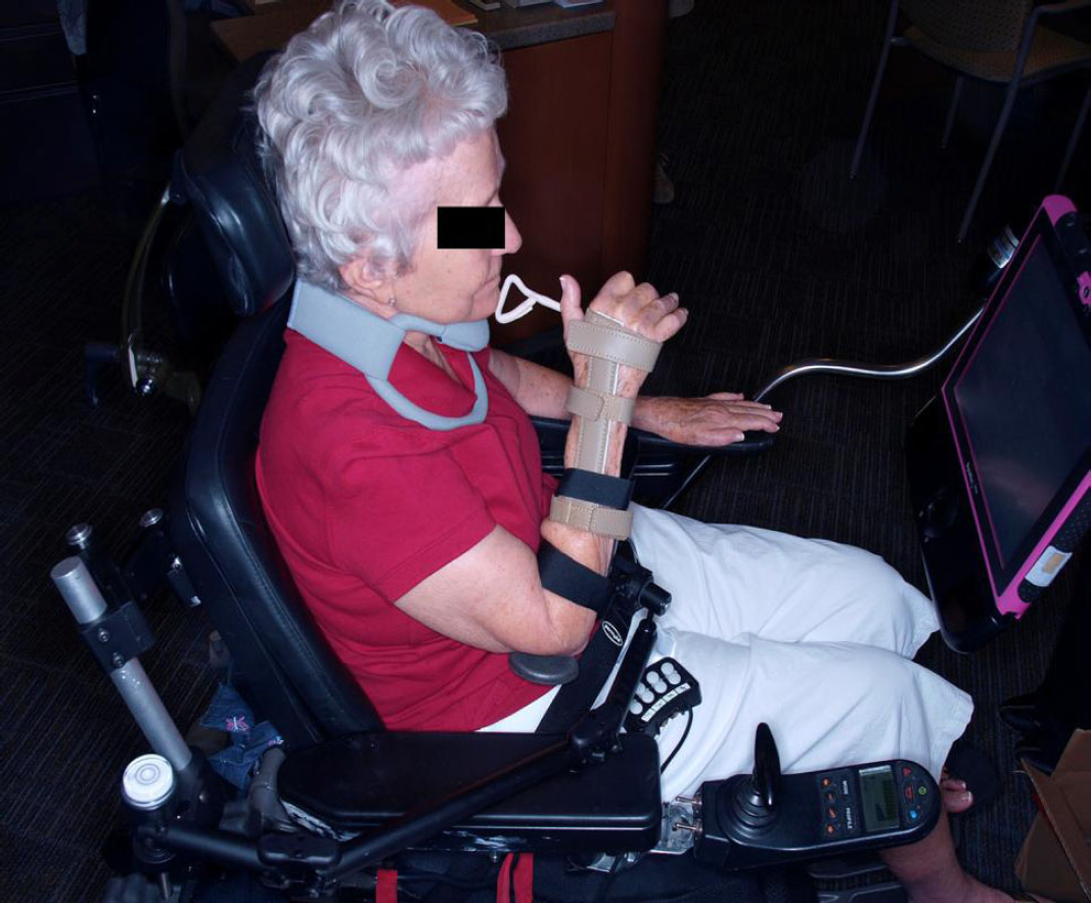
Shelly with Quad Quip® orthosis, mobile arm support, and custom saliva-wiping device
Case Number 2: Larry
Larry, a 47-year-old male with bulbar onset of ALS, presented to the clinic with bilateral wrist drop due to weak wrist and finger extensors and significant tightness in the long flexors due to the muscle imbalance. He was on disability from working as a warehouse manager. His initial onset of symptoms was in June of 2006 with slurred speech, and he was deceased in September of 2008. The patient voiced the ability to use his computer at the time of his initial OT evaluation and expressed a desire to continue with this occupation. In addition to wrist drop, the patient had a 20° flexion contracture of the PIP joints of bilateral hands. Treatment intervention included providing the patient with prefabricated dorsal wrist supports (Quad Quip Brand, Quad Quip Solutions, Victoria, Australia; Fig. 4). This allowed him the functional position needed while working at his computer. Wrist orthoses in a neutral position prevent median nerve compression from constant wrist flexion and provide comfort. In addition to the wrist orthoses, Larry was issued a figure-of-eight (Oval 8® 3 Point Products, Stevensville, MD) orthosis for his right index finger, which allowed him to click the mouse without his finger buckling under in a flexed position. To address the tightness in the long flexors, attachable custom hand-finger orthoses were fabricated (Fig. 5). The patient preferred to wear these 60 % of the time. These were fabricated in a resting pan style of 1/8 in. semirigid thermoplastic with fingers in maximum available pain-free passive extension of the digits. This may have prevented further contractures, which in turn would have significantly limited his ability to participate in meaningful occupations. Larry had proximal weakness and may have benefitted from a mobile arm support, but he declined this after trying it. He and his family thought it would be too cumbersome and costly. He used a piece of a firm elastic exercise band around his neck to assist in positioning his hand while brushing his teeth (Fig. 6). He later hung this loop from a hook on his ceiling. He stated the orthoses helped primarily with the feeling of stability at the wrist and the fingers. The orthoses were used primarily with the DynaVox (brand) speech device (DynaVox Mayer-Johnson, Pittsburgh, PA). He indicated the orthoses assisted with hand and wrist pain. Outcome measures used with Larry include the ALSFRS, the McGill [3] quality of life questionnaire, and personal report of satisfaction. The ALSFRS declined from a 39/48 in March of 2007 to a 10/48 in July of 2008. His quality of life was 8 out of a possible 10 points in March of 2007 and a 7/10 in July of 2008. It is noted in the chart that he and his wife reported satisfaction with ability to continue with hygiene care and computer use with the orthotic interventions.
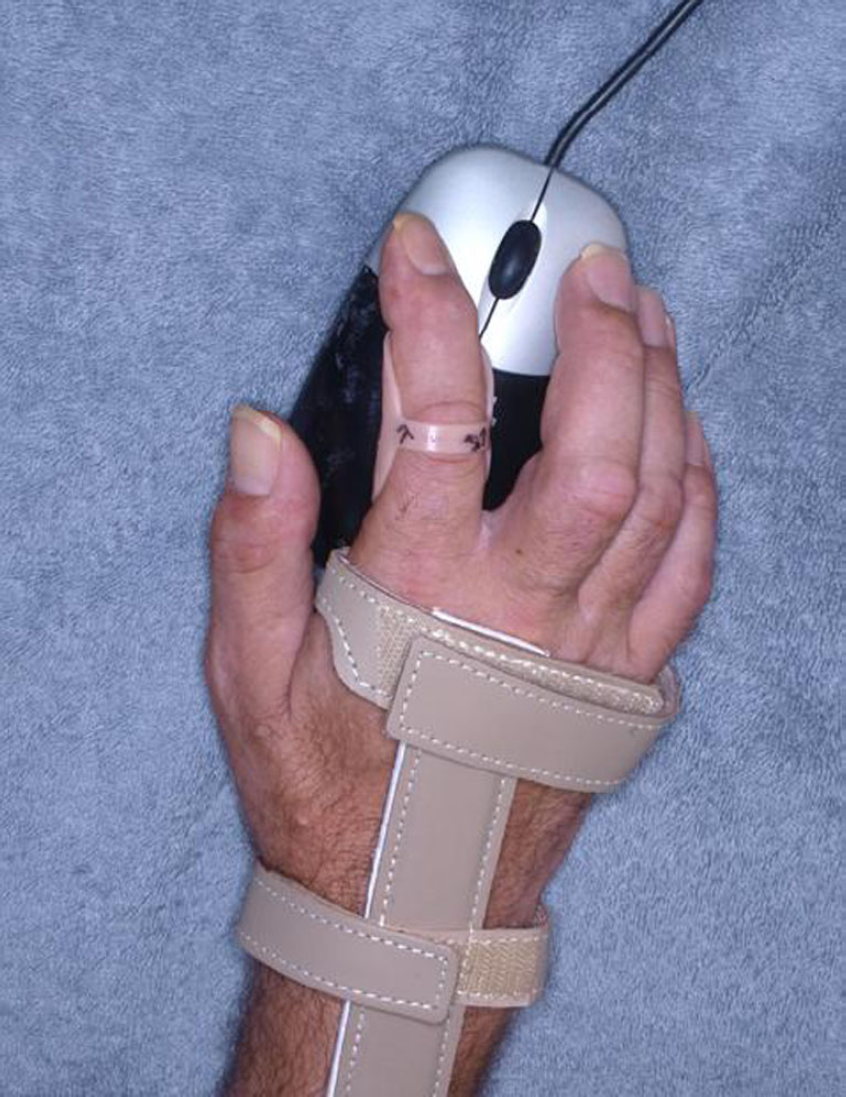
Larry with Quad Quip® orthosis and Oval 8® orthoses
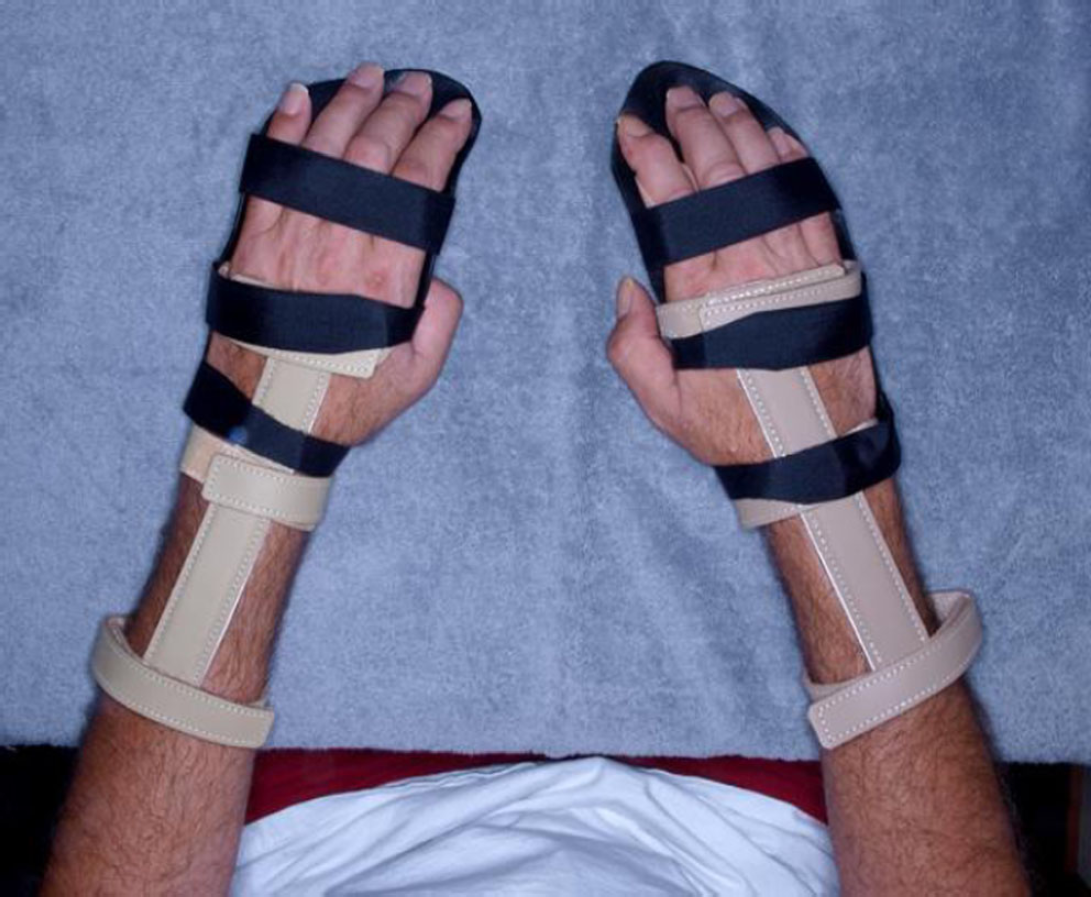
Larry with attachable custom hand-finger orthoses
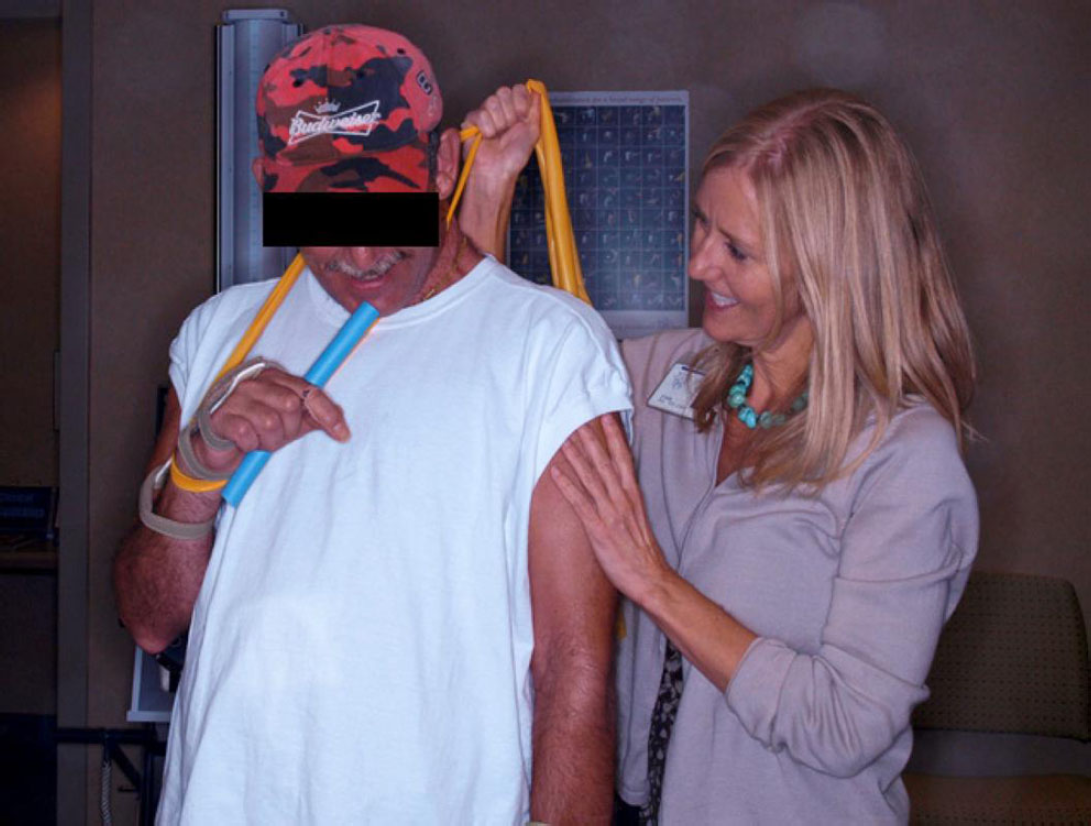
Larry learning to use an elastic band as an assist for arm elevation. He later hung a piece from a hook on his ceiling
Case Number 3: Kathryn
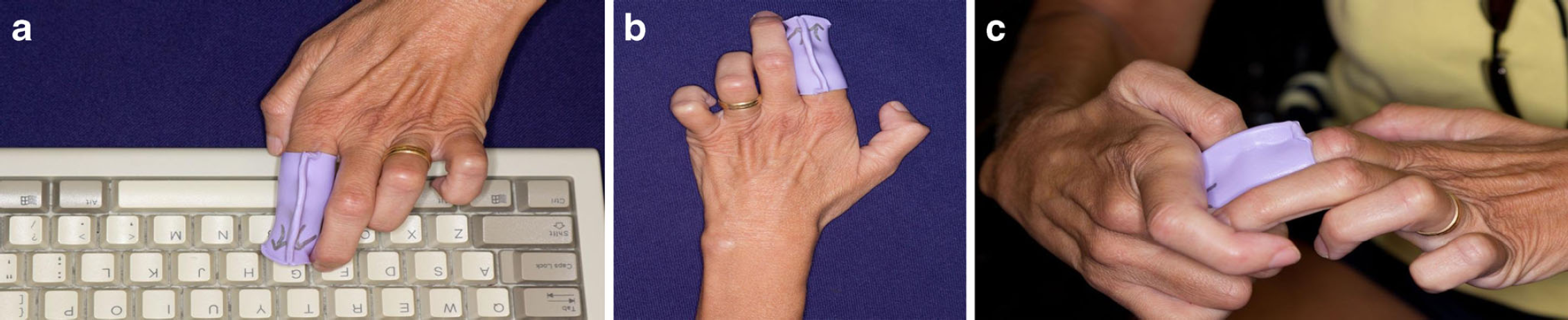
Kathryn is a 49-year-old female who worked for a mail courier service. She had limb onset and significant spasticity and presented with lack of stability in her dominant hand. Her symptoms began in April of 2010 with dysphonia and right arm weakness. Decreased extensor strength made it difficult to perform index finger dexterity tasks such as manipulate fasteners, use a mouse or a keyboard, and hold small objects. She voiced the importance of being able to don and doff the orthoses independently as her husband works full time. Finger extension orthoses (FOs) for the index and small finger were fabricated. These were made out of 1/16th in. highly moldable thermoplastic in a circumferential fashion with the pad of the finger free to allow sensibility and the interphalangeal (IP) joints in slight flexion of approximately 10° each. The orthoses had a dorsal component ridge for the patient to be able to grasp to make donning and doffing easier (Figs 7a–c). The patient reported decreased complaints of pain as well the ability to use her iPad® and home computer mouse with use of the orthoses. In addition to the daytime functional assist orthoses, a nighttime forearm-based resting hand orthosis was fabricated for each hand. These provided a gentle low load stretch, assisted with pain relief, and provided support. They were made with 1/8 in. semirigid thermoplastic with the wrist in 10° extension and 5° ulnar deviation, metacarpal phalangeal (MP) joints in 10° flexion, PIP joints in about 10° flexion, and DIP in maximum available extension. The thumb was in comfortable neutral radial abduction. Due to Kathryn's intrinsic weakness, the thumb was not placed in palmar abduction. Greater strength allowed for a lateral pinch. The IP joints of the thumbs were both contracted, and therefore, the thumb was placed in maximum available extension with a padded strap over the IP joint to prevent further flexion. Velcro loops were placed allowing independent donning and doffing (Fig. 8). She alternates wearing schedule of right and left side nightly. The patient had a gain of 20° extension at the PIPs after wearing the orthoses for 1 month. Grip, pinch, or quality of life scores were not obtained. Her ALSFRS was 43/48 in November of 2010 and 23/48 in February of 2013. Her stated satisfaction from orthoses use is the ability to use computer and IPad®, the ability to hold objects, and decreased pain with increased comfort.
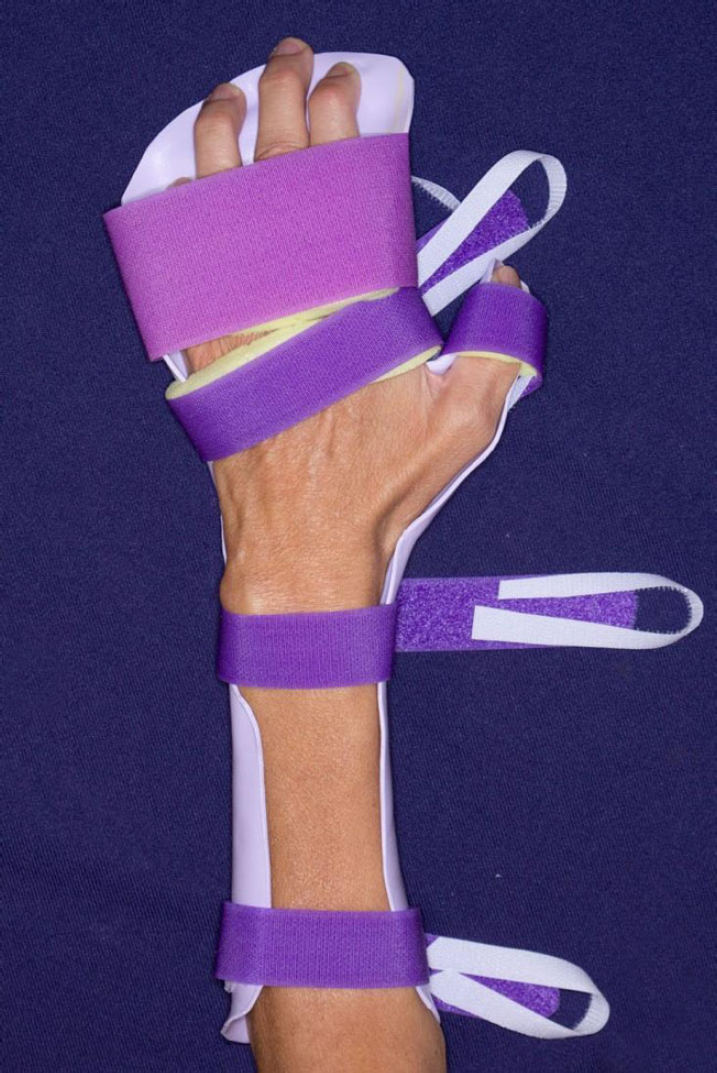
Kathryn's night resting orthosis with strap loops
Discussion
Occupational and physical therapists trained in orthotic fabrication are a necessary adjunct to the team of professionals who work with patients who have ALS and other MND. Designing and fabricating custom orthoses as well as identifying appropriate ready-made devices require experience and skill. With the correct intervention, a patient greatly increases the functional use of his or her hand and self-efficacy in activities of daily living. In addition, painful contractures of upper extremity joints can be prevented or corrected. Decreasing pain and increasing function substantially improves quality of life in ALS/MND.
In this paper, we described figure-of-eight orthoses, dorsal and volar wrist braces, resting wrist-hand-finger orthoses, use of a mobile arm support, finger extension orthoses, and attachable extension orthoses.
There are additional useful orthoses that were not described with these cases. One important example is a hand-based thumb spica style orthosis to assist with thumb opposition (Fig. 9). The results of these cases described would have been more informative had an outcome measure been used pre- and post-orthoses.
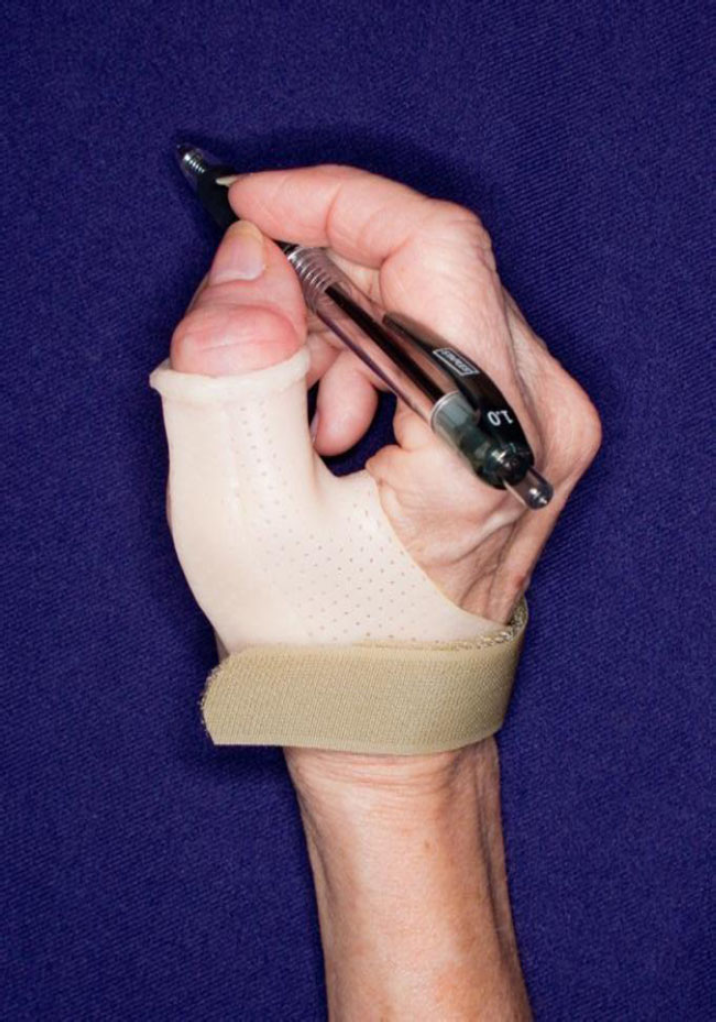
Thumb spica orthosis to promote opposition
This may be possible with a telephone interview when considering reporting of future cases. The ALSFRS is one example that could be used as a measure of success as it does not require the patient to return to the hand clinic [14]. This measure may not however be sensitive to some important improvements in quality of life and instrumental activities of daily living. Another outcome measure that would give more information would be the Canadian Occupational Performance Measure [2]. This requires time of roughly 30 min, which could produce fatigue and be impractical for some patients. The McGill [3] quality of life measure is another option to consider in assessing change in status due to an OT intervention as it is easy to administer and can be performed over the telephone.
There are times when PALS refuse potentially useful orthoses and other times where they are cumbersome and unnecessary. Additionally, some people have negative side effects such as pressure areas or feelings of confinement during use. Furthermore, it is important to consider timing of the hand OT consult. Early intervention is important for optimal functional gains as are frequent revision and reassessment throughout the progression of the disease.
Studying the usefulness of an upper extremity orthosis in ALS/MND is not practical with traditional study designs such as randomized controlled trials or prospective randomized trials. It would be helpful to have further case reports published. A prospective case report in which the author plans the care, the data collection, and outcome measures may be more beneficial than a retrospective report in evaluating the meaningfulness, use, and increased function gained with orthosis use in the ALS/MND population. In addition, biomechanical studies that demonstrate optimal position to maximize grip and pinch strength with compromised musculature may be beneficial in contributing to orthosis design and planning. Qualitative analysis may also be a means of conveying the positive impact on PALs' life. Hand therapists are an important part of the team needed to treat the complexities of motor neuron diseases; orthotic fabrication is a vital piece of the hand therapist's contribution. Use of upper extremity orthoses impacts patient's lives in profound and meaningful ways that will continue to be measured with increasing effectiveness.