






Abstract

But ask U.S. blood screening laboratories why they are quickly installing new technology for automating their ELISA viral marker testing, and a different model emerges. In fact, the first answer you are likely to hear is “it reduces the potential for error.”
A safe blood supply is, of course, the essence of the blood centers' commitment to public health. It also continues to be a priority of the Food and Drug Administration, which in recent years has stepped up its scrutiny of blood donor centers.
Traditionally, quality assurance practices have been dependent primarily on the scrupulous care of technologists. Instrumentation was chosen largely on the basis of assay performance. But the old approach is no longer sufficient. Today, blood centers must also comply with a collection of stringent mandates. The scope not only encompasses compliance standards for assay performance, but for operational management as well. For example, it requires blood centers to implement procedures that address a range of issues including error reduction, adherence to vendor-supplied assay procedures, effective documentation of blood screening procedures, independent user validation of operational processes, efficiency improvements and process control.
Meeting these requirements has required the centers to make comprehensive changes to their operational procedures and the best solution for them has been automating their testing procedures. Automation, quite simply, assists a blood center in maintaining compliance with FDA requirements starting with minimizing potential human errors.
“Automation reduces the opportunity for ‘people’ errors,” explains Kenra Ford, director of laboratory and inventory management for the Oklahoma Blood Institute. The Institute, a not-for-profit blood center, takes in an average of 180,000 volunteer blood donations a year through its seven collection facilities in the midwestern United States. The donations are shipped to a central facility in Oklahoma City to be processed. Today, that facility is equipped with a new piece of automation equipment: the Ortho Summit™ System from Ortho-Clinical Diagnostics, a Johnson & Johnson company.
The Ortho Summit System-which includes Ortho Assay Software (OAS) and the Ortho Summit Processor (OSP) is the first automated system to be cleared by the FDA Center for Biologics Evaluation and Research (CBER) for automating blood and plasma microplate testing. Currently, blood centers are required by the FDA to test samples for six viral markers: HCV Version HCV Ab, HBcAb, HBsAg, HTLV-I/II Ab, HIV-1/HIV-2 Ab and HIV-1 p24Ag. It is also likely, however, that the FDA will require additional tests in the future. Because microplates are a widely supported format for delivering blood screening assays, the Ortho Summit System will accommodate additional licensed hepatitis and retrovirology tests as manufacturers develop them.
The Ortho Summit System's software operates in a network-ready environment and tracks, evaluates and documents all testing processes performed. Centers can route data from multiple systems for centralized verification and tracking.
The system addresses virtually every current Good Manufacturing Practice (cGMP) requirement listed in the Code of Federal Regulations (CFR) for blood screening for infectious agents. As a result, Ford believes, the technology is poised to reshape the way blood banks comply with FDA regulations.
“The Ortho Summit System helps us satisfy the FDA's cGMP requirements,” Ford says. By automating testing procedures, she continues, the system reduces the number of variables that can affect her center's testing outcomes. “The fewer the variables, the easier it is to identify problems. If a problem, like a change in a reagent's performance, occurs, we can solve it more quickly because we have fewer variables to consider.”
The benefit of automation has yielded quantifiable improvements in Oklahoma Blood Institute's QA and workflow processes. “The number of false-positive samples has gone way down,” Ford reports. One measure of this is the Institute's repeat reactive rate. Repeat reactive rate is the expressed percentage of samples that re-tested positive following an initial positive screening test. Since installing the Ortho Summit System, the Institute's repeat reactive rate has dropped by more than half, from 2.0–3.0 to 0.8–0.98 percent.
This reduction in false positives is important to the Institute for a number of reasons. Some are intangible, like fewer incidences of needlessly alarming donors. “A false-positive result is a disaster from a donor-relations point of view,” Ford says. “It's terrible for the donor's peace of mind.” False positives also jeopardize any hope of future support from the donor. “You can't put a dollar value on that cost,” Ford notes.
In more concrete terms, false positives mean that there are potential units destroyed. That has a dollar value. “By saving units that we could not have used before, we paid for the Ortho Summit System within the first seven months of use,” Ford says.
The system has also let the Institute perform its ELISA testing more efficiently. “We knew this would happen,” Ford explains, “so we were adjusting our full-time equivalents (FTEs) before we installed the system to prepare for it.” Two fewer FTEs are required each night to handle the daily influx of donations. “We are also better able to tolerate fluctuations in draw rates,” Ford says.
Converting to automation, Ford cautions, does take a commitment. “As with any new technology, you are bound to discover operational and other issues as you move forward.” She notes, however, that whenever problems have occurred, Ortho-Clinical Diagnostics moved quickly to solve them. “Our staff was also completely committed to making the transition,” she says. “As a result, the installation has been very successful.”
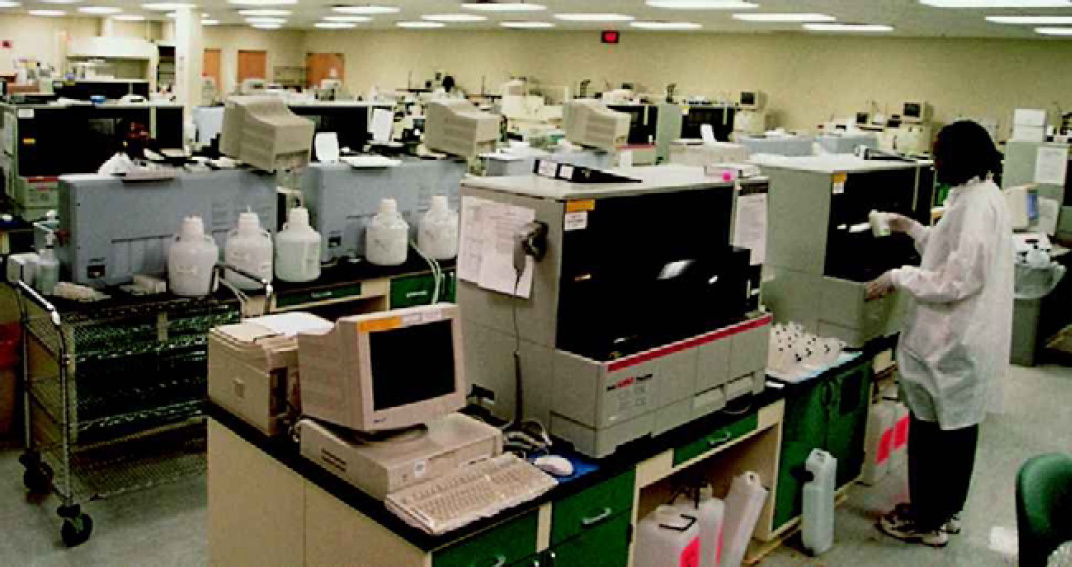
The main laboratory at Community Bio-Resources uses several Ortho Summit Processors to automatically test and screen approximately 1 million plasma samples annually.
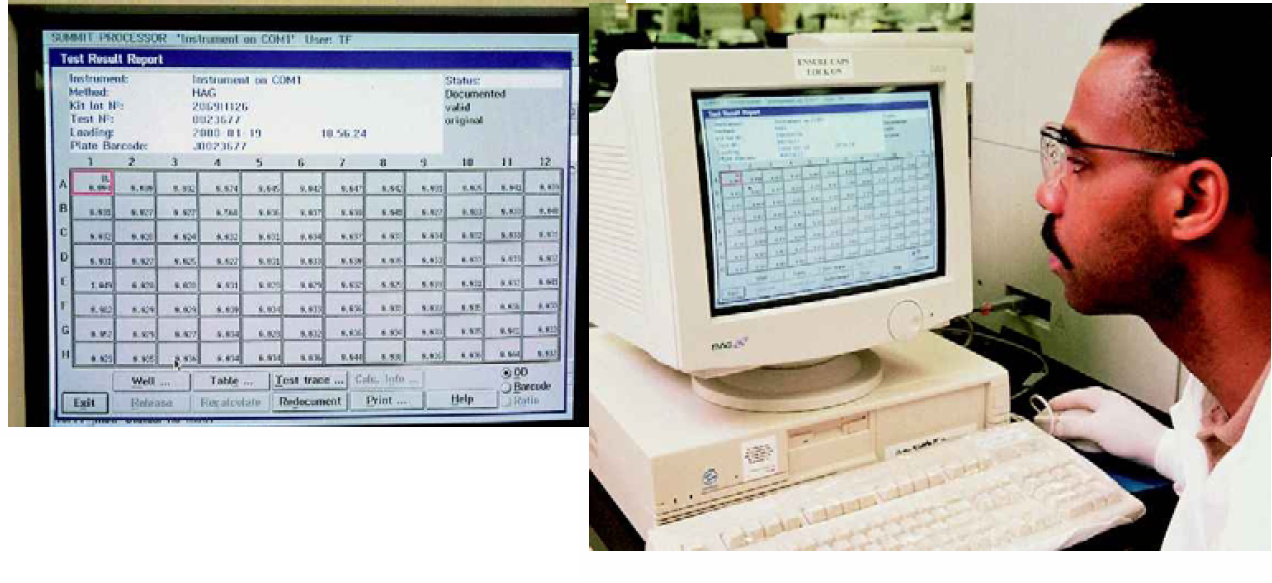
Technicians can review values for each sample in a microwell plate using the Ortho Summit Processor.
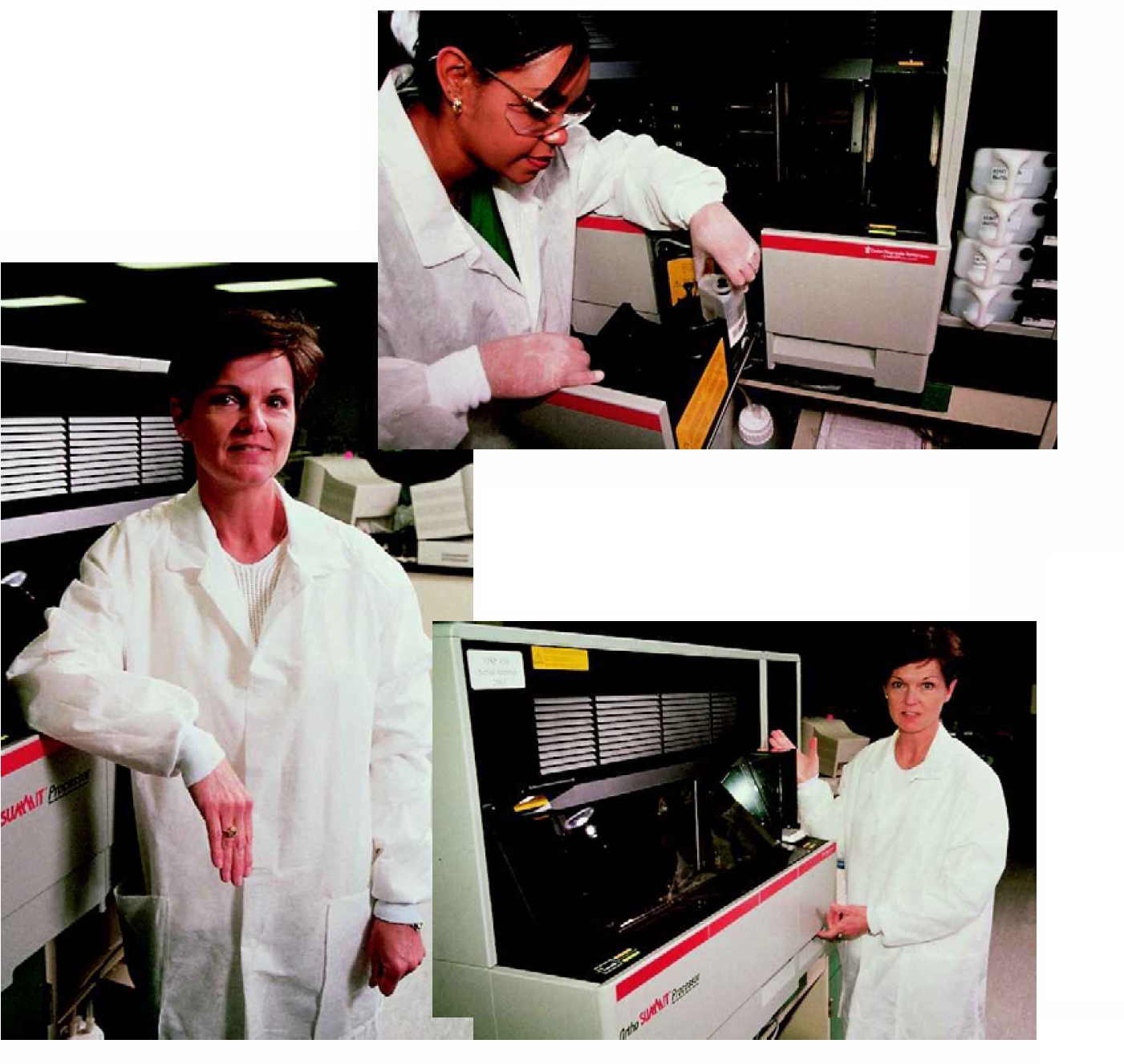
Shonda Scott loads reagent into the Ortho Summit Processor.
Lab Supervisor Timothy Freeman, MT (ASCP) loads a sample plate into one of several Ortho Summit Processors used at Community Bio-Resources in Alabama.
EASIER DOCUMENTATION
Another blood center that reports the conversion was worth the effort is Central California Blood Center, based in Fresno, California. In addition to collecting and processing its own 55,000 units of blood annually, this nonprofit regional organization provides testing for another 30,000 units collected in other facilities.
Community Bio-Resources is based in Hoover, Al.
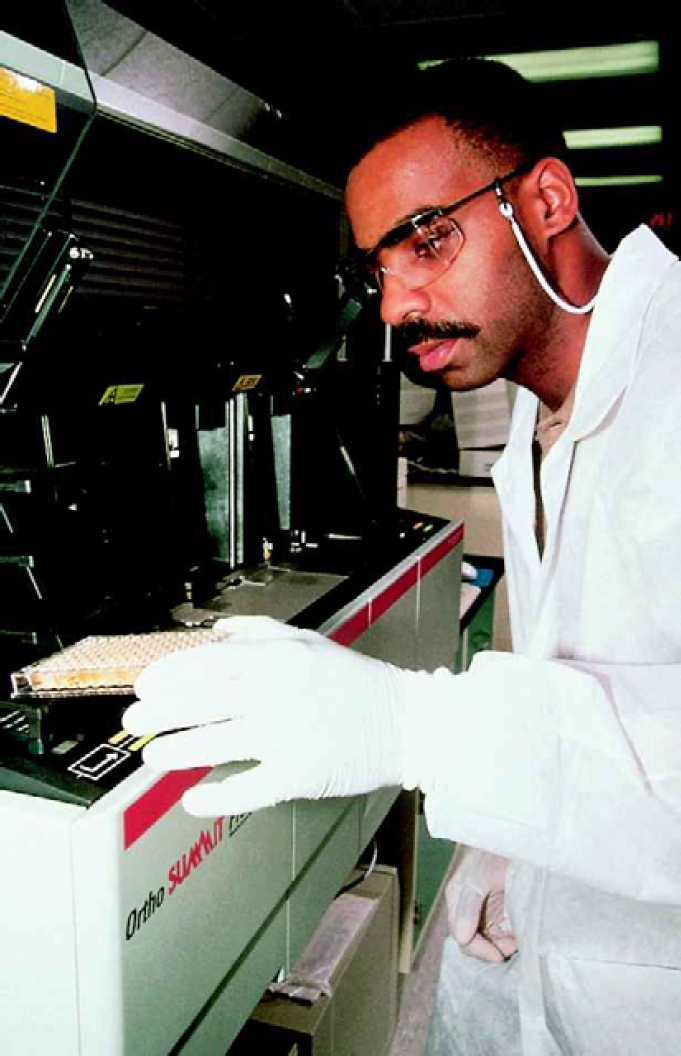
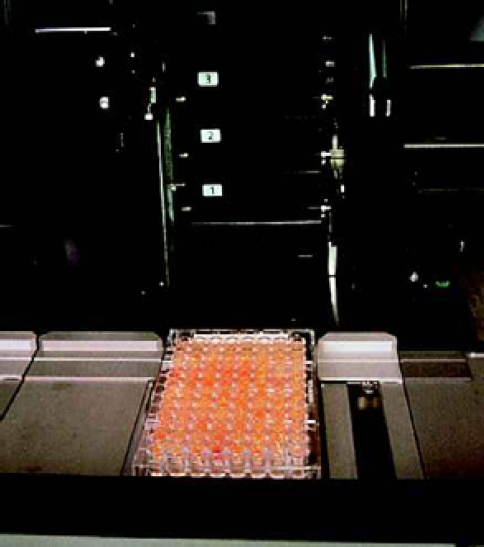
Sample microwell plates are moved automatically through the processor, allowed to incubate in one of the monitored compartments shown here, and automatically processed by the Ortho Summit Processor. Operator involvement is kept to a minimum.
Terre C. Sutherland is director of laboratory affairs at Community Bio-Resources Inc. in Hoover, A1a.
Sutherland says that the Ortho Summit Processor's automation has both reduced the potential for human error and helped Community Bio-Resources to reduce its laboratory labor.
“The Ortho Summit System is the next evolution of blood center technology,” says Steve Negin, laboratory manager. “It's not a matter of ‘if’ you are going to use it, but ‘when.’” The center has two OSPs networked together, with each system handling three of the six currently required viral markers. “We draw specimens Monday through Friday,” Negin says. “Our testing is performed during day shifts Tuesday through Saturday.” On those days, testing begins by 7:30 a.m. By 1:00 p.m., testing is usually completed, and the staff begins reviewing results.
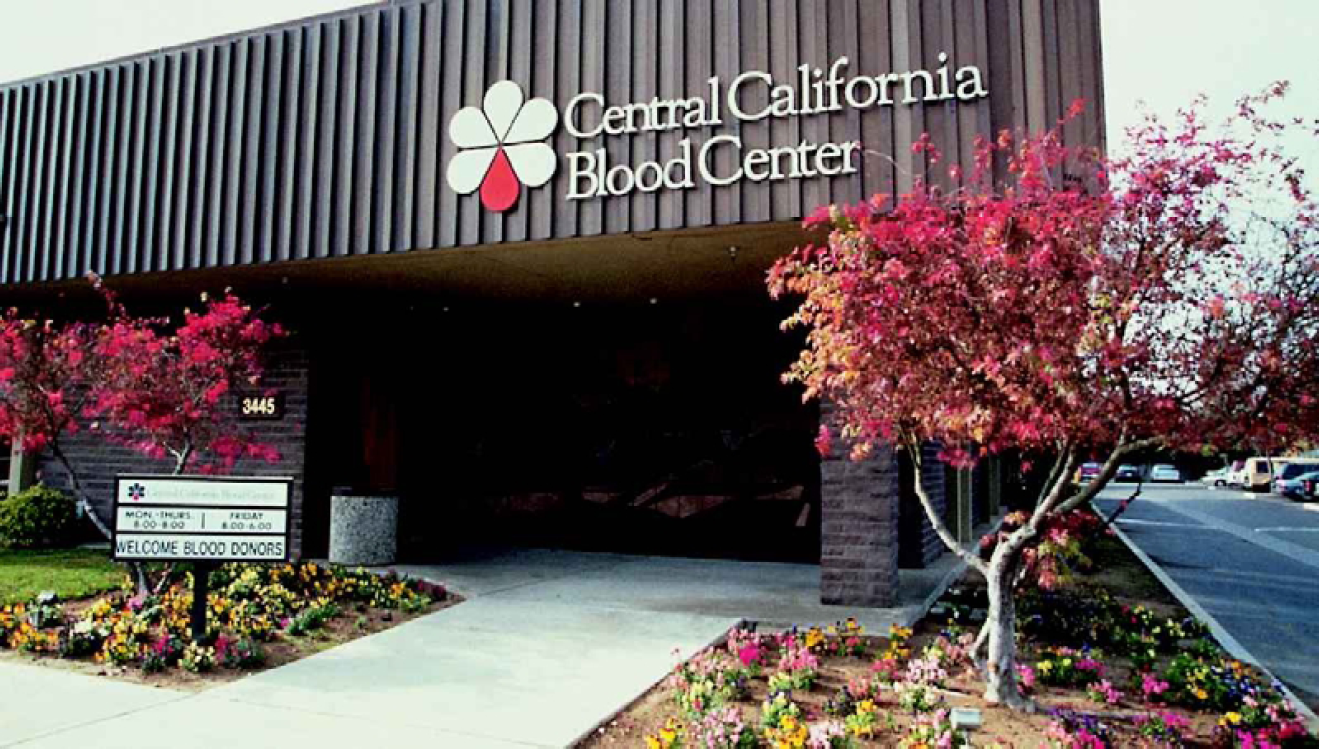
The Central California Blood Center in Fresno, Calif., processes 85,000 units annually: 55,000 units collected by this nonprofit regional organization, plus 30,000 units collected annually by other facilities.
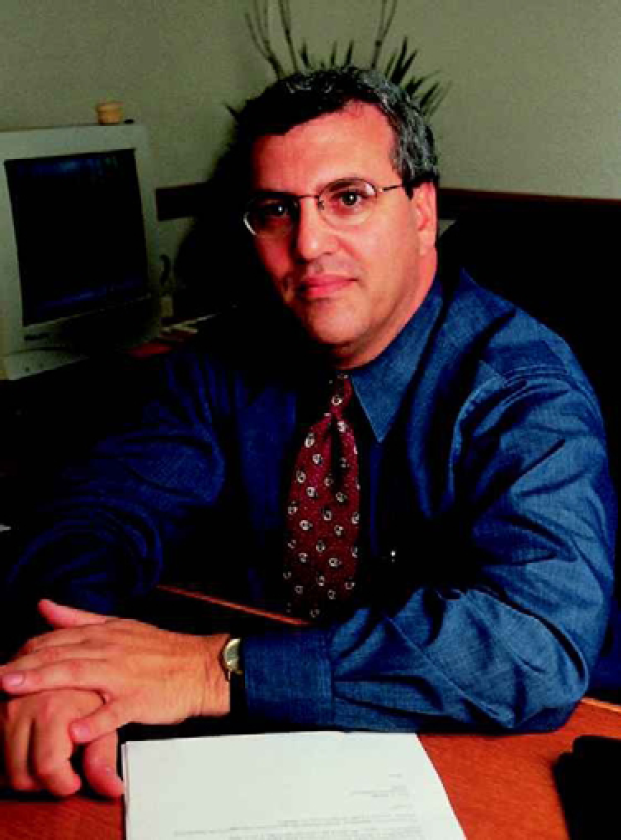
Steve Negin is the laboratory manager of the Central California Blood Center in Fresno, Calif.
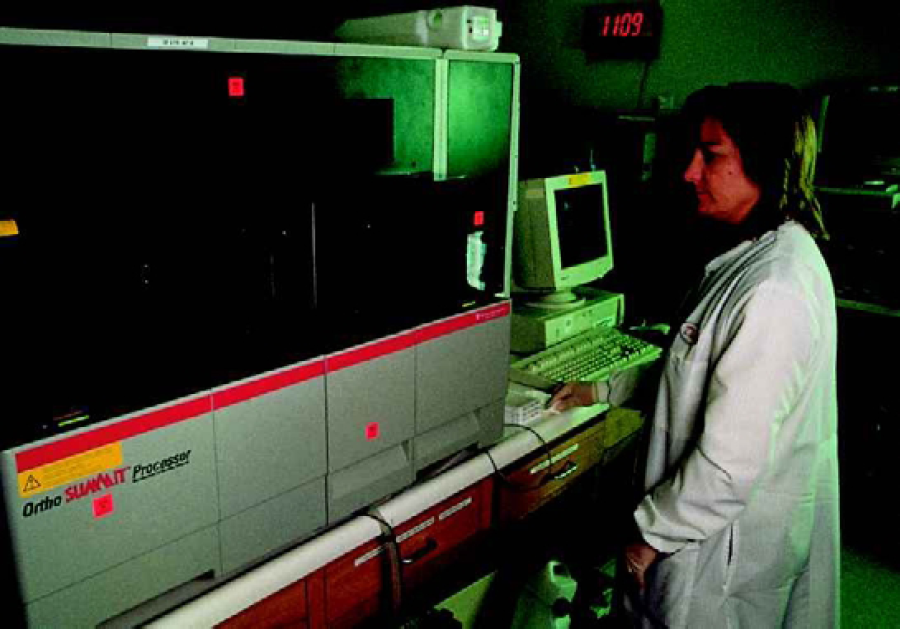
The Ortho Summit Processor (OSP) automates critical steps in the viral marker blood screening and tracking processes.
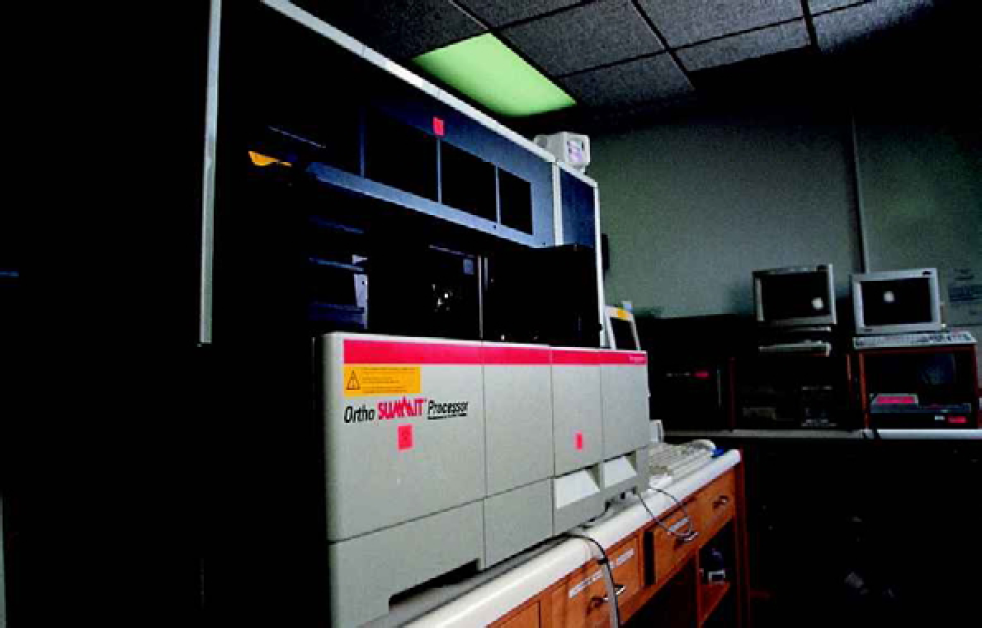
Clinical lab scientist Debra Marcotte monitors the workflow of the Ortho Summit Processor. The Central California Blood Center in Fresno, Calif., manages the screening of blood donations through the facility with two networked Ortho Summit Processors.
Like his midwestern colleague, Negin cites error reduction as a key benefit of the Ortho Summit System. “The fact is that any time you perform a task manually, you introduce the potential for error,” Negin says. “The Ortho Summit System automates these tasks, from washing the plates to adding reagents.”
Negin notes that automating these steps has also made his testing processes less complicated. “Instead of having to juggle 30 things at once, my staff can devote their attention to truly critical tasks,” he says.
Because the two OSPs are networked, Negin also has built-in insurance against component failure. “If something were to happen on one, we would just move our samples over to the other,” he says. “It doesn't matter, for example, which one we used for the initial pipetting. By being networked, the systems always know which samples are on board and what their current status is. That gives us added flexibility.”
The Ortho Summit System has also enabled the center to tighten its process control. “When you reduce the human factor, you inevitably improve your processes in terms of both consistency and accuracy,” Negin continues.
Negin has not seen a huge drop in his reactive repeat rate; he explains that this is because 70 percent of his donors are repeats. “Because of our donor pool, this is not an area where we expected huge benefits.”
When it comes to complying with FDA regulations, however, the benefits are dramatic. Take documentation, for example. “Every step of the blood screening procedure has to be meticulously tracked and recorded,” Negin explains. “Now the Ortho Summit System does it all for us. It eliminates the possibility of transcription errors. And it keeps records that are more detailed than any blood center could ever do by hand. Everything is tracked down to the second, and recorded on one sheet. You can tell at a glance if something unusual is going on.”
Negin believes that the system's documentation capabilities alone are sufficiently important to revolutionize the way blood centers conduct their operations. “I really believe blood centers will have to either convert or outsource their testing to facilities that have this type of capability.”
CLEANER PROCESSES
Negin's prediction that the Ortho Summit System will become the industry standard may already be coming true. The system was launched in Europe five years ago and 510 (k) cleared for use in the United States in 1998. Today, it is used to screen over 32 million units of blood annually over half the world's supply of donated blood.
Converts include not only community blood centers but organizations like Community Bio-Resources, Inc. (CBR), a biopharmaceutical products company. “We are one of the largest labs in the world to date to install the system,” notes Terre Sutherland, director of laboratory affairs for the Birmingham, Alabama-based firm. “We support 17 plasmapheresis donor centers plus 2 contract centers; almost 4,000 donations are flown in daily for testing.”
Since installation, Sutherland says, the firm expects to reduce its staffing requirements when fully implemented by three FTEs or one-half employee for each of the system's six tests. The firm's repeat reactive rate has declined, and again, automation has reduced the potential for human error. “With manual systems, the only way to prevent certain types of problems is through hands-on, labor-intensive care and attention,” Sutherland says. “You have a hand-held pipette, so you have to manually protect against carryover contamination and reagent spillage. Automating the process makes it easier.”
Tracking procedures and documenting them is also far easier today, thanks to the Ortho Summit Processor. “Before, it was very time-consuming and labor-intensive,” Sutherland says. “Now the computer does it for us.”
Like her colleagues, Sutherland notes that converting to automated viral marker testing requires significant changes to blood center processes. “It's only when you go live and begin hands-on operation that you truly appreciate how the system will affect the way you do business,” she says. But the upside for her organization is identical to the benefits realized by smaller, nonprofit blood centers: better process control.
“Automation supports good manufacturing practice,” Sutherland says. “So by automating blood viral marker testing, monitoring and recordkeeping, the Ortho Summit Processor is very beneficial to that end.” ▪
Contact: Gayle S. Mestel CCS/PR, Inc. 760/438-5250 (voice) 760/438-5230 (fax)
(Note: Ortho Summit is a trademark of Ortho-Clinical Diagnostics, Inc.)
If you are interested in seeing more articles like this in JALA, please email