






Abstract
As part of its efforts to improve in these key areas, Heartland Blood Centers has implemented a Manufacturing Execution Systems (MES) approach to blood testing. Both the quality and productivity results have been impressive:
improvements have been realized in both testing reliability and productivity of the virology laboratory. Initial and secondary reactive rates have declined due to the consistency of an automated plate handling and testing process;
labor requirements in the lab have been reduced from six FTEs to four, and further improvement is possible. Capacity in the lab, even testing with just a single 10-hour shift each day, is estimated at 160,000 units per year-a potential increase of 45 percent compared to the current workload-without requiring additional staff or equipment.
APPLYING A MANUFACTURING APPROACH TO TESTING
With the promulgation of the FDA's current Good Manufacturing Practice requirements, the testing of blood for infectious disease markers is evolving into a process that fits the modern definition of pharmaceutical products manufacturing. Standard operation procedures (SOPs) for each step in the process of collecting, storing, testing and distributing blood and blood components are developed and followed. Each step is carefully documented and ideally, procedures are automated to ensure compliance with the SOPs and to remove the potential for human error.
Although blood centers continue to meet and exceed the requirements of the FDA, a long-term direction of the industry is toward meeting ISO 9000 standards, just as manufacturers in other industries are striving to do in today's competitive market. ISO 9000 specifies minimum system requirements to ensure that GMPs are followed; as long as operations fall within specified parameters of predefined standard operating procedures, quality is assured.
One avenue in pursuing ISO 9000 compliance is to embrace MES methodology to control laboratory operations, as has been done at Heartland Blood Centers, based in Aurora, Il. Heartland has implemented an MES-based approach to blood testing, using the Ortho Summit System (OSS) from Ortho-Clinical Diagnostics, a Johnson & Johnson company, to test for HCV version 3.0 Ab, HBcAb, HBsAg, HTLV-I/II Ab, HIV-1/HIV-2 Ab and HIV-1 p24 Ag. The system's software is produced and delivered with predesigned controls and limits for tasks, and thereby fulfills sample handling and incubation and reagent dispensing to the exacting requirements of the tests the system supports. Robotic hardware and software are united to control and monitor the entire blood testing process to ensure that the process remains within its predefined parameters. The system will only allow technicians to undertake actions at certain times, when certain testing requirements have been met. It schedules the steps required for processing and it also tracks and documents the entire process, creating complete manufacturing batch record documentation for the various assays run by OSS.
As previously mentioned, results of OSS implementation include improvements in both testing reliability and productivity of the infectious disease laboratory. OSS also provides the flexibility to support a variety of microplate tests produced by various manufacturers with expertise in retrovirology and infectious disease testing. This flexibility allows a blood center to choose the best infectious disease ELISA assays available in microplate format for use in the U.S. marketplace.
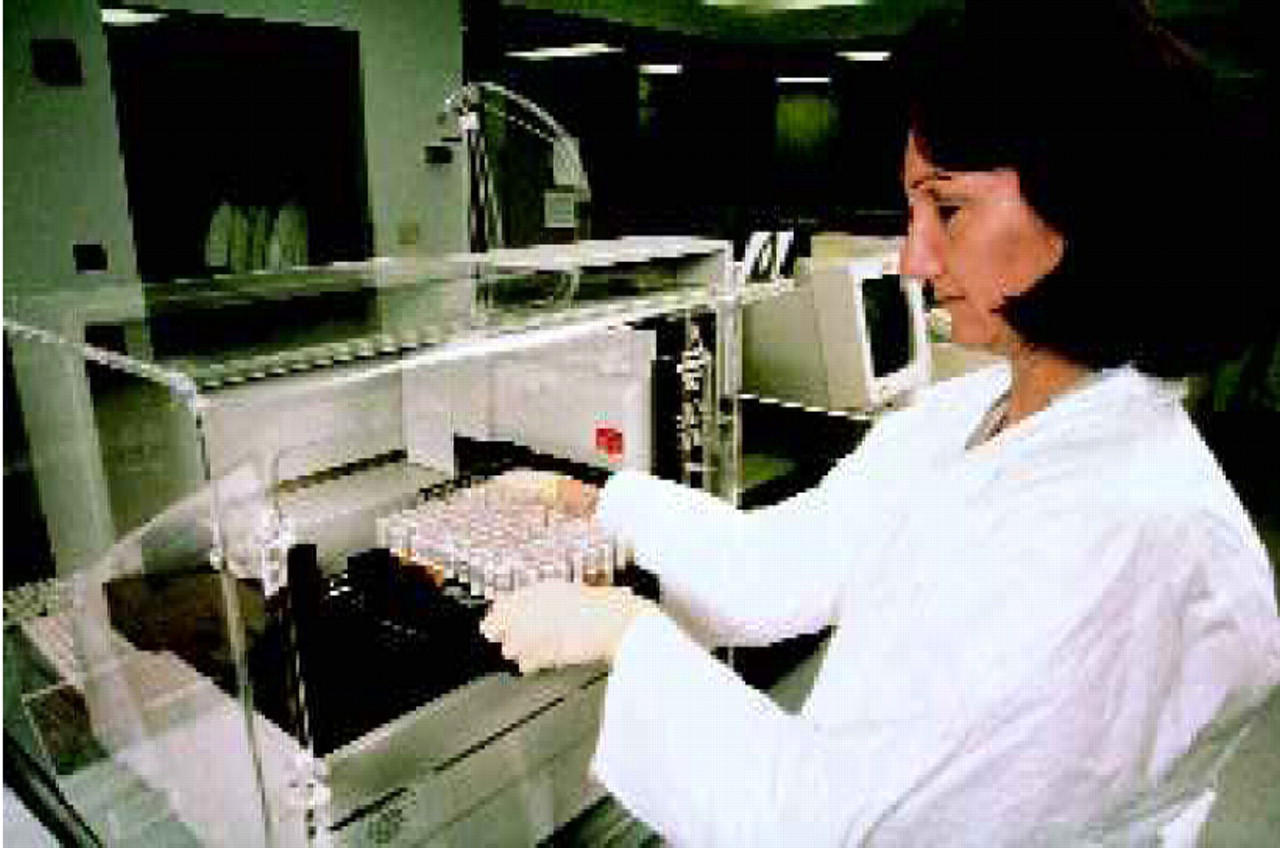
Carol Genis, MS, MT (ASCP) SBB, education coordinator at Heartland Blood Centers, loads sample tubes into the Ortho Summit pipettor.
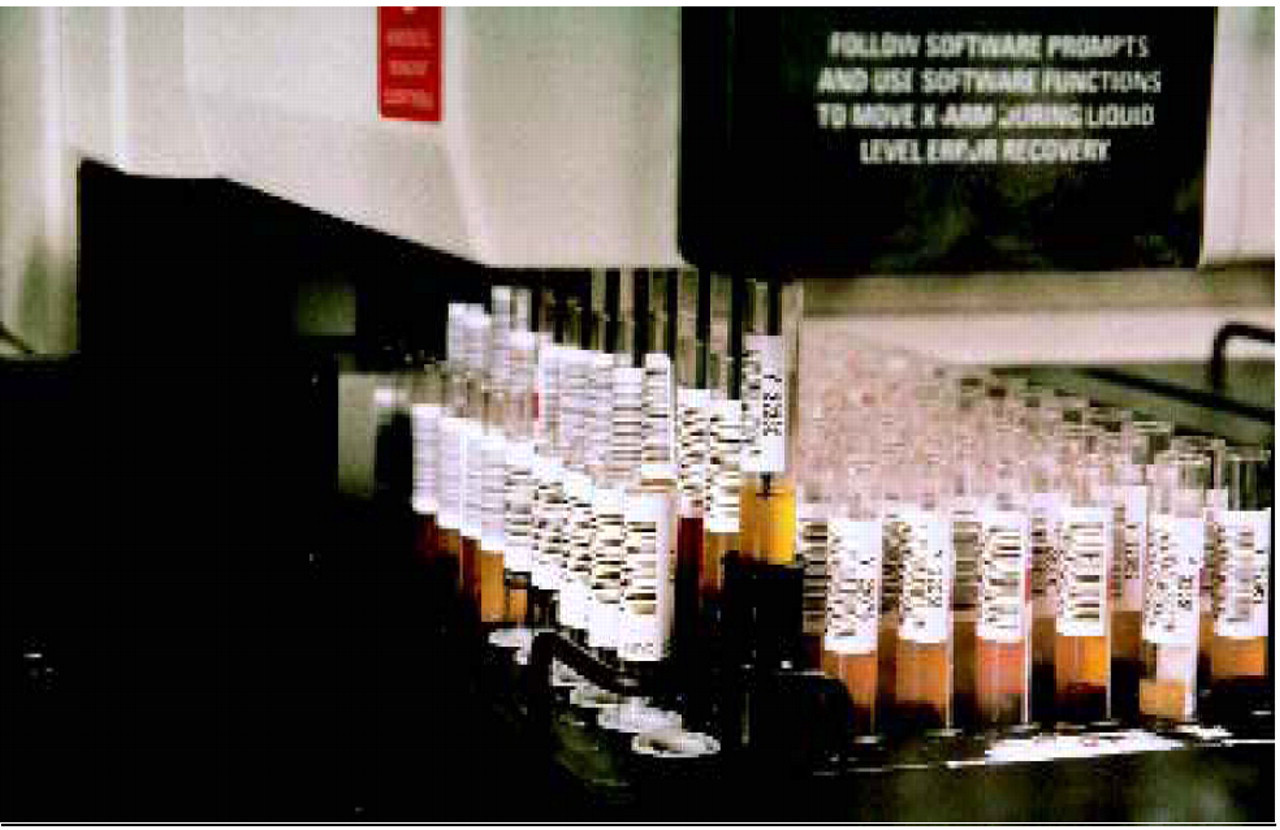
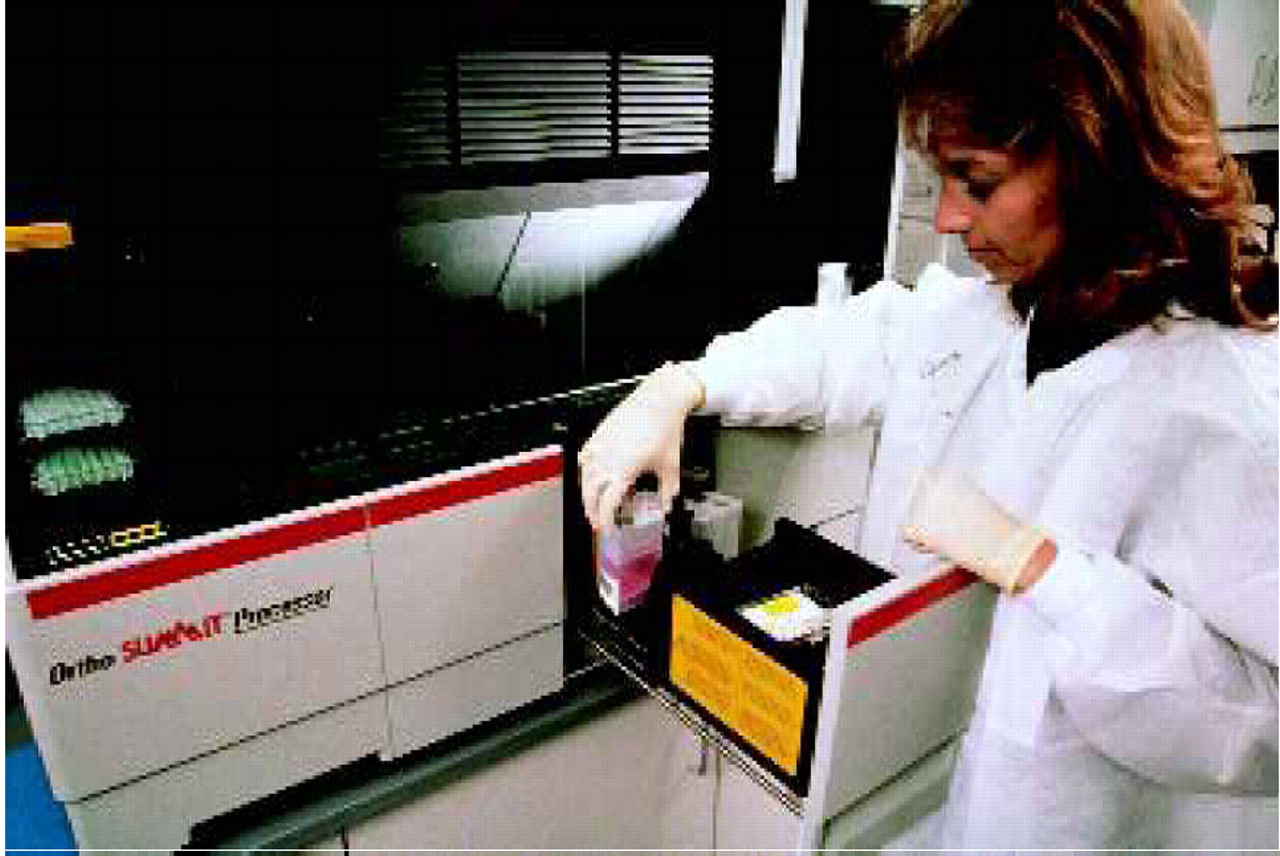
Technician Judy Mennecke loads sample plates into the Ortho Summit Processor, the main hardware component of the Ortho Summit System.
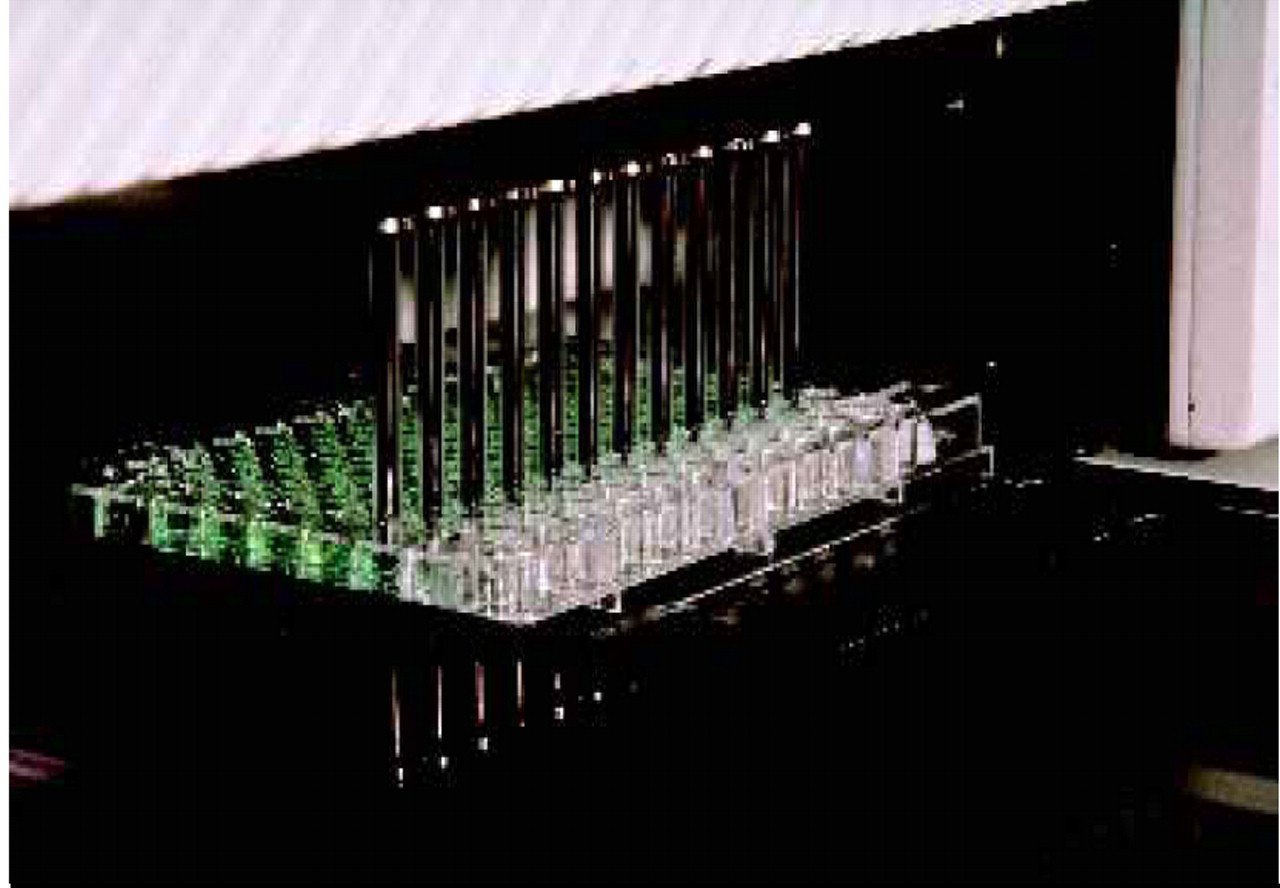
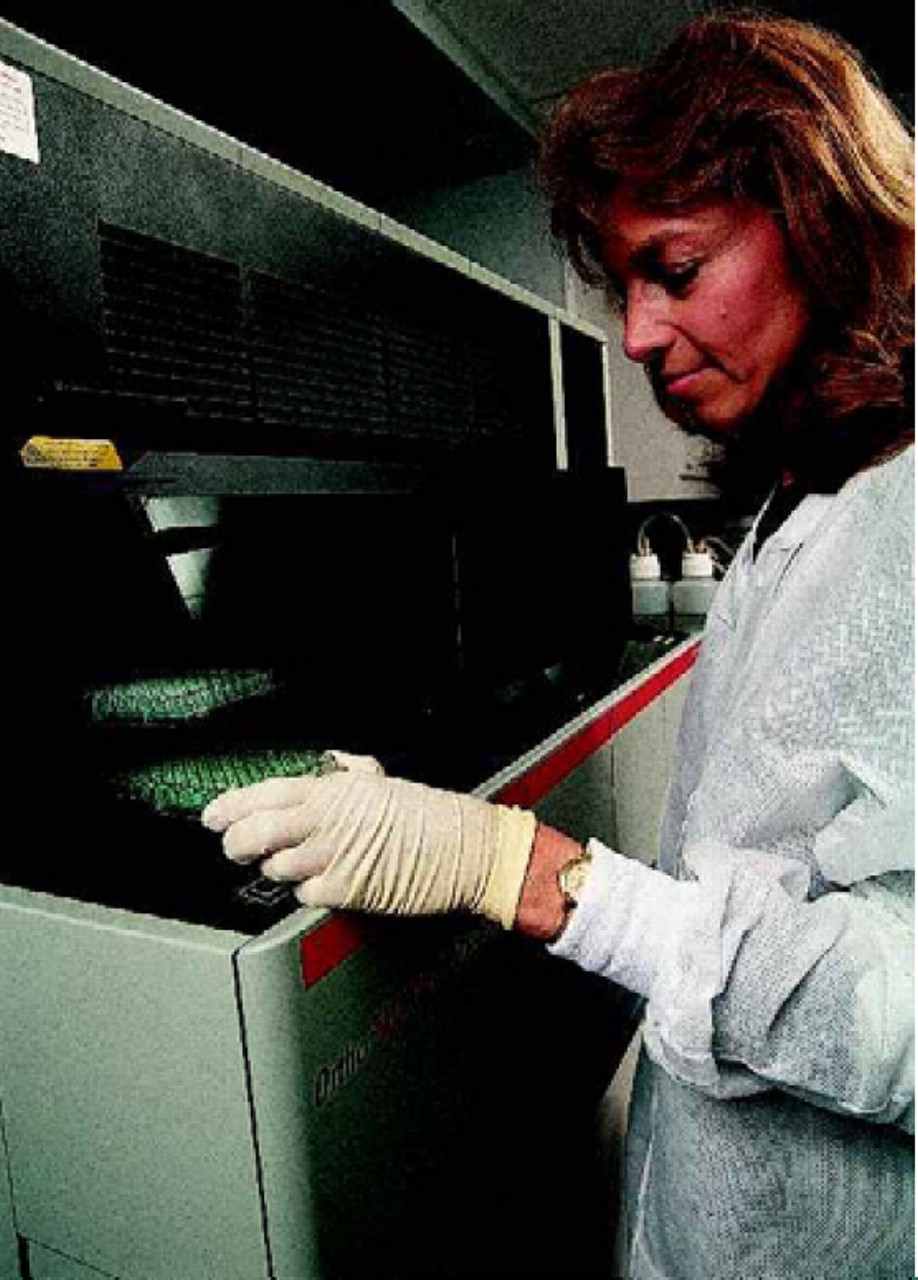
The Ortho Summit Processor pipettes reagent into the wells of a sample plate.
UTILIZING MES
MES was developed in the manufacturing sector to improve production efficiency and quality. Such benefits are a direct result of implementing a system based on Manufacturing Execution Systems (MES) methodology. It focuses on value-adding processes, helping to reduce manufacturing cycle time, improve product quality, and reduce work-in-process, manual paperwork and lead times.
MES concepts are widely used in the manufacture of automotive, semiconductor, electronics, pharmaceutical, aerospace and medical products. Among the functions most applicable in the donor screening industry are data collection/acquisition, quality management, operations/detail scheduling, document control, process management and product tracking.
A primary goal of MES in manufacturing environment — nd now, in the donor screening center — is to achieve ISO 9000 certification. ISO 9000 requires four things:
an accepted and documented set of procedures,
proof or verification that procedures are followed correctly,
periodic audits of process quality, and
corrective action when procedures are not followed.
MES systems provide a model of the manufacturing environment through which an organization can implement the policies and procedures demanded by ISO 9000. An MES ensures that manufacturing is performed within specified parameters, recording where exceptions occur and acting as a key source of data for demonstrating conformance during audits. Using an “active” approach, an MES will verify, in real time, all the data associated with a manufacturing operation. The system plays a role as both a vehicle for audits and implementation of continuous improvement.
ADAPTING MES TO THE DONOR SCREENING CENTER
According to MESA International, a not-for-profit association providing a forum for competitors to work together to expand awareness and use of new manufacturing technology, benefits of MES implementation in healthcare manufacturing include cycle time reductions of more than 50 percent and reduction of batch deviations by 90 percent.
Ortho Summit System operation is based on the MES model. It automates the tasks associated with the testing, evaluation, management and record-keeping of the six viral blood screening assays the FDA requires.
The system automates high-volume ELISA microplate testing and delivers optimal specificity and sensitivity. The microplate technology will also ensure that as the FDA requires additional tests, blood centers will be positioned to add new assays to the system.
The OSS process control features lay the groundwork for blood centers to transform their operational processes. Among the critical tasks automated by the system are (1) identification of every sample, plate and reagent; (2) identification of master lots; (3) record-keeping to support user verification of key parameters such as volume, temperature and optical densities; and (4) sample management.
These features address all of the requirements described in the FDA's current Good Manufacturing Practices (cGMP). By automating processes, the system eliminates many opportunities for human error, and enables strict adherence to assay procedures. The system also supports effective documentation by tracking every step of tests by sample, plate and reagent.
Automation also improves user efficiency and cuts labor requirements. Sample incubation, plate washing, reagent dispensing and result reading are all automated by OSS. Results from multiple systems can be routed electronically for central verification and tracking, eliminating the need to manually compare records.
RESULTS AT HEARTLAND BLOOD CENTERS
Heartland Blood Centers is a community blood center with two manufacturing facilities in the Chicago area that processes 110,000 units a year and supplies healthcare providers in northern Illinois and northwest Indiana. Our infectious disease lab operates six days a week, with a single, 10-hour shift. At Heartland, we have realized numerous benefits from implementation of the OSS system.
Process Control/Workflow: Implementation of the OSS has brought control to what was previously a manual process. In the past, the lab had one technician dedicated to each of the six tests performed. That allocation of resources was less than optimal in terms of efficiency, but helped to ensure some control in an allmanual testing environment.
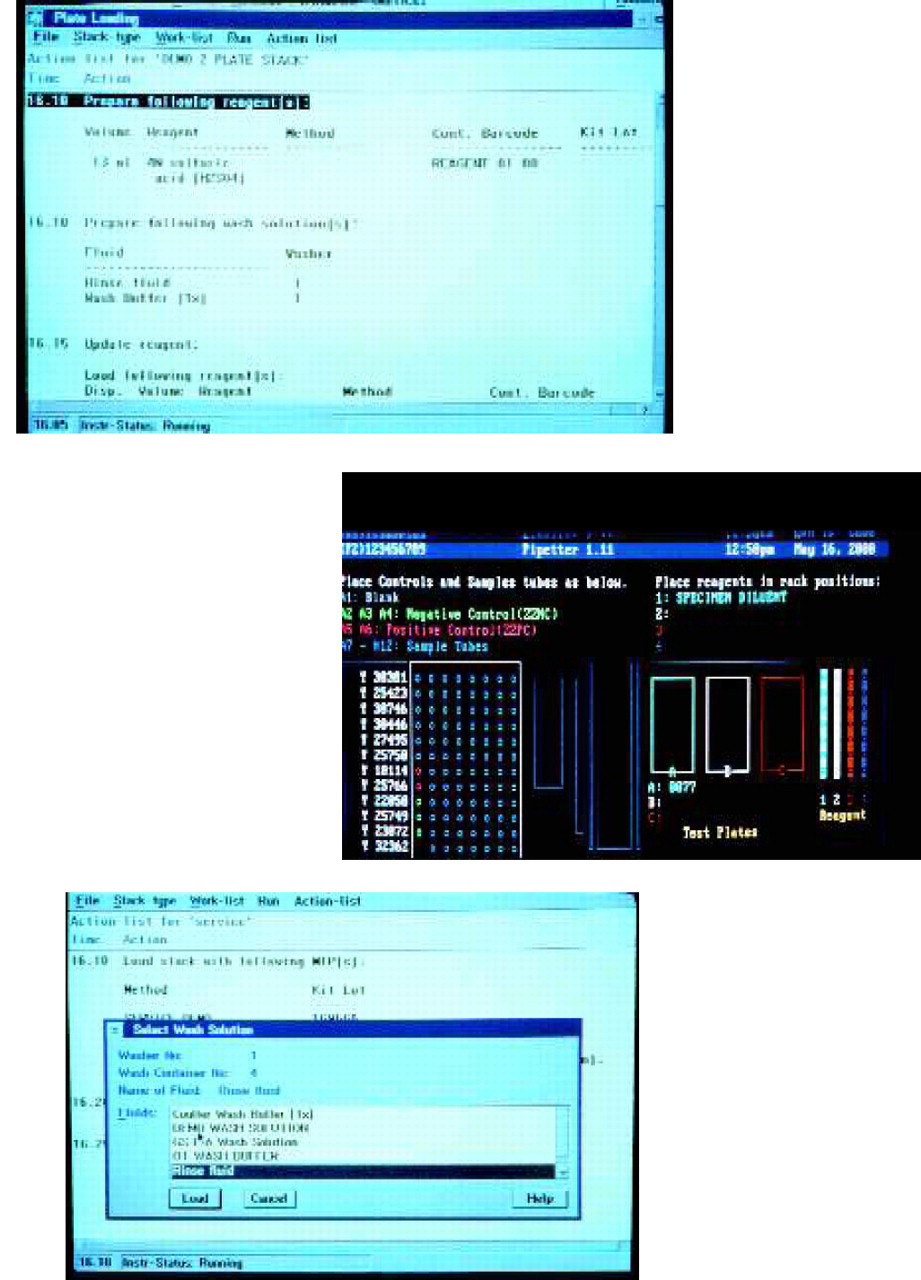
The OSS prompts technicians to mis reagents, load plates, and perform other actions in accordance with predefined procedures.
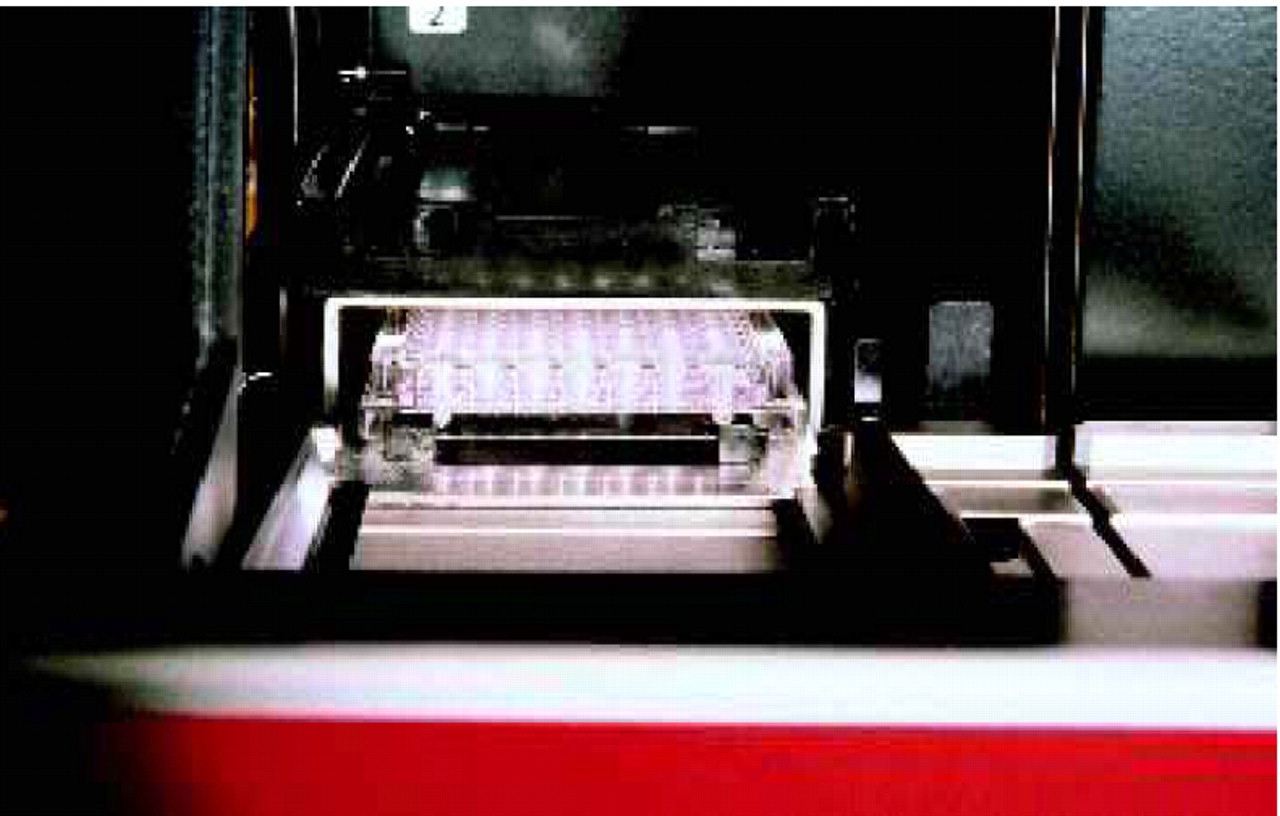
A gel plate is robotically loaded into one of several incubation chambers contained in the Ortho Summit Processor.
Now using OSS, the system controls every operation. No step is initiated until the previous step has been completed satisfactorily. Processes are monitored through software control to ensure proper temperature, incubation times, reagent additions, etc.
Because the OSS hardware in our laboratory is networked, we can also determine the status of a sample by checking a single workstation, anywhere in the lab. We can access a report on all the testing that was performed on a sample. This is a far better and faster solution than checking for results on a given sample at six multiple work stations.
Documentation: Documentation has also been automated. In the past, with manual testing, the laboratory utilized run control sheets for each assay. Technicians documented all operations from the time test kits were taken from the refrigerator to the time the results were sent to the computer. The forms were routinely checked by two different people to ensure they were complete and accurate before results were transferred to the blood center's LIS.
Manual documentation of steps alone doesn't necessarily ensure compliance, however. True process control does, and that is what the OSS system offers.
Now, the OSS tracks such variables automatically and reports on them. If incubation time or temperature is incorrect, or a wash step isn't completed, the system will not allow the plate to be tested. It voids the plate (a future planned upgrade to the software will actually prevent testing if the equipment has not undergone critical maintenance steps).
Training: Lab training has traditionally involved training an operator in standard lab procedures to ensure safety and accuracy, as well as the individual processes required for specific tests. At Heartland, we still train technicians to manually pipette and wash plates, so that they understand the actual methodology. This gives them a good grounding in each individual assay.
But the training that is critical for operation of the OSS is even more formalized. Procedures are clearly documented. Technicians learn what each prompt means, how to coordinate their time so that they have the plates and reagents ready at the appropriate time, as the testing progresses. Documentation is generated while training as a resource for future reference.
Labor Efficiency: In terms of efficiency, we have reduced technician labor from six (one dedicated to each assay) to four FTEs per shift. Automated process control is responsible for this gain in efficiency.
CONCLUSION
The entire blood industry is changing today. Blood centers are under strict scrutiny and can no longer accept variability without reservation. Like other FDA-regulated manufacturers, we must control and account for everything we do, to ensure an absolute minimum of variability in the product we supply. The controlled automation that OSS supplies eliminates the variability inherent with humans.
The key to success in the future will be adopting technology that ensures such control. Implementation of Manufacturing Execution Systems methodology, as demonstrated in products such as the Ortho Summit System, will play a critical role in helping blood centers meet and exceed FDA requirements today and in the future.