







Abstract
Why do some consumers evangelize brands and create value for them even without receiving any direct reward in return? How do their motivations influence their role behaviors and their identification with the company or brand? We draw on motivation theory and the in- and extra-role literature of leadership to propose a theoretical framework. We use this framework to analyze data from one cross-sectional survey conducted with members of two online brand communities and one longitudinal field experiment with consumers of one new online brand community. We first separate community members’ motivations into three types of psychological needs (self-competency, self-belongingness, self-autonomy) that are fulfilled by membership in a brand community. We investigate how each of these needs influences consumers’ in-role and extra-role behaviors, which in turn positively affect their brand identification and create value for the company. Our results show that self-competency motivates both in- and extra-role behaviors, self-belongingness only increases less involved in-role behaviors, and self-autonomy only affects more involved extra-role behaviors. Both role behaviors foster beneficial consumer brand identification. We discuss how these findings can inform marketers’ brand community-building strategies.
Keywords
Introduction
In the past two decades or so, marketing scholars have re-examined the fundamentals of the consumption experience and suggested that a different form of consumption, i.e., individual transactions being augmented by community-based experiences, has emerged (Mathwick, Wiertz, and De Ruyter 2008). Community-based consumption experiences are increasingly evident in brand communities. A brand community allows consumers to form a “non-geographically bound community based on a structured set of social relationships among admirers of a brand” (Muñiz and O'guinn 2001, p. 412). The rise of the Internet has made brand communities more accessible to different consumers across the globe. Consequently, the immense popularity of online brand communities and social media has revolutionized the consumption experience (Johnson and Lowe 2015; Singh and Sonnenburg 2012; Smith, Fischer, and Yongjian 2012). Today, many consumers regularly spend more than one-third of their waking hours on social media (Adler 2014), and, thus, it is not surprising to see that participation in online brand communities has become more than common.
One interesting trend is that many members of a brand community are no longer just participants who simply share information with other members or post comments in threads, but they often actively advocate for the brand and engage in behaviors that benefit the brand and the brand-community. For example, in the well-known Harley Owners Group (HOG), sponsored by Harley-Davidson, evangelical consumers promote the brand and groom new community members (e.g., Algesheimer, Dholakia, and Herrmann 2005; Schouten and McAlexander 1995). Members belonging to a variety of brand communities, such as Sun Java (Cothrel and Williams 2000), Jeep (Schouten, McAlexander, and Koenig 2007), Apple (Muñiz and Schau 2007), Coca-Cola, Nike, and Volkswagen (Muñiz and Schau 2007) engage in behaviors similar to those of HOG members and in doing so, adding value to the brand. These behaviors are intrinsically motivated as the community members usually do not expect some form of extrinsic reward provided directly by the brand or firm (Mathwick, Wiertz, and De Ruyter 2008).
Despite these well-documented phenomena and their increasing visibility on social media, many firms have yet to fully unlock some of the dormant marketing potential contained in their brand communities. How can firms foster consumers’ intrinsic motivations to act in the interest of the brand? And, more importantly, how do such motivations influence consumers’ role behaviors within the brand community and subsequently their identification with the brand? To answer these important theoretical questions, this research draws on the in- and extra-role theory in leadership (Hughes and Ahearne 2010; Morhart, Herzog, and Tomczak 2009), self-determination theory (SDT; Deci and Ryan 1985; Gagné and Deci 2005; Ryan and Deci 2000), and social identity theory (Ashforth and Mael 1989). We attempt to significantly broaden our understanding of how customers participate in an online brand community.
Our research efforts make several important contributions to the existing literature. First, our research extends the theoretical dialog on consumers as value co-creators to the literature on brand community. We build a comprehensive theoretical framework with respect to brand community members’ motivations to take on a variety of roles in the brand community to which they belong, as well as how these motivations eventually foster brand identification. Second, while prior research has examined brand identification as an antecedent or as a mediator leading to a variety of behavioral outcomes (e.g., Lam et al. 2010; Morhart, Herzog, and Tomczak 2009; Scarpi 2010; Schau, Muñiz, and Arnould 2009), it remains unclear why and how brand identification forms. We address the practical concerns as to how identification among brand community members can be facilitated (Press and Arnould 2011; Schau, Muñiz, and Arnould 2009). Our research investigates the process that prompts consumers or brand community members to identify with a brand. Understanding this mechanism is important because brand identification is often associated with favorable brand advocacy. In other words, strong identification with the brand often elevates consumers to advocate and promote the brand to others. Unlike conventional branding research, in which brand identification is usually conceptualized as the gateway to intention and actual behavior, our research makes a unique contribution by proposing that consumers can interact and purchase a brand without necessarily having to identify with the brand. In fact, brand identification can very well occur afterwards. This appears to be particularly true when the brand is new to the consumer. Third, our research advances the brand community literature methodologically by using both a cross-sectional survey and a longitudinal field experiment to fully evaluate our proposed theoretical framework. We analyze self-reported and actual behavioral data to test the proposed causal relationships. This methodological pluralism lays the groundwork for future quantitative online brand community investigations. The overarching conceptual framework guiding this research is provided in Fig. 1.
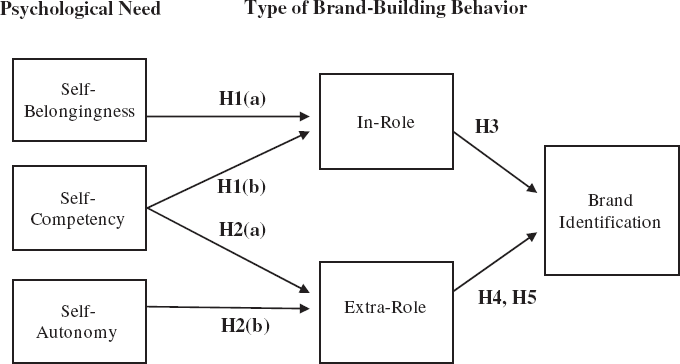
Conceptual model.
Theoretical Background and Hypotheses
Muñiz and O'guinn (2001, p. 412) define brand community as “a specialized, non-geographically bound community, based on a structured set of social relationships among admirers of a brand.” Muñiz and O'guinn (2001) further identify three markers of brand communities: consciousness of kind, presence of shared rituals and traditions, and a sense of moral responsibility. Consciousness of kind is defined as “the intrinsic connection that members feel toward one another, and the collective sense of difference from others not in the community” (Muñiz and O'guinn 2001, p. 413). This consciousness leads to a sense that users of the shared brand are different or special, compared to users of other brands. Rituals and traditions may include specific greeting practices, celebrating brand history, and sharing brand stories. Moral responsibility refers to a sense of duty and commitment to the community as a whole, as well as to its individual members. It often encompasses community-oriented activities, such as integrating and retaining members and assisting brand community members in the proper use of the brand.
Brand communities often exert a persistent and profound effect on members’ perceptions and actions (e.g., Muñiz and Schau 2007). Marketers can benefit from the activities of brand communities as they rapidly disseminate information (e.g., Brown, Kozinets, and Sherry 2003), monitor customer information exchange (Adjei, Noble, and Noble 2010), facilitate the adoption of new products (Thompson and Sinha 2008), and maximize customer participation and value co-reaction opportunities (Brodie et al. 2013; Schau, Muñiz, and Arnould 2009). In addition to these well-documented direct benefits of brand communities, researchers have also uncovered brand community activities that escape marketers’ immediate control (Muñiz and Schau 2007). For example, in Lego's brand community, MyLEGOFactory, members were able to download the Lego Digital Designer software, which allowed them to introduce their own models that could be sold to other Lego fans. A team of 10 fans from the U.S., Germany, Canada, and Australia created 30 different models, as part of a set called Hobby Train. All 30 models have become fantastic additions to Lego's building models (LEGO® Answers 2014). Arguably, in the process of designing the set, these brand community members have gone beyond simply consuming the brand; they have co-created value with and for the brand beyond what the firm solely could have created or anticipated (Schau, Muñiz, and Arnould 2009).
In spite of this development, to date, most of the marketing literature has yet to adopt the perspective of collective value co-creation in a brand community setting (see Schau, Muñiz, and Arnould 2009 for an exception), which holds important practical insights with regard to managing the development of brand communities. We argue that understanding and adopting this perspective is important, as the in- and extra-roles that consumers actively assume within a brand community ultimately impact their identification with the brand. In what follows, we first draw upon the in- and extra-role theory of leadership (Hughes and Ahearne 2010; Morhart, Herzog, and Tomczak 2009) to couch conceptualizations of in-role and extra-role theory in community brand building behaviors.
When brand communities acquire community-like qualities, as understood in sociology, their members will formally and informally recognize the boundaries of right and wrong, as well as what is considered appropriate and inappropriate conduct. Members will develop commitment to a series of collective actions that contribute to the survival and cohesion of the community. Muñiz and O'guinn (2001) define this process as recognition of moral responsibility. Such moral responsibility, although subtle and contextualized, involves very important social commitments. Generally speaking, moral responsibility results in member behaviors that aim to either integrate and retain members, or else to help brand community members in the proper use of the brand. These behaviors collectively contribute to the building of a successful brand, and, as such, similar to Morhart, Herzog, and Tomczak (2009), we refer to these behaviors as “community brand-building behaviors.”
Recently, Schau, Muñiz, and Arnould (2009) have comprehensively analyzed qualitative data and documented 12 different types of behaviors among community members, including welcoming, empathizing, evangelizing, badging, customizing, and grooming, among others. We build on their work to extend the notion of consumers as co-creators of value into the brand community literature. In particular, we follow guidance from the leadership literature and differentiate two types of community brand-building behaviors: in-role versus extra-role brand-building behaviors (Morhart, Herzog, and Tomczak 2009).
In-role behavior refers to the extent to which an individual meets the basic expectations and responsibilities prescribed by a related party. In a brand community, members are expected to meet and perform basic responsibilities in order to be accepted by others as part of the community. In-role brand building behaviors may include: 1) adhering to written or unwritten community rules; 2) presenting oneself in community-accepted manners; and 3) engaging in community-congruent actions. For example, members of different brand communities engage in in-role behaviors such as greeting rituals and other similar collective behaviors (McAlexander, Schouten, and Koenig 2002; Muniz and O'guinn 2001). These responsibilities, although relatively limited, are crucial conditions for brand communities to survive and grow (Muñiz and O'guinn 2001).
By contrast, extra-role brand building behavior refers to the extent to which members’ actions go beyond the expectations and responsibilities prescribed by their brand community (Hughes and Ahearne 2010; Morhart, Herzog, and Tomczak 2009). Brand community actions are mostly voluntary (Muñiz and O'guinn 2001), and the expectations for such actions tend to be low. Thus, members can easily expand beyond the boundaries of in-role behaviors, and there are at least two channels (i.e., internally and externally) for them to increase their involvement with the brand and the community. Internally, members can encourage fellow members to support the community or make constructive suggestions to improve the community experiences. For example, prior research shows that more involved members may take on a governing role, which includes articulating the behavioral and cultural norms of the community, reinforcing the social and emotional bonds among community members (Mathwick, Wiertz, and De Ruyter 2008; Schau, Muñiz, and Arnould 2009). Externally, members may promote the community to others and defend it from criticism. For example, researchers have found that members may act as altruistic brand evangelizers and ambassadors, enthusiastically preaching the gospel of their brands to the uninitiated, e.g., Saab, Mac, Newton, Jeep (Muniz and O'guinn 2001; Muñiz and Schau 2007, Schau, Muñiz, and Arnould 2009).
While both in-role and extra-role community behaviors are essential in building a strong brand, these two different roles differ both qualitatively and quantitatively. Hence, it is important to understand what motivates consumers to engage in community brand-building role behaviors. To delineate the motivational mechanisms that drive community brand-building behaviors, we draw upon self-determination theory, which has to date primarily been applied in an employer–employee setting.
Drivers of Community Brand-building Behaviors
To be motivated means to be moved to do something. As such, an individual who feels no impetus or inspiration to act is characterized as unmotivated, whereas “someone who is energized or activated toward an end is considered motivated” (Ryan and Deci 2000, p. 54). Self-determination theory (SDT) maintains that motivations are natural processes that require nutriments to function properly, and these nutriments are provided through satisfying three basic psychological needs: 1) self-belongingness, 2) self-competency, and 3) self-autonomy (Gagné and Deci 2005; Ryan and Deci 2000). The above conceptualization leads us to argue that although satisfaction of these three basic needs will enhance brand community members’ engagement in in-role and extra-role brand-building behaviors, certain basic psychological needs may be more congruent with in-role behaviors, whereas others may be more relevant to extra-role behaviors.
In a brand community, in-role behavior refers to the extent to which members are expected to meet and perform basic responsibilities prescribed by the community. Based on the tenets of SDT on role internalization (Deci and Ryan 1985), we argue that a high level of motivation to engage in in-role behaviors can be achieved by fostering the integration of brand community expectations and responsibilities into members’ sense of self. Generally speaking, in order for full internalization to occur, an individual's social environments must provide support for both self-belongingness and self-competency needs. This is because, to internalize expectations and responsibilities, an individual should: 1) feel that these expectations and responsibilities are valued by significant others to whom they feel connected (self-belongingness). Research shows that individuals are most likely to take on the values, beliefs, and behaviors that are endorsed by others, due to the desire to be related to these others (Deci and Ryan 2000); and 2) feel efficacious with respect to meeting these expectations and fulfilling these responsibilities (self-competency) (Deci and Ryan 1985; Morhart, Herzog, and Tomczak 2009; Ryan and Deci 2000).
By contrast, for brand community members to expand beyond the expectations and responsibilities defined by the community, i.e., to engage in extra-role behaviors, they need to find these behaviors inherently interesting or enjoyable and derive spontaneous satisfaction from the behaviors themselves; in other words, they need to be intrinsically motivated (Gagné and Deci 2005). Nuttin (1973) contends that individuals gain a certain “causality pleasure” from merely initiating a behavior. Extra-role behaviors that members endeavor to engage in beyond the community's expectations may be motivated in a similar way. The aforementioned researchers further propose that the needs for competence and autonomy (closely linked to personal causation) energize intrinsically motivated behaviors (Nuttin 1973; Vansteenkiste and Deci 2003). In other words, for intrinsic motivation to be maintained or enhanced, an individual needs to: 1) feel that he/she is given behaviorally relevant information in the absence of pressure to attain a particular outcome or to act in a specific manner (self-autonomy), and 2) feel that the social environments foster self-competence. Bearing these general thoughts in mind, we formally hypothesize that:
Brand Identification
The literature points to numerous desirable consequences of brand community members’ brand-building behaviors (Brodie et al. 2013; Schau, Muñiz, and Arnould 2009). The psychological mechanism accounting for these consequences is the belief that community members possess a social identification with others who share their interest in a particular brand (Algesheimer, Dholakia, and Herrmann 2005; McAlexander, Schouten, and Koenig 2002). Therefore, while most consumer culture theory and branding scholars have examined brand identification as the antecedent or mediator leading to different behavioral outcomes (e.g., Lam et al. 2010; Morhart, Herzog, and Tomczak 2009; Scarpi 2010; Schau, Muñiz, and Arnould 2009), others have recognized that more work is needed to discover why and how identification forms in the first place, as well as how to facilitate identification among brand community members (Press and Arnould 2011; Schau, Muñiz, and Arnould 2009). In this research, we borrow the “learn-do-feel” sequence from the classic response hierarchy models (Vakratsas and Ambler 1999) to demonstrate the possibility that consumers’ cognition and behavior could in fact herald the affect, i.e., the formation of brand identification, instead of the other way around. We further provide evidence to demonstrate that this sequence is particularly common when consumers encounter a new brand. Investigating this possibility is especially important, since under this premise, brand identification could be developed or fostered over time through a series of actions performed by brand community members. For marketers, therefore, the pressing question becomes: What kinds of marketing tactics can be employed to encourage community behaviors that effectively foster brand identification? To answer this question, our research aims to identify the antecedents and processes leading to stronger brand identification.
According to social identity theory (Ashforth and Mael 1989), brand identification is defined as the extent to which consumers perceive themselves as sharing the same self-definitional attributes with a brand, and such identification forms the primary psychological state for the kind of deep, committed, and meaningful relationships that marketers are increasingly seeking to build with their consumers (Bhattacharya and Sen 2003). As such, consistent with prior research (Lam et al. 2010), we view brand identification as a higher order construct that includes three components: cognitive (i.e., the sense of awareness of membership), evaluative (i.e., the sense that this awareness is related to some value connotations), and emotional (i.e., affective investment in the awareness and evaluations).
Prior research indicates that brand community members constantly employ the symbols and meanings of brands to construct their individual identities (Arnould and Thompson 2005). Such brand identification processes are often initiated and reinforced through members’ participation in in-role and extra-role community brand-building behaviors. Specifically, we argue that participation in in-role behaviors by acting in a community-coherent fashion and meeting basic community expectations facilitates community members’ brand identification. For example, when members welcome new users to the community and point them to important community resources (Schau, Muñiz, and Arnould 2009), they are more likely to accept and internalize the values and behavioral norms of the community as part of their individual identity. Extra-role behaviors, however, affect brand identification formation in a different way than in-role behaviors. To illustrate, when members enthusiastically extol the virtues of their beloved brands (Muñiz and O'guinn 2001) and passionately assert the solidarity of the community (Mathwick, Wiertz, and De Ruyter 2008), their identification with the brand will certainly be elevated to a different level. These members will actively revise their individual identities to incorporate the narrative, meanings, and values of a brand and, more importantly, willingly proclaim their commitment by acting as altruistic brand ambassadors. We formally hypothesize:
Interestingly, prior research has found that favorable extra-role behaviors are associated with a salesperson's brand identification level (Hughes and Ahearne 2010). Although these findings apply strictly to paid employees, the distinct relationship between extra-role behaviors and brand identification is nevertheless evidenced above the employees’ level of organizational identification (Hughes and Ahearne 2010), thus attesting to the effect of brand identification. In this research, we further propose that brand community members’ extra-role brand building behaviors can help boost community members’ brand identification more than their in-role behaviors; more formally stated:
Study 1
Sample and Data Collection
In Study 1, we examined brand communities by conducting an online survey among members of an online brand community. To enhance the generalizability of our research, we purposefully selected two Chinese online communities of two distinct mobile phone brands: Meizu (http://bbs.meizu.com), a domestic Chinese brand founded in 2003, and Apple (http://iphonebbs.cnmo.com/), a global brand founded in 1976. However, both companies entered the smartphone market in 2007 after successfully establishing themselves as manufacturers of portable MP3 players. Even though extant research provides ample data on brand communities in Western countries, e.g., the United States and Germany (Algesheimer, Dholakia, and Herrmann 2005; Mathwick, Wiertz, and De Ruyter 2008), it remains unknown whether the current theoretical and empirical findings regarding brand communities can be transferred from a Western to a non-Western context. Our choice to research two brand communities in China was intended to fill this gap. In addition, we examined two brand communities (Meizu and Apple) in the same product category, which may offer useful implications for marketers to formulate global marketing strategy (Wei and Yu 2012).
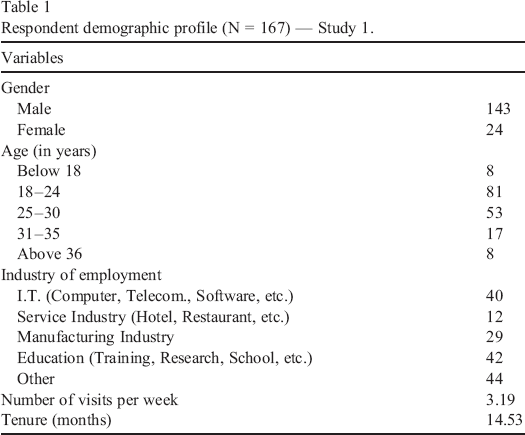
Data were collected using a web-based questionnaire survey (www.sojump.com). During an observational period lasting two weeks, we determined at which time of day most members logged onto the brand communities’ websites. We found that the period between 8:00 PM and 11:00 PM on Saturdays and Sundays drew the most members to the communities. On one weekend we sent out email invitations to two thousand members, one thousand for each community, between 8:00 PM and 11:00 PM. In the invitation email, we stated the purpose of the survey and included the web link to the questionnaire. As an incentive, we promised a pre-paid calling card for those who completed the survey. One month after the invitation emails were sent out, 199 members returned the surveys, resulting in a 9.95% response rate, comparable to those of other online community studies (Nambisan and Baron 2009; Zhou et al. 2012). We excluded 12 responses due to missing data and 20 responses in which respondents failed to provide their community identification number. As a result, a total of 167 responses (Meizu: n = 94; Apple: n = 73) were included in our model testing. The demographic profile of our final sample can be found in Table 1.
Respondent demographic profile (N = 167) — Study 1.
Measures
In developing our survey instrument, we adopted measures from the existing literature discussed previously. We also conducted interviews with 20 brand community members to refine our conceptual model and to ensure the clarity of our questions. Their feedback was incorporated, and we conducted a pre-test (sample size: 60) to refine the survey items to fit our specific research context. Comments and suggestions of the pre-test respondents were carefully examined and incorporated into the final version of the questionnaire. Participants responded to all measurement scale items using 7-point scales, anchored with “strongly disagree/strongly agree.” The scale items, along with their psychometric properties for both Study 1 and Study 2, are reported in Appendix A.
To capture members’ perceived self-competency, self-autonomy, and self-belongingness in the brand community, we used the items for each construct from the basic-need-satisfaction-at-work scale (Dahl and Moreau 2007; Morhart, Herzog, and Tomczak 2009). Items included statements such as, “In the community, I feel competent,” “I feel free to express myself in the community,” and “I consider the people from this community to be my friends.”
We adapted a three-item scale, similar to the one used in Morhart, Herzog, and Tomczak (2009), to measure in-role community brand-building behavior and measured extra-role behaviors using a four-item scale, adapted from Morhart, Herzog, and Tomczak (2009; see also Hughes and Ahearne 2010). Items included statements such as, “I adhere to community rules” and “I recommend this community to friends.”
Brand identification was gauged by six items used in Lam et al. (2010), with two items capturing each of the three components (cognitive, evaluative, and affective) of brand identification. Participants indicated their agreement with statements such as, “My image overlaps with the brand image to some extent,” “I believe others respect me for my association with this brand,” and “When someone praises this brand, it feels like a personal compliment.”
Response Bias Checks and Measurement Validation
Respondents reported their community member identification numbers, allowing us not only to obtain objective meta data (e.g., number of friends), but also to check for possible response biases between members who completed the survey and those who did not. We found no significant differences between respondents and non-respondents in terms of the duration of their community login times (measured in minutes), the number of friends, and tenure on the site (number of months since joining the community). To validate our measures, we performed the test for common method variance, following the procedure recommended by Widaman (1985; see also Podsakoff et al. 2003). In this approach, we tested four different models: a multifactor measurement model, a model with a single method factor, a measurement model with an additional method factor, and a null model. Nested model comparison results indicated that the method factor did not significantly improve the model fit (Δ Chi-Square (25) = 33.679, p = .13). The results of these tests suggest that common method variance was not a pervasive problem in this study.
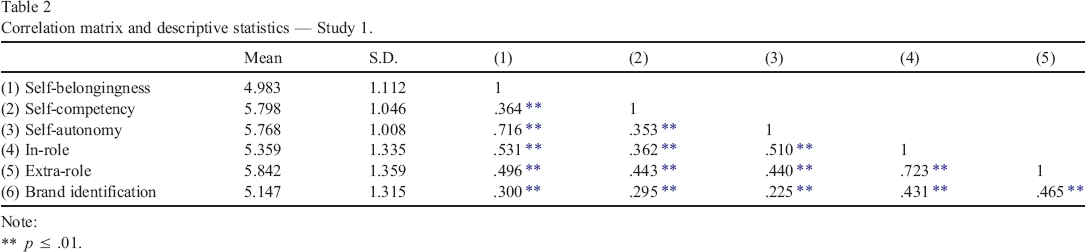
To assess measurement quality, we ran a confirmatory factor analysis (CFA) using Amos 22, containing all constructs in our model (see Fig. 1). The overall fit indexes for the CFA demonstrated good fit for the measurement model (Chi-Square (247) = 426.387; NFI = .920; CFI = .965; IFI = .965; RMSEA = .066). Furthermore, each construct had acceptable psychometric properties (see Appendix A) in terms of standardized factor loading, composite reliability (CR), and average variance extracted (AVE). The descriptive statistics and correlations among the variables used in Study 1 are reported in Table 2.
Correlation matrix and descriptive statistics — Study 1.
Note:
p ≤ .01.
Hypothesis Testing
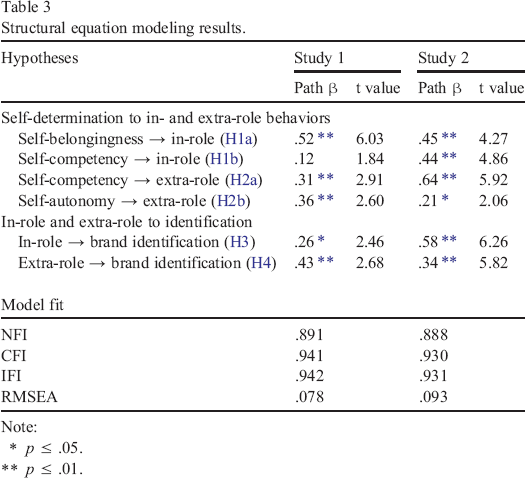
To test H1–H4, we estimated the full structural equation model using Amos 22. The analysis indicated a good model fit for the hypothesized structural model (Chi-Square (95) = 190.791, p < .01; NFI = .891; CFI = .941; IFI = .942; RMSEA = .078). Table 3 shows the coefficients estimated by the structural equation model, which can be related to Fig. 1. As predicted, we found evidence supporting the significant positive impact of perceived self-belongingness and perceived competency on in-role behaviors (belongingness: β = .52, p < .01; competency: β = .12, p < .10). As such, H1 was supported. Consistent with H2, perceived self-competency and perceived self-autonomy significantly influenced extra-role behaviors (competency: β = .31, p < .01; autonomy: β = .36, p < .01). Finally, supporting H3 and H4, the analysis revealed a positive relationship between in-role behaviors and brand identification (β = .26, p < .05), as well as a positive relationship between extra-role behaviors and brand identification (β = .43, p < .01). Consistent with H5, the difference in the path coefficients indicated that the positive effect of extra-role behaviors was stronger on brand identification than on in-role behaviors; the difference, however, was not significant (p > .10). As such, H5 was not supported.
Structural equation modeling results.
Note:
p ≤ .05.
p ≤ .01.
Study 2
The objective of Study 2 was twofold. First, we sought to establish ecological and external validity for the findings of Study 1. To this end, we conducted a longitudinal field experiment with a sample of American consumers and examined the brand community for a different product category (a peer advising website). The peer advising website had been recently launched, and all respondents indicated that they had not heard of the brand name prior to their participation in Study 2. As we mentioned earlier, we propose that our theoretical model is particularly applicable to novel brands, those with which consumers had not yet had the opportunity to form strong brand identification. Replicating our findings in Study 1 with two established brands using a novel brand in Study 2 will greatly increase our confidence in the generalizability of our findings. Second, we aimed to better assess the casual relationships hypothesized in this research. Thus, we used experimental stimuli to manipulate perceived self-belongingness, self-competency, and self-autonomy. The actual behavioral measures were deployed to enhance the theoretical contribution and managerial relevance of our findings, based on the manipulated factors.
Bearing these objectives in mind, a longitudinal experiment was conducted, following a 3 (psychological needs prime: self-belongingness vs. self-competency vs. versus self-autonomy) × 3 (time: time 1 vs. time 2 vs. time 3) mixed factorial design. Two hundred and six undergraduate students from a large American university received an invitation to participate in a longitudinal field experiment. One hundred and sixty-six participants followed through, completing all three questionnaires administered over the course of the study (53% female; 76% age range of 20–25 years).
Procedures and Measures
At time 1, participants were first asked to read a print advertisement about a peer advising website. Respondents were randomly assigned to one of three conditions primed either self-belongingness, self-competency, or self-autonomy and remained in this condition throughout the remaining two sessions. The manipulation of the psychological needs prime was carried out using advertising messages for the website (self-belongingness: “Join today to make a friend here. We need people like you who can get along with everyone in the community.” Self-competency: “Join today to show your knowledge about the college life. We need talents like you.” Self-autonomy: “Join today to fully express yourself in your own way and on your own time. Enjoy the flexibility and the freedom.”). To ensure the effectiveness of the manipulation and check for potential confounding factors, participants were administered the perceived self-competency, self-autonomy, and self-belongingness scales used in Study 1, as well as a check of their attitude toward the advertisement scale (e.g., not informative/very informative, not credible/very credible, not convincing/very convincing, not useful/very useful, boring/exciting; α = .91; Menon, Block, and Ramanathan 2002). Then, participants were instructed to explore the functionality of the peer-advising website and provide open-ended feedback. Finally, participants indicated their gender and age.
At time 2 (two weeks after time 1), participants were invited by email to complete a follow-up survey. The main purpose of this survey was to engage participants in the brand community and reinforce the psychological needs prime. Participants were told that the website would like to invite them to share their ideas and thoughts with others by writing a new post on the brand community. The participants received different instructions, based on their experimental condition at time 1 (Self-belongingness: “The brand community is designed in such a way that you can easily make a friend there and everyone can get along with each other in the community.” Self-competency: “The brand community is designed in such a way that smart people like you can use their talents and feel a sense of accomplishment in the community.” Self-autonomy: “The brand community is designed in such a way that you can freely express yourself, and have complete flexibility and freedom to decide the way to participate.”). Participants were then instructed to author a post on the brand community site, bearing in mind its general objective. Following this task, participants completed the perceived self-competency, self-autonomy, and self-belongingness measures to gauge the effectiveness of this manipulation.
At time 3 (one month after time 1), as in Study 1, respondents were again asked to provide answers with regard to perceived self-competency, self-autonomy, and self-belongingness in the brand community, their in-role and extra-role community brand-building behavioral intentions, and finally their level of brand identification. Next, to gauge their actual behavior, participants were told that, if they wanted to invite friends to this website, they could go to the website and click on the “Invite Friends” button, either to share the website with their Facebook friends, or else to send invitation emails to their friends directly. The participants were then thanked and debriefed.
Manipulation Checks and Confound Checks
We conducted three ANOVAs to test whether the experimental factor operated as intended. After exposure to the advertisement that primed psychological needs, the participants in the self-belongingness condition scored higher on the perceived self-belongingness scale (M = 4.58), compared to those in the self-competency (M = 4.11) and self-autonomy conditions (M = 3.87; F (2, 165) = 5.44, p < .01). Participants in the self-competency condition scored higher on the perceived self-competency scale (M = 4.54) than those in the self-belongingness (M = 3.57) and self-autonomy conditions (M = 3.41; F (2, 165) = 14.02, p < .01). Finally, participants in the self-autonomy condition scored higher on the perceived self-autonomy scale (M = 4.71), compared to those in the self-belongingness (M = 4.06) and self-competency conditions (M = 4.28; F (2, 165) = 3.90, p < .01). Confound checks were conducted to ensure that the manipulations did not unintentionally affect participants’ attitudes toward the ad. An ANOVA showed that attitude toward the ad levels were not significantly different across the three psychological needs prime conditions (M = 3.86; F (2, 165) = 1.92, p > .10). The manipulation checks conducted at time 2 and time 3 yielded similar results. Hence, the experimental manipulations across the three time points were successful.
Measurement Validation
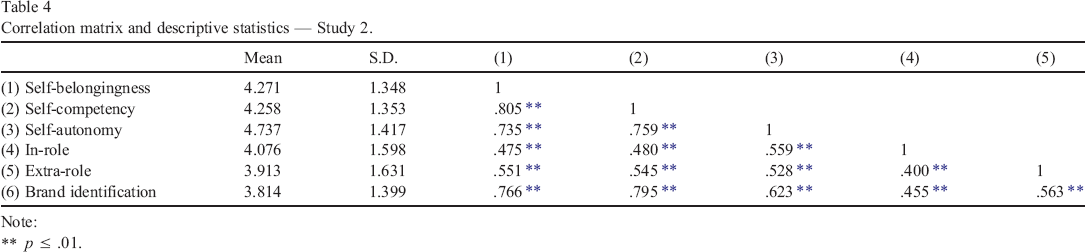
To validate measurement quality, we ran a confirmatory factor analysis (CFA) using Amos 22, containing all constructs in our model (see Fig. 1), and the overall fit indexes for the CFA demonstrated a good fit for the measurement model (Chi-Square (259) = 557.681; NFI = .901; CFI = .944; IFI = .945; RMSEA = .084). Furthermore, each construct had acceptable psychometric properties (see Appendix A) in terms of standardized factor loading, composite reliability (CR), and average variance extracted (AVE). Table 4 reports the descriptive statistics and correlations among the variables used in Study 2.
Correlation matrix and descriptive statistics — Study 2.
Note:
p ≤ .01.
Hypothesis Testing
As with Study 1, we estimated the full structural equation model using Amos 22. The analysis indicated a good model fit for our hypothesized structural model (Chi-Square (242) = 587.525, p < .01; NFI = .888; CFI = .930; IFI = .931; RMSEA = .093). Table 3 reports the results on the structural equation model. Confirming the results from Study 1 and providing support for our theoretical model, the analysis yielded significant positive effects of perceived self-belongingness and perceived competency on in-role behaviors (belongingness: β = .45, p < .01; competency: β = .44, p < .01). Further, perceived self-competency and perceived self-autonomy significantly influenced extra-role behaviors (competency: β = .64, p < .01; autonomy: β = .21, p < .05). Hence, H1 and H2 were confirmed. Supporting H3 and H4, the analysis revealed a positive relationship between in-role behaviors and brand identification (β = .58, p < .01), as well as a positive relationship between extra-role behaviors and brand identification (β = .34, p < .01). However, contrary to H5, the positive effect of in-role behaviors was stronger on brand identification, compared to extra-role behaviors. As such, H5 was not supported.
Next, we performed ANOVAs to examine the effects of the psychological needs prime on the two types of role behaviors, as well as brand identification. Supporting our theoretical model, the results showed that participants in the self-belongingness (M = 4.49) and self-competence (M = 4.40) conditions were more likely to engage in in-role behaviors than those in the self-autonomy condition (M = 3.53; F (2, 165) = 7.02, p < .01). By contrast, participants whose self-competence (M = 4.13) or self-autonomy needs (M = 4.12) were activated were more likely to engage in extra-role behaviors, compared to participants whose self-belongingness needs were made more accessible (M = 3.46; F (2, 165) = 3.03, p < .05).
Finally, we tracked participants’ subsequent clicks on the peer-advising website and noted that our findings on extra-role intentions were confirmed by their actual extra-role behaviors. That is, more participants in the self-competence (40.4%) and self-autonomy (19.4%) conditions, which are associated with higher extra-role behaviors, clicked the “Invite Friends” button on the website and recommended the brand to their friends, compared to those in the self-belongingness condition (13.5%; Chi-Square (2) = 11.03, p < .01). These interesting findings on behavioral intentions and actual behavior provide compelling empirical evidence supporting the causal relationships hypothesized in our theoretical model.
Discussion and Implications
This research deepens the theoretical understanding regarding collective value co-creation phenomena in brand communities. Based upon this perspective, we systematically examined the relationships among consumer motivations, their in-role and extra-role brand-building behaviors, and brand identification. The findings from a cross-sectional survey and a longitudinal field experiment converge to demonstrate that brand community members’ perceived self-belongingness and self-competency in the brand community increase their engagement in in-role brand-building behaviors, whereas their perceived self-competency and self-autonomy enhance engagement in extra-role behaviors. Participation in both in-role and extra-role behaviors, in turn, fosters consumer brand identification. These interesting findings contribute to the existing brand community literature and hold important implications for practitioners in several ways.
First, our findings identify ways to motivate community members to act on behalf of the brand, so that they voluntarily advocate, defend, and evangelize the brand throughout brand communities and across various social media venues. Our model shows that the extent to which a member performs in-role or extra-role behaviors depends on the type of motivation activated. While self-competency enhances both types of role behaviors, self-belongingness only increases in-role behaviors, whereas self-autonomy only increases extra-role behaviors. This finding provides useful insights into current brand community theory and practice. Prior research has suggested that brand community activities have the potential both to support and harm a company's marketing efforts (Adjei, Noble, and Noble 2010; Muñiz and Schau 2007; Thompson and Sinha 2008). For instance, there have been attempts by specific brand communities to hijack or manipulate original ads to spread negative word-of-mouth about certain advertisers and express sophisticated dissatisfaction with a company's perceived transgression for discontinuing a beloved product, such as the Apple Newton, for example (Muñiz and Schau 2007).
These insights raise an important question: How to create the conditions that foster activities with positive outcomes and limit those activities that might hold negative consequences? On the one hand, our results demonstrate that, if marketers consider some community members’ extra-role activities harmful or undesirable (e.g., established Harley Davidson community members discouraging potential newcomers from joining the community whom they consider incongruent with the brand image; Schouten and McAlexander 1995), marketers would be well advised to alter the community settings in such a way (e.g., more company-initiated events or discussions) that community members are rendered less autonomy, consequently attenuating undesirable extra-role activities. On the other hand, if marketers find certain in-role activities beneficial (e.g., Saab owners participating in greeting rituals on the road; Muñiz and O'guinn 2001), they may create conditions that foster the psychological need for belongingness to the brand community (e.g., more integration with social networking sites) to encourage such activities.
Second, our research helps advance the general theories on brand identification. Whereas prior research has usually examined the causal relationship between brand identification and subsequent consumption behaviors (Akerlof and Kranton 2000; Hughes and Ahearne 2010; Kuenzel and Halliday 2008), we provide strong empirical, multi-method evidence demonstrating that consumer brand identification can be cultivated over time by consistently planned and well-designed marketing actions (Study 2). As such, this research resonates with the “learn-do-feel” sequence in classic response hierarchy models (Vakratsas and Ambler 1999) and offers unique managerial insights to help marketers convert consumers’ cognition and behavior into brand identification, especially when the brand is new. This is particularly important because brand identification is considered a key relationship driver (Scarpi 2010) as it remains stable over time and withstands attacks from competitors, thus exerting a strong longitudinal restraint on brand switching behavior (Lam et al. 2010). Fournier and Lee (2009) recently argued that in order to cultivate successful brand communities, marketers need to take on the role of community co-creators—nurturing and facilitating communities by creating conditions in which they can thrive. Our research further indicates that it is more efficient and beneficial to the community to incentivize idle community members to move from no-participation to in-role participation behaviors, rather than from in-role to extra-role, as in- and extra-role behaviors contribute equally to brand identification, even though extra-role behaviors seem to demand a higher level of engagement. In other words, participation in a brand community, even at the minimal level, helps consumers internalize the brand identity, which exerts its positive effects for the company on many levels. Our findings can be used to advise on expenditure prioritization and resource allocation when managing brand communities.
Finally, the limitations of this research should be noted. One remaining question is that our findings in both Studies 1 and 2 fail to support the hypothesis that more involved extra-role behaviors exert a stronger impact on brand identification than relatively less involved in-role behaviors. One possible explanation may be that any type of brand community behavior, regardless of whether it is in-role or extra-role, represents highly engaged brand experiences. It is possible that the effect of different role activities on brand identification is moderated by the consumer's individual stage of brand identification. Supporting this notion, the preliminary findings from our research suggest that, for consumers with high levels of brand identification when the brand is mature and well-known (M = 5.80; Study 1), extra-role behaviors (β = .43) more effectively increase brand identification compared to in-role behaviors (β = .26), although the effect was not significant. By contrast, for consumers at the early stage of brand identification, when the brand is new (M = 3.814; Study 2), in-role behaviors (β = .58) exert a stronger effect on brand identification compared to extra-role behaviors (β = .34). Future research that uses experimental methods to manipulate the brand identification level with the aim to test this explanation will be a valuable extension. Some methodological limitations are a relatively small sample size and the over-representation of male respondents (85.6%) in Study 1. Moreover, the inclusion of a measure regarding perceived brand globalness of the Meizu and Apple brand would have allowed us to provide stronger support for the generalizability of our findings and presents a limitation of our study. However, our rationale was to support brand community research that has been primarily carried out in Western contexts with data from Chinese communities. Differing attitudes toward domestic and global brands – even though in the same product category – could potentially moderate some drivers of community brand-building and should be taken into consideration in future research.
Additionally, future research may build on our theoretical model and examine additional variables, such as customers’ brand knowledge or the size of the brand community (Algesheimer, Dholakia, and Herrmann 2005; Scarpi 2010), which may potentially moderate the theoretical relationships proposed in our research. In this research, we define and identify in-role versus extra-role brand community behaviors. We hope that this dichotomy will inspire researchers to apply our definition and collect new data to explore its potential theoretical links to other important branding constructs, such as brand loyalty (Holland and Baker 2001) and brand attachment (Park et al. 2010). Such research might lead to a greater understanding of what kind of activities truly contribute to the vitality of brand communities and deepen the theoretical understanding of how investments in brand communities create value for the firm. We explored brand communities for two different product categories (i.e., consumer electronics and academic advising services); replications with other product categories in future studies will help further validate our findings. Also, we examined brand communities in China and the U.S., and certainly, additional replications of our findings in brand communities in other countries are warranted. Further brand community research that uses a longitudinal approach to examine the process by which consumers internalize brand identity over time will also be a particularly interesting area to explore. In short, brand community phenomena offer extremely fertile ground for scholarly inquiry and tremendous opportunities for marketing practice.
Footnotes
Appendix Psychometric Properties of Measurement Scales
Items
Standardized factor loadings
Study 1
Study 2
Self competency (Dahl and Moreau 2007; Morhart, Herzog, and Tomczak 2009)
(Study 1: CR = .940, AVE = .760; Study 2: CR = .964, AVE = .878)
In the community, I feel smart.
.826
.947
In the community, I feel intelligent.
.864
.964
In the community, I feel competent.
.913
.949
In the community, I feel talented.
.940
.917
In the community, I feel a sense of accomplishment
.809
.907
Self-autonomy (Dahl and Moreau 2007; Morhart, Herzog, and Tomczak 2009)
I feel free to express myself in the community.
.710
.946
I am free to express my ideas and opinions through posting and reply.
.843
.938
The community offers me a lot of opportunity to freely decide the way to participate in the community (i.e. the role and the avatar in the community).
.904
.891
Self-belongingness (Dahl and Moreau 2007; Morhart, Herzog, and Tomczak 2009)
I really like the people in this community.
.826
.868
I get along with people in this community.
.861
.872
I consider the people from this community to be my friends.
.773
.932
I feel a strong feeling of membership in the community.
.782
.929
In role (Morhart, Herzog, and Tomczak 2009)
In this community, I pay attention that my personal appearance is in line with our corporate brand's appearance.
.801
.850
I adhere to community rules.
.848
.832
Compared with community-congruent behaviors, I see that my actions in the community are not at odds.
.793
.908
Extra role (Hughes and Ahearne 2010; Morhart, Herzog, and Tomczak 2009)
Recommend this community to friends.
.740
.873
Defend this community from criticism.
.680
.881
Encourage other community members to support this community.
.790
.919
I make constructive suggestions on how to improve community experience.
.710
.885
Brand identification (Lam et al. 2010)
Cognitive identity (Study 1: CR = .884, AVE = .793; Study 2: CR = .900, AVE = .706)
My identity overlaps with brand identity to some extent.
.842
.824
My image overlaps with brand image to some extent.
.936
.856
Evaluative identity (Study 1: CR = .828, AVE = .706; Study 2: CR = .924, AVE = .804)
I believe others respect me for my association with this brand.
.819
.868
I consider myself a valuable partner of this brand.
.861
.924
Affective identity (Study 1: CR = .746, AVE = .595; Study 2: CR = .870, AVE = .713)
When someone praises this brand, it feels like a personal compliment.
.763
.915
I would experience an emotional loss if I had to stop using this brand.
.779
.767