






Abstract

Over the past decade, grafts have been used with increasing frequency during rhinoplasty procedures as reductive rhinoplasty has given its place to augmentation or restructuring rhinoplasty. These changes in the surgical technique were made in part because of some untoward long-term complications noted in noses that were treated with excisional techniques. A suitable graft must be biocompatible, strong, and elastic for satisfactory long follow-up periods. There are several graft materials available, including autogenous materials (bone, cartilage), homograft materials (rib cartilage, dermis), xenografts, and a wide variety of synthetic or alloplastic materials each with its own advantages and complications.
Autologous cartilage remains the graft material of choice in restructuring rhinoplasty as it is known not to induce immune response and to have a very low rate of infection and extrusion. 1,2
Even though it was autogenous and had been harvested from the cartilaginous septum, the graft was observed to have extruded in the presented case. The possible causes for extrusion include the nylon suture material used in the procedure, sharp edges of the graft, and misplacement of the graft. The nylon suture might cause a foreign body reaction that might enhance the extrusion process. Because sharp edges of the graft as seen in Fig 1 can slowly wear away the overlying skin and cause extrusion in long periods, these should be curved and/or positioned in such a way to avoid exposure. The graft must be positioned and fixed with great care to the underlying tissues to ensure that rotation of the graft with presentation of the sharp edges to the skin causing extrusion does not occur.
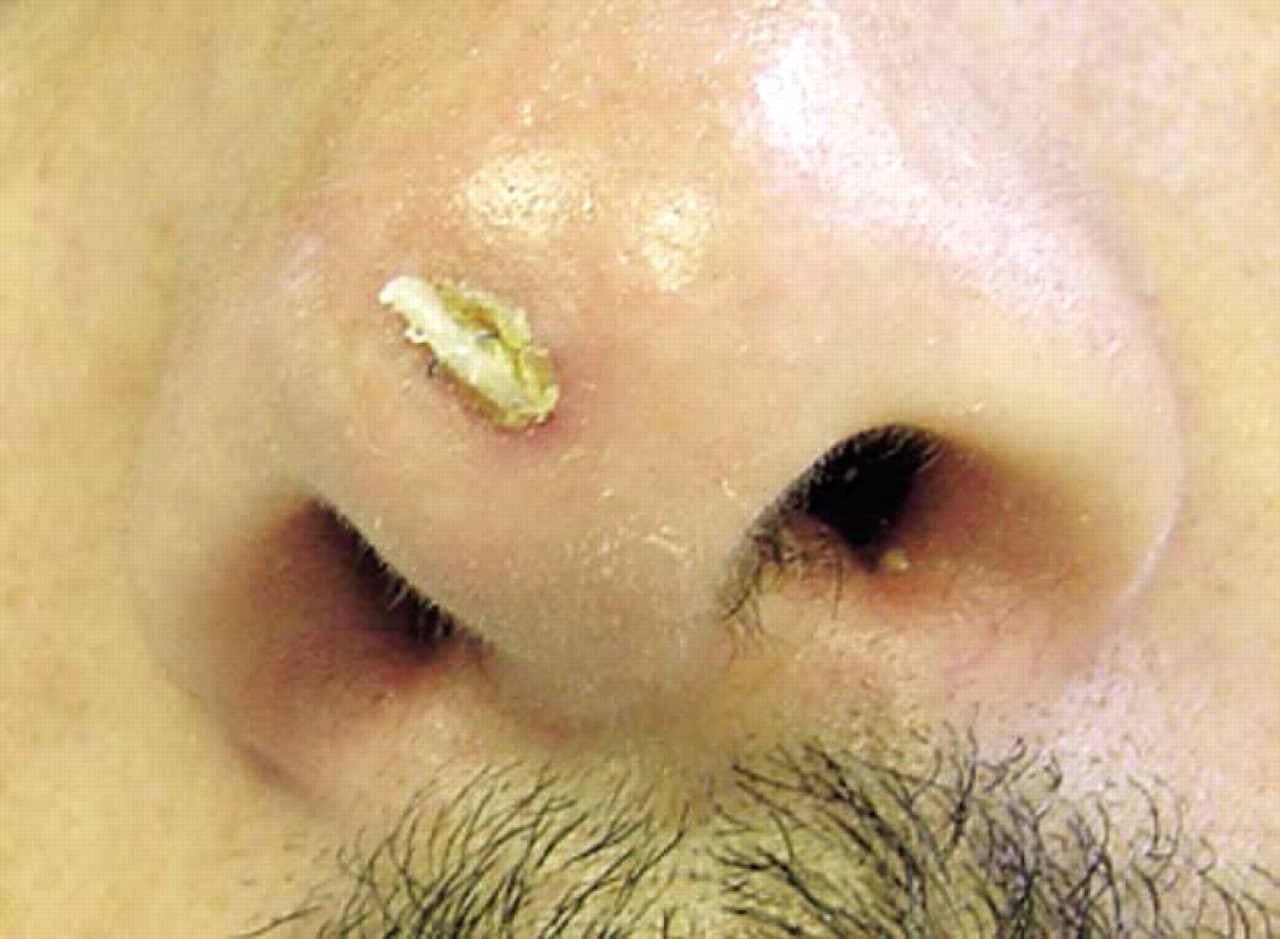
Extrusion of cartilaginous autograft is extremely uncommon. Harvested cartilaginous graft from the patient's own cartilaginous septum is observed extruding together with the sutured nylon.
Thin nasal skin may be another factor facilitating the extrusion process. Although it does increase the risk of graft resorption, morselization of the graft may help decrease the risk of extrusion and improve camouflage especially in patients with thin nasal skin. The skin of our patient was quite thick to be a risk factor for such a reaction.
In conclusion, it should be kept in mind that even if the graft material used in rhinoplasty is autogenous septal cartilage, it may carry the risk of extrusion in a long follow-up period. Positioning of the graft, shape and size of the graft, and selection of the suture materials used in the operation as well as the properties of patient's nasal skin gain importance in the possibility of extrusion.