






Abstract
Radiofrequency treatment of snoring was introduced in 1997 by Powell et al. 1 They used a radiofrequency generator that operated at a frequency of 476 kHz; the quantity of energy and the energy delivery rate were adjusted by means of a feedback system that used impedance and temperature. The active part of the monopolar electrode was 1 cm long. Good results were obtained on snoring; the snoring volume was decreased by more than 50% and the majority of partners were satisfied. Treatment was also much better tolerated by patients than surgical UPPP 2 or laser-assisted uvulopalatoplasty.
In the light of these encouraging results, other radiofrequency systems were released on the market, sometimes even before publication of results that demonstrated their efficacy and safety.
Commercially available generators and electrodes had different characteristics from those of the initial equipment in terms of wavelength, radiofrequency parameters, presence or absence of feedback, monopolar or bipolar electrode, and length of the active electrode.
Studies published to date appear to show a good efficacy and safety of treatments with various apparatuses but no publication has yet compared the various radiofrequency generators.
The objective of this study was to compare the efficacy and safety of radiofrequency waves delivered by means of four different radiofrequency generators.
MATERIALS AND METHODS
A multicenter prospective, randomized, single-blind study was conducted from 2002 to 2004 in 120 simple snorers. This study was conducted in three teaching hospitals and was approved by the local Ethics Committee.
Materials
Four radiofrequency generators were compared (Table 1). Radiofrequency parameters were determined according to the distributor's/manufacturer's instructions, except for the Somnus generator for which higher energy doses were delivered (700 J vs 350 J), based on a study conducted in one of the departments (not published) that revealed no difference in terms of discomfort or pain between the two energy doses. Treatment parameters are shown in Table 2.
Surgical Procedure
Treatment was performed on an outpatient basis. Local anesthesia was obtained by gargling with ziacaine 5% followed by injection of xylocaine with 1% adrenaline into the soft palate puncture sites. Three punctures were performed: one median straight down and one paramedian on each side oblique and downward. When the patient's partner was not satisfied, the patient could withdraw from the protocol or could undergo a second treatment session, which was performed at least 8 weeks after the first session. At the second session, puncture sites were situated lower on the soft palate.
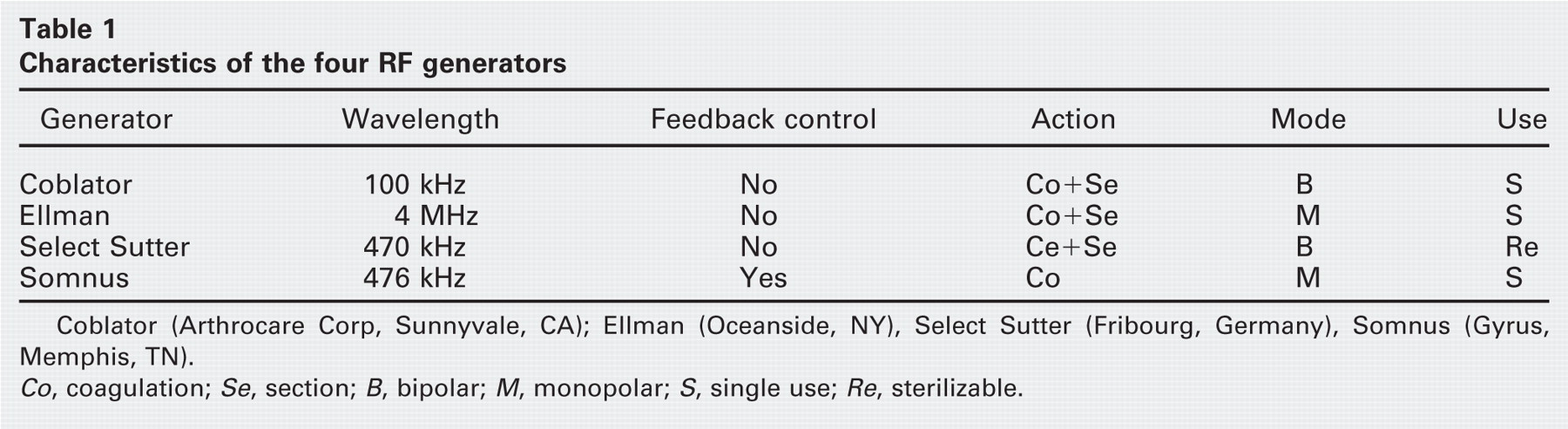
Coblator (Arthrocare Corp, Sunnyvale, CA); Ellman (Oceanside, NY), Select Sutter (Fribourg, Germany), Somnus (Gyrus, Memphis, TN).
Co, coagulation; Se, section; B, bipolar; M, monopolar; S, single use; Re, sterilizable.
Postoperative Treatment
On the day of the operation, the patient was given a prescription for a level 1 analgesic (paracetamol, 500 mg tablets) in case of minimal pain or discomfort. If pain persisted, the patient was able to take a level 2 analgesic (paracetamol, 500 mg plus codeine). Corticosteroids (prednisolone, 20 mg tablets) were prescribed at the dose of 1 mg/kg/day on the first day and were then continued on demand if the patient experienced feelings of swollen throat. A cold soft diet was recommended on the first day.
Patients
Patients who attended the three centers that participated in the study and who requested treatment for snoring were assessed by clinical interview (quality of the partner's sleep), physical examination (age, weight, height, dental class, soft palate morphology, length of uvula, size of tonsils, size of retropalatal space, presence of nasal obstruction) and a nocturnal recording that evaluated the apnea-hypopnea index. When patients satisfied the inclusion/exclusion criteria, the investigators invited them to participate in this study after providing them with complete written and oral information and asking them to sign an informed consent form.
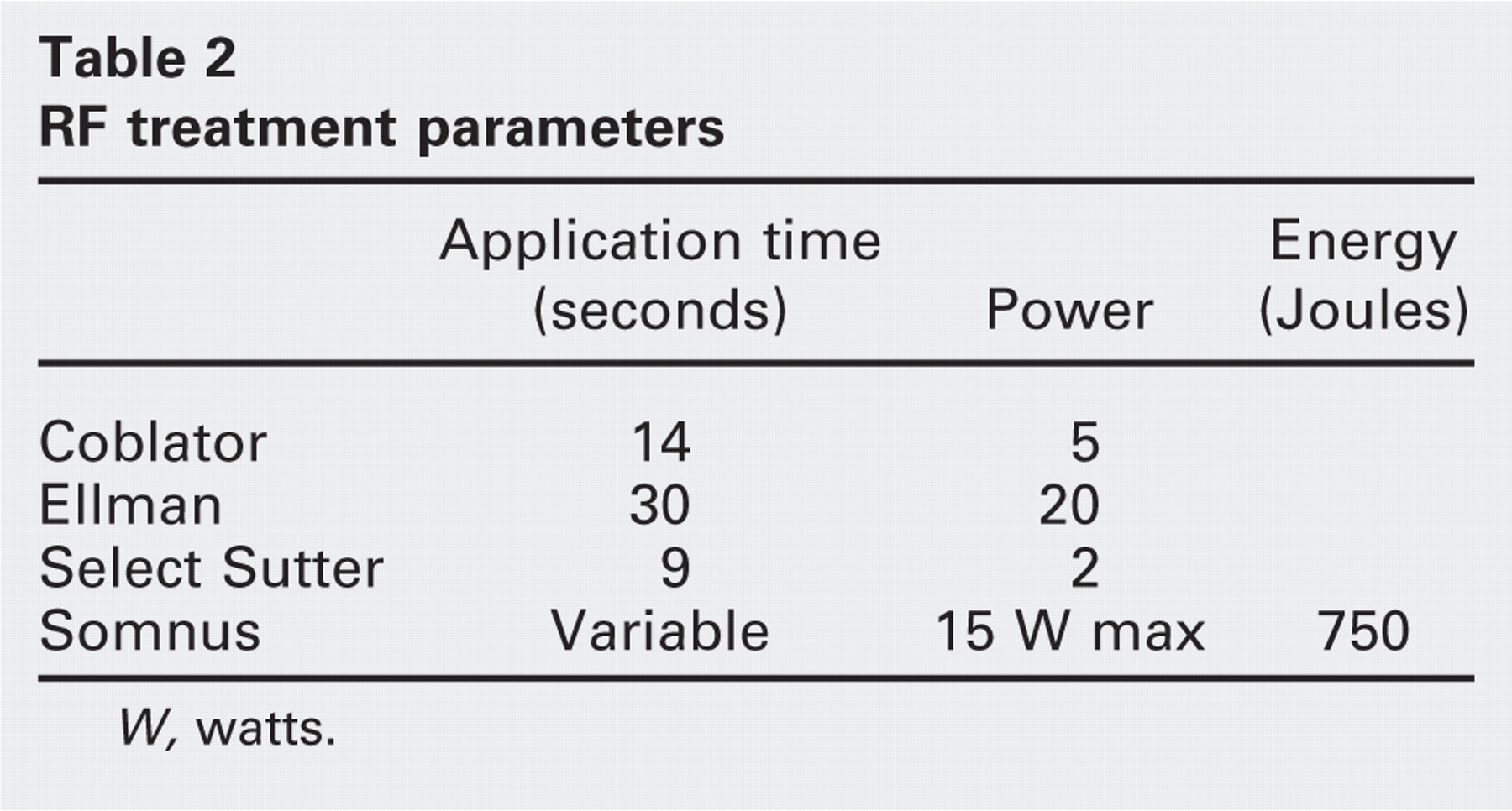
W, watts.
Inclusion criteria were as follows: age greater than 18 years; simple snoring (apnea/hypopnea index <10/h); soft palate apparently responsible for vibration on physical examination; presence of a stable partner. Exclusion criteria included: Epworth sleepiness scale >10 with level 3 nocturnal recording; chronic nasal obstruction; obesity (body mass index >30 kg/m 2 ); tonsillar hypertrophy.
Study Design
Each center initially had to treat four groups of 10 patients, each treated by a different generator. Randomization was performed separately for each center before initiation of the study. At the time of inclusion, the generator allocated to the patient was not known to either the patient or the doctor. To accelerate evaluation of the results, it was initially decided that centers that had treated their 40 patients could treat groups of 5 patients recruited by other centers.
Endpoints
The endpoints were the efficacy on snoring and the safety of treatment. Efficacy was scored by the partner. Snoring sound intensity was evaluated before and 8 weeks after each treatment session on a 10 cm visual analog scale (0 corresponding to no snoring and 10 corresponding to one of the members of the couple having to leave the bedroom or snoring so intense that it was heard in another room). After treatment, the partner also had to evaluate his or her global satisfaction with treatment according to five possible options (very satisfied, satisfied, moderately satisfied, slightly satisfied, dissatisfied). To facilitate interpretation of the results, patients were classified into two groups: group with a satisfied partner (very satisfied, satisfied, moderately satisfied) and group with a dissatisfied partner (slightly satisfied and dissatisfied).
Safety was evaluated by the patient over a period of 18 postoperative days. Patients scored their discomfort or pain daily on a 10 cm VAS (0-absent to 10-very severe). The results were expressed as the mean over 7 days and over 18 days. The quantity of medications (level I and II analgesic, steroids) expressed as the number of tablets and the number of days of intake and the number of days on which the patient's usual diet was modified were also evaluated.
Statistics
The results are expressed as mean ± standard deviation. The various patient groups (all patients recruited, patients lost to follow-up, patients followed, four generator groups) were compared by Student's t tests. The results are initially presented for the overall population treated by radiofrequency. The efficacy of treatment was determined by Student's t test and χ 2 test.
The results for the four generator groups were then presented. The efficacy and safety of the four generators were compared by a Kruskal-Wallis test. When a significant difference was observed, the generators were compared 2 by 2 by a Wilcoxon's test. The limit of significance was defined as P < 0.05.
RESULTS
One hundred twenty patients were included and treated. Sixteen patients were excluded from the final analysis: 14 patients failed to attend the follow-up visit, 1 patient was excluded because a different generator was used for the two treatment sessions, and 1 patient refused treatment without giving a reason.
One hundred four patients (81 men and 23 women; mean age, 47 ± 9.9 years; mean body mass index (BMI), 24.8 ± 2.8 kg/m 2 ) were treated and reviewed and constitute the study population. Forty-six patients were treated in the first center, 38 in the second center, and 20 in the third center. The groups of included and excluded patients were comparable in terms of the following 10 items: age (P = 0.09), gender (P = 0.3), BMI (P = 0.15), type of soft palate (P = 0.28), retropalatal space (P = 0.63), length of uvula (P = 0.95), size of tonsils (P = 0.47), baseline snoring sound intensity (P = 0.78), retrognathism (P = 0.66) and partner's quality of sleep (P = 0.22).
Efficacy of Radiofrequency Ablation
Mean snoring sound intensity on the VAS decreased significantly from 7.9 ± 1.7 to 4.4 ± 2.7 (P < 0.0001). The mean variation of the VAS score was 44% ± 32%; 46% of patients obtained more than 50% improvement of their snoring, and 62.5% of partners were considered to be “satisfied.”
Safety of Radiofrequency Ablation
Physical examination on the 8th postoperative day revealed soft palate lesions: 11.6% of punctures and 16.8% of punctures after the first and second session, respectively. Mean discomfort and pain scores over the 18 days were 2.7 ± 2.8 and 1.3 ± 1.6, respectively.
The mean level 1 and 2 analgesic intake was 4.9 ± 6.8 tablets for a mean of 2.0 ± 2.3 days and 0.9 ± 2.6 tablets for a mean of 0.6 ± 1.5 days, respectively. The mean steroid intake was 5.0 ± 4.4 for 2.5 ± 2.5 days. The patients took a cold soft diet for a mean of 1.0 ± 1.6 days.
COMPARISON OF THE FOUR RADIOFREQUENCY GENERATORS
Population
Four groups of patients were treated with four different generators, 25 patients were treated by Ellman and Select Sutter generators, and 27 patients were treated by Coblator and Somnus generators.
The four groups of patients were comparable for the following 10 criteria: age (P = 0.76), gender (P = 0.35), BMI (P = 0.06), type of soft palate (P = 1), retropalatal space (P = 1), length of uvula (P = 0.07), size of tonsils (P = 0.93), baseline snoring sound intensity (P = 0.21), retrognathism (P = 0.3), and the partner's quality of sleep (P = 0.65).
Efficacy
The results on snoring sound intensity and partner satisfaction are presented in Table 3. The efficacy on snoring sound intensity and the degree of partner satisfaction were comparable for the four generators.
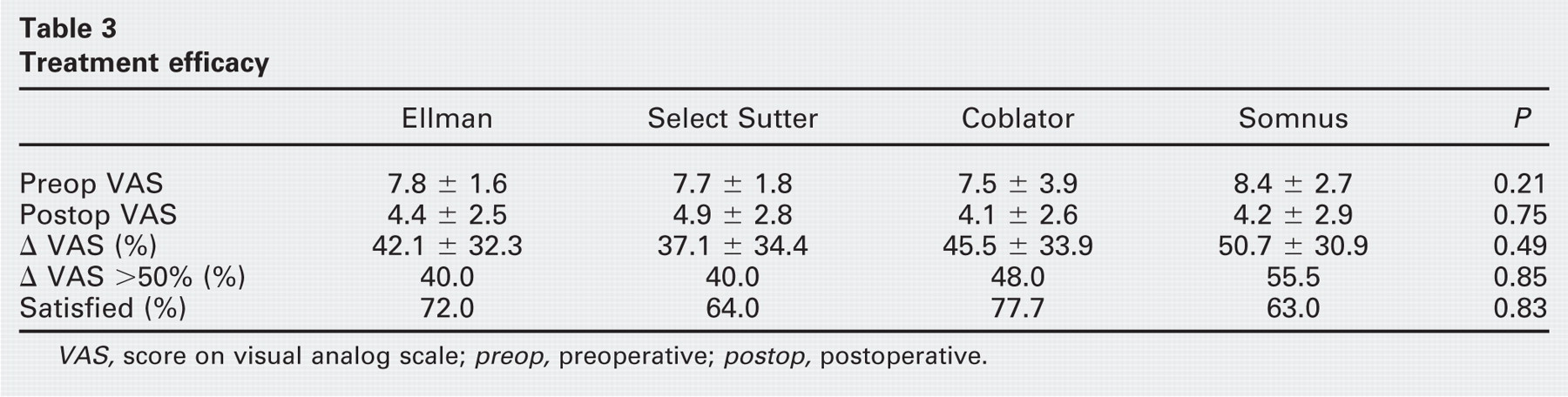
VAS, score on visual analog scale; preop, preoperative; postop, postoperative.
Safety
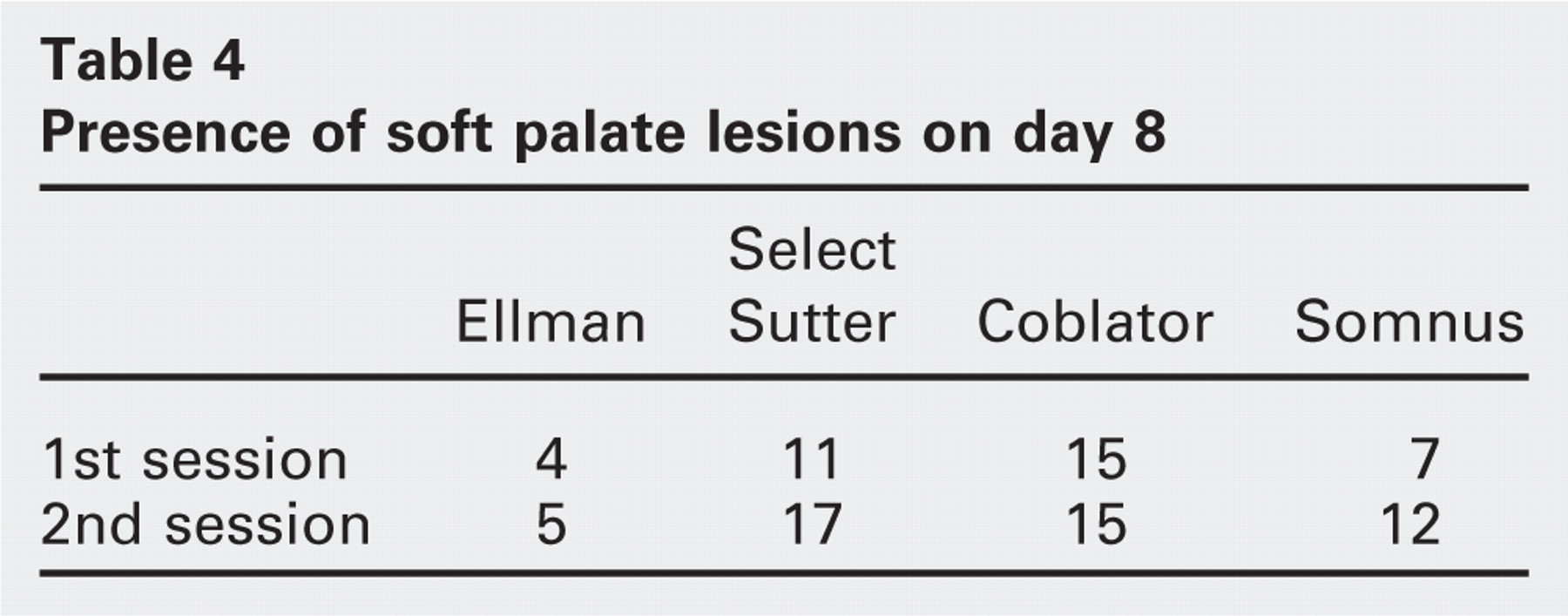
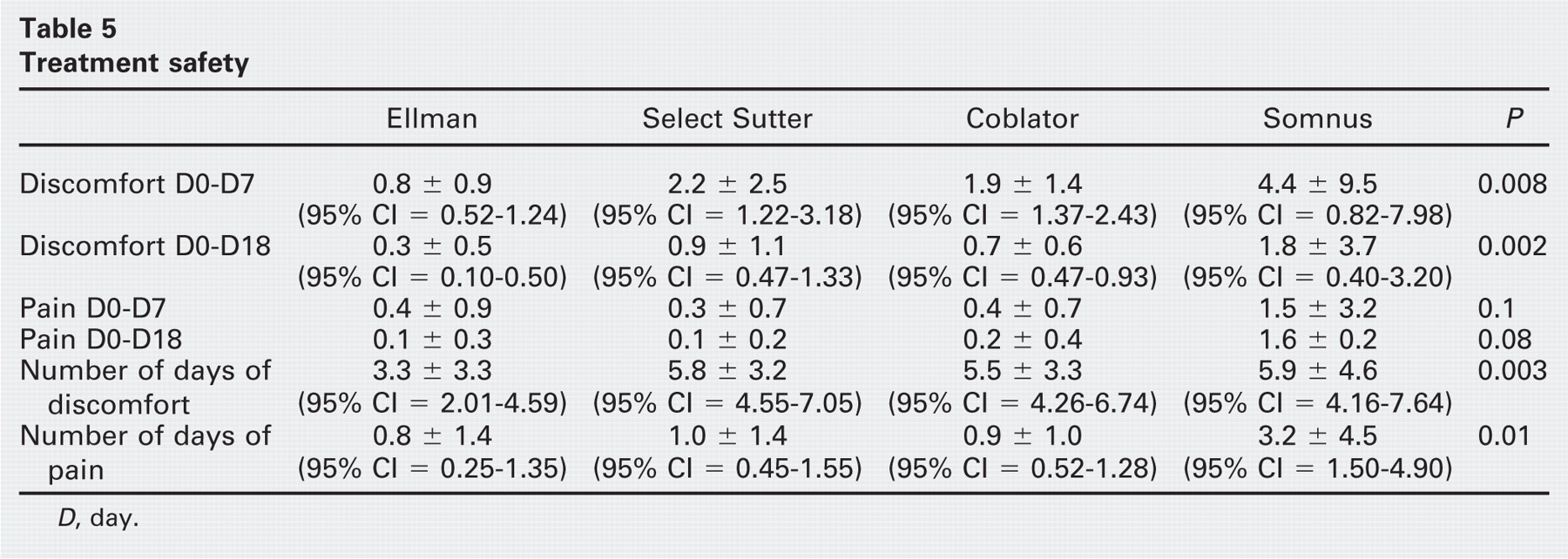
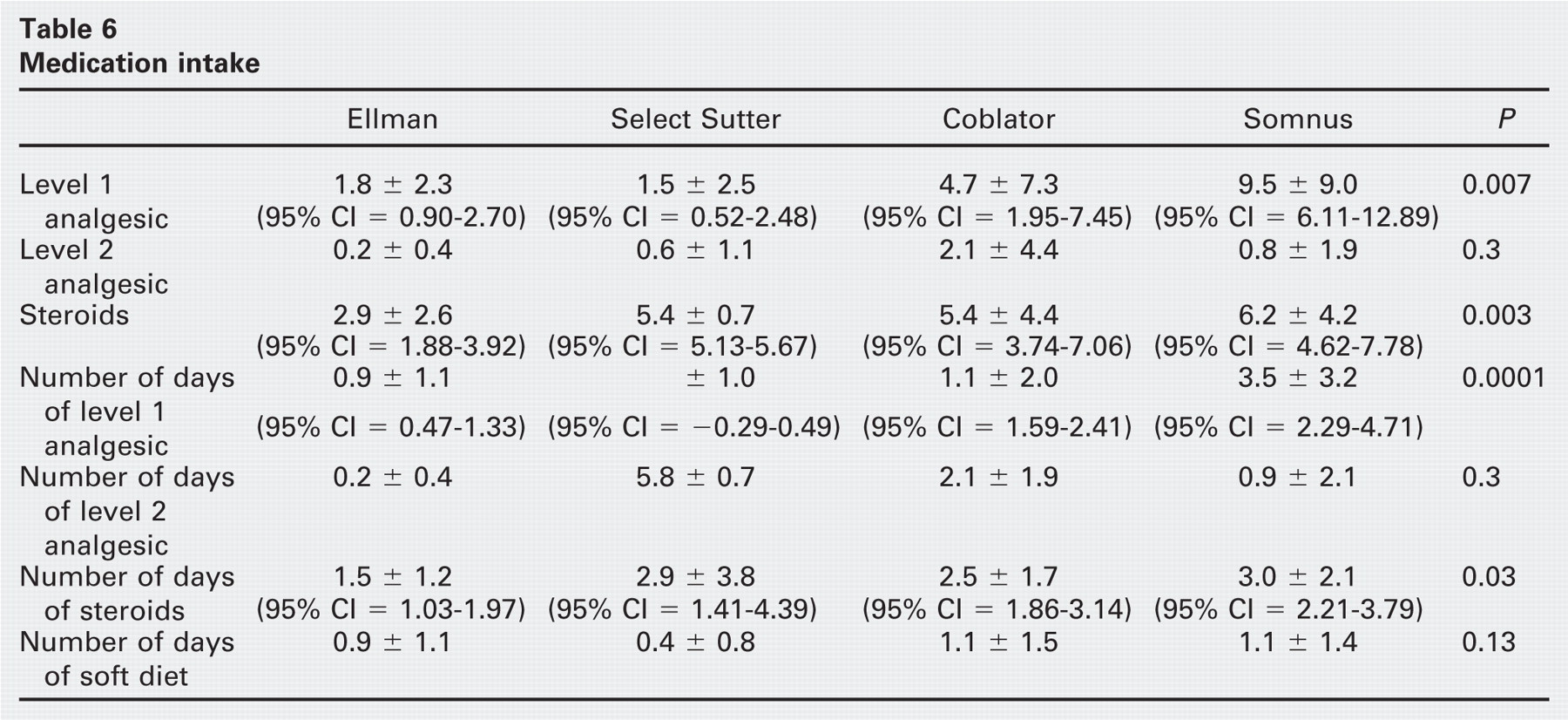
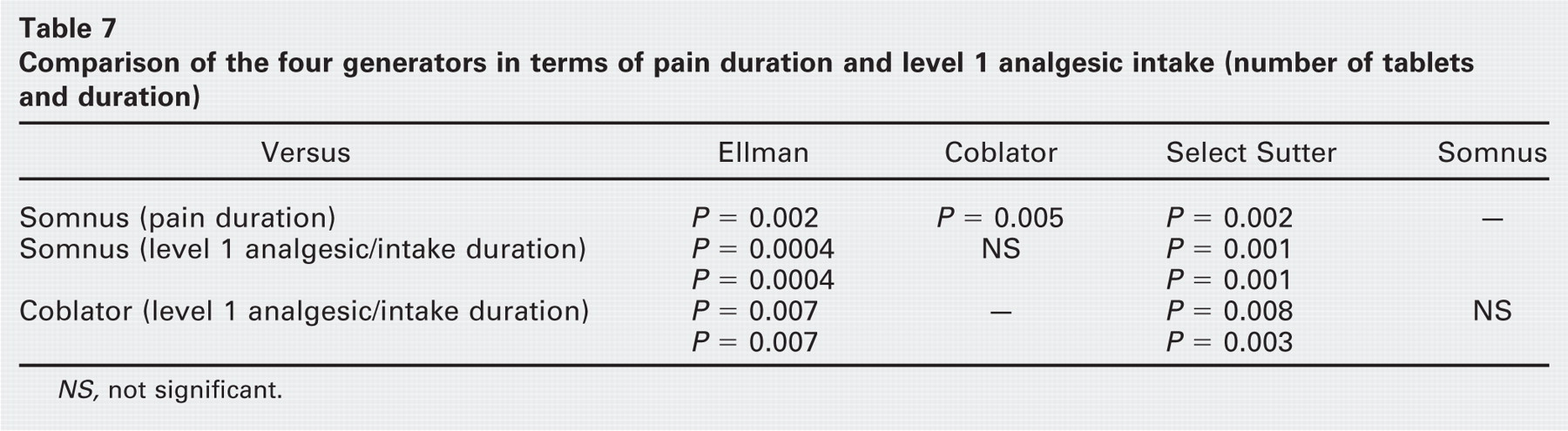
The presence of soft palate lesions is shown in Table 4. The results on discomfort and pain are shown in Table 5. Medication intake and the number of days of soft diet are shown in Table 6. The pain intensity was comparable for the four generators, although the pain duration differed. The Somnus generator induced more prolonged pain than the other three generators (Table 7).
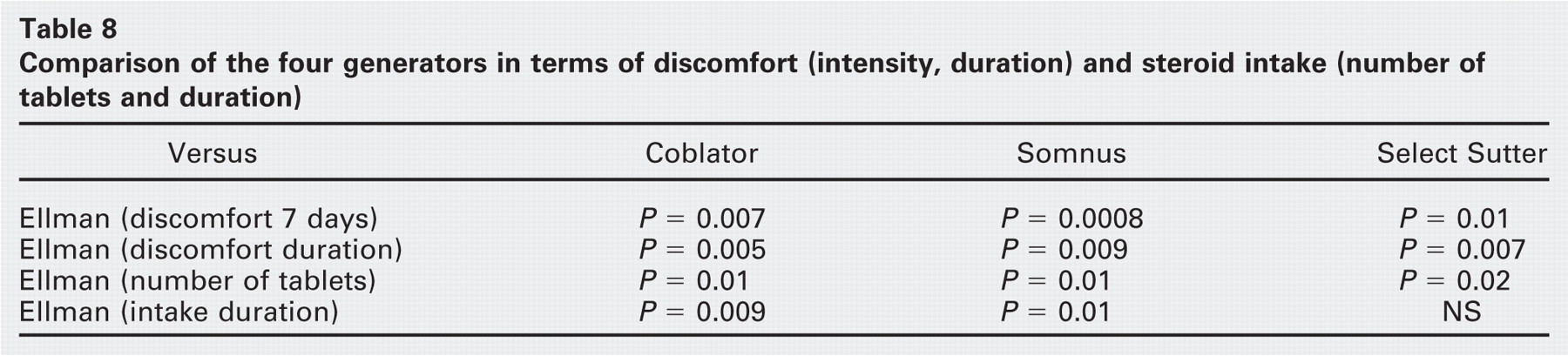
A significant difference in terms of discomfort was observed between the four generators in terms of both severity and duration. The Ellman generator was better tolerated that the other three generators in terms of the discomfort experienced over 7 days and the duration of discomfort (Table 8).
The Coblator and Somnus generators required a greater quantity and a longer duration of level 1 analgesic intake than the Ellman and Select Sutter generators (Table 7). Treatment with the Ellman generator induced a lower steroid intake than with the other three generators (Table 8). The patient's diet was comparable for the four generators.
DISCUSSION
This multicenter, randomized, prospective study in simple snorers demonstrated that radiofrequency volumetric tissue reduction of the palate had a comparable efficacy on snoring regardless of the radiofrequency generator used but that the generators were significantly different in terms of safety. In every case, radiofrequency volumetric tissue reduction of the palate significantly decreased the snoring sound intensity perceived by the partner with good safety.
Many studies have been published on the efficacy of radiofrequency ablation for simple snoring. A review of the literature 3 to analyze the efficacy of radiofrequency on snoring by VAS demonstrated a significant reduction of sound intensity from 8.1 ± 1.8 to 3.5 ± 2.2. However, subjective reduction of snoring sound intensity is not always correlated with the level of satisfaction, which comprises a number of subjective parameters such as the partner's sleep, the couple's relationship, the doctor-patient relationship, or financial aspects.
Few studies have reported the satisfaction rate, which varies from 67% 4 to 86.6%. 5 The Somnus generator is most frequently studied. Various authors have shown that it significantly decreased snoring sound intensity, from 8.3 to 1.9 for Powell et al, 6 from 7.8 to 3.2 for Sher et al, 7 from 7.5 to 4.6 for Hukins et al, 8 and from 9.1 to 5.5 for Ferguson et al. 9 Only one study 10 with the Ellman generator has been published and showed that radiofrequency treatment was effective in 84% of cases with resolution or reduction of snoring to a level that no longer bothered the partner. Two studies were conducted with the Coblator generator: Pessey et al 11 reported a reduction of snoring in 82% of patients, and Back et al 12 reported a success rate of 33% (postoperative VAS score <3). Only one study 13 has been conducted with the Select Sutter generator and reported a reduction of snoring in 86% of cases. It is nevertheless difficult to compare the results of these various studies due to differences in study populations, treatment modalities, and methods of evaluation.
This study was designed to ensure the optimal theoretical conditions of success of radiofrequency tissue reduction (no obesity, no nasal obstruction, no obvious macroglossia, no sleep apnea syndrome, stable partner) and only compared the effects of the generator. The electrode was therefore positioned in the same way for each generator, but different energy levels were applied for each generator. The parameters recommended for routine use by the manufacturer or distributor were used for three of the generators and our own treatment parameters were used for the Somnus generator, with higher doses of 700 J delivered to the sides, instead of 350 J as recommended by the manufacturer. These higher doses were based on the results of a previous unpublished study that showed a greater efficacy with equivalent safety compared with recommended doses.
D, day.
Studies that evaluated the principle of radiofrequency ablation have shown that the volume of the lesion varies as a function of three different parameters: the electrode, radiofrequency parameters, and the tissues to which the radiofrequency waves are applied. The radiofrequency wavelength also appears to play a role. Significant differences in terms of efficacy between the various radiofrequency generators would therefore be expected in view of their different technical characteristics.
Studies that involve the safety of radiofrequency treatment show that it is superior to that of surgical uvulopalatopharyngoplasty or laser-assisted uvulopalatoplasty. 2 The main complications are soft palate lesions (blanching, erosion, ulceration), observed in 0% to 50% of cases. 3 VAS scores for discomfort and pain are usually less than 3 in the various studies conducted with different generators. 6,7,9–11
The energy delivered can cause discomfort related to the edema that it induces; the pain is usually related to tissue lesions, 14 especially, but not always, when the lesion is situated close to the surface of the mucosa. 12
Our study confirms that radiofrequency is well tolerated with low levels of discomfort and pain and analgesic and anti-inflammatory drug intake. No significant difference was observed between the four generators in terms of pain, as all were well tolerated. The number of days of level 1 analgesic intake was higher with the Somnus generator, whereas the number of lesions visualized was not higher compared with the other treatments.
The Ellman generator induced less discomfort than the other three generators. A difference in terms of steroid intake, prescribed for feelings of swelling, was also observed in favor of the Ellman generator, which therefore appeared to induce less edema than the other three generators.
The results of this study suggest that the choice of radiofrequency equipment cannot be guided by its efficacy, as all four generators demonstrated a comparable efficacy. Although significant differences were observed in terms of safety, levels of discomfort and pain were extremely low for all generators. The radiofrequency technique has often been criticized for being too expensive because of the cost of the electrode. As the electrode is usually disposable, a second or even a third electrode must therefore be used for repeat treatment sessions, which further increases the cost of treatment. Some practitioners have consequently reused the same electrode in the same patient with no apparent problems. 14 In this context and to comply with the rules of good use of surgical instruments, sterilizable material would therefore constitute a considerable advantage.
CONCLUSION
This multicenter, randomized, single-blind study demonstrated that radiofrequency tissue reduction of the soft palate in selected simple snorers significantly decreases the snoring sound intensity perceived by the patient's partner. Results on snoring were comparable for the four generators (Ellman, Select Sutter, Coblator, Somnus), with different technical characteristics in terms of snoring sound intensity and level of satisfaction. In terms of safety, the Ellman generator induced less discomfort and required less anti-inflammatory drug intake than the other three generators. In the light of this study, the possibility to resterilize electrodes and the cost of equipment should be decisive factors in the choice of equipment for a treatment that is not reimbursed by national health insurance.
AUTHOR INFORMATION
From the Department of Otolaryngology—Head Neck Surgery (Drs Blumen and Chabolle), Foch Hospital, Suresnes, France; the Department of Otolaryngology—Head Neck Surgery (Drs Chalumeau and Coste), Mondor Hospital, Créteil, France; and the Department of Otolaryngology—Head Neck Surgery (Drs Gauthier and Bobin), Kremlin Bic≖tre Hospital, Kremlin Bic≖ tre, France.
Presented at AAO-HNS annual meeting, Toronto, Canada, 2006.
Corresponding author: Marc B. Blumen, Hôpital Foch, 40 rue Worth, 92160 Suresnes, France.
E-mail address:
AUTHOR CONTRIBUTIONS
FINANCIAL DISCLOSURE
None.