







Abstract

Ascaris lumbricoides roundworm is a medically important nematode parasite that inhabits the human gastrointestinal tract. It infects about 25 percent of the world's population and causes up to a million cases of disease annually. 1
A 60-year-old villager woman, with no significant medical history, presented with a 3-month history of pharyngeal globus, “tingling throat,” frequent throat clearing, dry cough, and bronchospasm. The presence of posterior laryngitis during videolaryngoscopy (Fig 1) was compatible with laryngopharyngeal reflux disease (LPRD) 2 . Treatment with a proton pump inhibitor (Nexium 40 mg orally once daily) was unsuccessful in giving her complete relief. She was readmitted after three months because of a hemoptysis episode with no evident cause of bleeding. She also complained about “something walking and biting on her throat.” During hospitalization, the patient, after a persistent cough, passed out through the mouth, a 17 cm long live adult ascaris worm (Fig 2). The blood tests, stool examination, upper endoscopy, bronchoscopy, endoscopic retrograde cholahgiopancreatography (ERCP), thorax and abdomen computer tomography were negative. In order eradicate the helminthic infection, she was started on 100 mg mebendazole (Vermox), orally twice daily for three days. After the treatment, the GERD symptoms disappeared gradually. Videolaryngoscopy revealed amelioration of the posterior laryngitis.
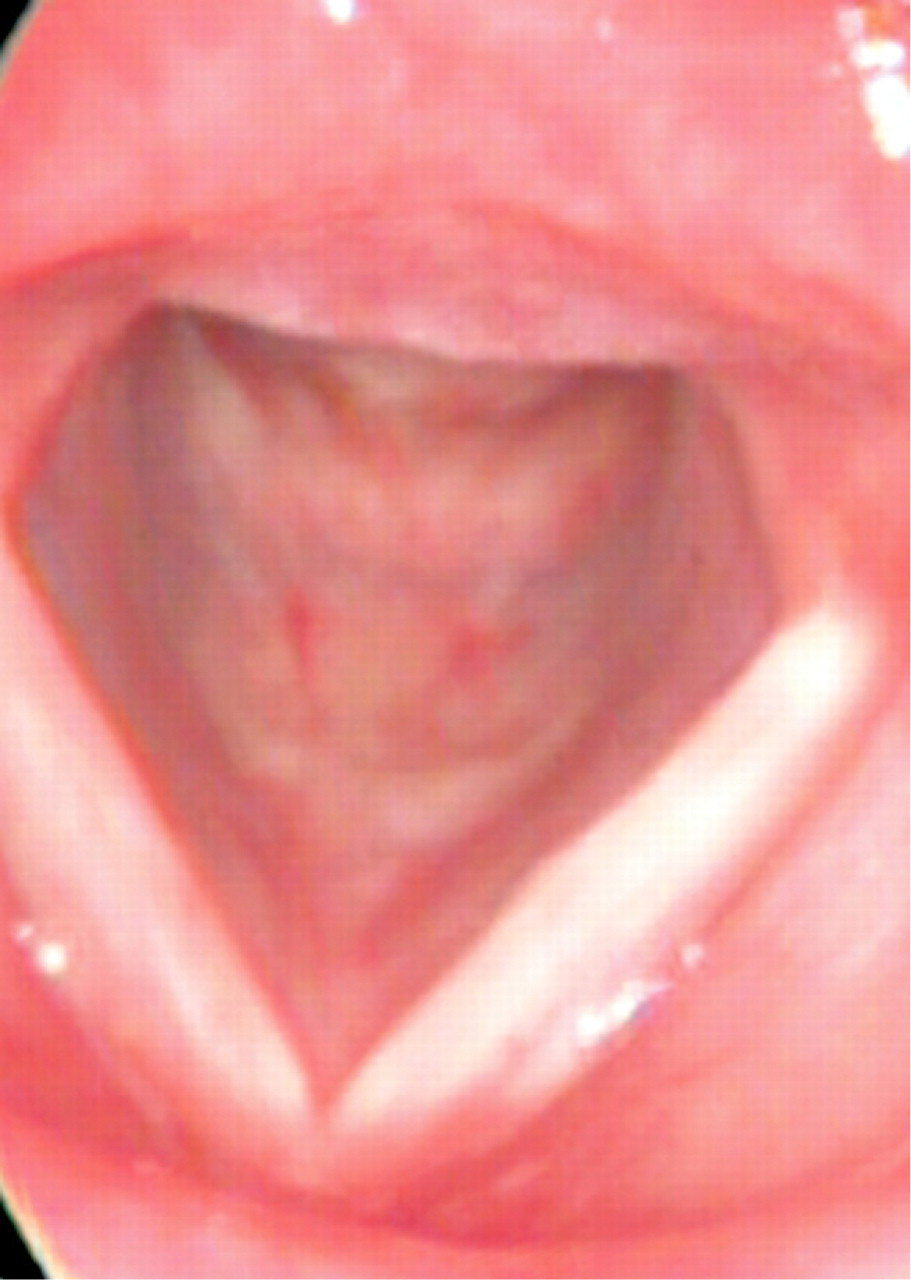
Indirect videolaryngoscopic examination shows the presence of posterior laryngitis.
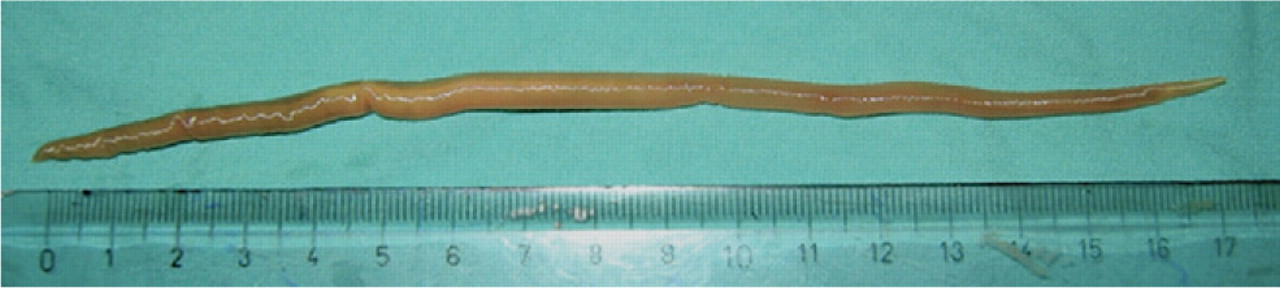
17 cm long live adult ascaris worm.
Discussion
Ascaris lumbricoides is the largest intestinal nematode parasite of human beings. Transmission is fecal-oral. Adult worms inhabit the lumen of the small intestine without causing any symptoms. The eggs of the female ascaris are excreted in the stool and become infective after weeks. When swallowed, the larva hatches in the intestine, invades the mucosa, and moves to the lungs, breaking through alveoli and returning via the bronchial tree to the small bowel, where they mature into adult worms, 3 reaching up to 40 cm in length.
Clinical manifestations are different in each stage of the infection. During the phase of the pulmonary migration, patients present with cough, dyspnea, hemoptysis, burning substernal discomfort, and low fever. 4 Eosinophilia develops during the pulmonary migration phase. In the present case, there was a coincidence of two findings: laryngopharyngeal reflux (LPR) with ascariasis. Since chronic parasitosis induces functional disturbances in upper airways and upper gastrointestinal tract, it is believed that the worm reached the larynx shortly after leaving the esophagus. It is also possible that all symptoms were produced by protozoal infection that simulated laryngopharyngeal reflux (pseudo-LPR). Although roundworm infection is usually asymptomatic, it may have clinical similarities with LPR and should be considered in endemic areas. Our case report has been approved by the institutional review board.