







Abstract

A 21-year-old male Marine presented with a three-day history of oral pain. The previous week he had been involved in predeployment field exercises and experienced flu-like symptoms. The patient was a nonsmoker, non-drinker, was on no medications, and had no significant medical or surgical history. Physical examination of the oral cavity showed acute gingivitis and acute inflammation, necrosis, and pseudomembrane formation of mucosal surfaces, including the lips, buccal, palate, and tongue (Figs 1 and 2). The patient was treated with a 10-day course of oral clindamycin, Motrin (McNeil-PPC, Fort Washington, PA) for pain, oral rinses with chlorhexidine (Periogard; Colgate-Palmolive Company, New York, NY), and immediate dental consultation. The patient responded well to treatment and was back to full duty in three days.
Discussion
Trench mouth, also known as acute necrotizing ulcerative gingivitis, is an acute infectious gingivitis. The term “trench mouth” was coined during World War I when the disorder was seen in trench-bound soldiers. 1 If the infection spreads beyond the gingiva to involve other oral mucosal surfaces, it is termed “Noma” (cancrum oris). The infection is caused by ubiquitous organisms such as Prevotella intermedia, alpha-hemolytic streptococci, Actinomyces species, spirochetes, etc. The disorder is not contagious. Risk factors include stress, immune incompetence, poor nutrition, poor oral hygiene, ethanol and tobacco use, and living near livestock. The condition often includes fetid oral odor, pain, fever, malaise, and cervical adenopathy. Affected areas will display edema and ulceration, and a pseudomembrane may be present. Treatment should include pain control: ibuprofen, narcotic, viscous lidocaine. Appropriate antibiotic coverage includes clindamycin, penicillin, or erythromycin. Antiseptic mouthwash such as chlorhexidine 0.12% (Periogard) decreases bacterial count and probably speeds recovery and should be combined with brushing and flossing. Immediate dental consultation is indicated for debridement of affected areas and definitive periodontal therapy. 2 , 3
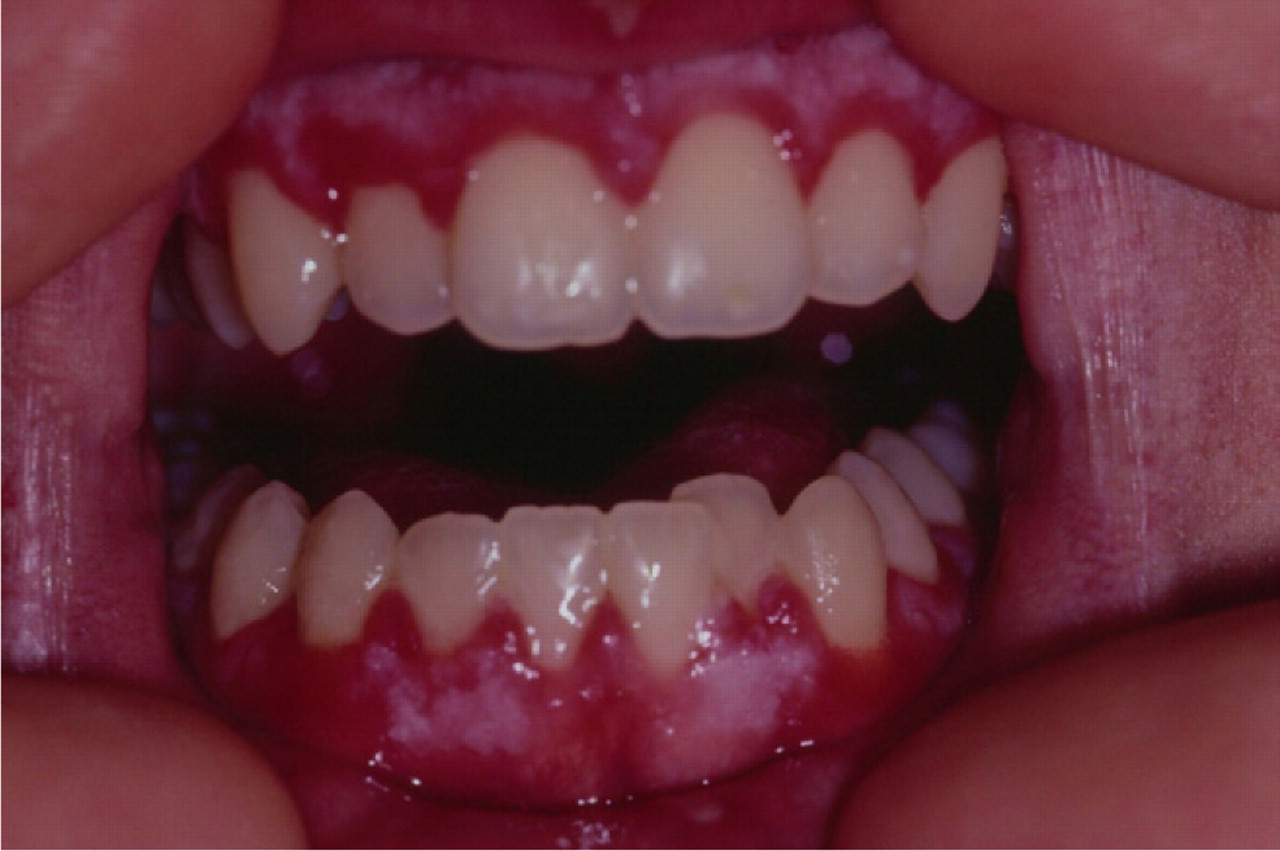
Acute infectious gingivitis (trench mouth) is seen with mucosal edema and inflammation and pseudomembrane formation.
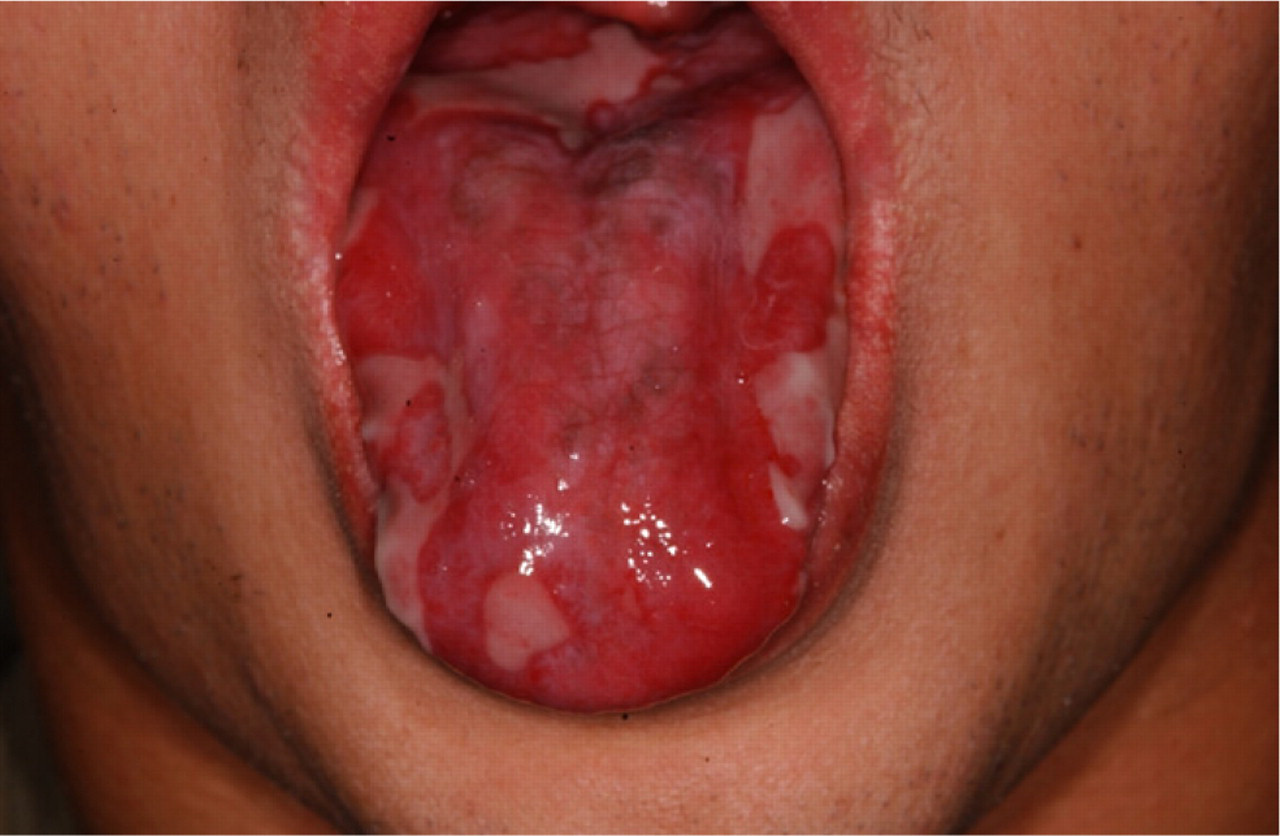
The acute infection is present on all oral mucosal surfaces, including the tongue, as characterized by inflammation, ulceration, and pseudomembrane formation.
This article has been approved for publication by Naval Hospital Camp Pendleton's Internal Review Board.
Author Contribution
Disclosures
Footnotes
Acknowledgements
The views expressed in this article are those of the author and do not necessarily reflect the official policy of position of the Department of the Navy, Department of Defense, nor the U.S. Government. Dr. Murrell is a military service member. This work was prepared as part of his official duties. Title 17, USC, Section 105 provides that “Copyright protection under this title is not available for any work of the United States Government.” Title 17, USC, Section 101 defines a U.S. government work as a work prepared by a military service member or employee of the U.S. Government as part of that person's official duties.