






Abstract

A 62-year-old male patient was referred to our department, suffering from right orbital cellulitis. His medical history revealed the presence of prostate cancer with bone metastases. Over the previous year, he was administered intravenous zolendronate (Zometa; Novartis, Basel, Switzerland). Physical examination ascertained the proptotic right eye with surrounding inflammation and draining fistula beneath the lower eyelid. Oral assessment identified osteonecrosis of the edentulous right hard palate (Fig 1). The patient denied any surgical therapy and was treated with antibiotics and mouth rinses. The University of Medicine and Pharmacy of Cluj-Napoca Institutional Review Board approved this project.
Discussion
For patients presenting with lesions of the mandible or maxilla along with a history of malignancy, metastases should be ruled out first. 1 Imaging findings are nonspecific. If diagnosis is consistent with osteonecrosis without previous radiation therapy, a history of bisphosphonates administration should be sought. 1
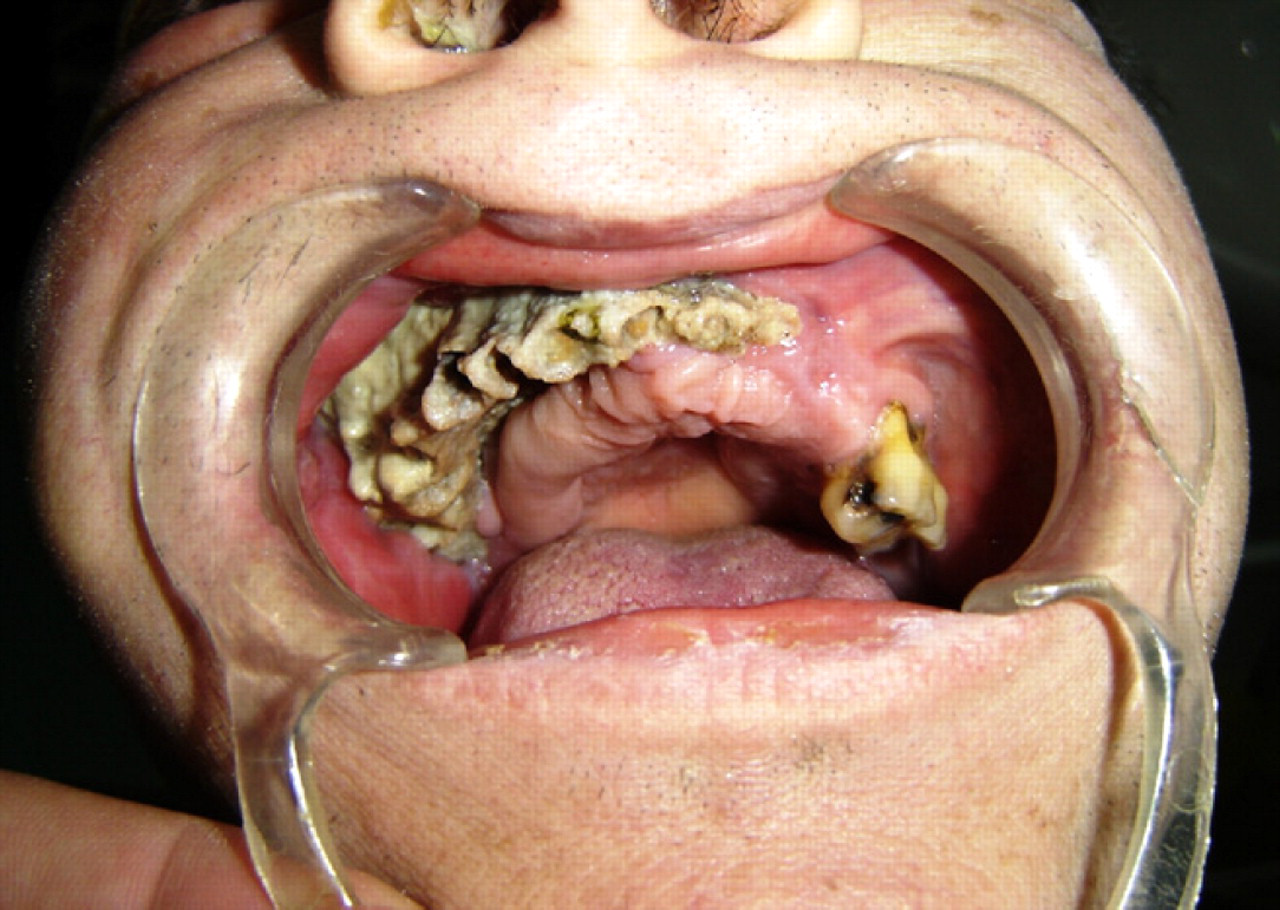
Osteonecrosis of the edentulous right hard palate in a patient treated with bisphosphonates.
Zolendronate belongs to the new generation of bisphosphonates, a class of medications recognized to hamper bone resorption. 2 Presently, zolendronate is recommended for the treatment of bone metastases secondary to all solid tumors. 2 Although bisphosphonates provide important clinical benefits and have a low incidence of serious adverse effects, long-term use has been associated with mandibular and maxillary osteonecrosis. 3,4 The real incidence is unknown but is believed to be low. A putative mechanism for emergence along the alveolar ridge is related to the presence of teeth, leading to potential environmental bone exposure and subsequent inflammation. 4 Edentulous patients have poor-fitting dentures, giving way to chronic inflammation of the underlying alveolar bone. The slowdown of bone turnover results in areas of osteomyelitis and eventually osteonecrosis. 4 Furthermore, bisphosphonates also demonstrate antiangiogenic effects, resulting in chronic tissue ischemia. 1,4 Provocative factors in the pathogenesis of osteoradionecrosis are trauma and dental extractions because 39 to 78 percent of patients have had previous dental interventions. 1,4 Our patient has not had any tooth extraction. Recently, bisphosphonates were associated with insufficiency fractures of the femur in postmenopausal women. 5
Currently, there is no effective treatment. Prophylactic approaches are encouraged and include assessment of dental status before drug administration, avoidance of dental procedures, and monitoring of dental hygiene. Conservative therapy with antibiotics and mouth rinses is advocated, with surgery (ranging from debridement to radical resection) reserved for a small percentage of cases. 1 When surgery is foreseen, caution is advised because the procedure may exacerbate the avascular process.