







Abstract
Abstract
Parent-child relationships influence learning throughout a child’s formal schooling and beyond. The quality of parenting children receive has a major influence on their learning and developmental capabilities. Parental influence is important in the early years of life and extends throughout a child’s schooling. Parenting has a pervasive influence on children’s language and communication, executive functions and self-regulation, social and peer relationships, academic attainment, general behaviour and enjoyment of school. Schools can further enhance educational outcomes for students by developing the resources and expertise needed to engage parents as partners in learning. This can be achieved by delivering and facilitating access to a comprehensive system of high-quality, culturally informed, evidence-based parenting support programs. In this article, recent developments in the Triple P system of parenting support are used to illustrate how schools can develop a low-cost, comprehensive, high-quality parenting support strategy that blends universal components with targeted components for more vulnerable children. We identify potential organisational and logistical barriers to implementing parenting support programs and ways to address these.
Making Evidence-Based Parenting Support Work in Schools Using the Triple P system
Of all the modifiable determinants of children’s emerging developmental capabilities, none are more important than the quality of parenting they experience. Many schools have recognised the crucial importance of parenting to children’s learning. Subsequently, school psychologists, guidance officers and school counsellors have offered parents the opportunities to attend parenting seminars and group programs, with varying degrees of success. Sometimes, efforts to engage parents have been hampered by challenges including recruiting and retaining parents and lack of resources to ensure that staff delivering programs are supported (e.g., access to supervision, sufficient time), Sometimes, there is a lack of access to programs that have a credible evidence base and are known to work when delivered in a school context. This article examines the potential role of school guidance and counselling staff in establishing a high-quality, evidence-based, sustainable model of parenting support based on the Triple P system (Sanders, 2012; Sanders & Mazzucchelli, 2017). Specifically, we begin by discussing the role of parenting in influencing school-relevant outcomes, then present a theoretical model that blends universal and targeted components to enable all parents to access a high-quality, culturally and consumer-informed approach to parenting support. Logistical and practical implementation challenges are identified and potential solutions to these problems are discussed.
How Does Parenting Influence Children’s Learning and Developmental Capabilities?
The main purpose of formal schooling is to enable students to develop the skills, competencies and capabilities for them to thrive in their future world (Hattie & Larsen, 2020). This includes not only academic and technical skills and knowledge, but also personal, interpersonal and emotional skills to interact with others. Successful engagement in classroom learning also requires that students have a foundation of language, the ability to regulate their own emotions and behaviour, the requisite learning behaviours (such as the ability to pay attention, follow instructions and organise themselves), and the ability to engage positively with the teacher and other students. The type of parenting children receive influences all of these requisite skills for school, both in terms of providing the early foundation prior to starting school, and the ongoing pervasive (positive or negative) influence on children’s readiness to learn, classroom behaviour, emotional wellbeing, mental health, relationships and attitudes throughout their schooling.
Foundation Language and Communication
The quality of parenting interactions in the early years affects children’s early learning, language, and cognitive development. In their seminal work, Hart and Risley (1995) found that the amount of language interaction between 1- and 2-year-old children and their parents predicted children’s later vocabulary growth rate, vocabulary use and IQ test scores, which in turn lay the foundation for success in school. Throughout schooling, parents’ expectations and interest in their child’s learning continue to influence children’s readiness to learn through shaping their academic behaviours.
Academic Behaviour and Achievement
Effective parenting enhances children’s academic behaviour and success. Children who succeed academically tend to have parents who use more responsive parenting strategies, communicate expectations of academic success, support children in organising and scaffolding their learning, and help children learn to manage their own learning (Froiland et al., 2013). Similarly, adolescents who receive firm and supportive parenting achieve better academic improvement and school engagement over time than their peers (Steinberg et al., 1992). On the other hand, family conflict and authoritarian parenting has been associated with poorer academic outcomes for children (Pasternak, 2012; Smokowski et al., 2014).
On a daily basis, parenting influences many other variables that affect children’s ability to engage at school. Parenting affects whether children get enough sleep, which in turn affects children’s academic functioning at school (Becker, 2014). Parenting also influences children’s completion of homework, which impacts academic success in secondary school (Hawkin & Axelrod, 2008). A 15-year follow-up of the Western Australian population trial of Group Triple P parenting program found that participation in early childhood (when children were 3–5 years old) improved school attendance and long-term academic outcomes in reading and numeracy (Smith, 2015; Zubrick et al., 2005). These outcomes were mainly attributed to the positive impact of effective parenting on children’s ability to control their emotions and behaviour (Smith, 2015).
Children’s Emotional and Behavioural Control
Children’s ability to manage their own emotions and behaviour affects their ability to engage, concentrate, and inhibit inappropriate behaviour (Eisenberg et al., 2005; Moffitt et al., 2011). Development of emotional and behavioural control is predicted by responsive parenting (Graziano et al., 2011; Valiente et al., 2007), whereas emotional and behaviour problems are associated with negative, harsh and inconsistent parenting (Bayer et al., 2011; McKee et al., 2008). Behaviour problems that develop at home, such as noncompliance and aggression, can generalise to the school setting, resulting in diminished engagement and poorer academic performance (Dishion et al., 1984; Fredricks et al., 2004, Valiente et al., 2007). Behaviour problems and poorer academic achievement have been found to have a negative, recursive relationship over time (Sandler et al., 2011). Improved parenting can break this cycle.
Parenting programs aimed at improving the parent-child relationships and decreasing conduct problems have been found to also have positive benefits for classroom behaviour (McNeil et al., 1991; Reid et al., 2004). For instance, participation of Australian parents in Group Triple P has been found to not only improve the child’s behaviour at home, but to reduce the frequency and intensity of the child’s problem behaviour in the classroom, according to teachers (McTaggart & Sanders, 2003). As teachers are well aware, the dysregulated behaviour of one or more students can interfere with learning of classmates (McCahill et al., 2014) and contribute to teacher stress and burnout (Friedman, 1995; Hastings & Bham, 2003). So, improvement in one child’s behaviour may potentially benefit the education of other students.
Social and Peer Relationships
Parenting also influences children’s peer interactions, social skills and formation of supportive relationships with other children at school. McDowell and Parke (2009) found that parents influence the development of children’s social skills and supportive peer relationships. Through their own social interactions with their child, parents establish a template for how to interact with others (Parke & Ladd, 1992). Receipt of warm, supportive parenting that still allows development of appropriate independence predicts higher social competence and better peer acceptance over time in primary school children (McDowell et al., 2003). Parents can also actively teach children social skills and problem solving relevant to peer relationships (McDowell & Parke, 2009). For instance, coaching by parents of children with attention deficit hyperactivity disorder (ADHD) improved children’s social skills and peer acceptance (Mikami et al., 2010). Finally, parents are gatekeepers to children’s opportunities to socialise with their peers and develop friendships through access to play-dates and recreational opportunities (McDowell & Parke, 2009). Supportive parenting is also protective of bullying victimisation, which is a major concern in schools. A review of meta-analyses found that warm, supportive parenting was a protective factor, and negative parenting was a risk factor for being bullied by peers (Lereya et al., 2013). A family-based intervention (Resilience Triple P) that encouraged supportive parenting, parental coaching of children’s social and emotional skills, and parental support of children’s friendships was effective in reducing bullying victimisation, according to children, parents and teachers (Healy & Sanders, 2014).
Benefits of a Positive Home-School Relationship
Parents have an enormous ongoing influence on their child’s academic readiness to engage in school and in their effort, behaviour, mood, social skills, relationships and academic achievements at school. Schools can achieve improved outcomes for students by harnessing parental support. This means parents and schools working together as partners in children’s learning and wellbeing.
Substantial evidence shows that when parents and schools work together to establish mutual goals and shared responsibilities for children’s learning and wellbeing, that improved outcomes result. Such outcomes include enhanced academic outcomes, social and emotional skills, increased motivation and achievement at school; increased school attendance; higher rates of graduation, and subsequent tertiary studies; improved self-efficacy; and increased belief in the importance of education (Emerson et al., 2012; Henderson & Mapp, 2002; Hoover-Dempsey & Sandler, 1997; Mapp, 2013; Sheldon & Epstein, 2004; Willis et al., 2021). Given the pervasive influence parents have on children’s social, emotional and cognitive development, it is vital that schools provide parents with access to high-quality parenting programs and that teachers work alongside parents to enhance each student’s learning and wellbeing.
A Self-Regulation Framework for Providing Parenting Support
Self-regulation provides a useful framework for conceptualising the provision of positive parental support. Parents have a fundamental right to make decisions about how they raise their children. Instead of prescribing or dictating to parents what they must do, parents can be offered empirically supported information and strategies so that they can make more informed choices about how to tackle their concerns about parenting and their children’s learning and social and emotional problems. Parents’ capacity to manage their own behaviour is a key factor that influences the quality of the home environment in which children are raised. As such, an important role of parenting support is to impart skills that strengthen parents’ ability to change their own behaviour and become independent problem-solvers (Karoly, 1993; Sanders & Mazzucchelli, 2013). The approach to self-regulation used in Triple P is derived from social cognitive theory. According to Bandura (1977, 1986), the development of self-regulation is related to personal, environmental and behavioural factors; these factors operate separately but are interdependent. The self-regulatory framework is operationalised to include the following: self-sufficiency, self-efficacy, self-management, personal agency, and problem-solving.
Self-Sufficiency
As all parenting programs are time limited, parents need to become independent problem-solvers so they trust their own judgment and become less reliant on others in carrying out basic parenting responsibilities. Self-sufficient parents have the resilience, resourcefulness, knowledge and skills to parent with confidence. When confronted with a new problem, they use their knowledge, skills and personal resources to resolve the problem. Encouraging parents to become self-sufficient means that parents become more connected to social support networks (e.g., partners, extended family and friends, social and recreational groups). It is hypothesised that the more self-sufficient parents become, the more likely they are to seek appropriate support when they need it, advocate for their children, remain involved in their children’s schooling, and help protect them from harm (e.g., by effectively managing conflict with partners and creating a secure, low-conflict environment).
Self-Efficacy
Self-efficacy refers to a parent’s belief that they can overcome or solve a parenting or behaviour management problem. Parents with high self-efficacy have more confidence and have positive expectations about the possibility of change. Parenting programs can build parents’ self-efficacy by conveying optimism that change is possible. For example, in Universal Triple P, media strategies that involve the realistic depiction of possible solutions to commonly encountered parenting situations (e.g., bedtime problems) are used for this purpose. These potential solutions can be illustrated through various media, including television programs, community service announcements, ‘talkback’ radio, newspaper columns and advertising. The messages are optimistic and promote the idea that even the most difficult parenting problems are solvable or preventable. In more intensive programs, parents are guided to select realistic goals for which they are provided the support necessary to accomplish these goals.
Self-Management
The tools or skills that parents can use to become more self-sufficient include self-monitoring, self-determination of goals and performance standards, self-evaluation of their own performance against a performance criterion, and self-selection of change strategies. As each parent is responsible for the way they choose to raise their children, parents select those aspects of their own and their child’s behaviour they wish to work on, set goals, choose specific parenting and child management techniques they wish to implement, and self-evaluate their success with their chosen goals against self-determined criteria. Triple P aims to help parents make informed decisions by sharing knowledge and skills derived from contemporary research into effective childrearing practices. The active skills training processes incorporated into Triple P interventions enable skills to be modelled and practised. Parents receive feedback regarding their implementation of skills learned in a supportive context using a self-regulatory framework (see Mazzucchelli & Ralph, 2019). Self-determination of personal goals enables parents to take into consideration their values and cultural traditions and to check whether the goals and methods they plan to use are consistent. An example of how this can be done is described by Turner et al. (2018).
Personal Agency
For personal agency, the parent increasingly attributes changes or improvements in their situation or their child’s behaviour to their own or their child’s efforts rather than to chance, age, maturational factors or other uncontrollable events (e.g., genetic makeup). This outcome is achieved by prompting parents to realistically identify causes or explanations for their child’s or their own behaviour; doing so increases parents’ self-efficacy.
Problem Solving
A final aspect of self-regulation is parents’ ability to apply the skills and knowledge they have acquired to issues beyond the presenting concern. It refers to parents’ ability to flexibly adapt or generalise what they have learned to new problems, at later developmental phases, with different children, and for a variety of child behaviour problems and family concerns. This means the test of whether a parenting intervention is truly successful is not only the parent’s ability to resolve current issues but also their capacity to address a diverse range of family challenges over time with relative autonomy.
This model is robust; it applies equally to all participants of positive parenting programs, including parents and children and service providers (Sanders & Mazzucchelli, 2013). The components of self-regulation outlined previously can be taught to children by parents in developmentally appropriate ways. For instance, attending and responding to child-initiated interactions, and prompting, modelling and reinforcing children’s problem-solving efforts promote emotional self-regulation, independence and problem solving in children. Self-regulated parents are more likely to raise children who develop self-regulatory skills. Self-regulation principles can also be applied by service providers to be responsive to the needs of parents, and in the school context, school counsellors are well placed to be such providers.
Targeted Parenting Capabilities
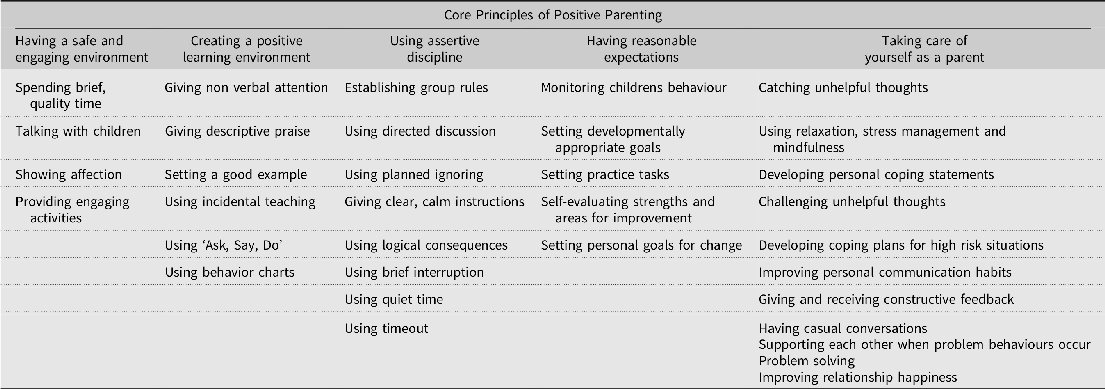
Improvements in children’s behaviour and capabilities are hypothesised to be related to changes in parenting practices and parent capabilities. Parents are taught specific parenting strategies that they can use in their everyday interactions with children to help their children learn necessary social and emotional skills to become more prosocial and healthier, and to reduce problem behaviour. The successful deployment of parenting skills requires parents to develop a range of social, emotional and cognitive capabilities so they can implement parenting advice or guidance. These capabilities include being observant of their child’s and their own behaviour; positive attending and communication skills; emotion regulation and stress coping skills so parents can speak calmly and remain calm when problems occur; and cognitive and executive functions such as remembering planned actions to take, anticipating and planning strategies they intend to use in advance, being organised, and using problem solving and troubleshooting skills. It also involves having appropriate expectations of children and oneself as a parent; having knowledge of strategies that work for specific behaviours; reducing maladaptive or interfering attributions or thoughts about the child and the causes of a child’s problems; and having sufficient flexibility so they can respond in a developmentally appropriate manner to their children’s behaviour and needs. Table 1 summarises the core principles and skills introduced in Triple P to parents of children aged 3–12 years.
Core principles and skills promoted in Triple P for children aged 0–12 years
The Goals and Outcomes of Evidence-Based Parenting Supports in Schools
Sanders and Mazzucchelli (2017) described the overarching aims of an integrated, multilevel system of evidence-based parenting support as follows: (a) to increase the number and proportion of parents who participate in an evidence-based parenting program (all parents should have an opportunity to participate); (b) to decrease the number and proportion of parents who engage in coercive, inept or dysfunctional parenting practices; (c) to increase the number and proportion of children who are exposed to positive parenting practices that support learning at school and children’s overall wellbeing; and (d) to decrease the number and proportion of children who develop a serious preventable social, emotional or behavioural problem and who are exposed to child maltreatment. The Triple P System Logic Model can be seen in Figure 1. This approach assumes that all children are likely to benefit when parents have the knowledge, skills and confidence to parent their children well and have specific skills that support children’s learning at school.
Triple P System Logic Model.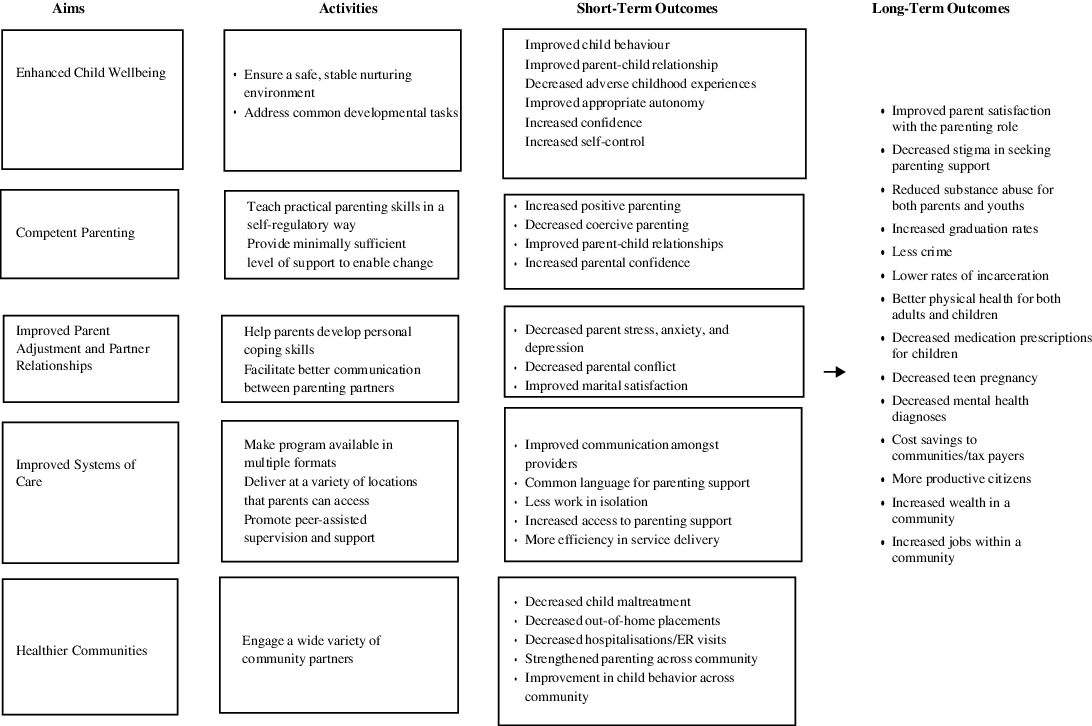
Towards a Comprehensive Model of Parenting Support Delivered Through Schools
The Triple P system provides schools with a range of evidence-based options (in person, group, individual and online) that assist parents to learn the skills they need to support children’s learning and social and emotional wellbeing. Options include a mix of universal (e.g., Positive Parenting seminars) and more targeted programs for parents of children with particular needs (Group Triple P or Triple P Online). The introduction of the parenting support strategy works best when supported by a specific communication strategy using school-parent communication channels so that parents know that the school expects and supports their participation in Triple P. Table 2 summarises the various program options available to schools.
Program options for using Triple P as a school-based parenting support intervention
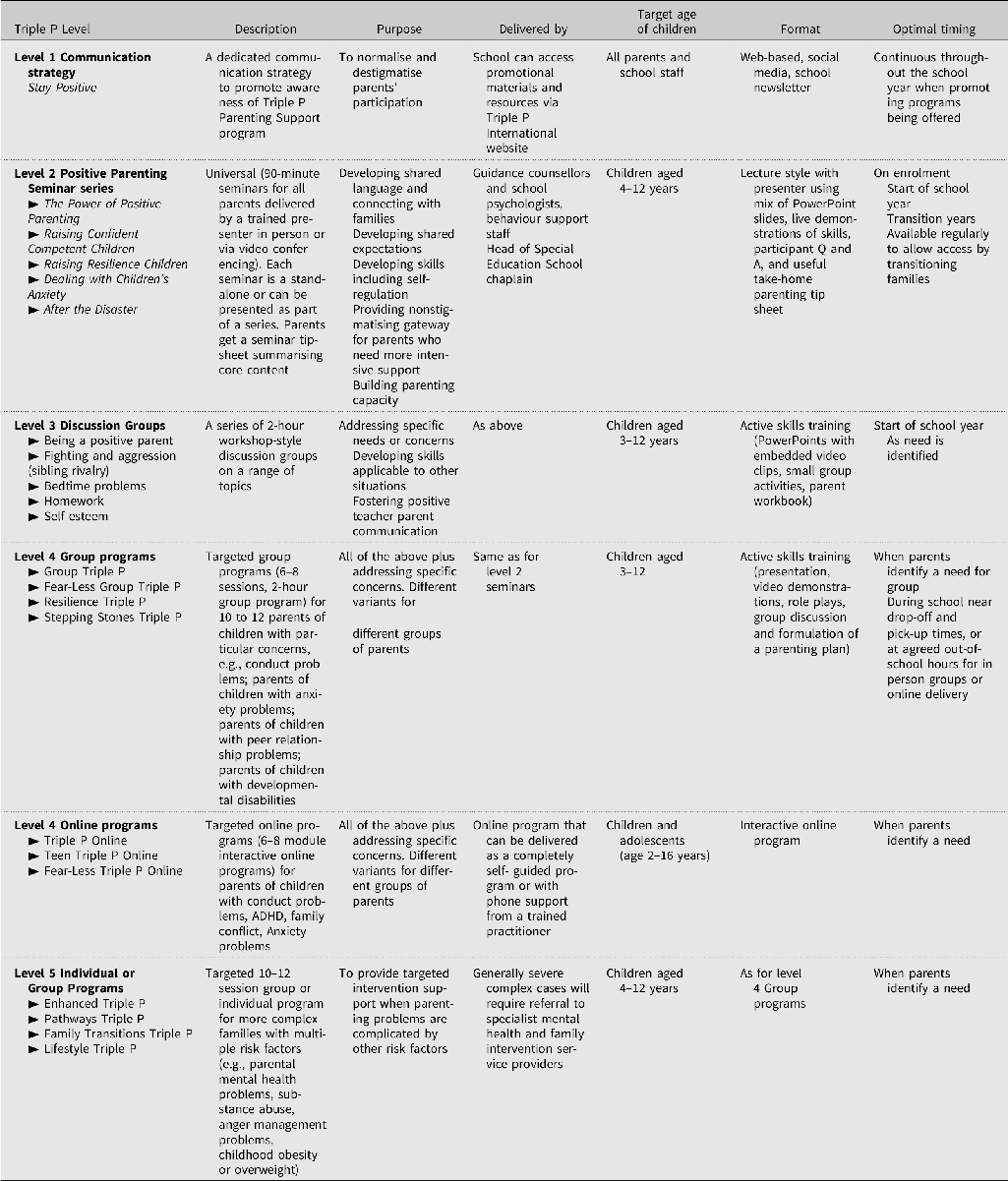
The model of parenting support is designed to be varied depending on a school’s needs and priorities. Its key features are a blending of low-intensity programs relevant to all parents such as a parenting seminar series targeting the transition period of the first three years of a child’s formal schooling and topic-specific discussion groups, and then more intensive group programs for more vulnerable children with social and emotional problems. For the last group the school counsellor may be in an excellent position to support the family and act as a liaison between the family, school and, when appropriate, other agencies.
Evidence Supporting Triple P in School-Aged Children
The Triple P system is one of the most extensively studied and widely disseminated parenting programs globally. Each program recommended in the suite of interventions in the school parent support model is supported by careful evaluation, including randomised controlled trials and/or service-based evaluations. Seven meta-analyses have shown that each level of the program is associated with positive improvements in children’s behaviour and in parenting practices, parental efficacy and parental adjustment (Sanders et al., 2014). A comprehensive overview of the Triple P system model can be found in Sanders and Mazzucchelli (2017). A comprehensive list of studies relating to the evaluation of Triple P can be found at pfsc.psychology.uq.edu.au/research. At time of writing, there were over 360 evaluation studies of Triple P around the world, including 175 randomised trials conducted in 37 countries, making it one of the most extensively studied parenting programs globally. The Triple P system continues to evolve on the basis of ongoing research and development activities.
Programs for Teachers and Educators
Given the benefits of parents partnering with educators in optimising children’s development, learning and wellbeing, it is important to engage teachers and educators as part of a comprehensive model of parenting support in schools. Two programs that engage educators are the Positive Early Childhood Education Program (PECE; Turner et al., 2019) and the Alliance of Parents and Teacher Program (APT; Kirby et al., 2021).
Just like parents, early childhood educators play a significant role in childrearing and the development of children’s cognitive and social skills. As such, the Positive Early Childhood Education Program adapts the principles of positive parenting and applies them to an early learning context (Turner et al., 2017). By promoting the same principles of positive parenting to all those involved in childrearing, the PECE fosters consistency between the home and school settings and works towards a community-based effort to promote positive child behaviour and social and emotional wellbeing. Specifically, the PECE provides early childhood educators with the skills to build children’s social and emotional skills, enhance their learning, and develop positive behaviour.
Shifting the focus from parenting skills, the Alliance of Parents and Teachers program (Kirby et al., 2021) focuses directly on building relationships between parents and schools and creating environments where parents and educators work together as partners in children’s learning and wellbeing. First developed as a program for teachers, the APT program aims to enhance teachers’ skills for building relationships with parents. To achieve this aim, the program focuses on strengthening positive parent-teacher communication, managing difficulties that arise in parent-teacher interactions and supporting teachers to manage their own wellbeing and reactions related to parent difficulties. A reciprocal APT program for parents, currently under development, which targets the transition to school, aims to provide parents with strategies to proactively engage in their child’s schooling and form positive relationships with the child’s teacher and school.
Enhancing Parental Participation in Parenting Programs
The benefits for children and parents in attending evidence-based parenting programs are well established (Sanders et al., 2014; Sanders & Mazzucchelli, 2017). However, it is not always easy for schools to gain the interest of parents. Unfortunately, families facing the highest levels of conflict, hardships, trauma and mental health issues face the greatest obstacles in attending any program (Mytton et al., 2014). Yet, these are often families that schools are most interested in engaging for the purpose of reducing child conduct problems (Hill & Tyson, 2004). However, families with complex concerns do benefit from parenting programs when they attend (Heinrichs et al., 2006), so it is worthwhile identifying and minimising obstacles for participation. Some impediments to participation are practical. The timing of the course can clash with other responsibilities (Spoth & Redmond, 2000), and evenings are generally more accessible for working parents (Mytton et al., 2014); however, access to programs by nonworking parents may be enhanced by planning the start or end of the sessions to correspond with school drop-off or pick-up times. Other key obstacles to participation can include childcare and transport, so providing practical assistance can enable parents to participate (Saylor et al., 1990). As barriers and enablers of parental participation vary across schools and communities (Spoth et al., 1996), it is important that the school consults with parents to identify obstacles. Schools can also make programs enjoyable by providing incentives such as refreshments, time to socialise with other parents, and again, childcare while participating. The availability of online versions of Triple P provide additional, easier-to-access options for parents.
Social and cultural issues are also factors that affect a family’s likelihood of participating. Parents can be discouraged from participating if they perceive that family and friends have negative attitudes to a program (Fontana et al., 1989). If parenting programs are mandated for parents with serious problems, they can gain a stigma of being ‘bad parents’. Parenting messages such as the Triple P ‘Stay Positive’ message can destigmatise and normalise participation; and contact with other parents who have experienced benefits from the program encourages others to attend (Sanders et al., 2008). Schools can deliberately orchestrate the positive contagion of the program by collecting parent testimonials and encouraging parents who have benefitted from the program (parent champions) to tell others. Strong leadership and messaging, starting with the school’s principal, with the support of the knowledgeable and skilled school counsellor, can help educate all parents about the benefits of parenting programs.
Even if a parenting program is seen as positive, families with complex needs may have concerns about privacy in participating in a family-based program (Spoth et al., 1996; Ohan et al., 2015). Parents of children with a behavioural or emotional disorders can experience blame and shame that can discourage participation (Corrigan et al., 2006). This can sometimes be addressed by providing online options; for instance, high-needs parents were successfully engaged in online Triple P through their mobile devices, and reported long-term benefits (Love et al., 2016).
Workforce Development
Workforce planning is an important factor in the success and sustainability of any initiatives. One important decision is about which staff will be involved in delivering parenting programs. Not only do they need to be confident in delivering the program, it needs to be a good fit for their role (Shapiro et al., 2012). In a multilevel program like Triple P, there is opportunity for staff to be involved in program components that are consistent with their role, rather than adding to their role. For instance, many schools in Australia employ chaplains, parent liaison officers, psychologists, guidance officers and counsellors who (depending on their other responsibilities) have some capacity to deliver parenting programs as part of their student wellbeing and behaviour role. Teachers may be able to provide specific advice when parents come to them with minor concerns about behaviour affecting learning, homework and consistent home-school messaging. School leaders have important roles in promoting availability of parenting support, ensuring that staff involved in delivering the program have the time needed to do this well, and providing resources (such as childcare and refreshments) that will enable and encourage parent attendance.
For school staff with limited hours, choosing the right mix of program options to deliver can substantially change the number of families that practitioners can support over the course of a year. Figure 2 shows a hypothetical example of the number of families that can be served, based on the assumption that standard individual delivery requires 10 hours to reach 1 parent, supporting online delivery requires 1 hour to reach 1 parent, a discussion group takes 80 minutes to reach 15 parents, and a seminar requires 90 minutes to reach 25 parents.
Hypothetical reach achieved by providing parenting support through four different modalities—standard individual, online, discussion group, or seminar.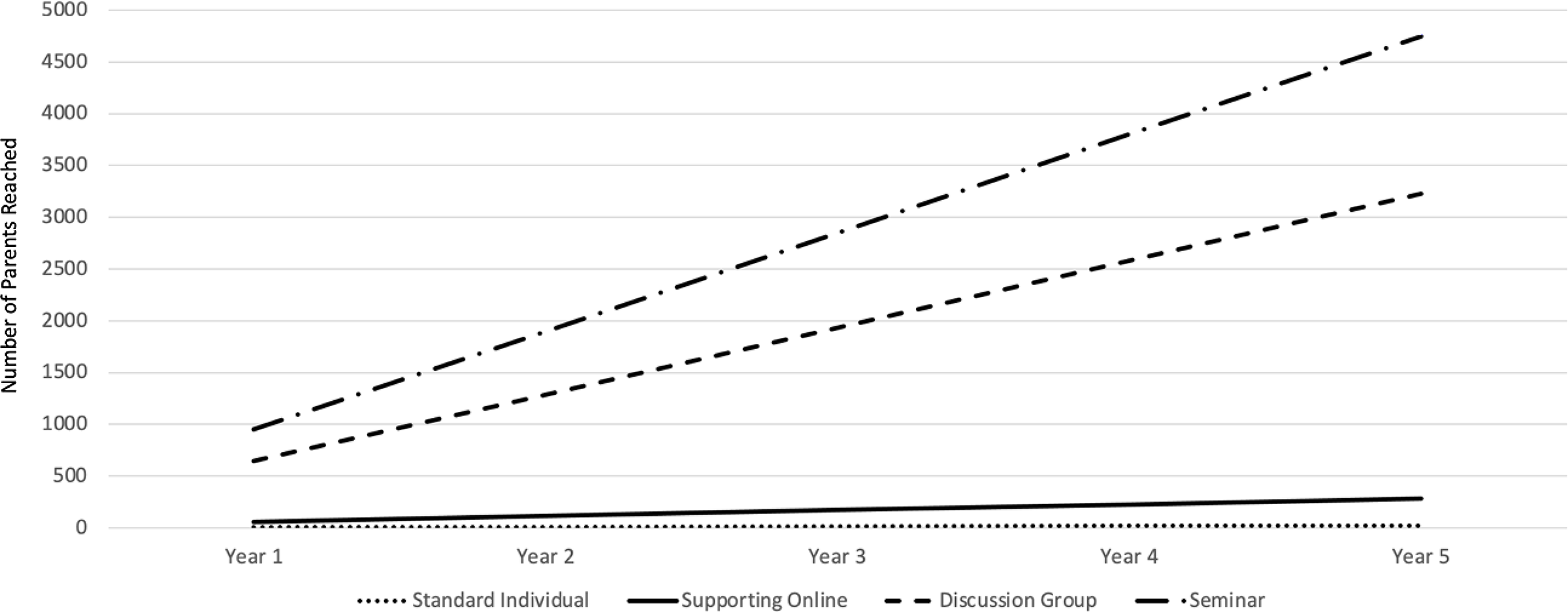
Training of School Staff
Triple P training adopts a skills-based approach to introduce professionals to the range of strategies required for the effective delivery of a specific program. All training courses cover the theoretical foundations of behavioural-family interventions and an overview of the development and prevalence of behavioural and emotional problems in children and/or adolescents. Video demonstrations, problem solving of common parent concerns, rehearsal and role play of skills and strategies, feedback and instruction are used to effectively communicate the course components. All participants are provided with a set of training resources, including: Participant Notes, which include presentation slides; Facilitator Manuals, including sample scripts for delivering parent programs; and Parent Workbooks. Following Triple P training, course participants are encouraged to practise the delivery of program components before returning to complete accreditation (observed demonstration) of specific aspects of the program. Data collected on Triple P training and accreditation outcomes indicates that this process results in the development of confident, competent professionals (Sanders et al., 2021).
Implementation Issues
The successful implementation of a comprehensive parenting support strategy is likely to work best when trained staff are adequately supported and resourced to deliver parenting programs in an environment of support from the school leadership, particularly principals. All programs delivered should be routinely evaluated using recommended evaluation tools to ensure the program is meeting the needs of parents, the school and the staff involved.
Summary and Conclusions
Positive parenting is an approach to raising children that aims to promote children’s optimal development. It concerns the activities of parenting that create a nurturing environment that will allow children to grow up healthy, happy and responsible participants of a broader community. Evidence-based parenting support, such as Triple P, aims to positively influence a range of social, emotional, relational and contextual factors that affect parents’ capacity to raise their children well.
The five core principles of positive parenting form the basis of Triple P. These principles address specific modifiable risk and protective factors known to predict positive developmental and mental health outcomes in children. These include ensuring a safe, interesting environment; creating a positive learning environment, using assertive discipline; having realistic expectations; and taking care of oneself as a parent. Parents can enact Triple P’s principles by incorporating a range of parenting skills into their everyday interactions with their children. Triple P draws on a model of self-regulation as an organising framework for the provision of parenting support. This model applies equally to parents, practitioners, disseminators, program developers and researchers.
Triple P interventions combine quality parenting information with particular principles for imparting this information and upskilling parents. These methods are designed to maximise efficiency, ensure that the program is relevant and responsive to each family’s particular needs, and enhance parents’ ability to independently manage novel parenting challenges that arise in the future. Learning outcomes and the social and emotional wellbeing of students would be enhanced if schools systematically incorporated parenting support programs such as Triple P into their everyday operations.
Disclosure statement
The Triple P-Positive Parenting Program system discussed here is developed and owned by The University of Queensland (UQ). Royalties from the programs are distributed to the Parenting and Family Support Centre, School of Psychology and Faculty of Health and Behavioral Sciences at UQ, and contributory authors of published resources. Triple P International (TPI) Pty Ltd is a private company licensed by UniQuest Pty Ltd, a commercialisation company of UQ, to publish and disseminate Triple P and related programs worldwide. The authors of this paper have no share or ownership of TPI. MS, KH, JH, GK are contributory Triple P authors and either currently receive or may receive royalties from TPI in the future. Preparation of this manuscript was supported by the Australian Government through the Australian Research Council’s Centre of Excellence for Children and Families over the Life Course (Project ID CE200100025).