






Abstract
The College Secretariat at 309 La Trobe Street was designed by the Melbourne architectural and interior design firm, Graham Riordan and Associates, and became the binational home of the College on 18 December 1995.
General Council room
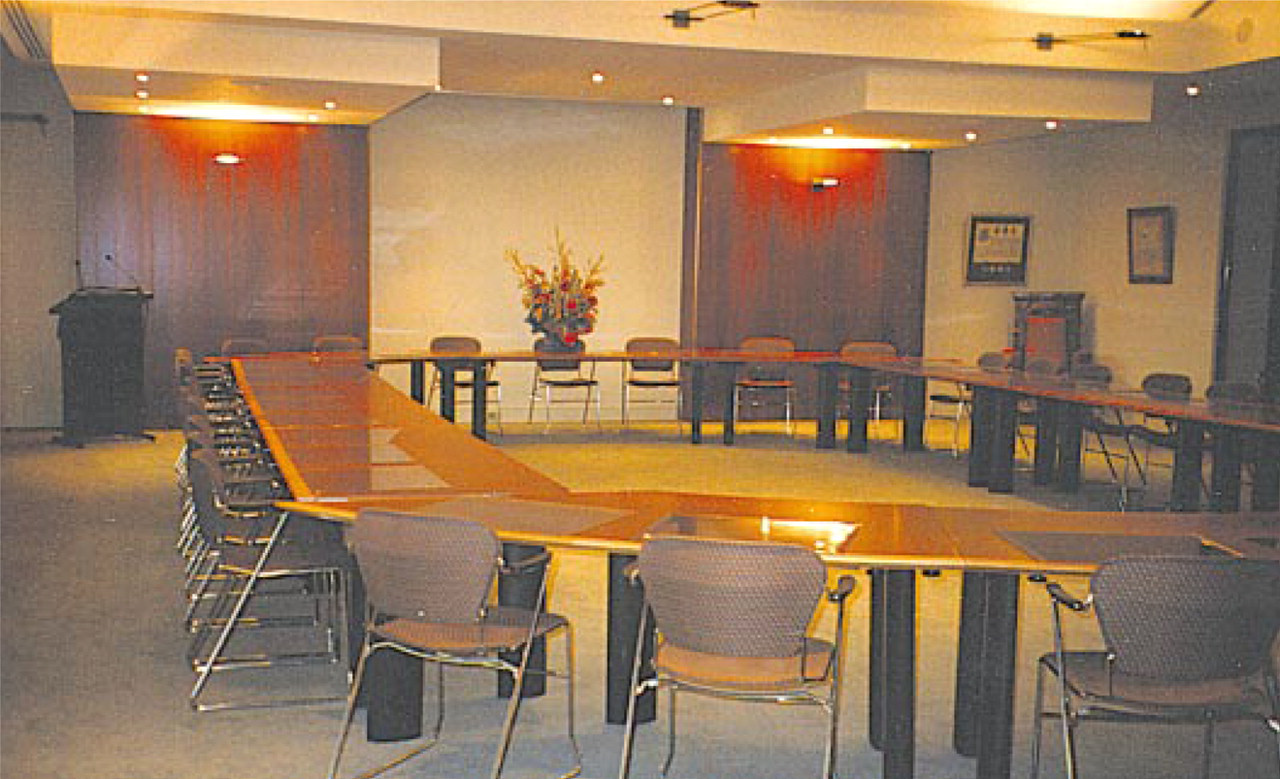
Committee for Training meeting in the General Council room
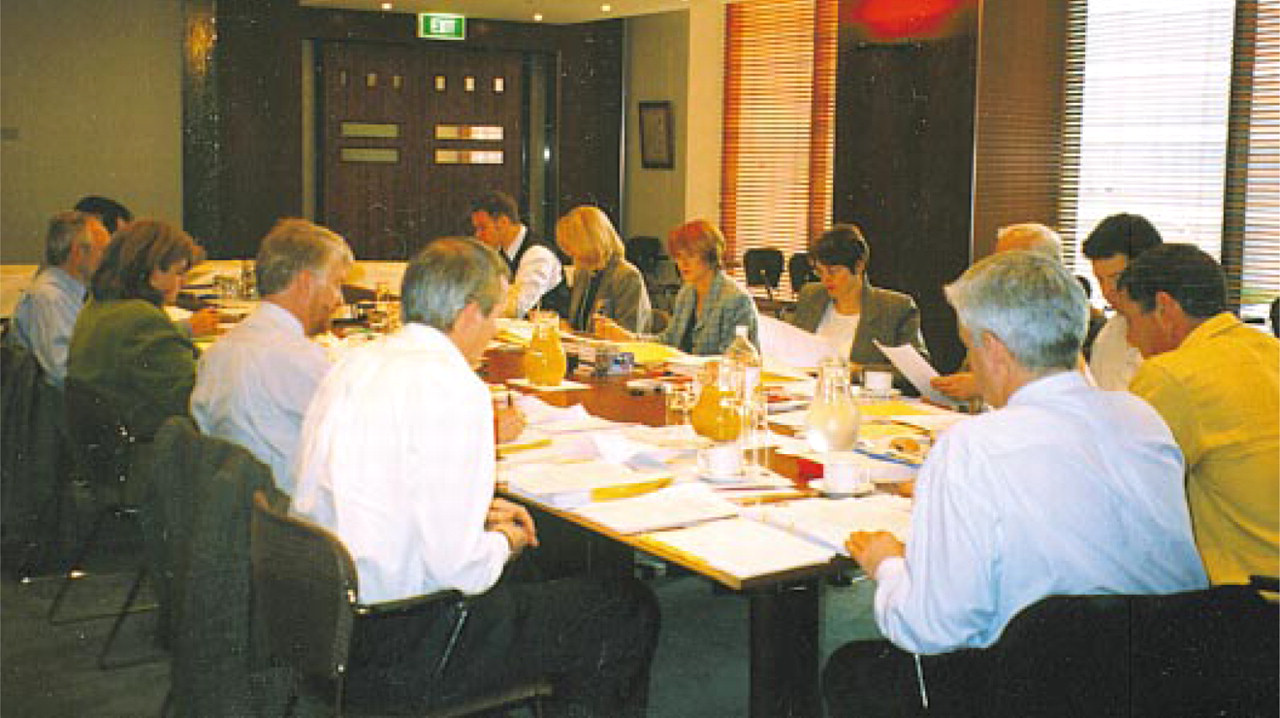
The Secretariat boasts an impressive range of well-appointed meeting rooms which have been designed for use by the various bodies of the College. The large General Council room can comfortably accommodate boardroom-style meetings of up to 40 people. In theatre style it can seat up to 90 people and is used for a variety of College functions including examination ceremonies. The middle meeting room seats 16 comfortably and there are also a number of smaller rooms for groups of up to eight. A full range of equipment is available including data projection, electronic white board, television and video, electronic lecturn and overhead projector. All meeting rooms are in close proximity to the kitchen area and catering for groups of all sizes can easily be arranged.
All major College Boards and Committees are encouraged to hold as many meetings as possible in Melbourne to ensure that maximum use is made of the facilities available. The great advantage of holding meetings at the College headquarters is the availability of support staff and the complete range of College resources on site.
Occasionally, the College makes the meeting rooms available to selected external bodies. The College recently hosted the Committee of Presidents of Medical Colleges meeting and the feedback was very positive. According to the Chief Executive Officer, Marie McGrath-Kerr,
‘All participants commented on the pleasant and comfortable surroundings.’
Case History Sub-Committee of the Committee for Exams meeting in the middle meeting room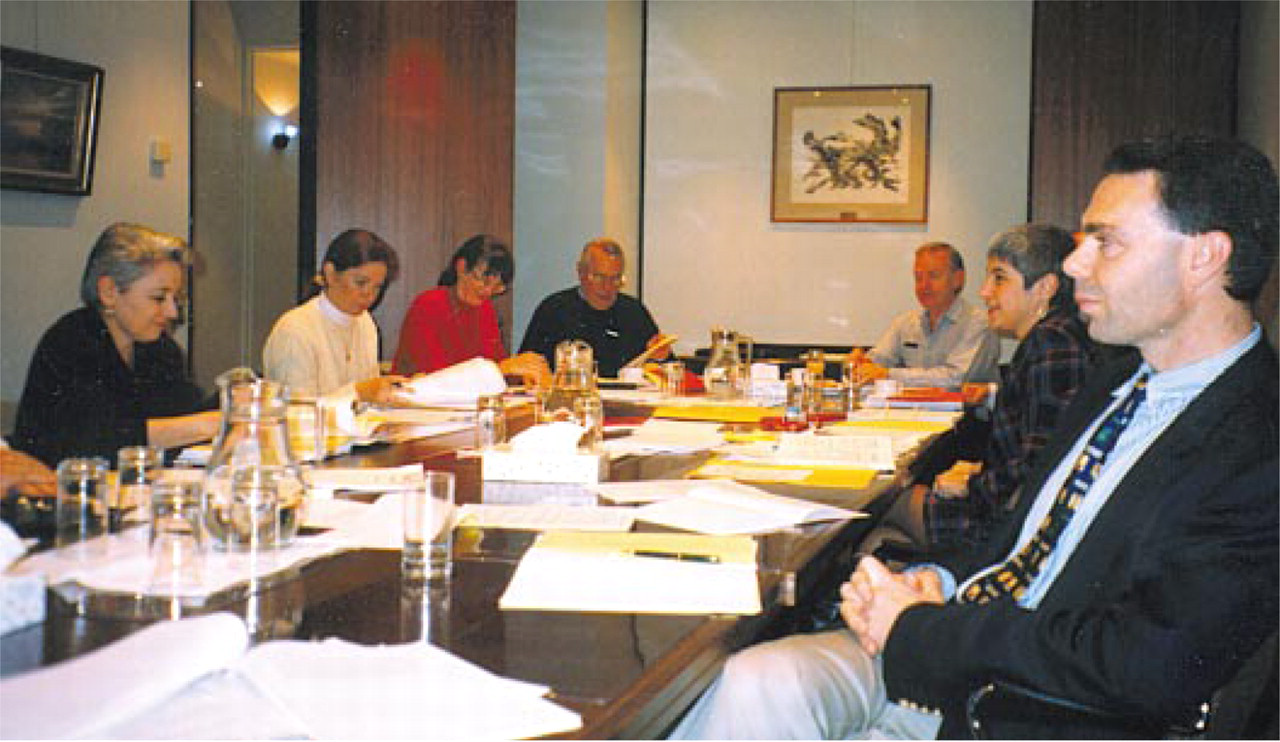
Lundbeck IYOP Fellowships Awarded
The 1999 Lundbeck IYOP Fellowships attracted a most encouraging level of interest with a total of thirteen nominations received. The selection panel faced a particularly difficult task due to the very high quality of all nominations.
The College would like to congratulate
The Fellowships were made available to two psychiatrists, one in Australia and one in New Zealand, working in the field of psychiatry of old age and who have been qualified as psychiatrists for less than 10 years. The nominees were required to demonstrate expertise and a special interest in depression among elderly people.
Readers of Australasian Psychiatry can look forward to learning more about the experiences of both Dr Stafrace and Dr Casey in Copenhagen and London in their report to the Fellowship which will appear in an upcoming issue.
Another feature of the Secretariat is the library. The College library houses a small, historically oriented collection with an Australasian focus. More recent policy, reports and reference material are also found in this quiet corner of the Secretariat. The College Archivist, Bronwyn Hewitt, staffs the library every Friday and is available to respond to requests from Fellows and friends of the College seeking historical information (
The Secretariat is conveniently located on the northern side of the central business district of Melbourne and close to all forms of public transport. A ride on the free City Circle tram will take you right past our door. Fellows, Affiliates, trainees and friends of the College who happen to be in the neighbourhood are welcome to stop in and pay us a visit. We would be happy to show you around the building and provide an escape from the ‘hustle and bustle’ of inner-city Melbourne.
Mental Health A report focusing on depression
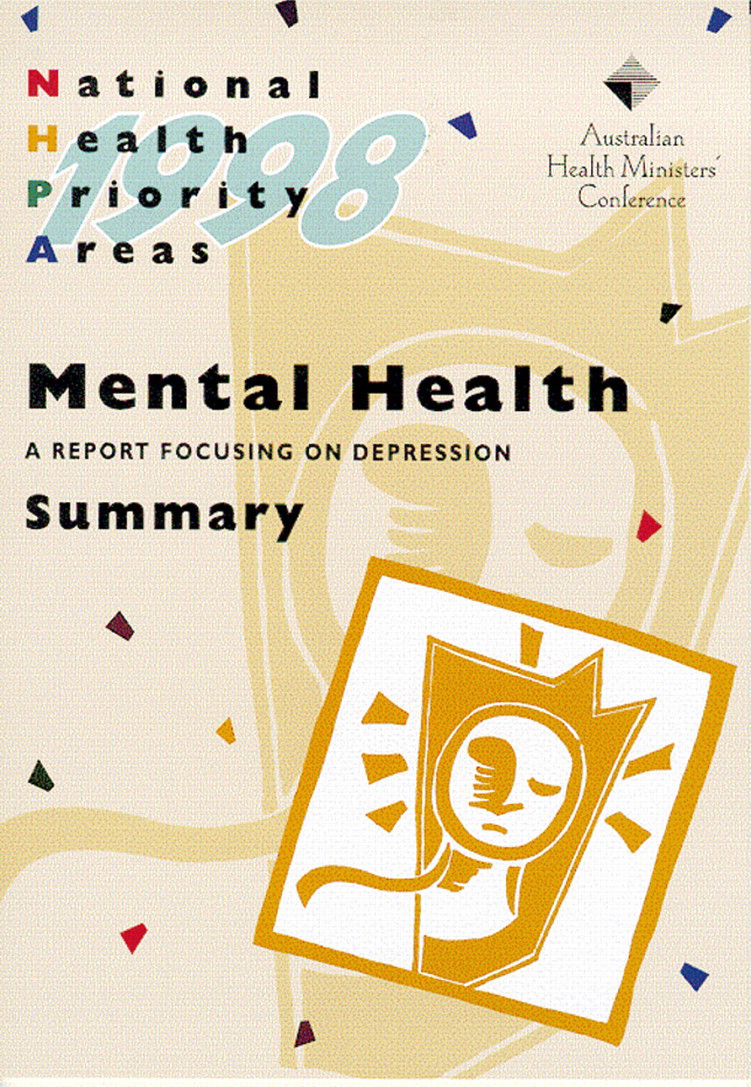
The National Health Priority Areas (NHPA) report focusing on depression has recently been released as one of a series of five biennial reports on each of the five NHPAs including mental health. The College was part of the consultation process for the report (which is a Commonwealth/State/Territory collaborative effort) but was not on the Drafting Group. The report provides a detailed profile of depression in Australia as well as an overview of its impact on health status. It identifies the development and implementation of the proposed National Depression Action Plan (NDAP) as a major opportunity to design strategic actions to tackle the health and social burden of depression. The NDAP will focus on strategies to reduce the prevalence and impact of depression and will cover promotion, prevention, early intervention and treatment. Professor Phillip Boyce is representing the College on the NDAP. The NHPA report and a summary are available on the Website for the NHPA http://www.health.gov.au/hsdd/nhpq/pubs/nhpa.htm
Termination of Fellowship
Fellows are advised that
Robert Broadbent
Executive Director 15 September 1999