






Abstract

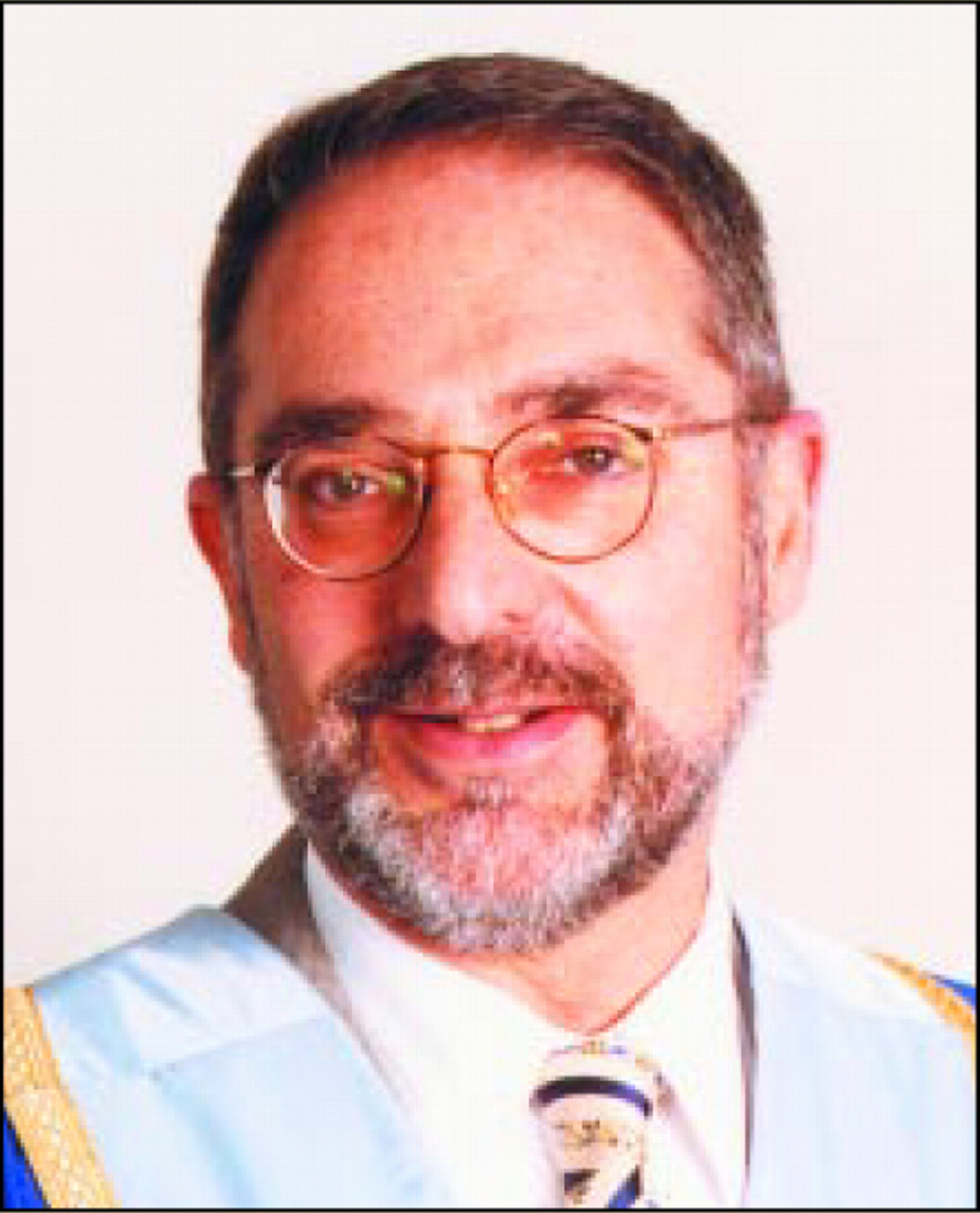
I was honoured to be invited to deliver the Arthur E Mills Memorial Lecture at the annual scientific meeting of the Royal Australian College of Physicians in Adelaide this year. I chose as my topic, Medicine at the Crossroads. I would like to take this opportunity to share my thoughts with you.
MEDICINE AT THE CROSSROADS
In preparing for this address, I asked myself what might be of current mutual interest in our two Colleges and what I might bring as a psychiatrist to your College.
The two questions began to coalesce. My interest these days, apart from my clinical practice, is in the large politics of medicine. My background in psychiatry causes me to think hard about what brings change to our profession.
I doubt that any member of your College would state that the practice of medicine is stress free these days. More likely the greater number of colleagues would express anxiety and uncertainty about where medicine might be going. Quite a number would, I think, express substantial concern about our future.
I detect a collective anxiety within the profession. I note additionally a feeling abroad that we are losing control over our profession. And I detect, on occasion, as I move around the country, a sense of learned helplessness. Why, I ask myself, should these feelings be about?
As you will come to see, I believe that we are in the middle of a fundamental and permanent change in medicine which has come about over the last few years. The roles have changed, they are changing as I speak and they will continue to change in the future.
Medicine, by any definition, is an ancient craft. It grew out of shamanism and magic with scientific medicine being very recent indeed.
The physician, until recently, occupied an exalted and special status in society. When one stops to think, s/he had traditionally been vested with great authority. S/he operated largely on her/his own and s/he lived by her/his own rules.
Further, there had traditionally been a massive power differential between the physician and the patient. The physician did the doctoring; the patient did the suffering. Medical schools are steeped in history — conservative, authoritative and sometimes patronising. Most of us here this evening grew up in this tradition and accepted, perhaps in an unquestioning manner, the ways of our superiors and mentors. We were not asked or encouraged to question the place of the physician in the community. We learnt, imperceptibly, but thoroughly, the tradition of our teachers and in turn their teachers.
Somewhere, sometime, the profession fell out of step with the community. Many would say that the profession has fought to defend a position which has rapidly become anachronistic and even irrelevant.
It has been, I suggest, this discontinuity between the profession and the community which has led, in part, to the malaise which affects us individually and collectively.
One of the most powerful, if not immediately obvious, developments of the last decade has been the rise of consumerism. This has driven change in many areas of life, with medicine being no exception.
The public is no longer prepared to accept benign paternalism as the essence of medical communication. The typical consumer at the beginning of the 21st century demands that medical treatment be delivered as a partnership. The consumer expects a very different interaction with the doctor than was the case in the past.
Empowering the consumer is not a notion which will be accepted immediately by every physician. There is at least a psychological adjustment to be made. In order to bring about change within ourselves, we have to shed some of our narcissism, or in plain English, to get over our need to be seen as important custodians of semi-secret knowledge.
If I had the power to bring about one change in the delivery of health care, it would be to assist the patient to take an educated, objective and ongoing role in the process of medical decision making. My guess is that health outcomes would improve and health costs would be contained.
In identifying the power of consumerism, I have touched upon the first of a series of major changes the profession has to face.
The second major change emerges from consumerism as well. It is the community demand for increased safety and competence in medicine. The consumer, largely through government (which ultimately is little more than the voice of the community) is no longer prepared to accept other than minimal risks associated with health care.
Eighteen thousand Australians are estimated to die each year as a result of preventable health care mistakes. It is estimated that medical mistakes cost the community two to three million dollars each day. Australia is said to be in the middle of the field when it comes to mistakes of this kind.
There are many ways in which we, as a profession, can tackle this problem and improve our performance. I will look at some of them, moving from the big to the small.
The community is close to insisting that every physician demonstrate his level of competence, at least periodically. Yes, I am speaking about recertification. The community, through Government, will set the scene unless we do it ourselves.
The activities of the Australian Medical Council (AMC) and the Committee of Presidents of Medical Colleges (CPMC) over the last 12 months are becoming of immediate relevance. Both organisations believe that it is time to get on with the business of recertification.
Recertification does not mean re-examination, a myth which continues to flourish. Recertification can be established using Maintenance of Professional Standards Programs (MOPS).
All Colleges currently have active MOPS programs. Some Colleges have chosen a compulsory route and other engage their Fellows in a voluntary undertaking. I believe it will only be a matter of time before every College chooses a compulsory program.
The AMC is suggesting, I think wisely and properly, a recertification program across all craft groups of medicine which is based on regular attendance of physicians in their respective MOPS programs.
Simply each of us would be expected to engage in, and complete, a five-year MOPS cycle. On successful completion of the cycle, recertification would become automatic. Hardly an onerous pathway.
Those members of the profession who fail to engage in their College MOPS program would enter a pool where recertification is determined by peer audit. This would be a more stringent appraisal. If a physician failed to survive the audit, then his College might be asked to recommend remedial training and/or supervision or in particular circumstances not to re-certify the errant person.
Obviously the finer points of recertification are still to be worked out, and that is a matter for the AMC and the Medical Boards.
While a system broadly of this type is rather less onerous than say the Canadian model of recertification, it would be a good beginning and, I think, acceptable to ourselves and the community, at least in the foreseeable future.
There has been considerable criticism, I suspect largely unjustified, about specialist medical training programs. The major accusation from the community is that the various craft-groups of medicine run a ‘closed shop’ education system, with selection of trainees, curriculum development and assessment operating on the principle of ‘by ourselves and for ourselves’.
Having spent many years within the educational arm of my College, I would dispute the community position. But I recognise that in the evolving political environment, it has become inevitable that there be an overview of College based education systems.
Again, the AMC and the CPMC have agreed that a watch dog be established sooner rather than later. The AMC is setting up a pilot evaluation of one large College and one smaller College. The Censors in Chief of the various Colleges have met and agree, with some reservation, that the system should move forward. It will be moderately complex, and expensive, even with the best will in the world.
Simply, in the jargon of the moment, activities of the Colleges, be they in recertification or training, must be seen to be open and transparent. I accept this view and doubt that a contrary argument can be mounted.
Government, particularly at the Federal level, has taken the first formal steps to ensure safety and quality in health care. The cynic might state that the steps have advantage at the ballot box, but I take a somewhat more charitable view.
Perhaps of principal importance has been the establishment of the Council for Safety and Quality in Health Care, chaired currently by the President of the Australasian College of Surgeons. While a low budget affair, the Council brings together the relevant parties, including physicians and consumers to address these important issues.
We need urgently to consider the black spots in medicine and to move to prevent them. The Council will, I think, provide an efficient system for the identification and reporting of health care problems and for the careful collation of material as it becomes available. Additionally it will work towards system change to overcome these problems.
This leads me to another emerging initiative of the Federal Government which dovetails with the Council for Safety and Quality. I refer to the National Institute of Clinical Studies (NICS), a body currently being set up by physicians but to work in conjunction with other relevant parties to promote evidence-based, state-of-the-art, clinical medicine.
While NICS is still in the process of gestation, I see the organisation providing a necessary forum to promote quality clinical practice. It seems to me that policy direction may well emerge from the Council for Safety and Quality, with operational tasks being largely in the domain of NICS.
I mentioned earlier the matter of collective wisdom. In relation to this, can the collective assist the individual physician in terms of his clinical practice? The answer is, I think, in the affirmation. I will give just one example.
Over the last half dozen years we had seen the emergence of clinical practice guidelines (CPGs) across all craft-groups. While there has been criticism of CPGs from some quarters of the profession, a good CPG should enhance your clinical practice and mine.
A clinical practice guideline reflects collective wisdom and makes it available to the individual. A good CPG is developed by the profession for the profession. It represents a clinical map which provides information on the desirable path that a physician may take to achieve a particular clinical outcome. Like any map, it is for guidance only. There may be reason, however, to choose another path which will lead to the same clinical endpoint.
We live in a world of information overload, with this applying at least as obviously within the medical profession as anywhere else, and our clinical world is changing rapidly. Try as we might it has become virtually impossible to know and apply state-of-the-art techniques in everyday clinical practice.
Here is where clinical practice guidelines become useful. Revised regularly, CPGs can be delivered to every practitioner within a craft-group, most usefully, I suggest, via the computer on your desk.
I foresee a time, very soon, where it will be routine practice to check the relevant CPG and to use it to assist personal clinical decisions. It will be a reference point that every physician and his patient take for granted.
Certainly there is an argument that clinical practice guidelines will be taken by the law as the expected norm of practice. But a guideline is merely a guideline and must always be written as such. The worst case scenario, I think, would be the requirement to demonstrate why one chose an alternate clinical direction. As a frequent visitor to the courts, this does not worry me unduly.
The consumer of health care will, in the near future, demand much better communication between her/his various health providers, this raising the issue of electronic transfer of information.
We work in a quaintly old-fashioned world in terms of record keeping. Each health provider, and there are often many in relation to a single patient, maintains part of the clinical record. There is no single or direct link between the record kept in one place and the record held in another. Communication between providers in capricious at best and absent in all too many instances. The patient has little opportunity to access his medical record, either the record held by one physician or his record in general.
The pressure for an electronic medical record is overwhelming, this being supported by a powerful argument that a record of this type is likely to improve the quality of health care, both within the hospital sector and elsewhere.
It will be a big task to get the technology right in order to support an electronic medical record. But this is not insurmountable. The real challenge is elsewhere. It is in the ethical domain, particularly in relation to issues of privacy and cultural sensitivity.
There will always be a fine line, particularly in situations of medical emergency, between the right of privacy and the need to know. It is generally accepted, even in the former situation, that issues of privacy remain paramount. In non-emergency situations the individual will normally be in a position to make a considered decision about the information to be conveyed to others and information which should remain private.
Good privacy legislation, separate from specific legislation for electronic medical records, is mandatory. Privacy legislation (for the private sector) is before the Federal Parliament at the moment. The principles of the Bill apply equally to the public sector. However it is premature to know whether privacy legislation in Australia is adequate to support electronic medical records.
Additionally, specific consideration will need to be given to the matter of patient consent. The consent procedure must allow the patient to opt in or opt out of the electronic medical record.
Physician consent to opt in or opt out of an electronic medical record has hardly been thought about.
The other unconsidered issue, at least currently, is that of cultural sensitivity. While for many of us a clinical history is something that might be transmitted to another person in its entirety, this certainly cannot apply in a number of ethnic groups.
While it appears to me that electronic transfer of medical information from one hospital to another or one doctor to another is inevitable, I caution that we should not rush to an electronic medical record because a Government wishes to take us there. We must sort out the complex ethical and security problems first.
The third major shift, or perhaps realisation, is for the profession to come to grips with rationing of health services. Others have spoken about the prioritisation of health services. A spade is a spade. Let us call it rationing.
Australia has a moderately efficient health system. Currently Australia spends slightly less than 9.0% of the gross domestic product on health care. It is in the mid-range in terms of OECD nations.
Many would argue with considerable persuasion that a larger slice of the GDP is required for health care. While this might be so, the stark reality is that the figure is unlikely to increase in the foreseeable future.
Yet, at the same time, the delivery of health care becomes ever more costly, particularly in terms of medications and hi-tech services. The inevitable outcome is increasing tension between new services (as mentioned) and old services, including traditional medical consultations. Old services will become subject to erosion.
There is one way only in which Government can control the push towards a more expensive medical system, in the subsidised environment in which we have learnt to practise our craft. Simply it will progressively raise the hurdle for services, procedures and pharmaceuticals which will be subsidised. Government will use the Medical Services Review Committee and its equivalent in the pharmaceutical domain as the paring knife.
The task is relatively simple and is well under way already. The cost/benefit equation will become increasingly important, with scientific evidence for the service and proven outcome becoming the benchmarks. The pioneering work of Cochrane, refined and politicised, becomes a powerful tool for control of the discipline. And it is difficult to argue that this is an inappropriate way to rationalise the health dollar.
We are feeling the bite now and this is just the beginning.
This leads me to the issue of wealth and poverty. Whilst economists can prove to us that there has been a steady growth in the overall wealth of Australia, the market economy, now firmly established in this country, is leading the rich to get richer and the poor to get poorer.
My economist friends tell me that it is unlikely that there can be any real turning back. The market is king! The poorest and most health-needy members of society will find increasing difficulty obtaining first class health services, even in a society which continues to subsidise its medical services. The drift, if I can pick it, will be towards the US health environment in which 40 – 50 million people are at a massive disadvantage when it comes to health care.
One could argue, I hope in a plausible manner, that in an increasingly divided world we must do everything we can as a profession to maintain proper health subsidies for those in need. Rationing is unpalatable but it does help to stretch the health dollar. It may not be unreasonable to expect the wealthier members of society to pick up a larger percentage of their health costs.
I have now come full circle. The other method by which we can reduce health costs, at least in the longer term, is to have a better-educated and more discriminating patient. There is evidence that in a heavily subsidised health system, the uneducated patient will seek medical services unnecessarily and probably more frequently than needed. There is emerging evidence that the well-educated patient will make more discriminating choices.
The physician will increasingly become a physician–educator. Health services at Federal, State and Territory level will apportion larger dollar amounts to health education. The tools of health education are far from refined as yet. They appear to work mainly with those in the middle-class, people who already have a good general education. But I am hopeful that we can build on what we know and move towards a society where the average man and woman become increasingly sophisticated in terms of their understanding of health needs. The impact of such a move will eventually have profound social and economic implications.
Can I pull these various threats together?
First, our individual and collective anxiety becomes easier to understand when we consider the ever-changing medical world. As change speeds up, anxiety becomes more acute.
Second, we can identify a number of substantive changes now under way, changes that speak of a revolution in the delivery of health care. The more significant are as follows:
The physician has lost his omnipotence and will hereafter practise medicine not so much in a spirit of benign paternalism but in empathic partnership with his patient.
The physician will accept the axiom that individual opinion must be tempered by collective wisdom.
The physician will work in an environment where safety and quality are pre-eminent.
The physician will face some rationing of health care, given that it is improbable that a greater slice of the GDP will go to medicine.
The patient will become better educated in terms of his or her health needs and more discriminating in seeking health services.
Ladies and gentlemen there has been a paradigm shift.
The old paradigm of benign paternalism handed down teacher to pupil from the days of Hippocrates is ending.
The new paradigm is not fully obvious. It is very different, however. It links medicine much more closely to the community. It is about collective wisdom, accountability, safety and quality, life-long learning and community education.
The new medicine no longer positions itself above the hurly burly of health politics. The new physician should be a leader in the never-ending process of change.
We have a stark choice. Succumb to our anxieties, individually and collectively, and let the profession become irrelevant. Or deal with our anxieties, by accepting that the medical paradigm has changed. We must work towards mastery of the new order, or better still take a firm hand in its crafting.
Welcome Gabrielle!
Ms Gabrielle FitzGerald, Research/Administrative Assistant in the secretariat
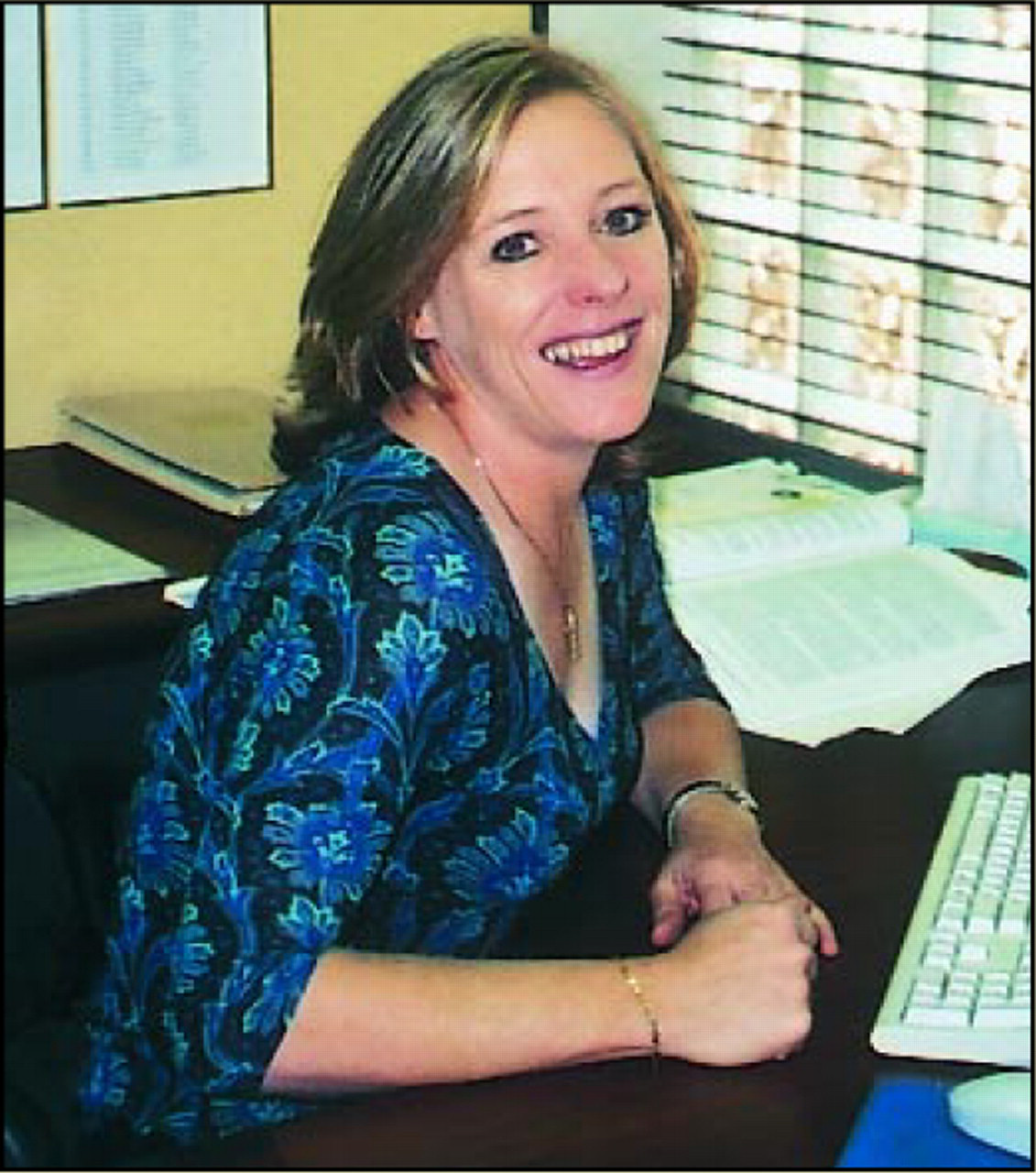
As reported in the last issue of Australasian Psychiatry, Gabrielle FitzGerald has recently taken up the position of Research/Administrative Assistant in the College secretariat. As you can see, Gabrielle is so dedicated to her work she couldn't even be dragged away from her desk for a photo. Gabrielle has been with the College for some time in the Finance Department but her new role has her working within the Executive Director's office and very closely with both Robert Broadbent and Donald Grant. Gabrielle's responsibilities include the support of the General Council and College Executive Committee, the research, analysis and development of policy relevant to College functions, and assisting, designing and conducting research projects relevant to College functions. In her spare time, Gabrielle is raising a family of six children ranging in age from 8 to 19 and has just completed her Bachelor of Arts from Monash University. (Is there anything she can't do?) Gabrielle can be contacted at the College in Melbourne on (tel) +61 3 9640 0646 or at