






Abstract

The Rural SIG held a very successful symposium at the Hobart Congress and it is hoped that summaries of the informative and entertaining presentations will be included in this and future editions of AP. The AGM was also well attended and an enjoyable social session followed. The SIG is already planning a keynote strand for the Christchurch Congress in 2004 so mark it in your diaries now.
News from the Northern Territory and New South Wales
A roundup of the Katherine Region from Jill Pettigrew
The Katherine Region sprawls in a large L shape across the lower part of the Top End from the Gulf to the Western Australian border. It incorporates the town of Katherine and the small towns of Mataranka (‘We of the Never Never’ fame), Pine Creek, and Timber creek. Most other dots on the map are Aboriginal communities and Highway stops of a few hundred people at the most. Run off from the Arnhem Land plateau feeds the network of permanent river systems that eventually coalesce into the Roper and Daly. A good food supply meant the region was home to numerous tribal groups of indigenous people. More than 30 distinct languages have been identified in the region. With white settlement, the rivers attracted pastoralists forcing indigenous people from their traditional areas and often to the sanctuary of missions.
The Katherine Regional Aboriginal Language Centre runs a Kriol Awareness course. This course was my first formal introduction to the cultural and linguistic diversity of the area as well as the first time I grappled with the complexity of skin names and indigenous family relationships. To speak of indigenous people in the Katherine region is like speaking of Europeans as if French, German, Italian and Spanish people had little variation.
The non-indigenous population is also varied — NT Government employees, RAAF members at Tindal, local business people and those on the land. Some are inevitably transient, others born and bred and the remainder broke down on a journey to somewhere else, and stayed because repairs took so long. Katherine operates on NT time — not today, not tomorrow, next truck. Time and numbers are loose in and around Katherine — one, two, three, big mobs and today, yesterday or a long time ago. Occasionally something can be dated from before the Australia Day floods or after. All the businesses in Katherine have wet season hours and dry season hours except the liquor outlets that operate after midday, 6 days a week.
Currently Katherine Mental Health Service consists of two female nurses and one female Aboriginal Mental Health worker who work full time and a psychiatrist two days a week. We visit 18 communities in the region as well as see patients at our office in Katherine and assess patients in the local hospital. At any time, there are about 80 patients on the books, over half being indigenous. Marijuana related psychosis stands out as a common presentation in all age groups and cultures. We also see mystifying presentations confounded by diabetes, liver failure, head injury and a possible history of petrol sniffing that have defied diagnosis for over a decade or more. Much could be said about what we lack especially for a population weighted to the young, however you will have heard it all before from many quarters.
Territory Health is going through another restructuring so we are hopeful that the new administration will give remote and indigenous mental health a high priority and that the National Mental Health Strategy has been more than just sacrificing trees.
Country Psychiatrists Reveal Secrets — A report on the NSW Country Psychiatrists Association meeting in Orange 2003 from Brian Parsonage
Every shade of Autumn colour was spectacularly on display in Orange, NSW, between the 13th and 17th April, 2003, when the NSW Country Psychiatrists Association held their annual meeting hosted on this occasion by Dr. Martin Patfield.
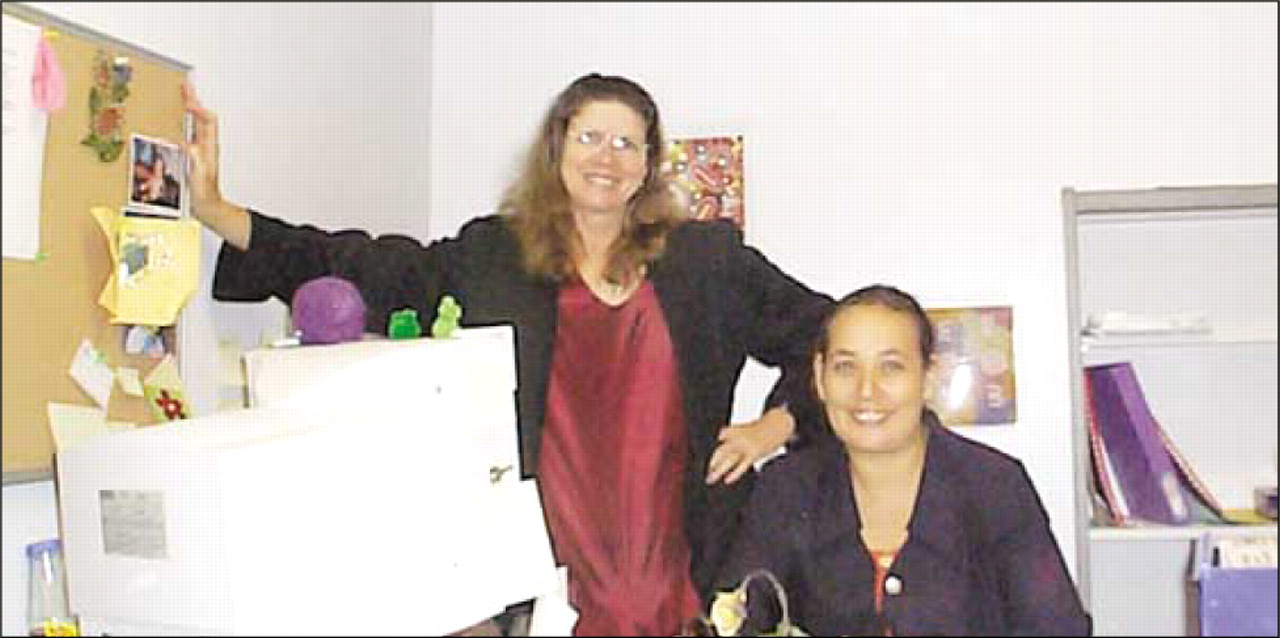
Team manager, Ms Christine Scarrell (L) and Aboriginal Mental Health Worker, Andrea Collins (R).
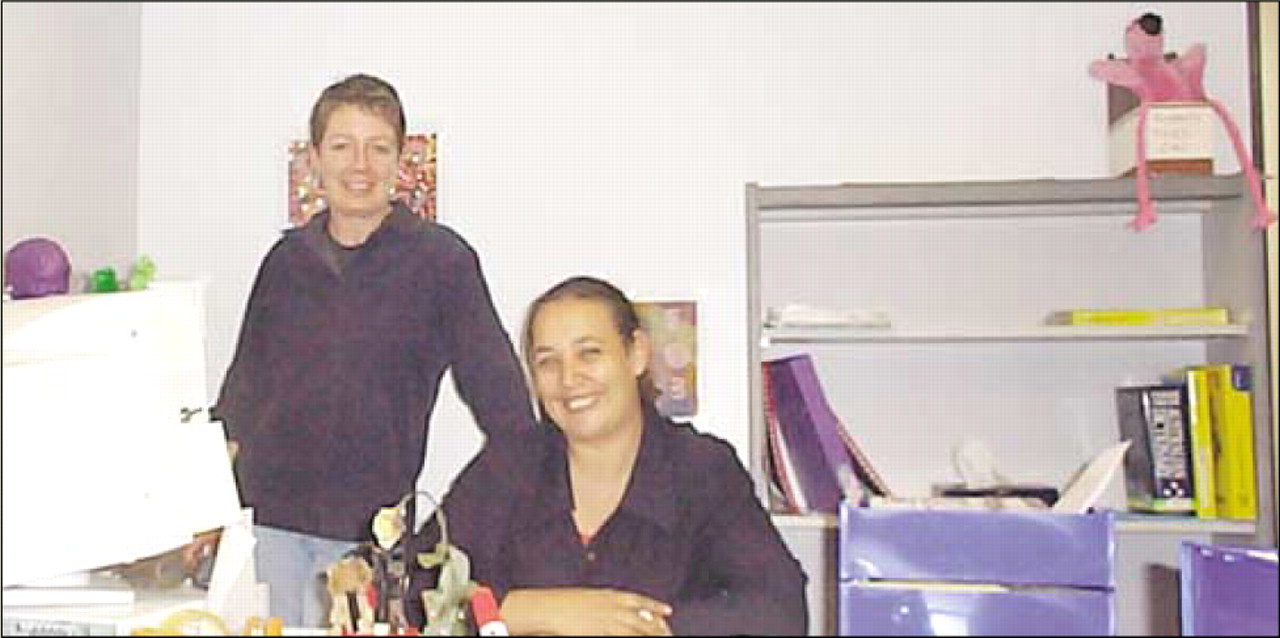
Dr Pettigrew and Ms Collins.
The meeting brought together 20 psychiatrists who provide services to country NSW, many of whom live and work in rural settings.
As usual, this meeting re-enforced why we choose to enjoy rural psychiatric practice. We were in a beautiful setting with the conference held in the grounds of Bloomfield Hospital which retains what were once regarded as the best gardens in NSW. The weather was crisp and clear providing the perfect atmosphere for both intellectual and social discussion, enjoyment of the countryside and sharpening our appetites for the renowned food and wine of the region.
As is the tradition of the Country Psychiatrists Association, new psychiatrists were welcomed and friendships formed at previous meetings were deepened. These annual meetings are gatherings, not just of psychiatrists, but of their families, with spouses being encouraged to attend some of the more general sessions such as those given by the historian, Dr Mark Hutchinson, which helped give perspective to the communities and people we deal with, a perspective which is sometimes lost in busy practice.
As is also traditional with Country Psychiatrists Association's meetings, the sessions were long enough for considerable discussion and once again, country psychiatrists showed that they had no inhibitions about expressing their views.
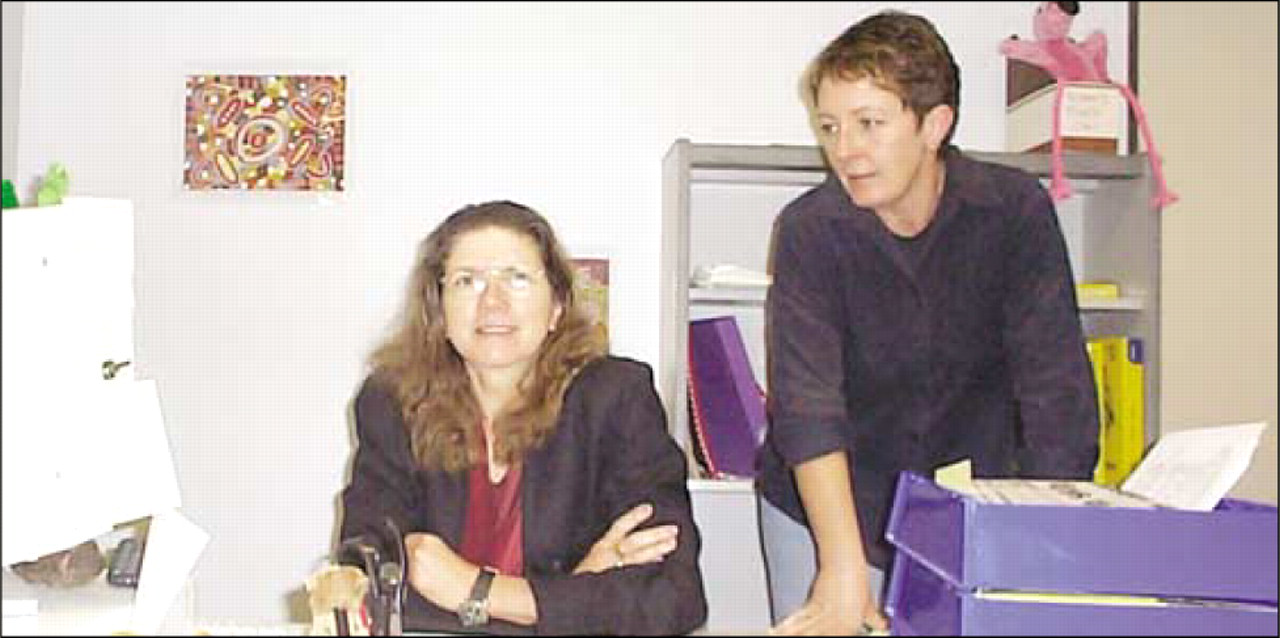
Dr Pettigrew and Ms Scarrell.
Bonds were also formed between the children of psychiatrists. The fact that the children often do not meet each other more than once a year, make the meetings even more keenly anticipated and appreciated and the welfare and progress of each other's children is noted enthusiastically by members of the Association.
By the end of the meeting there was no doubt that rural psychiatry provides the most varied, valued and rewarding professional opportunities combined with a unsurpassed lifestyle. While the core group of the Association will remain those psychiatrists who live and work in rural areas, the Association continues to welcome all psychiatrists with an interest in rural psychiatry and any such psychiatrist can join the Country Psychiatrists Association of NSW through its Secretary/Treasurer, Dr. Therese Grotovshi at P.O. Box 1032, Ballina 2478 and pay $25 annual membership fees.
Although we were sad to be leaving Orange and our country colleagues and friends, we were already looking forward to the next meeting, to be hosted by our new president, Dr Susan Blinkhorn, which will be held on the North Coast of NSW where the tradition will continue.
Committee members
If you would like to contribute to rural news, have a great idea for Congress or would like to list something for discussion by the SIG Committee your Branch representative is happy to hear from you!
Rural Special Interest Group Committee