






Abstract

Following is our translated and edited version of an article, written by Gustav Alexander, that appeared in the “Kunst und Kunstmarkt” section of the Neues Wiener Abendblatt, which was published in Vienna on November 17, 1920. It is inconceivable that so little information on Politzer's art collection is available, other than this informative article. An interest in art, as well as personal artistic talent, led Politzer to fraternize with some of the great masters of art in the Europe of his day and to assemble an enviable art collection. The waiting room of his office formed a gallery of fine paintings, and it is said that he never tired of recounting the incidents and stories associated with their acquisition. We assume that Politzer eventually donated his extensive medical library to the University of Vienna.∗ The only painting of the Politzer art collection that we could identify is located in The Kunsthistorisches Museum-Gemäldegalerie of Vienna (Fig 1). This work was dedicated to the gallery by Politzer in 1902. The bulk of Politzer's art collection went to auction in 1922.
In 1922, two catalogs were produced by the auctioneers Amsler and Ruthardt in Berlin and by I. Schwarz in Vienna. We were able to secure copies of these catalogs. The number of artworks is impressive and extensive. We offer photographs of 4 lithographs from the collection (Figs 2 through Figures 5). Although the Amsler and Ruthardt catalog included prints other than Politzer's, Schwarz's included prints, books, drawings, and so forth that belonged to Politzer. In cross-referencing these catalogs with a book by Elisabeth Herrmann-Fichtenau, 1 we determined several photographs of prints that were originally in Politzer's collection (Figs 1 through Figures 5).
ADAM POLITZER AS A COLLECTOR
By University Professor Gustav Alexander
On August 10 [1920], Adam Politzer, retired professor of otology at the University of Vienna, died. With a distinguished career, there came to an end a life that also allowed time for leisure. Politzer was esteemed as a physician and researcher, and our concern herein will deal not with otology but with Politzer's involvement as a patron of fine arts and as a collector.
We may properly understand Politzer the collector by tracing the direction of his development at the University of Vienna during the third quarter of the nineteenth century. Politzer was active as a teacher. During this period, only the basic areas of medicine were taught; however, those who fervently dreamed of great innovations in medicine were many, and growth was in their favor. Through talent and inclination, Politzer devoted himself to otology and received much praise and encouragement. Prominent academic instructors of that time, Hyrtl∗ the anatomist, Ludwig the physiologist, Rokitansky the pathological anatomist, and Oppolzer the clinical pathologist and internal medicine professor, made the most enduring impression on Politzer with their artistic form of teaching.
Rokitansky and Oppolzer especially made a profound impression on Politzer by their ingenious application of complicated research materials and of protracted and intricate methods for comprehending and describing, in artistic fashion, the morbid changes that result from illness and disease. This form of research and instruction exerted a Powerful effect on Politzer developing his inherent artistic talent, which satisfied his desire for artistic expression. He had a talent for assimilating correctly, and in quick intellectual fashion, whatever he observed in the ill or in a pathological specimen, and communicating it to his students in a straightforward, thoroughly artistic format. He was ever capable of elucidating a complicated diagnosis of the tympanum in a few words, and the sketches he produced in charcoal and colors each day for his university students during clinical instruction were masterful. Politzer made thousands of such sketches, at the bedside or in the clinic, just as an artist produces his painting from nature.
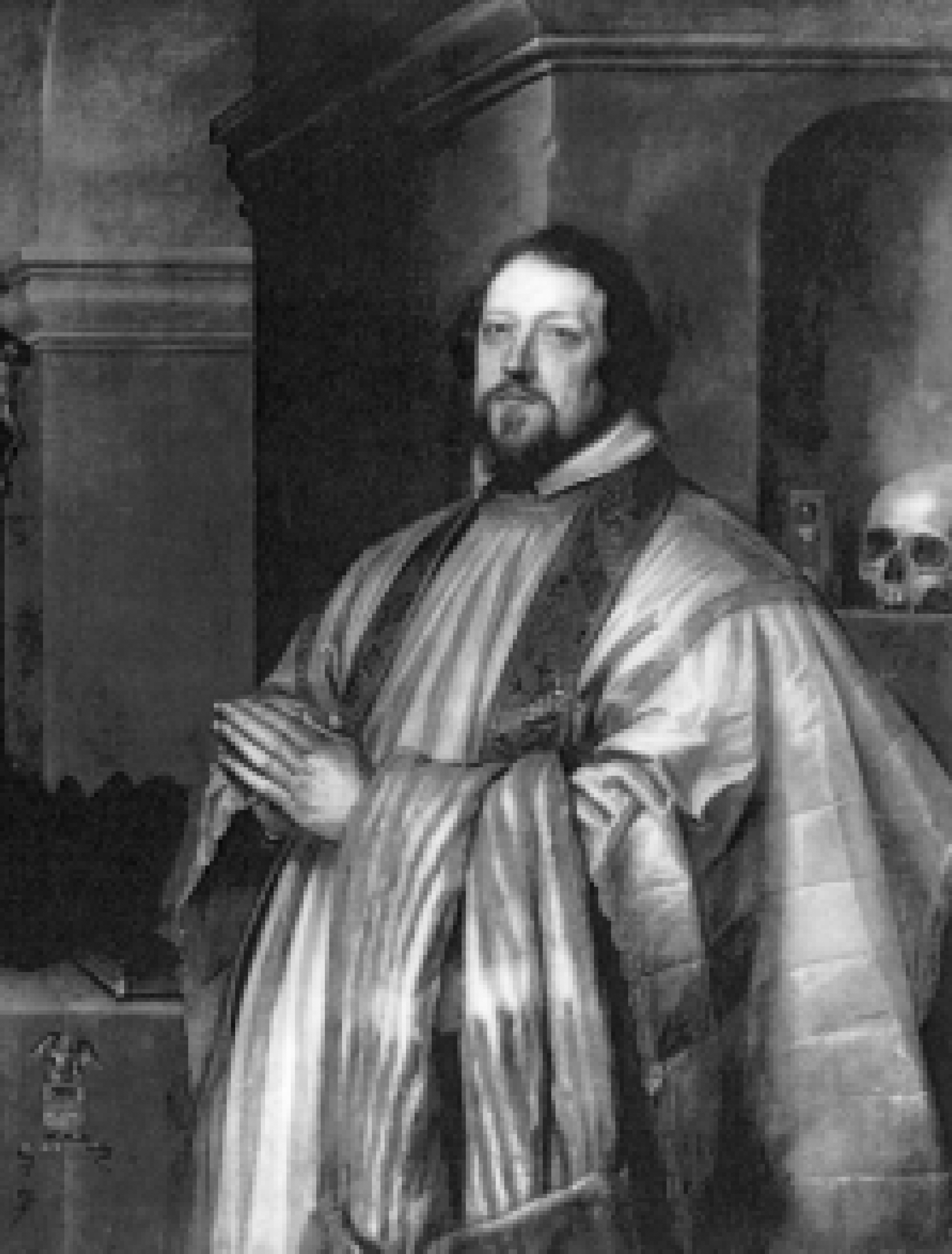
“Bildnis eines Geistlichen” (Portrait of a Clergyman), by Frans Denys. (Courtesy of The Kunsthistorisches Museum, Vienna, Austria.)
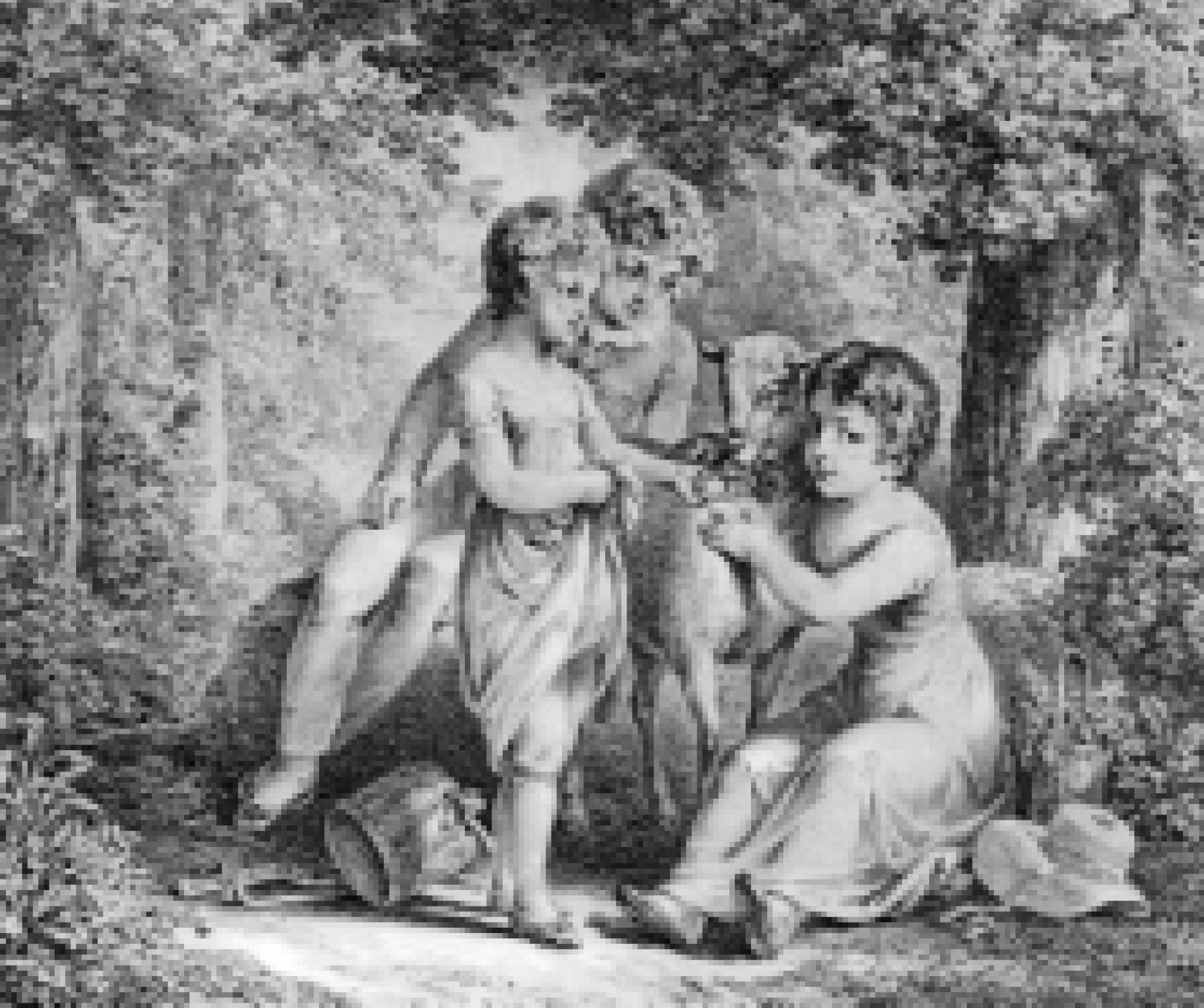
“Drei Kinder füttern ein Lamm,” by V. G. Keninger. (Lithograph reproduced from the Graphische Sammlung Albertina, Wien catalog.)
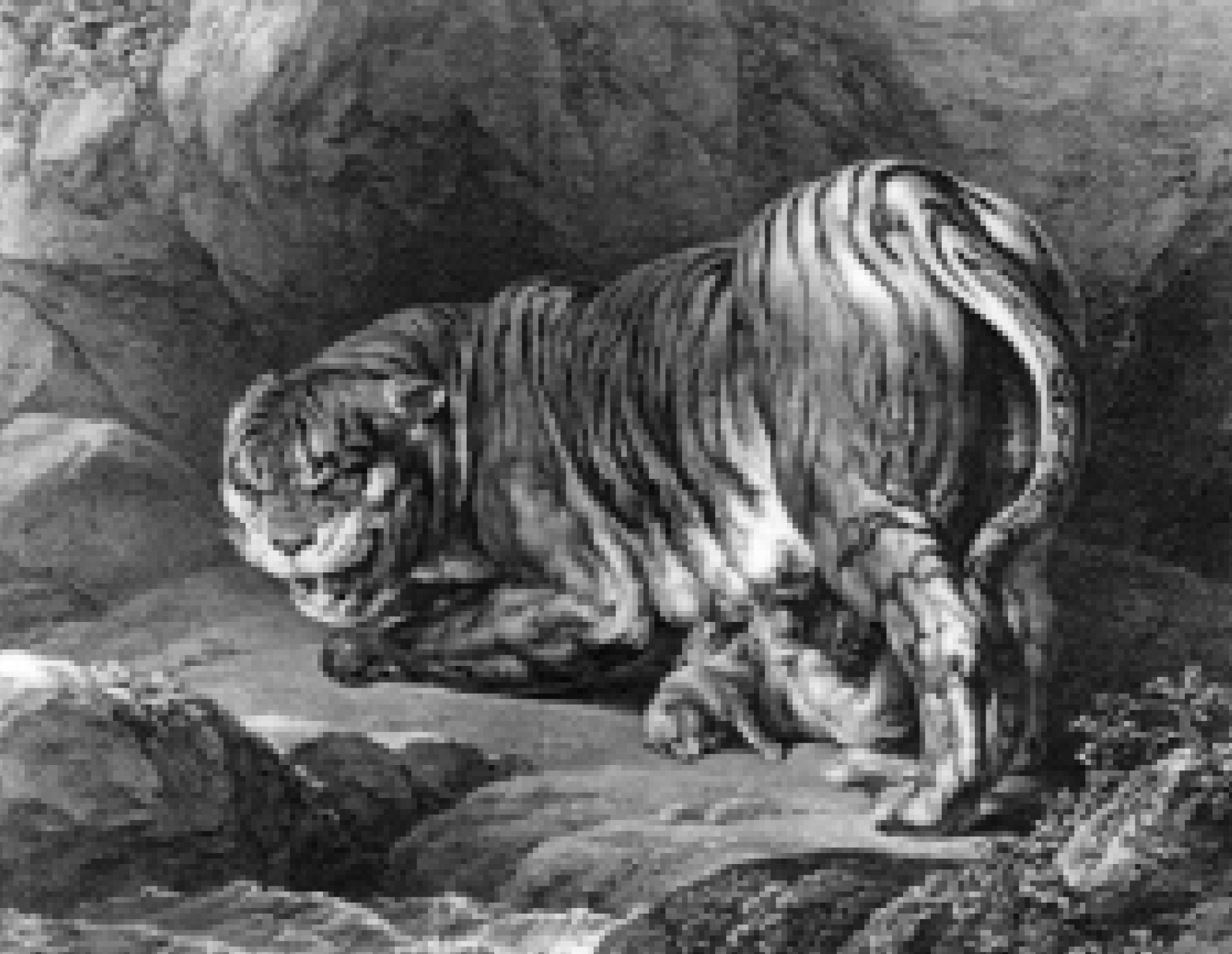
“Die säugende Tigerin,” by V. G. Keninger. (Lithograph reproduced from the Graphische Sammlung Albertina, Wien catalog.)
Those who can exhibit so much artistic ability in the practice of their vocation will automatically arrive at an understanding of artistic expression in general and appreciate the state of genius in every kind of art. The love of art is oftentimes painful for creative artists, themselves, who have to struggle from general lack of understanding.
In the course of his long life Politzer, happily, brought Vienna into contact with an entire succession of outstanding creative artists. Politzer thoroughly enjoyed and was stimulated by visiting galleries, and it was this joy that caused him to acquire paintings and become a collector. Politzer had little time for his fascination with collecting art because of the demands made upon him by his patients, research, and university. Patients flocked from all parts of the world. We must therefore understand that he remained at a distance from the modern Viennese world of art. Only after his retirement from his teaching Post in 1907, when he had reached the age of retirement, did he apply himself directly to art in Vienna once more. He himself engaged in etching and took enjoyment in attending exhibitions and meeting with other art connoisseurs.
Politzer traveled extensively in his activity as a collector. Even as a young physician, the pursuit of his special studies led him to Germany, France, and England. Politzer later liked to devote greater time to more distant travels; he was also being repeatedly summoned to patients abroad in his capacity as a physician. On journeys, when he was not bound by his medical duties, Politzer was fond of devoting himself entirely to the visual enjoyment of works of art and, when the opportunity presented itself, of acquiring works of art for his collection. In this regard his many personal relationships with art connoisseurs and collectors abroad were of benefit to him in the course of time. In the space of more than 50 years, Politzer brought about a comprehensive collection of paintings, an excellent library on aesthetics, and a collection of good sculptures. His methodical collecting of drawings, engravings, etchings, and lithographs shows deep comprehension. Politzer was able to present the uninterrupted historical development of lithography in his own collection. In this particular branch of art, the market at that time was so plentiful that Politzer was able to collect methodically, effortlessly, and without excessive expenditure. Not so with paintings, however. Here Politzer gladly acquired what was more easily attainable. He took delight in tracking the old masters and was proud to make discoveries. Politzer acquired the fewest of his paintings at auctions. For the most part, paintings by living masters often involved acquiring these from the artists themselves.
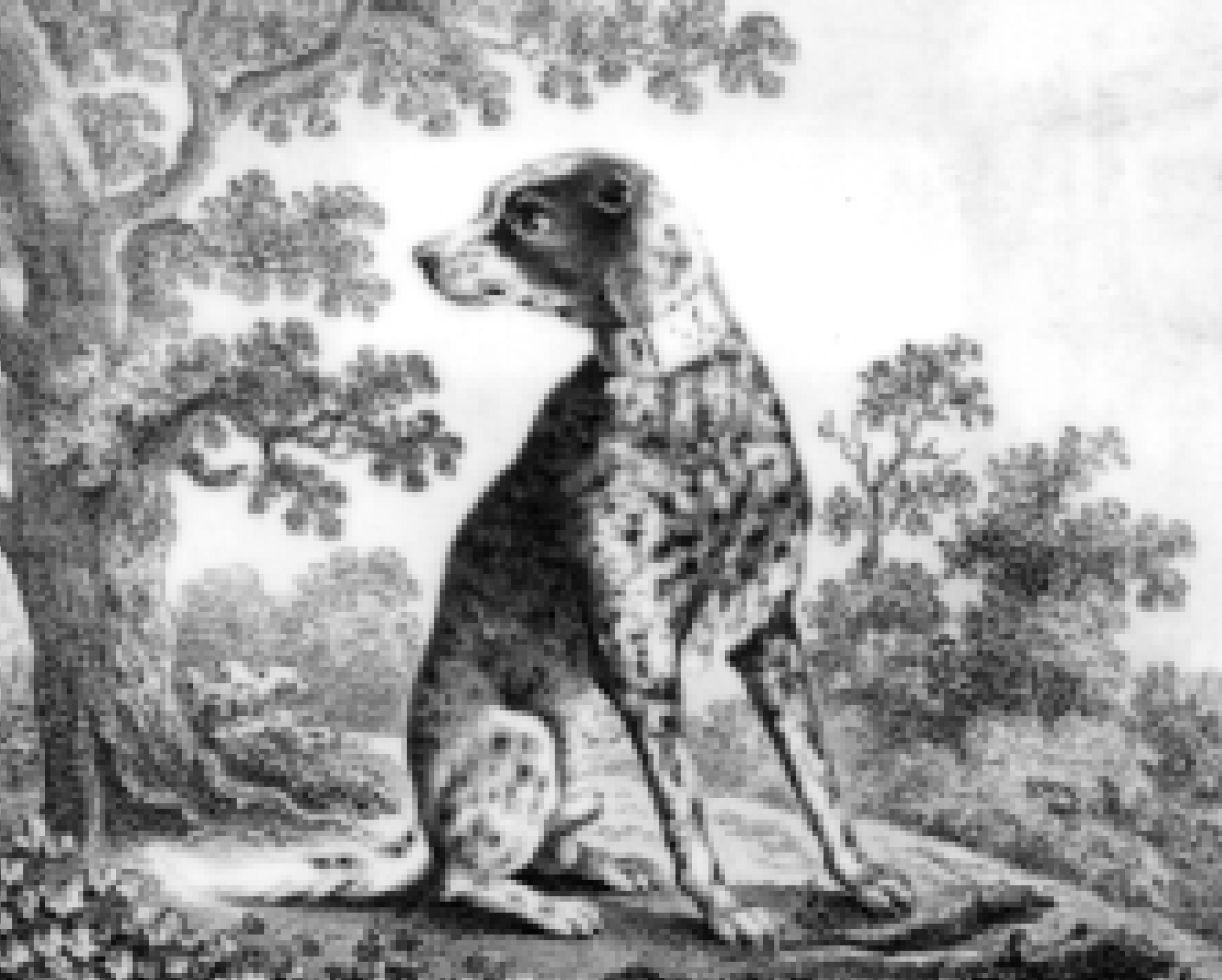
“La Sentinelle,” by L. Kohl von Kohlenegg. (Lithograph reproduced from the Graphische Sammlung Albertina, Wien catalog.)
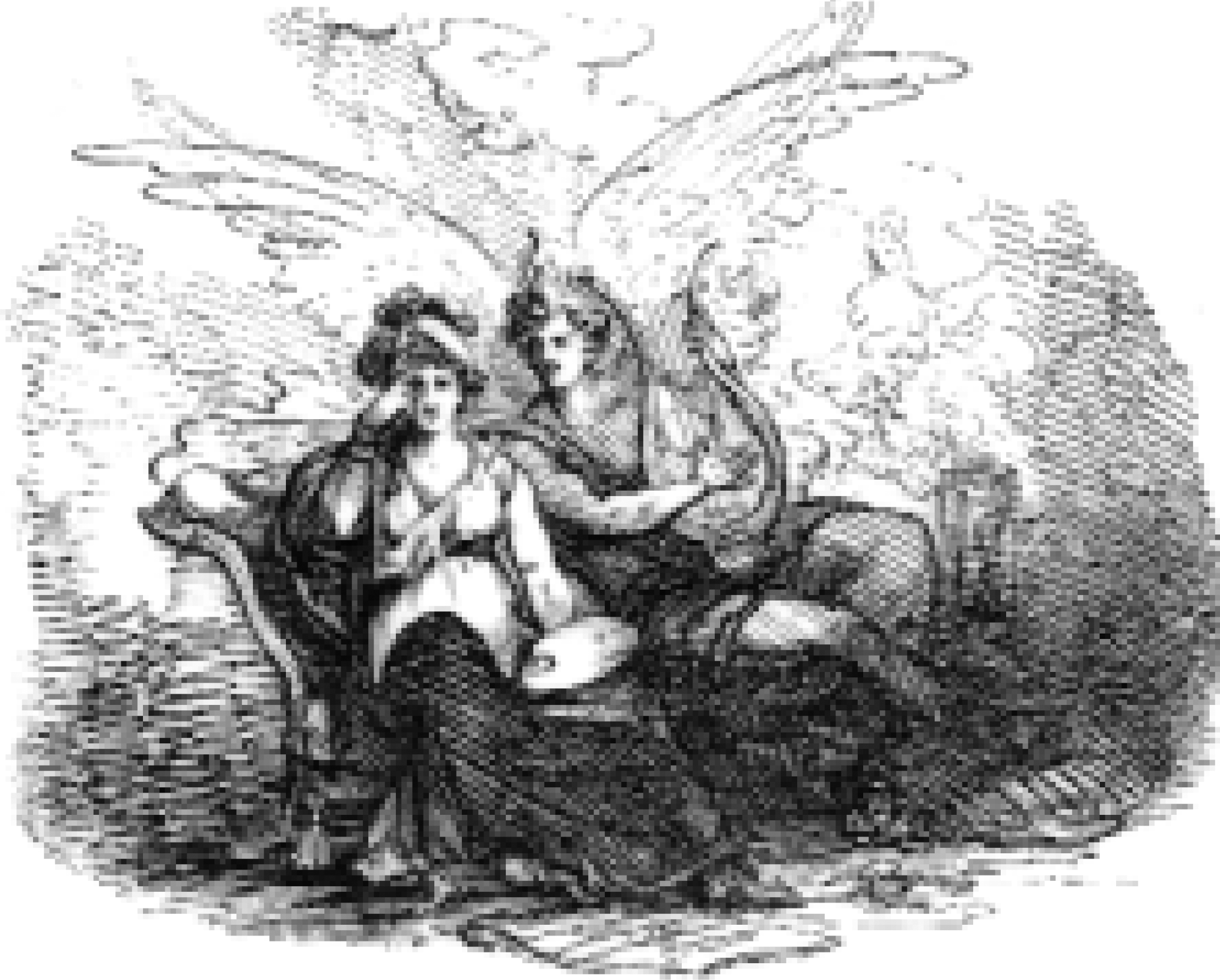
“Allegorie der Malerei unt Musik,” by J. Fischer. (Lithograph reproduced from the Graphische Sammlung Albertina, Wien catalog.)
Politzer's collection of paintings was safeguarded in his town residence and in his villa in Cottage, with little regard for the proper effect of a painting within the surroundings of aesthetic household furnishings and proper illumination. The majority of the paintings were, of necessity, less advantageously hung or occupied a space partially obscured from view. It was for this reason that a visitor could scarcely witness the entire collection. It is only with the forthcoming exhibition that the whole collection, and individual works, will be displayed, since the collection is now to be dissolved following the demise of the owner.
The works provide a mirror image of their owner in a most interesting fashion. If we accept the thoroughly proper tenet that the creative artist sets forth his own personality in his painting, so may also the intellectual Portrait of the collector be recognized in an art collection. In all of the paintings, the significant understanding that Politzer Possessed of artistically good painting sounds forth like a keynote. The Viennese artists at hand prove this already. A painting by Franz Rumpler allows the agreeable creative Power of this master to shine forth into the light of day. Several works by Remi van Haanen, with whom Politzer had personal connections, are counted among the best achievements of this painter. A female head by Hans Makart shows, in small format, the strongly grasping and efficacious manner of this master, who is today just as underesteemed in Vienna as he was formerly overesteemed. Two paintings by Hans Canon allow the illuminating Power of the palette of this master, of the Old Master type, to be recognized. With Johann Till, of whose work the collection contains a succession of prominent paintings, Politzer esteemed the precise drawing and the perfected presentation. Of Hugo Charlemont, Karl Probst, and Rudolf Geyling there are characteristic specimens of their skillful hands. A small oil painting by the once highly esteemed eighteenth-century Prague painter Norbert Grund, who is today finding renewed recognition, constitutes a rarity in the fullest sense of the word. Of the old Dutch artists, there remain very strong examples of superb paintings by Camphuysen, Toorenvliet, and Meenix. Two heads from the School of Rubens originated from the renowned former Sterne collection in Vienna.
Politzer made his acquisitions piece by piece over the course of decades with the unadulterated joy of art appreciation. For the first time, as well as for the last time, since in a few weeks the collection is to be dissolved by auction into its individual pieces, the collection will be presented in clearly arranged order as the impressive product of the collecting activity of an entire lifetime. May the new owners derive as much enjoyment and stimulation from each painting as did Politzer.
NOTES
Most, but not all, of the painters mentioned in the article have been verified, as follows:
Franz Rumpler (1848-1922)
Remigius-Adrianus van Haanen (1812-1894)
Hans Makart (1840-1884)
Hans von Straschiripka Canon (1829-1885)
Johann Till (1827-1894)
Hugo Charlemont (b. 1850)
Karl (or Carl) Probst (b. 1854)
Rudolf Geyling (1839-1904)
Norbert Joseph Carl Grund (1717-1767)
Several artists by the name of Camphuysen might Possibly be identified, but the most likely seem to be: Dirk-Rafelsz Camphuysen, a painter of the Dutch School (1586-1627); or Govert Dircksz Camphuysen, a painter of the Dutch School (1623- or 1624-1672)
Several artists by the name of Toorenvliet (or Toornvliet, or Torenvliet), a painter and etcher of the Dutch School (c. 1635- or 1641-1719)
Bartolomé-Esteban Murillo (1617- or 1618-1682)
Francisco Pradilla y Ortiz (1848-1921)
Antonio Lonza (b. 1846)
Alberto Prosdocini (b. 1852)
Several artists by the name of Rousseau might Possibly be identified, but the most likely seem to be: Philippe Rousseau, a painter of the French School (1816-1887); Théodore (or Etienne Pierre Théodore) Rousseau, a painter and engraver of the French School (1812-1867); or Henri-Julien Félix Rousseau, called Le Douanier, a painter of the French School (1844-1910)
Marie-Rosalie (called Rosa) Bonheur (1822-1899)
CONCLUSION
Politzer was esteemed by his peers as an intrepid and innovative scientist, venerated by his patients as an empathetic physician, and revered by his students as a sagacious, zealous teacher. His art collection, together with his profession of otology, was a conjuration of all that he treasured in life.
Wolfgang Krauss, now a physician, who was then a student, obtained many of the documents and contacts listed in this article.