






Abstract

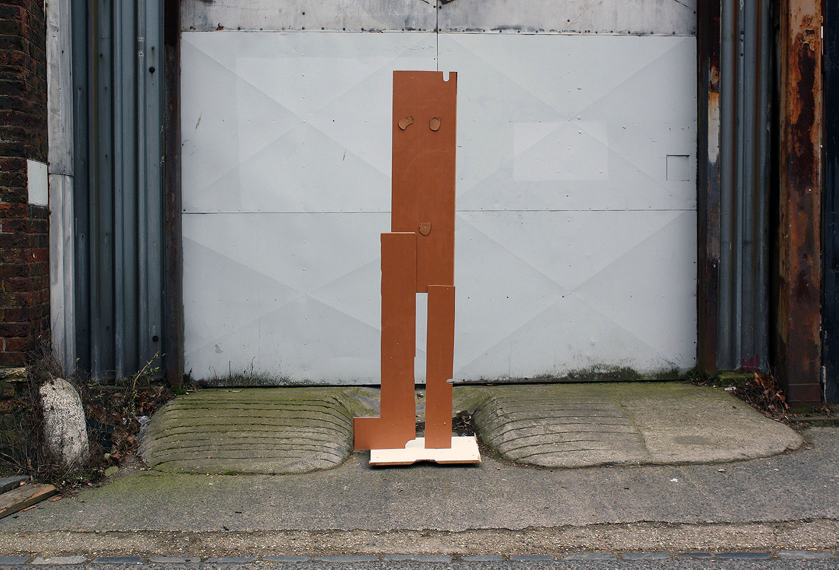
Honey from the Fieldwork New Model Army: Invisible Labour, Linda Aloysius, 2017–2018 Purposed from the Fieldwork New Model Army: Invisible Labour, Linda Aloysius, 2017–2018 Looker with Fresh from the Fieldwork New Model Army: Invisible Labour, Linda Aloysius, 2017–2018 Dark with Feathered from the Fieldwork New Model Army: Invisible Labour, Linda Aloysius, 2017–2018 Tanned from the Fieldwork New Model Army: Invisible Labour, Linda Aloysius, 2017–2018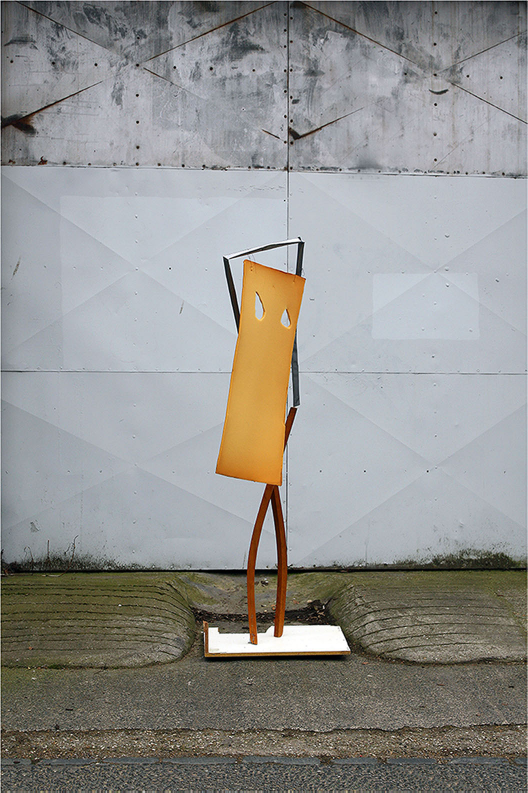
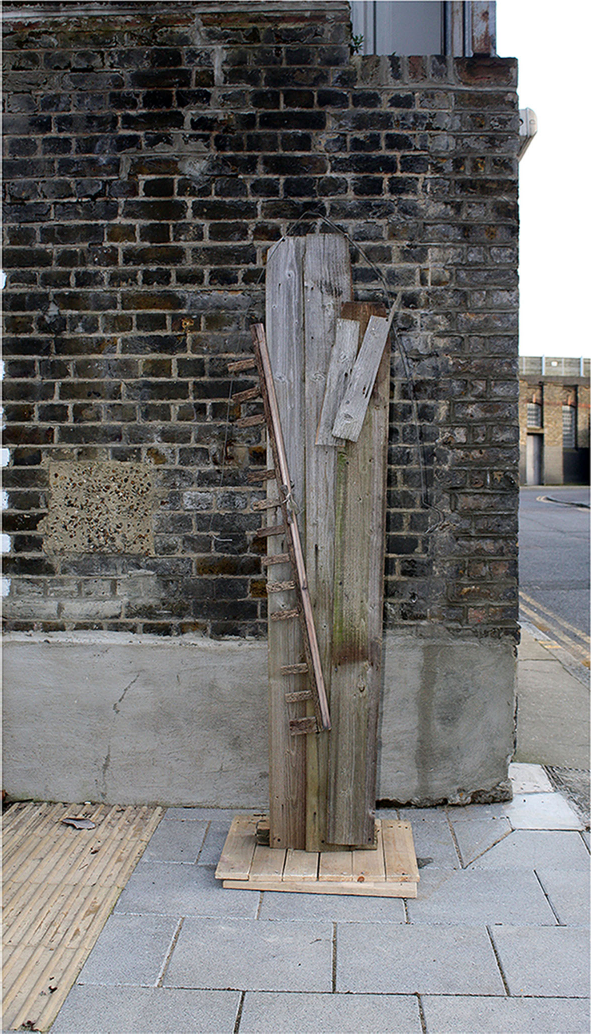
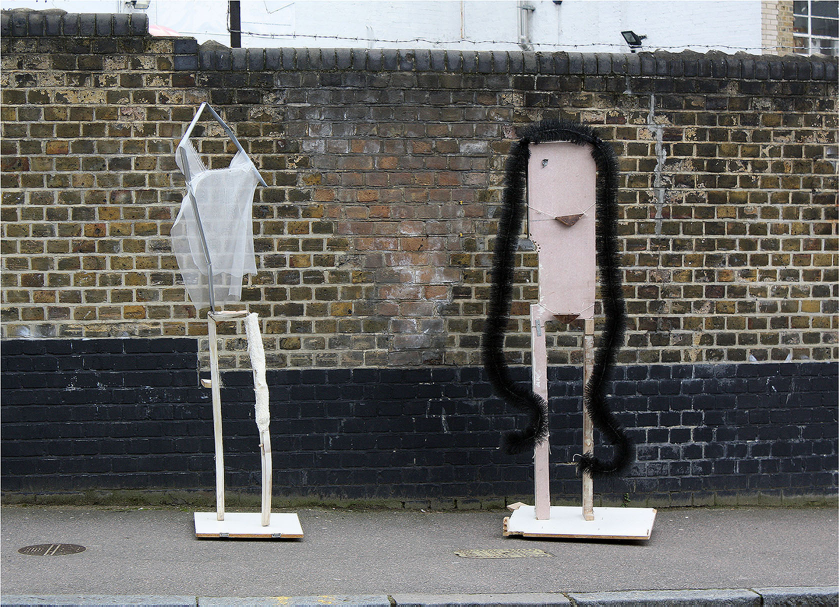
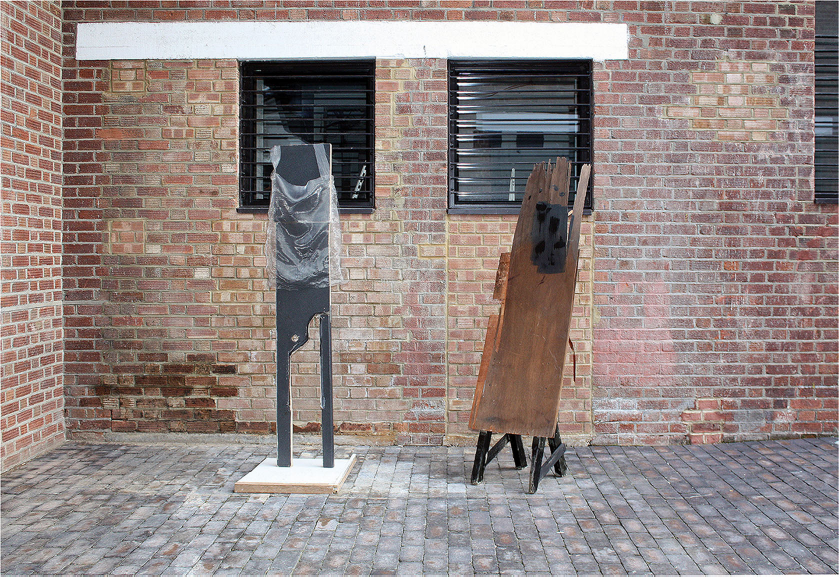
Postscript
The New Model Army is my ongoing sculptural series which I began making in 2011, during my doctoral studies at Goldsmiths, University of London. 1
The works are made intuitively, but the underlying impulse to make them grew in response to my increased awareness regarding the lack of diverse representation, including within art institutions, of women's lived experiences, the effects on them of unequal background conditions, their invisible labour and the effects of this on their selfhood, solidarity and creativity.
My New Model Army sculptures are made from discarded objects and materials gathered from urban streets. I take these found materials to my studio 2 and care for them, until they are ready to begin work. Often, the materials and objects appear absolutely exhausted by their relationship to capitalism. Some of them need to rest—often flat out on my studio floor—until they indicate they are ready to start making. Others are, despite appearances, immediately up for action.
The notion of ‘studio' is extremely precarious in my case (and for many other London-based artists).
Even when they are resting before starting work, the materials and objects are very active in the making process, continually indicating to me what they do and do not want to do. Every sculpture communicates its own needs to me, during the making process. Sometimes this is challenging, taking me to—and beyond—the limits of my capabilities. The materials and I work together, forming them into upright, fragmental, figurative sculptures able to withstand being moved. When they are ready, I take them outside, back to the same kind of sites—urban sites that I have preselected—where I originally found their parts. I photograph and film them individually and/or in groups. Collectively, I refer to these site-sensitive projects as ‘Fieldworks’. The Fieldworks result in sculpt-photographic works. 3
In New Model Army: Invisible Labour, this also resulted in a video work: Looker (2018).
Invisible Labour (2017–2018) is the third Fieldwork carried out by the New Model Army. 4
The collective title Fieldworks refers to the overlapping ideas of an army undergoing necessary fieldwork to scope out a landscape and of the feminist need to address the lack of ‘level playing field’—particularly in the workplace—which continues to negatively affect women.
The Fieldwork Invisible Labour 5 brings new visibility to the hidden and undervalued work carried out by women, particularly working-class women who are anonymous, unnoticed and historically have been considered unremarkable. My works aim to bring vital, needed visibility to the suffering, strength and individuality of these women. The Fieldwork Invisible Labour also can be read as a fluid, temporal, public commemoration of women's feminist significance as opposed to their (alleged lack of) success in the sense determined by patriarchal frameworks; the Fieldworks are an oppositional, feminist response to the patriarchal compulsion towards permanence, status and territorialisation that underpins the historical proliferation of commemorative statues of men. My New Model Army sculptures and my Fieldworks combat this compulsion by gathering together in constellations and/or sometimes appearing alone, evoking women's lived experiences and untold stories and the possibility of their future solidarity.
Invisible Labour was carried out on Creekside, a street in Deptford, South East London. Historically, this area is home to people associated with the working classes and, relatedly, with marginalisation and exclusion. The area is now subject to a demographic shift resulting from patriarchal capitalist development. Invisible Labour also develops my earlier Fieldwork, Land Operation (2017), by acknowledging the structural relationship between women's inequality and the exploitative basis for this and patriarchal capitalist development of urban landscape on an unprecedented scale. Warehouses, factories and bare/waste land on Creekside and the surrounding area are subject to this development which, in resulting in sleek, monetised and monetising structures, further obscures the historical conditions affecting women and, in turn, the effects on them of their hidden and undervalued work.
As a technology of patriarchal capitalism, 6 invisible labour 7 is currently—and has been historically—unequally distributed amongst women through structural mechanisms imposed ‘top-down’—such as class division, gender inequality, family background and/or (unsupported) motherhood. My sculptures combat this situation, beginning by insisting on the gaze as a two-way, bodily and ocular relation between artist and viewer. My sculptures challenge the pre-structured, normativised gaze brought to art in the context of patriarchal capitalism. Rather than comply with this gaze, and the exploitative politics to which it is structurally integral, they dismantle it as it touches their bodies, refusing its relentless commodification. This disrupts the larger, obscured politics underpinning the gaze. In this moment of disruption, through their flesh, the sculptures bring new visibility to the effects of invisible labour on women.
My use of the term ‘patriarchal capitalism’ is derived from Beechey (1979), Eisenstein (1979) and Mitchell (1974) and refers to the collusion of patriarchal kinship structures with neo-liberalist, economical imperatives.
The term invisible labour refers generally to women's hidden and/or undervalued emotional, psychological and physical labour, the effects of this on their embodied subjectivities, and their strength in overcoming these effects. Much of the labour that women do is inside and invisible in both a literal and less obvious sense—women work within the home and ‘behind closed doors’, and they work internally—emotionally and psychologically—to provide support and care for others, often without this being recognised, reciprocated or rewarded. This situation only adds to women's invisible labour in the sense that they become further burdened by the weight of their own needs and desires, rather than having these respected and met. Instead, women carrying burdens of invisible labour tend to be compared, according to patriarchal values, with relatively unburdened, 'achieving' women, resulting in patriarchally imposed inequalities amongst them—confusion, competitiveness, non-empathy—rather than solidarity between them. Additionally, women work to bear the burden of objectification, including through the (digital) screen and screened oppression—that is, oppressive, flattening and fragmenting images and messages, disseminated as capitalist flows, through the screen and screen-related experiences.
My way of looking and the values inscribed into my gaze are structured into and through my works. My way of looking has its roots in my own working-class background. My values have been formed through my lived experiences of combatting, at every level, the structural ‘impossibility’ of living as an originally working-class, working, single-mother artist and the embodied marginalisation resulting from this. Through the sculptures, I insist upon a space-time that often seems structurally forbidden and which must be fought for—that is, a space-time for women's renegotiation of the politics of looking and the politics of representation.
Footnotes
Acknowledgements
With thanks to the editorial team and the anonymous peer reviewers at Feminist Review for their encouragement and support with this publication.
Author Biography
Linda Aloysius is an artist, researcher and lecturer. Her work brings new attention to issues relating to background conditions affecting women's creation of artistic syntaxes and to working-class women's embodiment of the effects of invisible labour, including its marginalisation of their creativity within the realms of artistic and cultural production. Aloysius completed her doctoral studies at Goldsmiths College in 2017. She exhibits her work nationally and internationally and has presented at numerous national and international conferences. She is currently developing her next Fieldwork: New Model Army: Outside Tate Modern (2018).