







Abstract
OBJECTIVE: Snoring causes many problems for both snorers and family members. Significant improvement has been reported in subjective measures of snoring after laser-assisted uvulopalatoplasty (LAUP). However, there were few studies of the long-term results of LAUP from a large number of patients. The purpose of this study was to compare the short-term versus long-term results in patients undergoing this procedure.
METHODS: LAUP has been performed on 340 snorers. The majority of the patients were male with simple snoring by history and confirmed by polysomnographic study. Data on patients were compared from preoperative to the short-term (6 months) and longterm (more than 3 years) postoperative assessment points. Statistic analysis was performed to assess the significance of differences between groups.
RESULTS: Significant improvement was observed in snoring scale at 6 months and long-term. The mean follow-up was 40.5 months with a range of 36 to 50 months. There were significant differences between short-term and long-term results (P < 0.05). The change in body mass index was significantly different in the patients with and without recurrence (1.9 vs 0.5 kg/m2, P < 0.01). Two hundred fifty-five (75%) patients had long-term clinical success, and 34 (12%) patients with short-term success failed long-term.
CONCLUSION: LAUP in the treatment of simple snoring results in long-term success. However, patients are at risk of recurrence if they gain weight. (Otolaryngol Head Neck Surg 2001;124:90-3.)
Approximately 25% of men and 15% of women snore habitually. 1 Snoring causes many problems for both snorers and family members. Many studies have shown a link between snoring and cardiovascular diseases. 2,3 Snoring is now seen as one end of a spectrum of sleep-related breathing disorders, and in its extreme form, snoring can cause obstructive sleep apnea syndrome (OSAS). There are both medical and surgical treatments for people who snore. When medical treatment fails, surgical treatment is the alternative.
Several surgical procedures have been developed to treat snoring. Uvulopalatopharyngoplasty (UPPP) is a highly successful surgical treatment for snoring. 4 However, significant associated morbidity as well as factors relating to general anesthetic cost and recovery time make it difficult to justify performing UPPP for snoring alone.
Laser-assisted uvulopalatoplasty (LAUP) was developed by Kamami, 5 who has used it successfully for the treatment of individuals with socially disruptive snoring. It is performed in an ambulatory setting with the patient given a local anesthetic; it allows the progressive shortening and tightening of the uvula and palate. Subsequently, this procedure has been widely adopted throughout the world. LAUP has been shown to be 80% to 90% effective in alleviating snoring in the short-term. 6,7 However, there were few studies about the long-term results of LAUP from a large number of patients. The purpose of this study is to compare the short-term versus long-term results in patients undergoing this procedure.
METHODS AND MATERIALS
Four hundred fifty consecutive adult patients were evaluated for treatment of snoring and sleep-related disorders at Vajira Hospital over a 24-month period. A complete history was taken of each patient and thorough physical and otolaryngologic examinations were performed. The nasopharynx, hypopharynx, and larynx were visualized with the use of a flexible nasopharyngoscope, with Mueller's maneuver performed at the levels of the nasopharynx and the base of the tongue. A radiologic sinus and cephalogram were taken routinely. Patients were advised of conservative treatments to reduce snoring. The patients who had failed to respond to the conservative treatments were counseled about the benefits and risks of surgical procedures.
Three hundred ninety-four (88%) patients that had a primary complaint of snoring were found to be suitable for LAUP performed in an outpatient setting. The main indication for treatment was a history of socially disruptive snoring. Patients with a primary complaint of daytime sleepiness and/or apneic
Mean snoring scale (Visual Analog Scale) before and after surgery. ∗P < 0.001; ∗∗P < 0.05.)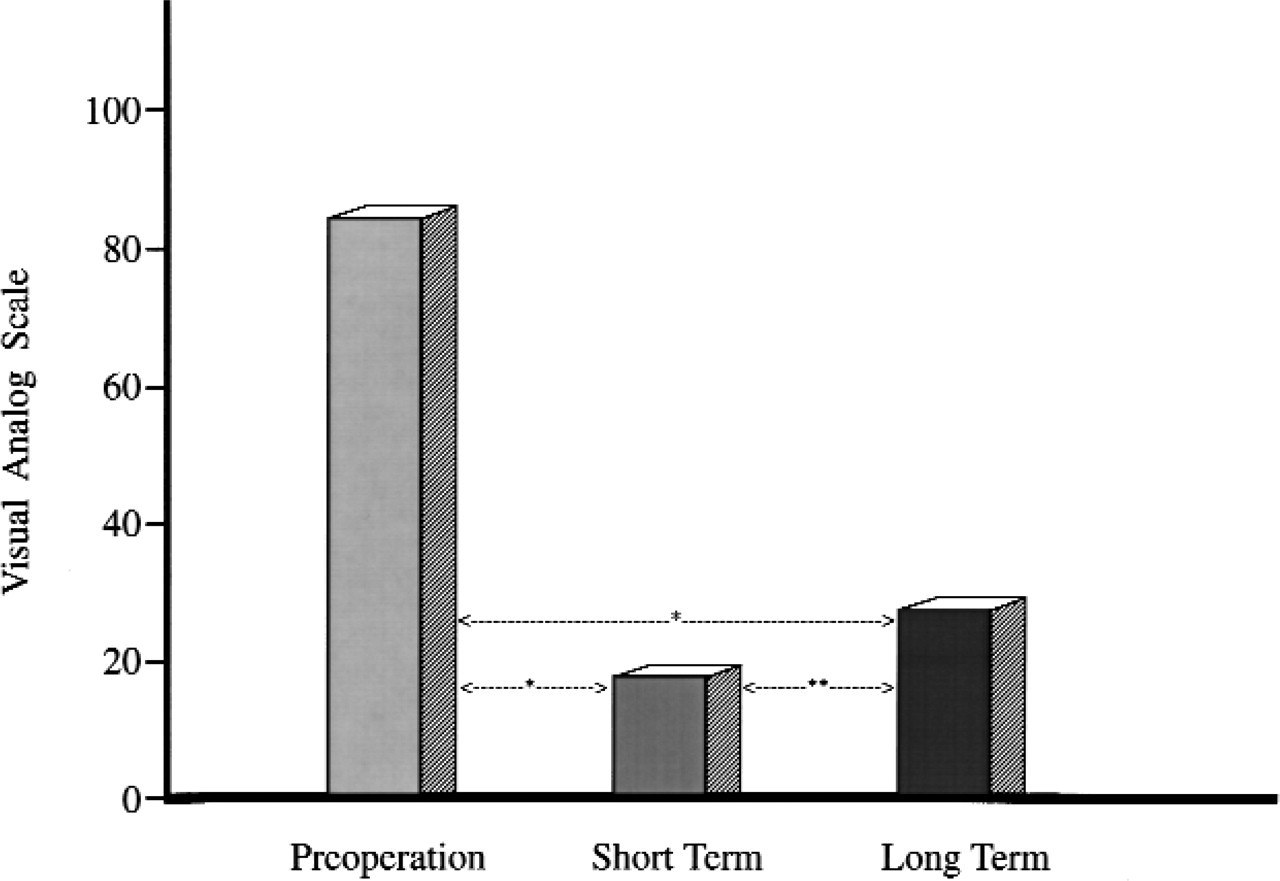
Laser-assisted Uvulopalatoplasty
The soft palate was anesthetized with xylocain 10% topical dispersion, and 5 to 10 mL xylocain 1% with adrenaline solution was additionally injected at 3 points 1 cm from the lower rim of the palatal arch. LAUP was performed with the patients sitting upright and the clinician using a CO2 laser at 15 to 20 watts continuous power with handpieces designed to protect the posterior pharyngeal wall. Vertical transpalatal incisions were made bilaterally through the soft palate just lateral to the base of the uvula. This was followed by partial vaporization of one half or one third of the uvula. The procedure was performed in stages with at least 4 weeks between the treatments. Some patients also required septal and turbinate surgical procedures because of nasal obstruction or laser ablation tonsillectomy because of enlarged tonsils.
Base line information was collected. The patient's bedpartner or an observer used a 10-cm visual analog scale (VAS) to grade the severity of snoring before the procedure, at 6 months postoperative treatment, and at long-term postoperative treatment. “No snoring” occupied the far left portion of the scale, and “severe snoring” occupied the far right of the scale. Data on the patients were compared from the preoperative stage to the short-term and long-term postoperative assessment and analyzed by Student t test, repeated measure, X 2 test, and Mann-Whitney U test.
RESULTS
Three hundred forty (87%) patients completed the questionnaires at both the short-term and long-term follow-up examination and were included in the analysis. The patients were examined between 36 and 50 months after the operation (mean ± SD = 40.5 ± 5.4 months). Ages ranged from 19 to 72 years (mean ± SD = 38.3 ± 10.2 years). Three hundred (88%) patients were married and 40 (12%) were single or divorced; 311 (91%) were male and 29 (9%) were female. Body mass index (BMI) was calculated (weight in kilograms divided by the square of the height in meters). BMI at the time of surgery ranged from 19.7 to 33.1 kg/m 2 (25.9 ± 3.2 kg/m2), at short-term 19.9 to 33.5 kg/m 2 (26.1 ± 4.3 kg/m2), and at long-term 20.1 to 33.8 kg/m 2 (26.3 ± 4.6 kg/m2).
Significant improvement from the baseline (82.5 ± 20.4) was observed in VAS at 6 months (16.5 ± 10.7, P < 0.001) and long-term (25.7 ± 13.4, P < 0.001). There were significant differences between the short-term and long-term results (P < 0.05) (Fig. 1).
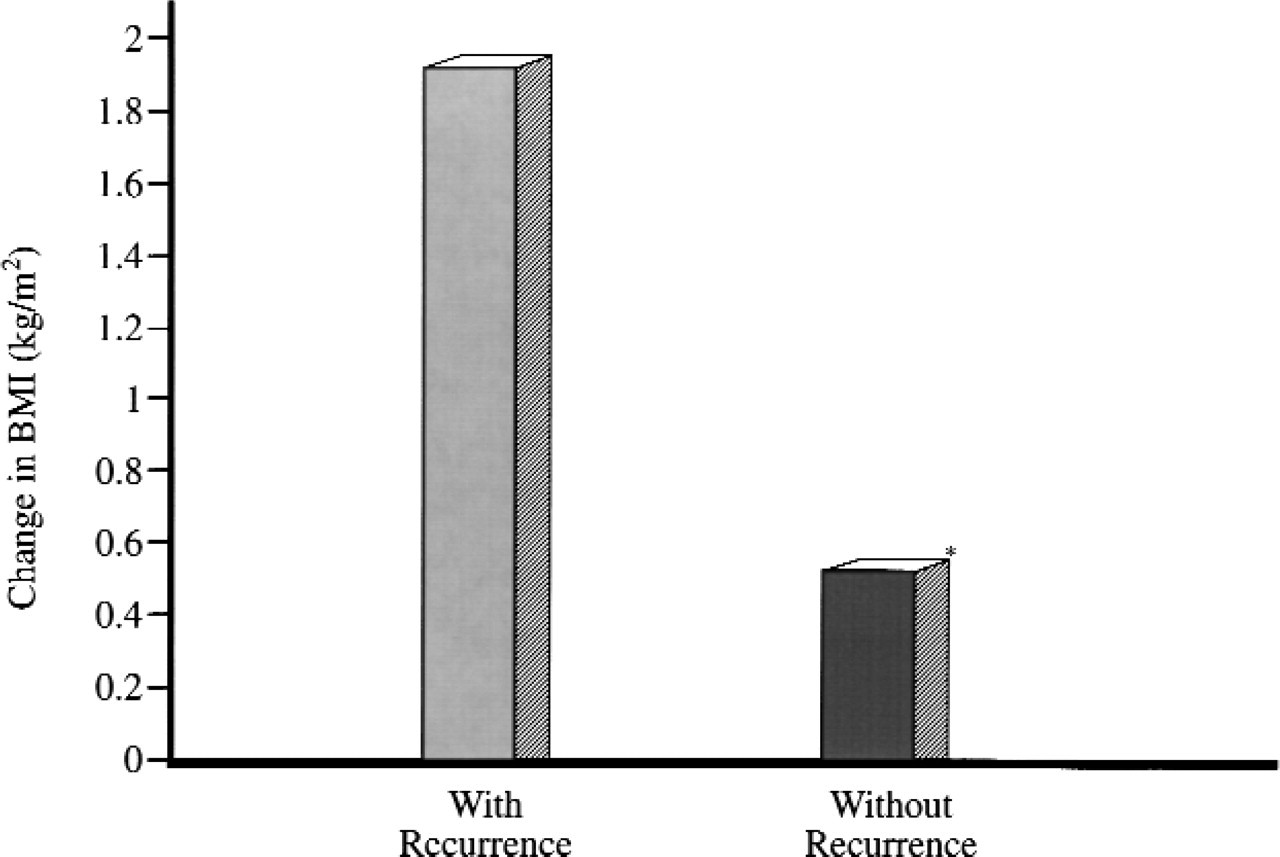
Change in BMI was significantly different in patients with and without recurrence. (∗P < 0.01.)
Characteristics of patients with and without relapse (mean ± SD).
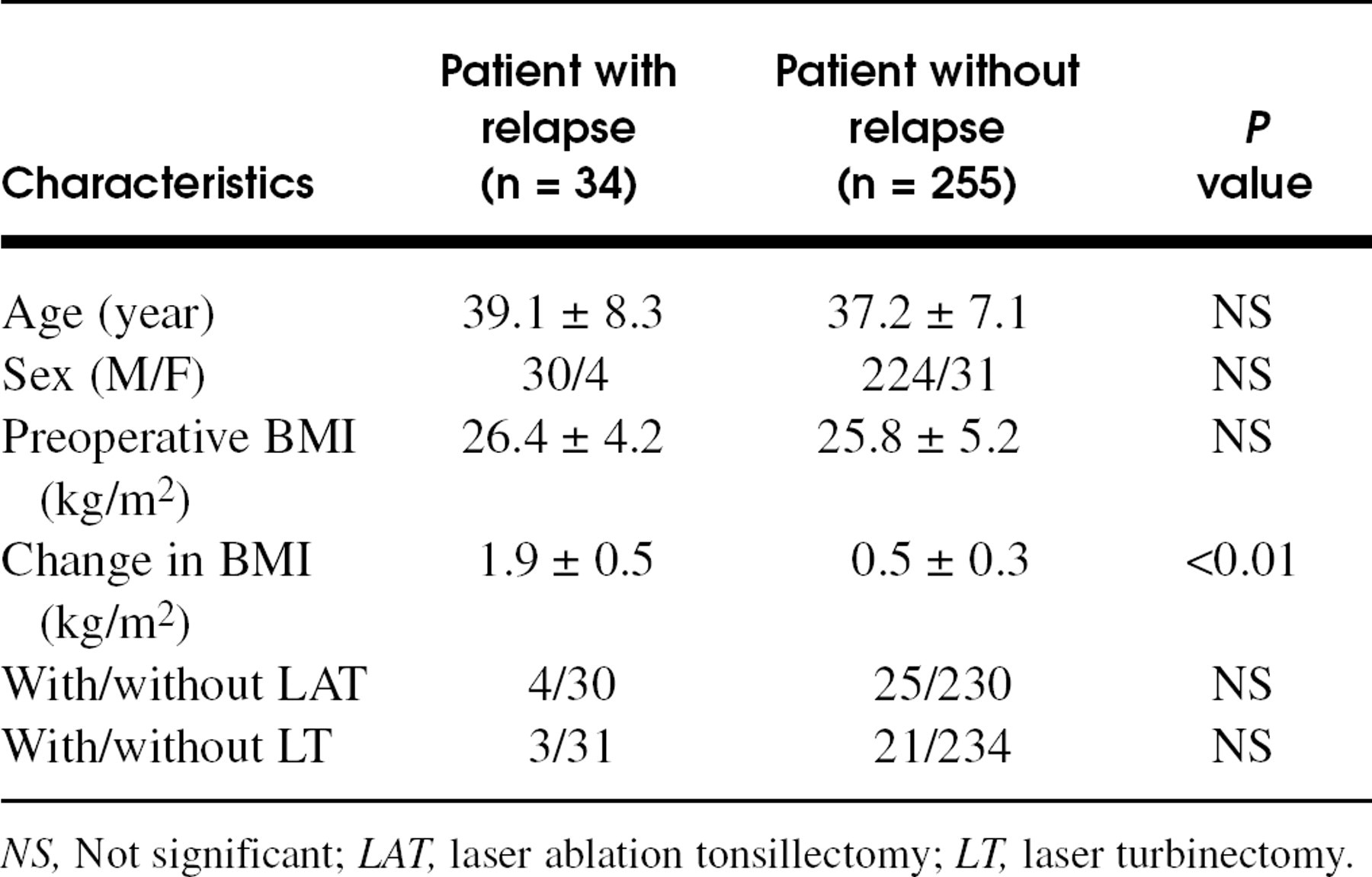
NS, Not significant; LAT, laser ablation tonsillectomy; LT, laser turbinectomy.
The average preoperative VAS was 82.5, indicating moderate to severe snoring in this group of patients. Snoring was considered to be cured by the bed partner or observer if the VAS was less than half the baseline. Based on this criteria for a cure of snoring, the problem was eliminated in 85% (289 of 340) of the patients at 6 months and 75% (255 of 340) long-term. Thirty-four patients with short-term success failed over the longterm. There were no significant differences between the patients who subsequently relapsed and those who did not with regard to age, sex, and preoperative BMI (Table 1). The change in BMI was a significant difference in patients with and without recurrence (1.9 ± 0.5 vs 0.5 ± 0.3 kg/m2, P < 0.01) (Fig. 2).
Postoperative complications in these patients included bleeding in 2% (6 of 340), taste disturbance in 2% (6 of 340), and transient nasal regurgitation in 6% (20 of 340). There were no emergent airway complications, no blood transfusion, no nasopharyngeal stenosis, no cases of permanent velopharyngeal insufficiency, and no deaths in this series. Bleeding was controlled in 6 patients with electrical cautery and ligation.
Most patients (75%) had moderate to severe pain for 5 to 14 days after the procedure. In addition, laser ablation tonsillectomy was performed in 10% (34/340) and laser turbinectomy in 8% (27/340) of LAUP-treated patients. Patients underwent a mean of 1.2 procedures (range, 1 to 4). There were no significant differences between the patients who subsequently relapsed and those who did not with respect to adjunctive LAT and LT procedures (Table 1).
DISCUSSION
Snoring is caused by the vibration of soft structures in a narrow, upper airway segment with reduced elasticity. The surgical concept for treatment of snoring is to enlarge the upper airway, thereby restoring its patency during sleep.
LAUP aims at shortening the soft palate to increase the retropalatal upper airway patency. Postoperative scarring may additionally stabilize the soft palate and thus prevent vibration and snoring sound generation at this site. The reduction of snoring after LAUP is beneficial to the patient's social life. The short-term results from LAUP treatment for the relief of snoring are encouraging.
Kamami, 5 Krespi et al, 8 and Cheng et al 9 showed an 83% to 87% success rate in between 3 to 6 months after surgery. However, there were few studies in long-term results of LAUP from a large number of patients. UPPP for snoring has shown that increasing the length of follow-up time results in a drop in the success rate. 10 Wareing et al 11 reported from their 53 patients that 1 of every 5 patients whose LAUP appeared to have succeeded would have a reappearance of socially disruptive snoring between 6 and 24 months postsurgery. Ellis 12 also reported that the initial 88% rate of success dropped to 66% at the end of 18 months in 63 patients. Again there were no obvious factors that predicted the recurrence of snoring after LAUP procedure.
In this study, there were significant differences between the short-term and long-term (more than 3 years) results. Two hundred fifty-five (75%) patients had long-term clinical success and 34 (12%) patients with short-term success failed in the long-term. The change in BMI was significantly different in the patients with and without recurrence (1.9 vs 0.5 kg/m2, P < 0.01). The significant increase in BMI between the first and second postoperative recordings in the patients with relapse of snoring confirmed that BMI was important. LAUP in the treatment of simple snoring results in longterm success. A regular follow-up with recommendations concerning weight control is also important to prevent a relapse after LAUP procedure.
Thanks to Somchart Maneenoy, MS, Biostatistics and Research Epidemiology, Sririraj Hospital, Bangkok, Thailand, for his assistance in data analysis.