







Abstract
The purpose of this study is to explore the development of creativity in Chilean kindergarten and school children. For this, we evaluated non-verbal divergent and convergent thinking skills in a sample of 320 Chilean kindergarten, second-, fourth- and sixth-grade school children. We found that kindergarten and second-grade children showed a lower performance in creative fluency and originality than fourth-grade and sixth-grade children. In addition, we found that kindergarten and second-grade children had a low performance in creative elaboration, which worsened in the fourth and sixth grades. We did not find differences between the different educational levels in convergent thinking skills. Our results contradict previous international studies that report a stable development of creativity throughout the first few years of schooling, with a transitory slump in the fourth or sixth grade, revealing an early slump of creative skills in Chilean children, which rebound after the fourth grade. We discuss the potential relationship between the academization and rigidization of Chilean early childhood education and the early slump in creativity.
Creativity, defined as the capacity to generate new ideas by combining different types of information in an original form (Guilford, 1967), is considered an essential skill for twenty-first-century education (OECD, 2005). Numerous studies have evaluated creativity in school-aged children and found that its development does not follow a linear progression and that it seems to be sensitive to contextual variables (Barbot, Lubart, & Besançon, 2016; Marcon, 1995; Torrance, 1977). For example, a study conducted by Torrance (1968) evaluating divergent thinking skills in a sample of 100 American children in the third, fourth and fifth grades found that compared to third-grade children, fourth-grade children presented a significant decrease in creative skills, particularly in aspects such as fluency, flexibility, originality and elaboration, which rebounded in the fifth grade. Torrance interpreted this ‘slump’ in creativity as the result of an increased demand for behavioural control and adjustment to classroom norms imposed on fourth-grade American children. This slump in creativity has also been found in other cultures (Darvishi & Pakdaman, 2017; Timmel, 2001). However, other studies found a slump in creativity in educational levels other than the fourth grade. For example, Kim (2011) analysed the performance of divergent thinking tasks in 272,599 American kindergarten children to twelfth-grade students, as well as adults, between the years 1966 and 2008. The study revealed that divergent thinking skills remain stable in the first years of schooling until the sixth grade, when a slump is observed. Recently, Yi, Hu, Plucker, and McWilliams (2013) evaluated the creative skills of 562 Chinese students aged between 10 and 16 and found a decline in the performance of these skills between the ages of 12 and 14. Yi et al. (2013) interpreted this result as that, compared to primary school, Chinese secondary education is more academic and promotes less creative environments, which could influence the slump in creativity seen in these adolescents.
Although diverse, the studies presented so far consistently show that the development of divergent thinking does not follow a linear progression, with a transient decrease from the fourth grade. Interpretations of this phenomenon are usually centred on the emergence of more rigid and academic educational contexts. However, it has also been proposed that the slump in creativity could be related to the onset of puberty and adolescence, thus establishing a relationship between neurodevelopment and creativity (Barbot & Tinio, 2015; Gralewski, Lebuda, Gajda, Jankowska, & Wiśniewska, 2016). However, it is important to note that most of these interpretations are derived from research carried out in developed countries where school environments are generally flexible in the initial years of education, and gradually becoming more rigid and academic at the middle of primary education or beginning of secondary school. This contrasts with what happens in countries like Chile, where educational contexts tend to become more rigid early, before the fourth grade. The reasons explaining the early rigidity of Chilean educational environments are diverse: a strongly market-oriented educational system (Bellei, 2015) is one of them; the fostering of competition between schools and the application of national standardized tests as early as the second grade are two others (Ortiz-Cáceres, 2012; Verger, Bonal, & Zancajo, 2016). Although the results of these tests can have a pedagogical use, they have received severe criticism for inducing Chilean schools to focus the educational process on the increase of their scores (Meckes & Carrasco, 2010). This interest in ‘preparing’ Chilean students for standardized tests early has begun to have an impact on children, even at pre-school education. Currently in Chile, where almost all children aged four and five attend preschool education in schools (not kindergartens), there is a widespread concern regarding the excessive academization of this educational level (Pardo & Opazo, 2019; Pardo & Woodrow, 2014; Sánchez & Gómez, 2010), in line with that reported by other countries (Moss, 2012; OECD, 2006).
Thus, this point opens interesting questions about the development of creativity in societies such as Chile where the educational system tends to become rigid early. To our knowledge there are no studies to date that have empirically evaluated the development of divergent thinking in Chilean kindergarten and school children (Preiss, Grau, Ortiz, & Bernardino, 2016). The purpose of this study is to add to the body of knowledge in this area by determining the characteristics of the development of creativity in a sample of Chilean kindergarten and school children that are studying at kindergarten, second, fourth and sixth grades. With this objective and considering the characteristics of the Chilean educational system described above, we hypothesize that the slump in creativity in Chilean children will manifest itself early, before the fourth grade. To test this hypothesis, we evaluated the divergent thinking skills of Chilean kindergarten and school children with the Torrance Tests of Creative Thinking Figural Form (TTCT-F, Torrance, 2008a). The TTCT-F measures general performance in creativity and specific performance in key aspects of divergent thinking such as fluency (quantity of new ideas generated), originality (novelty of the generated ideas) and elaboration (amount of details added to the ideas generated). As a comparative measure, we evaluated convergent thinking skills with the Goodenough-Harris Drawing Test (GHDT) (Harris, 2011). Given that convergent thinking refers to the ability to find a specific, frequent and well-known solution to a given problem (Cropley, 2006), we consider the GHDT a good non-verbal measure of this skill, as it assesses drawing a conventional item, i.e., a person of whole body.
Method
Participants
Three hundred and twenty children from three private-subsidized Chilean schools and an average socio-economic level, living in the Metropolitan Region, participated in the study. Twenty-seven participants were excluded from further analysis because they did not fully respond to one of the two tests, or presented atypical behavioural results (± 2 SD). Data from the remaining 293 participants were analysed. The final sample comprised children from four different educational levels: kindergarten (N = 73, 35 male, Mage = 5.26, SD = 0.44), second grade (N = 77, 39 male, Mage = 7.40, SD = 0.54), fourth grade (N = 78, 38 male, Mage = 9.33, SD = 0.61) and sixth grade (N = 65; 32 male, Mage = 11.34, SD = 0.50). The evaluated infants attended the kindergartens of the same schools. All participants were native Spanish speakers, with normal or corrected vision and hearing. The educational establishments, parents and children all gave an informed consent before the study.
Tasks
Torrance tests of creative thinking figural form (TTCT-F)
The TTCT-F Form A was used to non-verbally assess divergent thinking skills in Chilean children (Torrance, 2008a). The TTCT-F is one of the most used and validated tests for creativity research worldwide (Fink & Benedek, 2016). The TTCT-F comprises three drawing activities. In the first activity, children are asked to draw a picture on a sheet with a black oval shape in the centre (Figure 1A). The idea is that children integrate the oval shape as an important component of their drawing. In the second activity, children are asked to draw using a series of 10 incomplete figures (Figure 1B). In the third activity, children are asked to draw as many different images as they can, using a series of 30 parallel lines (Figure 1C). In each activity the children were asked to give their drawings a creative title. Study assistants helped the kindergarten children write the titles the children suggested. Each activity had a time limit of 10 minutes.
Torrance tests of creative thinking figural form (TTCT-F). (A) The ‘picture construction’ activity involves making a creative drawing integrating the oval shape as an important part of the drawing. (B) The ‘picture completion’ activity consists of making several creative drawings using the different figures on the sheet as part of the drawing. (C) The ‘lines’ activity requires participants to make as many creative drawings as possible using same stimulus, namely, parallel lines.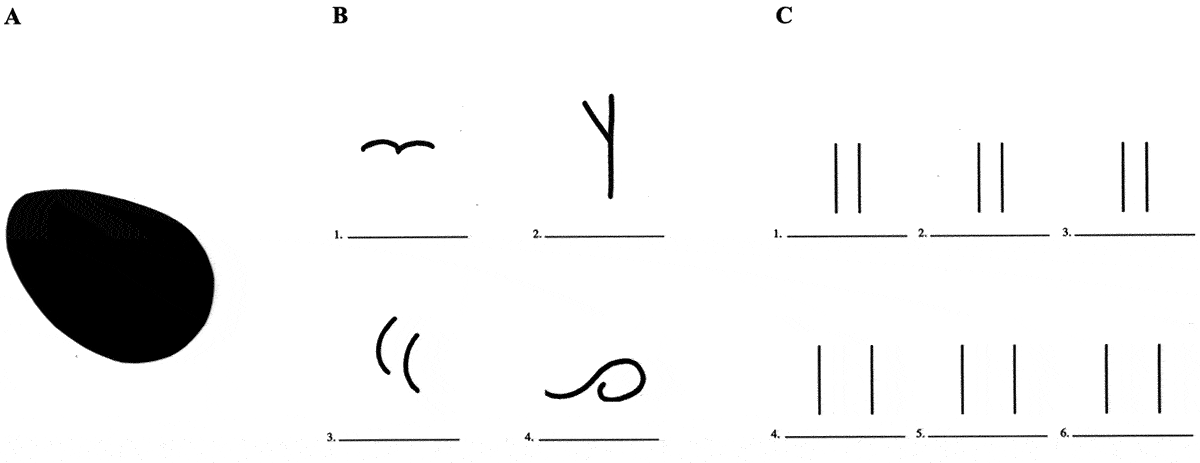
Goodenough-Harris drawing test (GHDT)
We used the GHDT to non-verbally assess convergent thinking (Harris, 2011). The GHDT comprises two drawing activities. Both activities consist of drawing stereotypical and pre-specified figures, i.e., a man and a woman. They are asked to first draw a man, and then a woman, on separate sheets. They are told to draw their whole body, not just their head or torso. Although in the original version of the GHDT drawing activities do not specify a time limit, in this study a time limit of 10 minutes was assigned to standardize both the GHDT and TTCT-F activities.
Procedures
TTCT-F
The first step was to present the activity to the children and show them what materials they were going to use, thus motivating their participation. Following that, each child was given a drawing booklet that contained Form A of the TTCT-F. At the start of each activity, they were given instructions on how to carry out the tasks and any doubts were answered; they were also told the time limit. They were urged to carefully observe the stimuli on the sheet and try to imagine a new and original drawing they could make with them. They were also asked to think of a creative title for their drawings.
GHDT
As in the case of the TTCT-F activity, the first step was to present the material and motivate the children with the drawing activity. The respective booklet was then given to each child, and they were given instructions on how to carry out the tasks and any doubts were answered; they were also told the time limit. They were told that the drawings should be done in the specific spaces assigned in the booklet for each drawing. They were encouraged to draw full-body human figures and to include all the necessary details to make the best possible drawing of a man and a woman.
Both activities were carried out in the same room where the children usually received class. A 10-minute break was assigned between each test. During the entire data collection process, the research team was accompanied by the educator and/or teacher in charge of the course.
Data analysis
TTCT-F
We analysed all three activities strictly following the streamlined scoring guide provided by the test manufacturer (Torrance, Ball, & Safter, 2008). With this method, we obtained the raw score for five sub-scales: fluency, originality, elaboration, abstractness of titles and resistance to premature closure. In addition, extra points were assigned for the presence of so-called creative strengths, i.e., emotional expressiveness, articulation of stories, movement, synthesis of figures, humour, richness of image and fantasy. The standard score for each sub-scale and creative strength was assigned based on the TTCT-F norms-technical manual (Torrance, 2008b). The total score or creativity index was obtained by adding the average standard scores of each of the five sub-scales and the creative strengths total score.
GHDT
The drawings were scored using Goodenough’s qualitative scale (Harris, 2011). The qualitative scale consists of a series of 12 reference drawings that represent increases in conceptual maturity. The raw score is obtained by comparing the children’s drawing with the 12 reference drawings. Specifically, the procedure consists of selecting the reference image that best fits the child’s drawing in terms of the amount of detail and proportions. Following that, the raw score obtained from that reference image is assigned to the child’s drawing. The standard scores for the male and female drawings were obtained from the conversion table for qualitative score, included in the GHDT manual (Harris, 2011). The total score is obtained by averaging the standard scores for the male and female drawings. We decided to use the qualitative scale because it was as valid and reliable as the traditional point scale (Harris, 2011), but with the additional advantage that it saves considerable time in the scoring process.
Inter-rater reliability
To establish reliability among the evaluators, 20 TTCT-F and 20 GHDT were randomly selected and scored by three independent evaluators. The evaluators were all trained psychologists. Two of them were completely unaware of the study objectives. The evaluators were previously trained in a careful reading of the TTCT-F scoring manual (Torrance et al., 2008) and the GHDT manual (Harris, 2011). For the calculation of inter-rater reliability, the inter-class correlation coefficient (ICC) was used, a measure that allows us to estimate the variation between two or more evaluators who assess the same group of subjects (Koo & Li, 2016). ICC values ranging between .5 and .75 indicate moderate reliability, between .75 and .9 good reliability, while values greater than .90 indicate excellent reliability (Koo & Li, 2016). In the case of TTCT-F, a two-way mixed ICC, measuring inter-rater consistency, reported an ICC = .912 with a 95% confidence interval = [.815 .962]. Using the same parameters, the GHDT test obtained an ICC = .914 with 95% confidence interval = [.820 .963]. These results are indicative of good inter-rater reliability in both the TTCT-F test and the GHDT test.
Statistical analysis
A MANOVA was carried out with educational levels (kindergarten, second, fourth and sixth grades) as a fixed factor, and the total TTCT-F score, three sub-scales of the TTCT-F (fluency, originality and elaboration) and total GHDT score as dependent variables. Post-hoc comparisons were analysed using two-tailed, independent t-test. The False Discovery Rate (FDR) (q < .05) was used to correct for multiple comparisons (Benjamini & Yekutieli, 2001). The effect size was calculated using Cohen’s d statistic. Values of 0.2 indicate a small effect, 0.5 a medium effect and 0.8 or greater a large effect (Cohen, 1988). Finally, to examine the relationship between the overall performance in the divergent and convergent thinking test, a Pearson bivariate correlation was performed. The alpha level was set at .05 for all tests.
Results
Divergent thinking
Mean, standard deviation and ANOVA for different educational levels.
Note: Two-tailed student’s t-test for independent samples. All p-values corrected by FDR for multiple comparisons. Effect size calculated with Cohen’s d. K = kindergarten; t = Student’s t; p-fdr = p-values corrected by false discovery rate; d = Cohen’s d.
Contrast t-test for multiple comparisons.
Note: Two-tailed student’s t-test for independent samples. All p-values corrected by FDR for multiple comparisons. Effect size calculated with Cohen’s d. K=Kindergarten; t=Student’s t; p-fdr = p-values (false discovery rate); d = Cohen’s d.
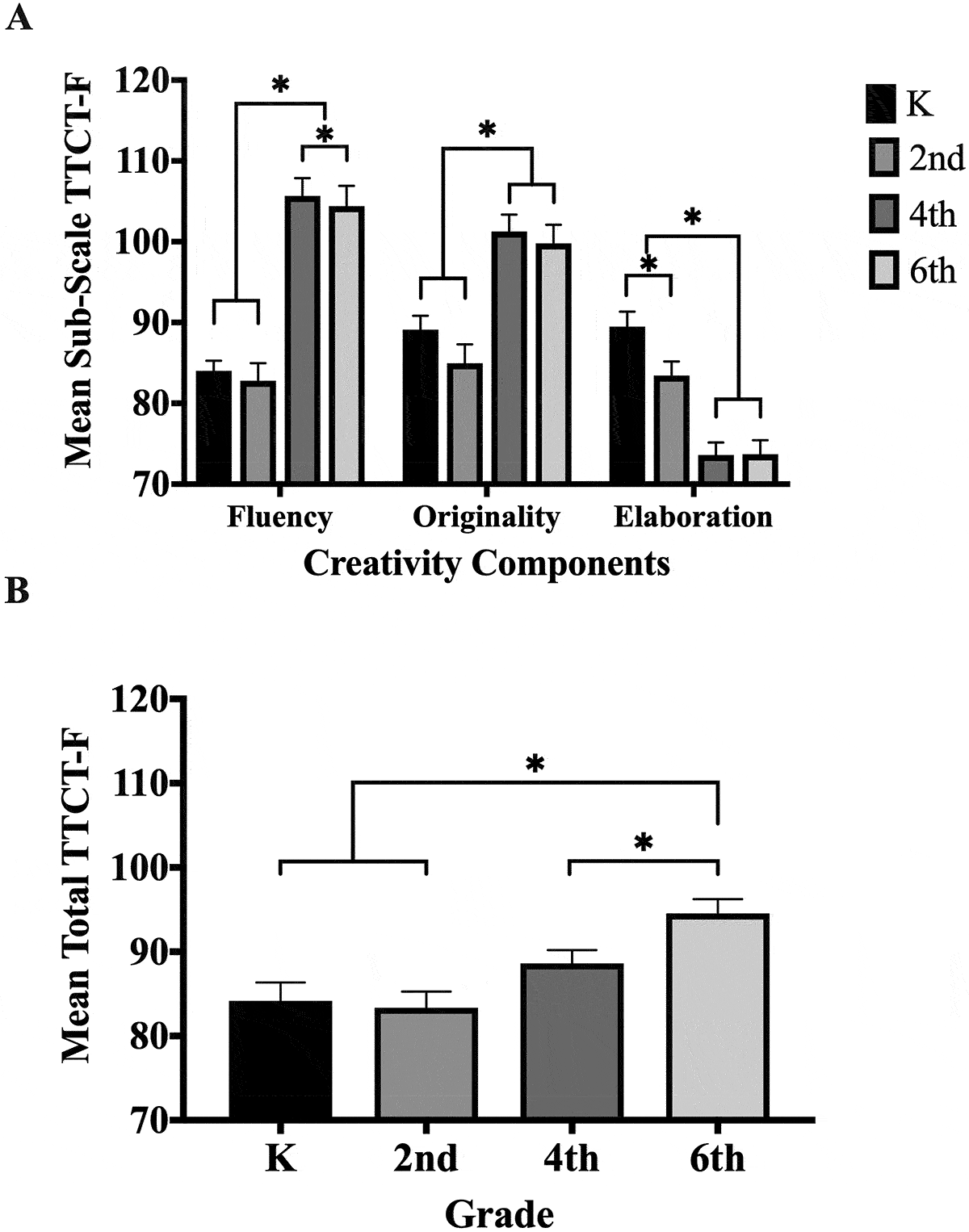
Development of divergent thinking. (A) Performance by components. The y-axis and x-axis indicate the average score per TTCT-F sub-scale and creativity components respectively. The bars represent educational level (K = Kindergarten). (B) Global creativity index. The y-axis and x-axis indicate TTCT-F average global score and educational level, respectively. The asterisks show significant differences between groups (p < .05). Error bars indicate standard error of the mean.
Convergent thinking
Results are shown in Figure 3. The average total score in the GHDT for kindergarten children was 93.18 points (SD = 10.30), second grade, 89.88 points (SD = 11.93), fourth grade, 91.57 points (SD = 13.51) and sixth grade, 91.48 points (SD = 11.87). No significant differences were observed in the total GHDT scores across the different educational levels (F(3, 293) = 0.950, p = .417, η
p
2 = .01) (Figure 3A).
Development of convergent thinking and its relation to divergent thinking. (A) Overall performance in convergent thinking task. The y-axis and x-axis indicate GHDT global average score and educational level, respectively. Error bars show standard error of the mean. (B) Correlation between convergent and divergent thinking. Performance in the GHDT test showed a positive and significant association with performance in the TTCT-F test (p < .01), such that children with better performance in convergent thinking tend to also exhibit good performance in divergent thinking. Grey points indicate bivariate outliers controlled in the robust correlation analysis.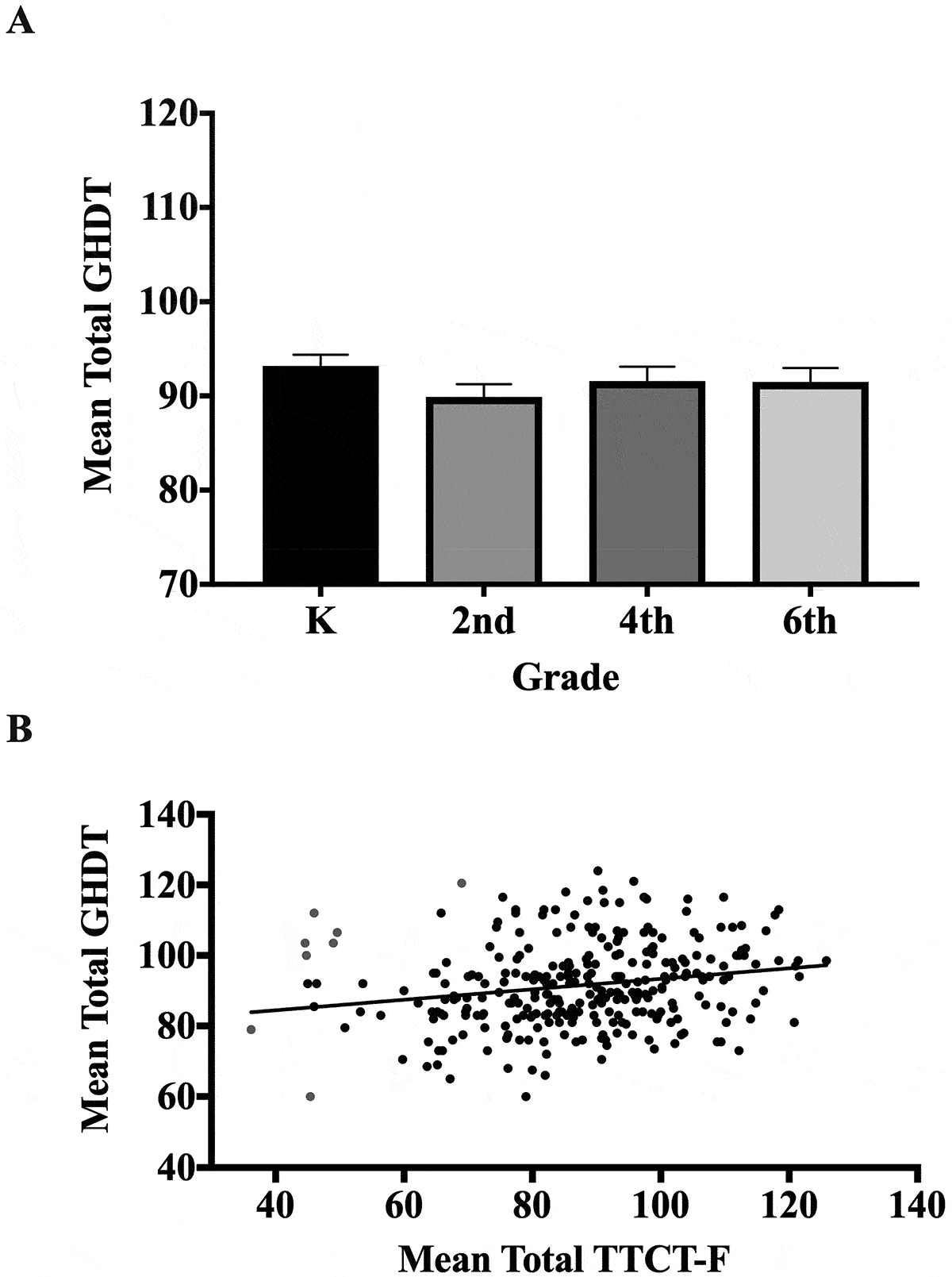
To assess the relationship between convergent and divergent thinking, a Pearson bivariate correlation analysis was calculated between the total GHDT score and the total TTCT-F score. The analysis revealed a significant positive association between performance in the convergent and divergent thinking test (r(293) = .205, p = .0004). To evaluate more thoroughly whether the link between performance in the divergent and convergent thinking test is conserved after discarding age as an intervening factor, we calculated a partial correlation. The result showed that the significant positive association between performance in the divergent and convergent thinking test is maintained even after controlling for the effect of children’s age (r(290) = .231, p < .0001). Finally, to test whether potential bivariate outliers affected this result, we performed a skipped correlation (Pernet, Wilcox, & Rousselet, 2013). This method excludes bivariate outliers and provides a more robust estimate of the relationship between variables. The robust correlation analysis confirmed the presence of a positive and significant association between convergent and divergent thinking (r = .260, 95% confidence interval = [0.16 0.35]) (Figure 3B).
Discussion
Previous studies show that the development of creativity does not follow a linear trajectory. What is usually reported is a relative stability of the development of creativity during the first three years of schooling, followed by a transitory slump in the fourth grade and a rebound in the fifth grade. Creativity slumps in the sixth grade and at the start of secondary school have also been reported. The rigidity of the educational context (Kim, 2011; Torrance, 1968; Yi et al., 2013), the stress experienced during periods of school transition (He & Wong, 2015) and neurodevelopmental factors such as the onset of puberty and adolescence (Barbot & Tinio, 2015; Gralewski et al., 2016) have been suggested as potential causes of the temporary decline of creativity.
Contributing to the research on creativity in young children, our results contradict previous studies, as we did not observe the typical fourth- or sixth-grade slump in creativity. The general tendency observed in our data is that kindergarten and second-grade children have a low overall performance in creativity, with an improvement in performance in the fourth grade that increases notably in the sixth grade. For a more detailed analysis of the development of the creativity of Chilean children, we investigated their performance in the key components of divergent thinking, i.e., fluency (number of different solutions to a given problem), originality (novelty and infrequency of answers) and elaboration (details that improve or refine a response more accurately or deeply). Our results show a low performance in fluency and originality in kindergarten and second-grade children, which improves considerably in the fourth and sixth grades. Conversely, the elaboration component presented an inverse development throughout the years of schooling, i.e., a medium-low performance in kindergarten, with a fall in the second grade that worsens in the fourth and sixth grades. Taken together, these findings reveal an interesting pattern that differentiates performance in creative tasks between younger children (kindergarten and second grade) and older children (fourth and sixth grades). Specifically, we observed that when asked to carry out a task with creative solutions, kindergarten and second-grade children showed a conservative response profile, that is, a tendency to give few answers that are not very novel but adjusted to the context and with an emphasis on the production of details that improve its quality and depth. On the other hand, fourth-grade and sixth-grade children have a somewhat more innovative response profile, that is, an impulse to give a large number of answers, usually infrequent but not very elaborated, low-quality and superficial, resembling more ‘sketches’ of divergent ideas than finished creative products. These types of responses have been previously defined as ‘pseudocreative’ (Cattell & Butcher, 1968) or ‘quasicreative’ (Cropley, 1997).
Regarding the development of convergent thinking, we observed little variability between the different educational levels. The observed trajectory shows a slight decrease in the second grade, which subsequently remained relatively stable until the sixth grade. To analyse this result, we must remember that convergent thinking is nourished by the acquisition and management of general knowledge (Cropley, 2006), which are used to configure standard answers to conventional questions (e.g., What makes iron rust?), but also to find the best solution among a limited set of possibilities (e.g., What is the most convenient route to the airport?). According to Guilford (1959), this convergent form of problem solving is what traditional intelligence tests usually assess. In this regard, previous studies investigating the relationship between intelligence and creativity indicate that both constructs share a common cognitive base (Benedek, Jauk, Sommer, Arendasy, & Neubauer, 2014). It has also been reported that although convergent and divergent thinking are different processes, their integration is required to generate a truly creative response (Cropley, 2006; Runco, 2003). In line with the above, our results showed that both ways of solving problems were positively and significantly associated (Figure 3B), which reinforces the idea that convergent and divergent thinking are interdependent phenomena. Regarding common cognitive aspects, it has been suggested that executive functions (Benedek, Jung, & Vartanian, 2018), more specifically inhibitory control, could be the basis of the development of these two ways of solving problems.
Analysed as a whole, our findings regarding the decline of creativity in Chilean children before the fourth grade concur with national and international concern regarding the increasing imposition of academic demands in early childhood (OECD, 2006; Pardo & Opazo, 2019). This potential early rigidification of educational environments is associated with more linear, conventional and standard ways of solving problems, as opposed to more creative, disruptive and divergent ways. We hypothesize that this emphasis on stereotyped and structured tasks at the expense of creative activities and playing as an instance of learning (Grau et al., 2019) could be a reason for the slow development of creativity in Chilean children. New studies, specifically longitudinal, are required to directly test this interpretation and determine whether there is a causal relationship between the rigidity of early childhood education and the slow development of creativity in Chilean children.
Limitations
One limitation of this study is the difficulty in separating the effects of age and schooling on the development of creativity. To address this issue, we suggest evaluating the creativity of boys and girls of the same age who are in different educational levels, using a regression discontinuity analysis to separately estimate the effects of schooling and age on the development of creativity (Cahan & Cohen, 1989; Ritchie & Tucker-Drob, 2018). Another potential limitation is the lack of a variable to estimate the extent to which educators and teachers encourage problem solving divergently among students. For this we propose carrying out observational studies in school classrooms, to establish correlations between pedagogical practices and the development of creativity. Finally, using only a single way of measuring creativity can be seen as a limitation, considering the different forms of expression that children have (Runco & Cayirdag, 2012). In this regard, we suggest complementing this type of research with methods different from those used here (Cropley, 2000) — such as the use of students’ own works or drawings done spontaneously in classes — to achieve a more complete understanding of the phenomenon.
Desarrollo de la creatividad en párvulos y escolares chilenos
La creatividad, definida como la capacidad de generar nuevas ideas combinando diversos tipos de información en forma original (Guilford, 1967), es considerada una competencia crucial para la educación del siglo XXI (OECD, 2005). Numerosos estudios han evaluado la creatividad en edad escolar, revelando que su desarrollo no sigue una progresión lineal a través de los años y que parece ser sensible a variables contextuales (Barbot, Lubart, & Besançon, 2016; Marcon, 1995; Torrance, 1977). Por ejemplo, un estudio conducido por Torrance (1968), que evaluó habilidades de pensamiento divergente en una muestra de 100 niños estadounidenses de 3ero, 4to y 5to grado, encontró que comparado al 3er grado, los escolares de 4to grado presentaban una significativa disminución de habilidades creativas, en particular en aspectos como fluidez, flexibilidad, originalidad y elaboración, las cuales repuntaban en 5to grado. Torrance interpretó este ‘declive’ de la creatividad como un efecto del incremento en las demandas de control conductual y ajuste a normas de la sala de clases que experimentaban los niños estadounidenses en 4to grado. Este declive de la creatividad en 4to grado también ha sido encontrado en otras culturas (Darvishi & Pakdaman, 2017; Timmel, 2001). No obstante, existen también reportes que muestran un declive de la creatividad en niveles educativos diferentes al 4to grado. Por ejemplo, Kim (2011) analizó el rendimiento en tareas de pensamiento divergente de 272,599 niños estadounidenses, desde kindergarten hasta estudiantes de 12vo grado, además de adultos, entre los años 1966 y el 2008. El estudio reveló que las habilidades de pensamiento divergente permanecen estables en los primeros años de escolaridad hasta el 6to grado donde se observa un declive. Recientemente, Yi, Hu, Plucker, y McWilliams (2013) evaluaron habilidades creativas en 562 estudiantes chinos entre 10 y 16 años, encontrando una declive del rendimiento de estas habilidades entre los 12 y los 14 años. Yi et al. (2013) interpretan este resultado señalando que comparado a la primaria, la educación secundaria china se torna más academicista y promueve ambientes menos creativos, lo cual podría influir en la caída de la creatividad en estos adolescentes.
Aunque diversos, los estudios presentados hasta aquí muestran consistentemente que el desarrollo del pensamiento divergente no sigue una progresión lineal, con declives transitorios a partir del 4to grado. Las interpretaciones de este fenómeno se centran por lo general en el surgimiento de contextos educativos más rígidos y academicistas. No obstante, también se ha propuesto que el declive de la creatividad podría estar relacionada con el inicio de la pubertad y la adolescencia, estableciendo así una relación entre neurodesarrollo y creatividad (Barbot & Tinio, 2015; Gralewski, Lebuda, Gajda, Jankowska, & Wiśniewska, 2016). Ahora bien, es importante hacer notar que la mayoría de estas interpretaciones derivan de investigaciones realizadas en países desarrollados donde los ambientes escolares son, por lo general, flexibles en los primeros años educativos, volviéndose paulatinamente más rígidos y academicistas a mediados de la educación primaria o comienzos de la secundaria. Lo anterior contrasta con lo que ocurre en países como Chile, donde los contextos educativos tiende a rigidizarse tempranamente, antes del 4to grado. Las razones que explican esta temprana rigidización de los ambientes educativos chilenos son diversas, entre las que se destacan el hecho de poseer un sistema educativo fuertemente orientado por el mercado (Bellei, 2015), el fomento de la competencia entre escuelas y la aplicación de pruebas estandarizadas nacionales a partir del 2do grado (Ortiz-Cáceres, 2012; Verger, Bonal, & Zancajo, 2016). Este último punto es muy importante dado que, aunque los resultados de estas pruebas pueden tener un uso pedagógico, ellas han recibido severas críticas por haber conducido a las escuelas chilenas a centrar el proceso educativo en el aumento de sus puntajes (Meckes & Carrasco, 2010). Este interés por ‘preparar’ tempranamente a los estudiantes chilenos para las pruebas estandarizadas, a empezado a tener impacto incluso a nivel de la educación parvularia. Actualmente en Chile — donde casi la totalidad de los niños de cuatro y cinco años asiste a educación parvularia en establecimientos escolares (no en jardines infantiles) — existe una preocupación amplia por la excesiva academización de este nivel educativo (Pardo & Opazo, 2019; Pardo & Woodrow, 2014; Sánchez & Gómez, 2010), en línea con lo reportado por otros países (Moss, 2012; OECD, 2006).
Así, este punto abre interesantes interrogantes acerca de qué es lo que ocurre con el desarrollo de la creatividad en sociedades como la chilena donde el sistema educativo tiende a rigidizarse tempranamente. A nuestro leal sabre y entender no hay estudios a la fecha que hayan evaluado empíricamente el desarrollo del pensamiento divergente de párvulos y escolares chilenos (Preiss, Grau, Ortiz, & Bernardino, 2016). El propósito del presente estudio es avanzar en esta dirección, determinando las características del desarrollo de la creatividad en una muestra de párvulos y escolares chilenos que cursan kínder, 2do, 4to y 6to grado. Con este objetivo en mente y considerando las características del sistema educativo chileno descritas anteriormente, hipotetizamos que el declive de la creatividad en niños chilenos se manifestará tempranamente antes del 4to grado. Para testear esta hipótesis, evaluamos las habilidades de pensamiento divergente de párvulos y escolares chilenos con la versión figurativa del test de pensamiento creativo de Torrance (TTCT-F sigla en inglés; Torrance, 2008a). El TTCT-F permite medir el rendimiento general en creatividad y el rendimiento específico en aspectos claves del pensamiento divergente como fluidez (cantidad de ideas nuevas generadas), originalidad (novedad de las ideas generadas), y elaboración (cantidad de detalles agregados a la ideas generadas). Como medida comparativa, evaluamos habilidades de pensamiento convergente con el test de dibujo Goodenough-Harris (GHDT sigla en ingles; Harris, 2011). Dado que el pensamiento convergente refiere a la capacidad de encontrar una solución concreta, frecuente y conocida a un problema planteado (Cropley, 2006), consideramos el GHDT una buena medida no-verbal de esta habilidad por cuanto evalúa la realización de un dibujo convencional, a sabre, una persona de cuerpo entero.
Método
Participantes
Trecientos veinte niños de tres colegios particular-subvencionado Chilenos, de comunas de nivel socio-económico medio de la Región Metropolitana, participaron del estudio. Veintisiete participantes fueron excluidos de posteriores análisis debido a que no completaron íntegramente uno de los dos test o presentaron resultados conductuales atípicos (±2 DS). Los datos de los otros 293 participantes fueron analizados. La muestra final estuvo compuesta por niños y niñas de cuatro niveles educativos distintos: Kínder (N = 73; 35 hombres, Medad = 5.26 años, DS = 0.44), 2do grado (N = 77; 39 hombres, Medad = 7.40 años, DS = 0.54), 4to grado (N = 78; 38 hombres, Medad = 9.33 años, DS = 0.61) and 6to grado (N = 65; 32 hombres, Medad = 11.34 años, DS = 0.50). Los párvulos evaluados asistían a los jardines infantiles de los mismos colegios. Todos los participantes eran hablantes nativos de español, con visión y audición normal o corregida. La dirección de los establecimientos educacionales, los padres y los niños dieron su consentimiento/asentimiento informado antes del estudio.
Tarea
Test de pensamiento creativo de Torrance versión figurativa (TTCT-F)
Se utilizó la Forma A del TTCT-F para evaluar de manera no-verbal habilidades de pensamiento divergente en niños chilenos (Torrance, 2008a). El TTCT-F es uno de los test más usados y validados en la investigación en creatividad a nivel mundial (Fink & Benedek, 2016). El TTCT-F se compone de tres actividades de dibujo. En la primera actividad los niños deben hacer un dibujo usando una hoja que tiene una forma curva de colour negro en el centro (Figura 1A). La idea es que los niños integren la forma curva como un componte importante de su dibujo. En la segunda actividad, los niños deben crear dibujos utilizando una serie de 10 figuras incompletas (Figura 1B). En la tercera actividad, los niños deben crear la mayor cantidad de dibujos diferentes que puedan, usando una serie de 30 líneas paralelas (Figura 1C). En cada actividad se les pidió a los niños que pusieran un título creativo a sus dibujos. En el caso de los párvulos, los asistentes del estudio ayudaron a escribir los títulos sugeridos por los niños. Cada actividad tuvo un tiempo limite de 10 minutos.
Test de pensamiento creativo de Torrance versión figurativa (TTCT-F). (A) La actividad ‘construcción de dibujo’ implica la realización de un dibujo creativo usando el elemento ovalado como parte importante de su dibujo. (B) La actividad ‘terminación de dibujos’ consiste en realizar varios dibujos creativos usando los diferentes trazos propuestos como parte de su dibujo. (C) La actividad ‘líneas’ invita a realizar la mayor cantidad de dibujos creativos posibles usando el mismo estímulo, a sabre, líneas paralelas.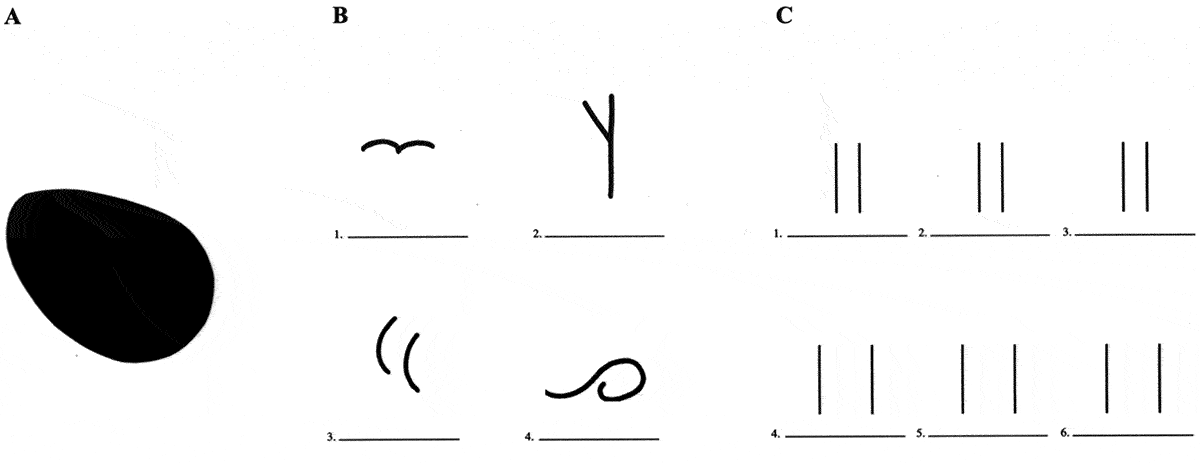
Test de dibujo Goodenough–Harris (GHDT)
Para evaluar pensamiento convergente de forma no-verbal utilizamos el GHDT (Harris, 2011). El GHDT se componen de dos actividades de dibujo. Ambas actividades consisten en dibujar figuras estereotípicas y pre-especificadas, a sabre, un hombre y una mujer. En primer lugar se realiza el dibujo del hombre y luego el de la mujer en hojas separadas. Se enfatiza que deben dibujar una persona de cuerpo entero, no solo su cabeza o torso. Aunque en la versión original del GHDT las actividades de dibujo no tienen un tiempo específico para ser realizadas, en este estudio se asignó un tiempo limite de 10 minutos a cada actividad para conservar este aspectos con el TTCT-F.
Procedimientos
TTCT-F
El primer paso fue presentar la actividad a los niños y mostrar el material que se utilizaría, motivándolos a participar de ella. Luego, a cada niño se le entregó un cuadernillo de dibujo con la forma A del TTCT-F. Al inicio de cada actividad, se les dieron las instrucciones para realizar la tarea y se respondieron dudas, recordándoles que tenían un tiempo límite para hacerla. Se les instó a que observaran cuidadosamente los estímulos en la hoja y trataran de imaginar un dibujo nuevo y original que pudieran hacer con ellos. Además, se les pidió que pensaran un título creativo para sus dibujos.
GHDT
Al igual que en el caso del TTCT-F, el primer paso fue presentar el material y motivar a los niños con la actividad de dibujo. Luego se entregó el cuadernillo respectivo a cada niño, se les dieron las instrucciones para realizar la tarea y se respondieron dudas, recordándoles que tenían un tiempo límite para hacerla. Se les indicó que los dibujos debían hacerlos en los espacios específicos asignados en el cuadernillo para cada dibujo. Se les animó a que hicieran figuras humanas de cuerpo entero y que incluyeran todos los detalles necesarios para hacer el mejor dibujo posible de un hombre y una mujer.
Ambas actividades fueron realizadas en la misma sala en donde los niños toman sus clases regularmente. Se asignó un descanso de 10 minutos entre cada test. Durante todo el proceso de toma de datos el equipo de investigación estuvo acompañado de la educadora y/o docente a cargo del curso.
Análisis de datos
TTCT-F
Analizamos las tres actividades siguiendo estrictamente la guía de puntuación simplificada proporcionada por el fabricante de la prueba (Torrance, Ball, & Safter, 2008). Usando este método obtuvimos el puntaje bruto para cinco sub-escalas: fluidez, originalidad, elaboración, abstracción de títulos y resistencia a la clausura prematura. Además, se asignaron puntos extras por la presencia de las llamadas fortalezas creativas, a sabre, expresividad emocional, articulación de historias, movimiento, síntesis de figuras, humour, riqueza de imagen y fantasía. El puntaje estándar para cada sub-escala y fortaleza creativa fue asignado basado en el manual de normas técnicas TTCT-F (Torrance, 2008b). El puntaje total o índice de creatividad fue obtenido sumando los puntajes estándar promedio de las cinco sub-escalas más el puntaje total en fortalezas creativas.
GHDT
Los dibujos fueron puntuados usando la escala cualitativa de Goodenough (Harris, 2011). La escala cualitativa consta de una serie de 12 dibujos referenciales que representan incrementos en la madurez conceptual. El puntaje bruto se obtiene al comparar el dibujo de los niños con los 12 dibujos referenciales. Específicamente, el procedimiento consiste en seleccionar la imagen referencial que mejor ajusta con el dibujo del niño en términos de cantidad de detalles y proporciones. Luego, el puntaje bruto de esa imagen referencial es asignado al dibujo del niño. El puntaje estándar para los dibujos de hombre y mujer fueron obtenidos de la tabla de conversión para puntaje cualitativo, incluida en el manual del GHDT (Harris, 2011). El puntaje total se obtiene al promediar los puntajes estándar para el dibujo de hombre y de mujer. La decisión de usar la escala cualitativa se basa en que es igualmente valida y confiable que la escala de puntos tradicional (Harris, 2011), pero con la ventaja adicional que ahorra un tiempo considerable en el proceso de puntuación.
Confiabilidad inter-evaluadores
Para establecer la confiabilidad entre los evaluadores, se seleccionaron al azar 20 TTCT-F y 20 GHDT los cuales fueron puntuados por tres evaluadores independientes. Los evaluadores eran todos psicólogos entrenados. Dos de ellos desconocían totalmente los objetivos del estudio. Los evaluadores fueron previamente entrenados haciendo una cuidadosa lectura del manual de puntuación del TTCT-F (Torrance et al., 2008) y el manual del GHDT (Harris, 2011). Para el cálculo de la confiabilidad inter-evaluadores se usó el coeficiente de correlación inter-clases (CIC), medida que permite estimar la variación entre dos o más evaluadores quienes puntúan al mismo grupo de sujetos (Koo & Li, 2016). Valores CIC entre .5 y .75 indican moderada confiabilidad, entre .75 y .9 buena confiabilidad, mientras que valores mayores a .90 indican excelente confiabilidad (Koo & Li, 2016). En el caso del TTCT-F, un CIC mixto de dos vías, midiendo consistencia inter-evaluadores, reportó un CIC = .912 con intervalo de confianza de 95% = [.815 .962]. Usando los mismos parámetros, para la prueba GHDT se obtuvo un CIC = .914 con intervalo de confianza de 95% = [.820 .963]. Estos resultados son indicativos de buena confiabilidad inter-evaluadores tanto en la prueba TTCT-F como en la prueba GHDT.
Análisis estadístico
Se realizó un MANOVA con nivel educativo (Kínder, 2do, 4to y 6to) como factor fijo y el puntaje total TTCT-F, tres sub-escalas del TTCT-F (fluidez, originalidad y elaboración) y puntaje total GHDT como variables dependientes. Comparaciones post-hoc fueron analizadas usando prueba t-test independientes a dos colas. La Tasa de Falso Descubrimiento (FDR, sigla en inglés) (q < .05) fue usada para corregir por múltiples comparaciones (Benjamini & Yekutieli, 2001). El tamaño del efecto fue calculado con el estadístico d de Cohen. Valores de 0.2 indican un efecto pequeño, 0.5 efecto mediano y 0.8 o superior un efecto grande (Cohen, 1988). Finalmente, para examinar la relación entre el rendimiento global en la prueba de pensamiento divergente y convergente se realizó una correlación bivariada de Pearson. El nivel de alfa fue fijado al .05 para todos los test.
Resultados
Pensamiento divergente
Media, desviación estándar y ANOVA para distintos niveles educativos.
Contraste t-test para comparaciones múltiples.
Nota: Prueba t-student para muestras independientes a dos colas. Todos los p-valores corregidos por FDR para múltiples comparaciones. Tamaño del efecto calculado con d de Cohen. K = kínder; t = estadístico t-student; p-fdr = p-valor corregido por tasa de falsos positivos (fdr, sigla en inglés); d = d de Cohen.
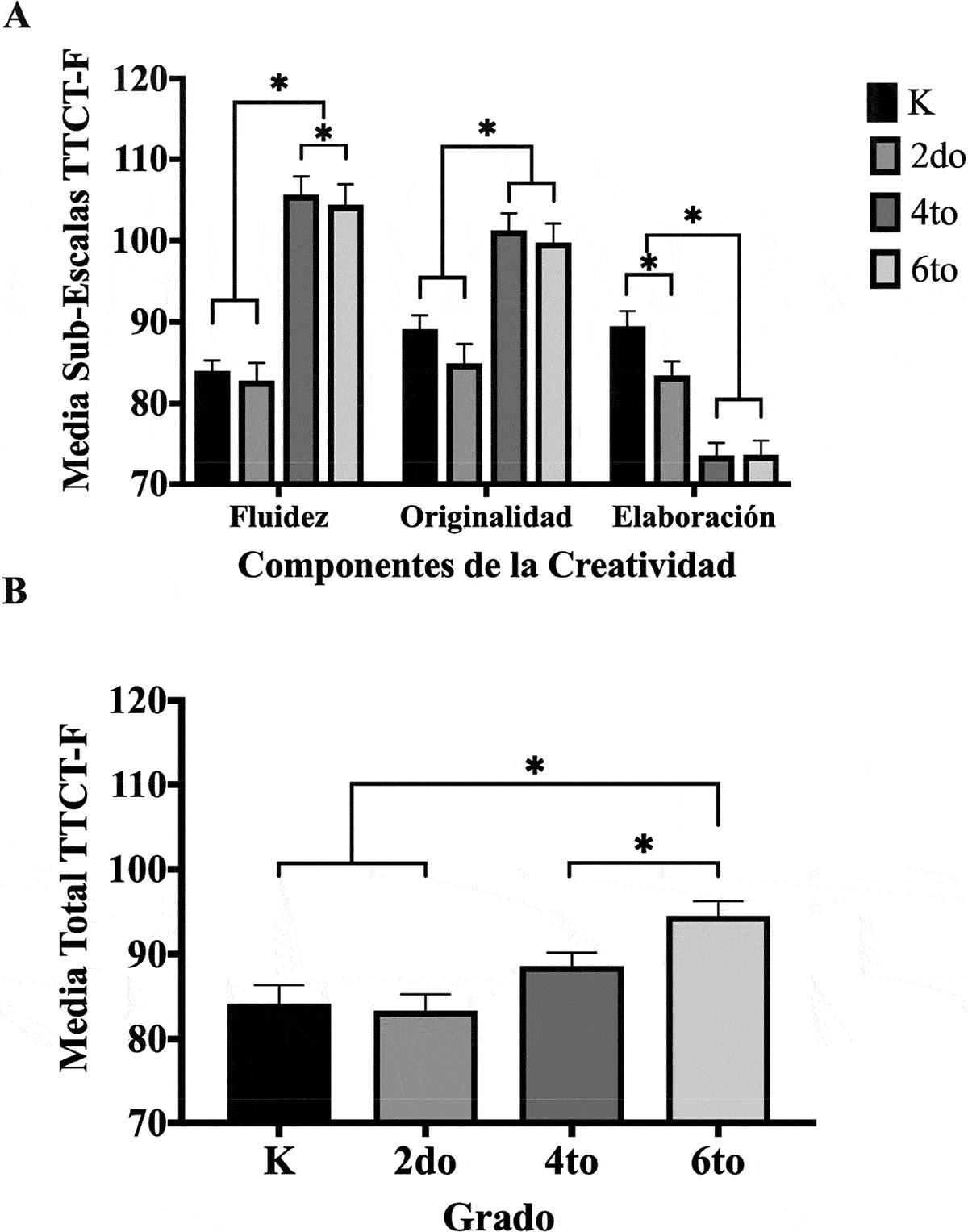
Desarrollo del pensamiento divergente. (A) Rendimiento por componentes. El eje-y y eje-x indican el puntaje promedio por sub-escala TTCT-F y componentes de la creatividad respectivamente. Las barras representa nivel educativo (K = Kínder). (B) Índice de creatividad global. El eje-y y eje-x indican puntaje promedio global TTCT-F y nivel educativo respectivamente. Asteriscos representan diferencias significativas entre grupos (p < .05). Barras de error indican error estándar de la media.
Pensamiento convergente
Los resultados son ilustrados en la Figura 3. El puntaje total promedio en el GHDT en kínder fue de 93.18 puntos (DS = 10.30), 2do grado 89.88 puntos (DS = 11.93), 4to grado 91.57 puntos (DS = 13.51) y 6to grado 91.48 puntos (DS = 11.87). No se observaron diferencias significativas en el puntaje total del GHDT a través de los distintos niveles educativos (F(3, 293) = 0.950, p = .417, η
p
2 = .01) (Figura 3A).
Desarrollo del pensamiento convergente y su relación con el pensamiento divergente. (A) Rendimiento global en tarea de pensamiento convergente. El eje-y y eje-x indican puntaje promedio global GHDT y nivel educativo respectivamente. Barras de error muestran error estándar de la media. (B) Correlación entre pensamiento convergente y divergente. El rendimiento en la prueba GHDT mostró una asociación positiva y significativamente con el rendimiento en la prueba TTCT-F p < .01), tal que niños con un mejor rendimiento en pensamiento convergente tienden a exhibir también un buen rendimiento en pensamiento divergente. Puntos grises indican valores atípicos bivariados controlados en el análisis de correlación robusta.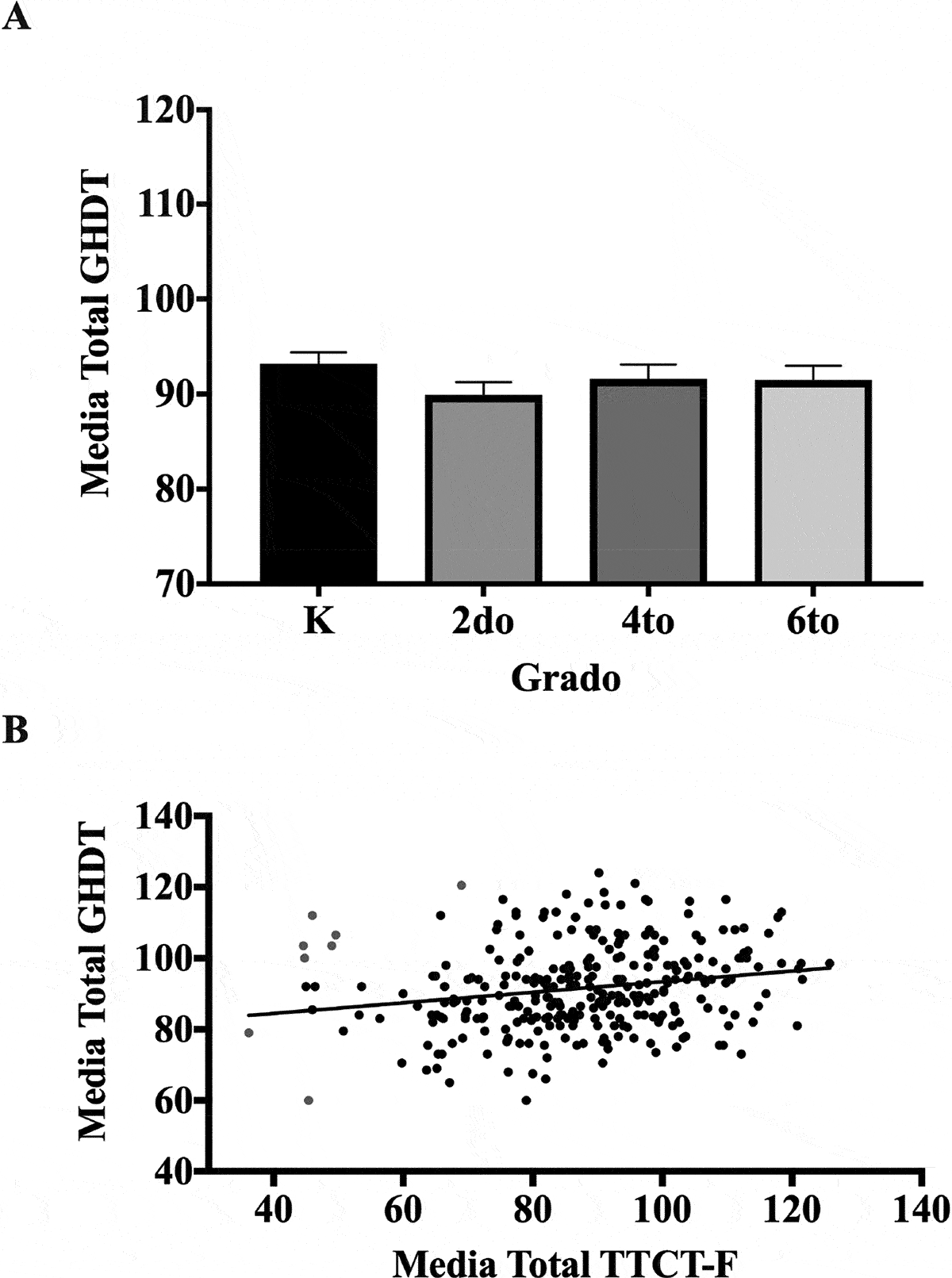
Para evaluar la relación entre pensamiento convergente y divergente, se computó un análisis de correlación bivariado de Pearson entre el puntaje total en el GHDT con el puntaje total en el TTCT-F. El análisis reveló una asociación positiva significativa entre el rendimiento en el test de pensamiento convergente y divergente (r(293) = .205, p = .0004). Para evaluar más a fondo si el vinculo entre el rendimiento en el test de pensamiento divergente y convergente se conserva después de descartar la edad como factor interviniente, calculamos una correlación parcial. El resultado mostró que la asociación positiva significativa entre el rendimiento en el test de pensamiento divergente y convergente se mantiene incluso después de controlar por el efecto de la edad de los niños (r(290) = .231, p < .0001). Finalmente, para testear si este resultado fue afectado por potenciales valores atípicos bivariados, realizamos una correlación saltada (skipped correlation en inglés) (Pernet, Wilcox, & Rousselet, 2013). Este método excluye valores atípicos bivariados y entrega una estimación más robusta de la relación entre variables. El análisis de correlación robusta confirmó la presencia de una asociación positiva y significativa entre pensamiento convergente y divergente (r = .260, intervalo de confianza de 95% = [0.16 0.35]) (Figura 3B).
Discusión
Estudios previos muestran que el desarrollo de la creatividad no sigue una trayectoria lineal. Lo que habitualmente se reporta es una relativa estabilidad del desarrollo de la creatividad durante los primeros tres años de escolaridad, seguido de un declive transitorio en 4to grado, y un repunte en 5to grado. También se han reportado declives de la creatividad en 6to grado y al iniciar la secundaria. La rigidización del contexto educativo (Kim, 2011; Torrance, 1968; Yi et al., 2013), el estrés experimentado durante periodos de transición escolar (He & Wong, 2015) y factores del neurodesarrollo como el inicio de la pubertad y la adolescencia (Barbot & Tinio, 2015; Gralewski et al., 2016) han sido propuestos como potenciales causas del declive temporal de la creatividad.
Aportando a la investigación sobre creatividad en niños pequeños, nuestros resultados contradicen los estudios previos dado que no se observó el típico declive del pensamiento divergente en 4to grado ni tampoco en 6to grado. La tendencia general observada en nuestros datos es que los párvulos y escolares de 2do grado presentan un bajo rendimiento global en creatividad, con una mejora del rendimiento en 4to grado, aumentando notablemente en 6to grado. Para un análisis más fino del desarrollo de la creatividad de niños chilenos, indagamos su rendimiento en componentes claves del pensamiento divergente, a sabre, fluidez (cantidad de soluciones diferentes ante un problema dado), originalidad (novedad e infrecuencia de las respuestas) y elaboración (producción de detalles que mejoran o perfilan de forma más precisa o profunda una respuesta). Nuestros resultados son consistentes en demostrar un bajo rendimiento en fluidez y originalidad en kínder y 2do grado, el cual mejora considerablemente en 4to y 6to grado. Por el contrario, el componente elaboración presentó un desarrollo inverso a través de los años de escolaridad, a sabre, un rendimiento medio-bajo en kínder, con un caída en 2do grado que empeora en 4to y 6to grado. En conjunto, estos hallazgos revelan un interesante patrón que diferencia el rendimiento en tareas creativas entre niños pequeños (kínder y 2do grado) y mayores (4to y 6to grado). Específicamente, observamos que ante un tarea que demanda soluciones creativas, los párvulos y escolares de 2do grado exhiben un perfil de respuesta conservadora, es decir, una tendencia a dar pocas respuestas, por lo general no muy novedosas, pero ajustadas al contexto y con un énfasis en la producción de detalles que mejoren su calidad y profundidad. Por su parte, los escolares de 4to y 6to grado presentan un perfil de respuesta algo más innovador, es decir, un impulso a dar una gran cantidad de respuestas, por lo general infrecuentes, pero poco elaboradas, de baja calidad, superficiales, asemejándose más a ‘bosquejos’ de ideas divergentes que a productos creativos terminados. Este tipo de respuestas han sido definidas previamente como ‘pseudocreativas’ (Cattell & Butcher, 1968) o ‘cuasicreativas’ (Cropley, 1997).
En cuanto al desarrollo del pensamiento convergente, observamos poca variabilidad entre los distintos niveles educativos. La trayectoria observada muestra una leve disminución en 2do grado, la que posteriormente se mantuvo relativamente estable hasta 6to grado. Para analizar este resultado es importante tener en cuenta que el pensamiento convergente se nutre de la adquisición y manejo de conocimientos generales (Cropley, 2006), los cuales son usados para configurar respuestas estándar a preguntas convencionales (e.g., ¿Qué hace que el fierro se oxide?), pero también para encontrar la mejor solución entre un set acotado de posibilidades (e.g., ¿Cuál es la ruta más conveniente para llegar al aeropuerto?). De acuerdo con Guilford (1959), esta forma convergente de resolución de problemas es lo que habitualmente evalúan los test de inteligencia tradicionales. Al respecto, estudios previos que indagan la relación entre inteligencia y creatividad señalan que ambos constructos comparten una base cognitiva común (Benedek, Jauk, Sommer, Arendasy, & Neubauer, 2014). También se ha reportado que aunque pensamiento convergente y divergente son procesos diferentes, se requiere de su integración para la generación de una respuesta verdaderamente creativa (Cropley, 2006; Runco, 2003). En línea con lo anterior, nuestros resultados mostraron que ambas formas de resolver problemas estaban positiva y significativamente asociados (Figura 3B), lo cual refuerza la idea de que pensamiento convergente y divergente son fenómenos interdependientes. En cuanto a los aspectos cognitivos comunes, se ha propuesto que las funciones ejecutivas (Benedek, Jung, & Vartanian, 2018), más específicamente el control inhibitorio, podrían estar a la base del desarrollo de estas dos maneras de resolución de problemas.
Analizados en su conjunto, nuestros hallazgos acerca del declive de la creatividad en niños chilenos antes del 4to grado conectan con la preocupación nacional e internacional por la creciente imposición de demandas de corte academicista en primera infancia (OECD, 2006; Pardo & Opazo, 2019). Esta potencial rigidización temprana de ambientes educativos se vincularía con formas más lineales, convencionales y estándar de resolver problemas, en contraposición a maneras más creativas, rupturistas y divergentes. Nosotros hipotetizamos que este énfasis en tareas estereotipadas y estructuradas en desmedro de actividades creativas y del juego como instancia de aprendizaje (Grau et al., 2019), podría estar a la base del lento desarrollo de la creatividad en niños chilenos. Se requieren nuevos estudios, específicamente longitudinales, para poder testear directamente esta interpretación y determinar si existe una relación causal entre la rigidización de la educación inicial y el lento desarrollo de la creatividad en niños chilenos.
Limitaciones
Una limitación del estudio es la dificultad para separar los efectos de edad y escolaridad sobre el desarrollo de la creatividad. Para abordar este tema, proponemos evaluar la creatividad de niños y niñas de la misma edad que estén en grados diferentes, usando un análisis de regresión discontinua para estimar por separado los efectos de escolarización y edad sobre el desarrollo de la creatividad (Cahan & Cohen, 1989; Ritchie & Tucker-Drob, 2018). Otra potencial limitación es la falta de una variable que permita estimar el grado en que educadores y profesores fomentan la resolución de problemas de forma divergente entre sus estudiantes. Para esto proponemos realizar estudios observacionales en aulas escolares, para establecer correlaciones entre las prácticas pedagógicas y el desarrollo de la creatividad. Finalmente, el uso de una sola forma de medir la creatividad puede ser vista como una limitación, si se considera las diversas formas de expresión que tienen los niños (Runco & Cayirdag, 2012). Al respecto sugerimos complementar este tipo de investigaciones con métodos distintos a los aquí empleados (Cropley, 2000) — como el uso de sus propios obras/trabajos/dibujos realizados espontáneamente en clases — para alcanzar una comprensión más completa del fenómeno.
Footnotes
This research was supported by the Associative Research Programme of CONICYT under Grant Basal Funds for Centres of Excellence FB0003. The authors thank María Francisca Aguirre, Bárbara Gajardo, Ivo Leiva and Fabiola Sánchez for actively collaborating in the study. / Esta investigación se ha realizado dentro del proyecto Basal FB0003 subvencionado por el Programa de Investigación Asociativa de CONICYT; Se agradece a María Francisca Aguirre, Bárbara Gajardo, Ivo Leiva y Fabiola Sánchez por colaborar activamente con el estudio.
Disclosure statement
No potential conflict of interest was reported by the authors. / Los autores no han referido ningún potencial conflicto de interés en relación con este artículo.
