






Abstract
MnCuNiFe damping alloy was prepared to characterise the dynamic mechanical behaviour under varied frequency by employing dynamic mechanical analyzer, optical microscopy and X-ray diffraction. The relationship of characteristic temperatures is disentangled by antiferromagnetic transition (AFT), the strain glass transition and reverse martensitic transformation. It is reported that although only f.c.c. (γ) phase exists in the alloy under solution state, twins are induced by AFT. The aged alloy shows an elevated damping capacity while the maximum internal friction decreases from 0.1 to 10 Hz and then increases to 150 Hz, demonstrating the system resonant frequency of about 10 Hz under the vibration mode of double cantilever beam.
Keywords
Introduction
Mn-based damping alloys are well known for their twin-type high internal friction (IF). There occurs thermoelastic martensitic transformation (TMT) from the high-temperature face-centered cubic (f.c.c.) structure to the low temperature tetragonal (f.c.t.) one, and the first-order phase transformation is always closely coupled with the second-order antiferromagnetic transition (AFT) from the high-temperature paramagnetic state [1,2]. It is known that dynamic mechanical analysis (DMA) is a suitable method to characterise TMT by the variation of the storage (or Young's) modulus E and IF. Generally, E decreases with the increase of temperature (dE/dT < 0), while soft mode (dE/dT > 0) resulting from the interaction between TMT (or reverse martensitic transformation (RMT)) and AFT(or paramagnetic transition) occurs in the phase transformation process during cooling or heating Mn-Cu alloys [3]. It is commonly believed that it is AFT that induces the lattice distortion of parent phase, and the lattice distortion first results in the formation of twin domain boundaries, and then induces the occurrence of TMT accompanied by the release of distortion energy [4].
However, there still exist several puzzles waiting for a solution. First, the characteristic temperatures for MnCu-based alloys derived from DMA curves are confusing. For an example, the modulus dip temperature is defined as the martensite transformation temperature (TM) in [5], while the temperature is determined as the strain glass transition temperature (Tg) in [6], moreover, this temperature is also considered as the Neel temperature (TN) because TMT and AFT are strongly coupled with each other. Second, if the temperature at the minimum modulus corresponds to TM, there should also exhibit an IF peak of TMT, as in Mn-15%Cu alloy [1]. In fact, the IF peaks always deviate from the right position of the modulus dip temperature in MnCuNiFe damping alloys. Thirdly, the high IF peak has been attributed to the movement of (011) twin boundaries of the martensite phase [7]. Previous investigations on such alloys were mainly focused on the frequencies from 0.1 to 10 Hz where IF peak decreases with increasing frequencies, however, it is found that IF increases with the increase of frequencies.
In this paper, the dynamic mechanical behaviour of a MnCuNiFe alloy in the RMT process was characterised to understand the phenomenological appearance in the mechanical spectroscopy. If the E∼T curve is differentiated by temperature, and the maximum differential temperature is determined as TN, the problem of characteristic temperatures is smoothly settled subsequently. Then, we can safely define the modulus dip temperature as Tg, a frozen short-range ordered temperature between TM and TN[8,9].
Experimental
The damping alloy (Mn-20.53Cu-4.61Ni-1.9Fe at.-%) was prepared by induction-melting the pure metals in argon atmosphere. The ingot was forged and rolled to a plate of 20 mm thick. After solid solution treatment at 1173 K holding for 2 h in vacuum (0.1 bar), the plates are oil-quenched, and then are further aged at 708 K in a N2 atmosphere (0.4Pa) for 6 h.
A dynamical mechanical analyzer (DMA, model Q800, TA instrument Co. Ltd.) was used to measure the temperature-dependent damping behaviour in a Dual Cantilever mode. The damping capacity was characterised by tan δ, where δ is the phase lag between stress and strain when the specimen is subjected to cyclic loading. Samples with dimensions of 1 × 10 × 60 mm3 were spark cut from the plates under the solution state and the aged state, respectively. They were carefully prepared by mechanical polishing to avoid the formation of surface strain as well as the introduction of hydrogen. The DMA spectra were obtained by heating the sample within the temperature range from 143 to 523 K at the heating rate of 0.083 K s−1 under the strain amplitude of 5 × 10⁻⁵, and IF (Tan δ) and storage modulus (E) of varied frequency were measured simultaneously as a function of temperature (T). The IF peak in the DMA spectra was analysed by double-peak Gaussian fitting by means of the peak differentiation-imitating analyzer of ORIGIN.
All specimens for metallographic observation were etched after mechanical polishing by using a mixed solution of alcohol, phosphoric and glycerol with the ratio of 2:1:1. DM6000 model Leica optical microscopy was employed to observe the metallographic microstructure. The phase constituents of specimens were identified by X – ray diffraction (XRD, Rigaku SmartLab X-Ray diffractometer, operated at 30 kV/30 mA) with Co Kα radiation, and all the diffraction profiles were obtained in continuous modes at a scan speed of 2° min−1.
Results and discussion
Dynamic mechanical spectra
Figure 1 shows the dynamic mechanical spectra of the prepared alloy specimen underaged state. It can be seen that the curves of E and tan δ show highly correlative dependence of T during the heating process. E rapidly decreases to a minimum value (Tg) and then abruptly increases (TN) to a maximum with the increase of temperature. Tan δ exhibits obvious double peaks under the frequency of 0.1 Hz, generally, the double peaks are assigned to the martensite twin boundary peak (Ttw) and the RMT (TM) one, respectively. With the increase of the frequency from 0.1 to 10 Hz, the peak values significantly decrease, and then increase robustly from 10 to 150 Hz, the IF decreases from about 0.0422 at 0.1 Hz to 0.0214 at about 10 Hz, and then increases to 0.0445 at 150 Hz. Meanwhile the double peaks gradually evolve into single one. It indicates that the resonant frequency for the alloy is about 10 Hz under the measurement system.
Tan δ and E dependence of different frequency for specimen underaged state.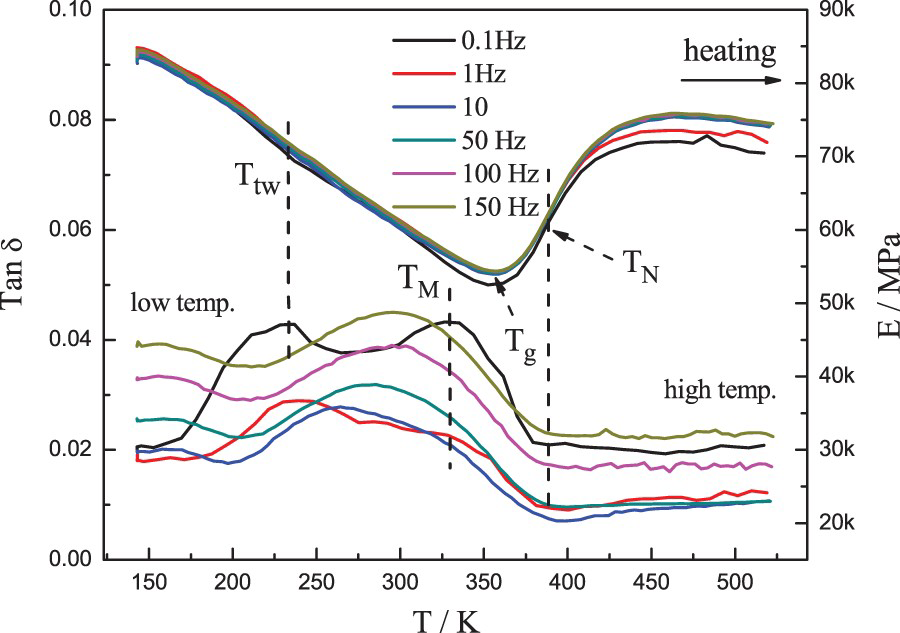
Figure 2 represents the dependence of dE/dT on T with different frequencies underaged state. It can be seen that the peak positions of different frequencies remain unchanged and keep at about 388 K, indicating that frequency little affects the soft mode process. Tg corresponding to different frequencies is also represented in Figure 2, which is about 356 K, lower than TN. As in the reverse transformation process, Tg might make an f.c.c. structured preparation for the coming paramagnetic transition.
dE/dT∼T curves of different frequencies underaged state.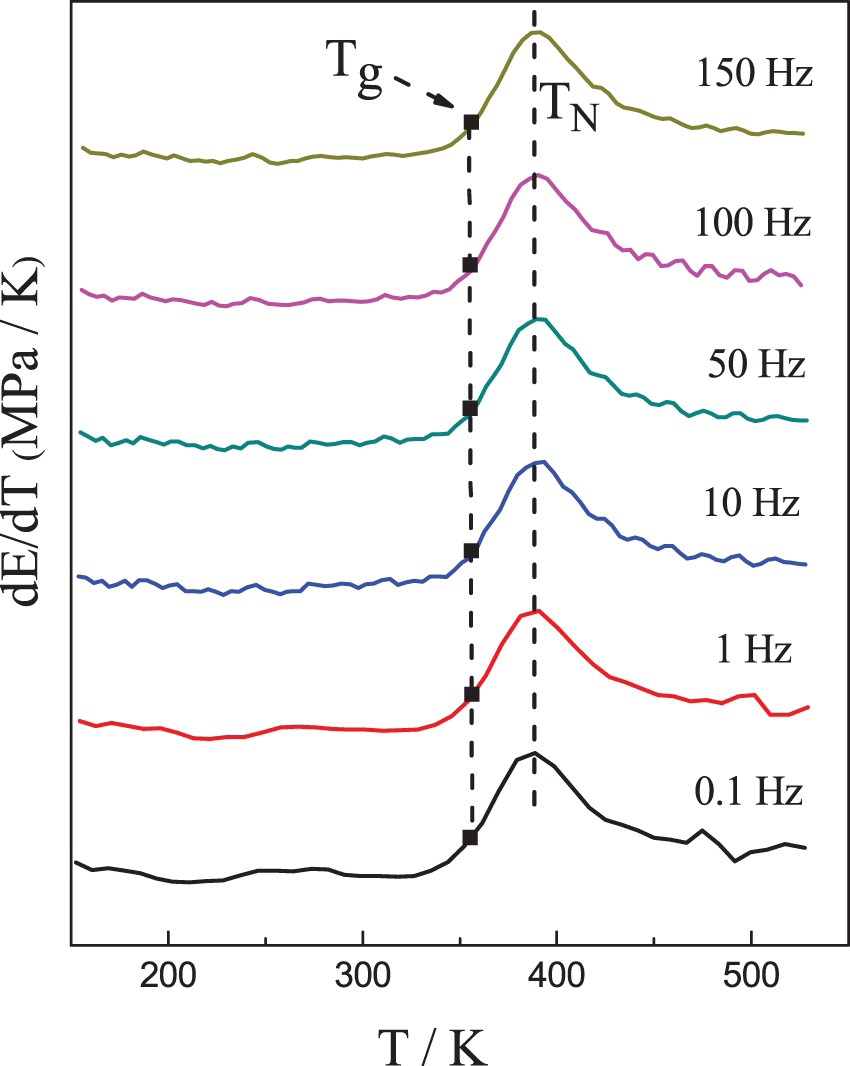
The peaks of Tan δ shows a characteristic of extraordinary asymmetry, and the low temperature IF is much higher than the high-temperature value. As temperature decreases to below Ttw, there is a depression of IF owing to the loss of the thermal activation associated with the motion of the twin interface [10], and then re-entrant spin-glass behaviour take place below 170 K and another IF peak appears subsequently at lower temperature [11]. Therefore, a supplementary peak is employed to cope with the asymmetry in the multi-peaks gaussian fitting process.
Figure 3 shows the results of double-peaks fitting approach to the damping capacity profiles. As shown in Figure 3(a), the damping profile is divided into the martensite twin peak and RMT peak. Figure 3(b) represents the positions of the separated double peaks, showing that the twin peak shifts to high temperature with increasing frequency. It can be seen that TM is basically constant, and TM is about 328 K. Based on Arrhenius relation, the activation energy of martensite twins is calculated to be 6.64 × 10⁴ J mol−1, higher than that of M2052 alloy in Ref. [12], which is estimated by using the three frequencies of 0.1, 1 and 10 Hz.
Approaching of double peaks fitting results, (a) the damping profiles of 10 Hz (Adj. R-Square 0.99825); (b) positions of twin peak and RMT peak.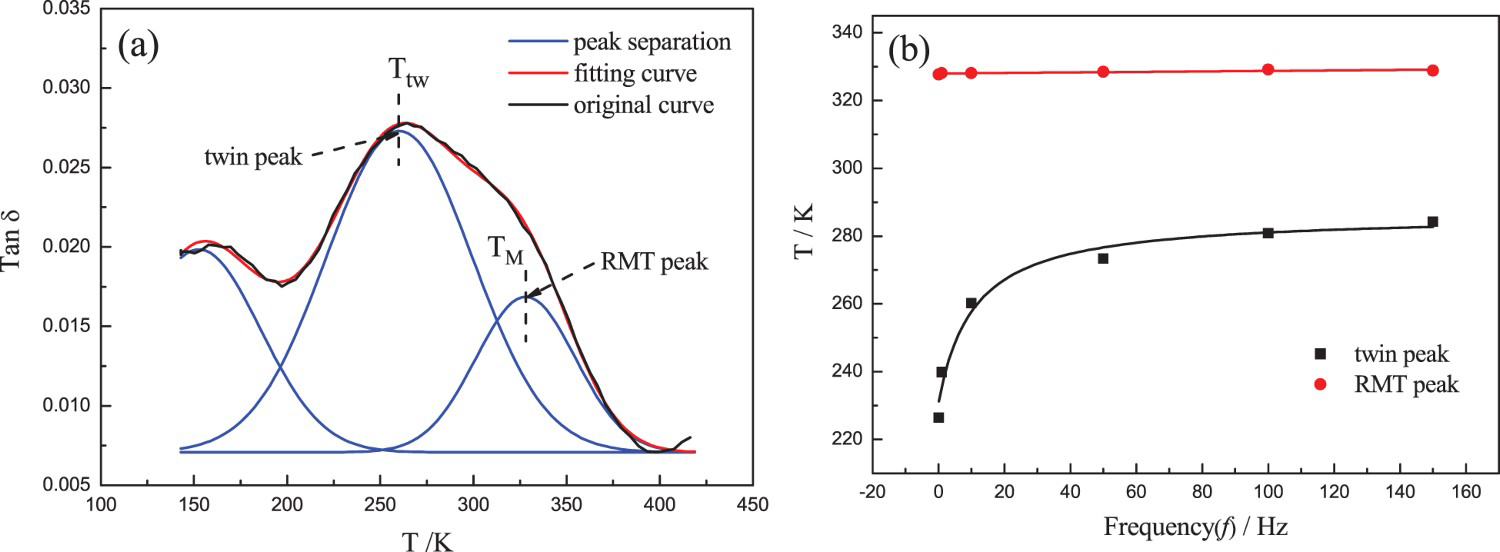
Figure 4(a) shows the dynamic mechanical spectra of the specimen under solution state. It can be seen that the storage modulus also shows a slight soft mode process while there exists only single peak on the damping curve, however, the maximum value has slumped by over 100% in comparison with that of aged alloy. Obviously, the soft mode is owing to AFT. Tan δ also decreases from 0.1 to 10 Hz, and then increases to 150 Hz. Figure 4(a) represents the dependence of dE/dT on T with different frequencies. It also can be seen that TNremains unchanged and keeps at about 325 K under different frequencies. Tg is about 304 K, lower than TN. The single peak in Figure 4(a) shifts to high temperature with increasing frequency, as shown in Figure 4(c), which is in consistent with the characteristic of twin relaxation behaviour. Based on Arrhenius relation, the activation energy of this kind of twins can be calculated to be 6.08 × 10⁴ J mol−1, which is lower than that of martensite twins in aged alloy.
DMA characteristics of the specimen under solution state with different frequencies, (a) Tan δ and E curves; (b) dE/dT∼T curves; (c) the peak position.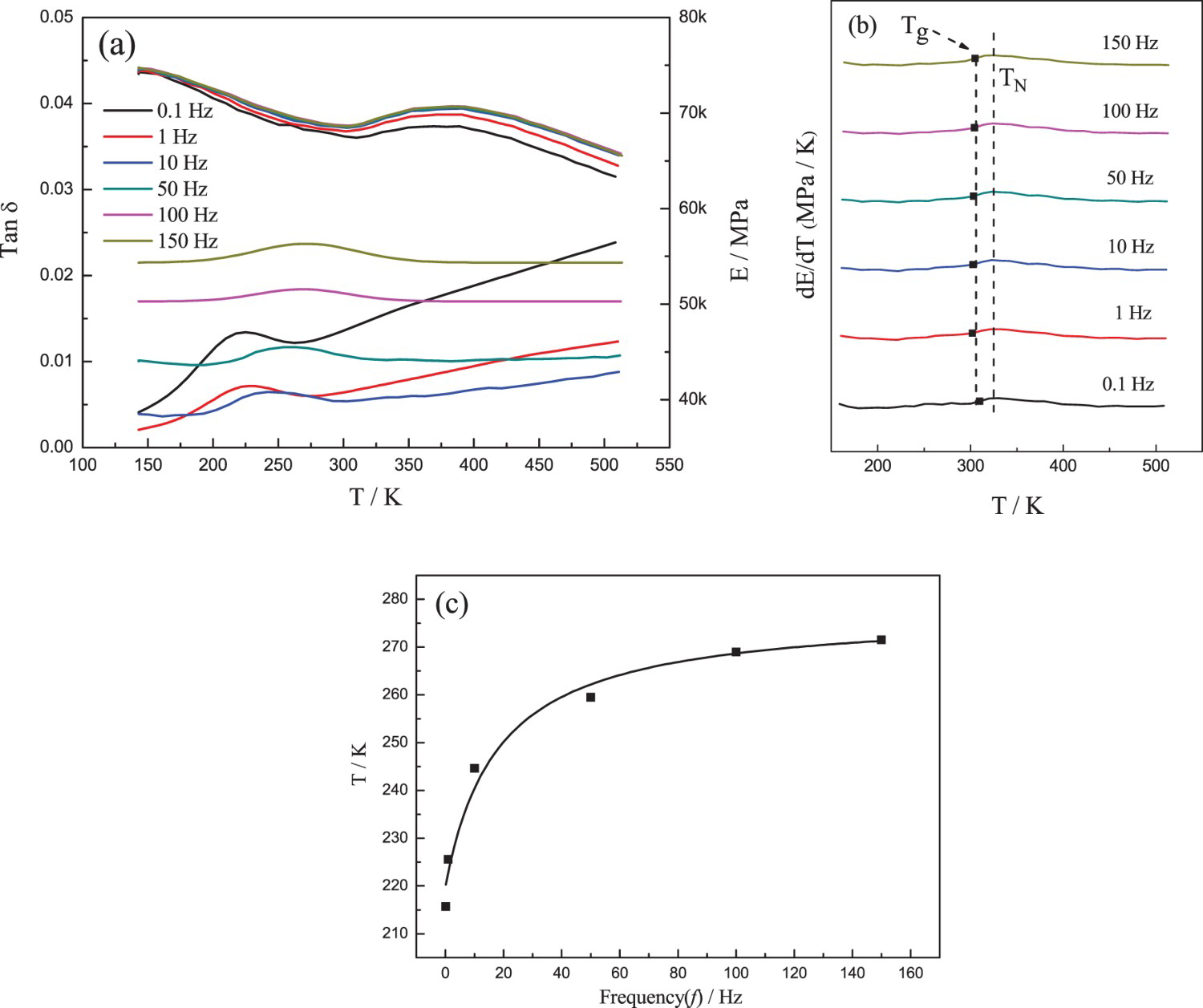
The difference of TN between aged state and solution state is attributed to the difference in heat treatment. Specifically, after aging in the two-phase solution region, Mn-rich regions and Cu-rich regions form through spinodal decomposition, and the Mn-rich regions is associated with TMT. Hence, the aging treatment causes AFT and TMT to occur at higher temperatures.
Microstructure
Figure 5 shows the metallographic micrographs of MnCuNiFe alloys subjected to different heat treatments. Figure 5(a) shows the grain size of the solution alloy is about 31.3 µm and the twin microstructure can be identified with a width of about 5–15 µm, as seen in the inset. It proves that twins have been induced by AFT, and leading to a twin boundary peak in Figure 4(a). After aging, the grain size becomes larger, meanwhile, the distribution of grain size is much homogeneous, and the average value is about 105.8 µm. The martensite twin can also be found with a width of about 20 µm, as shown in the inset of Figure 5(a). During the TMT, one f.c.c. parent orientation may produce 36 f.c.t. variants, 24 of which are twining varians [1], therefore, the martensite twin is mainly the morphological appearance of martensite.
Metallographic micrographs of MnCuNiFe alloys subjected to different heat treatments: (a) solid solution, (b) aging.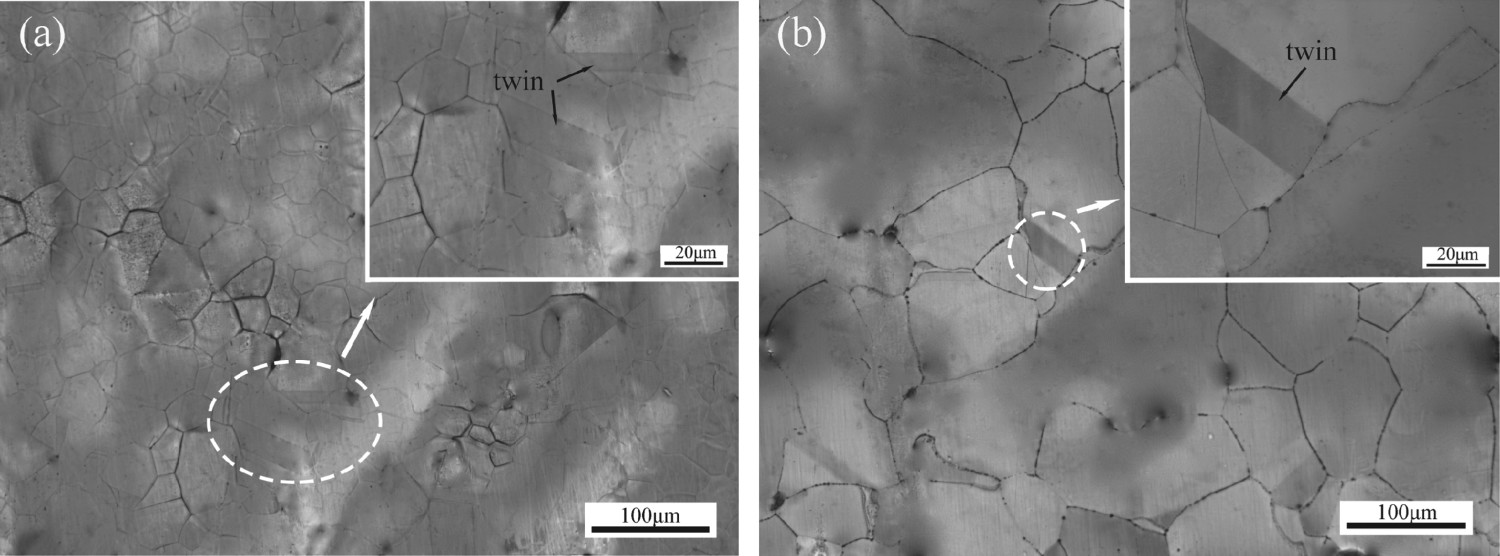
XRD results
Figure 6 represents the XRD patterns of the MnCuNiFe alloys. It can be seen that there exhibits only f.c.c. (γ) phase in the specimen under solution state (Figure 6(a)), and then it is confirmed that twins in Figure 5(a) are exactly f.c.c. parent twins. Figure 6(b) shows that there exists a clear split of {220} characteristic peak, as shown in the inset, and f.c.c. (γ) phase coexists with f.c.t. (γ′) phase, which is caused by aging.
XRD patterns; (a) solution state alloy; (b) aged state alloy, clear splits of {220} characteristic peaks at a high-magnification in the inset.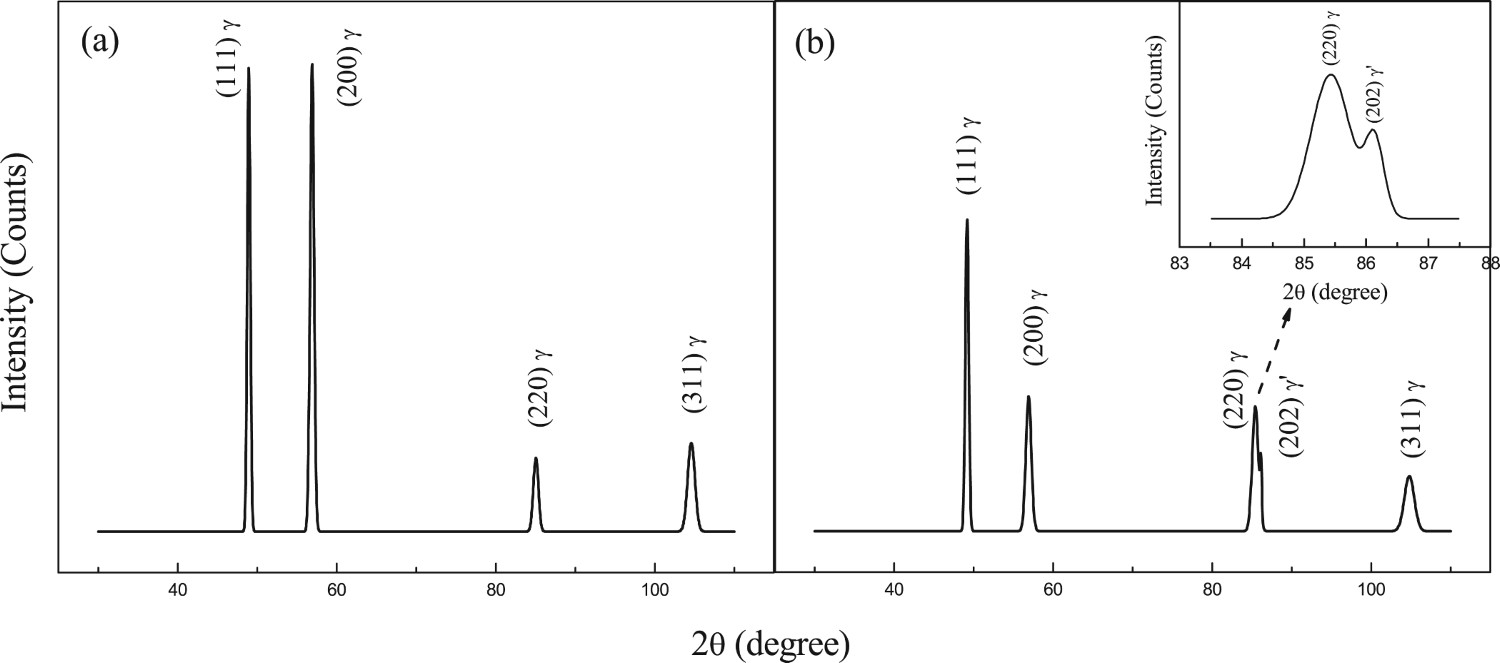
It is known that the occurrence of martensitic transformation is accompanied by the instability of lattice. The c axis of γ′ phase lattice is compressed and the a axis is elongated, resulting in the c/a ratio less than 1 (c/a < 1) [13], and according to Figure 6(a), c/a = 0.987, which shows the difference of lattice between martensite and parent phase is very small. Therefore, the f.c.t. martensite twins are hardly identified from the parent twins, as shown in Figure 5(a,b). However, the responses of the two twins to the applied stress are different.
The dislocation density (ρ) can be calculated by XRD-WH method [14], and the equations describing the relationship between δ, 2tanθ, and ρ can be introduced:


As shown in Figure 7, δ is linear with 2tanθ, and the slope of the line represents the strain, which is determined to be 0.249% in solution state and 0.483% in aged state, and then ρ is estimated to be ρ1 = 1.44 × 10¹⁵m2 and ρ2 = 5.39 × m2, respectively. It is clear that the dislocation density of the aged alloy is nearly four times that of the solution alloy, which keeps f.c.c. parent structure. Obviously, it is the abrupt change of lattice constants during TMT in aged sample that leads to the high increase of dislocation density.
The relationship between δ and 2tanθ.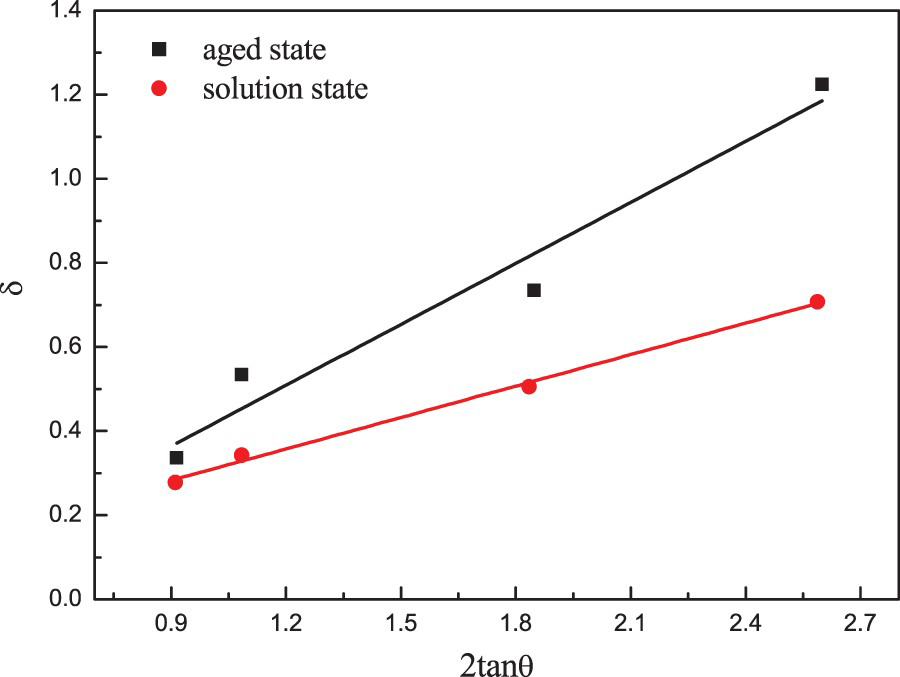
IF characterisation
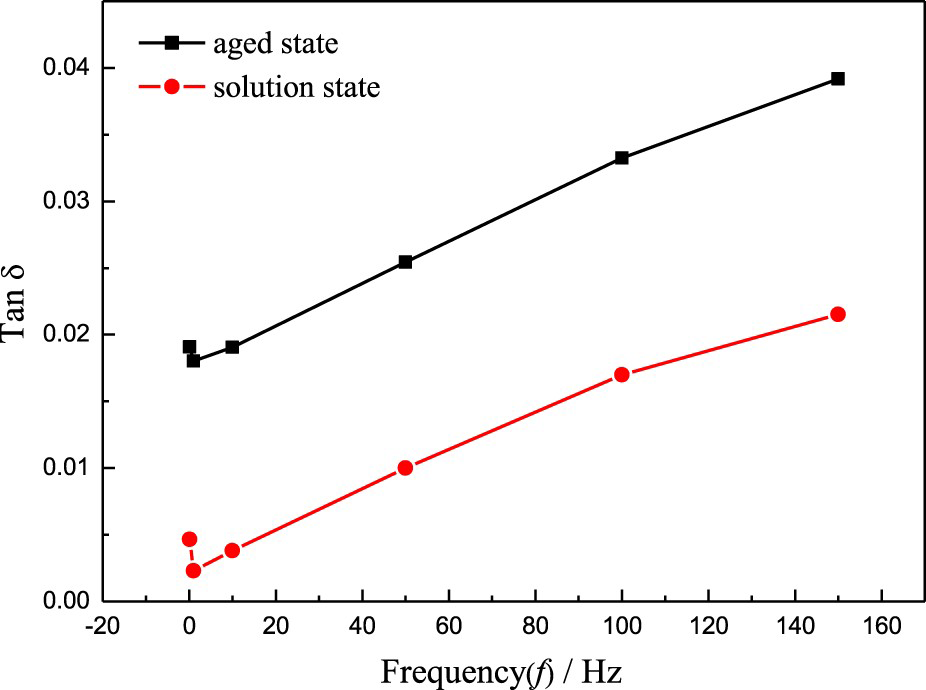
When attention is paid to the IF on both sides of low temperature (150 K) and high temperature (450 K), similar variation tendency is obtained as shown in Figures 8–9. The values of solution state are very close to that of aged state at 450 K (Figure 8), and the IF curves of both alloys show the characteristic of Check function dependence of frequency. However, the aged state shows much higher IF than the solution state at 150 K (Figure 9). For the solution state, it keeps the f.c.c. structure from 150 to 450 K, which can be seen in Figure 6(a). As for aged alloy, the high temperature parent phase is of a paramagnetic f.c.c. structure, while the low temperature martensitic phase is of antiferromagnetic f.c.t. structure [15]. The f.c.t. martensite transformation in aged alloy at low temperature (150 K) produce a large number of phase interfaces, which increases energy consumption during movement of the twin boundaries, thereby increasing damping capacity and making IF higher. On the other hand, since the dislocation density of aged alloy is much higher, according to the G-L theory [16], dislocation movement will occur inside the material when external vibration applies, causing relaxation of stress and consumption of mechanical kinetic energy. These are the reasons why the IF value of aged alloy at low temperature is much higher than that of solution state. However, after continuous heating into the high temperature (450 K) f.c.c. state, the aged alloy undergoes a RMT, and the structure is the same as the solution alloy, both austenitic structured specimens show identical characteristic of resonant frequency.
The high temperature IF dependence of frequency underaged and solution states at about 450 K, showing the characteristic of Check function. The low temperature IF dependence of frequency underaged and solution states at about 150 K.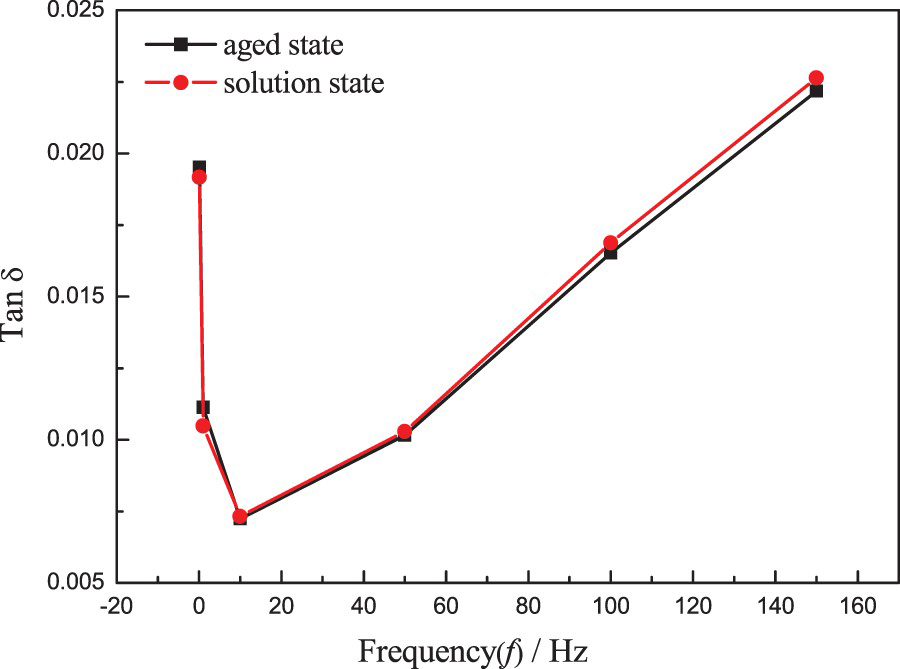
As to the contributor of IF factors, in addition to the dedication of f.c.t. martensitic phase and twin boundary, vacancy, solute atom, dislocation and grain boundary shall be accounted for.
Then, phenomenologically we assume the IF at 450 K has the form:  where k1 is of dislocation kinds while k2 the boundary kinds of constants, and C is a system variable of the rest dedicators.
As for the dislocation damping [17]:

As for the boundary type damping, the equation describing the IF of TMT may be introduced [18]:
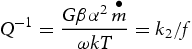
 the corresponding volume of phase transformation product per unit time, k Boltzmann constant, T phase transformation temperature.
At the present case:
k2 = 100k1
The equation exists at the turning point of resonant frequency.
Then, 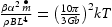 reflects the coordination relationship between dislocation and boundary parameters.
As for MnCu-based alloys, G, b, k and T can be easily determined. α can be considered as the lattice distortion of about 0.0189 [19]. The value of ρ has been determined to XRD results and the order of L is about 10−6–10−4 cm and that of B is about 10−4 g cm−1 sec−1 [20,16]. Then, the value β and  may be estimated according to the coordination equation, and the transformation parameters,
  , might be endowed with different physical meanings, however, further work need to be conducted to disclose the internal mechanism of these phenomenological characteristics.
Conclusions
The Mn-20.53Cu-4.61Ni-1.9Fe at.-% alloy has been prepared under solution treated and aged state, respectively. The dynamic mechanical behaviour is characterised under varied frequencies. The TN, Tg and TM are determined as 388, 356 and 328 K in aged alloy, respectively, while the maximum internal friction decreases from about 0.0422 at 0.1 Hz to 0.0214 at about 10 Hz, and then increases to 0.0445 at 150 Hz. As for the solution alloy, TN and Tg are 325 and 304 K, respectively, however, internal friction value sharply decreases. The resonant frequency for both alloys is about 10 Hz under the vibration mode of the double cantilever beam.
Only f.c.c. (γ) phase exists in the alloy under solution state while f.c.c. (γ) phase coexists with f.c.t. (γ′) phase underaged state. The dislocation density of aged alloy is estimated four times higher than that of solution state. The grain size increases from about 31.3 to 105.8 µm after aging treatment, and twin microstructure is observed in both alloys, indicating that AFT had induced the formation of twins. Twin relaxation behaviour is observed in both alloys. The activation energy is about 6.08 × 10⁴ J mol−1 for parent twins in solution state, and 6.64 × 10⁴ J mol−1 for martensite twins in aged state, respectively.
Footnotes
Disclosure statement
No potential conflict of interest was reported by the author(s).