







Abstract
Space solid lubricants should undergo serious tests, such as high pressure, high vacuum, strong radiations and so on. Diamond-like carbon (DLC) films show potential applications in space because of low friction in vacuum. However, the short sliding lifetime should be a critical issue, and many methods are used to improve it. This paper highlights the development and broad potential of DLC films with special structures used in vacuum. The frictional behaviours of DLC-based films in other space conditions, such as radiation and extreme temperatures, are also addressed. Furthermore, the tribological performances and related mechanisms under different environments are discussed. Finally, some open issues concerning space applications are discussed.
Keywords
Introduction
Throughout human history, humanity's fascination with space has never waned. In particular, since the first man-made Earth satellite Sputnik-1 missile entered space, mankind has entered a new area of space exploration. At present, most satellites mainly execute missions in low earth orbit (LEO), medium earth orbit (MEO), geosynchronous earth orbit (GEO), and high earth orbit (HEO). As shown in Figure 1, variation with altitude on Earth orbits reflects the different environments. Nearly 85% of active satellites operate in LEO. These satellites in LEO experience harsh and dynamic threats such as atomic oxygen (AO), ultraviolet (UV) radiation, ionising radiation, high vacuum, thermal cycles, and so on [1,2]. A successful spacecraft requires accurate and durable operation of its component parts to ensure its stability. Thus, the tribological properties of those parts become extremely meaningful.
The challenging environment in outer space.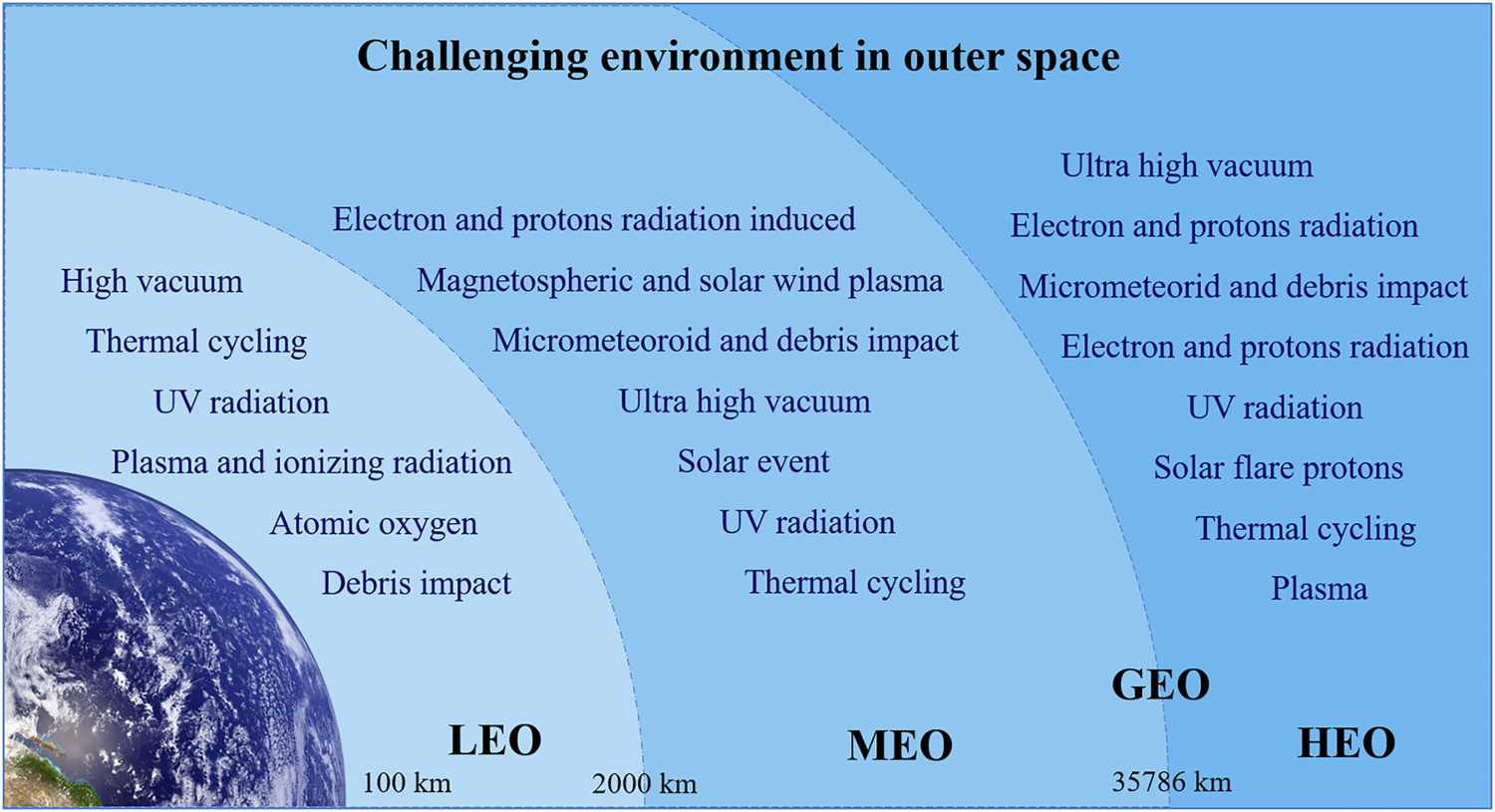
The collapse of a considerable proportion of the frictional components is related to the failure of lubrication in space because of the harsh space environment. Traditional liquid lubicants, such as perfluoropolyethers (PFPE), silicone oil, refined mineral oil, polyalphaolephines (PAO), silahydrocarbons (SiHC), and multiply-alkylated cyclopentanes (MACs), undergo phase transformation and structure change in space. And semisolid lubricants consist of a liquid lubricant and a thickener, and thickeners used consist of soaps or fine particles of a lubricating additive, such as polytetrafluoroethylene (PTFE) or lead. They are sensitive to temperature changes and exhibit low load-carrying ability, oxidation resistance, and corrosion. The lubrication problems may also arise from super-low ambient pressure, thermal cycles, microgravity, and various radiation. For example, low pressure and high temperature contribute to the evaporation of the liquid or semisolid grease lubricants, and it is necessary to design a complex system for their storage, replenishment, supply, and sealing for their long-term service life [3,4]. Furthermore, the limited load capacity and poor adaption to the service environment under harsh space conditions make them only applicable to some limited components. However, solid lubricant applied as protective film can be used in precise parts and in some places not convenient or possible to use a liquid or a grease lubricant. However, the traditionally solid lubricant, such as MoS2, Ag, and graphite, which were soft and easy to be oxidised, cannot meet the harsh requirement in the space environment. Different from the traditional solid lubricant, diamond-like carbon (DLC) films have attracted much attention for their potential usage in space lubrication owing to their excellent properties, such as high hardness, ultralow friction coefficient, and high chemical inertness [5-10].
DLC coating is a metastable amorphous substance containing sp3- and sp2-carbon, some are even contained hydrogen (Figure 2). Generally, as the ternary phase diagram of sp2, sp3, and hydrogen content shows, DLC can be divided into hydrogen-free DLC, which includes tetrahedral amorphous carbon (ta-C) and amorphous carbon (a-C), as well as hydrogenated DLC referred to as hydrogenated tetrahedral amorphous carbon (ta-C:H) and hydrogenated amorphous carbon (a-C:H). Hydrogen was a key element in the DLC film, and it can exist in three manners, including binding with C atoms, atomic and molecular states. During the sliding, the hydrogen in the bulk can overflow to the surface and saturate the dangling bond on the surface to achieve a low coefficient of friction (COF) in inert environment.
Ternary phase diagram of DLC respect to sp2, sp3 and hydrogen. Reprinted From ref. [128]. ©2002 Elsevier Science B.V.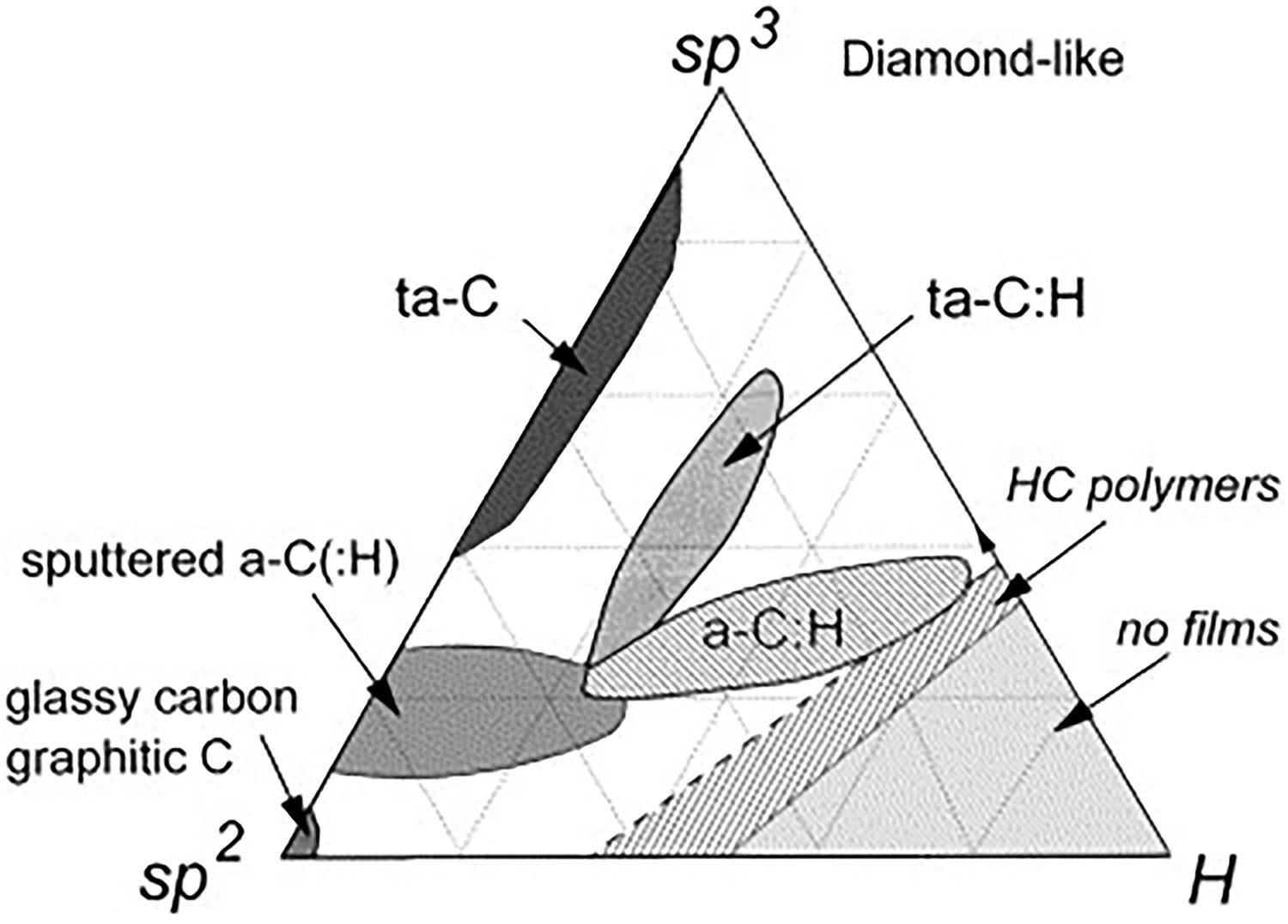
Nevertheless, pure DLC film has some limitations to its usage in space, such as a short sliding lifetime, poor radiation resistance, and a weak structure at high temperature. Additionally, the properties of the DLC-based film heavily depended upon its structure, sp3C/sp2C ratio and hydrogen content [11,12]. Herein, a variety of DLC-based films, including nanocomposites, nanomultilayers, two-dimensional lubricants (graphene, MoS2, etc.)-contained, textured, solid–liquid composite films, are designed to meet severe lubricated environments related to space [13-15].
The aim of this paper is to give a perspective view on the development and broad potential of DLC-based films used in severe environments related to space, including high vacuum, AO radiation, UV radiation, and extreme temperature. Meanwhile, the tribological behaviour and related mechanisms are discussed. Furthermore, challenges and opportunities of the DLC-based film are put forward.
Research status of DLC film
During the last century, DLC film (contained hydrogen) has proved to show low COF and wear in an inert environments (such as N2 and Ar), but relatively high COF and wear in active environments (such as O2 and air). While the DLC films without hydrogen showed opposite behaviours in these conditions. The differences can be interpreted by the hydrogen saturated theory well. Therefore, it was deduced the DLC film (contained hydrogen) may maintain low friction and long sliding lifetime in vacuum. However, it was found out that the reality is different from the expectation. Therefore, researches are carried out to investigate the tribological properties of DLC film in vacuum. Fortunately, many schemes and methods are performed to achieve low COF and long sliding lifetime in vacuum. Accompanied with other excellent properties, DLC-based film shows high hardness, good corrosion resistance and chemical inert, it was regarded as the potential solid lubricant used in space. Therefore, the tribological test in various conditions (besides vacuum) related to it were performed in these decades, including radiation (AO, UV, and ionising radiation) and extreme temperatures. The following will give a detailed description in all these aspects.
Properties in high vacuum
The pressure in the high-space orbit is 10−11 Pa, and the pressure in the near-earth orbit is 10−5–10−7 Pa. However, due to the technology limitations, researches are mainly focused on the tribological properties of DLC films under high vacuum (10−3–10−6 Pa). High vacuum may cause a high contact temperature at the sliding area, negative pressure in the DLC-based film and even structural changes, all of which are likely to cause adhesion, shearing, and abrasion in turn [16]. For space applications, high friction and wear of a-C and ta-C films are insurmountable obstacles [17]. The DLC film with sufficient hydrogen content maintains an ultralow COF but an extremely short lifetime in vacuum [18-22]. This was an abnormal phenomenon. Many researchers try to explain this mechanism, generally, the low COF was regarded as that the sufficient hydrogen in the film can supply hydrogen atoms to saturate the dangling bonds on the C at the surface. During the frictional sliding, there was transfer film (mainly composed of C–H bond) formed on the counterpart in the vacuum. Then the repulsive effect between two hydrogen atoms at the counterface facilitates to achieve super-low friction. The short sliding lifetime may derive from with negative pressure in the DLC-based film because of hydrogen loss in vacuum, accompanied with high contact temperature at the sliding area, and even structural changes. However, there is no consensus on the mechanism of the short life and achieving longevity while keeping low friction has become a goal for researchers for many years.
DLC film with high-hydrogen content (or fewer dangling bonds)
The obstacle to the low friction of the DLC film is interaction on the interface because of the mass of dangling bonds on the surface. In high vacuum, there are few other species to terminate carbon σ-dangling bonds, unlike those in ambient air [23,24]. Consequently, high-activity carbon σ-dangling bonds will cause severe adhesion in high vacuum. Theoretically, it is believed that some nonmetallic elements (such as H, O, Si, F, S, N, etc.) have the ability to neutralise this negative influence.
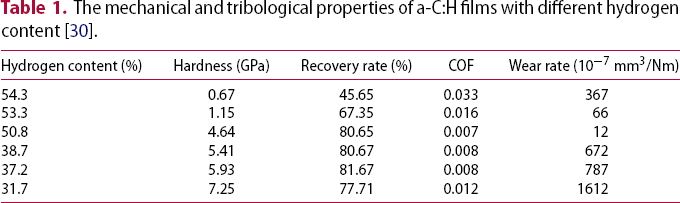
H plays an essential role in determining the tribological properties and the structure of DLC films has been comprehensively lucubrated. It may bond with carbon or exist in atomic and molecular states in the film. It is generally convinced that surface bonded H suffers great losses during friction. Interior unbonded hydrogen is considered a supplemental source to offer extra hydrogen atoms for surface passivation during sliding. The tribological properties of hydrogenated DLC films in vacuum are dependent on hydrogen content. It appears that films with high-hydrogen content show ultralow friction coefficients compared with those with low-hydrogen content. For films with a high-hydrogen content, approximately above 40 at.-%, carbons are inclined to form polymer-like structures, also called PLC, with hydrogen saturated carbon dangling bonds [25]. This passivation effect decreases the interaction at the counterface and thus gains low COF [26]. Lugo et al. [27] deposited hydrogenated DLC films using a pulsed DC PECVD system and controlled hydrogen content by altering deposition voltage and found films with high-hydrogen content (40 at.-%) have lower COF (0.014) compared with higher COF (0.38) of low-hydrogen film (25.52 ± 0.82 at.-%). Kuwahara et al. [28] combined atomistic simulation and vacuum tribometry to reveal atomic-scale structure of the super-lubricated a-C:H surface during friction in vacuum. It was found that hydrogen content on the counterface plays a major role in vacuum friction. Cold welding resulted in high COF when hydrogen content is super low (<3.7 at.-%). At 3.7 at.-% to 22 at.-%, a decreased COF is mostly triggered by a mixed passivation regime, where cold welding, aromatic graphitoid and hydrogen-passivated patches coexist. Complete hydrogen passivation contributed to superlubricity while further increasing hydrogen content (> 22 at.-%). Figure 3 suggests that a higher hydrogen content seems beneficial to realise low COF in vacuum [29]. Yu et al. [30] designed various hydrogen content from 31.7 at.-% to 54.3 at.-% by altering ion energy using Ion beam deposition (IBD). COF decreases when hydrogen content is less than 50.8 at.-% (0.007) and then increases as hydrogen content increases. Meanwhile, the lowest wear rate (1.2 × 10⁻⁶ mm3/N m) was obtained, indicating a durable service life. Sufficient mechanical stiffness is also necessary for DLC films to gain optimised self-lubricating ability in high vacuum, while high-hydrogen caused degradation in mechanical properties as Table 1 shows. Accordingly, DLC films with about 30–50 at.-% hydrogen content work optimally in high vacuum.
COF of a-C:H films with different hydrogen content. The mechanical and tribological properties of a-C:H films with different hydrogen content [30].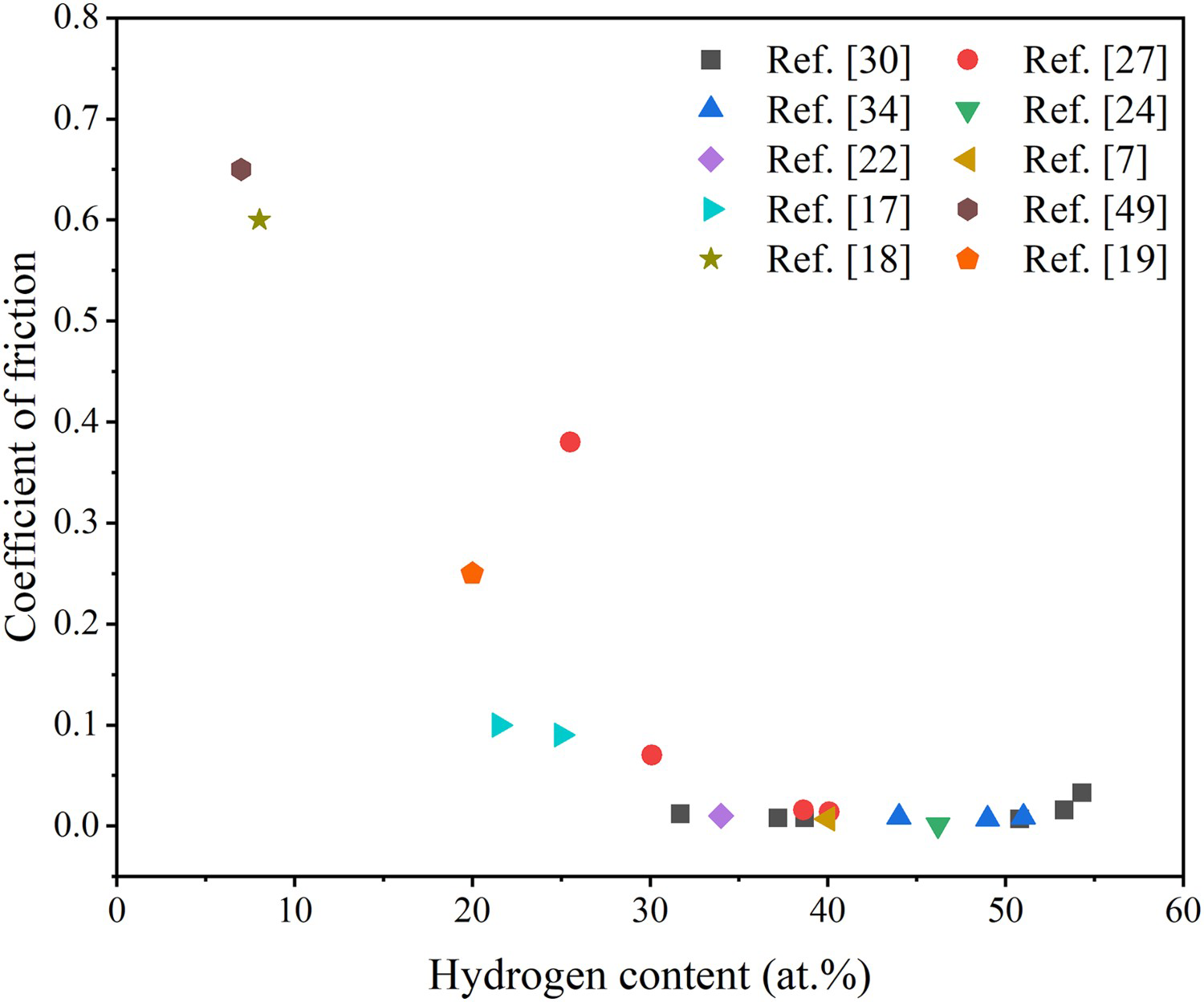
According to our previous discussion, tribological properties of a-C:H films are not only determined by their chemical composition but also their mechanical properties which refer to an internal crosslinking network. Some studies pointed out that chemical wear also caused a tremendous impact in vacuum, especially for high-hydrogen-containing a-C:H films [31,32]. The triboemission of various hydrocarbon molecules generated by dissociation of connective bonds between the surface hydrocarbon group and the substrate during the forceful collision of surface asperities from the DLC friction interface increased and induced both chemical and atomic-scale mechanical wear of DLC as the hydrogen content increased, causing notable chemical wear with a rate of approximately 2.332 × 10⁻⁸ mm3/N m. This result suggested that the wear shows a hollow hydrogen concentration dependence, and decreasing the hydrogen content causes an increase in sp3C and suppresses the triboemission of hydrocarbon molecules, with an optimal hydrogen concentration of approximately 20% for wear reduction. In addition, the molecular structure of the a-C:H film in terms of crosslinking and branching characteristics are additional significant factors to be considered [33]. Cui et al. [29] were convinced that a looser structure network deposited by using C2H2 triggered a shorter service life (28,000 cycles) in vacuum compared with a denser network film with a longer service life (100,000 cycles) deposited by CH4 [34]. In summary, it is concluded that DLC films with relatively high-hydrogen content and dense networks, in terms of high sp3-hybridised carbon content and crosslinking structure, would be suitable for application in vacuum environments.
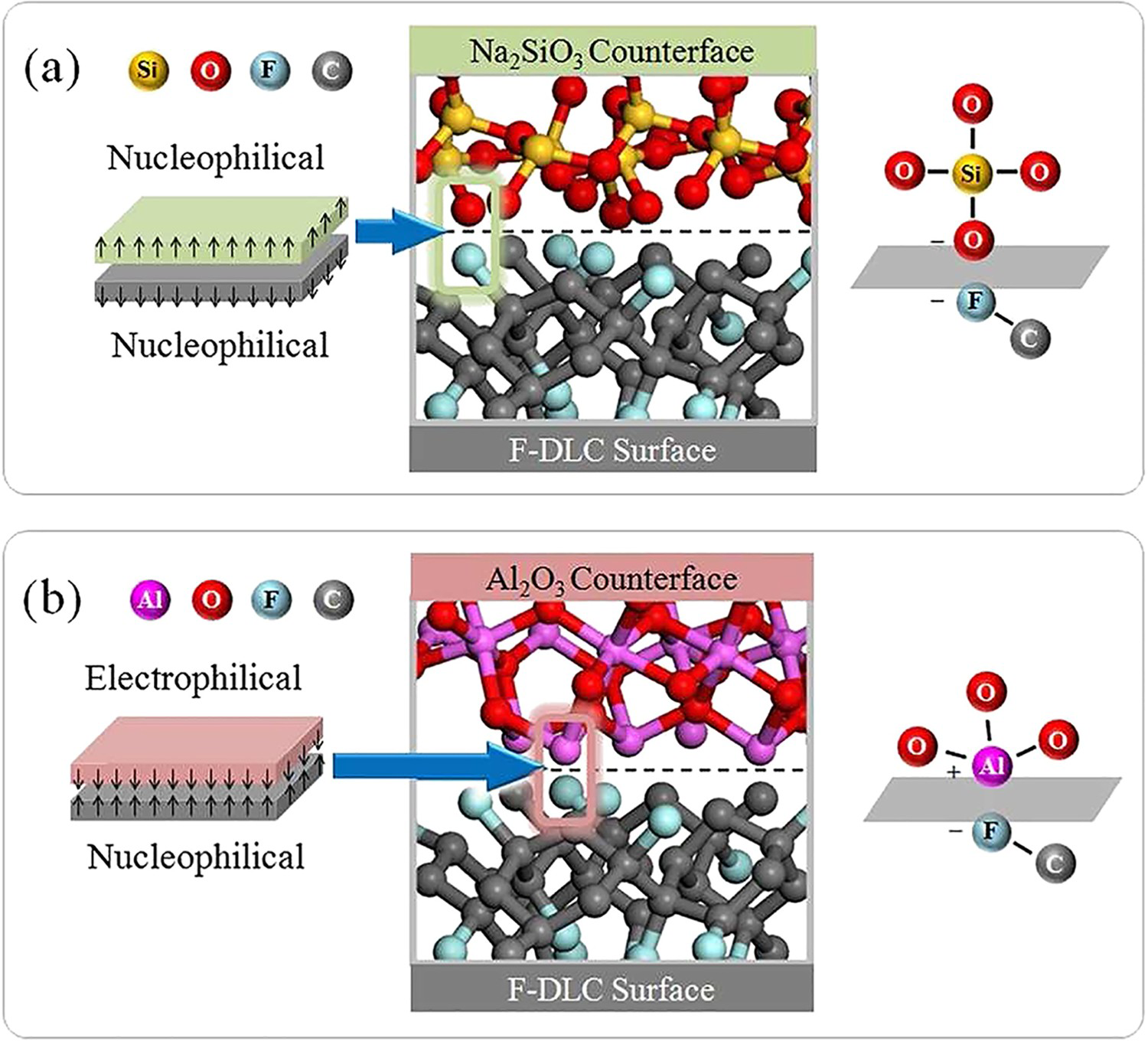
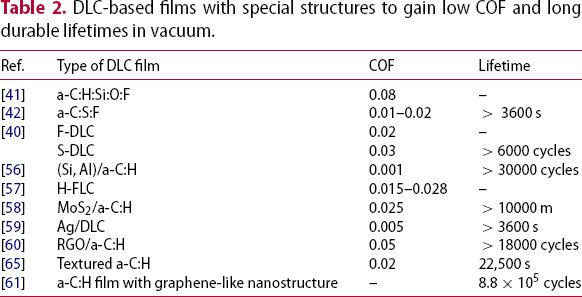
Other dopants have been increasingly investigated in recent years and have gained pleasant results. The related mechanism is shown in Figure 4. For example, F is deemed as a bright candidate for surface modification of DLC films as H behaves [35]. The superiorities are that larger electronegativity F atoms are conducive to reducing the surface energy, and a greater repulsive force exists between two F-terminated counterfaces, which contributes to a lower friction [36,37]. Li et al. [38] compared the friction behaviour of F-containing DLC film against glass and Al2O3 ball. They proposed interfacial nucleophilic/electrophilic electrostatic interaction based on the acid–base theory to account for this opposite phenomenon as shown in Figure 5. The repulsive force of nucleophilic/nucleophilic counterparts (glass/F-DLC) leads to lower COF (0.14). Contrarily, the attractive force of nucleophilic/electrophilic counterparts (Al2O3/F-DLC) leads to a higher COF (0.2). Fontaine et al. [39] observed a super-low friction coefficient of an F-DLC film (<0.005) under ultrahigh vacuum (10−7 Pa). However, Moolsradoo et al. [40] found a quick failure of F-DLC in vacuum despite a low COF (0.02) and longer friction endurance with a higher COF (<0.14) under ambient air. In particular, Sen et al. [41] examined the tribological properties of a-C:H:Si:O:F film and identified a transfer layer passivated by -H, -F, and -OH groups, which were responsible for the low COF in vacuum. Wang et al. [42] found that doping S and F into a-C:H film appreciably improved the tribological properties of a-C:H film, with a steady-state and durable COF (0.01∼0.02) due to the synergistic effect of F and S in the formation of a more orderly carbon structure on the counterface. Furthermore, S plays a more vital role than F in reducing friction and prolonging the sliding lifetime in vacuum. Ultimately, the durable wear life of a-C:F:S film exceeding 80,000 sliding cycles without degrading low friction was realised after process optimisation. Since then, the wear mechanism of these films during sliding has been investigated and discussed. Compared with H-DLC, S-DLC has a longer service life because of the higher bond strength of C–S (4.28 eV of C–H bonds and 5.99 eV of C–S bonds), although a slightly higher COF (0.03) appears.
Changes in the interaction between atoms at the interface under the action of dopant in the DLC film: (a) DLC film, (b) doped DLC film. Schematics of ion interactions at the interface for negatively charged O and positively charged Al interplaying with negatively charged F in (a,b), respectively. Reprinted from ref. [38]. ©2017 John Wiley and Sons, Ltd.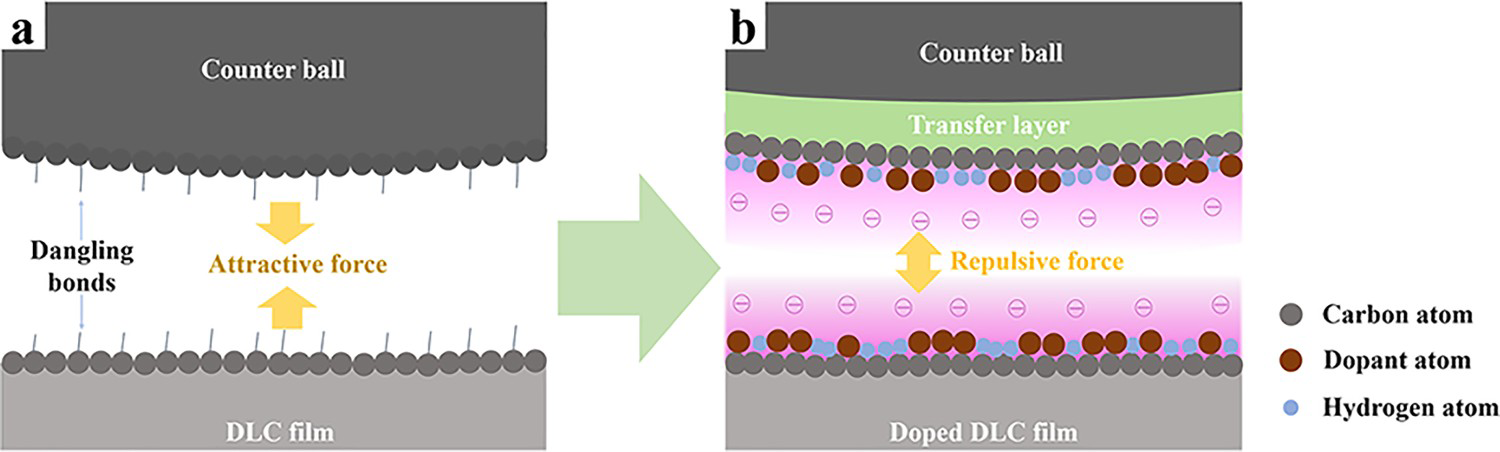
Further, the sliding lifetime is also influenced by the concentration of S. And a film with a high S content experiences a rapid sliding time, whereas one with a low S content experiences a prolonged service life [40]. Based on first-principles calculations, a high content of S may accelerate graphitisation and shorten the service life. Low-S-DLC films, on the other hand, possess low friction paths, which help to reduce friction [43,44].
In addition to surface passivation, it is worth noting that the transfer layer plays a crucial role in the superlubricity of the DLC film [45,46]. In addition to preventing direct touch between friction pairs but it also increases rolling between the counterparts at a microscale. Graphitisation is widely accepted as a wear mechanism for DLC films [47]. However, for a-C:H film graphitisation had a negligible contribution to reducing friction under vacuum conditions and even caused a higher COF [48,49]. Interestingly, Shi et al. [50] found that hydrogenated fullerene-like carbon film behaves ultralong wear life (≥ 1.8 × 10⁵ cycles) and low friction (∼ 0.14) in high vacuum, which owes to the formation of nanocrystalline graphite with weak-shear interface in the counterface. On the other side, some special-structure carbonaceous transfer layers have exceeding performance. Pei et al. [51] tested the tribological performance of a-C:H films against different pairs (Fe, Au, and Al2O3). In the case of Fe, a porous and sp2 carbon-rich transfer layer is induced by friction, which contains a mass of dangling bonds and caused high COF and server wear. The transfer layer on Al2O3 was not clearly formed due to weak contact between C and Al, but there was amorphous spherical carbon, which contributed to lower friction. As shown in Figure 6. As opposed to Al2O3, Au catalyses C forming perfect carbon nanoscrolls on the counterface, with a stable low COF (below 0.01) and ultralow wear (7.47 × 10⁻¹¹ mm/N·m). Song et al. [52] claimed hydrogen passivation took place during the early stages of sliding because hydrogen loss occurred on the sliding surface under high shear force. They further noticed the formation of an onion-like carbon structure with a closed spherical shell structure on the worn surface, which failed to diminish the COF to an extremely low value (0.005) despite the inadequacy of the hydrogen passivation effect. Liu et al. [53] observed that the formation of graphene nanoscrolls could be formed on the counterface of H-DLC/Al2O3 to maintain a low COF (∼0.03) in vacuum. Graphene-like structures were also detected when H-DLC slid against other hard frictional counter balls (Si3N4, SiC). Moreover, by taking advantage of weak adhesion interaction at the Al2O3/H-DLC interface in vacuum, the integrity of the transfer layer was ensured, and thus durable superlubricity was achieved. However, the transfer layer would be destroyed by high-velocity sliding and high load, resulting in the loss of superlubricity [48,54]. Koshigan et al. [55] observed that unlike tribofilms lubrication mechanism on steel counterface in hydrogen and oxygen gas ambient, the material of the steel ball was transferred to a-C:H:Si:O film surface instead. Under high vacuum, high friction occurs due to the huge amount of energy needed to break metallic bonds. For this phenomenon, the strong interaction between sp2 carbon atoms and steel atoms should be to blame.
(A) Structure and morphology of wear tracks, wear debris, and wear scars of a-C:H film against the different counterfaces after 6000 cycles. (a,c) Low-magnification cross-sectional TEM image of transfer film. (b) Optical image of wear scar. (d–f) HRTEM image of wear debris. (g–i) Evolution of ID/IG and G peak position of wear tracks by in situ Raman monitoring during friction. (B) Schematic diagram of vacuum tribological mechanism of a-C:H film, (b,c) for a-C:H vs steel, (d,e) for a-C:H vs Al2O3, (f,g) for a-C:H vs Au, respectively. Reprinted with permission from ref. [51] © 2021 American Chemical Society.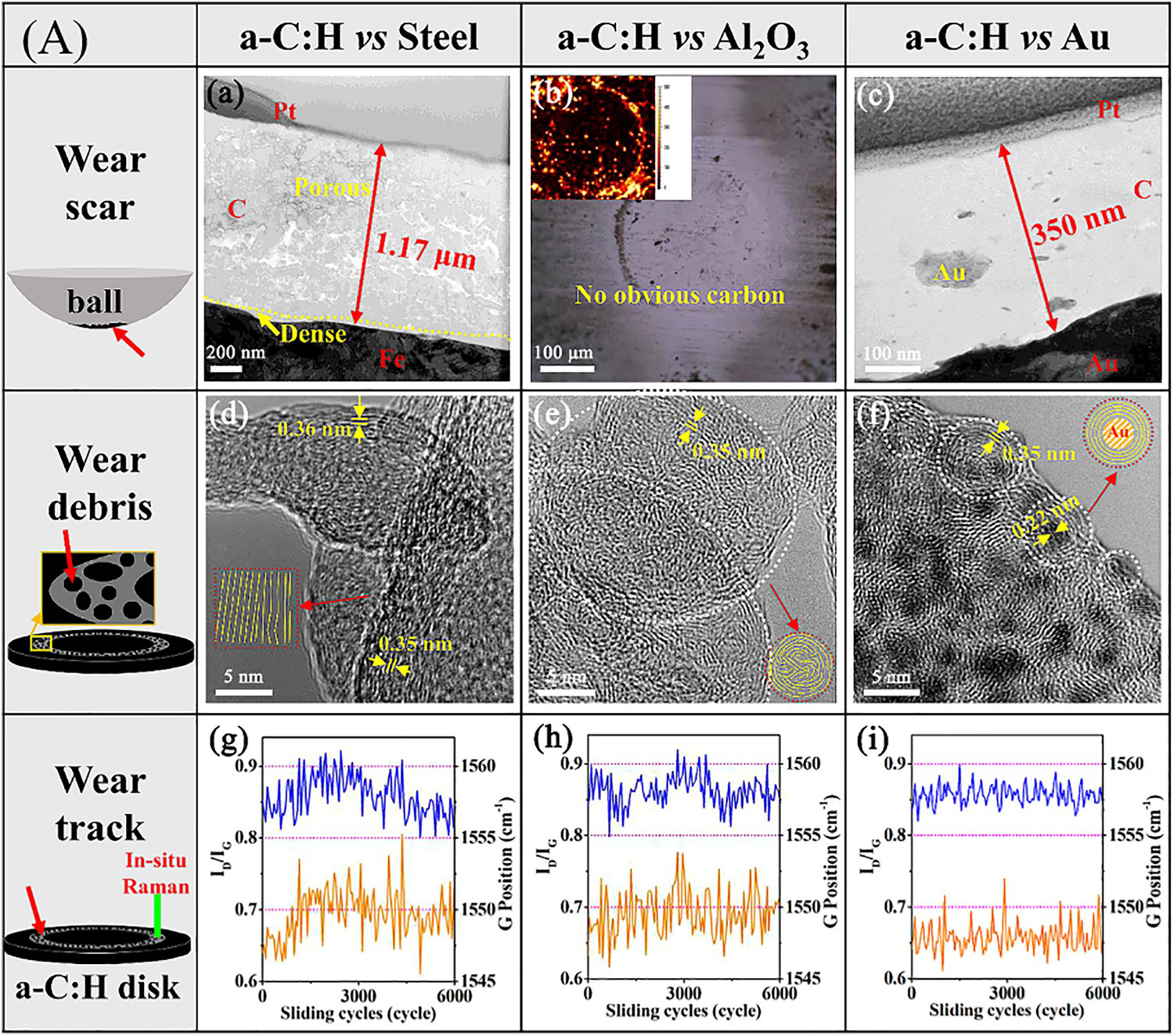
DLC-based films with special structures to gain low COF and long durable lifetimes in vacuum.
DLC film composited with traditional lubricants
Furthermore, incorporating other solid or liquid lubricants into the DLC film to fabricate nanocomposite films, multilayer films, and solid–liquid synthesised lubricants can extend the sliding lifetime while retaining a relatively low COF. A. Voevodin [71] proposed ‘chameleon’ coatings made of an amorphous DLC matrix with the addition of nanocrystalline and dichalcogenide space lubricant to extend the life and improve the adaptability to numerous environments. Wu et al. [58,59] combined MoS2 and DLC, Ag and DLC to fabricate nanocomposite films which have obviously enhanced the sliding endurance. In particular, the multilayer film showed a COF of 0.02 and a sliding lifetime longer than 18,000 s. Xiufang Liu [72] spun space-used liquid lubricant on the DLC film to extend its sliding lifetime. Li et al. [73] implied that physisorption, formed during friction, enhances the tribological properties of DLC-liquid systems but is easily destroyed by friction heat and high loads. In these composite films, traditional lubricants (such as MoS2, WS2, Ag, and MACs) can reduce friction and wear, and the DLC film provides bearing capacity in vacuum. Graphene possesses outstanding tribological properties and has been applied as an additive or dopant to meet applications in harsh conditions [74-76]. Shi et al. [77] prepared graphene/DLC coating by spraying graphene solution onto DLC surface. According to the friction, the excellent tribological performance of graphene/DLC coating should contribute to the non-public accumulation of graphene flakes at the interface and the ‘micro-carrying’ formed by the graphene flakes wrapped by wear debris during the friction process. The coating with 3 times spraying reduced COF by 4% (0.08) as well as wear rate by 1/3 (4.59 × 10⁻⁷ mm3/N m). Song et al. [60] prepared graphene oxide layers (RGO) on an a-C:H film through self-assembly method and found that the RGO/a-C:H system showed a long lifetime of 18,000 cycles with a low COF (< 0.05) in vacuum. In the study by Li et al. [78], molecular dynamics simulation was used to investigate the lubrication performance of hydrogenated graphene on DLC films, and it was found that double-layer graphene reduced friction since very low resistance was realised in the relative motion between graphene layers. Recent advances in solid–liquid lubricating films have taken advantage of both the advantages of DLC films and the unique properties of liquid lubricants for use in spacecraft [72,79,80]. Meanwhile, in order to ensure durable lubrication, other additives are also doped into liquid lubricant in order to enhance tribological properties and carrying ability. Li et al. [81,82] investigated the friction behaviour of synergistic lubrication of a-C with graphene-added oil. The results indicated that the content and size of graphene had significant effects on friction. They further performed an a-C:H/oil/graphene friction system at the atomic scale. Other than the a-C/oil/graphene friction system, the content of H played a key role in influencing friction. Consequently, excessive hydrogen promoted surface passivation and destroyed the chemical bond between graphene and DLC film, resulting in a negative impact on the reduction of friction. According to Zhang et al. [83], graphene and multi-walled carbon nanotubes (MWCNTs) were used as ionic liquid (IL) lubricant additives, and the effects of the additives on the tribological properties of DLC/IL hybrid films were evaluated. Results indicated that both additives have positive effects in reducing friction and wear. And the difference is that MWCNTs were more effective at low applied loads while graphene at high applied loads. Low load caused the long carbon nanotubes to shorten and graphene to break up into small pieces. A high applied load results in the formation of graphene-like lamellae from MWCNTs, whereas graphenes stack to form thick sheets, resulting in a tribofilm that separates the two contact surfaces. It illustrated microstructure variation in graphene and MWCNTs under different applied loads, which lead to variable effects on the tribological performance of nanocomposite coatings.
Herein, there are two main methods for DLC films to gain low friction and a long sliding lifetime in vacuum. The related mechanisms are shown in Figure 7. One method involves bonding the dangling bonds at the interface or forming some special structures (such as onion-like structures or graphene) to separate the counterparts and increase rolling during friction. All of these can exist, including doping strong carbon-bonded elements in the film (H, F), inducing onion-like or graphene-like structures in the film or at the counterface, and forming FeF2 nanocrystallines at the counterface [84,85]. Another method involves adding other lubricants to the DLC film in order to generate a synergistic effect. The DLC film can provide high load-bearing capacity, and the soft space lubricant can maintain a relatively low COF and a long sliding lifetime. They can all exist, including fabricating (textured) solid–liquid films, nanocomposites, and nanostructure films.
The related low friction and long sliding lifetime mechanisms at the interface of the DLC-based film in vacuum.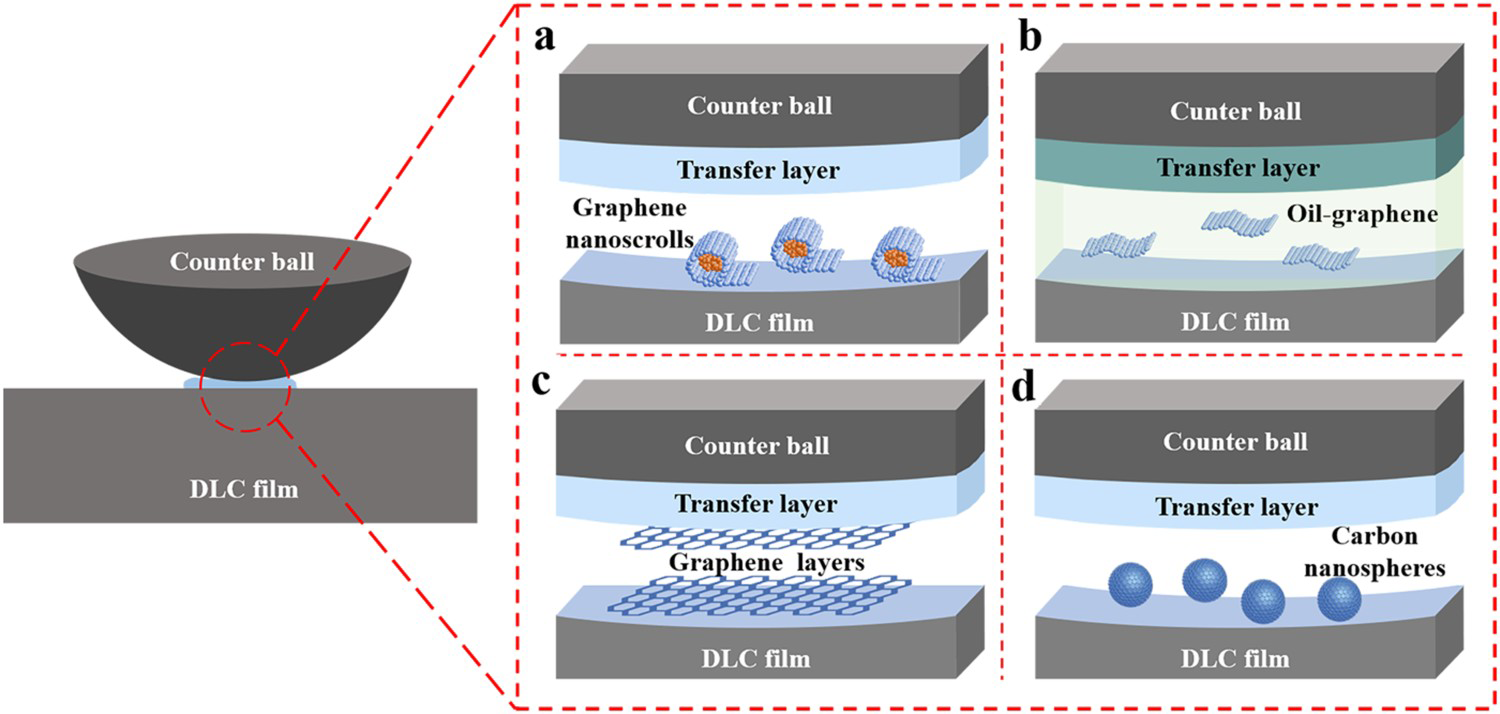
Properties in space radiation
Space environment is complex and varies depending on position, local time, season, and solar activity. Therefore, besides considering the tribological performance of DLC films under high vacuum, other threats such as AO, UV, and ionising radiation need to be considered. The UV radiation intensity increases with orbit altitude, nearly 110 W/cm2 in LEO. In spite of this low energy (only 8% of the solar constant), it will induce some significant structural changes in DLC films. Meanwhile, UV radiation (<243 nm) has the ability to photo-dissociate molecular oxygen into AO, which only occurs in LEO and results in a range of 1014–1015 atoms/cm2·s. As the AO hits the material surface with a kinetic energy of 4.5 eV, extensive erosion of the chemical composition and surface morphology takes place [86]. Moreover, as a consequence of ionising radiation on materials, the resultant ionisation, phonon excitations as well as atomic displacement, of which can lead to serious degradation effects. Those radiations influence the chemical composition and microstructure of the DLC film, and the majority of them are negative and permanent [87].
In particular, energetic UV radiation will break some weak bonds (such as C–C and C–O) and cause recombination in the film. Meanwhile, oxygen molecules can be decomposed into highly reactive oxygen atoms by UV radiation, resulting in AO radiation and causing oxidation of the thin film [88]. Furthermore, intense UV radiation can induce permanent hydrocarbon layers on the DLC surface [89]. Shi et al. [90] reported that –C–OH and –CO–OH groups formed on the surface of H-DLC when exposed to UV radiation (Figure 8). All of these bonding groups enlarged the contact area and enhanced interfacial adhesion, causing a higher frictional coefficient in vacuum. Ji et al. [91] compared the effect of UV radiation on DLC films and Mo/DLC films and conclude that the nanocomposite film maintains superior antiradiation properties. Wu et al. [92] investigated the effect of UV radiation on the MoS2/DLC and Ag/DLC composite films and found that the UV-irradiated MoS2/DLC film has a low COF (<0.02). The COF of the Ag/DLC film decreased while the wear rate increased after radiation.
Effects of UV irradiation treatment on the friction of H-DLC film. (a) Schematic of UV irradiation treatment on H-DLC film. (b) Fiction force versus sliding cycle of original and UV-treated H-DLC film. (c) Adhesion (pull-off) forces on original and UV-treated H-DLC surfaces. (d) Load-dependent wearless-related friction forces of original and UV-treated H-DLC surfaces against. Reprinted from ref. [90] ©2020 Elsevier.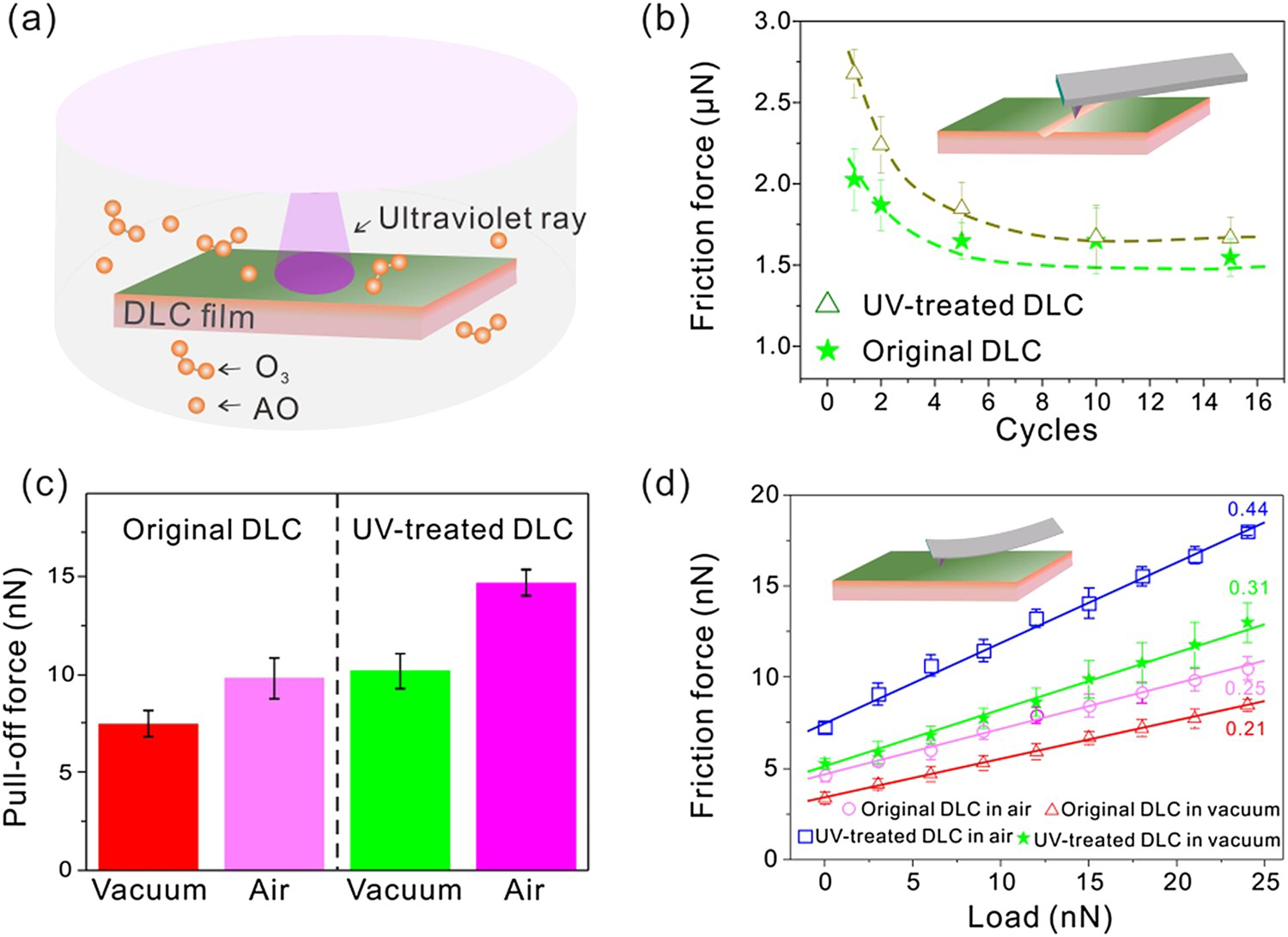
As AO radiation affects DLC films, it is strongly influenced by the energy of the oxygen atom, and low-energy films are able to oxidise C atoms on the surface in order to form C–O or C=O bonds. In contrast, high-energy oxygen atoms gasify carbon atoms into CO and CO2 which are then absorbed by vacuum. Yokota et al. [93] exposed H-DLC film to different-energy hyperthermal AO beams and concluded that ultralow-energy AO (<2 eV) caused non-bond hydrogen desorption, while those with higher energy (>5 eV) led to severe etching of DLC film. Meanwhile, the film suffered only from the outermost layer under low energy conditions. To alleviate the damage of AO radiation, oxyphilic elements with pony-sized particles are added into the DLC films with a uniform distribution. The main method to prevent AO radiation was doping oxyphilic elements into the film and forming a corresponding oxidising layer of high quality on the outermost surface as a consequence of preventing the interior from being oxidised, as shown in Figure 9 [94-96]. Ji et al. [97] proved that Mo nanocomposites could preserve the COF of approximately 0.01 and wear rate of 1.8 × 10⁻⁸ mm3/N m of DLC films after AO radiation. Our previous work also found that both MoS2/DLC and Ag/DLC films can enhance the AO resistance of DLC films. Meanwhile, there are some methods to hinder the oxidisation of DLC films. Mangolini et al. [98] exposed an a-C:H:Si:O film to an LEO environment and found that as a result of the formation of a silica layer on the outermost surface, the film displayed excellent corrosion resistance. Either heavy ions or light ions can cause radiation in the space environment. Active ions with kinetic energy trigger phase transformation, and ion implantation causes various defects. It has been reported that heavy ion radiation caused diffusion of hydrogen and graphitisation not only in the outermost layer but also in the deep range. Xu et al. [99] observed that DLC films suffered an abrupt failure with increasing friction laps, which had a negative effect on the tribological and mechanical properties. A similar phenomenon also occurred on the a-C:H film after light ion radiation due to its ionisation capacity and penetrability.
Changes in the structure of DLC-based film under AO radiation: (a) DLC film and (b) doped DLC film.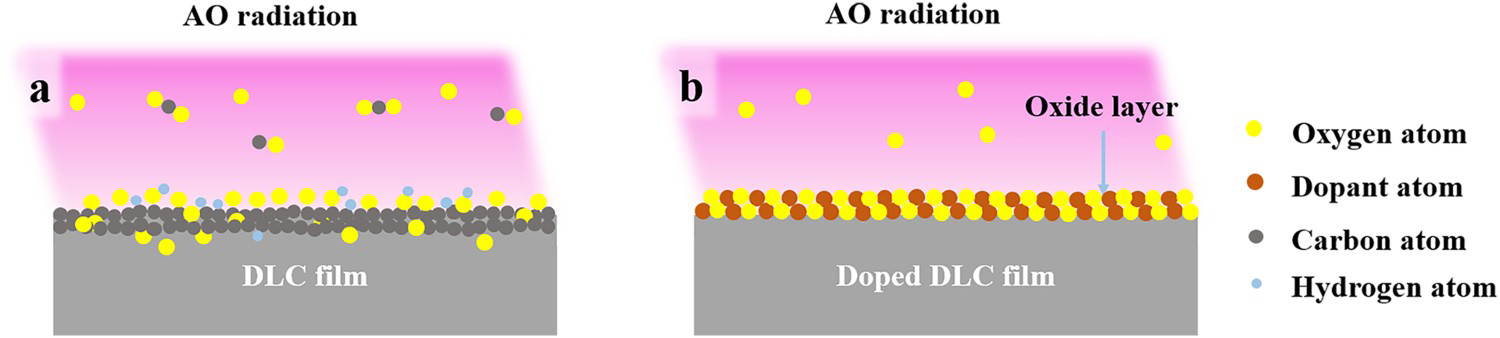
The tribological properties of DLC films vary with different ion irradiation characteristics. Implantation of energetic C+ destroyed the intrinsic gradient as a consequence of an apparent reduction in service life [100]. Penkov et al. [101] found that He+ irradiation induced transformation from sp3C to sp2C. Interestingly, the results implied that on the very thin scale, the sp3C content of all the samples remained identical after radiation regardless of He+ energy and initial sp3C content. Additionally, a moderate dose of He+ irradiation facilitated a reduction in the COF and wear rate as a result of the synergistic effect of decreased surface roughness and the formation of a graphite structure [102]. Upon increasing the dose, agitated He bubbles on the film surface easily burst, and then holes formed, which led to lower mechanical properties and poor wear properties. However, Hu et al. [103] found that nanocrystallited sp2C showed a lower COF and extended service life after ion radiation.
As a result of high-energy radiation in space, oxidation and restructuration of the film can occur, usually accompanied by graphitisation, which shortens the sliding lifetime. The nanocomposite DLC films are capable of delaying the occurrence of this change and maintaining a relatively low lifetime. For example, although soft X-rays influence the whole F-DLC film instead of just the outermost surface, a low F content contributes to resisting soft X-ray irradiation [104,105]. Similarly, the presence of Si doping could restrict the desorption of hydrogen by X-ray irradiation [106,107]. Also, Liu et al. [108-110] found that the liquid/DLC composite coating showed radiation resistance depending on its composition and structure. AO radiation caused the most severe oxidation damage on the DLC film and ILs of the DLC/IL coating. While UV radiation facilitates the decomposition of some added oils, these decomposed oils can be adsorbable by the DLC film, resulting in a thin physisorption layer that has a slightly low COF. Zhuang et al. [111] studied synergistic lubricant ion systems composed of Cr-DLC and lubricating greases (PUG, PFG, CSCG, CLG) under AO and PR irradiation. Figure 10 illustrates the limited ability of one-fold lubrication to effectively reduce friction and wear in high vacuum compared with grease/DLC composited coatings in high vacuum. After PR radiation, the DLC/PUG system showed a slightly fluctuating COF and markedly declining wear rate, whereas, after AO radiation, it showed evident negative effects. The DLC/CSCG system, on the other hand, demonstrated a more stable COF and lower wear rate after AO radiation. Liquid lubricants are extremely sensitive to temperature changes triggered by radiation. Generally, those superior synergistic lubrication systems have better space adaptability and excellent tribological properties in the simulated space environment, and they have broad application prospects in the field of space lubrication.
Friction curves and wear volume of synergistic lubricating coatings composed of Cr-DLC films and four lubricating greases under simulated space environment including high vacuum, AO and PR irradiation, cryogenic temperature. Reprinted from ref. [111] ©2018 Elsevier Ltd.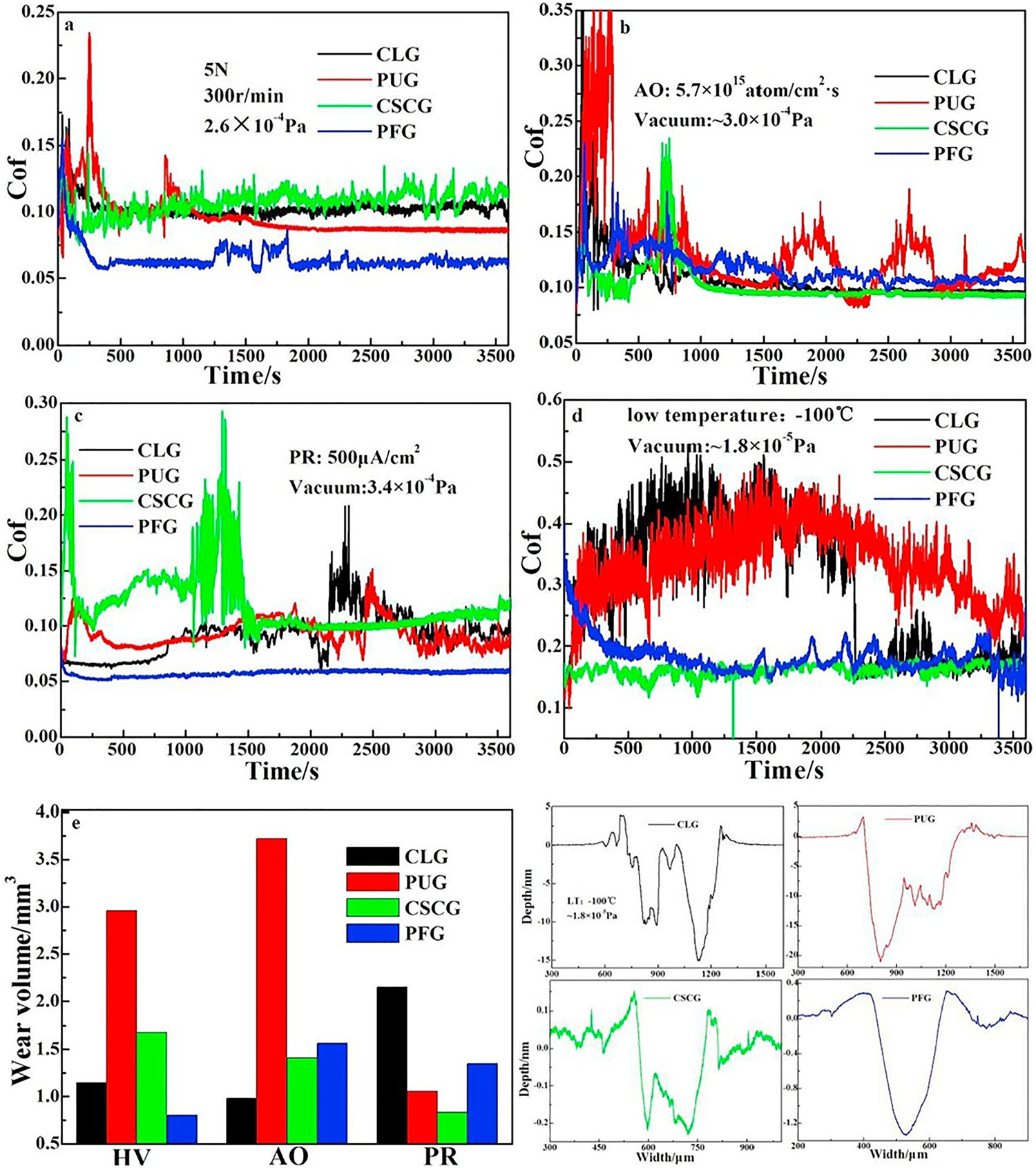
Properties in extreme temperature
The temperature of the spacecraft surface varies based on the orbital position and flight posture. The surface temperature of the aircraft in direct sunlight may increase to 100°C, while the temperature of the shady side is probably as low as −100 to −200°C. Extreme temperature variation aggravates the surface damage of devices and thus reduces accuracy and service life. Owing to the high vacuum environment, heat dissipation is governed primarily by thermal conduction and radiation instead of thermal convection. Heat accumulation may degrade the performance of the DLC film, as illustrated in Figure 11.
Degradation in the structure of the DLC film at high temperatures.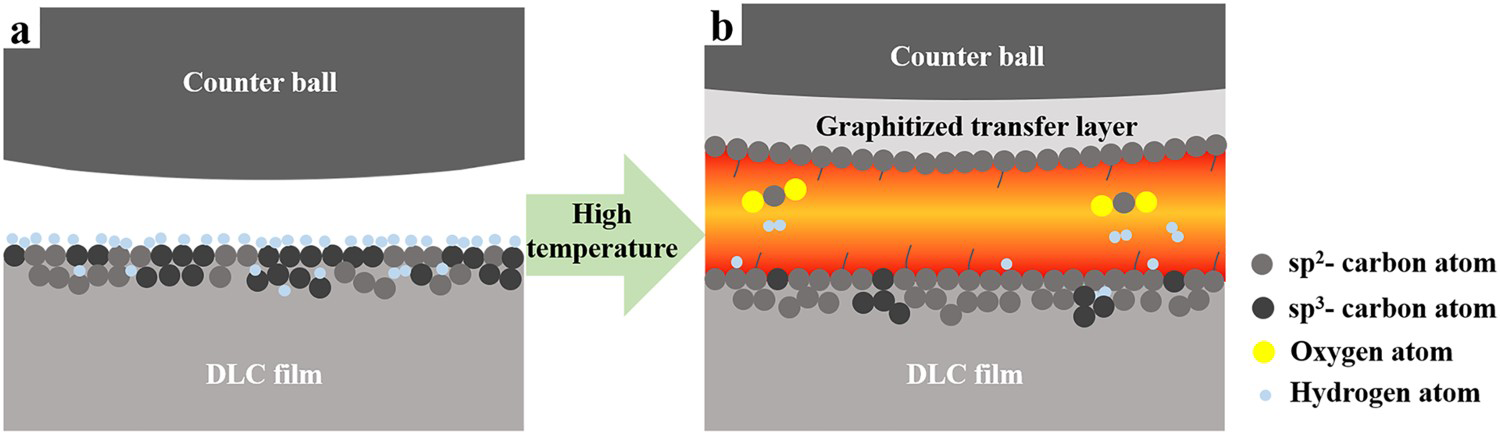
Tribological properties of DLC films at elevated temperatures in different environments.
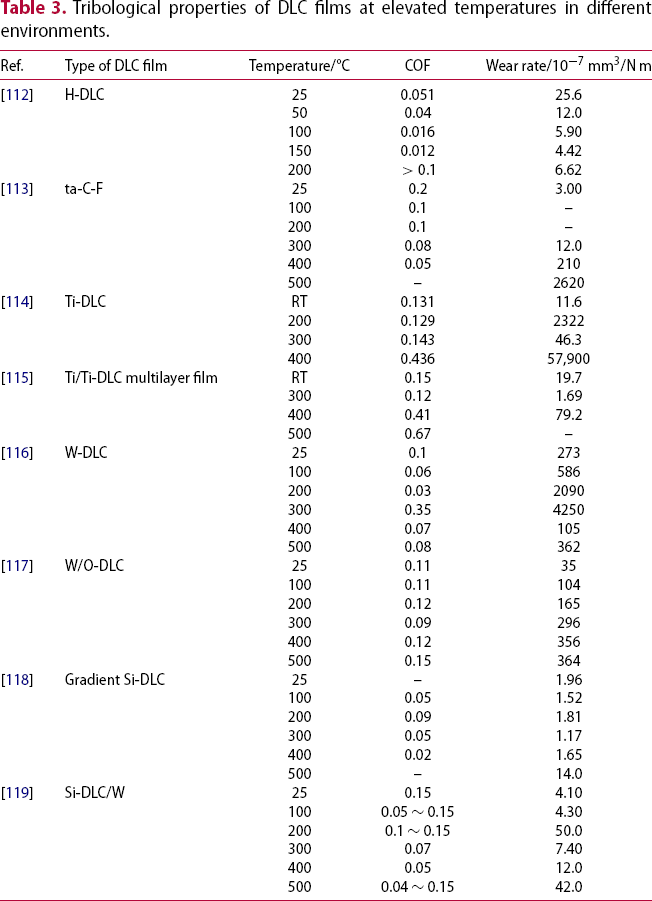
Moreover, a high temperature can accelerate the formation of a transfer layer, which is vital to friction. Simulated results indicated that graphitisation at the counter face prevents the formation of interfacial bonds at high temperatures, thus leading to a low COF [121]. Wang et al. [112] observed the presence of graphene nanocoils in wear debris below 150°C, demonstrating the beneficial effect of graphene on tribological properties. However, these nanocoils could be destroyed easily at 150°C. Bhowmick et al. [113] studied the tribological performance of a-C/ta-C-F counter pairs at different temperatures and found that the fluorine-rich carbonaceous transfer layer worked steadily below 300°C.
Influence of counter balls on the tribological behaviour of DLC films at different temperatures in vacuum was investigated then. Tsigkis [122] tested the tribological behaviour of a DLC film against a PS400 coating (a multicomponent alloy for high-temperature application) and found that a low COF (<0.4) and outstanding wear resistance appeared at both 25 and 500°C. Huang et al. [114] studied the tribological behaviours of an a-C:H:Ti film against Ti6Al4 V ball at high temperatures and observed that the diffusion of Ti in the counterface reacted with both C and Ti in the films, accompanied by an increased COF.
Based on these results, some methods to improve the tribological properties of DLC films are proposed, including the formation of a high-temperature lubricant on the counterface and modification of the sp3 C–C bonds in the film. It was observed that the TiO2 layer can improve the tribological properties of the multilayer Ti/Ti-DLC film at high temperatures [115]. The W-DLC film had a low COF due to the extensive formation of tungsten trioxide layers during friction at high temperatures [116,117,123], and the film with a dense structure provided effective resistance [124]. Miyake et al. [125] found that a nanothin DLC film deposited by the plasma chemical vapour deposition method exhibited a low and stable COF because of the lubricant of byproducts produced by sliding and high temperature in vacuum, which could be employed in nanofrictional mechanics. Wang et al. [126] proposed a DLC-based solid–liquid lubricating coating. The COF of the film increased as the temperature decreased, with a maximum of 0.12 at −100°C and a minimum of 0.03 at 100°C, while the wear rate was minimal at room temperature and a maximum at 150°C, which was closely related to the self-repair capacity and reaction products.
Furthermore, with respect to Si doped in DLC films, it is regarded that moderate Si content avails tribological properties while high content could ensure mechanical properties at high temperatures [118,119]. Researchers [120,127] deemed strained sp3 C–C bonds to be so unstable to be interrupted, where conversion from sp3 C–C to sp2 C=C easily occurs first. Co-doping of Si and O into a-C:H film notably reduced the fraction of strained sp3 C–C bonds. Therefore, the film could display a more disordered structure and thermal resistance as the temperature increases. It was also convinced that the activation energy of conversion sp3 C–C to sp2 C=C in the a-C:H:Si:O film (3.0 ± 1.1 eV) is higher than that in the a-C:H film (2.6 ± 1.2 eV) [98].
Challenges and opportunities of DLC films in space applications
DLC-based films have gained the great interest for vacuum- or space-related applications. They exhibit low friction and a relatively long sliding lifetime in ultrahigh vacuum in recent years, which offers great opportunities in the development of new lubricants in space. Nevertheless, there are still a few issues related to the practical use of DLC films in space.
Space is a complex and dynamic environment, involving radiation, microgravity, vacuum, and extreme temperatures, which have a simultaneous action on the film. In spite of this, few studies have been conducted to examine these factors in combination, limiting our understanding of their combined effects and application scope. Furthermore, there are many important factors that affected the film performance, and these factors are not independently deterministic, so the mechanism of interaction should be analysed in detail. On the other hand, lubricants for space vehicles may be subjected to a variety of conditions during assembly, testing, launch, orbit changes, and operation. In this case, there will be a variety of frictional forms and conditions involved, including several hundred MPa of contact pressure for rolling friction and fretting friction. Ultimately, it is necessary to test the film under more extreme conditions in various friction modes in order to evaluate its performance. In terms of simulating the cosmic environment, DLC-based films have great potential. Several measures have been taken, including atom doping, surface modification, nanostructure design, and combinations with some two-dimensional materials, such as graphene, MoS2, and CNTs to improve the adaptability of DLC films in different environments in space. Moreover, in some cases, solid liquid lubrication systems made of carbon-based solids demonstrated excellent wear resistance and friction reduction. Through the utilisation of these approaches, the application prospect of DLC films in space environments was hopeful. Owing to the rapid development of modern technology, we have gained more insight into the structure and growth of DLC films, in combination with observations of friction processes at the atomic scale. It would be prudent to take into account the following issues when applying DLC films in the future: the development of advanced, reliable, and low-cost deposition technologies; the investigation of tribological properties and the continuation with the tribological mechanisms in different environments; and the establishment of a standardised comprehensive testing regime.
Conclusion
DLC-based films show great potential for use in space applications. The tribological properties of the film can be improved by decreasing the interactions between the counterparts at the interface by bonding the dangling bonds or forming a special structure (e.g. onion-like graphene) to separate the counterpart and increase rolling during friction. In addition, other space lubricants were added to the DLC film to gain synergistic effects, including fabricating (textured) solid–liquid films, nanocomposites, and nanostructure films. Additionally, providing optimisation for the top layer or interface layer can improve the tribological behaviour under various environments. The space application of DLC films seems promising, and some issues need to be investigated thoroughly. Furthermore, the various frictional modes depending on different contact states and operating conditions should be considered for space usage. Strong efforts are necessary to maintain a stable structure for developing space lubricants.
Footnotes
Disclosure statement
No potential conflict of interest was reported by the author(s).