







Abstract
In the process of titanium microalloyed steel continuous casting, tiny TiN can refine solidification structures, while thick TiN will affect casting. In this paper, the experimental results showed that electropulsing could refine the size of TiN precipitates and improve the nucleation rate of the TiN precipitates. The larger electropulsing intensity resulted in a better effect. The modelling results showed that electropulsing could reduce the nucleation barrier of TiN in the molten steel and the two-phase region. In addition, the larger the electropulsing intensity and the higher the temperature, the better the promotion effect is. This research is of great significance for solving the problem of nozzle clogging and solidification microstructure refinement of titanium microalloyed steel.
Background
Carbonitrides of microalloying elements (Nb, V, Ti, etc.) are beneficial to improve the strength and toughness of steel materials [1-7]. In the process of continuous casting of titanium microalloyed steel, tiny TiN can refine the solidification structure [8-10], but the thick TiN affects the casting [11-13], which contradiction has never been completely resolved. Thick TiN cannot effectively prevent the grain growth of the austenite grains and cannot play a strengthening role. A large number of studies have shown that the thick TiN in molten steel is one of the main reasons for the nozzle clogging [14-16]. The tiny TiN particles are very stable to effectively prevent the growth of austenite grains, as well as play the role of refining and strengthening the rolling structure [17-20].
Many scholars have researched the precipitation of precipitates by electropulsing [21-25]. Rahnama A et al. [26] investigated the effect of high temperature (at 800°C) electropulsing on niobium carbide (NbC), and found that electropulsing treatment can reduce the kinetic barrier of NbC precipitation and make NbC evenly distributed; Liu W B et al. [27] found that electropulsing treatment can make NbC carbide precipitation in pre-deformed Fe17Mn5Si8Cr5Ni0.5NbC alloy faster, with more and smaller NbC particles. Zhenghai Zhu et al. [28,29] studied the microstructure evolution of low-carbon niobium-containing steel, and found that electropulsing promotes the nucleation and precipitation of Nb(C, N) in low-carbon Nb-containing steel, and in the research of the interaction between α phase and M(C, N) under the action of electropulsing, it was found that the electropulsing can promote the precipitated phase elements in the supersaturated state to form M(C, N) and precipitate in the γ-phase, and can also promote the precipitation of the α -phase in the grains of the γ-phase. At present, there are few reports on the control of TiN precipitation during continuous casting by electropulsing.
In this paper, 321 stainless steel was taken as the research object. The influence of electropulsing on the size and distribution density of TiN precipitates was investigated by performing thermal experiments. In addition, the method of using electropulsing to control the formation of TiN was investigated by combining the thermodynamic model.
Experimental materials and method
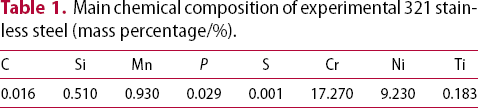
The 321 stainless steel was selected in the experiment. Its main chemical composition is shown in Table 1. The 321 stainless steel strip was cut into several strips with a length of 6 cm weight of 1.2 kg. Then they were washed with anhydrous ethanol, weighted, and loaded into a corundum crucible with a height of 7 cm and a volume capacity of about 137 cm3. The Volume of molten steel is about 114 cm3. A graphite crucible was nested outside the corundum crucible to ensure the safety of the experiment. First, the temperature of the lifting tubular high-temperature furnace was heated to 1600°C. Second, the loaded steel samples were put into the furnace for melting with argon protection. Thirdly, a preheated pair of pure iron electrodes were inserted symmetrically into the molten steel with an immersion depth of 4 cm after the sample is completely melted. When the temperature of the molten steel was decreased to 1580°C, about 1.2 ml of molten steel was extracted with a quartz glass sampling tube and then rapidly quenched with water taking as a control sample without electropulsing treatment. Then, electropulsing intensities of 30 A, 60 A, 90 A, and 100 A were applied to the molten steel at 1580°C and the current density was 1.53 × 10⁵, 3.06 × 10⁵, 4.59 × 10⁵, 5.10 × 10⁵ A m−2, respectively. The pulse voltage, width, and frequency were 12 V, 50%, and 20 kHz, respectively. The consistent skin effect generated at high frequencies will not affect the comparison of the results since the other factors were kept the same. The experiment was carried out before the furnace temperature was decreased to setting value to promise that the previous experiments would basically have no effect on the latter group of experiments. The experimental setup is shown in Figure 1. After the electrification was completed, the molten steel was extracted for water quenching to obtain each group of samples. The centre part of the sample was selected for observation and detection. The morphology and element distribution of TiN precipitates in the sample were detected by Scanning Electron Microscope (SEM) and Energy Dispersive Spectroscopy (EDS), and the number of TiN precipitates in 100 fields of view was randomly counted.
Experimental setup. Main chemical composition of experimental 321 stainless steel (mass percentage/%).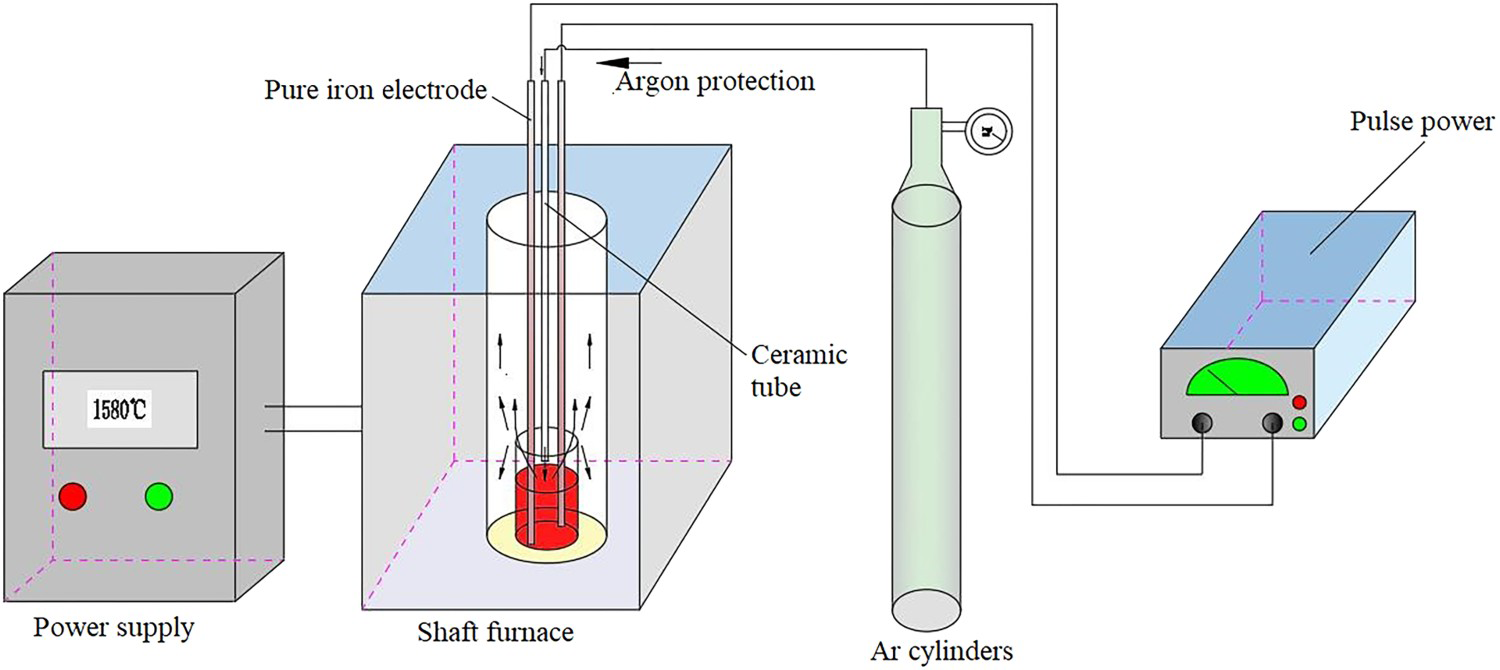
Results and discussion
Micro topography analysis
The samples obtained in the experiment were examined by SEM. The qualitative component analysis was carried out using the attached Energy Dispersive Spectroscopy (EDS) to confirm the contained TiN in the precipitates. Because in the electropulsing treatment process, the precipitates (greater than 0.2 µm) exist in the steel matrix in the form of composite precipitation. Moreover, the morphology, size, and composition are different when the composite precipitation precipitate.
The samples were obtained with applying electropulsing of 30 A, 60 A, 90 A, and 100 A to the molten steel at 1580°C for 60 s, as shown in Figure 2 (0A means the electropulsing was not applied).
Morphology and energy spectrum of precipitates with different electropulsing intensities. Showing the morphologies of the TiN-containing precipitates in the water-quenched samples under different conditions.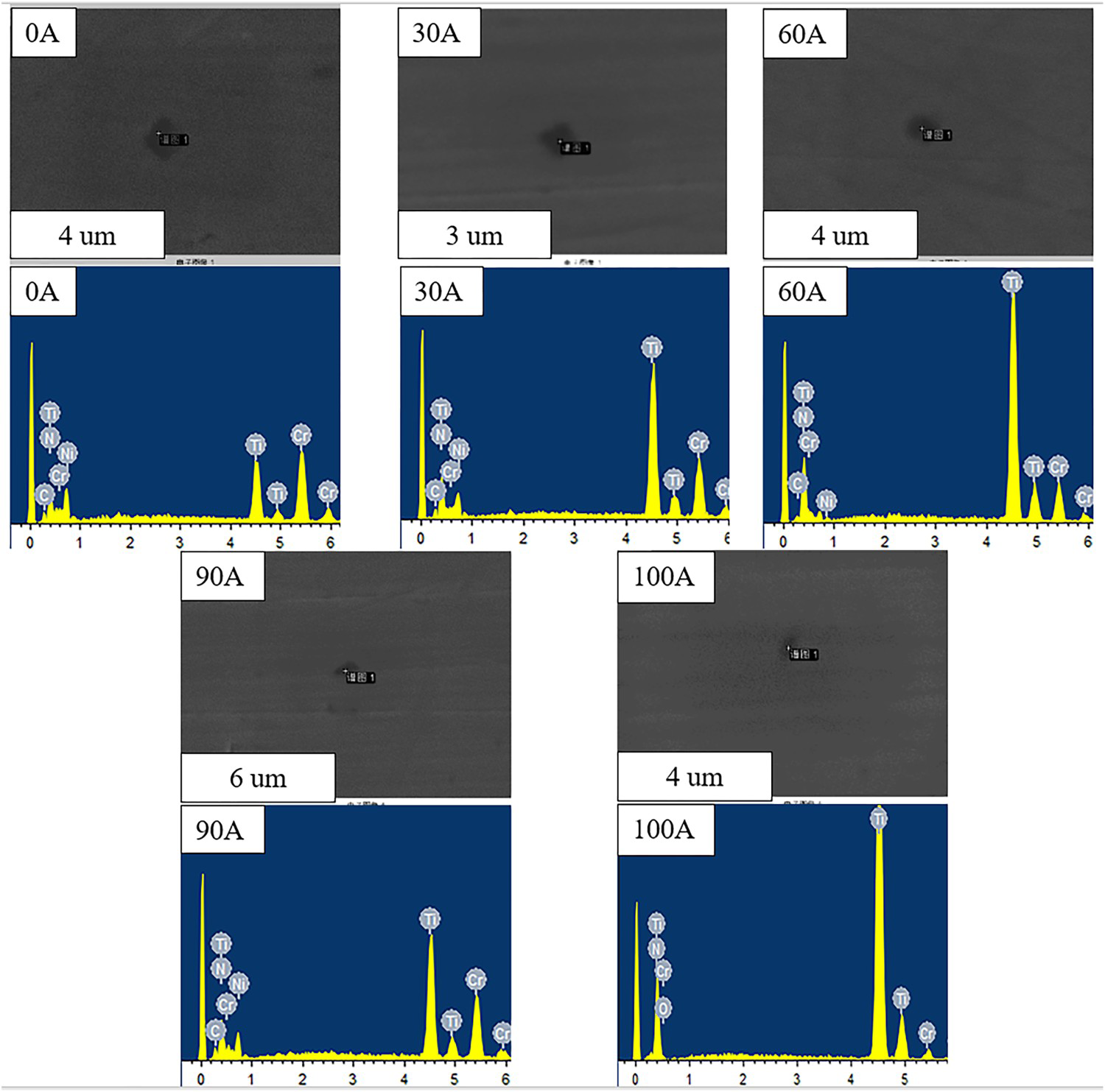
Figure 2 shows the morphologies of the TiN precipitates with regular patterns in the water-quenched samples under different conditions.
One hundred fields of view were randomly selected on the surface of the specimen at a magnification of 5000 times. Then, the number of TiN precipitates in each field of view was determined and recorded by using the Energy Dispersive Spectrometer (EDS) together with the SEM. The topography of each TiN precipitate was saved for size measurement. Figure 3 shows some typical morphology of the TiN precipitates with different electropulsing intensities. Most of the morphologies of the TiN precipitates in the figure are regular cubes. The size of the TiN precipitates becomes smaller and smaller with increasing the electropulsing intensity. It can be determined that it is mainly TiN precipitates based on the description and EDX results in the literature.
Field of view of TiN-containing precipitates in steel with different electropulsing intensities. Showing that the morphology of the TiN-containing precipitates in the samples with different electropulsing intensities, it can be used as the basis for determining TiN precipitation.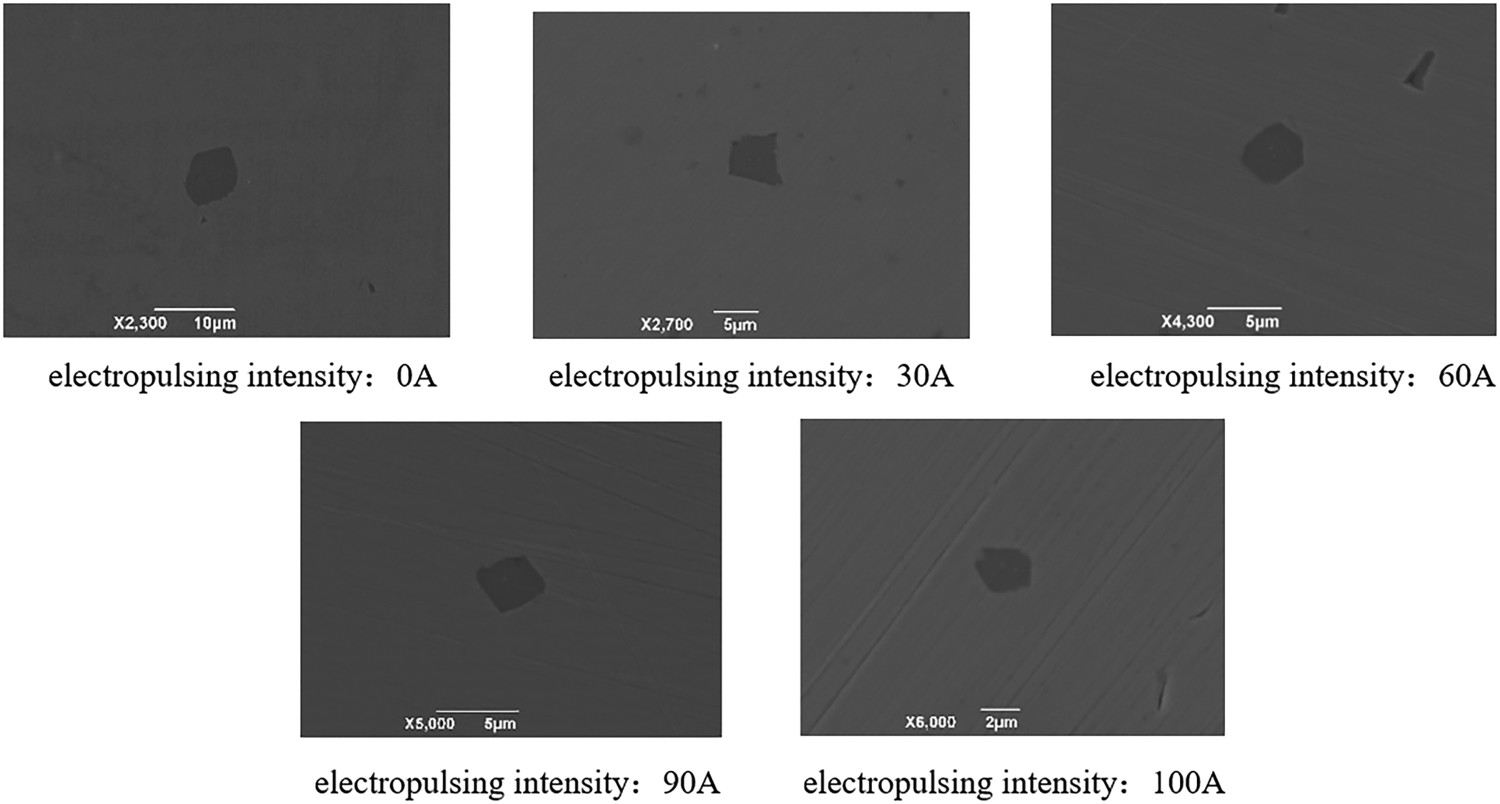
Precipitate size analysis
The topography of TiN precipitates in each field of view of SEM was measured according to the given scale by using Image-Pro-Plus measurement software. The regular or irregular precipitates were converted into a circle of equal area. Then the diameter of the circle is the equivalent diameter [30], which can be regarded as the size of the precipitate. The number of TiN precipitates in 100 fields of view of the sample was counted and measured to obtain the relationship between the number of precipitates and the equivalent diameter, as shown in Figure 4.
Quantity and size distribution of TiN-containing precipitates in samples with different electropulsing intensities. Showing that the electropulsing intensity can change the size of the TiN-containing precipitates, and the larger the electropulsing intensity, the smaller the size of the TiN-containing precipitates and the more uniform the size distribution.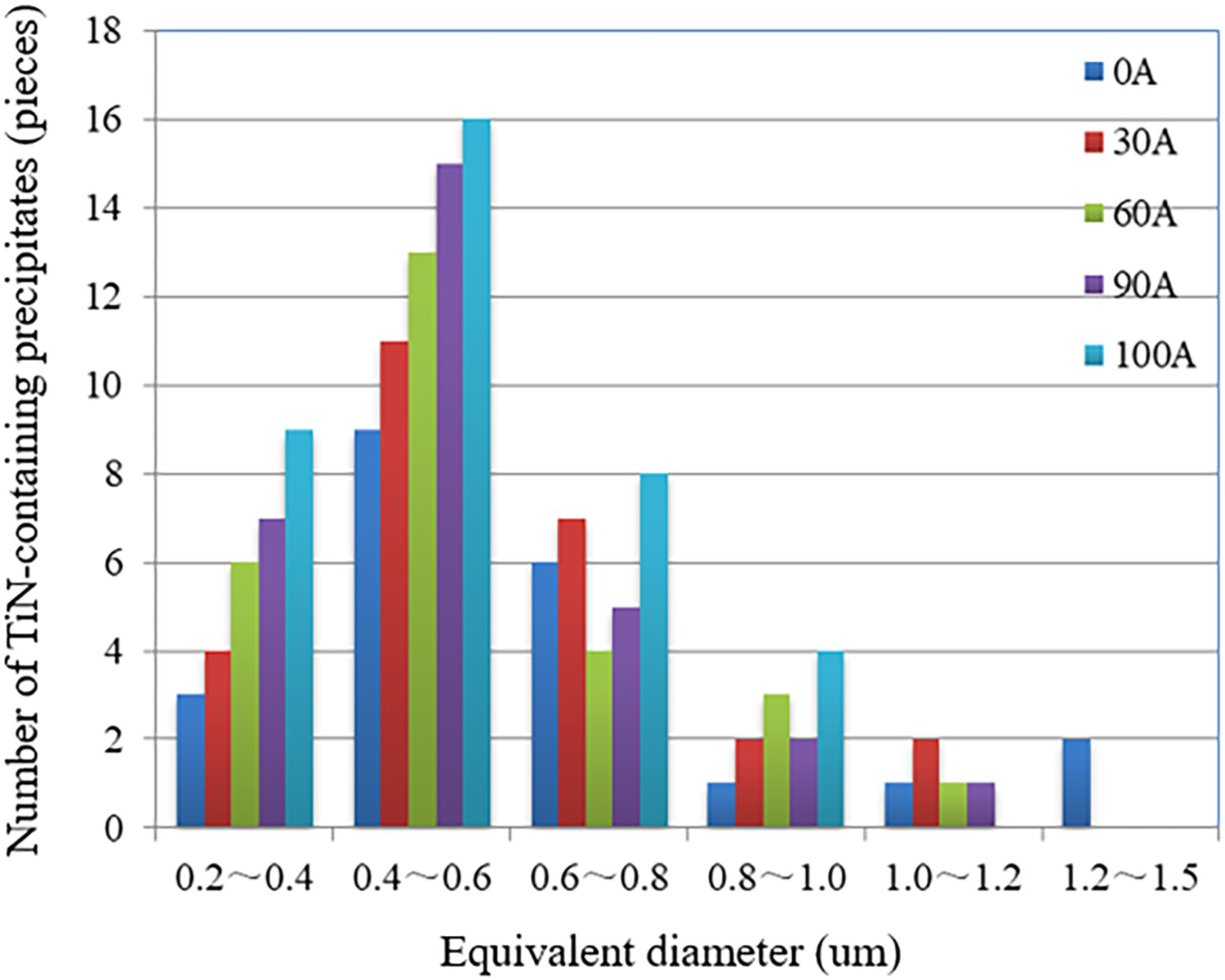
It can be seen from Figure 4 that the equivalent diameter of the TiN precipitates are between 0.2 and 1.5 µm in the samples with different electropulsing intensities. The size is mainly between 0.2 and 0.8 µm and also distributed in the range of 0.8∼1.2 µm. In addition, it was found that the size distribution of the TiN precipitates was affected by different electropulsing intensities. Compared to the sample without electropulsing application, the size of the precipitates starts to increase in the range of 0.2∼0.6 µm, and decreases in the range of 0.6∼1.5 µm, when the electropulsing intensity is increased by 30 A, 60 A, 90 A, and 100 A. Moreover, most of the precipitates are concentrated in the range of 0.4∼0.6 µm. While the number of precipitates in the electropulsing sample is zero in the range of 1.2∼1.5 µm. It demonstrates that the electropulsing intensity has a significant effect on the number and size distribution of the TiN precipitates, indicating that the electropulsing intensity can change the size of the TiN precipitates. Specifically, the larger the electropulsing intensity, the smaller the size of the TiN precipitates and the more uniform the size distribution.
With the increase of the electropulsing intensity, the change of the average size of the TiN-containing precipitates in the sample is shown in Figure 5. The error bars in Figure 5 represent the standard error range of the average size of TiN precipitates. It can be seen that the average size of the TiN-containing precipitates decreases with the increase of the current intensities for the samples treated with different electropulsing.
Average size of TiN-containing precipitates in samples treated with different electropulsing intensities. Showing that the electropulsing can change the average size of the TiN-containing precipitates in the sample, and the greater the electropulsing intensity, the smaller the average size of the TiN-containing precipitates in the sample.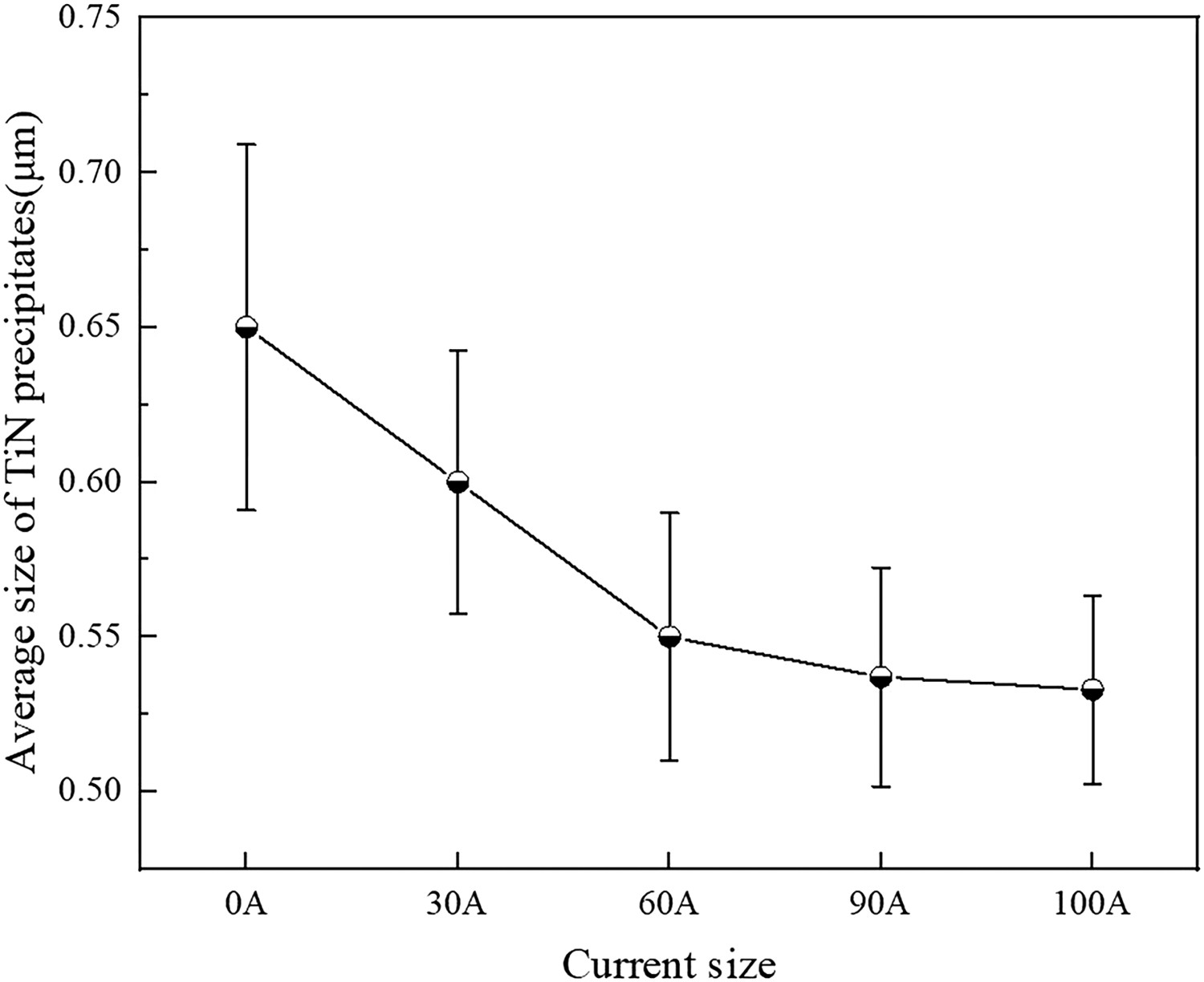
Compared to the sample without electropulsing application, the size of the TiN precipitates in the sample is mainly concentrated between 0.4 and 0.6 µm, getting smaller and smaller when the electropulsing intensity is increased from 30 A to 60 A, 90 A, and 100 A. Also, the average size of TiN precipitates is. It demonstrated that the electropulsing could refine the size of the TiN precipitates. And the larger the electropulsing intensity, the denser the distribution of the tiny precipitates.
Distribution density analysis
Quantity and distribution density of precipitates in samples under different electropulsing intensities.
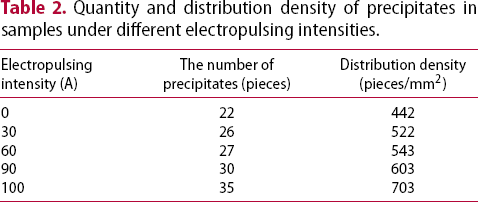
Based on the data in Table 2, the distribution density of precipitates in each sample with different electropulsing intensities can be summarised in Figure 6. It can be seen that the distribution density of the TiN precipitates in the sample increases with the increase of the electropulsing intensity. Obviously, the electropulsing can effectively promote the nucleation and precipitation of TiN in the molten steel. The larger the electropulsing intensity, the higher the nucleation rate of TiN in the molten steel.
Distribution density of TiN-containing precipitates in steel with different electropulsing intensities. Showing the electropulsing can effectively promote the nucleation and precipitation of TiN in the molten steel, and the larger the electropulsing intensity, the higher the nucleation rate of TiN in the molten steel.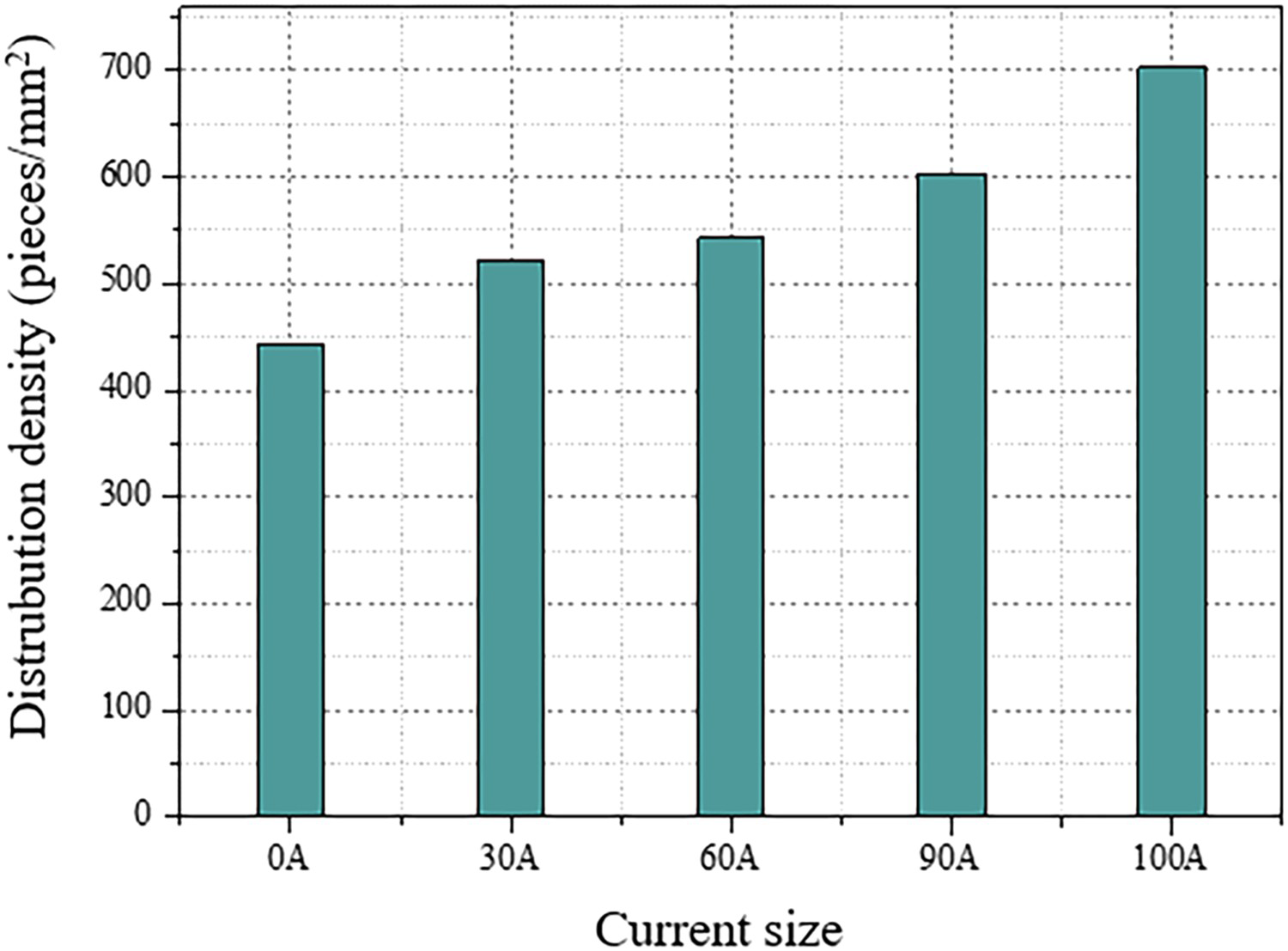
In terms of distribution density, the distribution density of TiN precipitates in the sample without electropulsing treatment is 442 pieces mm−2. Compared to the samples without electropulsing treatment, the distribution density of TiN precipitates in molten steel increased by 18.09%, 22.85%, 36.42%, and 59.05% when the electropulsing intensity is incremented by 30 A, 60 A, 90 A, and 100 A, respectively. It shows that electropulsing treatment can increase the nucleation rate of TiN.
Discussion
The experimental results show that the electropulsing can refine the size of the TiN precipitates and improve the nucleation rate of the TiN precipitates based on the size and density distributions. The mechanism was explored by establishing a mathematical model. The liquidus temperature TL = 1469°C, the solidus temperature TS = 1318°C of the titanium microalloyed steel, the theoretical equilibrium precipitation temperature of TiN is 1644°C, the precipitation amount of TiN and the equilibrium residual content of each element are obtained according to the literature [31]. It can be seen that when the liquid sampling temperature is 1580 °C (<1644°C), TiN has been precipitated in the molten steel. This is also verified by the experimental results. Based on this, a thermodynamic model is established to further investigate the influence of different electropulsing intensities on the TiN nucleation barrier We
in the molten steel and the two-phase region. The We
can be obtained from formulas (4-1)–(4-10).

Formula (4-1) is the solubility product formula of TiN, where the constants A = 5.9 and B = 16580. According to A and B, the phase change free energy
 of TiN precipitation at different temperatures can be obtained as (4-2) [32]:

The molar volume VTiN of TiN can be obtained from the lattice constant and linear expansion coefficient of TiN. The room temperature lattice constant of TiN is 0.4239 nm, and the room linear expansion coefficient is 9.35 × 10⁻⁶K−1 [1]. The molar volume
 at different temperatures can be obtained from formula (4-3), and then the phase change volume free energy
 of TiN can be obtained. The formulas are as follows:


 ,
,
 of TiN in liquid steel and δ-ferrite in the two-phase region can be further calculated by the lattice constant and linear expansion coefficient of TiN at room temperature, the result is shown by formula (4-5) and formula (4-6):


 ,
,
 , and
, and
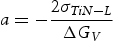
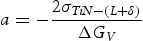
 , the critical crystal nucleus radius a of TiN in molten steel and two-phase region can be obtained by (4-10) the change value We
of the nucleation barrier under different electropulsing intensities was obtained [33-35].
, the critical crystal nucleus radius a of TiN in molten steel and two-phase region can be obtained by (4-10) the change value We
of the nucleation barrier under different electropulsing intensities was obtained [33-35].


By substituting electropulsing intensities (30 A, 60 A, 90 A, 100 A) and temperature (1469∼1644°C for liquid phase zone, 1408∼1469°C for two-phase zone) parameters into the above model, the change We
of different electropulsing intensities on the nucleation barrier can be calculated when TiN in 321 stainless steel is nucleated in molten steel and in the two-phase region. Because We
<0, taking – We
to show the relationship between – We
(We
<0) and temperature (Figure 7).
Effect of electropulsing on - We
of TiN during nucleation in molten steel and two-phase region. Showing that under the same subcooling condition and the magnitude of the electropulsing intensity is also within a certain range, in molten steel and two-phase region the higher the electropulsing intensity, the greater the absolute value of We
.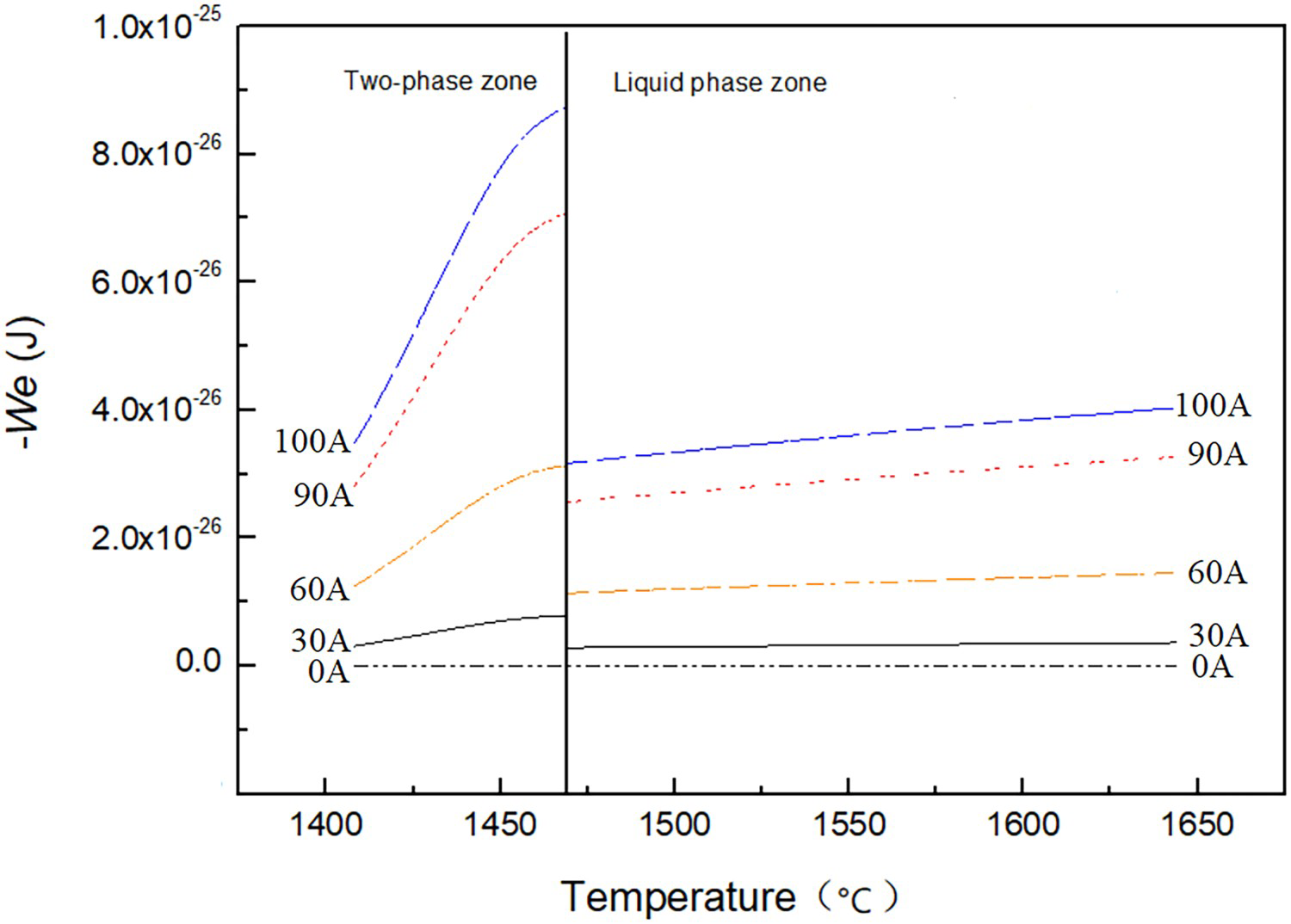
An obvious regularity can be seen from Figure 7 that the 321 stainless steel −We (We <0) increases with the increase of the electropulsing intensity in the liquid phase when the temperature remains unchanged. The greater the electropulsing intensity, the smaller the nucleation barrier (ΔG* + We ) of TiN in molten steel, which is conducive to the nucleation and precipitation of TiN. In addition, comparing the effects of different electropulsing intensities, it is found that Δ(−We ) increases with the increase of electropulsing intensity. Furthermore, when the electropulsing intensity is unchanged, −We increases with the increase of the electropulsing action temperature, indicating that the higher the temperature, the smaller the TiN in the molten steel nucleus barrier (ΔG* + We ), which is the more favourable of the electropulsing promoting the nucleation and precipitation of TiN.
In the two-phase region, the 321 stainless steel −We increases with the increase of the electropulsing intensity. Namely, the higher the electropulsing intensity, the smaller the nucleation barrier (ΔG* + We ) of TiN in the two-phase region. The larger electropulsing intensity is more favourable for the nucleation and precipitation of TiN. In addition, −We increases with the increase of the electropulsing action temperature when the electropulsing intensity is constant, indicating that the nucleation barrier (ΔG* + We ) of TiN in the two-phase region becomes smaller, which promotes the precipitation of nucleation during the solidification of molten steel.
In the molten steel and the two-phase region, the effect of electropulsing on the TiN nucleation barrier is different. This is because the mushy zone is formed when the temperature is lower than the liquidus temperature. Because the solubility in the solid phase is lower than that in the liquid phase, Ti and N elements are constantly enriched in the liquid phase, and the precipitation of TiN substances is precipitated. As the temperature decreases, the molten steel continues to solidify, the content of Ti and N elements in the liquid phase continues to decrease, and the precipitation of TiN becomes less and less.
Based on the above analysis and discussion, a schematic diagram of the comparison of the effects of different electropulsing intensities on the nucleation and precipitation of TiN is shown in Figure 8. The electropulsing treatment is beneficial to the nucleation and precipitation of TiN in the molten steel and the two-phase region. Compared to the samples without electropulsing treatment, the samples treated with electropulsing have more TiN precipitation and smaller size in the molten steel and two-phase region. And within the electropulsing intensities range used in the experiment, the larger the electropulsing intensity is, the more TiN is precipitated and the smaller the size is.
Schematic diagram of the effect of electropulsing on TiN nucleation and precipitation. Showing the comparison of the effects of different electropulsing intensities on the nucleation and precipitation of TiN.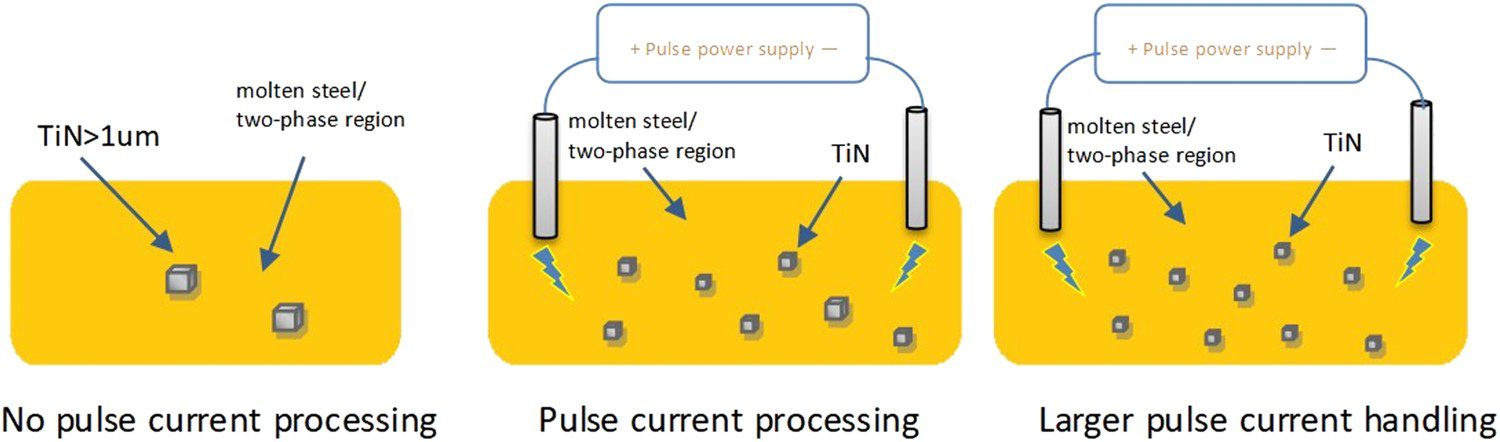
Conclusion
The experimental study found that the magnitude of the electropulsing has a significant effect on the nucleation and precipitation of TiN. At 1580°C, the TiN precipitates with a size range of 0.6–0.8 µm and distribution density of 442 pieces/mm2 were obtained in molten steel without electropulsing. While the size range of TiN precipitates was changed to 0.4–0.6 µm When electropulsing intensities of 30A, 60A, 90A, and 100A are applied to the molten steel. The distribution density of the TiN precipitates in the molten steel is 442, 522, 543, 603, and 703 pieces/mm2, showing an obvious regular increase. It was found that the nucleation barrier change value -We
(We
<0) increases gradually with the increasing of electropulsing intensity and electropulsing temperature, the calculation of the thermodynamic model. Furthermore, this indicates that the larger the electropulsing intensity and the higher the temperature, the smaller the nucleation barrier (ΔG* + We
) of TiN in the molten steel. The larger electropulsing intensity is more favourable to the nucleation and precipitation of TiN. The electropulsing treatment is beneficial to the nucleation and precipitation of TiN in the molten steel and the two-phase region. In the range of 0–100 A, the greater the electropulsing intensity, the more the precipitation quantity of TiN and the smaller the size.
Footnotes
Disclosure statement
No potential conflict of interest was reported by the author(s).