







Abstract
The potentials of artificial neural network (ANN) modelling as a potent machine learning approach for investigating the hot deformation behaviour of high-entropy alloys (HEAs) and multi-principal element alloys during thermomechanical processing are assessed and reviewed. Flow stress of CoCrFeNiMn (FCC Cantor alloy), HfNbTaTiZr (BCC refractory alloy), AlCoCuFeNi, and Al x CoCrFeNi alloys is accurately predicted based on the deformation temperature, strain rate, and strain. Moreover, in comparison with the limited experimental dataset, a significantly larger output dataset can be generated by ANN to gain valuable insights such as prediction of flow stress (and whole dynamic recovery/recrystallisation flow curves), elucidating the microstructural mechanisms such as dynamic precipitation reactions, and obtaining hot working parameters (e.g. deformation activation energy) for different ranges of deformation conditions.
Introduction
In 2004, Yeh et al. [1] and Cantor et al. [2] introduced high-entropy alloys (HEAs), which exhibit high mixing entropy that encourages the formation of random solid-solution phases [3]. Hot working, as a major processing step during forming/shaping of these alloys, is normally used for grain refinement via dynamic recrystallisation (DRX), reduction of casting defects, homogenisation of the microstructure, and improvement of the mechanical properties [4,5]. Similar to other alloys, the HEAs would be fabricated through elevated-temperature thermomechanically controlled processing, for which understanding the hot deformation behaviour is of utmost importance [6,7].
The characterisation of hot deformation behaviour during hot working is vital for developing metalforming processes [8–11], for which the appropriate constitutive equations are utilised to predict the hot deformation behaviour of the materials under the prevailing loading conditions [12,13]. For this purpose, the empirical, semi-empirical, phenomenological, and physically-based models [14,15], as well as machine-learning approaches such as artificial neural networks (ANN) models [16–23] have been proposed so far.
Several recent studies have studied the use of ANN for modelling the flow stress of AlCrFeNi multi-principal element alloy [7], (CoCrFeNi)90Zr10 eutectic alloy [24], and CoCrFeMnNi HEA [25] during hot deformation. These investigations have demonstrated the potential of ANN in this context, which needs to be investigated for many other HEA systems. Moreover, there are several recent works on hot deformation of HEAs and multi-principal element alloys [6,26–28], which can be reanalysed and modelled by ANN to generate a more complete dataset for the prediction of the flow stress and inferring useful correlations between phase transformations and hot deformation behaviour. Consequently, the present work is devoted to evaluating the suitability of ANN modelling for predicting the flow stress and obtaining relevant information (regarding phase formation, discussing calculated hot deformation parameters such as activation energy, predicting flow curves for untested conditions, etc.) based on the ANN model results.
Methodology
As indicated in Figure 1, the hot deformation flow curves of different HEAs were taken from the literature [6,26–28]. It can be seen that a number of multi-principal element alloys are considered. The CoCrFeNiMn and Al0.3CoCrFeNi alloys were chosen because they are among the well-known ones, and constitutive modelling of these alloys has been done before, allowing the comparison of ANN and constitutive modelling results. The Al0.3CoCrFeNi alloy was chosen to discover a relationship between hot deformation characteristics (such as activation energy) and microstructural evolution (such as dynamic precipitation) during hot deformation. In addition, HfNbTaTiZr HEA was chosen because this alloy has a single phase structure at the studied strain rates and temperatures, making it a suitable case for comparison with the Al0.3CoCrFeNi alloy that exhibited dynamic precipitation during the tests. On the other hand, the aim of this paper is the assessment of ANN modelling for a range of HEAs, and hence, the consideration of several alloys is logical. Accordingly, the AlCoCuFeNi was also considered.
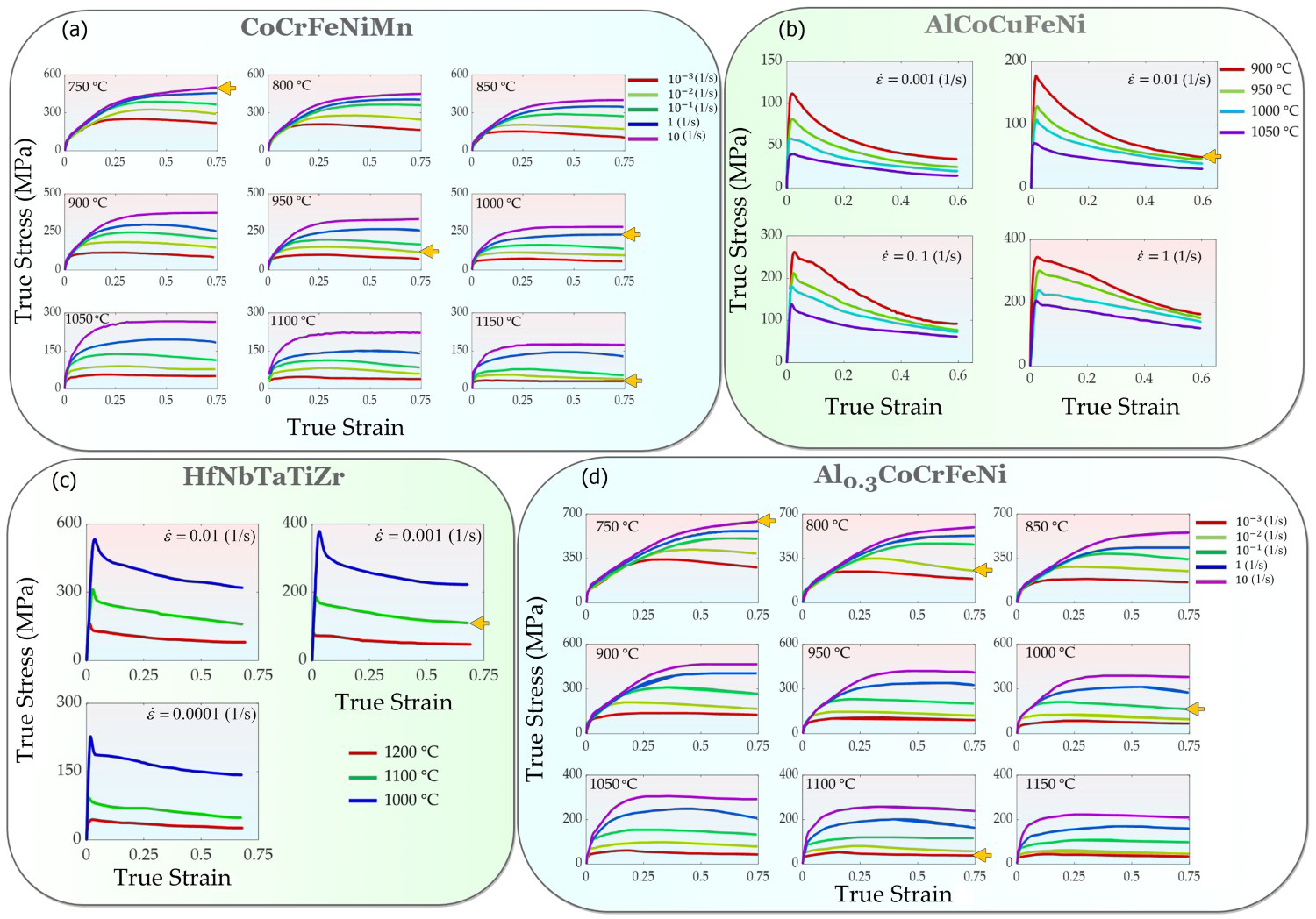
As shown in this figure by arrows, some flow curves were not used for training for the purpose of testing the ANN model. Temperature (T), strain rate (
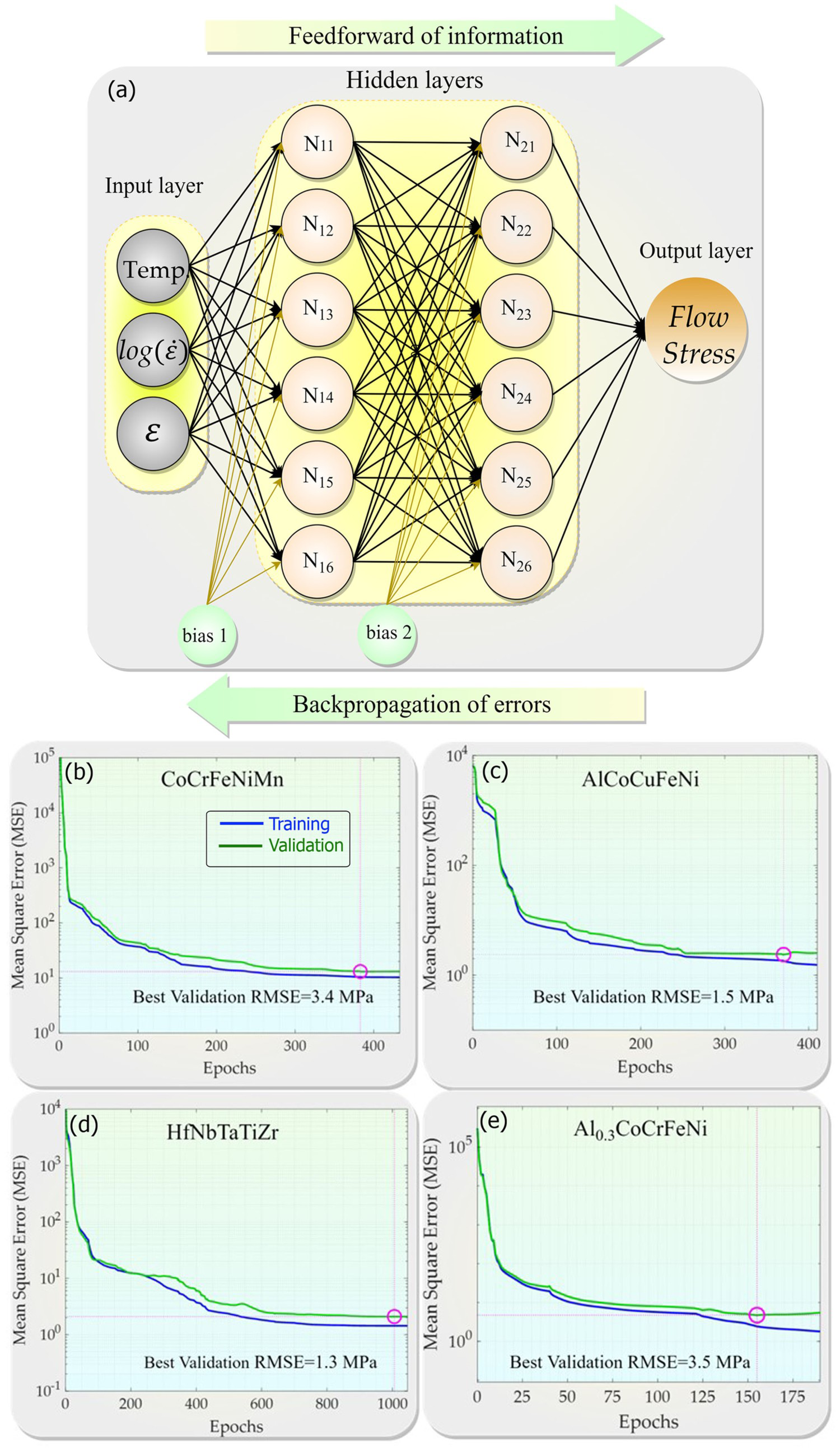
Regarding the ANN architecture [30], different numbers of neurones for both one and two hidden layers were trained. The recorded error values for both training and validation (20% of the dataset) sets are summarised in Figure 2 (for the Al0.3CoCrFeNi alloy as an example). It can be seen that the two hidden layer configuration leads to lower error values. Moreover, the lowest error was recorded for six neurones. Accordingly, two hidden layers and six neurones in each layer were used to construct the ANN model (Figure 3(a)) using MATLAB R2022a. The Levenberg-Marquardt backpropagation algorithm [31] was selected as the optimisation method for updating the weights and biases of the constructed ANN. Overtraining was avoided by considering a validation set (20% of the dataset) in the ANN model, and hence, training was terminated when the validation error started to increase, as shown in Figure 3(b–e) for the considered HEAs.
Training and validation error values for different ANN architectures. (a) ANN model used in this work and (b–e) monitoring of error during training.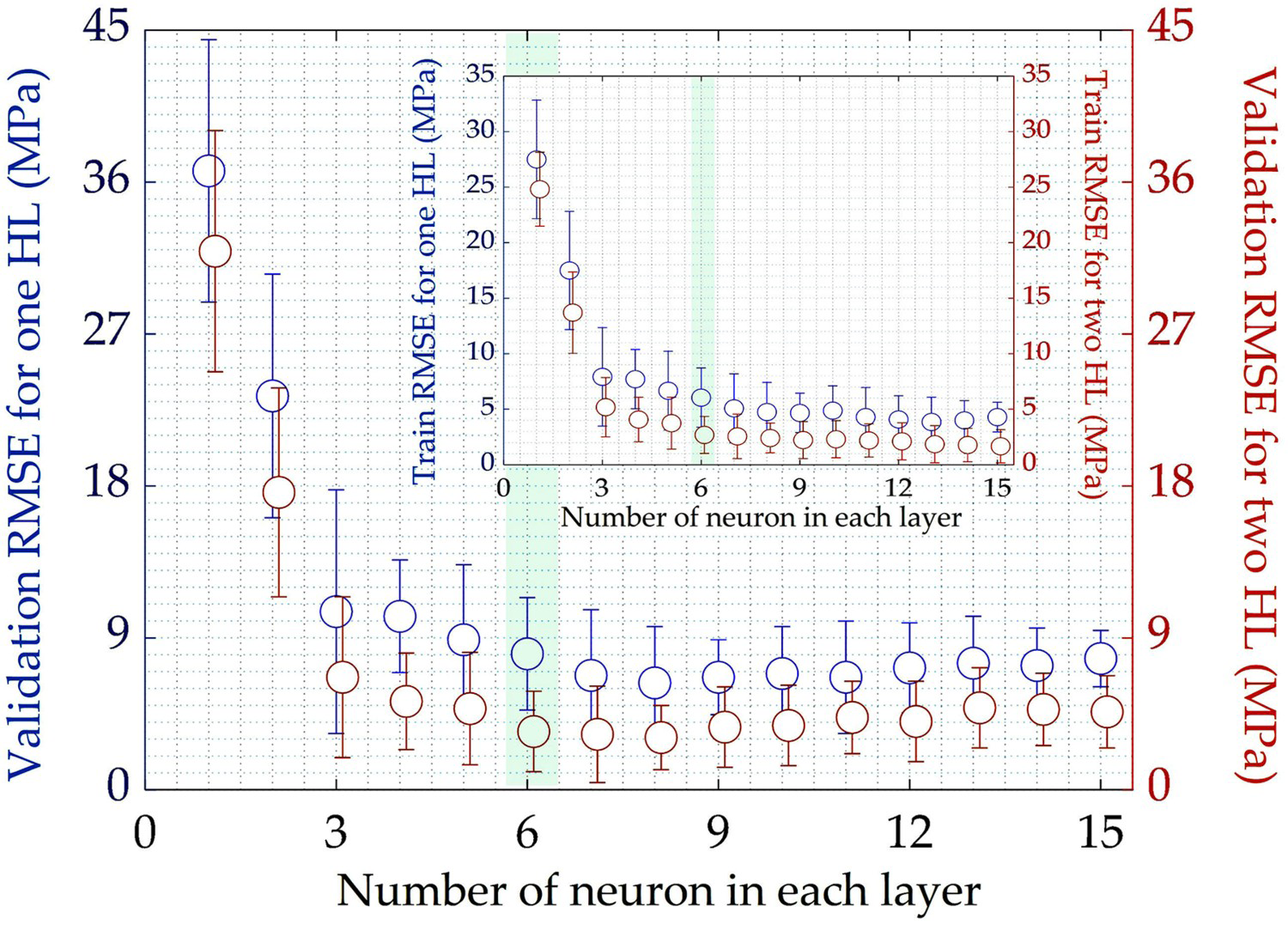
Results and discussions
Predictive ability of the ANN model
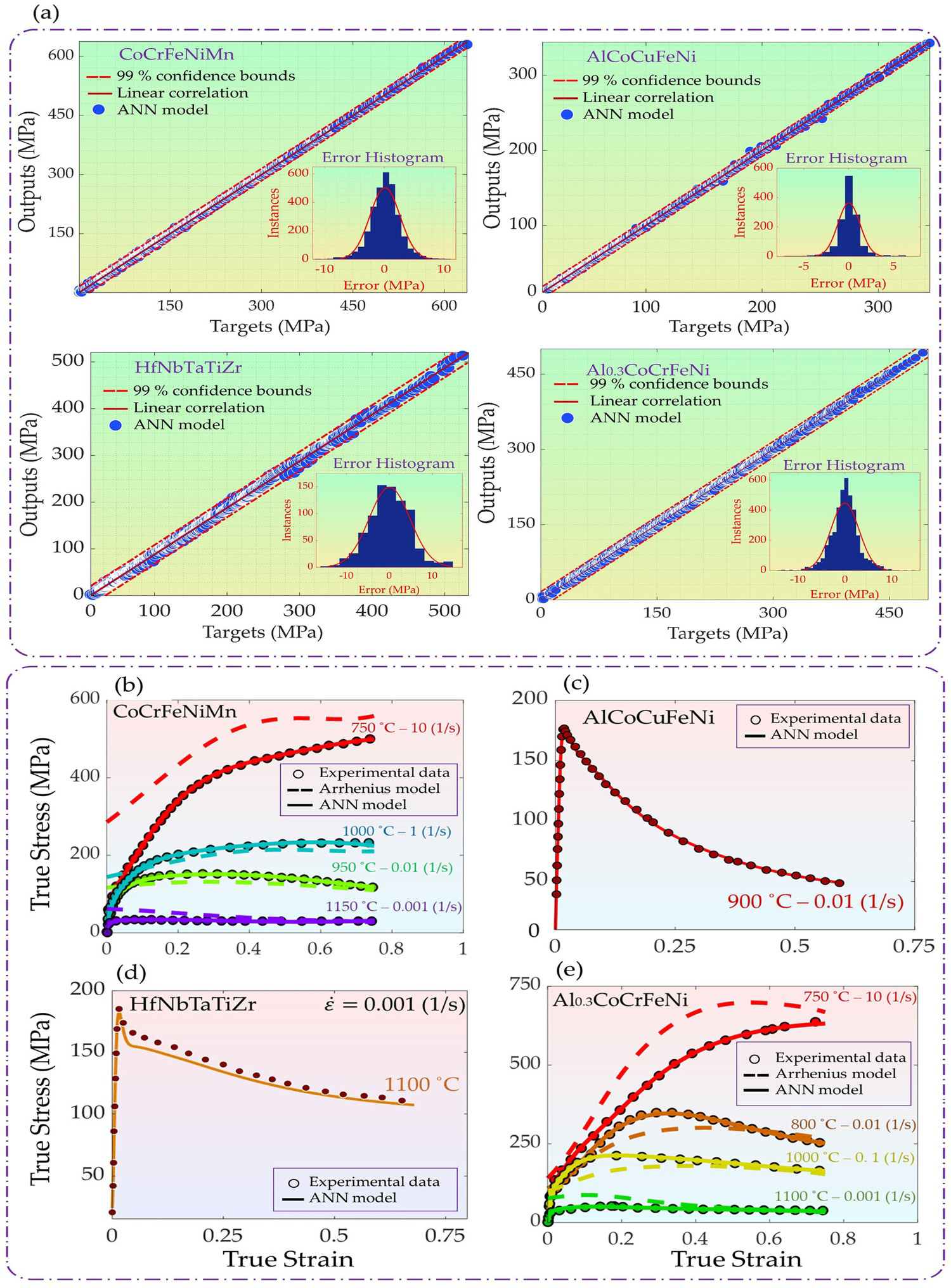
The ANN outputs versus targets for the training dataset are displayed in Figure 4(a). Generally, the model results and the experimental data show excellent consistency, where the values of the correlation coefficient R2 are higher than 0.99. The obtained error histograms are also shown in Figure 4(a), indicating that the error histograms can be well-fitted by the normal distribution curves with a mean error value (target-output) of zero. Therefore, Figure 4(a) reveals that the developed ANN models for all four HEAs are reliable. Figure 4(b–e) compares the experimental flow curves with those obtained by the ANN models. It is apparent that the ANN models developed in this work are suitable for modelling flow stress under untested conditions, demonstrating their generalisability. Moreover, it can be seen that both dynamic recovery (DRV)-type and DRX-type (with flow softening after the peak point) can be modelled by the ANN technique. The strain-compensated Arrhenius-type model depicted by Equation 1 is also shown for comparison in Figures 4(b,e).
(a) ANN outputs vs. targets for training datasets and the obtained error histograms and (b–e) comparison of experimental flow curves and those obtained by the ANN models for the testing set (shown by arrows in Figure 1). In parts (b) and (e), the results of the Arrhenius model applied in the original works [28,32] for the prediction of flow stress have also been indicated.
Applications of the ANN model
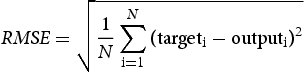
Figure 4(b–e) proved the good prediction ability of the developed ANN models for modelling and prediction of flow stress. It can be better assessed by calculating the root mean square error (RMSE) and the percentage of the average absolute relative error (AARE) according to the following equations:

The developed ANN models can be used to obtain the flow stress (and the whole flow curves) for the untested conditions (at least between the reported ranges of input variables). As a result, in comparison with the limited experimental dataset (as shown in Figure 5(a)), a significantly larger output dataset can be used to investigate the hot deformation behaviour of the material. An example is shown in Figure 5(b) for the Al0.3CoCrFeNi multi-principal element alloy, where the generated data by ANN model was used to construct the contour maps of peak stress for different deformation conditions. According to Figure 5(c,d), the predicted values outside of the experimental range (represented by star points in Figure 5(a)) exhibit conformity with the trend of the experimental data points, indicating the precision of the model and the presence of a well-trained network.
(a) Experimental and predicted ranges of temperature and strain rate for Al0.3CoCrFeNi multi-principal element alloy, (b) contour map of the predicted peak stress at different temperatures and strain rates, (c) dependency of peak stress on temperature, and (d) dependency of peak stress on strain rate.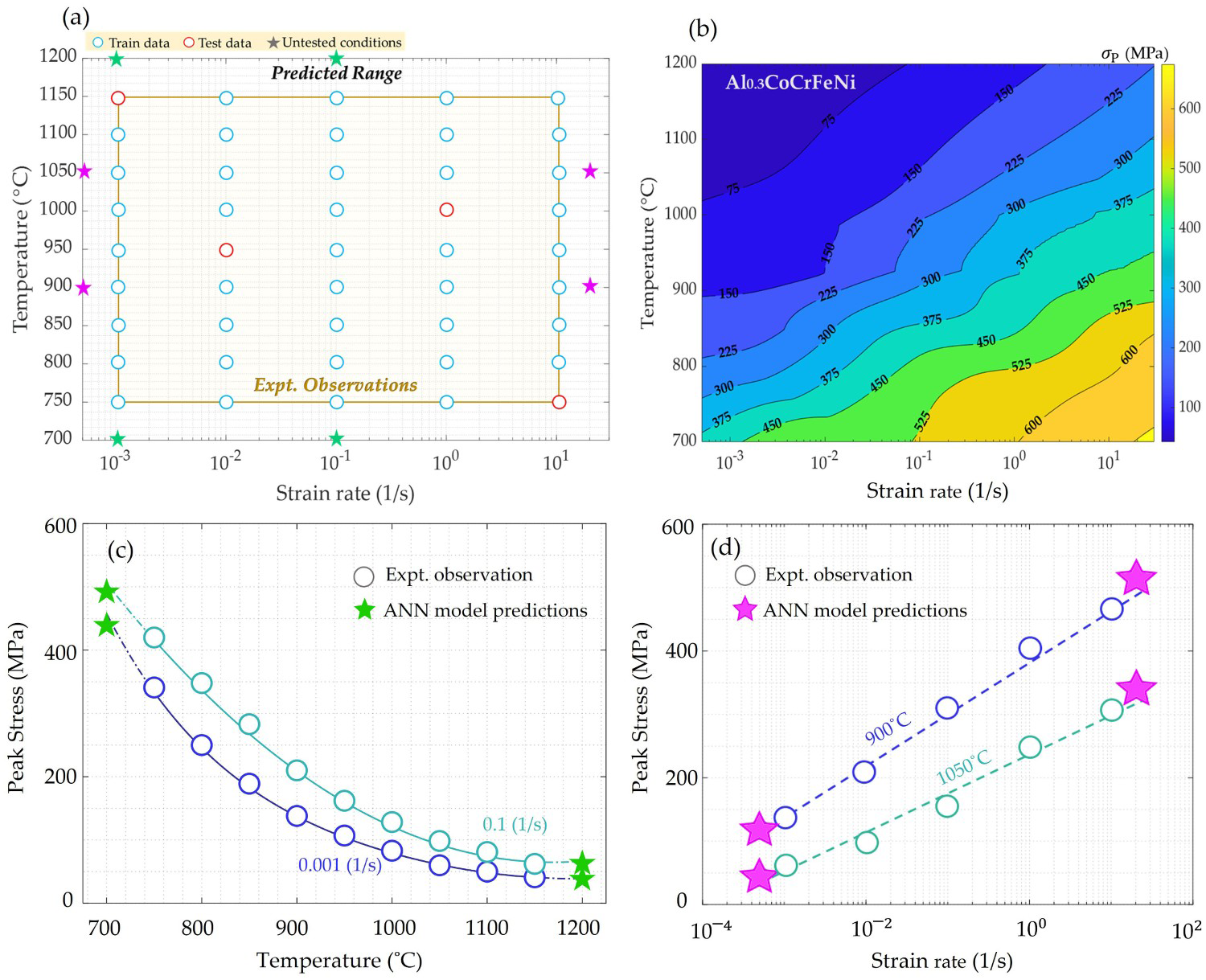
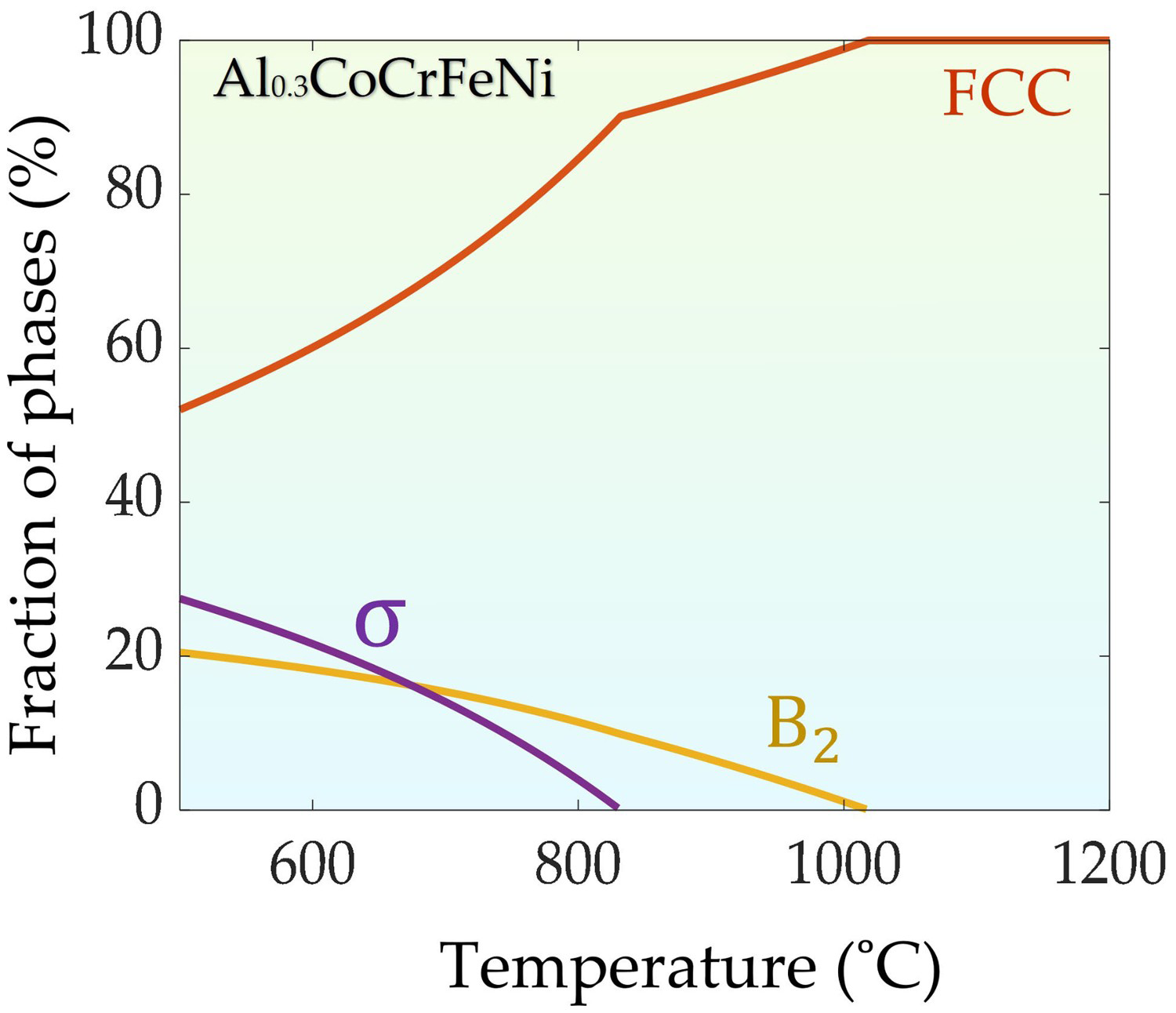
In Figure 5(b), each contour line for the Al0.3CoCrFeNi multi-principal element alloy at temperatures between 700 and 1000°C and low strain rates deviates sharply from the trend found at higher temperatures, whereas the same figure for the HfNbTaTiZr HEA (as depicted in Figure 6) demonstrates no such deviation. Figure 7 depicts the predicted equilibrium phases for the Al0.3CoCrFeNi multi-principal element alloy, where intermetallic phases form within the specified temperature range. Therefore, these phases may influence the flow behaviour of the material by interacting with the dislocation movement [33], resulting in the trend exhibited in Figure 5(b). This behaviour can be seen at low strain rates, which is related to the enhanced kinetics of dynamic precipitation of these phases [34]. The presence of the B2 phase in this alloy up to ∼950°C and a strain rate of 0.001 s−1 has been confirmed by Tong et al. [33]. In contrast, HfNbTaTiZr HEA exhibits no precipitation reaction in the investigated temperature range [35], hence simple contour lines were determined for this alloy, as shown in Figure 6.
Contour map of the predicted peak stress at different temperatures and strain rates for the HfNbTaTiZr HEA. Equilibrium phase diagram of Al0.3CoCrFeNi multi-principal element alloy.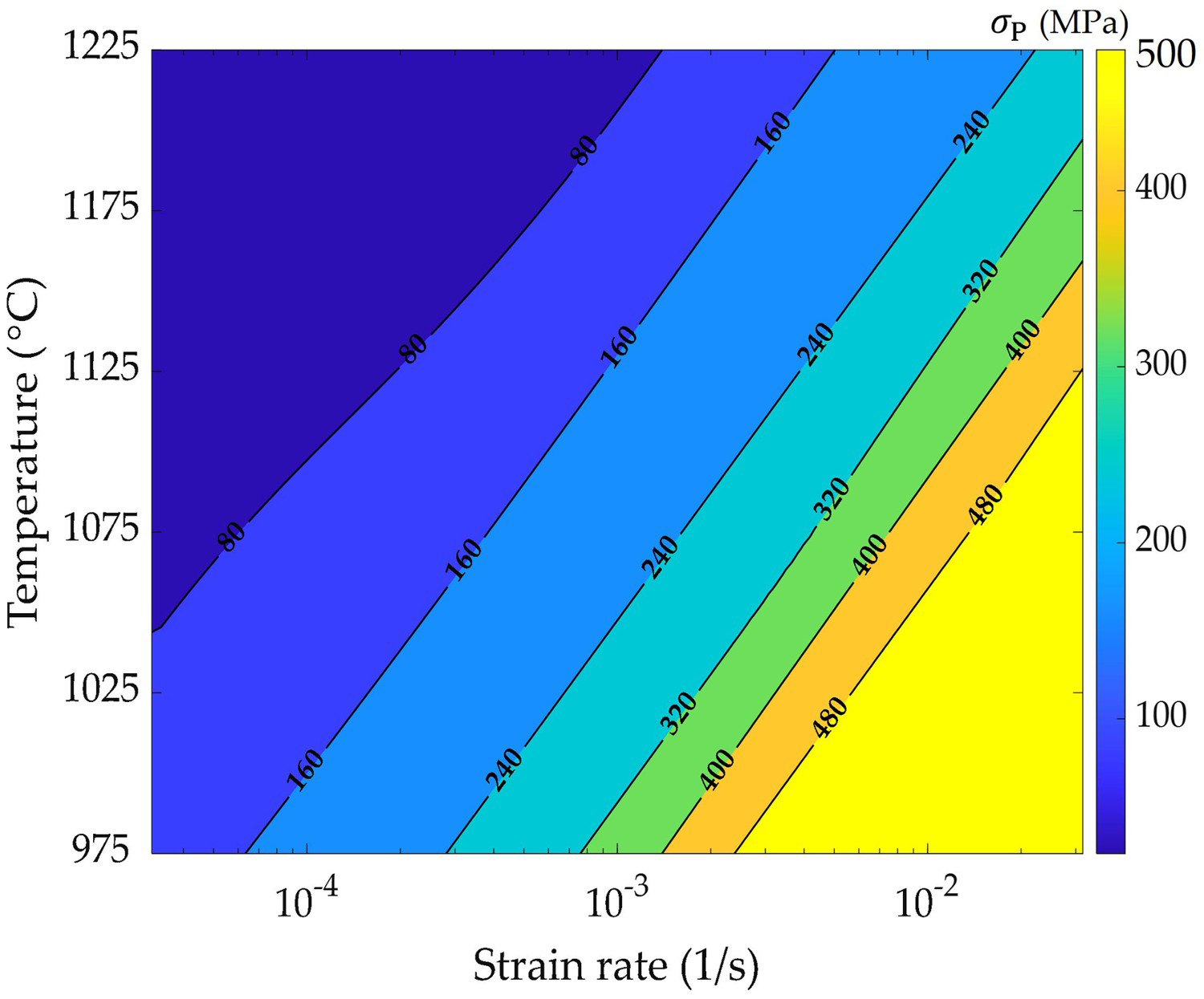
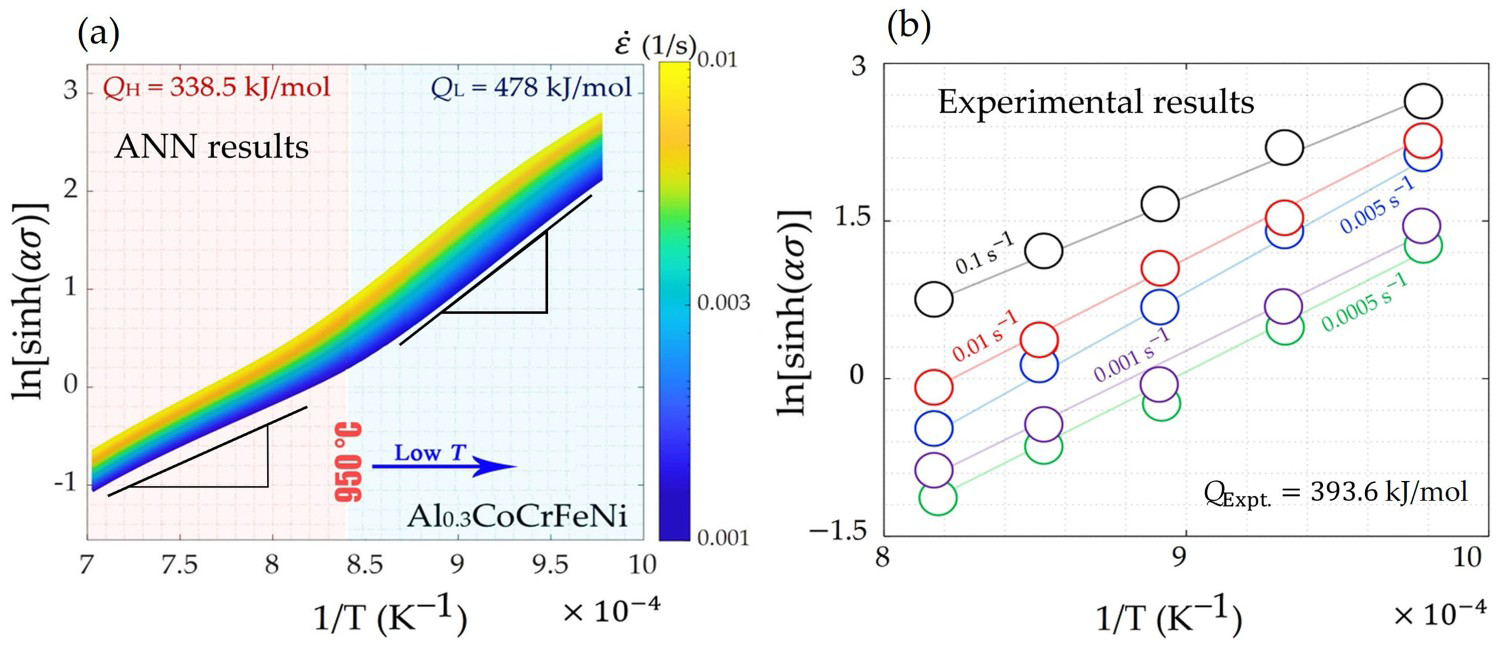
Another advantage of using the ANN model can be seen in Figure 8(a), where the 1/T range has been divided into a low-temperature regime with QL = 478 kJ/mol and a high-temperature one with QH = 338.5 kJ/mol. It is noteworthy that the slope of the plot of Plot for obtaining hot deformation activation energy for Al0.3CoCrFeNi multi-principal element alloy: (a) ANN model and (b) experimental data [33].
Additionally, the ANN model can be utilised to predict flow curves under untested conditions. An example is shown in Figure 9(a), where the flow curves for temperatures of 1050 and 1150°C were obtained by the ANN model. It can be seen that these flow curves have the expected shape and the flow stress levels are reasonable. In this regard, one more merit of the ANN model is its ability to average the flow stress data received from different studies. An example is shown in Figure 9(b) by applying the ANN technique to the data reported by Patnamsetty et al. [32] and Eleti et al. [36]. It can be seen that the ANN model can be used to obtain the average flow curve for each temperature and strain rate, giving a more reasonable statistical output.
(a) Applicability of ANN model for predicting flow curves for the untested conditions and (b) applicability of ANN model for averaging the data reported in various works.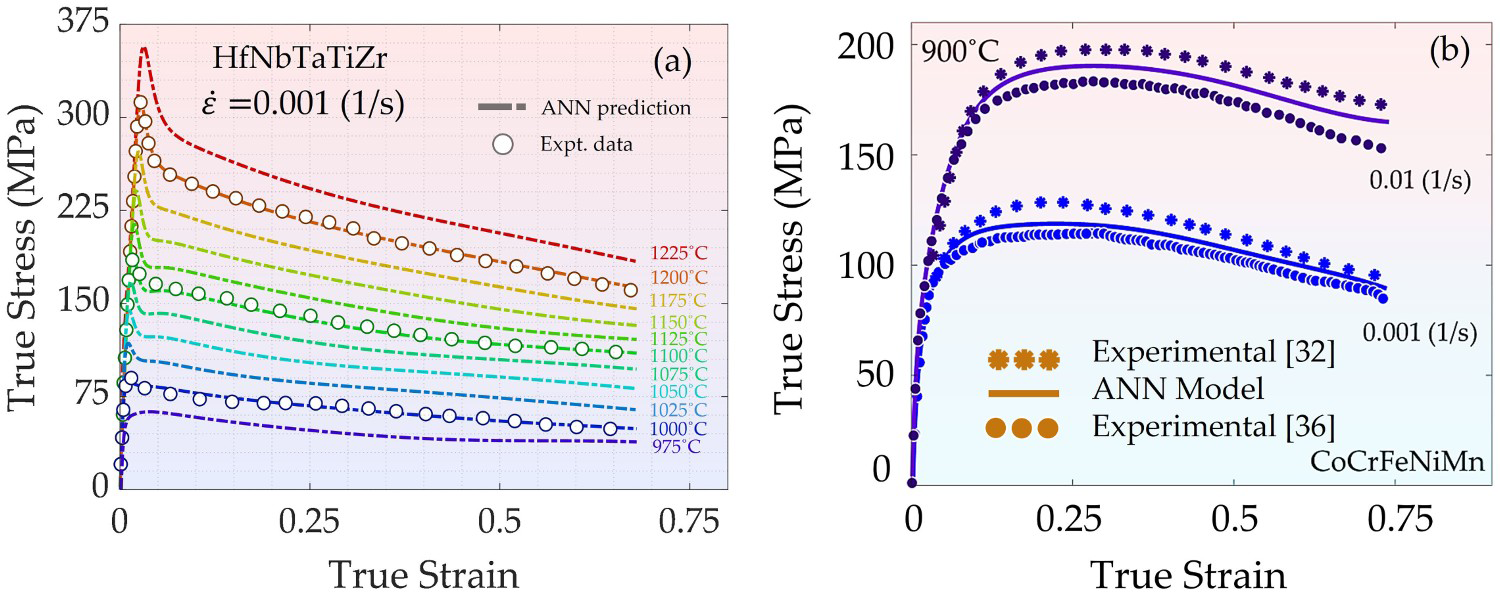
In the present work, it was shown that the ordinary ANN can successfully be used to model the flow stress and inferring useful information regarding the hot deformation behaviour. Accordingly, more sophisticated machine learning techniques can be used in this regard, including evolutionary deep neural net (EvoDN2) [37,38], adaptive neuro-fuzzy inference system (ANFIS) [39], and deep and reinforcement learning of artificial neural network model [10,16], as well as multi-objective optimisation techniques such as genetic algorithm [23].
Summary
In summary, the applicability of ANN to the study of the hot deformation behaviour of HEAs was evaluated in this work. The CoCrFeNiMn, AlCoCuFeNi, HfNbTaTiZr, and AlxCoCrFeNi HEAs were considered, and their flow stress was modelled based on deformation temperature, strain rate, and strain as input variables. The following conclusions can be drawn:
In order to avoid overtraining, it was found that networks with two hidden layers and six neurones in each layer are appropriate regarding the reduction of error levels for both training and validation data. The developed networks showed good performance, and network results were in reasonable agreement with experimental data. The developed ANN models were quite successful in predicting the flow stress (and the whole flow curve) for untested conditions. Moreover, the predicted values for deformation conditions outside of the experimental range were also reasonably consistent with the trend of the experimental data, indicating the precision of the model and the presence of a well-trained network. In comparison with the limited experimental dataset, a significantly larger output dataset can be generated by ANN to gain valuable insights regarding the elucidation of microstructural mechanisms such as dynamic precipitation reactions, and obtaining the hot working parameters (e.g. deformation activation energy) for different ranges of deformation conditions.
Footnotes
Data availability
The authors stated that the processed data required to reproduce these findings were available in this manuscript.
Ethical statement
The manuscript has been prepared by the contribution of all authors, it is the original authors work, it has not been published before, it has been solely submitted to this journal, and if accepted, it will not be submitted to any other journal in any language.
Disclosure statement
No potential conflict of interest was reported by the author(s).