







Abstract
With the development of space technology, high-temperature resistant materials have become one of the hot spots in space research. The research of new high-temperature materials has become the key to breakthrough in aviation field. Research on microstructure and properties of AlCrxFeNi1.2Cu0.8 high-entropy alloys at high temperature (900, 1000 and 1100°C) were studied in this paper. After high-temperature annealing, the structural stability of alloys is maintained and the microstructure of alloys is dendrite. The grains are refined with the increase of Cr content. The alloy exhibits excellent comprehensive mechanical properties after heat treatment. The compressive strength of the alloy is above 1000 MPa and the plasticity of the alloy is above 10%. The alloy changes from brittle to tough with the increase in temperature. The hardness of Cr1.25 specimen is doubled after annealing, and the corrosion resistance of Cr 0.5 specimen is the best.
Introduction
High-entropy alloy (HEA) is a new kind of material with a high alloying degree based on 3 to 5 metal elements. Owing to its atomic structure characteristics of chemical disorder, it shows special properties superior to traditional alloys, such as high hardness and strength [1–3], good thermal stability and oxidation resistance [4,5], excellent wear resistance and corrosion resistance [6–9]. The development of aerospace industry has put forward higher and higher requirements for high-temperature structural materials. Developing a kind of material that can work in high-temperature environment and maintain good performance has become a research hotspot.
AlCoCrFeNi series HEAs have excellent comprehensive mechanical properties and have been extensively studied by scholars all over the world. The high density and high cost of Co limit the engineering application of the alloy. There are few studies on the system of high entropy alloy with Cu element added. We try to use Cu element to replace Co element in AlCoCrFeNi high entropy alloy, and then further study. Cu can not only promote the formation of FCC phase to achieve the toughening effect, but also play the role of segregation in the intergranular precipitation strengthening. HEAs have high mixing entropy and Gibbs free energy can be greatly reduced at high temperature, showing good thermal stability and other properties. N. Malatji [10] and Li AnMin [11] discovered the as-cast AlCrFeNiCu HEA was composed of FCC and BCC dual-phase solid solution structure, and the microstructure exhibited as dendrites. Azmi Erdogan [12] prepared AlCrFeNiX(X:Cu,Si,Co) HEA by mechanical alloying and sintering, the results indicated that the addition of Cu can promote the formation of FCC phase. Wang Xin [13] indicated the dynamic recrystallisation characteristics of AlCrFeNiCu HEAs by a high-temperature thermomechanical simulator test, the volume fraction of dynamic recrystallisation falls with the deformation rate rising. Pi Jinhong [14] fabricated AlCrFeCuNix HEA by vacuum arc melting method, and showed FCC phase increases with the addition of Ni content. After our study, we found that AlCrxFeNi1.2Cu0.8 HEAs still has good performance under high-temperature environment, so it has a good development prospect in the field of aerospace.
Cu is easy to be segregated and softened at high temperature, and its content is controlled to achieve high degree alloying. In this paper, AlCrxFeNi1.2Cu0.8(x = 0.5,0.75,1.0,1.25) HEAs were determined, and the effect of Cr content on the microstructure and properties at high temperature were studied. In the cast alloy, with the increase of Cr content, dendritic dendrites become fine, distribution becomes more uniform, hardness of the alloy gradually decreases, and compression strength and compression plasticiser gradually increase. When x = 1.25, the compressive strength was 2051 MPa, and the plastic ability was 15.1%. It is found that the properties of high entropy alloys after heat treatment will be different due to the content of Cr element.
Experimental method
AlCrxFeNi1.2Cu0.8(x = 0.5,0.75,1.0,1.25) HEAs were composed of a mixture of pure Al, Cr, Fe, Ni and Cu metals (purity>99.8%) and fabricated by vacuum arc melting method in argon atmosphere. The ingot mass is 60 g, and the quality required for each kind of gold raw material was calculated according to the original fraction ratio (at.-%). The precision was 0.001 g. Repeated melting four times to ensure uniform melting. A number of cylindrical (3 mm diameter) specimens were cut from the ingot, some of which were placed in a resistance furnace and kept at 900, 1000 and 1100°C for 6 and 64 h. Alloy compositions of x = 0.5, 0.75, 1.0 and 1.25 were recorded as Cr0.5, Cr0.75, Cr1.0 and Cr1.25, respectively. The structural composition of HEAs was detected by XRD (D/max-2400 X). The microstructure and micro-area composition were examined by optical microscopy (AxioScope A1, Shangrao Qiansheng Electronic Technology Co., LTD) and energy spectrometer (JSM-6390A, JEOL). The compressive performance was carried out on the universal testing machine (WDW-100D), and the ratio of height to diameter of the sample was 2:1. The fracture morphology was analysed by scanning electron microscope (JSM-6390A, JEOL), and each specimen was tested three times with the strain rate of 10−4 s−1 to ensure the accuracy. The corrosion properties of specimens were studied by electrochemical workstation. The open circuit voltage, polarisation curve and electrochemical impedance were measured experimentally with the corrosive liquid of 3.5% NaCl solution. The open circuit voltage measurement time was 30 min, polarisation curve measurement rate was 0.1 V/s, measurement range was −1.5 V∼1.5 V, and the frequency range of electrochemical impedance measurement was 1 Hz∼106 Hz.
Result and discussion
XRD analysis
Figure 1 shows XRD patterns of AlCrxFeNi1.2Cu0.8(x = 0.5,0.75,1.0,1.25) HEAs after high-temperature annealing for 6 h. As shown in Figure 1(a), as-cast alloys consist of FCC and BCC phases with a simple structure. The intensity of the corresponding diffraction peaks at 65° and 75° decreases with the increase of Cr content, which is attributed to the fact that a small amount of Cr element dissolves in the HEA matrix, occupies part of the lattice points, and inhibits the growth of the FCC phase. A new diffraction peak appears at 31°, which indicates that adding more Cr element is beneficial to promote the formation of the BCC phase. The FCC phase at 44°, 50° and 74° gradually disappears, showing that too much Cr has a significant effect on inhibiting the growth of the FCC phase, which also leads to a substantial increase in the strong plasticity of the material in the subsequent compression test, mainly due to the densification of the structure by the high-toughness metal Cr element [15].
XRD patterns of AlCrxFeNi1.2Cu0.8(x = 0.5,0.75,1.0,1.25) HEAs after high temperature annealing for 6 h (a) as-cast; (b) 900°C; (c) 1000°C; (d) 1100°C.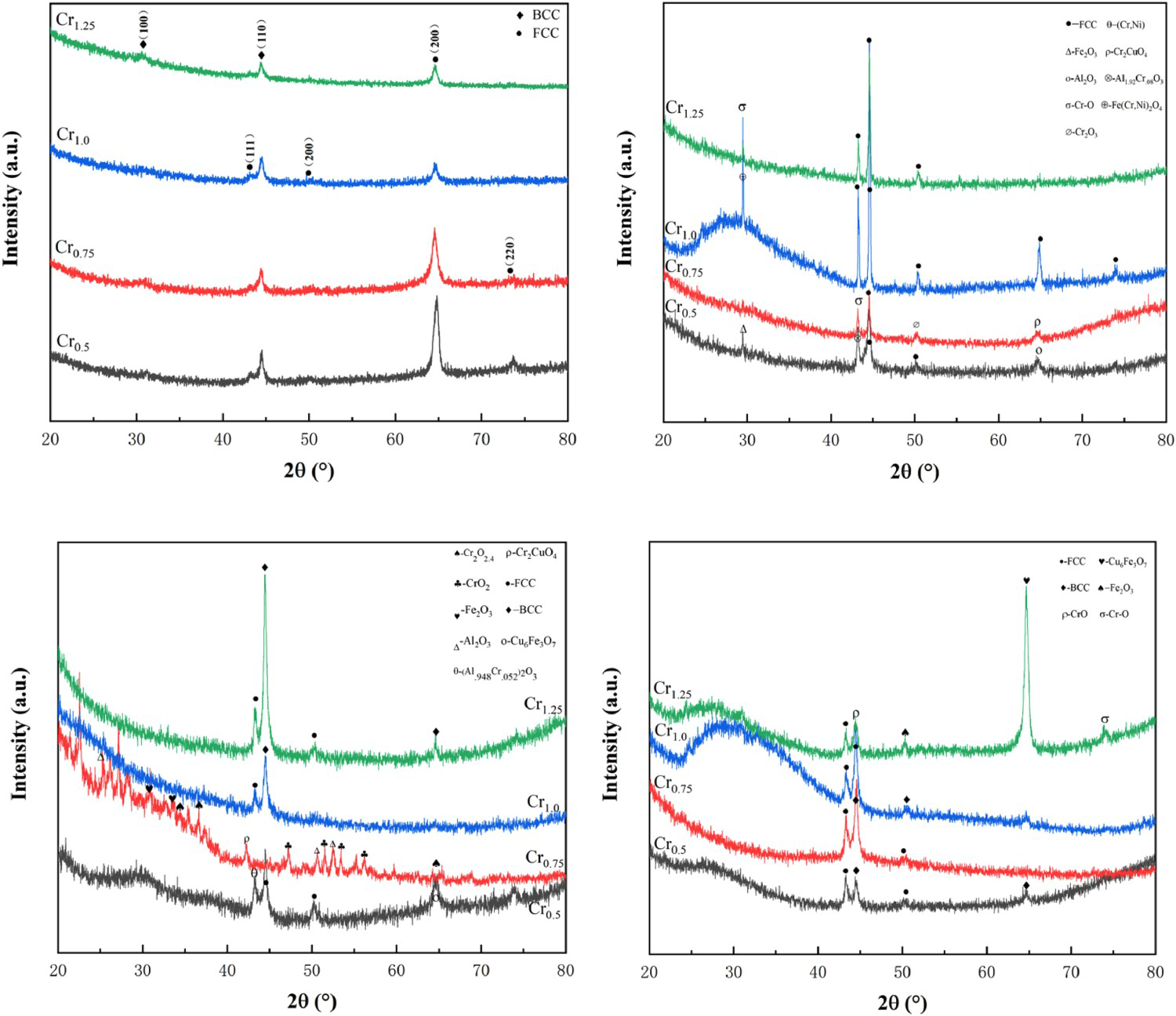
After annealing, the matrix peaks are basically retained, new diffraction peaks appear and mainly distribute at the positions of 30°, 44°, 45°, 50°, 65° and 74°. In the initial stage of oxidation of the alloy surface, a large number of oxidation products are formed, such as Al2O3, Cr2O3, Al1.92Cr.08O3, FeAl2O4, Fe(Cr,Al)2O4, Cu6Fe3O7 and Cr2CuO4. In addition, some intermetallics are also formed such as AlNi3, Al1.1Ni0.9 and nickel-chromium compounds.
At 900°C (Figure 1(b)), chromium-aluminium oxide is mainly detected with the higher matrix peak intensity, and Fe2O3 is found with trace addition of Cr content. As the temperature increases to 1000°C (Figure 1(c)), specimens with less Cr content (x ≤ 1.0) have weaker matrix peak strength. When x is 0.75, a large number of diffraction peaks appear, which is mainly Al2O3, Cr2O3, Cr2O2.4 and Fe2O3. The oxidation product Cr2CuO4 is also detected at 43° position, which is formed by the reaction of CuO and Cr2O3. Part of Cu is precipitated in the Cu-rich phase with FCC structure, and the other part is present as an intermediate product CuO. At 1100°C (Figure 1(d)), high temperature makes the products generated in the early stage gradually disappear. AlCrxFeNi1.2Cu0.8 HEAs are based on FCC phase and BCC phase structure, but the matrix peak strength is weakened. With the increase of Cr content, the content and types of Cr oxides increase, and Cu6Fe3O7 is detected at the position of 65°.
OM analysis
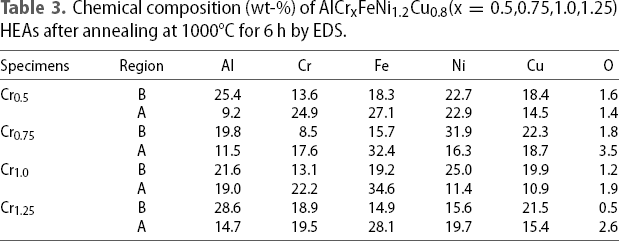
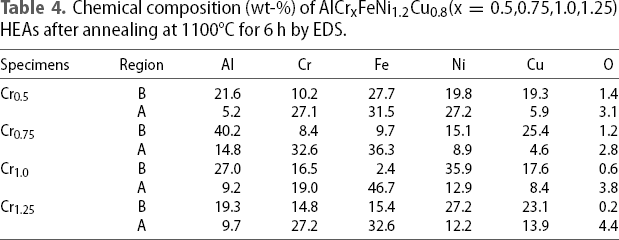
Figure 2 shows the microstructure of AlCrxFeNi1.2Cu0.8(x = 0.5,0.75,1.0,1.25) HEAs after annealing for 6 h. After heat treatment, the microstructure of alloys are dendrites. With the increase of the heat treatment temperature, the dendrite grows significantly. This is due to the decrease of the grain boundary resulting in the decrease of the grain boundary energy, and the grain growth has obtained sufficient driving force. In addition, with the increase of Cr content, the distribution of dendrites becomes more uniform, and the structural stability of the alloy is maintained. Heat treatment temperature and holding time have a great influence on the structure, among which temperature is the dominant factor. At a certain temperature, with the extension of holding time, the grain size gradually increases and then stabilises, and no longer continues to grow. As the temperature rise, the crystal grains will grow further. In a certain holding time, as the heat treatment temperature increases, the solute mass transfer coefficient changes, the nucleation rate of crystal grains decreases, and the crystal grains gradually grow up. In the annealing stage, the grains are usually in the process of growing. The higher the temperature, the shorter the time to complete recrystallisation. Therefore, under a certain holding time, the grain growth rate will be faster, the grain microstructure will be coarser.
Optical microscope images of AlCrxFeNi1.2Cu0.8(x = 0.5,0.75,1.0,1.25) HEAs after annealing for 6 h (A stands for dendrite and B stands for interdendrite): (a1–a4) 900°C; (b1–b4) 1000°C; (c1–c4) 1100°C. (The magnification is 500 times).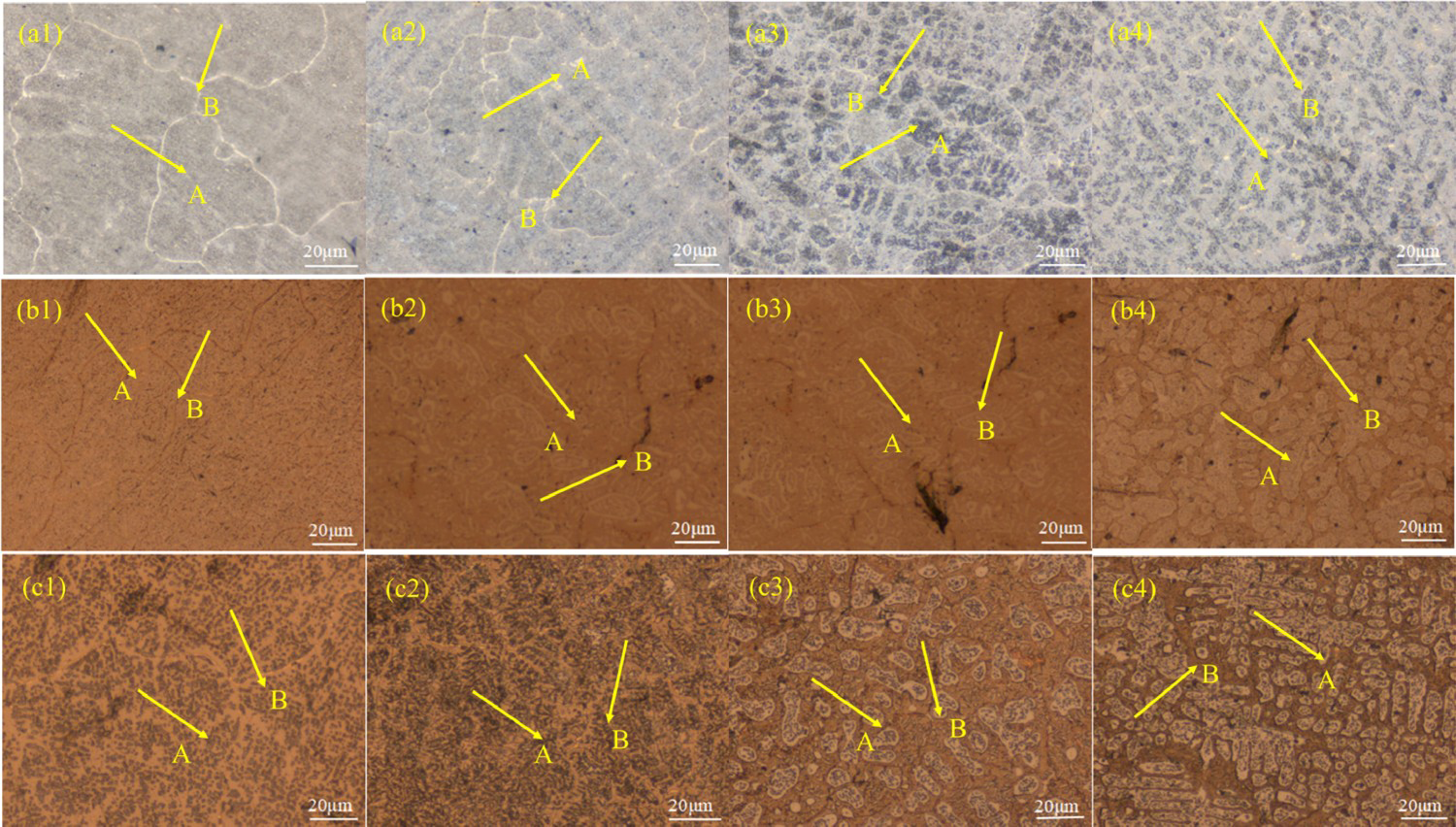
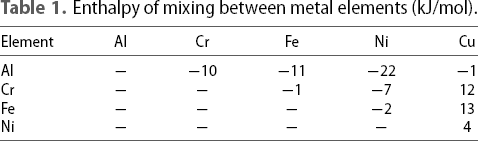
Enthalpy of mixing between metal elements (kJ/mol).
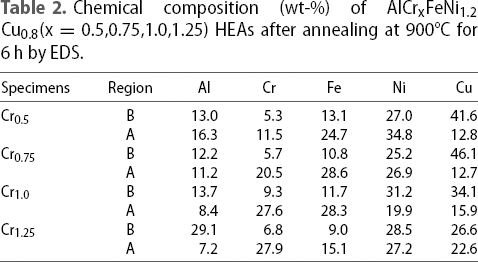
Chemical composition (wt-%) of AlCrxFeNi1.2Cu0.8(x = 0.5,0.75,1.0,1.25) HEAs after annealing at 900°C for 6 h by EDS.
Chemical composition (wt-%) of AlCrxFeNi1.2Cu0.8(x = 0.5,0.75,1.0,1.25) HEAs after annealing at 1000°C for 6 h by EDS.
Chemical composition (wt-%) of AlCrxFeNi1.2Cu0.8(x = 0.5,0.75,1.0,1.25) HEAs after annealing at 1100°C for 6 h by EDS.
Mechanical properties
Compressive property analysis
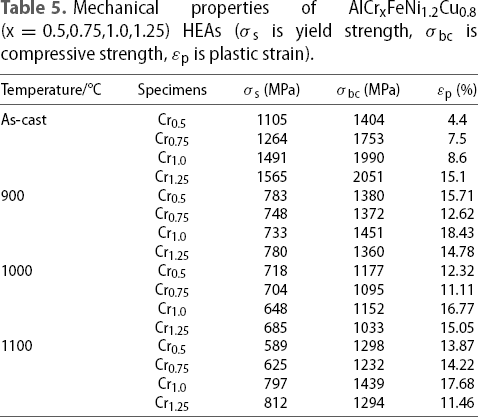
Figure 3 shows the compressive properties of AlCrxFeNi1.2Cu0.8(x = 0.5,0.75,1.0,1.25) HEAs. The comprehensive mechanical properties of as-cast alloy with x = 1.25 reach the best (Figure 3(a)). Excessive Cr enhanced the ductility of the alloy through grain refinement strengthening. The yield strength is 1565 MPa, the compressive strength is 2051 MPa and the compressive plasticity reaches 15.1%. From XRD analysis, it can be seen that the increase of Cr element is conducive to the precipitation of more BCC phase, which is the reason for the change of alloy properties. It can be observed from Figure 2 that for high-entropy alloy in as-cast state, the increase of Cr will lead to grain refinement of the high-entropy alloy and improve the mechanical properties of the alloy. After annealing, the internal structure such as grain size and grain distribution will change. The yield strengths of the alloys are below 1000 MPa and the compressive plasticity are significantly improved. The movement of metal atoms becomes more intense with the heat treatment temperature rises and obtains sufficient kinetic energy makes it easier for dislocations to slip, this is also the main reason that the yield strength of alloys decreases after heat treatment.
Compressive properties of AlCrxFeNi1.2Cu0.8(x = 0.5,0.75,1.0,1.25) HEAs after annealing for 64 h (a) as-cast; (b) 900°C; (c) 1000°C; (d) 1100°C.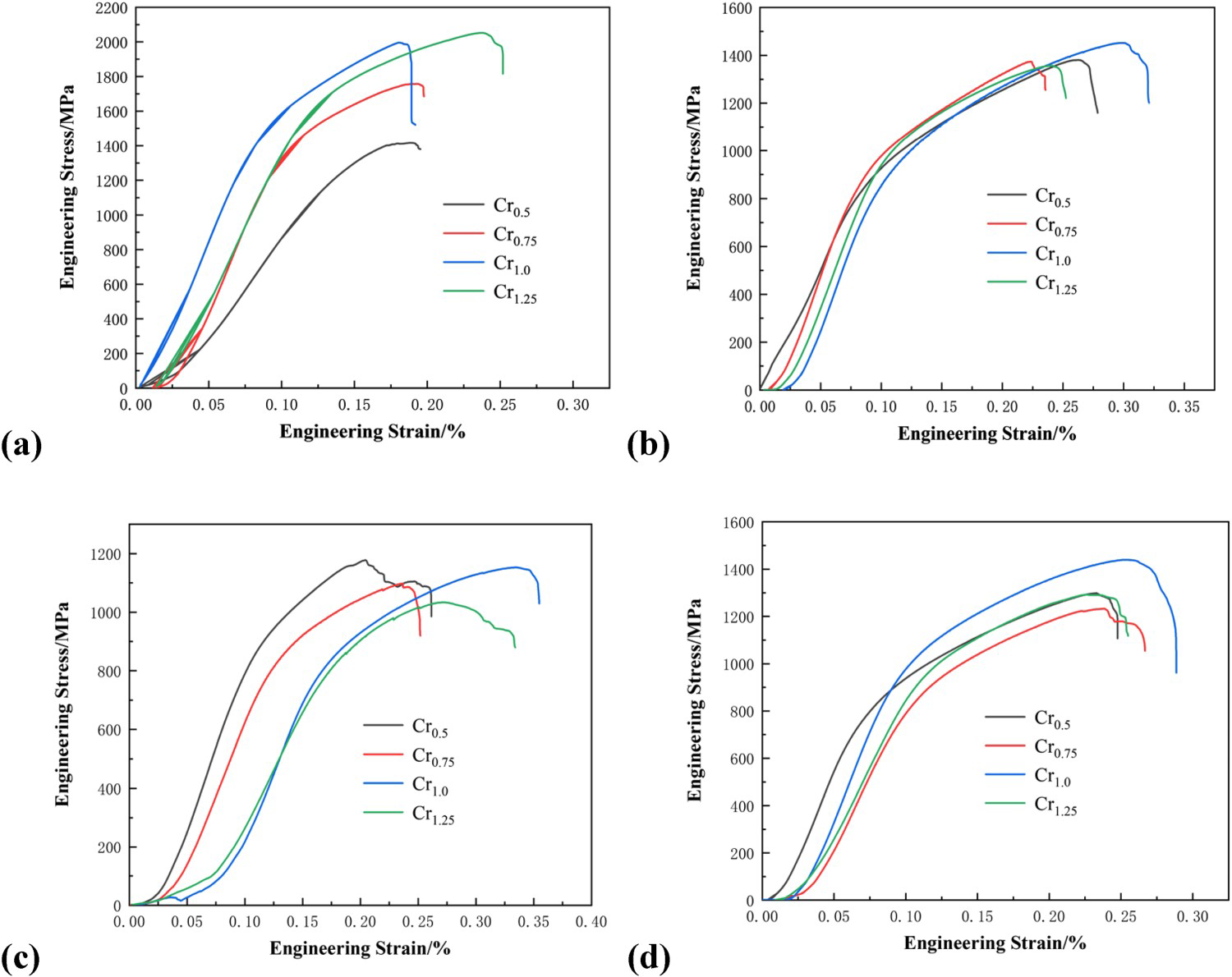
Mechanical properties of AlCrxFeNi1.2Cu0.8(x = 0.5,0.75,1.0,1.25) HEAs (σs is yield strength, σbc is compressive strength, εp is plastic strain).
Fracture morphology analysis
Figure 4 shows the compression fracture morphology of AlCrxFeNi1.2Cu0.8(x = 0.5,0.75,1.0,1.25) HEAs after high-temperature annealing for 64 h. The fracture morphology of the alloy is mainly characterised by river-like characteristics, which is a typical brittle fracture. The size, direction and density of the river change with the increase of Cr content. At 900°C (Figure 4(a1–a4)), some black holes appear in the fracture morphology. As indicated by arrow A, these holes are precursors to the appearance of dimples and are easily formed by condensation. With the increase of the Cr content, the river becomes wider and narrower and new branches appear, and holes are easily formed between rivers with distinct layers, which is also a sign of the initial formation of dimples. At 1000°C (Figure 4(b1–b4)), the direction of the river remains unchanged, the holes are further increased, the river becomes thinner and more textured structures appear. Dimples are detected at arrow B, which indicates that the alloy tends to change from brittleness to toughness. More dimples appear in the Cr1.0 and Cr1.25 specimens, and the plasticity of the material is further improved, reaching 16.77% and 15.05%, respectively. At 1100°C (Figure 4(c1–c4)), the direction of the river is irregular. The fracture morphology of the Cr1.0 specimen presents a stepped river shape with the increase of the Cr content, which improves the mechanical properties of the alloy and the plastic deformation is 17.68%.
Compression fracture morphology of AlCrxFeNi1.2Cu0.8(x = 0.5,0.75,1.0,1.25) HEAs after annealing for 64h: (a1–a4) 900°C; (b1–b4) 1000°C; (c1–c4) 1100°C (SEM MAG: 500 x).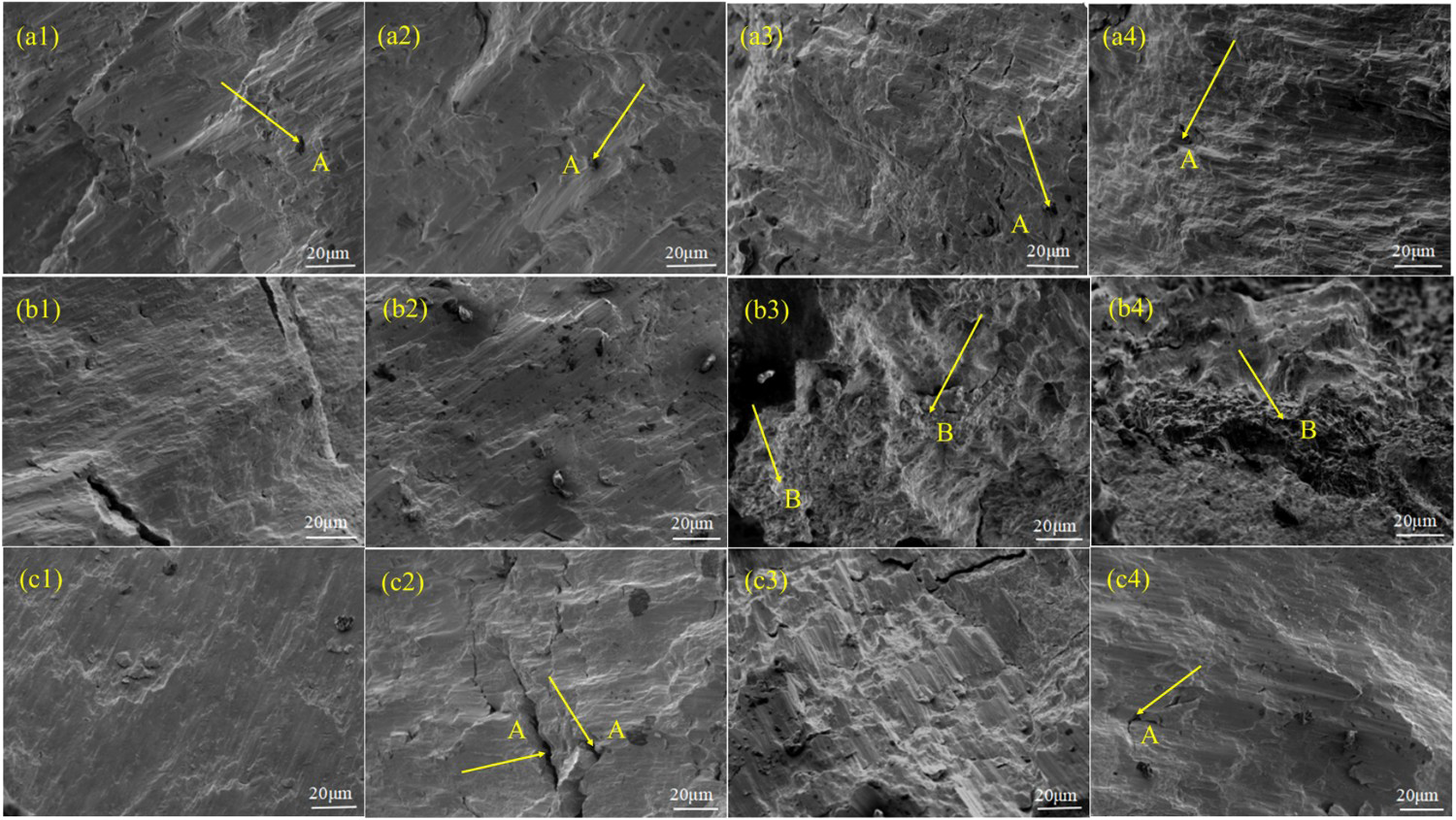
Hardness analysis
Figure 5 shows the microhardness of AlCrxFeNi1.2Cu0.8(x = 0.5,0.75,1.0,1.25) HEAs. The microhardness of each specimen after annealing for 64 h shows a trend of first decreasing and then increasing with the increase of Cr content. After heating the ingot, it was found that the alloy appeared softening phenomenon, and with the increase of Cr, the hardness of the metal decreased, because the addition of Cr changed the microstructure of the alloy. When Cr0.75, the hardness of the alloy was the lowest, and its limit was Cr0.75. With the continuous increase of Cr content, after heat treatment, the hardness of the ingot began to rise again, the crystal grains became more uniform, and the structural stability was improved. Compared with the as-cast alloy, the hardness of Cr1.25 specimen after annealing for 64 h is doubled. As shown in Figure 2, some precipitate particles are observed in the microstructure of Cr1.25 specimen, which prevent the movement of dislocations. The severe lattice distortion makes it difficult for dislocation slip to proceed due to a large amount of Cr dissolved in the matrix [21].
Hardness of AlCrxFeNi1.2Cu0.8(x = 0.5,0.75,1.0,1.25) HEAs after annealing for 64 h.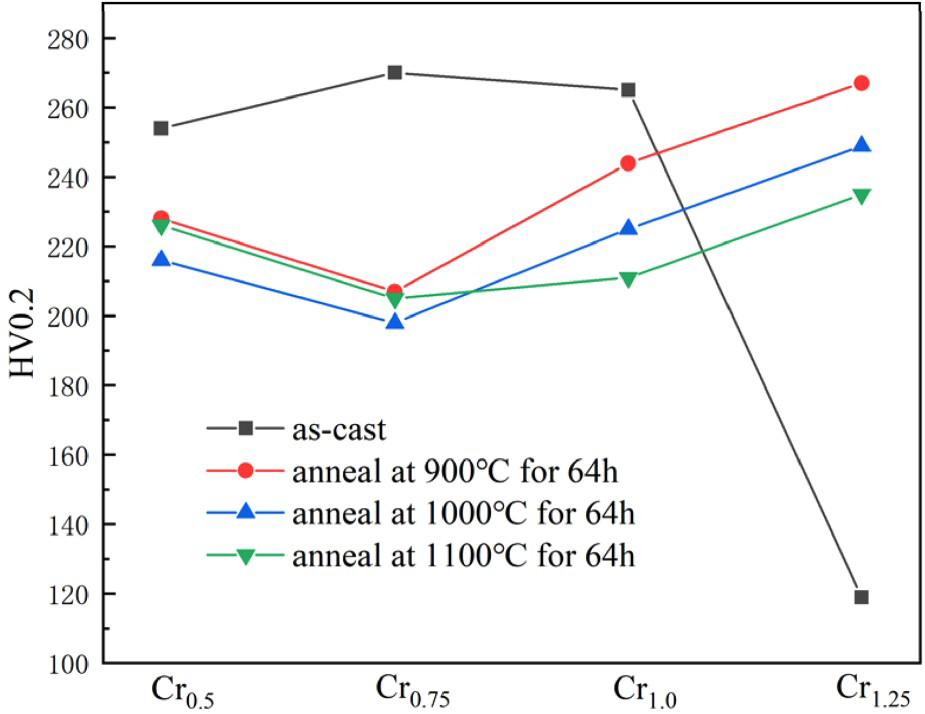
Corrosion property analysis
Figure 6 shows the electrochemical curves of AlCrxFeNi1.2Cu0.8(x = 0.5,0.75,1.0,1.25) HEAs immersed in 3.5% NaCl solution for 5 h: a1, b1 and c1 are the open circuit voltage; a2, b2 and c2 are the polarisation curve; a3, b3 and c3 are the electrochemical impedance. The self-corrosion current density and self-corrosion potential can be used to evaluate the corrosion resistance of the alloy. The greater the self-corrosion potential, the lower the corrosion tendency of the alloy, and the smaller the self-corrosion current density, the better the corrosion resistance of the alloy. Formula 1 is the calculation method of the self-corrosion current density Icorr, I is the corrosion current, S is the area of the corrosion surface of the specimen (7.065 mm2). Formula 2 is the calculation method of the polarisation internal resistance Rp, ba and bc are polarisation, respectively. The tangent slope of the anode and cathode area of the curve, and the internal polarisation resistance Rp can also be used to evaluate the corrosion resistance of the alloy. It indicates the movement of electric charges in the corrosive solution, which mainly depends on the electron movement rate and the electrode reaction rate. When the rate of electron moves is greater than the electrode reaction rate, it can effectively slow down the corrosion process. It can be seen from Formula 2 that Rp and Icorr are inversely proportional, the greater the internal polarisation resistance, the smaller the corrosion current density, and the better the corrosion resistance of the alloy. Cr can enhance the formation of oxide film on the surface of the alloy [22].
Electrochemical curves of AlCrxFeNi1.2Cu0.8(x = 0.5,0.75,1.0,1.25) HEAs immersed in 3.5% NaCl solution for 5 h after annealing for 64 h: (a1–a3) 900°C; (b1–b3) 1000°C; (c1–c3) 1100°C.

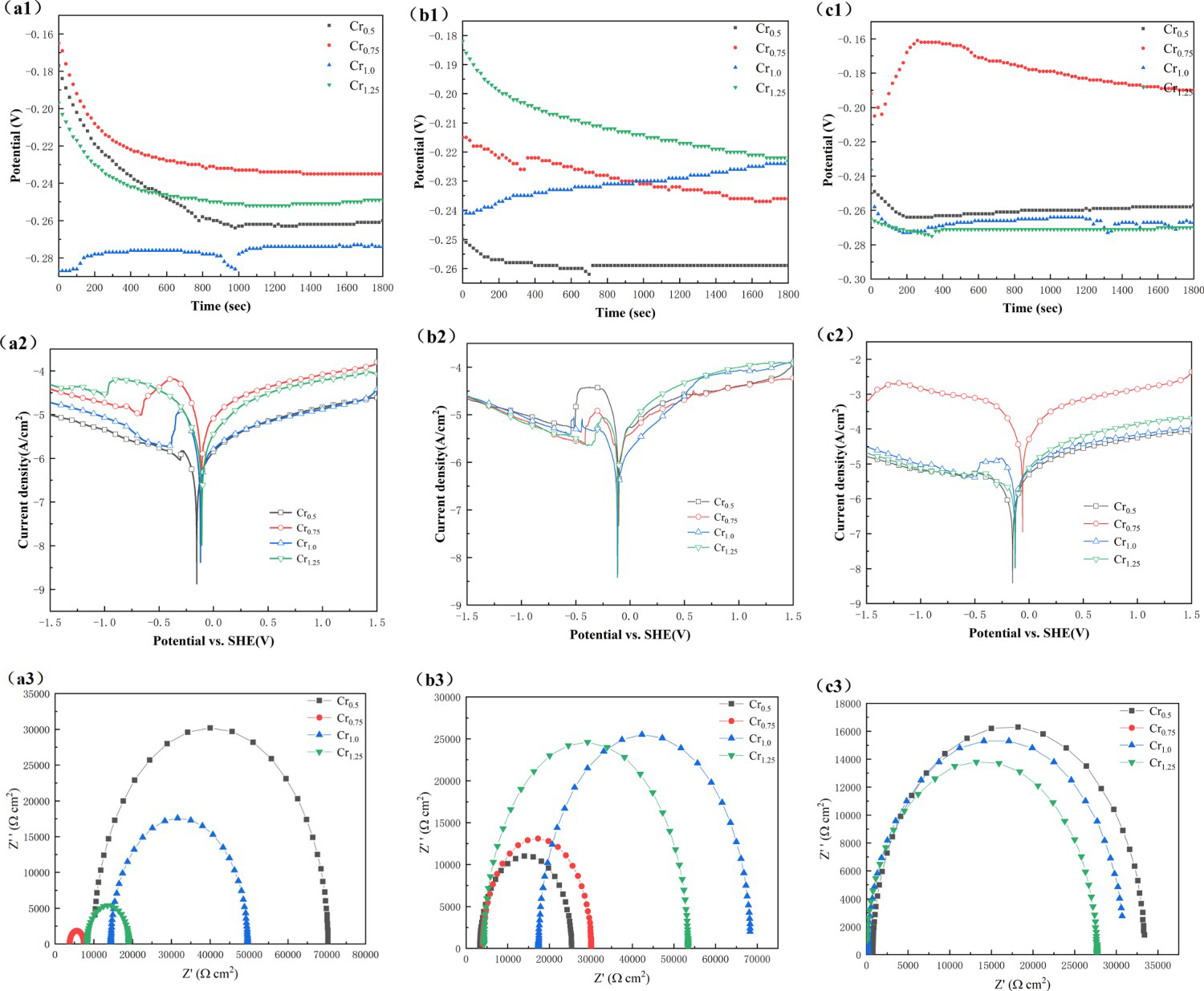
Different alloys require different times for measuring the open circuit voltage to reach a steady state. At 900°C, the stabilisation time is 400 s. As temperature increases, it will reach stability quickly around 200 s, and it has good electrochemical stability. From the polarisation curve, it can be seen that in the anode region, different alloys quickly reach stability and have a relatively high good corrosion resistance.
Corrosion parameters of AlCrxFeNi1.2Cu0.8(x = 0.5,0.75,1.0,1.25) HEAs immersed in 3.5% NaCl solution for 5 h.
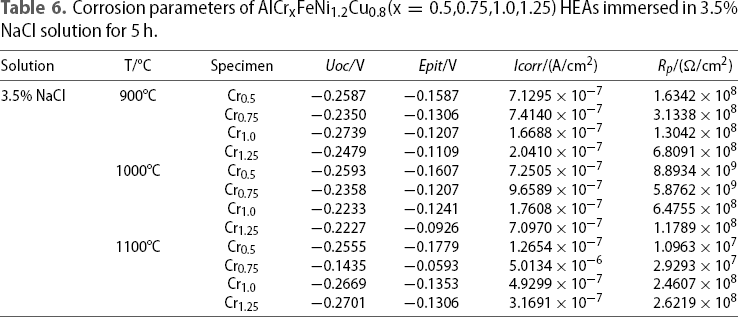
Figure 7 is the equivalent circuit diagram of electrochemical impedance simulation, Q is a constant phase element, Rct is the charge transfer resistance of the solution, and the Nyquist diagram shows the arc radius. The larger the radius, the more stable the passivation film and the better the corrosion resistance of the alloy are. The intersection with the abscissa does not start from zero due to the solution itself has impedance Rs. The Cr0.5 specimen has the largest Rct and shows the best corrosion resistance after immersion.
Equivalent circuit diagram.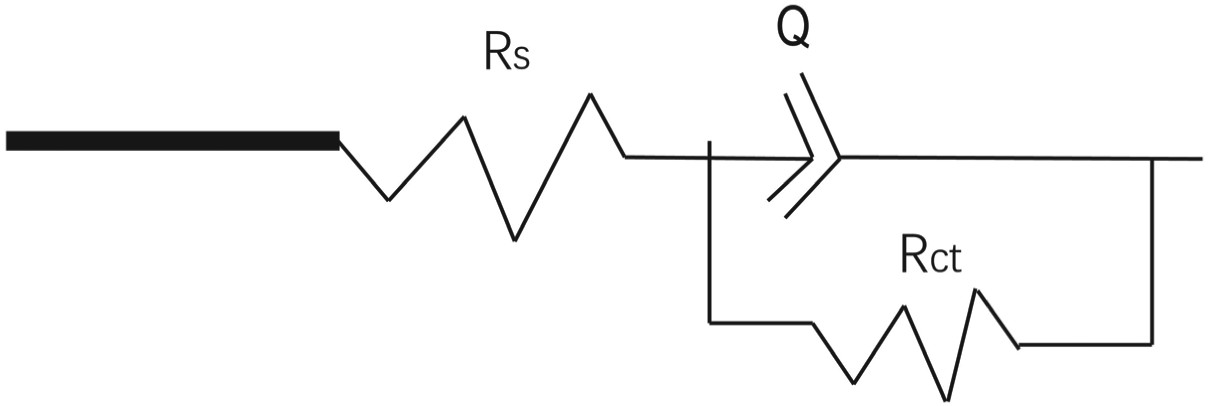
Conclusion
The structural stability of AlCrxFeNi1.2Cu0.8 HEAs at 900°C, 1000 and 1100°C for 6 h decreases, and a large amount of oxides and a small amount of intermetallics are formed. The structure stability of the HEA is maintained with the increase of Cr content and temperature. AlCrxFeNi1.2Cu0.8 HEAs maintain the dendritic structure after annealing and have good structure thermodynamic stability. The inside of the dendrite is the Fe-Cr enriched area, and the dark part of the dendrite is the enriched area of Al-Ni and Al-Cu. The strength of the alloy shows a decreasing trend with heat treatment temperature rises, and the compression plasticity does not change much. The fracture morphology exhibit a river-like feature, and the fracture mode is brittle fracture. The material changes from brittle to tough with the increase of Cr content. The hardness of Cr1.25 specimen after annealing for 64 h is doubled than the as-cast specimen, and large grains of Cr0.5 specimen show the best corrosion resistance after annealing.
Footnotes
Disclosure statement
No potential conflict of interest was reported by the author(s).
Data availability statement
The data that support the findings of this study are available from the corresponding author upon reasonable request.