







Abstract
The tensile test and low-cycle fatigue test of HTRB630 high-strength steel bars after high-temperature exposure were investigated. Based on the plastic strain energy density theory of mashing behaviours, the values of parameters K and n in the Ramberg–Osgood stress–strain relationship were obtained. The Coffin–Manson model was modified for further modelling of specimens exposed to different temperatures. A fitted formula for the relationship between the plastic strain energy density and fatigue life of HTRB630 high-strength steel bar specimens was established. The parameters obtained in this study can provide a reference for further investigation of the seismic performance of HTRB630 steel bars reinforced concrete structures after exposure to high temperatures.
Keywords
Introduction
With the development of modern lightweight, high-rise, large-span buildings, the use of high-strength reinforced concrete or ultra-high-strength reinforced concrete has been increasing. Replacement of ordinary steel bars with high-strength steel bars can provide enormous benefits [1–4]. Hot-rolled ribbed bars (HRB) are widely used in reinforced concrete structures in China. Heat-treated ribbed bars (HTRB) are made of quenched and self-tempered processed steel. The HTRB630 steel bar is a 630-MPa reinforcing steel bar independently developed and produced in China. It is made of chromium-nickel-molybdenum structural steel alloy as a blank. Vanadium and nickel are added to HTRB630 steel bars to improve their strength, toughness, and hardness as well as reduce deformation and cracking. The standard yield strength is 630 MPa or more, and the standard ultimate strength exceeds 790 MPa [5].
To explore the application of HTRB630 high-strength steel bars in reinforced-concrete structures, the seismic resistance of HTRB630 high-strength steel bars in reinforced-concrete structures must be investigated. According to a previous study [6], for buildings in high-intensity seismic fortification areas subjected to earthquakes, damage to structures or components is mainly transcendental and cumulative damage. Cumulative damage is primarily caused by the high-strain, low-cycle fatigue process of the steel bars and concrete. Thus, the structural mechanics in high-intensity seismic fortification areas must exhibit good low-cycle fatigue properties. Gao et al. [7] proposed a fatigue-life prediction method for HTRB630 high-strength steel bars based on the modified Coffin–Manson model under pre-strain. The fatigue life of the HTRB630 high-strength steel bars decreased by 30–40%; different pre-strains had the same effect on fatigue life with the same strain amplitude. Ding et al. [8] compared the tensile, buckling, and low-cycle fatigue properties of HRB400 and HTRB600 steel bars. The tests indicated that the HTRB600 steel bars had less uniform elongation and fracture elongation and inferior low-cycle fatigue performance compared to the HRB400 steel bars.
Fire threatens the safety of reinforced-concrete structures. Structures may experience uncontrolled fires during their service life [9–13]. A reinforced-concrete structure is composed of steel bars and concrete. To determine the seismic resistance of reinforced-concrete structures, the tensile properties and low-cycle fatigue behaviour of steel bars exposed to high temperatures are crucial for their application in reinforced-concrete structures subjected to fire. Investigation of the post-fire mechanical properties, low-cycle properties, and seismic performance analysis of steel bars can provide an important theoretical basis and engineering guidance for anti-seismic design of reinforced-concrete structures after a fire [14–17]. Kodur and Alogla [18] investigated changes in the mechanical properties of steel bars exposed to high temperatures. The results indicated that the reinforced concrete members experienced significant creep deformation in the later stages of fire exposure. Special attention should be paid to the creep of steel bars as it directly determines the stability of reinforced-concrete members. The decreasing trends in the yield strength, ultimate strain, failure strain, and ductility of high-strength hot-rolled steel bars (SD500) exposed to high temperatures were better than those of ordinary hot-rolled steel bars [19]. Exposure to high temperatures had a more significant effect on ultimate strength. The effects of exposure to high temperatures in the range of 800–950°C on the elastic modulus were significant. The residual elastic modulus decreased to nearly half of that at room temperature. The rates of change of failure strain and ultimate strain were stable at moderate high temperatures, but increased sharply after exposure to 800°C. In reinforced-concrete structures, the steel bars are covered with concrete; the temperature of the reinforced steel in fire conditions usually does not exceed 600°C [20]. When a reinforced-concrete structure is subjected to a high-intensity earthquake, the steel bars bear a large, complex alternating load over a short period of time. The steel bars are subjected to a high-strain, low-cycle repeated load, causing the reinforcements to fracture within 100–200 fatigue cycles [21]. Wu et al. [22] studied the buckling and low-cycle fatigue performance of a high-strength steel bar (HSSB, HTRB600) and compared them with those of a normal steel bar (NSB, HRB400E). The test results indicated that the HTRB600 steel bars exhibited lower tensile ductility and more severe post-buckling softening and pinching effects than the HRB400E steel bars. An increase in the yield strength, buckling length, and strain amplitude reduced the low-cycle fatigue life of the steel bars. Thus, the low-cycle fatigue is an important index for evaluating the ability of seismic reinforcements to resist low-cycle reciprocating cyclic loads. There have been no studies on the low-cycle fatigue properties of HTRB630 high-strength steel bars after high-temperature exposure.
The plastic strain energy density is an important index for evaluating the fatigue damage of mechanical materials [23]. The calculation method for the plastic strain energy density differs depending on whether the material exhibits mashing behaviour [24,25], which refers to the half-life [26] hysteresis curves of different strain amplitudes, moving the lowest point of each hysteresis curve to a certain point. If the upper half of the hysteresis curve overlaps, the material exhibits mashing behaviour [26]. Whether HTRB630 high-strength steel bars exhibit mashing behaviour must be verified using a low-cycle fatigue test. Fibre finite element models have been widely used in simulations of the seismic performance of reinforced-concrete structures [27]. The constitutive relationship of the reinforced mechanical material has a significant influence on the accuracy of the numerical simulation results. Reinforcement mechanics is often based on the Coffin–Manson model, which is suitable for nonlinear calculations of reinforced concrete columns under low-cycle cyclic loading. Gao and Zuo [28] fitted the three parameters (Cf, Cd, and α) of the Coffin–Manson model based on the measured low-cycle fatigue of HTRB630 steel bars at room temperature, resulting in Cf = 0.259, Cd = 0.961, and α = 0.447. These three parameter values for HTRB630 high-strength steel bars exposed to high temperatures are important in further numerical simulation of the seismic performance of concrete structures reinforced with HTRB630 high-strength steel bars after a fire.
To date, there is no available information on the low-cycle fatigue mashing behaviour of HTRB630 high-strength steel bars after exposure to high temperatures. Thus, the objective of this study is to explore the microstructures, tensile properties, and low-cycle fatigue properties of HTRB630 high-strength steel bars exposed to high temperatures. This study proposes a method for revising the Coffin–Manson model for HTRB630 high-strength steel bars exposed to high temperatures based on the plastic strain energy density theory of mashing behaviours.
The remainder of this paper is organised as follows. In Section 2, the tensile properties of HTRB630 high-strength steel bar specimens after high-temperature exposure were investigated. In Section 3, high-strain low-cycle fatigue tests were conducted on HTRB630 high-strength steel bar specimens after high-temperature exposure. In Section 4, the low-cycle fatigue mashing behaviours of the specimens after high-temperature exposure and room temperature were analysed and discussed. The conclusions are presented in Section 5.
Tensile properties of the specimens after high-temperature exposure
Test specimen preparation
The length of the equipment extensometer was 50 mm. To meet the requirements of the extensometer installation, the test area was 60 mm. According to the definition of the length-to-slenderness ratio (L/D = 3.3), less than the minimum value of 6 required by the specification to prevent the buckling of the steel bar, so the diameter of the HTRB630 high-strength steel bar specimens was 18 mm in the paper. The steel bar was made of a chromium-nickel-molybdenum structural steel alloy as a bank. Vanadium and nickel were added to improve strength and toughness, reduce deformation and cracking, and improve hardenability. The smelted steel bar was heated in a furnace at 1000–1200°C and rapidly cooled to 610–630°C in the first on-line cooling process. Quenching was performed using water or a quenching liquid in a quenching device for 12–14 s. The steel bar was tempered at 550–660°C in a tempering furnace and cooled to room temperature in a second cooling process. The process was different from that for an ordinary HRB400 steel bar, which is water-cooled twice at 400–700°C.
Heating and cooling treatment
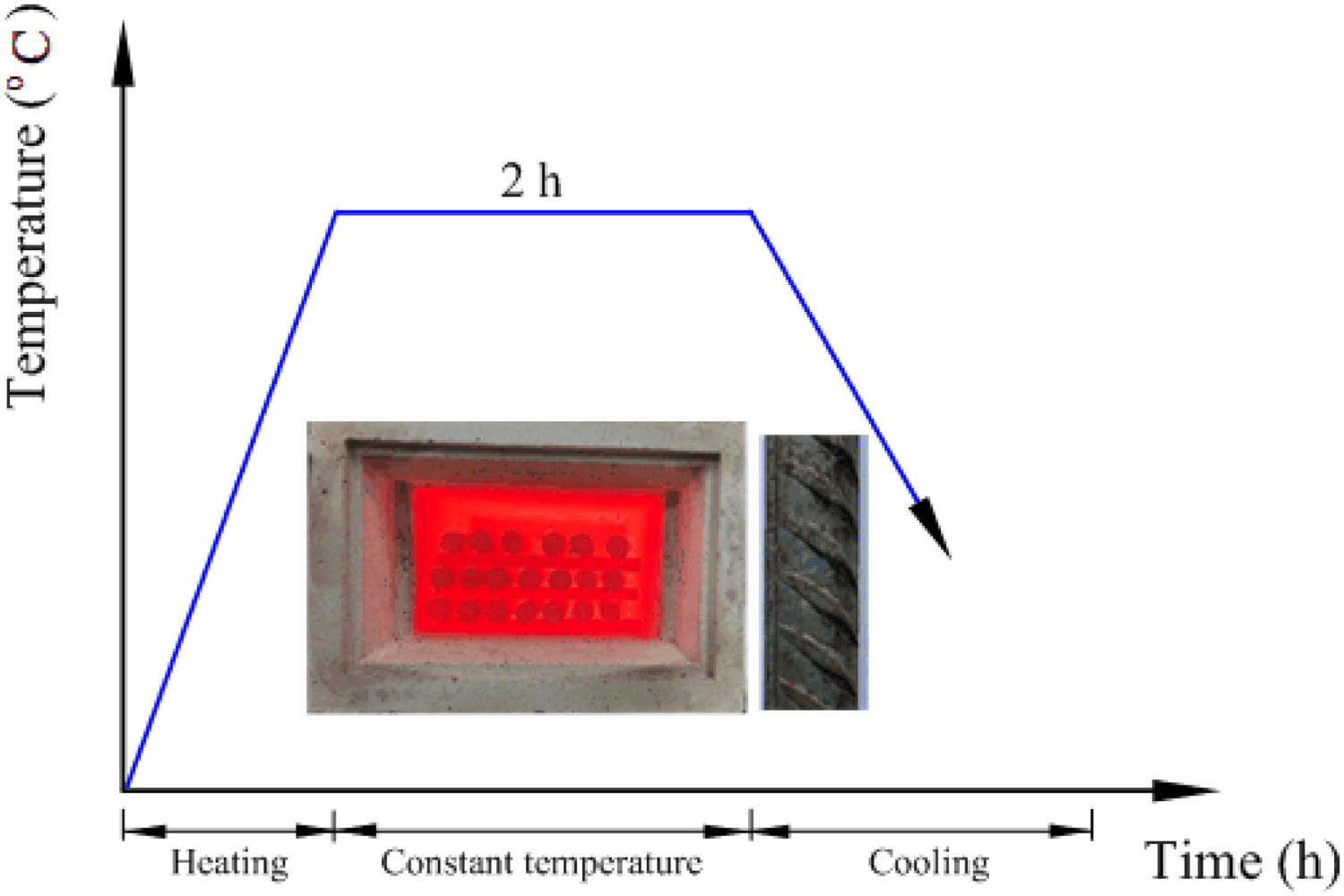
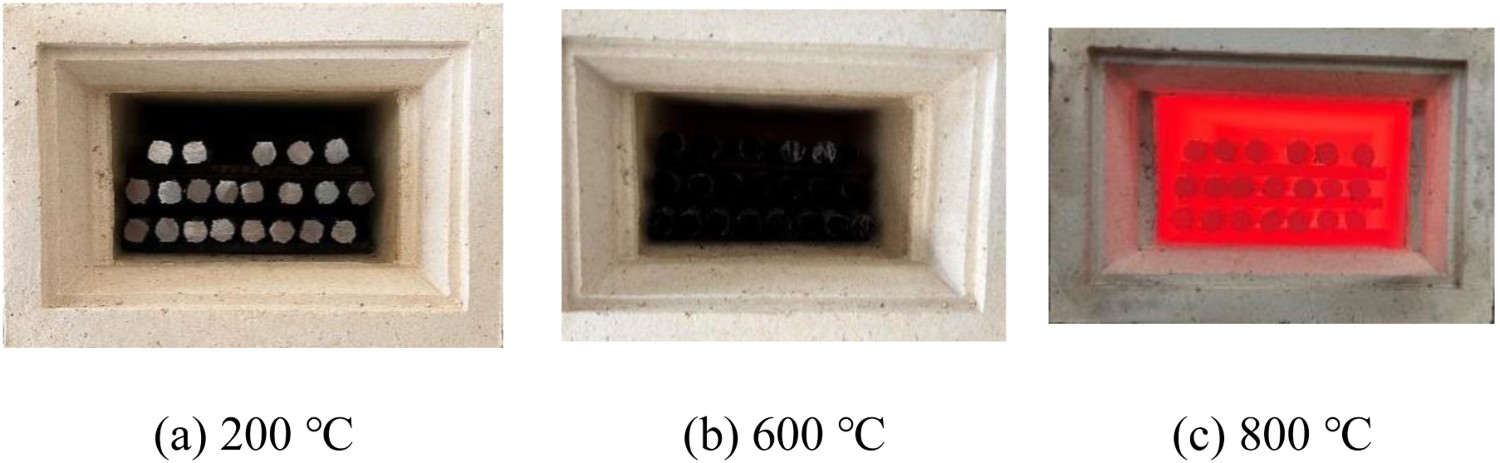
With the cover concrete, the temperature of the steel bars in a fire should not exceed 600°C [21]. Details of the HTRB630 steel bar specimens are shown in Figure 1. The samples were heated in a muffle furnace at 200, 400, 600, and 800°C. The temperature was increased to a fixed value and maintained for 2 h. After heating, the furnace was opened and the steel bar specimens were naturally cooled in the furnace. The heating and cooling treatments are illustrated in Figure 2. The furnace photos of specimens exposed to 200, 600, and 800°C are shown in Figure 3.
Details of HTRB630 steel bar specimens (Unit: mm). Heating and cooling treatment. The furnace photos of specimens.
The appearance photos of the specimens exposed to different high temperatures are shown in Figure 4. The appearances of specimens exposed to 200, 400, and 600°C were almost the same. With an increase in temperature, peeling of the oxide shells of the specimens became obvious. However, with an increase in temperature, the surface rust increased. Peeling of the oxide shell was most obvious for specimens exposed to 600°C. The appearance of specimens exposed to 800°C was different; they were dark black, with completely smooth surfaces. The metallographic structures of specimens exposed to different temperatures are shown in Figure 5. At room temperature (25°C), the microstructures of the specimens were flaky pearlite and ferrite. After exposure to 200, 400, and 600°C, the microstructures were still flaky pearlite and ferrite, but the grain sizes were larger than those at room temperature. After exposure to 800°C, the microstructures were flaky pearlite, ferrite, and granular pearlite.
Specimens with different exposure temperatures. Metallographic structures of the specimens exposed to different temperatures.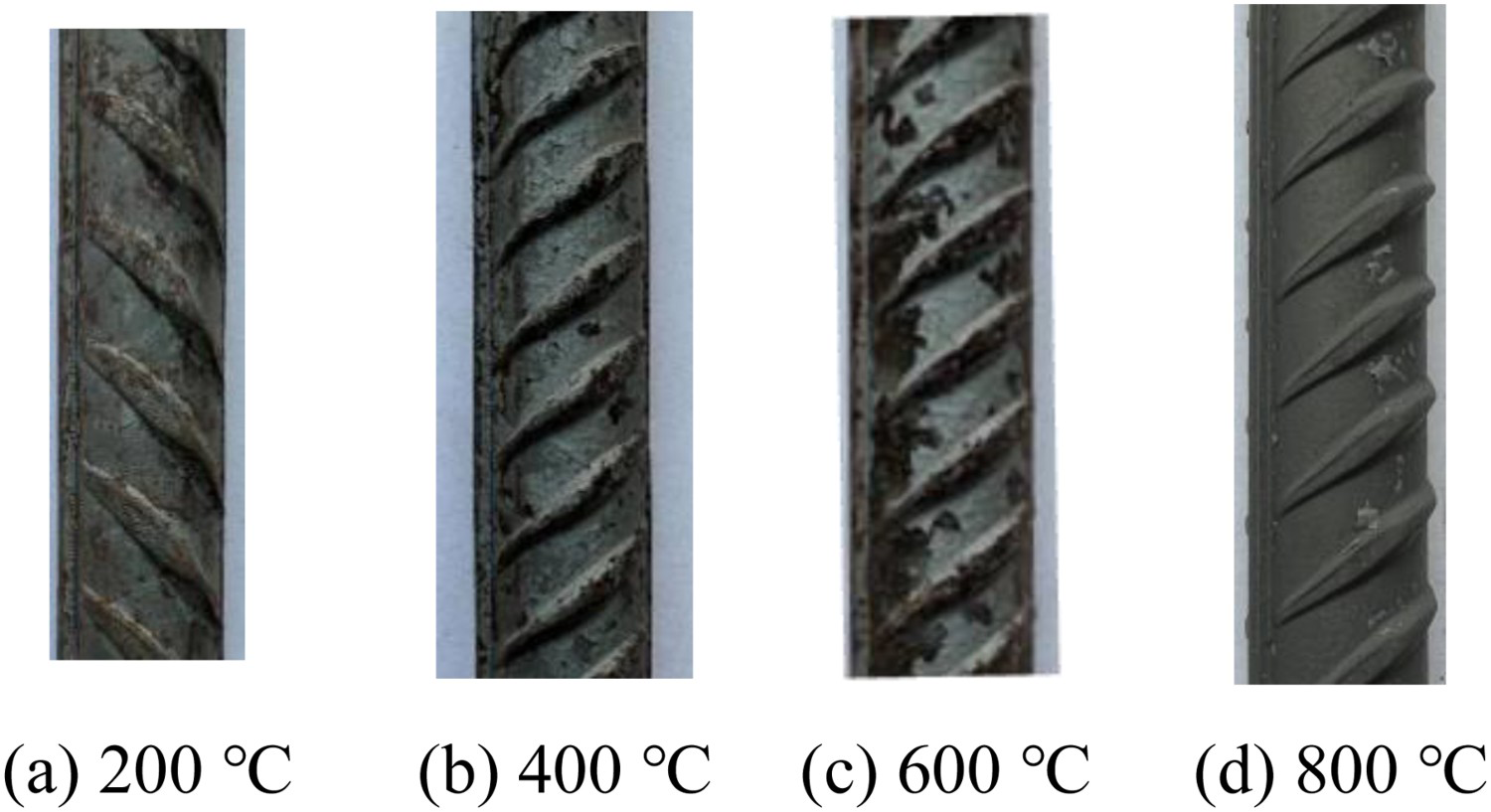

Tensile properties
Static tensile tests were performed to fully understand the tensile properties of HTRB630 steel bar specimens exposed to high temperatures. Two specimens were selected for static tensile tests at each temperature. An MTS 322 testing system was used for the tests. The gauge length of the extensometer was 50 mm, and the range was ±20 mm. The test method was in accordance with the requirements of GB/T228.1-2010 [29]. The loading stress rate was set as 10 MPa/s. Figure 6 shows the actual loading diagram. The static tension parameters of specimens at different exposure temperatures are presented in Table 1. The data in Table 1 represent the average values of the two specimens. Figure 7 shows the stress–strain curves of specimens at different exposure temperatures during the tensile test.
Actual loading diagram of uniaxial tensile test. Stress–strain curves of specimens after different exposure temperatures in tensile test. Figure 7 Stress–strain curves of specimens after different exposure temperatures in tensile test.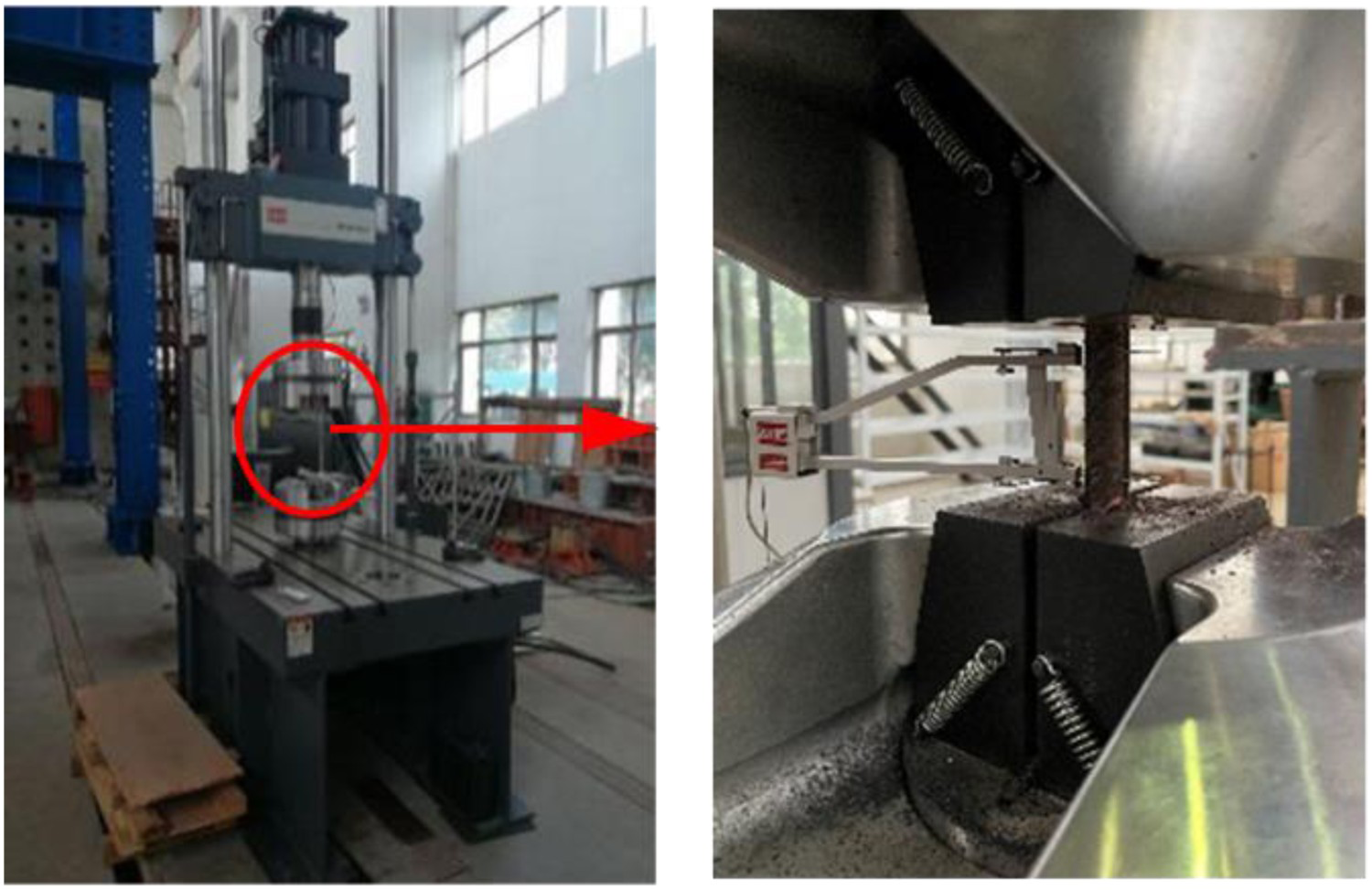
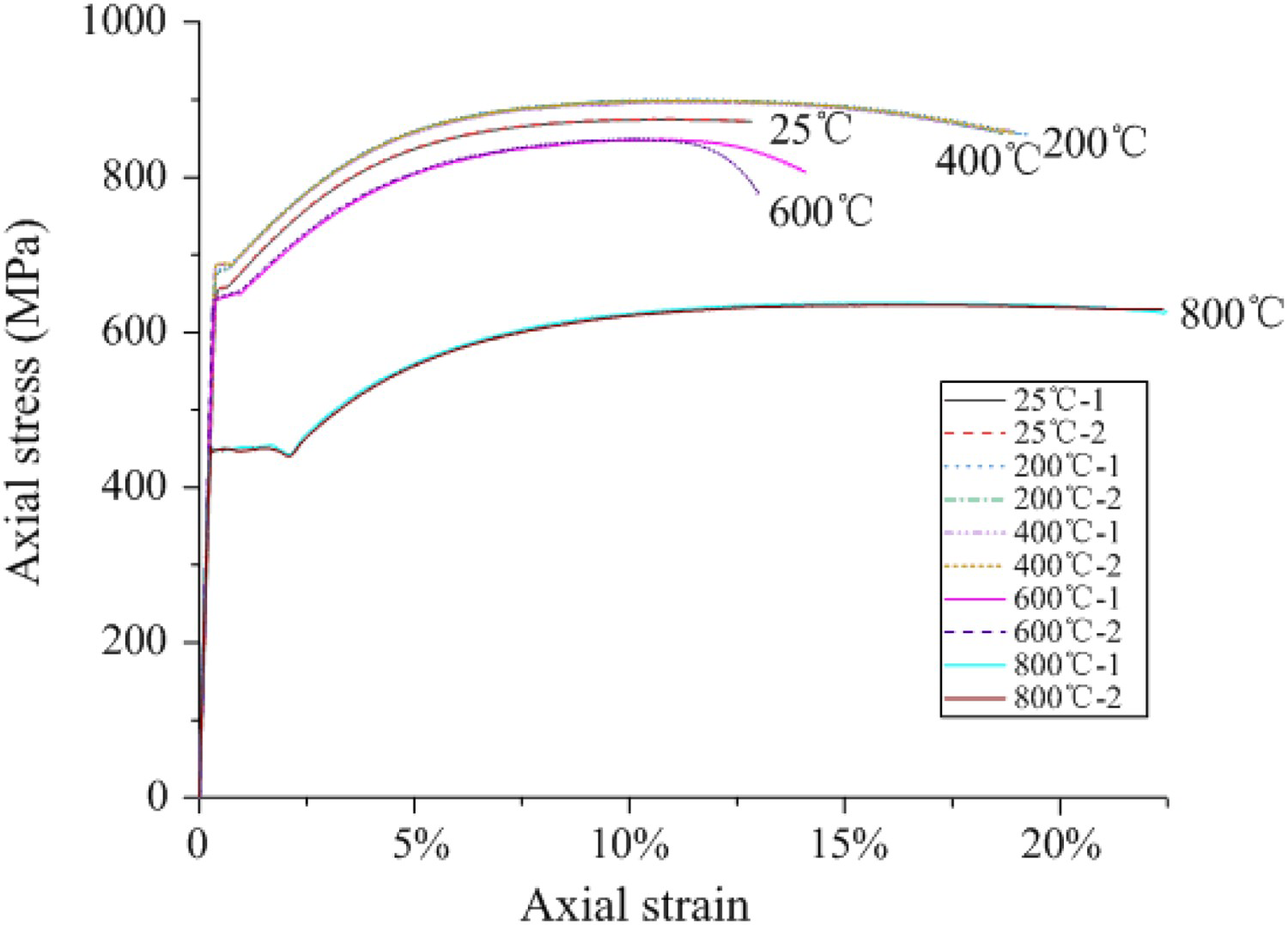
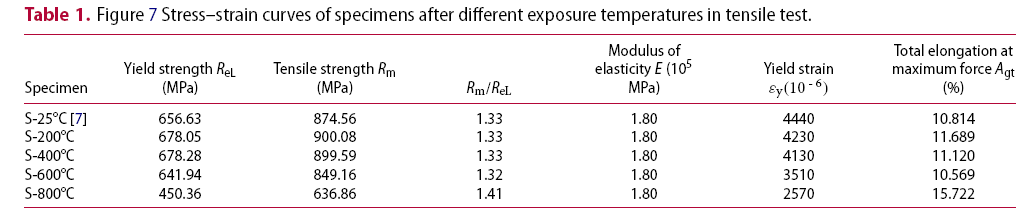
It was observed that the tensile properties of specimens exposed to 200, 400, and 600°C were essentially the same as those at room temperature (25°C) [7]. After exposure to 200 and 400°C, the yield strength, tensile strength, and ultimate strain increased by 3%, 3%, and 5%, respectively. After exposure to 600°C, the yield strength, tensile strength, and ultimate strain decreased by 2%, 3%, and 2%, respectively. After exposure to 200, 400, and 600°C, the tensile properties met the requirements in [5] (the standard value of yield strength is 630 MPa and the standard value of ultimate strength is 790 MPa). Compared with the requirements for tensile properties of steel bars in the specification [30], the total elongations at maximum force were 9% longer and the ratios of ultimate strength to yield strength were 1.25 times larger. However, the tensile properties of specimens exposed to 800°C changed considerably. The yield strength, tensile strength, and yield strain decreased by 31%, 27%, and 42%, respectively. The total elongation at the maximum force increased by 45%. The length of the yield steps increased significantly. The tensile parameters of the specimens exposed to 800°C did not meet the specification requirements in [5]. Changes in the metallographic structures significantly influenced the tensile properties of specimens exposed to high temperatures.
High strain low cycle fatigue tests
Test setup and procedure
The low-cycle fatigue properties of HTRB630 steel bar specimens exposed to high temperatures were investigated using a low-cycle constant-strain amplitude test. The strain amplitudes were set as 1.0%, 1.2%, 1.4%, 1.6%, 1.8%, and 2.0%. An MTS 322 testing system was used for the low-cycle fatigue test. The loading frequency was varied by 0.5 Hz. Two steel-bar specimens were used for each working condition. To eliminate the influence of steel bar buckling on the fatigue test and to ensure consistency with the actual instrument fixture conditions, the bar length was 24 cm, and the length of the unsupported section was 60 mm to accommodate the extensometer. The strain was the measured value of the extensometer. The length of the extensometer was 50 mm, so the measured strain was the unit deformation value within 50 mm of the test section of the steel bar. The loading diagram is shown in Figure 8. During the loading process, the device automatically recorded the load value, strain value within the range of the extensometer, and number of cycles at a frequency of 100 Hz. The test was terminated when the steel bars fractured. The failure modes of the HTRB630 steel bar specimens are shown in Figure 9. Fatigue fracture of an HTRB630 steel bar specimen exposed to high temperatures is shown in Figure 10.
Actual loading diagram. Failure of specimens. Fracture morphology of specimens exposed to high temperatures.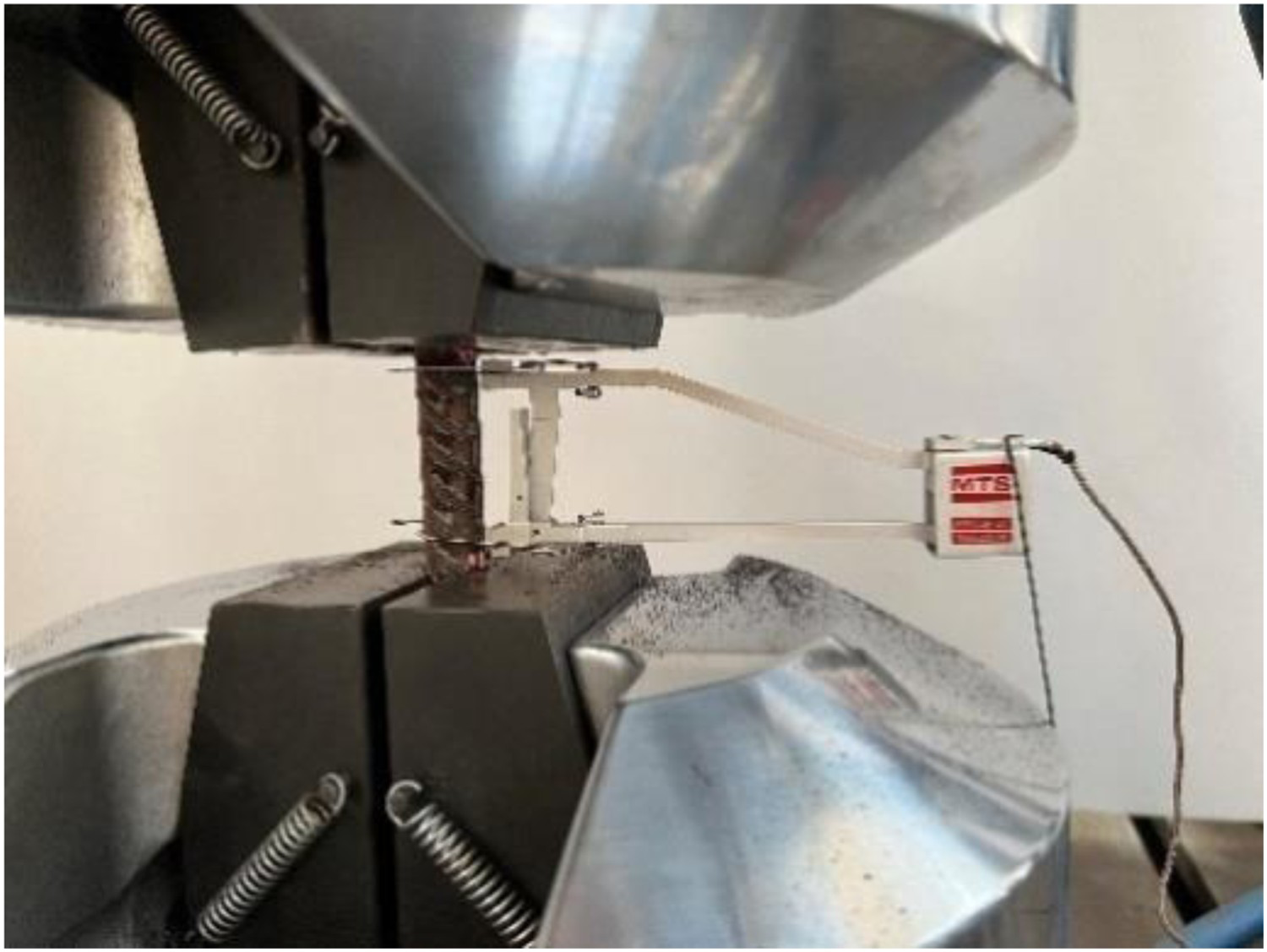
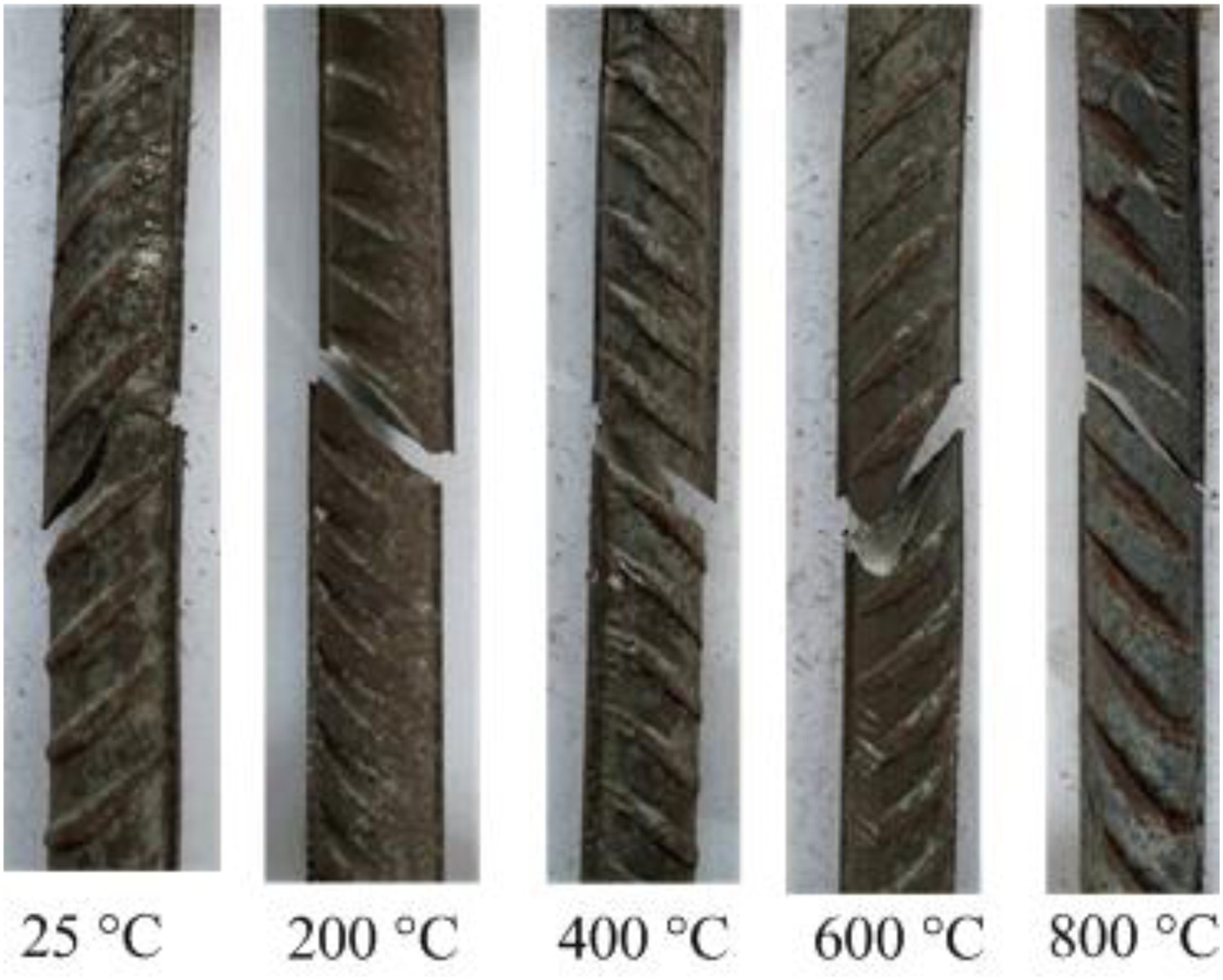
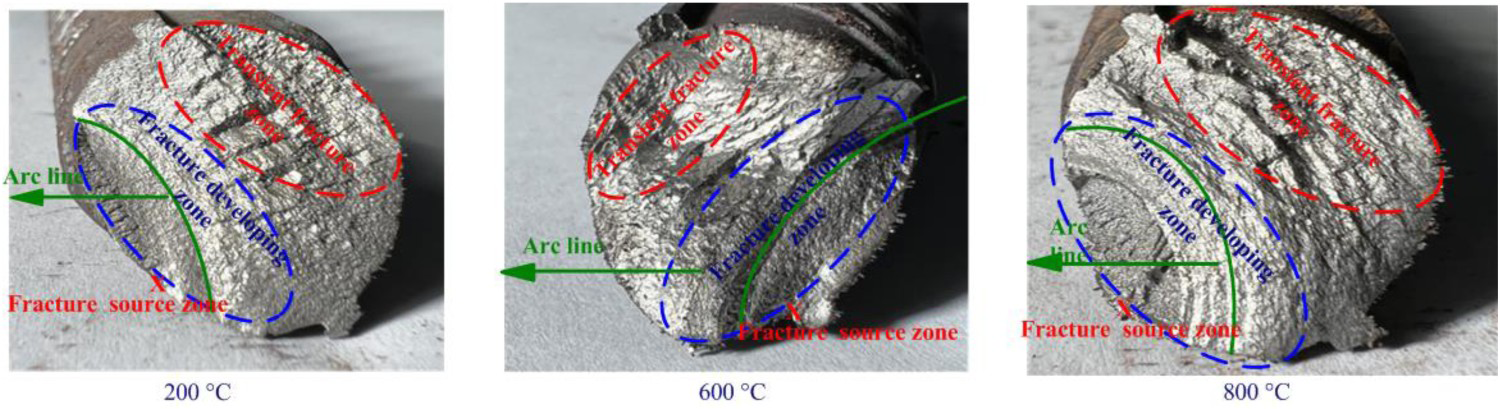
The test results of the specimens did not show the phenomenon of buckling of the steel bar, which proved that the use of the length-to-slenderness ratio to study the low-cycle fatigue properties of the steel bars was appropriate. Initially, cracks developed slowly in the fracture source zone. Under low-cycle fatigue loads, fatigue cracks develop to form a fracture-development zone. The fracture-development zone had an obvious fatigue arc line and was relatively smooth. When fatigue cracks developed to the critical size, the specimen fractured instantaneously, and a transient fracture zone formed. The apparent morphology of the transient fracture zone was rougher than that of the fracture source and developing zones.
Test results and discussion
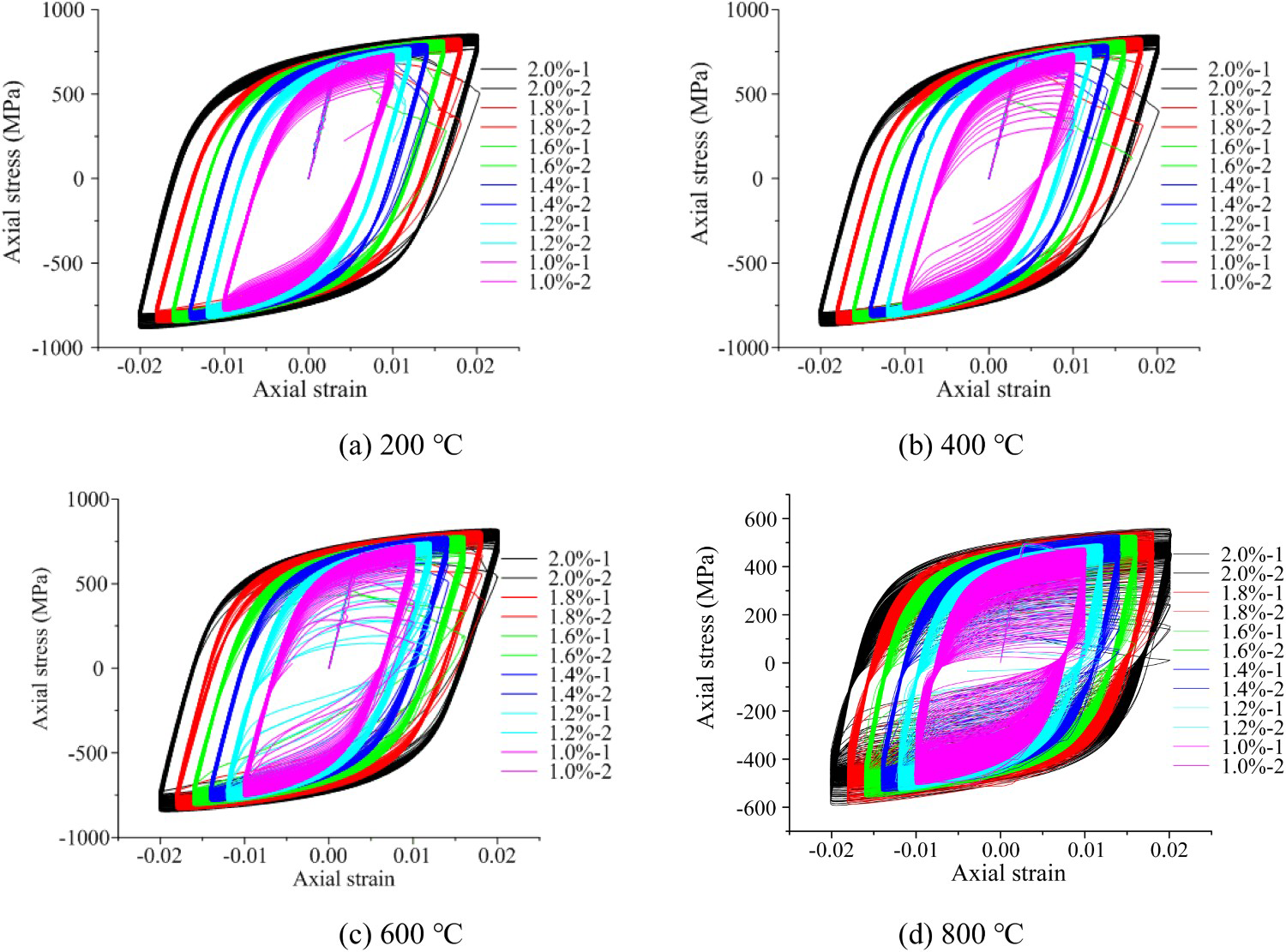
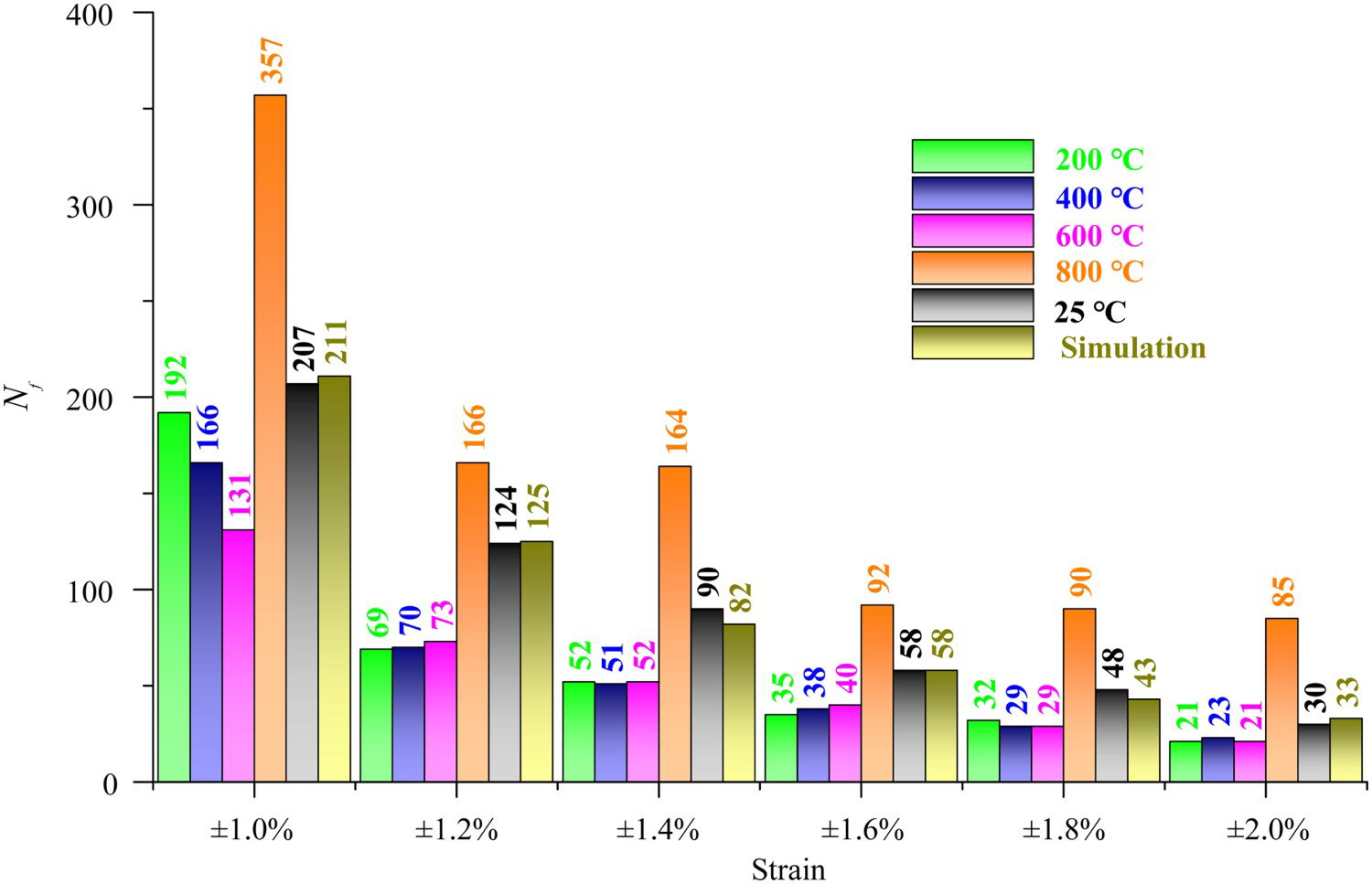
The hysteresis loops of HTRB630 steel bar specimens exposed to different temperatures and strain amplitudes are shown in Figure 11. OpenSees software was used for the finite element numerical simulation [23,27]. The Coffin–Manson model was used to simulate the effects of low-cycle fatigue damage accumulation on the properties of the steel bar specimens. The model considers the fatigue characteristics and mechanical strength degradation effects of steel, resulting in accurate nonlinear calculations [7]. Using the same method for parameter simulation as in a previous study [7], the fatigue cycles (average values of two specimens) of the specimens exposed to high temperatures were compared with those simulated using OpenSees software, as shown in Figure 12. In high-strain low-cycle fatigue tests, the fatigue cycle is an important index for evaluating the mechanical properties, which are closely related to the seismic performance of reinforced mechanical materials [25]. Changes in the metallographic structure significantly affected the low-cycle fatigue properties of HRB630 high-strength steel bar specimens exposed to high temperatures.
HTRB630 high-strength steel bar specimens exposed to different high temperatures exhibited consistent stress–strain characteristic curves under high strain, all with fatigue failure modes caused by plastic strains in the material. After exposure to temperatures below 600°C, the specimens exhibited a significant decrease in stress before failure. The stress–strain characteristic curves of specimens exposed to 800°C were significantly different. The overall stress levels were lower, which is consistent with the results of the uniaxial tensile test. The stresses decreased during fatigue loading processes with more moderate and no abrupt downward trends, unlike the specimens exposed to temperatures below 600°C. After exposure to 200, 400, and 600°C, the microstructures of the specimens and the fatigue low-cycle properties were essentially the same. After exposure to 800°C, the specimen had more granular pearlite organisation, which led to a shorter fatigue life. According to a previous study [31], metallographic structural changes in high-strength steels exposed to high temperatures can indicate a trend of low-cycle fatigue properties after a fire. The results obtained in this study are consistent with these findings [31]. The fatigue cycles of specimens exposed to 200–600°C were almost the same, except with less than 1.0% strain amplitude. With strain amplitudes of 1.0%, 1.2%, 1.4%, 1.6%, 1.8%, 2.0%, and the average fatigue cycles of specimens exposed to 200–600°C, the fatigue cycles decreased by 21%, 43%, 43%, 35%, 38%, and 39%, respectively. With the average fatigue cycle of specimens exposed to 800°C, the fatigue cycles increased by 119%, 135%, 219%, 161%, 200%, and 296%, respectively. However, an increase in fatigue cycles does not indicate an improvement in the seismic capacity of the HTRB630 high-strength steel bar specimens. Hysteresis loops of specimens exposed to different temperatures. The number of fatigue cycles after exposure to high temperatures.
Low-cycle fatigue mashing behaviours of HTRB630 high-strength steel bar specimens
Cyclic stress response
Figure 13 shows the maximum stress characteristic response curves in the low-cycle fatigue test of HTRB630 steel bar specimens at different exposure temperatures. The HTRB630 bar specimens exhibited a relatively short cyclic hardening period with a constant strain amplitude, and softening characteristics with a large number of cycles before failing; 600°C was the key point in the fatigue property transition of specimens exposed to high temperatures. There were two obvious differences in the cycle responses of specimens exposed to 200, 400, 600, and 800°C. (1) The cyclic stress values for specimens exposed to 800°C decreased to 60% of the value for those exposed to 200–600°C. (2) In the cyclic stress response process, the stress response of specimens exposed to 800°C decreased. There were many stress steps; the brittleness decreased and the plasticity greatly increased, corresponding to an ultimate strain of 15.7% in the tension test.
Maximum stress characteristic response curves of specimens exposed to different temperatures.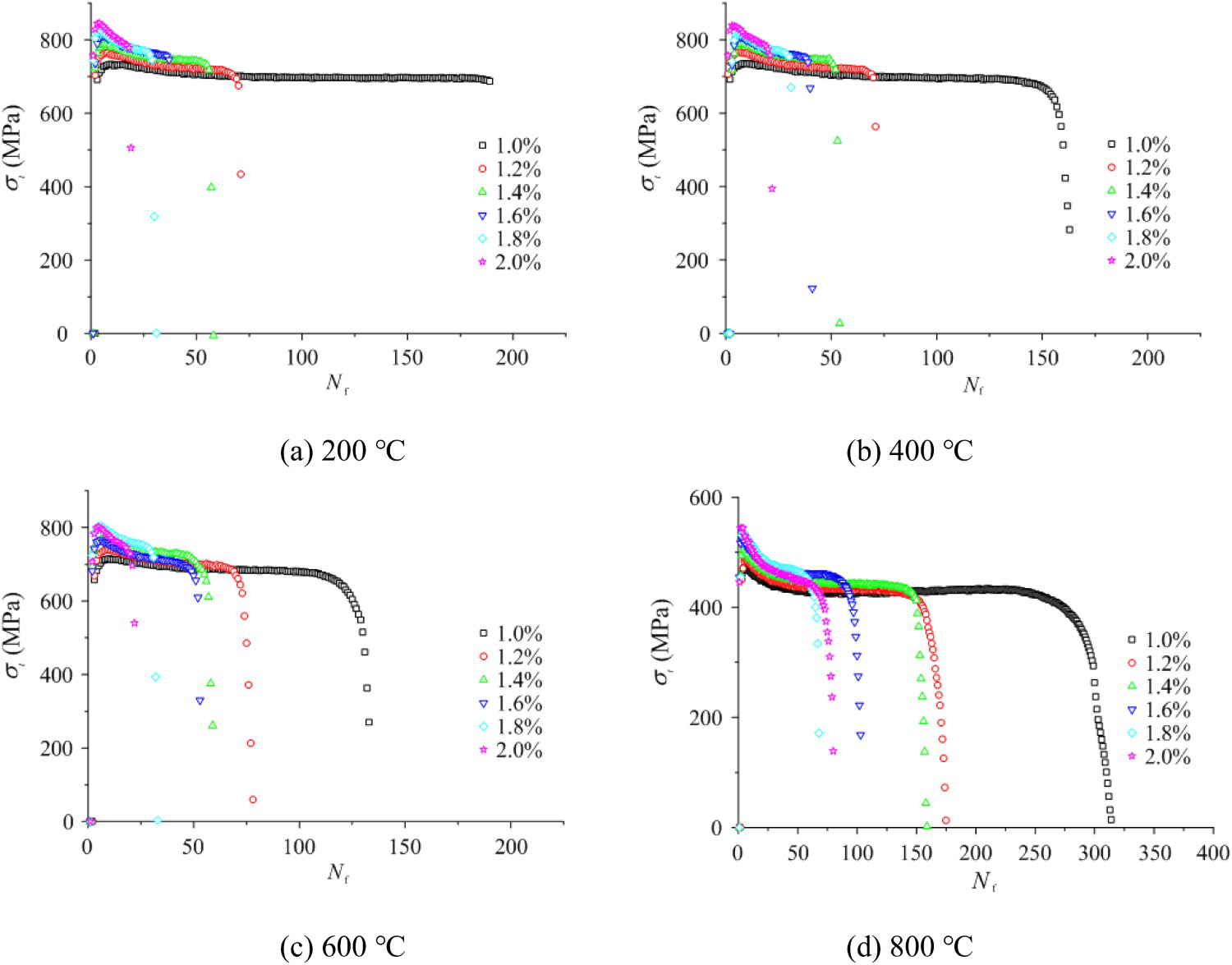
Fibre finite element model based on the theory of mashing behaviours
The Coffin–Manson model is based on the three parameters in Equations (1)–(3).
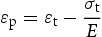


In Figure 12, the fatigue cycles of HTRB630 steel bar specimens exposed to high temperatures were different from those at room temperature (25°C), which indicated that the three parameter values (Cf, Cd, and α) in the Coffin–Manson model at room temperature were not suitable for fatigue property simulation of specimens exposed to high temperatures. Thus, Cf, Cd, and α should be re-fitted, where Diagrams of physical meanings. Mashing behaviour curves of specimens with different exposure temperatures.
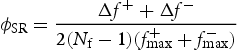
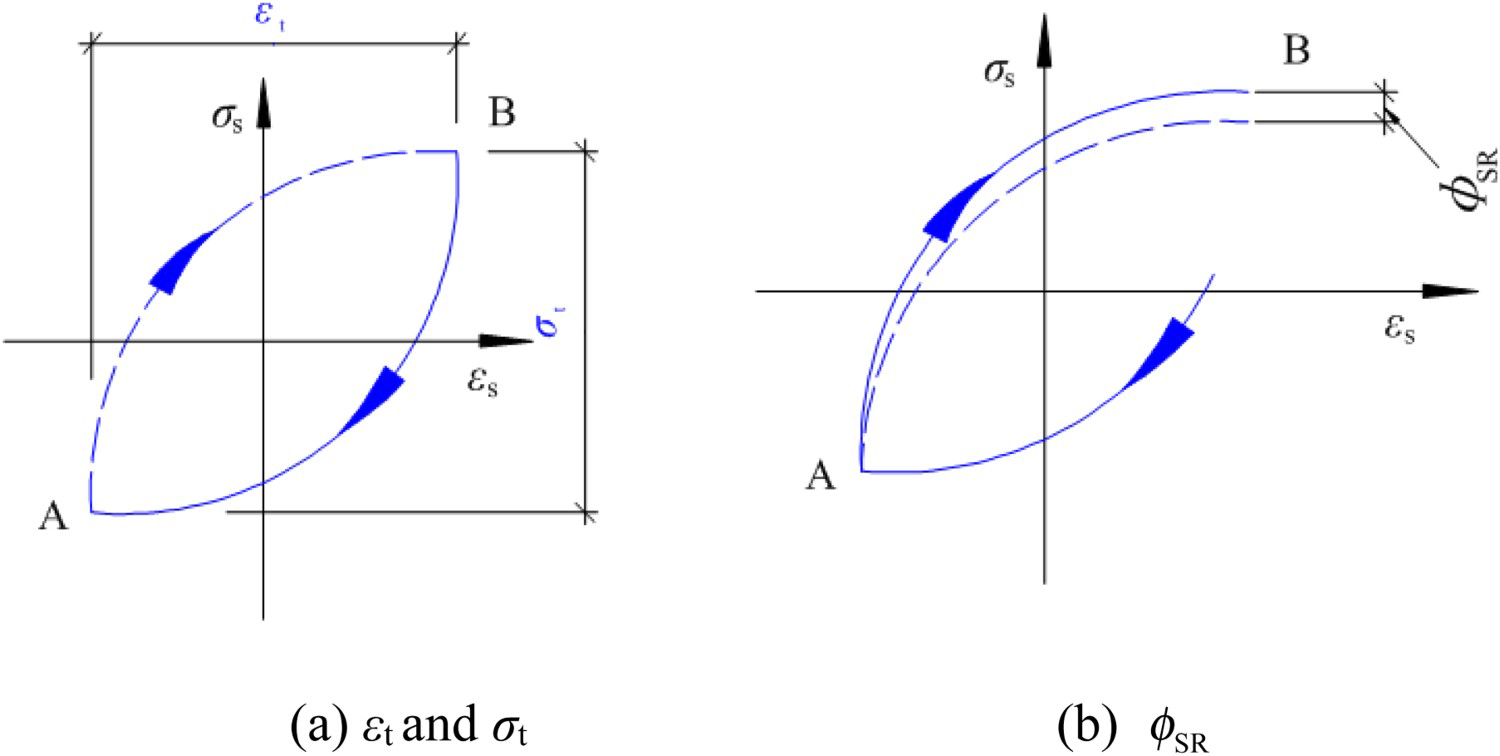
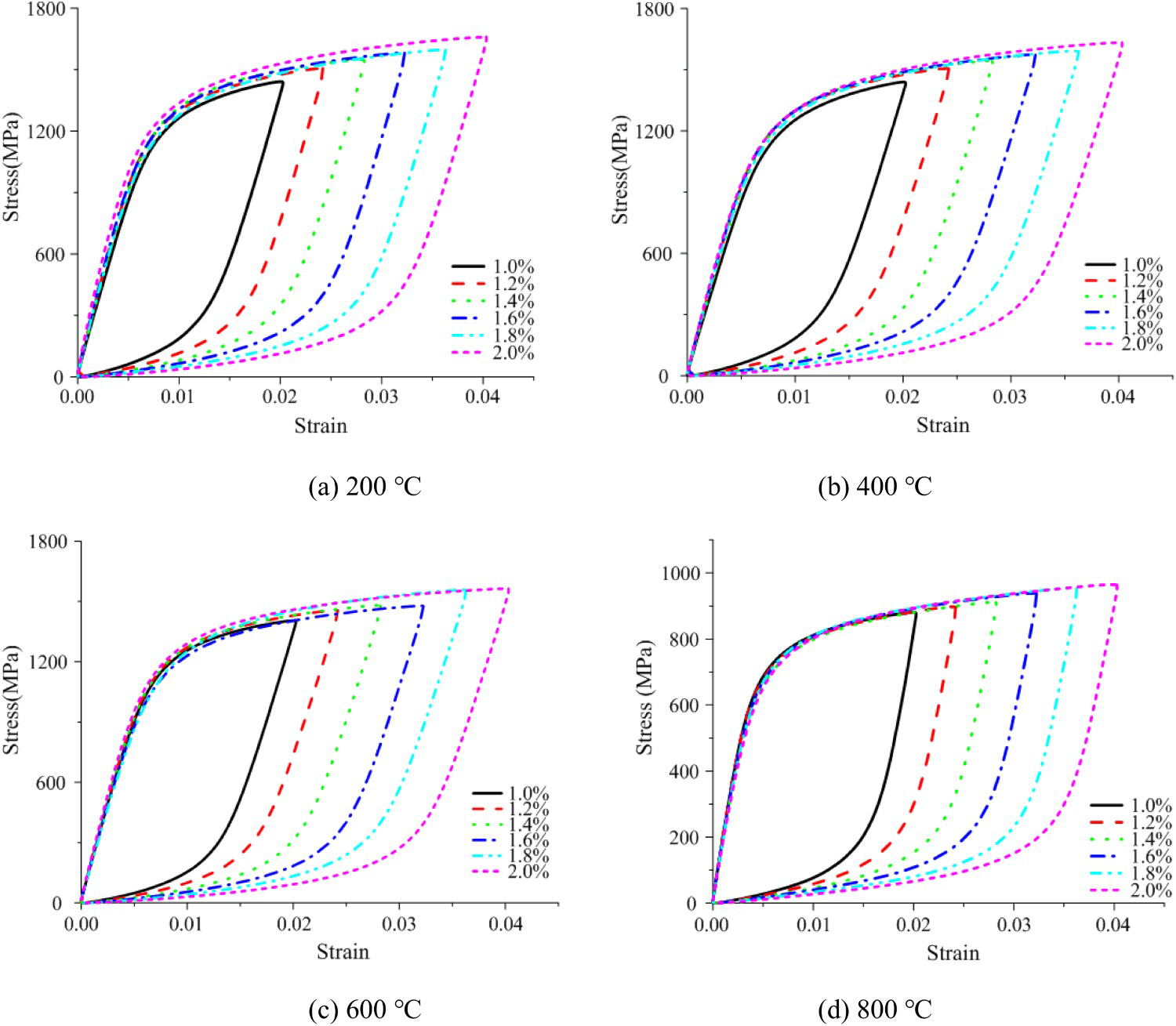
In the fatigue damage of metal mechanicals, the plastic strain energy density theory 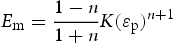
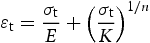
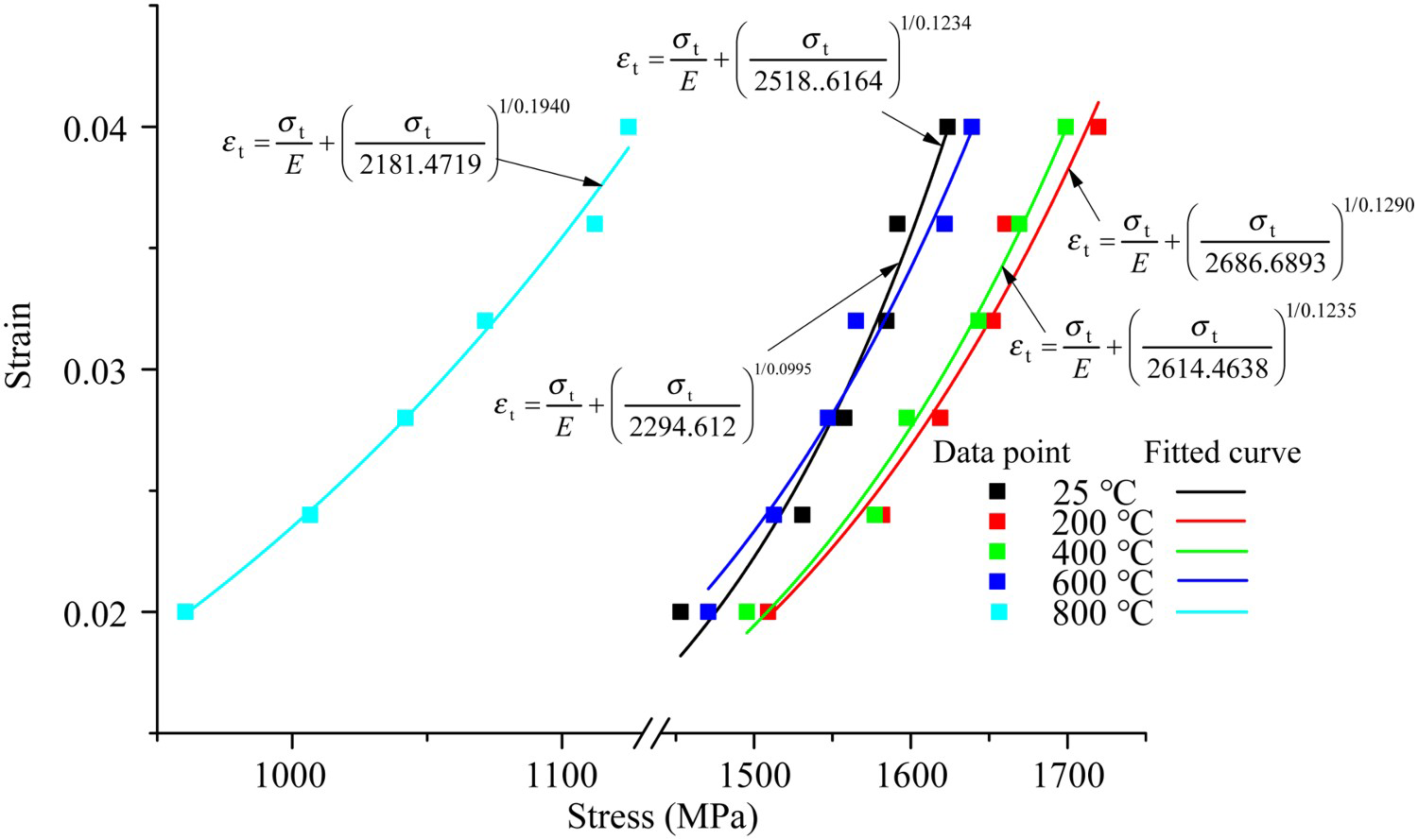
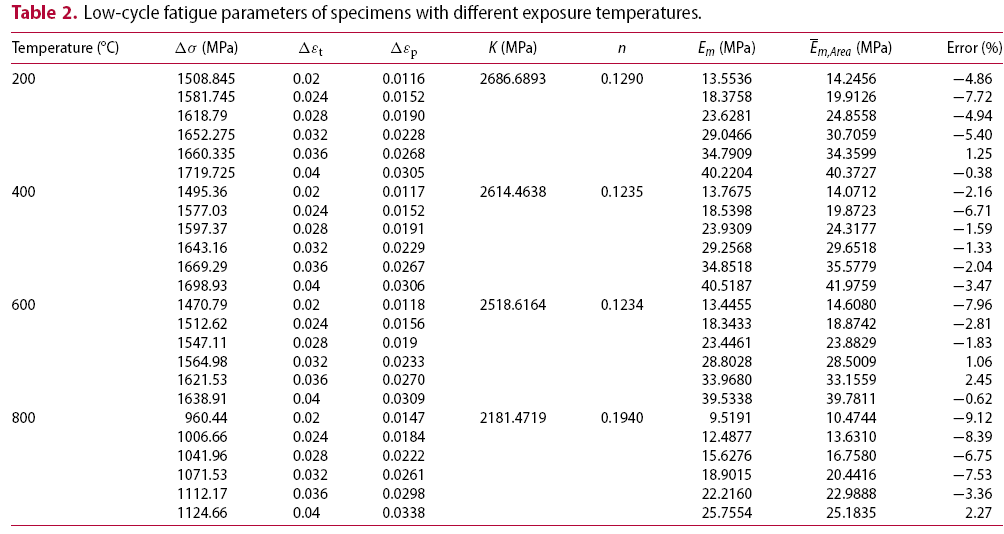
Figure 16 shows the fitted parameters of K and n in the Ramberg–Osgood relationship for specimens exposed to high temperatures. The parameter values were introduced into Equation (6) to calculate Fitted values of K and n in Ramberg–Osgood relationship. Low-cycle fatigue parameters of specimens with different exposure temperatures.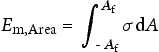
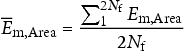
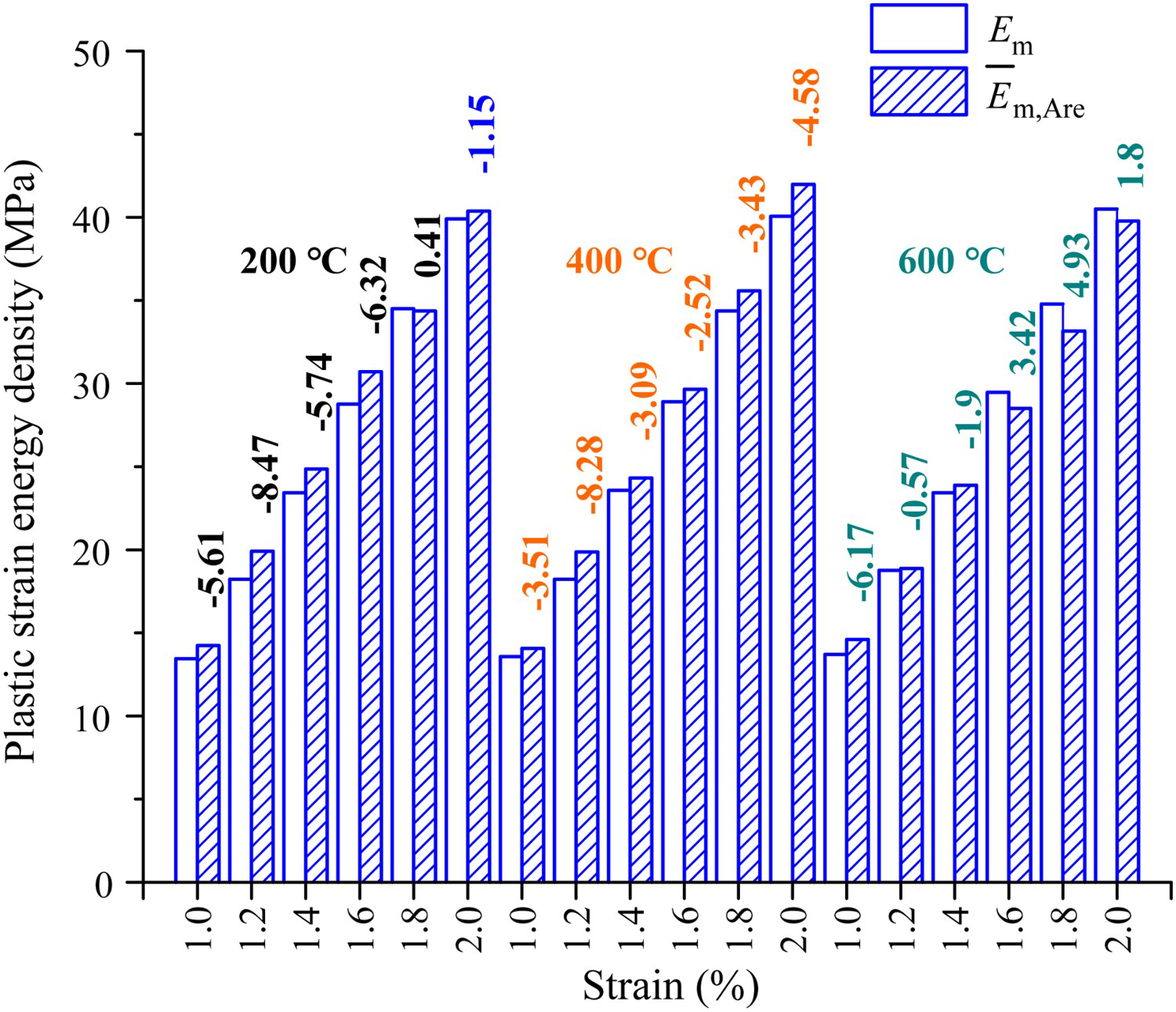
To make the Coffin–Manson model more applicable and solve the problem of high-plasticity mechanics, as it is difficult to quantitatively obtain the value of Fitted curves of the fatigue parameters in Coffin–Manson model.
In accordance with the Coffin–Manson model, Equation (6) can be rewritten as
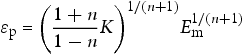

Validation of the modified Coffin–Manson model
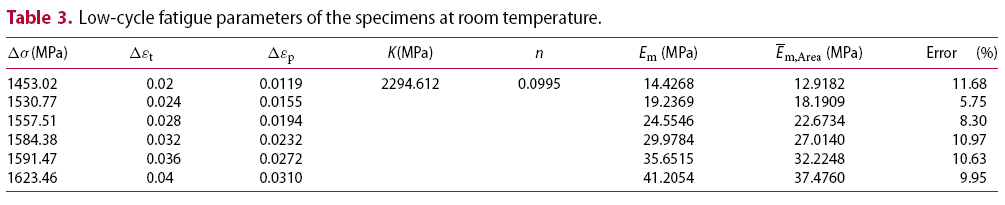
The Coffin–Manson model is modified based on the plastic strain energy density theory of Mashing behaviour of metal mechanicals, which makes it more widely applicable. In order to verify the accuracy of the modified model, the modified model formula is applied to the calculation of low-cycle fatigue properties of the specimens at room temperature in [28]. The formulas of the modified Coffin–Manson model consist of Equations (1), (2) and (11). Figure 19 plots the low-cycle fatigue mashing behaviour curves of the specimens at room temperature. The modified Coffin–Manson model formulas based on plastic strain energy density theory can be used for the specimens at room temperature, which conforms to the mashing behaviour characteristics of metal mechanicals. The Ramberg–Osgood relationship of the specimens at room temperature is fitted. The low-cycle fatigue parameters of the specimens at room temperature are listed in Table 3. The error results indicated that the plastic strain energy density theory was also applicable to the specimens at room temperature, which can obtain Ck = 1365.9792, β = 0.9095. Considering the difference in fatigue cycles in different conditions, the fatigue properties of HTRB630 high-strength steel bar specimens should be comprehensively evaluated using fatigue cycle life and energy dissipation.
Mashing behaviour curves of the specimens at room temperature. Low-cycle fatigue parameters of the specimens at room temperature.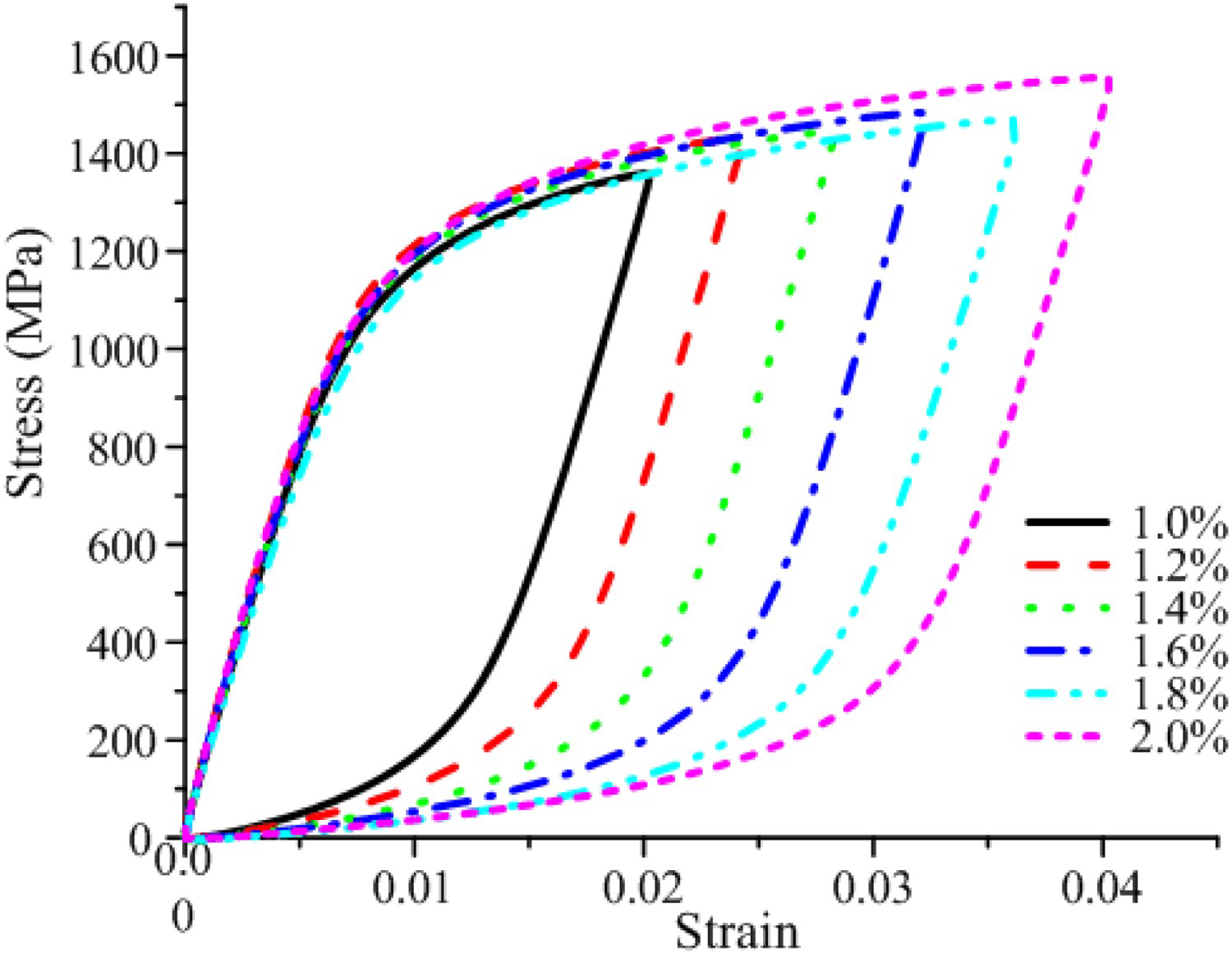
According to the Halford–Marrow relationship [34], the relationship between the plastic strain energy density Em and fatigue life (2Nf) is

The relationship between Em and (2Nf) for the HTRB630 high-strength steel bar specimens in the double-logarithmic coordinate system is shown in Figure 20. With the same fatigue cycle, the plastic strain energy densities of specimens exposed to 200–600°C were lower than those at room temperature. Specimens at room temperature must consume more energy to cause fatigue failure and can better resist the effects of fatigue cyclic loading. The plastic strain energy densities of specimens exposed to 200–600°C were different under the same fatigue cycle. After exposure to 400°C, the specimens exhibited better fatigue resistance at high strain and low cycles. After exposure to 600°C, they exhibited better fatigue resistance at low strain and high cycles, with repeating points. The fitted curves at 800°C were different, exhibiting an overall downward trend. The changes in the basic mechanical properties of specimens exposed to high temperatures were closely related to the 31%, 27%, and 42% decrease in the yield strength, tensile strength, and yield strain, respectively, and the 45% increase in the ultimate strain of the specimen exposed to 800°C.
Fitted curves of the relationship between Em and (2Nf).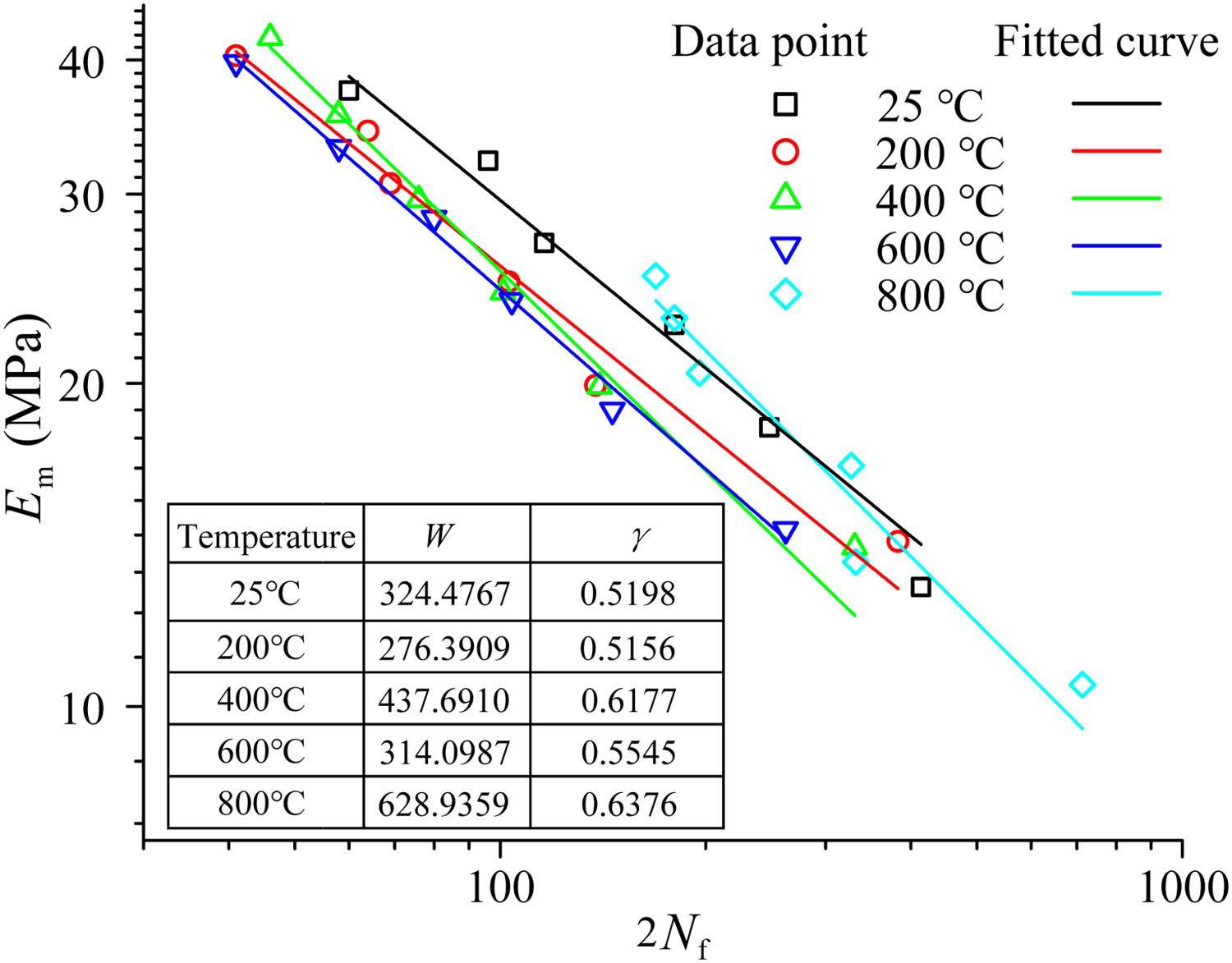
Compared with the specimens at room temperature, the yield strength, tensile strength and yield strain of the specimen exposed to 800°C decreased by 31%, 27%, and 42%, respectively. The fatigue cycles of the specimen exposed to 800°C increased by 119%, 135%, 219%, 161%, 200%, and 296%, respectively. The plastic strain energy density of the specimens exposed to 800°C decreased significantly. It has been pointed out that the total hysteresis damage dissipation energy was also an important indicator of the low-cycle fatigue properties of reinforcing steel, which affects the seismic performance of reinforced concrete structures [35]. The plastic strain energy density can comprehensively represent the seismic performance of steel bars. It can reflect the energy dissipation capacity of the material under one cyclic load. The relationship between plastic strain energy density and fatigue cycle life established based on Halford–Marrow relationship can analyse the seismic resistance of reinforcing steel from the fatigue life and energy dissipation.
Conclusions
The low-cycle fatigue behaviours of HTRB630 high-strength steel bars exposed to high temperatures (200, 400, 600, and 800°C) were investigated experimentally. After exposure to high temperatures, the anti-fatigue properties of the specimens deteriorated. The main conclusions are presented as follows.
At room temperature (25°C), the microstructures of the specimens were flaky pearlite and ferrite. After exposure to 200, 400, and 600°C, the microstructures were still flaky pearlite and ferrite, but the grain sizes were larger than those at room temperature. After exposure to 800°C, the microstructures were flaky pearlite, ferrite, and granular pearlite. The tensile properties of the specimens were different after being exposed to different temperatures. After exposure to 200–600°C, the yield strengths, tensile strengths, and ultimate strains were essentially the same as those at room temperature. The other parameters satisfied the specification requirements in [5]. However, exposure to 800°C had a great effect on the fatigue properties of the HTRB630 high-strength steel bar specimens. Their yield strength, tensile strength, and yield strain decreased by 31%, 27%, and 42%, respectively, and their ultimate strain increased by 45%. The basic mechanical parameters did not meet the specification requirements in [5]. HTRB630 high-strength steel bar specimens exposed to different high temperatures exhibited consistent stress–strain characteristic curves under high strain, all with fatigue failure modes caused by plastic strain in the material. After exposure to temperatures below 600°C, the specimens exhibited a significant decrease in stress before failure. The stress–strain characteristic curves of specimens exposed to 800°C were significantly different. Compared with the fatigue cycles of specimens at room temperature, the fatigue cycles of specimens exposed to 200–600°C with strain amplitudes of 1.0%, 1.2%, 1.4%, 1.6%, 1.8%, and 2.0% decreased by 21%, 43%, 43%, 35%, 38%, and 39%, respectively. The fatigue cycles of specimens exposed to 600°C with strain amplitudes of 1.0%, 1.2%, 1.4%, 1.6%, 1.8%, and 2.0% increased by 119%, 135%, 219%, 161%, 200%, and 296%, respectively. HTRB630 high-strength steel bar specimens exhibited mashing behaviour with low-cycle fatigue properties. Based on the plastic strain energy density theory of mashing behaviour and the uniformity of the effects of exposure to 200–600°C on the HTRB630 high-strength steel bar specimens, parameters K and n were obtained as 2606.5898 and 0.1253, respectively, in the Ramberg–Osgood stress–strain relationship. The fatigue parameters Ck and β in the Coffin–Manson model for HTRB630 steel bar specimens exposed to 200–600°C and room temperature were obtained as Ck = 1358.0827 and β = 0.8887, and Ck = 1365.9792 and β = 0.9095, respectively. The modified fatigue parameters Ck and β in the Coffin–Manson model can be used for further numerical simulation of HTRB630 steel bar specimens exposed to elevated temperatures and room temperature. Based on the Halford–Marrow relationship, a fitted formula for the relationship between the plastic strain energy density and fatigue life of HTRB630 high-strength steel bar specimens was established. The plastic strain energy density can comprehensively represent the seismic performance of steel bars. It can reflect the energy dissipation capacity of the material under one cyclic load. The relationship between plastic strain energy density and fatigue cycle life established based on Halford–Marrow relationship can analyse the seismic resistance of reinforcing steel from the fatigue life and energy dissipation.
Footnotes
Acknowledgements
This research has been supported by China Scholarship Council; the Natural Science Research Project of Jiangsu Province Colleges and Universities (21KJD560002), China; Suqian Natural Science Foundation Project (K202012), China; Project funded by the research and innovation team of engineering structure seismic technology of Suqian University in 2020, China; Suqian City Guiding Science and Technology Plan Project (Z2020137), China; Research and Innovation Team Project of Suqian College (2021TD04), China; and the Fifth Provincial Research Funding Project of ‘333 High-level Talent Training’ in 2020 (BRA2020241), China; The Youth Fund Project of Suqian College (2023XQNA03).
Disclosure statement
No potential conflict of interest was reported by the author(s).