







Abstract
A simple, accurate and rapid construction method of superhydrophobic fabric coating was provided. Firstly, a homogeneous solution was obtained by dissolving a certain amount of silicone resin and polymethyl methacrylate (PMMA) in N,N-Dimethylformamide (DMF). Then, a nanocrystals solution system was made by adding ethanol to the homogeneous solution to induce the crystallization of PMMA. Finally, a superhydrophobic fabric coating was constructed by casting the nanocrystals solution on the surface of cotton cloth. “Tyndall effect”, scanning electron microscope (SEM), X-ray photoelectron spectroscopy (XPS), water contact angle (CA) and self-cleaning test were adopted to characterize the solution system and the coating. Results showed that the nanocrystals solution had obvious “Tyndall effect”. The water CA of the coating reached 153.1°, displaying obvious superhydrophobicity. Besides, concave-convex micro-nano structures were produced on the surface of the fabric coating and endowed it with good self-cleaning capacity.
Introduction
Superhydrophobic fabric coating has great potential in the application of civil, military, medical and other industrial fields [1,2] because of the excellent waterproofness, self-cleaning performance, antimicrobial properties, good oil and water separation capability and stain resistance [3-5]. Therefore, the preparation of superhydrophobic fabric coating has become the focus of research all over the world.
Inspired by ‘lotus effect’, the construction of concave–convex micro-nano structures is the key to the superhydrophobicity of coating. At present, various methods are available to prepare superhydrophobic coatings [6-12], such as self-assembly, template method, phase separation, nano-doping technique [13], electrochemical spinning, sol–gel method [14] and chemical etching. However, some of these methods are complicated in operation, some are restricted by external environment (temperature, humidity or air flow rate), some requires harsh experimental conditions, and some are even not suitable for fabric materials, which limit the development and application of superhydrophobic fabric coating [15-20]. Therefore, it is still of great significance and challenge to establish a simple, accurate and rapid method for the construction of superhydrophobic fabric coating.
It is known that polymer has different solubility in different solvent systems [21,22], which are characterized by showing a linear extension state in good solvents and curled state in poor solvents. Therefore, a homogeneous polymer solution system can produce nanoparticles by adding poor solvent to induce the crystallization of polymers in it. If there is another film-forming polymer in the system, a superhydrophobic fabric coating with micro-nano structure will be constructed by casting it on the surface of fabric. In this process, ‘Tyndall effect’ [23,24] can be used to construct the nanocrystals solution accurately. If a bright light channel appeared in the solution by being irradiated with a laser pointer, it indicates that nanocrystals have been formed, which will be used to fabricate the micro-nano structures of the coating. However, it should be noted that the nanocrystals must have a high glass temperature. Otherwise, it will be melted into a film at room temperature after being coated on the substrate surface. Considering that PMMA with high glass temperature tends to crystallize in the mixed solvent of DMF and ethanol, and silicone resin with low surface energy is soluble in the solvent, a nanocrystals solution can be constructed with the mixture of DMF and ethanol as solvent, PMMA as nanocrystals and silicone resin as film forming material, as follows (Figure 1).
The construction mechanism of superhydrophobic fabric coating.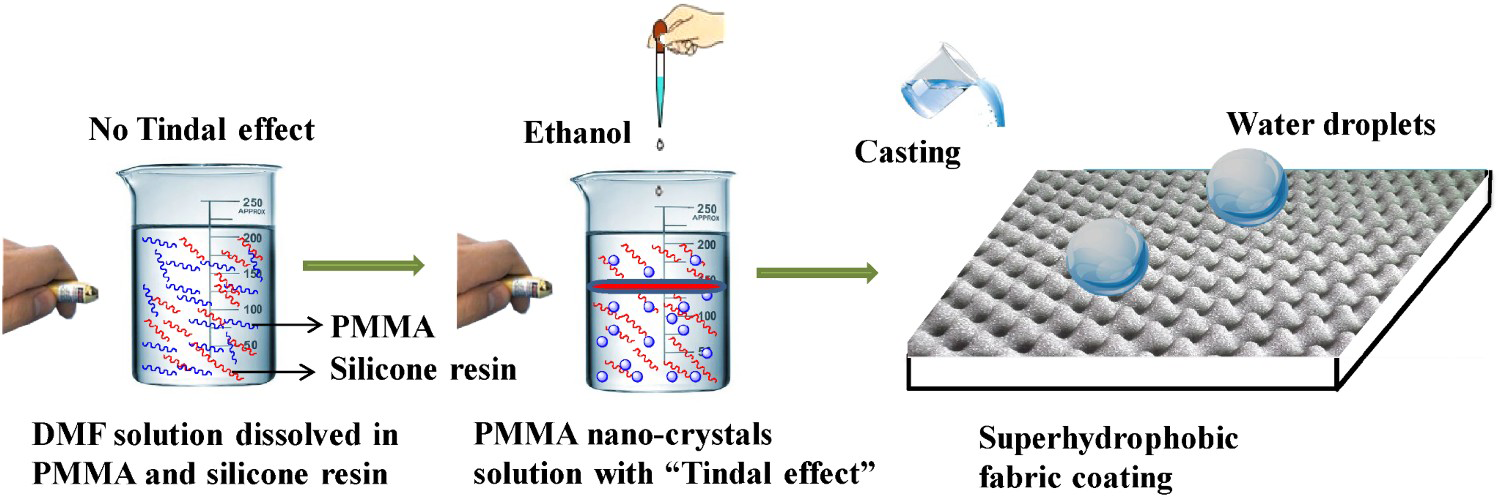
Compared with other methods, this way is more accurate and fast, less affected by external environmental factors, and the whole process does not involve sophisticated instruments and complex operations. More interestingly, so far there have been few researches for preparing superhydrophobic coatings assisted with ‘Tyndall effect’.
In this paper, a nanocrystals solution system was constructed assisted with ‘Tyndall effect’ by adding ethanol to a solution of silicone resin and PMMA dissolved in DMF. With silicone resin as film forming material and PMMA as nanoparticles, a superhydrophobic fabric coating was prepared by casting the solution on the surface of cotton cloth. The solution system and the coating were characterized by ‘Tyndall effect’, SEM, XPS, CA and self-cleaning test, respectively.
Materials and methods
Materials
Polymethyl Methacrylate (PMMA, chemical grade), silicone resin (chemical grade), N,N-dimethylformamide (DMF, chemical grade), ethanol (chemical grade), all the agents were bought from Heowns Biochem Technologies LLC.
Construction of nano-crystalline solution and coatings
The construction process of superhydrophobic fabric coating was as follows.
0.8 g PMMA and 0.4 g silicone resin were dissolved in 18.8 g DMF at the temperature of 70°C to obtain a homogeneous solution. Ethanol was dripped into the solution to induce the crystallization of PMMA. As the solution appeared light channel by being irradiated with a laser pointer, stop adding ethanol. The above solution was poured onto the surface of cotton cloth that was used to make lab coats, and then dried at room temperature. Thus the superhydrophobic fabric coating was obtained.
Characterization
SEM: the surface morphology was studied by Zeiss Sigma 300 (Germany) operating at 15 kV.
XPS: XPS was carried out by PHI5000C ESCA System (USA) with the condition of aluminIum target, 14.0 kV high voltage and 250 watts power.
Water CA: the water CA was tested by DSA100 optical CA tester (Germany). 5 μl deionized water droplet was absorbed with a pipetting needle and transferred onto the testing platform, after which the water contact angle was measured. The final result was the average of 3 testing values at different locations of the coating.
Results and discussion
The result of construction of nanocrystals solution and superhydrophobic fabric coating is recorded in Figure 2.
The construction process of superhydrophobic fabric coating.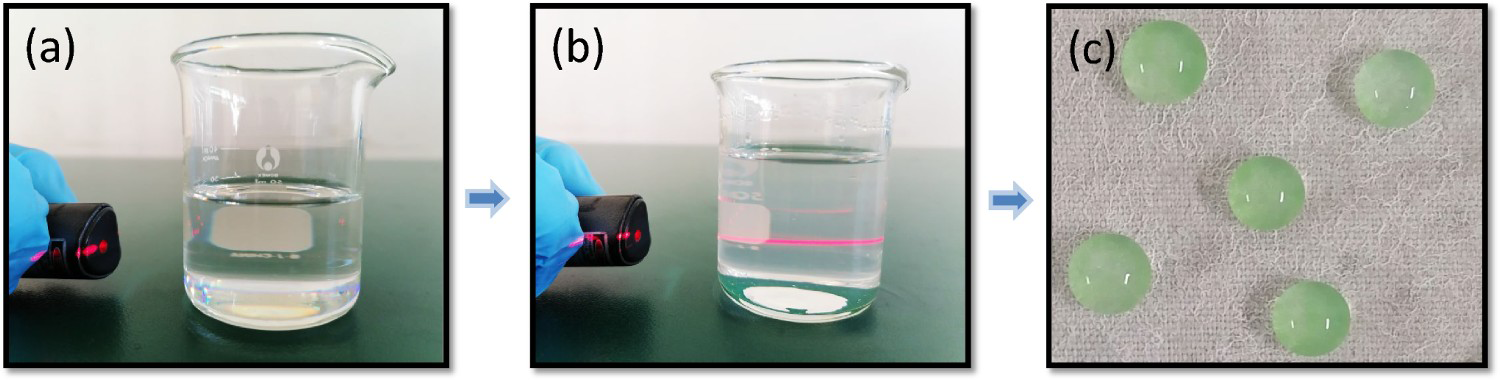
Figure 2(a) is the homogeneous solution configured first by dissolving PMMA and silicone resin in DMF. As the solute size in the solution is less than 1 nm, the scattered light is very weak when irradiated by laser pointer, thus no light channel appears in the system. With the dripping of ethanol, the solubility of PMMA in the system is getting worse and worse. When the amount of ethanol added to the system is 28.0 g, PMMA is precipitated from the solution as nanocrystals. As nanoparticles have good ability of light scattering, a bright light channel is generated when the system is irradiated with laser (Figure 2(b)). Figure 2(c) is the fabric coating obtained by casting the nanocrystals solution on the surface of cotton cloth. Clearly, the cuprous chloride solution droplets roll on the surface of the coating like pearls, which demonstrate that the coating has obvious hydrophobicity.
As shown in Figure 3(a–d) represents the surface microstructure of the coating at different magnification, respectively.
SEM images of the fabric coating surface.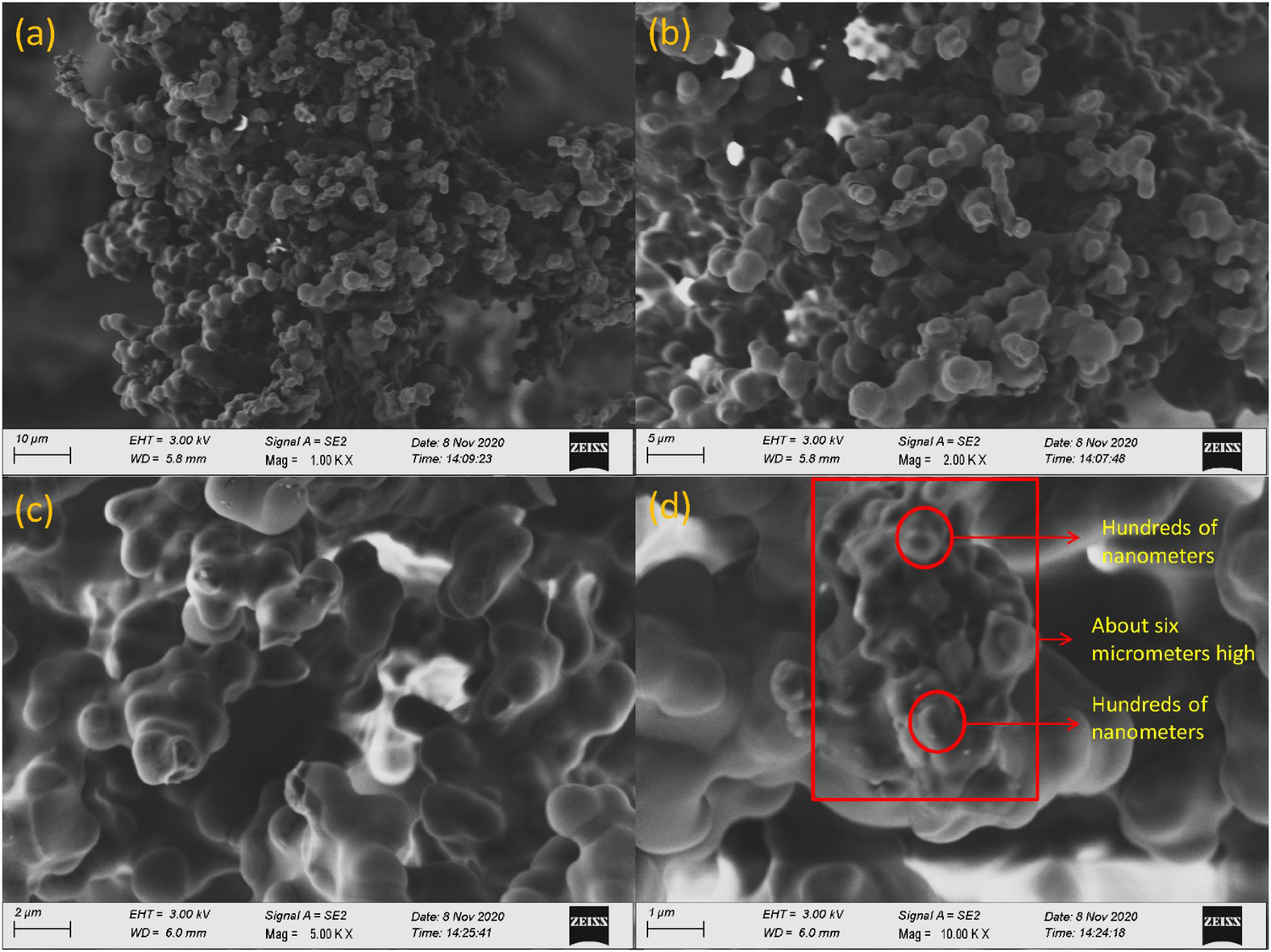
Obviously, there are concave–convex micro-nano structures as expected. When the nanocrystals solution is poured into the fabric, the PMMA nanocrystals and silicone resin are transported to everywhere under the action of capillary force. With the volatilization of DMF and ethanol, the nanocrystals can be reassembled and glued together by silicone resin to form micro-nano structures with the overall size ranging from several microns to tens of microns. As shown in Figure 3(d), the height of the micro-nano structure in the square box is about 6 μm, and the diameters of the convex on the surface are hundreds of nanometres.
The surface chemical composition of the micro-nano structures is tested by XPS, and the result is shown in Figure 4.
XPS spectra of the micro-nano structures.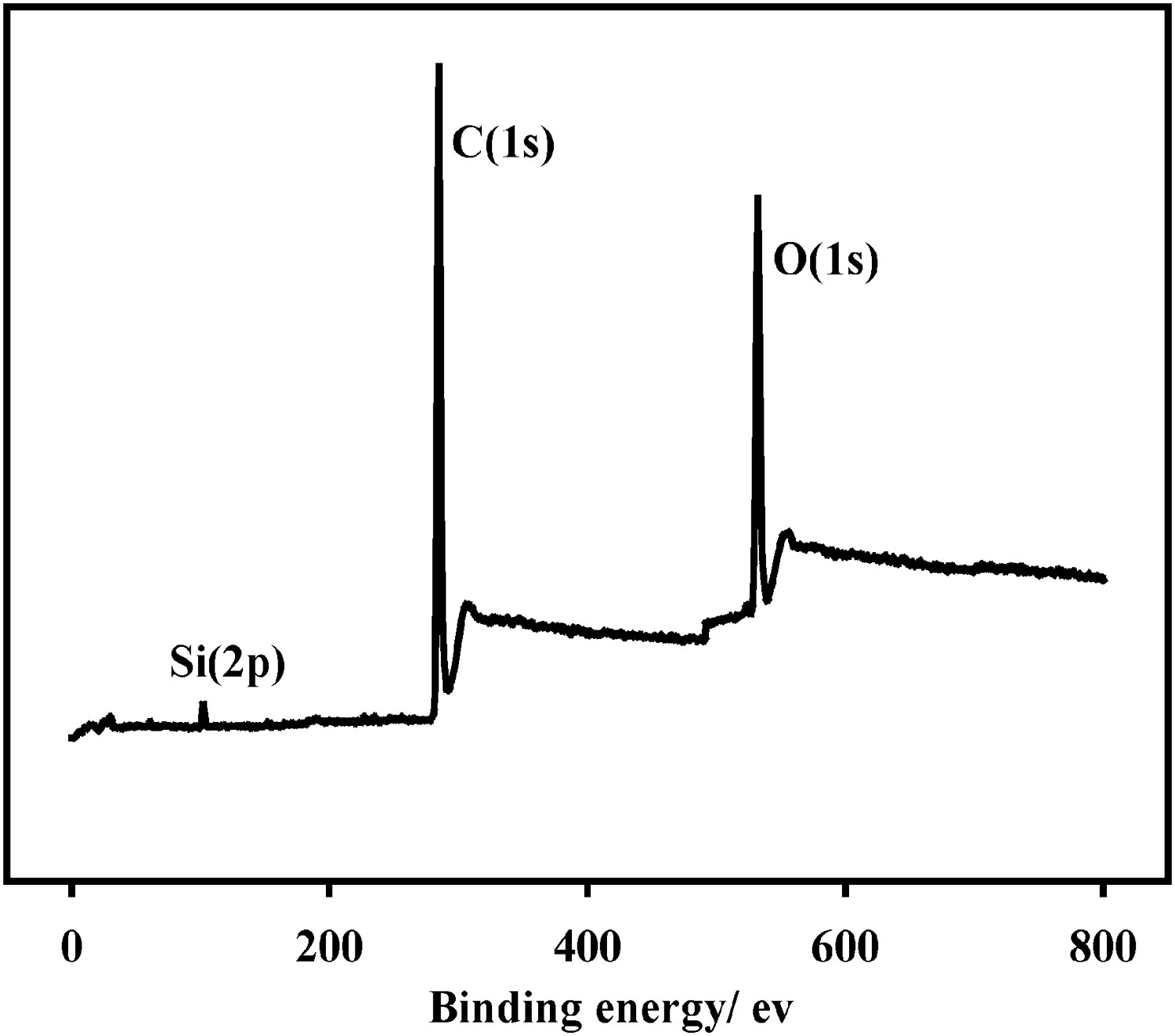
As can be seen from the figure, peaks at 532, 285, 102 eV in the curve are corresponding to O(1s), C(1s), Si(2p), respectively. These elements are derived from PMMA and silicone resin. It is shown that the micro-nano structures of the coating are composed of PMMA nanocrystals and silicone resin, which is in agreement with the theoretical analysis.
As shown in Figure 5, the water CAs at different positions of the coating are 152.1°, 154.2° and 152.9° respectively, and their average value reaches 153.1°, indicating that the fabric coating has superhydrophobicity.
CAs of water droplets on the fabric coating.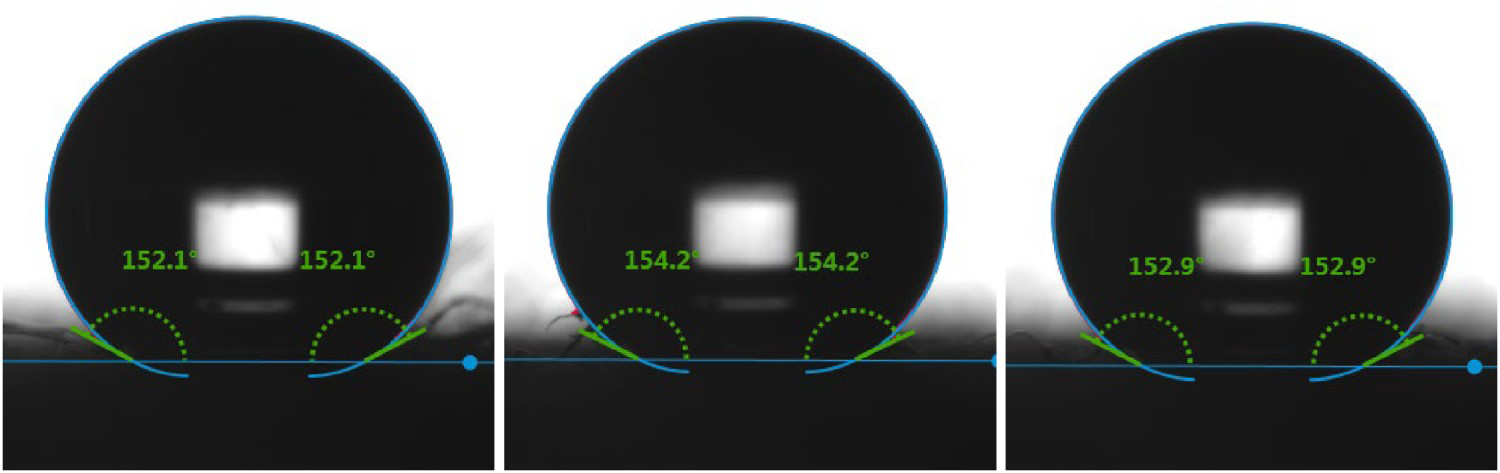
The concave–convex micro-nano structure on the surface has a strong ability to hold air, thus forming an air layer to lift the water droplets. So, the water cannot penetrate into the micro-nano structure and tends to condense into spherical droplets on the surface of the coating. Besides, the silicone resin with low surface energy has weak interaction with the water molecules, which also promotes the hydrophobicity of the coating.
To test the self-cleaning performance of the fabric coating, a certain amount of cuprous chloride powders is wiped on its surface, as shown in Figure 6. The coating is placed with an inclined angle, and water droplets can roll down to take away the powders.
Self-cleaning performance of the fabric coating.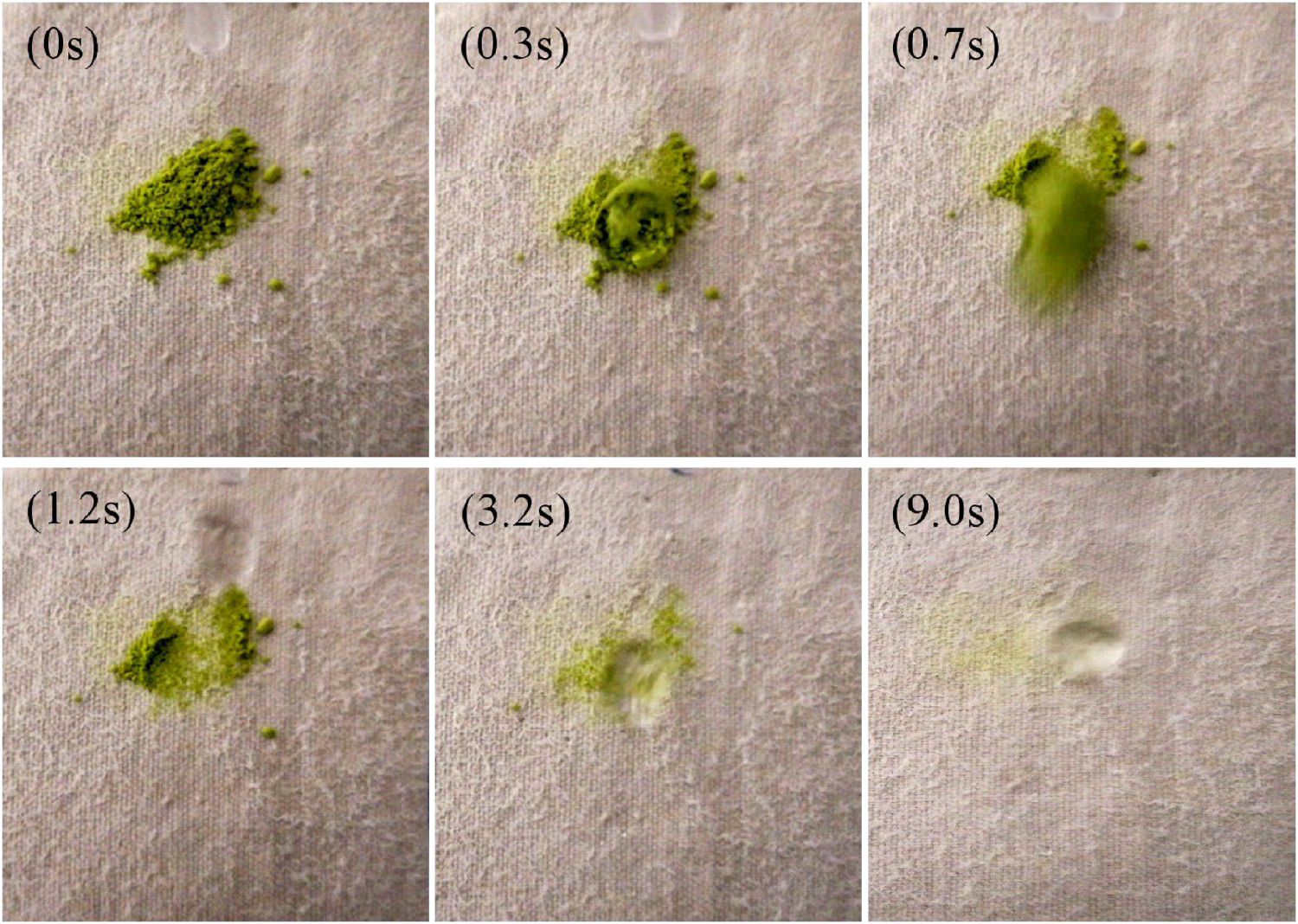
As can be seen from the figure, the powders are cleaned within a few seconds, indicating that the coating has excellent self-cleaning properties. That is because the powders have a small contact area with the micro-nano structures, the interactive force between them is weak. So the powders are affixed to the surface of water droplets and then slip off when the droplets roll on the coating, thus achieving the self-cleaning effect.
Conclusions
A solution system contained PMMA nanocrystals was constructed assisted with ‘Tyndall effect’ by adding ethanol to the solution of silicone resin and PMMA dissolved in DMF. A superhydrophobic fabric coating with a concave–convex micro-nano structure was obtained by casting the nanocrystals solution on the surface of cotton cloth. The water CA reached as high as 153.1° and showed excellent self-cleaning properties. This experiment provided a simple, accurate and fast method for the construction of superhydrophobic fabric coating, which was expected to find wide applications in the textile industry, such as waterproof jackets, lab coats, tents and umbrellas.
Footnotes
Disclosure statement
No potential conflict of interest was reported by the author(s).