







Abstract
Composite coatings have increasingly been used to improve the wear resistance of materials or protect surfaces from wear. Graphene nanoplatelets (GnPs) allow exploiting both the carbon allotropes and nanomaterials properties to reduce friction. In this study, electrodeposition of Cu-GnP composite coatings was realized to improve the tribological behaviour of copper plates. Two grades of GnPs were exploited to produce self-lubricating coatings, investigating how the GnP size affects the tribological performance. The characterization was performed through profilometry and microscopy (SEM-EDS) to assess their morphology, in addition to wear tests to define the mechanical properties. The results proved that the dimensions of GnPs, which are width and thickness, greatly affect the morphological and tribological properties of the coatings.
Keywords
Introduction
Copper is used as an electrical and thermal conductor but high ductility and low strength limit tribological applications. Additionally, the adhesive material transfer is one of the main issues in wear contacts involving ductile materials [1]. Ploughing was recognized as the principal wear mechanism in coarse-grained copper by Yao et al. [2]. They demonstrated an early-stage surface plastic deformation under reciprocating sliding conditions, in addition to grain refinement and local recrystallization caused by frictional heat. However, many studies highlight that the dispersion of second-phase particles in the metal increases the mechanical characteristic of pure metal and alloy coatings [3-5]. Many reinforcements can be embedded within a metallic layer to increase the surface mechanical features. Among these, nanoscale particles offer further advantages [6-8]. Different graphene-based nanomaterials are available; graphene nanoplatelets (GnPs) exhibit high potential as reinforcement due to outstanding properties providing strengthening and high-performance materials for a wide range of technical applications [9-11]. Good anti-adhesion properties also make GnPs particularly appealing for friction reduction applications [12,13]. Compared to graphene-based materials, such as reduced graphene oxide, the manufacturing of GnP is cheaper and has a less environmental impact as no chemicals are required and can be a viable alternative.
Several deposition techniques are exploited for graphene-based coatings, such as chemical vapour deposition [14,15], physical vapour deposition [16,17] and thermal deposition [18]. However, most of them require high temperatures, expensive raw materials, and complex instrumentation. Besides, the limited batch sizes are, in general, non-suitable for volume products. The electrodeposition technique offers many advantages such as ease of implementation, no need for expensive equipment, and near ambient conditions [19]. Although many studies concern the deposition methods and mechanical characterization of Copper-Graphene composite coatings [20-24], metal-GnP composites need further investigation. The tribological performance of coatings depends on several parameters and different wear mechanisms occur concomitantly [25]. Therefore, a thorough understanding of the tribological behaviour of the Cu-GnPs composite coating can be profitable.
In this paper, two different grades of GnPs were investigated as solid lubricants for copper matrix under sliding wear conditions. Simplicity in process implementation, ease of control and low management costs make electrodeposition a valuable alternative for graphene-based coatings production. Therefore, it was exploited for the production of Cu-GnPs composite coatings onto the Cu substrate. The morphology of the coatings produced was analysed by optical and SEM images. Also, an EDS microanalysis was performed to highlight the composition of the surface. In addition, the tribological properties were evaluated through a wear test in a ball-on-flat reciprocating configuration to evaluate wear amount and friction coefficient.
Materials and methods
Main properties of the reinforcements.
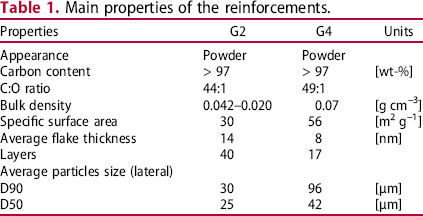
The Cu-GnPs electroplating process was performed at 60°C with a 0.07 A direct current for 100 min. Instead, the pure copper layer was deposited through a 1.63 A current for 3 min at the ambient temperature. The electrolytic baths used in the electroplating process of Cu-GnPs is composed of copper sulphate (170 g L–1), copper chloride (50 ppm) and GnPs (0.7 g L–1). The same composition was exploited for the copper deposition, with the addition of sulphuric acid content of 60 g L–1 and the exclusion of graphene. Before electroplating, the Cu-GnP galvanic bath was sonicated for 30 min with a 500 W ultrasonic processor (Sonics VC-505 Vibra-cell) at 48 kHz. The morphological characterization of Cu-GnP composite coating was performed using Taylor Hobson Talysurf CLI 2000, endowed with an inductive stylus with a spherical diamond tip of 2 μm radius. Tridimensional 3 × 3 mm2 maps were acquired using a resolution of 2 µm along with both directions and the principal roughness parameter evaluated by the ISO 4287 standard. Also, SEM-EDS investigations were conducted through a Mira3 TESCAN to highlight the structure and composition of the coating. Dry sliding linear reciprocating wear tests were performed on a CSM Instruments standard tribometer; the counter part exploited was a steel ball (100Cr6) of 6 mm diameter while the sliding speed and load was set respectively to 5 cm s–1 and a 2 N load. The 10 mm wear trails were also investigated with SEM-EDS analysis to identify the main wear mechanisms.
Results and discussion
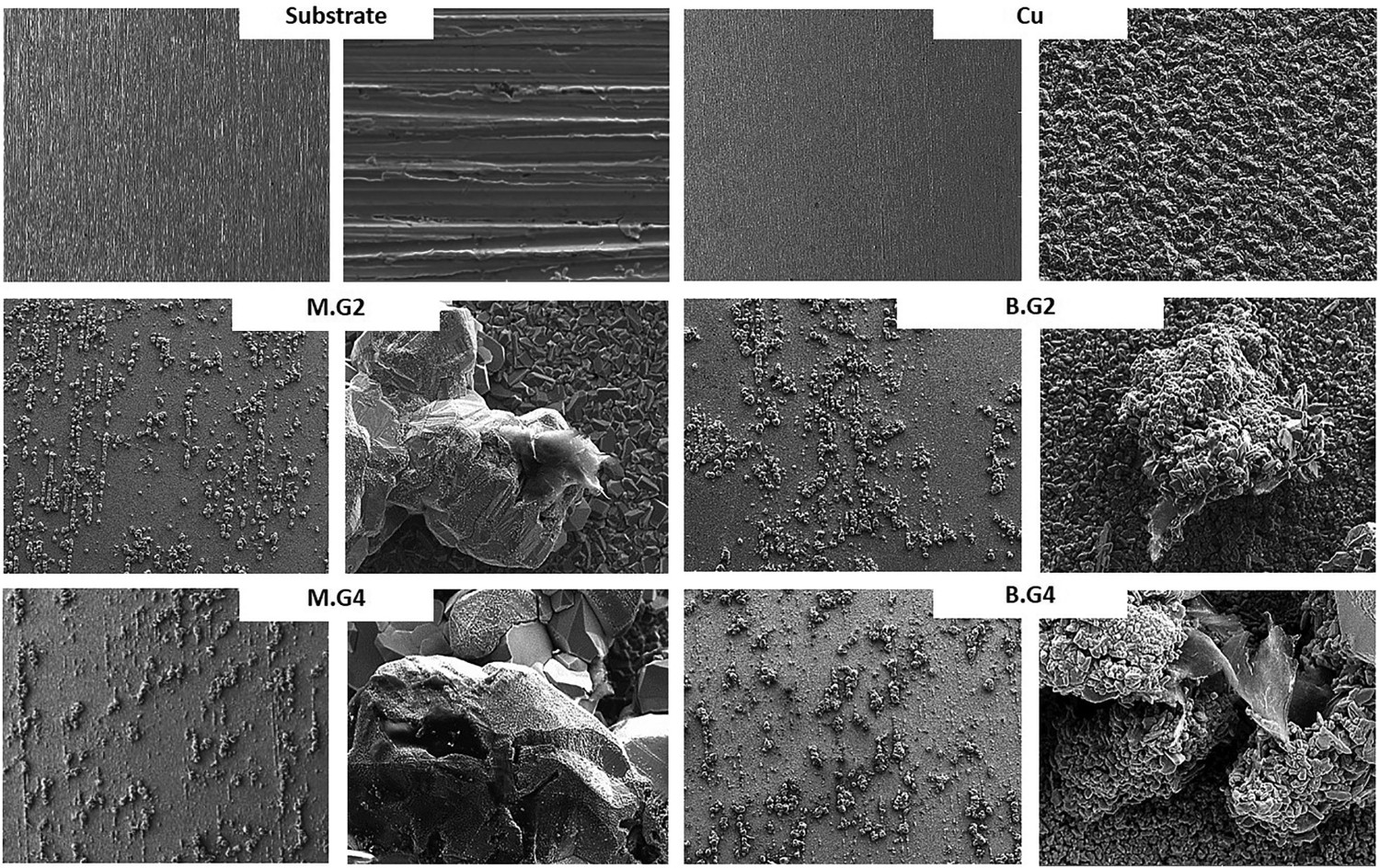
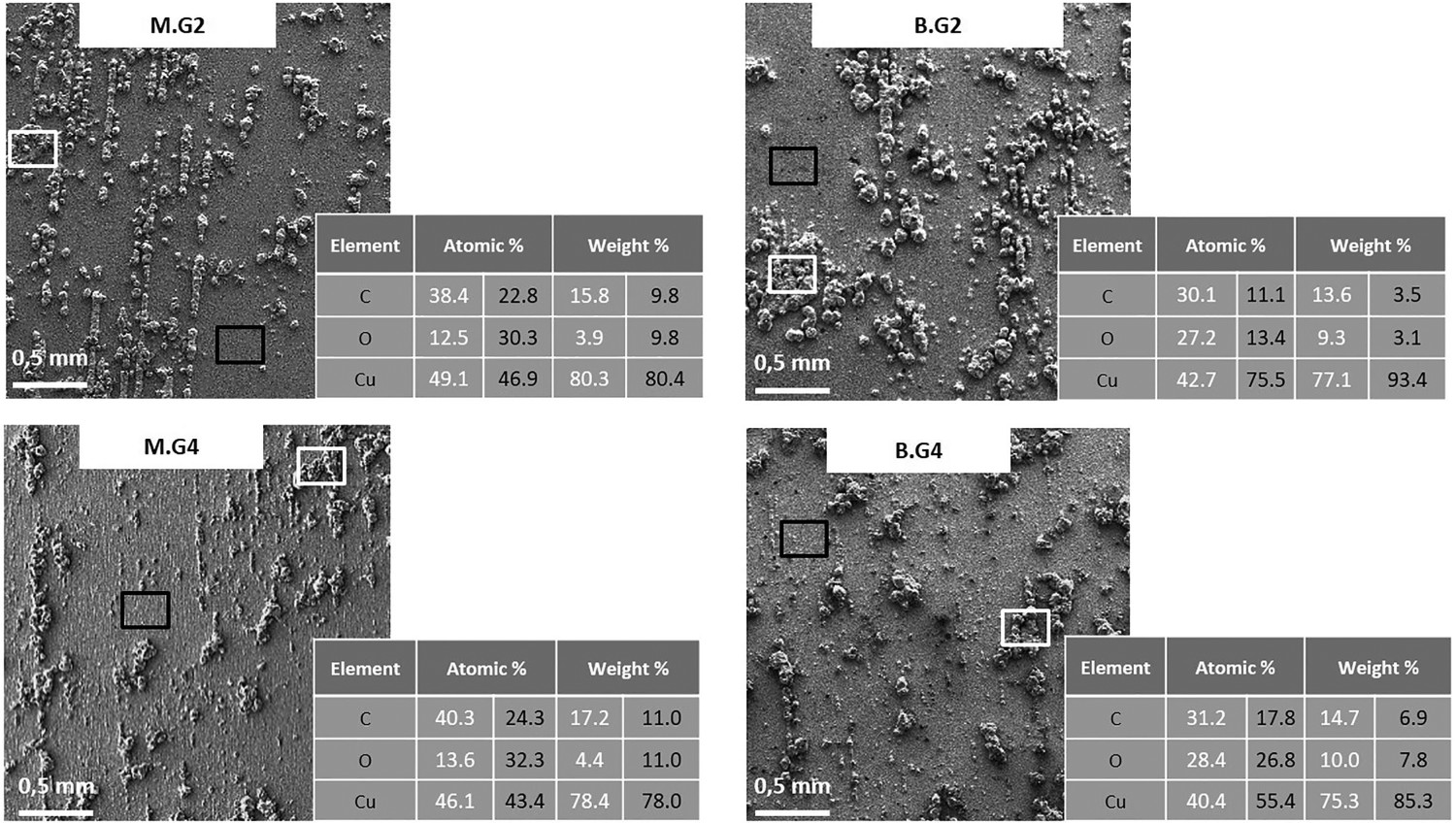
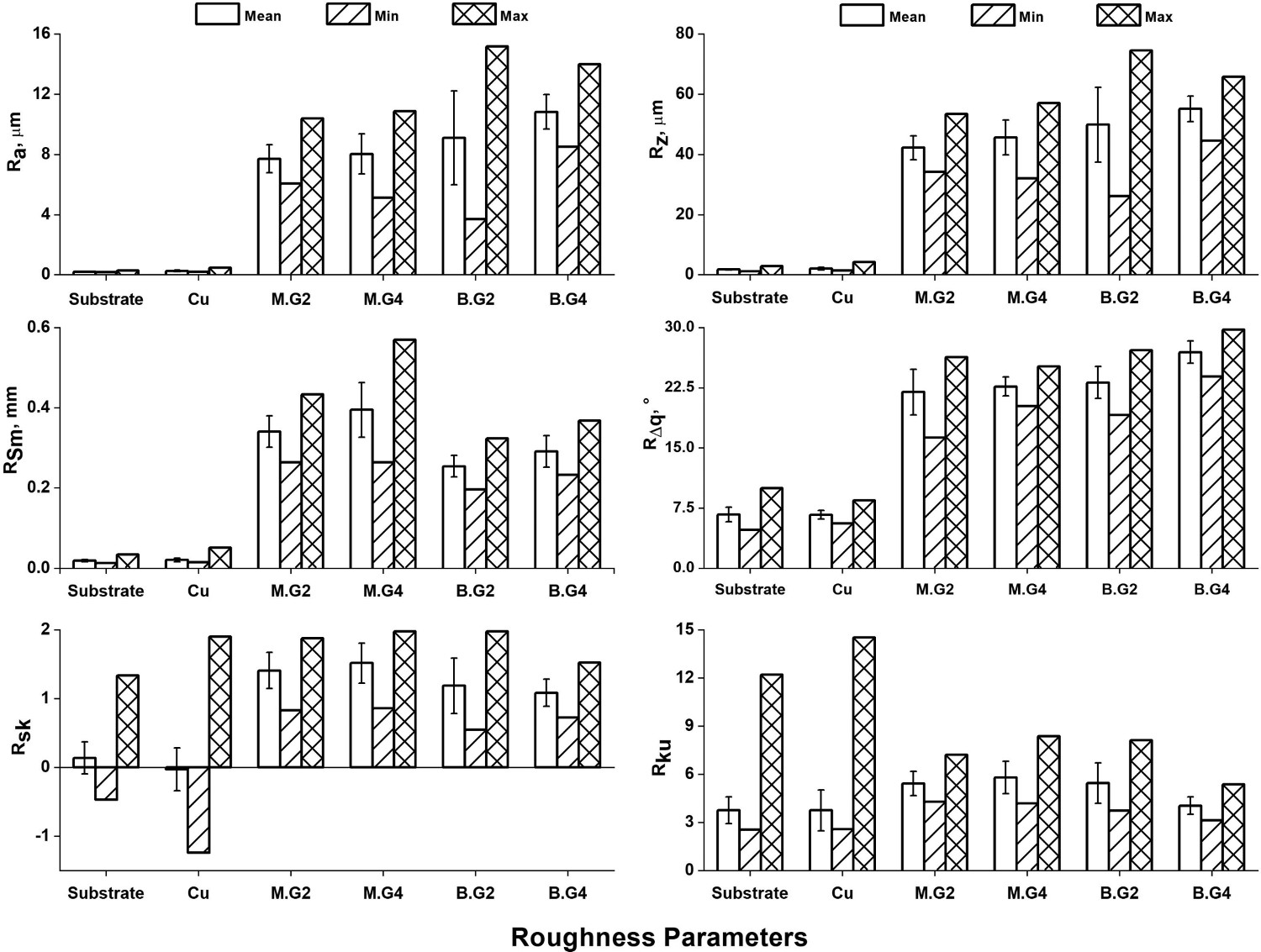
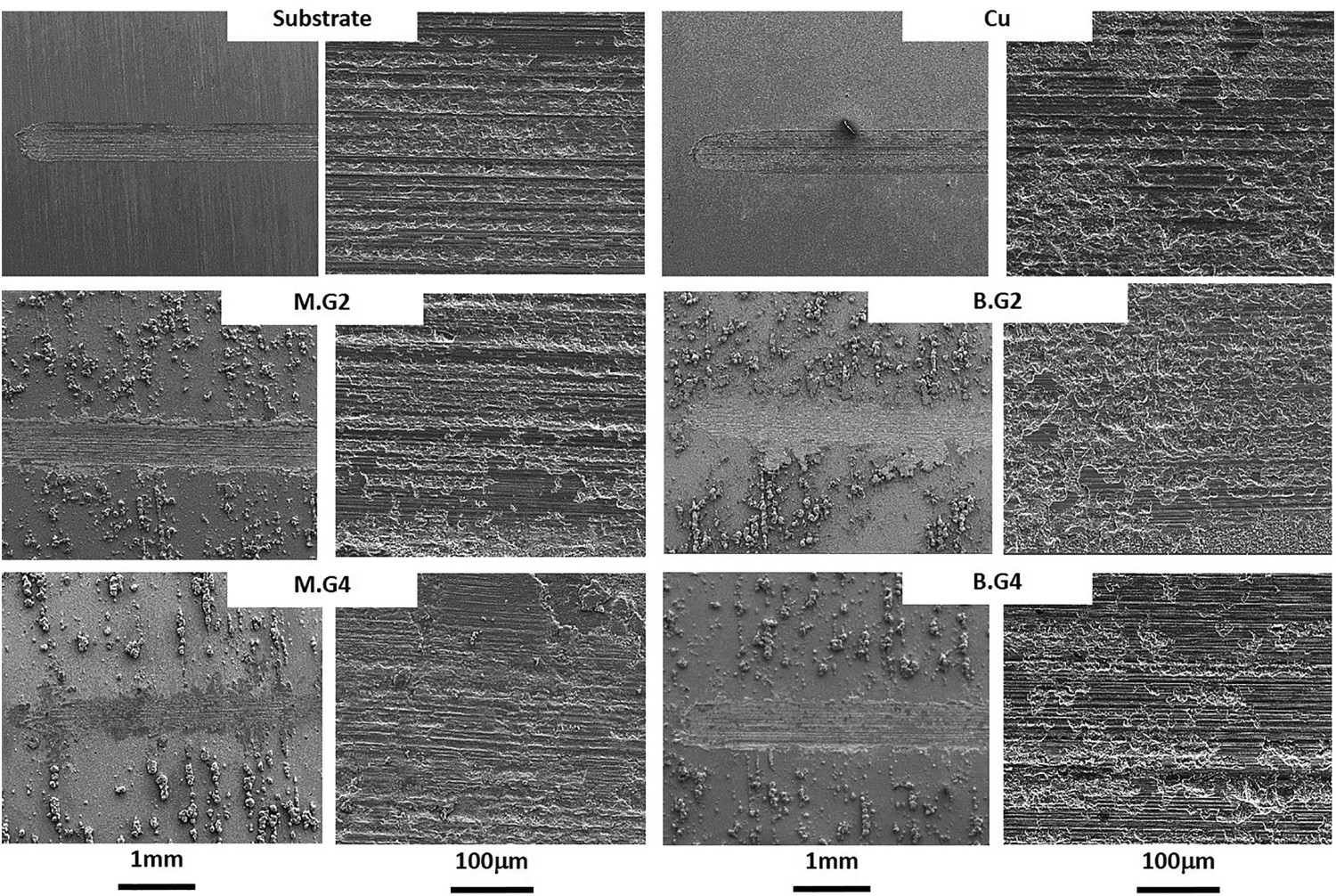
The SEM analysis performed confirms the graphene presence within the coatings. Figure 1 highlights the GnP particles partially anchored on the surface by copper grains, which grows with the typical polyhedral crystal. Figure 2 shows the films morphology. The substrate has a surface texture produced by the rolling process; instead, it is barely notable in the copper coating that exhibits a homogeneous structure. Low magnification images highlight the presence of GnP clusters on the surface. These clusters, which may act as solid lubricant buffers during sliding contacts, are displaced along with straight parallel lines reminiscent of the structure of rolling process grooves. Most likely, the rolling trails represent a preferential adhesion point for macro-particles due to an increase of the negative charge concentration. The growth of the copper blocks the clusters on the surface, which remain partially anchored in the coating. The pure copper of the bi-layer coatings grows on the GnPs clusters and indicates good compatibility between the two materials. However, the 5 µm coating of pure copper of the B.G2 and B.G4 is insufficient to cover the GnP largest particles, although the films appear continuous. Using the G4 exacerbate this tendency due to the larger particle size. It is well known that the particle shape affects the absorption of the particles on the cathode surface during co-deposition. However, different results have been reported in the literature [27]. In this study, the results show that the higher the nanoplatelet size, the higher the peaks. Therefore, M.G4 seems to exhibit higher stacking capacity since the statistical orientation in the plane increases with the nanoplatelet size [28]. These indications are confirmed by the EDS results, reported in Figure 3, used to examine the composition of films produced in two distinct zones: near a cluster and a smooth zone. Both M.G2 and M.G4 have a carbon content in the areas selected higher than the respective bi-layer coatings since graphene is exposed. The carbon content in the smooth area confirms the presence of finer GnP particles dispersed within the copper. However, the GnP clusters have higher carbon content not being covered by copper. Also, despite M.G2 and M.G4 present a similar carbon content, an elevated difference was revealed in the bi-layer coatings. In addition to the higher stacking capacity, the larger G4 dimension hinders the copper from embedding the graphene particles. In Figure 4, the computed roughness parameters are reported. The G4 graphene leads to higher surface roughness in terms of Ra, Rz, and RΔq, concerning both mono-layer and bi-layer coatings. Also, the G4 results in a greater spacing than G2 and highlights that the GnPs possessing the smaller average lateral size and greater thickness are more distributed within the copper matrix, as reported in the literature [29]. An increase in the root mean square slope of the profile and mean width of the profile occurs following the copper plating. The copper grows preferentially on the GnP cluster, where the electrical charge is higher. Therefore, the copper film increases the maximum height of the profile. This behaviour is more evident in B.G4 where the Rz is higher. Regarding the Rsk, the height distribution of the substrate and the Cu-sample is symmetric about the mean line (Rsk ∼ 0), while the Cu-GnP composite coatings show a prevalence of peaks (Rsk> 0). Unlike the substrate and the pure copper coating, these latter exhibit a Rku value greater than 3. These results highlight a sharp trend in the height distribution due to the presence of the reinforcement.
SEM images of GnPs onto the Cu-GnP functional layer. SEM images of coating surfaces at different magnifications. EDS results of the mono-layer and bi-layer coatings, substrate and pure copper. Computed roughness parameters of the coatings.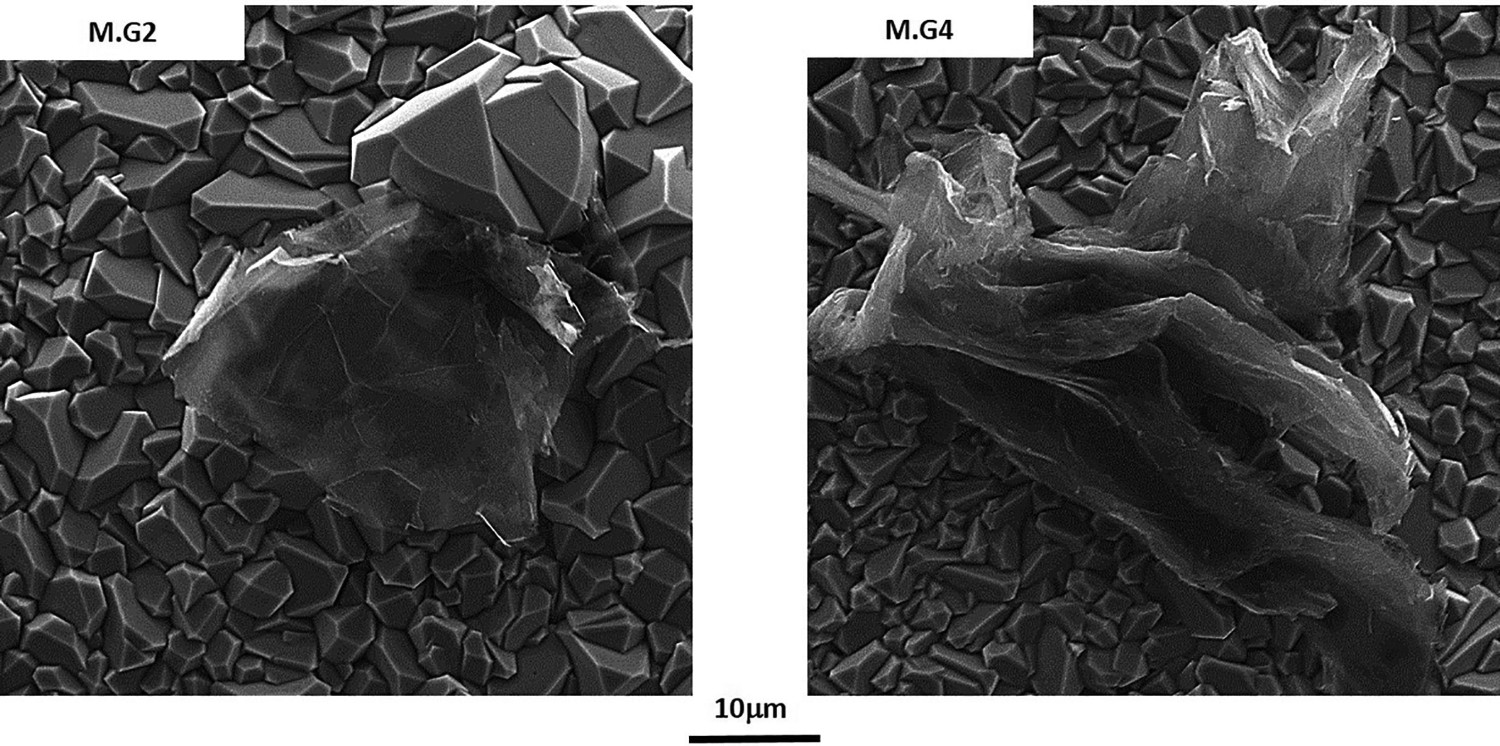
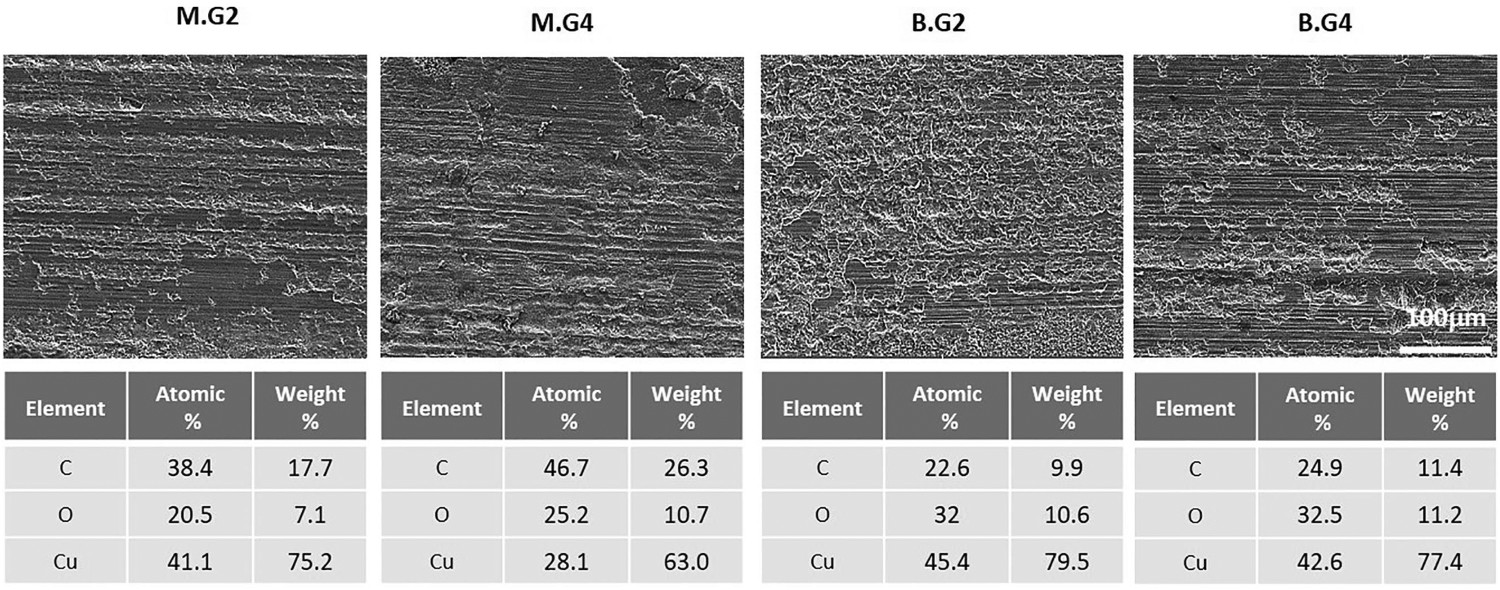
As proposed in Figure 5, the pure copper coating has the worst friction coefficient. The copper substrate has a much finer morphology, and the work hardening undergone during the rolling process increases hardness and wear resistance with a decrement in the friction coefficient. Mono-layer coatings have the lowest friction coefficients due to the higher graphene content, which is actually more exposed. However, G4 offers the best performance due to its larger particle size and larger cluster size. Bi-layer coatings show similar performance to mono-layers but are not stable over time. In the first phase, the graphene surface lubricates, but the creation of copper debris worsens the conditions by generating a three-body wear phenomenon. Moreover, as the process proceeds, the amount of graphene at the interface is reduced. The sudden deterioration occurs for B.G2 between 10 and 20; for B.G4 it occurs at around 50 m, an indication that the larger cluster size can provide a solid lubricant buffer during wear. The analysis of the wear traces in Figure 6 shows the wear trails produced during the tribological tests. It is evident that the substrate shows a less pronounced wear trace due to its higher hardness compared to pure copper. The M.G2 coating shows plastic deformation and adhesive wear marks. They are less evident in the M.G4 wear trails, which at low magnification appears narrower than M.G2 wear trails, suggesting the formation of a graphitic film; it is supposed to exert a protective effect on the wear surfaces reducing further damage to the coating. Therefore, GnPs with a higher aspect ratio is likely to experience a graphitization during wear tests, resulting in increased wear resistance, in line with other reports [30]. Adhesive wear marks are also visible in the bi-layer coatings, along with three-body wear marks caused by copper debris produced during sliding and a lower amount of graphene. However, due to the larger side and higher content of GnP on the surface, the B.G4 perform better than the G2 bi-layer coating. The EDS microanalysis confirms the graphitization of the wear track reported in Figure 7. With a higher presence of carbon, the damage of the wear tracks is less intense. In the M.G4 coating, the presence of carbon is higher, and three-body and adhesive wear are lower. In contrast, the bi-layer coatings have the lowest percentages and visible signs of wear.
Friction coefficient of the coatings in relation to the sliding distance (Fn = 2 N). SEM images of the wear traces (sliding distance = 100 m, Fn = 2 N). EDS composition of the wear trails.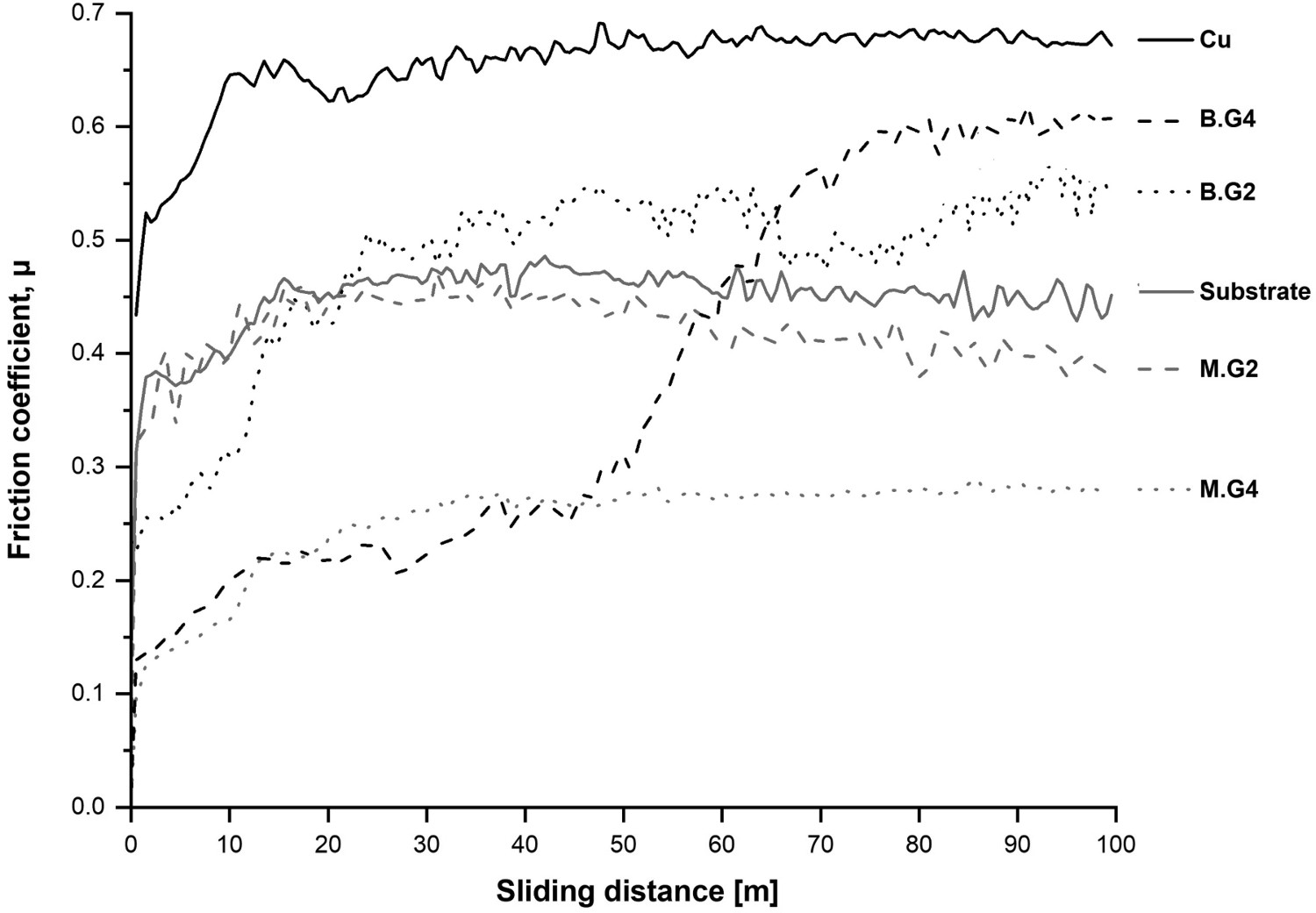
Conclusion
In the present study, two different grades of GnPs were exploited for electroplating composite coatings. The size of GnPs heavily affects the morphology of coatings. G4 leads to higher surface roughness concerning Ra, Rz, and RΔq with the large particles exposed on the coating's surface. Conversely, G2 is more distributed and well incorporated within the copper matrix. The main wear mechanisms of the coatings are plastic deformation and ductile fracture. M.G4 has the lowest friction coefficient of 0.29. From wear tracks’ observation, it is proposed that G4 promotes the formation of a protective graphitic film between the coating and the counter-face, which increases the wear resistance of the copper matrix.
Footnotes
Acknowledgements
The authors wish to acknowledge the engineer Marco Sciarra, President of CNSPP, University of Rome Tor Vergata for providing access to the scanning electron microscope.