







Abstract
Europium nitrate, ammonium tungstate and hexadecyl trimethyl ammonium bromide were used, and Eu-doped WO3 (WO3:Eu3+) nanopowder was synthesized by the micro-emulsion method. Tetraethyl silicate was hydrolysed into SiO2 and WO3:Eu3+ nanopowder coated with SiO2 (SiO2/WO3:Eu3+) was obtained. The microstructure and morphology of the prepared nano-SiO2/WO3:Eu3+ powders were characterized by XRD, SEM, TEM and HRTEM. Results showed that the prepared nano-SiO2/WO3:Eu3+ powders composed of WO3 of monoclinic and SiO2 of amorphous, which was spherical and granular, and the grain size reaches 50
Introduction
In recent decades, lubricants containing nanocomposite [1,2], graphene oxide-TiO2 [3], h-BN [4], CuO [5], SiO2 [6] and graphene [7] have attracted extensive attention due to their excellent physical and chemical properties. Compared with traditional lubricants, nano-composite lubricants are a combination of nanoparticles [8,9] and liquid lubricants [10,11], which can meet the emission and environmental requirements, form a transfer film on the friction surface to improve the lubrication efficiency and have good thermal stability. Wang et al. [12] first synthesized PTFE/SiO2 core–shell additive could greatly improve the tribological performance of PAO6, which attribute to the generation of organic–inorganic transfer film. It can partially or completely replace the traditional toxic ZDDP additive and further enhance the possibility of PTFE being applied as a functional oil additive. Kim et al. [13] first prepared Ag-decorated SiO2 nanoparticles successfully by the sol–gel method. Polyvinylidene fluoride (PVDF) composite films are doped with dopamine-modified nano-silica (dopamine/SiO2) particles prepared by the solvothermal method; dopamine is uniformly coated on the surface of the SiO2 with an average thickness of approximately 5 nm [14]. Wang et al. [15] prepared SiO2–TiO2 composite particles by loading nano-TiO2 onto the surfaces of amorphous SiO2 microspheres, which were then modified with PDMS.
Zhang et al. [16] reported that the transfer film of SiO2/PTFE composites was nonuniform with stacked layers and the coverage rate of each layer decreased gradually from the bottom to the top, regarded as ‘a terrace-like structure’, the thickness of different layers was nearly the same, about 0.14 m.
The nanocomposite particles have a good application prospect in water-based lubricants because of their stable chemical structure, excellent physical properties, corrosion resistance, good liquid fluidity and excellent tribological properties [11-15]. In the past, the research on the co-lubrication performance of two nanomaterials in nanocomposite fluid is often not comprehensive. Especially for two nanomaterials with completely different crystal structures, the influence of the characteristics of nanomaterials on the co-lubrication behaviour is not considered.
In this work, europium nitrate, ammonium tungstate and hexadecyl trimethyl ammonium bromide were used, and Eu-doped WO3 (WO3:Eu3+) nanopowder was synthesized by the micro-emulsion method. Tetraethyl silicate was hydrolysed into SiO2 and WO3:Eu3+ nanopowder coated with SiO2 (SiO2/WO3: Eu3+) was obtained. The microstructure and morphology of the prepared nano-SiO2/WO3:Eu3+ powders were characterized by XRD, SEM, TEM and HRTEM. The tribological behaviour of nano-SiO2/WO3:Eu3+ as extreme pressure and anti-wear additive in the water-based fluid was studied by a four-ball machine and the element composition of worn surfaces was analysed by XPS. The formation Eu-doped WO3 coated with SiO2 transfer film on the sliding surface is further analysed, and the wear mechanism is proposed.
Materials and methods
Europium nitrate (Eu(NO3)2) was provided by the general research institute of nonferrous metals in Beijing, ammonium tungstate ((NH4)10H2(W2O7)6·xH2O) was provided by Shanghai Aladdin Biochemical Technology Co., Ltd, China, n-butyl alcohol (C4H10O) and hexadecyl trimethyl ammonium bromide (C12H42NBr, CTAB) were provided by Nanjing Chemical Reagent Co. Ltd, China. Tetraethyl silicate (C8H20O4Si, TEOS) was provided by Shanghai Maclean Biochemical Technology Co., Ltd, China. Ammonium hydroxide, anhydrous ethanol, phosphate, citric acid, sodium polyacrylate, hydrochloric acid and deionized water were provided by Shanghai Jiuyi Chemical Reagent Co., Ltd, China.
Preparation of nano-SiO2@WO3:Eu3+ and nanofluids
Figure 1 shows the synthesis process of SiO2/WO3:Eu3+ nanocomposites. 0.288 g of Europium nitrate powder was dissolved in 10 mL distilled water and stirred until dissolved. 1.144 g of CTAB as a surfactant was dissolved in 50 mL n-butanol alcohol solution and added into the above `solution, and solution A was obtained. 4.8 g of ammonium paratungstate was dissolved in 50 mL distilled water and stirred until dissolved to prepare a clarified aqueous solution. Then it was slowly added to solution A, heated in a 90°C water bath and stirred continuously for 4 h to obtain solution B. Solution B was put into a muffle furnace and dried to 600°C for 4 h to obtain a sticky white powder. After drying for 4 h, it was cooled to room temperature with furnace temperature to obtain the yellow-green powder, and then ground and collected. WO3:Eu3+ nanopowder was synthesized by the micro-emulsion method. 9 mL TEOS was dissolved in 36 mL anhydrous ethanol and 0.3 g of WO3:Eu3+ was dissolved in deionized water, then the above two solutions were mixed and adjusted to pH = 10 with ammonia. The solution was stirred on a magnetic stirrer at 90°C for 4 h, then cleaned by ultrasonic with ethanol, and centrifuged by a high-speed centrifuge. At the end of centrifugation, the upper clear liquid was poured out and the lower solid was taken out. The samples were dried at 90°C in the oven until they were dried to solid powder and then ground in a mortar into a dense fine powder. Hence, TEOS was hydrolysed into SiO2 and WO3:Eu3+ nanopowder coated with SiO2 (SiO2/WO3:Eu3+) was obtained. SiO2/WO3: Eu3+ and WO3:Eu3+ were dispersed in deionized water, respectively, then phosphate, citric acid and sodium polyacrylate as dispersants were added, and the solution was adjusted to pH = 10 with ammonia or pH = 2 with hydrochloric acid, then the nano-SiO2/WO3: Eu3+ fluids as ultrasonic vibrated at 55°C for 3 h.
Synthesis process of SiO2/WO3:Eu3+ nanocomposites.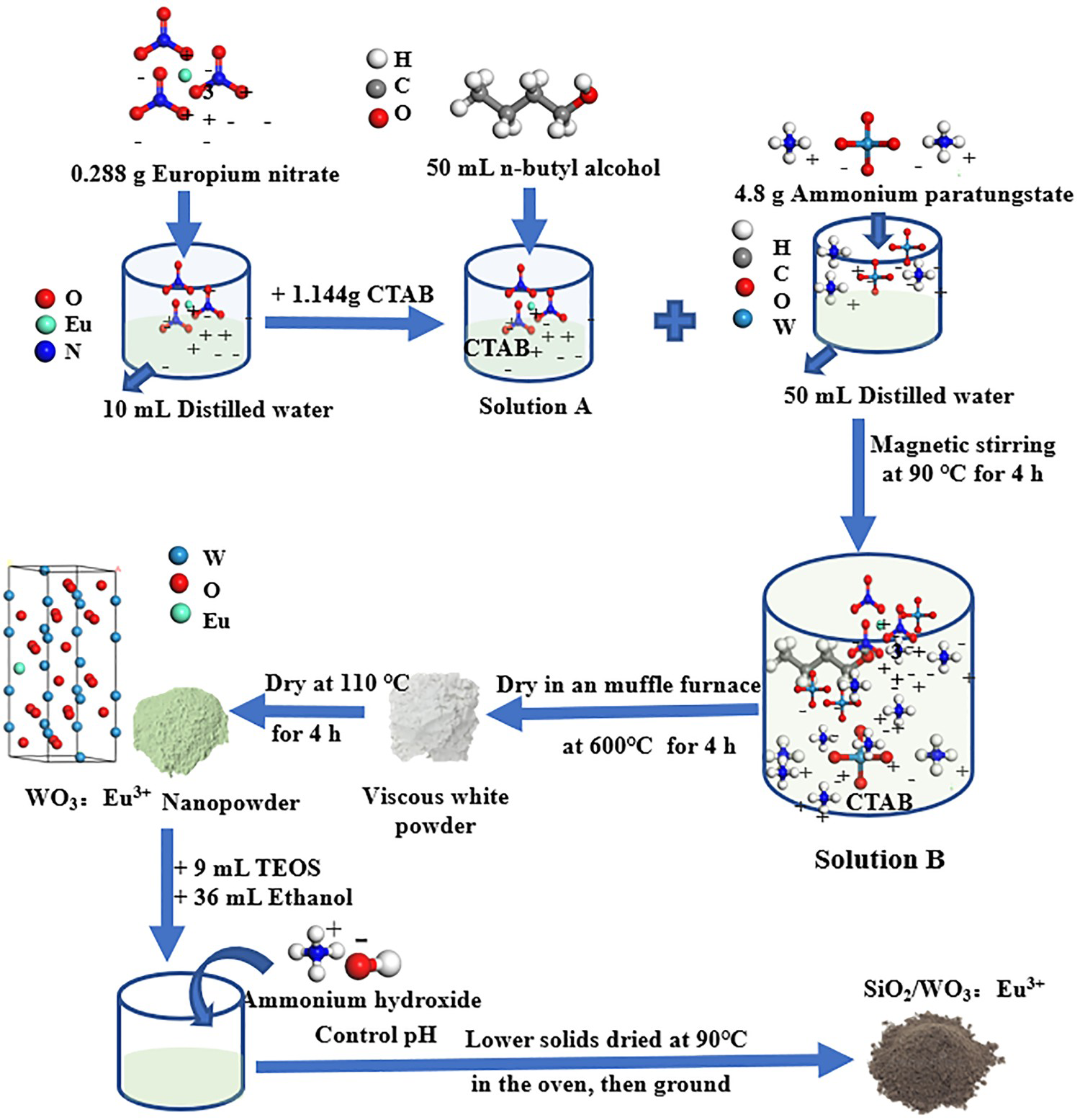
Characterization and dispersion stability of nano-SiO2@WO3: Eu3+
The molecular structure of the prepared nano-SiO2/WO3:Eu3+ powders was characterized by D8 ADVANCE X-ray diffraction (XRD). The morphology of the prepared nano-SiO2/WO3:Eu3+ powders was observed by a German model EVO 18 scanning electron microscope (SEM). The microstructure of the prepared nano-SiO2/WO3:Eu3+ powders was analysed by a Tecnai G2 F20 transmission electron microscopy (TEM) and high-resolution transmission electron microscopy (HRTEM). Dispersion stability of nano-WO3:Eu3+ and SiO2/WO3:Eu3+ nanoparticles in water-based fluid was evaluated by the absorbance method, the best concentration of nano-WO3:Eu3+ and SiO2/WO3:Eu3+ in nanofluid was 0.4 wt-% based on the tribological experiment results. The absorbances of the nanofluids were recorded by a UV-2600 ultraviolet–visible spectrophotometer.
Tribological characterization and worn surface analysis
The synthesized WO3:Eu3+ and SiO2/WO3:Eu3+ nanofluids were obtained at different concentrations (0.0, 0.2, 0.4, 0.6, 0.8 and 1.0 wt-% (weight per cent)). According to ASTM D5183 and ASTM D4172, the tribological behaviours of these nanofluids were carried out with a four-ball friction and wear testing machine. The morphology and the composition of transfer film on the worn surface were observed and analysed by SEM and X-ray photoelectron spectroscopy (XPS), respectively.
Results and discussion
Characterization of nano-SiO2@WO3: Eu3+
XRD measurements were used to characterize the physical structures of WO3:Eu3+ and SiO2/WO3:Eu3+ as shown in Figure 2(a). The diffraction peaks located at 23.2°, 23.7°, 24.4°, 26.7° and 34.2°were attributed to the (002), (020), (200), (111) and (202) planes of monoclinic WO3 (JCPDS: 72-1465), respectively. The other phase of the sample is consistent with the PDF-43-1008 standard card of Eu2O3 in the cubic crystal system. The crystal logical parameters are as follows: spatial group Ia3(206), a = b = c = 10.868 Å, α = β = γ = 90°. It can be seen that the diffraction peak crystal shape and structure of the WO3:Eu3+ and SiO2/WO3:Eu3+ powder are the same, and SiO2 exists in an amorphous form. According to the Scherrer formula, the grain size was about 17.5 nm for WO3:Eu3+ nanoparticles and about 19 nm for SiO2/WO3:Eu3+ nanocomposites. TEOS was hydrolysed into SiO2 and WO3:Eu3+ nanopowder coated with SiO2 had little effect on the grain size of WO3:Eu3+, which may be caused by the low concentration of TEOS. The other phase of WO3:Eu3+ and SiO2/WO3:Eu3+ powders is essentially identical to the cubic Eu2O3 (JCPDS: 43-1008). The crystal parameters of a = b = c = 10.868 Å, α = β = γ = 90°, which belong to spatial group Ia3(206).
(a) XRD, (b) SEM, (c) TEM and (d) HRTEM images of SiO2/WO3:Eu3+ nanocomposites SiO2/WO3:Eu3+.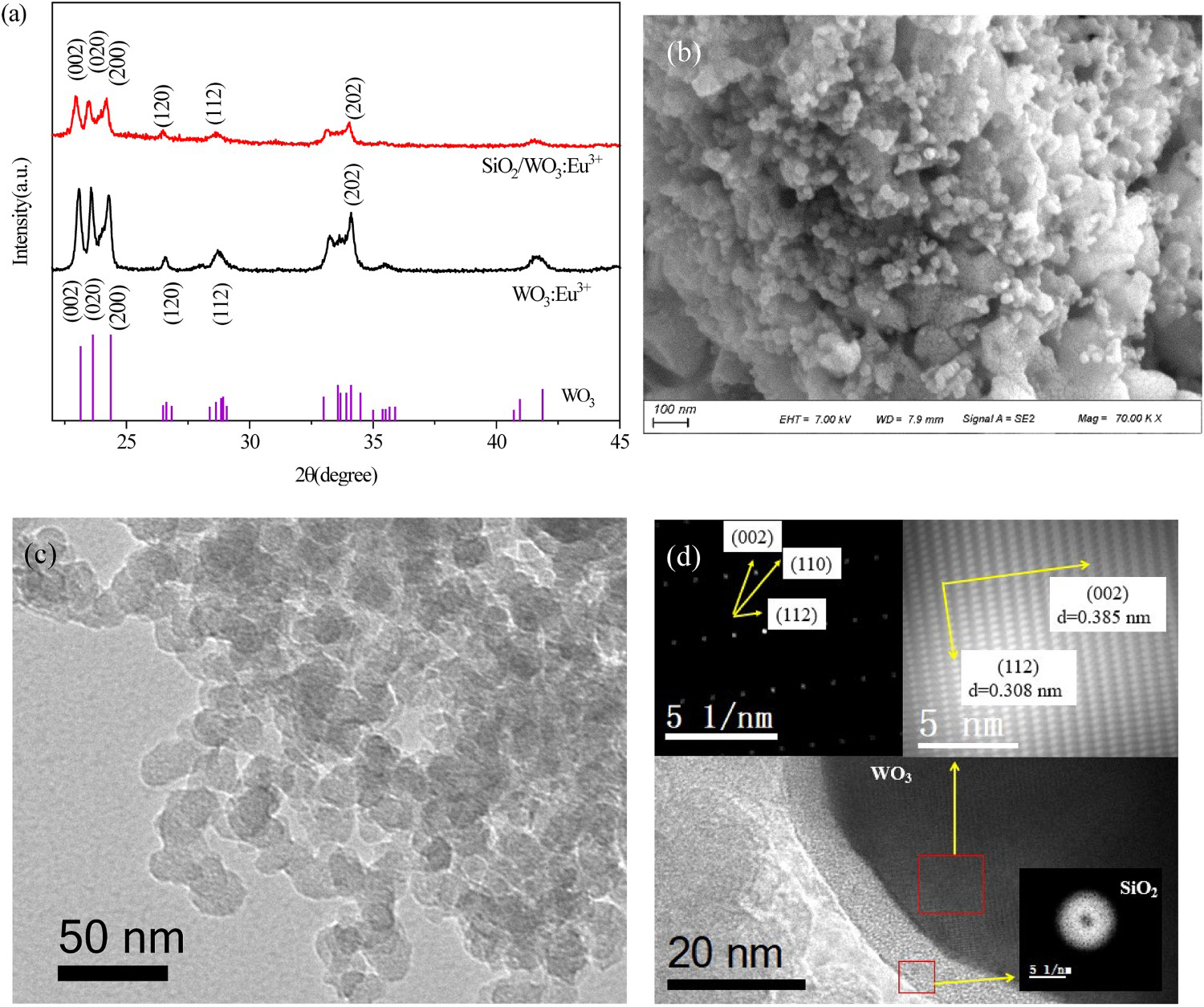
The morphology of the SiO2/WO3:Eu3+ sample was observed and given in Figure 2(b) and (c), and the nanosized SiO2/WO3:Eu3+ particles are spherical and uniformly dispersed. The average particle size is about 20 nm, which is consistent with the Scherrer formula. The morphology was evaluated using TEM/HRTEM and given in Figure 2(c) and (d). According to the electron diffraction pattern shown in Figure 2(d), the (110), (112) and (002) planes of WO3 were observed. A set of lattice fringes with a period of 0.385 and 0.308 nm was matched to the (002) and (112) lattice planes of WO3. The diffraction ring pattern further confirms the amorphous structure of SiO2 coated on the surface of nanopowder.
Dispersion stabilities of the nano-WO3: Eu3+
Relative absorbances and macro images of the nano-WO3: Eu3+ and SiO2/WO3:Eu3+ nanocomposites in water-based fluids prepared under acid or alkaline conditions with different storage time were measured and shown in Figure 3. It is obvious that the relative absorbances of the nano-WO3: Eu3+ and SiO2/WO3:Eu3+ nanocomposites in water-based fluids prepared under acid or alkaline conditions decrease with increasing storage time. It can be found that the dispersion stability of the water-based nanofluids containing nano-WO3:Eu3+ and SiO2/WO3:Eu3+ nanocomposites prepared under alkaline conditions is better than that under acidic conditions. After 5 days, the relative absorbance of SiO2/WO3:Eu3+-pH = 10 (∼0.53) is much lower than those of SiO2/WO3:Eu3+-pH = 2 (∼0.56), nano-WO3: Eu3+-pH = 2 (∼0.61) and nano-WO3: Eu3+-pH = 10(∼0.69). Among the nanoparticles, the dispersion stability of SiO2/WO3:Eu3+-pH = 10 nanoparticle in the water-based fluids is the best.
(a) Relative absorbances, (b) optical images of the WO3: Eu3+ and SiO2/WO3: Eu3+ nanofluids prepared at pH of 2 and 10.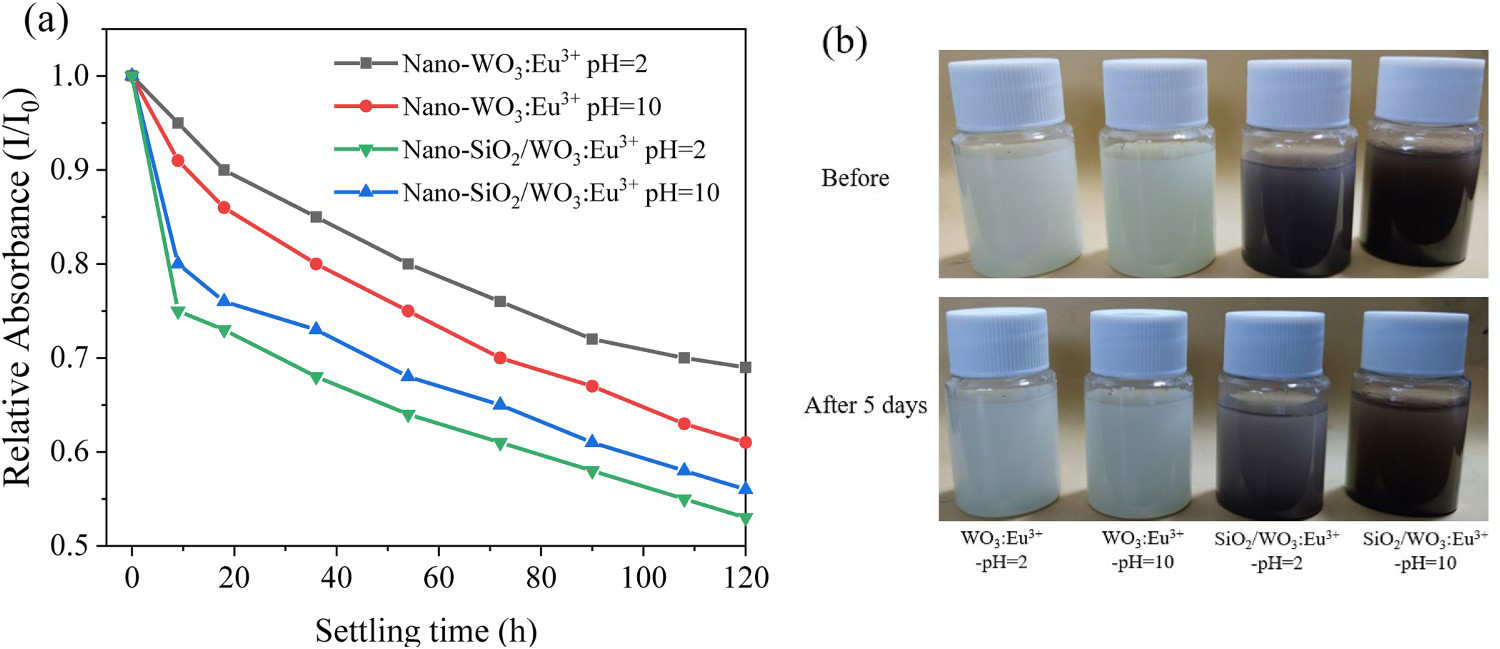
Tribological properties
Maximum non-seizure load (PB) of the nanofluids containing different concentrations of nano-WO3: Eu3+ and SiO2/WO3:Eu3+ nanocomposites prepared under acid or alkaline conditions was measured, as shown in Figure 4(a). The results show that all nanoparticles can significantly increase the PB value of the nanofluids, indicating that nanoparticles play a major role in the bearing capacity of fluids. When the nano-particle content is only 0.2 wt-%, the PB value of the WO3:Eu3+-pH = 2 nanofluid increased by 56.8%.
PB (a), COF (b), WSD (c) and wear volume (d) of the ball lubricated with the nanofluids containing different concentrations of nano-additive.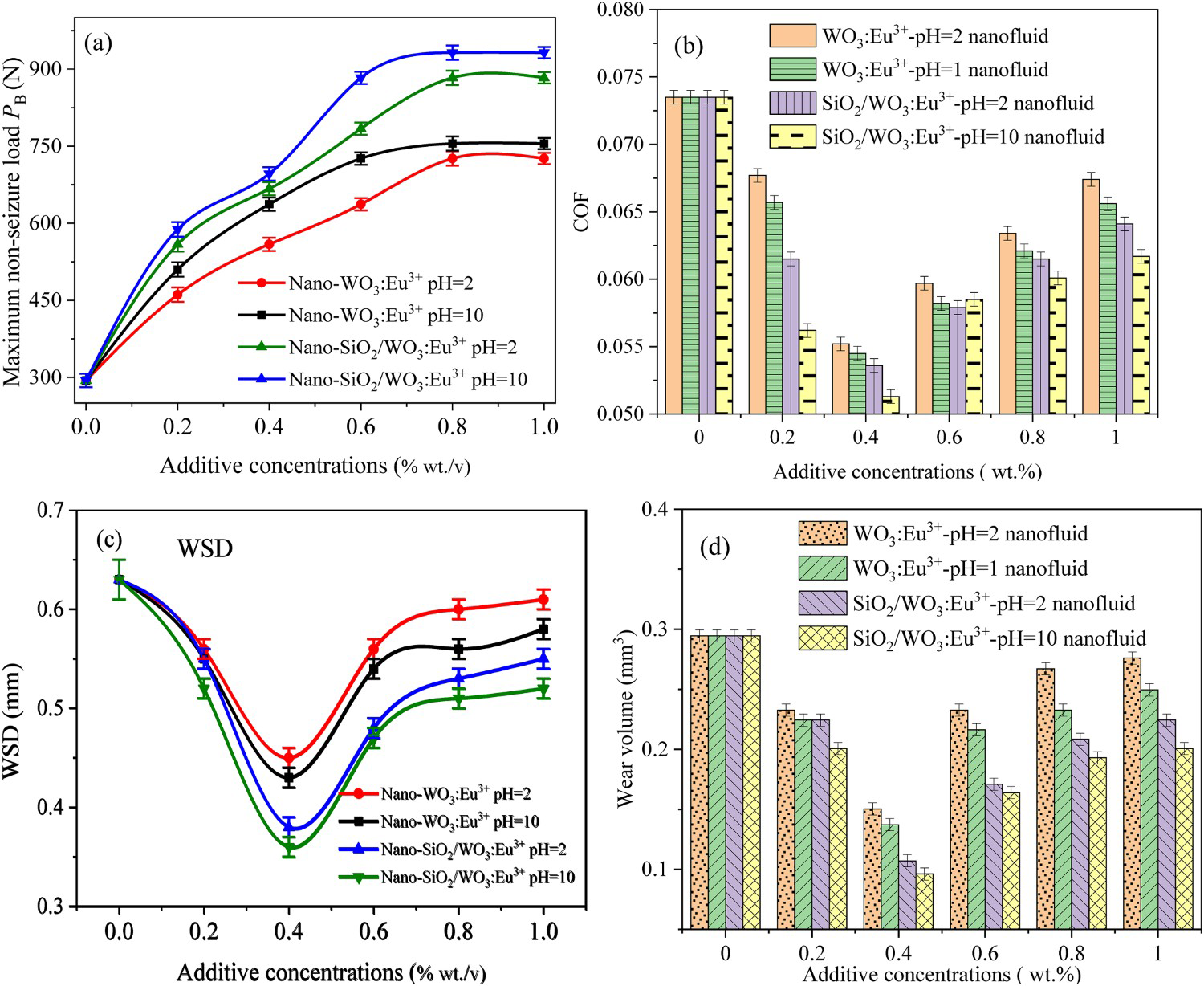
At the same concentration, the PB value of nano-SiO2/WO3:Eu3+-pH = 10 is higher than that of nano-SiO2/WO3:Eu3+-pH = 2, nano-WO3:Eu3+-pH = 2 and nano-WO3:Eu3+-pH = 10. The adsorption film strength of the nanofluid containing SiO2/WO3:Eu3+-pH = 10 particles on the friction surface is higher than that of other nanofluids. As the concentration of nano-WO3: Eu3+ and SiO2/WO3:Eu3+ nanocomposites increases, the chance of collisions between particles increases, which leads to agglomeration of particles and increases particle size [17]. However, large size particles cannot enter the contact area of the friction pair. Although the concentration of nano-WO3: Eu3+ and SiO2/WO3:Eu3+ nanocomposites increases, the total number of nanoparticles acting under extreme pressure in the process of friction lubrication does not change, so the PB value of the lubricant does not always increase with the increase of the concentration of nano-WO3: Eu3+ and SiO2/WO3:Eu3+. Therefore, there is an optimal amount of nano-WO3: Eu3+ and SiO2/WO3:Eu3+ nanocomposites for improving the extreme pressure performance of the water-based fluids, not the more the better.
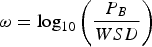
The values of all the tribological parameters of these nanofluids.

Surface characterization
Figure 5 shows OM images of the worn surfaces lubricated with the nanofluids containing 0.4 wt-% nano-SiO2/WO3:Eu3+ composites or nano-WO3:Eu3+. When using traditional water-based fluid, the PB value of the lubricant is less than 300 N, and the plastic deformation of the friction surface causes serious surface damage, and the WSD value is 0.63 OM images of worn surfaces lubricated with (a) water-based fluid, (b) WO3:Eu3+-pH = 2, (c) WO3:Eu3+-pH = 10, (d) SiO2/WO3:Eu3+-pH = 2 and (e) SiO2/WO3:Eu3+-pH = 10 nanofluid.
Figure 6 shows the XPS spectra of O1s, W4d, Si2p, Eu4d and Fe2p of the worn surface lubricated with SiO2/WO3:Eu3+ -pH = 10 nanofluid. For O 1s (Figure 6a), the four peaks indicated at 529.6, 530.6, 531.4 and 531.95 eV are corresponding to WO3, SiO2, Eu2O3 and Fe2O3, respectively. W 4d5/2 signal (Figure 6b), Si 2p signal (Figure 6c) and Eu 4d5/2 signal (Figure 6d) located at 248, 103.6 and 135.8 eV [19], respectively. It is further confirmed that WO3, SiO2 and Eu2O3 are formed on the sliding surface. Nevertheless, the peaks of W 4d5/2 and Si 2P do not show significant shifts, revealing that SiO2/WO3:Eu3+ nanoparticles are tribosintered on the surface of the steel ball (Figure 6 b and c) [20]. Using SiO2/WO3:Eu3+-pH = 10 lubrication, Fe on the worn surface has been oxidized to Fe2O3 on the sliding process, which can be seen from the peaks located at 531.95 eV of O 1s and 710.8 eV of Fe 2p spectra (Figure 6 a and e) [21]. Therefore, SiO2/WO3:Eu3+ nanomaterials provide significant tribological benefits by depositing in situ protective tribological films composed of WO3, SiO2 and Eu2O3 at the steel–steel interface and shown in Figure 7(a). SiO2/WO3:Eu3+ nanoparticles form a uniform layer and act as nanobearings to prevent direct contact with metals, thereby reducing friction and wear.
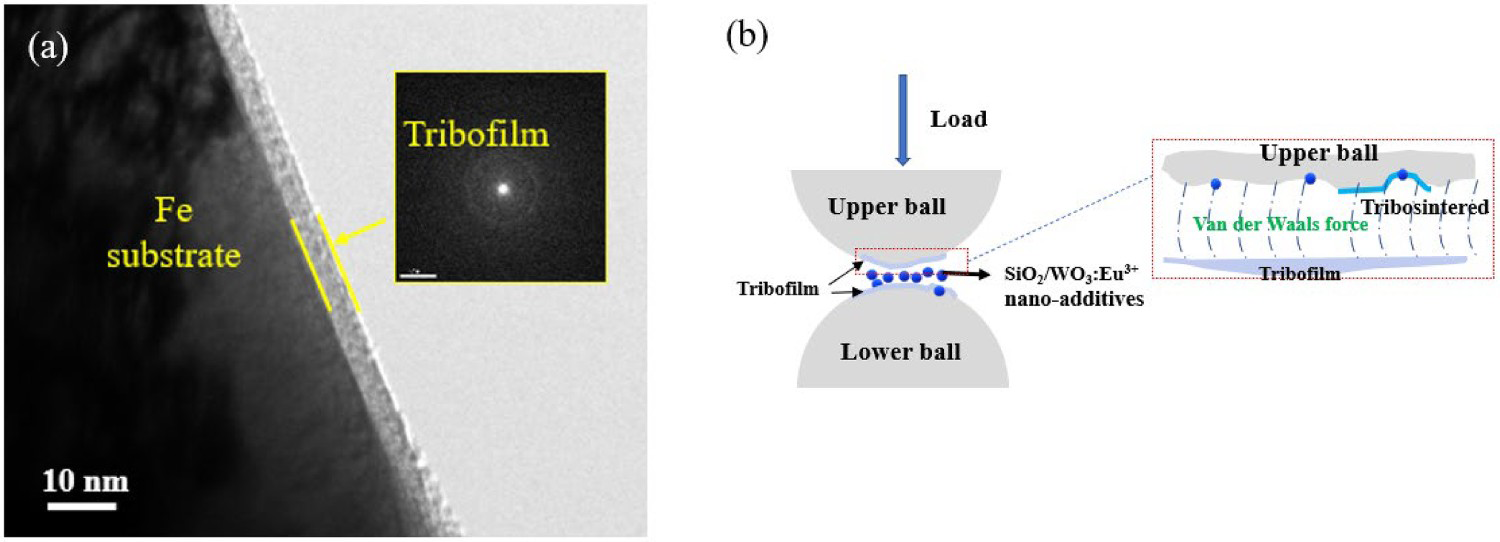
XPS spectra of worn surface lubricated with SiO2/WO3:Eu3+ nanofluid (a) O1s, (b) W4d, (c) Si2p, (d) Eu4d and (e) Fe2p. (a) TEM image of tribofilm on the worn surface by SiO2/WO3:Eu3 + nanofluid lubrication and (b) schematic illustration of the lubrication mechanism.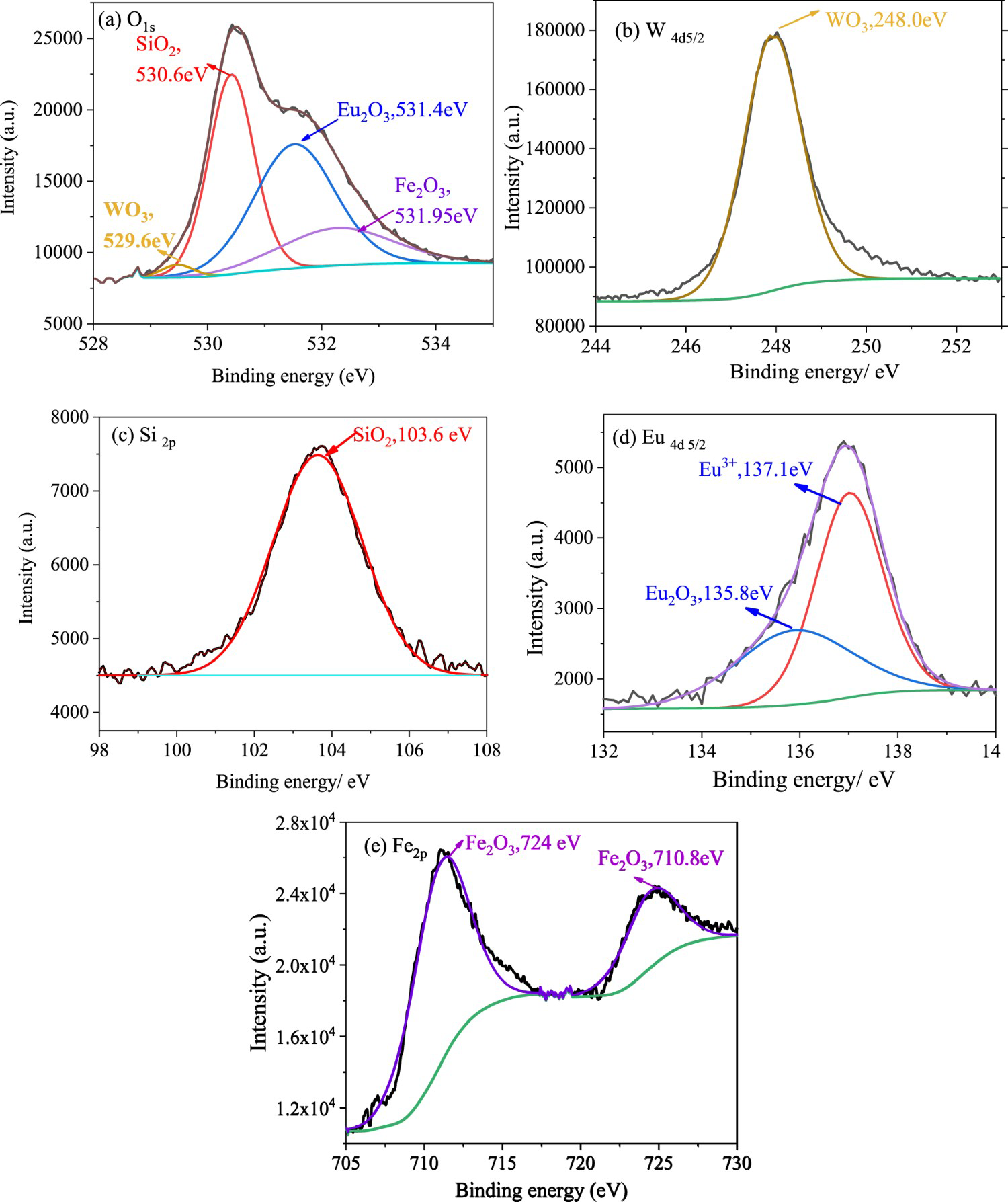
Proposed mechanism
The potential lubrication mechanism can be proposed in light of the aforementioned investigations, as shown in Figure 7. During sliding, SiO2/WO3:Eu3+ nanoparticles are tribosintered on the surface and react with the steel ball to form a protective tribofilm of nanometre thickness. A homogeneous transfer tribofilm made of WO3, Eu2O3 and SiO2 is generated when the core–shell structure is disrupted under the influence of shear force (Figure 7b). This is made possible by the strong chemical bond between the core and the shell. One advantage of the created transfer film is that it may fill up asperity valleys and serve a self-repairing purpose. On the other hand, the film's WO3:Eu3+ component can offer good lubricity, and the SiO2/WO3:Eu3+ component can also perform admirably in terms of wear resistance and load bearing. The hydroxyl groups of SiO2 and the substrate form a powerful hydrogen bond and van der Waals force that significantly improves the adherence of the transfer film [22]. The outstanding tribological performance of SiO2/WO3:Eu3+ nanocomposites is the result of the cooperation effect between SiO2 acts as nano-bearing and the in-situ protective tribofilm with nano-thickness formed on the worn surface during the sliding process. Therefore, a premium organic–inorganic co-extruded transfer film fills the contact surface of the friction pair, considerably enhancing the base fluid's ability to reduce friction, resist wear, and support loads.
Conclusion
Eu-doped WO3 (WO3:Eu3+) nanopowder was synthesized by the micro-emulsion method. Tetraethyl silicate was hydrolysed into SiO2 and WO3:Eu3+ nanopowder coated with SiO2 (SiO2/WO3:Eu3+) was obtained. The microstructure and morphology of the prepared nano-SiO2/WO3:Eu3+ powders were characterized by XRD, SEM, TEM and HRTEM. Results showed that nano-SiO2/WO3:Eu3+ exhibits superior load-bearing capacity, anti-wear and anti-friction performance in the water-based fluid. This was due to the cooperation effect between SiO2 acts as nano-bearing and the in-situ protective tribofilm with nano-thickness formed on the worn surface during the sliding process.
Footnotes
Disclosure statement
No potential conflict of interest was reported by the author(s).