





Abstract
A thermodynamic model for predicting the phosphorus distribution ratio L
P of CaO–SiO2–MgO–FeO–Fe2O3–Al2O3–P2O5 slags was developed by considering the mass action concentration of ion couples or structural units in slags based on the ion-molecule coexistence theory (IMCT) and is referred to as the IMCT-L
P model. Compared with the equilibrium mole number or mass percentage of the slag components, the mass action concentration for structural units of CaO–SiO2–MgO–FeO–Fe2O3–Al2O3–P2O5 slags used in HIsmelt smelting reduction ironmaking can characterize the reaction ability of the components. The mass action concentration of the iron oxides 
Introduction
For most steel products, phosphorus is a harmful element that negatively affects the quality of the steel. However, it cannot be readily removed during blast furnace ironmaking so that dephosphorization is an important task in the steelmaking process. HIsmelt is a direct smelting process that utilizes fine iron ore and non-coking coals for the production of molten pig iron. The HIsmelt ironmaking process may provide favourable dephosphorization conditions, such as high basicity, high FeO content, high slag content and low temperature. Therefore, HIsmelt has a higher dephosphorization capacity than the blast furnace process, which is not effective at dephosphorization [1–3].
There has been much research into phosphorus equilibrium in the steelmaking process. However, the majority of the research has focused on high FeO slag, low-carbon iron and relatively high temperature characteristic of the basic oxygen furnace (BOF) process. Few researchers have studied the dephosphorization process of HIsmelt in detail [4]. Moreover, researchers have studied the dephosphorization ability of molten iron and established a few models for the phosphorus distribution ratio based on experience or mathematical regression based on the measured data. In these studies, the relationship between the phosphorus distribution ratio and the composition and temperature of slag was discussed. However, phosphorous distribution ratio models are not sufficient and scarce from the perspective of dephosphorization reactions based on metallurgical physicochemistry.
The ion-molecule coexistence theory (IMCT) [5–9] is based on the mass action concentration law, which characterizes the physicochemical properties of metallurgical slags. The IMCT assumes that simple ions, simple molecules and complex molecules all exist in metallurgical slag. The reaction capacity or activity of the component in the slag is characterized by the mass action concentration of the component. Duan et Al. [10,11] and Yang et al. [12–14] established a number of models for predicting the distribution ratio of Mn, P and S in different slag systems based on the IMCT. The results show that the predicted results based on the IMCT have a good correspondence with the measured data in the slags. Furthermore, the prediction model based on the IMCT was proven to be more effective than previous empirical formulas or mathematical regression models.
Yang et al. [15] developed a thermodynamic model for calculating the phosphorus distribution ratio between top–bottom combined blown converter steelmaking slags and molten steel by coupling with a developed thermodynamic model for calculating mass action concentrations of structural units in CaO–SiO2–MgO–FeO–Fe2O3–MnO–Al2O3–P2O5 slags based on the IMCT. In this study, the dephosphorization characteristics of HIsmelt slags were studied with reference to the method developed by Yang. From the perspective of mass action concentration law, the IMCT explains why slags with a high basicity and high oxidation ability could substantially promote dephosphorization. The IMCT model can not only accurately predict the total phosphorus distribution ratio of metallurgical slags but also forecast the respective phosphorus distribution ratio of basic oxides FeO, CaO and MgO in the slags.
Phosphorus distribution prediction model for CaO–SiO2–MgO–FeO–Fe2O3–Al2O3–P2O5 slags based on the IMCT
Establishment of L P prediction model based on slag oxidization ability
Chemical composition of CaO–SiO2–MgO–FeO–Fe2O3–Al2O3–P2O5 slags and hot metal during HIsmelt ironmaking process.
Based on the IMCT [5–9], 


There are seven components, namely CaO, SiO2, MgO, FeO, Fe2O3, Al2O3 and P2O5, in CaO–SiO2–MgO–FeO–Fe2O3–Al2O3–P2O5 slags, and they could interact to form approximately 31 kinds of complex molecules, such as 




The dephosphorization reactions between CaO–SiO2–MgO–FeO–Fe2O3–Al2O3–P2O5 slags and liquid iron can be represented by all basic ion couples, such as (Fe2++O2−), (Ca2++O2−) and (Mg2++O2−), in oxidizing slags, which can be described by Fe
t
O, to form eight dephosphorization products or molecules, including P2O5, 3FeO·P2O5, 3FeO·P2O5, 2CaO·P2O5, 3CaO·P2O5, 4CaO·P2O5, 2MgO·P2O5 and 3MgO·P2O5, according to the IMCT as follows:


















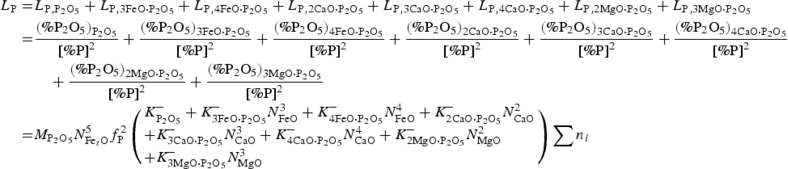
According to Equation (2), the respective phosphorous distribution ratio 







where 


According to 


The comparison of

and

The comparison between 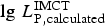

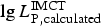

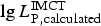

The comparison of calculated

by different models and different data


The comparison of the phosphorus distribution ratio prediction model for metal–slag.
A comparison between the The comparison of 
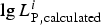
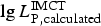
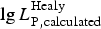
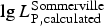
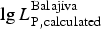
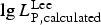




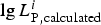

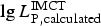
Based on the IMCT, the phosphorus distribution ratios 


The effect of slag components on the phosphorus distribution ratio
The relationship between mass action concentration of slag components and

or

The relationship between the mass action concentration of slag components and The relationship between mass action concentration of the components 













The relationship between mass percentage of slag components and

or

Figure 4(a)–(f) shows the relationship between the mass percentage of the slag components and The relationship between the mass percentage of the components CaO, SiO2, MgO, FeO, Fe2O3 and Al2O3 in CaO–SiO2–MgO–FeO–Fe2O3–Al2O3–P2O5 slags and 







A comparison between Figure 3 and Figure 4 indicates that the mass action concentration and mass percentage of iron oxides FeO, Fe2O3, Fe3O4 and Fe t O may play an important role in the oxidation ability of the slags and the dephosphorization reaction at the metal–slag interface.
However, the relationship between slag components, such as CaO, MgO, SiO2 and phosphorus distribution ratio seems to be divergent. This is because the mass action concentration defined by the IMCT is the effective equilibrium concentration of the slag component, which refers to the activity in the traditional physicochemical approach. When studying the interaction between slag and liquid iron, the chemical reactions between slag components must be considered. The basic oxides, such as CaO and MgO, form a large number of complex molecules in slags, such as 




Similarly, the higher the content of Al2O3 in the slag is, the more complex molecules, such as 

Therefore, the effect of the slag basicity on the phosphorus distribution ratio should also be considered, as shown in Section 3.3.
The relationship between the slag basicity of and

or

The relationship between the slag basicity of and The relationship between the slag basicity and 






The influence of basic oxides on dephosphorization ability
Phosphorus in a hot metal is oxidized by Fe t O in the slag and oxygen in the hot metal to form dephosphorization product P2O5. Other complex molecules are reaction products of the basic components in the slag, such as MgO, CaO, FeO and P2O5, as follows: 2MgO·P2O5, 3MgO·P2O5, 2CaO·P2O5, 3CaO·P2O5, 4CaO·P2O5, 3FeO·P2O5 and 4FeO·P2O5. Based on the oxidizing ability of the slag, different basic oxides have different effects on the total dephosphorization ability.
Regressed results between Dephosphorization contribution ratio of eight structural units in CaO–SiO2–MgO–FeO–Fe2O3–Al2O3–P2O5 slags at 1773 K.



Regressed results between


The empirical formulas for phosphorus distribution ratio
On the basis of Section 3.1–3.3, it is known that L P has a certain correlation with the mass action concentration (or mass fraction) of the components in the slag. Therefore, it is possible to develop a reasonably good empirical correlation formula based on these data, as Suito et al. did. Theoretically, L P is a function of all the components of the slag, but some variables with weak correlation can be eliminated by multiple regression fitting. Previous studies indicate that the reciprocal of temperature is proportional to lgL P, and the coefficient varies from 11,000 to 23,000. For example, Suito and Inoue [17] reported a value of 11,570, Healy [16] reported a value of 22,350 and a value of 22,810 was given by Balajiva [21]. A value of 20,000 was chosen in this work to be reasonable over a limited temperature range. In the HIsmelt process, the slag temperature can always be maintained within a certain range. In the IMCT model, temperature affects the equilibrium constants of chemical reactions between structural units in slags. Suito et al. [17,18] performed a large amount of research on the relationship between slag temperature and phosphorus distribution ratio, so the discussion of temperature is not involved in this study. After determining the value of 20,000, the correction of the fitting result was completed by the constant term in the expression. In fact, this did not affect the validity of fitting, considering that the essence of fitting is based on the IMCT calculation.
Using this temperature dependence and the existing data, the empirical formulas for lgL
P vs. the mass action concentration Ni
and lgL
P vs. the mass fraction are given. In Figure 7, the measured data for lg L
P are compared with those predicted by Equation (4): The comparison between 


The physicochemical meaning of Ni is nearly consistent with the traditionally applied activity ai of component i in slags, so there is a clear correlation between mass action concentration and mass percentage concentration [5–9,12–15]. The IMCT has important advantages in the accuracy of phosphorus distribution ratio prediction, but its calculation process is very complicated, which is not conducive to practical application. Therefore, a relatively simple form of fitting expression is given, which is unified with other studies in form. It should be noted that these two fitting methods are based on the calculation of the IMCT, and it is hoped that the fitting expressions can provide application convenience. Using the provided formulas, the phosphorus distribution ratio can be predicted more easily based on the known composition of the slag. More importantly, we can learn how to create a more favourable condition to promote dephosphorization.
Conclusion
Thermodynamic models for predicting the phosphorus distribution ratio of CaO–SiO2–MgO–FeO–Fe2O3–Al2O3–P2O5 slags were developed based on the IMCT and are referred to as IMCT-L
P models. The developed IMCT-L
P models were tested with industrial trials of 18 runs. The main conclusions can be summarized as follows: The developed IMCT model for predicting the phosphorus distribution ratio can be successfully applied to not only phosphorus equilibrium experiments but also industrial production processes in HIsmelt smelting reduction vessels at metallurgic temperatures. The calculated mass action concentrations Compared with a single slag component, the effect of slag basicity on the phosphorus distribution ratio presented a clearer rule; thus the co-effect of slag components plays an important role in the phosphorus distribution ratio. A significant difference in the dephosphorization contribution ratio among 3CaO·P2O5, 4CaO·P2O5 and 2CaO·P2O5 was found to be approximately 99.7%, 0.227% and 0.033%, respectively. The empirical formulas for lgL
P vs. the mass action concentration Ni
and lgL
P vs. mass fraction were given. Dephosphorization cannot be commonly accomplished in a blast furnace; however, the oxidation atmosphere can promote dephosphorization reactions in the smelting reduction vessel used for the HIsmelt ironmaking process. In this sense, the HIsmelt ironmaking process has feasible applications in the Chinese steel industry.

Footnotes
Disclosure statement
No potential conflict of interest was reported by the authors.