







Abstract
Kicking in soccer has been the subject of scientific research for more than 40 years yet review articles summarizing the biomechanical fundamentals of kick optimization as a guide to coaching are scarcely to be found. The current review article aims to bridge the gap between scientific research into the maximal instep kick (including studies employing 3D motion capture and full-body biomechanical modelling) and the application of such research in coaching. It does so by supplying a scientifically founded, coaching-friendly article explaining identifiable characteristics and motor control sequencing that define this skill. Relevant biomechanical factors are identified in a way that should help coaches better develop training programmes and, at the same time, foster better understanding of the skill among athletes. Such information will contribute to both accelerated skill acquisition and, by concomitant gains in skill efficiency, the development of programmes that minimize risk of injury to athletes during training.
Keywords
Introduction
For millions of fans, the great attraction of soccer is ultimately rooted in the most basic objective of the game – the scoring of goals. Compared to many other sports, goals are relatively rare in soccer. Hence, the various means by which game-play moves toward this objective can be thought of as an improvised drama, where emotional tension is built over long periods only to be fully released when a goal is achieved. This characteristic contributes to making soccer the most popular spectator sport in the world (Reilly and Williams 2003). Among all the techniques used to score goals, the maximal instep kick is the one most frequently employed (Figure 1). Because the technique is so important, it has been a main focus during the training of players that are newcomers to the sport. Equally, study of the maximal instep kick has featured prominently in scientific studies of soccer (Roberts and Metcalfe 1967; Rodano and Tavana 1993; Shan and Westerhoff 2005; Lees et al. 2010; Shan and Zhang 2011; Shan 2017). However, there is often a language-driven disconnect between scientific research results and general coaching practice; results from research need to be translated into language that is application oriented in order to overcome this divide. The current paper summarizes relevant results from existing research on the maximal instep kick. Its aim is to facilitate better understanding of optimized characteristics for the kick in a manner that will directly communicate with the experiences of coaches, practitioners and athletes. Such information should help coaches improve learning effectiveness in their training programmes and better develop training plans for novice soccer players. For novices, we speculate that faster and more effective skill acquisition will increase enthusiasm for, and participation rates in, the sport.
Exemplars of maximal instep kicking – a skill involving leg swing, trunk rotation (or twist) and arm movement.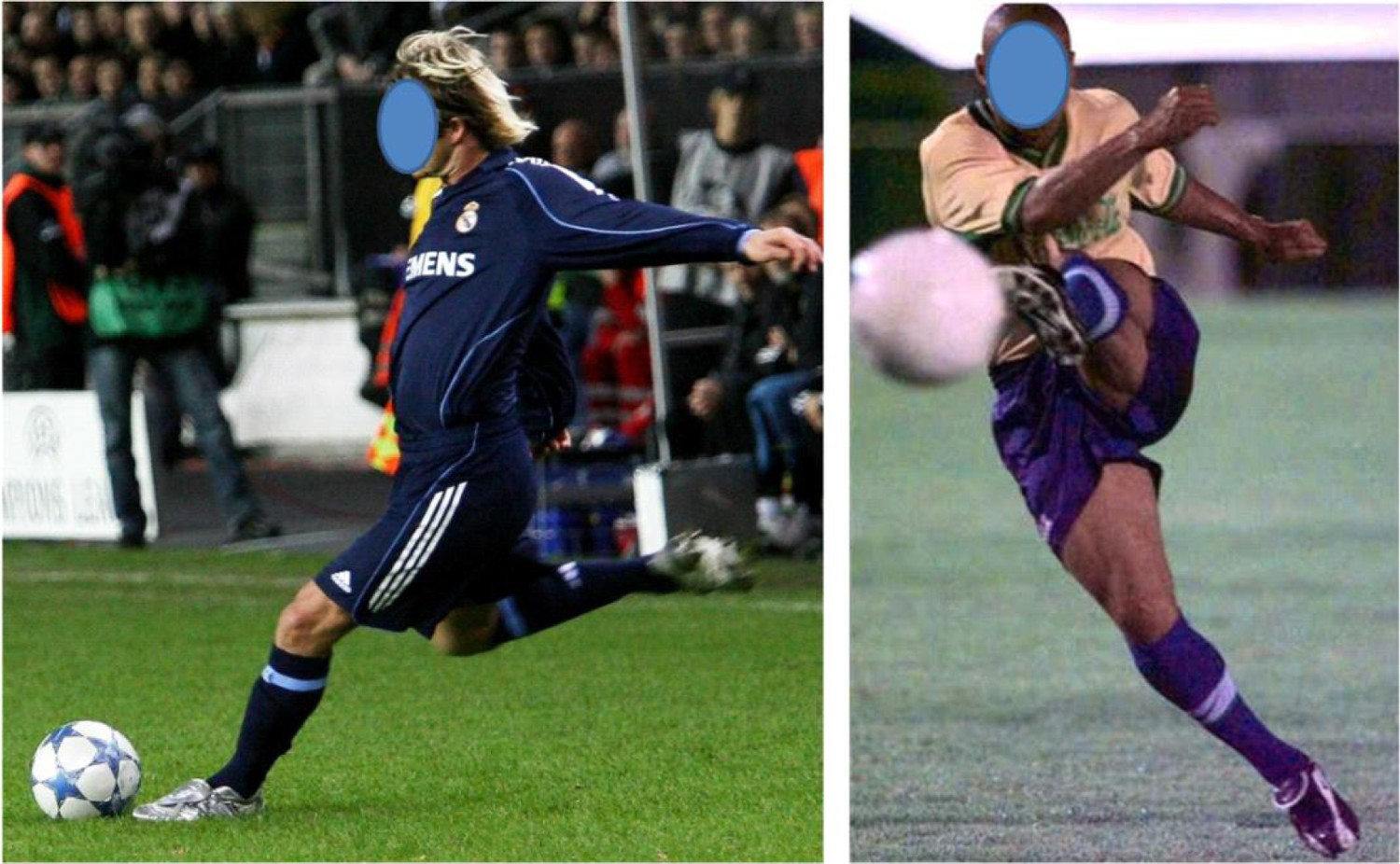
The two basic aspects related to the development of an effective kicking technique
To develop an effective kick, two observable fundamentals must be kept in mind during training – kicking accuracy and power. Motor control accuracy refers to both the precision with which the kicking foot drives toward the ball and the location where the foot contacts the ball. Power, on the other hand, is singularly related to the momentum of the kicking foot. An ideally effective kick is achieved when the ball is struck accurately with full power. However, accuracy and power are non-autonomous variables; they naturally work against each other (Magill 2001). Especially for novice learners, this phenomenon can be dramatic. Hence, it is typically the case that coaching initially concentrates on accuracy (the more complex of the two parameters) and only afterward aims to enhance power. The approach toward the ball, the supporting foot placement, the positioning of the kicking foot, and the tension arc (dynamic posture) are features of a maximal instep kick which will crucially influence accuracy and power. Gender has been shown to influence the manner in which the body is optimally used to deliver the kick.
The approach
Skilled players performing a maximal instep kick approach a stationary soccer ball from an angle somewhere between 23.7° (male) and 43.8° (female) to ball's intended flight direction (Figure 2, α) (Egan, Vwerheul, and Savelsbergh 2007; Shan 2009). The main function of using an angle in the approach is to increase the potential contribution of trunk rotation in kicking power (Shan et al. 2005; Shan and Westerhoff 2005; Shan 2009). Usually, skilled athletes take 2–4 steps during the approach to the ball (Lees et al. 2010).
Definitions of approach (or run-up) angle (α) and trunk rotation angle (β).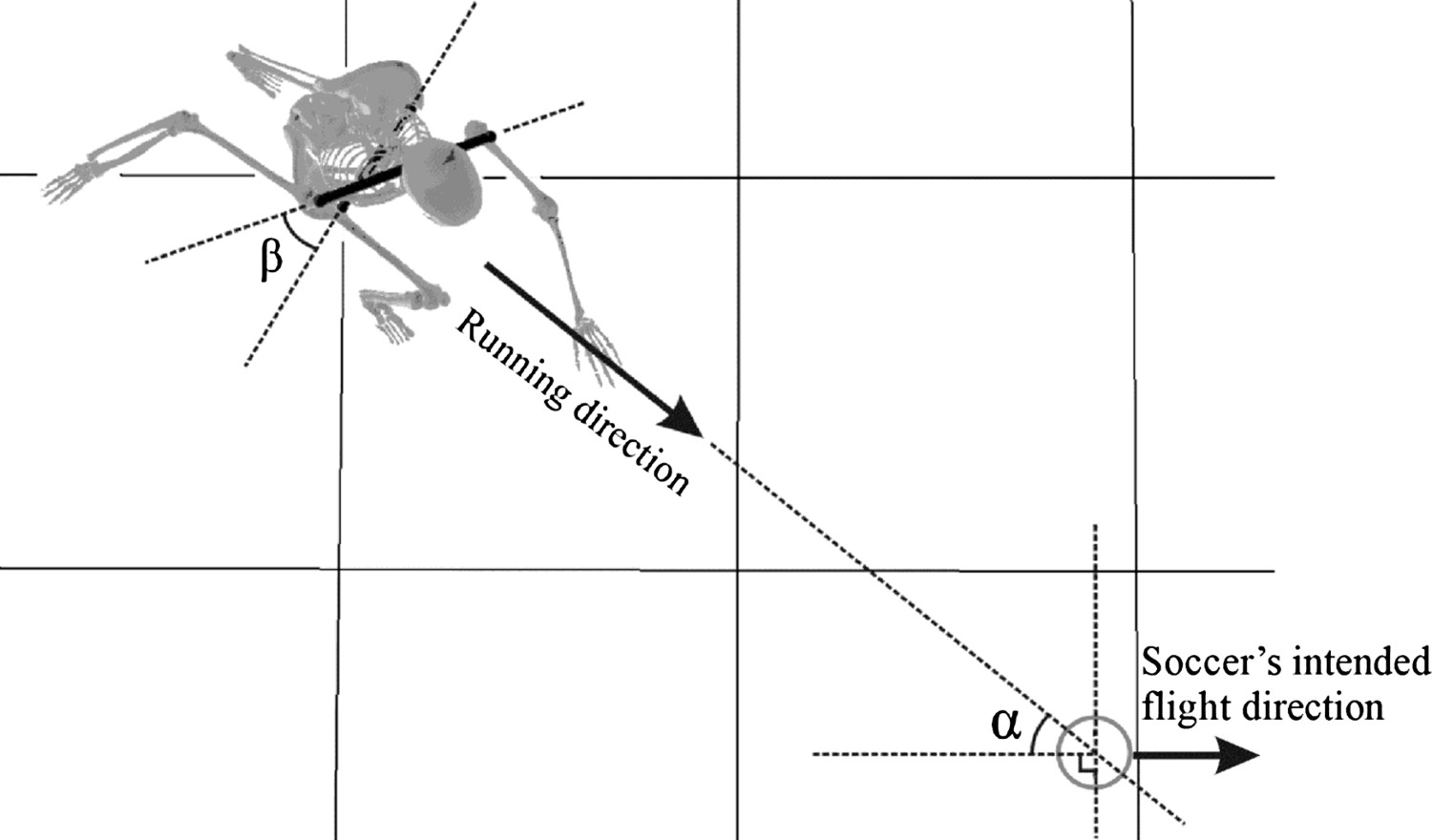
When designing a training programme, a coach should be aware of two facts: (1) on a gender basis, a significant difference in approach angle exists (Shan 2009) and (2) the length of the last stride/step is crucial (Shan et al. 2012). Regarding approach angle, it has been shown that, on average, the approach angle of females is about 20° bigger than that of males (Shan 2009). This occurs because males and females have different bodily capacities and use them differently (explained below). Regarding last stride/step length, one study using professional players showed that varying the last stride length resulted in significant differences in a ball's flight distance. In this study, one stride length resulted in average flights of 25 m while a longer stride resulted in average flights of 45 m (Stoner and Ben-Sira 1981). The larger last stride lengths resulted in greater movement amplitude at the hips increasing angular momentum at the striking of the ball. Similar results have been confirmed in multiple studies (Lees and Nolan 2002; Lees et al. 2010; Shan et al. 2012). These results indicate that movement amplitude at the hips (flexibility) and last stride length can both become part of a training regime and be used evaluate the effects of training. Additional advantages of a larger last stride length will be elucidated in discussion of the tension arc.
The placement of the supporting foot and the positioning of the kicking foot at the kick
The placement of the supporting foot in the last step is just as important as placement of the kicking foot. The supporting foot should be planted beside the ball pointing in the intended direction of the ball; the direction of the supporting foot will decide the flight direction of the ball when proper foot-to-ball contact is made. By placing the foot slightly behind the ball, a rising ball will be produced. A low-to-the-ground ball is produced by placing the foot directly beside or very slightly in front of the ball. The ideal distance between the supporting foot and the ball is about 1–1½ feet. This helps ensure that the player's foot strikes the ball at roughly 45° to the horizontal plane (Figure 3) (Kollath 1983; Willimczik 1989; Lees and Nolan 2002; Shan 2017). This foot positioning causes the laces of the shoe to strike the ball, which has been shown to: (1) generate the most powerful possible kick and (2) prevent injury such as ‘footballer's ankle’ (Tol et al. 2002). Studies have shown that the contact between the kick foot and the ball lasts for less than 1/100 of a second – a high-intensity impact (Nunome et al. 2006; Lees et al. 2010). If the foot-ball contact happens towards the distal end of the foot (i.e. an improper foot-to-ball contact) the impact will cause an over-extension of the foot, otherwise known as plantar flexion. The consequences of this are not only a reduction of ball speed but also an increased risk of injury.
The posture at foot-to-ball contact showing the proper placement of the supporting foot and the positioning of the kicking foot.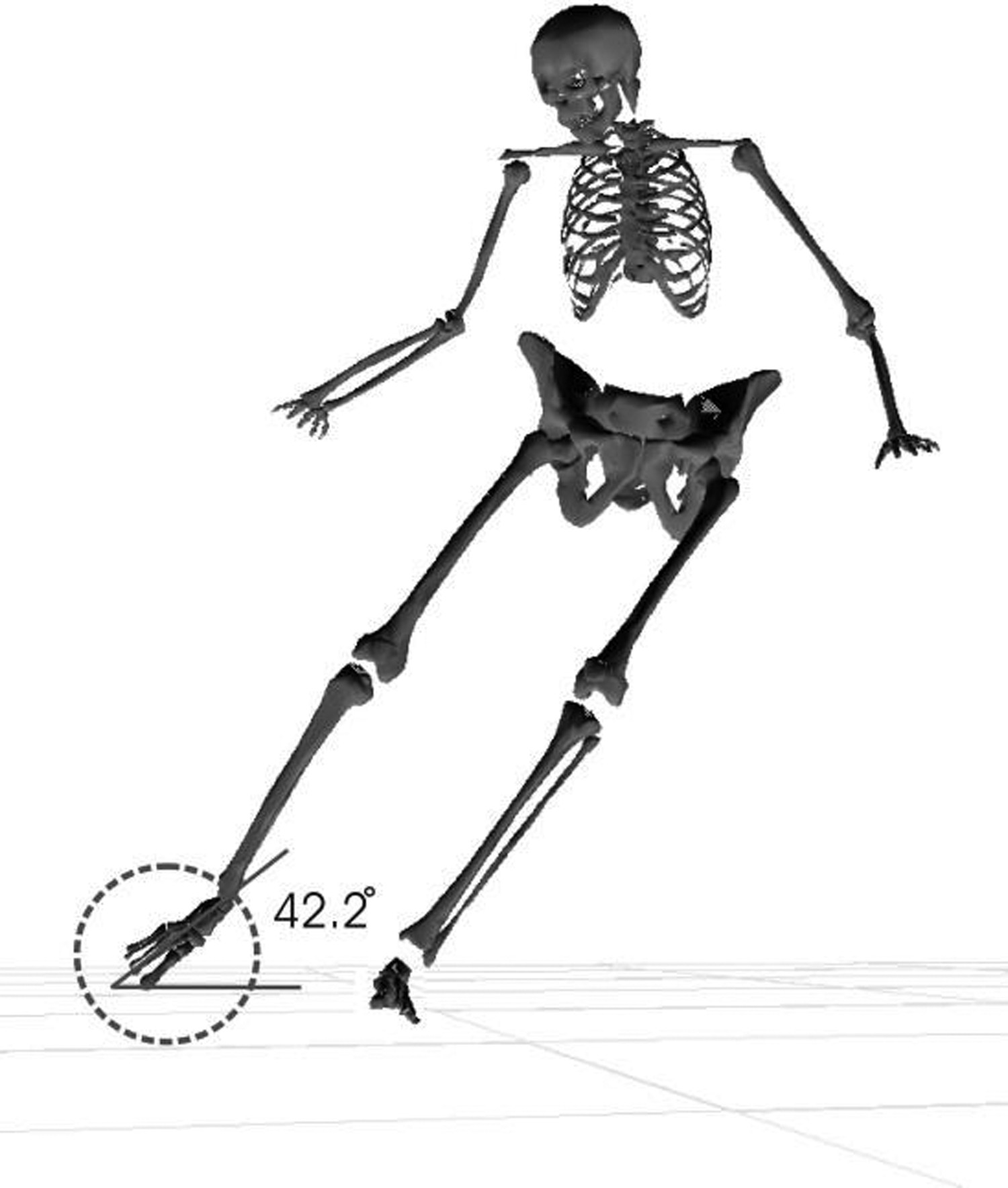
The tension arc
The kicking step (last step of the kick) is core to the skill. It requires full-body engagement, which cannot be revealed by employing a partial body analysis approach. The key full-body characteristics of a maximal instep kick were established in a study using 3D motion capture and full-body biomechanical modelling (Shan and Westerhoff 2005). This study established the concept of a tension arc. During the last step of the maximal instep kick a tension arc is first formed and then released. The key aspects of the kick are found in the fast release of this tension arc, a whip-like leg release with complimentary upper-body movement (Figure 4).
Maximal instep kick in soccer – a typical full-body and multi-joint coordination consisting of the formation of a tension arc and its release.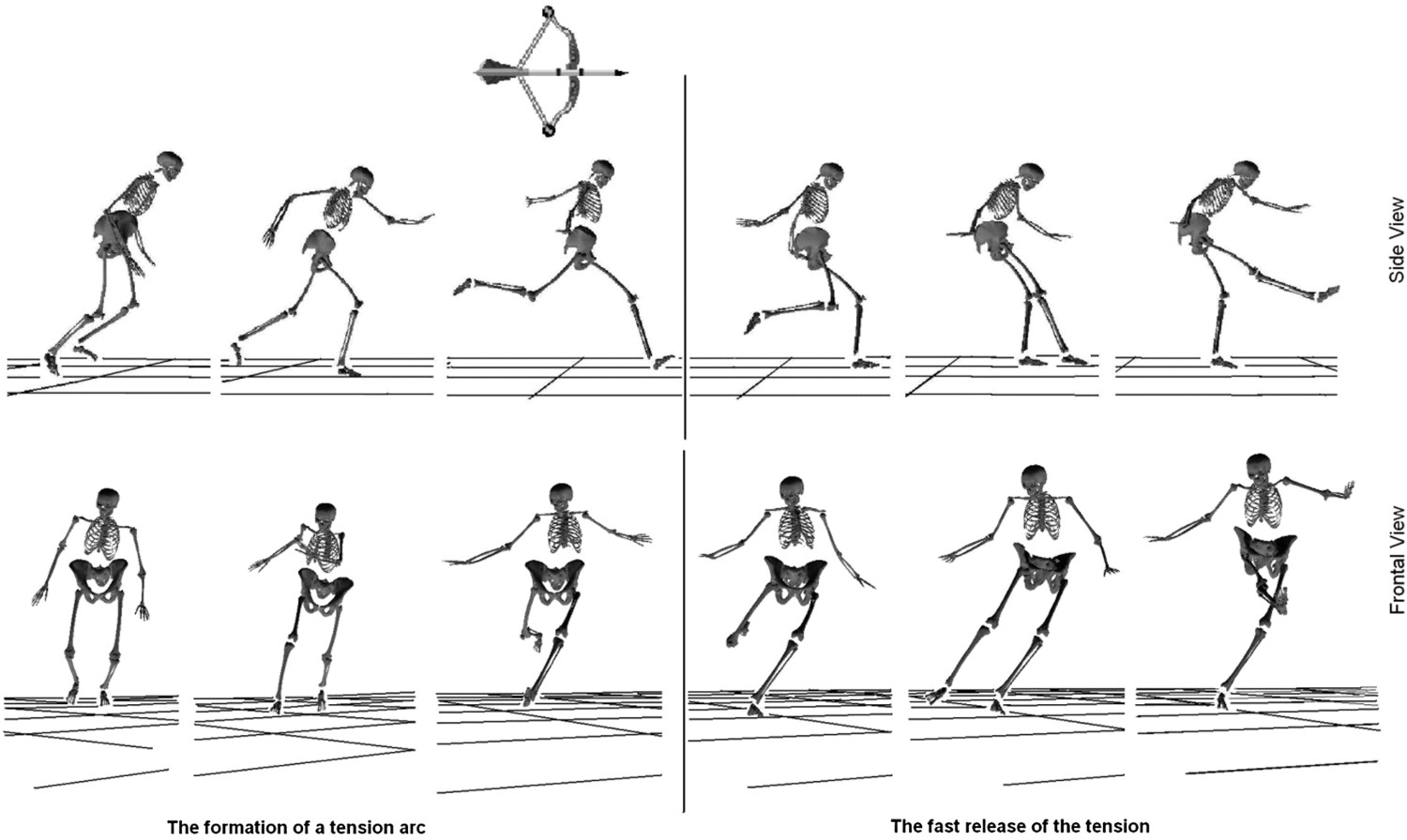
The formation of the tension arc involves: (1) kick-side hip over-extension, (2) knee flexion, (3) trunk twist towards non-kick-side, and (4) non-kick-side arm pointing in a rear-lateral direction (shoulder extension and abduction) (Figure 4, left). The release of the arc consists of: (1) a whip-like control sequence of the kicking leg from proximal to distal (Shan et al. 2015), (2) upper trunk flexion and twist towards kick-side, and (3) a fast, forward swing of the non-kick-side arm toward the body (shoulder flexion and adduction) (Figure 4, right). This process creates conditions ideally conducive for generating an explosive kick through muscle pre-lengthening during the formation of the arc, the use of the leg's momentum and the addition of angular momentum from the hips (Shan et al. 2005; Shan and Westerhoff 2005; Shan 2009). Increasing the last step length can be used to amplify the contribution of muscle pre-lengthening and hip rotation to the kick (Komi 2000).
Gender differences
The majority of research in soccer has, to date, primarily used male subjects. As a consequence, coaches most often teach soccer skills the same way to all athletes notwithstanding gender. For the maximal instep kick, a search of the literature reveals no gender-specific training information. However, results obtained using males cannot always be transferred to female athletes without considering differences in anthropometry, body flexibility, muscle strength and power (Shan 2009). Females might benefit from different training programmes than those of males. In the case of the maximal instep kick, two fundamental differences have been found: (1) skilled female players use a larger approach angle (on average, 20°; α in Figure 2) than males, which allows a more curved approach to the ball and, in turn, creates a greater potential for trunk rotation (β in Figure 2), (Shan 2009) and (2) in the follow-through of the kick, the supporting leg for females typically remains on the ground while it does not for males – they jump (Figure 5).
Gender comparison of maximal instep soccer kick of advanced athletes – posture after ball contact (left –male, right – female).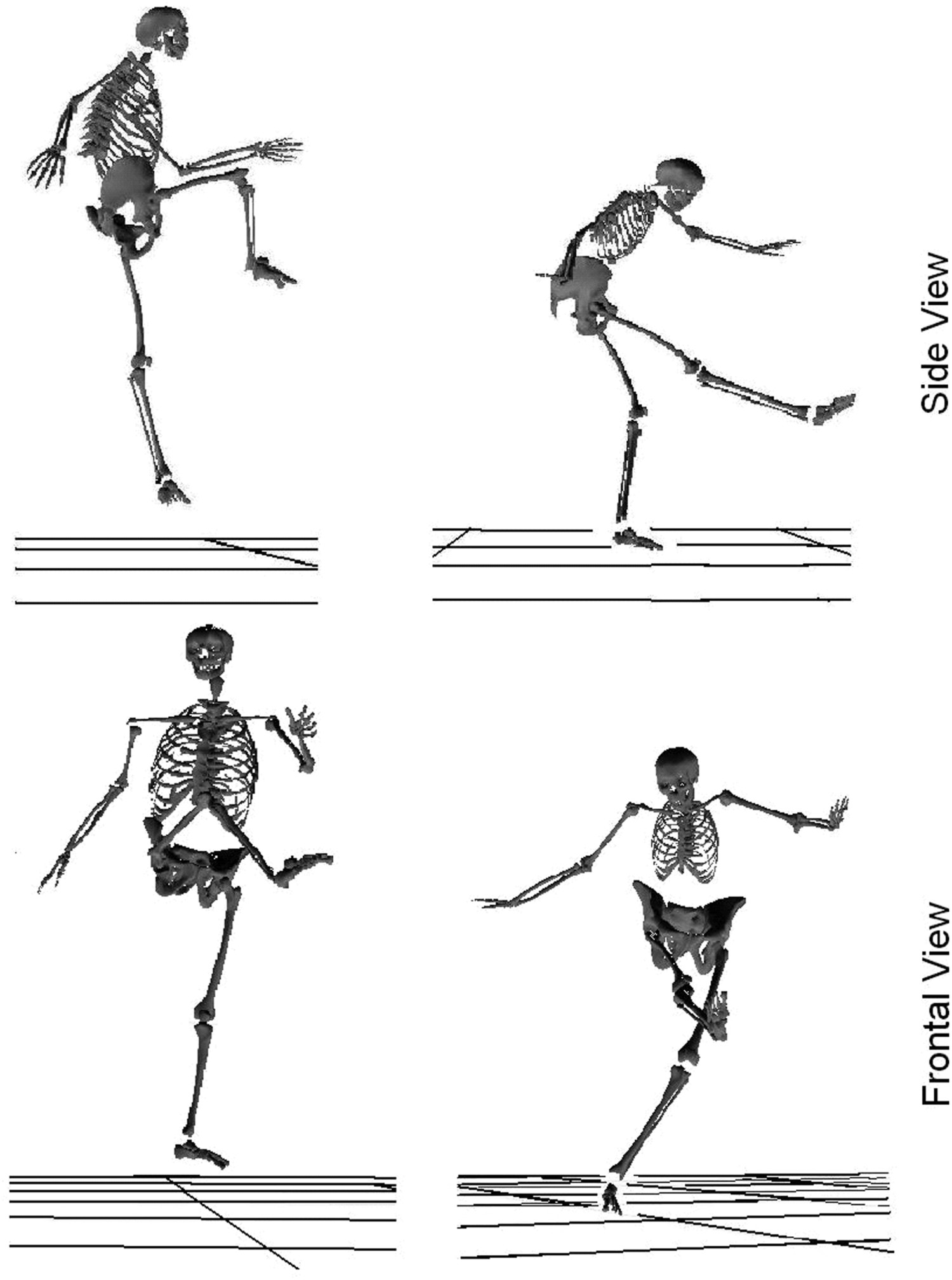
The strategy employed by females may be described simply – it avoids a jump. Not jumping reduces kicking momentum. In order to compensate for not jumping, females use increased trunk rotation, which increases kicking power and helps counteract the momentum of the kicking leg after ball contact. But, why does this occur and is it desirable? The reasons may be explainable in terms of anthropometry. Avoiding a jump allows mitigation of bodily stresses associated with jumping and landing. A male body generally has more solid muscle mass than a female one (particularly among novice and intermediate level athletes). As a result, males may be less prone to discomfort caused by impacts/vibrations related to jumping (Shan 2009). In teaching the maximal instep kick, coaches should pay particular attention to the approach angle when they design training programmes for females.
Summary
The functional quality of a maximal instep kick depends on kick accuracy and kick power. Development and training of this skill should first begin by stabilizing kick accuracy and, afterward, incorporate enhancements in power.
On a practical level, coaches could begin the instruction of novices with a one-step-kick on a stationary soccer ball to train accuracy. Kick accuracy is influenced by the placement of the supporting foot and the positioning of the kicking foot at ball contact. Therefore, coaches should emphasize that the supporting foot should be pointed toward the intended ball direction and it should be placed about 1–1½ feet from the ball. For the kicking foot, practice should be focused on its position at impact. At the foot-to-ball contact point, the ankle of the kicking foot should be positioned at roughly 45° to the horizontal plane and the laces of the shoe should be used to strike the ball. These are necessary for both accuracy and the maximization of kicking power. Accuracy training should be from quasi-static to dynamic practice of lower limbs for motor control automation.
After the initial development of accuracy, the approach can be extended to multiple-steps (2–4) for power development. Coaches should keep in mind that upper body control in the last step contributes greatly to the kicking power. The most efficient kick utilizes a tension arc and its fast release (i.e. a full-body control). Flexibility training and multi-joint coordination are essential for the formation and quick release of the tension arc. Hence, these skills should be consciously developed in the training regime. During training, it is helpful to discuss with learners the consequence of the pre-lengthening of kicking-muscles during the formation of the tension arc; it is foundational for a powerful, whip-like leg movement, i.e. proximal to distal control of the kick leg.
Finally, increasing the last step length can be used to amplify the contributions of muscle pre-lengthening and hip rotation to the kick. Coaches can straightforwardly use a change of last-step-length to evaluate an individual's training improvement. Once the basics of kicking a static ball are secure, learners can begin training with a moving ball. This kind of practice more closely emulates real game situations.
It is vital to understand that skill optimization for male and female athletes can require different techniques. These are characterized by different approach angles, trunk flexion and dissipation of residual momentum after ball contact. Coaches must take these differences into consideration and use different approach angles (male: ∼20° and female: ∼40°) when training their athletes.
The current paper collates results from existing researches on the maximal instep kick and translates it into language that is application oriented. By facilitating a better understanding of the optimal characteristics of the kick, it should help coaches better develop training plans and improve learning effectiveness in their programmes. Ultimately, the fans benefit equally from improvements in game-play. Since this skill is so fundamental to soccer, more effective training of the maximal instep kick can help make the game even more exciting.
Footnotes
Disclosure statement
No potential conflict of interest was reported by the authors.
Notes on contributors