







Abstract
Electromagnetic wave (EMW) absorbing materials have attracted much attention in recent years due to the dramatical increase of high-frequency electronic components and devices, which generate electromagnetic (EM) pollution and cause serious electromagnetic interference (EMI). Ceramics and associated (nano)composites are widely investigated as EMW absorbing materials because of their excellent mechanical properties, chemical/thermal stabilities, and oxidation/corrosion resistance. In addition to outstanding EMW absorbing performance, lightweight, flexibility and thermal resistance at high temperatures strongly affect their practical applications. Therefore, this review highlights the recent progress of advanced ceramic-based EMW absorbing materials by evaluating their vital EMW absorption parameters. First, the fundamentals of EMW absorption are briefly summarized, followed by the effects of phase/chemical composition, micro/nano structure, and morphology on the EMW absorbing performance and associated mechanisms. Furthermore, modern strategies for the preparation of lightweight, flexible and thermal resistant EMW absorbing materials are comprehensively reviewed. Finally, the perspectives of advanced-ceramics as EMW absorbing materials are discussed as well.
Introduction
History and recent developments of EMW absorption
Rapid developments in electromagnetic technologies and widespread applications of electronic devices result in plentiful electromagnetic radiations in the living space of human beings (Figure 1) [1–8], which generate serious negative effects on human’s health and life. In addition, these electromagnetic radiations can also seriously interfere with the communication system and safety operation of many electronic devices, which cause threats to information security, especially in the medical, aerospace and marine fields. The concept of electromagnetic interference (EMI) was first proposed by the International Special Committee on Radio Interference in 1933, in Paris, which started up a profound influence on the world’s rules and regulations related to EMI [9,10]. In 1970s, researchers and the scientific community were shocked by the harm of EM radiation on living beings, electronic systems/equipment and the entire environment. EMI originating either from natural sources (e.g. lightning, solar flares, and thunder) or artificial equipment (e.g. radar, computers, and telecommunication systems) was therefore defined as a new type of pollution [10]. Since then, the shielding of EM radiation has become a universal concern all over the world, and many strict rules and regulations on controlling the EMI of electronic devices have been implemented. For example, in 1979, the Federal Communications Commission in U.S.A. imposed legal restrictions on EM radiation for all electronic devices and established limits for specific absorption rates of human beings. Up to now, the restrictions are still in effect. In Europe, due to public health considerations, the regulatory authorities developed special guidelines aimed at protecting children and other vulnerable people from EM radiation. They also established occupational laws to reduce the risk of EM exposure to pregnant women and people with medical implants [11–13]. Therefore, it is significantly important to seek out long-term solutions to protect human beings from EMI [14–20]. EMWs in the living space of human beings (www.hese-project.org).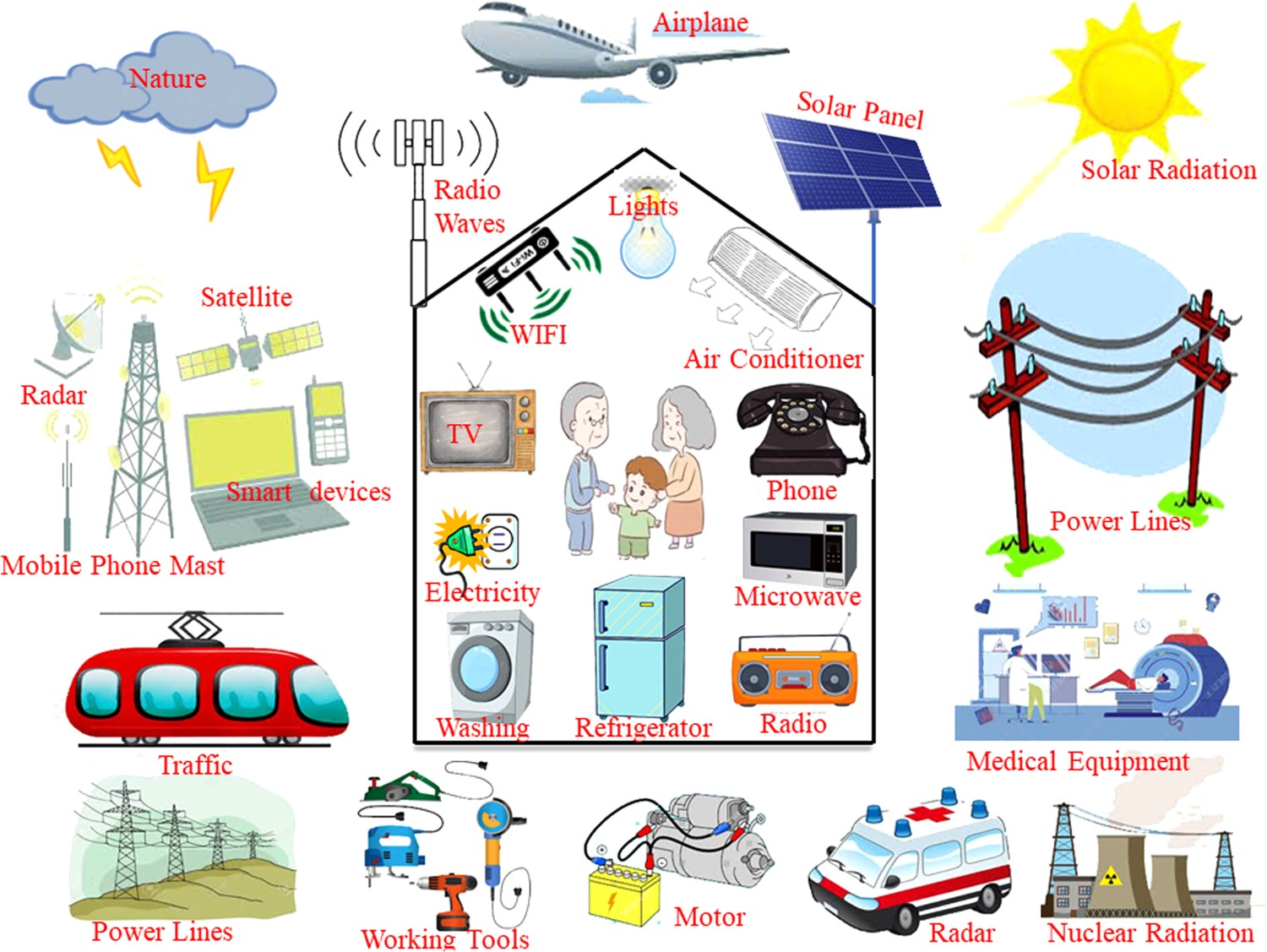
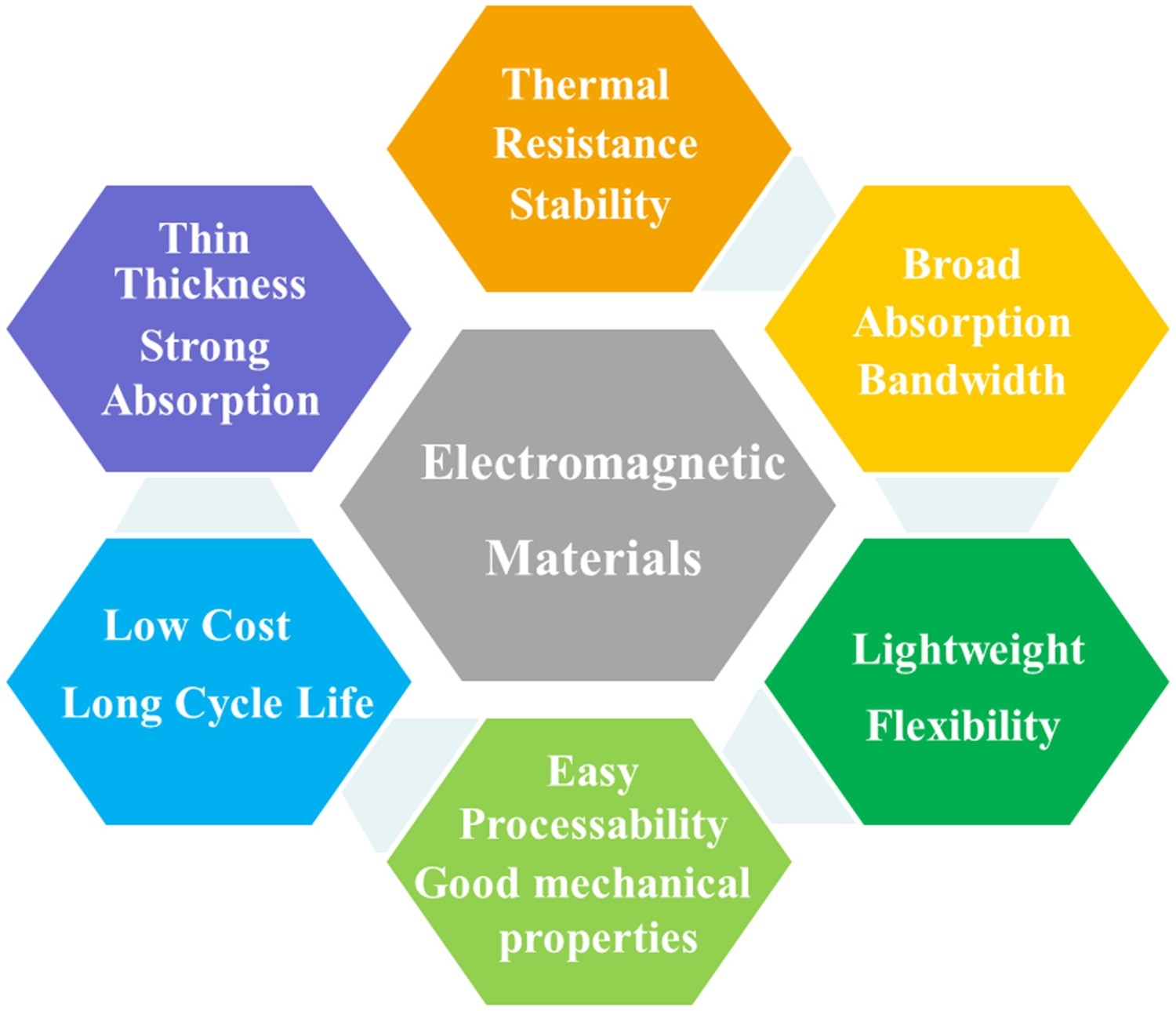
As one effective solution of this issue, EMW absorbing materials have attracted great interests in both academia and industry because they possess the ability to dissipate the EMW energy without secondary reflection. Therefore, a great number of novel EMW absorbers with excellent EMW absorbing performance have emerged [21–29]. As shown in the statistical data obtained from the Web of Science (Figure 2), the number of publications regarding EMW absorption increases year by year. In addition to outstanding EMW absorbing performance, lightweight, flexibility and thermal resistance at high temperatures are three other important technical demands for effective and practical applications of EMW absorbing materials, especially in the field of next-generation flexible electronic devices such as portable/wearable electronics. The desired characteristics of an ideal EMW absorbing material are shown in Figure 3. Number of publications resulting from a search with the topic ‘Electromagnetic wave absorption’ and ‘Electromagnetic wave absorption and Ceramic’ in ‘All databases’ on ‘Web of Science’ till 30th of August 2021. Desired characteristics of ideal EMW absorbing materials.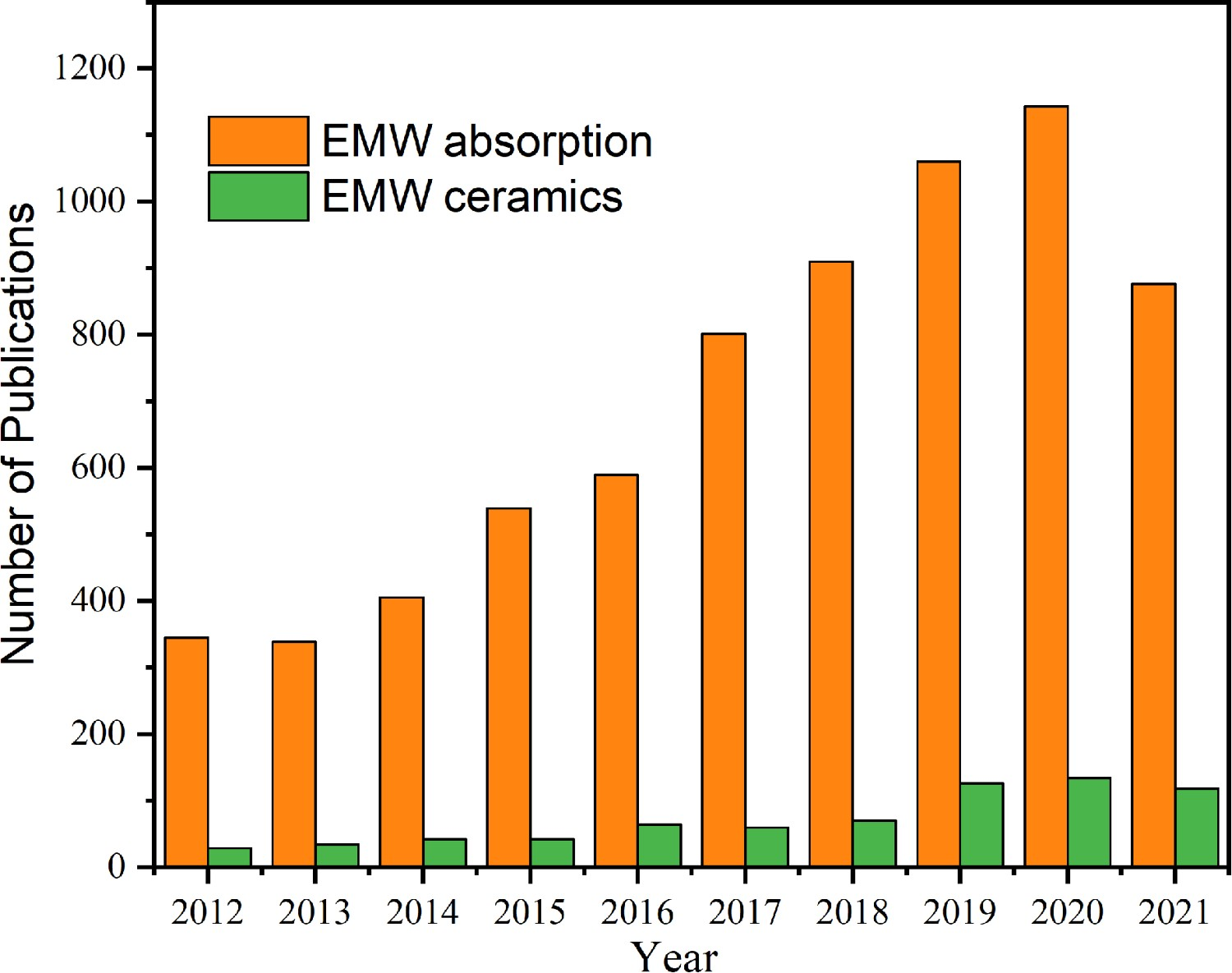
EMW absorbing materials can be classified into two categories according to their attenuation mechanisms, namely magnetic-loss-type materials (e.g. ferrites, magnetic metals, metallic alloys, and transition metal oxides) and dielectric-loss-type materials (e.g. carbon-based materials, conductive polymers, ceramics, and their composites) [30–32]. The magnetic-loss-type materials are mainly based on eddy current loss, natural resonance, domain-wall resonance, and exchange resonance. The dielectric-loss-type materials benefit from the conductivity and polarization originating from the defects, interfaces and functional groups. Recently, EMW absorbing performance of magnetic materials and nanomaterials has been summarized by Kong et al. [33] and Wu et al. [31]. EMW absorption performance of conductive polymers and carbon-based composites has been reviewed by different researchers [14,15,34–37]. Yin et al. [38] summarized EMW absorbing properties of a small group of ceramics, namely Si–C–N-based ceramics and associated composites. However, there is no comprehensive review article focusing on ceramics and ceramic (nano)composites for EMW absorption applications in general. In the present review, we, therefore, focus on highlighting the EMW absorbing performance of ceramic-based materials as well as their absorbing mechanisms, influencing factors and requirements for practical applications.
Ceramic-based EMW absorbing materials
Ferrites [39–41] and other magnetic metal-containing ceramics [42–47] are promising candidate materials for EMW applications due to their advantages of magnetic loss. However, their intrinsic disadvantages, such as high density, poor mechanical strength, corrosion resistance, rigidity and poor processibility, restrict their extensive applications [48–54]. Compared with ceramic-based materials, their effective absorption bandwidth is mainly in the megahertz band width region because their permeability decreases rapidly with increasing frequency due to the eddy current loss. Moreover, their magnetic characteristics will be lost under temperatures higher than their Curie points. Therefore, these shortages restrict their universal applications in harsh environment (e.g. at elevated temperatures or in aggressive media) and in high frequency range (e.g. in GHz range).
Recently, polymer-based composites with high magnetic loss and/or conductivity are largely used as EMW absorption materials due to their easy processability, low density, low cost, strong resistance to corrosion, lightweight, and broad effective absorption bandwidth [14,35,55–59]. However, polymer-based materials cannot be used at high temperatures as a result of their low melting points, limited thermal stability (only up to 400°C) and poor high-temperature mechanical properties.
Radar plots representing characteristics of EMW absorbing materials are given in Figure 4. Compared with magnetic metal-containing materials and polymers, ceramic-based systems exhibit high oxidation/corrosion resistance, excellent mechanical properties, high melting points and superior thermal stabilities, which make them to be used under severe environments. Therefore, a great number of ceramic-based materials with excellent EMA performance have been widely investigated, such as SiC [21,60–68], Si3N4 [69–73], Al2O3 [74–77], SiO2 [78–81], SiOC [82–85], SiBCN [86–89], BaTiO3 [
90–93], Ti3SiC2 [
94–97], BCN [98–100], and others. The number of publications of ceramic-based EMW absorption materials increases with an increasing amount of EMW absorption-related publications (Figure 2), and the number of publications since 2018 has exceeded the total number of 2012–2017, implying the importance of ceramics as potential candidate materials for EMW absorbing applications. Radar plots representing characteristics of EMW absorbing materials.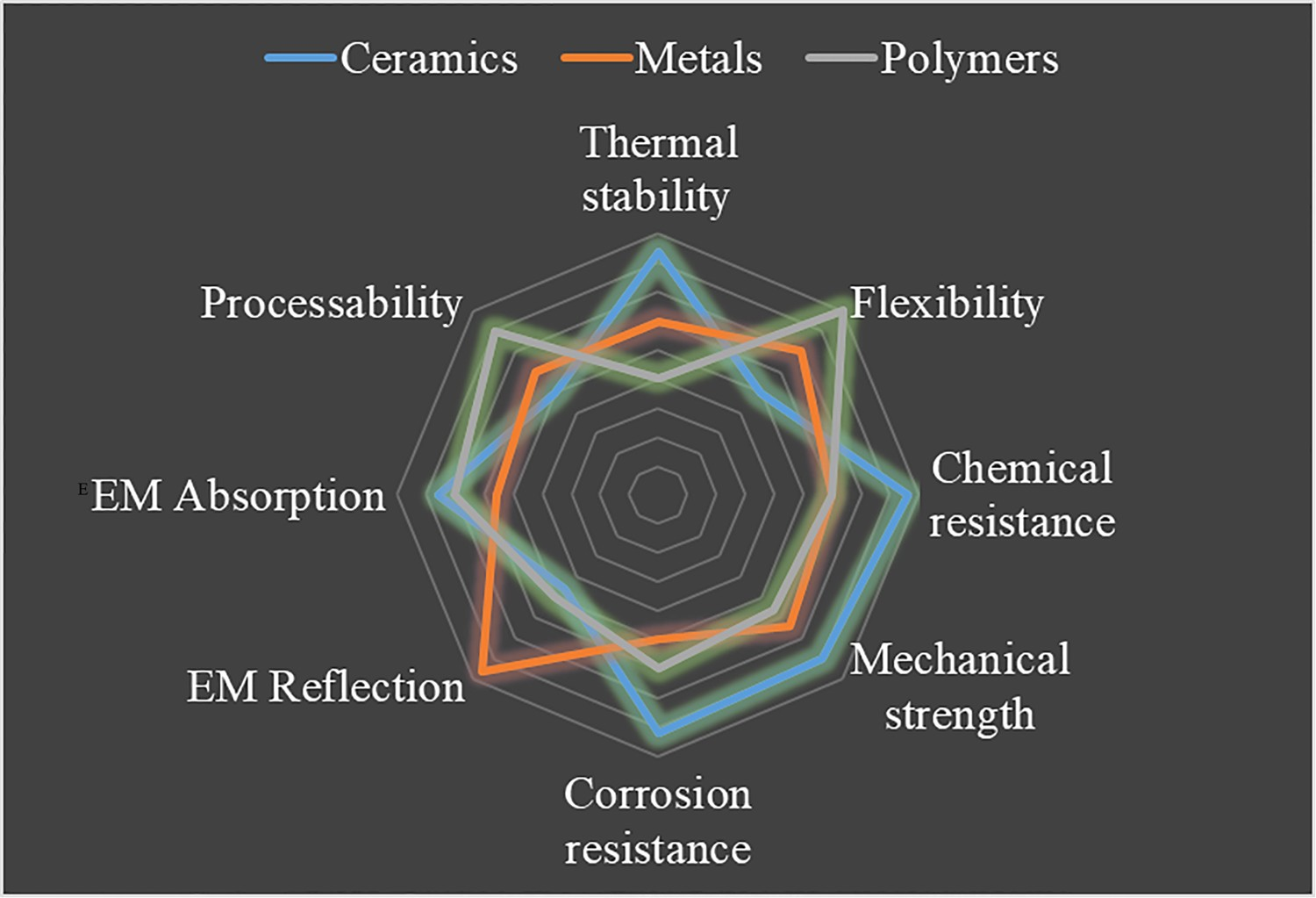
This article reviews the effects of phase/chemical compositions, micro/nano structures, and morphologies on the EMW absorbing performance and associated mechanisms. The advantages and limitations of ceramics and their composites, along with the approaches that are reported to overcome these limitations, are summarized. Besides, requirements for practical applications and expectation of ceramic-based EMW absorbing materials with lightweight, flexibility and thermal resistance are also discussed. Finally, the current challenges and perspectives are outlined. If there is no further remark, the EMW range of this review is mainly related to the microwave (MW) range between 2 and 18 GHz. This frequency range is operated by a large number of commonly used electronic devices, and most papers refer to it (Figure 5). Electromagnetic spectrum and applications of EM bands in 2–18 GHz.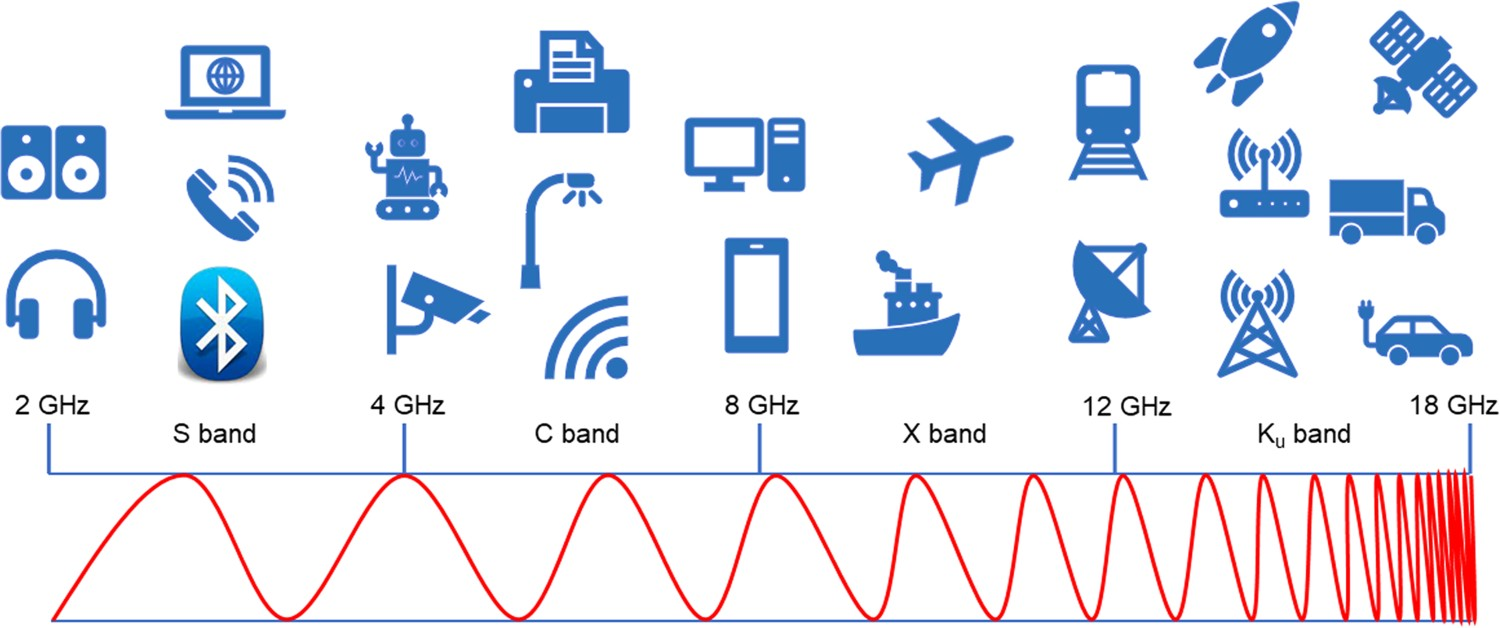
Fundamentals of EMW absorption
Process of EMW absorption
Electromagnetic wave (EMW) is a radiation in the frequency range of 300 MHz–300 GHz. An EMW involves two important parts, namely, a magnetic field (H) and an electric field (E), which are perpendicular to each other. The direction in which EMWs propagate is perpendicular to the plane with the two field components. It is well known that the relationship between EMW frequency and wavelength can be expressed by formula (1):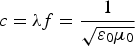






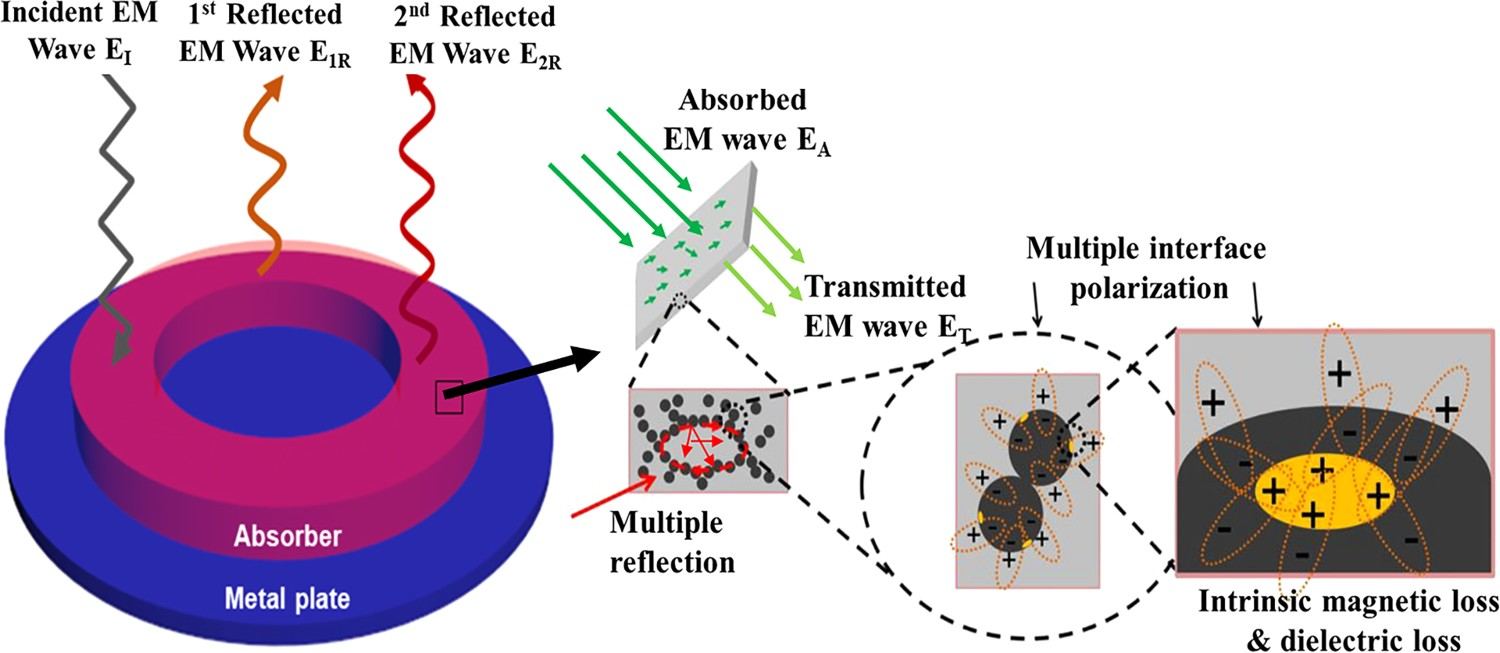
As shown in Figure 6, the incident EMW (EI) is divided into four parts after entering the absorbers, namely, first reflection(E1R), multiple-internal reflections (E2R), absorption (EA), and transmission (ET). The ratio of EI and EA depends on the impedance matching, which is a decisive factor whether most incident EMWs EI can propagate into the absorbers. If the impedance is mismatched, most of the incident EMWs will be reflected at the interface between the free space (or air) and absorbing material, even though they exhibit high dielectric/magnetic loss. Therefore, good impedance matching is the prerequisite of effective EMW absorbers. In theory, the characteristic impedance values of EM absorbing materials should be close to that of the free space (377 Ω) to reduce the reflection on the surface of the absorbing materials [103]. Recently, a delta-function method regulating the impedance matching degree of EMW absorbers has been proposed by Ma et al. [104] as follows:


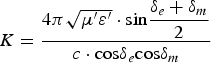

With regard to Equations (3) and (4), c is the velocity of light, 


As mentioned before, the intensity of the EMWs penetrating into a material is governed by the impedance of the medium and material. Moreover, the strength of the transmitted EMWs drops exponentially with the increase of the penetrating depth. The depth at which the strength of EMW is equal to 


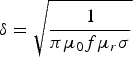
According to Equation (5), 


EMW absorbing mechanisms
Since EMWs consist of two components, magnetic and electric field, EMW absorbing materials can be classified into two categories: dielectric-loss type and magnetic-loss type absorbing materials. The absorbing mechanisms of the EMW absorbing materials can be understood by measuring their dielectric and magnetic properties.
Dielectric mechanism
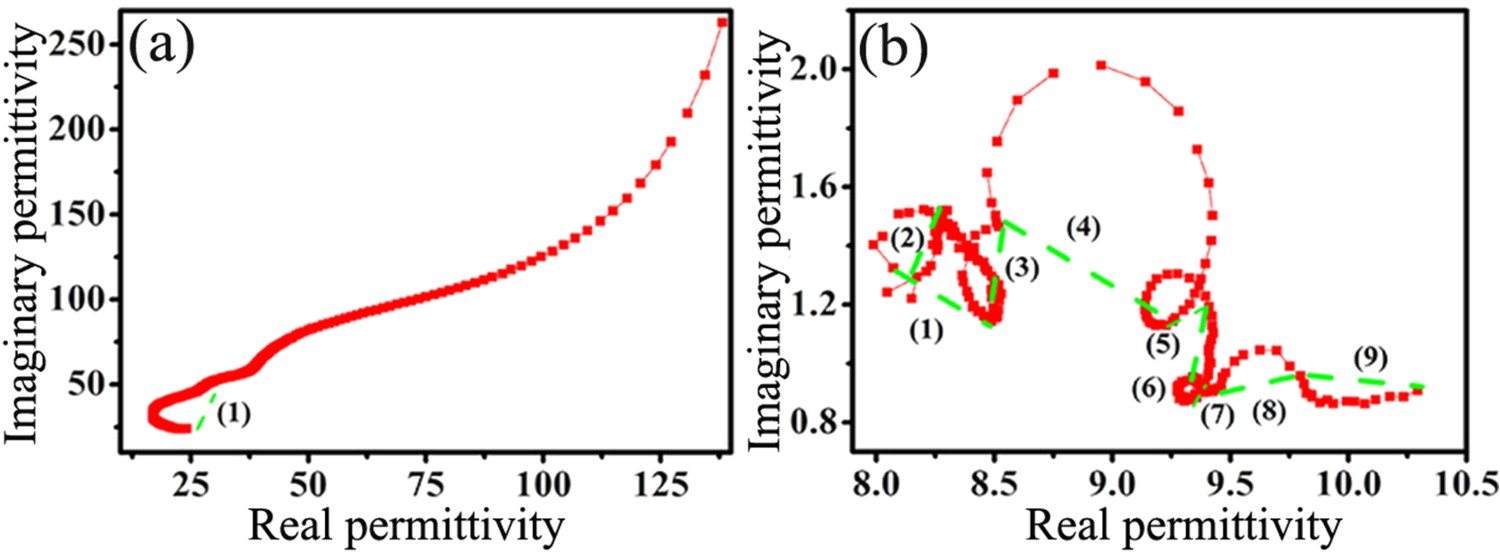
Dielectric loss ability is primarily governed by ohmic loss and polarization loss [106–108]. Furthermore, the polarization loss can be caused by electronic polarization, ionic polarization, dipole orientation polarization, and interfacial polarization (space charge polarization) [109,110]. The dipole orientation and ionic polarization are attributed to the bound charges in the material, and the former is usually related to defects and residual groups in the dielectric medium. However, the dipoles cannot move freely as electrons under an external electric field due to the restriction on the defects and residual groups. The dipoles cannot reorient swiftly enough to respond to the applied electric field under a high-frequency alternating electric field. Therefore, Typical Cole–Cole semicircles of (a) pure ZrB2 and (b) ZrN0.4B0.6/SiC (reprinted with permission from American Chemical Society) [65].





Magnetic mechanism
In general, the magnetic loss arises from hysteresis loss, domain wall resonance, natural resonance, residual loss and eddy current loss [117,118]. Among these mechanisms of magnetic loss, the hysteresis loss mainly comes from the strong EMW field, and domain wall resonance only occurs at much lower frequency (1–100 MHz) [119]. Thus, natural resonance and eddy current loss are regarded as two dominant factors that contribute to the magnetic loss. According to the natural resonance and eddy current loss theory [120], the natural resonance and eddy current loss can be expressed by the Equations (8), (9) and (10), respectively:
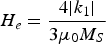
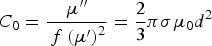


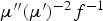
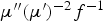
It is known from Equation (10) that the particle size of the materials plays a key role in determining the eddy current loss. In theory, a strong eddy current can generate a skin effect in case the particle size surpasses a critical value, which leads to a part of the loss of the internal magnetic field and consequently to a degraded relative complex permeability. Therefore, the particle size of the materials has an important influence on the EMW absorbing performance [123,124].
Evaluating methods of EMW absorbing performance
Generally, the absorption performance of EMW absorbing materials can be assessed by a vector network analyser (VNA) based on four methods: (1) Transmission-Line Technique (including co-axial transmission line method and waveguide method; (2) Bistatic Naval Research Laboratory Arch Measurement Method; (3) Free-Space Method; (4) Reverberation Chamber Method [125]. Evaluating methods of the EMW absorbing performance are designed to measure the power of the incident wave and the transmitted wave when the EMWs pass through the materials. The absorption capacity (A) is defined as the ratio between absorbed power (PA ) and incident power (PI ), A = PA /PI .
Among the four methods, transmission-line technique is the most widely used method. Therefore, this review mainly discusses the characterization of EMW absorption performance on the basis of the transmission line theory. The EMW absorption performance is evaluated by the reflection loss (RL), which can be calculated by Equation (11) [126]: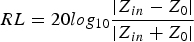





On the basis of Equations (11) and (12), the modulus of the normalized characteristic impedance can be calculated by 





where 


EMW absorbing performance of dielectric-loss-type ceramics
Non-oxide ceramics
Non-oxide-based ceramics have obtained great attention as EMW absorbers in recent years due to their attractive properties such as resistance to corrosion and oxidation as well as excellent thermomechanical properties in various environments. SiC is an ideal candidate material for EMW absorption due to its adjustable dielectric properties and various morphologies (Figure 8) [21]. Li et al. investigated the effects of the annealing temperature of polymer-derived SiC on the EMW absorption performance [130]. Nano-crystals of SiC and free carbon nanodomains were gradually formed in polymer-derived SiC-based materials. Moreover, RL of the samples decreased with increasing annealing temperature, enhancing the relative complex permittivity of the materials. However, the average minimum RL (RLmin) of the samples obtained at 1400°C was only –9.97 dB with a sample thickness of 2.75 mm. Porous SiC nanowires (NWs) were successfully synthesized using mixtures of SiC powder with various amounts of polycarbosilane (PCS) [131]. The RLmin of porous SiC NWs decreased from –7.6 to –67.4 dB with increasing PCS contents, and the effective absorption bandwidth (EAB) was up to 8.1 GHz. The excellent EMW absorption performance is attributed to the formation of SiC NWs, porosity, nano-crystals and free carbon nanodomains, which result in electronic dipole polarization and interfacial polarization, due to significantly enhanced amounts of interfaces and grain boundaries as well as defects. One dimensional SiC with various morphologies (a) nanowire, nanorod or nanowhisker; (b) nanobelt or nanoribbon; (c) nanotube and (d) nanocable (reprinted with permission of Elsevier) [21].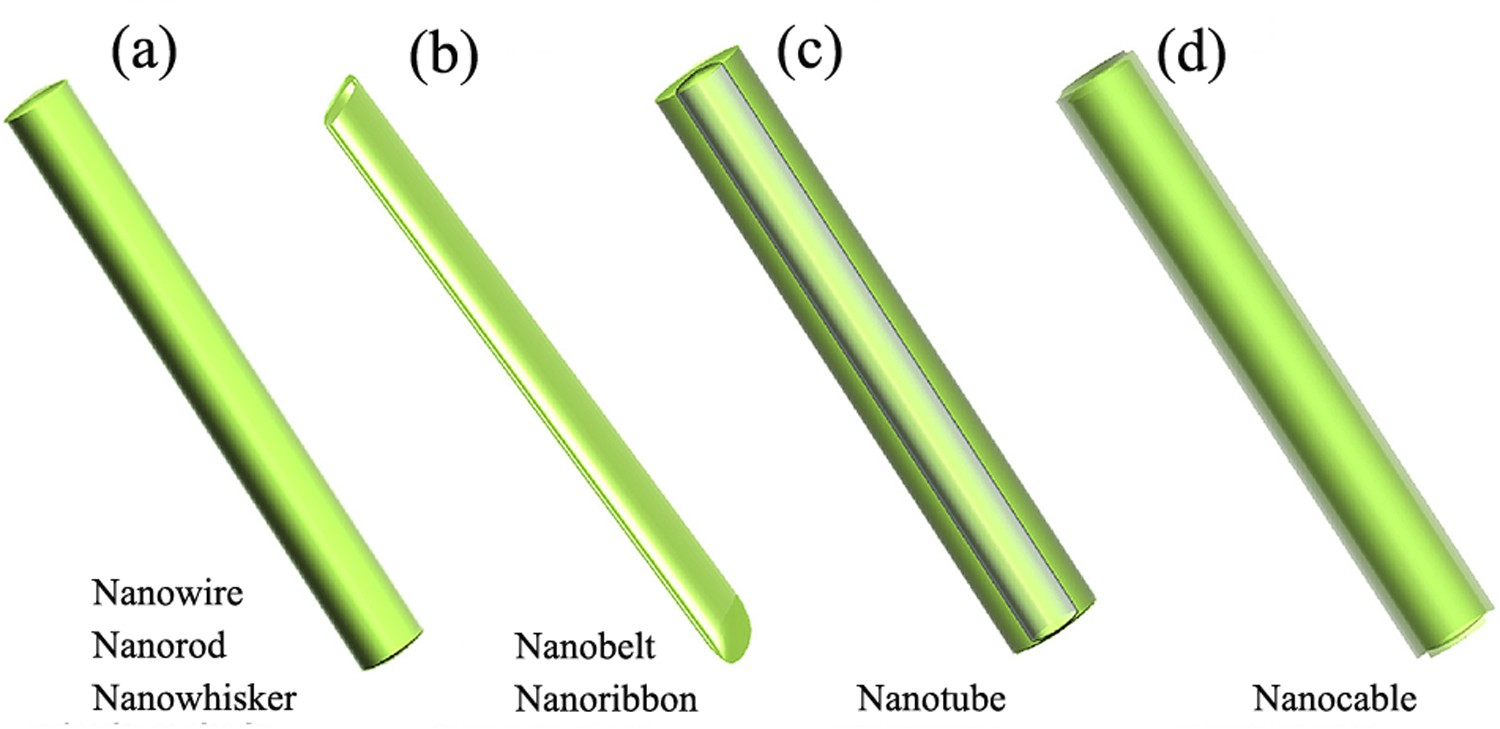
Si(B)CN ceramics based on SiC and Si3N4 provide great possibilities to tailor EMW absorbing properties of ceramics. Guo et al. measured the EMW absorption properties, complex permittivity and dielectric loss tangent of SiCN ceramics at different annealing temperatures (900–1400°C) [132]. The maximum values of 

Oxide ceramics
Oxide ceramics such as BaTiO3, Mn2O3, and ZnO have also gained interest as EMW absorbing materials due to their unique chemical and physical properties. Yang et al. reported that single-crystalline ultrathin BaTiO3 nanowires possess improved EMW absorption performance compared with BaTiO3 nanotorus and nanotubes [91]. The nanowires exhibited a RLmin of –24.6 dB at 9.04 GHz and an effective absorption bandwidth of 2.4 GHz. As can be seen from Figure 9, the length (approximately several tens of micrometers) inside ultrathin nanowires plays a vital role in relaxation. Moreover, remarkable EMW absorption performance of Mn2O3 and Mn3O4 nanowires was achieved owing to an unique morphology and relatively high dielectric loss tangent [134]. The minimum RL values of Mn2O3 and Mn3O4 nanowires were –21.0 dB at 18.0 GHz and –21.2 dB at 7.7 GHz, respectively. These Mn2O3 and Mn3O4 nanowires show excellent EMW absorption properties in comparison with previously reported sponge-like Mn2O3, sphere-like Mn3O4 nanoparticles [135], and MnO2 nanowires [136]. (a) SEM and (b) TEM micrographs of ultrathin BaTiO3 nanowires. Inset in (a) is the diameter distribution of the BaTiO3 nanowires. Inset in (b) is a photograph of the samples. (c) SAED pattern taken from an area containing a great amount of nanowires and (d) HRTEM image of one nanowire (reprinted with permission from American Chemical Society) [91].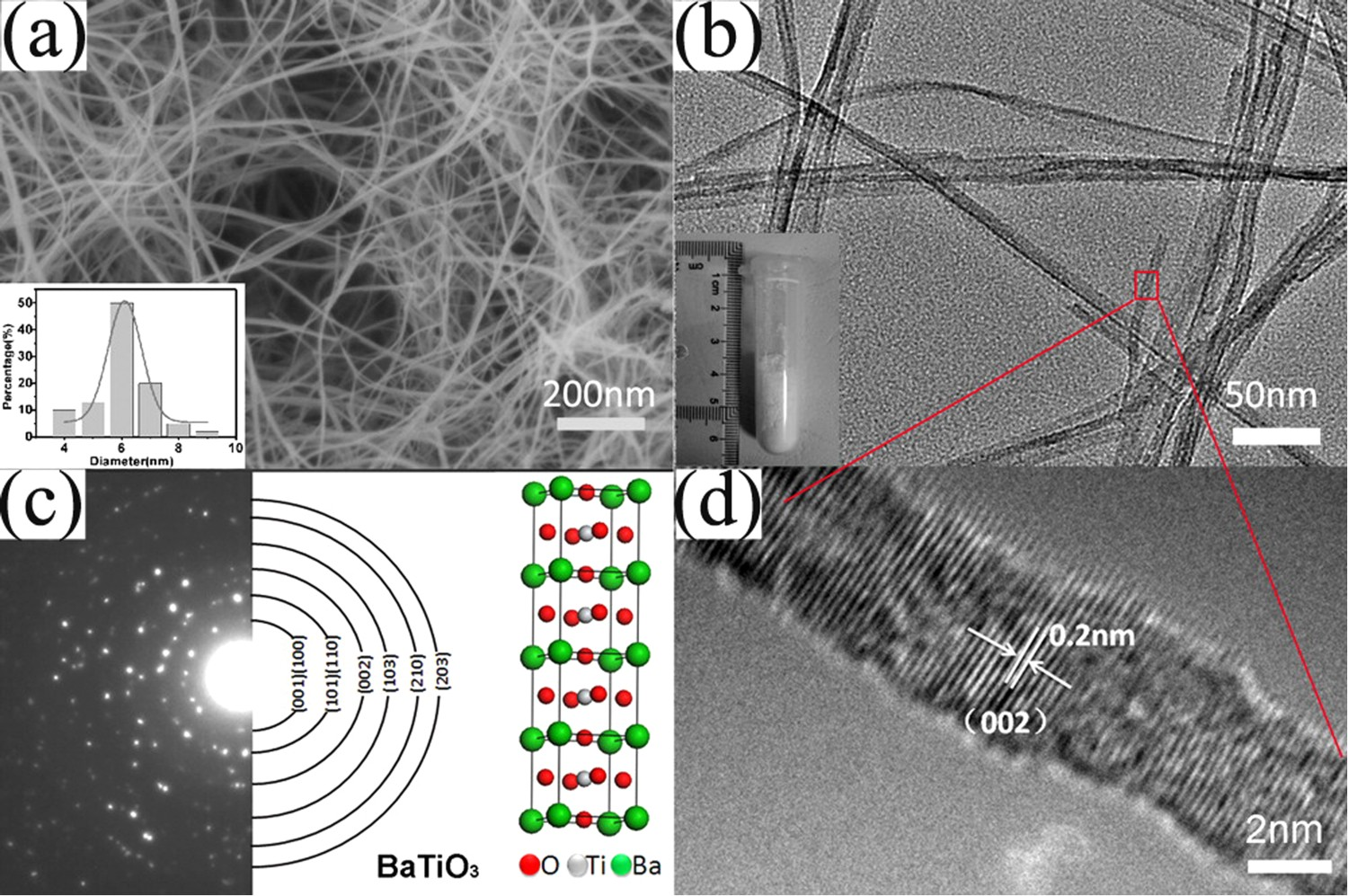
EMW absorption performance of ceramic (nano)composites (CIP: carbonyl-iron powder; GNSs: graphene nanosheets; PyC: pyrolytic carbon; CNFs: carbon nanofibres; real part (


Ceramic (nano)composites
A detailed investigation of the properties of already existing EMW absorption materials revealed that single-component materials cannot be suitable for all EMW absorption aspects due to their relatively weak absorbing capability. Thus, more efforts have been devoted to the fabrication of composites or nanocomposites, in which single-component ceramics are combined with magnetic and/or dielectric loss materials to achieve synergistic effects on the dissipation of the EMW energy. Up to now, numbers of ceramic-based composites or nanocomposites have been proven to exhibit excellent EMW absorbing performance, such as three-dimensional (3D) RGO/ZnO composite [137], graphene nanosheet containing (GN)/Al2O3 ceramics [138], nitrogen-doped graphene (N-GP)/Ti3C2 nanosheets [139], RGO-SiBCN composites [140] and core–shell structured Fe3Si@C/SiC/Fe3O4/SiO2 nanocomposites [141].
Transition metal carbide/nitride/silicide containing ceramic (nano)composites
In recent years, transition metal carbide/nitride/silicide containing ceramic (nano)composites have attracted great interest as high-performance EMW absorbers due to their outstanding dielectric properties and highly thermal stability. The EMW absorption performance of SiC/HfC x N1–x /C ceramic nanocomposites was investigated in the X band (8.2–12.4 GHz). It was found that SiC/HfC x N1–x /C ceramic nanocomposites showed improved EMW absorption performance as compared with that of SiC/C under the same condition [142]. The enhanced EMW absorption performance is intimately connected with segregated carbon, HfC x N1–x nanoparticles, and their special core–shell microstructure. A conductive network was formed with the help of segregated carbon between the HfC x N1–x nanoparticles and the SiC matrix. The hafnium carbonitride nanoparticles and carbon significantly improved the electrical conductivity or imaginary part of the complex permittivity, leading to excellent EMW absorption performance. Another example relates to a Mo4.8Si3C0.6/SiC/Cfree (Cfree: free carbon) ceramic nanocomposite containing a highly conductive intermetallic Nowotny phase (NP) Mo4.8Si3C0.6 synthesized via the polymer-derived-ceramic (PDC) approach [143]. The as-obtained ceramic nanocomposites exhibit significantly improved EMW absorption properties in comparison with well-known SiC/Cfree and MoSi2/SiC/Cfree composites prepared under the same conditions. Besides the presence of the highly conductive intermetallic NP, the free carbon content can be tuned through the molecular design of the single-source precursors (SSP).
Nanocomposites based on ZrN0.4B0.6/SiC with enhanced EMW absorption capability were fabricated by chemical vapour deposition (CVD) and chemical vapour infiltration (CVI) techniques. The RLmin reached –50.8 dB at 7.7 GHz with a thickness of 3.05 mm [65]. The excellent EMW absorbing performance is attributed to synergistic features of the ZrN0.4B0.6/SiC nanocomposites such as reasonable conductivity of ZrN0.4B0.6, 3D networks of SiC nanofibres, and effective interface between ZrN0.4B0.6 and SiC. The performance was proven to be linked with dipole polarization, well-defined Debye relaxation, interfacial polarization and Maxwell–Wagner relaxation. Furthermore, the ZrN0.4B0.6/SiC nanocomposites exhibited good oxidation resistance even at 600°C. Dielectric properties and EMW absorbing performance of porous carbon reinforced with Mo2C nanocomposite were reported by Dai et al [144]. The as-designed Mo2C nanocomposite not only possess enhanced impedance, but also bring about strong attenuation abilities owing to interfacial polarization derived from the large surface area and porous feature.
Carbon enhanced ceramic (nano)composites
Carbonaceous materials, such as carbon black (CB), carbon nanotubes (CNTs), graphite flakes (GFs), carbon fibres (CFs), graphene and reduced graphene oxide (RGO), have been extensively used to enhance the EMW absorbing performance of ceramic (nano)composites because of their excellent electrical conductivity and low density [15,35,37,106,145–147]. Meanwhile, the ceramic matrix protects the carbonaceous materials from oxidation and provides strong mechanical properties.
Wan et al. designed and fabricated CB reinforced SiC fibre/aluminium phosphate matrix composite by a laminating method [148]. The real and imaginary part of the permittivity of the composites were proportional to the carbon black content, and the growth rates of the real and imaginary part of the complex permittivity showed a clear difference in terms of amount of filler. The composites with 4 wt.% CB loading exhibited outstanding effective absorption bandwidth at various matching thicknesses (2.8, 2.9, 3.0 and 3.1 mm), covering almost the entire X band.
Graphite has obtained much attention for the application in EMW absorption field due to its low cost, facile synthesis process and high electrical conductivity [149–152]. Wang et al. designed and synthesized a composite material with adjustable EMW absorbing performance by encapsulating graphite into SiC nanowires [153]. The resultant graphite/SiC hybrid nanowires with a sample thickness of 1.7 mm exhibited a RLmin of –22 dB at 16.8 GHz with the EAB covering 4.7 GHz. The improved EMW absorption performance is attributed to diverse dielectric loss mechanisms, which not only originate from the conductivity of graphite, but are also caused by interfaces between graphite and SiC, defects in graphite and SiC, as well as dangling bonds of the nanowires surface.
Carbon fibres (CFs) are suitable for EMW absorption application due to their good electrical conductivity, low density, high specific strength and large aspect ratio [147,155–157], which can significantly improve the multiple reflections with a longer propagation distance inside the composites. Li et al. reported the EMW absorption performance of magnetic Fe-Co alloy coated on CFs at 2–18 GHz frequency [158]. The as-prepared composites showed an enhanced EMW absorption, the RLmin reached −48.2 dB at a coating thickness of 1.7 and RL below −10 dB covering the whole frequency range. Apart from dipoles and inductive loss, multipolar interfaces caused by the CFs and the magnetic alloy coating play a vital role. Wang et al. investigated the dielectric properties and the EMW absorption performance of the CFs/SiC nanofibre composites at the frequency range of 2–18 GHz by tuning the weight ratio of the precursors [154]. The CFs/SiC nanofibre composites displayed an excellent EMW performance, the optimal RL reached values as high as –57.8 dB at a coating thickness of 1.9 mm. In addition, the carbon nanofibre reinforced CFs/SiC composites exhibited a strong EMW absorption capability with an ultra-wide EAB covering half of the X band and the whole Ku band. As can be seen from Figure 10, the outstanding EMW performance of the CFs/SiC composites is attributed to SiC nanocrystals, defects of carbon, interfaces, high aspect ratio of CFs/SiC nanofibres and their synergistic effects. Schematic diagram for EMW loss mechanism of nanofibres (reprinted with permission of Elsevier) [154].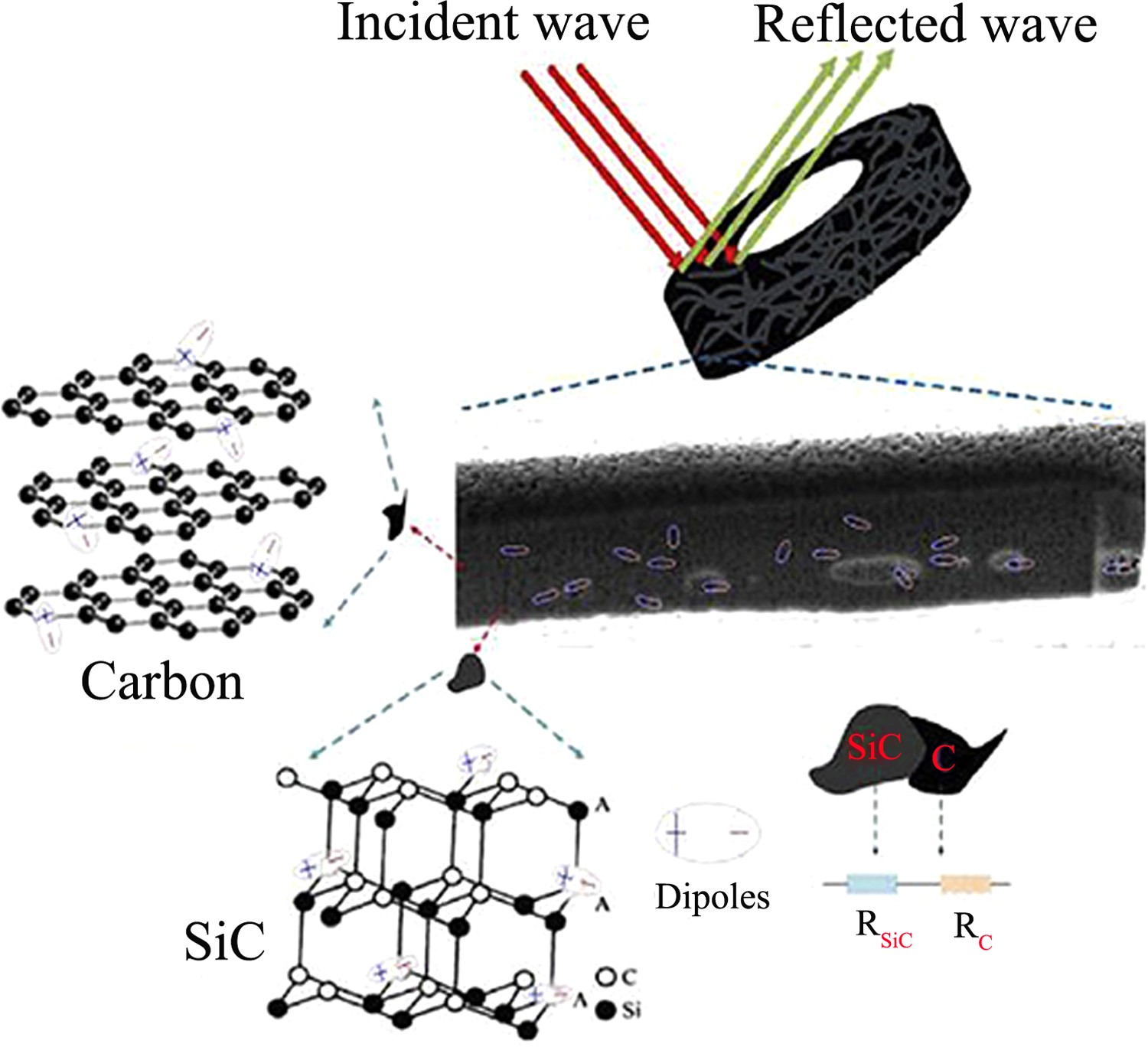
CNTs with adjustable conductivity have been widely used as EMW absorption materials [159–162]. However, the application of CNTs as EMW absorbers in ceramic composites was limited because of the difficulty in uniform dispersion of CNTs in the ceramic matrix. Therefore, the preparation of CNTs/ceramic (nano)composites with homogeneously dispersed CNTs has become a research hotspot in recent years. For instance, CNTs/SiOC composites were prepared by the PDC route using unfunctionalized and functionalized CNTs and polysiloxane (PSO) as the precursor to form the ceramic matrix [163].
CNTs/SiOC composites containing 7.5 wt.% of carboxyl-modified CNTs (CNTs-COOH) exhibited much better mechanical properties and EMW absorption performance than CNTs/SiOC with hydroxylated CNTs (CNTs-OH) and pristine CNTs. These results attribute to the homogeneous dispersion of CNTs-COOH in PSO/ethanol solution due to stronger electrostatic repulsions with each other and strong binding forces with PSO. Wei et al. reported the EMW absorption performance of CNTs/Sc2Si2O7 ceramic composites prepared by CVD technology [164]. The CNTs/Sc2Si2O7 composite loaded with 1.56 wt.% CNTs exhibited an excellent EMW absorbing performance with minimal RL peak of –33.5 dB at the thickness of 2.85 mm, and the EAB covered the whole X band (4.2 GHz). In addition to large amounts of interfaces formed on the porous Sc2Si2O7 matrix due to the coils of CNTs, the defect concentrations of CNTs/Sc2Si2O7 composite can be optimized, which are helpful for the multiple reflection and dissipation of the EMWs. Another example is related to CNT/SiCf composites which were successfully synthesized with a new developed method using ferrocene as both carbon source and catalyst (Figure 11) [165]. As can be seen from Figure 11, the CNT/SiCf composites (with CNT content of 0.72 wt.%) were proven to possess outstanding EMW absorbing performance with RLmin of –62.5 dB and EAB of 8.8 GHz which covered almost the entire Ku-band and three-quarters of X-band. Moreover, the EMW absorption performance and other properties of the composites can be modified by adding to various different materials. Furthermore, a MWCNTs/Al2O3 composite containing 3.8 wt.% chopped multi-walled carbon nanotubes (MWCNTs) showed an enhanced EMW absorption performance with RLmin of –37 dB and the EAB of 2.5 GHz, which is much better than that of pristine materials without MWCNT fillers [166]. (a) Schematic illustration of the preparation process of CNT/SiCf composite; (b) Photo of a composite made of polydimethylsiloxane (PDMS) mixed with CNT/SiCf; (c) Stress-strain curves of pure PDMS and composite with 10 wt.% CNT/SiCf; (d) RL of CNT/SiCf composite with 0.72 wt.% CNT; (e) SEM image of the fractured surface of PDMS with 10 wt.% CNT/SiCf (reprinted with permission from American Chemical Society) [165].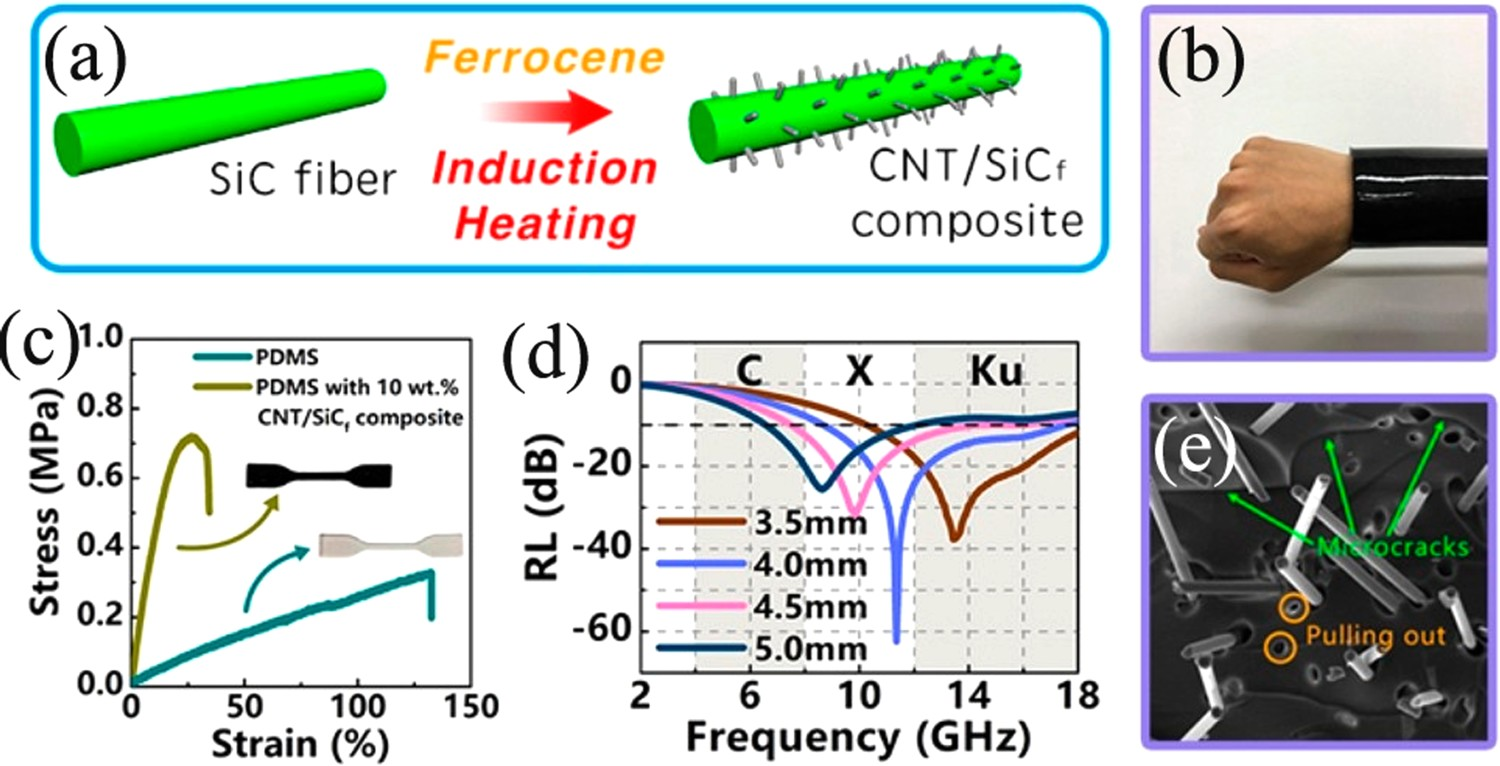
Compared with CNTs, graphene exhibits superior chemical and physical properties due to the unique two-dimensional structure, such as high carrier mobility, excellent electrical conductivity, large specific surface area, high specific strength and low density [167–172]. Therefore, graphene reinforced ceramic composites are now standing at the frontier of high-performance EMW absorption materials. Most importantly, the graphene enhanced ceramic composite/nanocomposites have great potential to overcome the challenges related to the integrated structural and functional requirements of the EMW absorbing materials.
A CVD route for the direct growth of edge-rich graphene (ERG) in porous Si3N4 ceramics with tailoring structures and tunable dielectric properties was reported in reference [71]. The unique microstructure of the as-prepared ERG/Si3N4 composites (i.e. containing open graphite nanosteps and freestanding nanoplanes) provide an appropriate balance between good impedance matching and strong dielectric loss capacity. Taking advantage of the synergistic effect of insulating Si3N4 and highly conductive graphene as well as of the special tremendous ‘resistance-inductance-capacitance’ coupled circuit structures, the ERG/Si3N4 composites exhibited superior EMW absorption performance with EAB covering the whole X band at a thickness of 3.75 mm with a negligibly loading content of absorbers. In Liu et al.’s work [173], the RGO/SiCN composites prepared by single-source-precursor (SSP) approach and mechanical blending method exhibited a significant difference in EMW absorption performance. The disadvantages caused by restacking of graphene oxide (GO) are effectively prevented via chemical modification of GO with poly(methylvinyl)silazane. Accordingly, the RGO/SiCN composite with 2.5 wt.% GO in feed exhibited outstanding EMW absorbing performance with RLmin of –62.1 dB at 9.0 GHz at the thickness of 2.1 mm. With the same GO in feed, the RLmin of RGO/SiCN composite prepared by mechanical blending was only –8.2 dB. The huge difference in the minimal RLmin of the samples prepared by SSP approach and mechanical blending method can be explained by the quality of the dispersion of RGO in the ceramic matrix, as shown in Figure 12. Various carbon enhanced ceramic (nano)composites used for EMW absorbing applications are summarized in Table 1. Schemes of (a) physically-blended-precursor (PBP) and (c) GO-containing single-source-precursor (SSP). TEM images of RGO/SiCN ceramic composites derived from (b) PBP and from (d) SSP (reprinted with permission from the Royal Society of Chemistry)[173].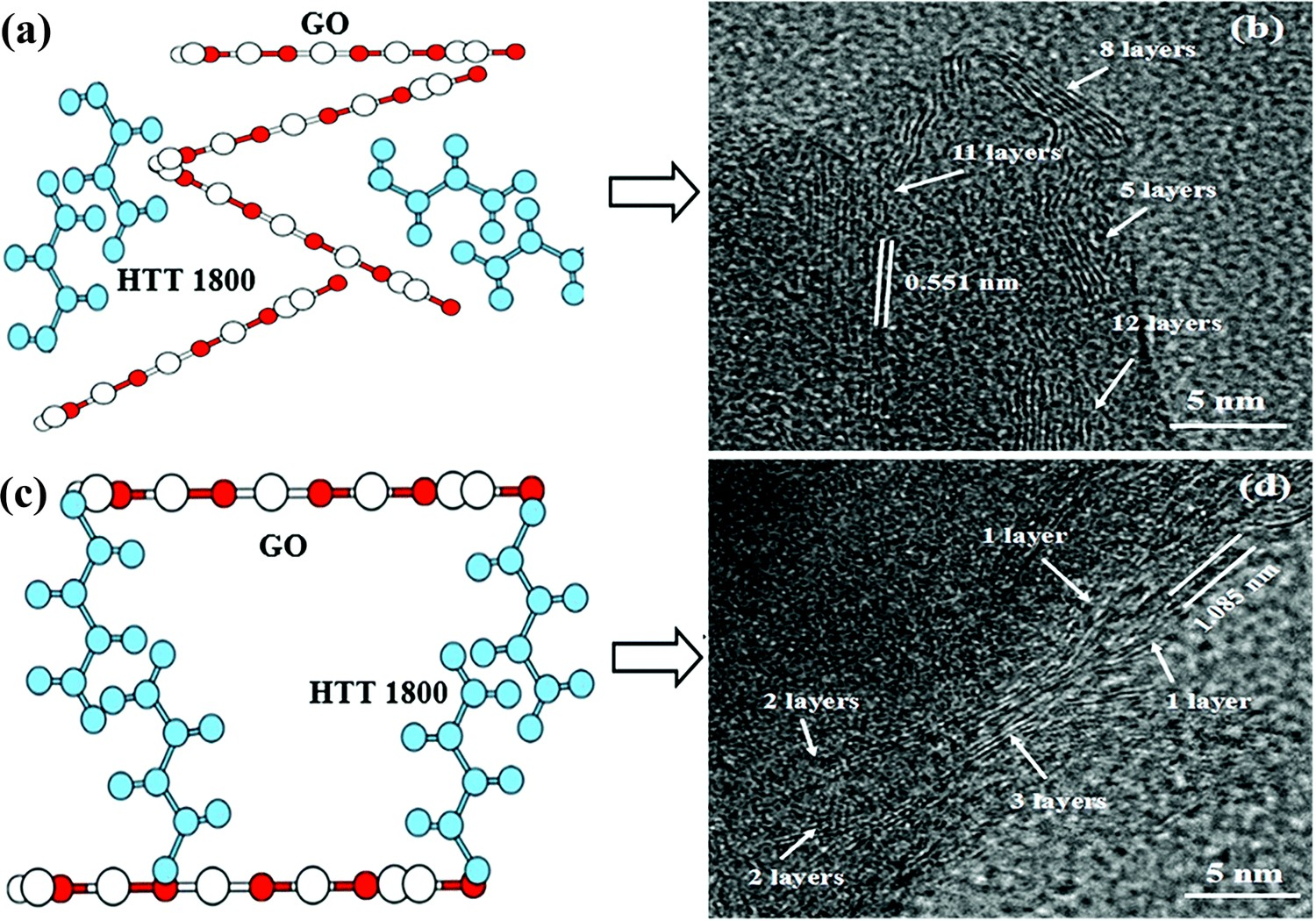
EMW absorbing performance of magnetic-loss-type ceramics
Magnetic metal particles (e.g. Fe, Co, Ni) and their related chemical compounds (e.g. Fe3Si, Fe2O3, Fe3O4, NiO, Co3O4, Fe3C, CoFe2O4) not only have large saturation magnetization, high Snoek’s limit, and distinguishable permeability, but also possess good compatible dielectric loss in the gigahertz frequency range. Therefore, magnetic metal and their compounds attract much attention because they can meet the feature requirements for high-performance EMW absorption materials [156,201–207]. However, poor mechanical strength and corrosion resistance limit their widespread applications. Therefore, incorporation of magnetic materials into a ceramic matrix is a good strategy to prepare EMW absorbing materials with excellent mechanical properties and corrosion resistance. Consequently, in recent years, a large number of magnetic metals related to ceramic composites with outstanding EMW absorption performance have been studied [64,78,208–213.]
Iron containing ceramic composites
As typical magnetic materials, Fe-containing compounds have been taken as one of the most commonly used fillers in ceramic-based EMW absorption materials. For instance, Hou et al. decorated amorphous SiOC ceramics with carbon-coated Fe3Si nanoparticles (SiOC/C/Fe3Si). They found that the resultant composites exhibited much better RL characteristics than any two-component materials by adjusting the magnetic components [214]. The SiOC/C/Fe3Si composites loaded with12.33 wt.% Fe (thickness: 3.5 mm) possessed a minimal RL of –41 dB at 7.9 GHz, and the EAB covered the whole S band (2–3.95 GHz). Hou et al. reported the synthesis of Fe/SiC hybrid fibres by electrospinning method using PCS and Fe3O4 precursors, as shown in Figure 13 [67]. The study showed that the introduction of Fe had a dramatic impact on the morphology and EMW absorbing performance of the SiC hybrid fibres. The as-prepared Fe/SiC fibre composites were found to be a characteristic dielectric/magnetic medium with multiple loss mechanisms such as magnetic loss from Fe, dielectric loss from Fe/SiC, and polarization relaxation loss from the hybrid interface. Schematic diagram of the preparation and RL of Fe-based/SiC hybrid fibres. The inset digital photo showed the fibres on a roller collector of the needleless electrospinning setup (reprinted with permission from American Chemical Society) [67].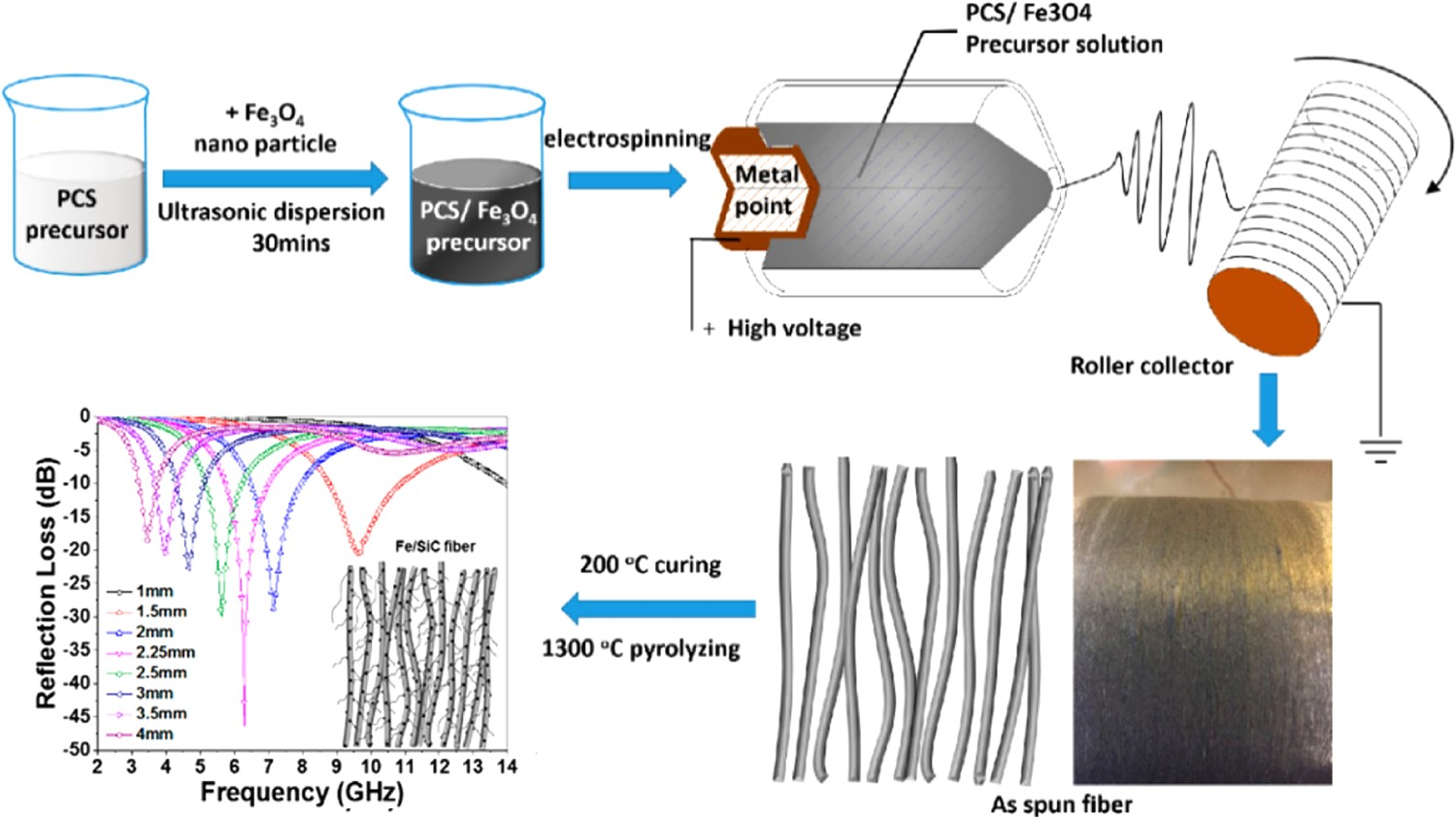
Lou et al. pioneered the synthesis of porous 3D Fe-based/C composites such as Fe3O4@C, Fe3O4/Fe@C, and Fe3C@C by carbonizing iron (III) 2,4-pentanedionate (Fe(acac)3) pre-enriched forestry waste wood [215]. The resultant porous 3D Fe-based/C composites displayed significantly improved EMW absorption properties, where the optimal RL reached –57.64 dB at 6.92 GHz, and a broad EAB of 5.0 GHz. The outstanding EMW absorption performance is attributed to continuous Fe3C coating on the inner surface of carbon, leading to optimal impedance matching. More importantly, defects are generated in porous 3D Fe-based/C composites, which play a vital role in dipole relaxation polarization. Liu et al. successfully fabricated double-loss Ti3SiC2/Co3Fe7 composites via carbothermic reduction method [95]. The scattering of Co3Fe7 particles on the surface of Ti3SiC2 resulted in excellent EMW absorption properties, which are ascribed to an improved dielectric relaxation of Co3Fe7 particles and to a stronger dissipation ability of the Ti3SiC2/Co3Fe7 composites.
Other magnetic metals containing ceramic composites
In addition to iron-containing materials, other magnetic metals and metal compounds (e.g. Co, Ni, NiO, Co3O4, etc.) have also been widely introduced into a ceramic matrix to improve the EMW absorption performance of the associated composites. For example, Luo et al. prepared cobalt-containing (Co, CoSi, Co2Si) ceramics with high-temperature resistance by the PDC method (Figure 14) [216]. The introduction of cobalt caused an enhanced EMW absorption performance. The RLmin of the sample with 3.84 wt.% Co amounted –42.43 dB at 10.55 GHz, and the EAB covered nearly the whole X-band between 8.46 and 12.4 GHz (Figure 14(d)). The excellent EMW absorption performance was confirmed to be linked to the formation of cobalt silicide nanocrystals and crystallized free carbon, which result in synergistic effects of dielectric and magnetic loss. (a) TEM images and (b, c) high-resolution TEM images of ceramics loaded with 3.84 wt.% Co, (d) Schematic diagram of the preparation route and reflection coefficient vs frequency of the composites with varying Co-contents [216].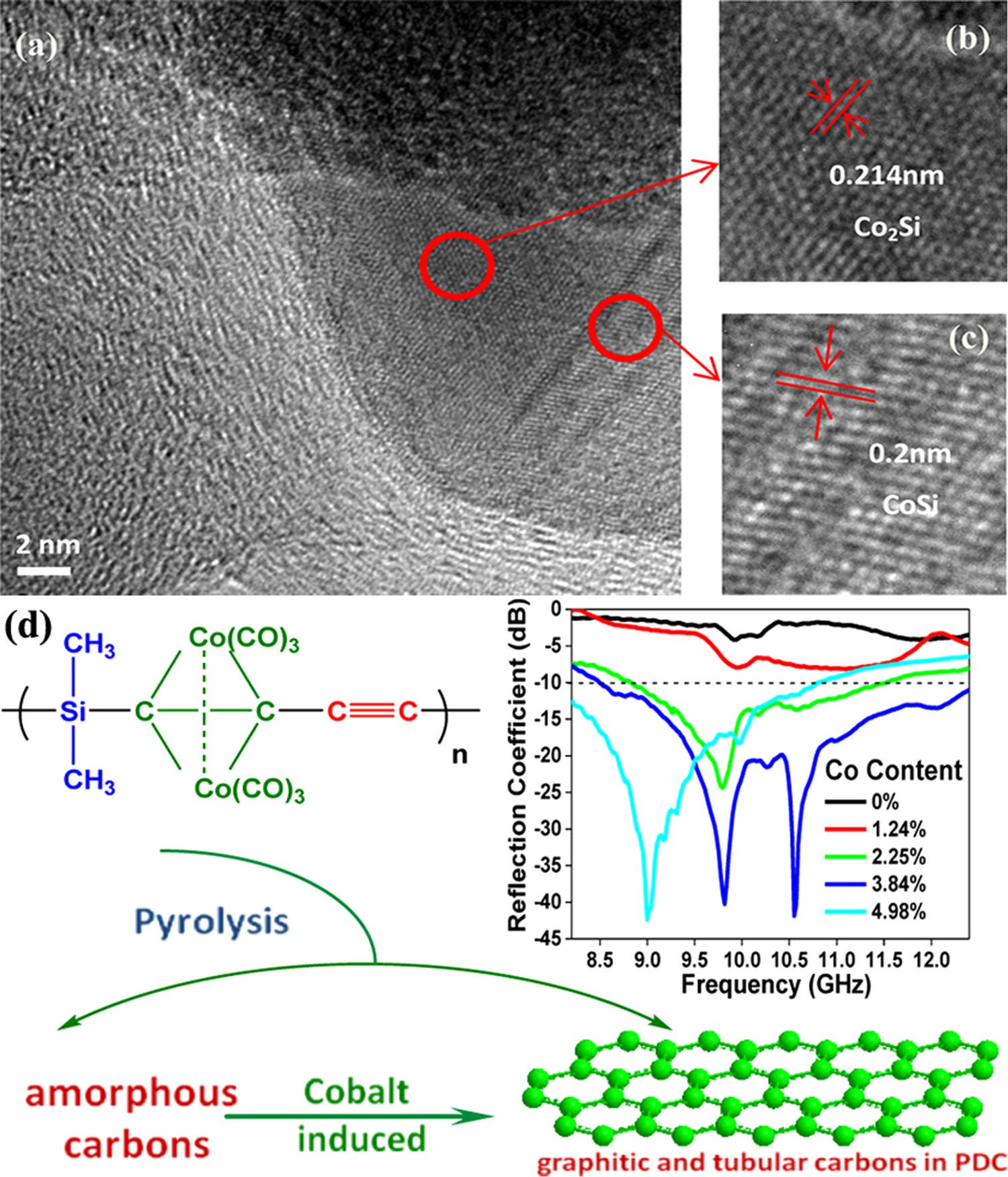
Ma et al. coated a layer of Ni–Co–P on the surface of SiO2 particles. The EMW absorption analysis showed that the Ni–Co–P-coated SiO2 was a good candidate for EMW absorption application [217]. The minimum RL reached –48.6 dB at 4.2 GHz with a thickness of 3.10 mm, which is attributed to the optimal magnetic loss and well-matched characteristic impedance.
Huang et al. reported an EMW absorption material with bead-like Co nanoparticles embedded in a ZnO matrix, which exhibited wider EAB (6.4–18 GHz) than that of pristine ZnO and Co particles [218]. The results confirm that the presence of Co particles is responsible for the improved EMW absorption performance. The hysteresis loss and residual loss of Co particles lead to significant magnetic loss. The incorporation of Co particles results in more defects, interfacial polarization and dipole polarization due to lattice shrinkage. Furthermore, Wang et al. prepared cobalt-containing SiCN composites via the PDC route. The prepared composites exhibited stronger EMW absorption performance owing to well-matched characteristics between the dielectric property of the SiCN ceramic matrix and the good magnetic property of Co particles [219].
EMW absorption performance of magnetic-loss-type ceramic composites (real part (


EMW absorbing performance of multinary absorbers
Recently, a large number of publications deal with the synthesis of multinary ceramic composites as high-performance EMW absorption materials. Table 3 summarizes the EMW absorption properties of some multinary ceramic composites. For instance, core–shell structured Fe3Si@C/SiC/Fe3O4/SiO2 ceramic nanocomposites were successfully synthesized via the PDC method. The as-fabricated Fe3Si@C/SiC/Fe3O4/SiO2 composites showed significantly enhanced EMW absorbing performance, in which the optimal RL reached –44.7 dB at 4.25 GHz. The EAB was up to 9.5 GHz (2.5–12.0 GHz) by tuning the sample thickness [141]. The multinary absorbers can not only manifest the magnetic loss derived from magnetic absorbers, but also generate typical dielectric loss from the presence of conductive phases. Moreover, the special interfaces formed between multinary absorbers also cause interfacial polarization and dipole polarization effects. Hou et al. fabricated high-temperature anti-oxidative SiC/Fe3Si/CNTs ternary composites from a Fe-containing polysilyacetylene (PSA) via a one-step PDC approach (Figure 15) [232]. The RLmin of the SiC/Fe3Si/CNTs composite with a thickness of 2 mm was up to –41.2 dB at 10.5 GHz, and a broad EAB (12.9–16.9 GHz) was achieved at the thickness of ca.1.5 mm. The excellent EMW absorption performance of SiC/Fe3Si/CNTs composites is attributed to the joint effects of dielectric loss, magnetic loss, and special morphologies, which result from micron-sized SiC ceramics with spherical Fe3Si nanoparticles and CNTs attached. In addition, ternary graphene@ polyaniline@TiO2 [
233], SiC@SiO2@Fe3O4 [
234], quaternary graphene@Fe3O4@SiO2@ polyaniline [235] and graphene/Fe3O4@Fe/ZnO [236], and multinary Fe3Si@C/SiC/Fe3O4/SiO2 composites [141] were also reported. Three-dimensional reflection loss (in dB) patterns of the SiC/Fe3Si/CNTs composites obtained at: (a) 800°C; (b) 1000°C; (c) 1200°C and (d) 1400°C; (e) fabrication process of the SiC/Fe3Si/CNTs composites [232]. EMW absorption performance of multinary ceramic composites (real part (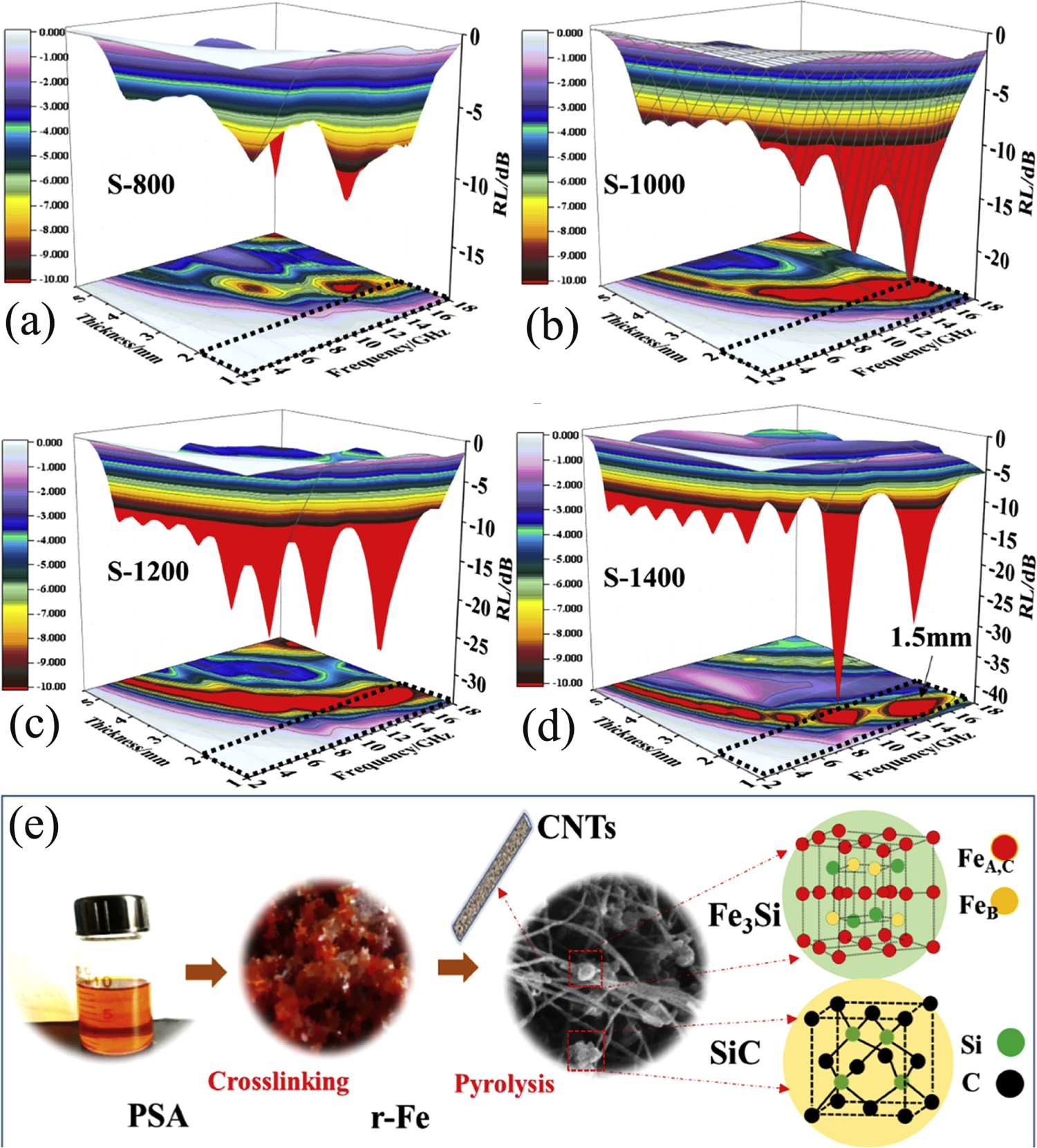


EMW absorbing performance based on microstructural design
In addition to dielectric and magnetic properties as well as impedance matching, the EMW absorption performance of materials is closely related to their particular microstructure and morphologies of the participating phases [248–254]. These features can make incident EMW generate multiple reflections, scattering and refraction as much as possible to prolong the transmission path, which is beneficial for dissipating EM energy [251, 255–257]. Moreover, some special morphologies and structures can lead to increase interface, leading to the effective attenuation of EMWs by space charge polarization and interfacial polarization [258–260]. In addition, as shown in Figure 6, the incident EMW is divided into four parts when it enters a material. As for some particular morphologies and microstructures of materials, destructive amplitude phenomenon will occur while the wave path difference between the absorbed EMW and the reflected EMW is an odd multiple of half wavelengths [261–263]. Furthermore, it can also make the two-wave interference and reverse the phase of the absorbed EMW and the reflected EMW to partly counteract EMW [264–270]. Therefore, it is meaningful to investigate the relationship between morphology/microstructure and EMW absorbing performance.
Dimensional effects
Numerous studies confirm that the particle size of the EMW absorbing components has a significant effect on their absorption performance [271–276]. Therefore, controlling the particle size is an effective way to tune the EMW absorption performance. For example, Wu et al. fabricated carbon-coated nickel (Ni/C) nano-capsules with the average particle size varying from 25 to 53 nm. They investigated the influence of the particle size on the magnetic properties and associated EMW absorption performance [273]. They found that the saturation magnetization increases with increasing particle size, however, the complex permittivity, dielectric loss and attenuation constant of Ni/C composites increase with decreasing particle size of Ni/C nano-capsules. This behaviour is attributed to the larger specific interface area and higher number of defects associated with the smaller nano-capsules. In another case, Co7Fe3 and Co7Fe3@SiO2 nanospheres with diameters from 350 to 650 nm were synthesized for high-performance EMW absorption application [277]. Compared with Co7Fe3 with a diameter of 650 nm, the optimal RL value of the nanospheres was obtained with a diameter of 350 nm, namely –78.4 dB at a thickness of 1.59 mm. As shown in Figure 16, the smaller size of the spheres is helpful to increase the saturation magnetization [272], which results in an increase of the permeability and enhancement of the magnetic loss. The influence of the particle size on the real permeability in Fe/epoxy resin (reprinted with permission of Elsevier) [272].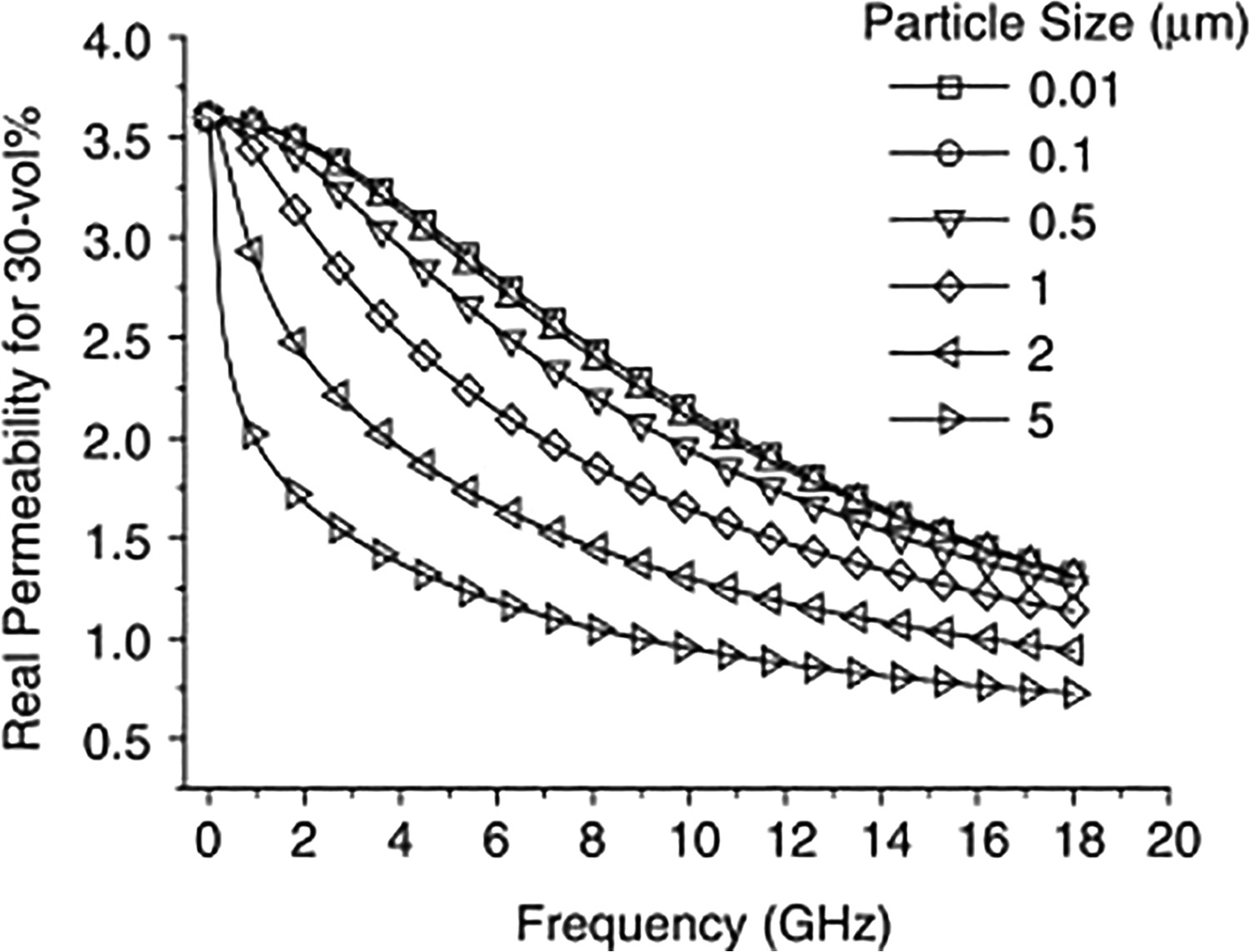
Multilayered gradient ceramics
In order to further promote the EMW absorption performance, particularly to extend the EAB, multilayer absorbing materials have been developed in recent years. Multilayered gradient ceramics consist of multi-components with magnetic and dielectric properties, resulting in various dissipative mechanisms. Furthermore, the special interface in multilayer absorbers is able to cause interfacial polarization and dipole polarization. Figure 17 shows the schematic illustration of a nine-layer absorbing material. One example is a multilayered gradient epoxy-matrix composite comprised of carbon nanotubes, silicon carbide and carbonyl iron particles, fabricated by a powder spraying method [278]. However, the results displayed that the RLmin of the multilayered composites was only –17.8 dB. Chen et al. prepared a multilayered CNTs/silicon dioxide composite (denoted as CNTs/SiO2) by using hot-pressing for sintering. The gradient CNTs/SiO2 composite was constructed by adding five layers of mixed powders with different CNT contents (0, 2.5, 5, 7.5 and 10 wt.%). The resultant CNTs/SiO2 composites exhibit 1.5 times of the EMW absorption capability than that of the traditional CNT/SiO2 composite [80]. Moreover, pyrolytic carbon-Si3N4 ceramic composites with gradient PyC distribution (Gradient-PyC-Si3N4) were prepared by directional oxidation PyC-Si3N4 in the air with the help of Si3N4 coating. After oxidation for 1.0 h, the EMW absorption ability of the Gradient-PyC-Si3N4 increased from 0.8 to 50.1% [279]. Schematic illustration of a multilayered EMW materials structure. The nine single-layer gradient structure is composed of epoxy resin and fillers with different weight ratios, the fillers from left to right are 3 wt.% CNT, 5 wt.% CNT, 7 wt.% CNT, 30 wt.% SiC, 40 wt.% SiC, 50 wt.% SiC, 60 wt.% carbonyl iron, 70 wt.% carbonyl iron and 80 wt.% carbonyl iron [278].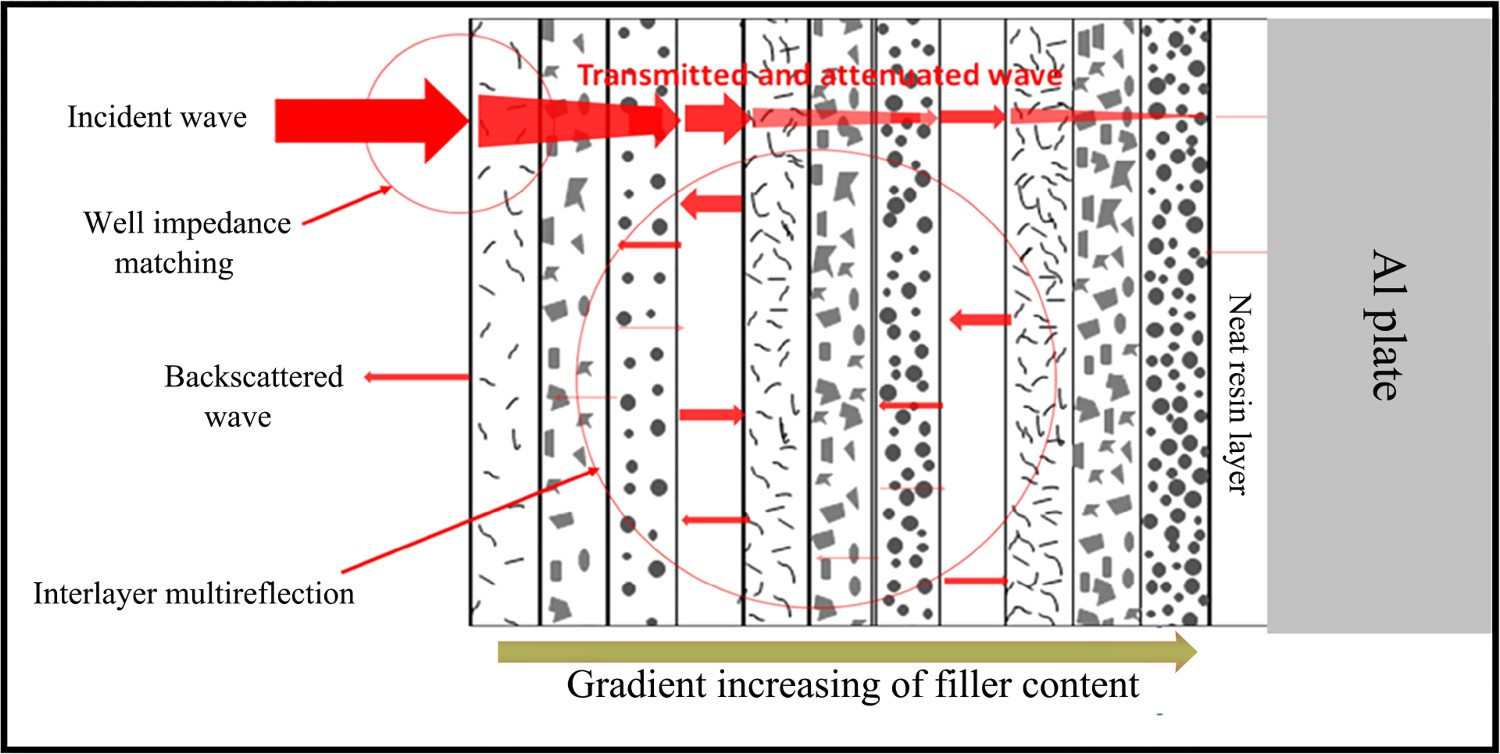
Special morphology and microstructure
In recent years, core–shell structured ceramic composites are elaborately prepared to remedy the shortcomings in conventional ceramic composites. As shown in Figure 18, core–shell type Ni@SiC composites with an outstanding chemical homogeneity were synthesized [280]. The synergistic effect between the SiC coating and Ni nanoparticles provides an enhanced EMW absorption performance, where the RLmin of the core–shell Ni@SiC composites achieved –42.1 dB at 11.2 GHz, and the EAB covered the entire X-band at a thickness of 2.88 mm. Moreover, the as-fabricated core–shell Ni@SiC composites exhibit much better EMW absorption performance than that of Ni particles embedded in a SiC matrix [241]. The experimental results indicate that the excellent EMW absorption performance of the core–shell Ni@SiC composites is owing to a good impedance matching as well as to the increased relaxation and interfacial polarization arising from the core–shell structure. TEM micrographs of Ni nanoparticles (a) and TEM and HRTEM images of Ni@SiC nanocomposites (b–d); (e) two-dimensional RL mapping plots of Ni@SiC; (f) RL of the Ni@SiC composites [280].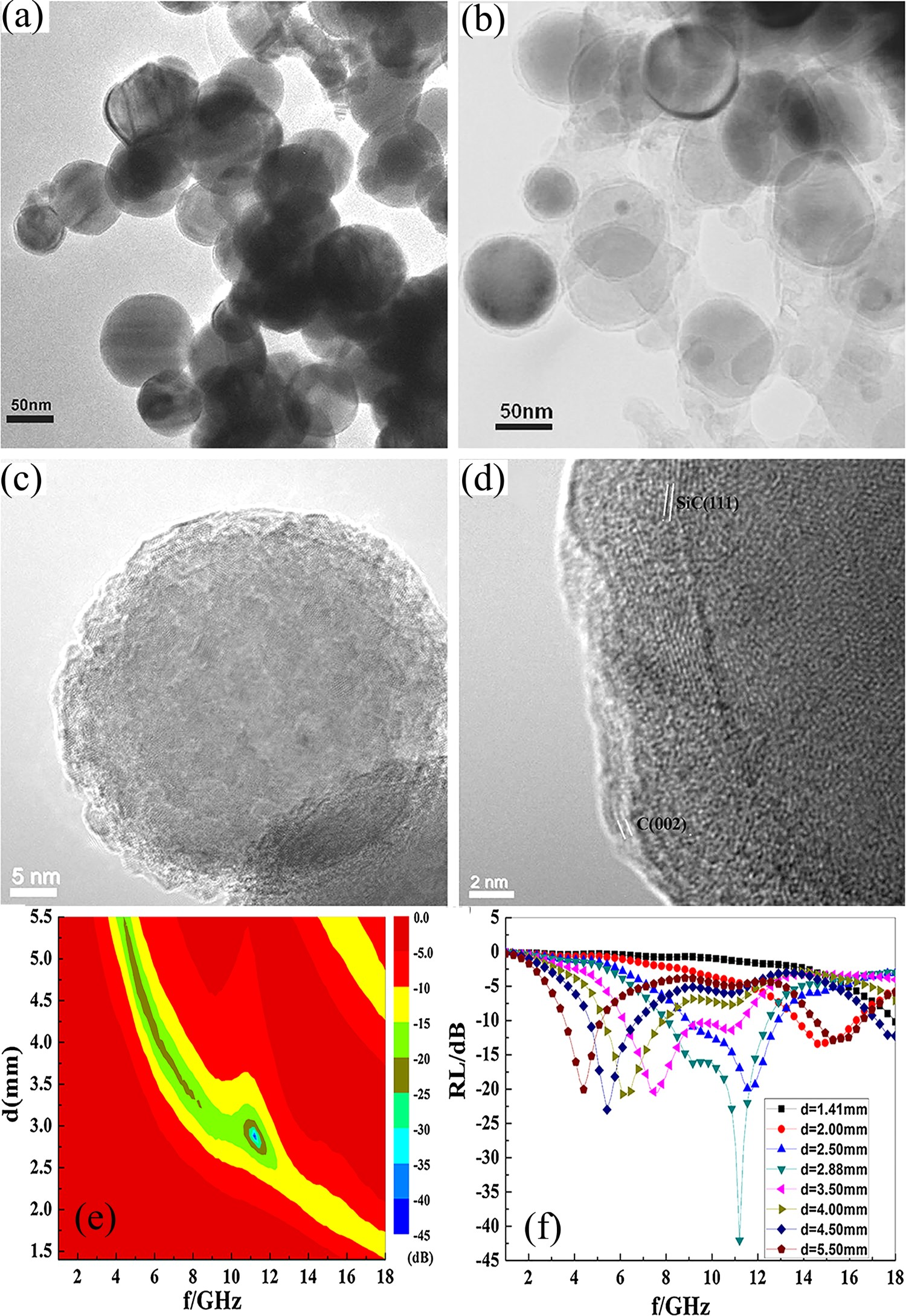
Zhou et al. prepared a series of hierarchical CoNi@SiO2@C composites. The urchin-like CoNi alloy particles were successfully encapsulated with SiO2 and carbon coatings [281]. The as-prepared CoNi@SiO2@C composites produced stronger EMW absorption with different absorber thicknesses. The excellent EMW absorption performance is caused by a combination of dielectric and magnetic loss. The complicated interfacial polarization and dipolar polarization phenomena are explained by their hierarchically multi-component structure.
In another case, a novel worm-like SiC/B4C composite was successfully fabricated via a multi-step vapour–liquid-solid process (Figure 19) [282]. The resultant SiC/B4C composite showed an EAB up to 4.9 GHz (7.4–12.3 GHz) at 3.7 mm, which covered the entire X-band. Moreover, the minimal RL reached to –50.81 dB at 11.9 GHz with the thickness of 3.3 mm, which is almost three times higher than that of B4C nanowires. The excellent EMW absorption capability is mainly derived from the abundant defects and improved double dielectric relaxation, including interfacial polarization and electric dipole polarization. Schematic images of the growth of B4C and SiC/B4C nanowires with a C/SiO molar ratio of 1:0.36 (a) 900°C; (b) 1000°C; (c) 1100°C; (d) 1300°C, and SEM images of samples (e) 1100°C and (f) 1300°C; RL curves and the corresponding RL maps of samples with different C/SiO molar ratio (g, h) 1:0.04; (i, j) 1:0.16; (k, l) 1:0.36 [282].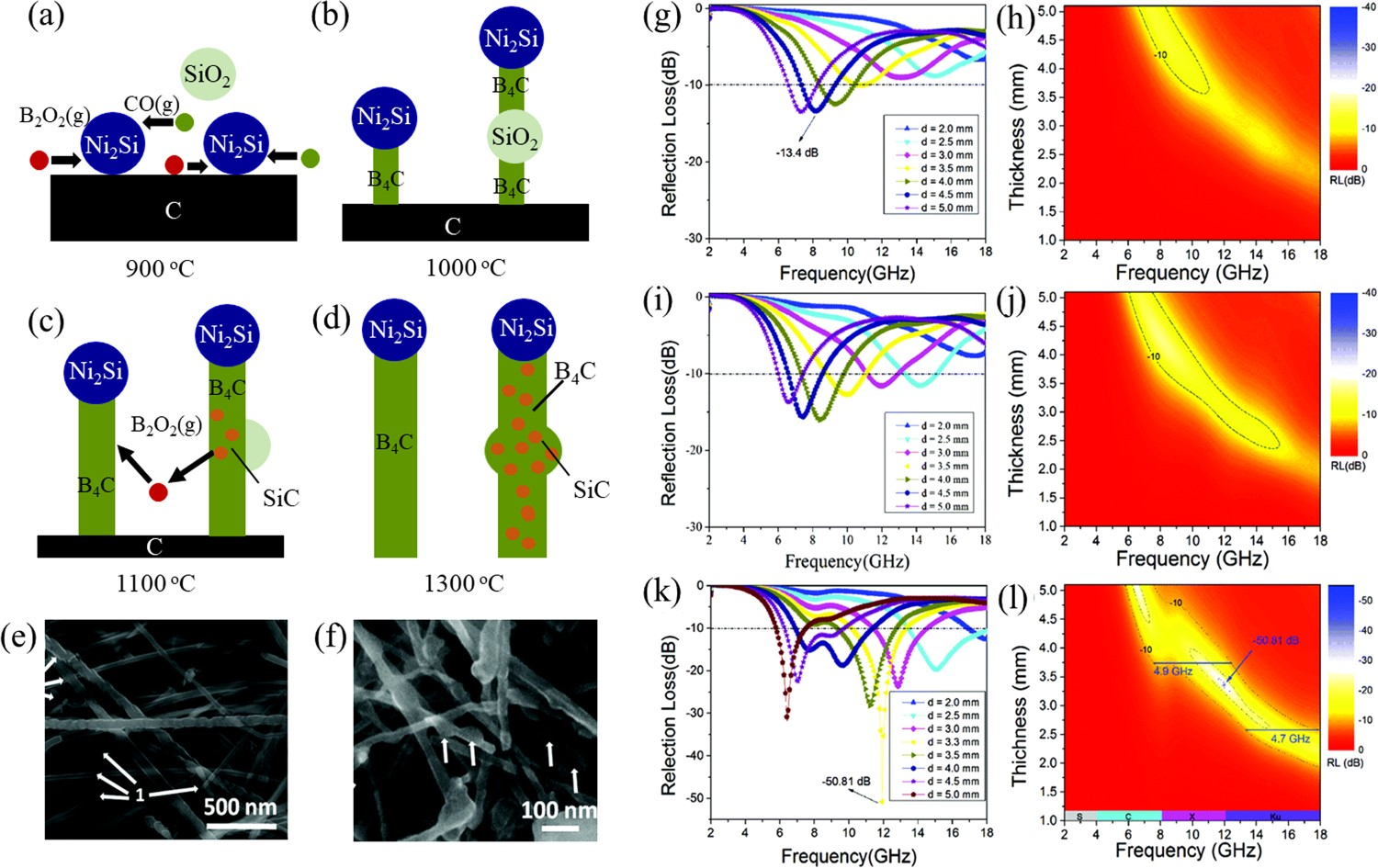
EMW absorption performance determined by microstructures (ISF: interconnected SiC foam; real part (


High-temperature EMW absorbing performance
The EMW absorption materials applied in harsh environments such as high temperature (> 600°C) and oxidative atmosphere are highly desired for high precision electronic devices, aircraft engine nozzles or their aerodynamically heated parts. Conductive polymers, magnetic metals and some carbonaceous materials exhibit good EMW absorption at room temperature. Nevertheless, EMW absorbing applications of polymers at elevated temperatures are limited by their rather low melting/softening/decomposition points (< 300°C). Magnetic-loss-type materials also lose their superiority when the temperature is higher than the Curie point. Carbonaceous materials exhibit poor oxidation resistance at temperatures higher than 350°C. Therefore, dielectric-loss-type ceramic-based materials are generally regarded as a promising candidate for EMW absorption at high temperatures.
SiC-based composites are the most popular selection for high-temperature EMW absorption applications. One prominent example is SiC decorated with NiO-nanorings, which was prepared via chemical deposition of nickel chloride and nickel sulphate on SiC powders and subsequent oxidization of as-prepared powders. The resultant NiO–SiC composites showed a novel hierarchical architecture and exhibit significantly enhanced EMW absorption performance than that of pristine SiC [297]. As can be seen from Figure 20, the minimal RL of NiO–SiC composite reached approximately –50 dB, which was three times better than that of SiC at 673 K, and the EBA covered the entire X band. Furthermore, the EBA of NiO–SiC broadened with increasing temperature. The excellent EMW absorption performance results from multi-relaxation mechanisms: (i) the defect polarization in NiO nanocrystal and SiC grains; (ii) magnetic–dielectric hybrid structure (iii) NiO–SiC hierarchical architecture (iv) multiple interfacial polarization. The remarkable high-temperature EMW absorption is ascribed to the complementary relaxation and conductance of NiO and SiC at different temperatures. In addition to the aforementioned magnetic metal oxides, SiC-based composites decorated by other absorbing materials such as metal particles or conductive carbon, achieve outstanding EMW absorption performance and enhanced EAB at high temperatures [70,298–302]. (a) Schematic diagram of dipole polarization in NiO–SiC. Absorption bandwidth of SiC and NiO–SiC at different temperatures at the level of (b) –10 dB and (c) –20 dB, (d) RL of SiC and NiO/SiC (reprinted with permission from American Chemical Society) [297].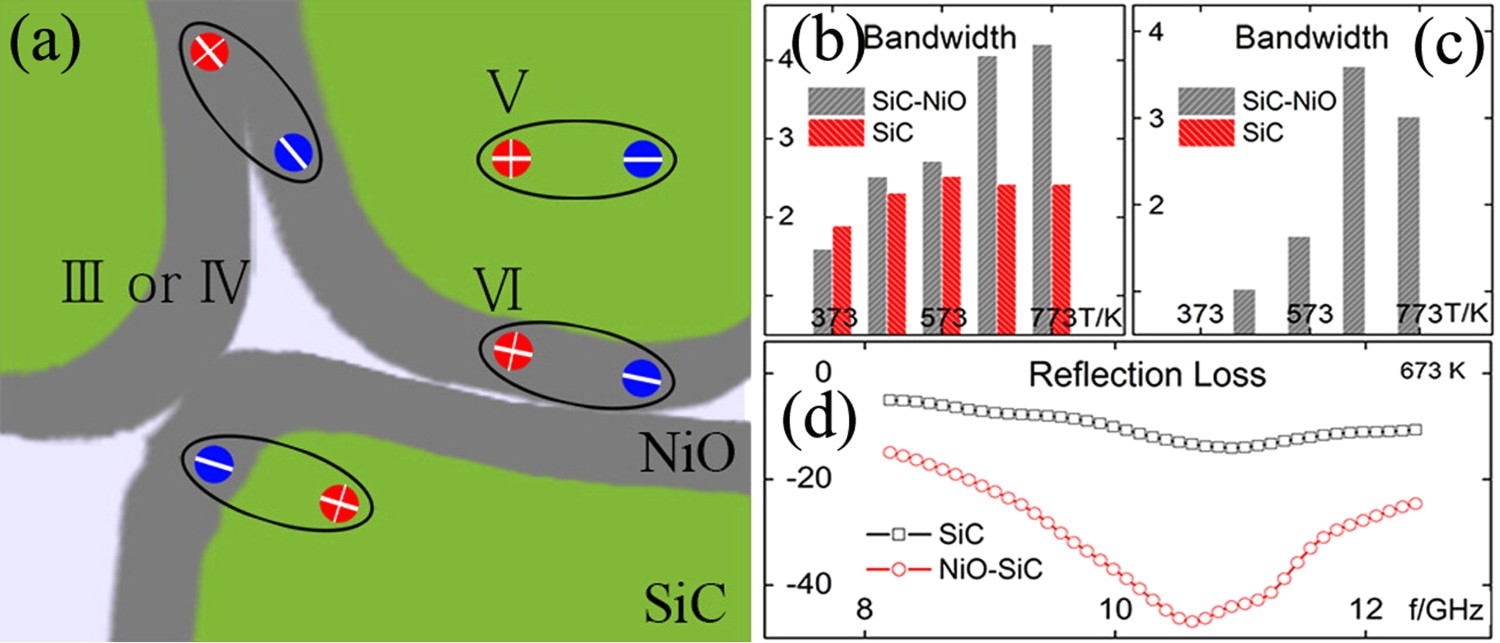
A graphene@Fe3O4/SiBCN composite is another material suitable for EMW absorbing application under high temperature conditions. This composite was prepared by polymer-derived-ceramic method. It achieved excellent EMW absorption performance in terms of a broad EAB (covering 93.6% range of the X-band at 600°C) and quite low RL at high-temperature conditions, which are much better than those of previously reported graphene, Fe3O4 and SiBCN materials [89]. The outstanding high-temperature EMW absorbing performance is attributed to the synergistic effect due to dielectric loss (free carbon and graphene), and magnetic loss (Fe3O4) of the graphene@Fe3O4/SiBCN composites.
Luo et al. investigated the iron-containing SiBCN materials, which showed enhanced EMW absorption performance at 600°C [303]. At this temperature, the minimal RL of a 2.8 mm sample reached –37.87 dB at 10.17 GHz, and the EAB covered the entire X-band. The experimental results clarified that the improved EMW absorption performance has to be attributed to the formation of SiC, Fe3Si nanocrystals and turbostratic carbon in the SiBCN matrix. At elevated temperatures, more free electrons stemming from SiC, Fe3Si nanocrystals and turbostratic carbon phase exist, which are advantageous for improving the electrical conductivity and for increasing the imaginary part of the complex permittivity. In addition, there are some boundaries of SiC nanocrystals and graphite carbons in the SiBCN amorphous matrix. These boundaries induce some defects and polarized centres, resulting in the synergistic effect of interfacial polarization and dipole polarization. Moreover, these composites also exhibited good mechanical properties and outstanding high-temperature oxidation resistance up to 885°C in the air.
Furthermore, Xu et al. fabricated a novel red blood cell like-mesoporous carbon hollow microsphere (RBC-PCHMs) composite. The as-obtained RBC-PCHMs composite with a small sample thickness (< 2 mm) showed a broad EAB (> 3 GHz) in the X band at temperatures between RT and 250°C [304]. The investigation on the mechanisms illustrates that the polarization and conduction loss are complementary with rising temperature, which is beneficial for the creation of high matching impedance and strong EMW attenuation.
High-temperature EMW absorption performance of ceramic composites (real part (


It is worth noting from Table 5 that ceramics and their composites exhibit excellent EMW absorption performance at temperatures even higher than 300°C. The combination of advanced ceramics and dielectric/magnetic loss phase (e.g. carbonaceous materials, transition metal carbide/nitride/silicide, magnetic metal and their oxides) is a promising strategy for the development of high-temperature resistant EMW absorbing materials.
Lightweight and flexible concepts
In order to meet the requirements of the next-generation flexible electronic devices, EMW absorbing materials should not only have strong absorption capability, but also possess features like flexibility and lightweight. Recently, tremendous progress in EMW absorbing field has been proven that porous materials are regarded as promising flexible, light-weight and high-efficiency absorbers due to their low density, good impedance matching and supported characteristics. Furthermore, high porosity is favourable for enhanced EMW penetrating into the absorbing medium and facilitates multiple reflections inside the absorbing medium. Ceramic foams and aerogels containing suitable fillers are considered as the best combination of EMW absorption capabilities and mechanical properties because of their efficient optimization of the strength/density ratio.
3D hierarchical lightweight carbon foams modified with Si3N4 and SiC were successfully synthesized by carbothermal reduction between carbon foams and nanosilicon and silica under the flowing N2. [312]. The presence of porosity in materials significantly enhances the EMW absorption performance. The minimal RL reached –43.2 dB at 4.7 GHz with a thickness of 5.0 mm, and the maximum EAB amounted up to 4 GHz (11.8–15.8 GHz) with a thickness of 2.0 mm. The improved EMW absorption capability is proven to be linked with its special structural characteristics such as in situ formed straight nanowires of Si3N4, curved nanowires of SiC, pore walls of carbon foams, which all contribute to multiple reflections and polarization relaxation.
Xiao et al. coated nanostructured lamellar carbon films with 3D hybrid foams of SiC nanowires by combining unidirectional freeze drying and carbonization techniques (see Figure 21) [313]. The as-obtained ultralight hybrid foam shows outstanding EMW absorption performance as compared to individual SiC nanowires and carbon. The investigation of the mechanisms illustrates that carbon films and foams are beneficial for the creation of multiple polarization and dielectric loss. Ye et al. prepared an ultrathin 3D reticulated SiC/porous carbon foam composite (3D-SiC/PCF) by combining the carbonization of melamine foam step with a CVD process. The 3D-SiC/PCF accounts for stronger and larger RL than porous carbon foam in the same frequency range. Other porous ceramic foam composites are summarized in Table 4. (a) Optical figures of the SiC NWs/CMC foam and the SiC NWs/C foam. SEM images of (b) the SiC NWs/CMC foam top view, (c) SiC NWs/CMC lamella side view, (d) the enlarged SEM image of the SiC NWs/CMC lamella and (e) schematics description of the EMW absorption mechanisms of SiC NWs/C hybrid foams (reprinted with permission of Elsevier) [313].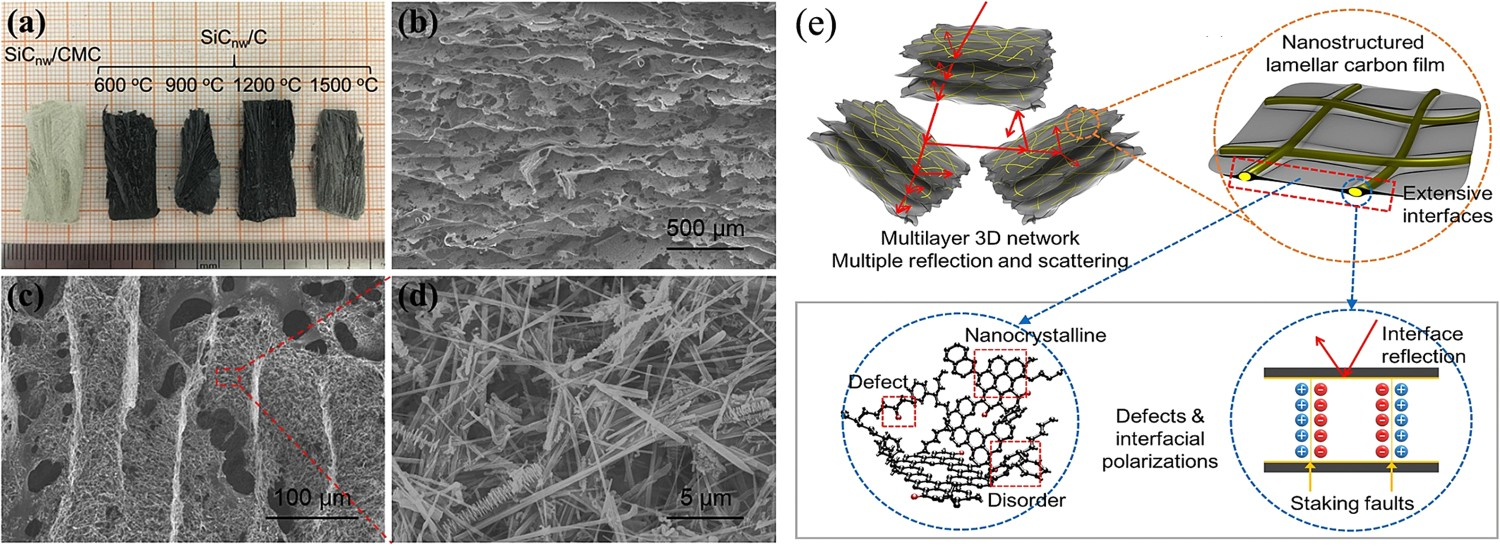
Ceramic aerogels, with ultralight weight, high-temperature oxidation resistance and high specific surface area, have attracted great attention as next-generation EMW absorption materials. Ultralight PDC aerogels (PDCAs) with enhanced EMW absorption properties were fabricated by combining polymer crosslinking via hydrosilylation and subsequent freeze drying of the obtained gel structure [314]. The resultant PDCAs exhibited a homogeneously 3D framework with an extremely low bulk density (0.19 g/cm3) and high specific surface area (134.48 m2/g). Its RLmin achieved –42.01 dB at 12.5 GHz with a thickness of 3.0 mm, and a wide EAB (6.6 GHz) is obtained. The excellent EMW absorbing performance is due to multiple reflections of EMWs in the 3D framework, good impedance matching and high dielectric loss. Shao et al. prepared a Co/SiCN ceramic aerogel composite (Co/SiCN-CACs) with a 3D porous microstructure. It was found that the combination of magnetic Co and 3D porous microstructure not only generates obvious magnetic loss ability and multiple reflections, but also causes typical interfacial polarization [315]. The resultant Co/SiCN-CACs show improved EMW absorption performance as compared with individual Co particles embedded in a SiCN matrix. Zhao et al. fabricated magnetic and conductive Ni/carbon aerogel composites with high surface area, low densities, controllable electrical conductivity and magnetization. The porosity and incorporation of Co were confirmed to be in charge of the improved EMW absorption performance in the frequency range of 2.0–18.0 GHz [316]. However, in general there are presently only few works published related to ceramic aerogels dealing with EMW absorption features obviously due to challenging synthesis conditions.
Strong and thermostable polymeric graphene/silica textile composites were prepared for light-weight practical EMW absorption applications [186]. The as-fabricated composites containing 4.1 wt.% of reduced graphene oxide (RGO) were lightweight with a low density (∼1 g/cm3), strong tensile strength of 40 MPa and high thermal stability beyond 225°C in air, coupled with a minimal RLmin of –36 dB and broad EAB in the X band. As shown in Figure 22, this combination strategy allows to obtain excellent efficiency for constituting the advantages of each component into one unit, such as the electrical conductivity of RGO, the thermal stability of the silica textile, and the mechanical strength of the phenol formaldehyde (PF) resin. Most importantly, the complicated interfaces formed by the different components provide typical interfacial polarization and electric dipole polarization, leading to an excellent EMW absorption compared with those of the single-components. (a) Schematic diagram of RL, (b) the improved mechanism for mechanical strength in the RGO/silica textile/PF composites, and (c) advantageous characteristics from RGO, silica textile and PF (reprinted with permission of Elsevier) [186].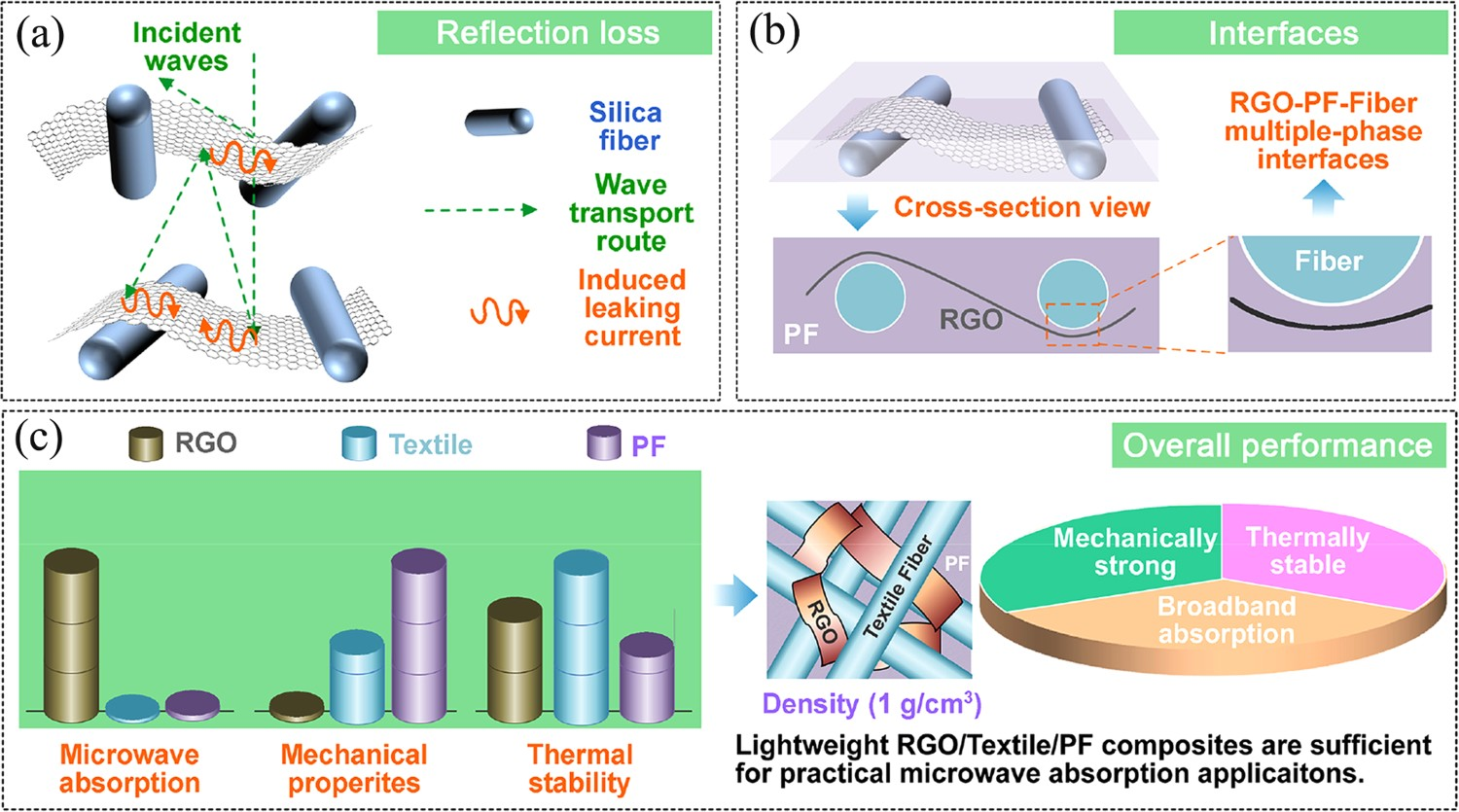
Conclusion and future perspectives
This review comprehensively introduces recent developments in the field of advanced ceramics and associated composites used as effective EMW absorption materials. According to the different characteristics, EMW absorption materials can be classified into dielectric-loss type and magnetic-loss type materials, corresponding to their characteristic dielectric loss and magnetic loss mechanisms, respectively. Single-component materials (e.g. metals and polymers) are generally not preferred due to their intrinsic disadvantages, especially under high temperature, such as low melting point, poor thermal stability, and bad corrosion resistance. Thus, the general trend in materials science is to develop multifunctional composites that utilize the unique properties by the combination of different materials. However, it is not sufficient to improve the EMW absorption performance by adjusting the chemical and phase composition of the composite. Another approach to develop advanced EMW absorbing materials is to consider microstructure and morphology of the constituting phases. The design of the microstructure and morphology of EMW absorption materials makes incident EMWs to generate multiple reflections, scattering and refraction as much as possible to prolong the transmission path. Moreover, particular morphologies (e.g. nano/macro-scale, flower-like, nanoflake, red blood cell-like, etc.) and microstructures (e.g. porous, core–shell, aerogel, foamed, etc.) allow to form high interface area to promote the attenuation of the EMWs via interfacial polarization. In fact, from a point of application view, it is very important to choose a suitable matrix to support the EMW absorption phases. There is no doubt that the single-component ceramics or ceramic composites loading with one or more conductive/magnetic fillers are the most promising candidate materials for EMW absorbing applications.
It is worth mentioning that ceramic-based materials are the most researched materials for EMW absorption applications under relatively high temperature due to their outstanding chemical and thermal stability. Most of the ceramic composites show attractive EMW absorption performances at temperatures above 300°C. Some of them could keep remarkable attenuation with wide bandwidth at temperatures as high as 500°C. More importantly, modifying and doping ceramics can protect other composite constituents (e.g. carbonaceous materials, metal and metal oxides, etc.) from high-temperature atmospheric environments. These are promising strategies for the development of high-temperature EMW absorption materials. Moreover, EMW absorbing materials with flexibility and lightweight become future challenges for the next-generation of flexible electronic devices. Porous ceramics loading suitable magnetic/dielectric fillers have obtained great attention due to the efficient optimization of EMW absorption capabilities, mechanical and thermal properties.
In the past decades, considerable advancements have been made in EMW absorption research of ceramics and composites. However, these materials still face many obvious challenges mainly including the following aspects: (1) Difficulties in establishing a sufficient conducting network in the ceramic matrix; (2) Challenges in tuning the relationship between EMW absorption properties and physical properties; (3) Requirements for design and preparation of flexible and lightweight EMW absorbent materials; (4) Difficulties in understanding the relationship between temperature and EMW absorption properties; (5) Bottlenecks in processing and practical application of EMW absorbing materials; (6) Problems in solving EMW leakage occurring between the specimen and test holder; (7) Thermal and corrosive stability and lifetime of ceramics and composites should also be worth investigating. Even more challenges still exist about how to understand and tailor the manyfold interrelationship ‘components-morphologies-structures-properties-applications’ in the field of EMW absorption applications.
Footnotes
Disclosure statement
No potential conflict of interest was reported by the author(s).