







Abstract
In the context of a changing society, strategies are required to eradicate the phenomenon of antisocial behaviour. The Aprender a Convivir universal prevention programme tries to provide such a response. This study attempts to test the effectiveness of the programme through a quasi-experimental long-term study carried out over three years in some nursery schools. Of the students who participated in this study (N = 784), those from the experimental group showed significant increases in social competence compared to the control group, and behavioural problems decreased, albeit not in any significant way. To draw conclusions about the effectiveness of the programme, further improvements are proposed to the design of the study.
Conduct disorders represent one the most frequently diagnosed conditions in Child and Juvenile Mental Health Centres. It is estimated that over half of the consultations held are the result of problems related to conduct disorders, with their prevalence being estimated at between 2% and 16% (Ministry of Education, Culture and Sport, 2011); a fairly high percentage rate if we consider that conduct disorders in childhood are indicators of the existence of antisocial behaviour in adulthood (Farrington, 2005; Hill, 2003; Kratzer & Hodgins, 1997).
The origin of conduct disorders is defined by the early appearance and interaction of risk factors such as inadequate educational styles or school absenteeism, among others. Preventative interventions are thus needed to minimize the risks and to contribute towards adequate social adjustment (Justicia et al., 2006).
All children need to learn appropriate social behaviour. If this is not provided in their family environment or immediate context, other social agents, such as the school, need to make sure that they learn it. Thus, concerns have increased over recent decades to effectively develop children’s social competence (SC hereinafter) due to its importance as an element that protects against behaviour problems (BP hereinafter), (Betina & Contini, 2011).
To ensure adequate development, SC must also be learned from early ages. To learn to live together, activities must be proposed that enable children to learn to know themselves and value themselves, to understand the people around them, to relate with others and to create structures of participation and communication that promote exchange and contact (Viguer & Avià, 2009). Interventions are thus beginning to appear in the United States that teach SC through the establishment of good habits of intercultural coexistence and education for peace (Giménez-Dasí & Quintanilla, 2009). Parallel to these programmes, some more specific interventions are appearing aimed at preventing BP, such as I Can Problem Solve (Shure, 1993), Second Step for Preschoolers and Kindergartens (Frey, Hirschstein, & Guzzo, 2000), and PATHS Preschool: Promoting Alternative Thinking Strategies (Domitrovich, Greenberg, Kusche, & Cortes, 2004) among others.
These kinds of programmes started to be worked on in Spain prior to the modification of the education law that includes SC as one of the basic competences to be learned at school. However, the programmes that have existed up to now are not sufficient in themselves to provide an adequate range of possible choices.
With regard to the contributions to knowledge provided by this study, of particular note is its intention to raise awareness of the Aprender a Convivir prevention programme while also analysing its effectiveness.
The SC construct, as pointed out by Bisquerra and Pérez (2007), is constantly open to debate and review as a result of the complexity which the term itself implies. Socioemotional competences are part of the general set of personal competences and include, in one way or another, emotional awareness, self-regulation, autonomy, life skills and competences, and well-being. In this particular case, competence ‘implies knowledge, know-how skills, and knowing how to be skills which are fully integrated with one another’ (Bisquerra & Pérez, 2007, p. 3), that is, SC implies adequate adaptation to any given situation (Chen & French, 2008; Jiménez, 2000; Rothwell, Piatt, & Mattingly, 2006).
SC plays a decisive role in self-regulation, in what one thinks, feels and does, and in the creation of expectations (Ainsworth, 1980, cited in the Ombudsman of 2011). Therefore, adequate social adjustment has positive effects on the individual in relation to their personal growth, school integration and performance (Simón, Gómez, & Alonso-Tapia, 2013).
Many authors argue that the better the child’s SC, the lower their levels of BP (Grossman et al., 1997; Pichardo, García, Justicia, & Llanos, 2008; Rooney, Poe, Drescher, & Frantz, 1993; Shure, 1993). It is because of this that programmes that teach social skills have become the most effective method for reducing BP in students, thereby helping to prevent more conflictive and aggressive behaviour in later years (Monjas, 2000).
The results obtained by Webster-Stratton and Hammond (1997) showed how the competences acquired through programmes that lasted around six months were maintained for up to one year after the intervention. On the other hand, little evidence exists on longitudinal studies, not because the effects are not maintained on a long-term basis, but rather because of the intrinsic difficulty that carrying out a study over various years brings with it. Reynolds (1994) concluded that after three years of a child intervention programme, children adapted better socially and maintained these results over the next two years. Researchers such as McKinney, Montague, and Hocutt (1998), and Reid, Webster-Stratton, and Hammond (2003) found positive results in the longitudinal studies they carried out.
Nevertheless, it has also been found that the implications of these programmes go beyond increases in children’s SC. As indicated by Collel (2003), BP, including problems relating to peers, isolation, lack of solidarity, aggression and fighting, lead to demotivation, which often results in school failure. Therefore, interventions aimed at improving these aspects would result in changes in the academic climate, stimulating learning through effort and cooperation among students (Sánchez, Rivas, & Trianes, 2006).
Aprender a Convivir is a preventative intervention programme of a universal nature (Mrazek & Haggerty, 1994) whose primary objective is to develop sufficient levels of SC in children for them to be able to face and solve conflict situations from early ages (Justicia, Benítez, Fernández, Fernández, & Pichardo, 2008).
The intervention comprises four blocks of content that are dealt with systematically within the programme, even though they are worked on in a cross-sectional manner in the different subjects: (1) Rules and their compliance; (2) Feelings and emotions; (3) Communication skills; and (4) Support and cooperation. Each block has three units, each of which consists of two weekly sessions. The programme lasts for one hour per week and is implemented over a period of 12 weeks. A similar working method is followed in each of the three school years. However, the difficulty and depth of the content is adapted in line with the development level in question.
The programme is developed using an active, participative methodology where the student is the protagonist of their own learning. Cooperative learning and critical reflection are promoted, mainly through the use of puppets. Moreover, a token economy system is provided to help achieve and sustain goals.
To achieve the programme goals in the most effective way, it is also necessary to work with the parents. The families’ involvement is vital in order to reinforce the behaviour learned in school and to help children apply it in other contexts. It is because of this that each unit includes various activities in the form of worksheets to be completed at home during the week. At the same time, meetings are held with the parents to talk about the contents worked on in the programme.
Previous studies have shown that the Aprender a Convivir programme effectively increases SC in early childhood education and also helps to prevent BP. Systematic training with the programme at the age of three promotes the acquisition of appropriate CS and the reduction of disruptive behaviour (Fernández, Benítez, Fernández, Justicia, & Justicia-Arráez, 2011; Justicia et al., 2008). It has also been found that at the age of four, and after participating in the programme, children are more able to cooperate, share, listen and respect others, and the scores obtained in BP also decrease (Justicia-Arráez, 2011). Having verified the positive results of the programme, the main aim of this study is to show the efficacy of the Aprender a Convivir programme after three years of continuous implementation with a specific sample of students.
Method
Participants
Frequency of participants distributed according to group and sex.
The sample is considered to be homogenous since the control group belongs to the same cohort as the experimental group and the sample size is similar. The experimental group is made up of children from the second cycle of pre-school education from three schools in the capital of Granada. Two of these schools are located in the northern zone of the city and present different socio-economic characteristics: the first school has two sets per year and is located in an area with a medium socioeconomic status while the second has only one set per year and is located in a disadvantaged area. The last school is located in the Ronda district in a medium-high socioeconomic area and has three sets per year.
Variables and instruments
Social competence
This variable is measured using the Preschool Observation Scale (adaptation and Spanish validation in Benítez et al., 2011). The original version, Preschool and Kindergarten Behaviour Scale-2, PKBS-2 (Merrell, 2002), evaluates SC and BP in three- to six-year-old children and includes 76 items grouped into two scales: SC and BP. For this study, only the SC scale was used, which presents three subscales: Social cooperation (α = .925), Social interaction (α = .907) and Social independence (α = .878). The items are presented in the form of multiple choice answers (0–3), depending on the frequency with which the behaviour indicated is observed. The model of the scale is structural with good fit indices and high internal consistency (S-B χ2 = 1029.730, gl = 200, p < .001; NFI = .919; CFI = .933; IFI = .934; RMSEA = .052; RMSEA 90% = .049–0.56).
Behaviour problems
This variable is measured using the Caregiver-Teacher Report Form (C-TRF). This is the teachers’ and carers’ version of the Child Behaviour Checklist for Ages 1½–5 (CBCL/1½–5) created by Achenbach and Rescorla (2000). It is an instrument that allows the BP presented by pre-school children through 100 different items. It is divided into two scales, Internalizing and Externalizing problems, from which six variables are derived: Emotional reactivity (α = .680), Anxiety-depression (α = .719), Somatic complaints (α = .529) and Withdrawal (α = .827), which belong to the Internalizing problems scale, and Attention problems (α = .875) and Aggressive behaviour (α = .934), which belong to the Externalizing problems scale. The structural model, analysed by way of cross-validation, presents good fit indices: χ2 = 6.382, gl = 2, p < .05; AIC = 2.382; NFI = .997; CFI = .998; GFI = .998; AGFI = .966; RMSR = .014; RMSEA = .063.
Design
In view of the objectives and hypothesis presented, a longitudinal research methodology was used, with a quasi-experimental design of measures repeated in the experimental group and with multiple controls for ethical reasons. The nomenclature assigned to the designs was O1 X O2 for the experimental Group and O1 O2 for the control group.
Procedure
Due to the longitudinal nature of the study, research was carried out over three consecutive school years. The research phases followed were as follows: (1) documentation and research design; (2) contact with the schools; (3) initial data collection; (4) implementation of the programme; (5) final data collection; (6) data analysis; and (7) reports sent to the schools.
After an initial period in which the children adapted to the school, the teachers and researchers carried out the initial data collection and filled in the evaluation instruments. Subsequently, the Aprender a Convivir programme was put into practice by the researchers. After this, and after another observation period, the questionnaires were handed out and the instruments were filled in once again.
To conclude, in the last phase, and after analysing the data from each year, the schools were informed of the value of the programme. A detailed report on each student was drawn up, which included the scores obtained by them in SC and BP, as well as a graphical representation of the data.
Data analysis
Firstly, a descriptive study of the participants was carried out including means and standard deviation. Secondly, an ANOVA 2 × 2 × 2 test was carried out, with the measures repeated in the three age groups (3–5 years old). The variables included in the analysis were: time (pre-/post-evaluation), group (experimental/control) and sex (girls/boys). Post hoc tests were also carried out to determine the levels of variables that were significant in the interaction effects. The magnitude of the effect was estimated using Cohen’s d index. The Statistics 20 for Windows version of the Statistical Package for the Social Sciences (SPSS) was used for the different analyses carried out in.
Results
Descriptive statistics
Descriptive statistics, mean and standard deviation of social competence and behaviour problems at three years old.
Descriptive statistics, mean and standard deviation of social competence and behaviour problems at four years old.
Descriptive statistics, mean and standard deviation of social competence and behaviour problems at five years old.
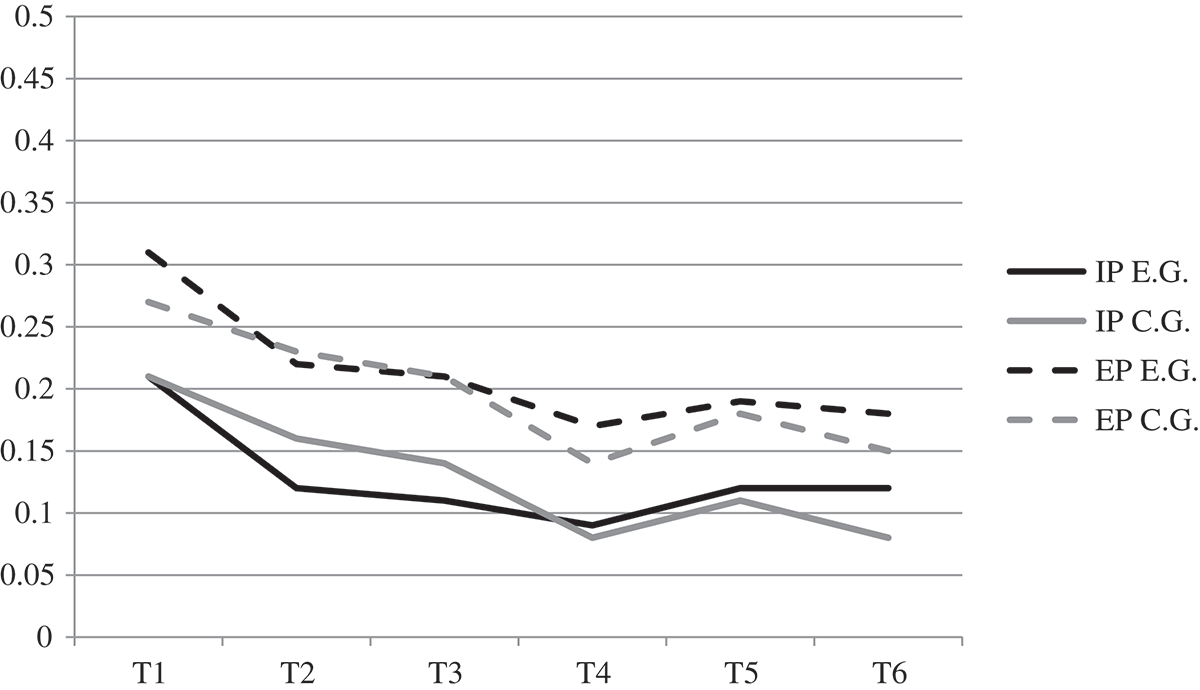
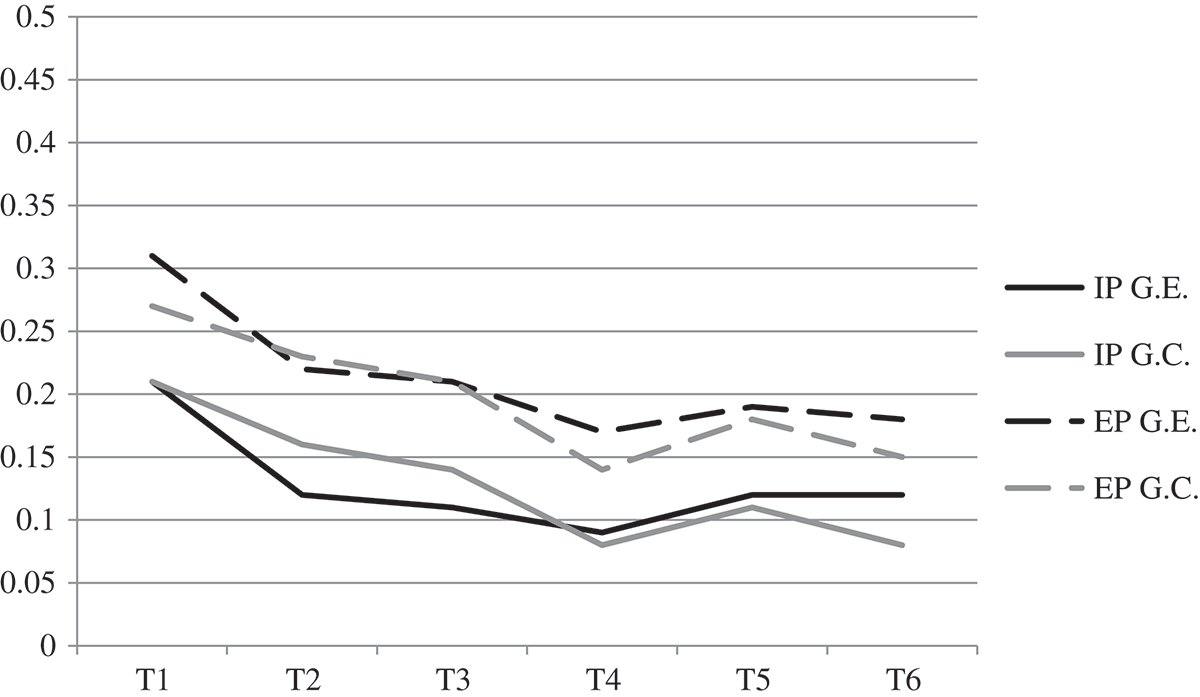
See Figure 1 for a longitudinal view of the means obtained in SC across the three years in which the programme was implemented. For data relating to behaviour problems see Figure 2. Development of social competence from three to five years old. Development of behaviour problems from three to five years old.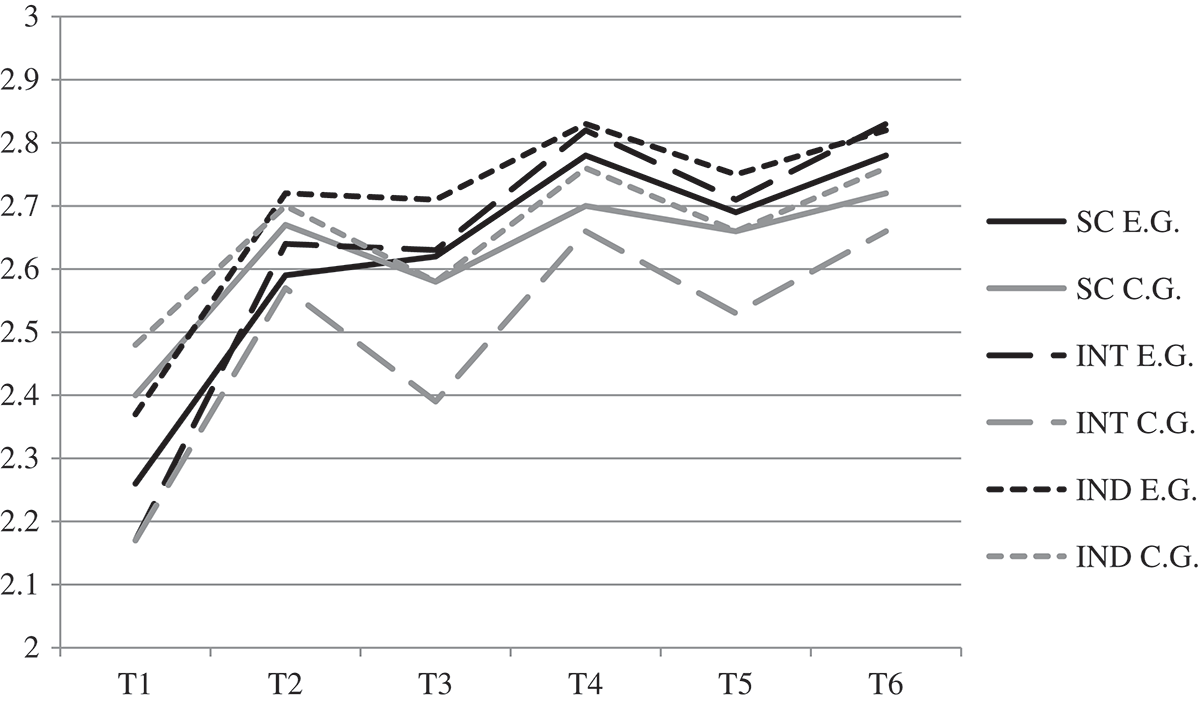
Effect of the Aprender a Convivir programme on social competence and behaviour problems throughout the second cycle of pre-school education
Social competence in three-year-old students
In social cooperation, the analyses presented a significant primary effect on the variable of time, F(1, 349) = 160.21, p < .001, d = 0.64, showing better scores in the post intervention phase (see Table 3).
In the same way, the factor sex showed primary effects in favour of the girls throughout the first year of the intervention, F(1, 349) = 11.14, p < .001, d = 0.43.
The interaction of the factors with the dependent variable did not show any statistically significant interaction, except for Time x Group, F(1, 349) = 4.65, p = .032, d = 0.11, with significant differences in favour of the control group in the initial evaluation that dissipate a year after the intervention, making the experimental group more cooperative, albeit without any significant differences (see Figure 3). Intergroup differences in social cooperation at three years old.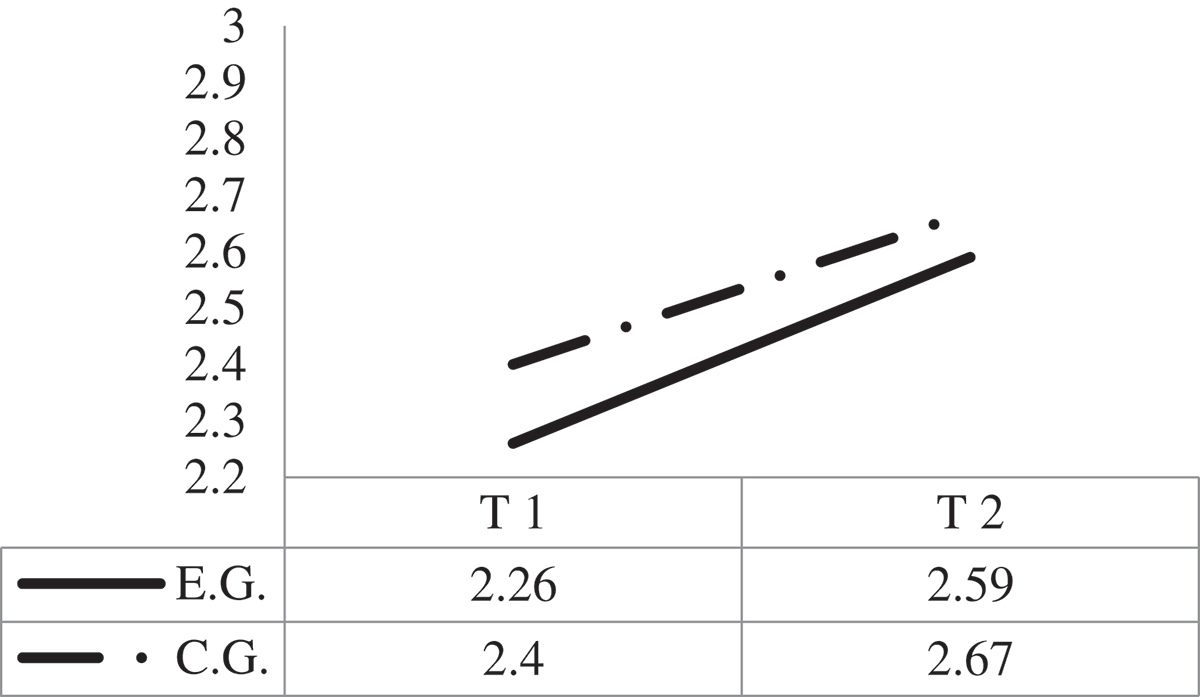
On the other hand, the effects of the social interaction variable were significant for two of the factors in three-year-old students, with no interaction effects being found. The variable time, F(1, 349) = 350.42, p < .001, d = 0.86, presented higher scores in the second phase of evaluation (see Table 3). With regard to the independent variable sex, F(1, 349) = 12.44, p < .001, d = 0.44, the girls presented better levels of social interaction.
In relation to the effects derived from the analyses of social independence, each of the factors at three years old showed primary effects as well as interaction effects between the time and group variables.
The differences found are expressed in the following statistics, for time F(1, 349) = 167.76, p < .001, d = 0.73, in favour of T2 (see Table 3), and for sex F(1, 349) = 11.46, p < .001, d = 0.04, in favour of the girls. Significant differences for Time x Group F(1, 349) = 7.49, p = .007, d = 0.45 were also found. These interaction effects are considered to be statistically significant at a significance level of p < .05 in T1 in favour of the control group (see Figure 4). This significant difference disappears once the programme has been implemented at three years old, with the experimental group reaching the same scores as the control group. Intergroup differences in social independence at three years old.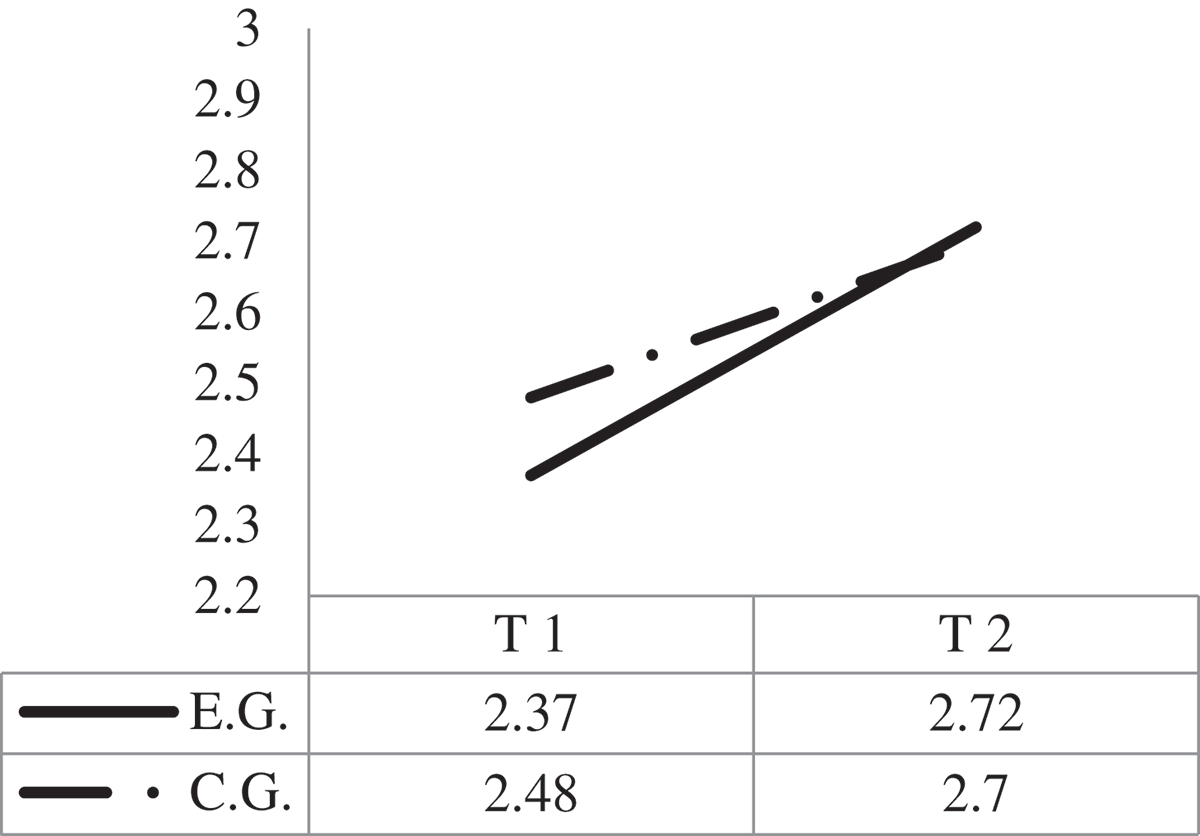
Behaviour problems in three-year-old students
The intrasubject analysis showed the existence of statistically significant differences in the internalizing problems variable, F(1, 349) = 59.61, p < .001, d = 0.35, in favour of T2 (see Table 3).
In relation to the intersubject results, these were shown to be significant for the factor sex in favour of the girls, F(1, 349) = 10.32, p < .001, d = .38. However, no interaction effects were obtained between any of the variables.The ANOVA carried out to evaluate the effect of the programme on externalizing problems identified significant differences at the end of the school year in the scores obtained in phases T1 and T2, showing the following statistic F(1, 349) = 43.78, p < . 001, d = 0.26.
Finally, interaction effects were found in the Time x Sex factors F(1, 349) = 4.93, p = .027, d = 0.03, in the first year of programme implementation. These differences indicate that boys present more externalizing problems than girls (see Figure 5), with these differences being significant in both phases. Differences by sex in externalizing problems at three years old.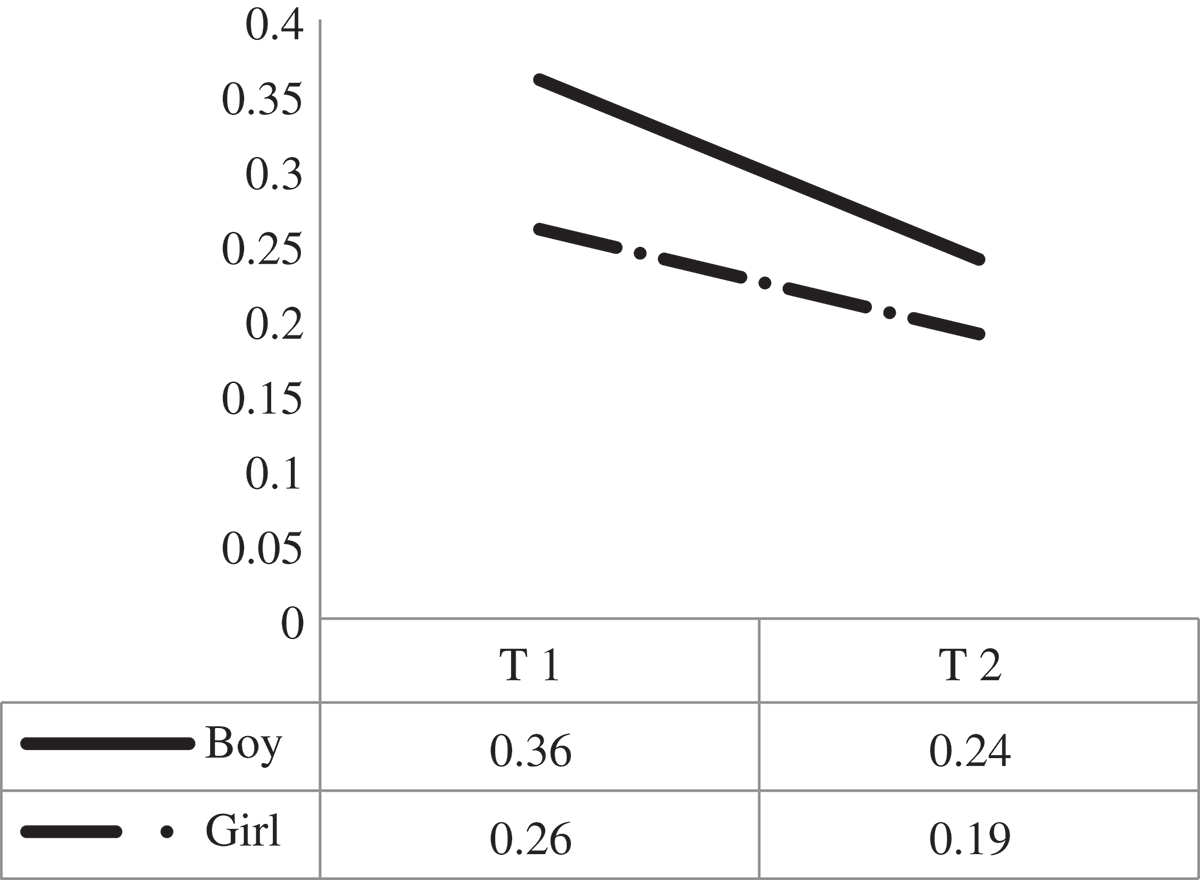
Social competence in four-year-old students
The differences between T3 and T4 (see Table 4) were shown to be significant in the social cooperation variable at the age of four, F(1, 439) = 65.68, p < .001, d = 0.34. With regard to the factor sex, this presented primary effects in favour of the girls throughout their fourth year, F(1, 439) = 17.57, p < .001, d = 0.52.
The effects of the social interaction variable exhibited at three years old were maintained at four years old, i.e., higher scores in the post intervention and girls with higher scores than boys. The statistics derived for each of the factors are as follows: for time F(1, 439) = 151.28, p < .001, d = 0.58, and for sex F(1, 439) = 7.32, p = .007, d = 0.28. Furthermore, at this age significant differences appear between the experimental group and the control group, F(1, 439) = 28.75, p < .001, d = 0.20, in favour of the experimental group (see Table 4).
The results of the interactions in the social interaction category only showed statistically significant effects at four years old for Time x Group, F(1, 439) = 4.03, p = .045, d = 0.38, in T4 in favour of the experimental group, as shown in Figure 6. Intergroup differences in social interaction at four years old.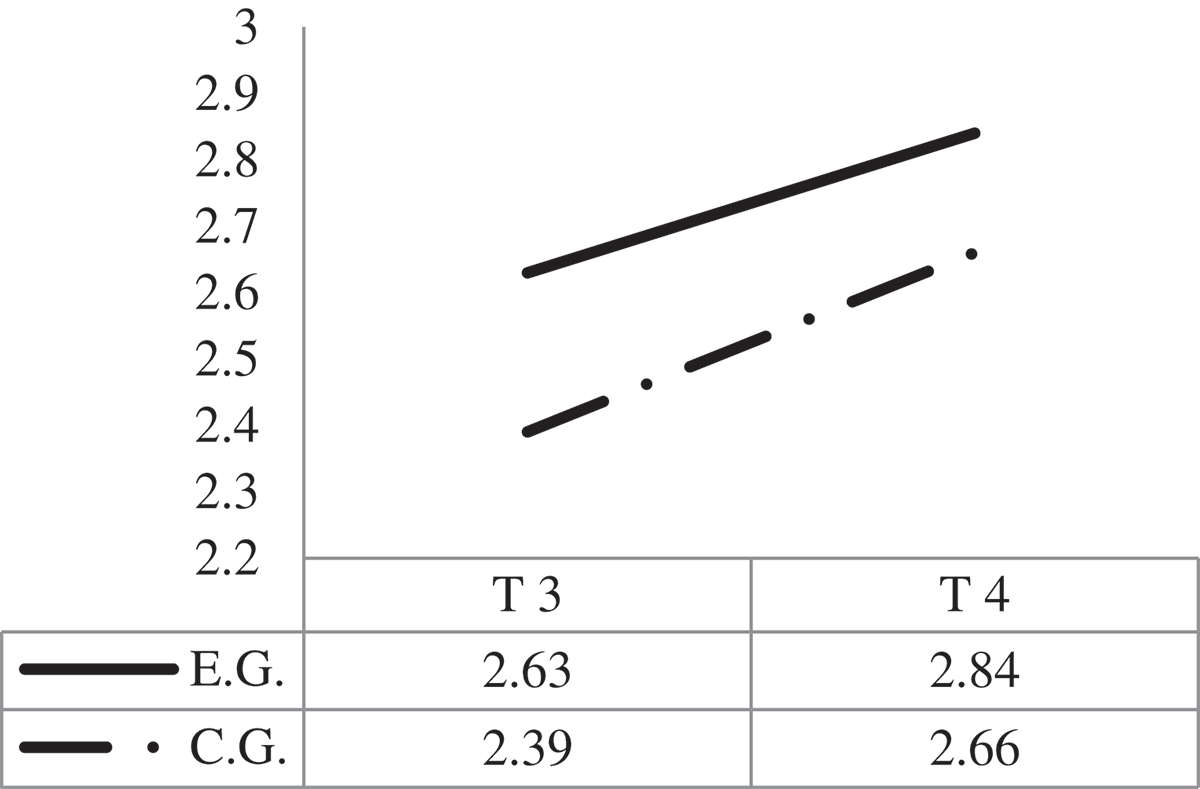
The analyses carried out for the social independence variable showed primary effects in the two factors time and group, indicating that in T4 the students scored higher (see Table 4), F(1, 439) = 93.52, p < .001, d = 0.49, and that the experimental group is more independent than the control group (see Table 4), F(1, 439) = 10.65, p < .001, d = 0.20.
An interaction effect was also established between the aforementioned factors which was equivalent to the effect of the previous variable. The experimental group is significantly more independent in both T3 and T4 compared to the control group, F(1, 439) = 4.52, p = .034, d = 0.21 (see Figure 7). Intergroup differences in social independence at four years old.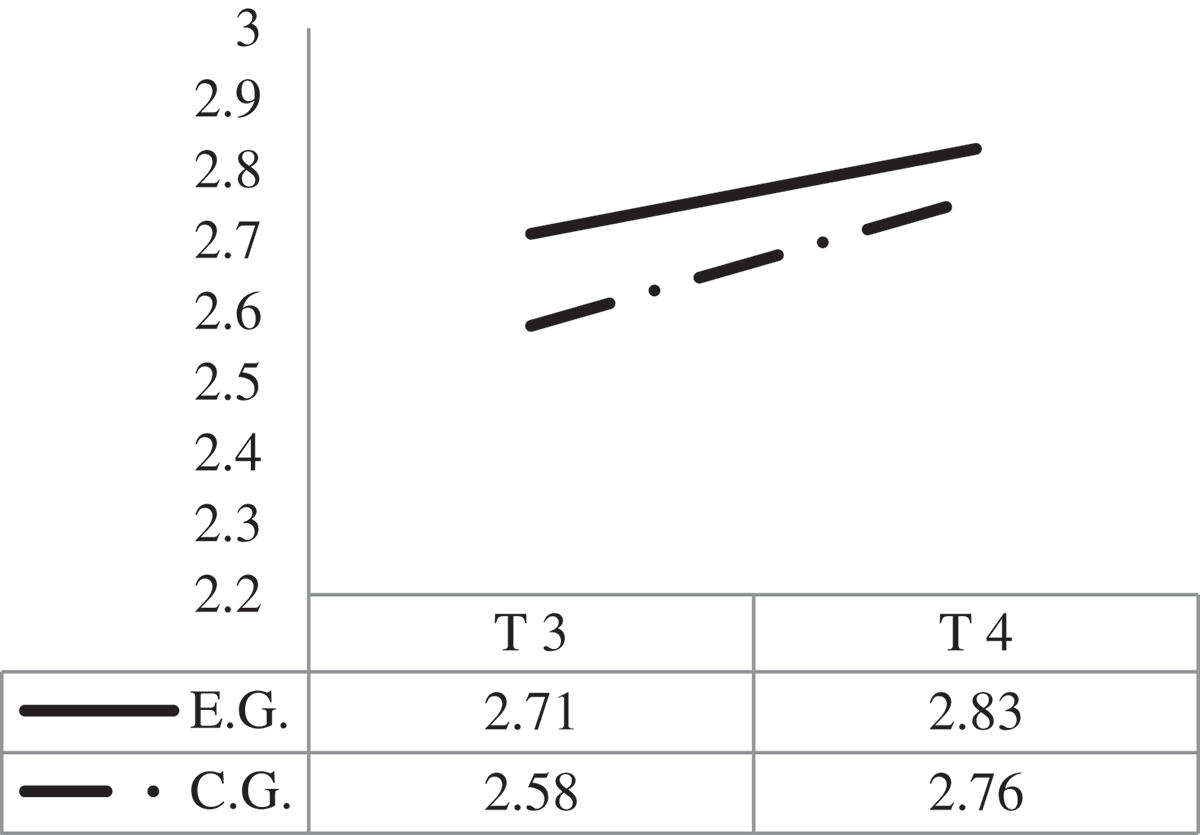
Behaviour problems in four-year-old students
The intrasubject analysis showed the existence of statistically significant differences in the time variable in internalizing problems in favour of T4 (see Table 4), F(1, 439) = 41.63, p < .001, d = 0.34.
These same analyses showed interaction effects between time and group at the present age, F(1, 439) = 6.93, p = .009, d = 0.02, as shown in Figure 8, with higher scores in T3 in the control group. Intergroup differences in internalizing problems at four years old.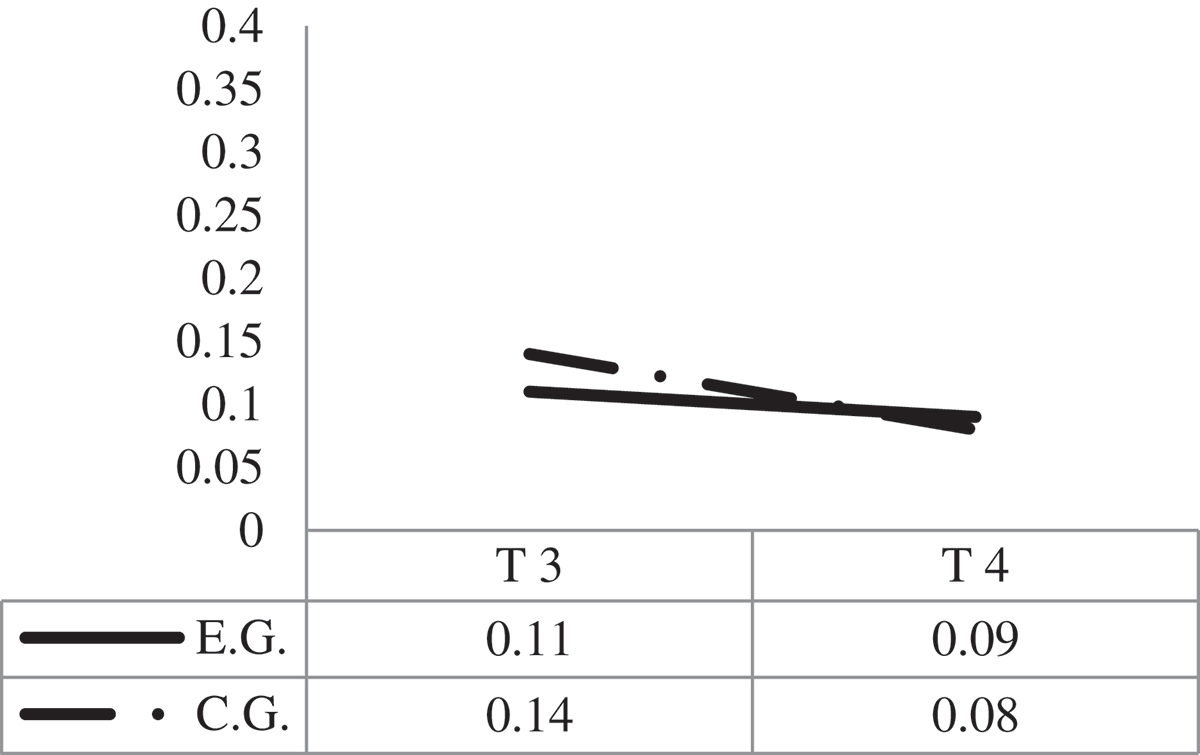
In relation to externalizing problems, primary effects were only found in time, F(1, 439) = 36.63, p < .001, d = 0.24, with lower scores in T4 (see Table 4), and in sex, F(1, 439) = 17.78, p < .001, d = 0.48, in favour of the girls. No interaction effects were found in this variable.
Social competence in five-year-old students
The results of the analysis show that at the end of the pre-school year, the five-year-old students are significantly more cooperative than at the start of the year (see Table 5), F(1, 346) = 30.24, p < . 001, d = 0.21. In this school year, as in the previous two years, the girls continue to show themselves to be more cooperative than the boys, F(1, 346) = 24.38, p < .001, d = 0.56. However, no interaction effects were found.
In relation to the variable social interaction, similar effects to those of the previous year emerged. All the primary effects that appeared in the preceding year were maintained, i.e., time, F(1, 436) = 67.59, p < .001, d = 0.30, in favour of T6 (see Table 5); group, F = 18.14, p < .001, d = 0.37, in favour of the experimental group (see Table 5) and sex, F(1, 346) = 4.68, p = .031, d = 0.17, in favour of the girls. No interaction effects were found in this variable.
The analyses carried out for the level of social independence showed primary effects in each of the factors of the previous year: time and group, The differences found are expressed in the following statistics: for time, F(1, 346) = 43.75, p < .001, d = 0.26, in favour of T6 (see Table 5) and the experimental group (see Table 5) in the group variable F(1, 346) = 4.05, p = .045, d = 0.17. The results did not reveal any significant data on interaction effects.
Behaviour problems in five-year-old students
No principal effects in the variables were observed at five years old. For internalizing problems, the primary effect of time is maintained F(1, 346) = 7.31, p = .007, d = 0.09, with lower scores obtained in T6 (see Table 5).
On the other hand, externalizing problems shows similar scores to the previous case, with lower scores at the end of five years (see Table 5), F(1, 346) = 4.16, p = .042, d = 0.07. A primary effect was also found in the factor of sex, F(1, 346) = 7.31, p = .007, d = 0.46, with the girls showing fewer externalization problems than the boys.
Discussion
The purpose of this study is to analyse the longitudinal effect of the universal prevention programme Aprender a Convivir on SC and BP in three- to five-year-old students. This objective was examined on the basis of three hypotheses: (1) the programme will improve students’ SC at each of the ages specified; (2) it will reduce BP in these students; and (3) sex will not impact on the effects of the programme. The results partially ratify hypotheses 1 and 2, and support the verification of hypothesis 3.
Social competence
The strongest evidence supporting the efficacy of the programme is found in relation to CS. The results show that the intervention alters the development of social skills in such a way that after three years students of the experimental group presented better SC in comparison to the control group, whose competence levels also increased, albeit not in such a considerable way. This difference in the development pathway was sufficiently strong to produce measurable effects between the average final scores of those who received the programme and those who did not.
This indisputable improvement in SC is consistent with the longitudinal studies of prevention programmes specifically designed to improve the SC of small children (see the review presented by Webster-Stratton & Taylor, 2001). For example, programmes such as I can Problem Solve (Shure, 1997), Second Step (Grossman et al., 1997) and First Step Curriculum (Walker et al., 1998) showed improvements in SC as well as less aggressive behaviour. Nevertheless, these studies are limited by the lack of control groups and the small sample sizes, among other factors (Webster-Stratton, Reid, & Stoolmiller, 2008).
It is important to highlight that the increase in SC produced in the last year of intervention is significant both in the experimental group and the control group. However, if we compare the results with the scores obtained at the end of the previous year, we see that they are maintained in both groups. In relation to the experimental group, the data obtained at the end of the second year of the intervention show the scores to be two decimal points short of the maximum score possible, suggesting that the improvement range established for the following year is minimal, thus making it difficult to obtain significant findings in interaction effects. This upper limit effect, alongside the limitations of the methodological design, which arise from the non-equivalence of the control groups and the experimental groups, make it difficult to perceive the positive effects of the programme. It is therefore worth highlighting the need to include equivalent groups, with control groups including at-risk students. Similarly, future projects should continue researching in this area to verify if it is necessary to implement the programme at five years old, or if the same results could be obtained without it.
Some of the achievements of the students who took part in the programme are seen in improvements in cooperation, interaction and social independence. Students who participated in the programme for the first time improved social cooperation, which in turn helped to optimize their social adjustment in their relations with adults and peers, and to improve their ability to follow instructions, to cooperate and show commitment with their peers, as well as to develop adequate levels of self-control (Merrell, 2002).
On the other hand, the programme generated changes in social independence at this age, with students who participated in the programme showing less separation anxiety and developing assertiveness and confidence in their relations: aspects that were maintained the following year. Erikson (2009) analysed this variable and reached the conclusion that this dimension is achieved at a higher developmental level, as is the end of the pre-school education, as a result of which it can be stated that the programme promotes the early appearance of prosocial behaviour and indicates that children’s SC can be improved through instruction during the pre-school period.
Behaviour problems
It has been shown that no pattern exists in the reduction of BP to indicate a longitudinal effect of the programme on such behaviour. In their longitudinal study, Bilancia and Rescorla (2010) showed similar results, showing that stability in BP appears around four years old and continues to be stable thereafter. These data provide relevant information since it highlights the importance of working with prevention programmes from early ages.
On the other hand, when observing each age separately, the results showed significant differences at the age of four in the interaction of the variables of time and group in internalizing problems in favour of the control group in T3. Students of the control group showed less withdrawal, anxiety and depression from the time of the post-evaluation carried out at three years old to the pre-evaluation at four years old. However, if we observe the means of each of the groups in T1, T2, T3 and T4 (see Tables 3 and 4), we can see that the scores of the experimental group decrease after each intervention.
This difficulty in finding significant differences in the results of BP could be explained by the stability of the BP mentioned previously, as well as the design type, which includes cross-sectional control groups. Research carried out with similar populations and using the same questionnaire obtained similar results to those of this study. No clear results were obtained from the application of the Second Step programme, as was expected from the outset. Taub (2001) found that while students improved their SC after the intervention with the Second Step programme, their scores in BP did not reduce simultaneously. This finding has been interpreted as indicative of the fact that it is easier to acquire new skills and competences than to eradicate old habits (Kirschenbaum, 1979; Taub, 2001; Weissberg et al., 1981).
Sex
Since the intervention is carried out with the whole sample and no proposals exist directed specifically at boys or girls, it was expected that the programme would have the same results for both sexes, with any differences that could appear being explained by gender-role expectations.
Similarly, the findings related to the primary effects of the variable sex, both in the experimental group and the control group, are in line with other studies such as the case study carried out by Alatupa et al. (2011), who argue that some behavioural tendencies can be seen as more or less appropriate or desirable in girls and in boys depending on the cultural norms related to gender roles. Thus, in general, girls seem to show higher scores than the boys in SC and lower scores in BP.
Conclusions, limitations and prospective
The results of the study provide sufficient evidence to verify that students who participated in the programme improved their SC significantly. In comparison with the students in the control group, those in the experimental group progressed significantly in the acquisition of all the skills considered to be factors in avoiding antisocial behaviour. They improved their cooperation and interaction skills, as well as developing greater levels of autonomy. They also improved their cooperation with others, their ability to follow instructions and to comply with norms. Besides this, they shared more and accepted adults’ decisions in an appropriate way. On a similar note, they were able to control their feelings when separated from their main carer and to adapt to different situations in an appropriate manner. On the other hand, the programme did not produce any significant differences in the reduction of BP, given the fact that it worked specifically on social skills and, as a result of this, showed the clearest results in SC and no particular reductions in inadequate behaviour among the children.
Although the effects found in relation to the programme are positive, a clear causal link between the programme and the promotion of SC cannot be proven since, due to the nature of the design and execution of the study, it was not possible to assign the children to experimental groups and control groups at random. It would thus be necessary to introduce equivalent and longitudinal controls to ensure real knowledge is obtained of the programme’s effect. Furthermore, there was also the possibility of bias in the observation data since some of the trainers carried out the dual function of being evaluators and project implementers and could thus have been biased towards finding positive effects in the programme (Walker, Golly, Mclane, & Kimmich, 2005).
Future studies will focus on the influence that parents have on the programme, since they play a vital role in children’s development.
Efecto longitudinal del programa Aprender a Convivir en la infancia. Desarrollo de la competencia social
Los trastornos del comportamiento suponen uno de los diagnósticos más frecuentes en las unidades de salud mental infanto-juvenil. Se estima que más de la mitad de las consultas que se atienden son consecuencia de problemas relacionados con trastornos de conducta, estimándose su prevalencia entre un 2% y un 16% (Departamento de Educación, Cultura & Deporte, 2011). Porcentaje bastante alto si consideramos, que los trastornos de conducta en la infancia son un indicador de la existencia de un comportamiento antisocial en la edad adulta (Farrington, 2005; Hill, 2003; Kratzer & Hodgins, 1997).
El origen de los trastornos de conducta viene definido por la aparición temprana e interacción de factores de riesgo, tales como estilos educativos inadecuados o absentismo escolar, entre otros. Es por ello que se deben realizar intervenciones preventivas que minimicen los riesgos y que contribuyan a un adecuado ajuste social (Justicia et al., 2006).
Todos los niños deben aprender conductas socialmente apropiadas, y si no se dan en su ambiente familiar o contexto, es necesario que otros agentes sociales, como la escuela, garanticen su adquisición. Así, en las últimas décadas ha aumentado la preocupación por desarrollar eficazmente la competencia social (CS en adelante) de los niños, debido a la importancia de esta como elemento de protección frente a los problemas de conducta (PC en adelante) (Betina & Contini, 2011).
Un adecuado desarrollo pasa por un aprendizaje de la CS, lo cual es necesario llevar a cabo desde edades tempranas. Para aprender a convivir se deben proponer actividades que permitan aprender a conocerse a uno mismo y a valorarse, a comprender a las personas que nos rodean, a relacionarse con los demás y, a crear estructuras de participación y comunicación que favorezcan el intercambio y el contacto (Viguer & Avià, 2009). Así, empiezan a aparecer en Estados Unidos intervenciones que entrenan la CS mediante la instauración de buenos hábitos de convivencia intercultural o de la educación para la paz (Giménez-Dasí & Quintanilla, 2009). Paralelamente a estos programas, surgen algunos más específicos destinados a prevenir PC, como son I Can Problem Solve (Shure, 1993), Second Step for Preschoolers and Kindergartens (Frey, Hirschstein, & Guzzo, 2000) o PATHS Preschool: Promoting Alternative Thinking Strategies (Domitrovich, Greenberg, Kusche, & Cortes, 2004) entre otros.
Este tipo de programas se empiezan a trabajar en territorio nacional previamente a la modificación de la ley de educación que incluye la CS como una de las competencias básicas a aprender desde la escuela. Sin embargo, los programas que existen hasta ahora no son suficientes como para ofrecer una gama de posibilidades de elección.
En cuanto a las aportaciones que exhibe el presente estudio destacan el dar a conocer el programa de prevención Aprender a Convivir a la vez que comprobar su eficacia.
El constructo de CS, como precisan Bisquerra y Pérez (2007), está en constante cierne y revisión, debido a la complejidad en sí que implica. El conjunto de competencias socioemocionales forman parte de las competencias personales en general, e incluyen de una forma u otra, la conciencia emocional, la propia regulación, la autonomía, competencia y habilidades de vida y bienestar. En este caso específico, la competencia ‘implica unos conocimientos-saberes, unas habilidades-saber hacer, y conductas-saber estar y saber ser, integrados entre sí’ (Bisquerra & Pérez, 2007, p. 3), es decir, la CS implica una adecuada adaptación a cada situación (Chen & French, 2008; Jiménez, 2000; Rothwell, Piatt, & Mattingly, 2006).
La CS desempeña un papel decisivo en la autorregulación, en lo que se piensa, se siente y se hace, y en la creación de expectativas (Ainsworth, 1980, citado en Defensor del Pueblo, 2011). Por lo tanto, un adecuado ajuste social produce en el individuo consecuencias positivas, en lo referente a su crecimiento personal, integración escolar y rendimiento (Simón, Gómez, & Alonso-Tapia, 2013).
Son muchos los autores que señalan que al mejorar la CS de los niños, sus PC disminuyen (Grossman et al., 1997; Pichardo, García, Justicia, & Llanos, 2008; Rooney, Poe, Drescher, & Frantz, 1993; Shure, 1993). Es por ello, que los programas que entrenan las habilidades sociales se han convertido en el método más eficaz para disminuir los PC del alumnado y así poder prevenir conductas más conflictivas y agresivas a edades posteriores (Monjas, 2000).
Webster-Stratton y Hammond (1997) encontraron resultados sobre cómo las competencias adquiridas, mediante programas que tenían alrededor de seis meses de duración, se mantenían hasta un año después de la intervención. Por otra parte, existe poca evidencia sobre estudios longitudinales, no porque no sean efectivos a largo plazo, sino por la dificultad intrínseca que conlleva el seguimiento de varios años en cualquier investigación. Reynolds (1994) concluyó que tras tres años de intervención infantil los niños se adaptaban mejor socialmente manteniendo dichos resultados durante los dos años posteriores. Investigadores como McKinney, Montague, y Hocutt (1998) o Reid, Webster-Stratton, y Hammond (2003) hallaron resultados positivos en sus intervenciones longitudinales realizadas.
No obstante, se ha comprobado que estos programas tienen mayores implicaciones que el hecho de aumentar la CS del niño. Tal como señala Collel (2003) los problemas de relación con los compañeros, el aislamiento, la falta de solidaridad, la agresividad y las peleas, en definitiva, los PC derivan en desmotivación, lo que conduce frecuentemente al fracaso escolar. Por ello, una intervención que mejore esos aspectos produciría cambios en el clima académico, estimulando el aprendizaje a través del esfuerzo y la cooperación entre el alumnado (Sánchez, Rivas, & Trianes, 2006).
Aprender a Convivir es una intervención preventiva de tipo universal (Mrazek & Haggerty, 1994) cuyo objetivo principal es desarrollar en el niño una CS suficiente con la que poder abordar y solucionar situaciones de conflicto desde edades tempranas (Justicia, Benítez, Fernández, Fernández, & Pichardo, 2008).
Dicha intervención consta de cuatro bloques de contenidos, que aunque se trabajan de manera transversal en las distintas materias, el programa lo hace de forma sistemática: (1) Las normas y su cumplimiento; (2) Sentimientos y emociones; (3) Habilidades de comunicación; y (4) Ayuda y cooperación. Cada bloque tiene tres unidades, cada una compuesta por dos sesiones semanales. La duración semanal del programa es de una hora y la implementación total abarca 12 semanas. La metodología de trabajo seguida es similar en los tres cursos. Sin embargo, los contenidos van cambiando en dificultad y profundización adaptándose al nivel de desarrollo.
El programa se desarrolla a través de una metodología activa, participativa donde el alumno es el protagonista de su propio aprendizaje. Se promueve el aprendizaje cooperativo y la reflexión crítica, principalmente, a través de marionetas. Además, se proporciona un sistema de economía de fichas que ayuda en la consecución y el mantenimiento de los objetivos.
Para lograr de modo más eficaz las metas del programa es necesario trabajar con los padres. La implicación de la familia es vital para reforzar los comportamientos aprendidos en la escuela y para generalizar conductas a otros contextos. Es por ello, que cada unidad dispone de varias actividades para trabajar en casa durante la semana en forma de fichas, a la vez que se llevan a cabo diferentes reuniones con los padres para tratar los contenidos trabajados por el programa.
Investigaciones previas han probado que el programa Aprender a Convivir resulta eficaz en el aumento de la CS en niños de Educación Infantil así como en la prevención de los PC. Un entrenamiento sistemático con dicho programa a la edad de tres años favorece la adquisición de una adecuada CS y la disminución en comportamientos disruptivos (Fernández, Benítez, Fernández, Justicia, & Justicia-Arráez, 2011; Justicia et al., 2008). También se ha comprobado que a la edad de cuatro y después de participar en el programa los niños muestran mayor capacidad para cooperar, compartir, escuchar y respetar a los demás, asimismo disminuyen las puntuaciones obtenidas en PC (Justicia-Arráez, 2011). Una vez comprobados los resultados positivos del programa, este estudio persigue como objetivo principal evidenciar la eficacia del programa Aprender a Convivir después de tres años continuados de implementación sobre una muestra determinada de alumnado.
Método
Participantes
La muestra del presente estudio (N = 784) está compuesta por un grupo experimental longitudinal y un control transversal por razones éticas (véase Tabla 1). La elección de dicha muestra se realizó de manera incidental, siendo el diseño cuasiexperimental de dos grupos, control y experimental de medidas repetidas.
Frecuencia de los participantes distribuidos en función del grupo y sexo.
Variables e instrumentos
Competencia Social. Dicha variable se mide a través de la Escala de Observación en Educación Infantil (adaptación y validación española en Benítez et al., 2011). Su versión original Preschool and Kindergarten Behaviour Scale-2, PKBS-2, (Merrell, 2002) evalúa la CS y los PC en niños de tres a seis años. Consta de 76 ítems agrupados en dos escalas: CS y PC. Para este estudio únicamente se incluyó la escala de CS, esta presenta tres subescalas: Cooperación social (α = .925), Interacción social (α = .907) e Independencia social (α = .878). Los ítems se presentan en un formato de respuestas múltiples (0–3), de acuerdo a la frecuencia en que se observan las conductas señaladas. La escala presenta un modelo estructural con índices de ajuste adecuados y una elevada consistencia interna (S-B χ2 = 1029.730, gl = 200, p < .001; NFI = .919; CFI = .933; IFI = .934; RMSEA = .052; RMSEA 90% = .049–0.56).
Problemas de Conducta
Esta variable se mide a través de Caregiver-Teacher Report Form (C-TRF). Es la versión para maestros y cuidadores del Child Behaviour Cheklist for Ages 1½–5 (CBCL/1½–5) creado por Achenbach y Rescorla (2000). Es un instrumento que permite evaluar a lo largo de 100 ítems los PC que presenta el niño de Educación Infantil. Se divide en dos escalas, Interiorización y Exteriorización de problemas, de las que se derivan seis variables: Reactividad emocional (α = .680), Ansiedad-depresión (α = .719), Quejas somáticas (α = .529) y Timidez (α = .827) que pertenecerían a la escala de Interiorización de problemas y, Problemas de atención (α = .875) y Comportamiento agresivo (α = .934) que formarían parte de Exteriorización de problemas. El modelo estructural, analizado mediante validación cruzada, presenta índices de ajuste adecuados: χ2 = 6.382, gl = 2, p < .05; AIC = 2.382; NFI = .997; CFI = .998; GFI = .998; AGFI = .966; RMSR = .014; RMSEA = .063.
Diseño
La metodología de investigación empleada, atendiendo a los objetivos e hipótesis, fue del tipo longitudinal con un diseño cuasiexperimental de medidas repetidas en el grupo experimental y múltiples controles, debido a razones éticas. La nomenclatura asignada a estos diseños fue para el grupo experimental O1 X O2 y para el grupo de control O1 O2.
Procedimiento
Debido al carácter longitudinal del estudio, la investigación se realizó en tres cursos académicos consecutivos. Las fases de la investigación seguidas fueron las siguientes: (1) documentación y diseño de investigación; (2) contacto con los centros; (3) recogida de datos inicial; (4) implementación del programa; (5) recogida de datos final; (6) análisis de datos; y (7) informe a los centros.
Tras un período de adaptación del niño a la escuela los maestros e investigadores realizaron la recogida de datos cumplimentando los instrumentos de evaluación. Posteriormente, se llevó a cabo la aplicación del programa Aprender a Convivir, por parte de los investigadores. A continuación y tras otro período de observación, se administraron los cuestionarios y se volvieron a cumplimentar los mismos instrumentos.
Para concluir, en la última fase tras analizar los datos de cada año, se informó a los centros del aprovechamiento del programa. Se realizó un informe pormenorizado de cada alumno en el que se incluyeron las puntuaciones obtenidas por los niños en CS y PC, así como la representación gráfica de los datos.
Análisis de datos
En primer lugar, se realizó un estudio descriptivo de los participantes. En este se incluyeron medidas de frecuencia como la media, y medidas de dispersión como la desviación típica.
Y en segundo lugar, se realizó un ANOVA 2 x 2 x 2, de medidas repetidas en los tres grupos de edad (tres, cuatro y cinco años). Las variables incluidas en el análisis fueron: tiempo (pre evaluación/post evaluación), grupo (experimental/control) y sexo (niños/niñas). Asimismo, se efectuaron pruebas post hoc para determinar los niveles de las variables que eran significativos en los efectos de interacción. Por otra parte, se estimó la magnitud del tamaño del efecto mediante la d de Cohen.
Para los diferentes análisis realizados se utilizó el programa estadístico Statistical Package for the Social Sciences (SPSS) en su versión Statistics 20 para Windows.
Resultados
Estadísticos descriptivos
Estadísticos descriptivos, media y desviación típica de la Competencia Social y Problemas de Conducta a la edad de tres años.
La Tabla 3 proporciona información sobre las medidas de tendencia central y dispersión de la CS y PC en los niños de cuatro años.
Estadísticos descriptivos, media y desviación típica de la Competencia Social y los Problemas de Conducta a la edad de cuatro años.
Estadísticos descriptivos, media y desviación típica de la Competencia Social y Problemas de Conducta a la edad de cinco años.
Para una visión longitudinal de las medias obtenidas en competencia social a lo largo de los tres años de implementación del programa véase la Figura 1. Para los datos referentes a problemas de conducta véase la Figura 2. Desarrollo de la Competencia Social de tres a cinco años. Desarrollo de los Problemas de Conducta de tres a cinco años.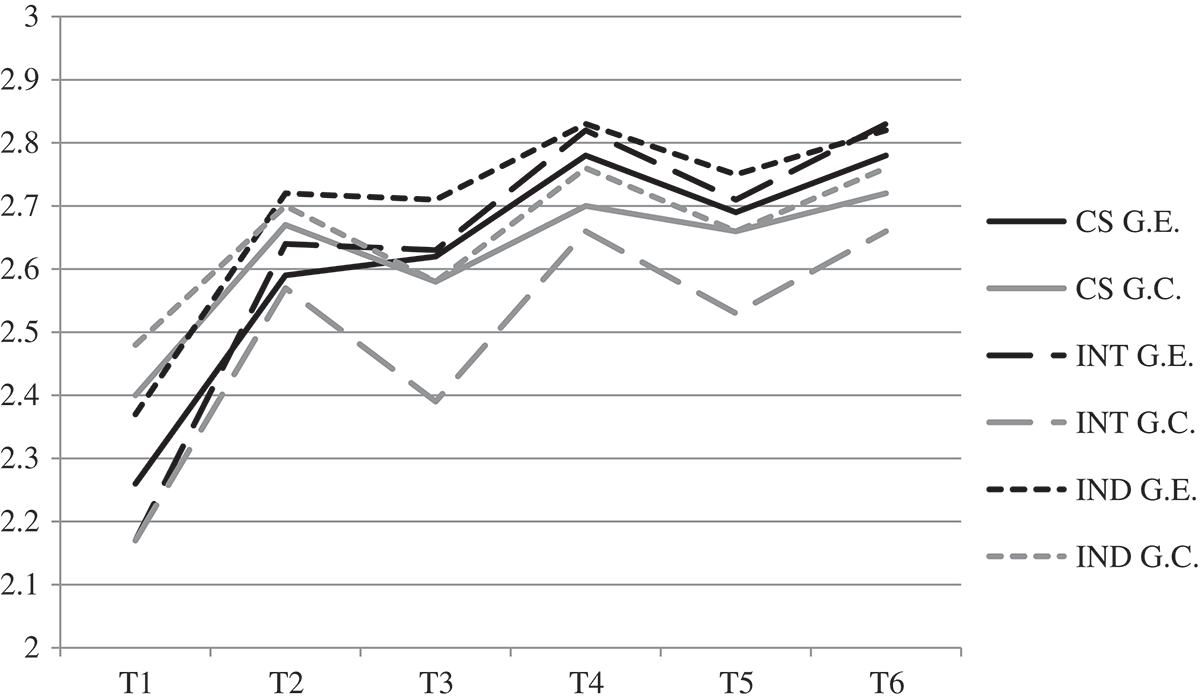
Efecto del programa Aprender a Convivir en la competencia social y los problemas de conducta a lo largo del segundo ciclo de Educación Infantil
La competencia social en el alumnado de tres años
En cooperación social los análisis presentaron un efecto principal significativo en la variable tiempo, F(1, 349) = 160.21, p < .001, d = 0.64, evidenciando mayores puntuaciones en la post intervención (véase Tabla 3). De igual modo, el factor sexo mostró efectos principales a favor de las niñas a lo largo del primer año de intervención, F(1, 349) = 11.14, p < .001, d = 0.43.
La interacción de los factores con la variable dependiente no mostró ninguna interacción estadísticamente significativa, salvo para Tiempo x Grupo, F(1, 349) = 4.65, p = .032, d = 0.11, con diferencias significativas a favor del grupo control en la evaluación inicial, diferencias que se disipan tras un año de intervención haciendo al grupo experimental más cooperativo aunque sin diferencias significativas (véase Figura 3). Diferencias intergrupos en Cooperación Social a los tres años.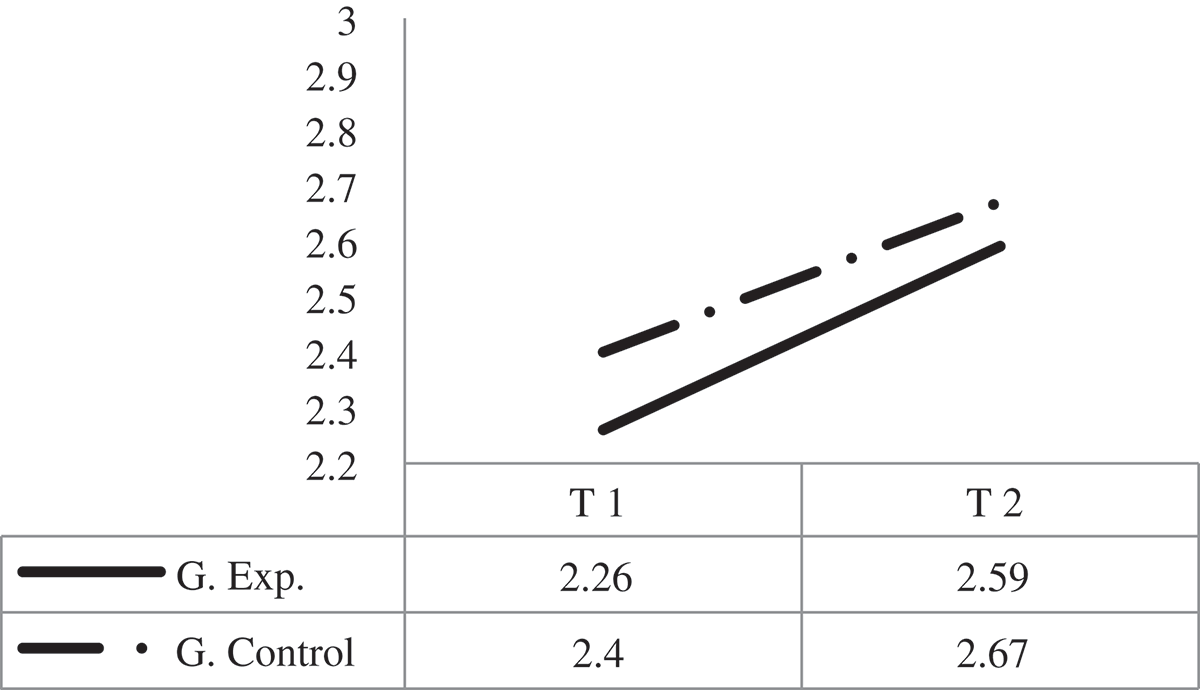
Por otra parte, los efectos de la variable interacción social se mostraron significativos para dos de los factores en el alumnado de tres años sin encontrarse efectos de interacción. La variable tiempo, F(1, 349) = 350.42, p < .001, d = 0.86, presentó puntuaciones más elevadas en la segunda fase de evaluación (véase Tabla 3). En cuanto a la variable independiente sexo, F(1, 349) = 12.44, p < .001, d = 0.44, fueron las niñas las que presentaron mayor interacción social.
En relación a los efectos derivados de los análisis de independencia social, mostraron efectos principales cada uno de los factores a los tres años, así como efectos de interacción entre las variables tiempo y grupo.
Las diferencias encontradas se expresan en los siguientes estadísticos, para tiempo F(1, 349) = 167.76, p < .001, d = 0.73, a favor de T2 (véase Tabla 3), y para sexo F(1, 349) = 11.46, p < .001, d = 0.04, a favor de las niñas. A su vez se encontraron diferencias significativas para Tiempo x Grupo F(1, 349) = 7.49, p = .007, d = 0.45. Estos efectos de interacción se consideran estadísticamente significativos a un nivel de significación de p < .05 en T1 a favor del grupo control (véase Figura 4). Esta diferencia significativa desaparece una vez se ha implementado el programa en los tres años llegando el grupo experimental a alcanzar las puntuaciones del grupo control. Diferencias intergrupos en Independencia Social en tres años.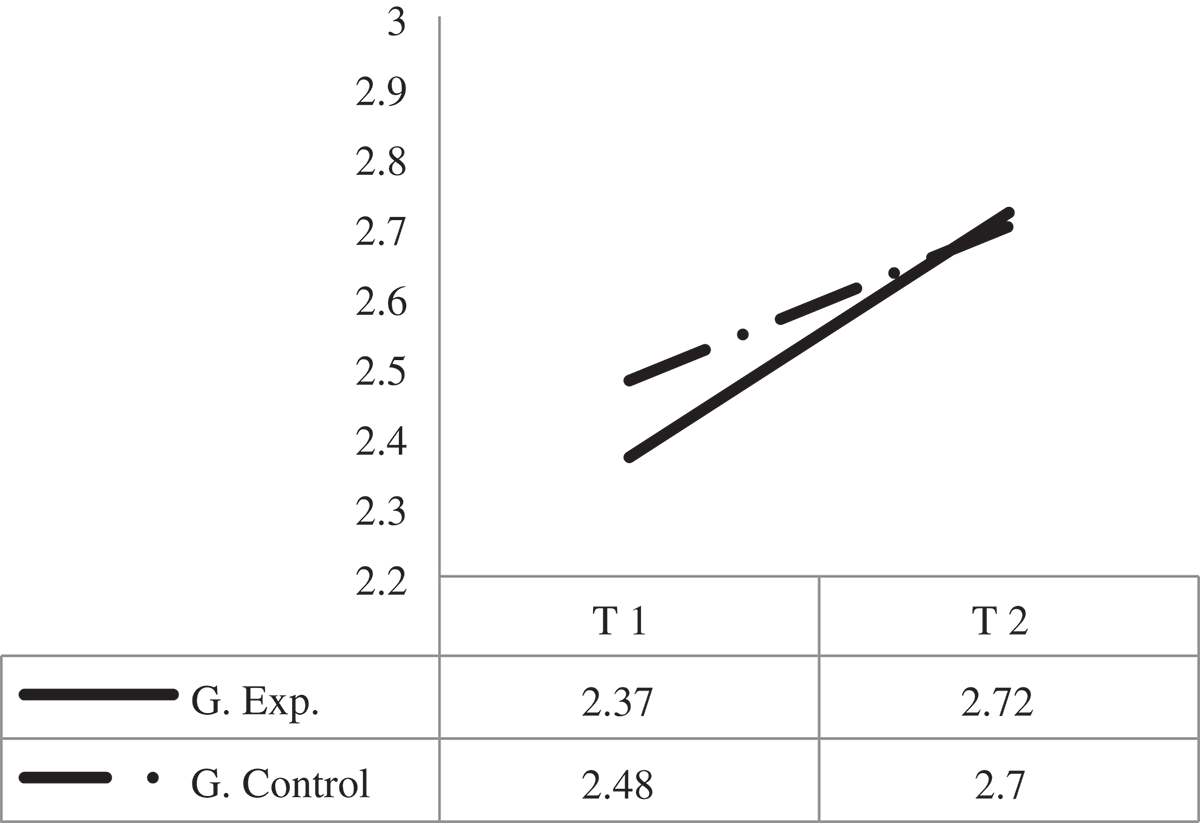
Los problemas de conducta en el alumnado de tres años
El análisis intrasujetos arrojó la existencia de diferencias estadísticamente significativas en la variable interiorización de problemas, F(1, 349) = 59.61, p < .001, d = 0.35, a favor de T2 (véase Tabla 3). En lo referente a los resultados intersujetos, estos se mostraron significativos para el factor sexo a favor de las niñas, F(1, 349) = 10.32, p < .001, d = 0.38. Sin embargo, no se obtuvieron efectos de interacción entre ninguna variable.
El ANOVA realizado para comprobar el efecto del programa sobre la exteriorización de problemas identificó diferencias significativas al final del curso en las puntuaciones obtenidas en las fases T1 y T2 mostrando los siguientes estadísticos F(1, 349) = 43.78, p < . 001, d = 0.26.
Por último, se encontraron efectos de interacción en los factores Tiempo x Sexo, F(1, 349) = 4.93, p = .027, d = 0.03, en el primer año de implementación del programa. Dichas diferencias indican que los niños presentan mayores problemas de exteriorización que las niñas (véase Figura 5), siendo significativas dichas diferencias en ambos momentos. Diferencias de sexo en Exteriorización de Problemas a los tres años.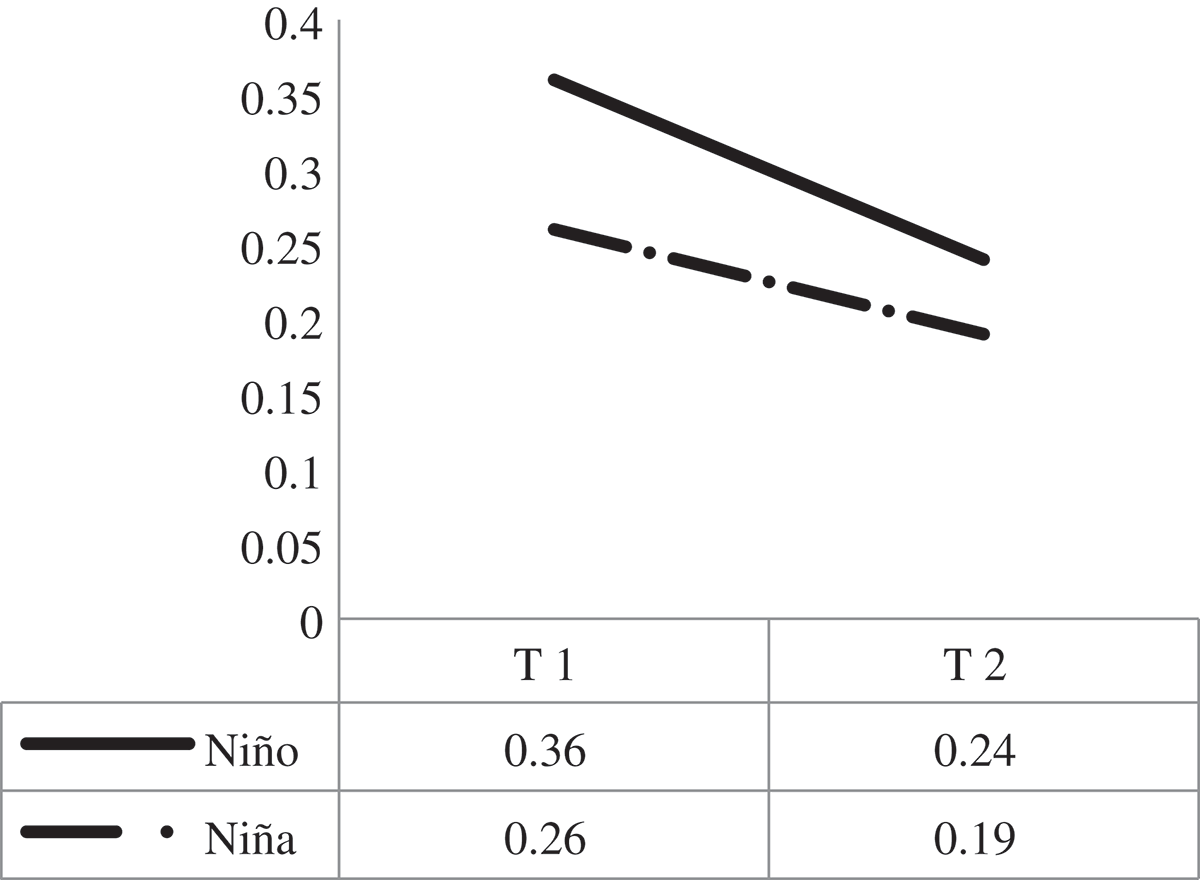
La competencia social en el alumnado de cuatro años
Las diferencias entre T3 y T4 (véase Tabla 4) mostraron ser significativas en la variable cooperación social a la edad de cuatro años, F(1, 439) = 65.68, p < .001, d = 0.34. En cuanto al factor sexo, éste presentó efectos principales a favor de las niñas a lo largo de los cuatro años de edad, F(1, 439) = 17.57, p < .001, d = 0.52.
Los efectos de la variable interacción social que se exhibieron en tres años se mantuvieron a los cuatro, esto es, puntuaciones más altas en la post intervención y niñas con mayores puntuaciones que niños. Los estadísticos que se derivan para cada uno de los factores son los siguientes: para tiempo F(1, 439) = 151.28, p < .001, d = 0.58, y para sexo F(1, 439) = 7.32, p = .007, d = 0.28. Además, en esta edad aparecen diferencias significativas entre el grupo experimental y control, F(1, 439) = 28.75, p < .001, d = 0.20, a favor del grupo experimental (véase Tabla 4).
Los resultados de las interacciones en la categoría interacción social sólo evidenciaron efectos estadísticamente significativos en cuatro años para Tiempo x Grupo, F(1, 439) = 4.03, p = .045, d = 0.38, en T4 a favor del grupo experimental, tal y como muestra la Figura 6. Diferencias intergrupos en Interacción Social en cuatro años.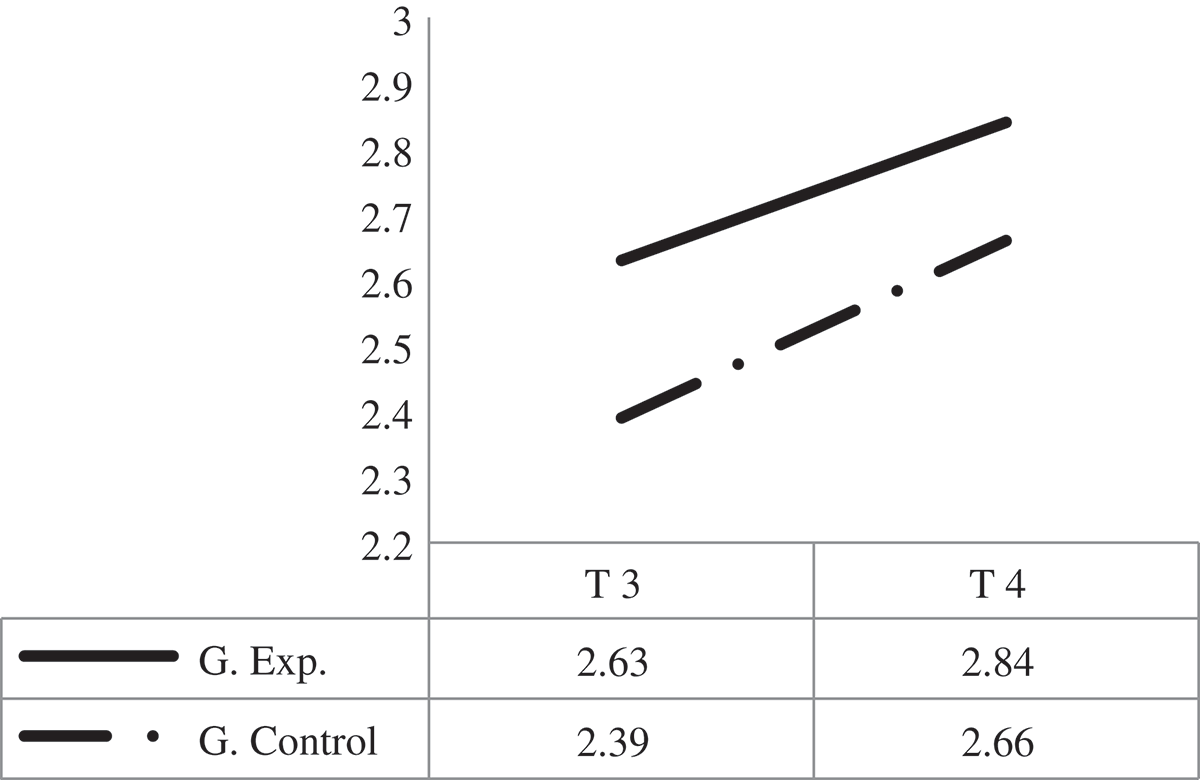
Los análisis realizados para la variable de independencia social mostraron efectos principales en dos de los factores, tiempo y grupo. Indicando que en T4 el alumnado tiene mayores puntuaciones (véase Tabla 4), F(1, 439) = 93.52, p < .001, d = 0.49, y que el grupo experimental es más independiente que el control (véase Tabla 4), F(1, 439) = 10.65, p < .001, d = 0.20.
Además se estableció un efecto de interacción entre los factores anteriormente citados equivalente al efecto de la variable anterior. El grupo experimental es significativamente más independiente tanto en T3 como en T4 respecto al grupo control, F(1, 439) = 4.52, p = .034, d = 0.21 (véase Figura 7). Diferencias intergrupos en Independencia Social en cuatro años.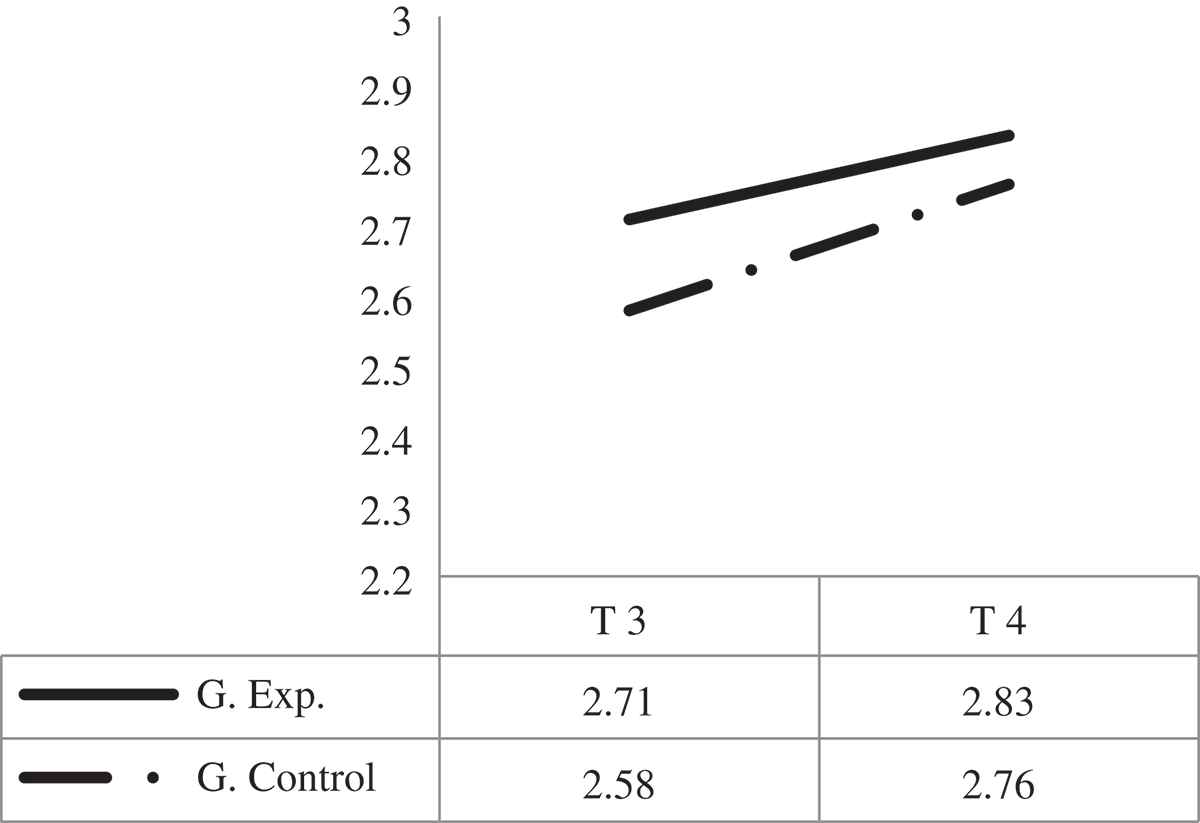
Los problemas de conducta en el alumnado de cuatro años
El análisis intrasujetos arrojó la existencia de diferencias estadísticamente significativas en la variable tiempo en interiorización de problemas a favor de T4 (véase Tabla 4), F(1, 439) = 41.63, p < .001, d = 0.34.
Estos mismos análisis evidenciaron efectos de interacción entre tiempo y grupo en la presente edad, F(1, 439) = 6.93, p = .009, d = 0.02, tal y como muestra la Figura 8, con puntuaciones más elevadas en el grupo control en T3. Diferencias intergrupos en Interiorización de Problemas en cuatro años.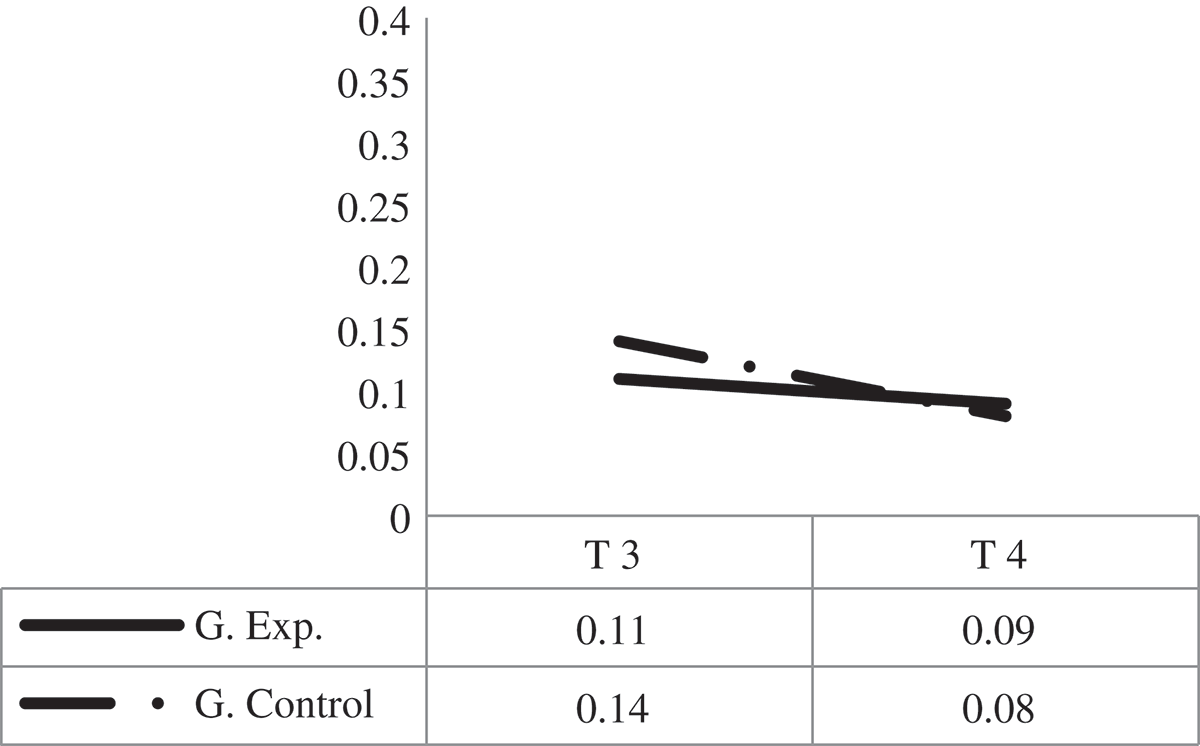
En relación a la exteriorización de problemas sólo se aprecian efectos principales en tiempo, F(1, 439) = 36.63, p < .001, d = 0.24, con puntuaciones más bajas en T4 (véase Tabla 4), y en sexo, F(1, 439) = 17.78, p < .001, d = 0.48, a favor de los niños. No se hallaron efectos de interacción en esta variable.
La competencia social en el alumnado de cinco años
Los resultados del análisis muestran que al terminar el curso académico con cinco años el alumnado es significativamente más cooperativo que cuando empezó el curso (véase Tabla 5), F(1, 346) = 30.24, p < . 001, d = 0.21. En este mismo curso, al igual que en los dos años anteriores, las niñas siguen mostrándose más cooperativas que los niños, F(1, 346) = 24.38, p < .001, d = 0.56. Sin embargo, no se encontraron efectos de interacción.
En relación a la variable interacción social, surgieron efectos similares al año anterior. Se mantuvieron todos los efectos principales que aparecieron en el año precedente, esto es, tiempo, F(1, 436) = 67.59, p < .001, d = 0.30, a favor de T6 (véase Tabla 5); grupo, F = 18.14, p < .001, d = 0.37, a favor del experimental (véase Tabla 5) y sexo, F(1, 346) = 4.68, p = .031, d = 0.17, a favor de las niñas. No se encontraron efectos de interacción en esta variable.
Los análisis realizados para el nivel de independencia social mostraron efectos principales en cada uno de los factores del año anterior, tiempo y grupo. Las diferencias encontradas se expresan en los siguientes estadísticos, para tiempo, F(1, 346) = 43.75, p < .001, d = 0.26, a favor de T6 (véase Tabla 5) y del grupo experimental (véase Tabla 5) en la variable grupo, F(1, 346) = 4.05, p = .045, d = 0.17. Los resultados no arrojaron datos significativos sobre los efectos de interacción.
Los problemas de conducta en el alumnado de cinco años
En cinco años no se observan efectos principales en las variables. Para interiorización de problemas se mantiene el efecto principal de tiempo F(1, 346) = 7.31, p = .007, d = 0.09, obteniendo menos puntuación en T6 (véase Tabla 5).
Por otra parte, la exteriorización de problemas se comporta de la misma manera que en el caso anterior, puntuando más bajo en exteriorización a final de cinco años (véase Tabla 5), F(1, 346) = 4.16, p = .042, d = 0.07. También se encuentra efecto principal en el factor sexo, F(1, 346) = 7.31, p = .007, d = 0.46, mostrando menos exteriorización de PC las niñas que los niños.
Discusión
El propósito del presente estudio es analizar el efecto longitudinal del programa de prevención universal Aprender a Convivir sobre la CS y los PC en el alumnado de tres a cinco años. Dicho objetivo fue examinado con base en tres hipótesis: (1) el programa mejorará la CS del alumnado en cada una de las edades; (2) reducirá los PC en dicho alumnado; y (3) el sexo no influirá en los efectos del programa. Los resultados ratifican parcialmente la hipótesis 1 y 2, y constatan la verificación de la hipótesis 3.
Competencia social
La evidencia más fuerte de la eficacia del programa se encuentra en el dominio de la CS. Los resultados mostraron que la intervención altera la trayectoria de desarrollo de las habilidades sociales, de modo que después de tres años el alumnado del grupo experimental presentaba mejor CS, en contraste con el grupo de control que aunque también aumentaba su nivel de competencia no lo hacía de manera tan considerable. Esta diferencia en la trayectoria fue lo suficientemente fuerte como para producir efectos medibles entre las puntuaciones finales promedio de aquellos que recibieron el programa y de los que no lo hicieron.
Esta incuestionable mejora de la CS se advierte consistente con los estudios longitudinales de programas de prevención diseñados para mejorar específicamente la CS de niños pequeños (véase la revisión de Webster-Stratton & Taylor, 2001). Por ejemplo, programas como I can Problem Solve (Shure, 1997), Second Step (Grossman et al., 1997) y First Step Curriculum (Walker et al., 1998) mostraron mejoras en CS y un comportamiento menos agresivo. Sin embargo, estos estudios están limitados por la falta de grupos de control y los tamaños pequeños de la muestra, entre otros factores (Webster-Stratton, Reid, & Stoolmiller, 2008).
Es importante señalar que el aumento de la CS que se produce en el último año de intervención es significativo tanto en el grupo experimental como control pero si los comparamos con las puntuaciones obtenidas a finales del año anterior se observa, en ambos grupos, que existe un mantenimiento de estas. En relación al grupo experimental, los datos obtenidos a finales del segundo año de intervención se sitúan a dos décimas de la puntuación máxima que podrían alcanzar, lo que sugiere que el rango de mejora establecido para el siguiente año es mínimo, esto dificulta encontrar hallazgos significativos en los efectos de interacción. Este posible efecto techo junto con la limitación del diseño metodológico, derivada de unos grupos de control no equivalentes al experimental, hacen más difícil la aparición de efectos positivos del programa. Por lo tanto, se pone de manifiesto la necesidad de incluir grupos equivalentes, con controles que estuvieran en riesgo social. Asimismo, los nuevos proyectos deberían seguir investigando este área para comprobar si a largo plazo la implementación del programa en cinco años es necesaria o se podría suprimir obteniendo los mismos resultados.
Algunos de los logros alcanzados por el alumnado que participó en el programa vienen dados por la mejora de la cooperación, la interacción y la independencia social. Los estudiantes que participaron por primera vez en el programa mejoraron la cooperación social, por lo que optimizaron su ajuste social en las relaciones con los adultos y los iguales, así como progresaron en el seguimiento de instrucciones, la cooperación y el compromiso con los iguales, asimismo, desarrollaron un adecuado autocontrol (Merrell, 2002).
Por otra parte, en esta misma edad el programa provocó cambios en la independencia social, haciendo que el alumnado que participó en el programa mostrara menos ansiedad por separación, así como desarrollara la asertividad y la confianza en sus relaciones. Aspectos que se mantuvieron al año siguiente. Erikson (2009) analizó esta variable llegando a la conclusión de que esta dimensión se alcanza en un nivel evolutivo superior, como es el final de la etapa de Educación Infantil, por lo que se puede afirmar que el programa promueve la aparición precoz de comportamientos prosociales e indica que en el período preescolar la CS de los niños puede ser mejorada a través de la instrucción.
Problemas de conducta
Se constata que no existe un patrón en la reducción de PC que indique un efecto longitudinal del programa en dichos comportamientos. Bilancia y Rescorla (2010) en su estudio longitudinal encontraron resultados similares, mostrando que la estabilidad en los PC aparece entorno a los cuatro años y continúa siendo estable después. Estos datos aportan información relevante ya que ponen de manifiesto la importancia de trabajar con programas de prevención desde edades tempranas.
Por otra parte, al observar cada una de las edades por separado, los resultados mostraron, a los cuatro años, diferencias significativas en la interacción de las variables tiempo y grupo en interiorización de problemas, a favor del grupo control en T3. Los estudiantes del grupo control mostraron menos timidez, ansiedad o depresión desde la post evaluación que se les hizo a los tres años en la pre evaluación de los cuatro. No obstante, si se observan las medias de cada uno de los grupos en T1, T2, T3 y T4 (véanse Tablas 3 y 4), se comprueba que el grupo experimental reduce las puntuaciones después de cada una de las intervenciones.
La explicación a esta dificultad en encontrar diferencias significativas en la reducción de los PC puede deberse a la estabilidad de los PC mencionados anteriormente, así como al tipo de diseño que se presenta de grupos controles transversales. Investigaciones realizadas con poblaciones semejantes y utilizando el mismo cuestionario han obtenido valores similares al presente estudio. La aplicación del programa Second Step no dio resultados claros, tal y como en un principio se esperaba. Taub (2001) encontró que después de intervenir con el programa Second Step los estudiantes aumentaban su CS pero no disminuían sus puntuaciones en PC simultáneamente. Este hallazgo ha sido interpretado como que es más fácil adquirir nuevas habilidades y competencias que eliminar los hábitos antiguos (Kirschenbaum, 1979; Taub, 2001; Weissberg et al., 1981).
Sexo
Puesto que la intervención se realiza con toda la muestra y no existen propuestas que vayan específicamente dirigidas a niños o a niñas era de esperar que el programa tuviese los mismos resultados para ambos sexos. Si bien, las diferencias que pudiesen aparecer se explicarían por las expectativas de rol hacia el niño y la niña.
Asimismo, los hallazgos relacionados con los efectos principales de la variable sexo, tanto en el grupo experimental como en el control, se muestran coincidentes con otras investigaciones como es el caso de la realizada por Alatupa et al. (2011) que afirman que en función de las normas culturales de rol de género, algunas tendencias del comportamiento pueden ser vistas como más o menos apropiadas o deseables en las niñas que en los niños. Así, por lo general, las niñas parecen mostrar puntuaciones mayores que los niños en CS y menores en PC.
Conclusiones, limitaciones y prospectiva
Los resultados de la investigación proporcionan evidencia suficiente para constatar que el alumnado que participó en el programa mejoró significativamente su CS. El alumnado del grupo experimental, en relación a los estudiantes del grupo control, progresaron significativamente en la adquisición de todas las habilidades que se estimaron como factor de protección del comportamiento antisocial. Mejoraron tanto en habilidades de cooperación como de interacción, además de desarrollar mejor autonomía. Asimismo, mejoraron en la cooperación con los otros, en el seguimiento de instrucciones, y en el cumplimiento de normas. Del mismo modo, comparten más y aceptan las decisiones de los adultos de manera apropiada. Igualmente, no se dejan llevar por sentimientos de arrebato ante la separación del cuidador principal y se adaptan a diferentes situaciones de forma adecuada. Por otra parte, el programa no produjo diferencias significativas en la reducción de PC, al trabajar de forma específica habilidades sociales el resultado más claro es el aumento de la CS y no tanto la reducción de conductas inadecuadas en los menores.
Aunque los efectos encontrados en relación al programa son positivos, no se puede concluir que el programa favorezca la CS de forma causal, ya que debido a la naturaleza del diseño y ejecución del estudio, no fue posible asignar al azar a los niños en los grupos experimentales y de control. Asimismo, sería necesario introducir controles equivalentes y longitudinales que permitiesen un conocimiento real del funcionamiento del programa. Además, habiendo entrenadores que realizan la doble función de evaluadores e implementadores, se introduce la posibilidad de sesgo en los datos de observación que favorece el peligro de encontrar efectos positivos del programa (Walker, Golly, MClane, & Kimmich, 2005).
La futura línea de investigación se centra en la influencia que los padres tendrán en el programa, siendo éstos una de las piezas principales en el desarrollo de los hijos.
Footnotes
This study has been carried out within the R&D&I Project titled Estudio longitudinal de los efectos del programa Aprender a Convivir en el desarrollo de la competencia social y la prevención del comportamiento antisocial, (‘Longitudinal study of the effects of the Aprender a Convivir programme on the development of social competence and the prevention of antisocial behaviour’) (EDU2009-11950), funded by the Ministry of Science and Innovation and ERDF Funds (European Social Fund) / Esta investigación se ha desarrollado dentro del Proyecto I+D+i denominado ‘Estudio longitudinal de los efectos del programa Aprender a Convivir en el desarrollo de la competencia social y la prevención del comportamiento antisocial’ (EDU2009-11950), financiados por el Ministerio de Ciencia e Innovación y los Fondos Feder (Fondo Social Europeo).