







Abstract
Researching on fuel cells is an important direction of developing new energy in the twenty-first century. Fuel cells present broad application in the aerospace, military, power stations, electric vehicles and portable power applications due to their high power conversion efficiency (40–60%), environmental friendliness and reliability, small size, low noise and so on. This review gives an introduction into the fundamental, characteristics and applications of various fuel cells. In addition, the development of increasing use of polymers in fuel cells is also prospected.
Introduction
People have obtained a lot of energy from the nature world during one million years. Based on current exploitation level, the exhaustion of natural resources such as coal, oil and natural gas, is inevitable in the world. As a result, serious environmental pollution problems such as the snow and ice melting, global warming and sea level rising appeared. And the most important problems to the economic development and energy fields are energy resources saving and environmental protection in the twenty-first century. Fuel cells, which can efficiently convert chemical energy into electricity through electrochemical reactions, are considered ideal power sources. Due to the fact that the power generation is not involved in hydrogen and oxygen combustion and not limited by Carnot cycle, the theoretical efficiency of fuel cell is up to 83% while the limit efficiency of internal combustion engine (ICE) is only around 60%. Currently, the energy and environmental protection becomes more and more important, and then the research, development and use of fuel cells will be more widely appreciated. Since 1990s, many countries around the world have invested much money, manpower and material resources in researching fuel cells every year. The American government considers the fuel cells technology as one of the most important technologies related to national security. ‘Times’ magazine puts the fuel cells electric vehicle on the top of ‘top-10 high-tech’ in the twenty-first century. The Japanese government considers the fuel cells technology as the core of the energy and environment field in the twenty-first century. The Canadian government plans to develop the technology into the national pillar industries. The Chinese government holds ‘fuel cell technology’ as a major development project during the ninth 5-year plan. ‘863 Program’ of electric cars and great special project about ‘fuel cell electric vehicle’ issue are established by State Ministry of Science and Technology in the tenth 5-year period, which has a total funding of 880 million Yuan. The goal of the project is to build a set of core technology with self-developed hi-tech in fuel cells, fuel cell engine and system of the whole vehicle. The fuel cells are expected to become the most widely used energy of driving force in the middle of the twenty-first century.
Principles and characteristics of fuel cells
Principles of fuel cells
Essentially, the principle of fuel cell can be considered as a ‘reverse’ device of electrolysing water. In the process of electrolysis on water, hydrogen and oxygen produced by the external power, while in fuel cells, hydrogen and oxygen generates water and releases electrical energy by electrochemical reaction. Single cell mainly includes anode, cathode and proton exchange membrane (PEM). Anode is the reaction zone of hydrogen oxidation, and cathode is the reaction zone of oxidant reduction. Different composite catalysts are used in anode and cathode to accelerate the electrochemical reaction. Electrode is composed of the catalyst layer and diffusion layer. Catalyst layer is the reaction zone for electrochemical reaction and diffusion layer plays a key role in supporting the catalyst layer, collecting current and conducting reactants. In general, the diffusion layer is made from the conductivity porous materials. The fuel cell stack is composed of single cell, which produced a larger range of output voltage and is needed for actual load. For fuel cell stack, membrane electrode assembly (MEA) and bipolar plates are the core components. MEA is composed of two carbon fibre paper electrodes sprayed with Nafion solution and Pt catalyst which was placed on both sides of pretreated PEM under certain temperature and pressure. Bipolar plates, commonly made from graphite materials, have many advantages such as high density and strength, non-shrinkage under high pressure and strong conductivity, excellent thermal conductivity and electrode compatibility. The thickness of graphite bipolar plate commonly used is about 2–3.7 mm, which can be milled into shapely groove and fluid flow diversion channel. The flow and processing technology are closely related with the battery performance.
Figure 1 shows the working principle of fuel cells and we know that the chemical energy can be converted into electricity directly in fuel cells. In more detail, electrical energy, heat and products can be acquired continuously while fuel and oxidant were supplied to battery all the time. The fuels such as H2 are supplied to anode and oxidant such as air is supplied to cathode when the fuel cell works. Hydrogen is broken down into positive hydrogen ions and negative charged electrons in the anode, hydrogen ions reached the cathode through electrolyte and the electrons flowed through the external circuit cathode. Eventually, hydrogen reacted with oxygen and the water was produced. The chemical reaction equation of fuel cell is described as follows.
The working principle of fuel cell
1
Characteristics of fuel cell
Fuel cell is a device which converts the chemical energy to electricity directly. Comparing with common battery, the obvious difference for fuel cell is that fuel and oxidant are not stored inside but supplied from outside. In other words, if fuel and oxidant can be continuously supplied to battery, electricity will be continuously produced. At present, fuel cell plays an active role in the stage of new energy due to its efficient electrochemical performance. The characteristics of fuel cells are as follows.
High efficiency of energy conversion
Fuel cells are not confined by Carrot cycle, thus the energy converting efficiency of fuel cells is above 80% theoretically and around 60% actually.
Abundant sources of fuels
Oxygen, as an oxidant used in fuel cells commonly, can be easily obtained from the air and the fuel such as hydrogen is also easily obtained. There are also other hydrocarbons such as methane, methanol, ethanol, natural gas and liquefied petroleum gas, etc. Different fuel cell can be selected based on specific circumstances. Hydrogen, as a renewable resource is most widely spread on earth in the form of compounds in the water. There are many other sources of hydrogen in the form of solid polymer electrolysis, hydrogen sulphide decomposition, hydrolysis of sodium boron hydride, semiconductor photo catalytic decomposition of water, hydrogen production and other forms. 2
Environment friendly
The fuel cell is of small size and low noise in the process of power generation and the main product is water, not NOx or SOx. The CO2 emissions will be reduced by 40–60% comparing to thermal power generation. Therefore, the atmospheric pollution was greatly reduced. 3 In addition, there is low noise produced in the process of power generation, thus it can be used as a small power plant applied to residential users nearby. The environmental friendly fuel cells become increasingly important today.
High reliability
The fuel cell is of less overall mechanical components. It is of simple structure, quick response and stable operation, so it has well reliability and can be used as a backup power supply at the peak usage of power. The reliability of alkaline fuel cells (AFCs) and phosphoric acid fuel cells (PAFCs) has been particularly proven.
The application of fuel cells
The development history of fuel cell is almost 170 years since the British scientist William Grove developed the fuel cell firstly in 1839. According to the classification of the electrolyte, fuel cells can be divided into proton exchange membrane fuel cell (PEMFC), AFC, PAFC, molten carbonate fuel cell (MCFC) and solid oxide fuel cell (SOFC). Each kind of fuel cells has their own advantages and disadvantages. They can be used in different fields of application based on different conditions which they were used. Specifically, the main application fields of fuel cells are aerospace, portable power, power plants, electric cars and so on.
Application in aerospace
It is known that the first application of fuel cells in space is the acid polymer membrane fuel cell which is the embryonic form of PEMFC. The energy density of fuel cells can reach 100–1000 Wh kg−1. 4 The aerospace power commonly used is nickel batteries while the energy density is only 25–40 Wh kg−1. 5 Altitude and high duration flight of solar aircraft need strict quality requirements, for example, storage device can reach more than 400 Wh kg−1, only the fuel cell can achieve the requirements. The National Aeronautics and Space Administration (NASA) researched on power system which could be applied to a lunar base, and AFC used in spacecraft power system was upgraded. AFC is also the most successful fuel cells applied in the field of aerospace. Bacon-type AFC was used for Apollo spacecraft in early times, and NASA also used AFC for the space shuttle. Japan is researching the fuel cell applied to the space environment and relational experimental platform has been built.6, 7
Application in portable power
The current portable power requires good quality, high energy density and long lifetime, and it should be lighter, smaller, cheaper and more versatile. The fuel cells can meet the requirements of the portable power market for high energy density, durability, simple design and low prices.
The mobile phones, laptops, digital cameras and other electronic devices are being endowed more and more functions. The notebook computers and mobile phones powered by direct methanol fuel cell (DMFC) have already appeared in the market. And the people in Europe and the USA are interested in it. Meanwhile, a predominant perspective emerged in Asian markets such as Japan and Korea.8, 9 It cannot only save space but also make laptop thinner, lighter, and more portable if we put the fuel cells into the laptop computers and integrate the cell and system.8-10 Currently, many companies have carried out the relevant research, such as Toshiba, NEC, Hitachi, Sony, Samsung and LG, etc. Toshiba has developed a DMFC powered laptops in which the average output power is 12 W and the maximum power is up to 20 W. When methanol concentration is 50 ml, the laptops can works about 5 hours. The lifetime of batteries in Toshiba's Tecra M1 is reported about 7 hours and P30 MVC 1500 of Samsung is up to 6 hours.11, 12 Toshiba reached an important achievement that it can supply a digital music player for 20 hours using methanol as fuel. 13 In China, the Chinese Academy of Sciences (CAS) Dalian Institute of Chemical Physics developed a sample of DMFC powered laptop model, the maximum output power of which is 30 W and the average power of which is up to 18 W when it works, and 100 ml methanol allows laptop works about 6–8 hours consecutively. 14
Application in power station
Fuel cell is the best power option of residential consumers and businesses due to its simple structure, small footprint and stable performance. The first SOFC power station in the world was born in Finland, which was made by Wrtsil, and the thermal output was 14–17 kW. The first commercial medium-sized power station in the world was co-built by IFC and Toshiba, and the electricity output of PC-25 type of PAFC can reach 200 kW. In addition, 100–250 kW of MCFC stationary power station has been successfully completed. 14 200 kW PAFC power station in China has set a very good example for us. Currently, the U.S. ZTEK company is building a 50 kW micro-turbine or absorption heat exchanger which integrated of 200 kW fuel cell power plant, and the system parameters are as follows. The AC output power of the system is 200 kW, voltage is 480 V and three-phase current is 240 A. The AC output power of the gas turbine is 40 kW. AC output power of the cell stack is 160 kW. And conversion efficiency of AC–DC is 95%. DC output power of the cell stack is 180 kW, DC voltage is 500 V and DC current is 360 A. The efficiency of the total system is 55%.
Application in military
Objective Individual Combat Weapon (OICW) of soldiers requires lighter and more reliable military equipment in the harsh environment in future wars and fuel cells are highly favoured by the army for its reliability, simple structure, light weight, small cubage and so on. The Ball Aerospace and Technologies of U.S had provided two mobile powers of 50 W and 100 W for the army. Large amounts of sensors are required to detect the enemy in battle field, and DMFC can meet this requirement for high quality of fully continuing work time. The flexibility is becoming more prominent if the DMFC was used as small-scale portable power for rapid mobility forces. The DMFC which owns power of 500–1000 W can provide excellent power protection to army when they were applied for various military bases, posts and other relatively fixed place as a standby power. Fuel cells make outstanding contributions for improving military equipment to countries. Gardner points out that the power available to infantry soldiers is a big limitation to their effective deployment. The army will use it for much wider set of electronic devices such as sensors, robots, climate-controlled bodysuits, portable radios and radars, etc.15, 16 U.S. Naval Research Laboratory used 2.54 kg Spider-Lion fuel cell as power to the desktop for simulated UAV flight test on December 2005, which was modified to make the energy reach 1000 Wh kg−1.
Application in electric vehicles
Fuel cells vehicle catches world-wide attention for its high efficiency, low noise, no transmission loss, environmental friendliness and widely fuels type, but more efforts are needed in driving range, low temperature starting, durability and hydrogen recycling. Many companies and institutions developed new technologies by using gasoline, natural gas, methanol, hydrogen and other fuels. The new technologies can make use of existing gas station system, and the cost of electric vehicles is roughly equal to the current ICEs without additional investment. 17 Compared to other vehicles, bus is firstly considered to be the most likely carried out in practical and industrial models in variety of fuel cell vehicles for its large space, carrying capacity and low weight and size requirement of fuel cells power system. Bus was usually used in urban areas where requirement on maximum speed, acceleration, climbing slopes ability is low. Using fuel cell, the driving distance of the bus can reach 300–350 km under the current technology. People do not need the engine, transmission and mechanical transmission device if the fuel cells applied to the car, which made the design of cars more flexibility and diversity. The NECAR5 fuel cell electric vehicle is the 5th generation fuel cell vehicle developed by Daimler-Chrysler, the system of which includes methanol reformer vehicle and the power of which is supplied from Ballard fuel cell. Peugeot Motor Company developed the ‘207 Epure’ fuel cell vehicles in 2006, and Honda Motor Co launched the FCX which was said to be the first commercialised fuel cell vehicle in the world in 2008. In China, fuel cell vehicle is one of 12 major projects during the 10th 5-year plan of the country. Tsinghua University and Tongji University in Shanghai are the centres of research and development of fuel cell electric vehicles. In 2001, the Lv Neng I fuel cells car was developed in Beijing, and the Lv Neng fuel cell engine load ‘Beyond One’ produced in Shanghai in August 2003. Shanghai Shen Li Power Company has developed the second-generation fuel cell vehicle ‘Beyond Two’ in December 2003, and the car engine output is 32 kW. There are 10 ‘Beyond Three’ fuel cell electric vehicle demonstration runs in 2006. ‘Shanghai’ fuel cells vehicles come out in December 2006, the top speed reaches 150 km h−1. The driving distance is up to 300 km if the hydrogen is full of the tank. 18 The meeting of traffic coordination group of Beijing Olympic Games was held on 8 December 2007, the overall programme of the new energy vehicles was implemented. Twenty fuel cell cars have been made by Shanghai Volkswagen/Tongji mainly supported by Beijing Transport Bureau, Ministry of Science and public vehicles. Meanwhile, fuel cell cars and buses were involved in the Olympic marathon, and three fuel cell buses were developed by Tsinghua University, the buses began to operate from every Monday to Friday during August 2008–2009 years, and passengers on the traffic can reach more than 200 people a day. 19
Classification of fuel cells
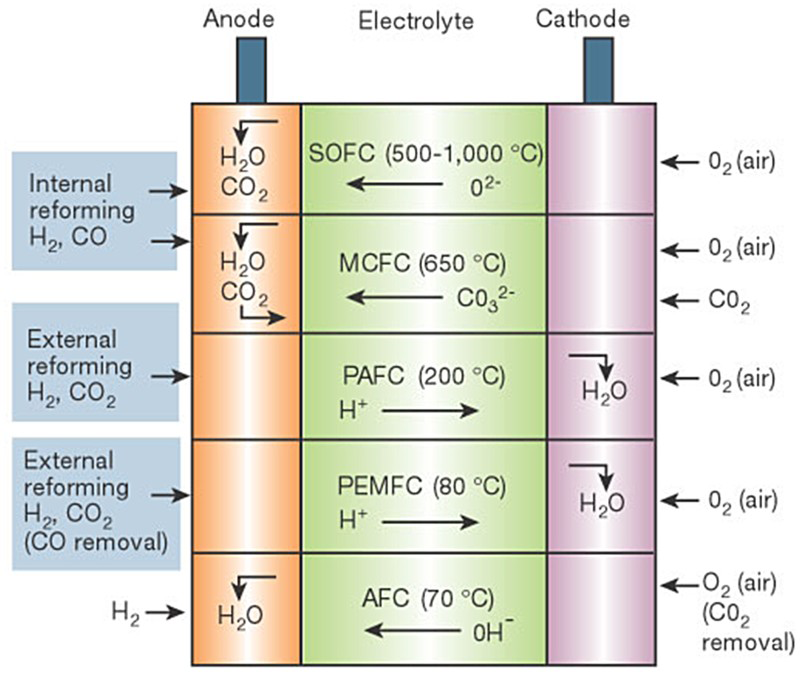
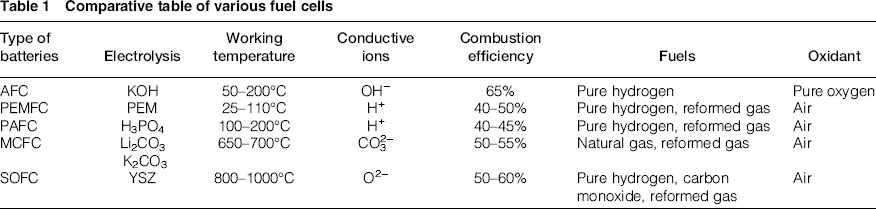
Comparative table of various fuel cells
Alkaline fuel cell
Alkali (KOH) was used as the electrolyte, pure hydrogen as fuel and oxygen as oxidant in AFC, and the common used anode and cathode composite catalysts are Pt/Ni and Pt/Ag, respectively, while the main researching institute of AFC in the world is the US International Fuel Cell Company. The principle of AFC is presented as follows.
Anode reaction:
Cathode reaction:
The overall reaction:



In AFC, pure hydrogen was used as fuel and the main catalyst was noble metal, which is difficult to spread in a short time for the high cost. However, as emerging clean energy, the hydrogen energy will gradually be mature with the development of technology. The fuel cells with non-noble metal composite catalysts make great progress, which is a key factor to open the cherished doors to the promotion and application of AFC. 20 On the ground, we can only use air if we want to use the AFC. Although AFC has high efficiency, it is sensitive to CO2 which leads AFC electrolyte to carbonation, producing carbonate sedimentation and reducing the lifetime of AFC. Currently, the best solution is solidified alkaline electrolyte, the cation fixed on the polymer electrolyte will not produce precipitation. 21
As the mainly reaction products of AFC are water, it cannot only provide the impetus but also the water which astronauts needed. Asbestos membrane AFC composed of 96 individual cells was used in U.S. space shuttle, the output voltage is 28 V and output power is 12 kW. 22 Although application of the AFC in the space is very mature, other specialists point out many shortcomings of the AFC such as high cost of maintenance and acquisition, short lifetime, poor security, etc. The cause of the launch ending in failure of U.S. space shuttle is the failure of AFC in April 1997, resulting that the shuttle crew had to return when only 10% of the task was completed. 12 NASA spends 120–190 million for each AFC of space shuttle maintenance each year and the new one needs 285 million dollars per aircraft. NASA also upgraded the AFC for the shortcomings.12, 23 AFC needs equal gas pressure between cathode and anode (<3415 kPa) though it is very difficult to control. KOH is a strong electrolyte which can shorten lifetime of AFC for its strong corrosion. The acceptable lifetime of AFC using in the early space shuttle developed by UTC Fuel Cell Company is only 2600 hours, which can reach only 5000 hours through a variety of improvements. Germany used the AFC as the driving force for nuclear submarines in the 1980s. In China, the research of AFC starts relatively late, while the development is rapid. The research level of CAS DICP is in a leading position, and two types alkaline asbestos membrane were developed successfully. Through a space environment simulation test, hydrogen and oxygen fuel cell system achieves initial success. Researchers at Wuhan University finally developed a new type alkaline polymer electrolyte fuel cell, in which Pt is not needed after 7 years of unremitting efforts. Experts at Beihang University studied a new class of polymer electrolyte fuel cells employing a hydroxide ion-conductive polymer, quaternary ammonium polysulphone, as alkaline electrolyte and nonprecious metals, chromium-decorated nickel and silver, as the catalyst for the negative and positive electrodes, respectively, and experiments show that the high-performance alkaline polymer electrolyte is particularly suitable for fuel cells.
Proton exchange membrane fuel cell
PEMFC is mainly based on pure hydrogen or other substances (mainly methanol, ethanol, etc.) as fuel and air as the oxidant. The major anode and cathode catalyst are Pt/Ru and Pt, respectively. The principle of PEMFC is presented as follows when pure hydrogen was served as fuel.
Anode reaction:
Cathode reaction:
The overall reaction:



PEMFC has many advantages such as extensive fuel sources, high power, low noise and operating temperature and other excellent features. PEMFC was widely used in aviation and military fields. With the development of research and technology, electric vehicles and portable power market are of great potential for the reason that the manufacturing costs are decreasing.24, 25
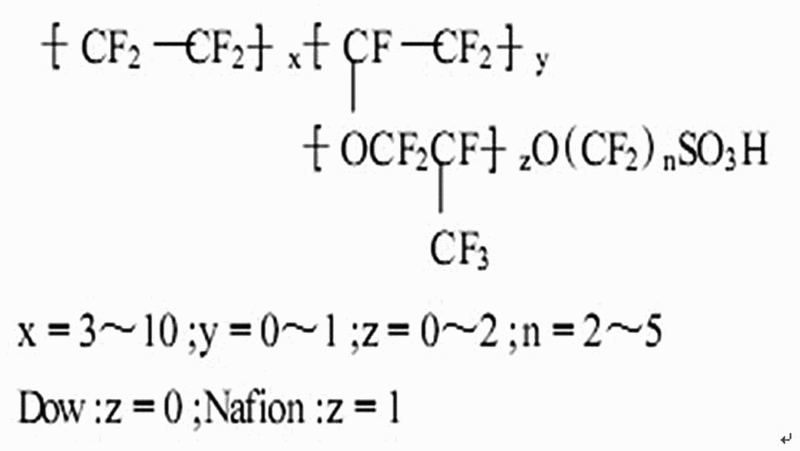
PEMFC has been successfully used in space technology in early 1960s, in which solid PEM was used as electrolyte membrane under 100°C. This fuel cell system is best suited for automotive power for its appropriate operating temperature and energy density. The development of PEMFC has made great progress while more efforts are needed to achieve full commercialisation.26, 27 Reducing cost is the most important issue for the development of PEMFC because noble metals Pt was mainly used as the catalyst. Carbon materials are main components of electrode structure. Nanoparticles of catalyst are usually impregnated with a thin layer of polymer electrolyte and were pressed on the membrane to extend reaction zone.28-30 PEM is mainly produced by DuPont. It is known that the price of perfluorinated sulphonic acid membrane is very expensive and the structure of perfluorinated sulphonic acid membrane is shown in Fig. 2. The choice of bipolar plate materials and flow field is also one of the key parts which restrict industrialisation of PEMFC. At present, graphite bipolar plate is one of the most mature plates that have been commercialised. This kind of plate has good conductivity and corrosion resistance performance, but it has disadvantages such as large size, low strength and bad processing properties. SGL Technik Gmb H invented low-cost materials (SGL001), which has similar properties comparing to the normal material.31, 32 Oak Ridge National Laboratory developed C/C composite bipolar plate and changed low-cost moulding mud into flake graphite fibre which was sealed by chemical vapour infiltration.
33
Structure of perfluorinated sulphonic acid membrane
34
The development and application of PEMFC in the world show the rapid growth in recent years in Canada, Germany, Italy, Japan, New Zealand, Norway, Sweden, United Kingdom, the United States and other countries. The major researching institutions in China are Tsinghua University, Shanghai Jiao Tong University, Sun Yat-Sen University, Fudan University, Tianjin University, Harbin Institute of Technology, Tongji University, Dalian University of Technology, Chongqing University, Hong Kong University of Science and Technology, Dalian Institute of Chemical Physics, CAS DICP and so on. At present, business conditions of PEMFC based on pure hydrogen as fuel are not fully matured for the reason that the inconvenience of pure hydrogen storage and high cost of transportation have become important factors preventing its further development. Many companies are supporting the development of hydrogen storage and fuel cell technology and expecting the breakthrough in hydrogen storage technology. U.S. Los Alamos National Laboratory (LANL) tests some of the single-cell membrane electrode loading platinum which was dropped to 0.05 mg cm−2.
35
The third 250 kW power plants have been finished in Switzerland by the Ballard Corporation of Canada, however, the volumetric specific power of battery units is more than 1300 W L−1, which is beyond the standards of DOE (U.S. Department of Energy). Currently, the total cost of a PEMFC is approximately 500–600$ kW−1.
36
If the system was used in a car, the total cost of the FCV is 10 times as much as that of the traditional car with an ICE. The typical PEMFC is made up of membranes, platinum, electrodes, bipolar plates, peripherals and the assembly process. The costs of the bipolar plate and the electrode including platinum held approximately 80% of the total cost of PEMFC. Tsuchiya et al. reported the cost of PEMFC structure and the possibility of the cost reduction by mass production of PEMFC by curve analysis. The analysis is based on the typical performance of a single cell which reaches 0.6–0.7 V and 0.3–0.6 A cm−2 cell current density which equates to 2 kW m−2 or more power density.
37
With the strong support of the country, DICP, Wuhan University, Shanghai divine power and other 20 research institutions have researched an entire power systems of PEMFC which is of small and medium power (0.1–30 kW), high power (30–150 kW), engine-integrated manufacturing techniques with the ability and implement of mass process, and the performance of the PEMFC module is more than 590 W L−1.
38
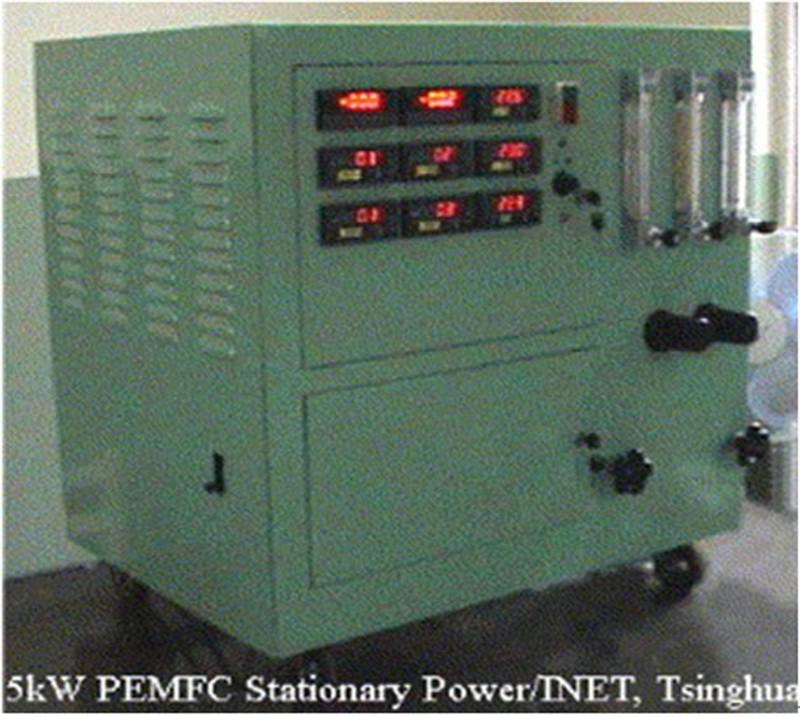
They have successfully assembled a 5 kW and 30 kW-class PEMFC since 2004. In 2005, Wang et al. reported that they had developed the key components, specifications, configuration and operation characteristics of 5 kW H2/air PEMFC system for stationary power.
34
It consisted 5 kW stacks which contain 56 cells with an active area of 250 cm2 per cell. The MEA is comprised of Nafion membrane and catalyst layer on which the loading of platinum is 0.4 mg cm−2 on each side. Membrane electrode was made by hot press method at 135°C, and bipolar plates are made of modified surface graphite plates. Figure 3 shows the appearance of their stationary power system.
Appearance of the 5 kW PEMFC stationary power system
39
There are 500 new energy fuel cell vehicles named ‘green team’ were put into operation during the 2008 Beijing Olympic Games, and it is the firstly large-scale fuel cell vehicles out of the laboratory, demonstrating the high research level of PEMFC. Currently, there are two types of PEMFC studied academically. They are DMFC and DEFC, and methanol and ethanol were used as fuel, respectively.
Direct methanol fuel cell
The concept of DMFC is raised by the researchers from JPL laboratory of NASA and Southern California University in the early 1990s. The principle of DMFC is as follows.
Anode reaction:
Cathode reaction:
The overall reaction:



Without turning the methanol into hydrogen source, DMFC can generate electrical energy directly through the electrode reaction of methanol. PEM is the key technology of DMFC, which could insulate cathode and anode. Output power, efficiency, cost and application of DMFC all depend on the PEM. At present, the membrane of DMFC is based on acidic membranes (e.g. Nafion membrane). There are many commercial Nafion membranes, for example, the fluorinated membrane from DuPont, Flemion from Asahi Glass and Neosepta from Tokuyama Soda, and so on.40-42 The high price of Nafion membrane limits its large-scale application and impedes the market penetration of DMFC.43, 44 The Nafion membrane has many advantages such as high proton conductivity, excellent chemical stability and high mechanical strength. But it has high methanol permeability (×10−6 cm2 s−1) which drastically reduces efficiency of fuel cells, especially the performance of DMFC.45, 46 Additionally, the Nafion membrane shows instability if the humidity is low or the temperature is higher than 100°C.
47
Sadrabadi et al. suggested that the improvement of transport properties could be due to the electrostatic interactions between the amino groups of chitosan and the Nafion sulphone groups.
48
Currently, there are many inexpensive engineering thermoplastics (e.g. example, polyetheretherketone (PEEK), polysulfone (PSF) and polybenzimidazole (PBI)49-53) which are evaluated as alternatives to Nafion membranes for fuel cell applications. These chemically modified and fully aromatic thermoplastic polymers have acquired significant attention because they can meet the operating requirements for fuel cell applications such as high thermal stability, oxidation resistance and mechanical strength, etc.
48
The mechanical strength and thermal stability of these polymers can be proved through their structural formulas as shown in Fig. 4. It is necessary to develop and test new materials which can eliminate or reduce the reactants loss without decreasing the function of the proton conductivity.
54
Recently, non-fluorinated membranes have been characterised and tested based on sulphonated polyetherketones, which were used as plain polymer and modified with composites or proton conductors.55-59 In the last decade, a significant progress has been achieved regarding membrane development for DMFC application.46, 60-67 However, there are still many open problems especially concerning the optimal PEM formulation (e.g. sulfonation degree, inorganic material nature and content) that allows the preparation of membranes with an optimal compromise between electrolyte and barrier properties. In general, researching on alternative polymer electrolyte membranes is the most important problem to attain commercialisation of DMFC.
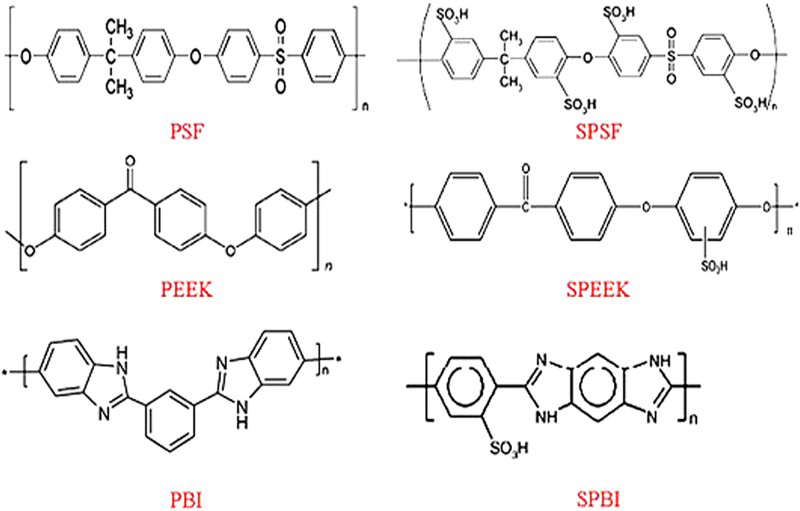
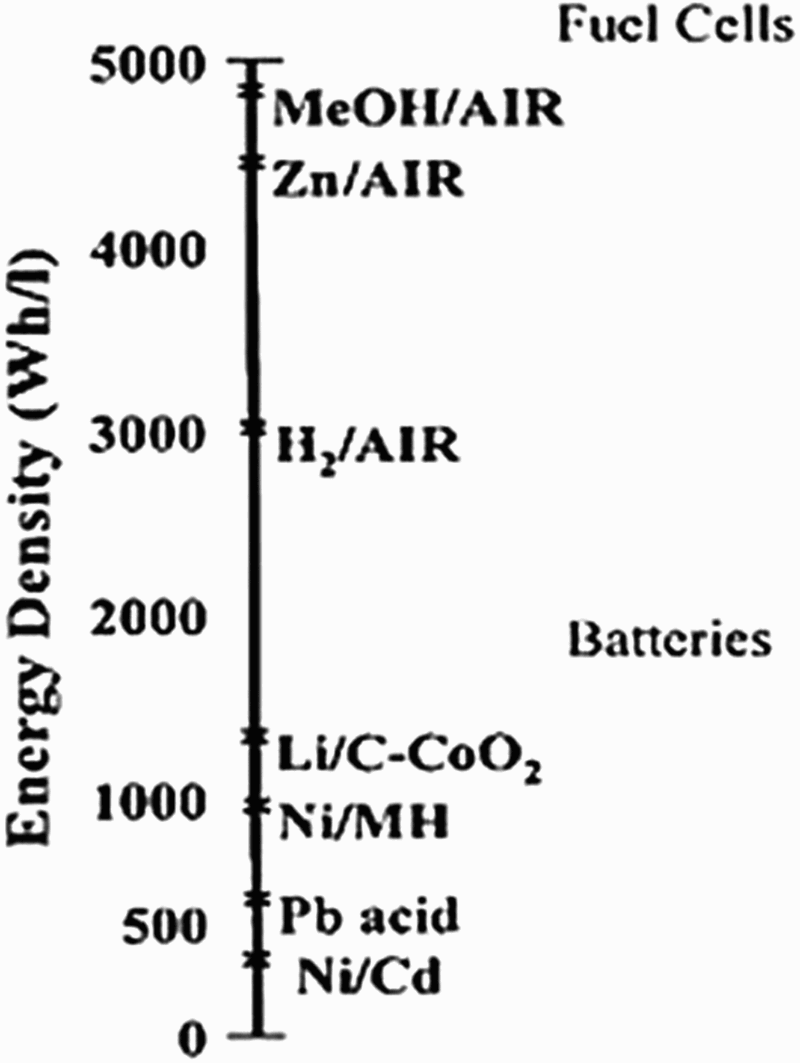
Figure 5 shows the theoretical energy density (W h−1 L−1) of DMFC and battery systems. These characteristics mean longer operation times for portable mobile phones and laptops and more power available in these devices to meet the demand of the consumers. The acidic medium seriously limits the catalyst used in DMFC and only metals which can resist acid corrosion can be used, among which the Pt catalyst has high electro-catalytic activity. The catalytic activity can be significantly enhanced if alkaline electrolyte was used, meanwhile, the selection of catalyst may no longer be restricted by noble metals. However, the alkaline electrolyte will absorb CO2 and carbonate which may degrade the performance of the catalyts.
73
The advantages of alkaline electrolyte are avoiding carbonate precipitation when using the alkaline polymer electrolyte.
74
Using methanol as fuels, although there are many advantages such as rich source, low price, easy storage and transportation, while the defects are also obviously such as volatile, highly flammable, and toxic. And methanol can easily penetrate the PEM. We need to research the membrane which can resist alcohol and develop new composite catalyst catalytic materials for the development of DMFC. There are two key points to develop a new composite catalyst for methanol electro-catalytic oxidation. Firstly, the composite catalyst can reduce the adsorption of dehydrogenation species, but the activity will not be reduced. Secondly, the composite catalyst can promote the adsorption of the species for the methanol catalytic oxidation even at low potential.
Theoretical energy densities
75
Liquid methanol was used as fuel in DMFC which is the most promising chemistry power for electric vehicle. Daimler-Chrysler, BASF and other companies joined together firstly to develop the methanol fuel cell vehicle-NECAR5. They began to push it to the market, and this technology was called as milestone of fuel cells. At present, the first methanol fuel cell vehicle filling station operated in California. The station operated by the California Fuel Cell Consortium (CaFCP). Methanol permeability of PEM has been a very important factor restricting the development of DMFC. On the one hand, current resistance to alcohol membranes is the modification of Nafion membrane. On the other hand, we need to develop new proton membrane materials. But most of restriction for the modifications of Nafion membrane is the cost of proton conductivity of membrane. And many new membranes are of low conductivity. 76 The Sony Corporation in Japan enhances the overall performance of the membrane for DMFC with the new model of power in alkaline medium using the carbon cage derivatives and a combination of adhesive resins as electrolyte membrane. The output density of DMFC has reached 100 MW cm−2 which is the highest level in the world. The new electrolyte membrane can reduce the methanol permeability from 1/5 to 1/2, resulting in improving fuel cell power generation. The Coke Korea in Japan developed high-functional alkyl which was successfully used in DMFC. The company uses its proprietary technology of hydrogenation styrene elastic and nano-membrane so that the methanol permeation is less than 40% comparing to fluorine-based electrolytic membrane and the mix output power increased by 1.6 times. The DMFC has high energy density and compact device, and it will be the next generation power source and can be used in portable terminal devices. 77
LANA produces a small DMFC stack using a single battery and the thickness of the battery is only 2 mm. The single cells are constituted by a small DMFC stack and the power density is higher than that of the PEMFC which can reach 0.45 W cm−1. 78 U.S. Department of Transportation (DOT) announced a final rule allowing the aircraft to carry methanol fuel cells and methanol fuel in April 2008. With the development of national research on the DMFC, we believe that the application is expected to be more extensive and a higher market value will appear. Worldwide, fuel cells account for 8.6 million unit sales for mobile phones in 2004, and the number increased to 463.8 million in 2009 at a CAGR of 122.1% if the right price points are achieved. Later, the market scale of DMFC was predicted as 510 million dollars in 2008 and expected to grow to 11 billion dollars by 2013. However, the predicted market trend is displeased in the year of 2008. Micro fuel cell markets are only 75 million dollars by the end of 2008. Micro fuel cell markets are expected to reach only 5.59 billion dollars by 2015.79-81
Direct ethanol fuel cell
As a product of the bio-fermentation, ethanol is very abundant and non-toxic. The energy density (8.01 kWh kg−1) is higher than that of methanol (6.09 kWh kg−1), and the permeability of ethanol is much lower than that of the methanol in Nafion membrane. Therefore, direct ethanol fuel cell has ever caught increasing attention. However, the electro-catalytic mechanism of ethanol is very complex, and it is difficult to achieve the oxidation of ethanol completely under normal temperature. The principle of DEFC is illustrated as follows.
Anode reaction:
Cathode reaction:
The overall reaction:



Ethanol is transported to the anode chamber and then oxidised to CO2 during the reaction process, subsequently, 12 electron and 12 protons were produced. Electrons are conducted from the anode to the cathode by the external circuit, and protons are conducted from the anode to the cathode through the PEM. Oxygen is reduced and combined with protons and electrons in the cathode, H2O was generated. Meanwhile, electronics do work through the external circuit to form loop. The amount of CO2 discharged by complete oxidation is theoretically equal to that consumed by the growth of biological sources. The usage of large-scale DEFC can reduce emission of carbon dioxide, and it is particularly important for the increasing ‘greenhouse effect’ today.
Though the research of DEFC is at an early stage currently, it has great significance for promoting the development of 3G era as a portable power with sustainability. The electro-oxidation process of ethanol on electrode surface is a three-phase reaction, and it correlates with mass transfer, reactively active sites, electrons and protons transfer, and other factors. Theoretical energy conversion efficiency of DEFC is close to 100%, and the theoretical voltage is high, which is near to that of hydrogen fuel cell produced. However, the ohmic losses caused by electrode polarisation and internal resistance of the battery result that the DEFC output voltage is much smaller than the theoretical voltage under standard conditions and the energy conversion efficiency is much lower. Presently, Brazil has already used ethanol as diesel fuels. Though the research of DEFC was started relatively late in China, the development was rapid in recent years. In 2003, Zhou et al. have studied Pt-Sn/C composite catalyst, and the maximum power density of 62 MW cm−2 was obtained at 90°C, the content of platinum in anode side was only 1.33 mg, and the cathode pressure was 0.2 MPa. In 2005, Jiang et al. have studied the Pt-Sn/C composite catalyst, and the maximum power density of 80 MW cm−2 was obtained at 90°C. In 2008, Wang et al. have investigated the Pt-Sn/C and Pt-Ru/C double layer composite catalyst, and the obtained maximum power density has reached 96 MW cm−2 at 90°C. 14 Considering that ethanol is used to produce hydrogen, the entire efficiency is three times as ethanol is used for burning fuel. Researchers are improving the technology to increase the hydrogen-producing rate. The application of DEFC is expected to take place of electric power in remote areas. 77
Phosphoric acid fuel cell
H3PO4 was used as the electrolyte and pure hydrogen or reformed gas as fuels in PAFC, and Pt-based composite catalysts were used as the main anode and cathode catalysts. The main research and development companies overseas include the United States Onsi Company, Fuji Electric Corporation, Mitsubishi Corporation and Toshiba Corporation. The principle of PAFC is described as follows.
Anode reaction:
Cathode reaction:
The overall reaction:



Positive and negative electrodes of PAFC are porous electrodes made of polytetrafluoroethylene (PTFE) which has stable performance and strong conductivity when the temperature ranged from 100 to 200°C. The manufacture cost of PAFC is lower compared with other types of fuel cells, and they can provide power to the living electricity consumption of ordinary householder. The obvious advantage of PAFC is that it is not seriously affected by CO2 and the effectiveness can be negligible so long as the mass fraction of CO2 is less than 30%. PAFC shows wider applications due to its simple structure and easy operation. However, the price is still high for the commercial usage due to the fact that the main constituent components are corrosion-resistant materials. The main catalyst is Pt and the catalyst particles are easy to increase, agglomerate, which result in the activity loss of catalyst. Compared with AFC, acid anion has a special adsorption effect, which leads to a slow kinetics of oxygen reduction reaction. 82
PAFC were developed firstly in the United States. And international Fuel Cells Corporation (IFC) has begun to develop complete sets of PAFC equipment of 200 kW since 1983. Currently, 1, 4.5 and 7.5 MW PAFC power plants were built in the United States. PAFC power plants are also the first developed fuel cell power plants which are technically matured. At present, the large-power practical fuel cell power plants in the world is PAFC. Japan is a leader in the world in developing PAFC. The 11 MW PAFC made by Japan was put into operation in 1991, and it is the world's largest fuel cell system that operated independently. In 1992, the US International Fuel Cell Company had developed PAFC power plant with a capacity of 200 kW. There were 91 PAFC power plants of 200 kW level in North America, Europe and Asia by September 1998. The longest continuous running time could reach 9506 hours, and the longest running time had totalled 35 000 hours. The battery stack life could be 40 000 hours with maintenance. 83 Recently, Fuji Electric and Mitsubishi Electric in Japan have developed 500 kW PAFC generating system. Many countries over the world are paying much attention to the researching of PAFC. It is not only used in power plants but also in military as a mobile power source which provides power for the troops with long-distance warfare.
Molten carbonate fuel cell
Li2CO3 or K2CO3 was used as the electrolyte and natural or reformed gas as fuel in MCFC. The main anode catalyst and cathode catalyst are Ni and NiO, respectively, and the oxidant is air. The main researching companies in foreign countries are Energy Research Corporation in United States, Hitachi and Toshiba in Japan, MTU Corporation in German and ECN Corporation in Netherlands. The principle of MCFC is shown as follows.
Anode reaction:
Cathode reaction:
The overall reaction:



The diaphragm is the core part of MCFC, and the working condition is strict. It is of high strength and good ionic conductivity. Compared with other fuel cells, MCFC operates under the lowest current density due to limited zones of effective electrode reactions and the low solubility of oxygen and hydrogen in molten carbonates. And it has the thickest electrodes–electrolyte assembly. Therefore, the applications of MCFC are almost limited to stationary power generators. 84 LiAlO2 is widely taken as the MCFC diaphragm now. The molten carbonate solution is completely impregnated in the porous LiAlO2, resulting in the conduction of the membrane material and the isolation of the cathode gas. The performance of MCFC is affected by the operating pressure, temperature, gas composition and utilisation of fuel. The current density of MCFC is usually 100–200 mA cm−2, and the single-cell operating voltage is 0.75–0.95 V. In addition, the impurity of fuel has a significant impact on the performance of MCFC. At present, the researching topics about MCFC are the improvement of the electrode materials, initial contact reforming test, the modelling analysis about high power, the study of hybrid power system, etc.85-90
The study of MCFC was put in the first place in the United States and Japan presently. The United States had begun to investigate MCFC since 1976 and had built the largest MCFC power plants of 2 MW in the world in 1996. The megawatt level fuel cells power plants had been in commercial usage in 2005. Hitachi Ltd of Japan had developed 1 MW MCFC power plants in 2000. Toshiba has developed a low-cost 10 kW MCFC generating set. 5 MW power plants have been constructed by Kansai Electric Power Company. The 11 MW power plants have also been put into operation in the Tokyo Electric Power Company, and the efficiency can reach 43.6%. Ansaldo of Italy has developed 100 kW MCFC power generation facilities and 500 kW power generation MCFC equipment. The goal of US Department of Energy is to establish MCFC power station with the cost reached 400 U.S. dollars/kW and the efficiency is more than 80% by 2015 which makes the application of MCFC power plants more competitive. 91 Shanghai Jiao Tong University and Dalian Institute of Chemical Physics (DICP) have completed 1 kW MCFC power plants experiments respectively in 2001. The topic of ‘The research and development of fuel cell power technology’ which owns Chinese independent intellectual property rights has made important progress on 10 November 2008. It is the first power generation test that implemented 2–5 kW large-scale bipolar plates stack MCFC in China successfully.
Solid oxide fuel cell
Pure hydrogen, carbon monoxide, or reformed gas was used as fuel and yttria-stabilised zirconia (YSZ) was used as electrolyte in SOFC. The main anode and cathode catalyst are Ni and Sr/LaMnO3 catalyst, respectively, and the oxidant is air. The main research and developing companies overseas include the U.S. Westinghouse, Siemens and Mitsubishi Corporation. The principle of SOFC is shown below.
Anode reaction:
Cathode reaction:
The overall reaction:



SOFC became a technology of developing new green energy resource rapidly since 1980s. It attracts great public attention to special structure for solid forming, high energy conversion efficiency (about 65%), low environmental hazards, high power density and other merits. 92 As a promising energy conversion device in the twenty-first century, the commercialisation of SOFC is expected to realise in a few years.93-95 However, it is still expensive and time-consuming up to now to fabricate high-performance PEN (positive-electrolyte-negative) which is the core component of SOFC. SOFC has higher exhaust gas temperature which benefits for recycling the waste heat exhausted by system compared with MCFC. SOFC has fast electrode reaction without noble metal catalysts under high temperature. In addition, for SOFC, the stability rate of decay is less than or equal to 1% per thousand hours.96-99 Therefore, it is suitable for large-scale commercialisation. The SOFC hardly needs fuel reprocessing, internal restructuring and internal heat treatment, which result in the internal design of system much simpler. Combined with fuel turbines and other equipment, SOFC is very easy to attain cogenerating heat and power with turbine fuels and other facility, and the total energy efficiency can reach more than 80%, which makes great contribution to the energy saving and environmental protection in China undoubtedly. 100 There are many types of SOFC tube, such as flat plate, fluting and other forms of structures, etc. Yttria stabilised zirconia is one of the most important materials for SOFC electrolyte, which has a strong ionic conductivity to transfer O2− under high temperature. But the thickness of YSZ coatings sprayed by APS is always from 100–1000 µm with the porosity of 1–20%. 101 Yan Ping et al. believe that rare earths or alkaline earth metal oxides adulterated CeO2 which is used as ideal electrolyte material of high oxygen ion conductivity under low or medium temperature instead of YSZ. At present, the main anode material used is the electrolyte of Ni+, and it has better premium properties of electron and ion conductivity, but some problems still exist which include slow start, sintered electrode, coked anode, poor tolerance to containing sulphur fuel and high requirement to working temperature. The high operating temperature becomes a big problem to constraint the further development of SOFC due to batteries handicap of seals and the interface reaction between electrode and electrolyte. 102
The United States is the first country for developing SOFC, and the U.S. Westinghouse becomes the authority to SOFC. 40 W SOFC battery successfully worked in Tennessee in 1986 and two 25 kW SOFC had tried thousands of hours among Osaka, Japan and Southern California, respectively in 1992 developed by Westinghouse. The U.S. Westinghouse began to try 220 kW SOFC power station with pressurised pilot operation in California in August 2000. They also plan to develop Combined-cycle Cogeneration Power Station on the stage of 250 kW and 2.8 MW. Siemens-Westinghouse designed and built the first SOFC/GT Combined-cycle Cogeneration Power Station in 2000, and it was put into operation in the centre of the University of California, Irvine. Pressurised tube SOFC system of 10 kW developed by Ltd, they collaborated with Mitsubishi Heavy Industries and the fuel cells were put into use in August 2001. Sulzer Hexis has been committed to exploit and improve the work of tubular SOFC power generation system for a long time, and he achieves major results in many parts, for the details are shown as follows: (1) the total running time added up to is more than 90 000 hours, (2) electrical energy reaches 56 MWh, (3) output power of electric energy standard is 1 kW, (4) maximum power efficiency of cell stack is 35%. The Australia Ceramic Fuel Cell Ltd is committed to develop circular plate-form electric power reactor of SOFC, which can provide tens of kilowatts of power reactors under the condition of fuel efficiency of 80–85%, working temperature of 850°C and constant pressure. The company tested the field test with 40 kW-class power generation reactor in 2005 and the power generation reactor is greater than 120 kW in 2006. 103 At present, internal research of most researches on SOFC is at its preliminary stage and it is researched inadequately on many materials. Although we have made some achievements, we still have a long way to go unless the products of SOFC attain the commercialisation from the laboratory. Shanghai Institute of Ceramics, CAS, and its researching level remains leading position in China, and a series of high-temperature SOFC cell stacks were assembled during the ninth 5-year period. The SOFC researching group of the Institute of Process Engineering, CAS, developed the ‘None-connection pole and blow-by tubular SOFC’ which generated electricity successfully in 2007. The group cancelled the ceramic connected pole which tubular SOFC needed, as a result, the SOFC becomes more practical based on the matrix assembling multi-single tubular battery into a series of fuel cell stacks.
Conclusions
The ever-increasing use of fossil fuels, coupled with the limited supply of these natural resources, has motivated the serious search for fuel cells. During the last decade, fuel cells have received enormous attention as novel electrical energy conversation systems and great progress has been made. Although significant breakthroughs are achieved on the architecture and key technologies of the fuel cells, great effort are still needed in other fields such as cost and durability. Since the sluggish kinetics of cathode oxygen reduction reaction for fuel cells, it is believe that the mechanism of oxygen reduction is a significant researching direction in future. Use of polymers in fuel cells is now under development to replace batteries for power telephones, computers and stationary energy storage and so on.
Footnotes
Acknowledgements
The authors gratefully acknowledge the support by Fundamental Research Funds for the Central Universities (XDJK2013B018), Fundamental Research Funds for the Central Universities of the Students (XDJK2014D001), Chongqing City Foundation for University Young Key Teachers (102060), National Undergraduate Training Programs for Innovation and Entrepreneurship (201210635100), Undergraduate Training Programs for Innovation and Entrepreneurship (201323003) and Technology Development Project (2013039).