







Abstract
Cerium oxide (CeO2) was used as the reinforcement filler to improve the mechanical properties of rubbers. Rubber components are often used at high temperature, so the mechanical properties of CeO2-modified vulcanised natural rubbers (NR/CeO2) were investigated at elevated temperatures. The tensile properties, stress relaxation and creep recovery response were studied from 30°C to 150°C. NR/CeO2 demonstrated higher crosslink density and elastic modulus. The degradation of elastic modulus could be alleviated in the NR/CeO2 at elevated temperatures. Moreover, a remarkable enhancement in stress relaxation resistance and creep resistance was achieved in the NR/CeO2 at elevated temperatures. The improved stress relaxation resistance and creep resistance were attributed to the enhanced interaction and bonding force of rubber chains caused by CeO2 filler. CeO2 was an effective reinforcement filler to improve the mechanical properties of NR at elevated temperatures.
Introduction
Natural rubber (NR) is a durable and flexible material which has been widely applied to fabricate the automobile tires, vibration isolators, seals and gaskets [1-3]. It is known that the rare earth (RE) has a large quantity of empty orbits due to the electron shell structure. These orbits can bind or capture the free radicals generated from the autocatalytic, free radical chain reactions and the steric hindrance effect of the formed complex structure [4, 5]. RE has been used widely as a reinforcement filler to improve the mechanical properties and thermal stability of rubbers [4-10].
The effects of ten types of rare earth fillers on the mechanical properties of modified high-abrasion furnace-filled powdered natural rubbers (NR/HAF) have been revealed by Lin et al. [8]. The tear strength was improved obviously by all kinds of RE fillers. Moreover, the 100% modulus and tensile strength were found to increase in the RE-modified NR/HAF. However, the difference in hardness between RE-modified samples and unmodified ones was not significant. A similar tendency was also reported by Guo et al. [5]. Cerium oxide (CeO2) has been widely used as the reinforcement filler in polishing solution, glass and catalytic converters. Li et al. [9, 10] studied the mechanical properties of the CeO2-modified NR at room temperature and concluded that the abrasion resistance was enhanced by approximately 20% in the CeO2-modified NR. Moreover, CeO2-modified NR demonstrated better thermal aging resistance [6]. Therefore, it is valuable to note that CeO2 could be used effectively as the reinforcement filler to improve the mechanical properties of rubbers, such as high abrasion resistance, high tear strength and good thermal aging resistance.
In practical applications, rubber components, such as damper and gasket, are often used at high temperature. Therefore, creep or stress relaxation is a major concern for these engineering applications, which has been studied over the past several decades [11]. Gent [12] studied the stress relaxation, creep, recovery and hysteresis of vulcanised NR. The effects of applied stress, loading history, temperature on creep and stress relaxation has been investigated in NR [13]. The stress relaxation time became shorter with the increase of temperature, and the modulus also decreased. Geethamma et al. [14] reported that the strain level, fibre loading, and fibre orientation influenced the relaxation response of short-coir-fibre-reinforced natural rubber.
Owing to the high abrasion resistance, high tear strength and good thermal aging resistance, the CeO2-modified NR demonstrated high application value and development potential in industry. So far, the mechanical properties of the CeO2-modified NR were mostly measured at room temperature [8-10]. However, it is well known that the mechanical properties of polymers tend to be deteriorated at high temperature [15-17]. Therefore, it is imperative to clarify the mechanical properties of the CeO2-modified NR at elevated temperatures for its practical applications. In the present work, the tensile properties, stress relaxation and creep recovery response of the CeO2-modified vulcanised NR at elevated temperatures are measured, and the effect of temperature and the addition of CeO2 filler is discussed.
Experiment
The formulations of the CeO2-modified vulcanised natural rubber.
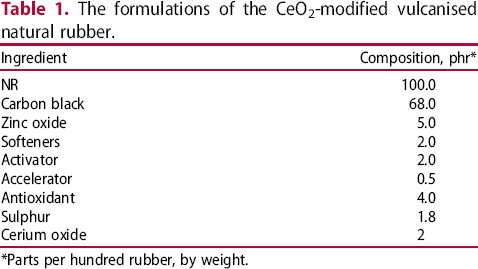
*Parts per hundred rubber, by weight.
The mechanical properties, i.e. tension, stress relaxation and creep recovery, were measured on a dynamic mechanical analyzer (DMA Q800) with film tension clamp. The maximum load of DMA is 18N; therefore, the specimens were not broken after tensile tests. The tests were carried out at 30°C, 70°C, 100°C, 125°C and 150°C. The heating rate is 10°C min−1. The gauge length, width and thickness of the specimens are 10, 2 and 1 mm, respectively. The pre-load was 0.1 N to prevent bulking. Owing to the thermal expansion, the final gauge length was termed as the sum of initial length and increased length induced by temperature.
Quasi-static tensile tests were carried out under stress control mode with a stress ramp rate of 0.5 MPa min−1. At least three samples were tested for each condition, and the obtained results were reproducible.
The stress relaxation behaviour was measured by stretching the specimen to 20, 30 and 40% elongation, respectively. The deformed specimen was held for 30 min, and the variation of tensile stress was recorded continuously. The relaxation ratio is expressed by the following equation [18, 19]

Creep and recovery response was conducted under 1, 2 and 3 MPa for 30 min at different temperatures, respectively. Then, the applied stress was removed after creep period and wait for 30 min. The variation of strain was recorded continuously. The creep ratio is calculated using the following equation [18, 19].

 corresponded to constant applied stress and temperature T has been phenomenologically expressed as follows [11, 19]:

Results
Tensile properties at elevated temperatures
The crosslink density of NR samples was approximately 1.242 ± 0.27 × 10⁻⁴mol cm−3. By contrast, the crosslink density of NR/CeO2 was approximately 1.385 ± 0.24 × 10⁻⁴mol cm−3, which indicates that the crosslink density of NR can be increased by CeO2 filler.
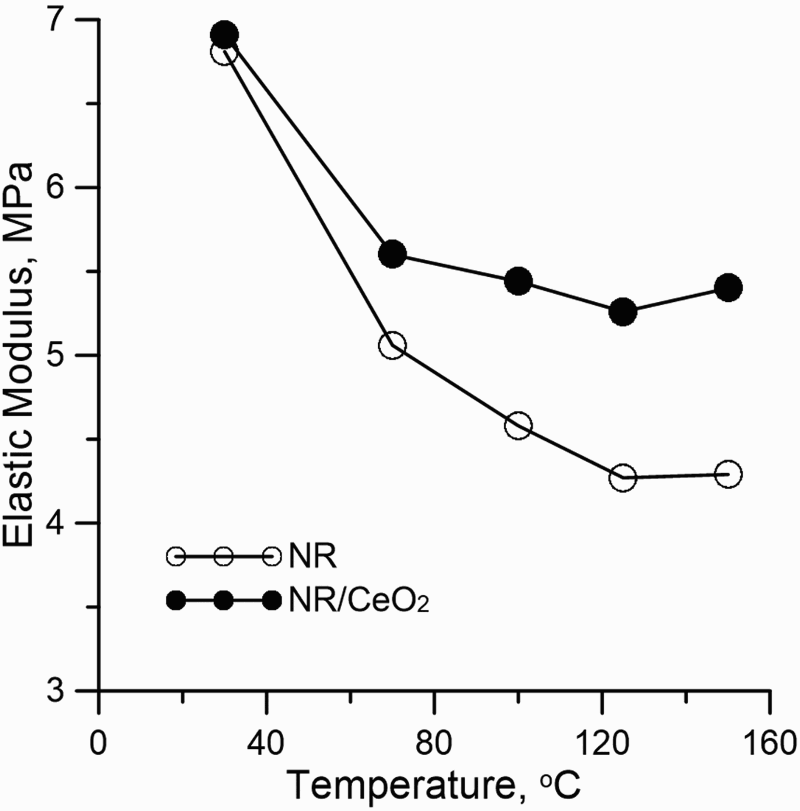
Figure 1 shows the tensile stress–strain curves of NR and NR/CeO2 at elevated temperatures. The variation of elastic modulus of NR and NR/CeO2 shows the different tend at elevated temperatures in Figure 2. As reported [15], the elastic modulus decreases as the environmental temperature increases. The modulus of NR/CeO2 is slightly higher than that of NR sample at room temperature. However, compared to NR, the elastic modulus reduction of NR/CeO2 is smaller as the temperature increases.
Stress–strain curves of specimens at elevated temperatures: (a) NR; (b) NR/CeO2. The elastic modulus at elevated temperatures.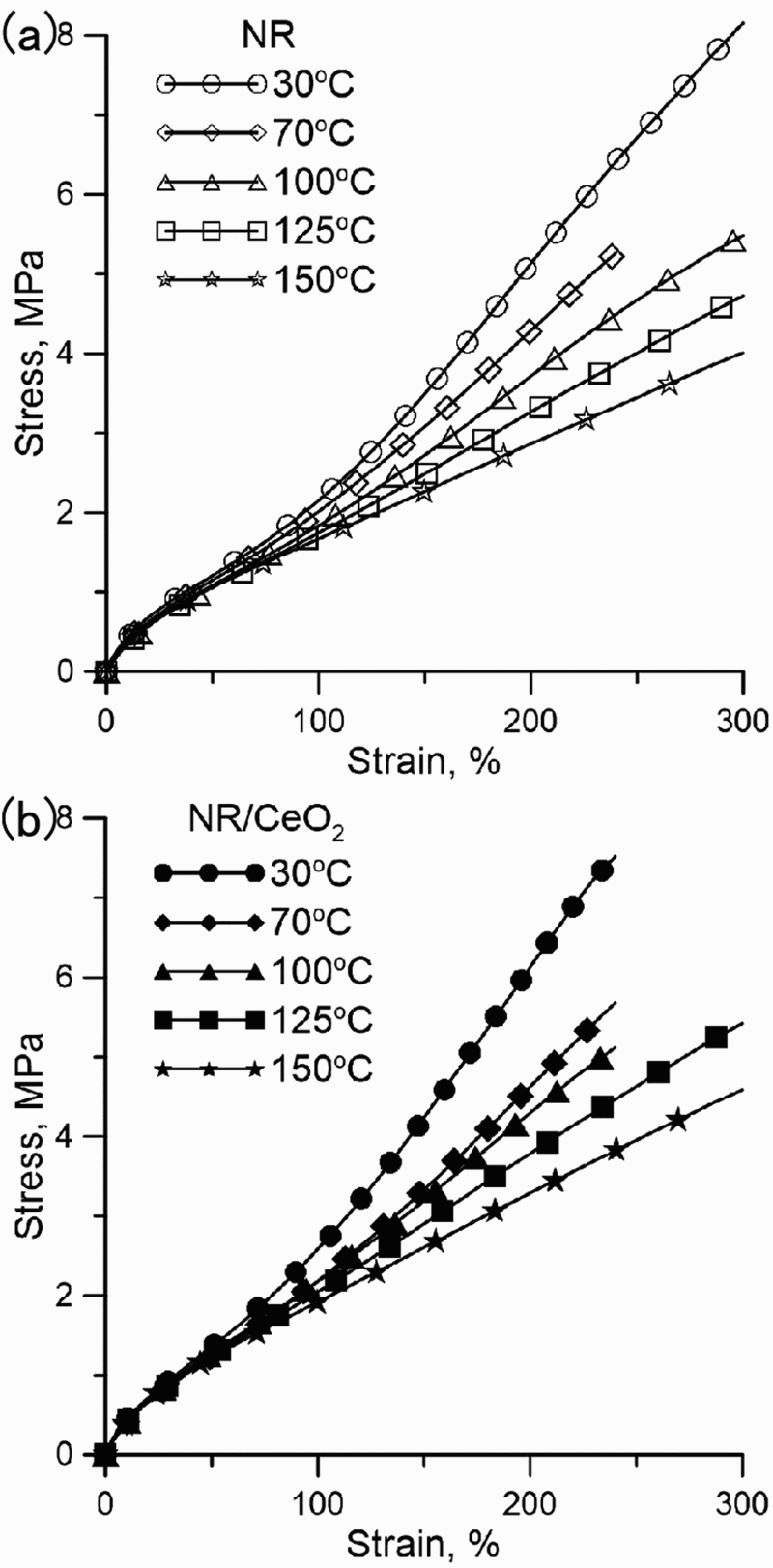
Stress relaxation response at elevated temperatures
The stress relaxation responses of NR and NR/CeO2 at different temperatures are shown in Figure 3(a,b), respectively. Owing to the higher stiffness, the stress of NR/CeO2 is higher than that of NR over the relaxation period under each temperature. It can be seen that the stress decreases steeply in the first 10 min, followed by a gentle reduction towards a constant stress relaxation rate. It can be seen from Figure 4 that the relaxation ratio increases with the increase of temperature. The difference between NR and NR/CeO2 is not significant when the temperature falls below 70°C. By contrast, the increment in relaxation ratio of NR/CeO2 is lower than NR relaxation ratio at high temperature (>70°C).
Time dependence of the stress relaxation at elevated temperatures (ε = 30%): (a) NR; (b) NR/CeO2. Comparison of relaxation ratio at elevated temperatures (ε = 30%).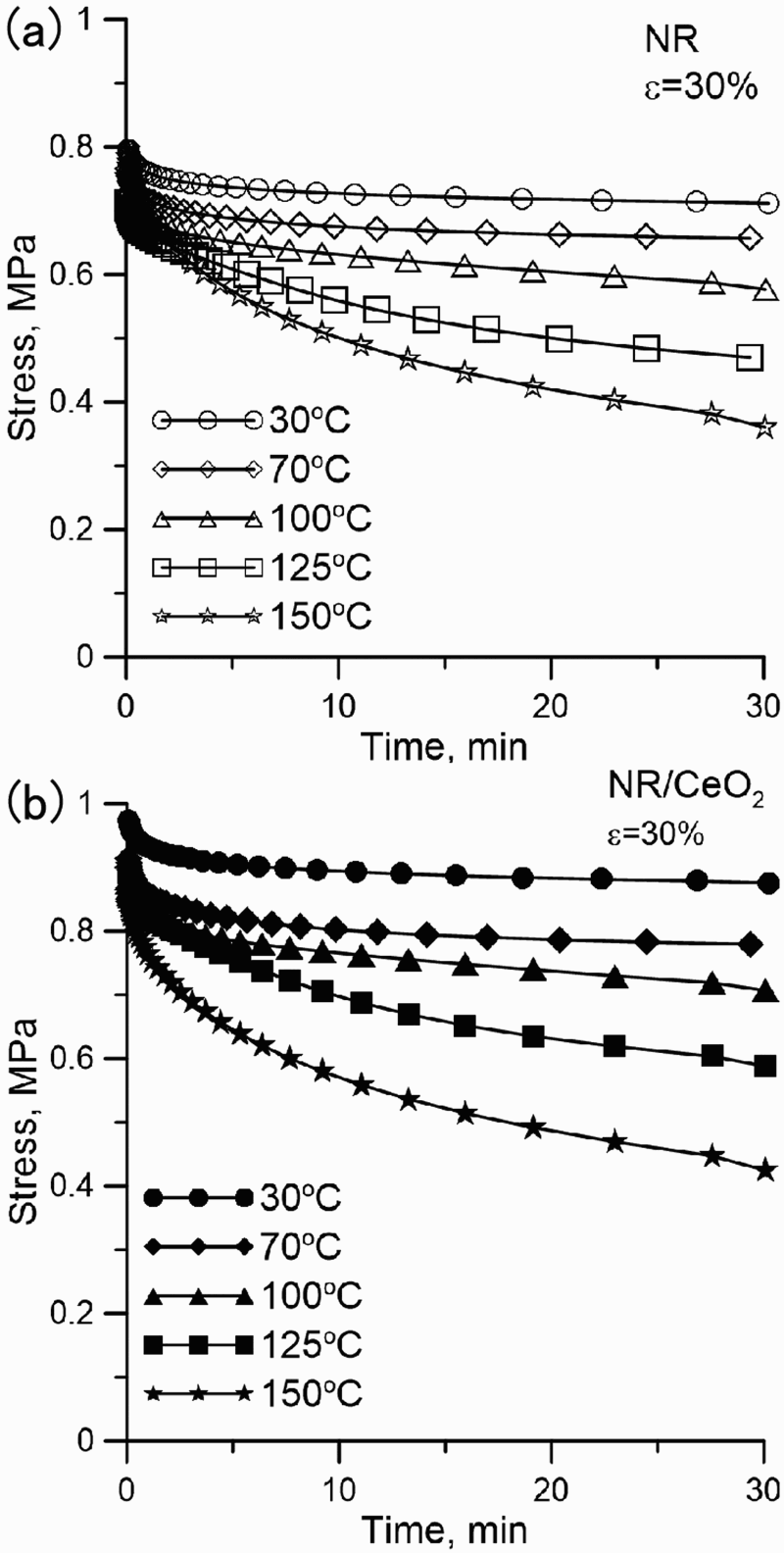
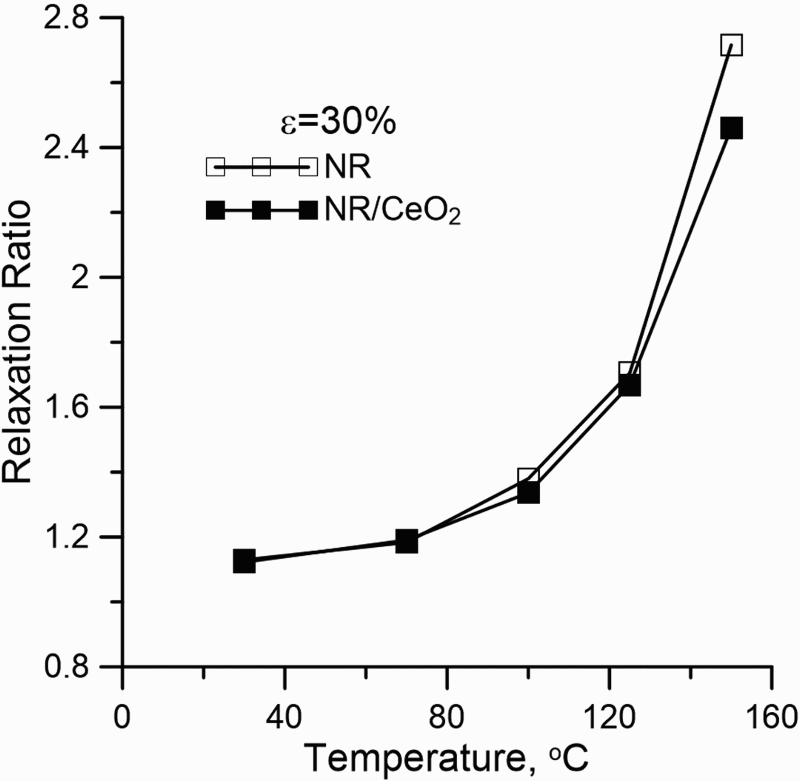
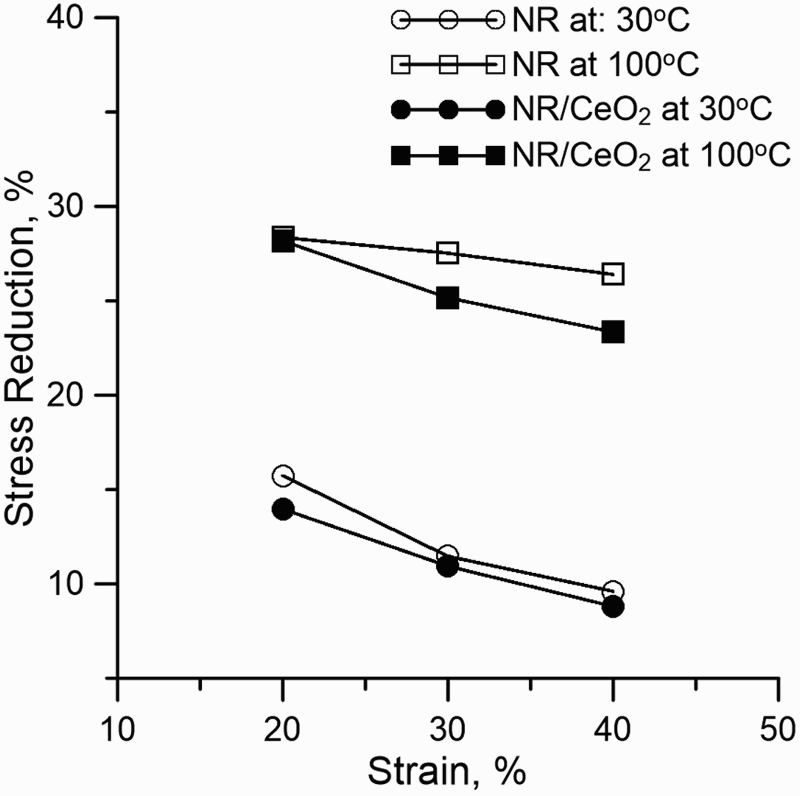
Figure 5 shows the stress relaxation of the specimens stretched to the different elongation. Both peak stress and final stress of NR/CeO2 are higher than that of NR. As shown in Figure 6, it is evident that increasing strain level brings about less relaxation ratio. Compared to NR, a general decrease in relaxation ratio is observed in NR/CeO2, and the difference between NR and NR/CeO2 is minor at room temperature and low applied stress (1 MPa). By contrast, the relaxation ratio of NR/CeO2 is significantly lower than that of NR at high temperature, especially when the specimen is subjected to larger deformation, which indicates that NR/CeO2 shows better stress relaxation resistance.
Time dependence of the stress relaxation under different stretched elongation: (a) 30°C; (b) 100°C. Comparison of relaxation ratio under different stretched elongation.
Creep and recovery response at elevated temperatures
Creep and recovery responses of NR and NR/CeO2 subjected to different temperatures are shown in Figure 7. As expected, higher temperatures resulted in more creep strain. It can be seen that the induced strain of NR/CeO2 is lower than that of NR under each temperature. The strain increases rapidly in the early 10 min and then reaches a stable creep rate. Moreover, the residual strain increases with the increase of temperature.
Time dependence of the creep and recovery at elevated temperatures (σ = 1 MPa): (a) NR; (b) NR/CeO2.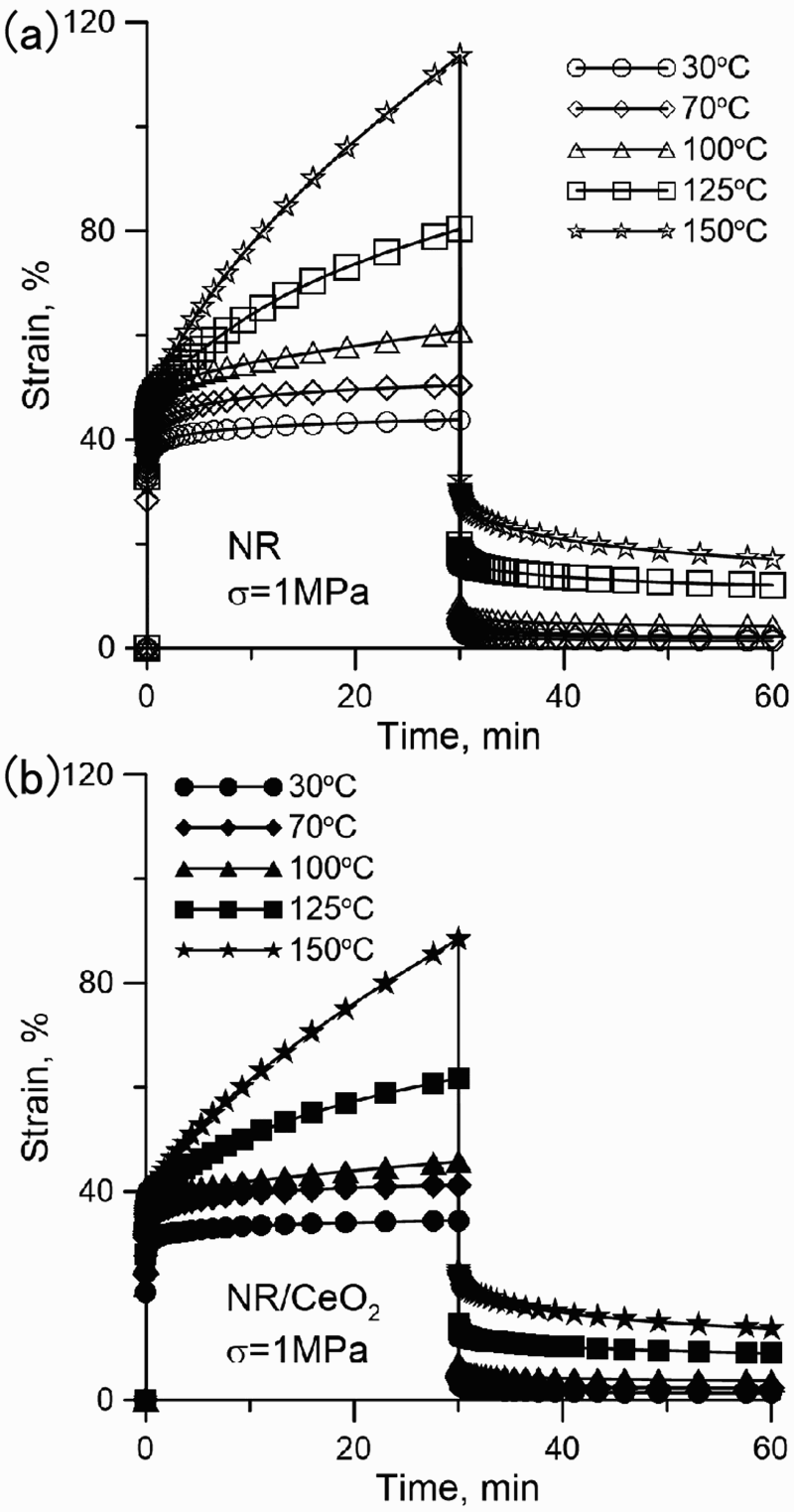
Comparing the creep ratio between NR and NR/CeO2 in Figure 8, it can be observed that the general trends are the same for both. Namely, the creep ratio increases gently as the temperature is below 100°C. By contrast, the creep ratio increases rapidly as the temperature is higher than 100°C. However, it is clearly visible from the figure that the creep ratio of NR/CeO2 is still lower than that of NR at elevated temperatures.
Comparison of creep ratio at elevated temperatures (σ = 1 MPa).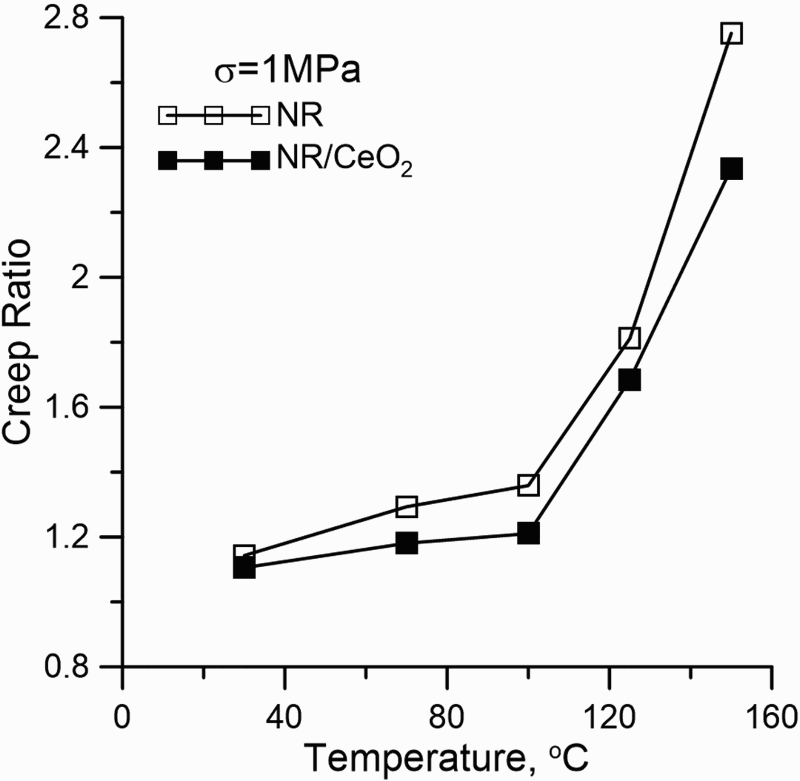
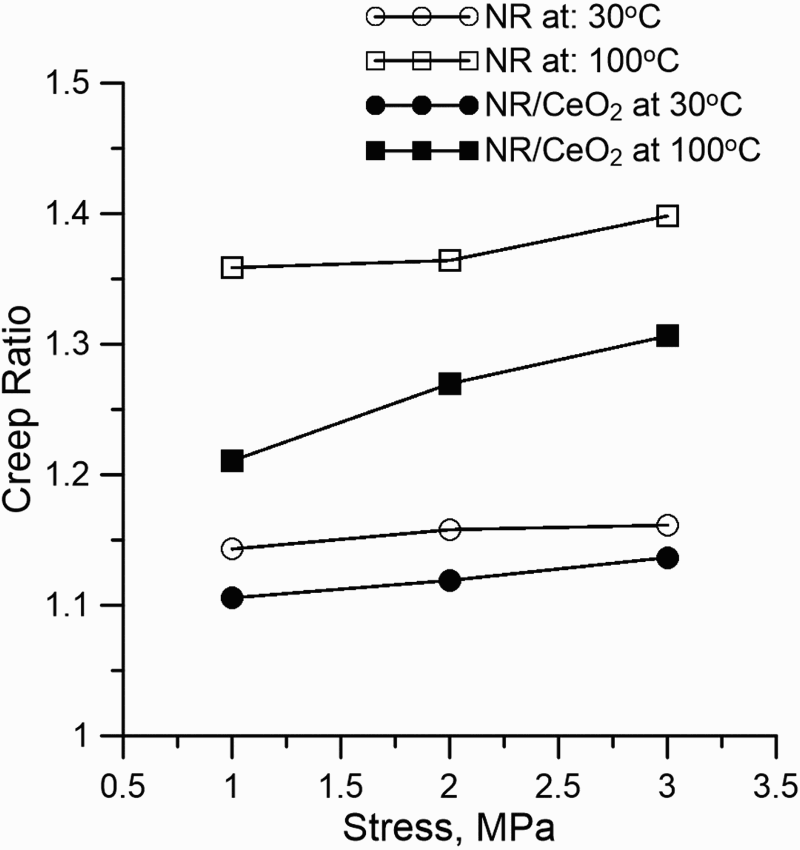
The effect of applied stress on the creep and recovery performance is compared in Figure 9. Figure 9(a,b) show this effect under 30°C and 100°C, respectively. As expected, an increased applied stress induces an increased creep strain, and a stable strain rate can be achieved after 10 min. However, the residual strains are almost same even though the applied stresses are different. As shown in Figure 10, it is valuable to note that the creep ratio of NR/CeO2 is lower than that of NR under both room temperature and high temperature.
Time dependence of the creep and recovery under different applied stresses: (a) 30°C; (b) 100°C. Comparison of creep ratio under different applied stresses.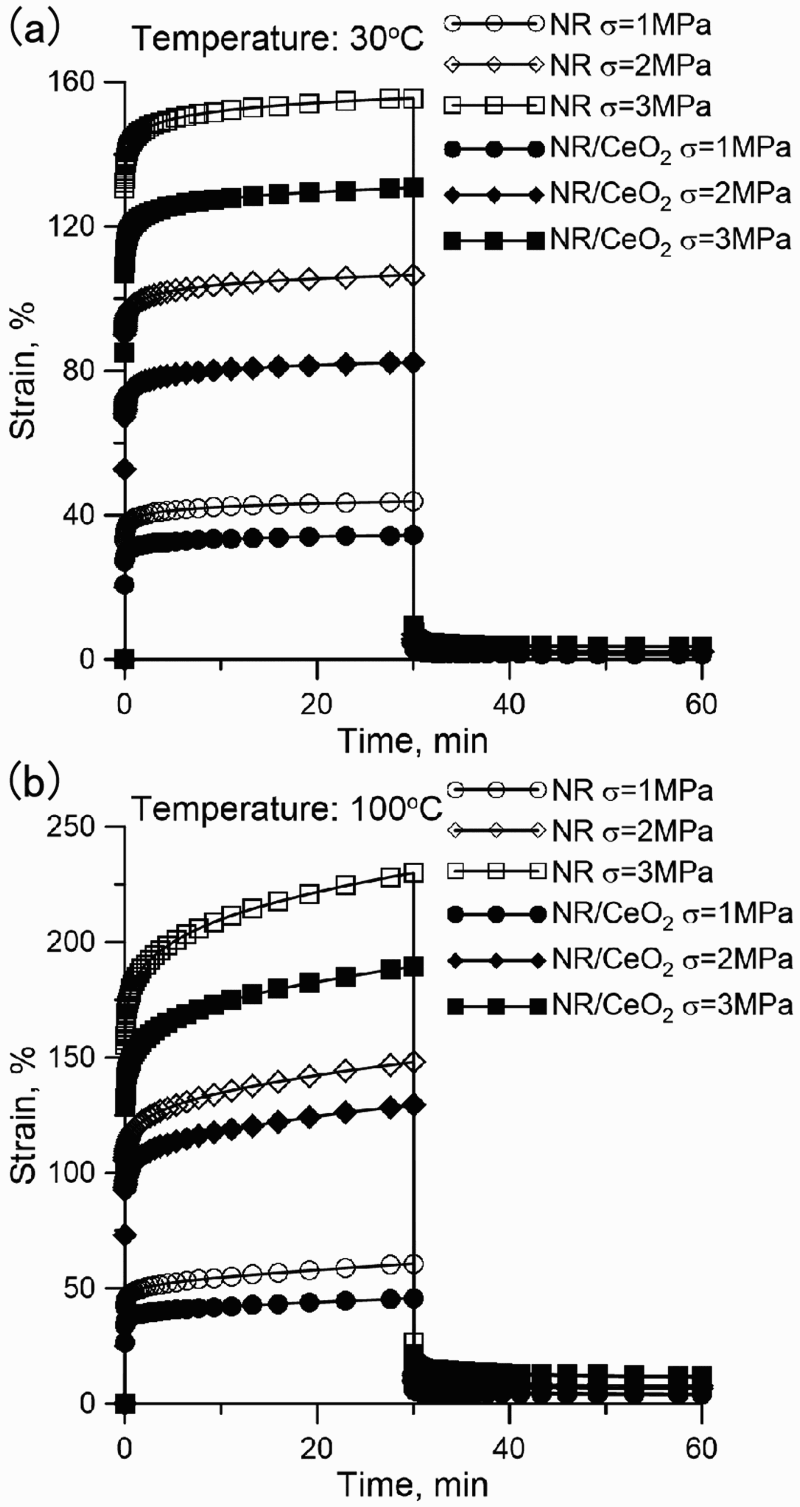
Discussion
Comparison of mechanical performance between NR and NR/CeO2 under elevated temperatures
As mentioned in the previous studies [6-10], the CeO2-modified rubbers demonstrated high tensile strength, high tear strength and good abrasion resistance at room temperature. In our investigations, it is worth noting that the reduction in elastic modulus of NR/CeO2 is lower than that of NR at high temperature.
When rubber components are subjected to force or deformation at high temperature, creep or stress relaxation tends to take place, which may lead to significant problems in engineering applications. It can be seen from Figures 4–10 that NR/CeO2 exhibits lower stress relaxation ratio and creep ratio than NR at elevated temperatures, which indicates that good stress relaxation resistance and creep resistance could be achieved in NR/CeO2.
Majsztrik et al. [20] reported that the creep strain can be viewed as a combination of individual strain components representing different molecular contributions. As shown in Figure 11, the instantaneous elastic strain (εe) is an immediately, completely recoverable strain representing bond stretching/bending and crosslinking between chains. εD means the delayed elastic strain whose strain decreases with time and is completely recoverable, which corresponds to chain uncoiling. Viscous flow (εV), which is irrecoverable as determined from the strain at the end of creep-recovery tests, refers to chain slippage. The strain components of NR and NR/CeO2 under different temperatures are illustrated in Figure 12. It can be seen that all three components increase with the increased temperature. As exhibited in Figure 12, the instantaneous elastic strain and delayed elastic strain of NR/CeO2 are still lower than that of NR, but the difference is nearly the same. The decreased elastic strain might be attributed to its increased crosslink density. However, the viscous flow strain exhibits different tends. Compared to NR, the increment in viscous flow strain of NR/CeO2 is smaller as the temperature is over 100°C, which indicates that the NR/CeO2 has fewer chain slippage at high temperature (>100°C).
Schematic of individual strain components of typical creep-recovery response. Comparison of creep strain components at different temperatures.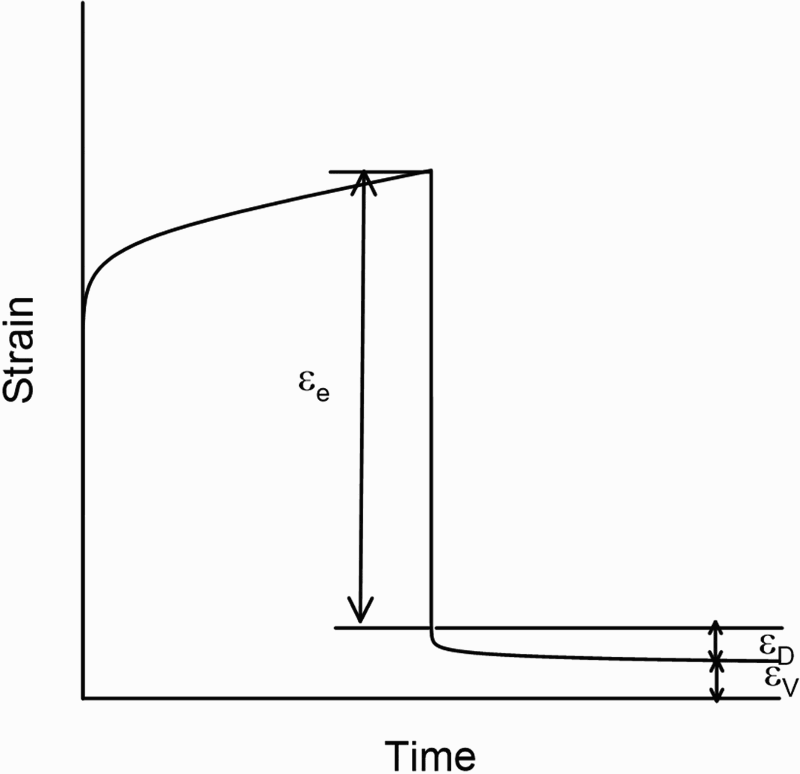
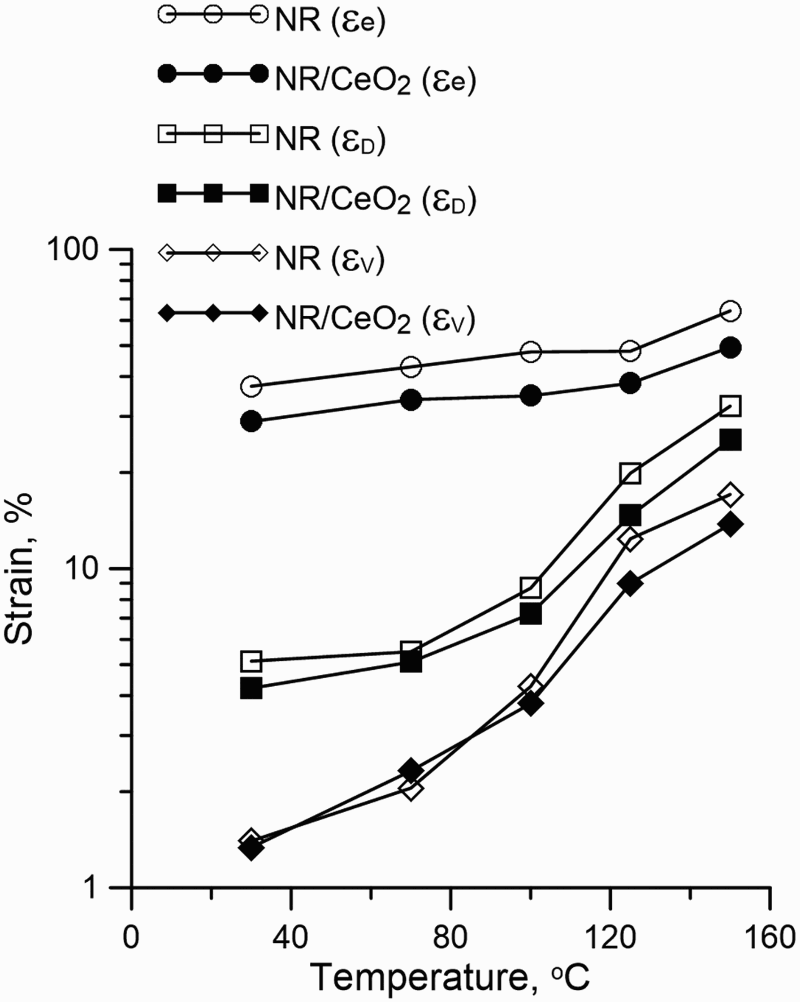
The CeO2 filler serves to reduce the instantaneous elastic strain within the whole temperature range, while it only serves to reduce the viscous flow at higher temperatures. In other words, the enhancement in mechanical properties of NR/CeO2 at room temperature only results from reduction in instantaneous elastic strain, while the enhancement at elevated temperatures arises from reduction in both instantaneous elastic strain and viscous flow strain. Thus, the role of temperature in alternating mechanical responses of NR/CeO2 is clarified.
Benefits of CeO2 filler for the improved mechanical properties of NR
One of the drawbacks of NR is its low value of high-temperature stability [13]. Commonly, the mechanical properties of rubber components tend to deteriorate at elevated temperatures. As expected, the modulus of NR/CeO2 decreases with the increase of temperature. However, compared to NR, it is worth mentioning that the deterioration of elastic modulus of NR can be restrained by CeO2 filler. Moreover, the stress relaxation resistance and creep resistance of NR at high temperature can be enhanced by CeO2 filler.
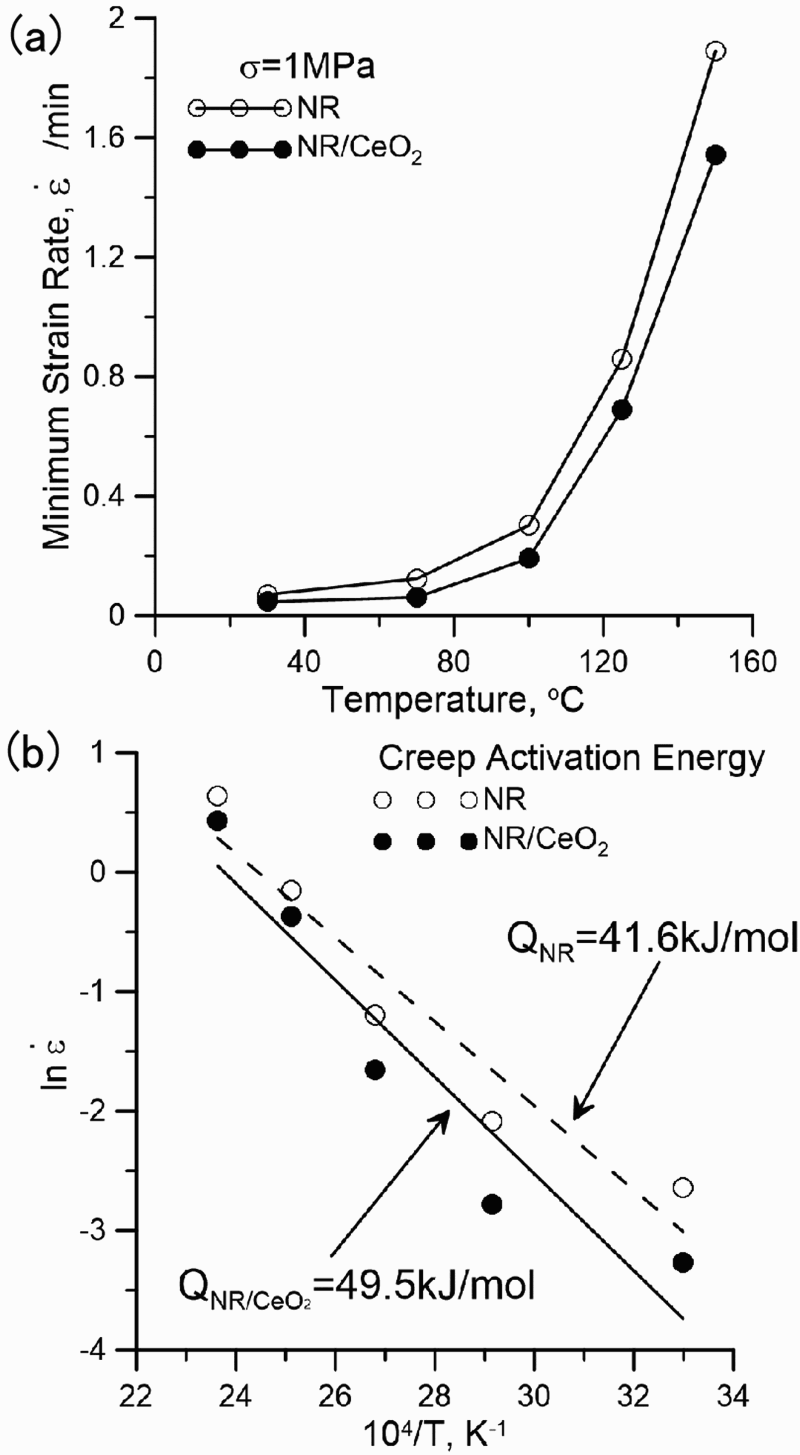
Apparent activation energy for creep (Q) is one of the important parameters to evaluate materials’ creep behaviour, which can be calculated phenomenologically corresponding to the minimum creep rate, constant applied stress and absolute temperature (Equation (3)) [21]. Figure 13(a) shows that the minimum strain rates of both NR and NR/CeO2 increase gradually with the increase of temperature. The difference of minimum strain rate between NR and NR/CeO2 is insignificant at room temperature. However, it is important to note that NR/CeO2 has lower minimum strain rate at elevated temperatures. An Arrhenius plot of the
Comparison of apparent activation energy: (a) minimum strain rate vs. temperature; (b) Arrhenius plot of log minimum strain rate vs. l/T. vs. l/T is presented for creep tests conducted at 1 MPa in Figure 13(b). From these plots, the apparent activation energy of NR and NR/CeO2 can be obtained. The apparent activation energy of NR is approximately 41.6 kJ mol−1, whereas the apparent activation energy of NR/CeO2 is approximately 49.5 kJ mol−1. Therefore, it is can be concluded that the creep resistance of NR can be improved by CeO2 filler.
It is widely acknowledged that the crosslink is an important feature of rubbers, which is a bond that links one molecular chain to another. The equilibrium response of rubbers is largely dependent on its polymeric chains making up the molecular network [22]. Therefore, the mechanical properties of rubber are greatly influenced by its crosslink density [23]. In the previous studies [24], it has been reported that the enhanced mechanical properties of rubbers, such as modulus, tensile strength and elongation at break, can be achieved with the increase of crosslink density. The crosslink density of NR was increased by the addition of CeO2 filler. The enhanced elastic modulus of NR/CeO2 at elevated temperatures is attributed to its increased crosslink density. The stress relaxation or creep of rubber-like materials is thought to mainly result from molecular slipping and disentanglement when constant deformation or stress is applied [25]. The NR/CeO2 shows fewer chain slippages at high temperature (see Figure 12). Therefore, the improved stress relaxation and creep resistance of NR/CeO2 are related to its enhanced interaction and bonding force of rubber chains. Because the structure of CeO2 has a lot of vacant ‘f’ orbit, complex compound tends to form in the CeO2-modified rubber matrix [5, 9]. Therefore, CeO2 filler can enhance the interaction and bonding force of rubber chains, which causes the increased crosslink density. Moreover, the degradation of elastic modulus can be alleviated, and stress relaxation resistance and creep resistance can be enhanced at elevated temperatures, which may be also attributed to the enhanced interaction and bonding force of rubber chains.
Conclusions
In the present work, the tensile properties, stress relaxation and creep recovery of the CeO2-modified and unmodified vulcanised NR were studied at elevated temperatures. The following conclusions can be drawn:
NR/CeO2 demonstrates higher crosslink density and elastic modulus. The degradation of elastic modulus can be alleviated in NR/CeO2 at high temperatures. NR/CeO2 has lower relaxation ratio and creep ratio at elevated temperatures. NR/CeO2 demonstrates good stress relaxation resistance and creep resistance at elevated temperatures. NR/CeO2 shows lower instantaneous elastic strain and delayed elastic strain which corresponds to its increased crosslink density. Over 100°C, the increment of viscous flow strain of NR/CeO2 is lower than that of NR, which indicates that NR/CeO2 has fewer chain slippage at high temperatures. The stress relaxation and creep of NR are related to its chain slipping and disentanglement. The improved stress relaxation resistance and creep resistance were attributed to the increased interaction and bonding force of rubber chains caused by CeO2 filler. CeO2 is an effective reinforcing filler to enhance the mechanical properties of NR at elevated temperatures.
