







Abstract
Effect of fibre/matrix interphase parameters, including thickness and material properties on the equivalent thermal conductivities of unidirectional fibre-reinforced polymer composites. A unit cell-based micromechanical method is proposed to evaluate the thermal conductivities of unidirectional multi-phase composites. The longitudinal thermal conductivity of unidirectional fibre-reinforced polymer matrix composites is seen to be independent of interphase region. When the thermal conductivity of interphase is higher than that of matrix, the increase of interphase thickness leads to an improvement in transverse thermal conductivity of fibre-reinforced polymer composites. The influences of fibre volume fraction, orientation angle and shape of cross-section as well as temperature on the thermal conducting behaviour are widely examined. The model predictions are in good agreement with the experimental data reported in the literature.
Introduction
Owing to their high ratio of strength-to-weight and high ratio of modulus-to-weight, fibre-reinforced polymer matrix composites (FRPMCs) have attracted great interest in the field of advanced and high-performance materials used in aerospace, automotive, and winder energy harvesting [1-4]. Among FRPMCs, carbon fibre-reinforced polymer composites are widely utilised in the aerospace applications where most of the metallic and ceramic materials cannot be utilised [5-8].
The material properties of FRPMCs are dependent on the fibre and matrix properties, microstructural details like fibre volume fraction (FVF), fibre orientation angle, fibre array and fibre shape [9-13]. In particular, the interfacial region between fibres and polymer matrix plays a critical role in the overall behaviour of FRPMCs [14, 15]. The interfacial region, or interphase, in conventional fibrous composites is a thin layer between the fibre and the matrix generated because of the chemical reaction between them [14-16]. Another reason for creating the interphase is the use of protective coatings on the reinforcements during the fabrication of composite materials to ensure good bonding between fibres and matrix [16-19]. Many attempts have been conducted to explore the effects of interphase on the thermo-mechanical response of fibre-reinforced composites [20-23]. For example, Malakooti and Sodano [24] predicted the effective electro-elastic properties of multi-phase piezoelectric composites by extension of the Mori-Tanaka and Multi-Inclusion methods. Later, the influences of interphase parameters, like thickness and stiffness on the elastic moduli and coefficients of thermal expansion (CTEs) of unidirectional composites reinforced with various fibre aspect ratios were investigated by Hassanzadeh-Aghdam et al. [25]. Moreover, Bednarcyk et al. [26] utilised the High-Fidelity Generalised Method of Cells theory in combination with the strain energy approach for predicting the three-phase composite specific damping capacities. Recently, Haghgoo et al. [27] presented a theoretical approach to study the effect of PZT-7A piezoelectric interphase on the overall magneto-electro-elastic properties of CoFe2O4 piezomagnetic matrix composites reinforced with piezoelectric fibres.
The equivalent thermal conductivities of general FRPMCs are important in the design of structures. [28-30]. These composite materials are frequently utilised in situations that the change of temperature is large and the fatigue damage persuaded through thermal stress is recognised to be a usual form of final fatigue and failure of composites [31-33]. Consequently, an accurate evaluation of the thermal conducting behaviour of fibrous composites is necessary. Numerous studies have been performed on the thermal conductivity of two-phase fibrous composites [34-40]. A comprehensive investigation in the case of interphase influence on the thermal conducting behaviour of FRPMCs has not been reported.
Many attempts have been performed to develop micromechanical methods to predict the equivalent properties of heterogeneous materials. One of the analytical micromechanics models based on the concept of representative volume element (RVE) is the simplified unit cell (SUC) model developed by Aghdam et al. [41]. Then, the SUC was employed to predict the elastic moduli, shear moduli, Poisson's ratios and CTEs of unidirectional SiC fibre-reinforced titanium (Ti) composites [42]. Also, Mahmoodi et al. [43] utilised the SUC micromechanical model to explore the effect of initiation and propagation of interface debonding on the elastoplastic behaviour of SiC fibre-reinforced Ti composites. Nonlinear viscoelastic behaviour of T650-35 graphite fibre-reinforced PMR-15 composites was evaluated using the SUC approach within a temperature range of 250–300°C corresponding to aerospace engine applications [44]. The comparisons between results of the SUC model in the case of mechanical and thermal expanding properties of various composite systems show very good agreement with the experiment [45-47].
The aim of the current paper is to develop the SUC micromechanical formulations for evaluating the thermal conductivities of the unidirectional fibre-reinforced polymer composites in the presence of fibre/matrix interphase. To reveal the capability of the proposed micromechanical approach, the model predictions are compared with the experimental measurements existing in the literature. The effects of thickness and material properties of interphase, temperature, volume fraction, orientation angle and cross-section shape of fibres on the thermal conductivities of multi-phase composites are extensively examined.
The SUC micromechanical method
In the current work, the concept of the SUC micromechanical method has been employed to evaluate the thermal conductivity of FRPMC systems. Commonly, in unit cell micromechanical approach, a RVE is incorporated such that it characterises a small repeatable area of the cross-section of the composites with the same equivalent properties as those of the composite system [26, 45-49]. Figure 1 shows the square RVE consisting of four sub-cells (three matrix sub-cells and one fibre sub-cell) with the fibres aligned in the X1-direction. The cross-section of the fibre-reinforced composites is usually idealised as a regular arrangement of fibres in a square array packing [43, 44, 48, 50, 51]. Also, the fibre cross-section has been assumed to be square [43, 44, 48, 50, 51]. In the figure, d is the fibre diameter. In this study, a circular cross-section of fibre is simulated by extending the number of RVE sub-cells in X2 and X3 directions. The presented RVE in Figure 2 consists of M × N sub-cells. The lengths of RVE in the X2 and X3 directions are LM and LN, respectively. By letting the counters α and β for X2 and X3 directions, respectively, each sub-cell is labelled as αβ. The lengths of each sub-cell in X2 and X3 directions are aα and bβ, respectively. It is assumed that all sub-cells of the RVE are perfectly bonded to each other. Figure 3 presents the RVE of the SUC model for a three-phase fibrous composite. In the figure, ti specifies the fibre/matrix interphase thickness. The interphase is regarded as a solid layer between the fibre and matrix.
RVE of the SUC model with square cross-section of fibre. RVE of the SUC model with circular cross-section of fibre. RVE of the SUC model for a three-phase fibrous composite.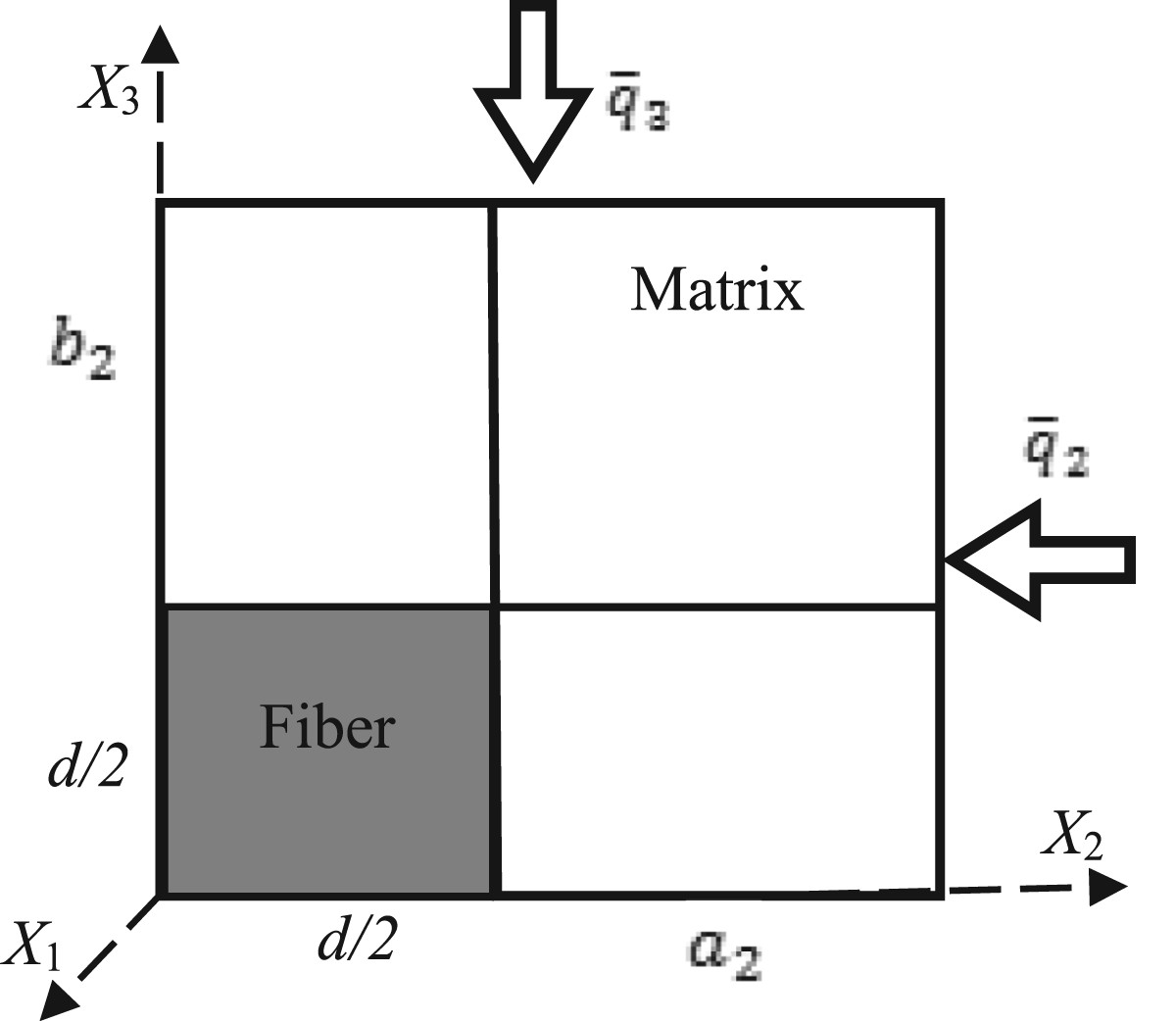
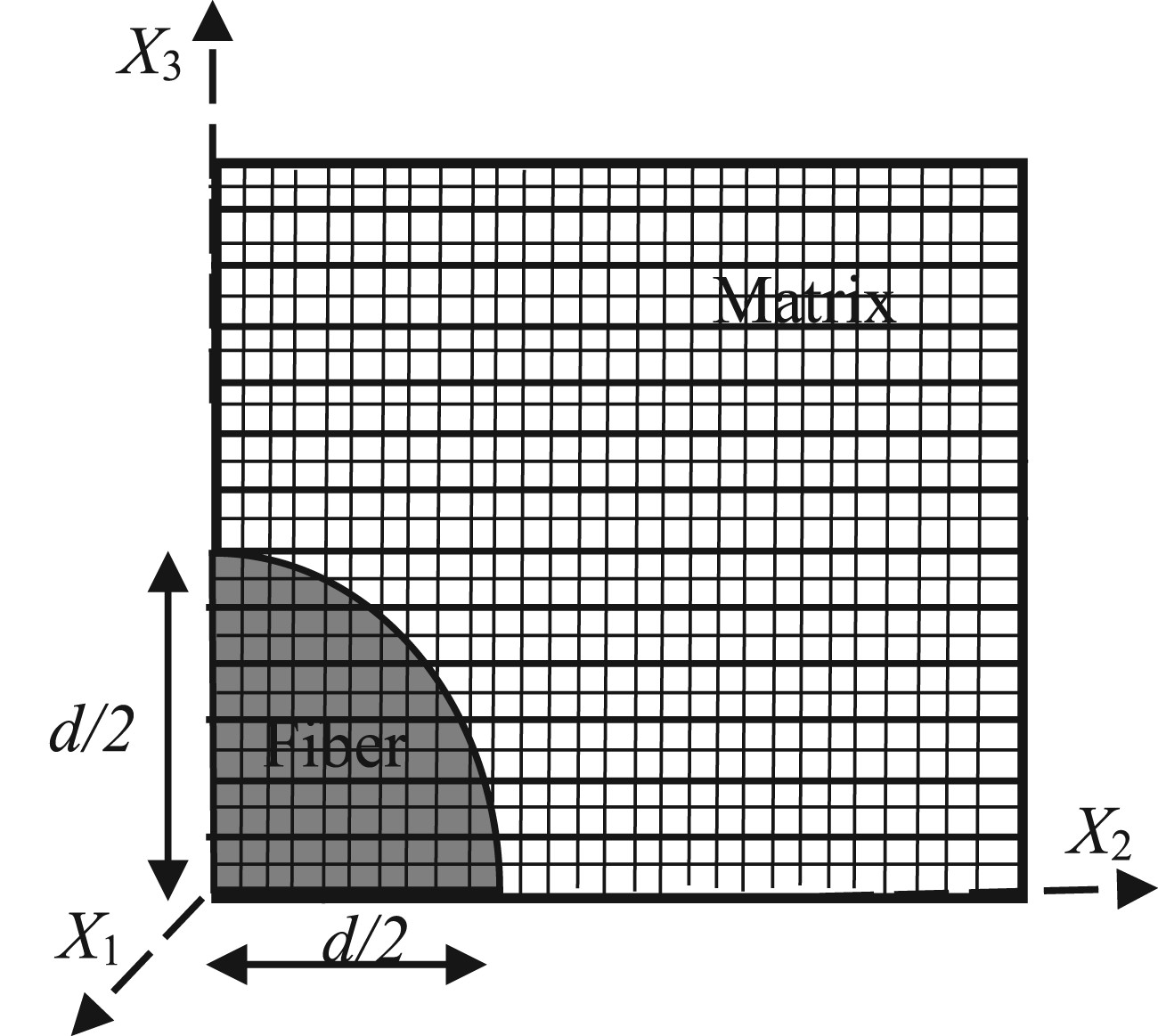
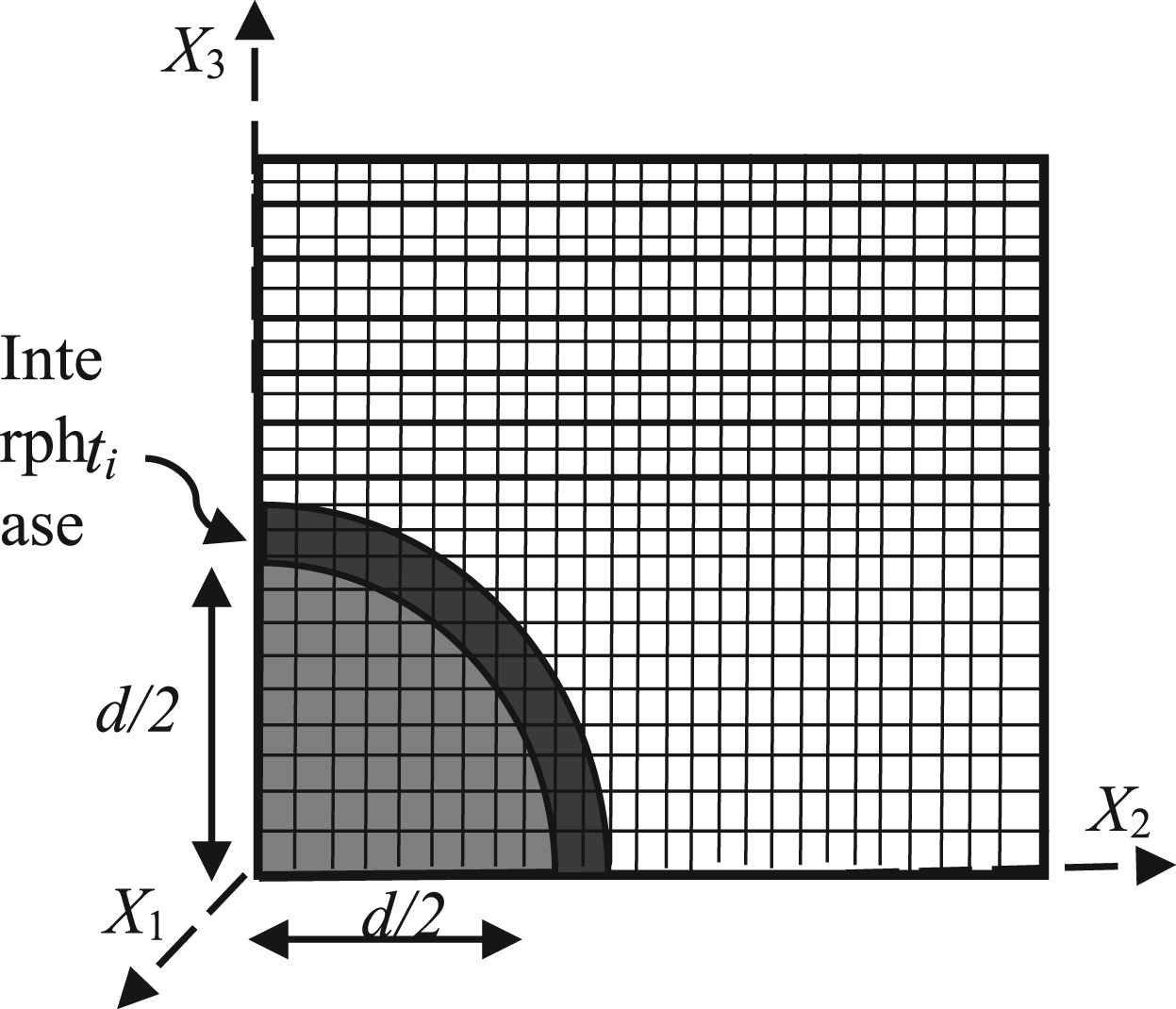
Based on the Fourier's heat conduction law, the heat flow vector q is related to the temperature gradient by following relation

 denotes the temperature gradient and K is the thermal conductivity tensor. The following equilibrium equations for the heat flux in the sub-cells can be given by applying the global heat flow
 over the RVE in the normal directions, as
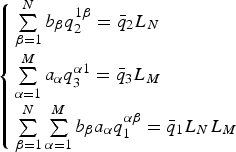
 is the heat flux within sub-cell αβ in the Xi direction. Also, imposing the continuity conditions of the heat flux along the interfaces, one can arrive
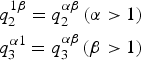
Assuming a linear temperature gradient within the sub-cells of the RVE [45], the continuity conditions of the temperature can be expressed as
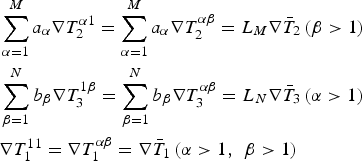
 and
and
 stand for the temperature gradient in sub-cell αβ and the global temperature gradient in the Xi direction, respectively. Based on the Fourier's law, the following relation is expressed for sub-cell αβ


 and
and
 stand for the sub-cells heat flux vector and external heat excitation vector, respectively. Moreover,
 represents the coefficient tensor generated by the geometrical parameters and material properties of the sub-cells. First, a global heat flow on the RVE of composites is applied. The heat flux within each sub-cell is determined by solving the set of governing equations included in Equation (6). Then, by means of Fourier's law; i.e., Equation (5), the temperature gradient in each sub-cell can be calculated. The global temperature gradient of the RVE can be extracted through Equation (4). Finally, the equivalent thermal conductivities of fibre-reinforced composites will be determined by Fourier's law.
The thermal conductivities along the X1-direction (
 ), X2-direction (
 ) and X3-direction (
 ) are calculated, as



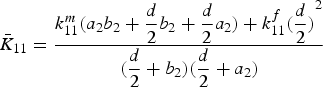
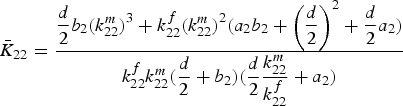
For a square RVE with four sub-cells as shown in Figure 1, the following closed form solutions for the equivalent thermal conductivities of FRPMCs are derived, as
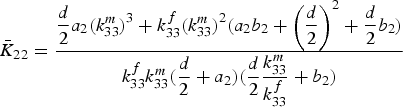
A comparison between the results of the SUC model and experiment is made first to validate the developed formulations and the solution strategy. The measured values for axial and transverse thermal conductivities of unidirectional carbon fibre (GY-80)-reinforced 69 epoxy composite at different temperatures are available in Ref. [35]. The thermal conductivities of the constituent materials of the fibrous composite as a function of temperature are gained by fitting polynomials to the reported data in Ref. [35]. The following temperature-dependent thermal conductivity for carbon fibre GY-80 and 69 epoxy resin is used:
for carbon fibre GY-80: kf11 = 173.3+0.488T-0.00178T2 W m−1°C−1 and kf22 = 30 W m−1°C−1 for 69 epoxy: km = 0.5655+0.00124T W m−1°C−1.
The axial and transverse thermal conductivities of carbon fibre GY-80/69 epoxy composite versus temperature are given in Figure 4(a,b), respectively. The FVF is equal to 60% as reported in Ref. [35]. The model predictions are seen to be in good agreement with the experimental data [35]. Both axial and transverse thermal conductivities of the composite increase with the increase of temperature. It is due to the increase of thermal conductivity of constituents, including fibre and matrix with the rise of temperature. Since the material properties of fibrous composites across the axial direction are significantly dominated by the axial properties of fibre, the variation trend of axial thermal conductivity of 69 epoxy composite with temperature is similar to that of axial thermal conductivity of carbon fibre GY-80, as shown in Figure 4(a). However, the overall behaviour of fibrous composites along the transverse direction is considerably dominated by the matrix properties. Therefore, the variation trend of transverse thermal conductivity of 69 epoxy composite with temperature is similar to that of 69 epoxy resin thermal conductivity, as shown in Figure 4(b).
Comparison between the results of the present model and experiment [35] for (a) axial and (b) transverse thermal conductivities of carbon fibre (GY-80)-reinforced 69 epoxy composite.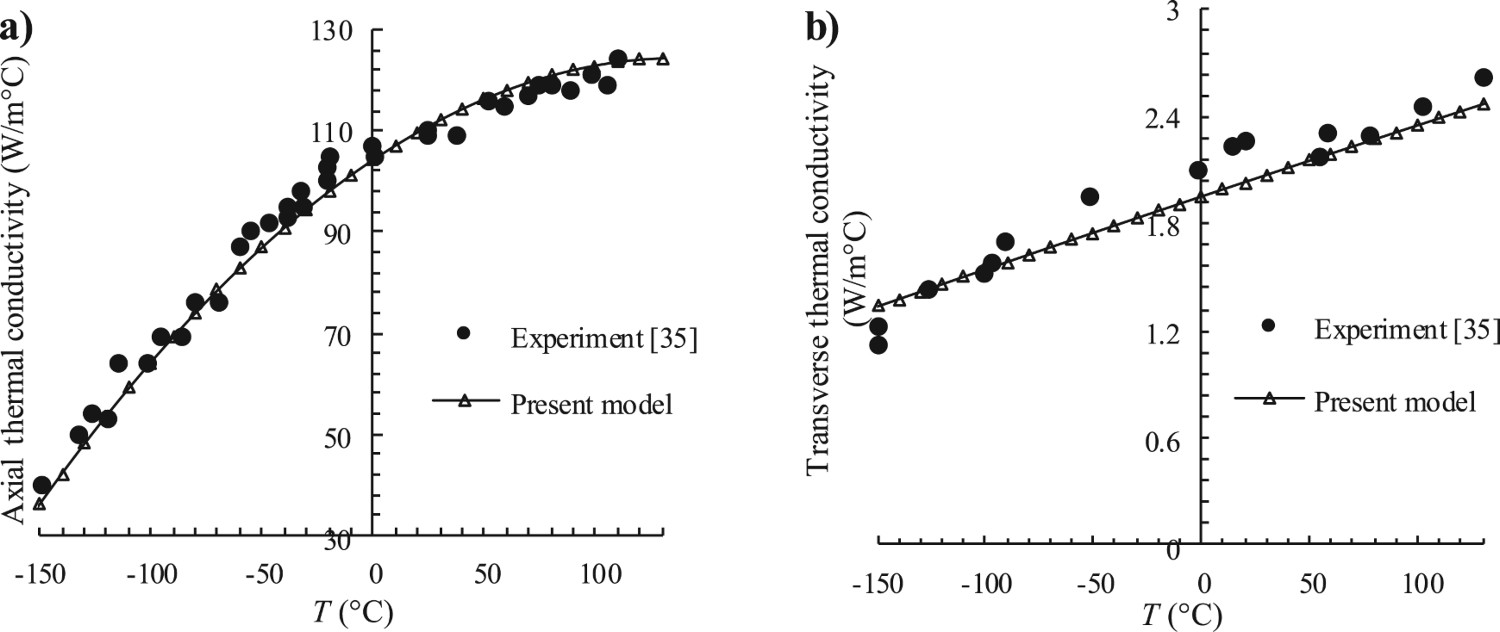
The effect of shape of fibre cross-section on the thermal conducting behaviour of carbon fibre GY-80/69 epoxy composite is investigated. To form the circular shape of fibre, the RVE of the SUC model presented in Figure 2 is extended to 50 × 50 sub-cells. The results predicted by the model with a square cross-section and a circular cross-section for fibre are illustrated in Figure 5. The variation of axial and transverse thermal conductivities with FVF is shown in Figure 5(a,b), respectively. Figure 5(a) reveals that the shape of fibre cross-section does not affect the thermal conducing behaviour of fibrous composite across the axial direction. It can be seen that increasing FVF leads to a linear increase in axial thermal conductivity of fibre-reinforced polymer composites. Also, according to the outcomes of Figure 5(b) when FVF is lower than 50%, the contribution of the cross-section shape of fibre to the transverse thermal conductivity is found to be negligible. However, when the FVF becomes higher than 50%, differences in the results of the model can be observed. The transverse predictions of the model with a circular cross-section of fibre are slightly higher than those of the model with a square cross-section of fibre. A nonlinear increase is observed in equivalent transverse thermal conductivity of 69 epoxy composite with the rise of carbon FVF.
Effect of cross-section shape of fibre on the (a) axial and (b) transverse thermal conductivities of carbon fibre (GY-80)-reinforced 69 epoxy composite.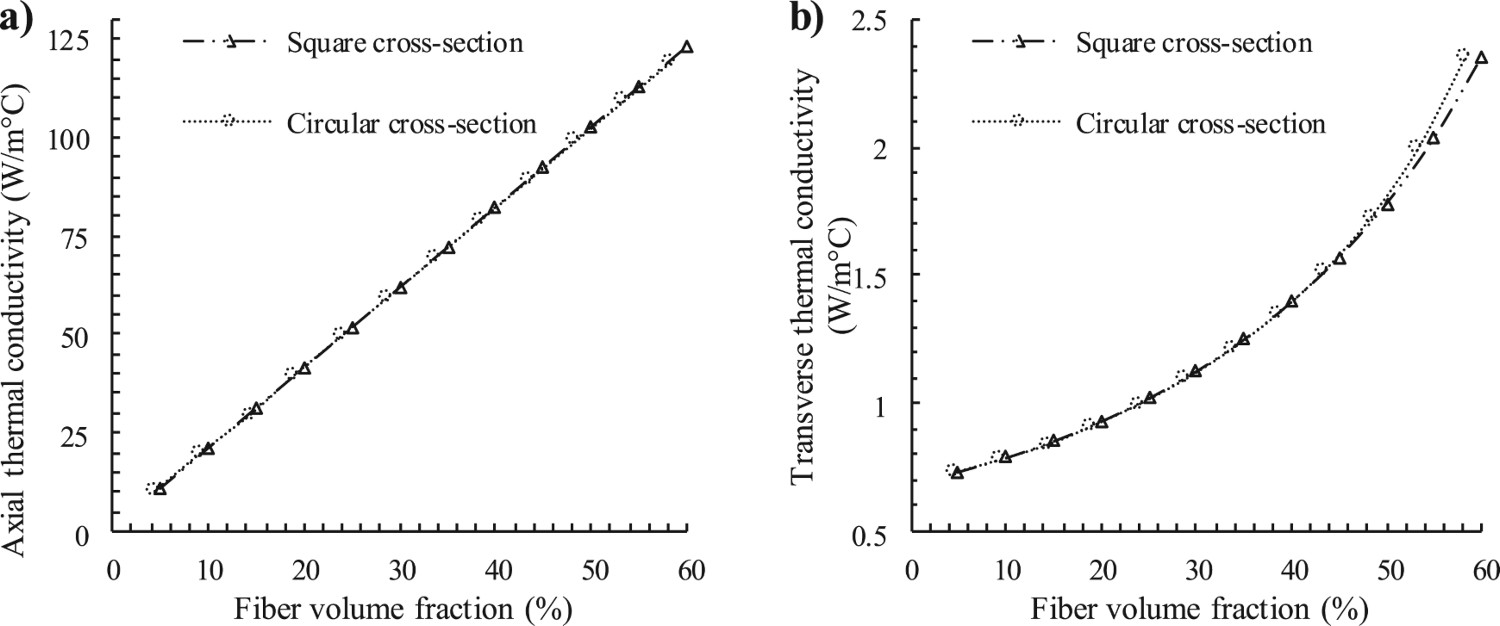
The thermal conductivities predicted by the SUC micromechanical model are compared with the experimental measurements [52] for carbon fibre AS4-reinforced 3501 epoxy composite where the temperature gradient is at an angle with the fibre orientation. On the other words, off-axis thermal conductivity of carbon fibre AS4-reinforced 3501 epoxy composite is obtained. The thermal conductivity for carbon fibre AS4 in axial and transverse directions at 145°C is equal to 11.3 and 1.6 W m−1°C−1 [52]. Also, 3501 epoxy thermal conductivity is 0.27 W m−1°C−1 [52]. Figure 6 shows a specimen of fibrous composite in which the fibre is inclined at angle θ. In this case, the thermal conductivity for different values of θ (i.e. off-axis thermal conductivity) can be determined as
A specimen of fibrous composite in which the fibre is inclined at angle θ.

Figure 7 displays the variation of thermal conductivity of carbon fibre AS4-reinforced 3501 epoxy composite with the fibre orientation angle. The volume fraction is equal to 57% according to Ref. [52]. An excellent agreement can be found between the model predictions and experiment [52]. It should be noted that as the loading is varied from directly in line with the fibre axis to normal to the fibre axis, the effective material properties of the fibrous composites change from fibre-dominated to matrix-dominated. So, it is expected that the effective thermal conductivity of carbon fibre AS4/3501 epoxy composite decreases with the increase of fibre off-axis angle from 0° (axial direction) to 90° (transverse direction).
Comparison between the results of the present model and experiment [52] for off-axis thermal conductivity of carbon fibre AS4-reinforced 3501 epoxy composite.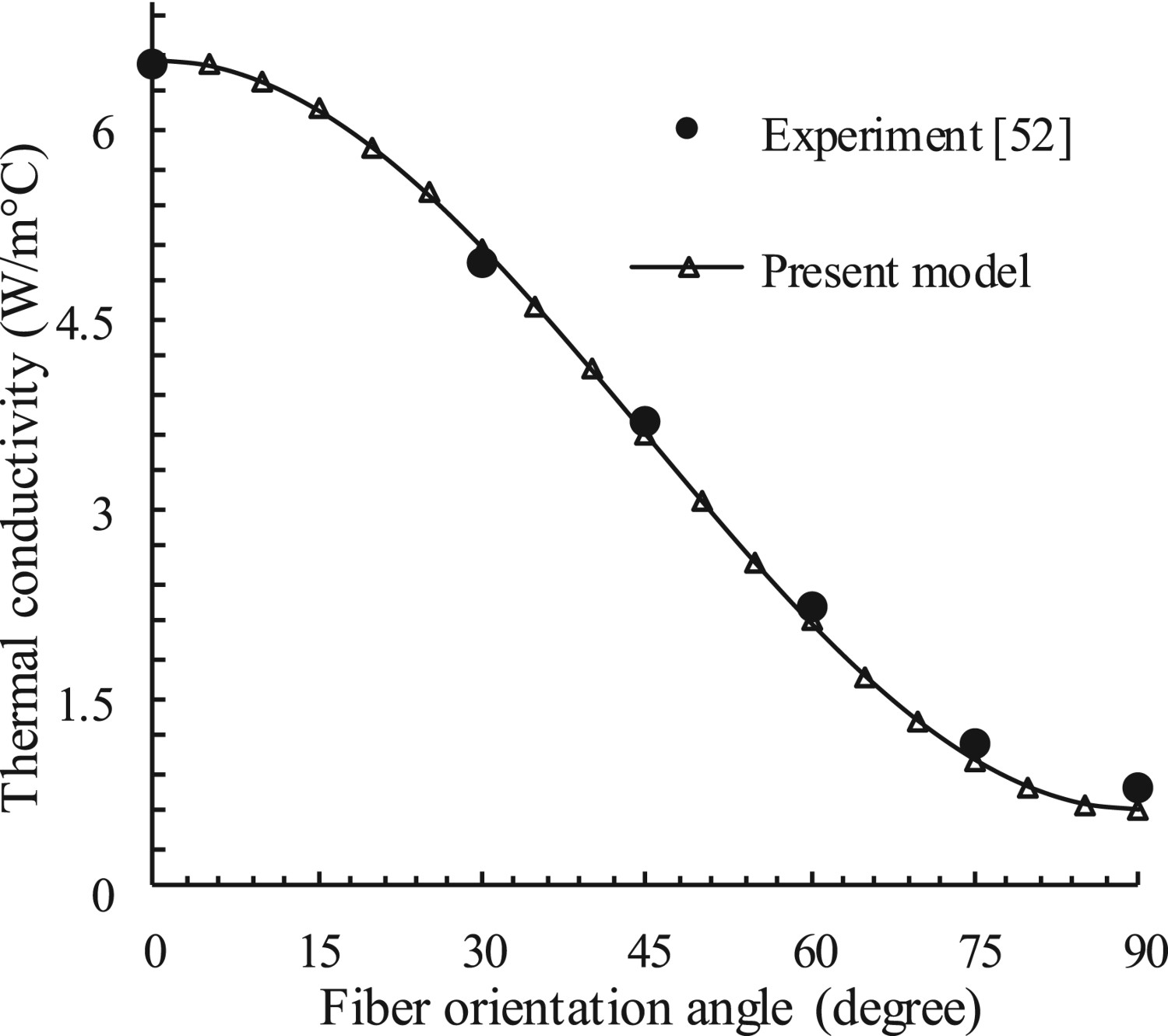
The results of Figures 4 and 7 demonstrate that the developed micromechanical method is really accurate and effective in predicting the thermal conductivities of general FRPMC systems.
The proposed unit cell micromechanics approach is now employed to study the effect of interphase on the thermal conducting behaviour of multi-phase fibrous composites. To this end, the carbon fibre GY-80/69 epoxy composite is selected in which the interphase covers the outer surface of the fibre. Parameter ti/d is defined as the effective thickness of interphase. The thermal conductivities of three-phase composite across the axial and transverse directions versus FVF are shown in Figure 8(a,b), respectively. These values are used to compute the equivalent thermal conductivities: T = 100°C, ti/d = 0.1 and FVF = 60%. Note that the results are obtained for three different interphase thermal conductivities, including ki = 10 × km, km (which it can be considered as without interphase condition or a two-phase composite system) and 0.1 × km. Figure 8(a) elucidates that the effect of interphase on the equivalent axial conductivity of the composite can be neglected. The axial thermal conductivity of the three-phase composite has got linearly variation with FVF. It is seen from Figure 8(b) that interfacial region plays an important role in the equivalent thermal conductivity of the composite materials along the transverse direction. The transverse results predicted by the model considering ki = 0.1 × km are slightly lower than those transverse results predicted by the model considering ki = km. Also, the predictions of the unit cell model considering ki = 10 × km are remarkably higher than those of the model considering ki = km. This suggests that strong enhancements in transverse thermal conductivity in composites can be attained by properly engineering the fibre/matrix interphase. When ki = 10 × km or ki = km, the equivalent transverse thermal conductivity nonlinearly increases with the increase of FVF.
Variation of thermal conductivity of three-phase 69 epoxy composite with carbon fibre GY-80 volume fraction in (a) axial and (b) transverse direction.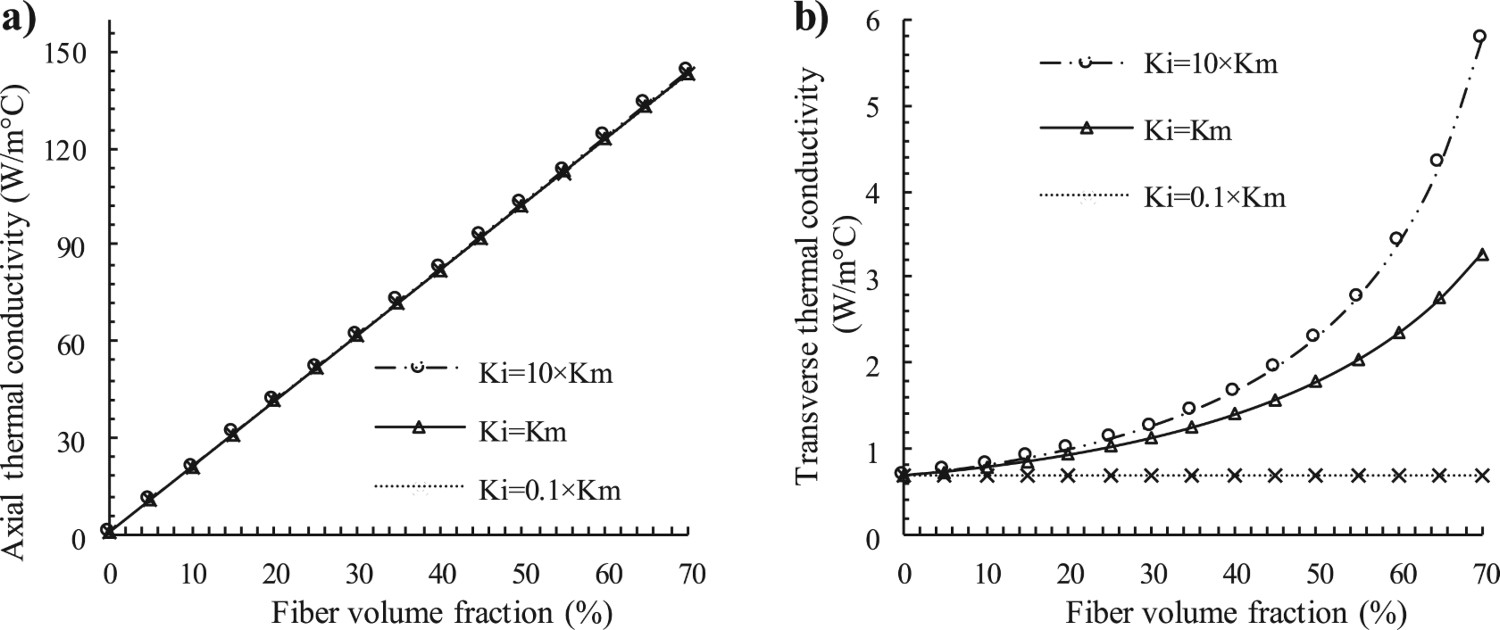
Figure 9(a,b) shows the thermal conductivities of three-phase carbon fibre GY-80/69 epoxy composite across the axial and transverse directions, respectively, versus interphase thermal conductivity (ki). The results are obtained for three different volume fractions, including 30%, 45% and 60% at T = 100°C. Also, the effective interphase thickness is assumed to be ti/d = 0.1. The influence of the variation in the interphase material on the thermal conducting behaviour of the composites is of the primary interest here. Thermal conductivity for the interphase is changing in the range between 0.1 and 30 W m−1°C−1. It is noticed from Figure 9(a) that the different interphase thermal conductivities have very little influence on the final axial thermal conducing response of three-phase composites. However, it should be pointed out from Figure 9(b) that in the transverse direction, the three-phase composite thermal conductivity increases asymptotically with the increase of interphase thermal conductivity. For example, in the case of 69 epoxy composite reinforced with 60 vol.-% carbon fibre GY-80, when interphase thermal conductivity increases from 0.1 to 8 W m−1°C−1, the transverse thermal conductivity can be enhanced from 0.874 to 3.38 W m−1°C−1, corresponding to a 293.6% increment. Also, increasing the interphase thermal conductivity from 8 to 30 W m−1°C−1 leads to a 6.4% increment in transverse thermal conductivity of 69 epoxy composite. So, for this type of composite when ki > 8 W m−1°C−1, further increasing the interphase thermal conductivity does not significantly contribute to the transverse thermal conductivity of composite. It can be concluded that for any type of composite system, there is a critical value of interphase thermal conductivity after which further increase of ki cannot considerably affect the equivalent transverse thermal conductivity of composite system.
Variation of thermal conductivity of three-phase 69 epoxy composite with interphase thermal conductivity in (a) axial and (b) transverse direction.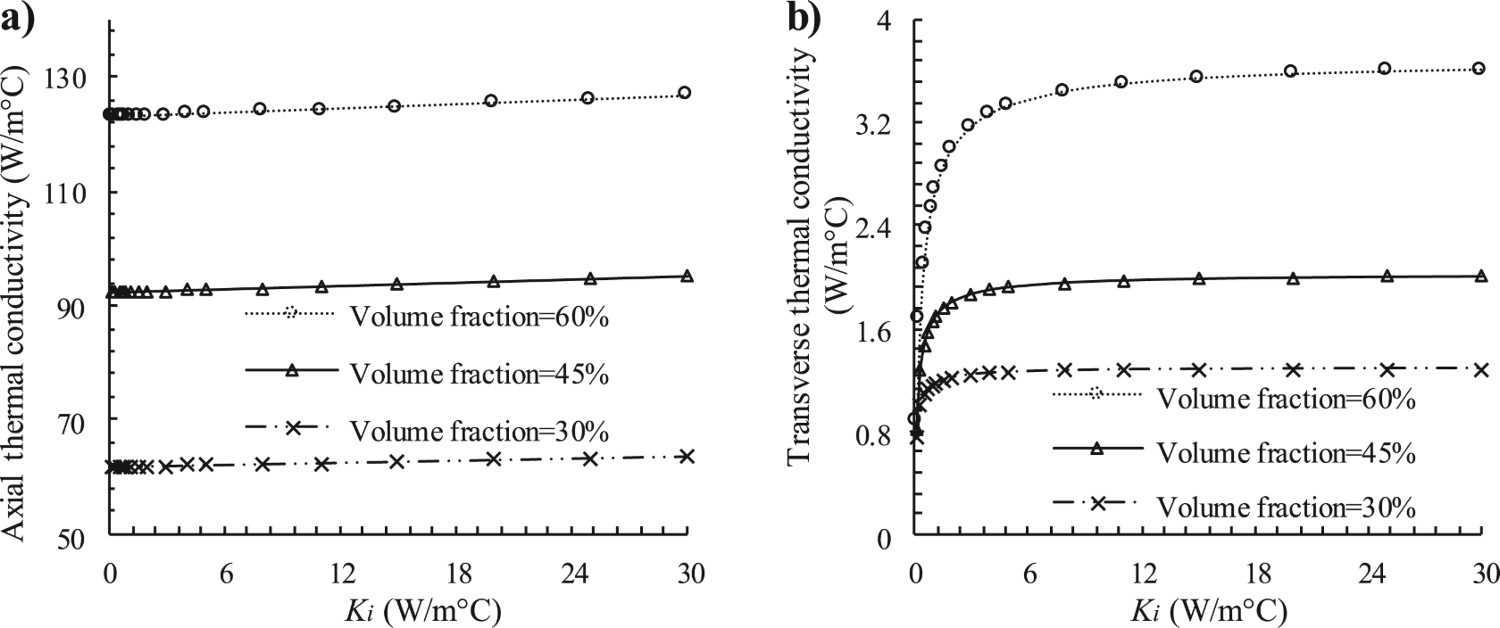
Another study is accomplished to explore the role of interphase thickness in the overall thermal conducting behaviour of three-phase fibrous composites. The variation of axial and transverse thermal conductivities with ti/d ranging from 0.01 to 0.25 is illustrated in Figure 10(a,b), respectively. In this micromechanical analysis, it is assumed that ki = 10 × km. It can be observed from Figure 10(a) that the thermal conducting response across the axial direction is not influenced by changing the thickness of the interphase. As represented in Figure 10(b), the effect of the interphase thickness is not significant on the equivalent transverse thermal conductivity when the FVF is small, while substantial effect is observed when FVF becomes large. The rise of interphase thickness leads to a continuous increase in the transverse thermal conductivity of FRPMCs.
Variation of thermal conductivity of three-phase 69 epoxy composite with effective interphase thickness in (a) axial and (b) transverse direction.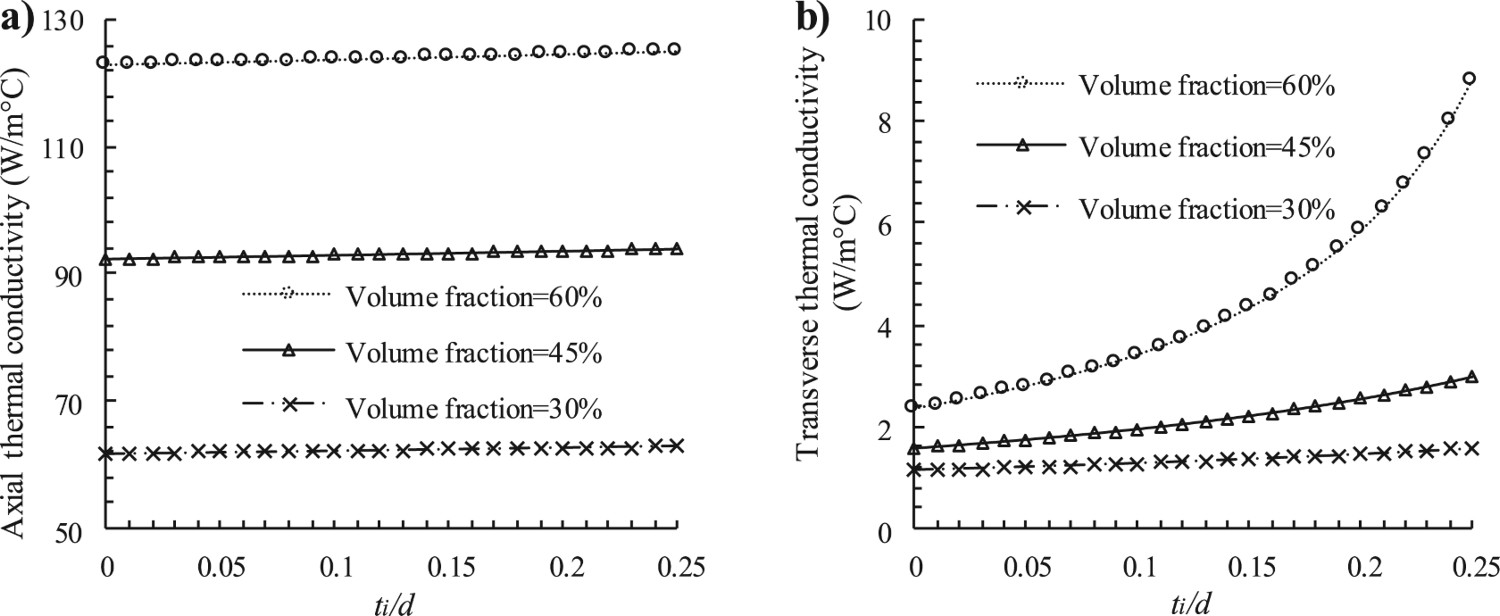
Figure 11(a,b) shows the effect of polymer matrix thermal conductivity km on the effective thermal conductivities of carbon fibre GY-80-reinforced epoxy composites in the axial and transverse directions, respectively. It is found from Figure 11(a) that the change of polymer matrix thermal conductivity does not affect the equivalent axial thermal conductivity of fibrous composites. It is due to the fact that the axial properties of unidirectional composites are significantly dominated by the fibre properties. However, the results of Figure 11(b) shows that the transverse thermal conductivity increases with the increase of matrix thermal conductivity. This trend is expected since the transverse properties of fibrous composites are mostly dominated by the matrix properties.
Effect of polymer matrix thermal conductivity on the effective thermal conductivities of 69 epoxy composite in (a) axial and (b) transverse direction.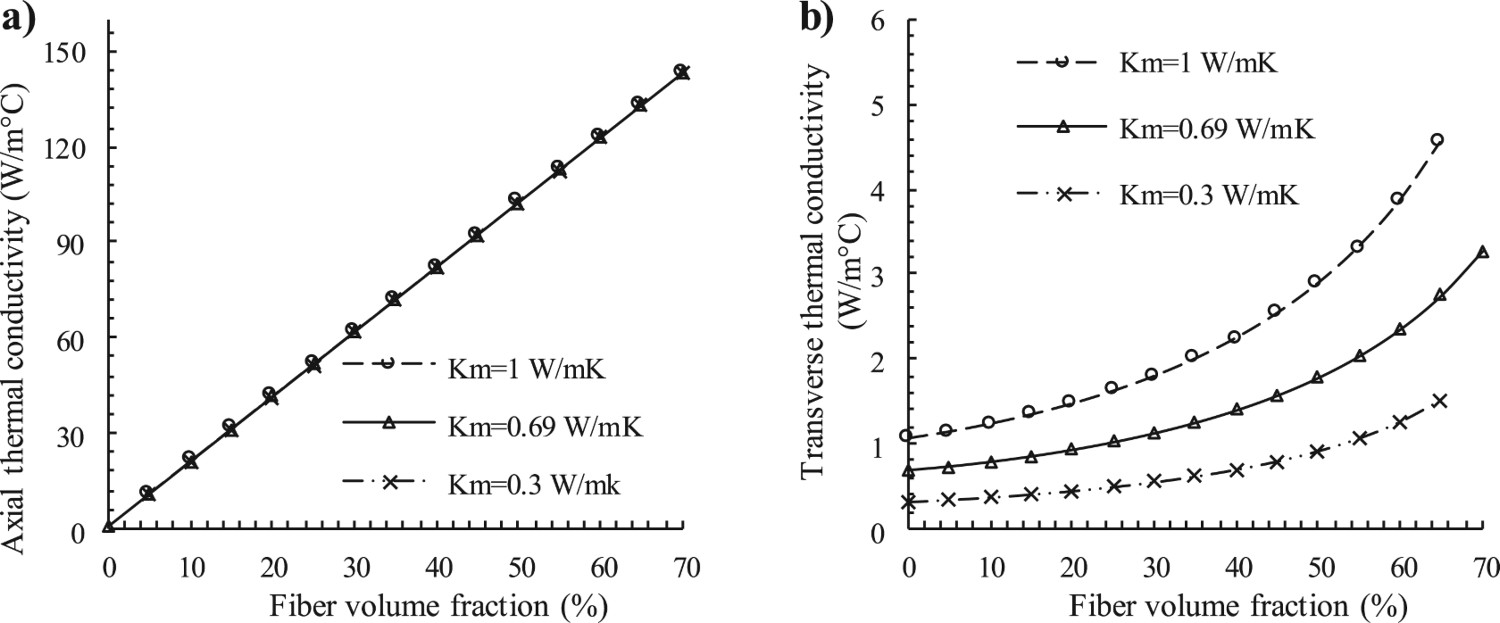
The effect of fibre transverse thermal conductivity on the axial and transverse thermal conductivities of 69 epoxy composites is shown in Figure 12(a,b), respectively. The variation of fibre transverse thermal conductivity does not affect the equivalent axial thermal conductivity of fibrous composites which can be found from Figure 12(a). According to Figure 12(b), when FVF is higher than 50%, the increase of transverse thermal conductivity of fibre can increase the transverse thermal conductivity of fibrous composites.
Effect of fibre transverse thermal conductivity on the effective thermal conductivities of 69 epoxy composite in (a) axial and (b) transverse direction.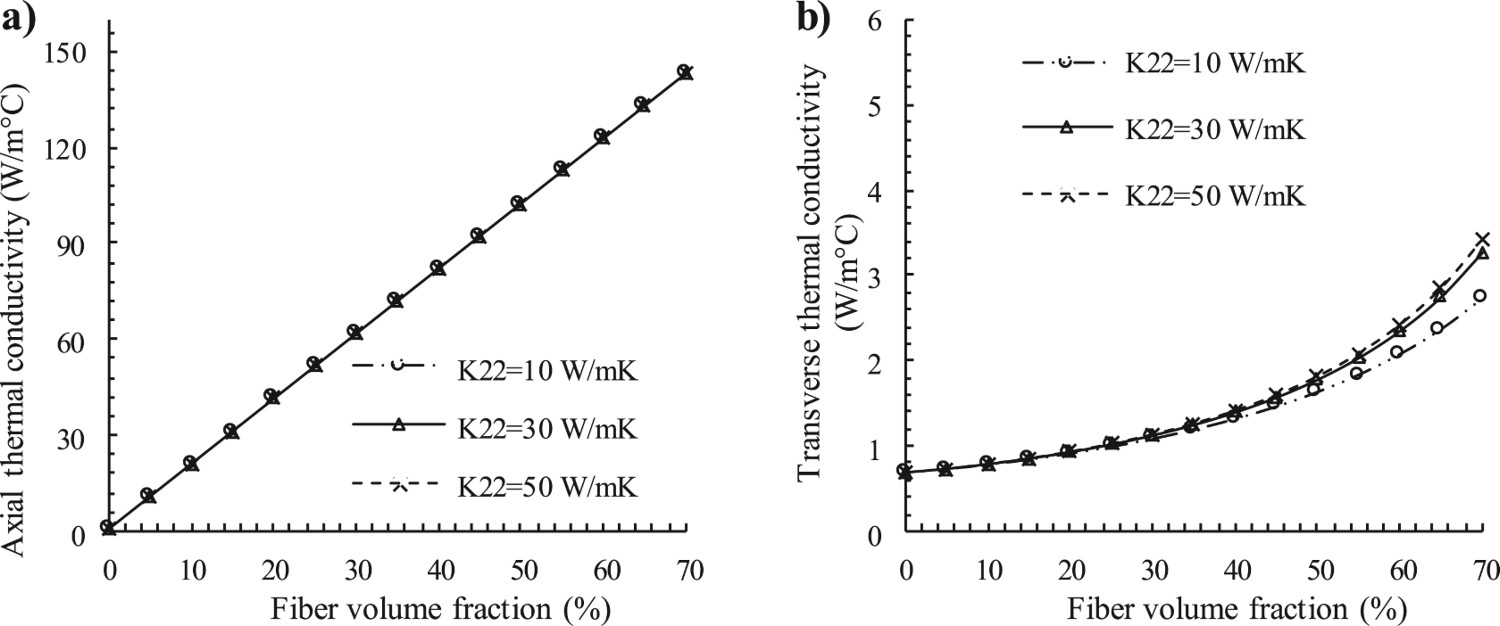
Another parametric study is directed to explore the role of axial thermal conductivity of fibres in the thermal conducting behaviour of 69 epoxy composites. The results are provided in Figure 13. It can be observed from Figure 13(a) that increasing fibre axial thermal conductivity leads to a significant increase in the axial thermal conductivity of fibrous composites. However, the change of fibre axial thermal conductivity does not contribute to the transverse thermal conductivity of fibrous composites.
Effect of fibre axial thermal conductivity on the effective thermal conductivities of 69 epoxy composite in (a) axial and (b) transverse direction.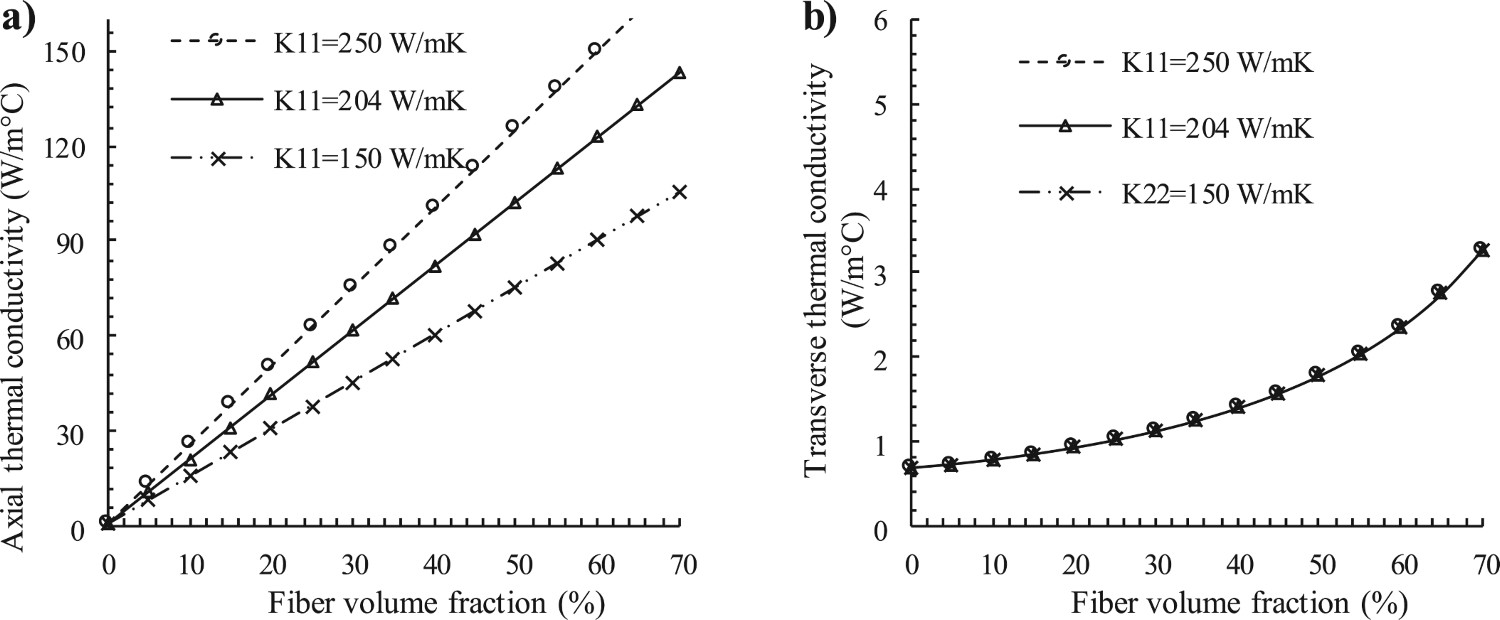
In this work, the SUC micromechanical method formulation was proposed and applied to investigate the effect of fibre/matrix interfacial region on the equivalent thermal conductivities of unidirectional fibre-reinforced polymer composites. A great flexibility in parametric study of the interphases was provided by the proposed model, since the size and material property of the interphases can be changed very easily to investigate their effect on the thermal conducting behaviour of the three-phase fibrous composites. Also, the effects of FVF, orientation angle and shape of cross-section as well as temperature-dependent properties of constituents were broadly examined. The developed micromechanical model was very accurate as was validated using the available experimental measurements. Numerical studies in this paper revealed that the axial thermal properties were not influenced by the interphase characteristics. However, it was found the thickness and material property of the interphase can have important effects on the thermal conducting behaviour of the fibre-reinforced composite materials across the transverse direction, particularly when the fibre volume fractions are large. As the interphase thermal conductivity increases, the transverse thermal conductivity of three-phase composites asymptotically increases. Moreover, if the thermal conductivity of interphase is higher than that of matrix, increasing interphase thickness leads to a continuous enhancement in composite transverse thermal conductivity.
Footnotes
Disclosure statement
No potential conflict of interest was reported by the authors.
Notes on contributors