







Abstract
The effects of mixing sequence of the polyether polyol and curing agent (triethylenetetramine) on mechanical and thermal properties and morphology of epoxy/polyether polyol/organoclay ternary nanocomposites are investigated in this study. The polyether polyol domain size data are relatively unchanged with mixing order both in epoxy/polyether polyol blends and in ternary nanocomposites. Generally, impact strength data of the ternary nanocomposites prepared by the second addition order are higher than the ones produced by the first addition order. Flexural strength and strain at break may be accepted as unaltered generally for the ternary nanocomposites with respect to addition order. Except for the sample containing 3 wt-% Cloisite® 30B and 3 wt. % polyether polyol, flexural modulus data are close to each other in ternary nanocomposites. The highest flexural modulus is obtained for the 5 wt-% Cloisite® 30B and 3 wt-% polyether polyol sample prepared by the second addition order, as 2978 ± 27 MPa.
Keywords
Introduction
Epoxy resins are versatile thermosetting polymers and used in many industrial applications such as composites, structural adhesives, surface coating, electrical laminates, aircraft and spacecraft industries owing to their high strength, low creep, good adhesion to many substrates, and low shrinkage during cure. But, the highly crosslinked nature of cured epoxy resins shows an undesirable characteristic; in the cured state, they are brittle materials and show weak resistance to crack growth [1, 2]. For many years, to improve the fracture toughness of epoxies without affecting stiffness, strength, and glass transition temperature, either soft or rigid fillers are incorporated as a second phase [3]. Epoxy resins may be combined with a wide range of modifiers such as functionalised butadiene-co-acrylonitrile rubbers (carboxyl terminated (CTBN) [4, 5], amine-terminated (ATBN) [6], epoxy terminated (ETBN) [7], hydroxyl-terminated polybutadiene [8], preformed particles (such as core–shell) [9, 10], and thermoplastics poly(methyl methacrylate) [11, 12], poly(ether ether ketone) [13], poly(ether sulphone) [14-16], poly(ether imide) [17, 18], isocyanate-terminated polyether [19]), to improve their toughness and crack resistance. Studies in the literature indicate that the rigid nano-fillers may similarly toughen epoxy as the soft particles do. The debonding of the filler and the consequent void growth, as well as the shear banding of the matrix, play the key roles in toughening [20]. Thus, epoxy-clay nanocomposites have been also studied [21-26]. The dimensional stability, thermal stability, and solvent resistance of epoxy resin are improved in the presence of the silicate layers [27-30].
Recently, significant investigations have been made on the toughening of epoxy nanocomposites by mixing them with rubbery additives. Fröhlich et al. synthesised ternary epoxy nanocomposites containing organically modified layered silicates and liquid poly (propylene oxide-block-ethylene oxide, PPO). They used stearate as a compatibiliser to alter the polarity of either epoxy or PPO to improve toughness [31]. Liu et al. studied ternary nanocomposites composed of diglycidyl ether of bisphenol A (DGEBA) epoxy resin, CTBN rubber and organoclay. As a curing agent, boron trifluoride monoethylamine was used. Nanocomposites containing 6 wt-% organoclay and 20 wt-% CTBN showed improved toughness in comparison to pure epoxy, enhanced glass transition temperature, yield and ultimate strength compared to epoxy/CTBN blend [32]. Asif et al. prepared ternary nanocomposites by blending hydroxyl-terminated PEEK with pendant methyl groups (PEEKMOH) and epoxy resin, organoclay (primary alkyl ammonium modified) and diamino diphenyl sulphone (DDS) curing agent. They observed that toughness was increased in the presence of organoclay and PEEKMOH [33]. Ghafghazi et al. prepared epoxy/urethane nanocomposites. Polytetramethylene ether glycol (PTMEG) was used to prepare urethane prepolymers. According to their results, Young's modulus of the nanocomposite specimens increased with increasing organoclay, but the tensile strength, elongation at break and toughness showed maxima at 3 wt-% Cloisite® 30B content [34]. Epoxy/PMMA/organoclay ternary nanocomposites were also studied to provide synergistic effects of clay and organic additive on the fracture properties of the brittle epoxy matrix [35, 36].
The effects of mixing sequence of the components on the final properties of epoxy based nanocomposites were investigated by some researchers [37-39]. Bakar et al. investigated the mixing sequence of organoclay and polyurethane on epoxy resin based nanocomposites. Four different mixing sequences were applied. The best mechanical properties were obtained when polyurethane was first mixed with epoxy resin before organoclay was incorporated. This is attributed to the better interactions of Cloisite® 30B with the urethane groups of polyurethane, possibly via hydrogen bonding, which might enhance the intercalation [37]. Yap and Chow investigated epoxy/organoclay binary nanocomposites synthesised by different mixing sequence methods. The flexural modulus and strength of epoxy/organoclay nanocomposites prepared by mixing DGEBA and curing agent (cycloaliphatic amine) first, followed by the addition of organoclay (modified by quaternary trimethylstearylammonium ions) were relatively higher than the corresponding properties of the other nanocomposites. It was stated that mixing sequence influenced the dispersion and intercalation/exfoliation of the organoclay in the epoxy matrix [38]. Zhou et al. also studied the mixing order in thermoset polymer composites prepared by long fibres and nanoclays. Organoclay (modified by dimethyl, benzyl, hydrogenated tallow, quaternary ammonium) was exfoliated when nanocomposites were prepared by mixing clay and hardener (polyoxypropylene diamine) first, followed by the addition of DGEBA. In contrast, nanocomposites prepared by mixing epoxy and organoclay before curing agent addition showed intercalated structure [39]. The external force applied on the clay particles depends on may factors, such as the shear rate applied by polymer matrix, macromolecule viscosity, the surface area of clay and surface tension between polymer and clay interface [40-43]. On the other hand, the diffusion of polymers is related with the processing temperature and time, d-spacing of clay, type/concentration of the clay surface modifiers, and chain structure of polymer matrix, which make chemical compatibility necessary [44, 45].
In the present study, in order to understand the mechanism behind the intercalation/exfoliation of organoclay in epoxy nanocomposites and interactions between organoclay surface modifier and epoxy/hardener and/or impact modifier, nanocomposites were prepared by two different mixing sequences. To this end, for the first time in literature, the effects of two mixing sequences of the components for DGEBA epoxy resin, TETA hardener, impact modifier polyether polyol and organoclay (Cloisite® 30B) on mechanical and thermal properties, and morphology of epoxy/polyether polyol/organoclay ternary nanocomposites are investigated by X-Ray Diffraction (XRD), Scanning Electron Microscopy (SEM), Differential Scanning Calorimetry (DSC), impact and flexural tests.
Experimental
Materials
Physical properties of the chemicals used in the study.

Methods
Nanocomposite preparation
The epoxy based nanocomposites containing 3wt-% polyether polyol and 1, 3, 5 wt-% organoclay, respectively, were prepared by two different mixing sequences.
In the first procedure, organically modified montmorillonite and DGEBA monomer were mechanically mixed for 2 h at 35°C, followed by mixing in an ultrasonic bath (Bransonic B 2200, Danbury, CT, USA) at a frequency of 47 kHz, for 30 min. Then, the polyether polyol was added to the mixture, and mixing was carried out for one more hour. Later, the hardener was added. The mixtures were degassed and cooled to room temperature while mixing. They were poured into open moulds, cured at 75°C for 16 hrs, and post cured at 130°C for 3 hrs.
In the second procedure, DGEBA monomer and organoclay were mixed mechanically, followed by mixing in an ultrasonic bath, as mentioned in the first procedure. Polyether polyol was added to this combination after it was mixed with the curing agent and left at room temperature for 1 hr. The mixtures were degassed during mixing. After the release agent was applied to the mould surfaces, the slurry mixtures were poured into aluminium moulds and cured at the conditions mentioned for addition order I. The samples were stored in desiccators at room temperatures before testing. Flowcharts for the first and second two mixing procedures are given in Figures 1 and 2, respectively.
Addition order I flowchart. Addition Order II flowchart.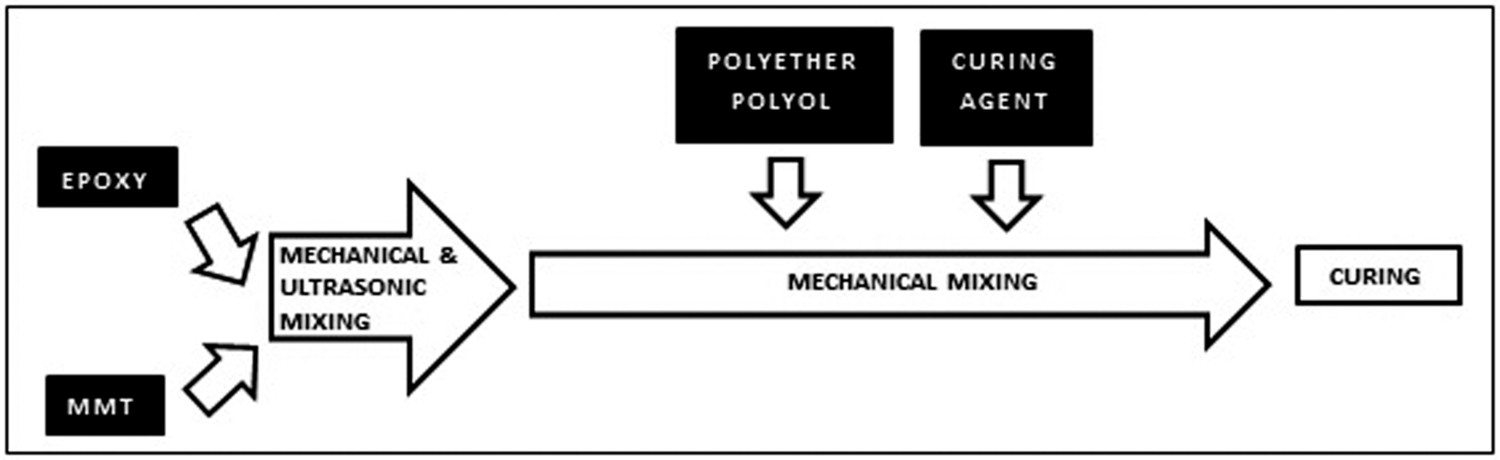
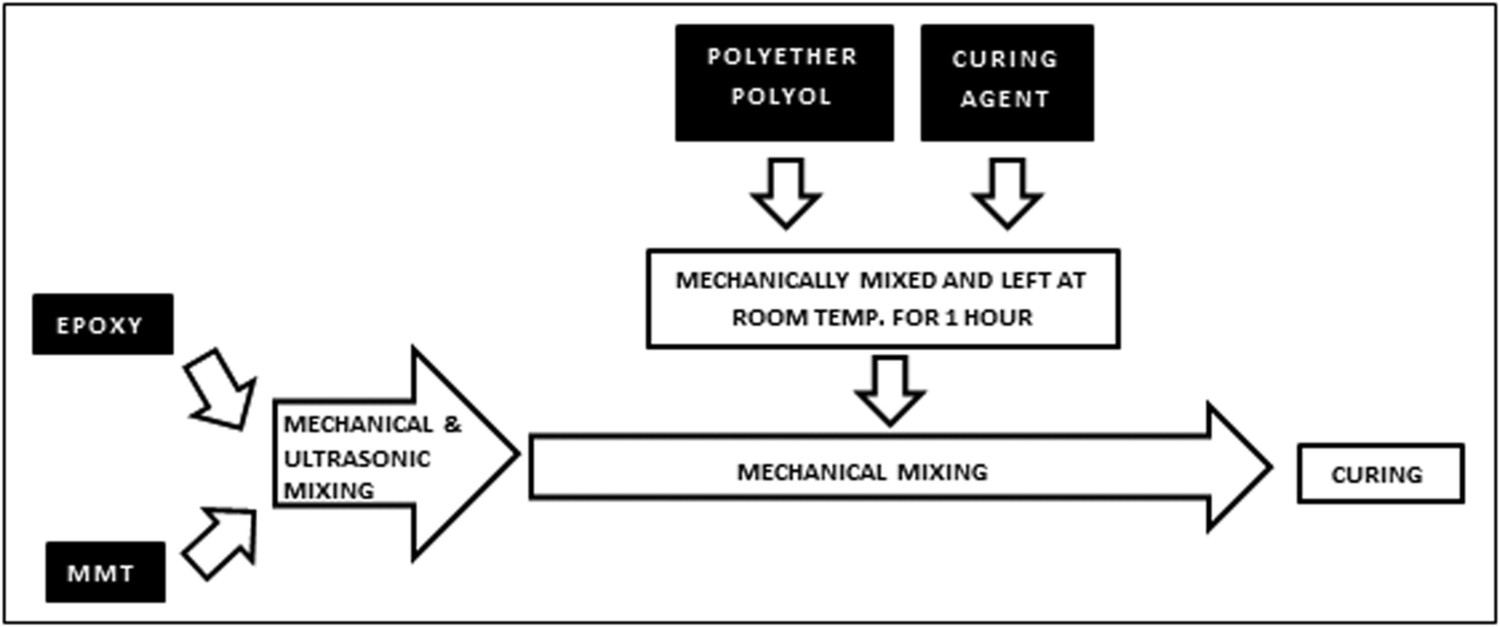
Binary epoxy/organoclay nanocomposites and epoxy/polyether polyol blends were also prepared using similar procedures to observe the individual effects of organoclay and polyether polyol on the epoxy matrix.
Characterisation experiments
In order to investigate the effects of mixing sequences of the components on the final properties of the materials, samples were characterised in terms of morphological, thermal, and mechanical properties.
A Rigaku Miniflex X-ray diffractometer equipped with CuKα radiation source operated at a generater voltage of 40 kV and current of 30 mA was used in order to measure the basal spacing of organoclay. The diffraction patterns were collected at a diffraction angle 2θ from 1° to 10° at a scanning rate and step size of 5° min−1 and 0.02°, respectively. SEM images were obtained by a low voltage JEOL JSM-6400 microscope to analyse fracture surfaces. The fracture surfaces were coated with a thin layer of gold before examination. Domain sizes of 100–250 elastomers were analysed by Image J software by NIH (Image Processing and Analysis in Java). Average domain size (
 ) calculation was carried out by using the area of domains (Ai) obtained by the programme for a number of the domains (ni) in Equations (1) and (2):

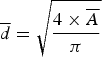
The mechanical tests were performed at room temperature. Following the relevant standards, at least five samples were tested in impact and flexural tests for each type of sample, and average results with standard deviations were reported.
Results and discussion
X-ray and TEM analysis
The d-spacing data of nanocomposites processed by different addition orders.
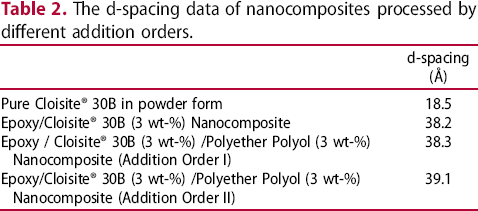
Figure 3(a) shows the TEM micrograph of epoxy/polyether polyol (3 wt-%) blend prepared by using addition order I. The uniformly distributed white dispersed immiscible domains correspond to polyether polyol in the micrograph. TEM micrographs of epoxy/Cloisite® 30B (3 wt-%)/polyether polyol (3 wt-%) ternary nanocomposites prepared by using addition order I and II are shown in Figure 3(b–c) and (d), respectively. The dark lines in these micrographs represent the thickness of individual clay layers or agglomerated particles (tactoids), whereas the grey/white areas show the polymer matrix. It can be observed that nanocomposites contain a small fraction of dispersed features involving one or two-layered silicate layers as well as a significant fraction of intercalated multi-layered clay platelet stacks. XRD data in Table 2 supported this observation since d-spacing of pure organoclay is observed to increase in ternary nanocomposites composed of epoxy and polyether polyol. According to TEM figures, clay platelets are not detected in the polyol domains, but clay platelet alignments differ in the nearby region.
TEM micrographs of (a) epoxy/polyether polyol (3 wt-%) blend (addition order I) (b) epoxy/Cloisite® 30B (3 wt-%)/polyether polyol (3 wt-%) nanocomposites (addition order I) (c) epoxy/Cloisite® 30B (3 wt-%)/polyether polyol (3 wt-%) nanocomposites (addition order I) (enlarged) (d) epoxy/Cloisite® 30B (3 wt-%)polyether polyol (3 wt-%) nanocomposites (addition order II).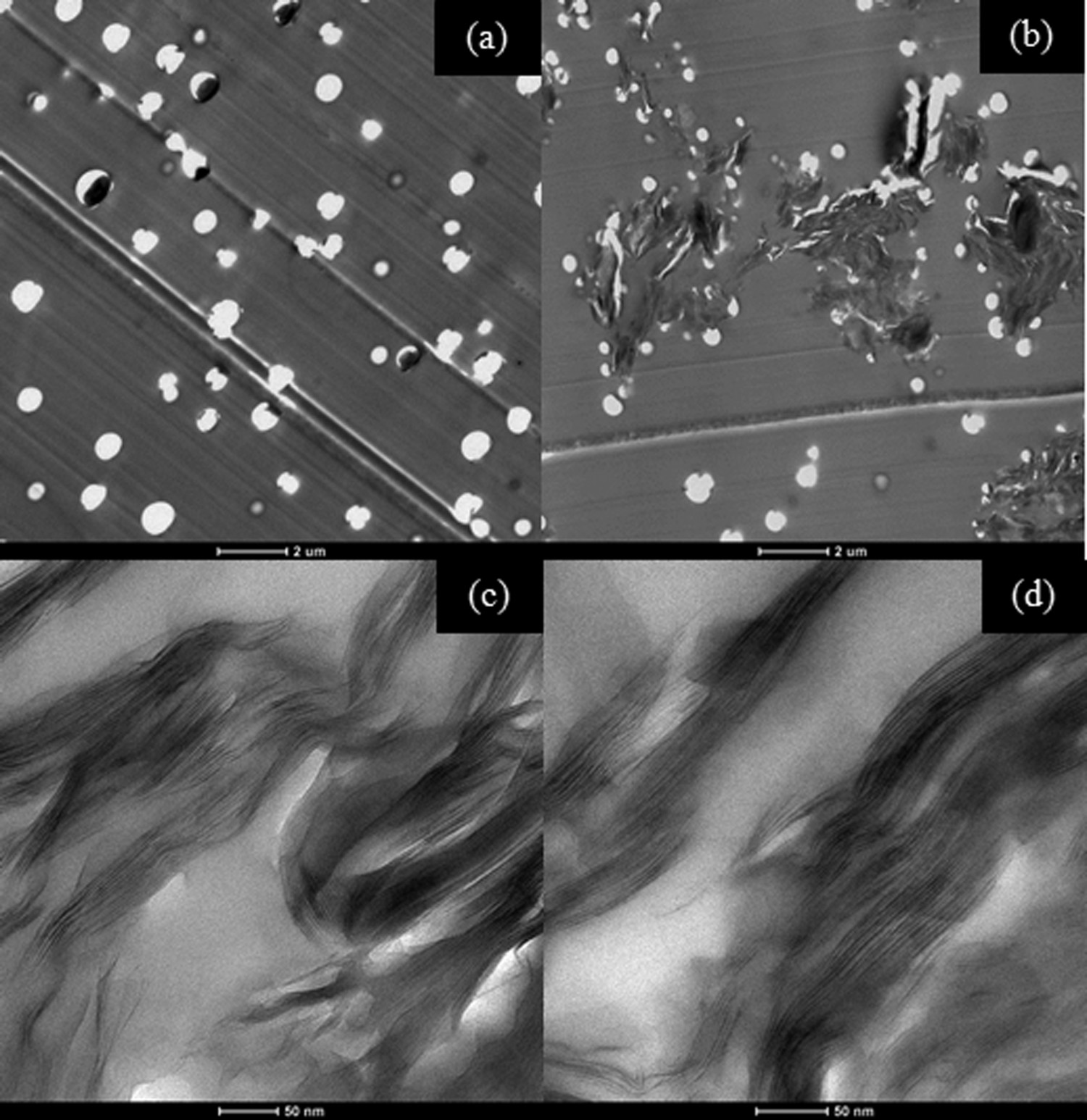
One of the aims of this study is to change the mixing order of polyether polyol to investigate the effect of shear forces applied on clay platelets since the external force applied on the clay agglomerates from the polymer depends on viscosity. According to Table 1, the viscosity of polyether polyol is higher than the viscosity of triethylenetetramine; thus, it is expected that higher shear forces are applied to the clay layers in addition order I in comparison to the addition order II, which would lead to a difference in d-spacing.
From the experimental results obtained in the present study, chemical compatibility between the main epoxy polymer matrix and organoclay are understood to be the predominant factors in intercalation phenomena. Bakar et al. also stated that chemical thermodynamics acts as the driving force for the intercalation process [37]. The shear forces acting on clay platelets, resulting from the addition order of the components in this study is not effective in intercalation. The shear forces in this situation may ease the intercalation process by dispersing the original clay agglomerates and large primary clay particles into smaller size [46].
SEM analysis
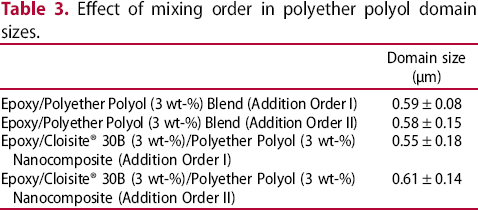
Figure 4 shows the SEM micrographs of epoxy/polyether polyol blends prepared by using addition order I and II, and epoxy/polyether polyol/Cloisite® 30B nanocomposites by using addition order I and II. The rubber domain sizes of the samples are summarised in Table 3. SEM micrographs showed uniformly distributed immiscible polyether polyol rubbery domains throughout the polymer matrix. These domains as crack stoppers during yielding and impact strength improves. Fracture surfaces of the ternary nanocomposites consist of three distinct phases as epoxy, organoclay, and polyether polyol. Considerable surface roughness in the presence of organoclay indicates that the cracks progressed along a more tortuous path, which increases the fracture surface area and the toughness, thus impact strength increases with the addition of filler. The presence of the organoclay in these samples does not seem to change the dispersion of the rubber domains. However, in another publication, authors showed that, at high polyether polyol and organoclay concentrations, the polyol-rich domains join together, that act as defects and initiate failure [47]. The polyether polyol domain size data are relatively unchanged with respect to mixing order both in epoxy/polyether polyol blends and in ternary nanocomposites.
SEM micrographs of (a) epoxy/polyether polyol (3 wt-%) blend (addition order I) (b) epoxy/polyether polyol (3 wt-%) blend (addition order II) (c) epoxy/Cloisite® 30B (3 wt-%)/polyether polyol (3 wt-%) nanocomposites (addition order I) (d) epoxy/Cloisite® 30B (3 wt-%)polyether polyol (3 wt-%) nanocomposites (addition order II). Effect of mixing order in polyether polyol domain sizes.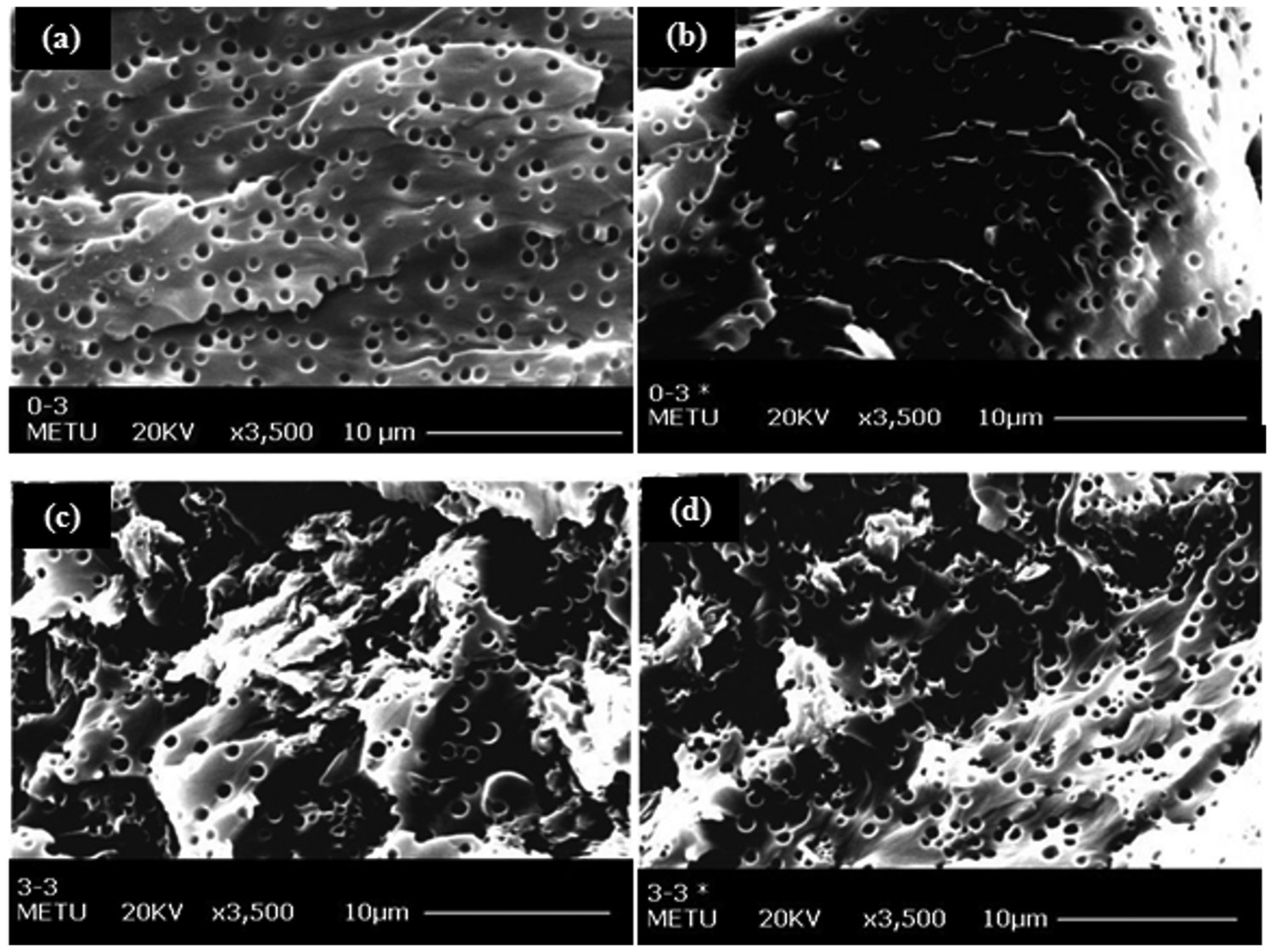
DSC analysis
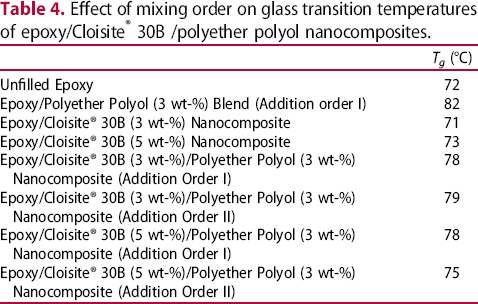
Differential scanning calorimetry analyses were performed to characterise the thermal behaviour of samples since the glass transition temperature has important theoretical implications for the understanding of the molecular origin of polymer mechanical behaviour [24, 48].
Effect of mixing order on glass transition temperatures of epoxy/Cloisite® 30B /polyether polyol nanocomposites.
Mechanical properties
Figure 5 shows the variation in impact strength of epoxy/polyether polyol/Cloisite® 30B nanocomposites with respect to both organoclay and impact modifier contents and mixing order of the components. Impact strength of the pure epoxy resin is improved in the presence of polyether polyol. SEM micrographs in Figure 4 show that polyether polyol forms an immiscible phase in the epoxy matrix. The micromechanical processes responsible for the increase in fracture toughness are initiated by cavitation or debonding of the rubber particles [51]. Impact strength of epoxy/polyol blends prepared by the first and second addition orders is relatively unchanged.
Effect of mixing sequence on impact strength of epoxy/Cloisite® 30B/polyether polyol nanocomposites.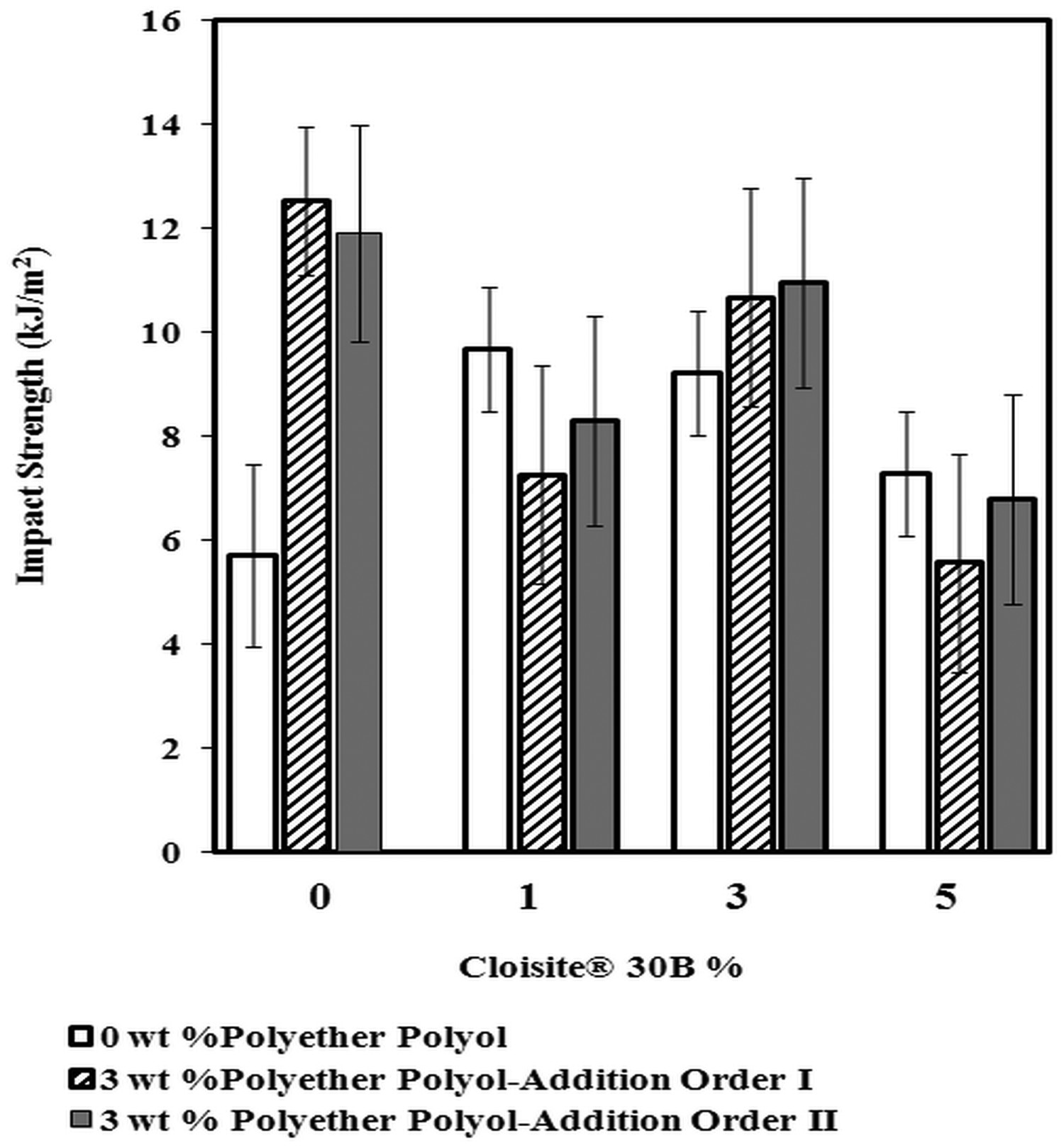
In binary nanocomposites with no polyether polyol, impact strength shows a maximum at 1 wt-% clay, then decreases with respect to the clay content. At low clay contents, intercalation/exfoliation of layered montmorillonite results in higher impact energy than the impact energy of the pure epoxy resin. Similar results are reported in the literature. Bakar et al. noted that the impact strength of epoxy resin increased up to 1 wt-% nanoclay and decreased consequently [37]. In another study, Nanda et al. found out that the impact strength of epoxy nanocomposites showed an increasing trend till 1.5 wt-% clay addition, followed by a decrease [52]. Rigid organoclay particles may agglomerate at higher clay amounts and act as stress concentrators in epoxy/polyol matrix; thus the impact strength decreases. In composites with conventional spherical fillers, tensile stress produces a type of stress concentration that results in dewetting and cavitation at the poles of a spherical particle. After dewetting, the nature of the stress concentration changes producing cracks or crazing at the equator of the particles. Then, crack propagates readily, so the particle acts as a crack initiator and lowers the impact strength [53]. Also, reduction in impact strength with respect to the increasing amount of organoclay content in epoxy-polyether polyol matrices may be understood by the correlation of the impact strength with the area under the stress–strain curves. Both flexural strength and strain at break decrease with the addition of organoclay into a polymer. Impact strength of ternary nanocomposites shows maxima at 3 wt-% organoclay and 3 wt-% polyether polyol. Synergistic effects of organoclay and polyether polyol are observed in this material combination since impact strength shows an approximately 85% increase in comparison to the impact strength of the unfilled epoxy resin. Generally, impact strength data of the ternary nanocomposites prepared by the second addition order are higher than the ones made by the first addition order. In the first addition order, the epoxy resin reacts with the –OH groups of organoclay first, followed by the –OH groups of the impact modifier, possibly via hydrogen bonding. This mixture reacts with the amine groups of the hardener. In the second addition order, the epoxy resin first reacts with the –OH groups of the organoclay, and then this epoxy/organoclay nanocomposite system is blended with the polyol and the hardener mixture. This may result in higher interactions of the organoclay particles with the polyol-hardener mixture instead of the polyol.
Figure 6 shows the variation in flexural strength with respect to both Cloisite® 30B and polyether polyol in two different addition orders. It can be seen that the flexural strength of the unfilled epoxy matrix increases in the presence of polyether polyol, owing to the reaction between the polyether polyol and epoxy, which increases the crosslinking density of the system. As the distance between the chains gets closer, the energy required to deform a polymeric material increases. Thus, the strength increases. Experimental results indicate that, in binary and ternary nanocomposites, flexural strength decreases with an increasing amount of organoclay. This phenomenon is attributed to the higher stress concentration effect and the formation of microcracks at the interface or in the matrix [53]. As the organoclay content increases, the organoclay particles form larger agglomerates, and the organoclay-polymer surface interaction gets lower, resulting in lower flexural strength. Synergistic effects of polyether polyol and organoclay are observed in ternary nanocomposites in terms of flexural strength, since the strength of epoxy/Cloisite® 30B nanocomposites generally increases with the addition of polyether polyol. There is a high possibility of interaction of the –OH groups of organoclay surfactant with the epoxy functional group.
Effect of mixing sequence on flexural strength of epoxy/Cloisite® 30B/polyether polyol nanocomposites.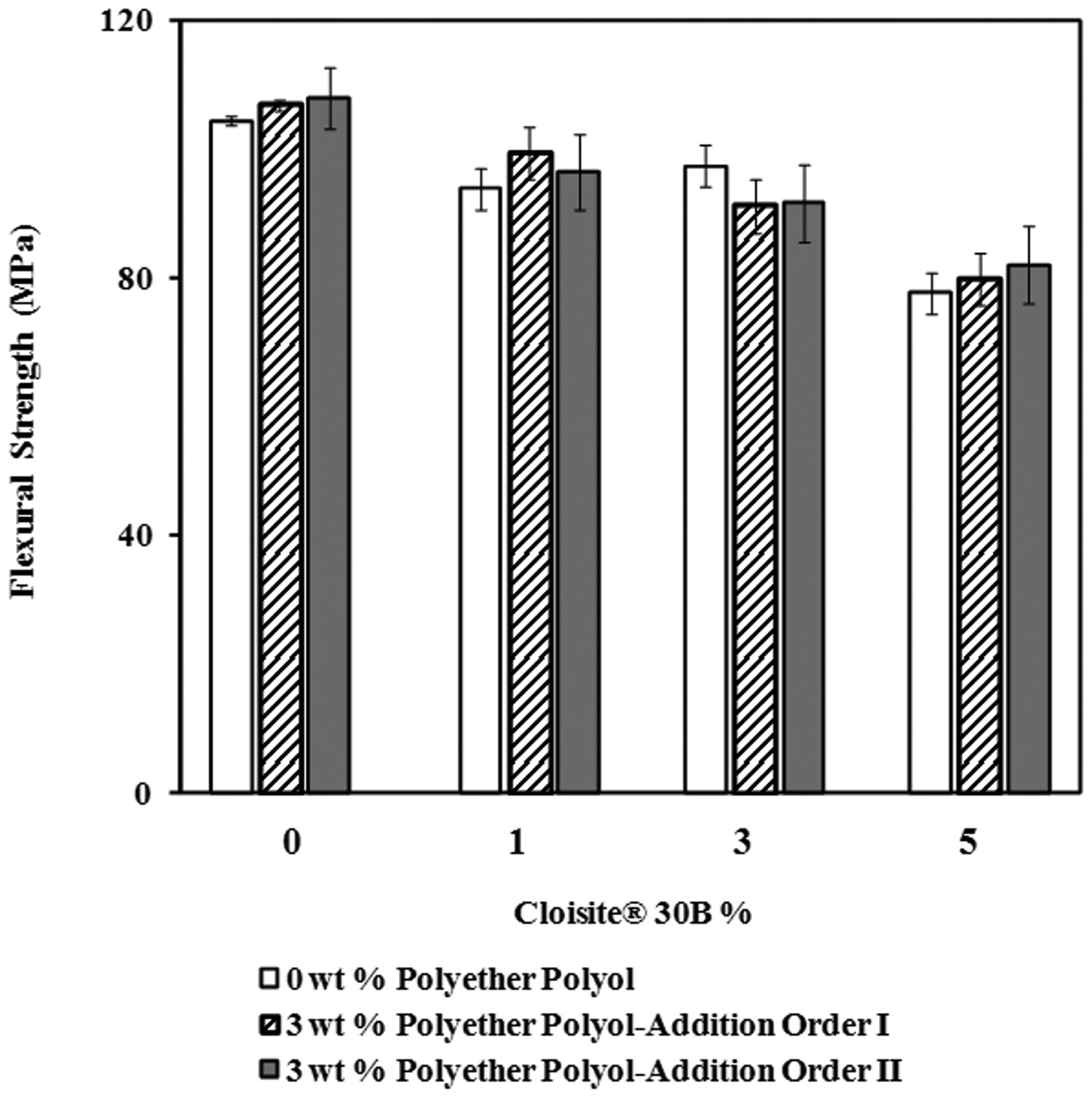
As observed from Figure 7, the flexural modulus of pure epoxy resin decreases as the amount the rubbery phase with low modulus increases. Flexural modulus of epoxy/polyol blend prepared by the first addition order is higher than the modulus of the mixture made by the second addition order. In the second mixing sequence, the reactions between epoxy, polyether polyol, and hardener take place simultaneously, whereas in the first addition order, the epoxy and impact modifier are mixed for one hour, and then the hardener is added. For the epoxy-amine reactions, the main interactions are (1) reaction of a primary amine with an epoxide to form a secondary amine, (2) further reaction of the secondary amine with another epoxide to form a tertiary amine. In addition to these reactions, epoxide–epoxide reactions and etherification by epoxide–hydroxyl reactions can be observed [54].
Effect of mixing sequence on flexural modulus of epoxy/Cloisite® 30B/polyether polyol nanocomposites.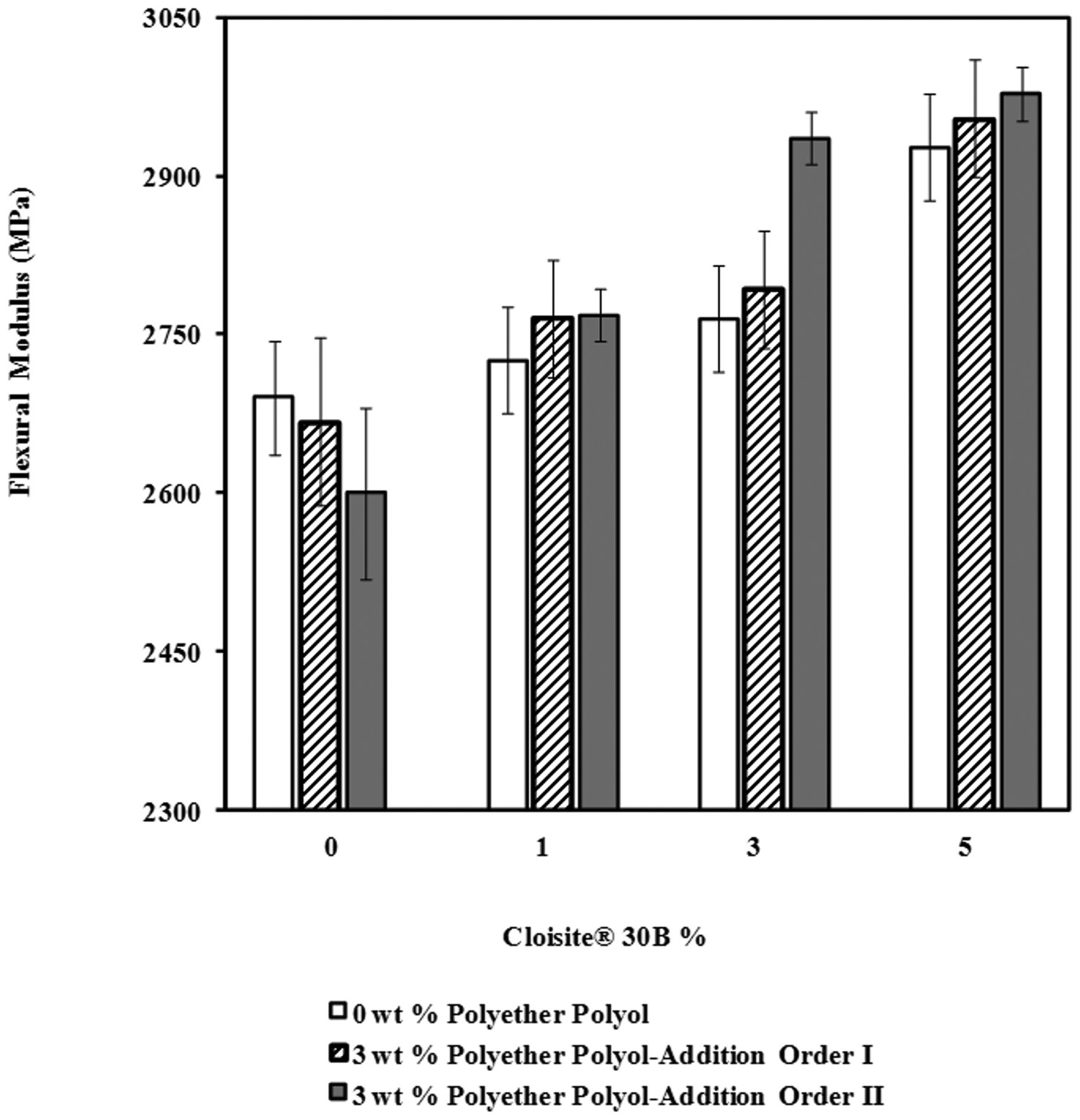
It is known that the addition of hydroxyl containing compounds increases the rate of the cure reaction. The catalytic effects of hydroxyl groups contribute to the ring-opening of epoxides [54]. Thus, crosslink densities of the epoxy/polyol blend samples prepared by the first addition order might be higher than the crosslink density of the samples prepared by the second addition order, leading to an increase in flexural modulus. Unless it is known that epoxy matrix reacts with the –OH groups of polyether polyol and amine groups of triethylenetetramine, any reactive interactions between polyether polyol and triethylenetetramine are not expected, since the –OH group of polyether polyol has a higher electronegativity than the amine group of triethylenetetramine [54].
Flexural moduli of the binary nanocomposites are higher than the modulus of the pure epoxy matrix. The increase in modulus may be the result of a large interphase area/dispersed phase volume ratio, which is a characteristic of intercalated/exfoliated nanocomposites, as also declared by Ilyas et al. [55]. Flexural moduli of unfilled epoxy resin and binary and ternary nanocomposites increase as the organoclay content increases since clay has a higher modulus than the epoxy resin and polyether polyol domains.
Flexural moduli of ternary nanocomposites with polyether polyol are higher than the flexural moduli of the binary ones, owing to the interactions between the epoxy and the –OH groups of clay surfactant that may decrease molecular mobility. Except for the sample containing 3 wt-% Cloisite® 30B and 3 wt-% polyether polyol, flexural modulus is relatively unchanged in both addition orders. In terms of modulus, for the ternary nanocomposites with 3 wt-% Cloisite® 30B and 3 wt-% polyether polyol, it is better to mix the hardener and polyether polyol before mixing with epoxy and organoclay, in order to have high levels of interactions between all the components of the ternary nanocomposites.
Figure 8 shows the dependence of the flexural strain at break with respect to both organoclay and polyether polyol contents. Almost all of the elongation in the nanocomposites comes from the polymer matrix, since organoclay is rigid. In accordance with this fact, it is seen that as the organoclay content increases the flexural strain at break decreases. On the other hand, the effect of polyol content is to decrease the flexural strain at break for both epoxy/polyether polyol blend and ternary nanocomposites. This observation might be attributed to the crosslinking reaction between the epoxy and polyether polyol since the molecular weight between the crosslinks decreases leading to lower strain at break. Strain at break of blends prepared in the first addition order is lower than the ones made by the second addition order. For ternary nanocomposites, interactions between the epoxy and –OH groups of clay surfactant may also lead to a decrease in strain at break. Similar results are obtained by Bakar et al. They stated that hydrogen bonds formed may lead limitations in polymer chains elongation that cause a decrease in strain at break [36]. Strain at break data of ternary nanocomposites is relatively unchanged in ternary nanocomposites for both of the addition orders.
Effect of mixing sequence on flexural strain at break of epoxy/Cloisite® 30B/polyether polyol nanocomposites.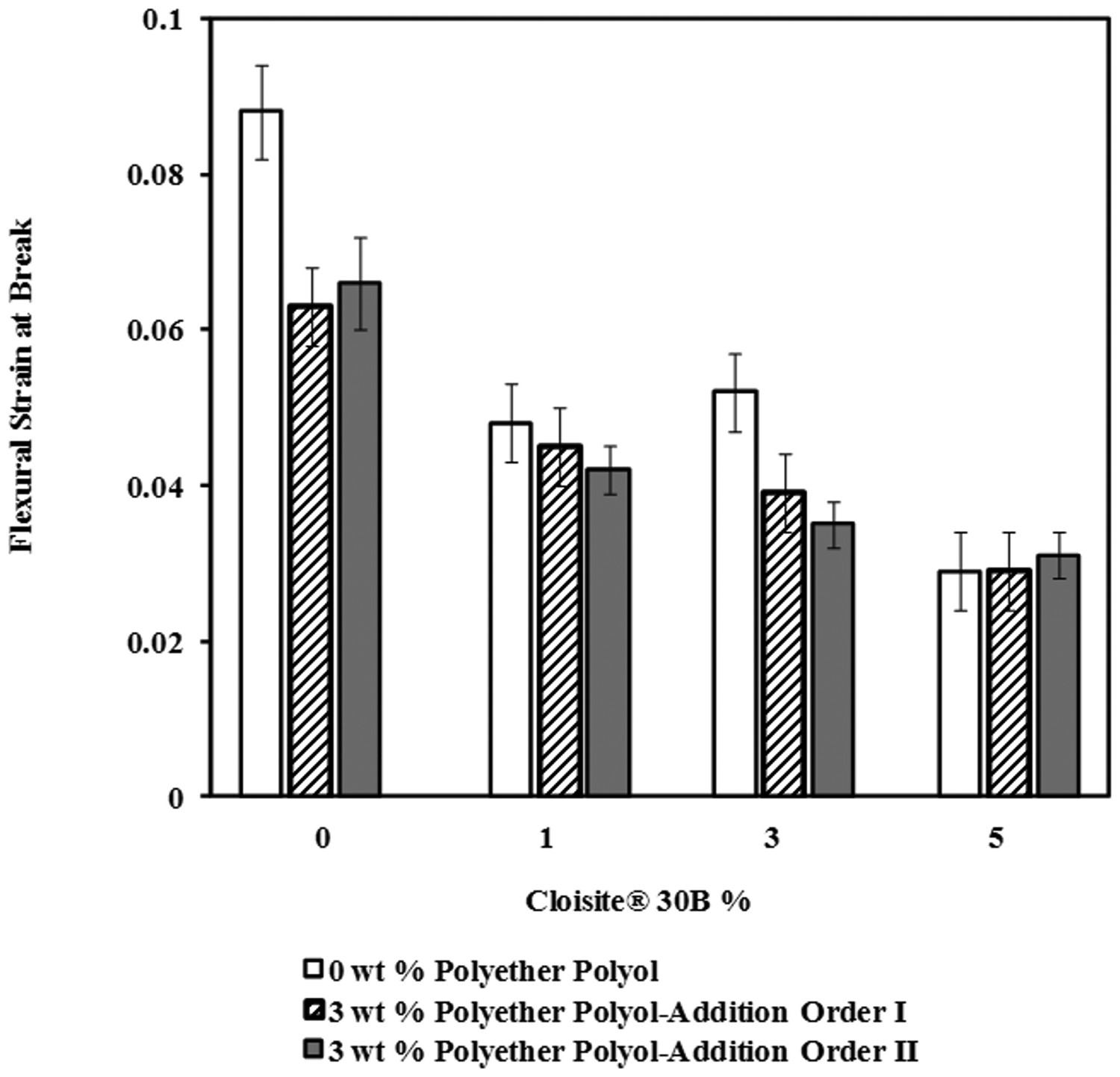
Conclusions
The effects of two different mixing sequences of polyether polyol and curing agent on morphological, mechanical and thermal properties of epoxy/polyether polyol/organoclay ternary nanocomposites are determined in this study. XRD analysis showed that the d-spacing of the ternary nanocomposites prepared by both addition orders are nearly the same as the d-spacing of the binary nanocomposite with no polyether polyol. According to SEM analysis, the polyether polyol domain size is relatively unchanged concerning mixing order in epoxy/polyether polyol blends as well as in ternary nanocomposites. Glass transition temperatures are generally the same for the two mixing sequences in ternary nanocomposites. Impact strength data of the ternary nanocomposites prepared by the second addition order are higher than the ones prepared by the first addition order. This observation might be attributed to the possible higher level of interactions between all the components of the ternary nanocomposites prepared by the second addition order. Generally, flexural strength and strain at break are relatively unchanged with respect to the addition order. Flexural modulus is unchanged in both addition orders, except for the sample containing 3 wt-% Cloisite® 30B and 3 wt-% polyether polyol. Second addition order gives higher modulus values in the mentioned sample, From the experimental results obtained in the present study, chemical compatibility between the main epoxy polymer matrix and organoclay is observed to be the predominant factor in intercalation phenomena.
Footnotes
Disclosure statement
No potential conflict of interest was reported by the author(s).