







Abstract
Thermoplastic polyurethane (TPU) and carbon nanotubes (CNTs) were incorporated into polyamide 6 in an attempt to enhance notched impact resistance and damping performance. The morphology, mechanical, thermal and viscoelastic properties of different samples were studied. Scanning electron microscopy study indicated a uniform distribution of fine TPU droplets in PA6/TPU blend. Furthermore, well-dispersed CNTs in PA6/TPU matrix and good adhesion of polymer matrix to CNTs were observed. The addition of TPU into PA6 developed a rough fracture surface morphology and increased the notched impact strength equal to 39%, yet declined tensile and flexural resistance. The inclusion of CNTs into PA6/TPU improved mechanical properties comprising tensile, flexural and notched impact strengths as high as 14%, 12% and 16% respectively. The results of dynamic mechanical thermal analysis (DMTA) indicate: the addition of TPU into PA6 improves damping performance; the inclusion of carbon nanotubes in PA6/TPU enhances both energy storage and glass transition temperature.
Introduction
Polymeric materials are accounted as the most favourable materials for industrial applications because of their substantial advantages such as low weight, ease of processing, physical and chemical resistance. However, development of new polymers could be immensely costly and time-consuming. Nowadays, pure polymers are rarely used for engineering applications because of their limitations [1, 2]. Blending of two or more polymers is of great interest from a practical point of view, because of blend's superior properties in comparison with its constituents, by taking advantages of each component [3, 4]. Versatility, simplicity and inexpensiveness are some of remarkable advantages of polymer blends [5].
The incorporation of nanoscale reinforcements with high aspect ratio in a polymeric matrix is another effective technique to overcome the neat polymer deficiencies [6, 7]. Inclusion of CNTs as reinforcement in polymeric material has attracted many attentions in both academy and industry since first widely reported in 1991 by Iijima [8]. Outstanding properties of CNTs such as excellent mechanical properties, thermal and electrical conductivities accompanied by their high aspect ratio, make them an ideal candidate as nanometre-scale additive [9-12]. More recently, combined modification techniques have been used to form polymer/polymer/CNT mixtures which yield a combination of properties of blends and nanocomposites [13-16].
Polyamide 6 (PA6) is one of the most important member of engineering thermoplastic materials which is extensively used in industrial applications owing to its noteworthy mechanical and thermal properties. In spite of these advantages, PA6 is very notch-sensitive. Thus, many attempts have been dedicated to overcome this deficiency by blending PA6 with an impact modifier [17-20]. Wang et al. studied the effect of EPDM–g–MA rubber on the impact properties of PA6 [21]. They indicated that the incorporation of EPDM–g–MA rubber increased the impact strength of blend but declined tensile properties. Kudva et al. used ABS as an impact modifier for PA6 [22]. They reported that in the absence of a compatibilizer, the blend shows weak mechanical properties. Naderi et al. showed that the melt mixing of PA6 with ECO (epichlorohydrin–co–ethylene oxide) led to the improvement of toughness and reduction of stiffness [23].
As most polymer pairs are thermodynamically immiscible, therefore, compatibility of blended phases must be considered when choosing an impact modifier. Thermoplastic polyurethane (TPU) has exhibited appropriate compatibility with PA6 because of their polar groups in their structures [20]. Generally, the incorporation of TPU as an impact modifier in a thermoplastic matrix improves the impact toughness if proper adhesion between TPU and host phase established. However, this could reduce other mechanical properties of blend comprising tensile and flexural properties [24-26]. As reported in previous researches, the incorporation of nanoscale reinforcements in polymeric matrices improved mechanical properties. Liu et al. reported that the incorporation of small amount of MWCNTs in PA6/ABS matrix enhanced tensile and flexural properties and increased crystallinity [27]. Kanbur and Tayfun indicated that the addition of carbon nanotubes into TPU significantly increased tensile strength and modulus [28].
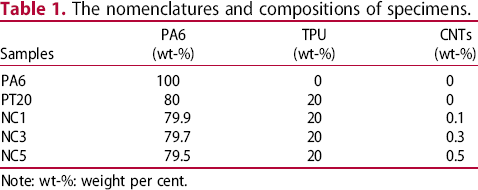
The inclusion of a little amount of nano-sized fillers with high aspect ratio such as CNTs, together with the incorporation of an impact modifier, for instance TPU, in PA6 may provide a balance of mechanical properties in terms of tensile, flexural and impact resistance as well as energy storage and damping. In this study, PA6 was blended with TPU and reinforced with carbon nanotubes. PA6/TPU (80/20) blend and PA6/TPU/CNT nanocomposites containing 0.1, 0.3 and 0.5 wt-% of CNTs were prepared by melt mixing using a co-rotating twin-screw extruder. Injection moulding employed to produce standard specimens. Scanning electron microscopy (SEM), differential scanning calorimetry (DSC), standard mechanical tests comprising tensile, flexural and impact tests along with dynamic mechanical thermal analyses (DMTA) were carried out to evaluate the performances of PA6/TPU/CNT nanocomposites.
Materials and methods
Materials
Polyamide 6 (U160ER), with specific gravity and melting temperature of 1.14 g cm−3 and 220°C respectively, was purchased from KOPLA, South Korea. Thermoplastic elastomer polyurethane (R130D55) with density of 1.22 g cm−3 was obtained from RAVAGO, Turkey. Multi-walled carbon nanotubes (US Research Nanomaterials, Inc.) with the outer diameter of 20–30 nm, length of 10–30 µm and purity of 95 wt-% for carbon nanotubes and 97 wt-% for carbon content were used as reinforcement.
Preparation of blends and nanocomposites
The nomenclatures and compositions of specimens.
Note: wt-%: weight per cent.
Morphological study
In order to analyse and characterise the fractured surfaces of pure PA6, PA6/TPU blend and PA6/TPU/MWCNT nanocomposites, a scanning electron microscope (SEM) (TESCAN, VEGA2, Czech Republic) was used. All specimen's surfaces were gold coated to provide superior conductivity. To make possible the evaluation of TPU dispersion in PA6, TPU phase was selectively etched in THF (Tetrahydrofuran) solvent at room temperature for 3 h. Image analysis performed to analyse the dispersion and to measure the size of the dispersed phase.
Mechanical properties assessments
To evaluate the mechanical properties of pure PA6, PA6/TPU blend and PA6/TPU/CNT nanocomposites, different mechanical tests comprising uniaxial tensile, three-point flexural and notched Izod impact tests were conducted. Tensile tests were carried out according to ASTM D638 and at speed of 30 mm min−1 by employing a universal testing machine (SANTAM STM-20, 20 KN). Flexural tests were performed according to ASTM D790 by using a universal testing machine (Instron-4486, 300 KN) under support span of 90 mm and descending speed of 5 mm min−1. Notched Izod impact tests were accomplished according to ASTM D256, by using a SANTAM (SIT-20E) impact tester of 5.5 J capacity. All mechanical tests were performed at room temperature and repeated at least for five times.
Differential scanning calorimetry (DSC)
The thermal behaviour of PA6, PA6/TPU and PA6/TPU/MWCNT nanocomposites was investigated using a differential scanning calorimeter (DSC822e, Switzerland) in three stages of heating–cooling–heating. Samples heated from room temperature to 250°C and maintained for 3 min and then cooled down to 30°C and heated again to 250°C. The heating and cooling rates in all three steps were kept at 10°C min−1. Thermo-analytical data including melt and crystallization temperatures, heat of fusion and degree of crystallinity were obtained.
Dynamic mechanical thermal analysis (DMTA)
The viscoelastic behaviour of different compounds characterised by using dynamic mechanical thermal analyser (DMA-Tri-TEC2000, UK). The DMTA tests were performed in dual cantilever bending mode with supports span of 15 mm, according to ASTM D4065 standard [29], on the specimens of 30 × 10 × 3 mm3 dimensions. The frequency, preload and amplitude were set on 1 Hz, 0.25 N and 0.025 mm respectively. Under the heating rate of 3°C min−1, the temperature was swept from −100°C to 180°C in nitrogen atmosphere. Storage modulus (E′), loss modulus (E″) and tandelta (tanδ = E″/E′) values against temperature were determined. According to ASTM D4065, the storage and loss moduli are calculated using Equations (1) and (2) [29].
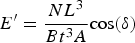
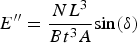
Results and discussions
Morphology observation
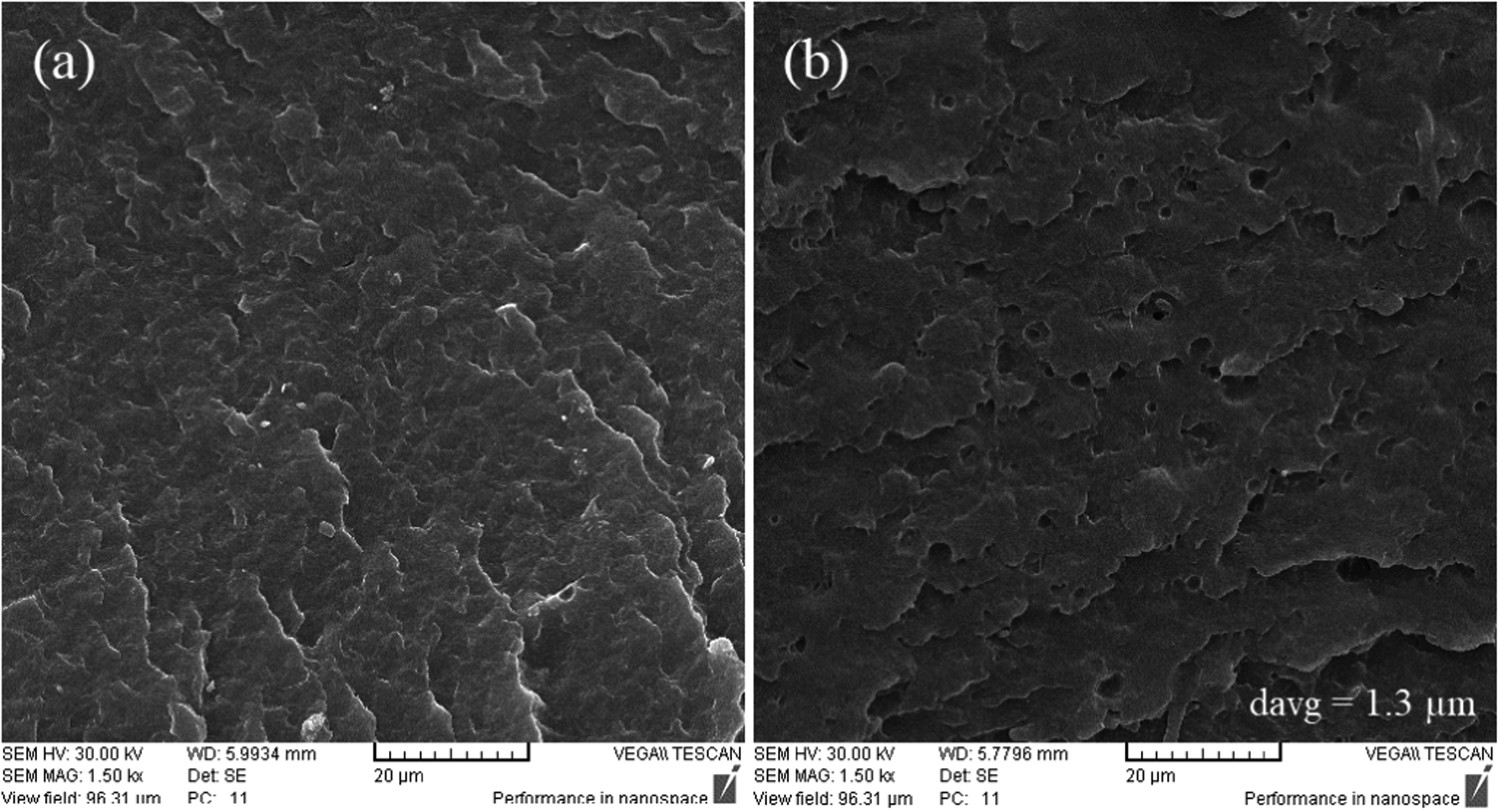
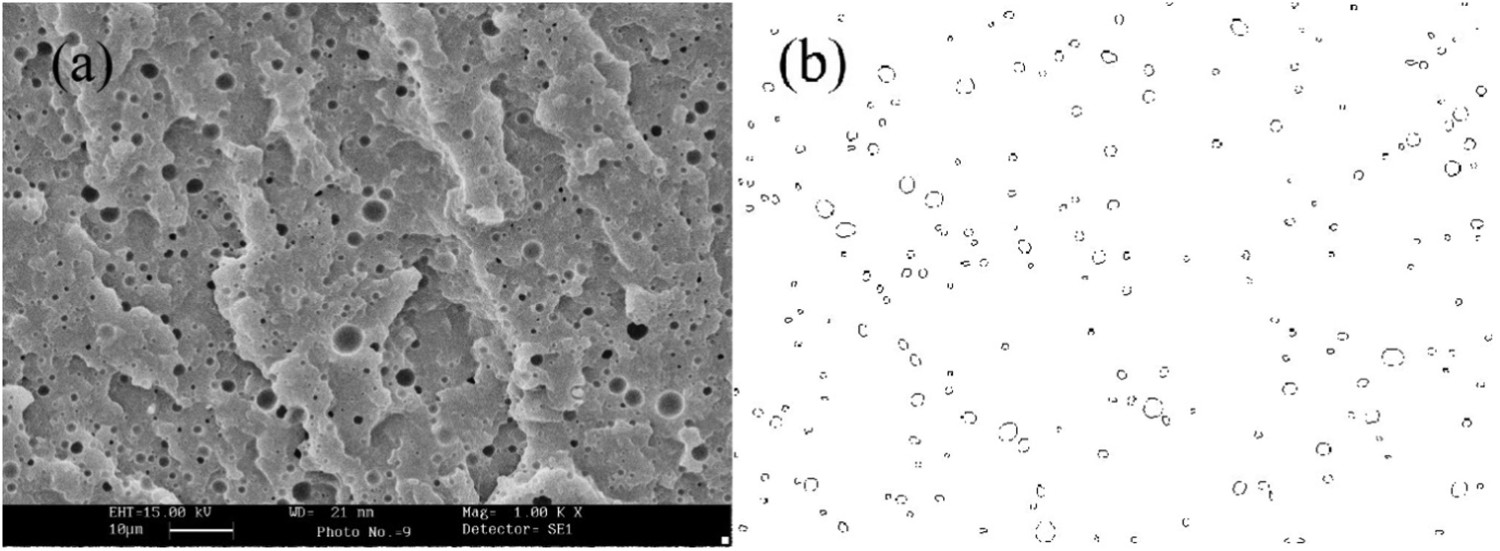
Figure 1 demonstrates the SEM images of fractured surfaces of pure PA6 and its blend with 20 wt-% of TPU elastomeric phase. By adding TPU into PA6 matrix, a rougher fracture morphology developed. Hence, the brittle fracture of PA6 turned into ductile fracture in the presence of TPU toughening component. Because of their polar groups, PA6 and TPU are relatively compatible. However, in order to better clarify the distribution of TPU in PA6, TPU was etched in THF solvent. Figure 2(b) illustrates the etched image of PA6/TPU (80/20) blend. A virtually uniform dispersion of TPU in PA6 matrix is observed. By performing image analysis, the average diameter of TPU particles in PA6 matrix was obtained equal to 1.3 µm (Figure 3). This state of morphology could lead to increased energy absorption and toughening. The uniform dispersion of fine TPU droplets in a polymer matrix can hinder the initiation of crazes and propagation of cracks [30].
Fractured surfaces of (a) pure PA6 and (b) PA6/TPU (80/20). Fracture morphologies of (a) pure PA6 and (b) etched PA6/TPU (80/20). Images of etched PA6/TPU (80/20): (a) before and (b) after image analysis.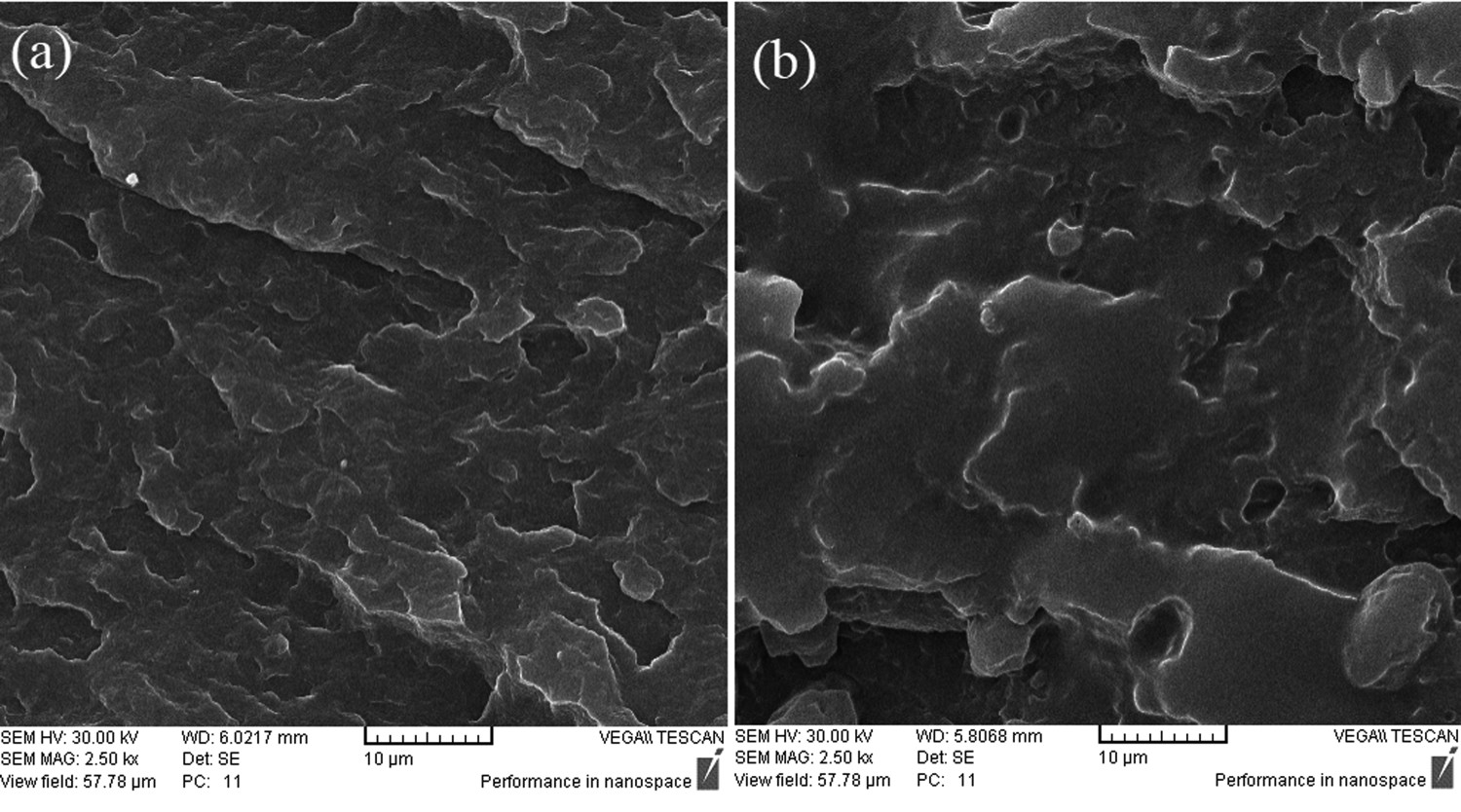
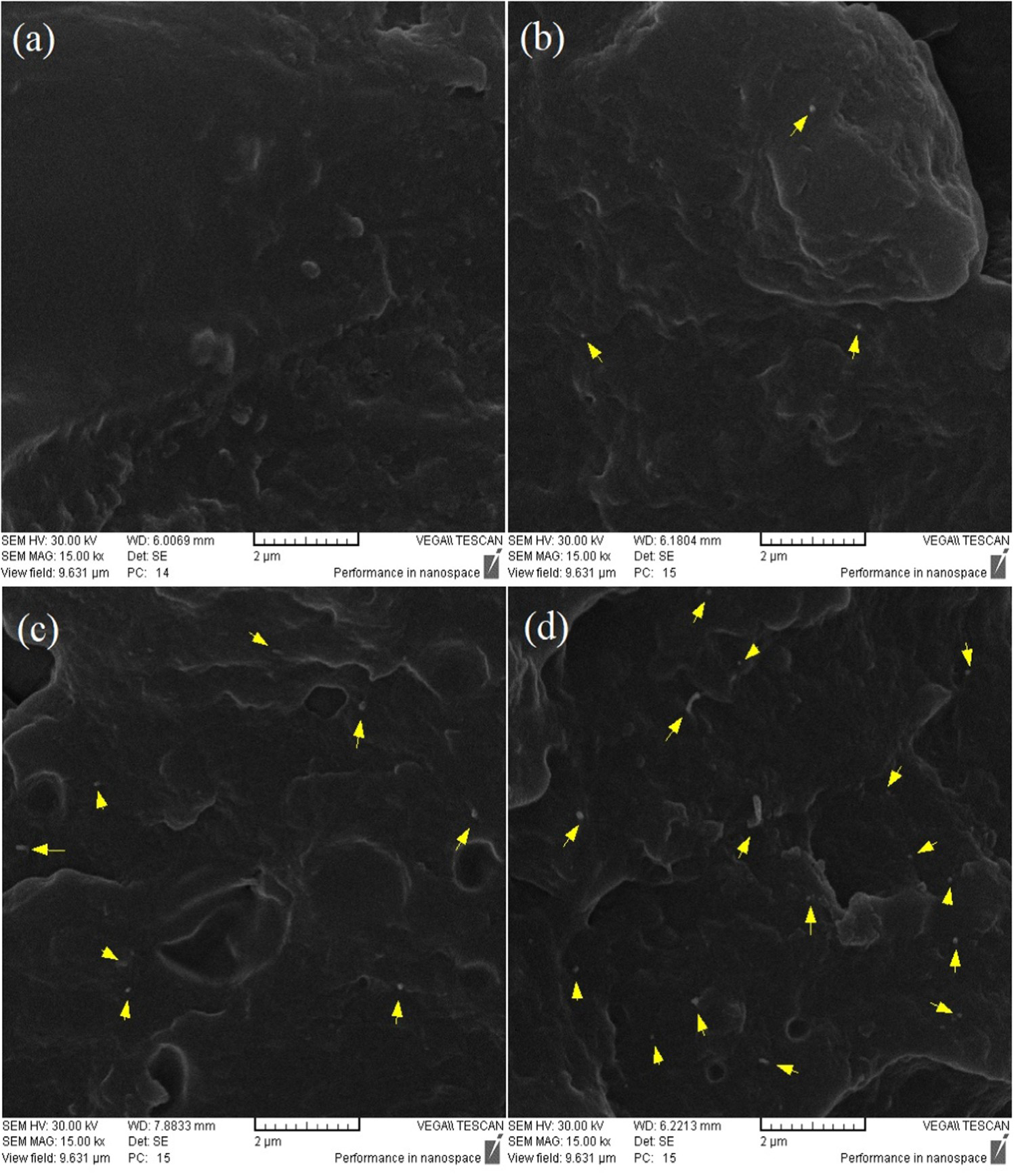
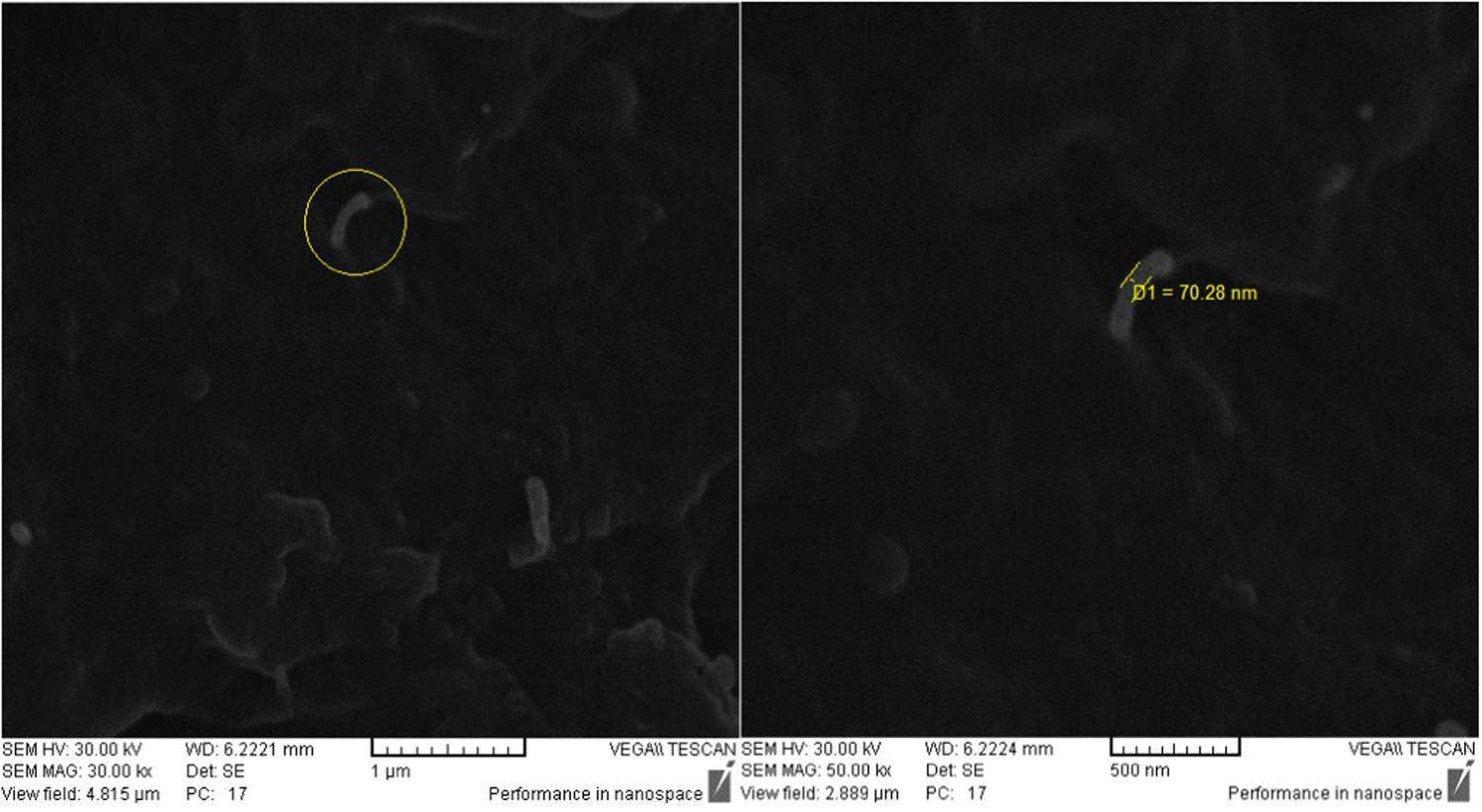
Figures 4 and 5 illustrate the fracture surfaces of PA6/TPU/CNT nanocomposite samples with different magnifications. Figure 5 depicts the presence of carbon nanotubes in PA6/TPU matrix. As can be seen from the images, nanotubes have uniform dispersions in the PA6/TPU blends containing 0.1, 0.3 and 0.5 wt-% of CNTs. There is no obvious accumulation of CNTs. This could lead to the mechanical properties improvement. However, this enhancement would not be achieved unless the adhesion of CNTs to polymeric matrix is suitable. As can be seen from Figure 6, the diameter of pulled out CNTs reaches to about 70 nanometres which is much larger than the diameter of CNTs (20–30 nm) incorporated. This indicates the appropriate adhesion of polymeric matrix to CNTs and the development of stress transfer in polymer–CNTs interface.
SEM micrographs of (a) PA6, (b) PT20, (c) NC1, (d) NC3 and (e) NC5. Dispersion of CNTs in PA6/TPU matrix (a) PT20, (b) NC1, (c) NC3 and (d) NC5. The diameter of pulled out CNTs in PA6/TPU matrix.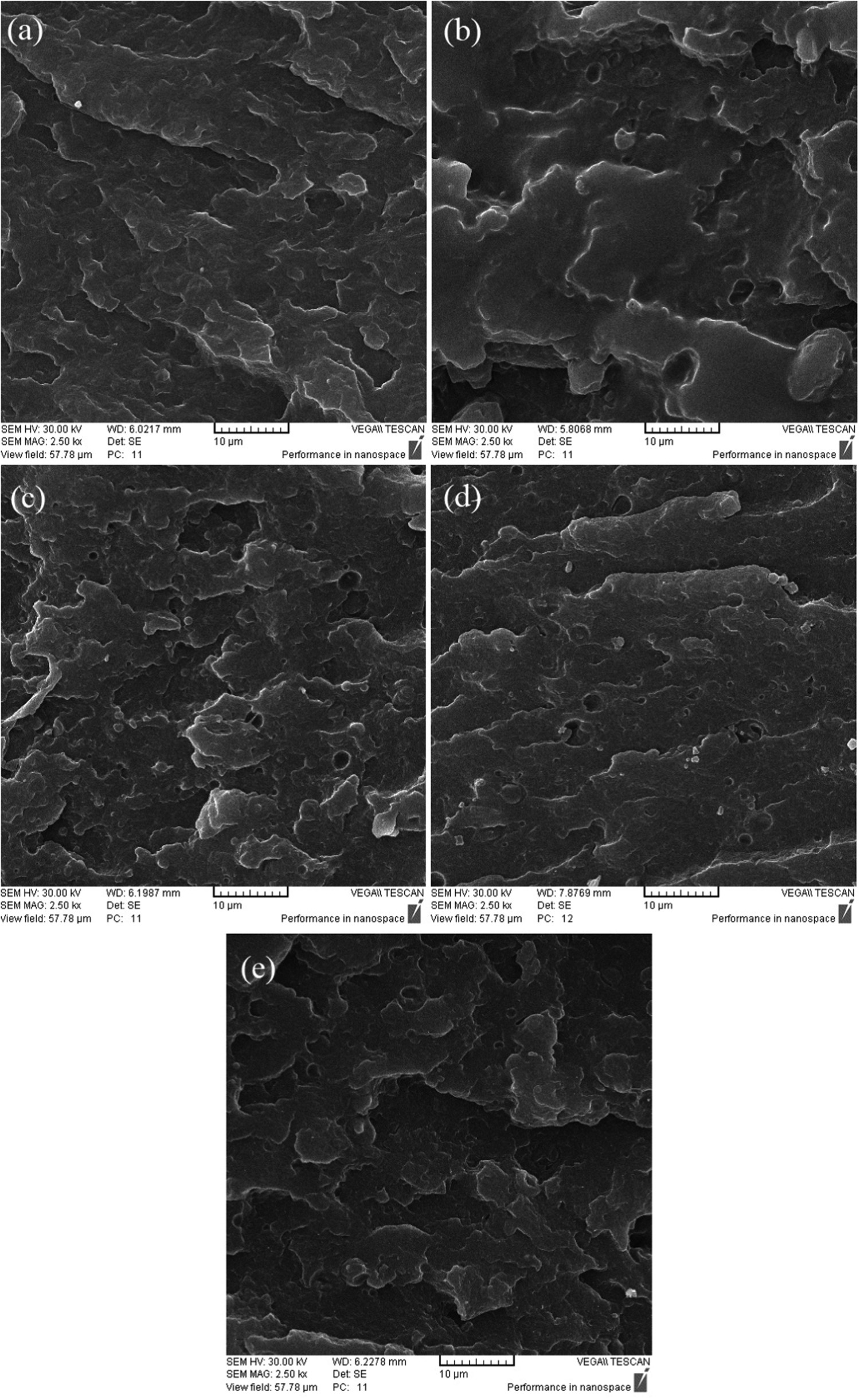
Thermal properties
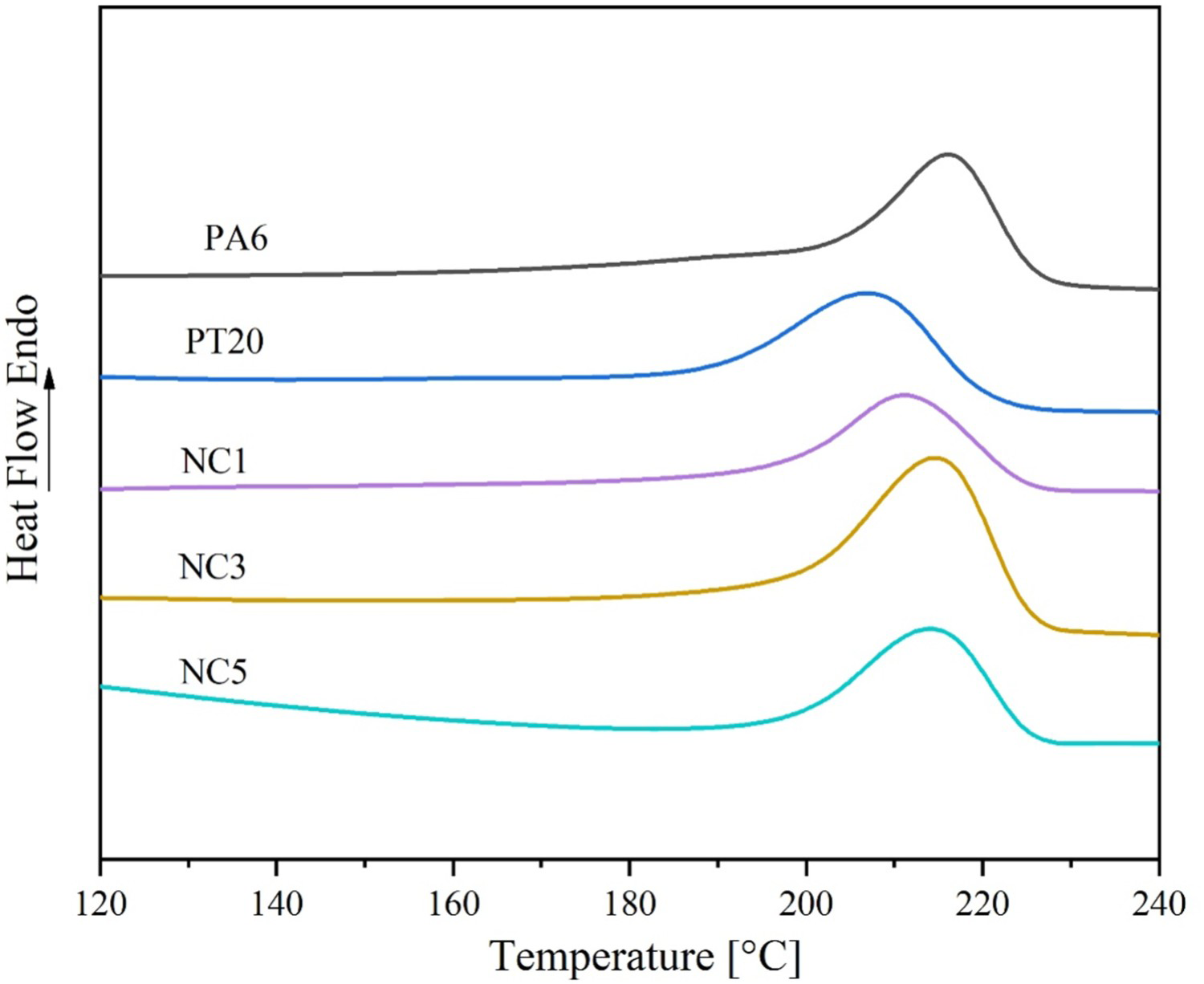
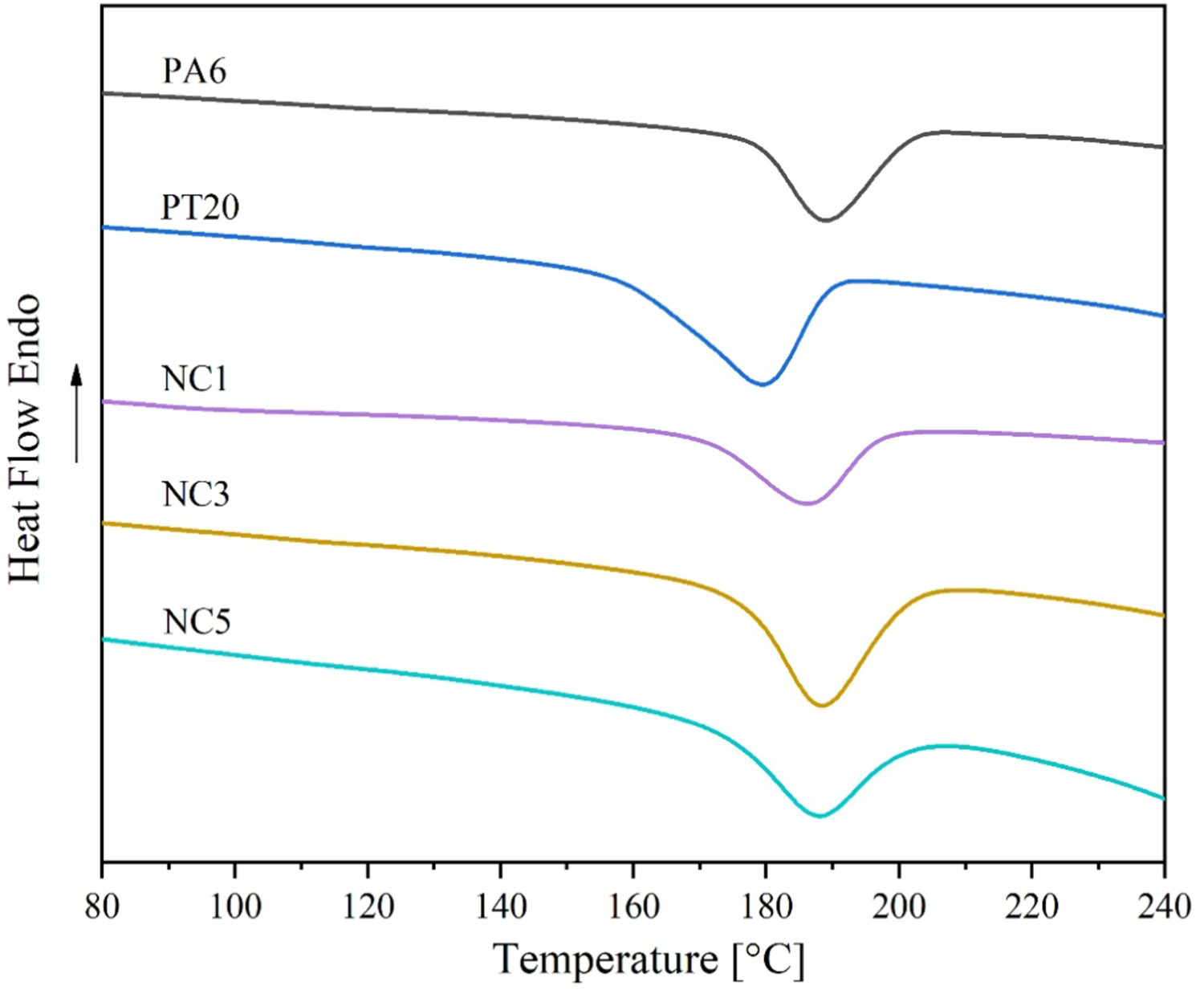
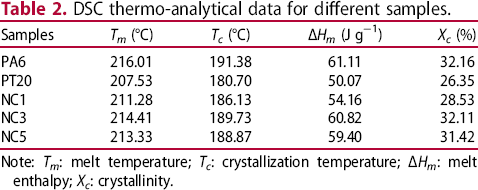
Differential scanning calorimetry (DSC) thermograms of pure PA6, PA6/TPU blend and PA6/TPU/CNT nanocomposites are illustrated in Figures 7 and 8. The thermo-analytical data derived from DSC comprising crystallization temperature (Tc), melting temperature (Tm), enthalpy (ΔHm) and crystallinity (Xc) are given in Table 2. The crystallinity was calculated by employing Equation (3) [31].
DSC melting curves for PA6, PA6/TPU blend and PA6/TPU/CNT nanocomposites. DSC cooling curves for PA6, PA6/TPU blend and PA6/TPU/CNT nanocomposites. DSC thermo-analytical data for different samples. Note: Tm: melt temperature; Tc: crystallization temperature; ΔHm: melt enthalpy; Xc: crystallinity.
 is the melting enthalpy of 100% crystalline PA6 which is considered to be 190 J g−1, and wf is the weight per cent of mineral particles [31]. Figure 7 displays DSC melting curves for PA6, PA6/TPU blend and PA6/TPU/CNT nanocomposites. According to these curves and Table 2, the melting temperature of PA6/TPU blend decreased about 9°C as compared to pure PA6. This reduction in melting temperature could be attributed to the effect of TPU's soft segments on PA6 crystallinity, which could be due to the interactions between urethane groups in TPU and amide groups in PA6 as a result of hydrogen bonding. In the case of compatible blends, a change in melting temperature is usually discerned [32], hence this indicates good compatibility between PA6 and TPU. In addition, according to Figure 7 and Table 2, a reduction in crystallinity and corresponding melt enthalpy was observed in PA6/TPU blend as compared to neat PA6. The decline in enthalpy is due to the interactions established between blend components. The incorporation of CNTs as reinforcement element within PA6/TPU blend led to an increment in melting temperature and crystallization rate (Figure 7 and Table 2). This is due to the nucleation effect of CNTs in polymeric matrix. According to Figure 8 and Table 2, the crystallization temperature (Tc) of neat PA6 was about 191°C. The existence of TPU in PA6 matrix interfered with crystallization and reduced Tc to about 180°C. On the other hand, the inclusion of CNTs significantly elevated the crystallization temperature of nanocomposites. Similar enhancement in Tc by incorporation of CNTs has been previously reported [14]. The increment in crystallinity indicates the nucleating effect of CNTs and formation of trans-crystalline polymer in the interphase region of polymer–nanotubes. The development of an interphase layer could also extend the stress transfer between polymer and nanotubes.
Mechanical properties
The mechanical properties assessments comprising tensile, flexural and notched impact tests were conducted on PA6, PA6/TPU blend and PA6/TPU/CNT nanocomposites. Figure 9 compares the notched impact properties of PA6, PA6/TPU blend and PA6/TPU/CNT nanocomposites. The inclusion of TPU in PA6 significantly increased the notched impact resistance, which was 39% elevation as compared to neat PA6. The increment of impact performance is related to the good dispersion of TPU elastomer in PA6 matrix (Figures 2 and 3) and the reduction of rigid crystalline domains as a result of incorporating TPU into PA6 (Figure 7 and Table 2). The existence of 0.1 wt-% carbon nanotubes in PA6/TPU matrix increased the notched impact resistance as high as 16%. The proper adhesion of polymer matrix to CNTs (Figure 6) increases the CNTs debonding and pull-out energy which broadens the plastic deformation and hence elevates energy loss in nanocomposite [33, 34]. The reduction of impact strength at higher concentrations of nanotubes is because of CNTs aggregation leading to brittleness. Furthermore, the accumulation of nanotubes in flexible phase can reduce the impact property [3, 35].
Notched impact resistance for of PA6, PA6/TPU and PA6/TPU/CNT nanocomposites.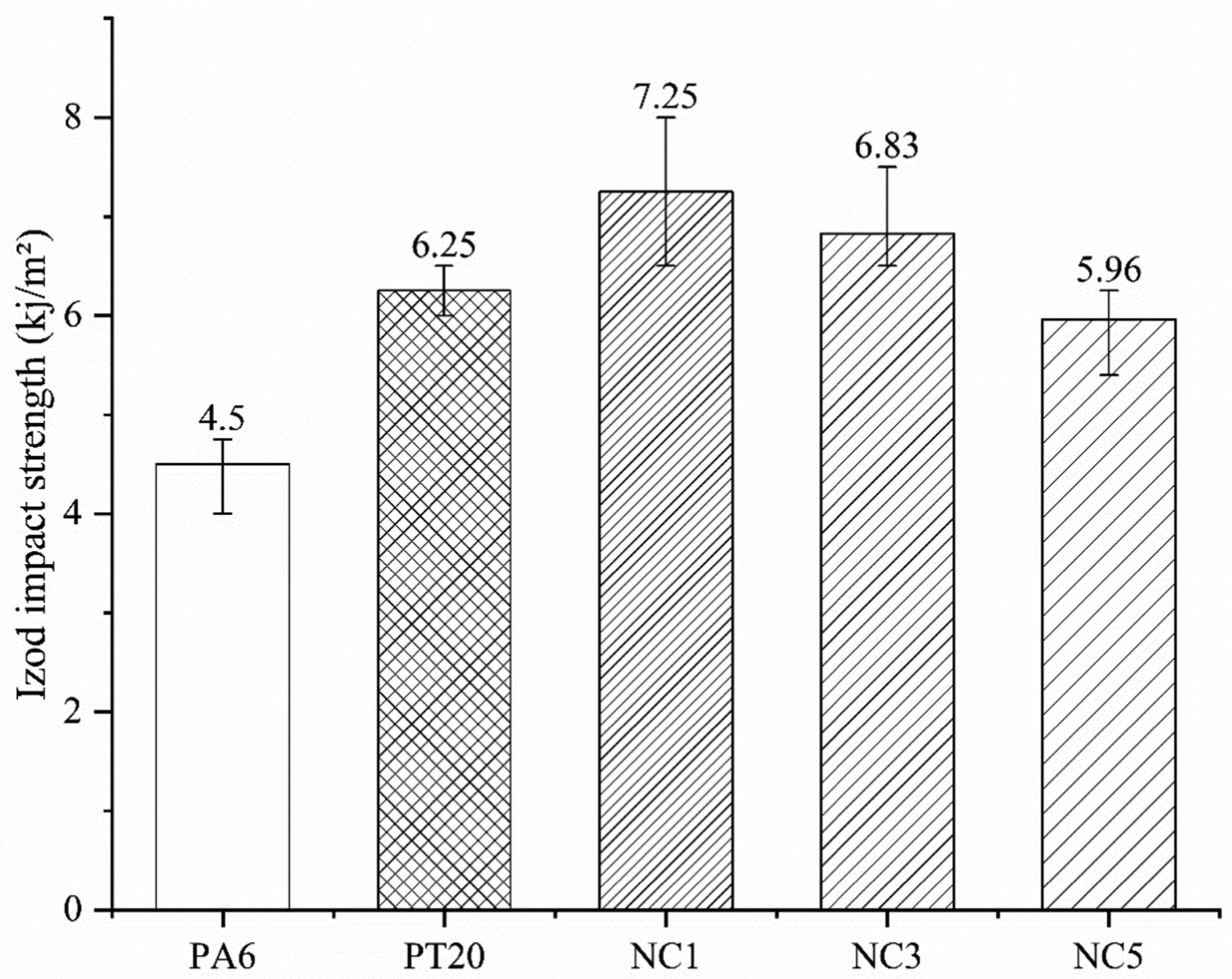
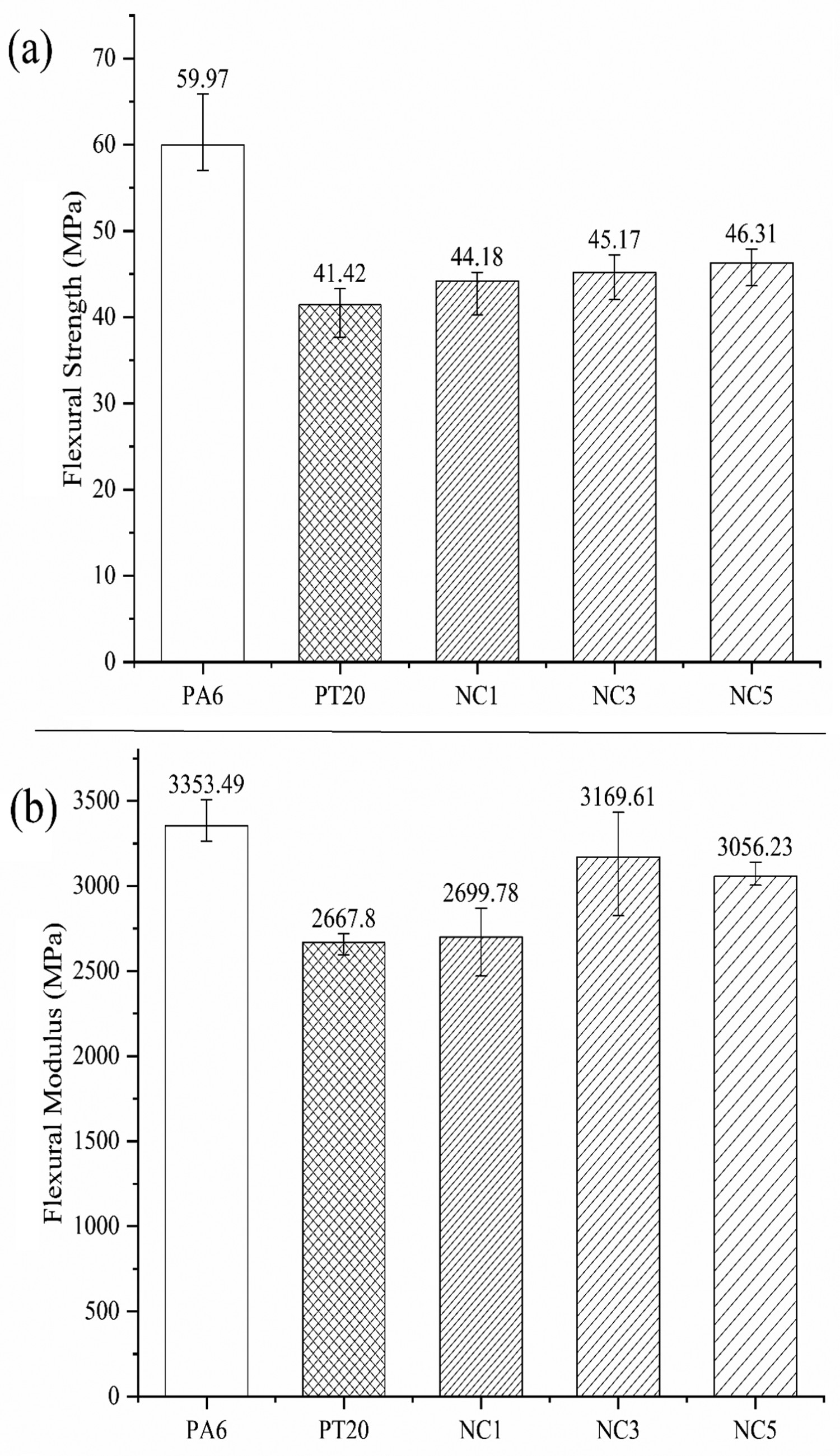
Tensile strength and modulus of specimens illustrated in Figure 10. It is clear that the addition of TPU reduces the tensile strength and modulus as compared to pure PA6. Generally, the inclusion of an elastomeric phase with soft segments in a thermoplastic matrix with higher stiffness reduces strength and modulus. Besides, the reduction of crystallinity owing to the presence of TPU in PA6 (Figure 7 and Table 2), is another cause for tensile resistance drop. Similar results were obtained for flexural resistance (Figure 11). The effects of CNTs on tensile and flexural properties of PA6/TPU/CNT nanocomposites are shown in Figures 10 and 11. The inclusion of CNTs increased tensile strength and modulus as high as 14% and 9% respectively. Moreover, the addition of CNTs improved flexural strength and modulus up to 12% and 19% respectively. The enhancement in tensile and flexural resistance could be as a result of proper distribution of CNTs and good adhesion of carbon nanotubes to polymer matrix as indicated by morphology studies (Figures 5 and 6).
Tensile properties of PA6, PA6/TPU and PA6/TPU/CNT nanocomposites: (a) tensile strength and (b) tensile modulus. Flexural properties of PA6, PA6/TPU and PA6/TPU/CNT nanocomposites: (a) flexural strength and (b) flexural modulus.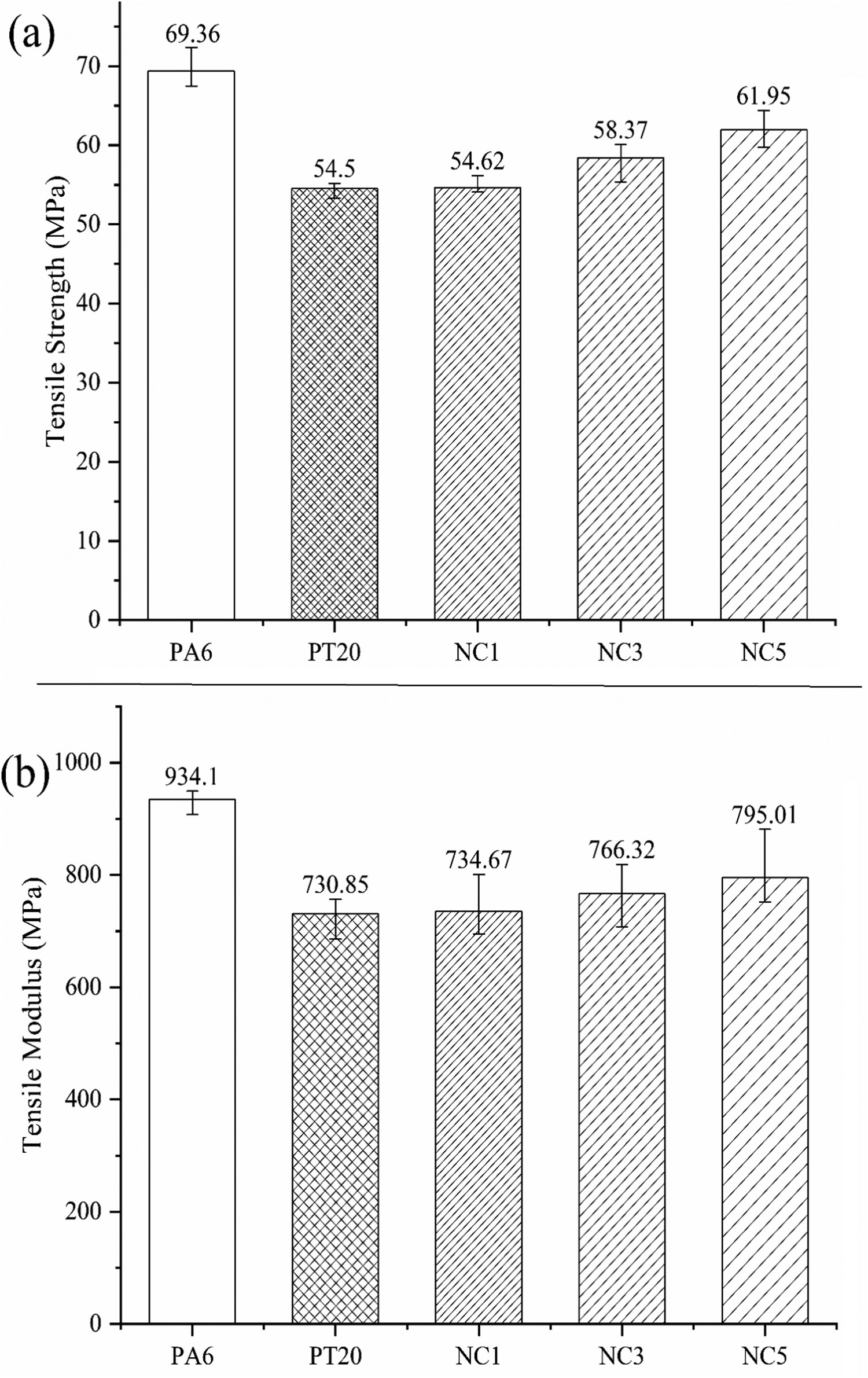
Dynamic mechanical thermal analysis (DMTA)
Dynamic mechanical thermal analysis is an effective way to investigate the viscoelastic behaviour of polymers and composites under fluctuating force and heat. The energy absorption and dissipation against temperature, as well as glass transition temperature of different samples were discovered by conducting DMTA (Figures 12 and 13). According to Figure 12 and Table 3, as temperature increases, the storage modulus reduces. This is because of easier movement of polymer chains at higher temperature [36]. The PA6/TPU blend exhibited lower storage modulus as compared to pure PA6. This is due to the inherent softness of TPU phase. Furthermore, the addition of TPU into PA6 reduced the crystallinity of sample (Table 2), and as a result, this could reduce the storage modulus of blend in comparison with pure PA6. Nevertheless, the inclusion of carbon nanotubes in PA6/TPU matrix increased the storage modulus within the whole specified temperature range (−100°C to 180°C). At upper temperature zone (150–180°C), the storage moduli of nanocomposites (NC3 and NC5 samples) were higher than that of pristine PA6. High stiffness of CNTs and proper interaction of polymeric matrix and carbon nanotubes can impede the mobility of polymer chains and elevate the storage modulus of nanocomposites [37]. Moreover, as reported by Coleman et al. the formation of an ordered solid crystalline polymer layer, coating the nanotube surface, significantly increases the modulus of CNTs filled nanocomposites [38].
Storage modulus versus temperature for pure PA6, PA6/TPU blend and PA6/TPU/CNT nanocomposites. Loss factor (tanδ) as a function of temperature for pure PA6, PA6/TPU blend and PA6/TPU/CNT nanocomposites. DMTA results for PA6, PA6/TPU and PA6/TPU/CNT samples.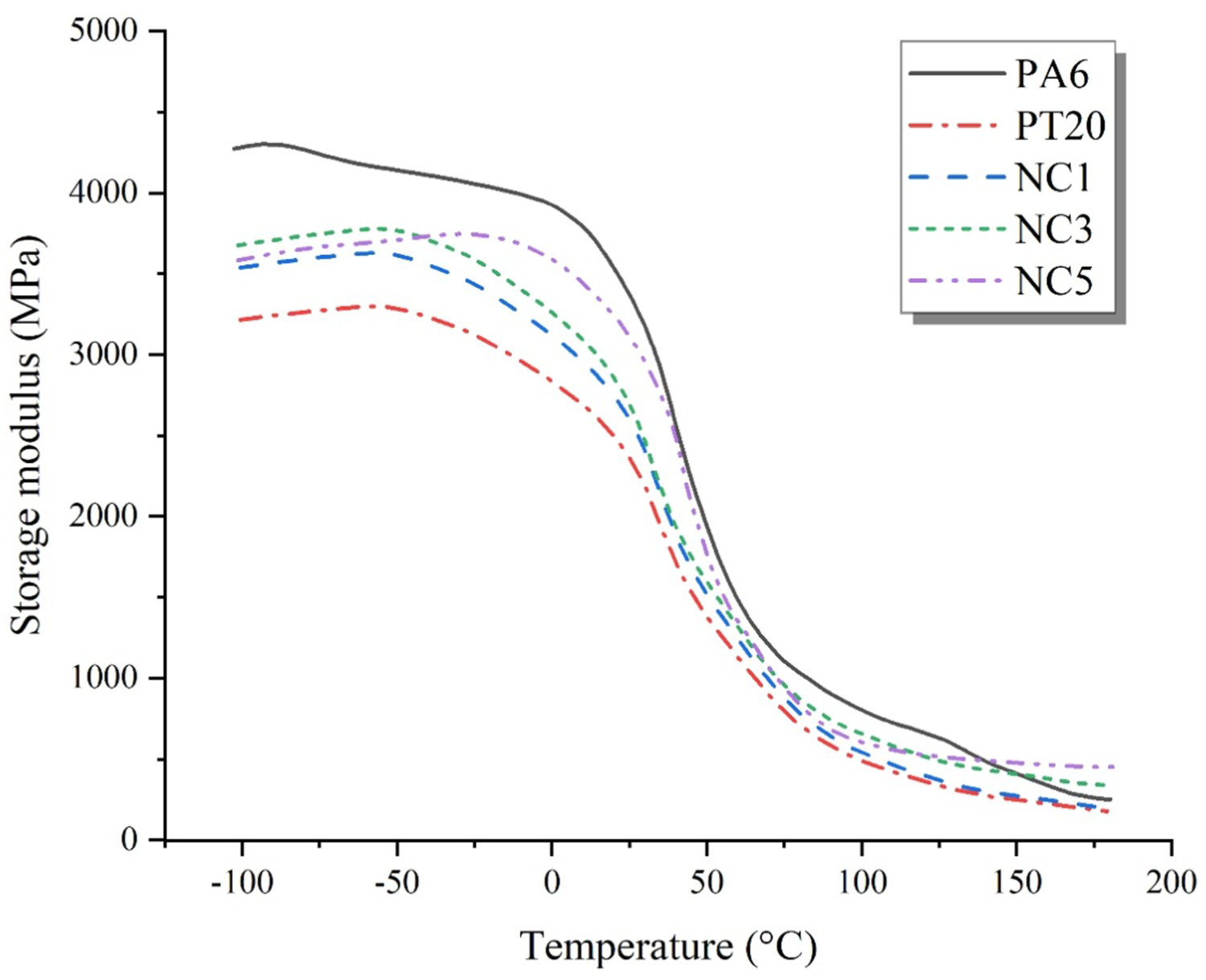
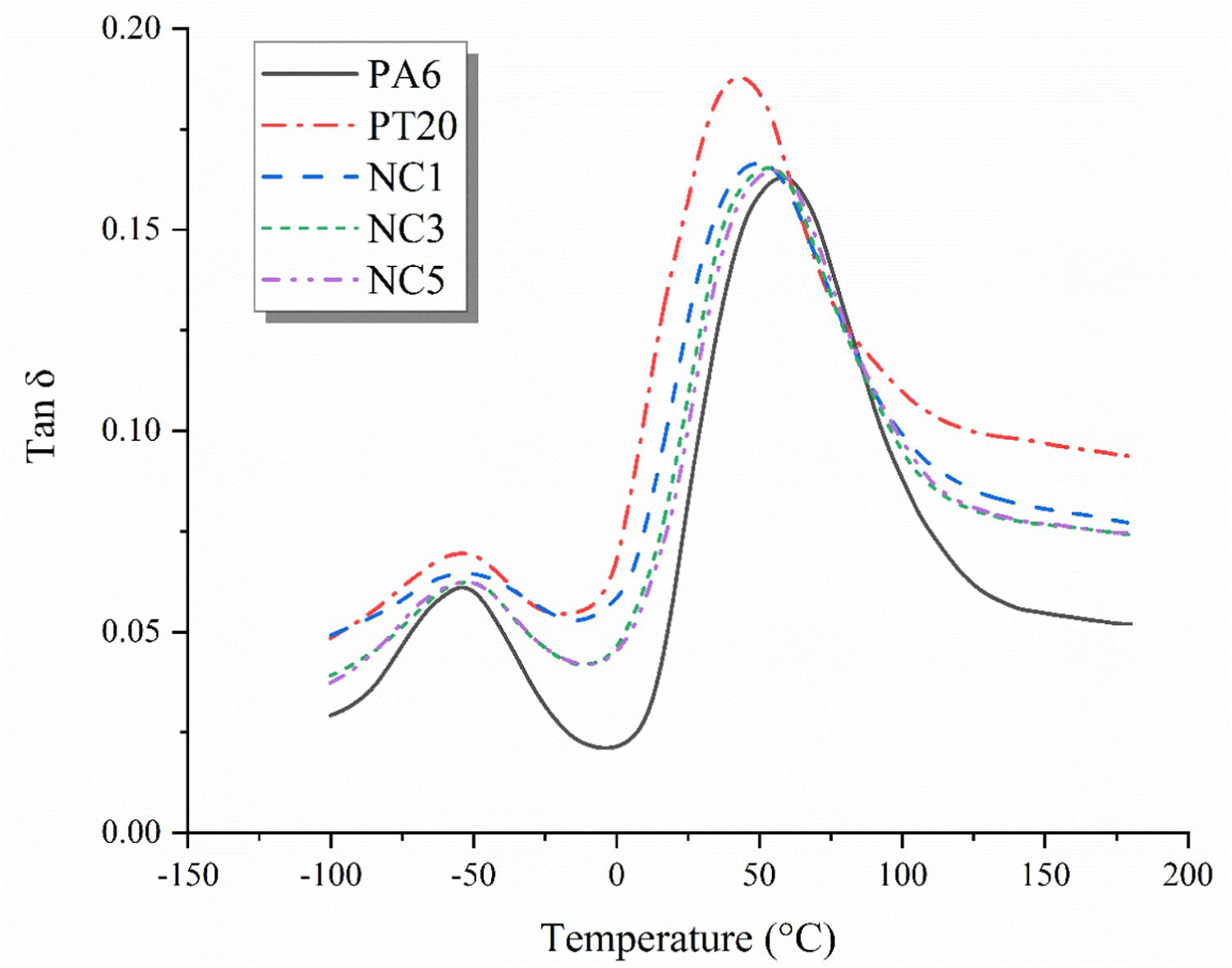
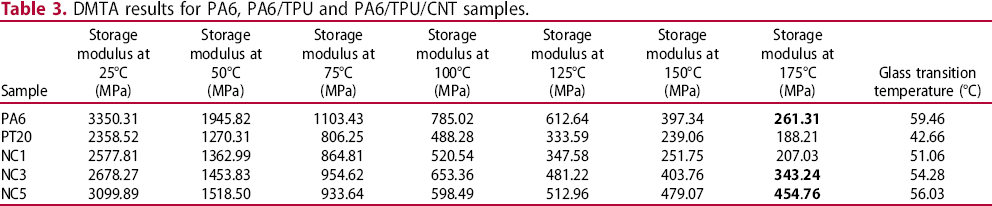
Figure 13 illustrates the loss factor, denoted by tanδ (the ratio of loss modulus to storage modulus), as a function of temperature for different specimens. For PA6 sample, the peak developed at higher temperature range represents α-relaxation which corresponds to glass transition temperature (Tg). On the other hand, the peak established at lower temperature range concerns to β-relaxation which is related to local segmental motion within the amide segments of PA6 [39]. In the presence of TPU, the degree of molecular mobility in PA6/TPU blend increases which this can lead to the increment of energy damping. Elevated tanδ peak value as well as widened tanδ–temperature curve are indications of energy damping improvement [40]. The existence of TPU in PA6 increased loss factor (tanδ), yet the presence of CNTs in PA6/TPU reduced the damping factor. The inclusion of carbon nanotubes restricts polymer chain mobility, resulting in more elastic response and less viscous damping. Moreover, the addition of TPU into PA6, shifted the glass transition temperature (Tg) to lower value. This may be an indication for compatibility of blended phases [36, 39]. While, the inclusion of carbon nanotubes into PA6/TPU increased glass transition temperature (Figure 13 and Table 3). The increment in Tg for nanocomposites as compared to PA6/TPU blend is ascribed to the fact that presence of carbon nanotubes hinders the polymer chains mobility [41].
Figure 14 depicts the correlation between storage modulus and loss modulus values known as the Cole–Cole plot. The Cole–Cole plot is a feasible tool to interpret the state of homogeneity of blends and fillers dispersion in polymeric systems. Smooth and semi-circular arc in Cole–Cole plot represents a homogenous mixture and well dispersion of reinforcements, while irregular or imperfect arcs suggest blend heterogeneity or fillers agglomeration [42]. According to Figure 14, the addition of TPU into PA6 slightly interfered with the homogeneity and hence marginally altered the shape of Cole–Cole plot as compared to that of pure PA6. On the other hand, the inclusion of CNTs improved the homogeneity of polymeric system, and as a consequence, smoother Cole–Cole plots as compared to that of PA6/TPU blend were established. In particular, the Cole–Cole plot of nanocomposite containing 0.5 wt-% CNTs closely matches the plot for neat PA6. The improvement of homogeneity is ascribed to the enhancement in interfacial interaction of PA6 and TPU phases through applying CNTs.
Cole–Cole plots of pure PA6, PA6/TPU blend and PA6/TPU/CNT nanocomposites.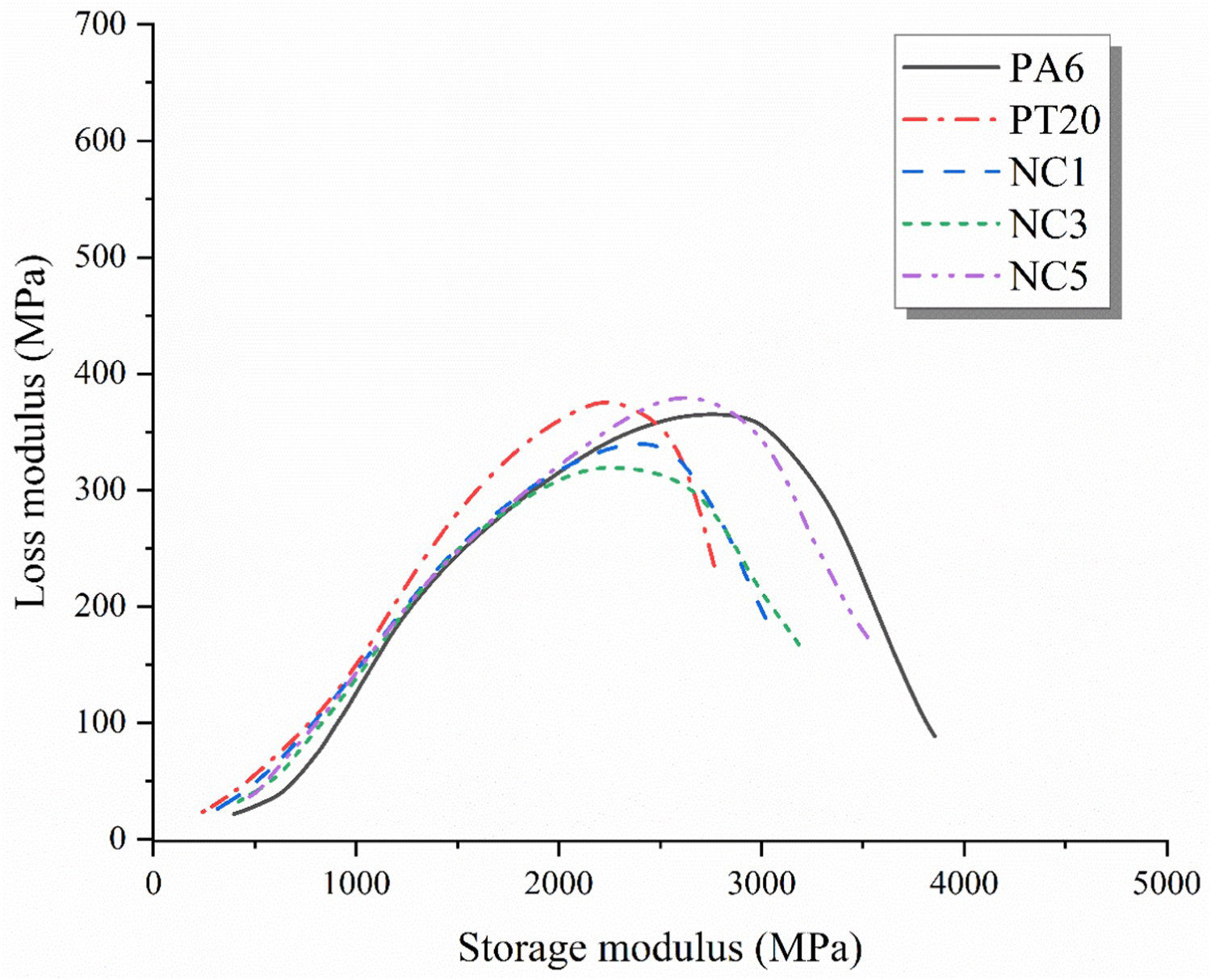
Conclusions
In this research, morphology, mechanical, thermal and viscoelastic properties of PA6/TPU/CNT nanocomposites were studied. SEM images showed fine dispersion of TPU droplets in PA6 matrix and evident adhesion of polymer to CNTs. The existence of TPU in PA6 matrix significantly increased notched impact resistance and induced a rough fracture surface morphology. The addition of CNTs into PA6/TPU matrix improved tensile, flexural and impact resistance. According to DMTA tests, the existence of TPU in PA6/TPU led to the increase of energy damping. The inclusion of CNTs into PA6/TPU elevated both energy storage and glass transition temperature. The proper homogeneity of nanocomposite was confirmed by noticing a smooth storage-loss moduli Cole–Cole plot.
Footnotes
Acknowledgement
Authors would like to thank plastics and composites laboratory’ staffs at University of Tabriz for their technical helps.
Disclosure statement
No potential conflict of interest was reported by the author(s).