







Abstract
Elastomeric hybrid films were produced from the epoxidized nitrile rubber with the 3-glycidyloxypropyl-trimethoxysilane (GPTMS) inorganic precursor by the sol–gel process. There were no significant changes in the thermal properties of hybrids in relation to pure epoxidized rubber. The degree of swelling decreased while the mechanical resistance increased with increasing GPTMS content. The sol–gel process was performed on metal plates, which were then subjected to a corrosion process by immersion in NaCl solution and evaluated by Electrochemical Impedance Spectroscopy. The resistance and the capacitance values of the nitrile rubber coating are 8.8 × 10³ Ω cm2 and 1.9 × 10⁻⁴ F cm−2, whereas for the hybrid with 38 phr of GPTMS the values are 2.3 × 10⁶ Ω cm2 and 15.8 × 10⁻¹⁰ F cm−2, respectively, indicating higher cross-link density, less electrolyte absorption, less degradation, greater adherence to the metal surface via silane groups and, consequently, better corrosion protection achieved by the hybrid films.
Introduction
The corrosion process of metallic materials is irreversible and involves chemical and electronic changes that lead to their disintegration. One way to slow or decrease metallic corrosion is the use of surface coatings [1-11]. Among the various types of coatings used are organic coatings such as paints and varnishes, metallic, inorganic or organic–inorganic hybrids [10, 12-28]. Chromatization is a common form of metal coating where the surface is coated with a layer of Cr6+ compounds that are converted to trivalent chromium oxide, passivating the metal [5]. However, this process is environmentally unfriendly. The solution containing Cr6+ species used in the chromatization process is highly toxic and considered carcinogenic. In addition, weakly bonded Cr6+ compounds can be leached by water or released by friction. This problem leads to the search for alternatives that are more environmentally appropriate and that comply with environmental laws [1, 7-9]. Siloxane-based coatings have been pointed out in several studies as potential substitutes for chromatization, as they are non-toxic, have thermal stability, weather stability, hydrophobicity and excellent adhesion to metallic substrates [28]. However, pure inorganic silane coatings have some considerable drawbacks such as brittleness and high-temperature treatment [4]. It is known that while most traditional organic coatings fail to provide effective protection due to low thermal resistance and poor adhesion to the metallic surface, inorganic coatings have issues related to high porosity, high internal tension and micro cracks [7, 17]. To overcome that, a new class of covering materials has emerged in the last years: the organosilica hybrid coatings. By definition, a hybrid coating consists of organic and inorganic components. Depending on the composition and methodology applied in the preparation, a homogeneous and single-phase material can be formed. This combination is of great interest as it enables materials with mechanical and specific properties to be obtained for various applications [2]. To be an effective physical barrier against corrosion, these hybrid materials must form a dense and sufficiently hydrophobic network to prevent electrolyte penetration. In addition, they must have strong adhesion to the metallic substrate [1-4]. The strength of the adhesion between the hybrid film and the metallic surface can be achieved through the organo-functionalised groups of the silane matrix.
Organically modified silicates can be obtained by incorporating silica in situ into a polymer by the sol–gel process. In this process, the solid phase is formed by gelling a colloidal suspension called sol [3, 6, 10, 29, 30]. Advantages of this process include the possibility of using liquid precursors which react at room temperature. Sol–gel coatings promote, in addition to corrosion resistance, good abrasion resistance [11, 29, 31, 32].
In search of high-performance coatings, many works are presented, recently, on the study of the effect of silica incorporated in polymeric matrices. LV Mora and collaborators [22] compared the effects on the mechanical and anti-corrosive properties caused by the incorporation of silica nanocapsules, modified and unmodified with (3-glycidyloxypropyl) trimethoxysilane (GPTMS), in a polymeric matrix based on TES40, an oligomeric form of tetraethylortosilicate (TEOS). The sol–gel-based coating obtained from the functionalised silica with GPTMS showed greater homogeneity, better mechanical properties, increase of resistance to corrosion and to erosion. They concluded that the functionalization prevented the formation of silica agglomerates, which led to a worsening of the mechanical properties. R Sambyal and collaborators [12] produced a copolymer consisting of poly (aniline-anisidine)/chitosan/silica. After its synthesis, the copolymer was added to the epoxy resin, which was then applied as a carbon steel coating. The results for epoxy resin with the addition of copolymer composite showed a drastic decrease in the corrosion current and an increase in the pore resistance of the polymer to solution entry, compared to pure epoxy coatings. The authors consider that the increased effectiveness in protecting against corrosion of steel is due to the synergistic effect of the three components added to the epoxy: the redox properties of the poly (aniline-anisidine) caused the oxidation and passivation of the metal inside the pores or holes, chitosan produced a more homogeneous coating and silica promoted the mechanical integrity of the coating. Still considering the effect of silica-based compounds as constituents of anti-corrosive coatings, C Zhou and collaborators [24] used a polybenzoxazine matrix functionalised with 3-aminopropyltrimethoxysilane. Two organophilic clays were added to this matrix: Nanocor I.44 (quaternary ammonium dimethyldioctadecyl) or Nanocor I.34TCN methylbis(2-hydroethyl) octaryl ammonium quaternary, producing polymers with good resistance to corrosion, when applied on steel. P Rodic and collaborators [25] prepared a coating consisting of a matrix of tetraethylorthosilicate and the precursor 3-methacryloxypropyltrimethoxysilane, which were mixed with different amounts of zirconium (IV) propoxide and applied to aluminium samples. The results showed that the higher the ratio between Zr and Si, the better the corrosion protection provided by the coating. The results were interpreted in terms of the different degrees of polycondensation of the silicon species as a function of the zirconium content in the coating. The same research group [26] also proposed the copolymerisation between methyl methacrylate and 3-methacryloxypropyl trimethoxysilane to obtain acrylate-based hybrid sol–gel coatings to be applied to Aluminium alloy (AA) 2024-T3. Among the hybrid coatings, enhanced protective performance was attained with higher degrees of copolymerisation and the formation of Si–(alkyl chain)–Si–O–Si network. M Izadi and collaborators [27] showed that active protection and cathodic disbonding performance of an epoxy coating were improved through surface modification of steel by a hybrid sol–gel system, filled with green corrosion inhibitors. In that work, the silanes act as an intermediate layer between the epoxy and the mild steel substrate. The choice for alkoxy silanes relied on its ability to attach to inorganic materials (such as the metallic substrates) as well as to react with polymeric materials. According to the authors, this coupling action of silanes plays an important role in improving the adhesion of organic coatings to metallic substrates. Besides that, the films with a dense and cross-linked network of siloxane chains (Si–O–Si bonds) act as good barriers against water, oxygen, and other aggressive agents which diffuse to the substrate/coating interface. T Coan and collaborators [28] presented the synthesis of Poly-methyl methacrylate (PMMA)/polysilazane hybrid polymers for coating applications. TGA showed that the thermal stability of the developed hybrid polymers was improved in comparison with pure PMMA. The analysis of wettability showed that the inclusion of polysilazane to PMMA structure also changed its character to hydrophobic. Finally, the hybrid polymer-based coatings provided a superior corrosion protection to carbon steel, as verified by the increased corrosion resistance and reduced current densities, compared to pure PMMA coating, in EIS and potentiodynamic polarisation curves, respectively.
These works report not only a structural modification caused by the component added to the polymeric matrix, but also the fixation of the coating to the metallic substrate through the silane groups. Then, the incorporation of these compounds into the polymeric matrix provides a better anti-corrosion property due to: (a) obtaining a more homogeneous, compact and less porous coating, which makes it difficult for the solution to enter; (b) the greater hydrophobicity of the barrier layer and (c) the better adhesion to the metallic substrate due to the fixation through the functional silane groups. The bibliographic review denotes the growing search for environmentally friendly coatings, with various materials incorporated, seeking mainly to improve adhesion on the metallic substrate and in the anti-corrosive performance. However, so far, few studies use organic/inorganic hybrids with elastomers in their composition, justifying the proposal of the present work.
It should be pointed out that in our previous work it was possible to demonstrate that the reaction between epoxide rubbers and inorganic precursors forms stable hybrid films [29, 30]. So, in this work, we used an epoxidized nitrile rubber (ENBR), because in many properties, like temperature resistance, resistance to non-polar solvents and abrasion resistance, it is superior to styrene–butadiene rubber (SBR) and natural rubbers (NR). Additional nitrile rubber (NBR) has lower gas permeability.
In this context, this work aims to evaluate the formation capacity of elastomeric hybrid materials from the reaction of inorganic precursor 3-glycidoxypropyltrimethoxysilane (GPTMS) and epoxidized nitrile rubber (ENBR), as well as its anti-corrosive properties as a coating for AISI 1020 steel.
Experimental
Epoxidation
The materials used were commercially available nitrile rubber without prior purification (NBR KRYNAC, Lanxess), with 33% acrylonitrile and 67% butadiene, toluene (Nuclear PA) as solvent, formic acid (Nuclear PA 98%), ammonium hydroxide (Nuclear PA), sodium bisulphite (Vetec PA), diluted hydrogen peroxide (Synth PA ∼ 30%), concentration determined from titration with ∼ 0.02 Molar solution of KMnO4 (exact concentration previously determined by primary standard).
For epoxidation, 100 g of nitrile rubber were dissolved in toluene (∼5% solution) by mechanically stirring in tritubulated round bottomed flask. The solution was heated in a water bath to 50 ± 5°C and kept at this temperature for the entire reaction time. Formic acid and hydrogen peroxide were added at a 1: 1 molar ratio, taking into account the amount of butadiene content, in mol, in the rubber. The reaction was maintained for 3 h and then a peroxide strip test (Quantofix) was used to detect the presence of peroxide. If so, sodium bisulphite (5% solution) was added in order to consume traces of peroxide and ammonium hydroxide (1:1 solution) were added until complete pH-controlled formic acid neutralisation (Merck strip detection). The reaction mixture, peroxide-free and neutral, was then coagulated in ethanol under mechanical stirring. The coagulated rubber was washed in deionised water several times, kept in contact with water for at least 12 h to remove the salts formed and dried in a vacuum oven (60°C).
Sol–gel reaction
For the formation of the films, approximated to 2 g of epoxidized nitrile rubber (weighted to a precision of 0.002 g) was dissolved in 25 mL of tetrahydrofuran (THF PA Merck) under magnetic stirring. Catalyst BF3, previously diluted to 5% in THF, was added dropwise until the solution reached pH ≅ 3 to ensure acidic pH for gelation. Thereafter, the inorganic precursor 3-glycidoxypropyltrimethoxysilane (GPTMS) was added in proportions calculated to compromise a certain content of epoxide groups expressed in mol and phr (parts of hundreds of rubber). For comparison, it was also obtained the composite consisting of the mixture of non-epoxydized nitrile rubber, NBR and GPTMS.
Sample composition.

aEstimated from the increase of glass transition temperature.
Calculated from the degree of epoxidation.
Characterisation
Epoxidized rubber was characterised with regard of its epoxy content by Hydrogen Magnetic Resonance Spectroscopy (H1-NMR) on a 400 MHz Bruker equipment, in deuterated chloroform (CDCl3) as solvent and tetramethylsilane as an internal standard. The average molar mass of epoxide nitrile rubber was determined by gel permeation chromatography (GPC) on a Viscotek model TDA 302 apparatus. The sample was solubilised in THF and filtered through a Chromafil Xtra PVDF – 45/25 filter with 0.45 µm pore size. The established flow rate was 1.0 mL min−1 and the calibration performed with monodisperse polystyrene standards.
The rubbers were analyzed by thermogravimetry (TGA) to evaluate the thermal stability and to estimate the incorporated silica content. Analyzes were performed on a Discovery – TA Instrument with 25 mL min−1 ultra-pure nitrogen purge gas, Platinum HT pan, with an initial mass of about 10 mg, in the range 25–900°C, 10°C min−1, where at 600°C the atmosphere was changed from N2 to synthetic air. Differential exploratory calorimetry (DSC) analyzes were also performed to determine the glass transition temperature (Tg), using a TA Instrument DSC Q20 calorimeter. 5 mg of the sample was cooled to −50°C, held at this temperature for 2 min and then heated to 100°C at a rate of 20°C min−1 in two cycles. Tg was determined in the second heating cycle.
Tensile strength tests were performed on an EMIC model DL5000/10000 universal testing machine with a speed of 50 mm min−1 and a 20 N load cell. The tests were performed on film strips, in triplicate.
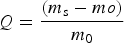
The samples (parts of the films, ∼100 mg) were submitted to toluene swelling analysis for 48 h, at 25°C, or until a constant weight was achieved. The swelling degree, grams of the solvent per grams of the rubber, was calculated according to the relation:
Corrosion tests
Composition of AISI 1020 carbon steel (Fe balance).

The deposition of rubber films on steel was performed by immersing the metal plate in the solution containing the polymer and inorganic precursor. After several experimental attempts involving reaction time, thickness control and film properties, it was possible to determine that three immersions, with one-minute intervals between them, would be sufficient and appropriate to achieve a homogeneous coating. Afterwards, the samples were kept vertically suspended at room temperature for evaporation of the solvent. The thickness of the hybrid films obtained by this methodology was 0.20 ± 0.02 mm. The parameters defined for this technique ensured the obtaining of a thin film with regular thickness over its entire surface, including the upper and lower edges of the samples, after evaporation of the solvent. The rest of the solution was poured onto Teflon petry plates for the slow evaporation of the solvent. These films were used for the characterisation.
The specimens thus constituted were analyzed by Electrochemical Impedance Spectroscopy (EIS). The tests were performed in a three-electrode cell, with the saturated calomel electrode (SCE) as a reference, a large area Pt wire as counter electrode and the coated AISI 1020 carbon steel metallic substrates as the working electrode. The specimens were immersed in 3.5% w/w NaCl solution and analysed for 28 days of open circuit potential immersion (OCP) with 10 mV potential sine wave amplitude in the 100 kHz to 10 mHz frequency range, on an Autolab Model PGSTAT30 Potentiostat coupled to a NOVA frequency response analyzer.
The sequence of the methodology used is shown in Figure 1.
Scheme of methodology used for the synthesis of the hybrid composites, steel plate coating, film formation and analysis.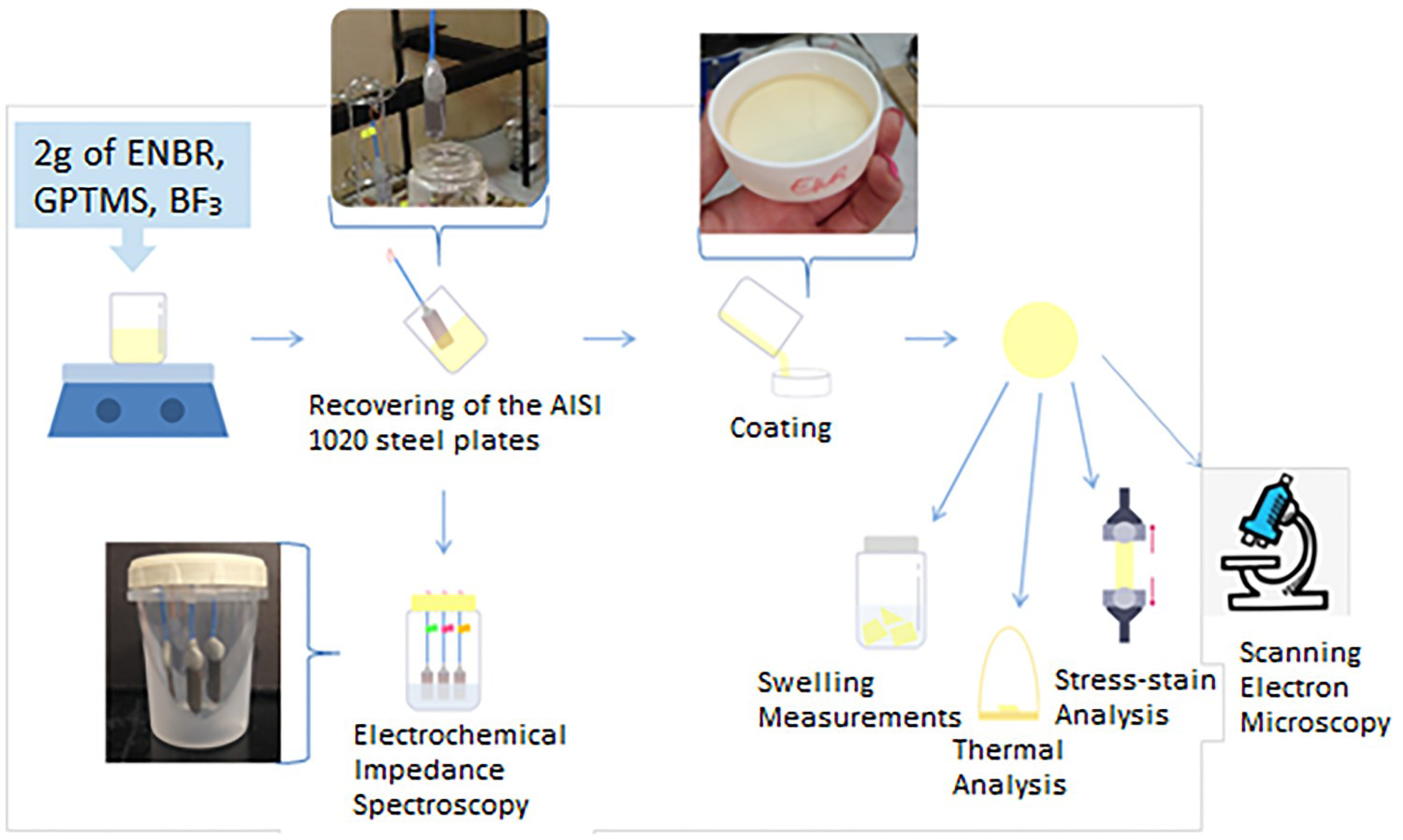
Results and discussion
Synthesis of the hybrid films and its characterisation
Epoxidation is an easy and controlled methodology for introducing reactive functional groups into a polymer chain [33]. In polydienes, epoxidation increases polarity, leading to the optimisation of physical and mechanical properties such as oil resistance and gas permeation, as well as adhesion to substrates [34]. The epoxidation reaction of polydiene with formic acid is represented in the following equations:
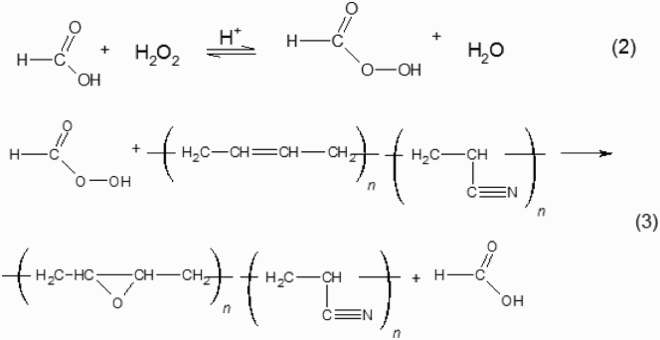
Figure 2 shows the spectra of non-epoxidized epoxy nitrile rubber, showing an intense signal at 2.5 ppm, attributed to hydrogen bound to nitrile carbon (hydrogen marked 2 in the figure) [35]. The amplification of this signal makes it possible to detect the presence of a small shoulder at 2.7 ppm, attributed to the epoxide group hydrogen [36].
H1-NMR of nitrile rubber (a) non-epoxidized (NBR) and (b) epoxidized (ENBR).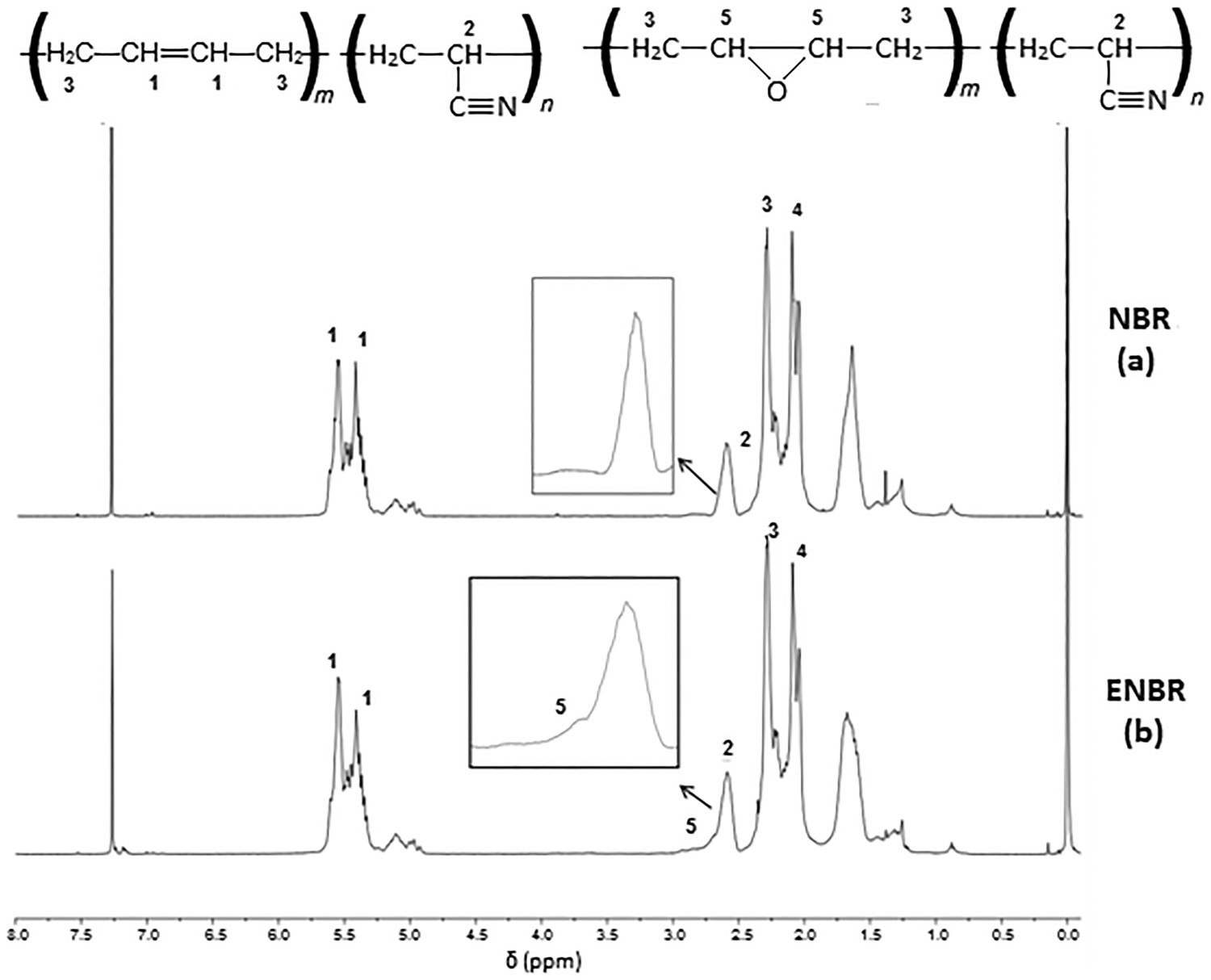
Thermogravimetric analyzes were performed in order to evaluate the thermal stability as well as the actual load content of GTPS embedded. The thermograms in Figure 3 show for all the samples under investigation (NBR, ENBR, ENBR GP20, ENBR GP38 and NBR GP38), and a main decomposition between 400°C and 500°C, attributed to the rubber phase. The different residue levels corresponded to the inorganic precursor (GPTMS) content added to the composites and converted to SiO2 at high temperatures. The high residue value observed in NBR should be attributed to residues (salts) from the emulsion polymerisation from which commercial NBR is obtained (since NBR was analyzed as received). By the epoxidation process, the sample was dissolved, re-reprecipitated and washed several times, which certainly eliminates the polymerisation residues and these are no longer present in the ENBR.
Thermal decomposition (TGA) of the NBR, ENBR and the correspondent hybrids and composite NBR GP38.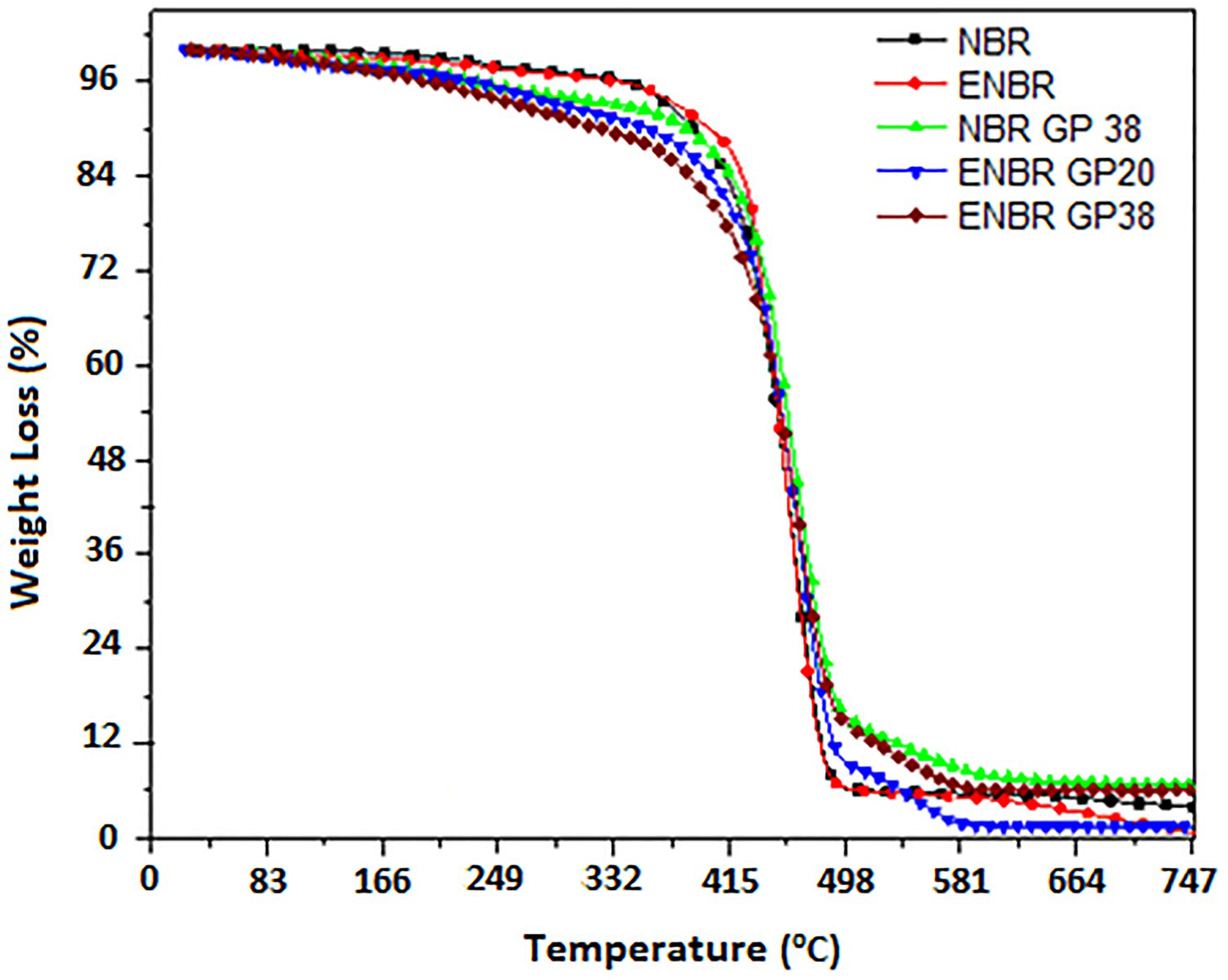
The theoretically estimated residue values for the systems under analysis, assuming that the entire inorganic precursor is transformed into SiO2, for the GP20, ENBR GP38 and NBR GP38 rubbers are 4.2%, 7% and 7%, respectively. The experimentally determined values were 2%, 6% and 7%. The disagreement between the theoretical and experimental values for the first two rubbers is due to the difficulty of dosing the small quantitative by the adopted methodology. This is evident in the ENBR GP20 rubber, which shows, by thermogravimetric analysis, only 50% of the estimated precursor in the formulation. Figure 4 shows DSC curves with the glass transition temperature (Tg) of the different systems. NBR and ENBR samples show a Tg of −32°C and −27°C, respectively. The increase of the Tg is a consequence of the introduction of the epoxy group. From this variation the degree of epoxidation is estimated in the order of 5%. In our previous studies, it could be observed that for each 1% of epoxy groups introduced into the main polymeric chain, an increase of about 1 degree in the Tg of polybutadiene was detected [36]. For NBR GP38, the increase in Tg to −28°C can be attributed to the presence of the SiO2 as filler in the rubber. Certainly, there will be an interaction between the polar nitrile group in the rubber with the hydroxyl groups of the silica. All this interaction will influence the mobility of the rubber. The ENBR GP20 and ENBR GP38 samples have Tg equal to −23°C and −22°C, respectively.
DSC thermogram NBR and ENBR samples with different contents of inorganic precursor.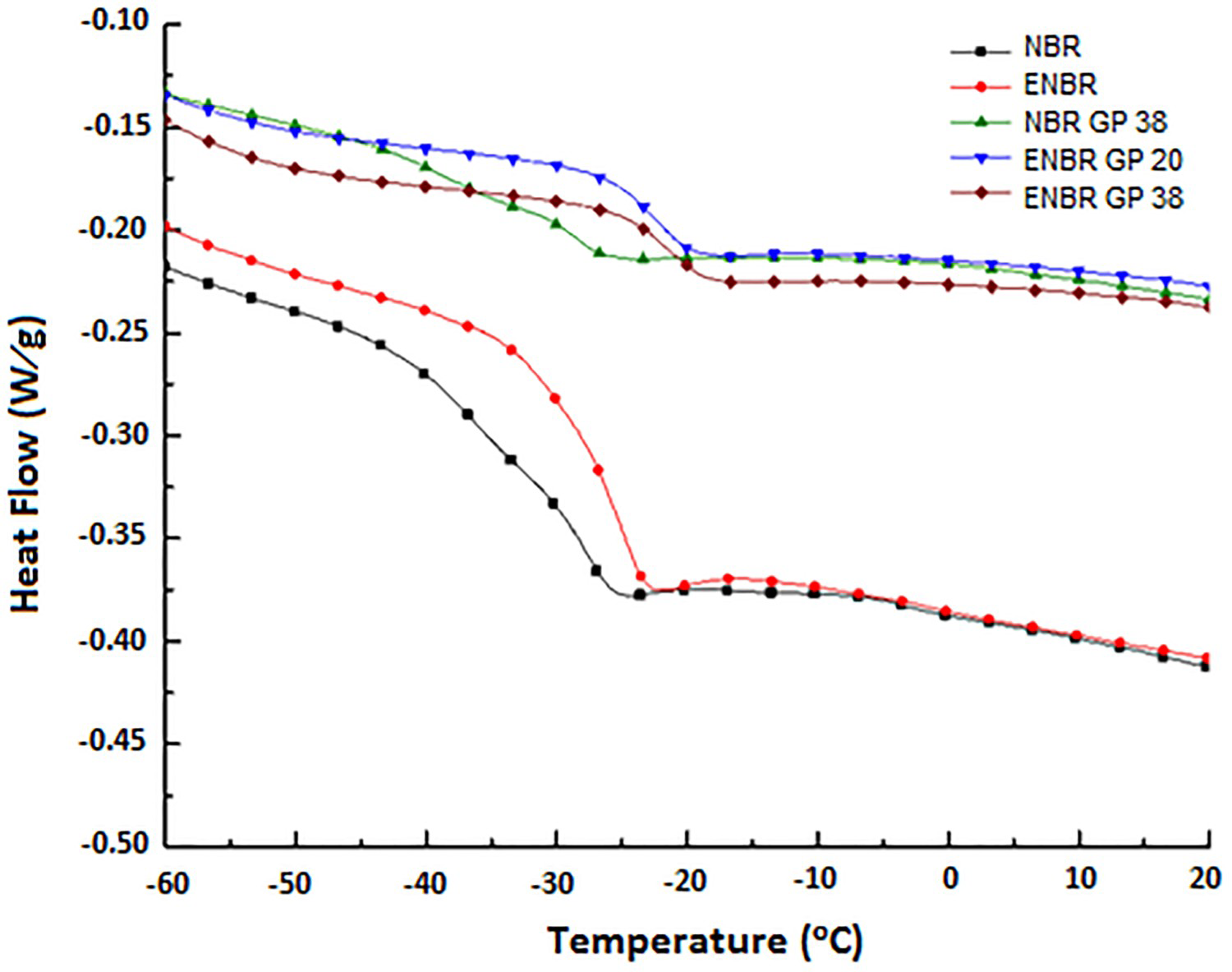
The hydroxyl groups formed by the hydrolysis of the inorganic precursor react with each other, but also react at the same time with the epoxide groups, present in ENBR. The result is the formation of a three-dimensional network. At the same time, they can also interact with the hydrogen atoms present in the butadiene units. Both phenomena decrease the flexibility of the chains. In both hybrids and composite, only one glass transition was observed [37].
In order to obtain the organic–inorganic hybrid films through the sol–gel process, the hydrolysis reaction of the alkoxide groups present in the inorganic precursor GPTMS must first occur. These silanol groups react with each other to form siloxane bonds resulting in the silica in situ, and at the same time, the epoxy group of the polymer as well as the epoxy group of the organofunctional group 3- glycidoxy propyl in the presence of acids (BF3) undergoes ring-opening reactions and hydroxyl group will also be formed. All the hydroxyl groups can react with each other. Certainly, stable C–O–C bonds will be formed from the reaction of organofunctional hydroxyl and epoxy group of the polymer. On the other hand, the reaction between the silanol groups and the hydroxyl of the polymers results in Si–O–C bonds. Although the latter is not as stable as C–O–C bonds, regarding hydrolysis, for example, they are no less important. According to GL Witucki, [38] the Si–O–C bonds can undergo hydrolysis, but they can be reformed. In this way, a tridimensional stable hybrid network is formed.
An indirect proof of the formation of a three-dimensional network is the fact that the hybrid films obtained from the epoxidized rubber were no longer soluble in THF, a good solvent for rubber, while the composite obtained from NBR and GPTMS have completely dissolved. Another strong evidence is the behaviour of the films against corrosion, which will be discussed below.
The insolubility of the epoxidized hybrid films is a strong indication that the interconnection of the polymeric matrix with the inorganic phase formed from the organosilane polycondensation has occurred. The network mesh size is inversely proportional to the GPTMS content and proportional to the swelling degree. In view of that, a lower content of GPTMS results in a higher swelling degree. The higher the amount of solvent absorbed, the lower the cross-link density.
The hybrids ENBR GP20 and ENBR GP38 presented swelling degrees equal to 2.4 and 0.5, respectively. The lower value presented by the hybrid ENBR GP38 is the indication that the cross-link density of this system is higher because a higher content of precursor was incorporated. The morphology of this film is also different because the amount of silica present in this film is higher. This property also influences mechanical properties and corrosion resistance [39].
Improvement of polymer matrix properties is achieved by the addition of fillers. The better the dispersion and interaction of these fillers with the matrix, the better the final properties of the material, i.e. the greater the degree of reinforcement provided by the (inorganic) filler in the (organic) polymer matrix. One of the properties that is greatly impacted by the presence of fillers is the mechanical strength. The stress–strain behaviour of the samples under analysis is shown in Figure 5.
Stress–strain analysis of ENBR samples with different GPTMS proportions.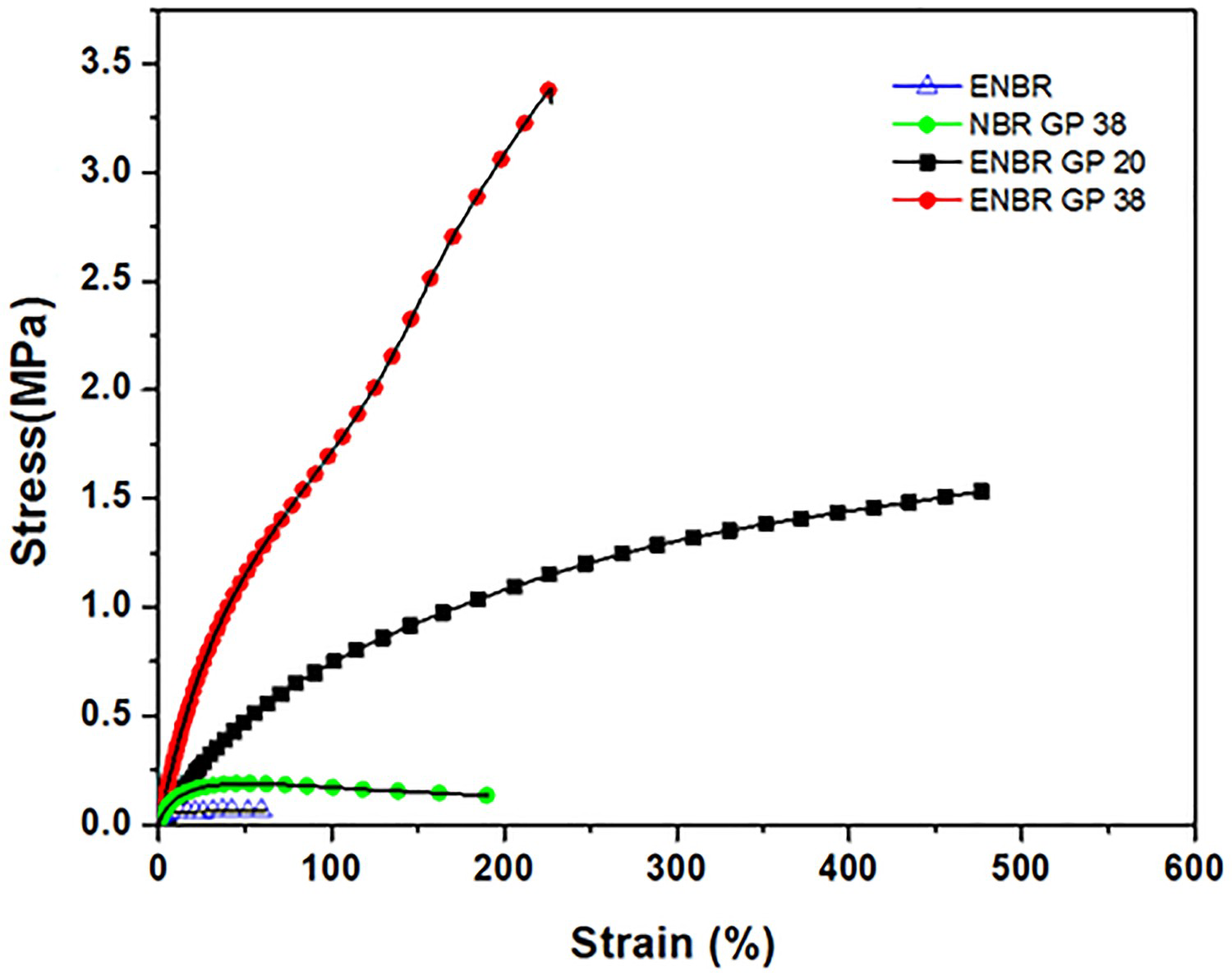
The effect of the formation of the hybrid, with the consequent cross-linking of the samples, synthesised from the epoxidized rubber with the organosilane is evident. In view of the small linear region of stress for elastomers, it is not usual to determine the Young's modulus of these materials, but to evaluate the stresses at 100%, 200% and 300% strain, as well as the stress at rupture. Comparing samples with each other, it is easy to see that pure rubber only reached a strain of 60% and stress of only 0.05 MPa. The sample with the non-epoxidized rubber and 38 phr of GPTMS showed at 100% and 200% deformation, much higher tension values (0.16 MPa) but only 0.030 at 200%. That is, throughout the deformation, it started to become yielding, because the rubber chains are not linked to each other. Furthermore, the hydrogen bonds that must have formed between the CN groups and between the hydrogens of the polymer chains and the hydroxyl groups of the silica were breaking down during deformation.
On the other hand, the hybrids behave in a very different way. This must be attributed to the chemical cross-linking of the elastomeric chains, which now exhibit elasticity proportional to their cross-linking density, as well as to the presence of part of the silica (a rigid phase) directly linked to the rubber matrix. But the main effect must be attributed to the cross-linking density and the formation of a hybrid material itself. For ENBR GP 20 values of 0.74 and 1.09 MPa for 100% and 200% strain, respectively, were determined, while for sample ENBR GP 38 values of 1.70 and 3.07 MPa were found at the same deformations. Analysing these values, we found that the sample ENBR GP 38 at 200% of deformation, tripled its value, compared to the sample ENBR GP 20, and when comparing with the composite with the non-epoxidized rubber at 100% of deformation, was found a factor of 10 times fold greater. These quantitative data show that, effectively, there is the formation of a new hybrid material, which presents a synergism in its properties.
The stress–strain behaviour also corroborated the swelling results, where the swelling degree of ENBR GP38 is much lower than the swelling degree of ENBR GP20. It should be remembered that, in polymeric systems with fillers, mechanical properties are a consequence of structural characteristics and microscopic interactions between matrix and fillers.
Figure 6 shows the Scanning Electron Microscopy (SEM) images of the hybrids under study. In the sample, without precursor, a smooth, homogeneous surface is observed. In both the 20 and 38 phr GTPMS samples, domains of the inorganic SiO2 phase dispersed in the continuous rubber phase can be observed with the particle size proportional to the precursor content used in the hybrid formation. The presence of voids in the fracture surface of the ENBR GP38 sample indicates the existence of silica domains that are not chemically linked to the elastomeric phase but acting as reinforcing filler and improving mechanical properties of the film, as seen in Figure 5. It should be remembered that the number of moles of silane introduced into the system is much greater than the number of moles of epoxide groups of the rubber (Table 1). Thus, the presence of silica not directly linked to the polymer network should be expected. In turn, the silanol groups formed can condense with each other after hydrolysis, as well as react with rubber epoxy groups, thereby co-crosslinking between the polymeric matrix and the silica. However, the rate of the polycondensation reaction between silanol groups must be greater than the rate of the reaction between epoxide groups or the reaction of silanol groups with the hydroxyl groups of the polymer matrix. As a result, two phases are formed, one polymer-rich and one silica-rich, where the silica domains are proportional to the incorporated precursor content. The better the silica distribution and the interaction between the silica and the polymer matrix, the better the mechanical properties obtained.
Micrographs of ENBR hybrid films with different GPTMS proportions: (a) ENBR, (b) ENBR GP20 and (c) ENBR GP38 (magnifications 2.500× and 5000×).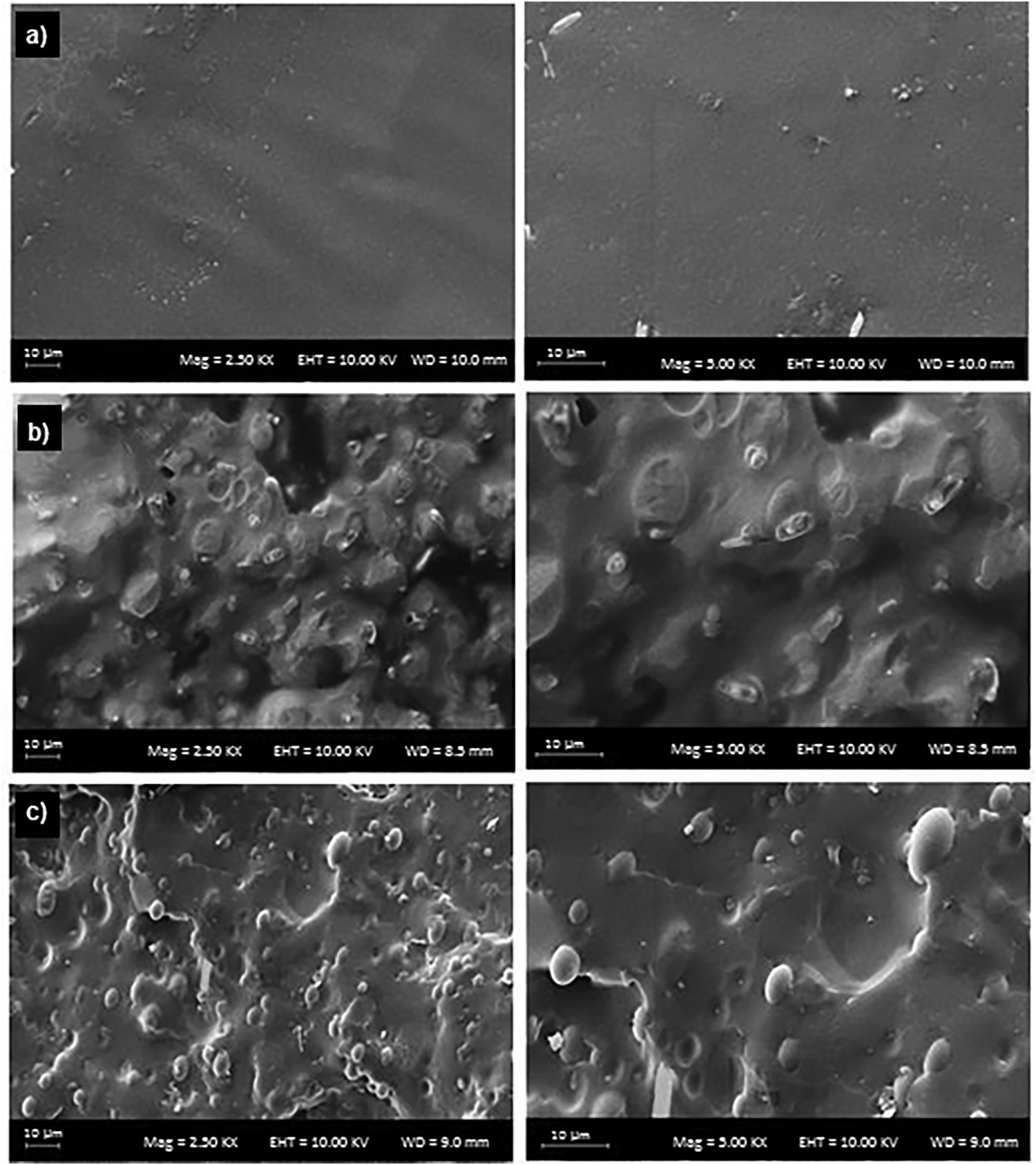
Corrosion tests
AISI 1020 steel samples were covered with rubber films of different formulations and submerged in 3.5% w/w NaCl solution. EIS experiments were performed over the immersion time. Figure 7 shows the graphs of Bode at the time of immersion (day 0) in saline solution. The diagrams for all samples show a plateau at low frequency, related to the total resistance of the immersed coated steel (Rt), and an inclined line at intermediate frequencies, related to the total capacitance (Ct) of the system. The metal covered with non-epoxidized rubber (NBR) showed the highest impedance value. Conversely, the metal covered with epoxidized rubber (ENBR) showed lower impedance values. The samples covered with rubber containing the inorganic precursors GPTMS presented intermediate values of impedance. Non-epoxidized rubber (NBR) has a greater hydrophobic character, making it difficult for water to penetrate at the time of immersion. The introduction of oxygen atoms by the epoxidation reaction increases the polarity of the rubber and, consequently, there is a greater interaction of the rubber with the water molecules from the oxygen atoms, which may facilitate the solution penetration to the interface metal/film, reducing the barrier effect of the coating. However, the addition of the inorganic precursor improved the barrier properties of the epoxidized rubber film, probably due to a change in porosity (number or size of pores), making it difficult for the solution to enter through the rubber film.
Bode diagrams for NBR, ENBR, NBR GP38, ENBR GP20 and ENBR GP38 samples at the time of immersion (day 0) in 3.5% w/w NaCl solution in OCP.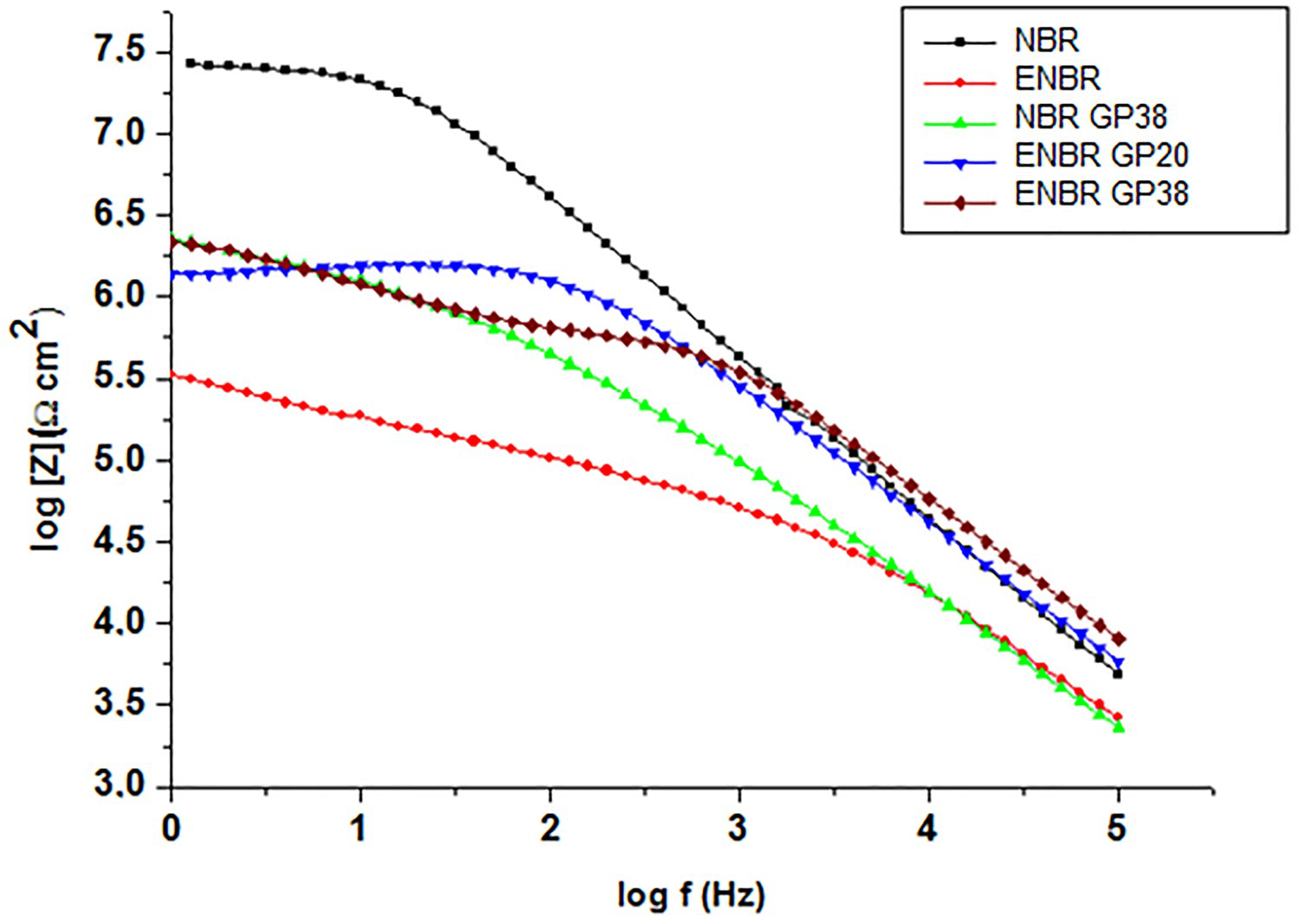
The evolution of the electrochemical behaviour of carbon steel 1020 coated with the different formulations of nitrile rubber over the immersion time is shown in Figure 8. For the nitrile rubber (NBR) coating, the Bode diagrams show an inclined straight line in the low frequency, a resistive plateau in the medium frequency and an inclined straight line in the high frequency. These results indicate that, at the time of immersion, the rubber film was dry and acting as a barrier between the metal and the solution, characterised by a purely capacitive behaviour. After one week of immersion, the solution penetrates the pores of the film, which now has a resistive behaviour, characterised by the resistance of the pores to ionic transport. The longer the immersion time, the lower the total system impedance. These results demonstrate that nitrile rubber (NBR) presented the best barrier effect at the time of immersion, but without the addition of GPTMS, it does not maintain the protective property, allowing solution penetration and metal surface attack. For epoxidized rubber (ENBR) coatings, Bode diagrams show a resistive behaviour, indicating that the oxidation mechanism of the metal, in the delaminated parts or in the pore bottom, is determined by saline solution mass transport. Moreover, nitrile rubber epoxidation improved its barrier properties, since this coating presents higher total impedance values for each day of immersion than NBR coatings. Bode diagrams for AISI 1020 steel coated with non-epoxidized rubber and inorganic precursor composite (NBR GP38) show a decrease in total impedance values with immersion time. Therefore, the addition of inorganic precursor did not improve the protective properties of the coating. At the time of immersion, the Bode diagram for the nitrile rubber (NBR) coating shows values above 1.0 × 10⁷ Ω cm2, which indicates good adhesion to the substrate, but without epoxidation no net formation occurs with the GPTMS, and the total impedance of the NBR GP38 sample drops dramatically to values around 5.0 × 10³ Ω cm2, already on the 7th day of immersion. The impedance results for hybrid coatings formulated with ENBR GP20 and ENBR GP38 epoxidized nitrile rubber show the effect of adding different inorganic precursor contents. For the ENBR GP20 coated sample, the resistive behaviour over a large frequency range indicates that at the metal/solution interface, at the bottom of the pore, there is a higher charge transfer resistance for metal oxidation, probably due to higher coating adhesion on the substrate. On the other hand, the diffusional process of solution passing through the pores of the film is facilitated with the immersion time and the total impedance of the system decreases. For higher levels of inorganic precursor (sample ENBR GP38), Bode diagrams show a capacitive behaviour, showing the beneficial effect of epoxidation as well as the addition of inorganic precursor. The immersion time did not significantly influence the total impedance of the system, which presents values above 1.0 × 10⁶ Ω cm2.
Bode diagrams for NBR, ENBR, NBR GP38, ENBR GP20 and ENBR GP38 coated AISI 1020 steel over immersion time in 3.5% w/w NaCl solution in OCP: 7 days, 14 days, 21 days and 28 days.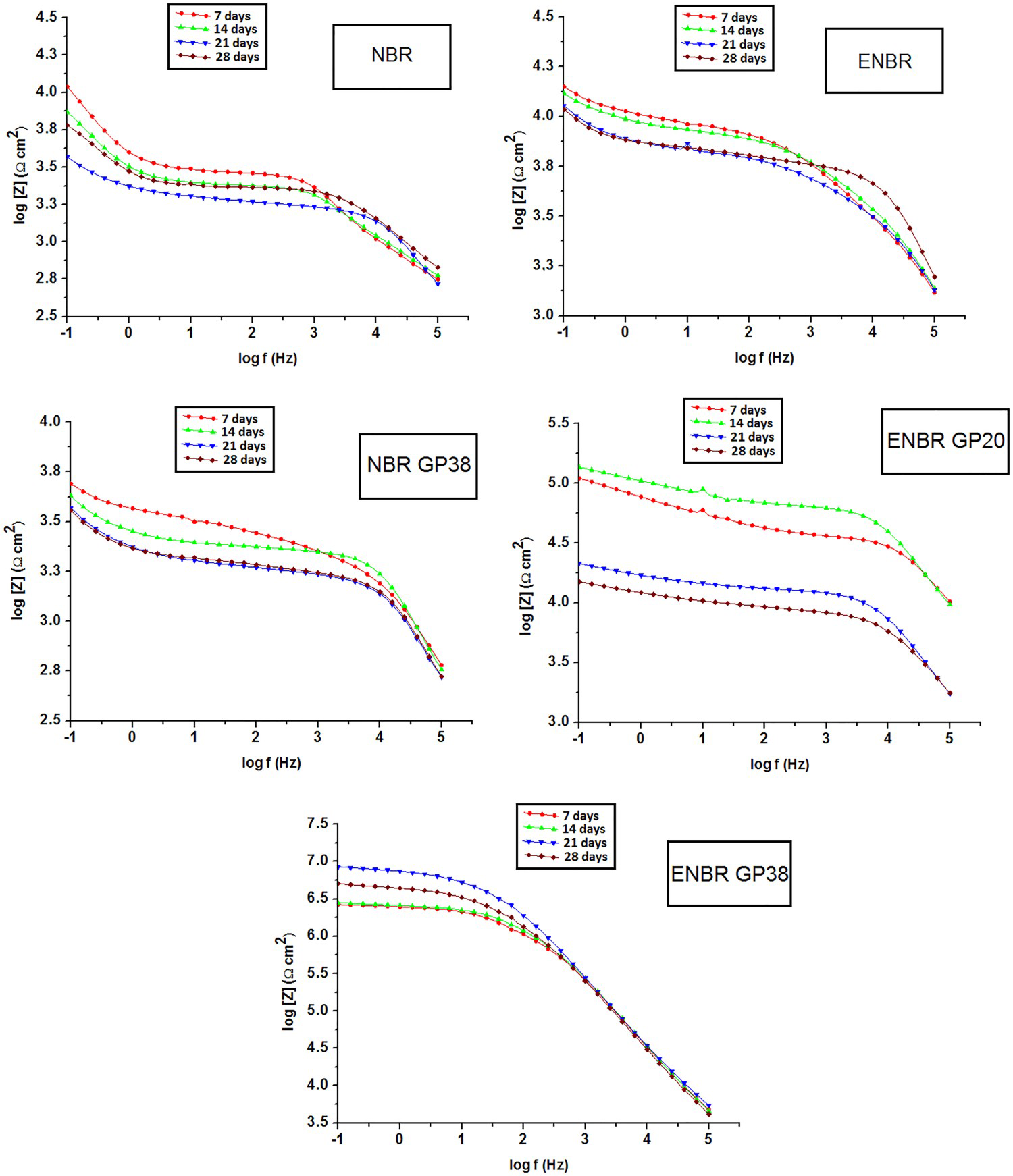
Figure 9 shows the change in total resistance (Rt) of AISI 1020 steel over the immersion time for the different coatings tested. Rt corresponds to the polarisation resistance, a complex function that comprises the sum of the resistance of the film to the solution entrance through its pores, the charge transfer resistance relative to the oxidation of iron at the metal/film interface, and the mass transport resistance of the corrosion products to the solution. Its value is obtained directly from the Bode graphs at low-frequency impedance values.
Rt resistance variation with the immersion time for NBR, ENBR, NBR GP38, ENBR GP20 and ENBR GP38 coated AISI 1020 steel in 3.5% w/w NaCl solution.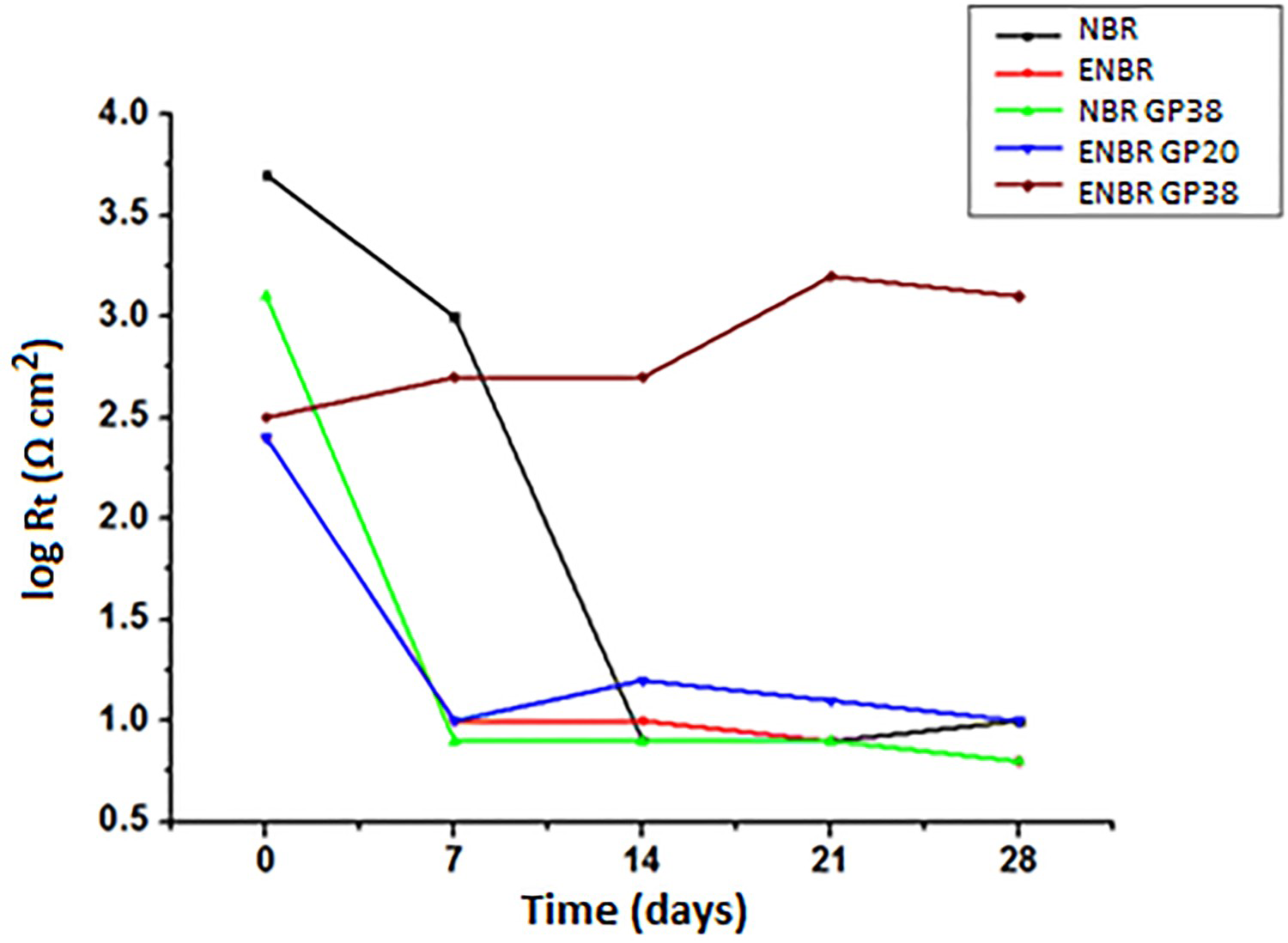
The total capacitance of the metal/film/solution (Ct) system was also evaluated over the immersion time (Figure 10). Capacitance is obtained by:
Ct capacitance variation with immersion time for NBR, ENBR, NBR GP38, ENBR GP20 and ENBR GP38 coated AISI steel in 3.5% w/w NaCl solution.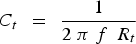
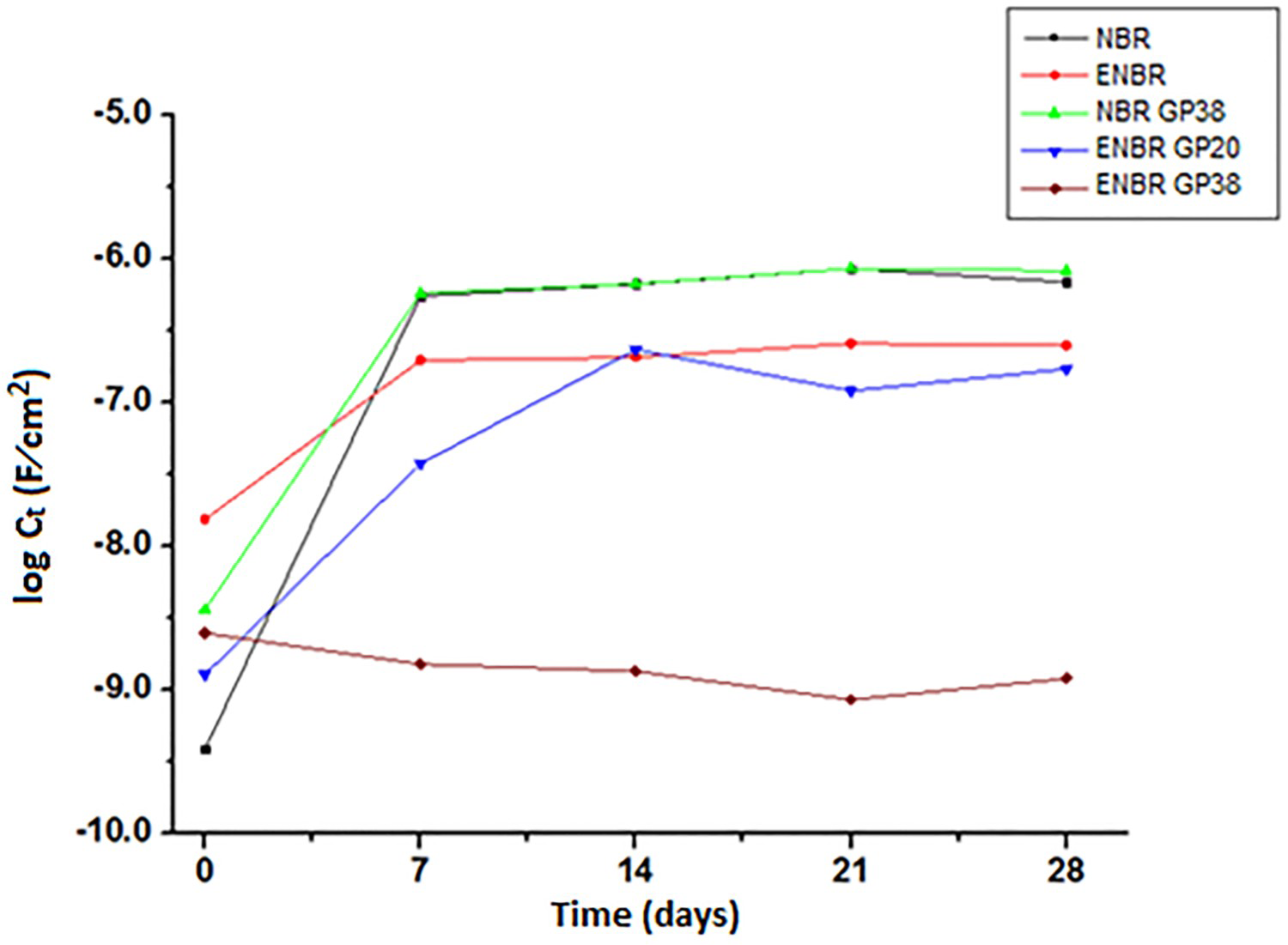
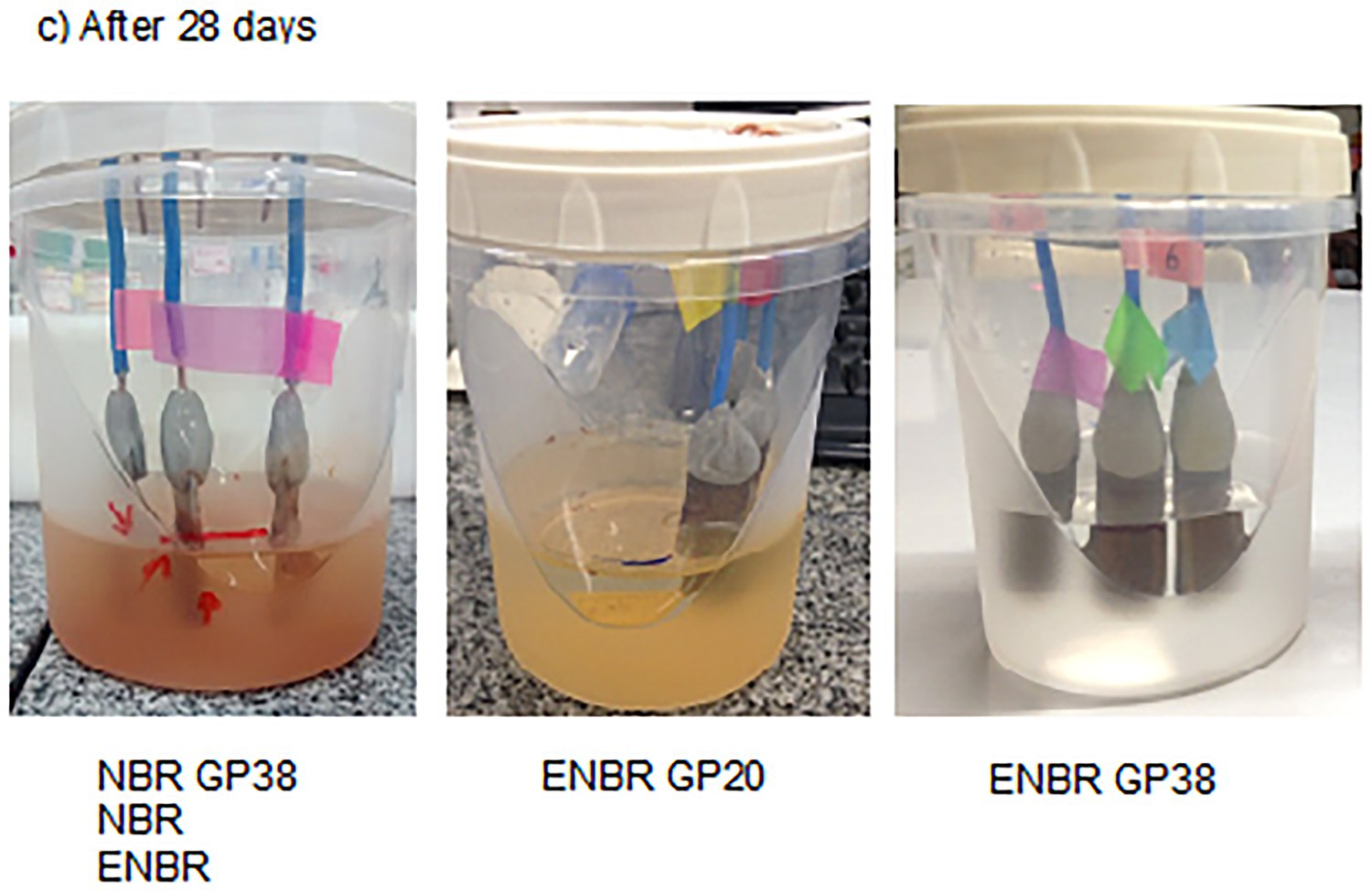
ENBR GP38 hybrid coating keeps high resistance and low capacitance throughout the solution exposure time. High Rt values indicate low porosity and high resistance to solution entry through the pores of the coating. The low Ct values indicate high adhesion of the film to the metal surface, thus acting as a dielectric, preventing the contact of the metal surface with the saline solution and, consequently, the corrosion caused by chloride. The visual appearance of the electrochemical cells is shown in Figure 11 at the time of immersion (a), after 14 days (b) and after 28 days (c). On the 14th day, it is possible to visualise the corrosion in the electrochemical cells, mainly for the NBR, NBR GP38 and ENBR samples, which have a more intense orange colouration due to the higher concentration of metallic oxide in solution. At the end of the tests, a darker colour, characteristic of the magnetite, indicates the presence of uncovered areas on the metal surface. The ENBR GP20 sample also presents a change in the colour of the solution, but to a lesser extent. The ENBR GP38 sample did not show any change in solution colour during the whole process, indicating a more effective protection of the metallic surface, which corroborates the results of the electrochemical impedance analysis.
Visualisation of NBR, ENBR, NBR GP38, ENBR GP20 and ENBR GP38 coated AISI 1020 steel specimens at the time of immersion (day 0), after 14 days and after 28 days in 3.5% w/w NaCl solution.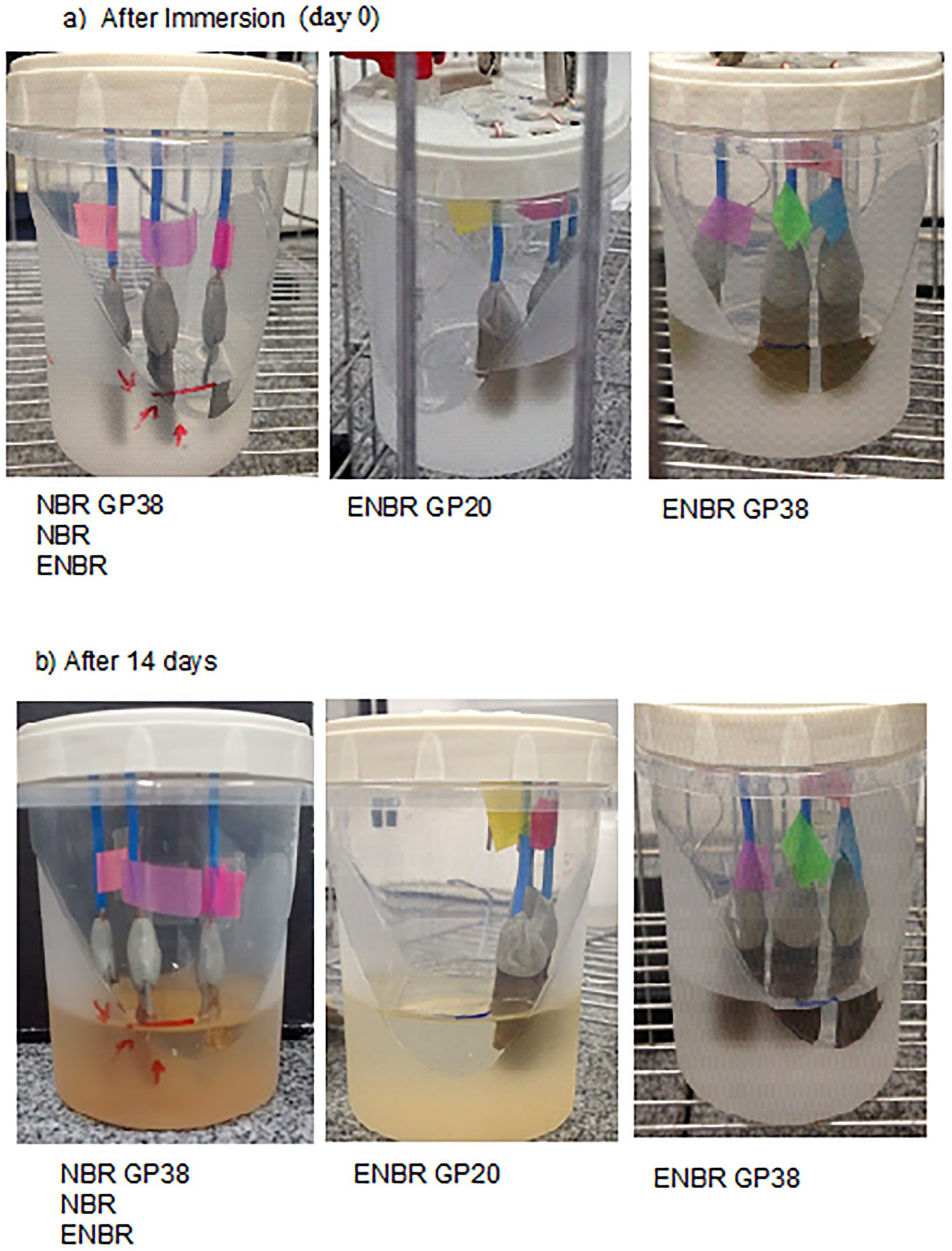
Simulation of electrochemical impedance diagrams
For a better understanding of the phenomena that can occur at the metal/film/solution interface, the experimental impedance data were fitted to equivalent electrical circuits. The simulations were performed on the 14th day of immersion, when the samples of lower resistance still retained, to some degree, their properties.
In the simulations of the system response in terms of equivalent circuits is presented the Q element, called the Constant Phase Element (CPE), which is not used in passive circuits, but is suitable for describing electrochemical processes. This element represents two passive circuit elements, such as R and C, inseparable by simulation. The CPE impedance Z is defined according to the following equation:
Equivalent electrical circuit diagram representing the steel/film/solution interface.
 ) at
) at
 rad s−1, j = √(−1) and
 . The exponent ‘n’ ranges from 1 to −1. When n = −1, CPE has inductance characteristics, when n = 0, CPE has resistance characteristics, when n = 1, CPE has capacitance characteristics and when n = 0.5, CPE has Warburg impedance characteristics (associated with mass transport). The combination of a parallel resistor R with a CPE was converted to pseudocapacitance using the following equation:
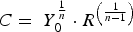
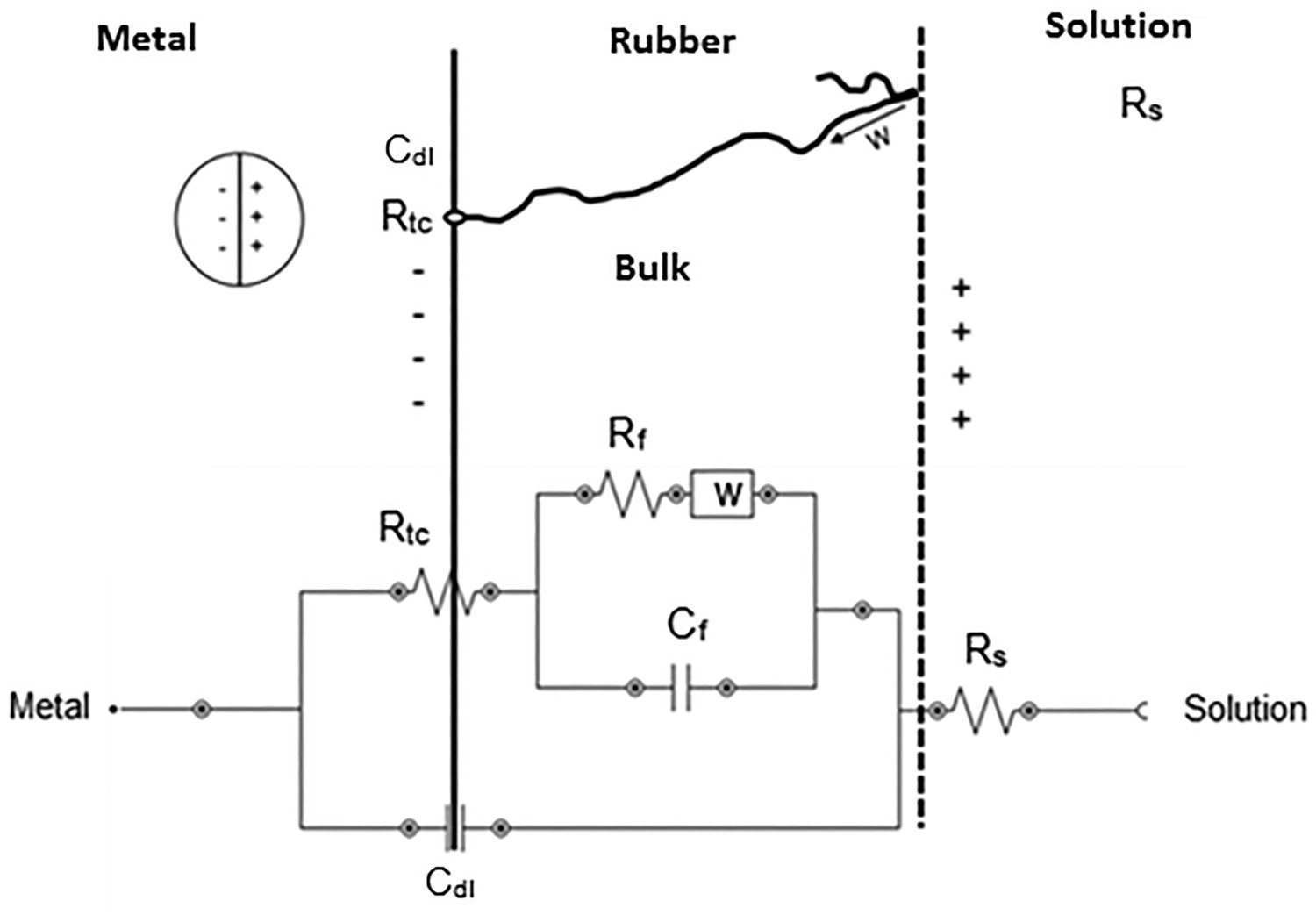
The element Rs represents the uncompensated resistance between the working electrode (rubber film-coated AISI 1020 steel) and the reference electrode (SCE); it is also referred to as the ionic force of the solution. Some authors [40-42] argue that this resistance is a measure of the ionic resistance of the film. This conjecture takes into account that the resistance of electrolytes such as 3.5% w/w NaCl, which simulates sea water, is negligible. This definition is based on the fact that most resin-coated metals have higher Rs values than bare metals immersed in the same solution. Walter [41, 42] explains that the high value obtained may be due to dispersed capacitance. Cf is the capacitance of the rubber film, which is defined by:
Experimental (dots) and simulated (line) Bode diagrams for AISI 1020 steel coated with NBR, ENBR, NBR GP38, ENBR GP20 and ENBR GP38 after 14 days of 3.5% w/w NaCl solution and their equivalent circuits. EIS parameters obtained by simulation for NBR, ENBR, NBR GP38, ENBR GP20 and ENBR GP38 nitrile rubber coated AISI 1020 steel after 14 days of immersion in 3.5% w/w NaCl solution.
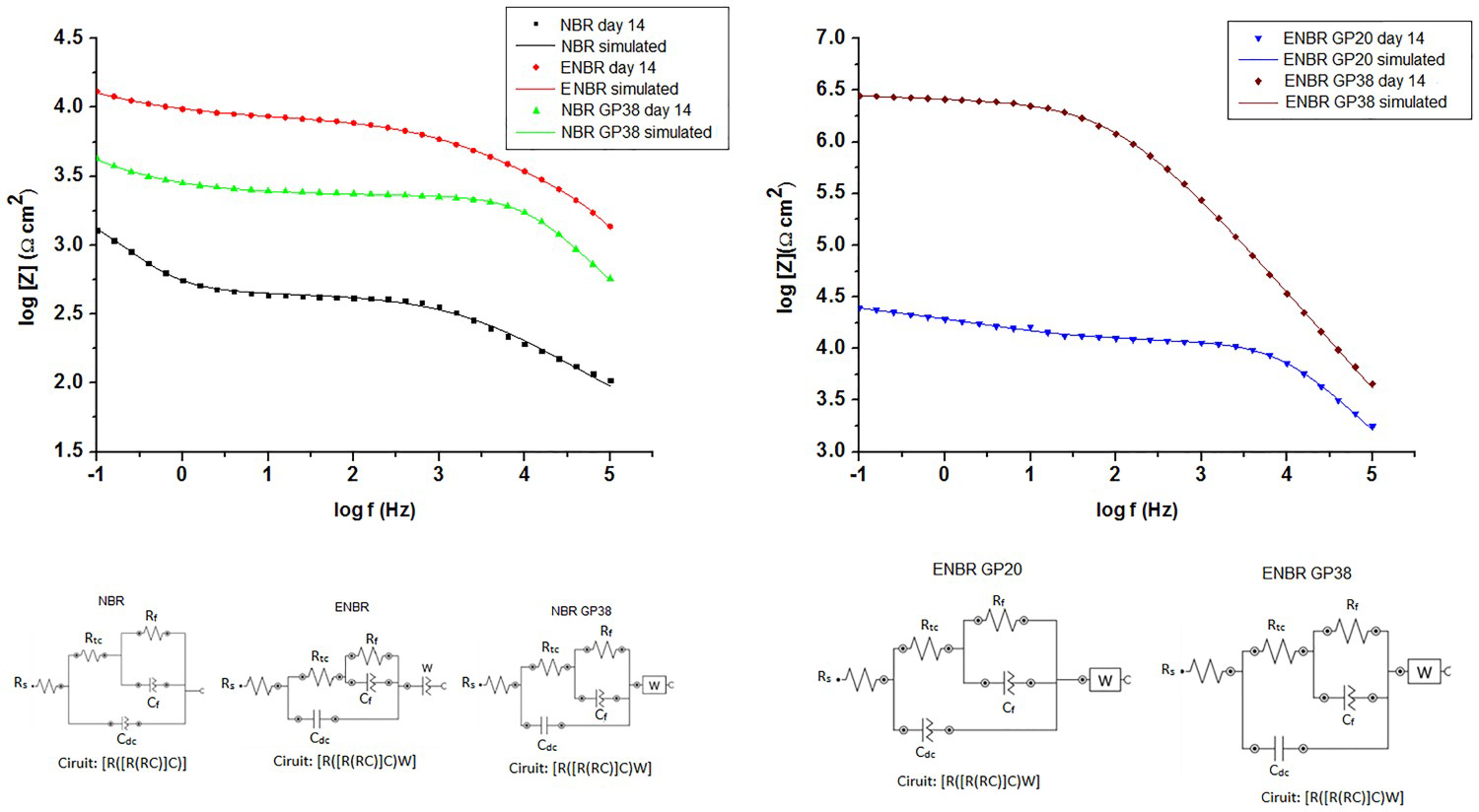

Table 3 allows the comparison of circuit elements for the different formulations of nitrile rubbers. For NBR rubber and ENBR epoxy rubber is noticed that the values of the resistive elements were little influenced by the epoxidation process. This result may indicate that rubber epoxidation and the insertion of epoxy functional groups did not significantly change the pore density, diameter or the amount of empty spaces through which saline absorption may occur. However, the reduction of the capacitive elements, both Cdl and Cf, is evident. The Cf element decreases from 1.9 × 10⁻⁴ to 1.4 × 10⁻⁸ F cm−2 indicating a higher adhesion of the coating to the metal. This is probably due to the inserted oxygen atoms of the epoxy groups, which may attach to the vacancies of the previous oxide film on the metal, or directly to the empty metal ‘d’ orbitals. Comparing the results for NBR and NBR GP38, a decrease in both Rct and Rf can be verified. Therefore, the inorganic charge was not sufficient to improve the barrier properties of the rubber film to metal. The hybrid coatings ENBR GP20 and ENBR GP38 showed higher values of charge transfer resistance (Rct) and film resistance (Rf), with increasing precursor content. These results indicate a greater difficulty of solution absorption, as well as a decrease in the rate of theiron oxidation reaction. Both the capacitance values of the electrical double layer (Cdl) at the metal/solution interface and the film capacitance (Cf) decrease with the amount of GPTMS, showing that hybrid formation improves the adhesion of the coating to the metal surface avoiding corrosive process after 28 days of immersion. The presence of Warburg impedance (W) allows us to conclude that the oxidation process is a function of mass transport, including saline solution and dissolved oxygen, through the pores of the film. Likewise, the higher the GPTMS precursor content in the epoxidized rubber formulation, the greater the difficulty of this transport due to the obtaining of a denser packaged structure caused by inorganic filler, with less voids, and the more efficient the protection conferred by the coating. Among the four types of coatings tested (rubber, epoxidized rubber, composite and hybrid), the hybrid with the highest silane content has the highest protective effect, that is, higher resistance and lower capacitance for any immersion time. The process of fixing the coating layer on the steel surface occurs by adsorption mechanism, which depends on the chemical structure of the rubber used and the nature of the charge distribution over the substrate surface. Adsorption may occur through: (i) electrostatic attraction between polar charged portions of the coating and the charged metal; (ii) interaction of unshared electron pairs of the coating's molecules with metal; (iii) condensation between the silane groups (Si–OH) of the film and the metal oxide groups, forming metal–silane (Me–O–Si) covalent bonds, releasing water [18], (iv) a combination of all these types of interaction [18, 52]. The hybrid ENBR GP38 (with higher precursor content) has the best adhesion of the coating to the metal, probably due to the inserted oxygen atoms, which can attach to the vacancies of the previous oxide film on the metal, or directly to the empty ‘d’ orbitals of the metal. The presence of the epoxy group in the rubber together with the inorganic precursor causes the formation of a three-dimensional network (rubber and silica) on the metal. Thus, silane can be bonded by one of its reactive groups directly to the metal and, at the same time, by another reactive group, to the rubber, from the epoxide group. With the increase of the GPTMS precursor content the hybrid three-dimensional network becomes denser, with smaller (or fewer) pores. Thus, the penetration of the saline solution is hindered, indicating that the formation of the hybrid film is fundamental for the barrier effect against corrosion. In the absence of the hybrid structure, the solution penetrates more easily through the pores, reaching the steel surface and promoting its oxidation. In turn, the corrosion products, bulky and poorly adhered, cause the delamination of the coating.
Conclusion
The results show that it was possible to epoxidize the commercial nitrile rubber by the in situ generated formic acid method in toluene solution, and the degree of epoxidation was estimated at approximately 5%, from the glass transition temperature variation, since epoxidation increases the glass transition temperature.
The epoxy group reaction of epoxidized nitrile rubber with the inorganic precursor 3-glycidoxypropyltrimethoxysilane (GPTMS) allowed the formation of hybrid organic–inorganic films. Three-dimensional network is formed from the interconnection of the precursor hydroxyl groups and the epoxy groups present in the rubber. SEM shows the presence of the hybrid phase and dispersed silica domains as filler in the hybrid phase. The density of the net is proportional to the GPTMS content, confirmed by swelling measurements and stress–strain measurements.
The mixture of non-epoxidized nitrile rubber and GPTMS, under the same reaction conditions, did not produce the hybrid, that is, there was no covalent bond between the rubber functional groups and the silane groups. Therefore, the rubber epoxidation process is a condition for obtaining hybrids.
For the hybrid films produced, the thermal stability is determined by the elastomeric matrix and is little influenced by the inorganic phase.
Electrochemical impedance spectroscopy results show that the degree of protection of the films against corrosion of AISI1020 steel increases with GPTMS content. The best coating was achieved with ENBR GP38 rubber, i.e. nitrile rubber with 5% of its epoxidized butadiene units and 38 phr (38 g of GTPMS per 100 g of rubber) of GPTMS. Therefore, hybrid coatings obtained from epoxidized nitrile rubber and a certain GPTMS precursor content by the sol–gel process have the potential to constitute anti-corrosive coatings for steels.
Footnotes
Data availability
The raw/processed data required to reproduce these findings will be made available on request.
Disclosure statement
No potential conflict of interest was reported by the author(s).