







Abstract

The 2016 Eurocorr Meeting was held in Montpellier France from 12th to 15th September 2016. The focus of the meeting was Linking Science and Engineering. This report will review the technical sessions in four parts, to be published over four issues, with the opening and plenary lectures and sessions on coatings and cathodic protection of pipelines and tanks, accelerated corrosion testing, automotive corrosion, corrosion control in aerospace, corrosion and scale inhibition, corrosion reliability of electronic devices and materials, inorganic coatings, metallic coatings, organic coatings and pre-treatments and self-healing coatings being covered in the present instalment.
Introduction and plenaries
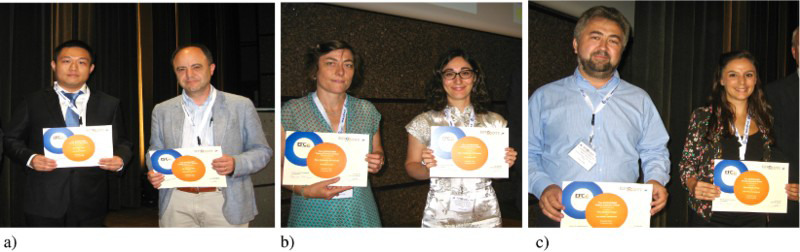
The 2016 Eurocorr conference was held in Montpellier in the South of France in the Corum Convention Centre, from the 12th to 15th September (Fig. 1). The Corum conference centre is located on the edge of the old town, with a large pedestrian area, wide tree-lined avenues and water features and many attractive sand-coloured buildings near the central Place de la Comédie. The conference was opened by Professor Phillipe Marcus (PSL Research University, CNRS – Chimie ParisTech, IRCP/PCS), who informed us that it was attended by the largest number of attendees ever with over 1000 delegates coming from at least 57 countries. Unsurprisingly, the largest number of delegates came from France, with over 300 attendees, Germany with 96 and GB in third place with 67. In a sign of the globalisation of the corrosion community, the Japanese had the 4th largest delegation with 43 attendees and it was announced that the Chinese national corrosion organisation had recently joined as a member society. The overall theme of the meeting was ‘Linking Science and Engineering’ and this was a theme that was evident in many of the presentations given in the conference. As usual the conference was divided into parallel sessions, with 11 sessions running concurrently, each one corresponding to one of the many working parties of the EFC (details can be found at http://efcweb.org/wp.html). The inauguration of the Young EFC network was announced during the introductory session. This is an initiative aimed at supporting young researchers and engineers in the field of corrosion and protection of materials. Details can be found at http://efcweb.org/YoungEFC.html. It includes the Eurocorr Young Scientist Grant award which has been instigated with the aim of stimulating interaction and collaboration within the international corrosion community by providing financial support to junior corrosion practitioners under the age of 30 to enable them to visit and interact with groups working in other countries. The first set of three awards, consisting of 1500 Euros towards the cost of travel and accommodation was presented at the introductory session of Eurocorr 2016 (Fig. 2).
The conference venue Eurocorr Young Scientist Grant Award winners: a Mr Balwei Zhu (left) will visit Professor Flavio Deflorian (right), b Mrs Elisabetta Di Francia (left) will visit Dr Delphine Neff (right), c Miss Beatriz Mingo (right) will visit Prof Mikhail Zheludkevich (left).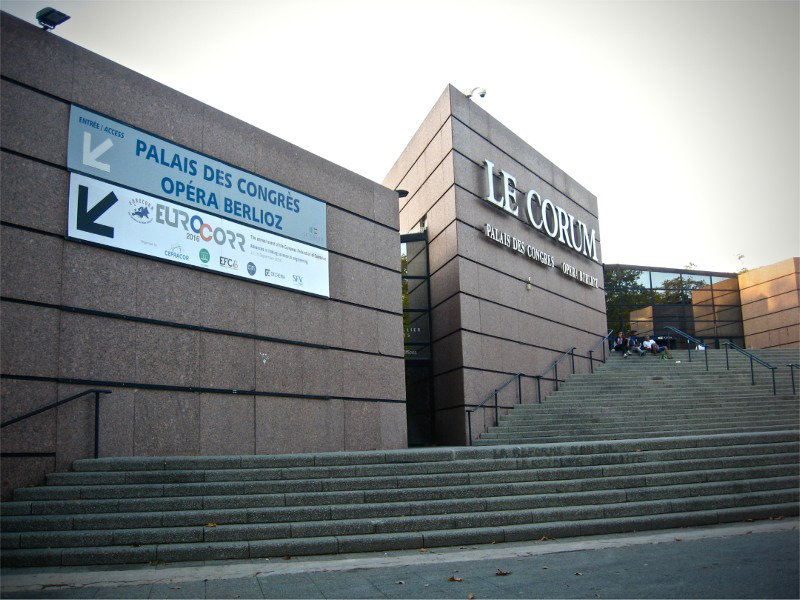
After the welcome address the European Corrosion Medal was awarded to Professor Lorenzo Fedrizzi (Universita degli Studi di Udine, Italy), who presented a wide-ranging lecture on the use of coatings and summarising areas where he had been active. He concentrated particularly on the use of atomic layer deposition (ALD) techniques. This was followed by a talk given by Gerald Frankel, the multi-award winning Professor of Materials Science at Ohio State University. He highlighted the potential effects of the altered surface layer on the corrosion behaviour of aluminium alloys and their possible effect upon corrosion investigations on these materials. He recommended that the altered surface layer should be removed before experiments are started to ensure that there are no unintended experimental artefacts. The plenary lecture on Wednesday 14 September was given by Professor Nick Birbilis (Department of Materials Science and Engineering, Monash University, Melbourne, Australia) on the topic of aluminium alloys. Remarkable resolution can be obtained with modern high-resolution TEM techniques making it possible to image individual atoms in crystal structures and to identify and characterise intermetallic phases and precipitates measuring a few nm across. This detailed microstructural characterisation can be used to understand the corrosion behaviour of these materials.
On the Monday evening a reception was held in the exhibition area. There was a total of 57 exhibition stands, another record for a Eurocorr conference. The following evening a reception was held in the poster exhibition area, with a total of 142 poster papers submitted. The winner of the best poster prize was Elke Ludwig, Vienna University of Technology, Austria), for a poster entitled ‘Corrosion testing of polyimide coated copper for semiconductor devices’. This was in the Corrosion Reliability of Electronic Devices session. A summary follows. An oxide barrier layer, carrying a layer of copper etched to give an interdigitated comb structure, was deposited onto a silicon wafer. This was followed by addition of a polyimide coating layer. Electrolytes were placed in contact with the sample by means of press-on cells and up to 2 kV DC bias applied between the fingers of the comb structure. The test setup was placed in a climate cabinet (80°C, 40 V, RH = 80%) and different combinations of cycling and application of electrolyte (3% NaCl adjusted to pH 1 with HCl) were investigated. Failure was fastest when the sample was placed in the climate cabin for 17 h prior to application of the electrolyte cell. During each evening there were numerous opportunities for dining out in the old part of Montpellier and the balmy evenings of early autumn made this a very pleasant experience. The conference Gala Dinner was held on the Wednesday evening in the impressive and beautiful Abbaye de Valmagne. A beautiful block ice-sculpture encapsulating the words ‘EuroCorr 2016’ graced the entranceway and formed a focal point for photographs (Fig. 3). The slow melting of the ice during the course of the evening presented a suitable metaphor for corrosion. An evening of fine French cuisine evolved into dancing to a rock group, possibly a first for EuroCorr. The next Eurocorr congress will be held from 3rd to 7th September in Prague, Czech Republic – another Eurocorr first. And capping the run of firsts, Eurocorr 2017 will be combined with The 20th International Corrosion Congress (ICC) and Process Safety Congress. Details can be found at http://www.prague-corrosion-2017.com/
a Gala dinner venue and b the ice sculpture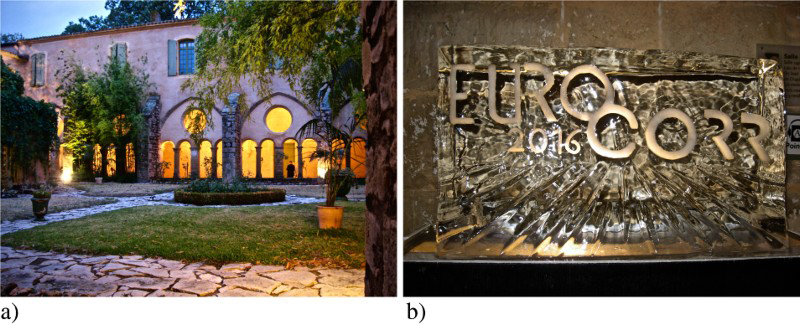
Coatings and cathodic protection of pipelines and tanks
There were six full papers on this topic, three of which have been chosen for précis here. In addition, there were three abstracts. All were held on the Thursday. Chairmen were: W. Fürbeth (DECHEMA-Forschunginstitut Corrosion, Frankfurt-am-Main, Germany) and M. Roche (CEFRACOR, Paris, France). There were no poster presentations on this subject. M. Roche, CEFRACOR, France, presented, ‘We need better standards for paint systems protecting buried tanks in conjunction with cathodic protection’. Corrosion rates in typical environments lie between 5 and 30 μm/yr. Based on the higher side of this range, a 1.5 mm corrosion allowance could be consumed in 50 years. The essential requirements and recommendations of corrosion protective paint systems are based on EN ISO 12944. Avoiding or reducing periodical external inspection for requalification is allowed based on a comprehensive policy of coating and cathodic protection. A ‘high durability’ and ‘Im3’ type protective paint system is generally selected for coating. Pending a future adapted ISO standard, it is proposed to write an AFNOR standard for France which could be used as referential for the ACQPA certification of the coating systems adapted to Im3 with cathodic protection. For this purpose, it is proposed to adopt for this standard the qualification and control tests, and the corresponding acceptable values, which are specified by EN ISO 21809-3: 2016 standard applicable to the field joint coating of buried pipelines. ‘Capabilities and limitations of direct current and electrochemical impedance mapping in measuring the cathodic disbondment of coatings using multi-electrode array’ was described by F. Mahdavi, Deakin University, Victoria, Australia. An electrochemically integrated multi-electrode array has been used to monitor the cathodic disbondment of a coating by (i) measuring the local electrochemical impedance and (ii) measuring local direct current during its exposure to an aggressive solution under a cathodic protection (CP) potential. The performance of these two measurement methods in determining the disbonded area of the coating has been evaluated by comparing the impedance and current maps measured using the multi-electrode array under different CP potential and different environmental resistivity conditions. The results demonstrate that both current mapping and electrochemical impedance mapping are capable of evaluating the disbonded area of coating at higher level of CP potential (e.g. −1400 mVAg/AgCl) during exposure to a solution with a low resistivity. According to results from this work the electrochemical impedance mapping is found to be the more capable of evaluating the cathodic disbondment of coating under different conditions. ‘Cathodic over protection by sacrificial anodes – A case study on magnesium anodes’ was discussed by J. Khosravi, NIORDC-NIOEC, Tehran, Iran. Using protective coating reduces the current required for the cathodic protection while the excessive current can result in excessive hydrogen evolution, creating alkaline conditions. The exact mechanism of cathodic disbonding is still under debate but it is commonly agreed that the cathodic reaction at the holiday site in the tested coating forms an alkaline (high pH) water film under the coating that causes the disbonding. It was concluded that soil resistivity values used for cathodic protection calculations should be calculated based on greatest and lowest possible resistivity. For coated pipelines, cathodic overprotection is more destructive than under protection or even lack of protection. Regarding soil resistivity variations, spacing between galvanic anodes and pipeline should optimise to a proper distance so as to prevent over protection problems whilst assisting better current distribution and ensuring longer anode life.
Accelerated corrosion testing – science lab and field
This session ran on the Monday afternoon. It was chaired by Mikhail Zheludkevich (Helmhotz Centrum Geesthach, Germany) and Theo Hack (Airbus Group Innovations, Germany) (Fig. 4a). There were 10 oral presentations, three of which appeared as full papers on the memory stick. These are all covered below, together with two abstract-only orals and one of the two posters (both full papers). The abstract ‘Drying phases of cyclic corrosion tests: do we know what happens?’ was given by Tomas Prosek, University of Chemistry and Technology, Czech Republic. In most standardised accelerated corrosion test procedures, the relative humidity (RH) of the drying phase is defined to be 50%. Measurements with real-time resistometric steel and zinc probes were carried out in the VDA 233-102 (SEP 1850, n-VDA) test and under model conditions of controlled RH and temperature. The corrosion rates of both metals were non-negligible at 50% RH, due to the fact that sodium chloride is still dissolved in the water electrolyte film and crystallises at the efflorescence RH (about 47%). Efficient drying in a corrosion system dominated with sodium chloride thus requires a lower RH. This has consequences for the design of cyclic accelerated corrosion tests.
a Chairs M. Zheludkevich and T. Hack; b A. Francois-Heude presents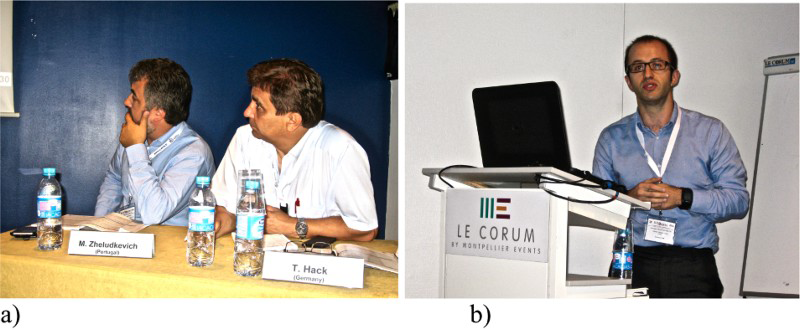
‘Atmospheric corrosion of zinc coatings – a time and laterally resolved study’ (abstract only) was given by Georg Hölzl, CEST Kompetenzzentrum, Austria. With the aim of identifying the role of different pollutants and creating artificial lab conditions which may yield comparable results to field exposure in a shorter time, the corrosion products of various zinc coatings after field exposure were studied ex situ by IRRAS/Raman/GDOES and SEM. Similar studies were conducted on laboratory samples exposed in a weathering cell designed to simulate field conditions. The influences of various pollutants such as road salts or corrosive gases were investigated. In contrast to many other corrosion studies of zinc, the experiments were both time and laterally resolved and gave new insights in local corrosion phenomena. ‘Qualification of coating systems in case of severe erosion in penstock’ was delivered by Philippe Le Calve, AntiCorr Conseil, France. Hydro-abrasive resistance is an important requirement of penstock coating systems for hydroelectric power plant used by EDF. In case of severe erosion induced by a penstock flow, there is no suitable method or standard, representative of real erosive flow conditions. So laboratory apparatus was developed in order to submit coated test specimens to wear conditions similar to actual flow conditions. Initially 13 pre-selected coating systems were tested, the best four being selected, after characterisation, for longer (200 h) erosion tests. A correlation between this new method with a standardised test and with real service operating flow conditions was shown. The next two papers were very popular. The first was ‘Methodology for assessing durability of anti-corrosion coatings in storage from laboratory tests’ by Alexandre Francois-Heude, Vallourec Research Center, Aulnoye-Aymeries, France (Fig. 4b). The standard method of assessing coatings at Vallourac (2 years’ exposure in marine atmosphere) takes too long. To speed things up five main degradation paths leading to red rust have been inventoried from the inspection of the corrosion faces of the samples after exposure at the reference site. These were: spontaneous pitting, cosmetic corrosion, corrosion after abrasion, corrosion after blistering and corrosion due to differential aeration. Neutral salt spray (ISO 9227), humidity cabinet (ISO 6270) and cyclic ageing (e.g. VDA 233-102) tests were then conducted and the extent of each degradation mode noted. The overall risk was calculated from the performance in laboratory tests (gravity) and the frequency of defects observed in outdoor exposure (occurrence). The resulting scores were checked for consistency with prototypes storage performance, thus allowing technology ranking. The second very popular paper was ‘Corrosion Protection by coatings – how to figure out the best systems for practice?’ delivered by Günter Binder, Federal Waterways Engineering and Research Institute (BAW), Germany. This work set out to elucidate the really important stresses for coated steel structures and how these may be reproduced in laboratory tests. Particularly, correlation between field and laboratory results for rusting at a scribe of a range of coating systems was checked. The field test trials were divided into immersion, water changing and splash zone. The results showed that field tests are more reliable than laboratory tests and that protection systems work best with primers formulated for specific conditions. Another example applicable to hydraulic and offshore steel structures was mechanical stress caused by transport and erection of the buildings. To make the damages by resulting micro fissures visible, the panels were subjected to the falling weight test after exposure to the salt spray test. In this test zinc-dust primer systems in combination with elastic binders performed best. Finally a nice poster was given by Matthew Kitchen, Sheffield Hallam University, UK about ‘Evaluating the conditions which accelerate the patination of copper in a marine environment’. It is known that copper chloride complexes such as atacamite and paratacamite Cu2(OH)3 form a patina in marine environments. To determine the process that favours one phase above another, the corrosion of copper was studied using voltage measurements and polarisation techniques in electrolytes with varying salinity, pH and temperature. Both increasing temperature and increasing salinity caused a higher corrosion potential. Potentiostatic polarisation of copper resulted in the formation of clinoatacamite, copper oxide and cuprite phases, identified by XRD. To create Cu2(OH)3 the copper electrode had to be polarised in sea water at 260 mV vs. Ag/AgCl for five hours. One conclusion was that the level of salinity was the main factor influencing the amounts of each phase. The data in this paper could be used to help design an accelerated marine environment corrosion test for copper and its alloys.
Automotive corrosion
This took place on the Wednesday and Thursday with eighteen oral presentations, four of which have been selected for précis here (Fig. 5). Chairmen were E. Szala (Aleris Aluminium Duffel BVA, Belgium), L. Rougier (Renault Technocentre, France) and B. Normand (INSA de Lyon, Villeurbanne, Cedex, France). There were no posters.
Bo Rendahl presents in the automotive corrosion session
‘Electrochemical sensor for analysing corrosion protection efficiency of aged coolants’ was described by P. Matzke, Volkswagen AG, Germany. Evaluation of coolant qualities for combustion engines is currently based on quantitative analysis, but estimation of coolant quality is still difficult. This novel method considers the coolant as one complex electrochemical system. All corrosion-influencing parameters are included to calculate corrosion protection efficiency (CPE). A sensor based on a three electrode setup has been developed. The working electrode is made of a material that is susceptible to corrosion with counter and reference electrodes comprising non-corroding high-alloy steel. An applied potential simulates a reproducible corrosion stress on the working electrode. Current density, electrochemical noise and slope at the end of polarisation period are used to characterise a coolant. By characterising new coolant a base level was set. It could be shown that repeatability for e.g. current density of coolant is given in a range of ±0.005 μA mm−2 (2σ). It was assumed that significant higher current density, more intensive electrochemical noise and positive slope are characteristic effects of coolants with poor quality. ‘Corrosion mechanisms in aluminium cladded sheets for automotive heat exchangers studied by electrochemical depth profiling’ was presented by L. Peguet, Constellium Technology Center, Voreppe Cedex, France. A parametric study addressing the role of chloride concentration, acidity and solution aeration on corrosion potential value and stability for a 3 h-immersion time was carried out. The three stage electrochemical depth profiling protocol included: (1) Pickling in 2 M sodium hydroxide; (2) surface cleaning in acetone–ethanol mixture; (3) A 30 min-measurement of the electrochemical potential in 0.1 M hydrochloric acid with or without hydrogen peroxide addition. It was concluded that except for the particular case of the Zn-containing clad which led to the expected surface sacrificial corrosion protection, the dominant protection mechanism was driven by the copper gradient due to diffusion from the core alloy during the brazing cycle. Optimisation of this gradient by choice of the relevant copper content as well as control of the re-solution of precipitates in the core is of first importance. V.C. Gudla, Technical University of Denmark, Denmark presented, ‘Electrochemical and microstructural characterisation of multi-clad aluminium brazing sheets’. The corrosion propagation mechanism was investigated across a multi-clad Al alloy brazing sheet as a function of the local alloy composition and microstructure, with and without brazing treatment. Multi-clad structure used was a four-layer sandwich consisting of a modified AA3xxx core alloy, AA4343 brazing clad on both sides and an AA3xxx interlayer on the airside of the sandwich sheet. The polarisation behaviour of both as-rolled and brazed sheets was studied as a function of depth using a localised electrochemical cell and GDOES sputtering. The changes in the microstructure caused by the brazing process were observed by scanning (SEM) and transmission electron microscopy (TEM) and energy-dispersive X-ray spectroscopy (EDS). The observed evolution of the electrochemical parameters through the material depth was analysed and correlated to the respective microstructural and compositional features. The obtained results were compared to those obtained for a conventional, three-layer alloy product. ‘Influence of microstructure on electrochemical behaviour of A206 and A380 aluminium alloys’ was given by E. E. Songül, Istanbul University, Turkey. Both A206 and A380 contains approximately 4 wt-% Cu however, A380 has an additional 8 wt-% Si. Tafel diagrams of the specimens were obtained in 3.5 wt-% NaCl solution. The corrosion current density (i corr) values of die and sand cast samples were very close but the corrosion potential (E corr) of die cast sample was higher than sand cast. The dominant protection mechanism is driven by the copper gradient due to diffusion from the core alloy during the brazing cycle. In addition, it was shown that the sacrificial property of an additional interlayer in multilayer products as well as its ability to extend the copper diffusion profile make it a reference material for more demanding applications.
Corrosion control in aerospace
There were 18 oral presentations on this subject on the Tuesday, four of which have been selected for comment here. Chairmen were: Mikhail Zheludkevich (University of Aveiro, Portugal) and Theo Hack (Airbus Group Innovations, Germany). In addition, there were two poster presentations. The keynote lecture, ‘Protection systems for helicopters, today and tomorrow’ was delivered by L. Bortolotto, Airbus Helicopters, Germany. Most of the weight of a helicopter is located on the roof/upper part, mainly contributed by engines and other dynamic parts, e.g. engines, rotor and transmission systems employing high-strength and temperature-resistant materials, e.g. steel, titanium alloys or Ni-based alloys. Moreover, these components need to be fatigue-resistant. Suitable materials enabling light weight with sufficient static and fatigue strength are aluminium alloys (2000 and 7000 series) and carbon fibre composites. It is important to avoid galvanic corrosion due to large potential differences between aluminium and carbon in saline electrolytes. In all cases, the products in the treatments baths are impacted by the REACh-regulation and must be replaced by the ‘sunset date’ (2017) set by the European authorities. As a future substitute for these well-known (CAA, chromate acid anodising) treatments, Airbus Helicopters is working on the qualification of TSA (tartaric-sulphuric acid) anodising in a defined thickness range, to replace CAA on aluminium parts. ‘Post-treatment of SAA (sulphuric acid anodising) oxide for improvement of adhesion and corrosion resistance for aerospace applications’ was presented by Y. V. Meteleva, Fokker Aerostructures B.V., the Netherlands. Weight change, optical and SEM imaging of morphology and oxide structure, linear polarisation and EIS measurements, Bell peel tests and EDS analysis of fractured surfaces of the anodic aluminium oxide treated with various solutions were used on Alloys 2024-T3 Alclad and 2024-T3 bare (Alcoa). Adhesion of the SAA oxide could be improved by both the etching effect and adsorption of an adhesion promoting chemical. Post-treatments with silane, Na2MoO4, AMP, H3PO4, H2C2O4 and H2CrO4 were effective for both clad and bare oxides. The corrosion resistance of the SAA oxide was improved by both Boehmite formation and adsorption of an insulating agent. S Mercier, ONERA, France, outlined, ‘Study of the galvanic corrosion in Al/CFRP co-cured hybrid materials.’ The influence of the aluminium surface treatment on the interface properties obtained after a one step co-curing manufacturing process has been assessed. Al-2024 aluminium alloy treated by either tartaric-sulphuric anodising (TSA), chromic acid anodising (CAA) or γ-silane pre-treatment (g-GPS) has been used and co-cured with CFRP. This study showed that TSA and γ-GPS appear to be suitable candidates for the substitution of CAA treatments in terms of adhesion and initial mechanical properties, but the long-term anti-corrosion properties of TSA and γ-GPS is not durable enough, inducing mechanical strength reduction after corrosive environment exposure, detrimental for aerospace applications. Consequently, it is important to work on alternative solutions like surface treatment improvement or electrical isolation between the CFRP (Carbon Fibres Reinforced Plastic) and the alloy without degrading the adhesion in order to isolate aluminium from CFRP and prevent galvanic corrosion in Al/CFRP hybrid structures. ‘Management of the corrosion for Airbus helicopters’ was presented by D. Sinopoli, Airbus Helicopters, France. Helicopters are exposed to severe conditions. Information required is the environmental conditions of external and internal parts. Sensors based on electrical conductivity as a function of time are available to measure atmospheric composition, temperature and pressure. According to ISO 9223, the main variables responsible for corrosion tendency and kinetics are relative humidity, salinity, SO2 content and temperature. An empirical equation enables the corrosion rate to be calculated for the first year (accurate: -50% to 100%) for aluminium. Most of these painted aluminium samples exposed to natural ageing, corroded after the first 6 months, except for one sample. After the initiation, the filiform corrosion length increases to reach a horizontal asymptote from 18 to 30 months, except for one sample which showed very high corrosion rates. For this last sample, this specific behaviour is due to a lack of adhesion properties of the coating, so the filiform corrosion could propagate very easily (with many blisters on the surface).
Corrosion and scale inhibition
This session was convened on the Tuesday afternoon and continued on the Wednesday and Thursday. It was chaired by Günther Schmitt (IFINKOR, Iserlohn, Germany) and others. There were 29 oral presentations, 10 of which were full papers. Six of the full papers have been selected for comment here. There were 15 posters, four of which were available in full on the complimentary memory stick. Two of these are highlighted below (Fig. 6).
a Wolfgang Hater and b Katie Scarth present during the session on corrosion and scale inhibition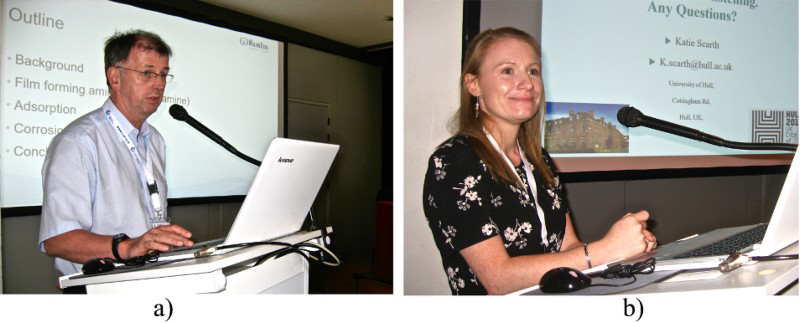
Behzad Bavarian of the California State University, USA, spoke on ‘The influence of particle size upon the effectiveness of Vapour Phase Corrosion Inhibitor (VCI) powders’. Optical microscopy after vapour-inhibiting ability (VIA) corrosion tests indicated that the nano-particle inhibitor showed good corrosion protection. The corrosion ratings per TM-208 were: control sample 0, commercial coarse size 2, and nano-size 4. Surface coverage was improved due to increased effective surface area and increased partial pressure of vapour inhibitors as powder particle size reduced. Adsorption energy was −16 740 J mol−1 for nano-particle size inhibitor and −13 660 J mol−1 for the coarse particle size inhibitor, indicating somewhat stronger physisorption for the smaller particle size, leading to better corrosion protection. ‘Biodegradable corrosion inhibitor packaging for electronic equipment’ was presented by Robert Kean (Cortec Corporation, Minneapolis, USA). The study included a range of tests on packaging film applied to carbon steel and copper. In the static decay test, the biodegradable film was able to dissipate ±5000 V in less than 1 s. Resistance to flow of electric current across the film fell within the acceptable range for an anti-stat material. The contact phase corrosion inhibition test indicated that the film could prevent corrosion in the presence of trapped moisture. Barrier phase testing, which indicates whether a corrosive gas can penetrate through the film and displace the deposited corrosion inhibitors, revealed good (grade 4) protection. The results show that the film provides static dissipation, prevents corrosion, and biodegrades when exposed to compost conditions. The same author presented on ‘Vapour phase inhibitors [VCIs] in functional fluids’. Two additives (VCI-1 and VCI-1L) and to glycol/water-based hydraulic fluid were formulated and evaluated. Additionally, two extreme pressure additives (L1 and L2) were tested. The formulations provided effective corrosion protection while maintaining phase stability of the hydraulic fluid. In the ASTM D1401 Water Separability Test, complete separation of oil and water occurred after 25 min (10 min faster than the control). Both samples passed the corrosion test, but the sample with VCI-2 showed better performance under more aggressive conditions. Biodegradability was >60% in 28 days; marine toxicity test indicated EC50/LC50 > 10 mg L−1 to North Sea species; Bioaccumulation test indicated Log Octanol/Water Partition Coefficient (Pow) < 3.Wolfgang Hater of Kurita Europe GmbH, Germany, (Figure 6a) described ‘ Film formation and corrosion inhibition of oleyldiamine (OLDA) on aluminium under simulated condensate conditions of water-steam cycles’. Electrochemical impedance spectroscopy (EIS) was applied to samples in 200 mg L−1 NaCl solution with pH 8.2 or 9.2 at 20 and 50°C. The spectra showed a distinct time dependence, hence adsorption was not spontaneous. At 20°C OLDA led to an initial increase in corrosion protection, although formation of the protective layer was delayed. A less porous layer was formed in the presence of OLDA, compared to the blank. Temperature increase resulted in a decrease of corrosion protection reflected in a reduction in the polarisation resistances. The increase of pH from 8.2 to 9.2 led to a strong decrease of the resistances of the blank, while OLDA showed a clear protective effect. ‘Inhibiting effects of some Schiff bases on the corrosion of bronze exposed to artificial acidic rain’ was presented by Cecilia Monticelli (University of Ferrara, Italy). As part of the M-ERA.NET project B-IMPACT, a range of polydentate Schiff bases were synthesised and studied as corrosion inhibitors for a copper alloy of similar composition and microstructure to a Renaissance bronze. The aggressive environment consisted of a saturated artificial acidic rain (ARX10) solution. EIS monitoring during 20 days of immersion indicated excellent inhibition by SITP (2-(salicylideneimino)thiophenol), which was comparable to or even better than 10−3 M BTA. Other bases tested showed good inhibition. Surface analyses (SEM, Raman, XPS) revealed that after 1 h immersion the inhibitor was probably chemisorbed on bronze, while longer immersion periods led to formation of a more abundant surface protective deposit, possibly a Cu(I)-SITP complex. ‘Electrochemical and static HPHT study of porphyrin derivatives as effective corrosion inhibitor for N80 and J55 steel in sweet corrosion environment’ was presented by Ambrish Singh (Southwest Petroleum University, Chengdu, China). Five porphyrins were studied by EIS, potentiodynamic polarisation, scanning electrochemical microscopy (SECM), and atomic force microscopy (AFM) in 3.5% NaCl solution saturated with CO2 for corrosion of N80 and J55 steel. Inhibition efficiency increased with increasing inhibitor concentration and η% values obtained from different methods employed were in reasonable agreement. Polarisation curves measurement (<85 mV) indicated that porphyrins acted as mixed-type inhibitors. The SECM and AFM analyses showed that the inhibition of N80 and J55 steel corrosion occurred due to the formation of a protective film on the metal surface through adsorption of the constituents of porphyrins. The poster entitled ‘Inhibition of brass corrosion in urban rainwater’ was presented by Gokmen Sigircik, Cukurova University, Turkey. In this study, 3-amino-5-methylthio-1H-1,2,4-triazole (3A5MT) was used for corrosion inhibition of brass in simulated urban rainwater at pH 5 containing 0.2 g L−1 each of Na2SO4 and NaHCO3. EIS measurements indicated that the polarisation resistance values increased in the presence of 3A5MT. Moreover, the polarisation resistance values increased with increase of inhibitor concentration. Thus, the corrosion rate decreased due to inhibitor adsorption onto the brass surface. The potentiodynamic results showed that the anodic current values related to brass dissolution were reduced upon addition of 3A5MT. SEM images revealed a good protective layer with oxide species on the surface in the presence of 3A5MT. EDS results showed that the inhibitor molecules adsorbed significantly onto the brass surface. ‘Evaluation of inulin and aloe vera as green corrosion inhibitors for mild steel in 15% HCl’ was presented by Olorunfemi Ajayi of the University of Nottingham, UK. Two candidate inhibitors - commercially available powdered inulin, extracted from Jerusalem artichoke, and aloe vera gel extracted directly from the plants – were compared with commercially used propargyl alcohol and 2-mercaptobenzimidazole. Immersion tests and weight loss measurements were employed to determine the inhibition efficiency as a function of concentration at temperatures of 20 and 60°C for mild steel in 15% HCl. Both inulin and aloe vera were effective corrosion inhibitors under the conditions used, each with an optimum concentration of 10%, compared to 0.4% for the commercial inhibitors. Inhibition efficiencies of up to 86 and 84% were observed for inulin and aloe vera, respectively, compared to over 95% for the commercial inhibitors.
Corrosion reliability of electronics devices and materials
This session was convened on the Monday and continued on the Tuesday morning. It was chaired by Helmut Schweigart of Zestron, Germany along with Rajan Ambat (Figure 7) and Morten Jellesen of the Technical University of Denmark. There were 17 oral presentations including five full papers: these five have been selected for comment here. There were four posters, one of which is commented upon below. Bálint Medgyes of Budapest University of Technology and Economics, Hungary, spoke on the electrochemical migration (ECM) of nickel and electroless nickel immersion gold (ENIG) surface finishes during thermal humidity bias test (THB), with copper as reference. ECM affects operating circuits in the presence of moisture which can lead to shorts due to dendrite growth between adjacent conductor traces. The results of the THB (or dew point) test showed that NaCl crystals can accelerate the condensation intensity and the migration ability, acting as condensation cores and increasing the conductivity of the condensed water. Water droplets formed local ‘water bridges’ between adjacent conductor lines. Finally precipitates and dendrites were formed. The water condensation time depended on surface roughness and thermal parameters of the applied conductor and insulation materials.
Rajan Ambat presents in the session on corrosion reliability of electronics devices and materials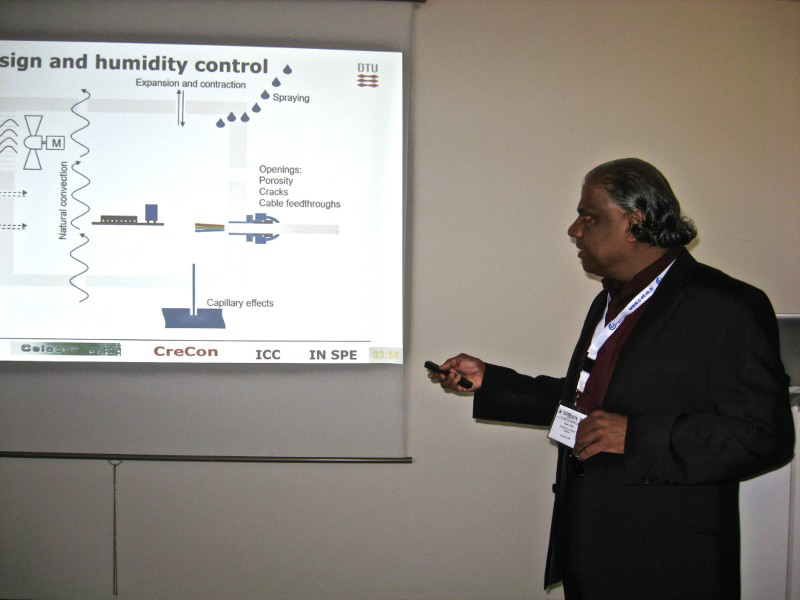
‘Effect of hygroscopic atmospheric particles deposition on the corrosion reliability of electronics’ was presented by Vadimas Verdingovas (Technical University of Denmark). In this work, a prototype rotating impactor was developed to deposit sub-micrometer atmospheric particle contaminants on surface insulation resistance (SIR) patterns for a minimum of 24 h. The test boards were exposed to fluctuating RH and temperature conditions. Water film formation was monitored by impedance response at 1 kHz and the corrosive behaviour was investigated under 5 V DC bias. The results highlighted that atmospheric particles can trigger corrosion processes below the condensing conditions because their hygroscopic properties enhance the formation of a thin water layer on the surface. The impedance measurements provide information about the condition of the surrounding air that can promote solid-to-liquid phase transitions of water soluble compounds which form the particulate contaminants. Helene Conseil of the Technical University of Denmark described the dynamics of moisture ingress in first and second level electronic housings by exposure to constant and cyclic conditions. Second level housings made of Polybutyleneterephthalate (PBT) and first level housings made of epoxy moulding compound (EMC) were used. The time constants for humidity to reach 63% of outdoor conditions at 60°C were about 2 days for the second level housing and 7 days for the first level housing. The moisture ingress into the second level housing was influenced by temperature, the volume of the housing, and the presence of PCB. Heavy thermal mass components may be privileged places for condensation to occur, due to the delay in temperature response. Exposure to a simulated tropical profile showed that the internal RH tends to reach a steady state close to the mean value of the cyclic outdoor profile. ‘Choosing the right no-clean chemistry for lead free solder paste in vapour phase reflow’ was presented by Emmanuelle Guene of Inventec Performance Chemicals, France. The clean-ability of several no-clean solder pastes were compared after vapour phase and after convection soldering. The residues of solder paste were relatively easy to clean after either procedure, although the ‘non-spreadable’ paste showed better clean-ability. Regarding chemical reliability of residues, without cleaning, the goal was to compare several no-clean solder pastes reflowed in air convection versus vapour phase using two methods: SIR test (IPC-TM 650 method 2.6.3.7) and Bono test. In the SIR test, the values were always lower when vapour phase reflow was used. The Bono test did not reveal any significant difference, but this test is able to detect potential corrosivity which is overlooked by SIR. Lutz Müller (Robert Bosch GmbH, Germany) presented ‘Simple standardised corrosion measurement of semiconductor metallisations’. A simple measurement of current potential curves using a potentiostat was described, using thin layers of the relevant metallisations on oxidised silicon as samples. Such samples were easily separated into smaller parts, which were used for the measurements. The curves for copper and for aluminum-copper 0.5, using 5% NaCl as electrolyte, were presented. Curves for 0.05% Potassium iodide (with Cu) and bimetallic corrosion curves for Al vs. AlCu were also presented. Results were compared with exposure tests to salt and humidity. The prize-winning poster, ‘Corrosion testing of polyimide coated copper for semiconductor devices’ by E. Ludwig (Institute of Chemical Technologies and Analytics, Vienna, Austria) belonged to this session and has been summarised in the introduction to the present report.
Inorganic coatings
This topic was covered on the Thursday morning and was chaired by J. Fernandes (Universidade Tecnica de Lisboa, Portugal), Michelle Fedel (University of Trento, Italy) and others. There were 18 oral presentations, three of which were full papers on the memory stick. Four are highlighted below. There were six posters, two available in full on the memory stick; one is summarised herein. (Figure 8) Alexander Mertke of the University of Applied Sciences, South Westphalia, Germany presented a full paper entitled ‘Improving the corrosion resistance of thermally sprayed zinc- and zinc-aluminium coatings by anodising’. In this work the anodising of zinc spray coatings was first investigated in three different chromium-free electrolytes. Zinc anodising in the most promising electrolyte (that based on tungsten trioxide) was then optimised, after which thermally sprayed zinc-aluminium coatings were anodised in the optimised electrolyte. Electrochemical measurement, scanning electron microscopy (SEM), energy-dispersive X-ray microanalysis (EDX), and visual observations indicated that the anodising process improved the polarisation resistances of both coatings considerably. Luca Pezzato (University of Padua, Italy) presented the full paper ‘Influence of atmospheric pressure plasma treatments on the oxide film and the corrosion resistance of titanium and titanium alloy’. Potentiodynamic anodic polarisation and EIS measurement showed an improvement in the corrosion resistance of both the commercially pure titanium and the Ti6Al4V alloy due to the treatment. Better results were obtained for treatment with stationary torch or lower rate of movement (3 mm s−1) compared to the higher rate (9.5 mm s−1). SIMS analysis indicated coatings of 1 nm thickness for stationary torch, becoming 1.5 and 2 nm with low and high rate of torch movement respectively. The corrosion tests demonstrated that the formation of a thicker layer leads to increased corrosion resistance. The sample treated at 3 mm s−1 seemed the most promising for future industrial applications.
Aurelie Rexach presents in the session on inorganic coatings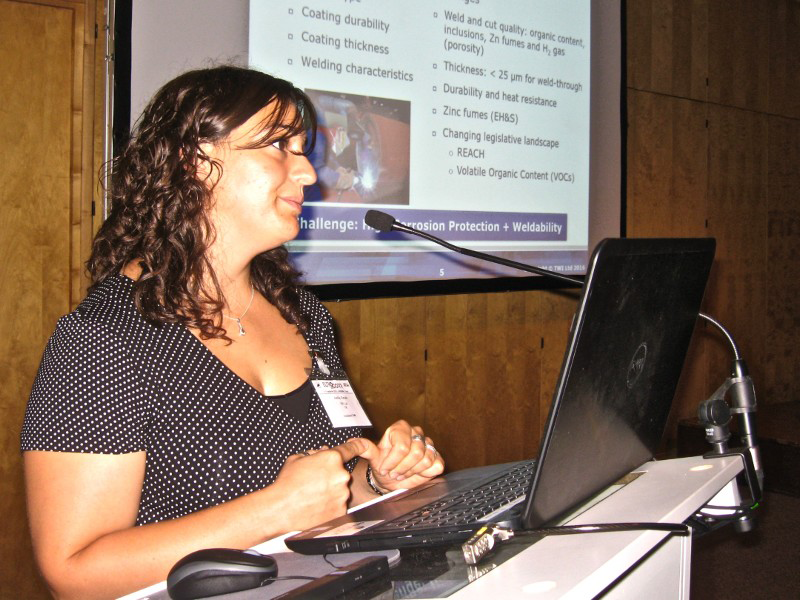
The abstract-only paper ‘Preparation of corrosion resistant film on aluminium alloy by steam coating’ was presented by Ai Serizawa (Shibaura Institute of Technology, Japan). Anticorrosive films on Al–Mg–Si and Al–Zn–Mg alloys were prepared by a simple, cheap, environment-friendly, chemical-free steam process. The ultrasonically cleaned samples were set in a Teflon-lined autoclave with 20 mL of ultra-pure water as a source of steam, heated to 373-453 K for up to 24 h, then allowed to cool naturally to room temperature. The films were characterised by XRD, XPS, SEM and electrochemical measurements. XRD patterns indicated that the film was mainly composed of crystal AlOOH. Potentiodynamic polarisation curves obtained after immersion in 5 wt-% NaCl aqueous solution for 30 min revealed that the corrosion current density of the treated sample decreased by more than two orders of magnitude compared to the untreated sample. Jolanta Swiatowska (CNRS, Chimie ParisTech, France) spoke on the abstract ‘Corrosion protection of aluminium by ultra-thin atomic layer deposited alumina coatings’. The effect of coating thickness on performance was studied using EIS and Linear Sweep Voltammetry (LSV) in neutral 0.5 M NaCl. The results suggested that corrosion occurs via residual channel defects connecting the bulk electrolyte to the substrate. A pitting potential shift of around +150 mV was noted for the 20 and 50 nm films owing to improved barrier and sealing properties. The uncoated surface fraction was about 0.02% at 50 nm and 0.2% at 10 nm coating thickness. The low coating porosity of thinner films was attributed to initial formation of an interfacial aluminium oxide layer, as evidenced by ToF-SIMS analysis. The poster entitled ‘Corrosion performance evaluation of ZrN and ZrSiN coatings deposited on steel surface by magnetron sputtering’ was presented by Maria Castro (Federal University of Minas Gerais, Brazil). The two types of coated samples were compared with the uncoated AISI 430 steel by EIS measurement in 3.5% (w/v) NaCl solution. Surface characterisation was carried out by SEM and EDS. The coated samples presented corrosion potentials of the same order; both were significantly higher than that of the uncoated steel. The corrosion resistance of the steel coated with the ZrSiN thin film was superior to that of the steel coated with the ZrN thin film. SEM analysis indicated that the ZrSiN thin film is more evenly deposited than the ZrN film.
Metallic coatings
This session opened on the Monday and concluded on the Tuesday morning. The session was chaired by Marjorie Olivier (Université de Mons, Belgium), Mireille Poelman (Materia Nova) and others. There were 17 oral presentations, two of which were full papers on the memory stick. Four abstracts have been selected for comment here. There were eight posters, four available in full on the memory stick, one of which is highlighted below. ‘Hydrogen embrittlement induced by alkaline electrochemical plating of Zn–Ni coatings on high strength steel specimens’ was presented by Sören Trollst (TU Darmstadt, Germany). Constant loading tests and hydrogen analyses were conducted after deposition of the coatings onto a high-strength aerospace steel 300M (1.6928) and plain carbon steel C75 (1.0605) which had been heat treated to tensile strengths of 1500-2000 MPa. The diffusible and total hydrogen absorbed were determined by hydrogen analysis. The time-dependent behaviour of hydrogen effusion at room temperature and at 200°C was examined. A correlation between the failure rates in constant load tests and the critical diffusible and absolute hydrogen amount, respectively, were established. Results show that hydrogen uptake during the plating process differs for the two different materials. The critical diffusible hydrogen content depends on the chemical composition of the material and the heat treatment. Olawale Fatoba (Tshwane University of Technology, South Africa) presented ‘Electrochemical studies and numerical modelling of laser alloyed Al-Sn coating on UNS G10150 steel in saline environment’. A 3 kW continuous wave ytterbium laser system (YLS) attached to a KUKA robot which was utilised for controlled fabrication of the coatings. Samples were immersed in 3.65% NaCl solution at 28°C. The microstructures of the coated and uncoated samples were characterised by optical microscopy, SEM, EDS and XRD. Optimum properties (corrosion rate 0.00363 mm yr−1, protection efficiency 99.88%, twice the hardness of the substrate) were obtained at 75Al–25Sn, laser power 1100 W and speed 0.8 m min−1. These results were attributed to intermetallics and corrosion products such as iron-tin (FeSn2), aluminium-iron (Al13Fe4), aluminium oxide (Al2O3), tin-oxide (Sn2O3), halite syn (NaCl). The response surface model (RSM) used in this research corresponds with the experimental results. In ‘Microstructure and corrosion behaviour of cold sprayed SiCp/Al 5056 composite coatings’ by Bernard Normand (INSA-Lyon, France), the influence of the fraction of ceramic particles on microstructure and corrosion behaviour was evaluated. Addition of SiC particles gave coatings with lower porosity than Al 5056 coating and the maximum pore size increased with the fraction of SiC particles. The OCP values of coatings in 0.1 M sodium sulphate solution (pH 11.5) were much lower compared to pure Al plate. The anodic parts of the polarisation curves of the SiC coatings showed similar trends to pure Al, but with slightly higher I pass. The addition of SiC particles reduced I pass in comparison with Al 5056 coating. Zuliyet Adiguzel (Anadolu University, Turkey) presented ‘Corrosion characteristic of nanocrystalline Ni-W electrolytic coating’. In this work, coatings with tungsten contents of 15.9, 34.52 and 50.80 wt-% were evaluated by EDS at pH 3, 7 and 12.5. Structural characterisation by XRD showed that the nanocrystal structure became more apparent with increasing tungsten content. While nickel dissolved selectively at pH 3, tungsten dissolved selectively at pH 7 and pH 12.5. This observation was supported by EQCM experiments on the Ni–W alloys (cathodic cyclic voltammetry followed by anodic cyclic voltammetry at pH 7). Weight change in the nanogram range was also noted. A poster entitled ‘Corrosion behaviour of selected thermally sprayed cermet and alloy based coatings’ was presented by Zdeněk Česánek (Research and Testing Institute Plzen Ltd, Czech Republic). Cermet based Cr3C2–25% NiCr and Hastelloy C-276 coatings were subjected to potentiodynamic, commercial salt spray and hot corrosion tests. In 40% Na2SO4, 60% V2O5 for 50 cycles at 750°C with the exposure time of 1 h and cooling in the open air, Hastelloy C-276 showed better corrosion resistance than the carbide coating. Conversely, the carbide coating showed better resistance than the Hastalloy under potentiodynamic corrosion testing in H2SO4. The salt spray test showed better protection by the Hastelloy coating and supported the assumption of very few open pores in its structure.
Organic coatings and pre-treatments
This commenced on the Tuesday afternoon with a session concentrating on Pre-treatments and continued through the Wednesday. Session chairs included Wolfram Fürbeth (DECHEMA-Forschungsinstitut, Germany) and Lorenzo Fedrizzi (University of Udine, Italy). In total there were eight full papers and fourteen abstracts on the memory stick. Six full papers have been selected for comment here. There were six posters available in full on the memory stick, two of which are commented upon below.
a Poovarasi Balan and b Thomas Zemb present during the session on organic coatings and pre-treatments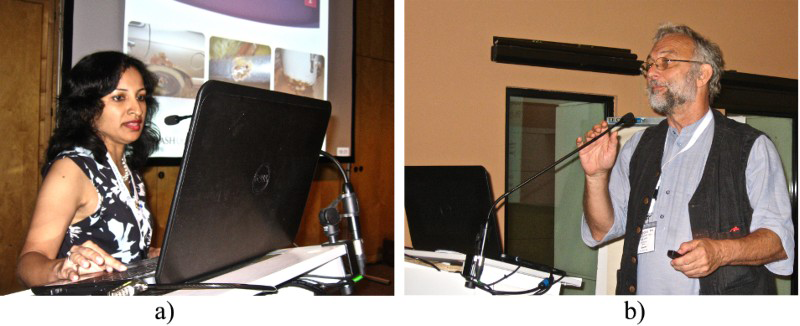
‘Corrosion protection performance of cold plasma deposited organosilicon coating: effect of surface pretreatments’ was presented by Maryem Esbayou (Université Lille Nord de France). The pre-treatments nitrogen plasma, argon plasma and amorphous phosphatation were each applied before deposition of a polymer film. SEM examination indicated reduced surface porosity for coatings with nitrogen plasma pre-treatment. Corrosion tests were performed by immersing the uncoated and coated carbon steel samples in aerated 3 wt-% NaCl at 30°C. With nitrogen plasma pre-treatment, the OCP stabilised around +0.49 V/SCE after few minutes of immersion. For the other pre-treatments OCP stabilised after 2 h at around −0.34 V/SCE (argon plasma) and −0.45 V/SCE (phosphatation). Ole Knudsen (SINTEF, Trondheim, Norway) presented ‘Repair coatings for Thermally Sprayed Aluminium [TSA]’. Barrier coatings on TSA have caused crevice type corrosion, with acidification of the environment inside the crevice formed between coating and substrate. Three strategies for avoiding acidification were investigated both singly and in various combinations: (i) buffering pigments, (ii) open coatings to let the aggressive environment be washed out, and (iii) cathodic protection. All coatings performed better than the reference coating system. EIS measurements during 130 days of constant immersion in artificial seawater (ASTM D-1141) indicated final impedances in the range 1000-10 000 Ω. ‘Investigations on new zinc phosphate [ZnP] platelet containing highly structured corrosion protection coatings on mild steel’ was presented by C. Becker-Willinger (INM – Leibniz Institute for New Materials, Germany). Substrates were coated with epoxy-phenolic resin containing platelets and various amounts of ZnP flakes with and without surface modification. After 300 h salt spray test, coatings containing 15 wt-% platelets and 5 wt-% ZnP flakes showed no delamination along an artificial scratch and no corrosion away from the exposed substrate. In the absence of platelets, corrosion and delamination occurred, but were reduced in the presence of surface modified ZnP flakes due to enhanced cross-linking. Agnieszka Królikowska presented ‘Comparison of anticorrosive coating systems’ behaviour in laboratory tests and after 10 to 20 years of use on steel bridges’. Tests were carried out according to ISO 20340, ISO 9227 and EN-ISO 16474-3. Coatings included various new generation epoxy-polyurethane systems subjected to micro- and macro-climates and other hazardous factors. In accelerated tests, damage was only reported on scratched coatings. Greater blistering and corrosion around the scratches occurred on coatings exposed to variable rather than constant corrosive conditions. Field studies in areas of strong corrosion risk revealed no differences in coating degradation depending on the system used. ‘Grafting catanionics micro-crystals as coating corrosion inhibitors on 9% chromium steel’ was presented by Thomas Zemb (Institut de Chimie Séparative de Marcoule, France) Figure 9b. This formulation combined high mechanical strength and ultra-low permeability towards trans-bilayer diffusion and high surface charge, leading to efficient inhibition. The hybrid layer led to passivation: the corrosion current was reduced by a factor of 100 compared to silanised-only coatings or to uncoated 9% chromium steel. For the non-coated steel, E corr was −0.20 ± 0.5 V/SCE), while the hybrid coating gave E pass > +0.30 V/CSE. Further, the catanionic ampliphile components have antibacterial properties, suggesting application to bioprotection. Poovarasi Balan (Monash University, Malaysia) (Figure 9a) spoke on ‘Nanostructured silane coatings for corrosion protection of low carbon steel’. Various concentrations of cerium triflate were used to activate silica nanoparticles prior to impregnation within silane films. EIS and polarisation results revealed an optimum Ce concentration of 1000 ppm. The impedance remained higher than other systems after 120 h immersion in 0.1 M NaCl solution. Anodic and cathodic current densities were reduced from 1×10⁻⁵ A cm−2 for the un-coated substrate to 1×10⁻⁹ A cm−2 for the coated substrate. It was suggested that the triflates formed cerium oxides or hydroxides on cathodic and anodic regions in response to increased pH, thus hindering corrosion. The poster entitled ‘Rust converter with improved adhesion for topcoats’ was presented by Sanja Martinez (University of Zagreb, Croatia). Samples cut from an aged, heavily rusted industrial construction exposed to coastal atmosphere were manually cleaned and subjected to various treatments before applying alkyd, epoxy and polyurethane coatings. EIS measurements in 3.5% NaCl solution revealed the highest impedance for the epoxy coating on the sand-blasted surface (107 Ω cm2 after 20 days). The lowest impedances were for the same coating on the hand tool cleaned or phosphate cleaned surfaces (around 5×10⁵ Ω cm2) while the tannin cleaned and rust converter treated surfaces showed intermediate values. Emilie Perre (INM – Leibniz Institute for New Materials, Germany) presented the poster ‘Shape-controlled metal phosphate particles as corrosion protection additives in organic coatings’. Electrochemical polarisation and EIS measurements were used to assess the performance of coatings containing ZnP and ZnMn particles on mild steel. This was influenced not only by the acidity of the corrosive media but also the shape of the particles. After 25 days of immersion in an electrolyte containing H2SO4 and NaCl, the coatings containing flake type ZnP particles presented a resistance of 1.5×10⁷ Ω cm2; those containing spherical ZnP particles had a resistance lower than 3×10⁶ Ω cm2.
Self-healing coatings
This took place on the Thursday and was chaired by Mário Ferreira (University of Aveiro, Portugal) and Nadine Pébère (University of Toulouse, France). There were 10 oral presentations, three of which were full papers. Three have been selected for comment here. There were three posters, one of which is highlighted in this report. B. Ramezanzadeh of the Institute for Colour Science and Technology, Tehran, Iran, presented the full paper ‘Evaluation of the corrosion protection and self-healing properties of a layered double hydroxide [LDH] sol-gel coating doped with Zn–Al–PO4 3− nanoparticles’. The corrosion protection properties of the LDHs were investigated by an electrochemical noise (EN) technique. A multi-resolution wavelet analysis was performed for feature extraction from the EN signals. In this regard, the EN signals are decomposed in predefined number of scales (or crystals) in un-decimated wavelet transform (UWT) framework. The EN data revealed that the silane coating in the presence of Zn–Al–PO4 3− could provide superior corrosion protection and self-healing properties than the sol–gel film which solely incorporated Zn–Al–NO3 −. Further, addition of these LDHs to the sol–gel film increased its barrier properties due to their planar structure. L. Rassouli (University of Tehran, Iran) presented the full paper entitled ‘On-demand release of mercaptobenzoxazole [MBA] from NaX zeolite nanoparticles for corrosion inhibition of mild steel’. Zeolites are efficient reservoirs for organic and inorganic inhibitors. In this work zeolite nanoparticles were doped with MBA as an organic inhibitor. The synergistic effect of this organic inhibitor with zinc nitrate was also investigated. Corrosion inhibition of the extracted solutions was evaluated by EIS and polarisation measurements. After 4 h immersion time a complex film was formed in the MBA-Zn sample with a high semi-circle diameter in the high frequency domain. Both anodic and cathodic slopes were changed, indicating a synergistic mechanism. In the absence of Zn only the cathodic slope was altered and the potential decreased to more negative values. The abstract ‘Active corrosion protection of steel by Ce-containing conversion films’ was presented by Rimantes Ramanauskas (Centre for Physical Sciences and Technology, Lithuania). The aim of the study was to develop the deposition of Ce doped phosphate, phosphate/permanganate and phosphate/molybdate conversion coatings on carbon steel and to evaluate the protective and self-healing capacities. The SEM, TEM, XRD and XPS techniques were applied for the structural, phase and composition characterisation of the investigated coatings; voltammetric measurements were carried out to determine the passive layer protective ability; EIS studies yielded information on the self-healing properties. The highest protective and self-healing abilities were exhibited by Ce-modified molybdenum/phosphate films. The presence of a newly formed passive film on the steel surface in the damaged area was demonstrated by TEM and EDS. The poster abstract ‘Anticorrosive performance of cerium doped siloxane–PMMA hybrid coatings with self-healing ability’ was presented by Andressa Trentin of the Universidade Estadual Paulista Julio de Mesquita Filho, Brasil. NMR, XPS and thermogravimetry were used to characterise the structural properties and EIS was employed in 3.5% NaCl to evaluate the corrosion resistance of the sol–gel coatings on carbon steel. The addition of Ce(IV) provided a higher degree of connectivity to the hybrid network, catalysing an increase in the poly-condensation degree of the inorganic phase (>87%), leading to enhanced thermal and chemical stability. A remarkably high electrolytic resistance of up to 10 GΩ cm2, remaining unchanged after more than 10 months of immersion, was demonstrated for the 2 µm thick dip-coating. The protection mechanism combined a densification process with the formation of insoluble cerium species, providing a self-healing effect in corrosion affected areas and leading to a significant increase of the coating lifetime.
Footnotes
Acknowledgements
The authors wish to thank Nick Smart for his contribution to the introduction and plenaries section of this report and Douglas Mills for general all-round assistance in its production. Photographs by Ruth Bingham.