







Abstract
In this research, stress corrosion cracking (SCC) and corrosion behaviour of API 5L X52 carbon steel in 25 wt-% diethanolamine solution, saturated/unsaturated with carbon dioxide and containing 0 and 200 ppm hydrogen sulphide at different temperatures were investigated using slow strain rate test, electrochemical measurement and microscopic analysis. In addition, the presence of heat stable amine salts (HSASs) in the test solution was studied using spectrophotometry and Fourier transform infra-red spectroscopy. Analysis of the results showed that the primary components to form HSASs exist in the solution. The results indicated that SCC is more likely in solutions without amine. Increase in corrosion rate of carbon steel by increase in temperature was clearly observed and concluded that the simultaneous presence of hydrogen sulphide and carbon dioxide in the solution can increase the corrosion rate of carbon steel more than having one of the gases in the solution.
Introduction
Alkanolamines were introduced for sweetening of natural gas in refineries in 1930. The main task of amine units is removing of acid gases such as hydrogen sulphide and carbon dioxide from natural gas. The most amine units use complex multi-stage processes affected by impurities and chemical composition of natural gas. Therefore, considering the fact that extracted natural gas contains different concentrations of acid gases, thus different kinds of amines are used in amine units. The most common alkanolamines in industry are monoethanolamine (MEA), diethanolamine (DEA) and methyldiethanolamine (MDEA) which have different properties. MEA and DEA can remove hydrogen sulphide and carbon dioxide from feed gas, but MDEA removes only hydrogen sulphide and less corrosion problems have been reported in the units using MDEA [1–4].
Figure 1 shows the usual process of an amine unit, schematically. Generally, all amine units have four principal parts including absorber tower, regenerator tower, reboiler and heat exchanger [3,5]. Briefly, in the absorber tower natural gas, containing carbon dioxide and hydrogen sulphide, contacts with lean amine which contains low acid gas loading and then loses its acid gases. Rich amine, containing high acid gas loading, is produced from contacting lean amine and acid gases. Rich amine is sent to the regenerator tower through heat exchanger to separate acid gases from amine solution. After the separation of acid gases from amine solution, acid gases exit from the top of the regenerator tower and amine solution (lean amine) flows to the absorber tower again [6].
The schematic view of amine unit.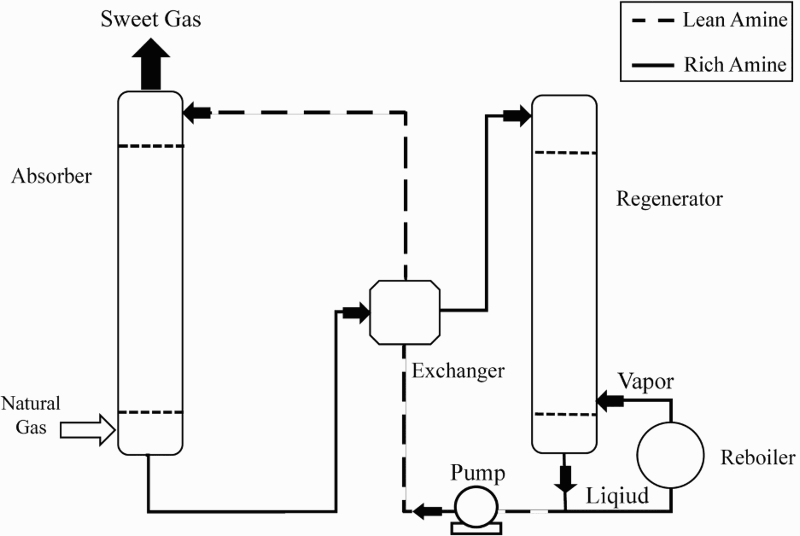
Temperature, pressure and material are controlling parameters in amine unit which can cause different kinds of corrosion in the system.
Numerous studies have been done to investigate the corrosion behaviour of different materials and affecting parameters on the corrosion rate in amine solutions. In 1995, Nielsen et al. [7] investigated the corrosion of carbon steel in amine unit. They found that different factors such as temperature, acid gas loading, presence of oxygen and other impurities in the solution affect corrosion rate of carbon steel. They also studied stress corrosion cracking (SCC) of carbon steel in the same environment and suggested that this kind of corrosion can be controlled by proper material selection and appropriate heat treatment after welding. Recently, Qi et al. [8] investigated the SCC behaviour of 316L stainless steel in the H2S–CO2–Cl− environments with and without MDEA. SCC susceptibility was indicated by brittle surface fracture in the absence of MDEA due to hydrogen penetration and corrosion pits. However, 316L SS shows high stress corrosion resistance in the presence of MDEA. Also, Huang et al. [9] investigated the corrosion rate of L360QCS pipeline steel in various H2S–CO2 partial pressure by electrochemical tests. The results show that corrosion rate is dependent on the protectiveness of corrosion layer.
Generally, alkanolamines have high pH and low conductivity in solutions, thus they are not intrinsically corrosive, but their reaction with carbon dioxide and hydrogen sulphide produces some kind of salts, named heat stable amine salts (HSASs), followed by the occurrence of corrosion, named ‘amine corrosion’, due to the presence of these salts in the solution [7,10,11]. Recently, Hatchell [12] evaluated amine degradation products in the presence of carbon dioxide and compared the corrosion rate of carbon steel and stainless steel. The results showed that increasing temperature and concentration of HSASs have less influence on corrosion rate of stainless steel than carbon steel.
Simultaneous presence of corrosive environment and tensile stress (either external applied or residual stresses) in amine units can causes SCC for carbon steel named ‘amine cracking’. Cracks caused by SCC in the most amine units are the main cause of the destruction of equipment and unit shutdown [4,13]. In 1984, a failure of an amine absorber occurred following by a large explosion which killed 17 people and caused a damage of about 500 million dollars. Investigations showed that amine SCC was the main reason for the failure that initiated and propagated a crack at a girth seam of the absorber tower in the heat-affected zone [14].
The objective of this research is to investigate amine cracking and amine corrosion of API 5L X52 carbon steel in 25 wt-% DEA solutions in the presence/absence of carbon dioxide and hydrogen sulphide gases in different temperatures using slow strain rate test (SSRT), electrochemical testing and microscopic analysis of micro-cracks. Also the presence of HSASs in the solution was studied using Fourier transform infra-red spectroscopy (FTIR) and spectrophotometry.
Experimental
Materials and test solution
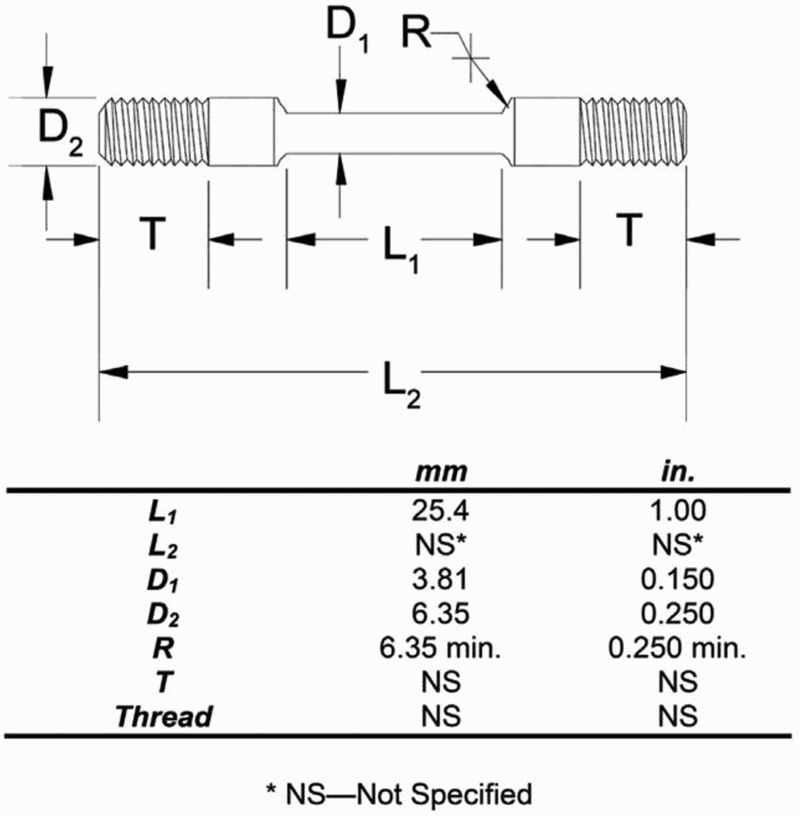
Specimens for slow strain rate and electrochemical tests were cut from API 5L X52 carbon steel pipe. Table 1 shows the chemical composition of the specimens obtained from optical emission spectrometry. The specimens for slow strain rate testing were prepared according to the national association of corrosion engineers (NACE) TM0198 standard [15], as shown in Figure 2. The samples were wet ground with grit silicon carbide papers (from 80 to 2000 mesh). Carbon dioxide-saturated/unsaturated aqueous solutions of 25 wt-% DEA were prepared containing 0 and 200 ppm concentrations of hydrogen sulphide at 45°C. To prepare this solution, nitrogen gas was purged to deoxygenate deionised water for approximately 40 min and then saturation was achieved by purging carbon dioxide gas at the same temperature for about 1.5 h. Hydrogen sulphide gas was dissolved in the solution using the following reaction.
Dimensions for SSRT specimen [16]. The chemical composition of API 5L X52 samples (wt- %).

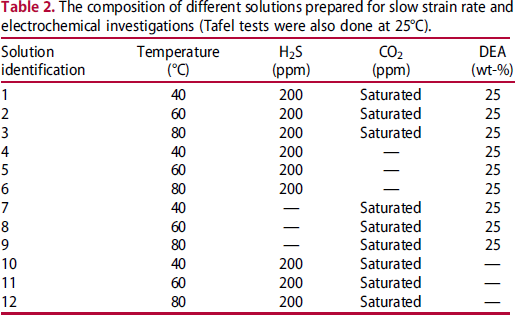
The pH of the prepared aqueous solution was evaluated after purging carbon dioxide gas to ensure that carbon dioxide saturation was reached. Finally, DEA with a purity of 98 wt-% was heated to 50°C and added to the aqueous electrolyte containing acid gases. To accelerate the generation of HSASs, the prepared electrolyte was kept at 80°C for 24 h. A cooling stage was attached to the containing vessel to prevent the evaporation and change in the composition of the solution, as shown in Figure 3. Table 2 shows the designed and prepared solutions for all tests.
Set-up used for keeping electrolytes in 80°C for 24 h. The composition of different solutions prepared for slow strain rate and electrochemical investigations (Tafel tests were also done at 25°C).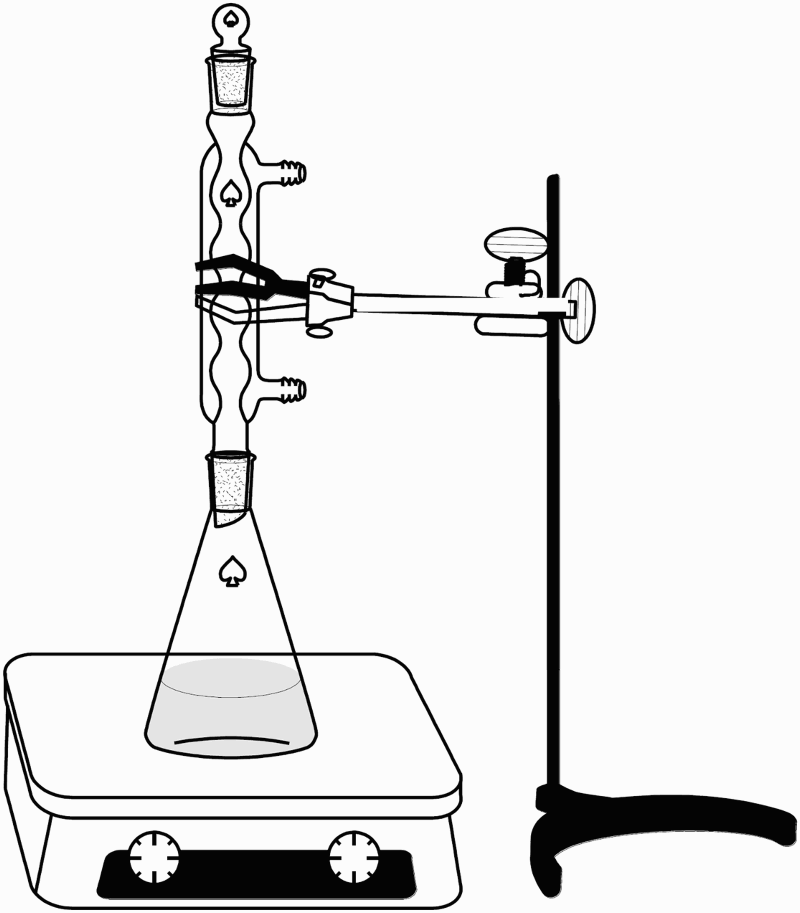
SSRT and electrochemical investigations
Slow strain rate testing was used for investigating the SCC behaviour of API 5L X52 carbon steel according to the NACE TM0198 standard. The device used was a model of SB-5T-92 constant extension rate tensile machine (R.G.S Co., Iran). The test solution was maintained in a cylindrical cell of 100 mL capacity which fitted on and around the test rod via a water tight seal. The temperature of the cell was adjusted with an external water bath circulating hot water in the double jacket of the test cell with ±1°C accuracy. Tests were carried out at atmospheric pressure and 10−5 s−1 strain rate. It is necessary to note that the NACE TM 198 standard suggests that a strain rate of 1 × 10⁻⁶ s−1 gives satisfactory results for many systems. This standard also suggests the application of strain rate of 4 × 10⁻⁶ s−1 when rapid assessment is required. However, it also mentions that the strain rate of 4 × 10⁻⁶ s−1 can give satisfactory results for nickel and austenitic alloys, but for other systems this may lead to reduced repeatability and reproducibility. Furthermore, the ASTM G129 suggests the use of strain rate in the range of 1 × 10⁻⁴ to 1 × 10⁻⁷ s−1. Thus, by considering the above suggestions and also the related literature [16,17] which recommends that SCC of carbon steel occurs at strain rates in the range of 10−5 to 10−7 s−1, the slow stain rate of 1 × 10⁻⁵ s−1 was chosen in this study. The SCC susceptibility of the material was investigated via considering the nature of fracture morphology, per cent reduction in area, time to failure and maximum nominal stress.
Tafel polarisation tests were carried in 300 mL glass cell according to the ASTM G3 standard and using IviumStat as Potentiostat apparatus (Eindhoven, Netherlands). In this study, platinum electrode and silver/silver chloride (saturated, 3M potassium chloride) were used as counter and reference electrode, respectively. Tafel curves were obtained around ±300 mV with respect to open circuit potential (OCP) at a scan rate of 1 mV s−1.
It is necessary to note that all electrochemical measurements and also SSRTs were repeated three times to verify the reproducibility and the average values of the obtained data were reported.
Infra-red, spectrophotometry and surface analysis
In the present study, FTIR (Perkin Elmer, Waltham, MA, USA) was used to detect the byproduct of acid gases with amine in the spectral range from 400 to 4000 cm−1. The sample preparation for FTIR analysis was performed by KBr disc method. After SSRTs, fracture surface and side face of the samples were subjected to analysis by scanning electron microscope (SEM, Leica Cambridge Stereoscan S360, Milton Keynes, England) and optical microscopy to observe fracture morphology and find evidence of side cracks, respectively. The side faces of the specimens were fine wet ground with 2000 grit silicon carbide abrasive paper, followed by cleaning with distilled water and acetone, then air-dried and etched in a 4% nital solution for 20 s.
Results and discussion
Amine degradation, spectrophotometry and FTIR analysis
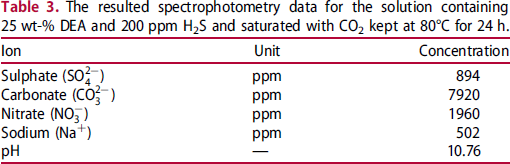
The FTIR spectrum for 25 wt-% DEA solution saturated with carbon dioxide and containing 200 ppm hydrogen sulphide which was kept at 80°C for 24 h is shown in Figure 4. The medium peak near 1459 and 1045 cm−1 conforms to the vibration of carbonate and sulphide ions, respectively. As can be seen in the following equations, sulphate and carbonate ions are the reaction products of DEA with acid gases:
FTIR spectra for CO2 saturated solution containing 200 ppm H2S and 25 wt-% DEA which maintained at 80°C for 24 h.


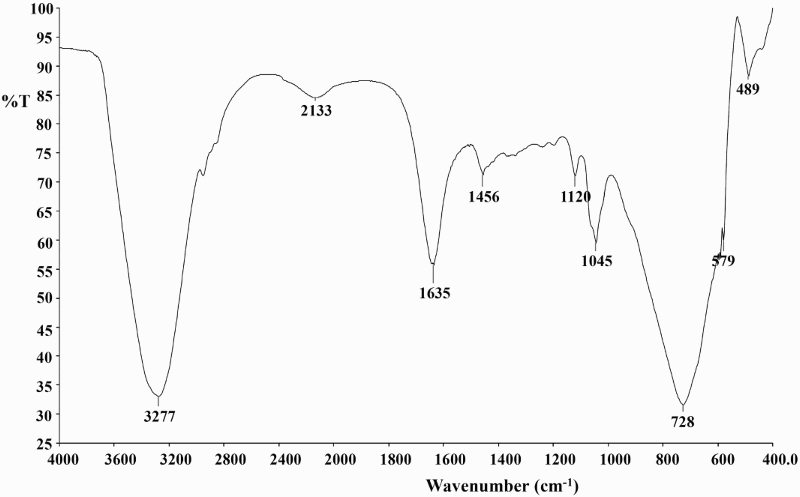
Furthermore, the peak near 1640 cm−1 depicts the presence of protonated amine  molecule which can form HSASs. Also, the peak at 3277 cm−1 shows the presence of DEA itself in the solution [18,19]. Also the peak at 2133 cm−1 corresponds to C=N which forms as a byproduct of acid gas and amine.
Prior investigations on the HSASs formation suggest that reaction of carbon dioxide with DEA results in the formation of carbamate which then degrades slowly to produce Tris (hydroxyl) ethylenediamine (THEED), which, in turn, loses water to form Bis (hydroxyethy) piperazine [20,21].
THEED is believed to increase corrosion activity by acting as a chelation agent. In the presence of THEED, the dissolved iron ions do not participate in the formation of iron oxide, iron sulphide and iron carbonate layers. Iron ions remain dissolved in the amine solution which forms different Fe2+ complexes, so the iron ions are moved away from the metal surface. Chelating agents can avoid iron film formation on the metal surface. Thus, the bare metal surface is opened to more corrosion and iron dissolution [22,23]. Equations (5)–(7) show the chelating corrosion mechanism in the solution [24]:



The resulted spectrophotometry data for the solution containing 25 wt-% DEA and 200 ppm H2S and saturated with CO2 kept at 80°C for 24 h.
Slow strain rate testing
Stress–strain curves
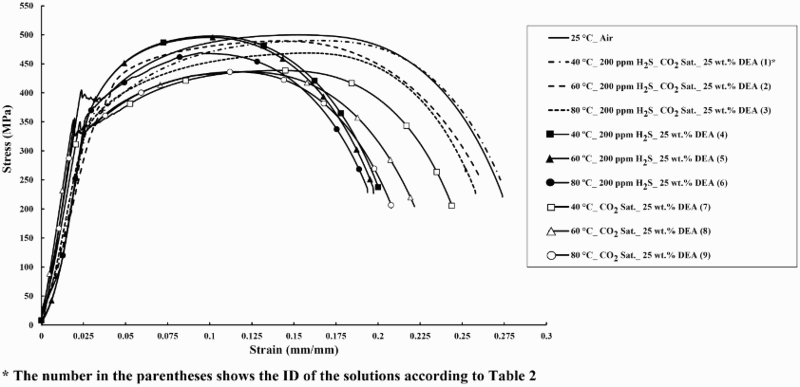
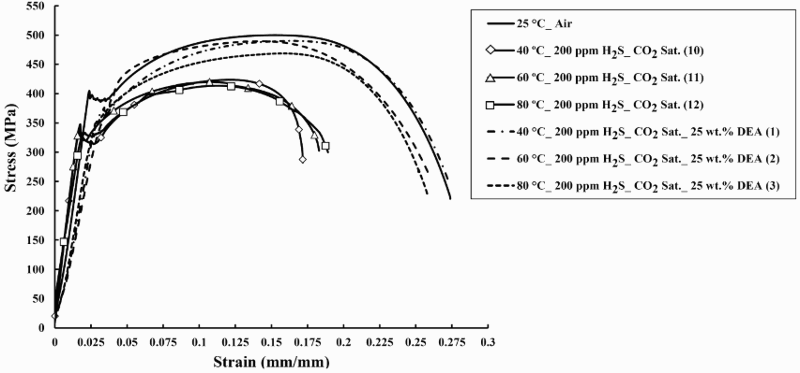
Stress–strain curves obtained from SSRT of API 5L X52 carbon steel in the solution with/without DEA (25 wt-%), containing different concentrations of hydrogen sulphide (0 and 200 ppm), and saturated/unsaturated with carbon dioxide at various temperatures (40, 60 and 80°C) are shown in Figures 5 and 6. It should be mentioned that the blank specimen was carried out in the air at room temperature and according to the results it possesses highest tensile strength and elongation (approximately 28%). To evaluate SCC susceptibility of the material, tensile strength loss factor (I ơ), reduction in area loss factor (I RA), elongation loss factor (I E) and time to failure loss factor (I T) were calculated as follows [16]:
Stress–strain curves of API 5L X52 carbon steel of 25 wt-% DEA solutions containing 200 ppm H2S and saturated with CO2. Stress–strain curves of API 5L X52 carbon steel of solutions with/without 25 wt-% DEA containing 200 ppm H2S and saturated with CO2.



where (ơ/ơ 0), (RA/RA0), (E/E0) and (T/T0) are the ratio of tensile strength, per cent reduction in area, elongation and time to failure in environment of interest to those in air as inert medium, respectively. These parameters which indicate reduction in ductility are shown in Figure 7. Generally increasing ductility loss factors (I ơ, I RA, I E and I T) shows the increase in susceptibility of the material to SCC [25].
Comparing the resulted loss factors from stress–strain curves at different temperatures.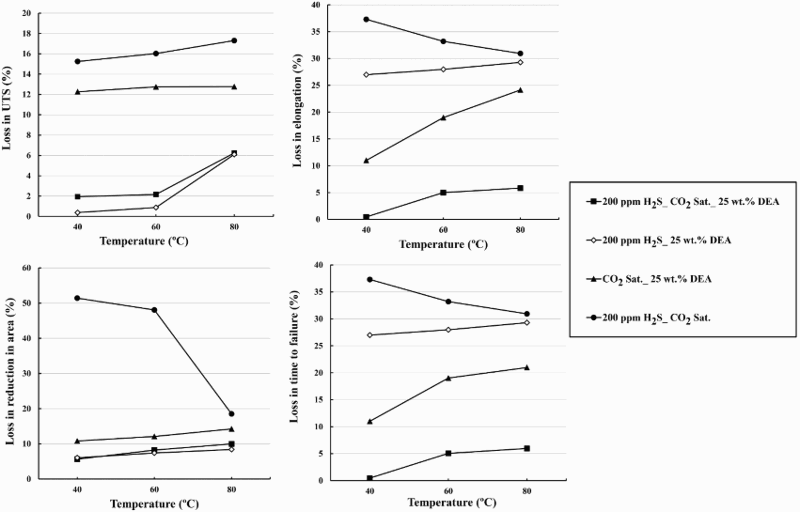
It can be seen in Figure 5 that elongation and ultimate tensile strength of the samples decrease with increasing temperature in all solutions, but there is no significant change with yield strength in different solutions and temperatures. Also it can be seen that the effect of temperature on the susceptibility of the X52 carbon steel to SCC is dependent on the presence of DEA and also pH of the solution. Thus, the SCC susceptibility of samples in all electrolytes containing DEA increases with increasing temperature, as can be seen in Figures 5 and 7. In solutions containing DEA, the pH is high (about 10.7) and the highest percentage reduction in ductility is observed at 80°C. On the other hand, for solutions not containing DEA, the increase in temperature leads to decrease in susceptibility to SCC and maximum loss of ductility appears at 40°C, as shown in Figures 6 and 7. Since these electrolytes do not contain DEA and the pH of solution is about 3.8, this difference could be due to the change in the mechanism of nucleation and growth of cracks. The suggested carbon dioxide corrosion mechanisms have proposed that the formation of iron carbonate on metal surface and the layer growth is very slow and dependent on temperature [26]. An increase in temperature leads to an increase in the rate of deposition of carbonate layer. Depending on the level of adhesion of this layer to the surface, the corrosion rate of carbon steel may be decreased or increased by temperature. Although the increase in temperature can increase deposition rate of iron carbonate layer, the presence of THEED in the solution as the chelating agents can prevent the formation of a stable protective film on surface.
The analysis of stress strain curves, presented in Figure 5, and the loss factors presented in Figure 7 also give some other important results. For solutions 4-6 (solutions containing 200 ppm hydrogen sulphide and 25 wt-% DEA), the increase in temperature leads to an increase in the susceptibility of the material to SCC. In these solutions, the change in temperature does not have a significant effect on the stress–strain curves. This means that the failure of samples in the solutions containing DEA and hydrogen sulphide (without carbon dioxide) is not affected by temperature considerably. Furthermore, comparing SCC behaviour of carbon steel in the solution containing 25 wt-% DEA, 200 ppm hydrogen sulphide and carbon dioxide-saturated with the same solution in the absence of hydrogen sulphide (solutions 1-3 with 7-9) shows more susceptibility to SCC for the solution without hydrogen sulphide which is in agreement with the results reported by other researchers [16,27]. Thus, it can be concluded that the presence of carbon dioxide (in the absence of hydrogen sulphide) in electrolytes containing amine can result in more SCC damage (Figure 7).
Fracture morphologies after SSRT
The SEM fracture morphologies for X52 carbon steel subjected to different solutions are shown in Figures 8 –10. The results showed that brittle fracture occurs only for the specimens in the solutions without DEA (Figure 8(d) and (e)) and the samples in the solutions with 25 wt-% DEA show a mixture of brittle–ductile fracture (Figure 8(b) and (c)). This observation is in agreement with the resulted stress–strain curves. In other words, the samples which showed brittle fracture in the resulted SEM photomicrographs also showed the highest value for loss factors, indicating the most susceptibility to SCC, as shown in Figure 7.
SEM images of fracture surface of API 5L X52 carbon steel in: (a) air, and in solutions (b) 25 wt-% DEA, CO2 saturated, 200 ppm H2S at 40°C; (c) 25 wt-% DEA, CO2 saturated, 200 ppm H2S at 60°C; (d) CO2 saturated, 200 ppm H2S at 40°C and (e) CO2 saturated, 200 ppm H2S at 60°C. SEM images of fracture surface of API 5L X52 carbon steel in solutions contains; (a) CO2 saturated, 200 ppm H2S at 40°C; (b) 25 wt-% DEA, 200 ppm H2S at 80°C; (c) 25 wt-% DEA, CO2 saturated at 80°C; (d) 25 wt-% DEA, CO2 saturated, 200 ppm H2S at 80°C. SEM images of fracture surface of API 5L X52 carbon steel in CO2 saturated, 200 ppm H2S solution at (a) 60°C and (b) 40°C.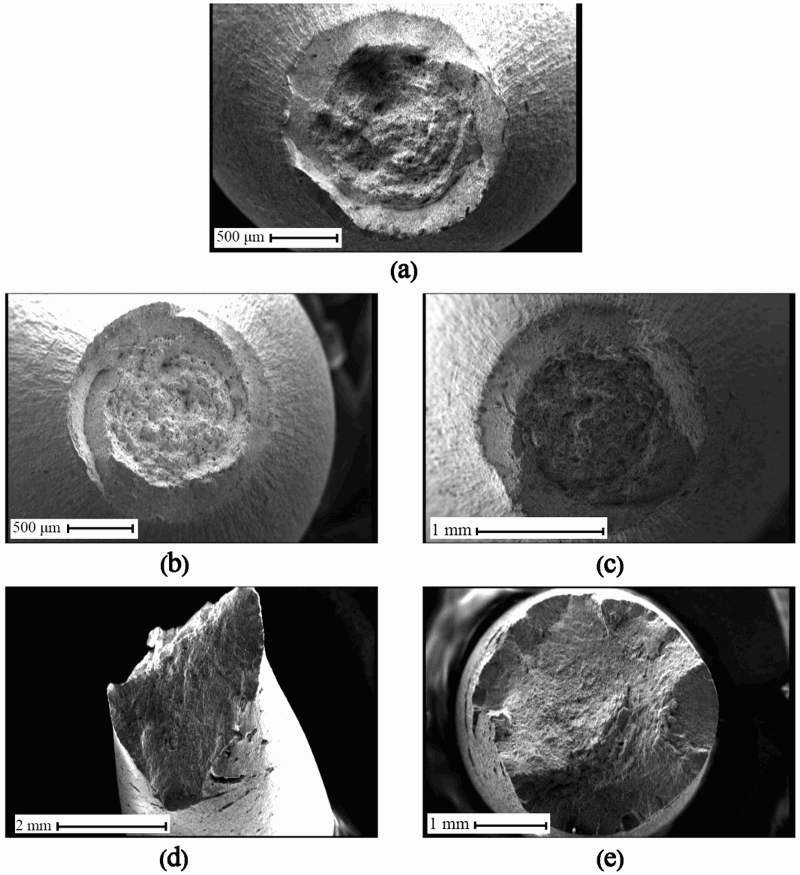
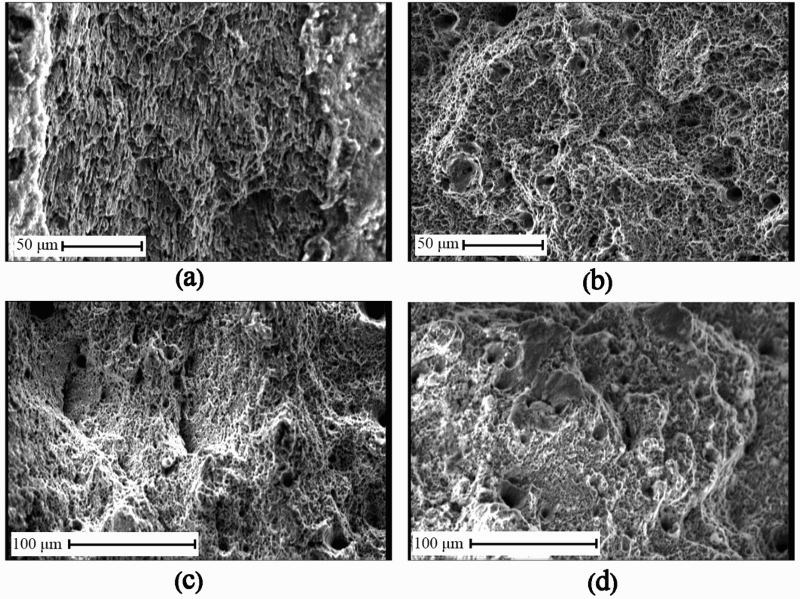
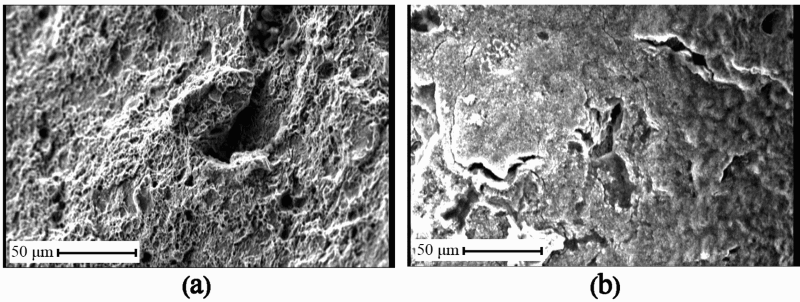
Figure 9 shows the most critical condition for each group of solutions (among four types of electrolytes). Figure 9(a) shows the brittle fracture surface for the sample in solution which saturated with carbon dioxide, contains 200 ppm hydrogen sulphide at 40°C. As mentioned earlier, this could be due to the absence of amine in the solution. On the other hand, Figure 9(b–d) shows a combination of ductile–brittle fracture for the samples in solutions containing DEA. Fracture surfaces of samples in electrolytes without amines at 40 and 60°C are shown in Figure 10. It is observed that the fracture surface at 40°C is quite brittle.
The optical microscopy of the side surface of the samples after SSRT are presented in Figure 11(a–c) which show side cracks in the environment saturated with carbon dioxide and 200 ppm hydrogen sulphide (without amine). Figure 11(d) shows side cracks which are not open to the surface and their initiation can be related to the presence of hydrogen sulphide. Diffusion of atomic hydrogen into the metal structure activates such a SCC mechanism which is a form of hydrogen embrittlement [28].
Side cracks’ microscopic view of (a) and (b) CO2 saturated, 200 ppm H2S at 40°C; (c) CO2 saturated, 200 ppm H2S at 60°C and (d) 25 wt-% DEA, CO2 saturated, 200 ppm H2S at 80°C.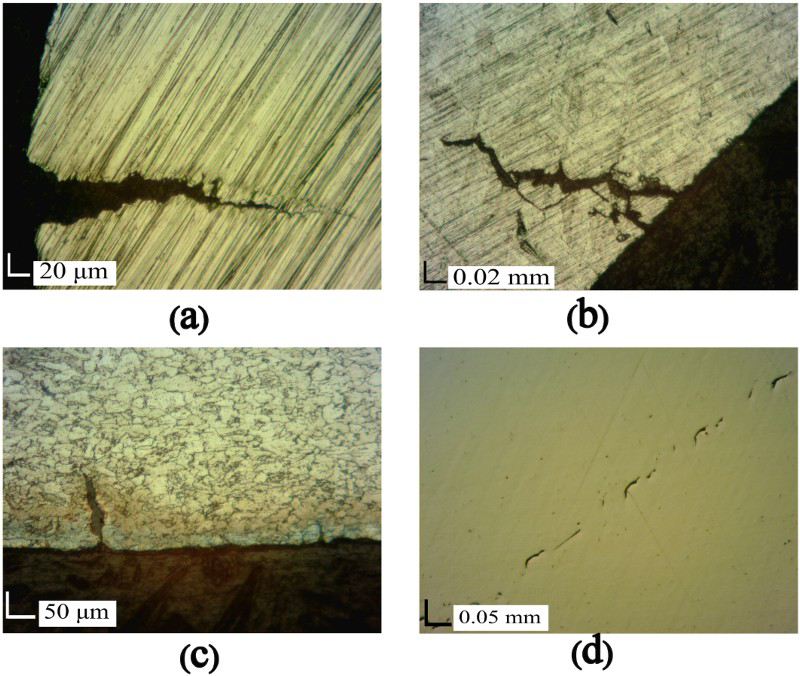
Fracture surface almost appears with brittle fracture due to SCC, and existence of side cracks is an important evidence for SCC [29]. SCC intergranular and transgranular secondary cracks have been reported by other researchers due to the presence of carbonate and bicarbonate ions in high pH solutions [30,31].
Electrochemical investigations
Tafel plots and extracted electrochemical data are shown in Figure 12 and Table 4, respectively. As can be seen, the corrosion rate of carbon steel increases with an increase in temperature. It can be because kinetic of heat stable amine salt formation and amine degradation is accelerated in higher temperature [32].
Tafel plots for API 5L X52 carbon steel in solutions containing (a) 25 wt-% DEA, CO2 saturated and 200 ppm H2S; (b) CO2 saturated and 200 ppm H2S (without DEA); (c) 25 wt-% DEA, CO2 saturated (without H2S) and (d) 25 wt-% DEA and 200 ppm H2S (without CO2). The electrochemical data extracted from polarisation curves of API 5L X52 carbon steel in solutions.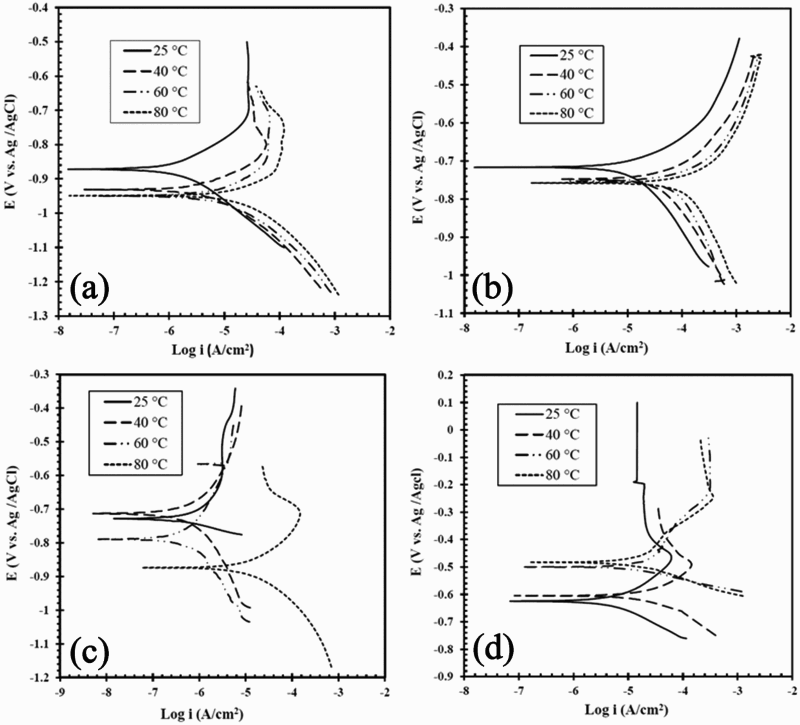
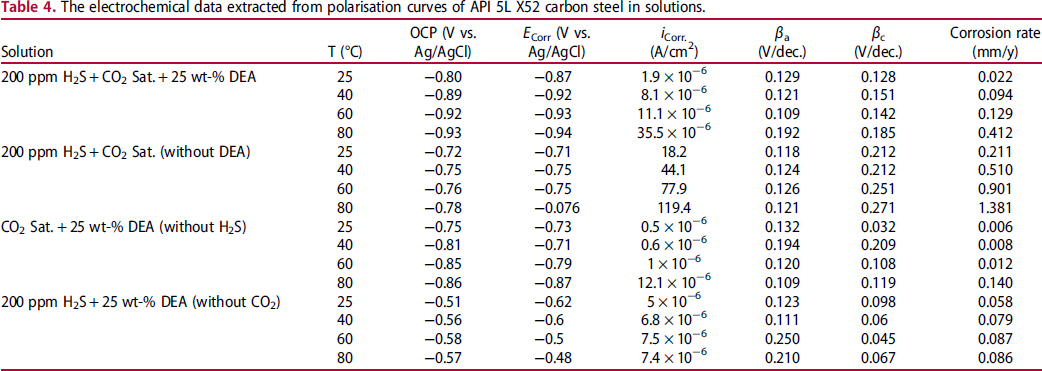
Comparing the polarisation results for carbon steel in the solution of 25 wt-% DEA, carbon dioxide-saturated and 200 ppm hydrogen sulphide with the carbon dioxide-saturated solution containing 200 ppm hydrogen sulphide without DEA indicates that the presence of DEA in the solution containing acid gases can decrease corrosion rate. Furthermore, it can be seen in Figure 12 that X52 carbon steel indicates a weak active–passive behaviour in the solutions containing DEA and acid gases and it can be concluded that the protective film on the electrode surface is not strong enough to protect it from corrosion attack, because HSASs in the solution prevent formation of protective film on the surface.
The resulted electrochemical data for the sample in the solution containing 25 wt-% DEA, 200 ppm hydrogen sulphide (without the presence of carbon dioxide), and also stress–strain curves for the same samples (sample ID: 4-6 in Figure 5) show that the effect of temperature on corrosion rate and SCC susceptibility of carbon steel is not significant in comparison with the samples in the other solutions. As mentioned, the main reason for heat stable amine salt formation is the reaction between carbon dioxide and DEA and the temperature can increase the concentration of these salts. On the other hand, iron sulphide can form on the surface of electrode due to the presence of hydrogen sulphide and the absence of heat stable amine salt as chelating agents. Therefore, comparing the results of polarisation and SSRTs shows that X52 carbon steel is less sensitive to temperature increase in this solution, in the way that corrosion rate and SCC susceptibility of carbon steel did not change significantly by raising temperature from 40 to 80°C.
Conclusion
In this research, amine cracking and amine corrosion of API 5L X52 carbon steel was studied in 25 wt-% DEA, saturated/unsaturated with carbon dioxide and containing 0 and 200 ppm hydrogen sulphide at different temperatures. Also the presence of HSASs in the electrolyte was investigated and the following results were concluded:
SCC of X52 carbon steel was not significant in the solutions containing both carbon dioxide and hydrogen sulphide in the presence of 25 wt-% DEA, while solutions containing only carbon dioxide or hydrogen sulphide in the presence of 25 wt-% DEA are more aggressive in promoting amine cracking of X52 carbon steel. SCC was more significant in the solution without DEA and side cracks were seen just in this case. Increase in temperature enhances corrosion rate and SCC susceptibility of carbon steel in the solutions containing DEA. Carbon steel shows lower susceptibility to SCC by increasing the temperature in the solution without DEA, whereas corrosion rate increases with temperature in all solutions. Amine corrosion and amine cracking of X52 carbon steel were less sensitive to temperature increase in the solution containing 25 wt-% DEA and 200 ppm hydrogen sulphide (without carbon dioxide) compared to other solutions. The most corrosion rate was observed in the solution containing acid gases without DEA at 80°C.
Footnotes
Disclosure statement
No potential conflict of interest was reported by the authors.