







Abstract
By analysing the results of corrosion potential, EIS, SEM and XRD test of zinc-rich coatings (ZRCs) in 3.5wt-% NaCl solution, it was found that conductive pigment (di-iron phosphide, Fe2P) can accelerate the activation and corrosion rate of zinc powders in ZRCs, but too fast corrosion rate can reduce the cathodic protection and shielding of ZRCs. Silane improves the mechanical properties and shielding effect of coatings, but reduces the activation and corrosion rate of zinc powders. The synergy effect of the two strengthens both the cathodic protection and the shielding effect. Finally, the synergy mechanism of Fe2P and silane to improve the performance of ZRCs is proposed. These mechanisms provide references for solving the galvanic corrosion of conductive fillers (Fe2P, graphite, carbon black, carbon nanotubes, graphene, etc.) in ZRCs.
Introduction
ZRC is a wonderful coating which integrates cathodic protection, shielding, self-repair, corrosion inhibition and absorption corrosion medium (O2, CO2, Cl−, H2O, etc.). However, little research is available to elucidate the six functions, which seriously affects the application of ZRCs.
Epoxy zinc-rich paint (ZRP) is one of the most widely used products in industrial anti-corrosion. It is suitable for steel rust prevention in the atmospheric environment and is widely used in the weather-resisting coating of general anti-corrosion, chemical atmosphere, marine environment. Some zinc-rich primers can offer near-permanent corrosion protection of steel with 25+ years of a recorded performance. However, there are also some shortcomings in ZRCs: Owing to the porosity of ZRCs and the high activity of zinc powders, the early failure phenomena such as bubbling, embrittlement and over-protection are easy to occur. Moreover, during welding and cutting, a large amount of zinc oxide smoke is released, which can easily lead to ‘zinc fever’ among workers [1,2]. In addition, Simko and Simpson [3] demonstrated that only about 25% of zinc is anodically dissolved. Many studies were trying to dope conductive materials, such as Fe2P [4 11], aluminium pigments [12], graphite [13], carbon black [14], carbon nanotube [15,16], graphene [17 21], nanoparticulate zinc [22], polypyrrole [23], into ZRCs to reduce zinc content and increase their cathodic protection, or fillers, such as micaceous iron oxide [24], nano-montmorillonite [25], to improve the shielding performance of coatings. However, most of these studies were not successful enough to achieve the ultimate goal. Therefore, modification of ZRCs with proper additives still needs further improvements.
It is a common and effective method to improve the utilisation rate and reduce the cost of zinc powder by replacing part of zinc powders with Fe2P. Feliu S et al. [4–7] have made a series of studies about the effect of Fe2P on ZRCs 20 or 30 years ago. In recent years, Chinese scholars pay more attention to the research of Fe2P [8–11]. Feliu S et al. [4] studied the ability of ZRPs containing Fe2P extender to provide cathodic protection using immersion tests. It can be observed that the time during which the high negative potentials were maintained was much longer for silicate-type coatings than for epoxy-type coatings. The period of cathodic protection (negative potential over 0.8 V vs SCE) was approximately the same for the three ZRP compositions of the ethyl silicate vehicles with the highest zinc contents. However, the replacement of part of the zinc by Fe2P in epoxy-polyamide vehicle paints was accompanied by a substantial reduction in the period of cathodic protection. Newton C et al. [7]. reported that the penetration resistance of epoxy ZRCs decreased greatly with the addition of Fe2P powders. Guan Qing-song et al. [8]. noticed that the resistance to red rust of ZRCs decreased obviously in salt spray test when only 5% Fe2P was added to the epoxy-polyamide ZRCs. Yin Jianjun [9] and Shuang Song [10] also found that adding 5%∼15% Fe2P to epoxy ZRPs, whether using spherical zinc powders or flake zinc powders, the corrosion resistance of ZRCs was decreased. For 80 μm thick ZRPs, Chinese Fe2P manufacturers recommend Fe2P content of 15%∼20%, while the recommendation on workshop primer must be less than 10%. Moreover, Chinese technical specification for railway steel bridge protective coating and coating supply TB/T 1527/2011 stipulates that ZRPs shall not contain iron. To summarise, the appropriate amount and action mechanism of Fe2P are still not clear.
The quality content of zinc powder in ZRCs was very large, usually up to 80∼90 wt-%, which results in poor mechanical properties of ZRCs. Therefore, it is extremely important to improve the mechanical properties of ZRCs. Silane coupling agents have attracted much attention in recent decades because of their excellent adhesion to metal oxides and organic coatings. Silane reacts with water on the substrate to form silicon hydroxyl groups, which then bound with hydroxyl groups of the substrate surface to form Si–O–Me (Me is metal) or hydrogen bonding. At the same time, the Si–O–Si bond can be formed by the condensation of silicone hydroxyl groups on each silicone molecule, and the functional groups in silane molecules can form complex chemical bonds with the functional groups in the coating to form a more dense interpenetrating network structure. The coating is more compact, the water resistance is more prominent, and the adhesion to the substrate is stronger [26,27]. Nevertheless, Our previous paper initially revealed the reduction effect of silane on the cathodic protection and shielding of ZRCs by electrochemical methods [28]. Boats et al. [29] modified zinc particles with 3-glycidoxypropyltrimethoxysilane and 2-mercaptobenzothiazole and Park et al. [30] pre-treated zinc particles with alkoxysilanes, however, no significant improvement was observed by these surface modifications. The organosilane led to a slightly better performance in SVET measurements. However, in EIS measurements the performance was better than the other three ZRCs only in the very first hours of immersion [29]. Wu et al. [31] prepared organosilane/zinc composite by one-step electrodeposition onto cold-rolled steels, the results showed that the corrosion potential of zinc-doped BTSE films with the highest zinc content was also higher than that of protection potential. Alinejad et al. [32] found that the active protection of mild steel of ZnCl2 doped-silane is mainly attributed to the corrosion inhibitive function of zinc cation at the interface. In addition, some articles pointed out that silane passivating zinc, [33] and zinc passivation may be disadvantageous to its cathodic protection. In summary, further research about the suitable action mode and action amount of silane on ZRCs is needed.
At present, due to the variety of polymers, zinc powders, fillers, additives, solvents, etc. that can be used in ZRCs, the ability to control the properties of ZRCs is primitive, in part, because related mechanisms are largely unexplored and many basic questions remain unanswered. Therefore, understanding related mechanisms is a crucial element for the successful production of high-quality ZRP and the facility design of the next generation of corrosion protecting metal-rich coatings.
The aim of this work is studying the effects of Fe2P and silane on the performance of epoxy-based ZRCs. Fe2P can increase the conductivity of ZRCs, but it will cause zinc powders to corrode too quickly, which may increase the porosity and decrease the compactness of coatings. On the contrary, silane can increase the compactness of the coatings. The combination of silane and Fe2P may complement each other.
Experimental
Materials
Q235 mild steel panels (85 × 53 × 2 mm) were selected as substrate and the chemical composition of Q235 is as follows (wt-%): C ≤ 0.12, Mn ≤ 0.50, Si ≤ 0.30, S ≤ 0.04, P ≤ 0.03 and Fe balance. Epoxy resin (E-44) was obtained from Jiangsu Wujiangheli resin limited company, with epoxy value 0.40∼0.47. The curing agent (Polyamide 650) was obtained from Zhejiang Yongzai Chemical Co., Ltd. Zinc powder (500 meshes) and Fe2P powder (1200 mesh) were purchased from Hunan Fuhong Zinc Industry Co., Ltd. and Nuocheng Chemical (Nanjing) Co., Ltd., respectively. Additives including defoamer (BYK-141), dispersant, levelling, anti-settling agent (polyamide wax) and 3-Glycidoxypropyltrimethoxysilane were purchased from Zhejiang Jinzhili Chemical Co., Ltd. Alcohol, acetone and sodium chloride (NaCl) were purchased from East china reagent company. All chemicals were used as received without any further purification.
Preparations of coated specimens
Composition of the investigated ZRPs (wt-%).
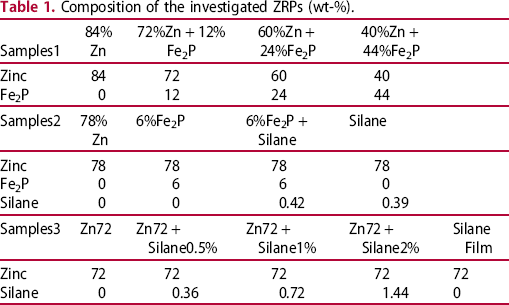
Coating testing methods
Electrochemical measurements on the coated steel were made using a three-electrode cell in which the sample was placed horizontally. A Perspex cylinder was fixed on the sample and filled with a solution. The exposed area was 13.1 cm2. A graphite counter electrode and a saturated calomel electrode (SCE) completed the arrangement. Its structure diagram is shown in the literature [34]. All measurements were made in 3.5 wt-% NaCl solution at ambient temperature. The impedance measurements were made using an EG&G model 273 potentiostat and a model 5210 lock-in amplifier. A sine wave of 10 mV was applied across the cell. The barrier properties of the coatings were assessed by the values of low-frequency impedance modulus at 0.01 Hz (|Z|0.01Hz). The open circuit potential (OCP) was recorded before the EIS test.
The morphologies of the corroded specimens were examined by HITACHI S-4700 scanning electron microscope (SEM) of Hitachi Company. Corrosion products were analysed by X-ray Diffraction (XRD) using a PAN alytical XPert PRO MRD X-Ray Diffraction System.
Results and discussion
Electrochemical analysis
Figure 1 presents the effect of the Fe2P content on the OCP and |Z|0.01Hz of ZRCs and Figure 2 the synergy effect of Fe2P and silane. Two phenomena can be seen in Figure 1(a) and Figure 2(a): (1) The inclusion of Fe2P and silane into ZRC resulted in the shift of OCP after 2 h of immersion to negative values. (2) The initial OCP variation of the two coatings containing Zn only, 84%Zn and 78%Zn, was V-shaped, namely, it becomes negative first and then becomes positive (within 50 h in Figure 1(a) and 430 h in Figure 2(a)). At the very beginning of immersion, zinc particles having thicker native oxide layers continue to activate and cause the Zn/Fe area ratio to increase, hence the potential of the galvanic couple shifts to negative values [35,36]. Next, due to the corrosion of zinc powders, OCP changes positively. Fe2P not only increases the electrical conductivity of ZRCs, but also speeds up the activation of zinc powders, which results in the OCP of the coating with Fe2P is lower than that of the coating without for the first 2 h. At the same time, the accelerated activation of zinc powders by Fe2P increases the amount of the corrosion products that fill the pores of coating, which leads to the |Z|0.01Hz of the coatings with Fe2P is larger than the coatings without, as shown in Figure 1(b) and Figure 2(b).
(a) The OCP and (b) |Z|0.01Hz of epoxy ZRCs with different Fe2P contents after immersion in 3.5 wt-% NaCl solution. (a) The OCP and (b) |Z|0.01Hz of epoxy ZRCs with different Fe2P and silane contents after immersion in 3.5 wt-% NaCl solution.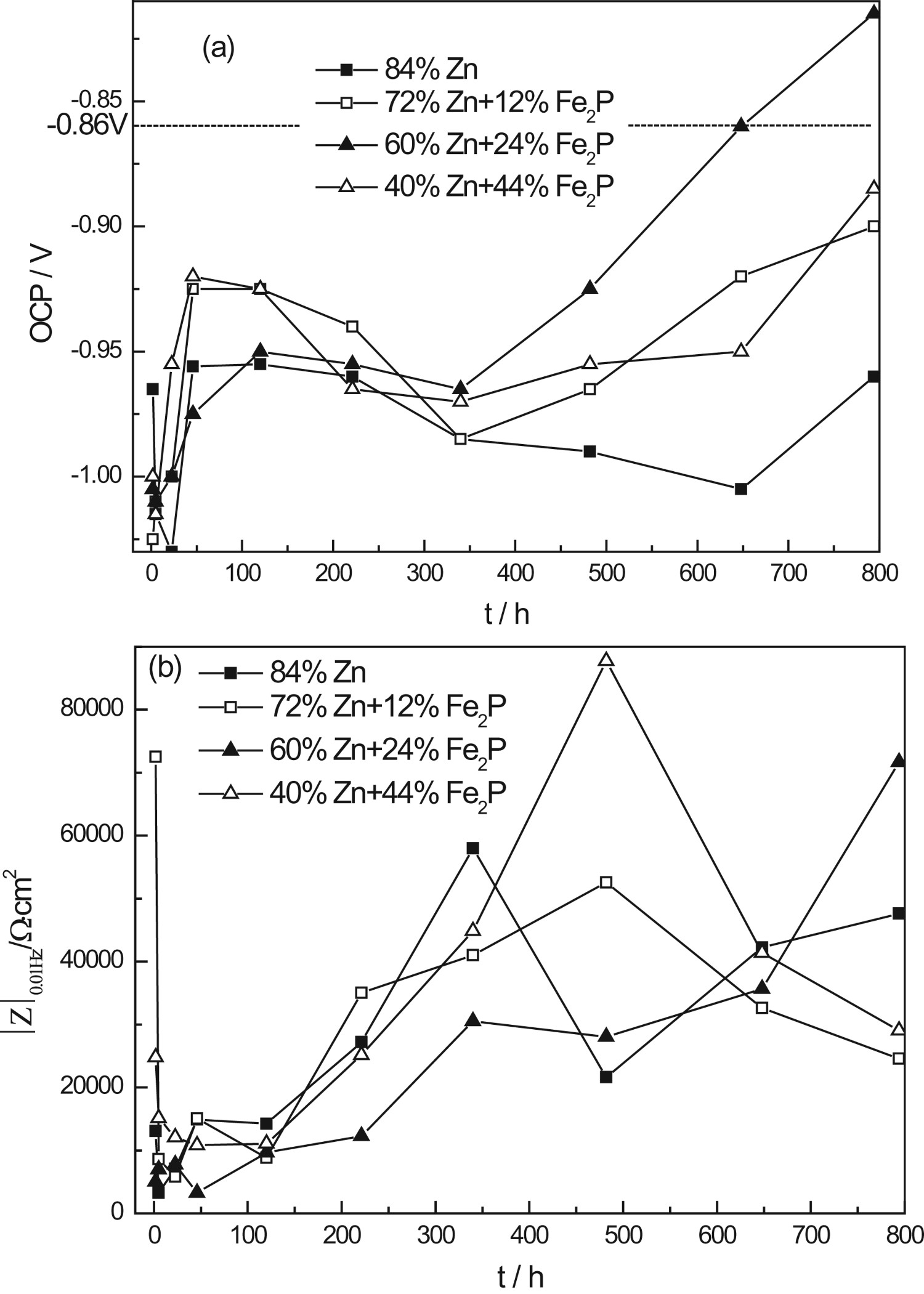
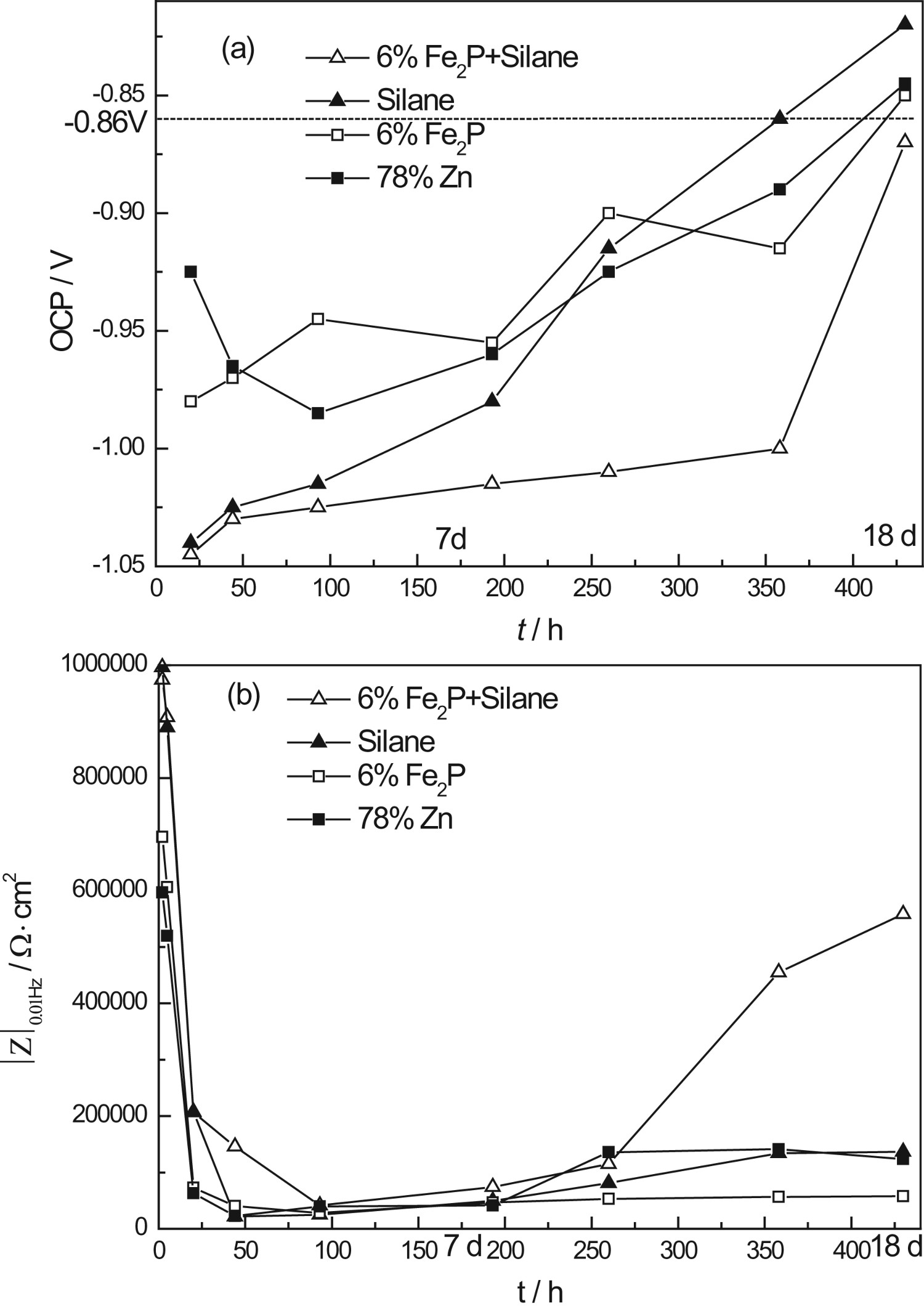
Figure 1(a) and Figure 2(a), for most of the time, OCP becomes positive by Fe2P addition, indicating the decrease of long-term cathodic protection. The possible reasons are: (1) The utilisation ratio of zinc powders is increased and the content of zinc powders is decreased by adding Fe2P, and the two effects are the opposite. The reduction of zinc content will shorten the corrosion-resistant life of ZRCs. (2) The potential of Fe2P is much more positive than that of iron and zinc. The electrode potential of zinc, iron and Fe2P in 3% NaCl solution is −1.06, −0.61 and 0.10 V [11], respectively. Wang Dailin et al. [37] and Song Zuwei et al. [38] found that carbon nanotube and graphene may form galvanic couples with the steel and thus increase the corrosion rate of the steel substrate. Similarly, Fe2P can cause galvanic corrosion. From Figure 2(b), within 44 h at the initial stage of immersion, the |Z|0.01Hz of Silane is significantly larger than that of 78%Zn. This is because silane reduces both the activation speed of zinc powders and the wetting speed of Fe. When the reduction of zinc powder activation is less than the reduction of wetting speed of Fe, OCP will decrease, as shown in Figure 2(a). In addition, coating densification caused by silane increases the conductivity of coating is also a possible reason. Although silane decreased OCP of ZRCs at the beginning of immersion, the cathodic protection period of ZRCs is shortened, and the long-term shielding effect of ZRC is not improved (beyond 44 h of immersion, there is no significant difference of |Z|0.01Hz between Silane and 78%Zn). Finally, it's a surprise that the addition of Fe2P and silane greatly reduce OCP and increase |Z|0.01Hz, which indicates that the effective cathodic and barrier protection can be obtained for longer duration as a result of conductive nature of Fe2P and barrier role of silane.
Our previous work showed that the cathodic protection of ZRCs is significantly reduced by adding 1% silane to ZRCs containing 78% Zn [28]. It is speculated that the addition of about 0.5% silane will not significantly reduce the cathodic protection of ZRCs, which is confirmed in Figure 2(a). Therefore, the effects of silane treatment on the cathodic protection of ZRCs containing 72% Zn were studied. The OCP of ZRCs is shown in Figure 3 as a function of immersion time. As indicated in Figure 3, Zn72 + Silane1%, Zn72 + Silane2% and Silane Film all have higher initial and intermediate potentials than Zn72 and Zn72 + Silane0.5%. The time when the potential of Zn72+Silane1% and Silane Film is lower than −0.86 V is very short, while the potential of Zn72+Silane2% is always higher than −0.86 V. According to the literature [35], cathodic protection disappears when the OCP of coatings shifts to a more positive value than –0.86 V. The above experimental results indicate that the zinc powders of Zn72 + Silane1%, Zn72 + Silane2% and Silane Film were not fully activated, and the cathodic protection of the three was worse than that of Zn72 and Zn72 + Silane0.5%. Zn72 and Zn72 + Silane0.5% were close, but the cathodic protection of Zn72 + Silane0.5% was still slightly worse than that of Zn72. In summary, silane treatment on steel surface reduces the cathodic protection of ZRCs, and the maximum addtion of silane to ZRCs should not exceed 0.36% (about 0.4%).
Evolution of the OCP with immersion time for ZRCs with various silane content.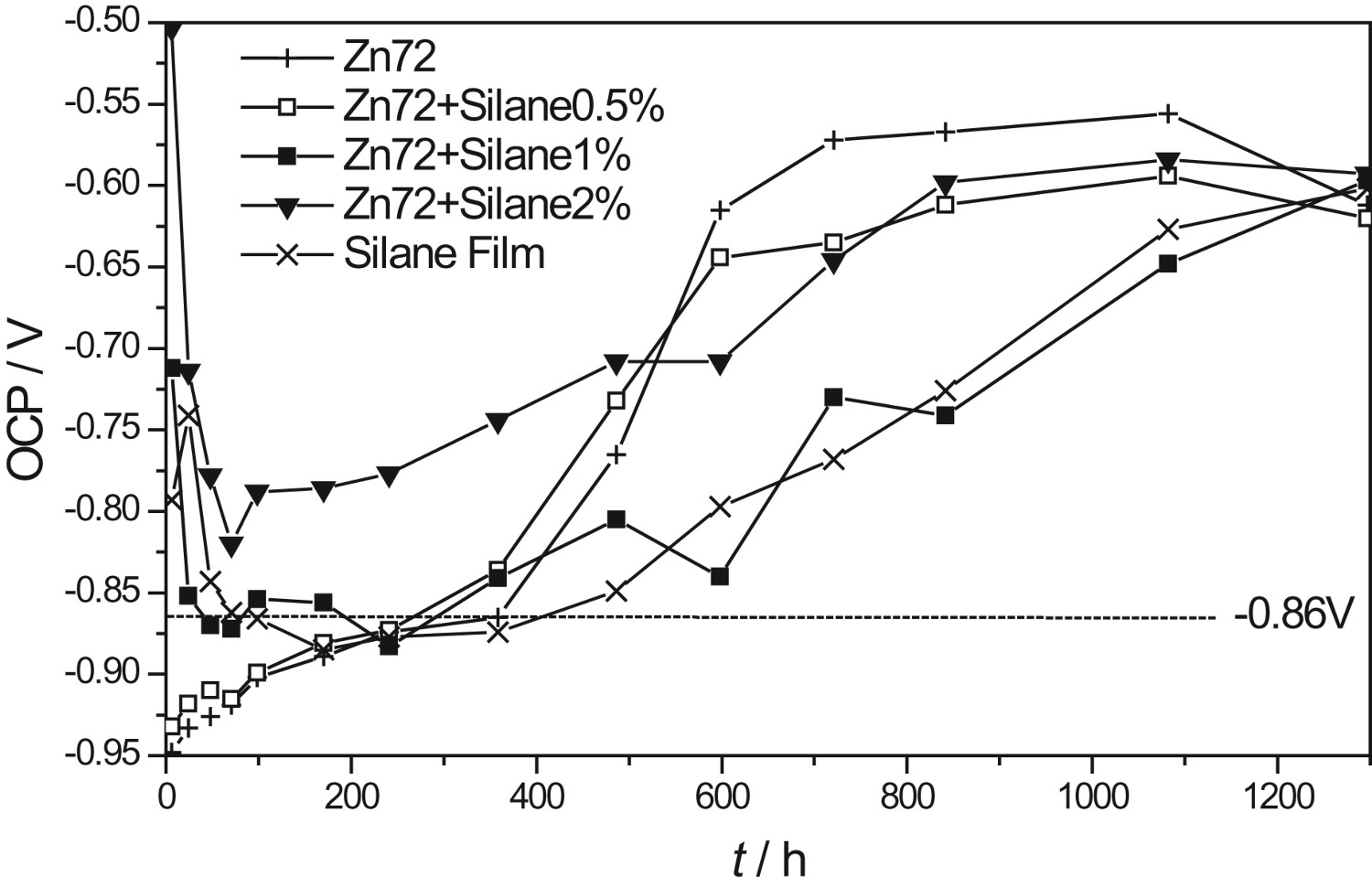
Effect of silane content on the mechanical properties and corrosion resistance of epoxy coatings.

SEM and XRD analysis
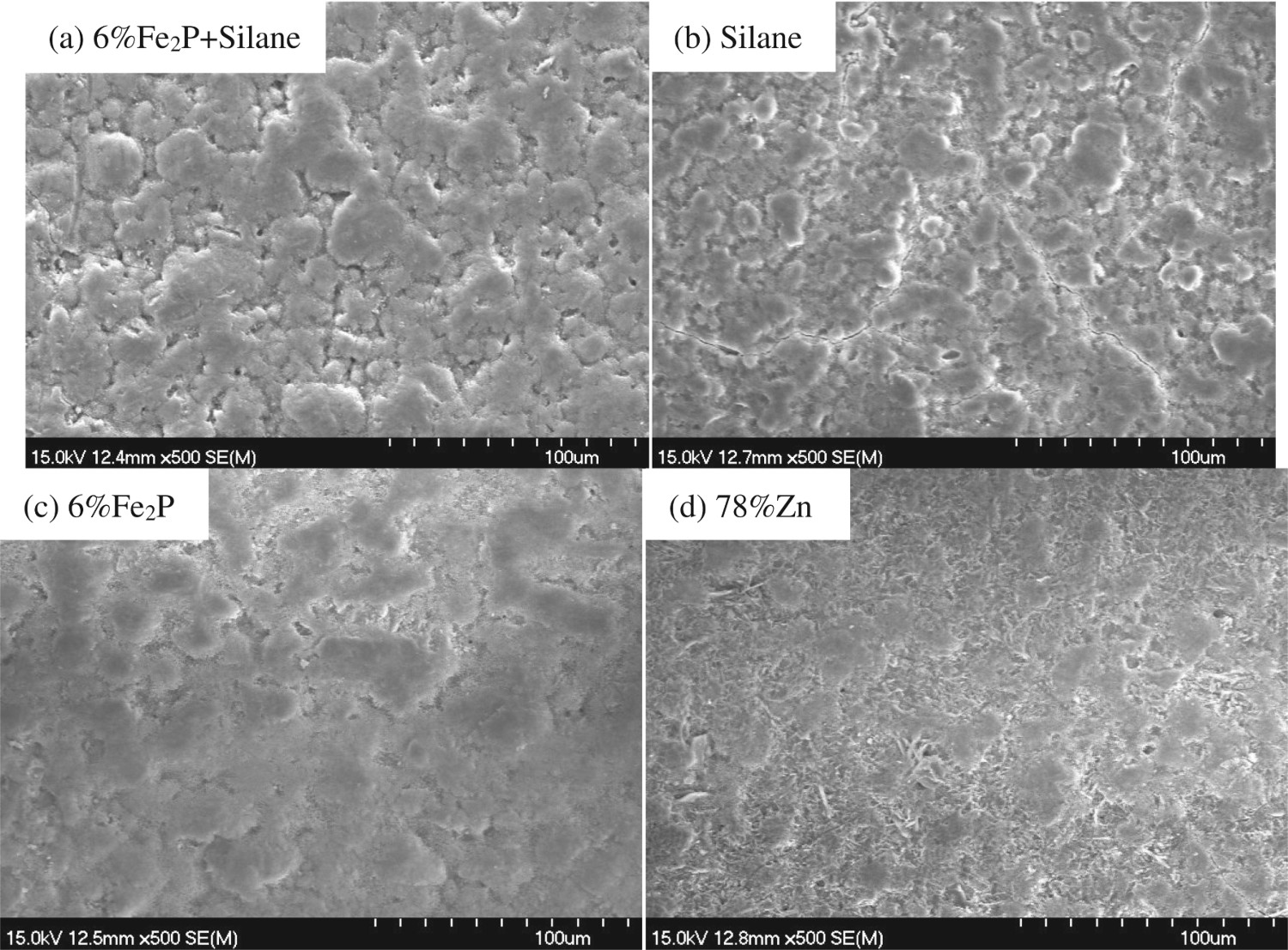
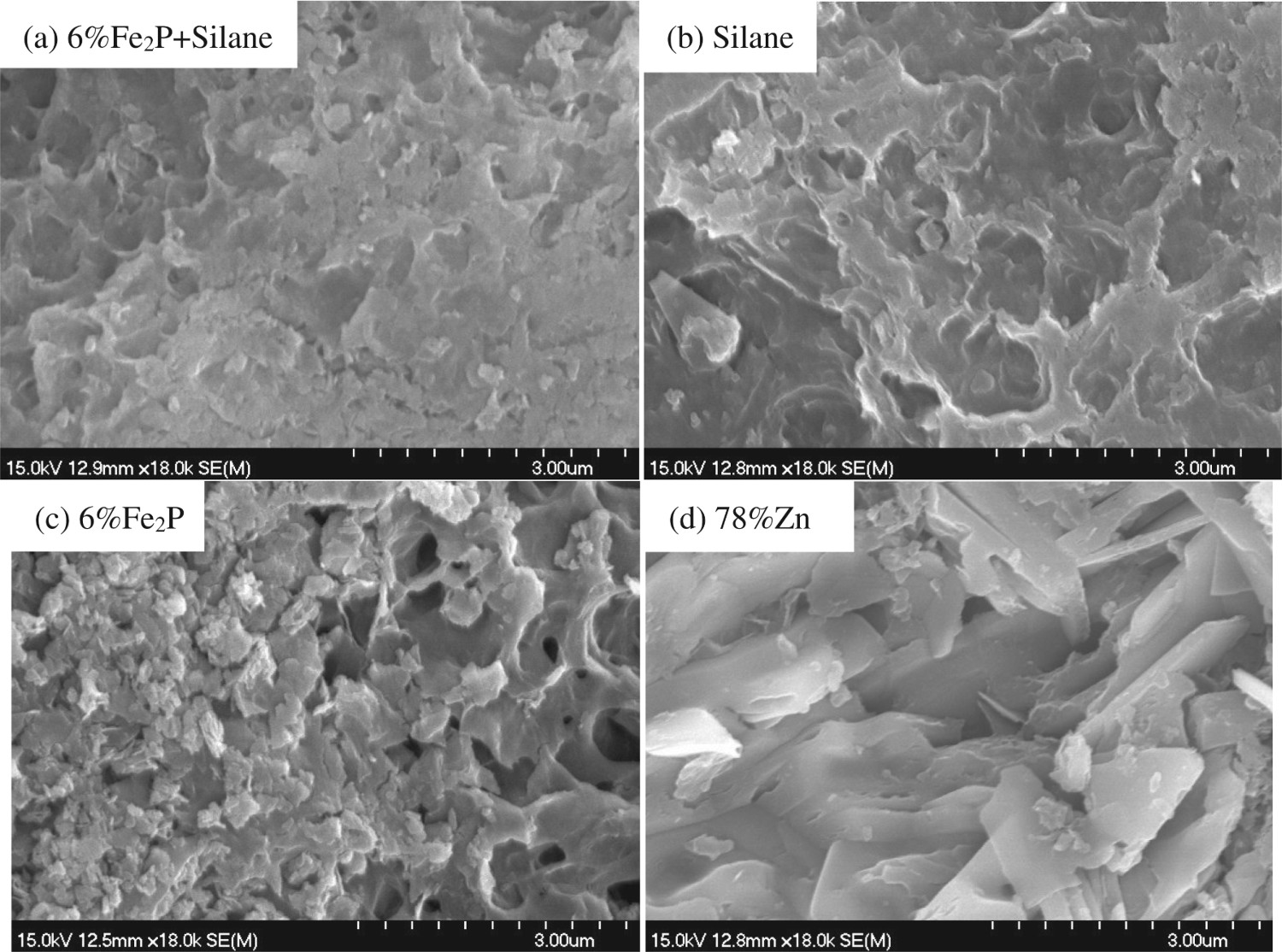
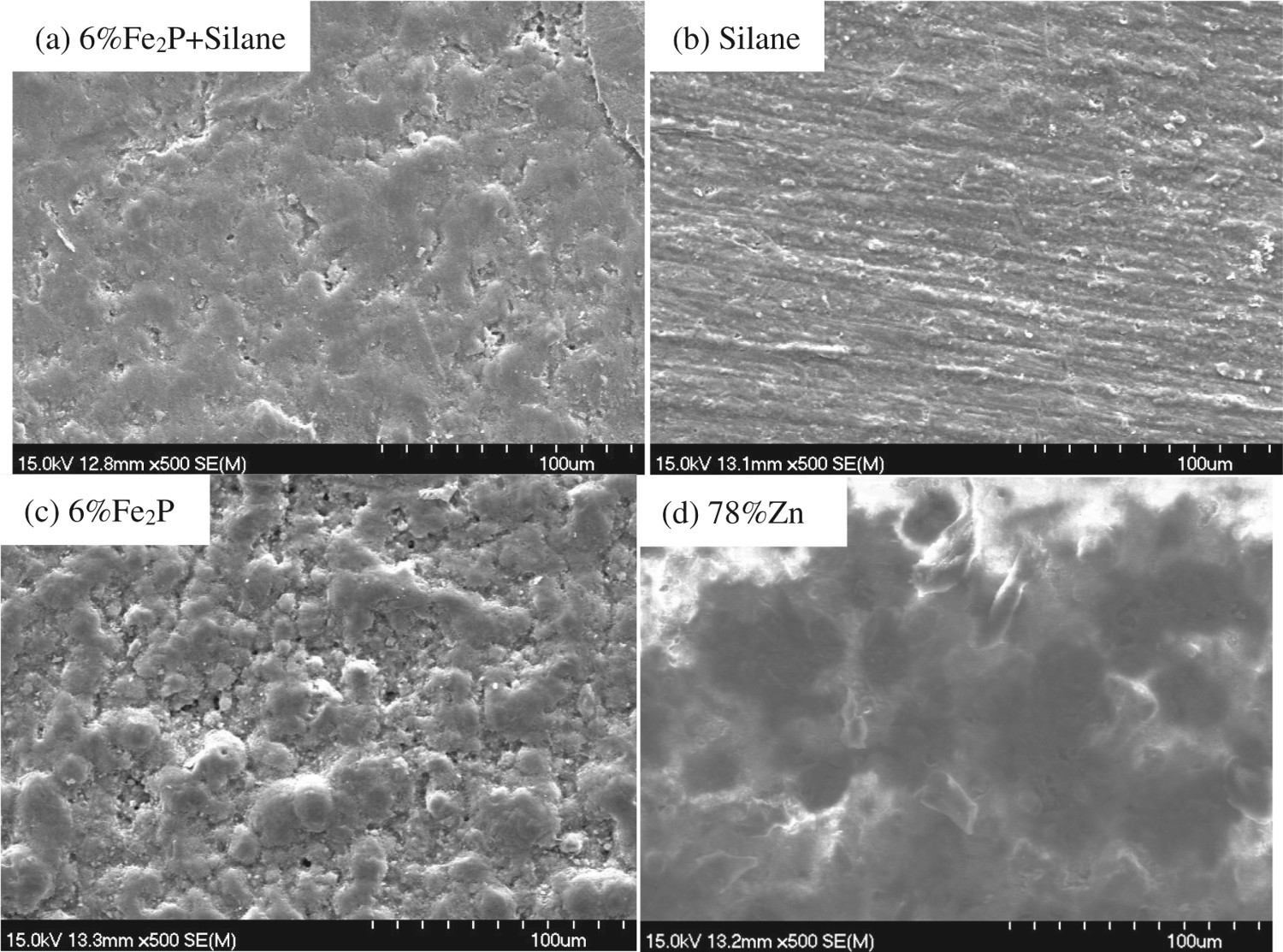
Figure 4–7 depict surface microscopic views of the four epoxy ZRCs with different Fe2P and silane content before and after immersion in 3.5% NaCl. SEM images (Figure 4) clearly show that Fe2P and silane both increase the conductivity of ZRCs. The latter is a synergy to the information obtained from Figure 2(a). This may be because silane makes coating dense, which is consistent with Chen Yongfu et al. [43], who found that the arrangement of zinc powders was closer after adding an amine silane coupling agent to a water-based epoxy flake ZRC. It can be seen from Figure 6 and Figure 7 that 6%Fe2P has the largest number of pores after 7 days (Figure 6) and 18 days (Figure 7) of immersion. It may be due to the good conductivity of Fe2P powders, which makes zinc powders corrode more. The corrosion products escape into the electrolyte, making the coating denser. It is confirmed by the fact that the |Z|0.01Hz of 6%Fe2P at the later stage of immersion was significantly smaller than that of the other three coatings (Figure 2(b)). In the enlarged view of 78%Zn at 18 000× magnification shown in Figure 6(d), the sheet-like, well-defined crystal corrosion product was depicted in detail. This crystal corrosion product could be inferred to be Simonkolleite [44]. However, the corrosion products of the other three coatings are agglomerate in morphology and are randomly connected. In addition, several studies have shown that simonkolleite is a protective corrosion product for a steel substrate as it is preferably oriented to form a compact and adhesive layer that hinders the diffusion of oxygen [44–47]. The sheet-like simonkolleite performs better than the agglomerate product in improving anti-corrosion ability. It can be seen that the protection of the steel matrix from the morphology of corrosion products by adding silane is disadvantageous.
Surface SEM images of epoxy ZRCs before immersion, 500×. Surface SEM images of epoxy ZRCs after 7 days of immersion in 3.5% NaCl, 500×. Surface SEM images of epoxy ZRCs after 7 days of immersion in 3.5% NaCl, 18 000×. Surface SEM images of epoxy ZRCs after 18 days of immersion in 3.5% NaCl, 500×.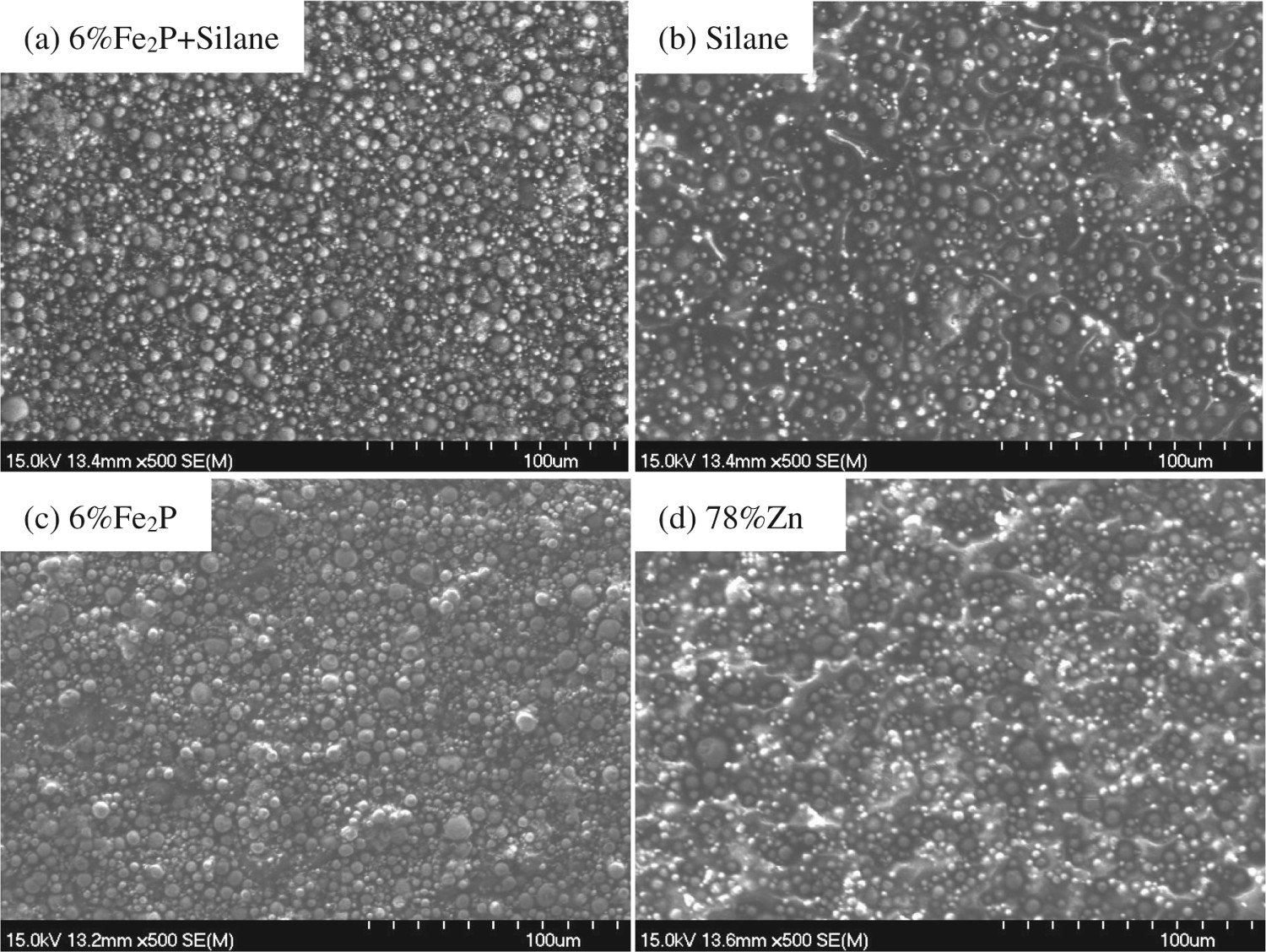
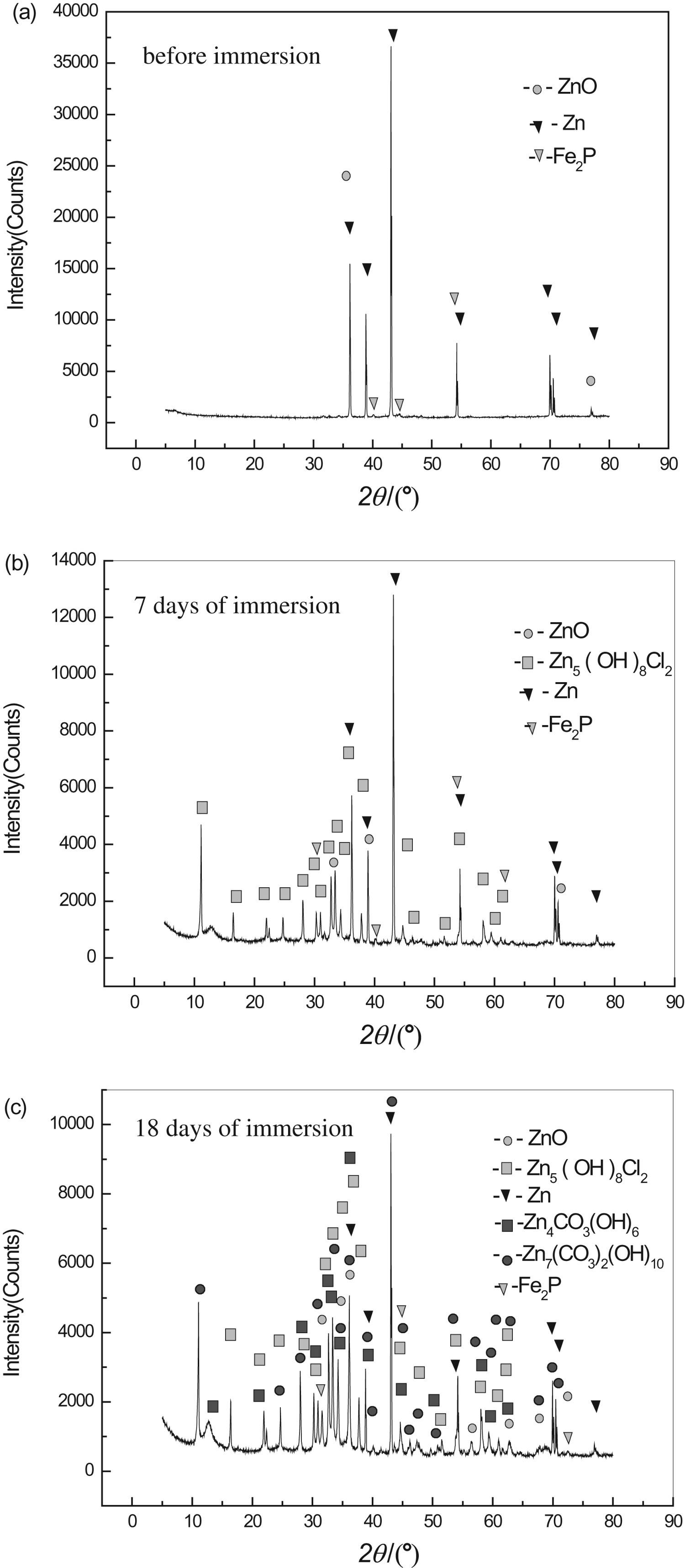
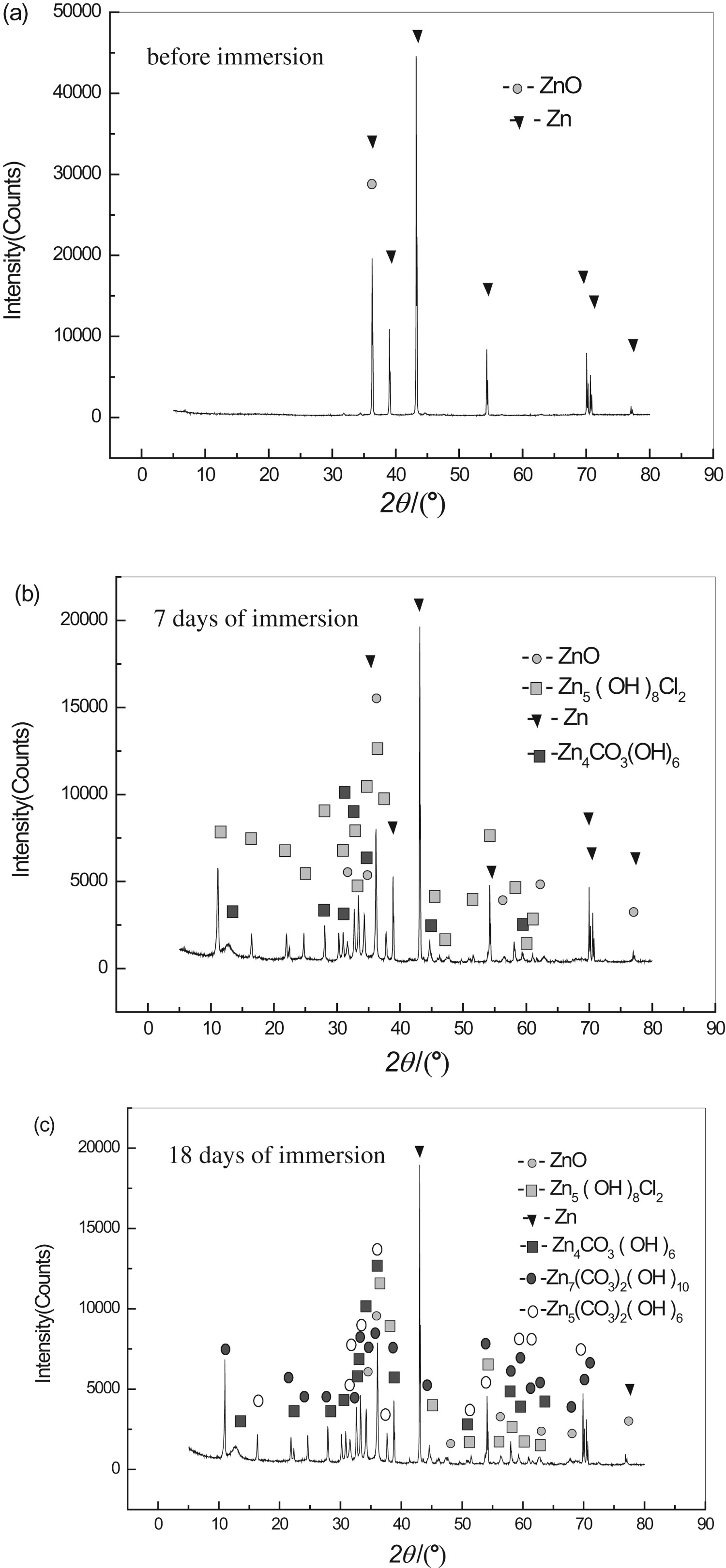
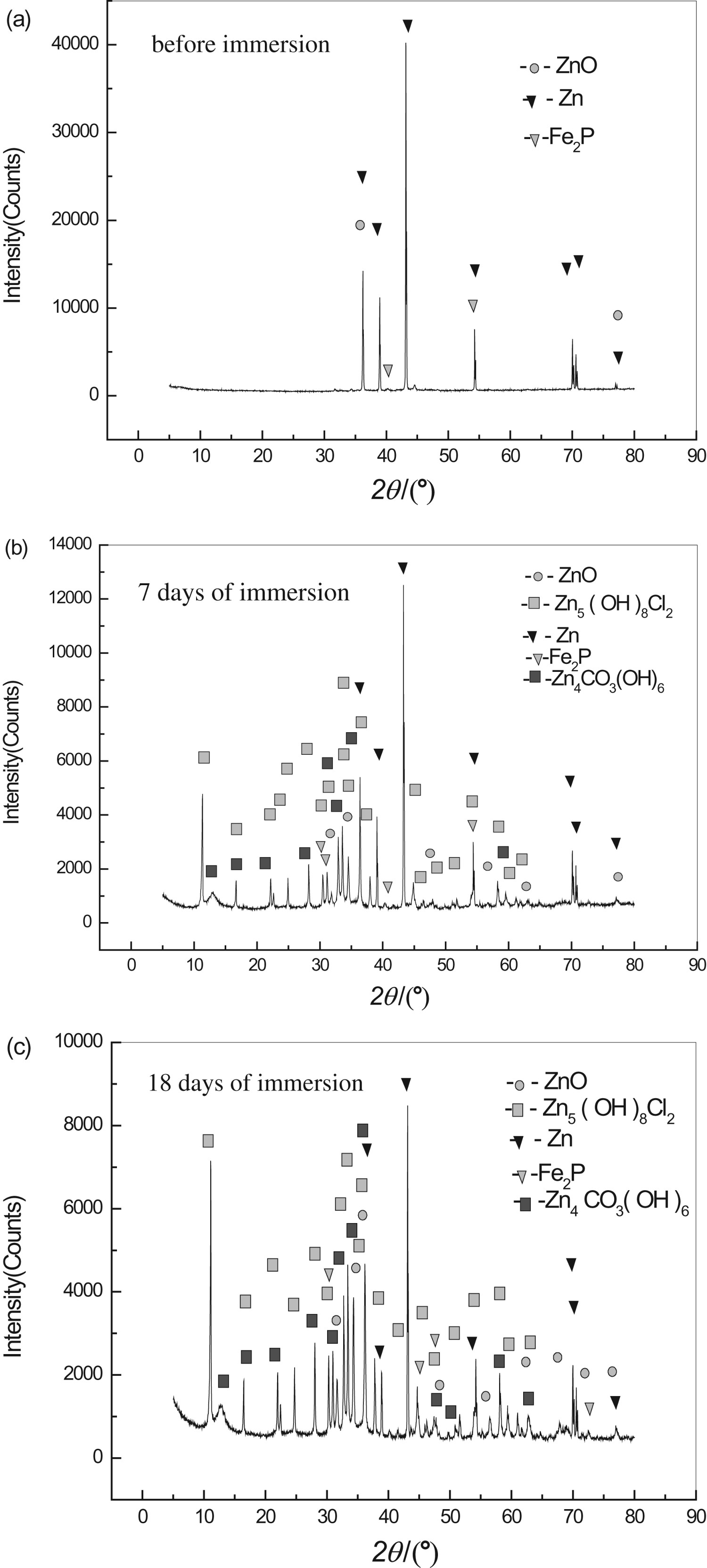
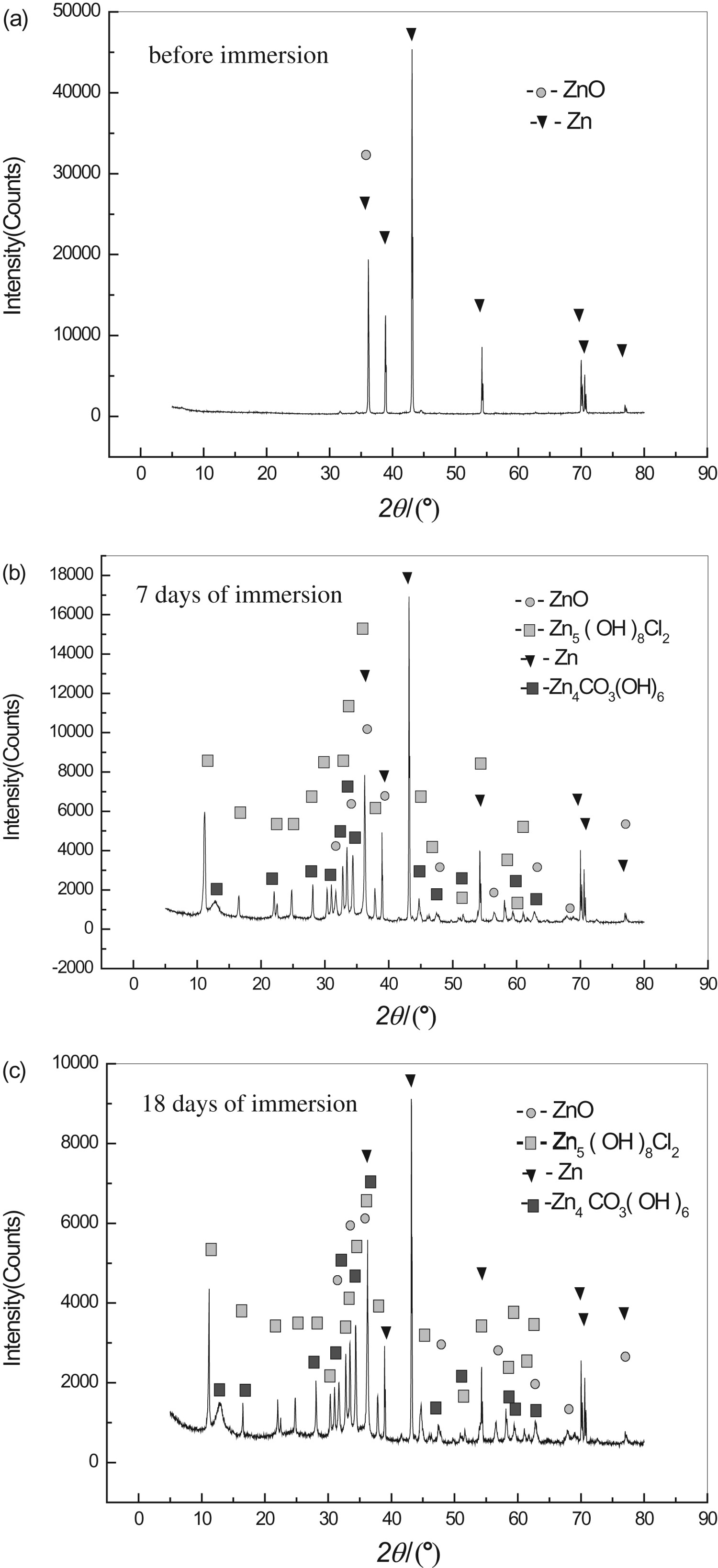
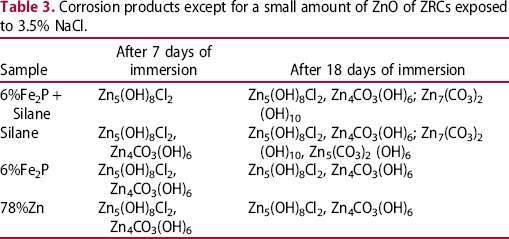
XRD patterns of the four epoxy ZRCs with different Fe2P and silane content before and after immersion in 3.5% NaCl were exhibited in Figures 8–11. The Zn element before immersion is just in the presence of metal Zn and ZnO, where ZnO is an oxidation product of a small amount of metal Zn. Except for a small amount of ZnO, the corrosion products of ZRCs are listed in Table 3. By analysing the XRD patterns of the four epoxy ZRCs at different immersion periods, the following conclusions can be drawn.
After 7 days of immersion, except for ZnO, the corrosion product of 6%Fe2P + Silane is only Zn5(OH)8Cl2, while the other three ZRCs have a significant amount of Zn5(OH)8Cl2 and a small amount of Zn4CO3(OH)6. After 18 days of immersion, the two ZRCs with silane have at least one more basic zinc carbonate than the other two coatings without. 6%Fe2P + Silane has more than Zn7CO3(OH)10, and Silane has a small amount of Zn5(CO3)2(OH)6 in addition to Zn7CO3(OH)10. Fe2P increase (78%Zn vs. 6%Fe2P, 6%Fe2P + Silane vs. Silane) while silane decrease (6%Fe2P + Silane vs. 6%Fe2P, Silane vs. 78%Zn) the corrosion rate of metal Zn in epoxy ZRCs. The corrosion rate of zinc powder is listed as 6%Fe2P>6%Fe2P + Silane >78%Zn>Silane. From Figure 2(a), the other three coatings except for 6%Fe2P + Silane have lost their cathodic protection after immersion for 18 days, but in the case of the XRD curves, most of the zinc powder was not corroded even in the coating, 6%Fe2P, with the fastest corrosion rate. XRD graphs of 6%Fe2P + Silane. XRD graphs of sample Silane. XRD graphs of 6%Fe2P. XRD graphs of 78%Zn. Corrosion products except for a small amount of ZnO of ZRCs exposed to 3.5% NaCl.
Corrosion progress and reaction equations of ZRC in 3.5% NaCl.
Synergy mechanism of conductive pigment and silane
Film appearance of the four ZRCs with different Fe2P and silane content immersed for different time.

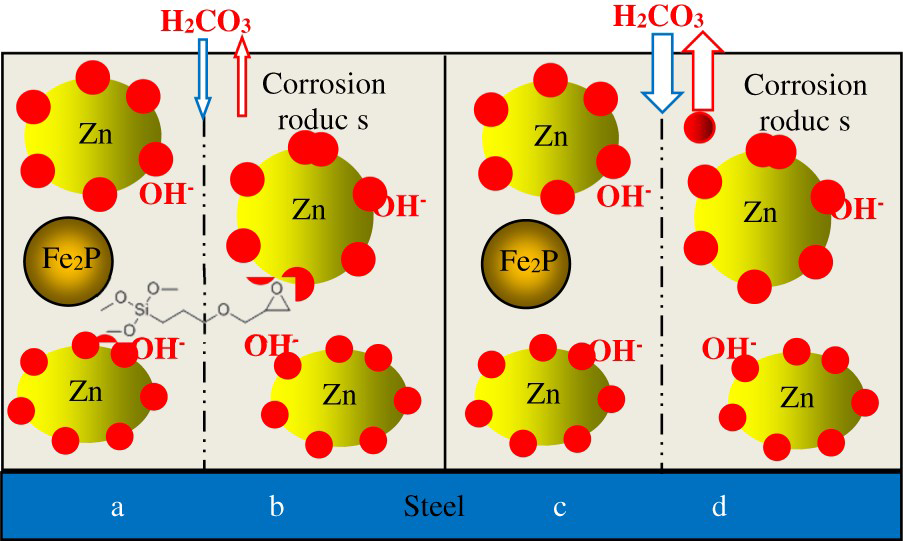
Figures 12 and 13 show the schematic diagrams of the penetration of H2CO3 into ZRC and the generation of OH− at the early and late stages of immersion, respectively. The dense and uniform silane layer in ZRCs is a physical barrier that hinders solution penetration to substrate and zinc powder [55] and it can improve the bonding strength of particles and organic matrix [30]. Petrunin et al. [56]. further found that the surface self-organising vinyl-siloxane nanolayers formed on zinc was stable under exposure to sodium chloride solution and preserve strong bonds with metal surface despite the occurring corrosion processes. Compared with the two ZRCs without silane, the transmission rate of H2CO3 in NaCl solution outside coating to ZRCs was significantly reduced due to the densification of coating caused by silane. For Silane, the silane-induced densification effect of coating was not reflected in the |Z|0.01Hz - t curves (Figure 2(b)) at the late stage of immersion, but the effect is obvious at the early stage of immersion, which was confirmed by the fact that silane improves the performance of ZRCs in SVET tests [29].
Schematic diagram of H2CO3 permeation into ZRCs and OH− generation at the beginning of the immersion. The incorporation of silane in ZRC reduces the transmission speed of H2CO3 in NaCl solution outside the coating to ZRC. OH− in 6%Fe2P + Silane is generated on steel or Fe2P surface away from zinc powders. While part of OH− in Silane is generated on the surface of zinc powders. (a) 6%Fe2P + Silane, (b) Silane, (c) 6%Fe2P, (d) 78%Zn. Schematic diagram of the penetration of H2CO3 into ZRC and corrosion products leaving ZRC in the late stage of immersion. The addition of silane reduces the transmission rate of corrosion products in ZRC to NaCl solution outside the coating. The vast majority of OH− is formed on the surface of zinc powder due to the departure of corrosion products. Compared with the earlier period of immersion, the transmission speed of H2CO3 in NaCl solution outside the coating to ZRC increases. (a) 6%Fe2P + Silane; (b) Silane; (c) 6%Fe2P; (d) 78%Zn.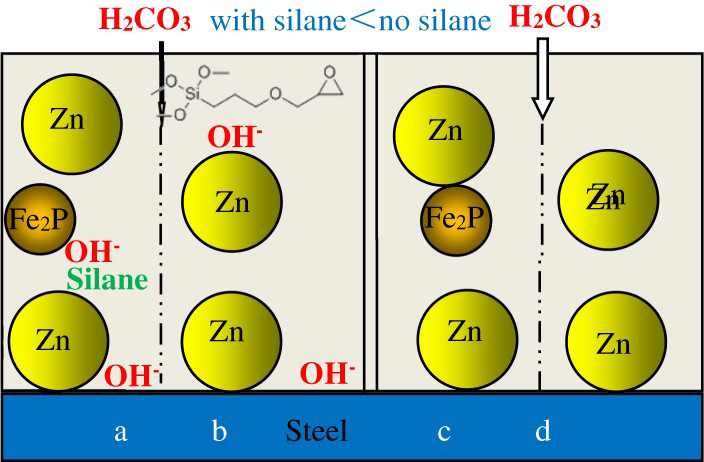
From Figure 12, compared with Silane, in 6%Fe2P + Silane, OH− is generated on the surface of steel or Fe2P and away from the zinc powders due to Fe2P increases the conductivity of ZRCs, while most of OH− is formed in situ on the surface of the zinc powders in Silane. There are two ways to react H2CO3 with Zn(OH)2: (1) H2CO3 meets both Zn2+ and OH− simultaneously, which occurs on the surface of isolated zinc particles. (2) H2CO3 first meets OH− to form HCO3 −, and then migrates to the reaction site far away from zinc particles to meet Zn2+. Obviously, the second approach is much more difficult than the first. Owing to the lower concentration of H2CO3 in ZRCs and the difficulty in the reaction between H2CO3 and Zn(OH)2, the corrosion product of 6%Fe2P + Silane after immersion for 7 days has only Zn5(OH)8Cl2 but no Zn4CO3(OH)6.
From Figure 13, the transport speed of H2CO3 from NaCl solution outside the coatings to the coatings is greatly increased in the later stage of immersion compared with that in the initial stage of immersion. The accumulation and departure of corrosion products lead to the transformation of some non-isolated zinc powders into isolated zinc powders. According to Figures 12 and 13, it is easier for 6%Fe2P + Silane to generate basic carbonate, which results in two more basic carbonates after 18 days of immersion compared with after 7 days.
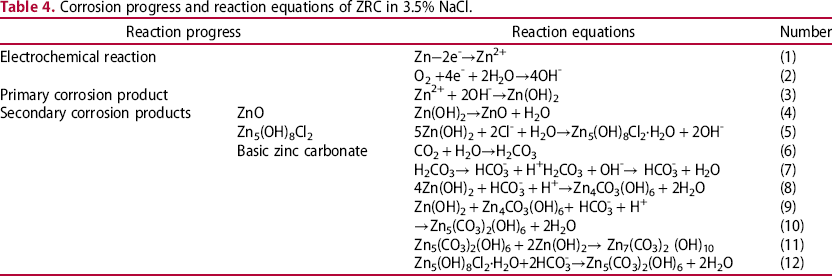
From Figure 13, ZRCs become dense by silane addition, and the corrosion products are not easily moved and is effectively restricted to the original position. There is enough time for reactions (10), (11) and (12) to occur. As a result, the corrosion products of the two ZRCs with silane contain more than at least one basic zinc carbonate after 18 days of immersion compared with after 7 days.
There are two ways to reduce Zn5(CO3)2(OH)6, namely, diffusion out ZRCs and conversion to Zn7(CO3)2 (OH)10. On the contrary, the increase of Zn5(CO3)2(OH)6 depends on the substitution of Cl− in Zn5(OH)8Cl2 by the CO3 2-, i.e. the reaction (12). Compared to Silane, Zn5(OH)8Cl2 in 6% Fe2P + Silane is mainly generated in the electrolyte inside the coating away from zinc powders, so it is easier to migrate out of the coating, and it filling the pores on the surface of the coating during migration, which causes an increase in the coating resistance, as shown in Figure 2(b). On the contrary, both Zn5(CO3)2(OH)6 and Zn5(OH)8Cl2 in Silane are mainly generated on the surface of zinc powders, and they are not easy to diffuse out of the coatings, so reaction (12) is also easy to proceed. As a result, Silane has a little more Zn5(CO3)2(OH)6 than 6%Fe2P + Silane after 18 days of immersion.
In summary, there are two main problems with the addition of Fe2P: one is that it will cause the zinc powder to corrode too fast, and then lead to the decrease of cathodic protection and shielding, and the other is that the oxygen reduction becomes easy. The increased compactness and adhesion of silane in the usual organic coatings have become the basic common sense [57 61], and the increased compactness and adhesion of silane in hot-dip galvanised steel and ZRC have also been confirmed by a large number of literature [29,33,41 43,56,62,63]. The increase of adhesion greatly reduces the corrosion rate of steel and zinc and increases the uniformity of corrosion [64–67], which has been proved by the SVET test of ZRCs [29]. The addition of silane to ZRCs slows down the diffusion of corrosion media and corrosion products perpendicular to and parallel to the surface of the steel substrate and zinc powders. The corrosion products are not easy to diffuse, hence the cathode and anode polarisation of corrosion reaction increase, and the corrosion rate of both steel and zinc decreases. Corrosion products are not easy to transverse diffusion, so the adhesion of the coating is not easy to decline [68,69]. The adverse consequence is that the decrease of the corrosion rate of zinc may lead to insufficient activation of zinc and insufficient sacrifice current to protect steel. The synergy effect of the two strengthens both the cathodic protection and shielding effect of ZRCs.
Conclusion
Combined with corrosion potential, EIS, SEM and XRD analysis, it was found that Fe2P can accelerate the activation and corrosion rate of zinc powders in ZRCs, but increase the porosity of the coatings. According to the zinc particles having electric contact with steel and Fe2P or not, the zinc particles in the ZRCs were divided into non-isolated zinc and isolated zinc. The presence of non-isolated zinc facilitated the cathodic protection of the coatings. Different from Fe2P, silane reduces the activation and corrosion rate of zinc powders but increases the densification and adhesion of the coatings. Thus, the corrosion uniformity of zinc powders is increased, and the transmission speed of the corrosive medium to the coating and corrosion product to the external solution is reduced. Silane is used in ZRCs in two ways: silane treated steel plates or silane doped coatings. It is better to mix silane into the paint. Adding 6% Fe2P to ZRPs does not increase the cathodic protection of ZRCs, while the addition exceeds 12%, the cathodic protection decreases. The addition of 0.4% silane slightly reduced the cathodic protection, while the addition of 6% Fe2P and 0.4% silane significantly enhanced the cathodic protection and shielding of ZRCs.
Probable mechanisms of the influence of Fe2P and silane on ZRCs are presented. Corrosion process and the reaction equation of zinc in 3.5% NaCl solution are proposed, a general sequence for the evolution of corrosion products in zinc coatings in NaCl environment is proposed: Zn→Zn(OH)2→ZnO→Zn5(OH)8Cl2→Zn4CO3(OH)6→Zn7(CO3)2 (OH)10 and Zn5(CO3)2 (OH)6.
Footnotes
Acknowledgements
This work was supported by class General Financial Grant from the China Postdoctoral Science Foundation (2016M601965), the Found of Key Laboratory of Bioorganic Synthesis of Zhejiang Province (College of Biotechnology and Bioengineering, Zhejiang University of Technology). We also thank Ningbo Wanglong Technology Co., Ltd and Zhejiang Zhongxian Biotechnology Co., Ltd. for assistance.
Disclosure statement
No potential conflict of interest was reported by the author(s).