







Abstract
This study aimed to study the inhibitory effect of the Myrtus communis extract on the microbiologically influenced corrosion (MIC) induced by sulphate reducing bacterial (SRB) consortium in the cooling tower water. The SRB consortium was grown on the surface of the st37 steel and its effects on the surface corrosion were evaluated. The results of electrochemical measurements and microscopic observations revealed that the extract could significantly reduce the corrosion by inhibiting the SRB biofilm formation. The addition of the 0.781 mg ml−1 of the extract into the SRB medium led to a considerable reduction (about seven times) in the corrosion process of the st37 steel and kept it at an almost constant value. Based on Gas chromatography-mass spectrometry analysis, 2-Furancarboxaldehyde, 5-(hydroxymethyl) (42.396%) was the most abundant compound identified in the plant extract. The molecular identification has proved that most population of SRB consortium was related to Desulfovibrio vulgaris species.
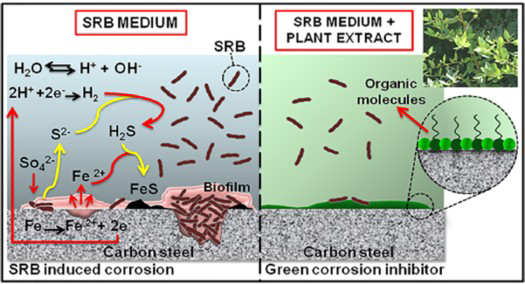
GRAPHICAL ABSTRACT
Introduction
The microbiologically influenced corrosion (MIC) imposes high direct and indirect corrosion costs on countries̕ economy mostly in oil and gas industries [1 5], and SRB are reported as the most considered microorganisms in MIC damage [3,5 10]. It has been reported that SRB induce corrosion by colonisation on the surface of metals [4,8,11,12] due to cathodic depolarisation [13 17] and galvanic couples [18–21]. In cathodic depolarisation, colonised SRB on the metal surface consume the cathodic hydrogen via an enzyme known as hydrogenase to reduce sulphate compounds to hydrogen sulphide [14,19]. This mechanism has shown by the following chemical reactions [14]:
Water dissociation:



Metal dissolution (anodic reaction):



Since the MIC has been known, corrosion engineers have seriously been trying to control it. For this purpose, several ways have been developed; nevertheless, each has its own specific limitation, regardless of their cost [22–25]. One of the most popular and efficient ways is the use of chemical inhibitors and biocides that are extensively being used to control and treat microbial corrosion [8,10,22 24,26,27]. Usually, organic and inorganic inhibitors reduce the exposed area of the metal with the corrosive media, leading to the control of the corrosion rate by the surface adsorption of ions or molecules of the inhibitors [28 30].
However, these inhibitors are generally expensive, toxic, and hazardous for the environment and humans̕ health [28–31]. The most important risk of using and releasing these compounds is their detrimental and irreparable effects on the environment [29,31,32]. Therefore, many scientists have concentrated on finding less harmful bio-based compounds known as green inhibitors, in the last few decades [30,33 35]. In this case, several investigations have been conducted on corrosion inhibitory effects of natural compounds [1,29,31,36], such as amino acids [34,37], essential oils, and other bioactive compounds extracted from various plants on different metals such as steel, aluminium and copper [29,35,38 44]. These compounds are readily available, low-cost, and renewable [30,36]. Concerning these outstanding features, extensive studies have been conducted on the plant extracts’ effects on electrochemical corrosion of metals. However, just a few studies have been conducted on the control of MIC by plant extracts [26,34,45]. Previously, the inhibitory effect of the Azadirachta indica extract has been investigated on the MIC of API5L80 steel [46] and copper [47]. The potency of Allium sativum extract to inhibit the bio-corrosion of carbon steel API 5LX, and stainless steel 316 has also been evaluated [48].
Considering the necessity of environmental conservation, technology should be developed to have the least harmful effects on the environment. Based on such attitudes, this research was focused on the Myrtus communis extract with appropriate antimicrobial properties as a green inhibitor. The obtained results revealed that plant extract could inhibit microbial corrosion at its sub-minimum inhibitory concentrations (sub-MIC) and control the bacteria density in the steel surface. It is the first study that approves the Myrtus communis extract as an effective agent to overcome the steel corrosion induced by SRB.
Materials and methods
Isolation of the SRB and molecular identification
The SRB was isolated from the water of a cooling tower located in Kerman Sarcheshmeh Copper Complex, Kerman, Iran. The water sample was cultured in the sterile modified Postgate B culture medium [49] and incubated at 30°C for seven days under anaerobic conditions. The modified Postgate B culture medium was composed of KH2Po4 (0.5 g l−1), NH4Cl (1.0 g l−1), CaSO4 (1.0 g l−1), MgSO4.7H2O (2.0 g l−1), FeSO4.7H2O (0.5 g l−1), sodium acetate (3.5 g l−1), sodium thioglycolate (0.1 g l−1), sodium ascorbate (0.1 g l−1), and yeast extract (1.0 g l−1) (pH 7.3).
In order to molecular identification of isolated SRB consortium, at first, the most abundant colonies with similar morphology were separated from the SRB consortium and their DNA was extracted by a genomic DNA extraction kit (BIONEER, USA). Next, 16S rRNA gene fragments amplified using two sets of universal primers Forward (U8F; 5’-AGA GTT TGA TCC TGG CTC AG-3’) and Reverse (U139OR; 5’-GAC GGG CGG TGT GTA CAA-3’). PCR amplification reaction was programmed as follows: initial denaturation (95°C – 60s – 1 cycle), denaturation (95°C – 30s – 35 cycles), primer annealing (55.4°C – 30s – 35 cycles), extension (72°C – 60s – 35 cycles), final extension (72°C – 300s – 1 cycle). The PCR product was electrophoresed and visualised by UV trans-illumination. After estimating the size of the band, it was sent for sequencing.
Plant extraction
Myrtus communis (Herbarium Code: KF 1356) was collected from the Mahan area in Kerman during autumn (in October 2015). The ethanolic extract of the plant was prepared by the maceration method [50]. Gas chromatography-mass spectrometry (GC-MS) was used to identify the chemical composition of the extract. For this purpose, Saturn Vari 2000 gas chromatography (Agilent Technologies, USA) equipped with a GC-MS/MS mass detector was conducted. The column was a fused HP-5MS (length of 60 m, the internal diameter of 0.25 mm, and internal thickness (ID) of 0.25 μm. The injector and the transfer temperature were maintained at 260°C and 280°C, respectively. The oven temperature was programmed as follows: from 60 to 180°C (3°C min−1), then from 180°C to 250°C, and isothermally held for 2 min. Helium (99.99%) was the carrier gas at 0.9 ml min−1; the sample (1 µl) was injected in the split mode (1:20). The MS conditions were as follows: ionisation voltage: 70 eV; scan rate: 1.6 scan s−1; mass range: 50-500 amu; ion source temperature: 180
The antibacterial activity of the extract on the SRB
The antibacterial activity of Myrtus communis was examined on the isolated SRB consortium through the serial dilution method [51,52]. To determine the MIC of Myrtus communis, 200 mg ml−1 of the ethanolic extract (solved in 1 ml Dimethyl Sulfoxide 10%) was diluted in 10 tubes containing 1 ml of the modified Postgate B culture medium plus 50 µl (3.62 × 10⁸ cell ml−1) of the SRB consortium. The positive control (the culture medium with SRB) and negative control (the culture medium with the ethanolic extract) were prepared. Samples were incubated at 30°C for eight days under anaerobic conditions. The bactericidal activity of the extract was evaluated by transferring the contents of each tube to the agar culture medium and incubating them for 360 h at 30°C.
Test media
To investigate the interactions between the SRB, the extract, and the steel samples, four media were prepared and evaluated during the specified periods as follows: media A1 (The modified Postgate B medium), B1 (The modified Postgate B medium and Myrtus communis extract), A2 (The modified Postgate B medium and the SRB consortium) and B2 (The modified Postgate B medium and the SRB consortium and Myrtus communis extract). The media A1 and B1 were considered to assess the possible effects of the culture medium (the modified Postgate B) and the extract (Myrtus communis) on the corrosion.
The activity of the bacteria in the presence of the extract
The number of bacteria, pH, and Eh in the environment indicates the rate of activity and growth of the SRB in the presence and absence of the extract. To evaluate the effect of the sub-MIC concentration (0.781 mg ml−1) of the extract on the SRB growth and metabolism, bacterial cells were counted using the Neubauer chamber for 14 days. The pH and Eh were also measured using a pH metre (Istek 720P) and an Eh metre (WTW 325). Therefore, 14 falcon tubes were prepared and incubated with 10 ml of specific media and 4% V/V bacteria.
Microbial corrosion behaviour monitoring
Test specimens
At first, 1 × 1 × 0.3 cm3 slides of st37 steel sheet were provided to corrosion tests, and the covered copper wires were soldered to them to the electrical connection. Chemical composition (Wt-%) of samples was C 0.022, Si 0.002, S 0.028, P 0.015, Mn 0.198, Ni 0.049, Cr 0.033, Mo 0.009, V 0.004, Cu 0.061, W 0.006, As 0.014, Sn 0.008, Co 0.010, Al 0.040, Pb 0.005, Sb 0.013, Nb 0.006. Next, the steel samples were mounted in epoxy resin as working electrodes. The exposed surfaces of samples (1 cm2) were grounded with 120, 500, 800 and 1200 SiC abrasive papers. The specimens were degreased using acetone for 3 min, washed with distilled water, and then sterilised in pure ethanol.
Electrochemical measurements
The potentiodynamic polarisation analyses were conducted to evaluate the steel samples’ corrosion behaviour in the presence of the SRB (medium A2) and the corrosion inhibition effect of the plant extract on the SRB (medium B2). The electrochemical cell composed of steel samples as a working electrode (WE), a platinum wire as a counter electrode, and a saturated calomel electrode (SCE) as a reference electrode. The Metrohm Autolab PGSTAT302N was utilised for electrochemical measurements. The polarisation tests were carried out in the potential range of ±300 mV (versus OCP) and the scan rate of 0.1 mV s−1 after 2 h, 2, 5, 8, and 16 days after immersion. The achieved polarisation curves were analysed by Nova V.8.1 software.
Surface analysis
The surface morphology and the elemental analysis of compounds generated on the surfaces of the samples were studied by using scanning electron microscopy (SEM) equipped with Energy-dispersive X-ray spectroscopy (EDS). In order to fix the bacterial colonies on the surfaces, the samples were removed from media, immersed in 2% glutaraldehyde solution for 1 h, and immersed in 4%, 25%, 50%, 75%, and 96% ethanol solutions step by step, (15 min for each one) [46,53,54].
Results and discussion
To clarify the anticorrosion activity of the Myrtus communis extract on the corrosion of the st37 steel induced by SRB consortium, first, the inhibitory effect of the extract against the SRB activity was investigated. Then, the effect of the extract on corrosion behaviour of the steel samples was evaluated in the presence of SRB consortium. Finally, the dominant population of SRB consortium was identified. The results have been divided into three sections, as follows:
Bacteria identification
The presence of SRB in the modified Postgate B culture medium was demonstrated by blackening, the smell of hydrogen sulfide gas, and the appearance of black sulfide sediments after seven days (Figure 1(a,b)). Also, microscopic observations revealed that these were gram-negative, short, curved, rod-shaped bacteria (Figure 1(d)) that are the main characteristics of SRB [20,49,55 57].
Isolation of SRB from cooling tower water in modified Postgate B medium. Control medium (a), inoculated medium after 7 days (b), black colonies of SRB on solid medium (c) and optical microscopic image of the rod-shaped gram-negative cells of SRB (d).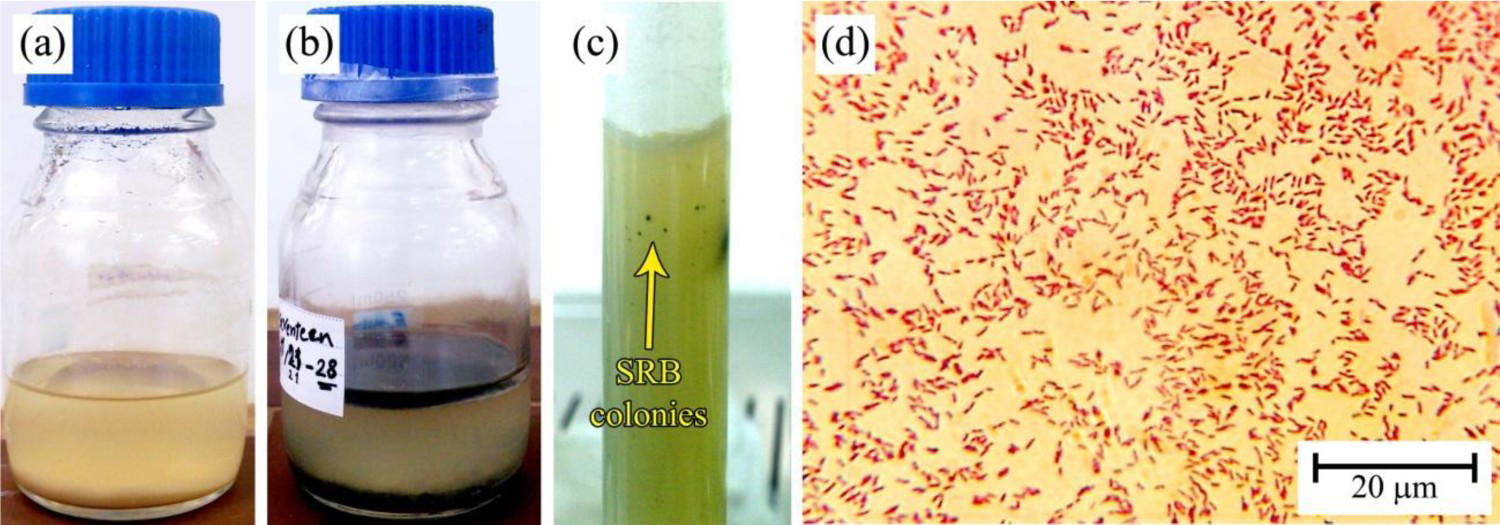
Besides, the analysis of the 16S rRNA gene sequence proved a high similarity between the isolated strings and the Desulfovibrio vulgaris species. The GenBank accession number for the 16S rRNA gene sequence deposited in the GENBANK database is MK329207.
Inhibitory effect of the extract on SRB activity
Antimicrobial assay of the extract
Results obtained from antimicrobial tests exhibited that the extract had inhibitory and bactericidal effects in concentrations of 1.562 and 12.5 mg ml−1, respectively.
Bacterial activity and growth
Figure 2(a) represents the bacterial population's growth curve for 12 days in the presence and absence of the extract. Three different phases are shown in Figure 2(a): phases 1 and 2 describe the activity of the bacteria, and the third phase shows bacterial cells death. The incidence of two activity phases (1 and 2) can be related to the diversity of the SRB in the consortium [11,46,54]. Comparing the total count of the SRB in media A2 and B2, the effect of the extract on SRB activity and growth at the sub-MIC concentration was revealed. As shown in Figure 2(a), the total count of the SRB in medium B2 decreased considerably.
Variation in SRB consortium growth curve (a), pH (b) and Eh (c) in culture media containing SRB in absence of the extract (medium A2) and the presence of the extract (medium B2).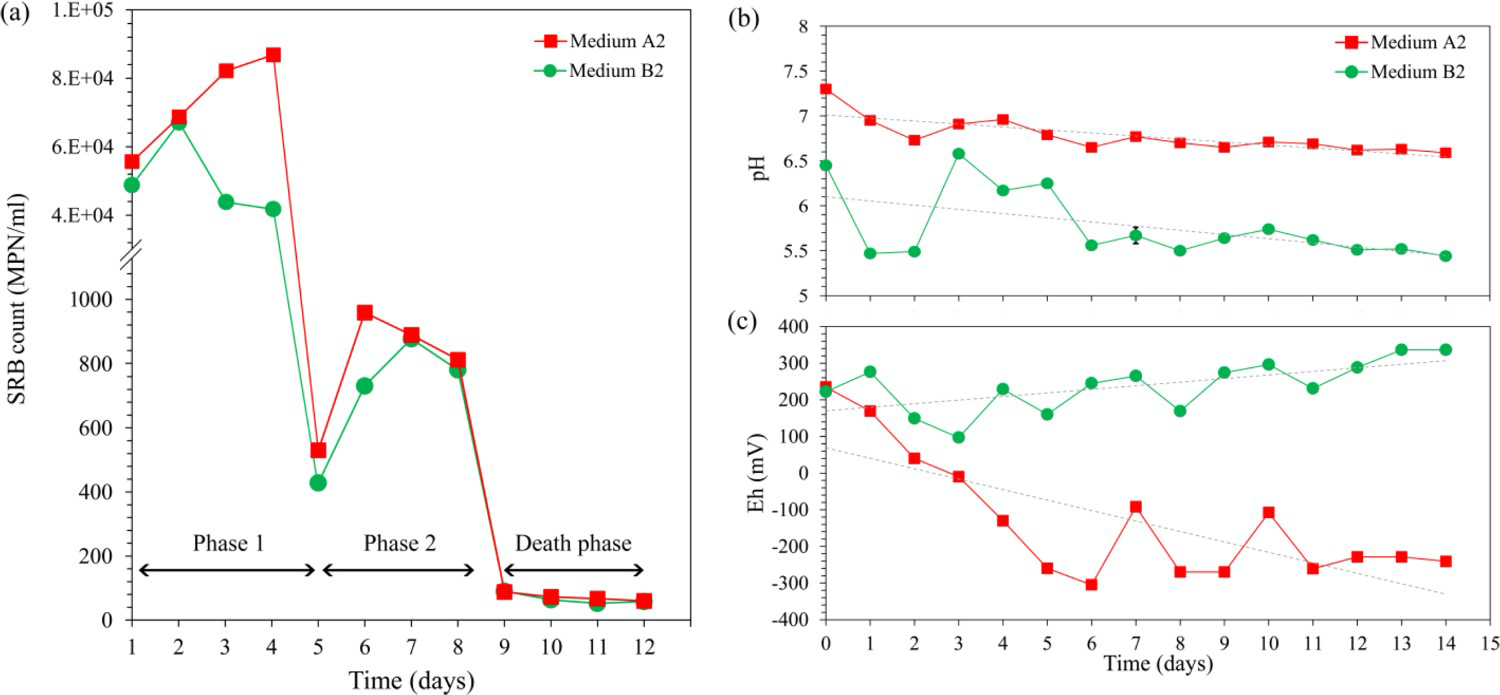
Furthermore, Figure 2(b,c) represents pH and Eh variations for 14 days, respectively. Based on Figure 2(b), pH value decreased over time due to bacterial activity and the production of acidic metabolites. The connotation between pH and metabolic activity has been confirmed previously [9]. The initial variation of pH values in medium B2 suggests that the presence of the extract has led to unsuitable conditions for SRB activity.
In addition to the pH variations, Eh also significantly altered in the SRB medium exposed to the extract. Eh reduced to negative values (from +235 mV to −305 mV) in medium A2, while in the presence of the extract (medium B2) the Eh shifted to positive values (from +222 mV to +336 mV). This confirms the inhibitory effect of the extract by controlling the redox reactions and production of corrosive metabolites [9,16,21,53].
Chemical compounds of the extract
According to the chromatogram plot obtained from the GC/MS analysis, six main organic compounds were identified in the extract (Figure 3(a)). As recorded in Table 1, 2-Furancarboxaldehyde, 5-(hydroxymethyl) is the most abundant chemical compound in the extract, which was derived from furaldehyde with the furan base (Figure 3(b)). Furan is a five-membered aromatic ring with four carbon atoms and one oxygen. The unique structure of the extract makes it able to react with aldehydes and other aromatic compounds [58]. It is noteworthy that derivatives of this compound have previously been isolated from some plants [58 63]. These include 2-furaldehyde diethyl acetal from coconut water [58], three types of furan-2-carbaldehyde compounds and 5-(hydroxymethyl)−2-furaldehyde from Gastrodia elata [59] and 5-(hydroxymethyl)−2-furancarbox-aldehyde from Hippophae rhamnoides [60]. The most critical role of furan derivatives in some plants is the antibacterial and anti-biofilm activity [58,63 65]. For example, 2-furaldehyde diethyl acetal isolated from coconut water could inhibit biofilm formation and virulence factor in gram-negative Pseudomonas aeruginosa and Chromobacterium violaceum [58].
GC/MS chromatogram of Myrtus communis ethanolic extract. GC/MS chromatogram plot (a) and the structural formula of 2-Furancarboxaldehyde-5-hydroxymethyl (b). Main compounds of Myrtus communis ethanolic extract.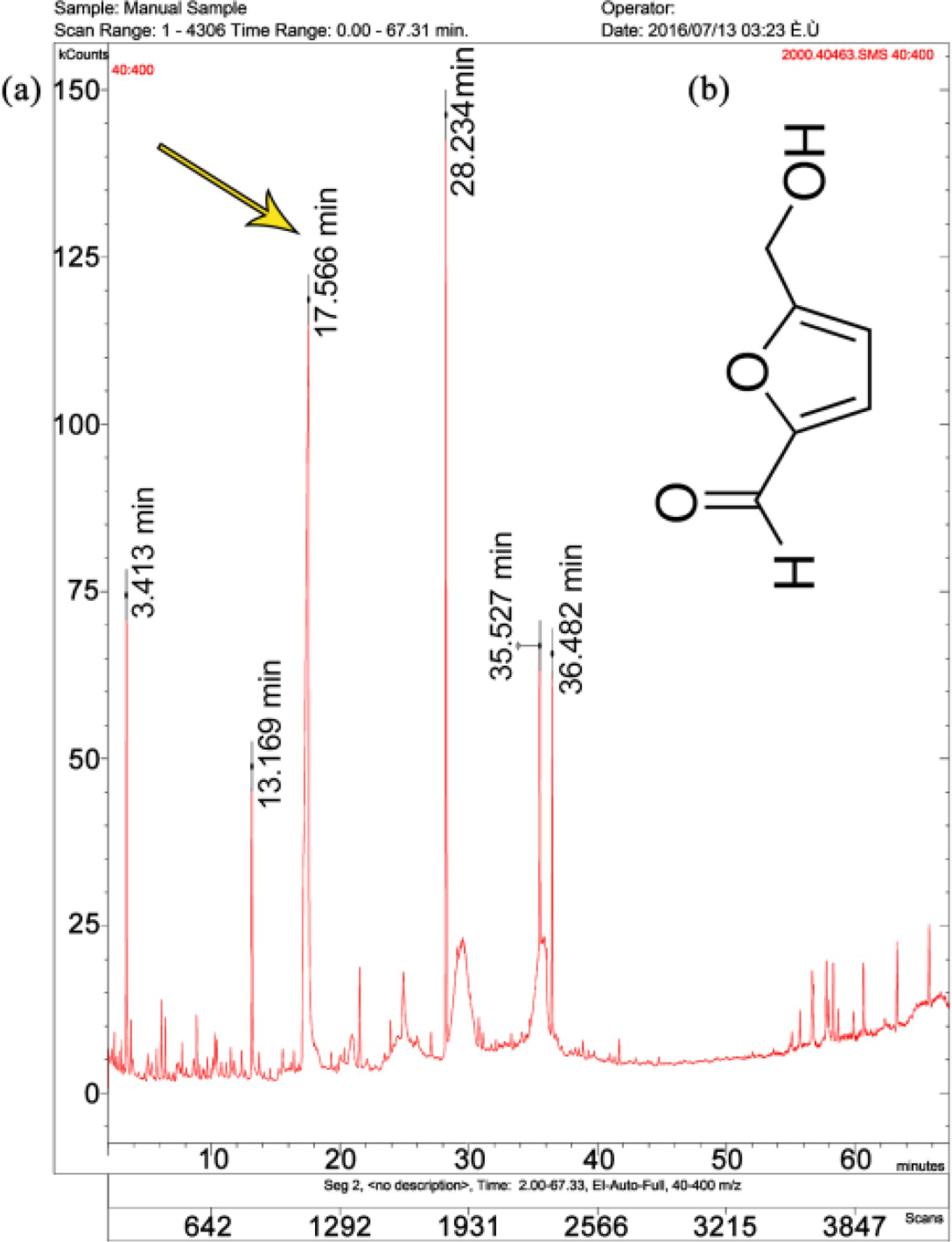

According to Figure 3(b), Myrtus communis compounds are structurally similar to some synthetic organic inhibitors containing heteroatoms (oxygen, sulphur and nitrogen atoms), which bond to the metal surface and form a protective layer. These heteroatoms as an active centre of compounds have greater electron density that involves the formation of the coordinate covalent bonds by electron transferring from extract to the metal surface ions. In addition, compounds contained aromatic rings and hydrocarbon chains link with the metal surface by their free electrons [28,29,34,36,66]. Inhibitor film formed on the metal surface protects the metal by reducing the electrical resistance, increasing or decreasing the anode or cathode reactions, and reducing corrosive reactant to the metal surface [30].
Inhibitory effect of the extract on st37 steel corrosion
Electrochemical measurements
Figure 4 illustrates the potentiodynamic polarisation curves in media A1, A2, B1 and B2 during 16 days. The OCP, icorr and Ecorr values achieved from potentiodynamic polarisation curves have been reported in Table 2.
Potentiodynamic polarisation curves of the steel samples immersed in media A1 (a), B1 (b), A2 (c) and B2 (d) during 16 days. OCP, icorr and Ecorr values achieved from potentiodynamic polarisation curves of the steel samples immersed in media A1, B1, A2 and B2 during 16 days.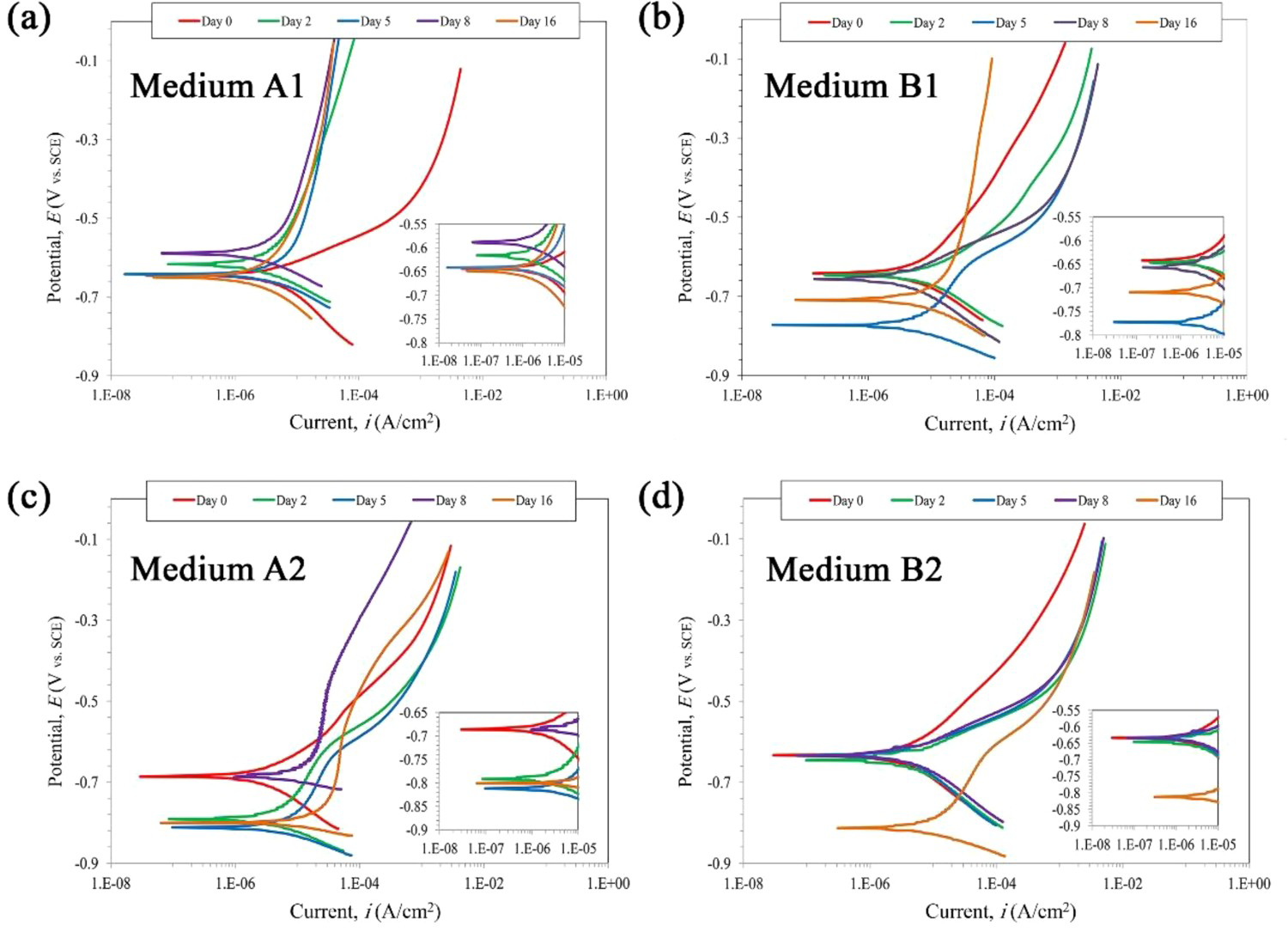
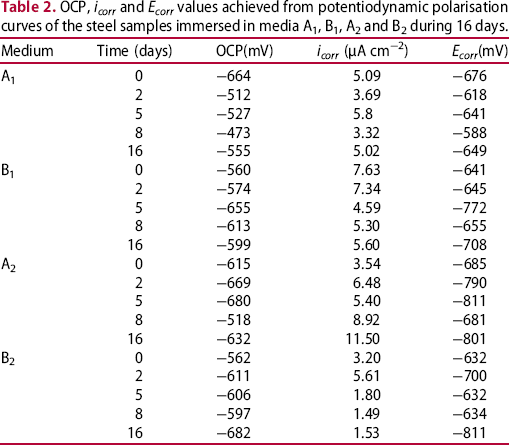
The OCP values variations in Table 2 can be attributed to the changes in population and metabolic activity of the SRB. It also can be related to the changes of biofilm formation, the rate of electron exchange, anodic dissolution of the base metal, and the formation of porous corrosion products that occur during the test time [46]. As shown in Figure 4(a) and data reported in Table 2, the steel samples had similar corrosion behaviour during the period of immersion in medium A1. While Figure 4(b) shows that the presence of the extract in medium B1 had no corrosive effect on the corrosion behaviour of the steel samples. In contrast with medium A1, the icorr considerably increased during the time of immersion of samples in medium A2. The comparison of the SRB growth curves (Figure 2(a)) and the significant increase of icorr in medium A2 (Table 2) indicate the relationship between icorr variations and the density and metabolic activity of SRB.
However, concerning the corrosion behaviour of steel samples in medium B2, the icorr markedly reduced in the presence of the extract during the immersion. Impressively, the extract controlled the microbial corrosion of the st37 steel in the presence of the SRB. The sudden increase of the icorr observed in the second day is related to the density and activity of the SRB consortium exposed to the sub-concentration (sub-MIC) of the extract. Moreover, an increase in the density and metabolic activity of the SRB affects the Ecorr values in medium A2 due to the anodic dissolution and the accumulation of sulfide compounds on the surface. In this regard, scholars have investigated the correlation between the dissolved oxygen concentration and variation of Ecorr [9,53,57]. Furthermore, by beginning the death phase (Figure 2(a)), the Ecorr of samples in medium B2 shifted to more negative values as a result of the cell lysis and the release of intracellular substances, and hydrogenase enzyme, as well as the accumulation of sulfide, compounds on the surface [67].
Overall, comparing the data of the media A2 and B2 confirm the anticorrosion activity of the extract. Figure 5 shows the icorr values of media A2 and B2. As shown in this figure, the icorr of the steel samples in contact with SRB reduced once the extract was added to the medium and then approximately remained constant. For example, the icorr reduced 7.5 times on the 16th day. As mentioned earlier, the extract interestingly alters the density of the SRB, the formation of biofilm, the metabolic activity, and the production of corrosive metabolites. As a result of the chemical reactions between the base metal and the extract, a protective film is formed on the steel surface, even in the presence of the SRB. The creation of the protective film is due to special heteroatom compounds, particularly furan derivatives that were detected as the main components of the Myrtus communis extract [30].
icorr values of the steel samples during 16 days immersion in media A2 and B2.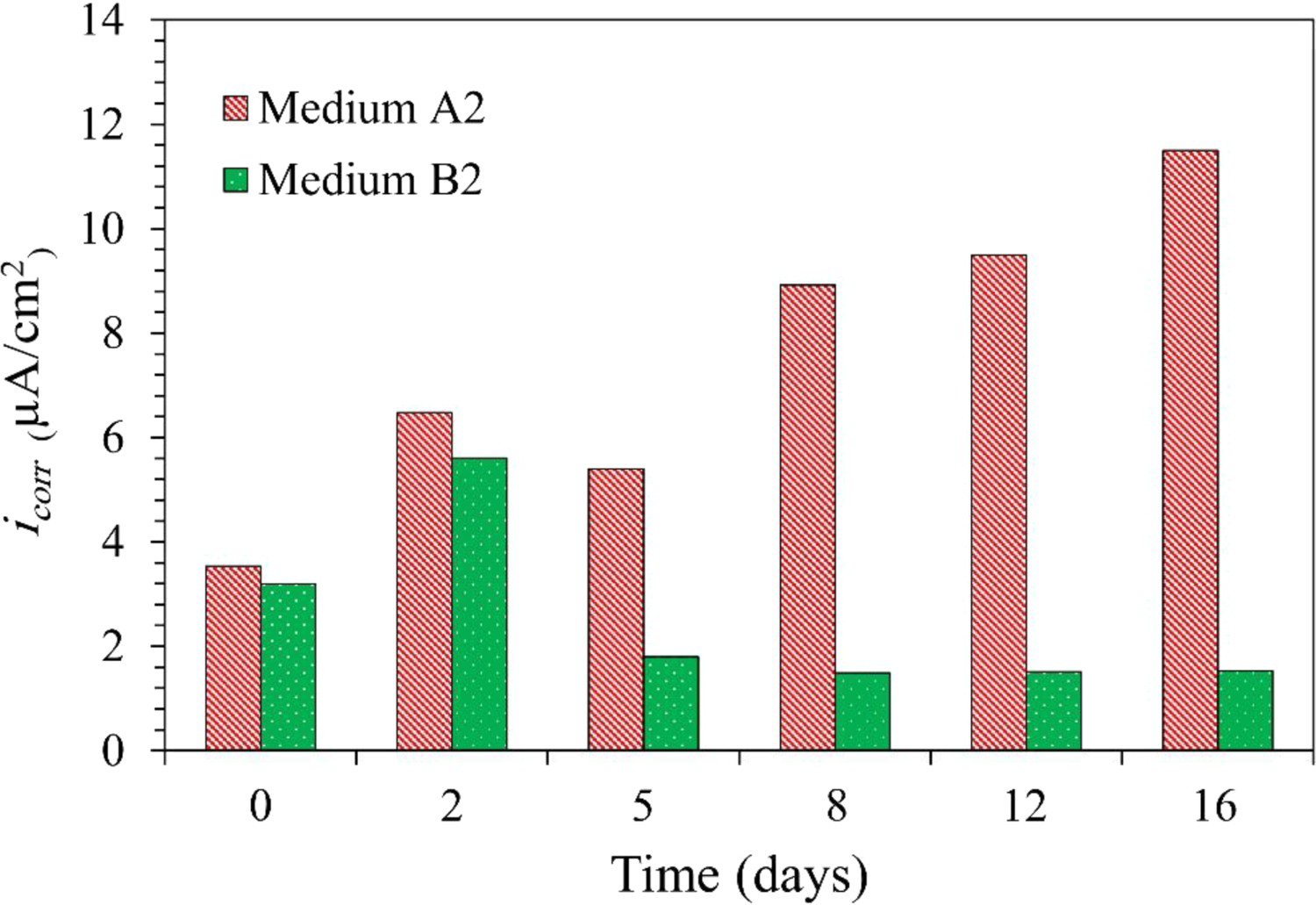
Based on the data achieved from potentiodynamic polarisation measurements, the sub-MIC concentration (0.781 mg ml−1) of Myrtus communis extract showed a considerable inhibitory effect in the SRB containing media. Comprehensively, the Myrtus communis extract inhibits the SRB colonisation and biofilm formation on the metal surface, it also curbs the metabolic activity due to the reduction of the total density of SRB. The bio-corrosion inhibitory activity of the extracts due to the limitation of the bacterial biofilm formation has previously been reported by some researchers [32,46].
Surface analysis
Figure 6 shows the steel surface morphologies, and Table 3 reports the results of the EDS analysis of the samples in media A1, A2 and B1, after 16 days of immersion. In medium A1 (Figure 6(a,b)), the salts deposits and corrosion scales were formed on the samples’ surface, and then they were removed due to flaking. It is evident in Figure 6(a) that the generated corrosion products layer is porous. It contains many cracks and crevices which lead to easy separation of weak parts of deposits.
SEM morphologies of the surfaces of the steel samples in media A1 (a and b), B1 (c and d) and A2 (e and f) after 16 days immersion. EDS analysis of the pointed spectra in Figure 6.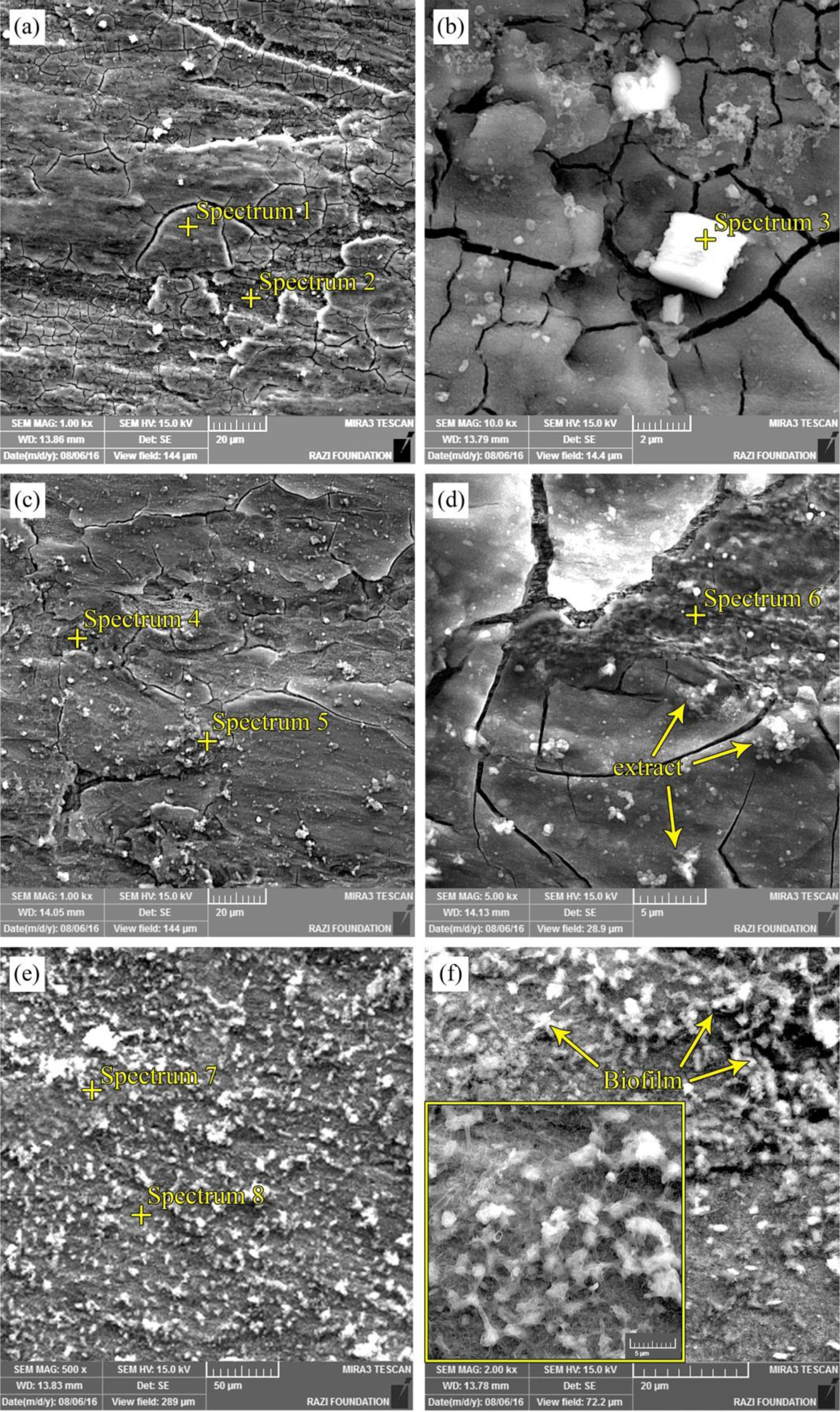

Also, the study of the surface morphology of the samples of B1 medium clarified the extract randomly distributed on the surface (Figure 6(c,d). A high amount of carbon, in spectra 4 and 5, was detected by the EDS analysis, which is related to the presence of the extract on the surface. The layer made of corrosion products in medium B1 was also porous and contained cracks. Spectrum 6 shows the steel whose covering layer has separated freshly.
However, in medium A2 the bacteria accumulated on the whole surface. This can be observed in bright points in Figure 6(e,f).
The EDS analysis of spectra 7 and 8 revealed the presence of carbon, sulphur, iron and oxygen (Table 3). In comparison to medium A1, the presence of a high amount of carbon indicates the accumulation of the SRB, as well as the formation of biofilms on the steel surface. The detection of a high amount of carbon in the presence of SRB in the environment has been reported previously [17,21,46]. Furthermore, bacterial metabolic activity and anodic dissolution are reflected in the presence of sulphur, iron, and oxygen.
In contrast to medium A2, the surface morphology of the steel samples related to medium B2 shows quite different results. Figure 7 and Table 4 exhibit the SEM images and EDS analysis of medium B2 samples, respectively. The SEM images of the surface represent the presence of the dark island-shaped areas on the steel samples. The EDS analysis of these areas (Spectrum 1) reveals a high amount of carbon which refers to the presence of the extract. In comparison with spectra 7 and 8 reported in Table 3, the detected sulphur content is very low. The absence of the SRB biofilm reflects a lack of sulphur-containing compounds in these samples. The high amount of Fe and very low amount of sulphur detected in Spectrum 2 (Figure 7 and Table 4) prove that sulphur-containing compounds which are the result of SRB activity (sulfide metabolites) were not produced in the presence of the extract. This phenomenon demonstrates the natural corrosion inhibitory effect of the extract in SRB containing media. Another evidence of the inhibitory effect of the extract is the absence of the biofilms and rod-shaped cells of the bacteria on the surface of the steel sample immersed in medium B2 (Figure 7).
SEM micrograph of the steel surface immersed in medium B2 after 16 days. EDS analysis of the pointed spectra in Figure 7.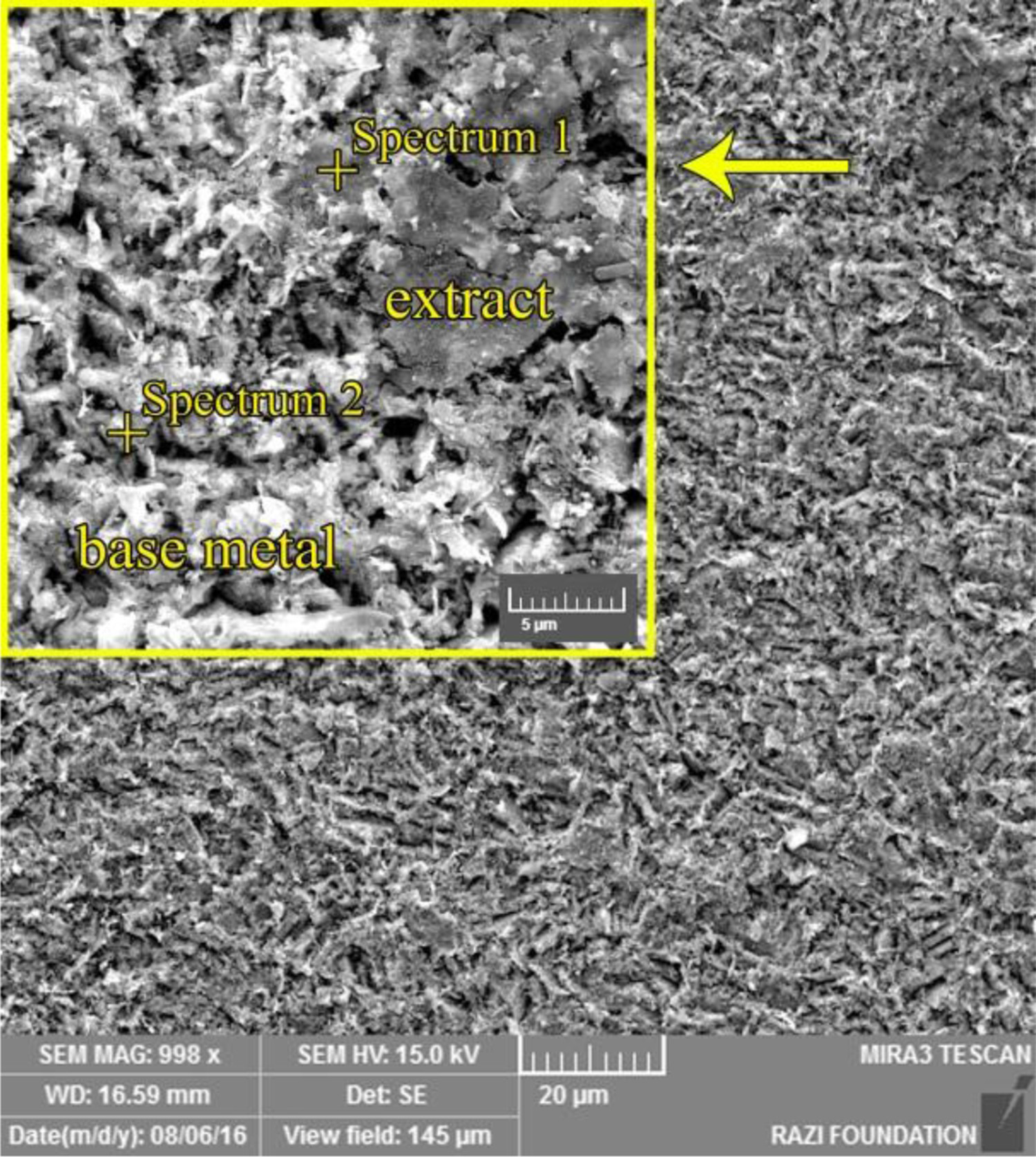

Conclusion
The inhibitory effect of the Myrtus communis extract as an eco-friendly bio-product on the MIC of st37 steel was studied and promising results obtained. This extract could effectively reduce the MIC even at low concentrations (sub-MIC). It could limit the growth, activity and biofilm formation of the SRB consortium mostly consist of Desulfovibrio vulgaris species. According to GC-MS data, Myrtus communis extract contained the furaldehyde derivatives as the most abundant compound in its chemical structure. Such a significant bio-controlling effect of the Myrtus communis extract can introduce it as a novel green inhibitor for MIC of the carbon steels.
Footnotes
Acknowledgements
The authors acknowledge the financial supports provided by Sarcheshmeh Copper Complex, Kerman, Iran under contract No. 951917 – dated May 10, 2015.
Disclosure statement
No potential conflict of interest was reported by the author(s).