







Abstract
The sulphide stress cracking of high strength low alloy (HSLA) carbon steel C110 is related to the hydrogen absorption process. The objective of this research is to evaluate the effect of adsorbed H2S and Cl− on hydrogen permeation in C110, by studying the responses of hydrogen permeation current and characteristic inductance under environment with different H2S activities and NaCl concentrations using electrochemical methods, including hydrogen permeation method and electrochemical impedance spectroscopy (EIS). The hydrogen permeation current measured in Devanathan–Stachurski cell suggests that the enhance effect of the adsorbed H2S on the hydrogen absorption follows an adsorption isotherm behaviour as a function of H2S activity in solution. The inductive response of EIS under different H2S activities shows consistency with hydrogen permeation results. The EIS results also indicate that the coverage of H2S was suppressed by Cl−. A good correlation about the effect of adsorbed Cl− is found between inductive response and hydrogen permeation current.
Keywords
Introduction
HSLA carbon steels play an important role in oil and gas storage and transportation, where H2S and water exist [1–4]. However, the utilisation of HSLA steels is restricted by corrosion and mechanical problems when exposing to wet H2S environment [5–8]. Sulphide stress cracking (SSC) is a major problem which has been studied extensively [2,7,9,10]. SSC is a hydrogen embrittlement phenomenon of HSLA carbon steel in which crack failures or catastrophic damage may occur at the stresses well below the yield strength of material [9,11]. The absorbed hydrogen accumulates in high-stress area in HSLA steel. The crack initiation and propagation occur when accumulated hydrogen in HSLA steel achieves a critical concentration [8,12]. The interaction between dissolved H2S and HSLA steel interface is the subject of many studies [13 15]. The consensus indicates that a layer of adsorbed H2S or sulphides is formed depending on the environmental H2S activity and pH value [8,16,17]. The results from literature propose that the adsorbed H2S or sulphides layer can accelerate hydrogen adsorption-absorption process and decrease SSC resistance consequently [18], which are characterised by sub-surface hydrogen concentration C 0 and threshold stress intensity factor K ISSC respectively, either by suppressing the hydrogen recombination reaction at steel surface, or by catalyzing hydrogen absorption [19].
A recent study shows that, at the same H2S fugacity, it is possible to obtain different values of K ISSC by changing the brine ionic strength [6]. The explanation suggested for this behaviour can be described as following: the relationship between K ISSC and C 0 heavily depends on the H2S coverage at metal surface. H2S coverage can be affected by environmental NaCl concentration, H2S activity and pH. According to the study of Cancio et al. [20,21], at constant brine ionic strength and pH, H2S coverage on steel surface is controlled by H2S fugacity or H2S activity. Zhang et al. evaluate the effect of Cl− accumulation on H2S corrosion, the results show that Cl− has small radius and strong penetration, can penetrate corrosion scales and be adsorbed on the metal surface [22]. The study of Case et al. also reports an adsorption interaction between H2S and Cl−, in which Cl− can suppress hydrogen adsorption by competing with H2S for the adsorption sites on metal surface [6].
Although the detail of the adsorption isotherm of H2S on HSLA carbon steel and the effect of Cl− on H2S adsorption have not been understood completely, the results reported in the literatures clearly shows that hydrogen uptake by steel, characterised by C 0, increases with increasing environmental H2S activity and decreasing environmental pH, which increasing SSC susceptibility subsequently [23 25].
The objective of this study is to quantitatively describe the effect of adsorbed H2S and Cl− on hydrogen adsorption-absorption process in HSLA carbon steel C110, by evaluating the response of hydrogen permeation and the formation of characteristic inductive response by electrochemical methods. This study will help to understand the SSC mechanism and contribute to the improving of SSC predictability.
Experimental procedures
Experimental design
The sequence of experimental conditions.

In the experiments evaluating the effect of H2S on hydrogen permeation, NaCl concentration in brine is constant, the independent variables are the H2S concentration in gas phase, which can be converted to H2S activity in solution using thermodynamical speciation calculation, and pH of the solution. For the study of the Cl− concentration effect, the independent variable is NaCl content in solution, whereas the environmental pH and H2S concentration are kept constant. The dependent variables in our study are the hydrogen permeation rate and the parameters obtained from the analysis of electrochemical tests performed on the corroding surface of the OCTG grade HSLA carbon steel C110.
Materials
Chemical composition of C110 (wt-%).

Hydrogen permeation measurement
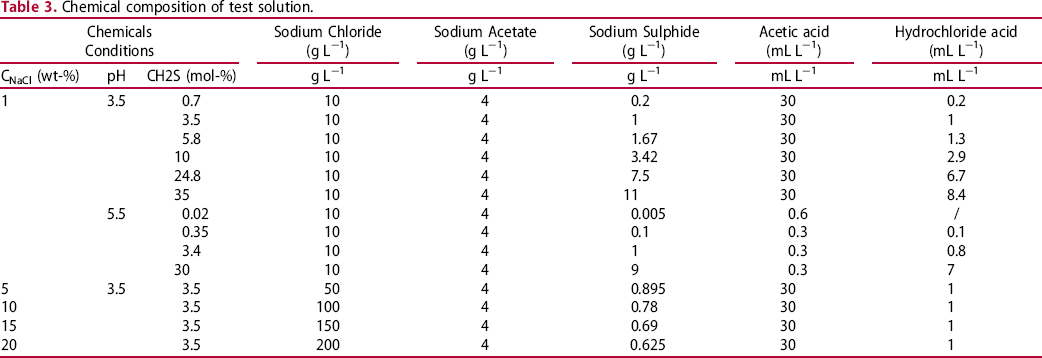
Hydrogen permeation is conducted at 1 atm and 25 °C using Devanathan–Stachurski system. As shown in Figure 1, Devanathan–Stachurski system is composed by twin cells separated by HSLA carbon steel C110 membrane with thickness of 0.02 ± 0.005 cm and exposed area of 7.06 cm2. The left cell contains test solution with different pH values, H2S and NaCl concentrations. Environmental pH is adjusted by sodium acetate and acetic acid (CH3COONa + CH3COOH) buffer solution. H2S is generated in the left cell by a chemical reaction between Na2S and HCl as shown in Equation (1). The H2S concentration in gas phase is adjusted by controlling the addition of Na2S·9H2O and HCl in solution as shown in Table 3 following the calculation results of thermodynamical speciation calculations. These calculations are based on the equilibrium conditions of the decomposition reaction of the sodium sulphide in Equation (1).
Devanathan–Stachurski system. Chemical composition of test solution.
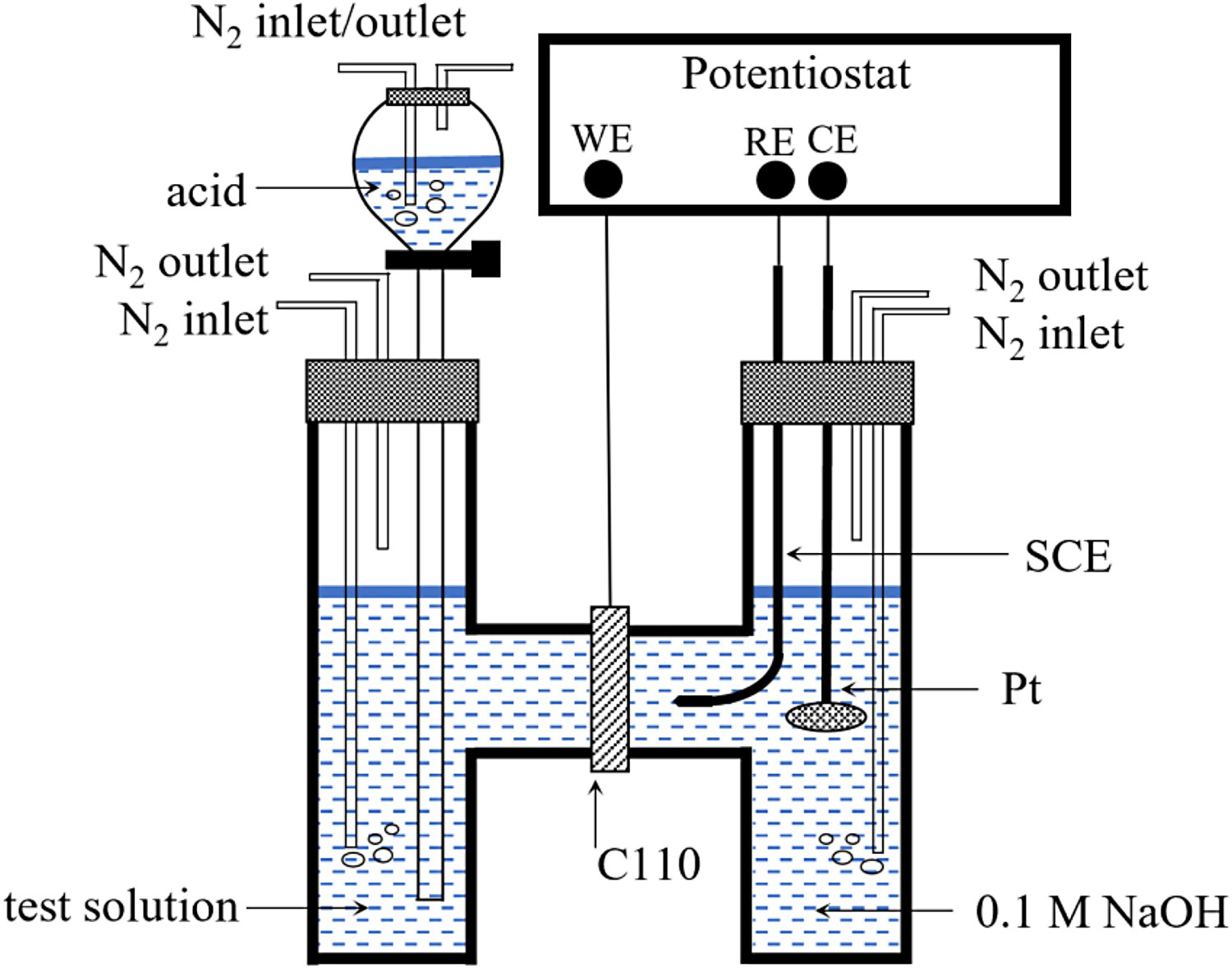
The procedure for performing the hydrogen permeation testing conforms to the ASTM G148-97 standard procedure. Before testing, the right side of the polished C110 membrane is electroplated by nickel in Watt Bath (NiCl2·6H2O: 45 g L−1, NiSO4·6H2O: 240 g L−1, H3BO3: 40 g L−1) using a cathodic current of 0.0043 A cm−2 is applied on the membrane to produce a nickel-plating layer on the steel membrane exposed to the hydrogen reduction side of the Devanathan–Stachurski cell. Previously to the start of the hydrogen permeation testing, both cells are de-aerated by N2 for 1 h according to ASTM G148-97 (2011) standard before introducing the HCl acid and generate the H2S in the left cell [25]. A voltage of +300 mV (vs. SCE) is applied to C110 in the right cell. And the current output is recorded as hydrogen permeation current.
From the hydrogen permeation experiments, the sub-surface hydrogen concentration C 0 is calculated from hydrogen permeation current density by Equations (2)–(4).



Electrochemical impedance spectroscopy (EIS) measurement
EIS measurement is carried out in a three-electrode electrochemical cell with a solution capacity of 250 mL at 1 atm and 25 °C. The environment in the cell is the same as the environment of left cell for hydrogen permeation. The three-electrode system is utilised in EIS measurement comprising working electrode C110 cylinder (length 4.37 ± 0.05 cm, diameter 0.64 ± 0.05 cm and immersion area 6.07 cm2), a W/WO3 electrode system was used as reference electrode and Pt wire as counter electrode. Testing solution is de-aerated by N2 for 1 h before introducing the HCl and generate H2S within the electrochemical cell. The EIS measurement is carried out after letting the H2S producing reaction reach completion, typically after 30 min. The EIS experiments are carried out using a perturbation with voltage of 10 mV (vs. OCP) and frequency of 10,000 Hz to 0.01 Hz was applied to the testing system.
Results
Effect of H2S and pH on hydrogen permeation
The hydrogen permeation current density curves obtained from hydrogen permeation testing in 1 wt-% NaCl solution at pH 3.5 and pH 5.5 with varying H2S concentrations are shown in Figure 2. As it can be observed from Figure 2, a decrease in H2S concentration and increase in pH value results in a decrease in hydrogen permeation current density within the HSLA carbon steel C110. This indicates H2S can enhance the hydrogen uptake of HSLA carbon steel C110. And this effect is more noticeable in the environment at pH 3.5 than at pH 5.5.
Effect of environmental H2S concentration and pH value on hydrogen permeation current density.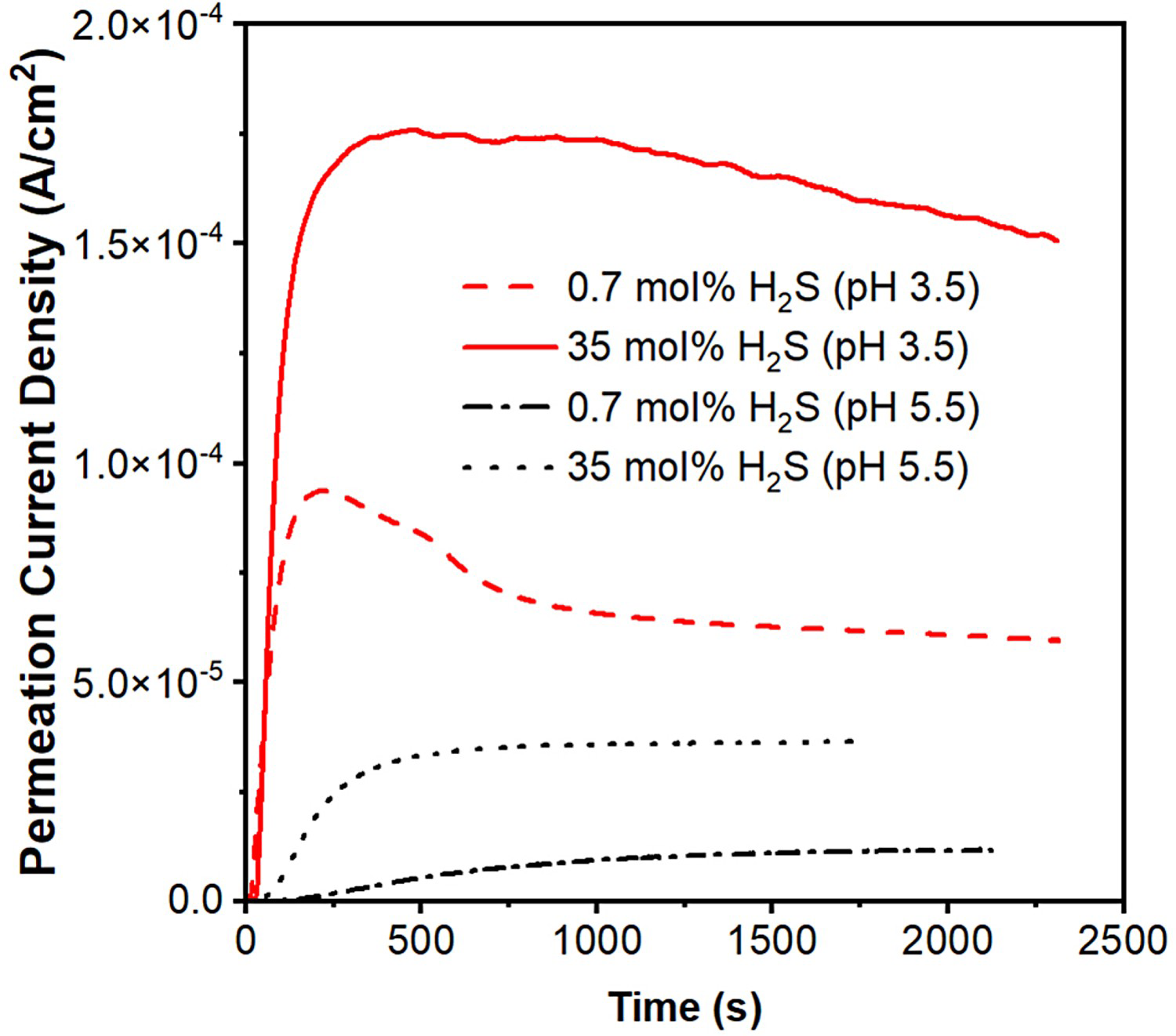
The results from the EIS testing, in the form of the corresponding Nyquist diagrams are shown in Figure 3. These experiments were conducted in the same environmental conditions as considered in Figure 2 for hydrogen permeation testing. As it can be observed in Figure 3, all Nyquist diagrams show indications of contribution from a capacitive loop at high and medium frequency and an inductive loop at low frequency. The apparent diameter of capacitive loop can be verified that it increases with increasing pH and decreasing H2S activity of environment, which suggests that the environment with higher pH value and lower H2S activity benefits the formation of an iron sulphide protective layer which can increase the faradaic polarisation resistance [27 29]. This is consistent with the hydrogen permeation results in Figure 2, where higher pH value and lower H2S activity result in lower hydrogen permeation current which is associated with cathodic reaction counterpart of the corrosion reaction taking place at open circuit potential.
Evolution of Nyquist diagram with environmental H2S concentration and pH value.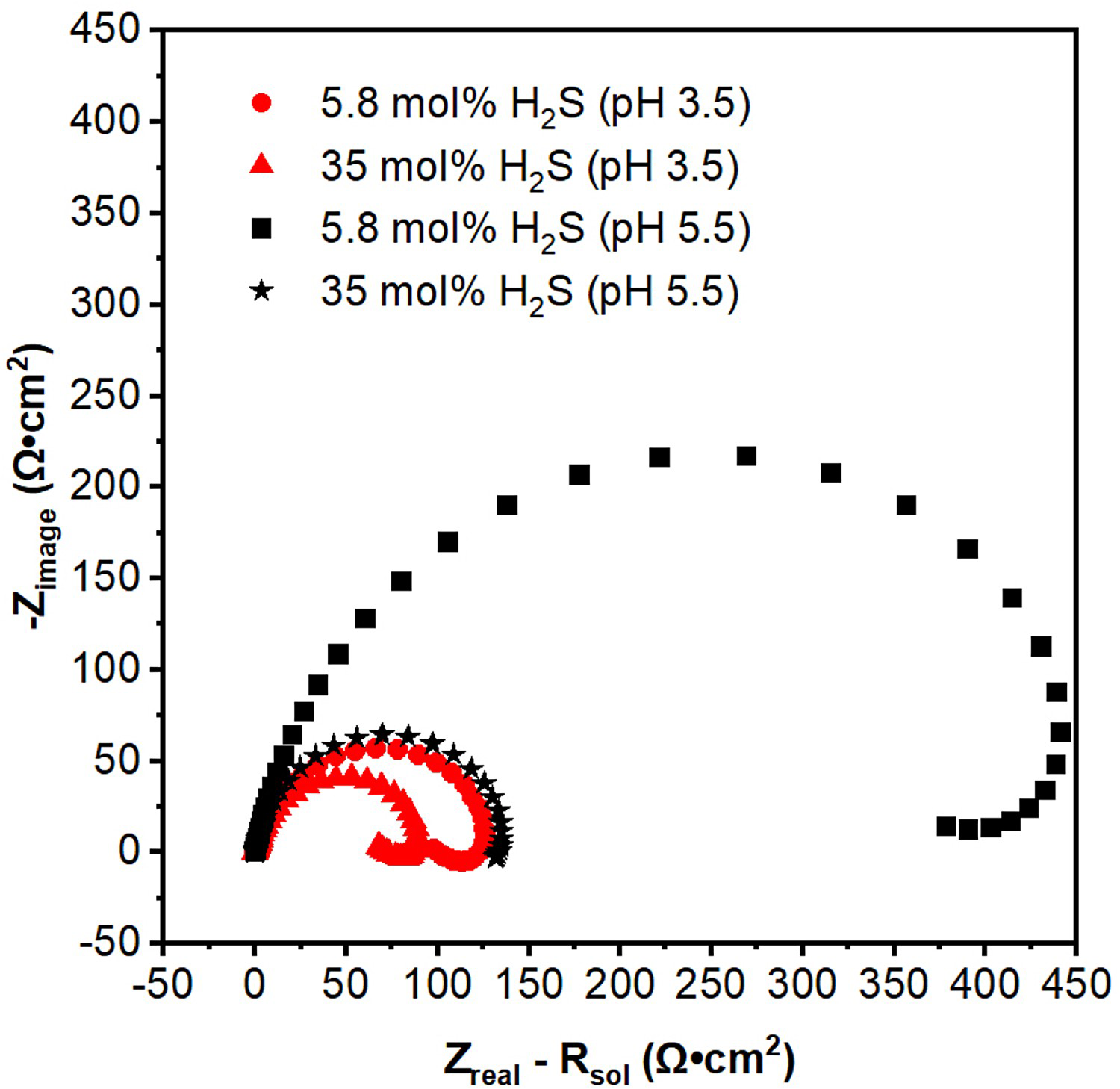
Effect of NaCl on hydrogen permeation
The effect of NaCl concentration in solution on hydrogen adsorption-absorption is evaluated by hydrogen permeation and EIS. The hydrogen permeation current density curves at pH of 3.5, H2S concentration of 3.5 mol-%, and different NaCl concentrations are exhibited by Figure 4. As it can be appreciated a decline of the hydrogen permeation current density is detected when environmental NaCl concentration increases. In addition, the steady-state current density i ss in 15 wt-% NaCl is similar to the result at 20 wt-% NaCl, suggesting that the incorporation of Cl− on the steel surface follows an absorption isotherm.
The effect of environmental NaCl concentration on hydrogen permeation current density.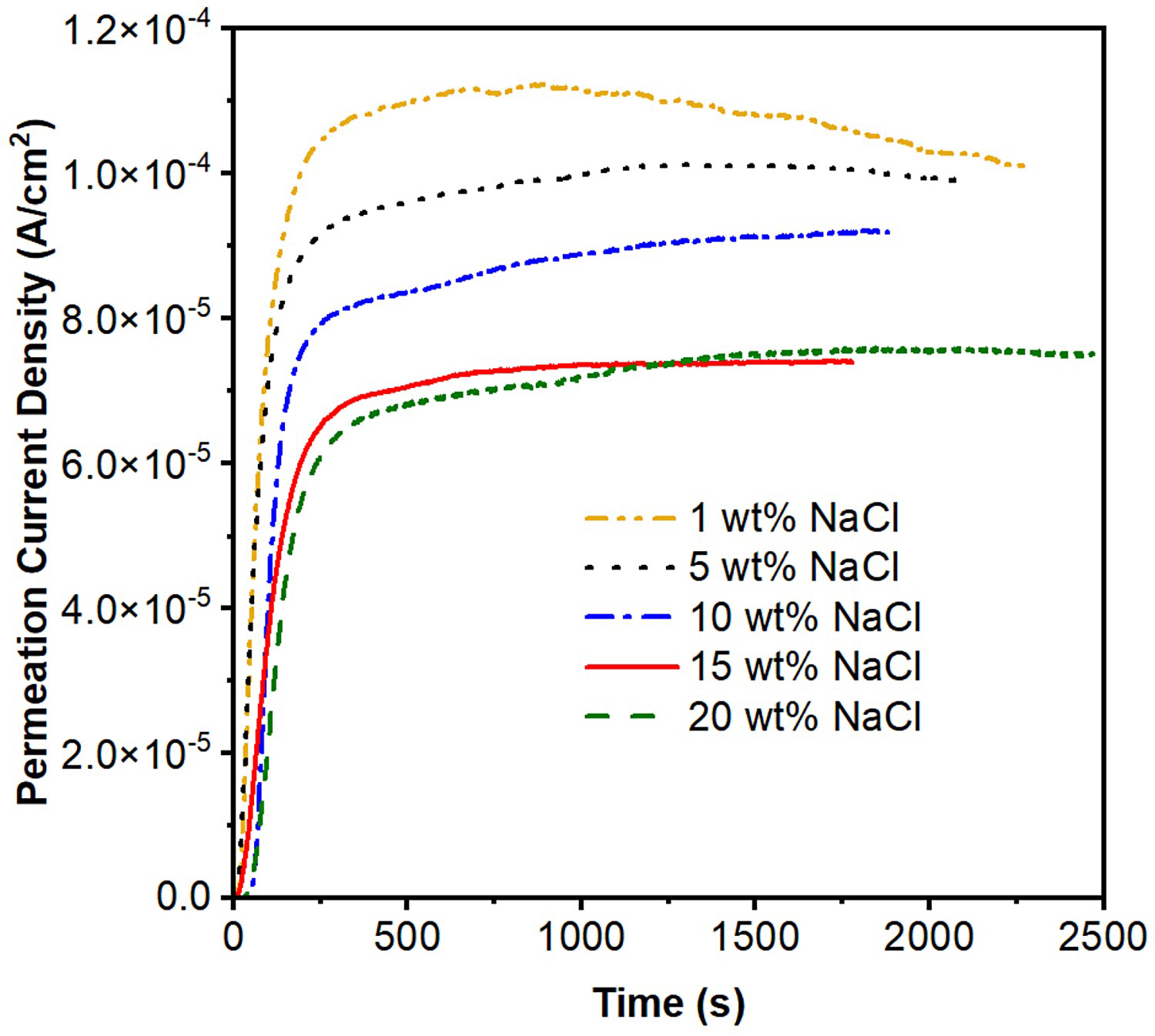
The evolution of the EIS response with the NaCl concentration in solution at pH of 3.5 is shown in Figure 5 in the form of the Nyquist diagram, the environmental H2S concentration of 3.5 mol-% in the gas phase is kept constant during these experiments. Similar to the results shown in Figure 3, the Nyquist diagrams also are composed of a capacitive loop and an inductive loop at different frequencies. The diameter of capacitive loop increases with increasing NaCl concentration, implying the hydrogen evolution is impeded by NaCl.
Evolution of Nyquist diagram with environmental NaCl concentration.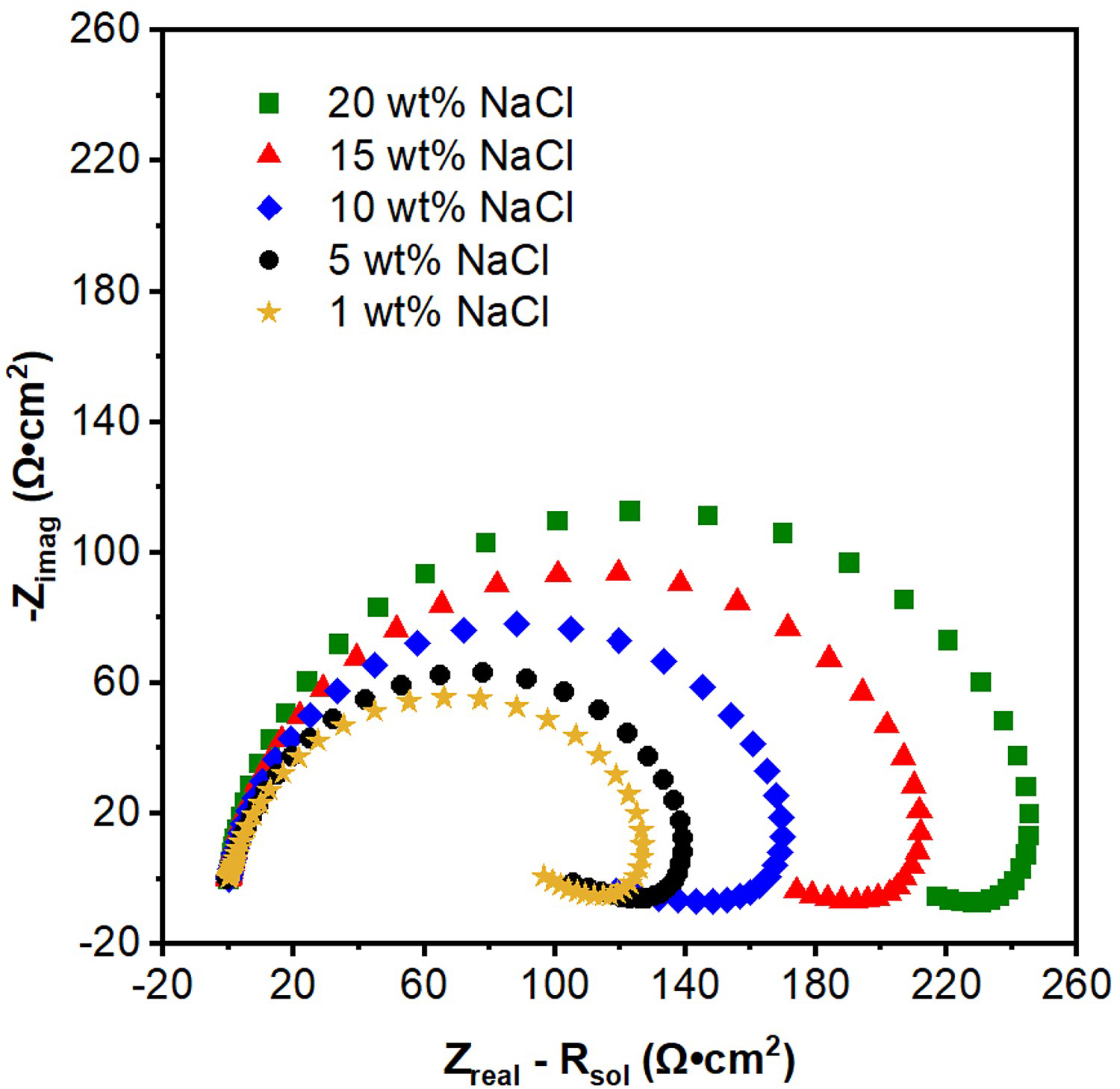
Discussion
Effect of H2S and pH on hydrogen uptake
Hydrogen permeation
The hydrogen uptake of HSLA carbon steel C110 is characterised by sub-surface hydrogen concentration C 0 calculated from Figure 2 by Equations (2)–(4). The effect of environmental H2S activity and pH value is presented in Figure 6 in log-scale. As it can be observed in the results presented in Figure 6, with increasing environmental H2S concentration the value of C 0 increases at both pH of 3.5 and 5.5, which indicates that hydrogen absorption is enhanced by the presence of H2S in solution. This is consistent with the results showing that at the same H2S concentration, C 0 at pH 3.5 is higher than at pH 5.5, due to higher H+ concentration available for hydrogen evolution in solution at pH 3.5. Besides, a less acidic environment benefits the formation of a compact protective iron sulphide layer [29].
The effect of environmental H2S Activity and pH value on C 0, the highlighted region is associated with the limiting C 0 value which becomes independent of the H2S concentration at pH 3.5.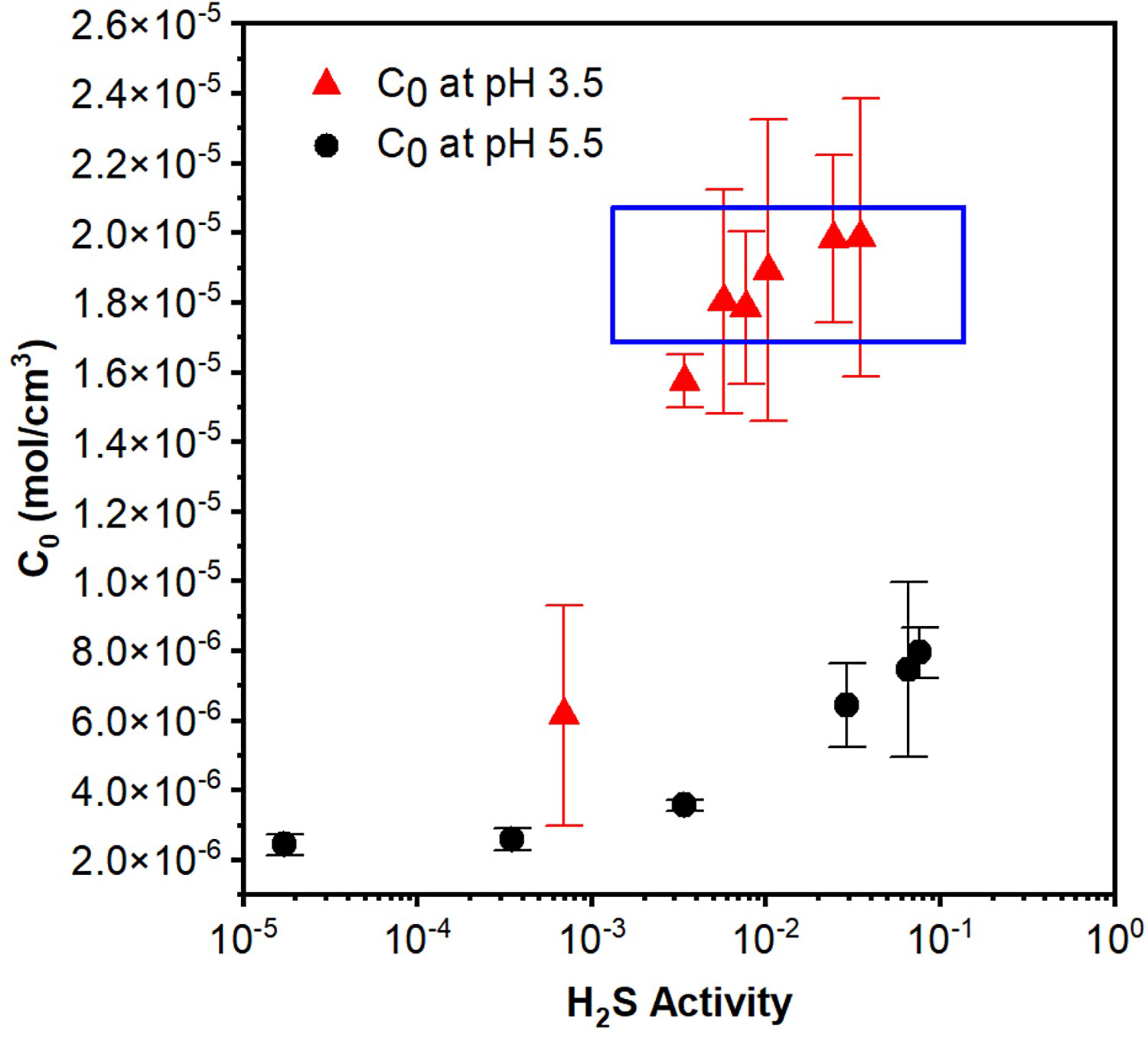
According to the literature [14,30 32]. a layer of adsorbed H2S or containing sulphides is formed, depending on the H2S concentration and pH, during the hydrogen adsorption-absorption process resulting from the interaction between H2S contained with the corrosive environment and HSLA steel interface. The relationships between the environmental factors and C 0 can be described by the general expression defined in Equation (5) [19]:

The results of the C 0 value obtained from the permeation curves shown in Figure 6 indicate the presence of a limit value of the hydrogen content with the H2S activity in solution, at both pH values evaluated. This behaviour suggests that the active sites to receive adsorbents on metal surface are fully occupied in environment with high H2S activity. Therefore, further increasing environmental H2S activity cannot increase θS and adsorbed hydrogen. Subsequently, according to Equation (5), C 0 becomes constant. This means the effect of H2S on C 0 depends on a specific adsorption isotherm of H2S. However, the explicit form of the C 0 dependency with the H2S concentration in solution can only be assessed if the absorbed Hydrogen coverage can be experimentally measured under the present conditions.
Evaluation of the adsorbed hydrogen coverage
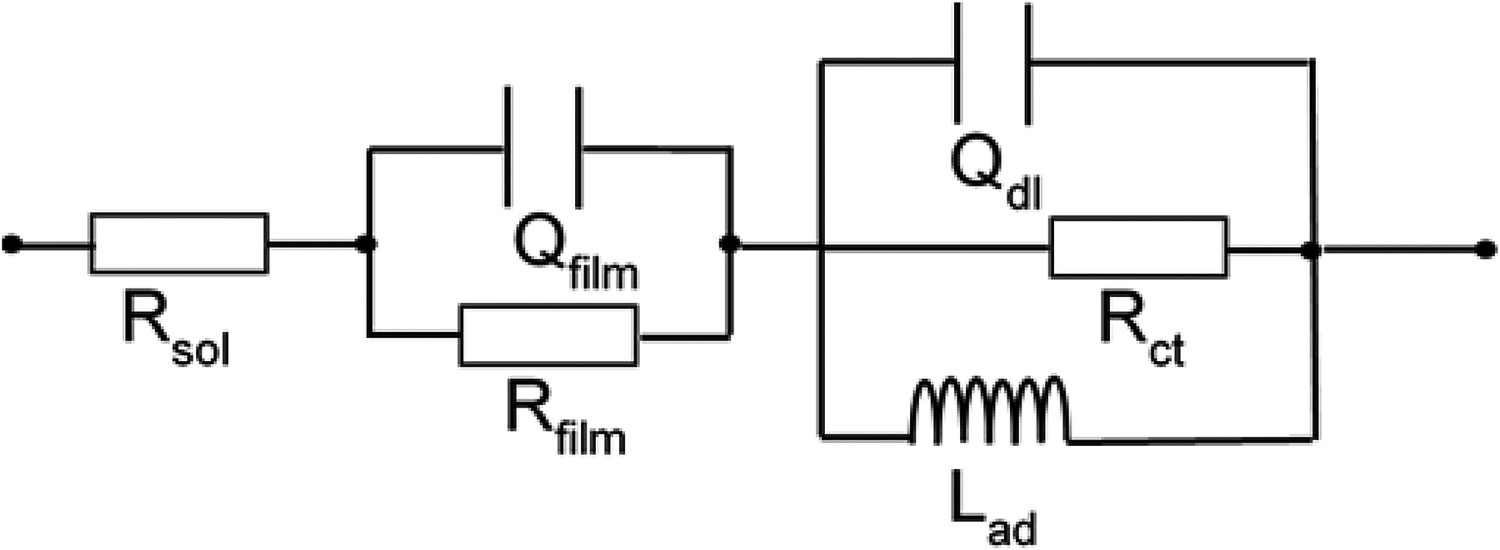
The EIS results in Figure 3 are analyzed using the equivalent circuit in Figure 7 which is used to model the hydrogen evolution and adsorption–desorption process on steel surface [29]. In the equivalent circuit: R sol is the resistance of solution, R ct is the charge transfer resistance associated with double-layer capacitance Q dl, Q film combined with R film is utilised to describe the iron sulphide film forming on the surface, and the inductance L ad is associated with the interaction of the absorbed reduced species which in our case we consider to be hydrogen given. According to the literature [24], the presence of this inductive term in the equivalent circuit is associated with the presence of an adsorbed species as part of electrode kinetics involved in either cathodic or anodic current process at near open circuit potential (OCP) condition. Assuming only one specie is adsorbed on the surface, the relationship between surface coverage and inductive term is detailed as Equation (6).
Equivalent circuit utilised to analyze EIS results.
The fitting results of inductive response L ad as changing environmental H2S activity and pH are reported in Figure 8 in log-scale. As it can be observed from the results shown in Figure 8, the increase in the H2S activity in solution reduces the value of L ad which is consistent with the expectation that the hydrogen adsorption-absorption is limited by the amount of adsorbed H2S on the metal surface. Since as shown in Equation (6), there is a reciprocal relationship between L ad and surface coverage of hydrogen. Therefore, increasing H2S activity can benefit the hydrogen adsorption on metal surface, consequently, increases hydrogen uptake which is characterised by C 0.
The effect of environmental H2S Activity and pH value on L ad.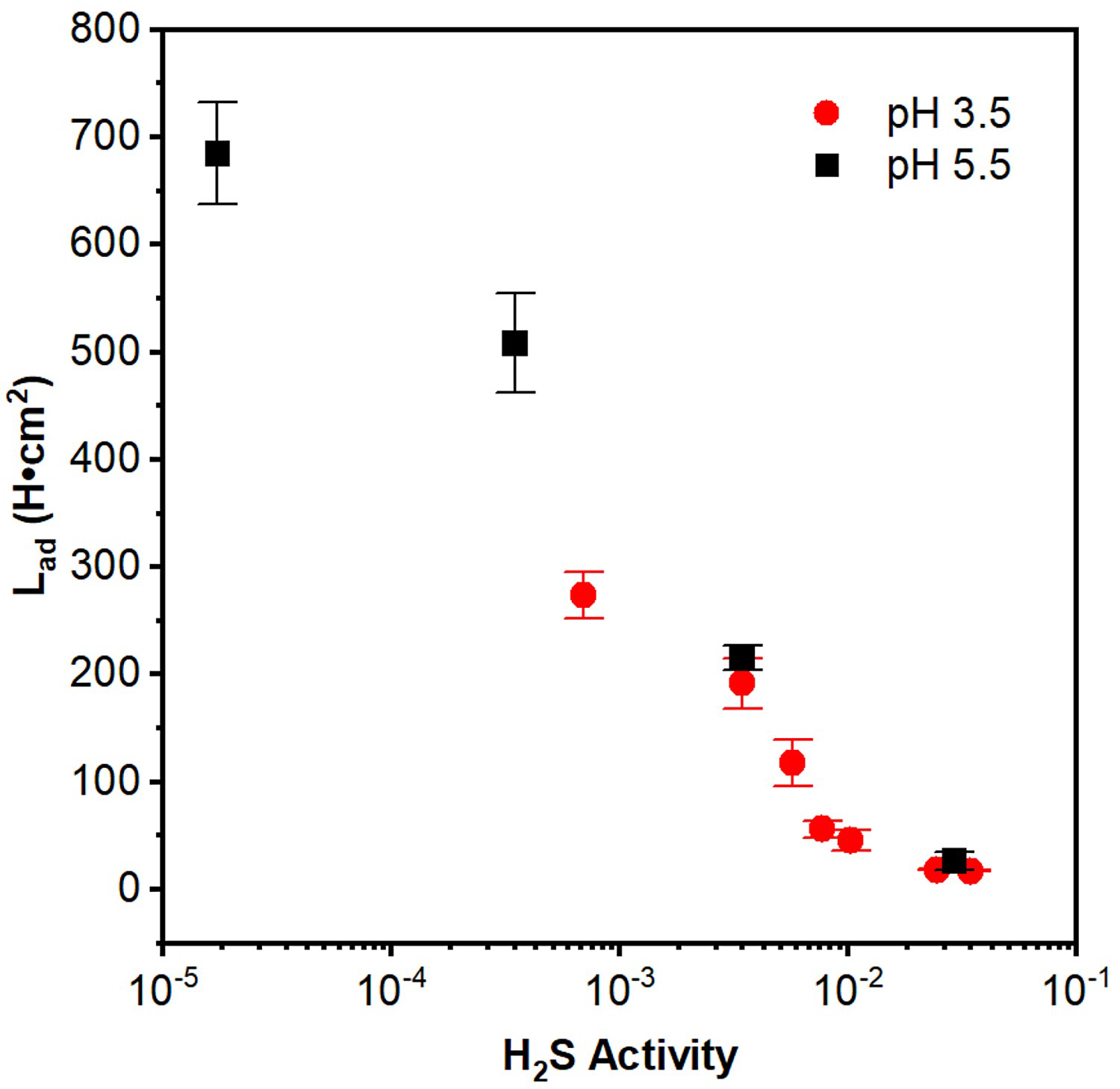
The correlation between C 0 and L ad, from the results shown in Figures 6 and 8 respectively, is presented in Figure 9. As it can be appreciated in Figure 9, the relationship between C 0 and L ad is consistent with Equation (6) and indicates that at the higher H2S concentrations where the C 0 values reach their maximum coincide with asymptotical values of the L ad, this also is consistent with the proposed relationship indicated in Equation (5) on the environmental H2S activity, i.e. hydrogen uptake can be accelerated by catalytic effect of adsorbed H2S.
Correlation between C 0 and L ad depending on adsorbed H2S.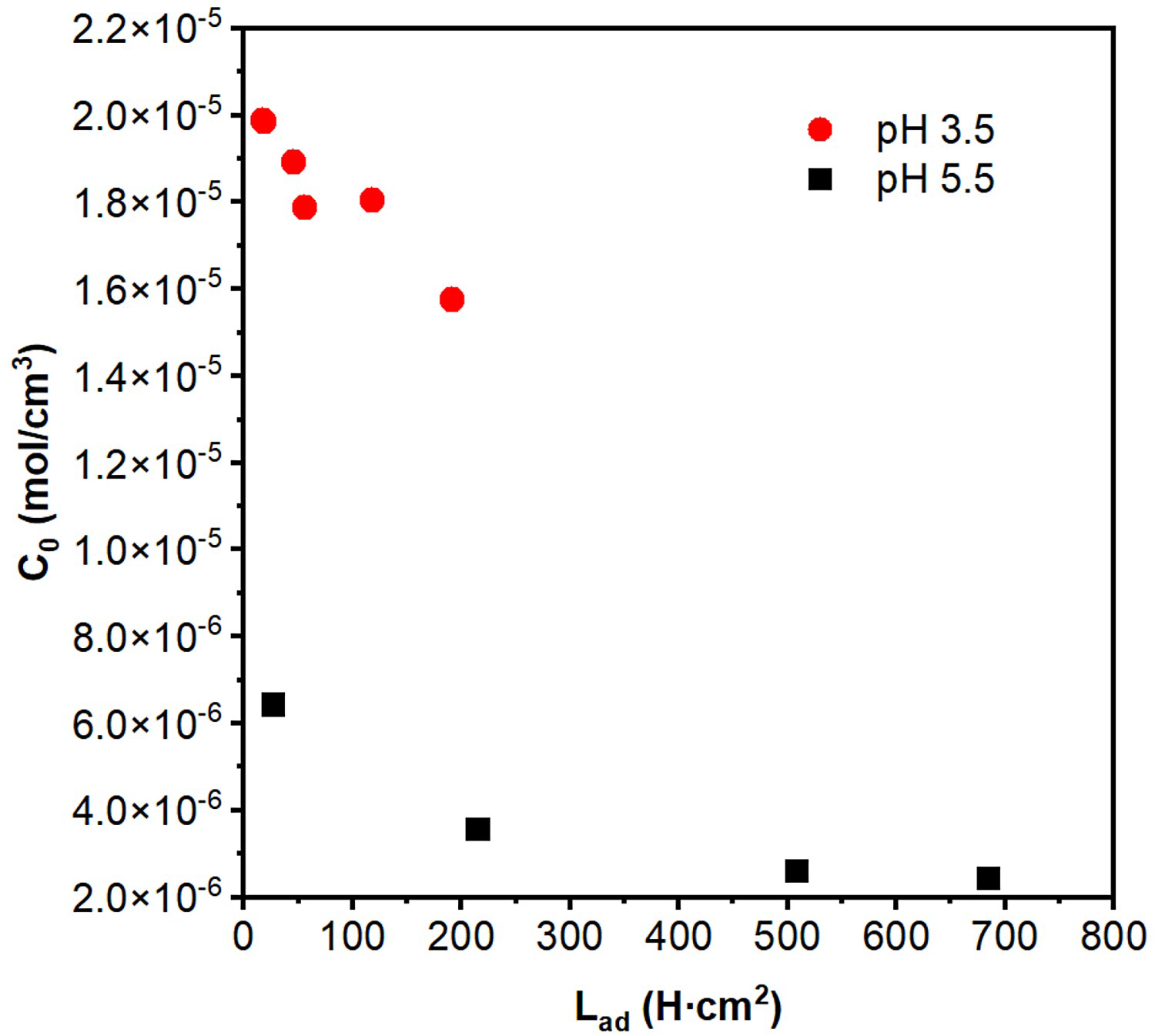
The resistance of iron sulphide layer R film calculated from Figure 3 is shown in Figure 10. The results suggest that with decreasing environmental H2S concentration and increasing pH, R film increases, which implies that compact iron sulphide layer is more likely to form under environment with higher pH value and lower H2S concentration. This is consistent with the hydrogen permeation results shown in Figure 6.
Effect of environmental H2S activity and pH on resistance of FeS film.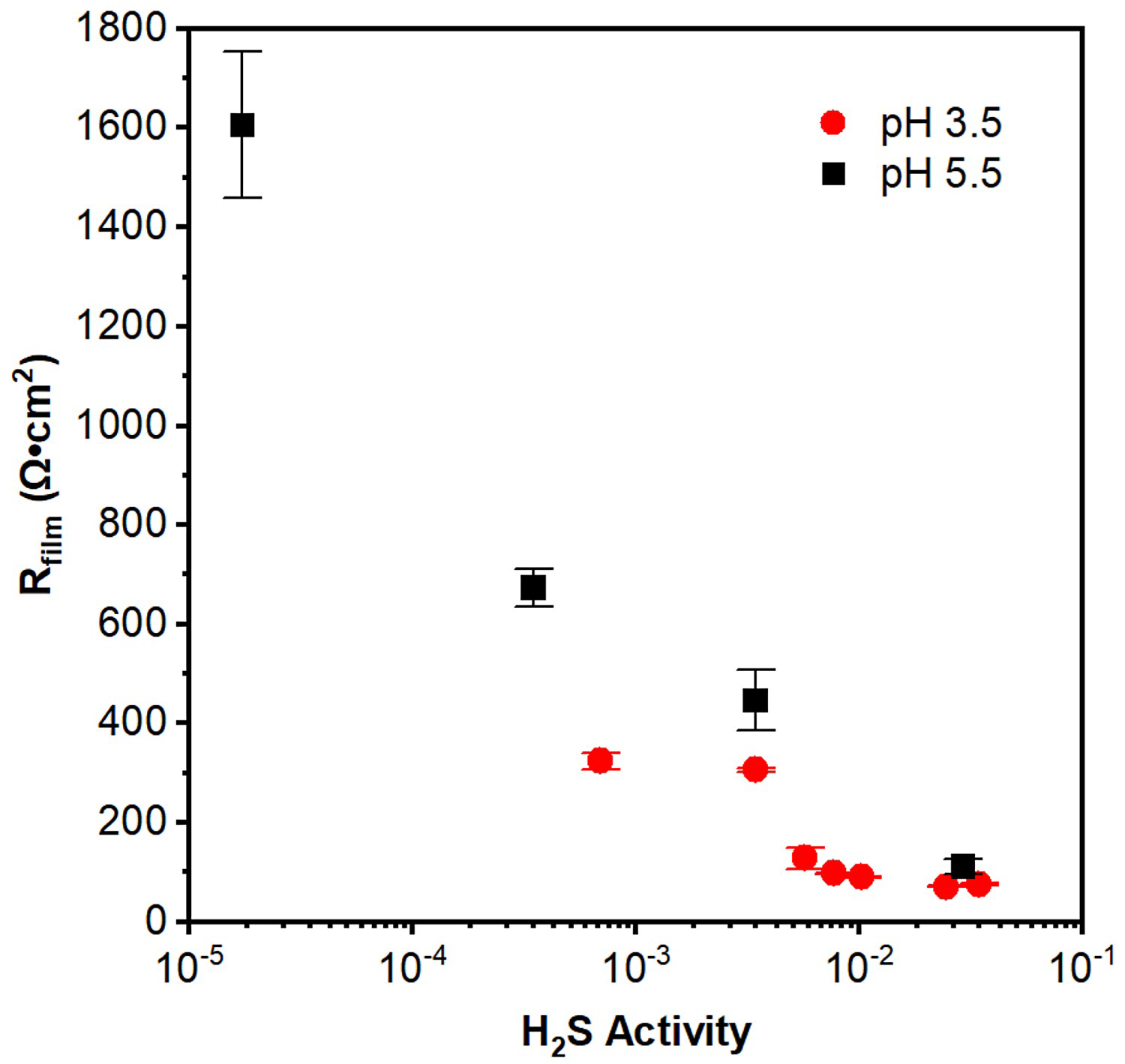
Effect of NaCl on hydrogen uptake
Analysis of the hydrogen permeation results
The impeditive effect of environmental NaCl concentration on hydrogen uptake in environment with 1 mol-% H2S and pH of 3.5 derived from Figure 4 is shown in Figure 11. An increase in environmental NaCl concentration leads to an exponential decrease in C 0. This means there should be a critical concentration above which further increasing NaCl concentration would have little impact on hydrogen absorption. However, many studies report that Cl− can accelerate anodic dissolution because that Cl− has a small radius and can penetrate the corrosion scale and change the interface environment [6,33,34]. The possible explanation for this opposite effect of Cl− on anodic dissolution and hydrogen absorption is that Cl− can be adsorbed on the surface, which suppresses the catalytic effect of adsorbed H2S, hence, impedes the hydrogen adsorption-absorption process. Therefore, the hydrogen absorption decreases at high NaCl concentration though the electrochemical reaction is accelerated. However, to justify this explanation, the relationship between NaCl concentration in solution and the adsorbed hydrogen coverage needs to be measured experimentally.
The effect of NaCl concentration in C 0.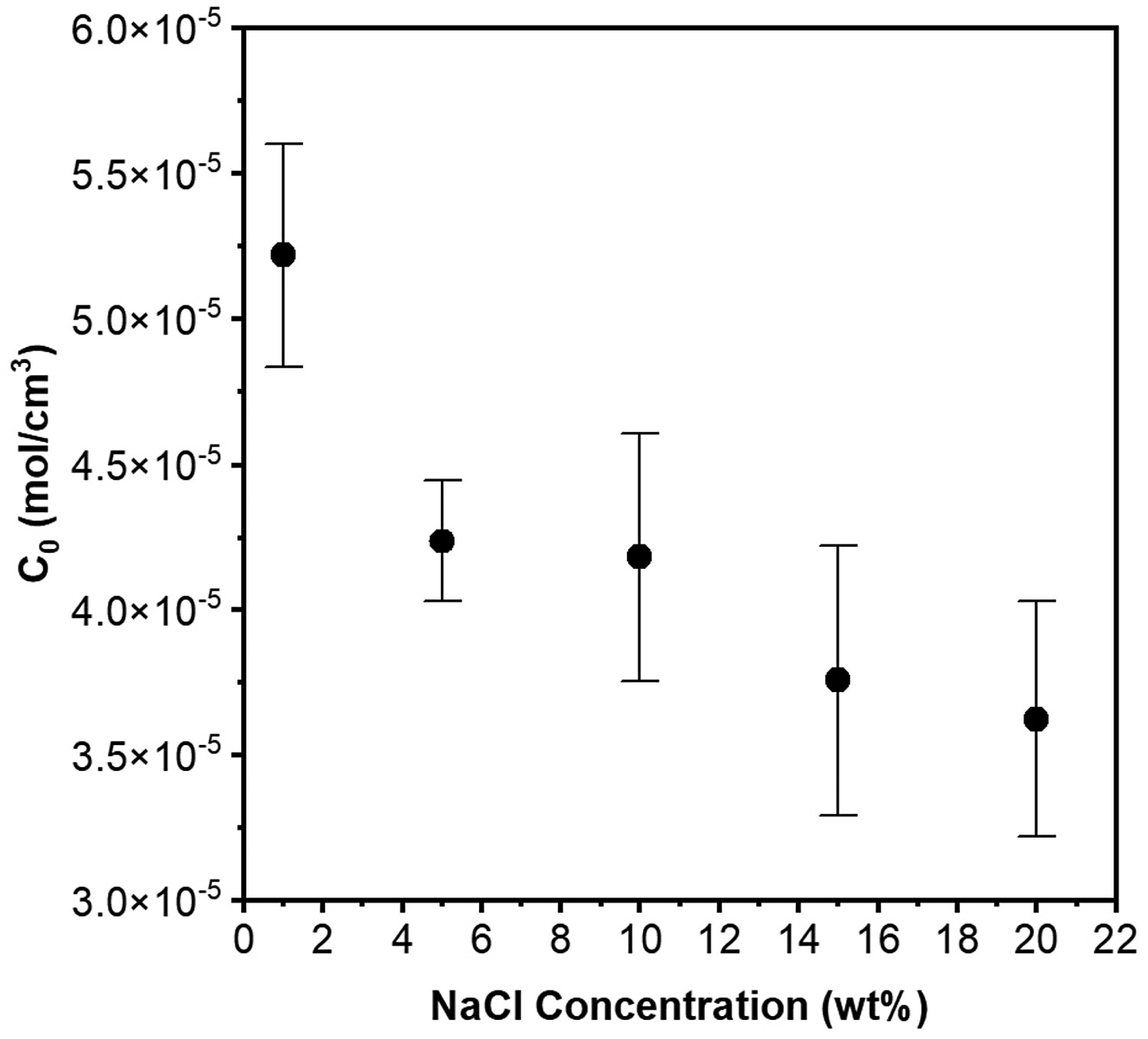
Effect of Cl− on H2S and hydrogen adsorption
As previously stated, the correlation between NaCl concentration and adsorbed hydrogen coverage is evaluated from EIS results in Figure 5 to explain the role of Cl− in hydrogen adsorption-absorption process. The fitting results of L ad point out a negative relation between NaCl and L ad as reported in Figure 12. This implies that NaCl can impede hydrogen adsorption on metal surface according to the reciprocal relation between L ad and θH shown in Equation (6). These results of EIS show consistency with hydrogen permeation results related to the effect of NaCl concentration.
The effect of NaCl concentration in L ad.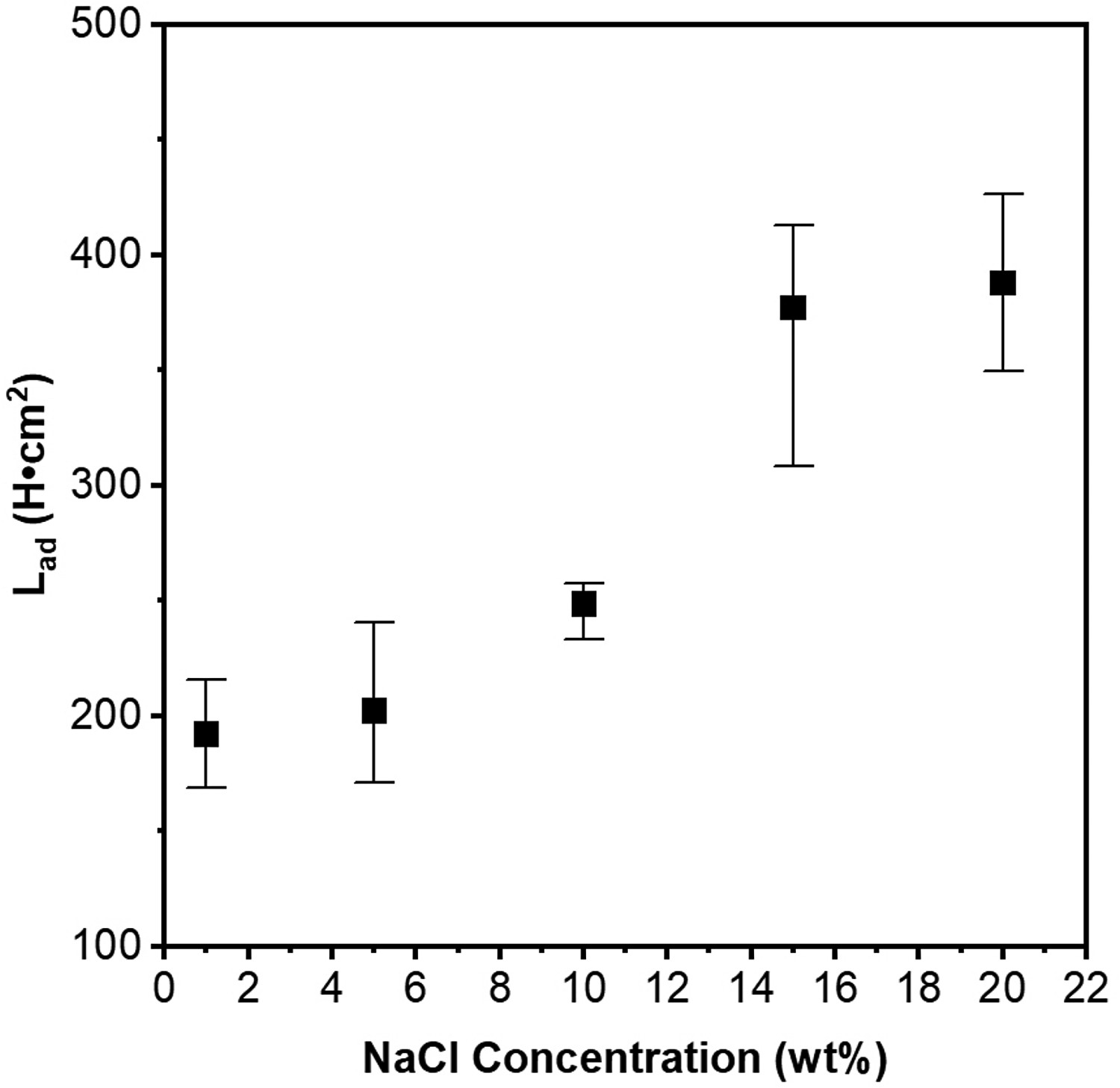
In addition, a decent in R ct is distinguished as increasing NaCl concentration as shown in Figure 13, which implies that NaCl can accelerate anodic dissolution. This is consistent with the literature study mentioned before about the catalytic role of Cl− in electrochemical reaction of steel.
Effect of environmental NaCl concentration on R ct.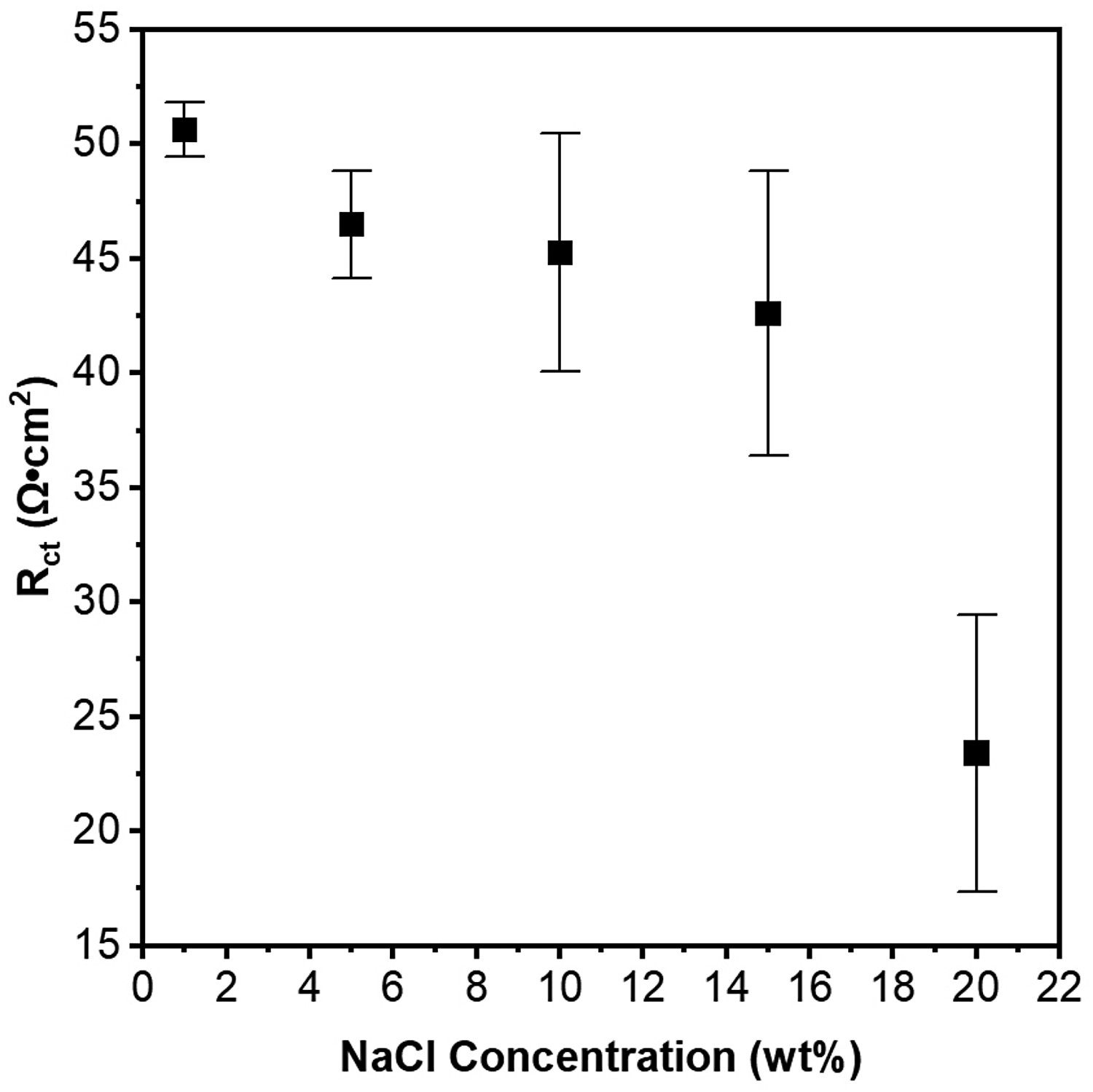
This opposite role of NaCl in hydrogen coverage and anodic dissolution can be explained by the competition between NaCl and H2S. As shown by N. Zhang et al., Cl− also can be adsorbed on the surface, competes with HS−, S2− and H2S for the active sites on metal surface. Assuming both H2S and Cl− follow a Langmuir adsorption isotherm, an expression is proposed by Case et al. to model the interactive adsorption of H2S and Cl− as following [6]:

 and
and  are the adsorption equilibrium constant for H2S and Cl− respectively,
  and
and  are the activity of H2S and Cl− in solution, which are related to the concentration of H2S and Cl−, α characterises the ratio of active adsorption sites occupied by H2S to those of Cl−. Equation (7) suggests that as increasing environmental NaCl concentration
  increases, more active sites are occupied by Cl−, which decreases H2S adsorption. As mentioned, adsorbed H2S accelerate hydrogen uptake by increasing adsorbed hydrogen coverage on steel surface as shown in the results presented in Figures 6 and 9. Therefore, though the anodic dissolution is accelerated, increasing NaCl concentration still leads to a decline in hydrogen adsorption-absorption.
These results indicate that the major contributor of the hydrogen content at the metal solution interface, C 0, is the dependency of the hydrogen permeation on H2S absorption isotherm, this is shown by both the behaviour of the C 0 as function of the H2S concentration in solution and its relation to the actual hydrogen absorption coverage inferred from the inductive component in the EIS spectra, also by how the competition with chloride absorption into the steel surface affects both the C 0 and the H2S absorption coverage.
The analysis of the experimental data can successfully be performed considering a simple Langmuir type isotherm as proposed in Equation (7), however this not necessarily supported by the experimental data so far. The present study however is limited to only indicating the H2S absorption effect, although the shape of the respective isotherm is the focus of further studies.
Conclusions
The effect of environmental H2S activity, pH and NaCl concentration is evaluated for HSLA carbon steel C110 through electrochemical methods including hydrogen permeation and electrochemical impedance spectroscopy. The major conclusions for this study are described below.
H2S increases hydrogen uptake by increasing hydrogen adsorption on C110 in 1 wt-% NaCl solution. The catalytic effect of H2S on hydrogen uptake is more remarkable in solution with pH 3.5 than pH 5.5. Environmental NaCl concentration decreases hydrogen uptake exponentially by decreasing hydrogen adsorption on HSLA carbon steel C110 in environment with 1 mol-% H2S at pH 3.5.
A quantitative description of accelerative effect of adsorbed H2S on hydrogen absorption is developed. It helps to improve the predictability of fracture related to hydrogen embrittlement of C110 in wet H2S environment. However, more conditions with varying H2S activity and NaCl concentration need to be measured to develop an isotherm of adsorbed H2S and NaCl. Besides, additional tests, such as SEM and XRD should be conducted to evaluate the effect of corrosion production on the surface. The authors are currently working on the isotherm of adsorbed H2S. The results will be reported in future publications.
Footnotes
Acknowledgements
The authors would like to kindly thank ConocoPhillips, ExxonMobil, Shell, Tenaris for their financial support. Michael Elverud and Ubaldo Lopez are also warmly acknowledged for sample making. The help of Lin Chen, Alan Martinez and Yuan Ding in the analysis of impedance data and process of measurement are greatly recognised.
Disclosure statement
No potential conflict of interest was reported by the author(s).